
The Great Cuyahoga River Fire
/As we crossed the Cuyahoga River while driving through Cleveland, I mentioned to Marcie that, if I recalled correctly, this was the river that caught on fire in the 60s. That evening we read more about the incident and learned that the Cuyahoga was so polluted with chemicals, oil, and debris, that it actually did catch on fire in 1969. We were also surprised to discover that 1969 wasn’t the first time the river had burned - that it had caught fire on 12 occasions prior to the one I remembered.
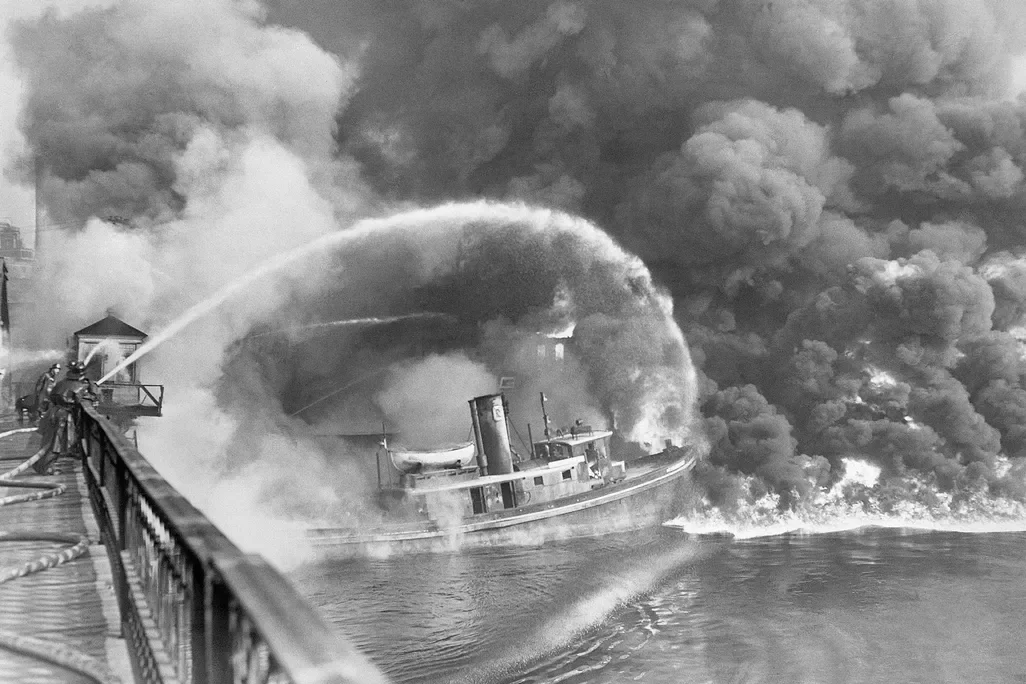
The 1952 fire. Source: Bettmann / Contributor via Getty Images
The industries that flourished during Cleveland’s growth treated the Cuyohoga as a dumping ground, declaring that the pollution was simply “the cost of doing business” - as John D. Rockefeller, the founder of Standard Oil - and one of the major contributors to the river’s pollution, is purported to have said.
Not only did oil refineries discharge petroleum byproducts - steel mills released huge amounts of industrial wastewater and chemicals; paint factories dumped colorful chemicals that actually changed the river’s color; and the city’s inadequate sewage system dumped raw sewage into the water. The chemical goo on the surface was sometimes 3” thick, and the water was so toxic that it corroded metal and killed off all marine life.
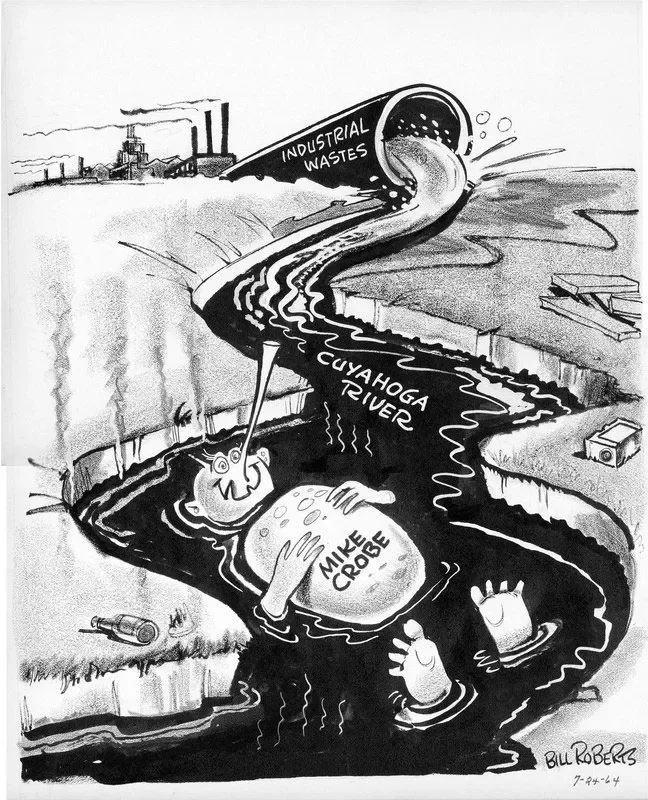
editorial cartoon “Waterfoul,” appeared in the Cleveland Press on July 24, 1964. Source: Cleveland Press Collection
Debris had a tendency to collect behind the railroad bridges near the Republic Steel Company, and this debris was made more flammable by the oil in the water. On June 22, 1969, a flare was apparently tossed from a passing train, which ignited the debris and oil slick on the river. The fire was quickly put out, lasting less than half an hour, and causing very little damage. It was over so quickly, in fact, that no photos were taken.
Several of the previous fires were much more serious, however. The fire in 1948 damaged a railroad trestle as well as a ship, for example. The worst fire, however, was in 1952. The blaze lasted several days and destroyed tugboats, buildings, and shipyards, with a cost of over $1 million ($1.5 million in today’s money).
While the 1969 fire was much less serious, it came at a time when the nation was beginning to focus on environmental issues. The fire became national news when Cleveland’s mayor, Carl Stokes, led the press on a pollution tour of the river. It gained more notoriety when Times Magazine featured Mayor Stokes and the fire in its August, 1969 issue. The article described the Cuyahoga as the river that “oozes rather than flows” and in which a person “does not drown but decays.”
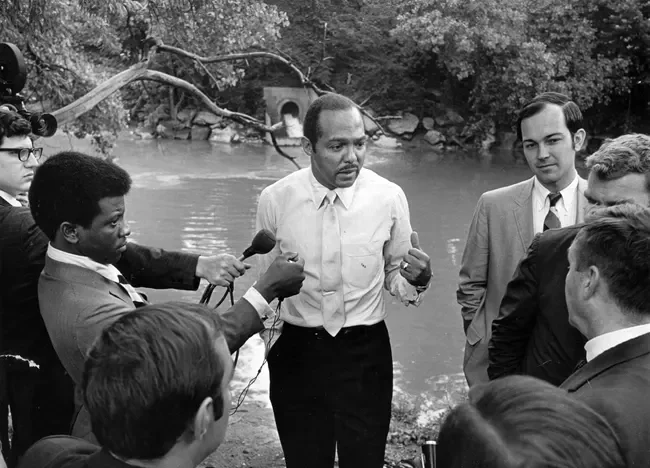
Mayor Carl B. Stokes gives a pollution tour for the press after the 1969 fire
Since there were no photos taken of the 1969 fire, the images used were from the 1952 fire, which became iconic symbols of the damage we’d done to our waterways. The Cuyahoga River fire, along with the oil spill that occurred off Santa Barbara at about the same time, helped galvanize public opinion and led to landmark laws like the Clean Water Act in 1972 and the establishment of the Environmental Protection Agency (EPA).
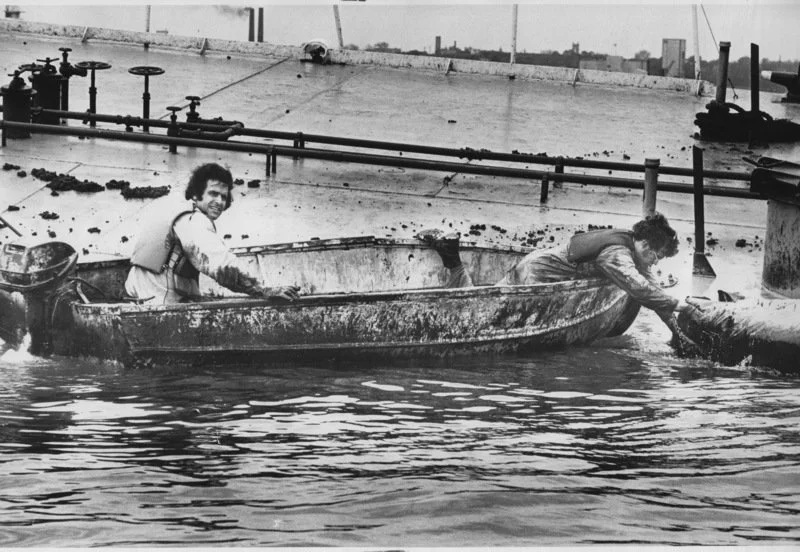
A small boat coated with oil. Source: Cleveland Memory Project, CSU
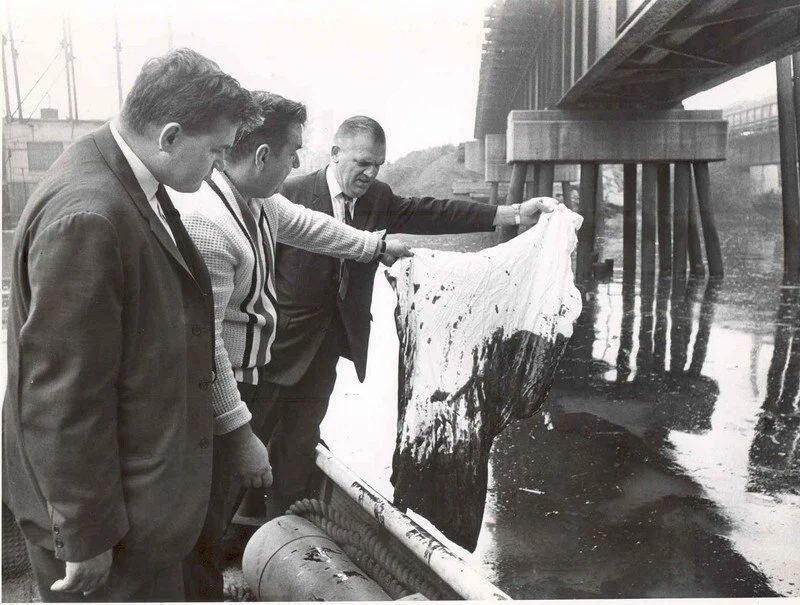
City councilmen inspect evidence of oil pollution. Source: Cleveland Memory Project, CSU
In the 56 years since the fire, much has been accomplished towards restoration of the Cuyahoga:
Most of the industrial pollution has been stopped, and cleanups of several toxic waste dumps have been accomplished.
The sewage treatment plants along the river have been improved, not only in the city of Cleveland, but its suburbs and the towns upstream.
A pair of custom vessels, the Flotsam and the Jetsam, were built specifically for the purpose of collecting and removing plastic and organic debris from the river. Students from the Davis Aerospace and Maritime High School crew the vessels and annually remove over 200,000 pounds of floating debris.
Dams are a major impediment to the river’s health. In 2020, the Brecksville Dam, which was originally built to provide water for the Ohio and Erie Canals was taken out. The 100 year old Gorge Dam is next, but before it can be removed, a century’s worth of toxic sediment in the lake behind the dam must be dredged up and removed.
Not only have fish returned, but in 2019, the ban on consuming fish from the river was lifted. Much of the fauna has returned as well, including otters, eagles, and herons. The first trumpeter swans, an endangered species, were spotted nesting along the river in 2022. The river is now a favorite with local kayakers, fishermen and birders. While not quite pristine, the river has come a long way since it caught on fire in 1969.
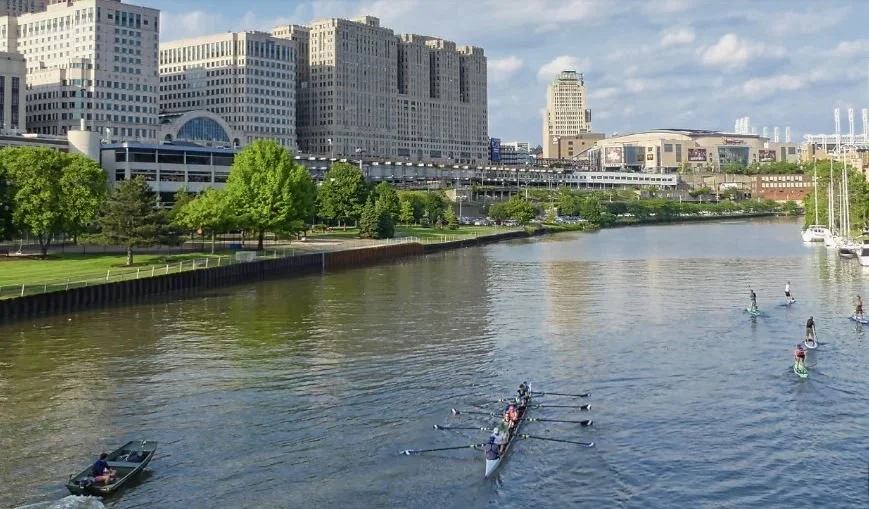
The Cuyahoga Last Summer Photo Courtesy of American Rivers Org
See you next week…