
America's Great Tow Canals
/
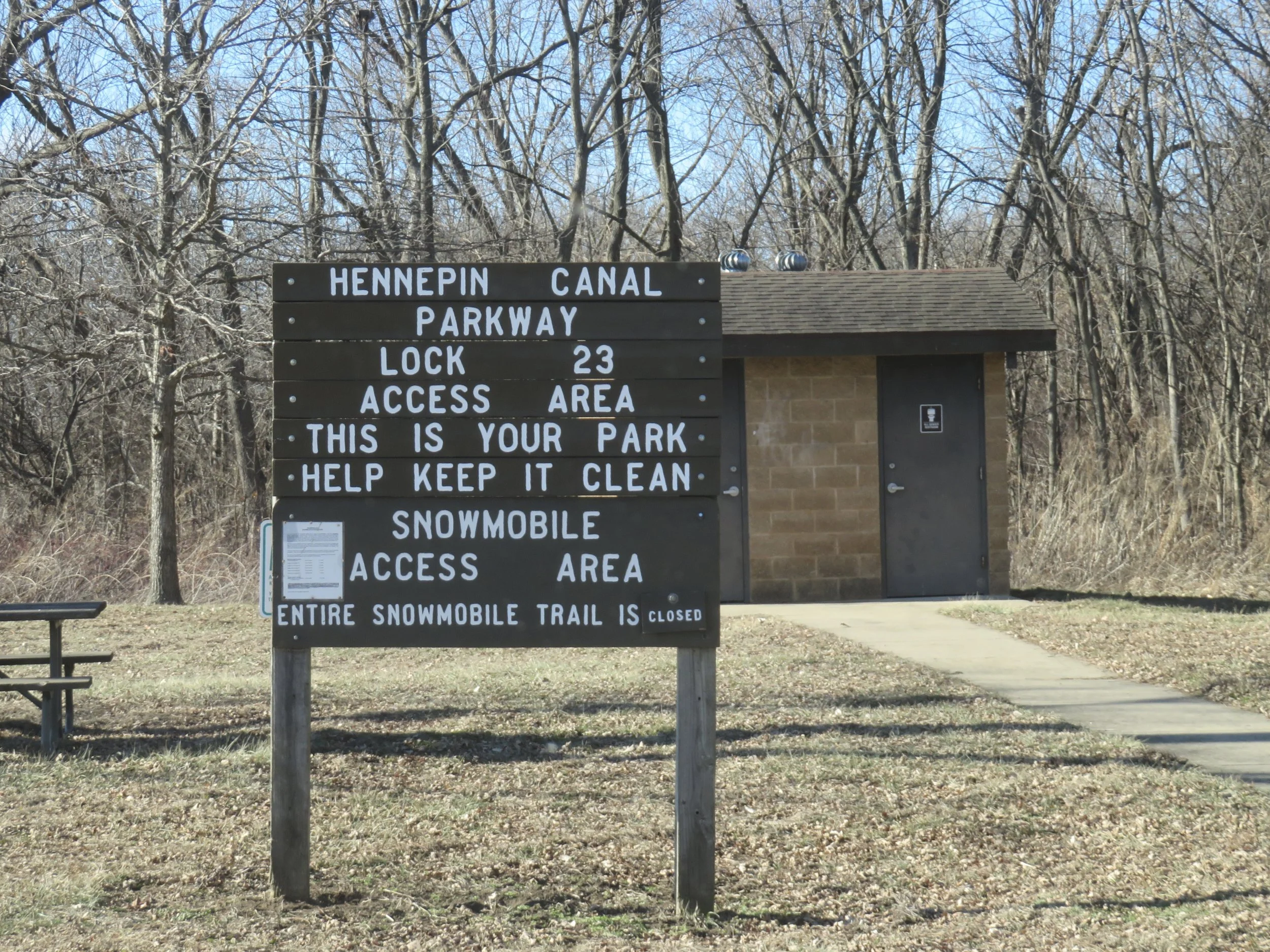
Our Route took us along the Hennepin Tow Canal
While traveling along US-6 through Illinois, a portion of our route followed the Hennepin Canal, one of many tow canals built in the U.S. during the 19th century. The Hennepin Canal was part of a system of waterways that connected Chicago to the Mississippi River.
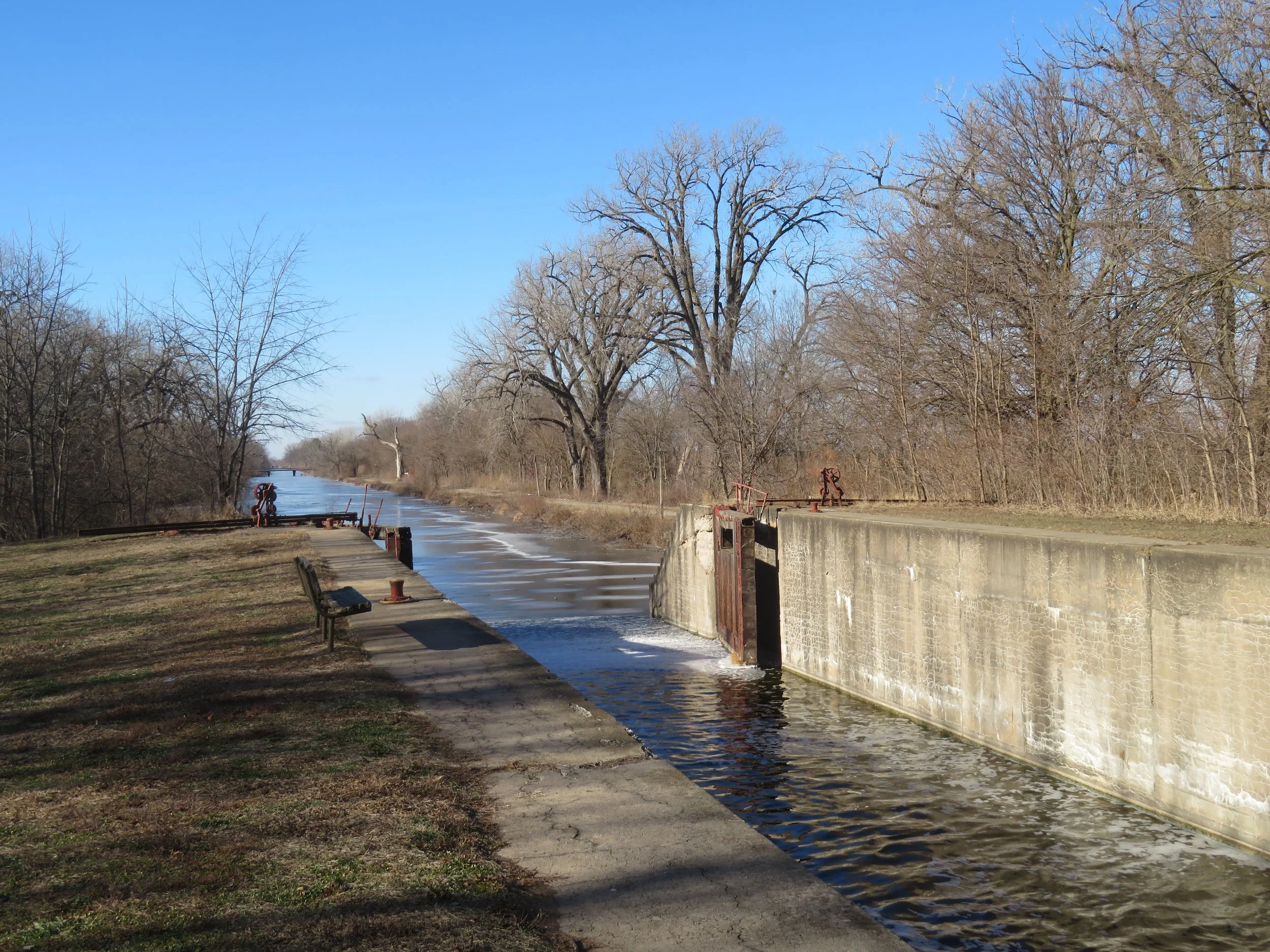
one of 33 locks along the Hennepin Canal
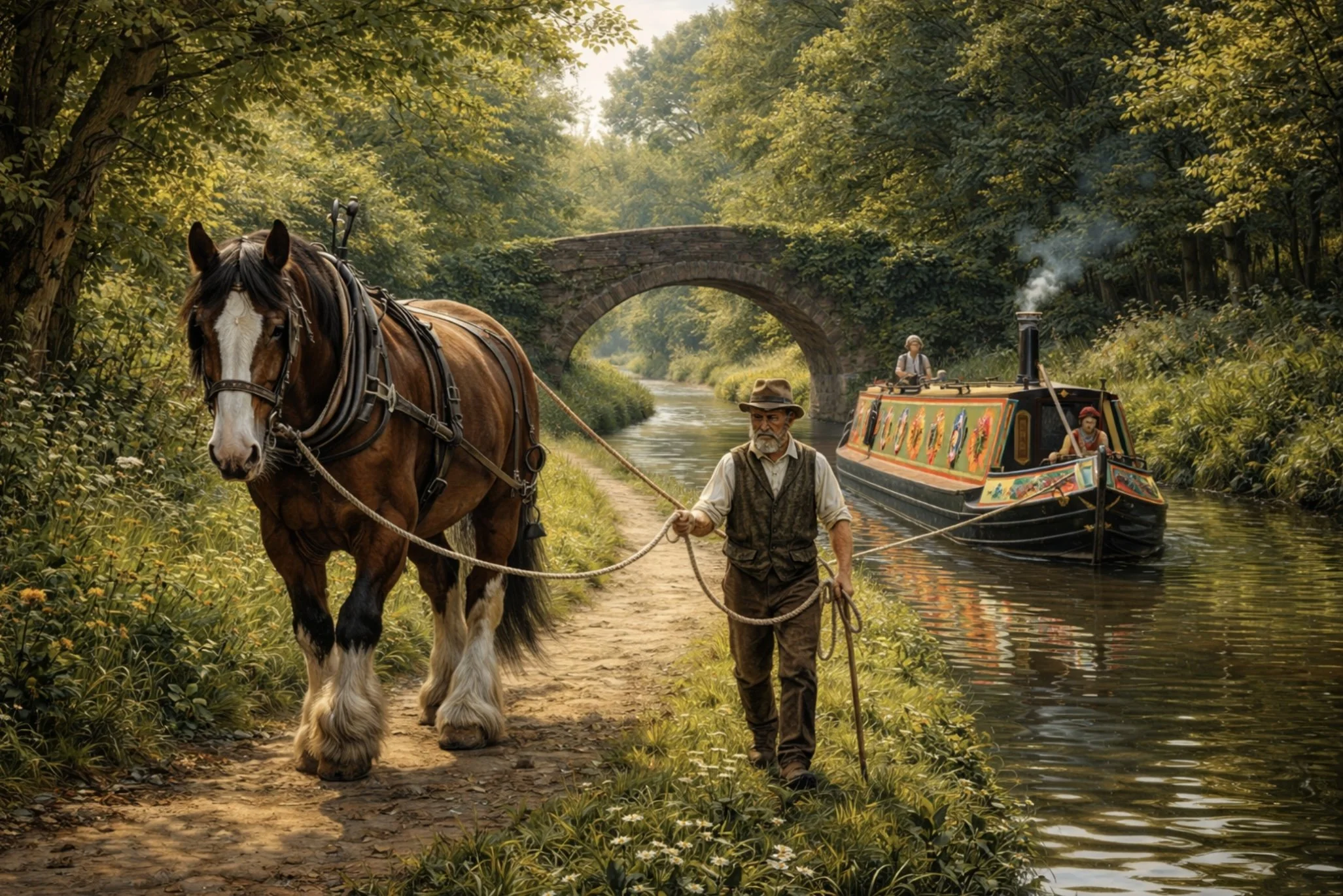
Tow canals were artificial waterways with towpaths along the bank. Horses or mules, harnessed to long tow lines, pulled barge-like canal boats along the canals. This system was far more efficient than overland wagon travel, which was slow, costly, and limited by poor road conditions. A single animal could pull many tons of cargo on a canal, making it possible to move bulk commodities such as grain, coal, lumber, iron, and stone cheaply and reliably.
Tow canals have been in use in Europe since the mid-1600s, but it wasn’t until the 19th century, that they began playing a major role in the development of the United States. Before the rise of railroads, canals provided the most efficient means of transporting heavy goods over long distances. By linking rivers, lakes, and inland regions, tow canals helped unify a growing nation, lowered transportation costs, stimulated industrial growth, and accelerated westward expansion.
What I found surprising was the number of canals that were built in the 1800s and 1900s. More than 150 canals were dug during this period, and over 4000 miles of navigable canals were constructed by the end of the 19th century alone.
The Erie Canal, completed in 1825, stands as the most significant American tow canal of the 19th century. Running 363 miles from the Hudson River to Lake Erie, it created a continuous water route between the Atlantic Ocean and the Great Lakes. The canal transformed New York City into the nation’s leading commercial port.
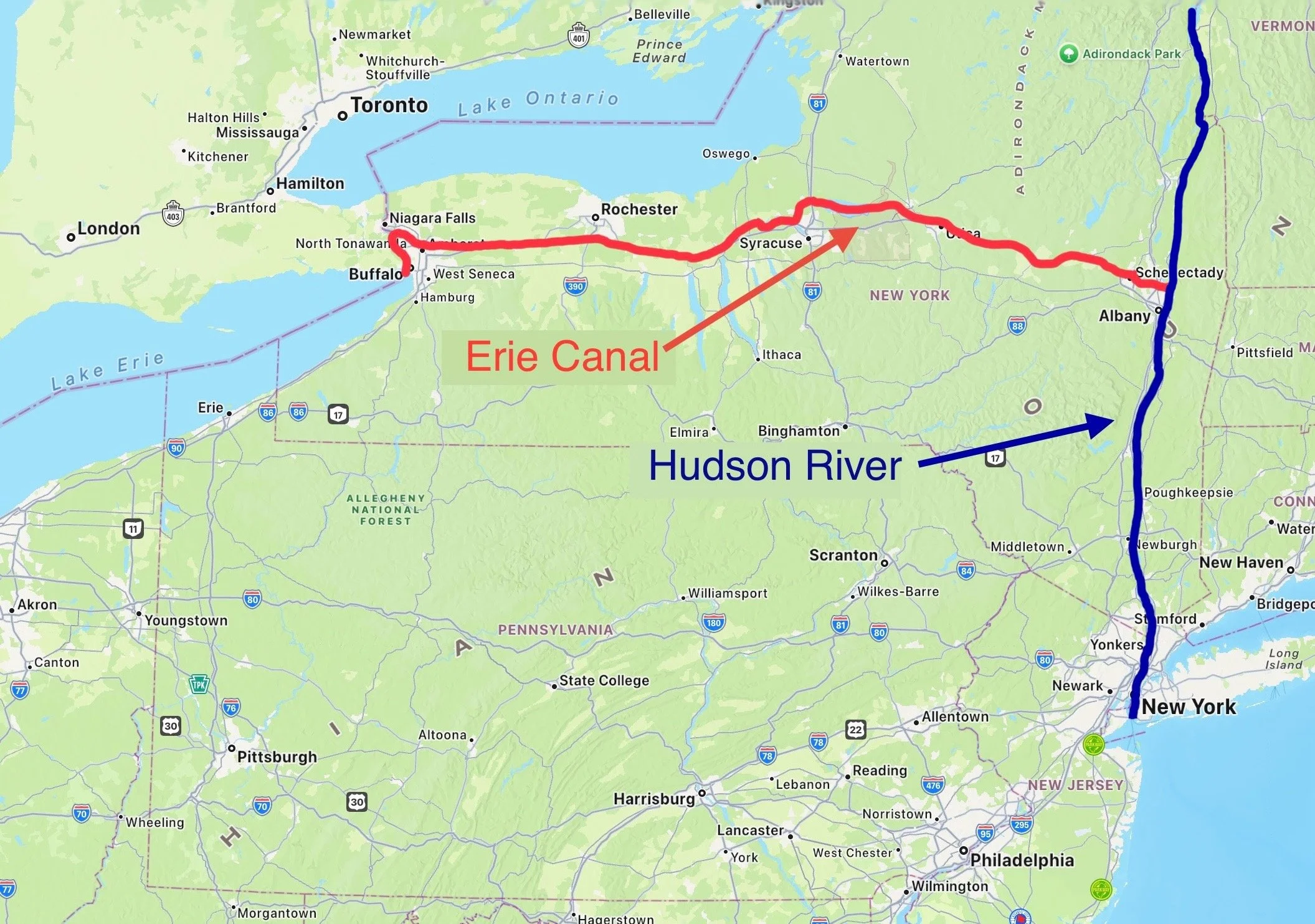
The Erie Canal was the most significant U.S. tow canal of the 19th Century
Other major tow canals expanded this network. For example , the Chesapeake and Ohio Canal (C&O Canal), constructed along the Potomac River from Washington, D.C. into western Maryland, successfully transported coal, timber, and agricultural goods for decades.
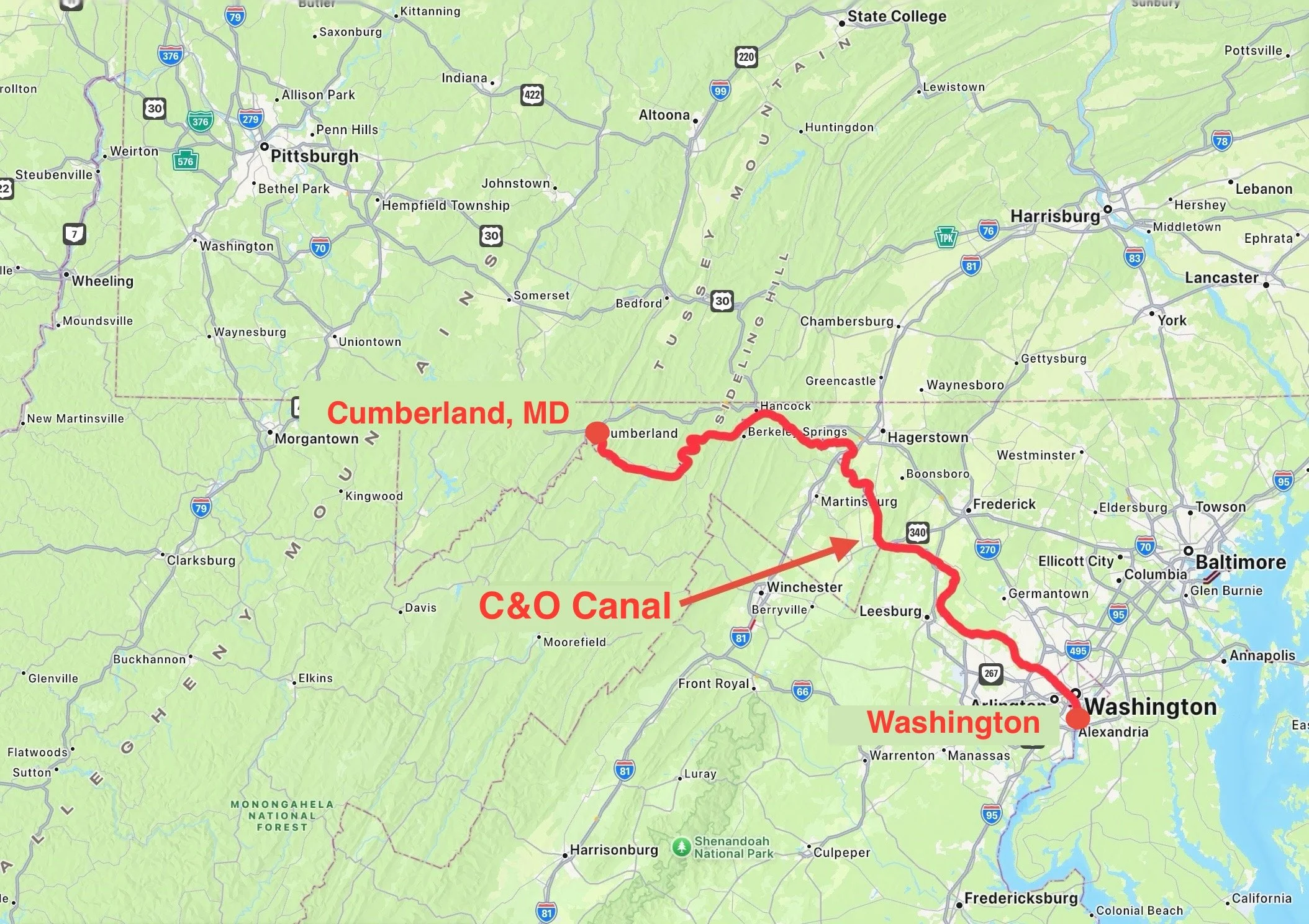
Route of the C&O Tow Canal
In the Midwest, canals such as the Ohio and Erie Canal and the Illinois and Michigan Canal, as well as the Hennepin, linked the Great Lakes with the Ohio and Mississippi River systems. These waterways, called the Great River Road, allowed Midwestern farmers to ship crops efficiently and helped cities like Cleveland, Chicago, and Toledo grow into major commercial centers. The Illinois and Michigan Canal or I&M Canal, in particular, with a length of 96 miles, established Chicago as a critical transportation hub by connecting Lake Michigan to the Illinois River, and on to the Mississippi.
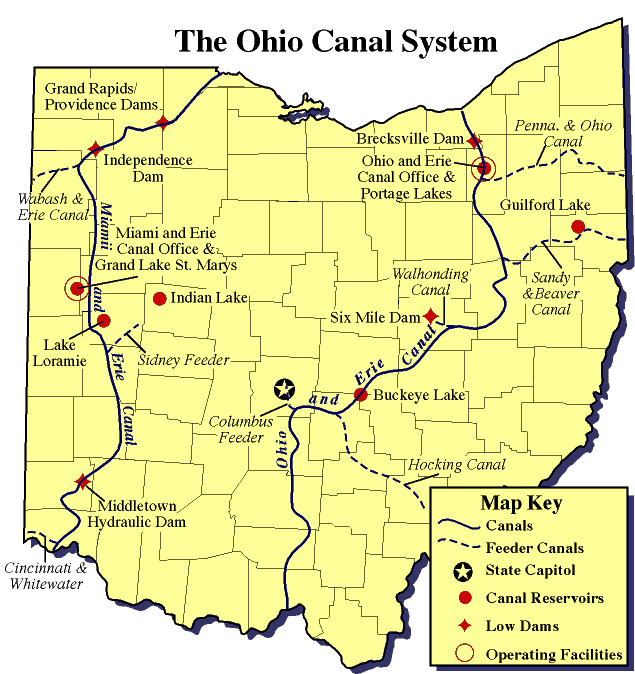
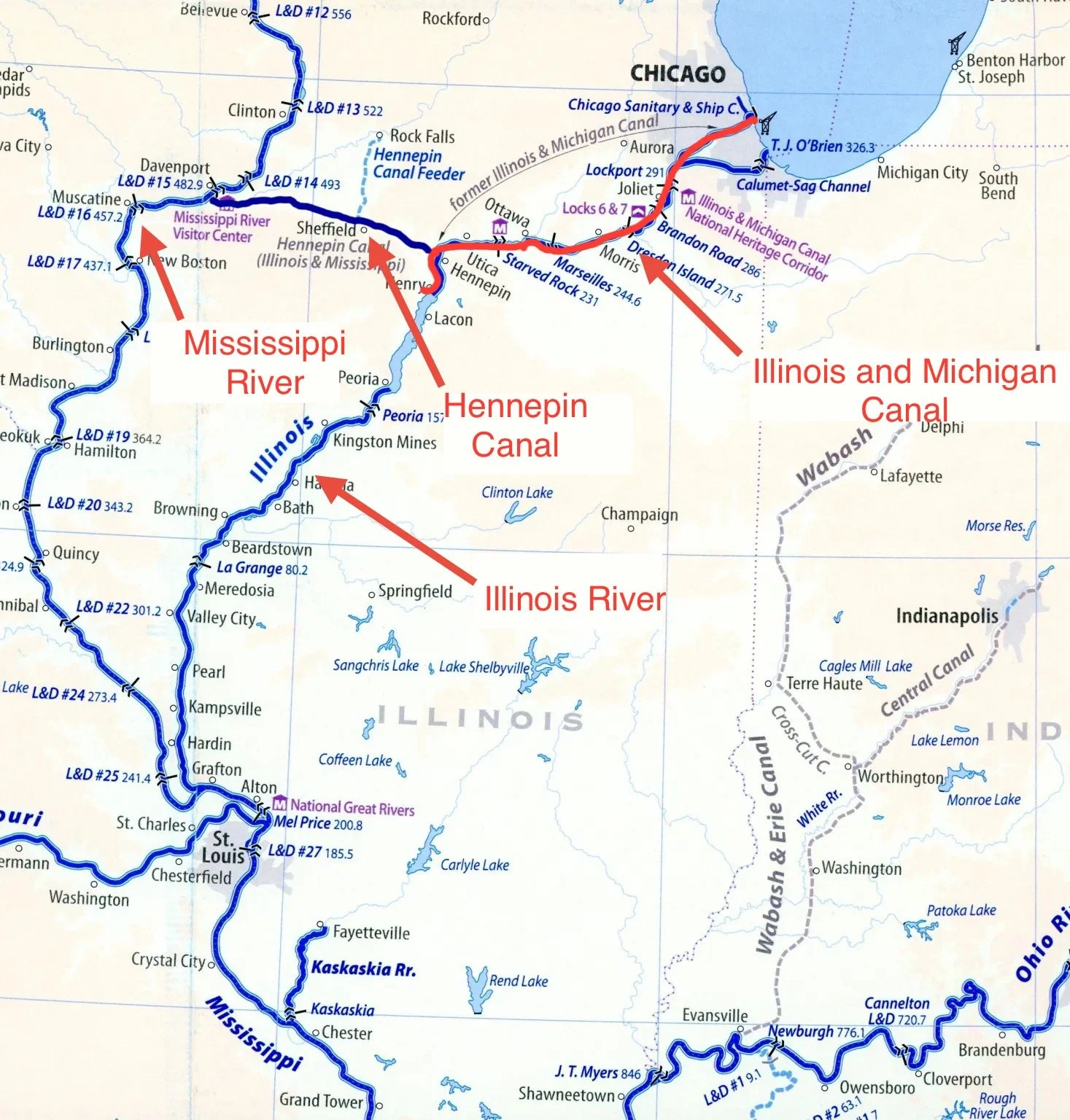
By the late 19th century, railroads gradually replaced canals as the dominant mode of transportation due to their speed and year-round operation, causing most of the tow canals to shut down.
What is surprising to me, however, is that at least 64 canals are still operating, although, with only a few exceptions, they are no longer tow canals. Small steam engines, followed by the internal combustion engine made it unnecessary for vessels to be towed by horses or mules.
Many of the old tow canals that are no longer being used have been converted into public recreational areas. The tow paths that were once used by horses and mules to tow the canal boats have been, in many cases, transformed into bike and walking paths. The Hennepin Canal is one example. It was constructed to connect the Illinois and Mississippi rivers, providing a shorter, faster water route from Chicago to the Mississippi. When completed, it was 155-miles long and had 33 locks. Today, it is an Illinois State Park, with trails along much of the original towpath.
Two other examples are the C&O Canal Towpath, which has been transformed into a 185-mile trail that runs from Washington, D.C., to Cumberland, Maryland, and the Ohio & Erie Canal Towpath Trail, now a 90-mile bike path in Ohio. These two repurposed towpaths are near and dear to us, as we had the opportunity to ride the entire lengths of both on our bikes a few years ago.
The most important and impressive canal still in operation in North America is the St. Lawrence Seaway, which was completed in 1959. It is actually a system of canals, locks and deep-draft channels that permit ocean-going vessels to travel from the Atlantic Ocean to the Great Lakes. Somewhere between 4,000 and 8,000 vessels transit the canal each year, transporting an estimated 200 million tons of cargo.
In our sailing days on Nine of Cups, we didn’t have the opportunity to transit the St Lawrence Seaway, but we did negotiate a number of other canals along the east coast, including the Cape Cod Canal, the Canaveral Barge Canal, and several canals along the Intercoastal waterway.
A little trivia… what is the most famous and longest American built canal still in operation as a tow path? Answer: the Panama Canal, although the “mules” used to tow the vessels are now small, powerful electric locomotives that travel along tracks on the sides of the canal. On our three trips through the canal, we were required to have four, 150-foot lines that were attached to the electric mules that towed us through each of the six locks.
See you next week…