
Old Las Vegas Mormon Fort - The Birthplace of Las Vegas
/
From the Old Las Vegas Mormon Fort State Historic Park website
We’re constantly on the lookout for things to do in the Las Vegas area that don’t include Downtown or The Strip. We read NPR’s Desert Companion, and I recently subscribed to the free Nevada Magazine and Visitor Guide. Both offer ideas for local attractions as well as long and short road trips within the state. One suggestion was visiting the Old Las Vegas Mormon Fort State Historical Park, which, coincidentally, is less than a mile from Downtown on Las Vegas Boulevard and very close to home.
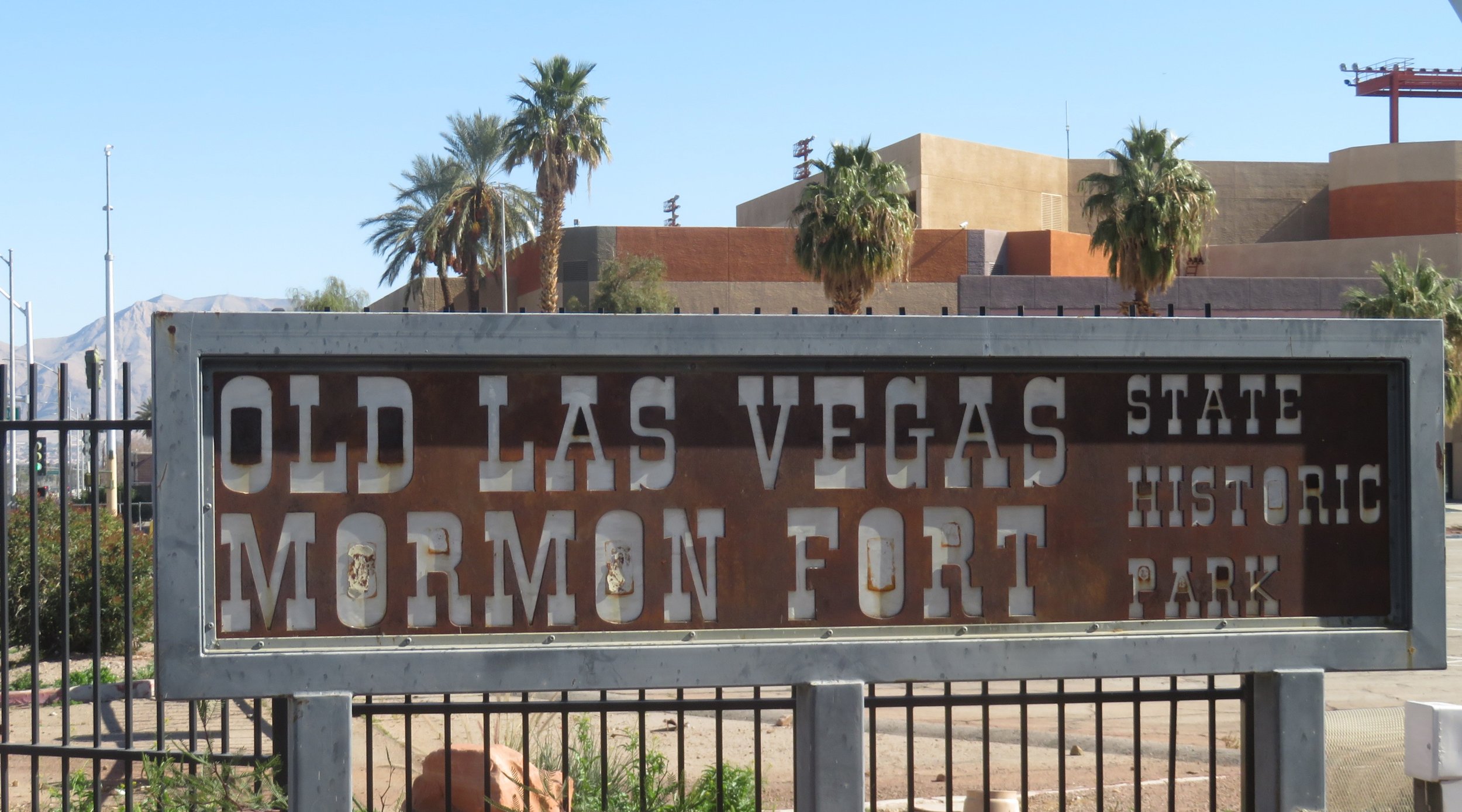
Nestled between the Cashman Center and tech companies in Las Vegas’ Innovation District is a 2.5 acre state historical park known as the Old Las Vegas Mormon Fort. Back in 1855, Mormon missionaries were charged with building an adobe fort along the Las Vegas Creek, the only water source in the area. It was not a fort in the military sense, but rather an outpost and a welcome stop for travelers between Salt Lake City and Los Angeles along the Old Spanish Trail.
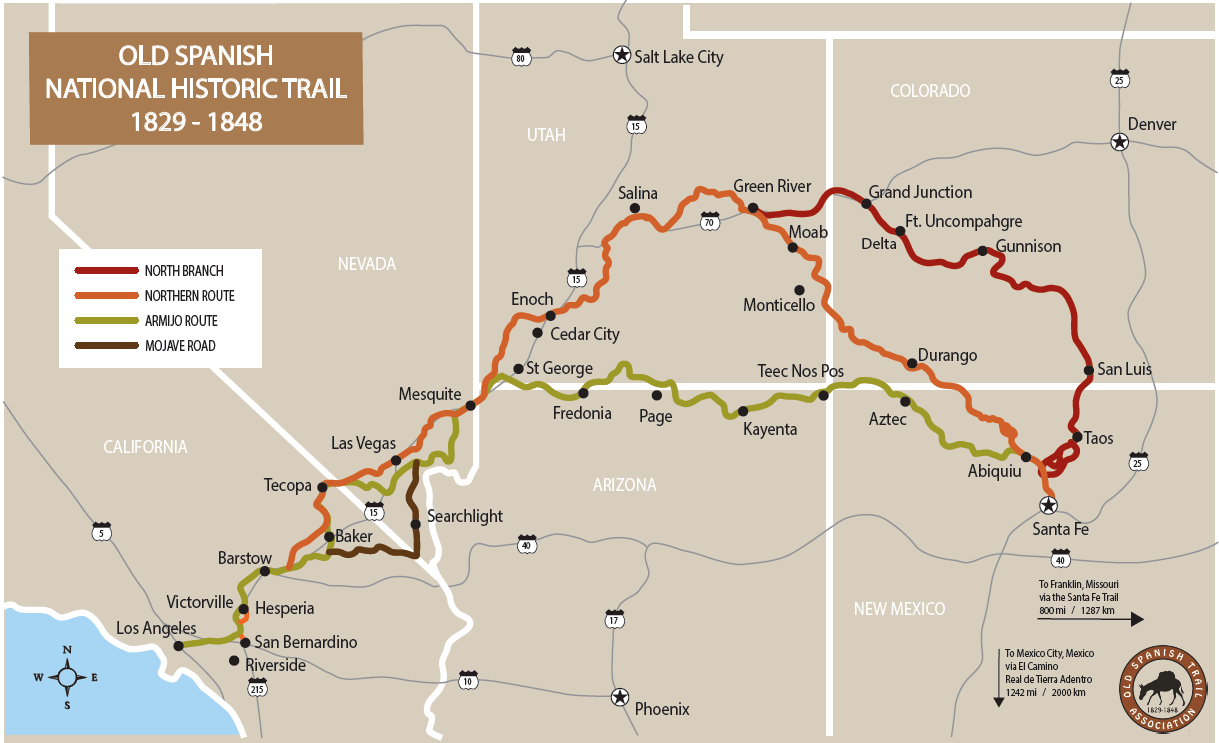
Las Vegas was a welcome stop between Salt Lake City and Los Angeles
The Visitor Center offers an introductory short film, lots of history about the fort, and the changes it underwent during the course of its existence. Click the link above to watch the YouTube video we watched. According to Wikipedia, “This is the only U.S. state park located in a city that houses the first building ever built in that city.” Parts of the original building walls are still visible inside the fort walls.
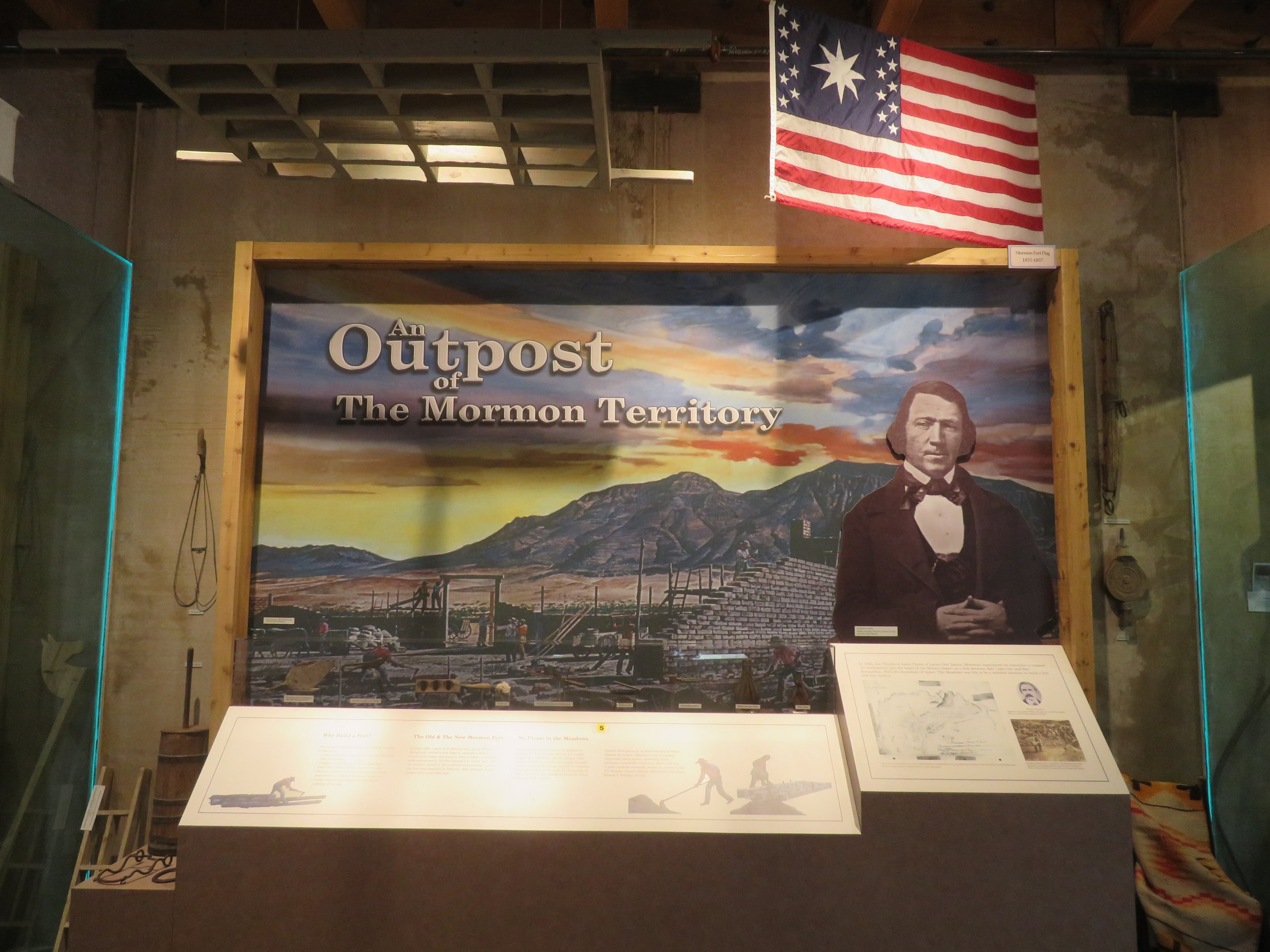
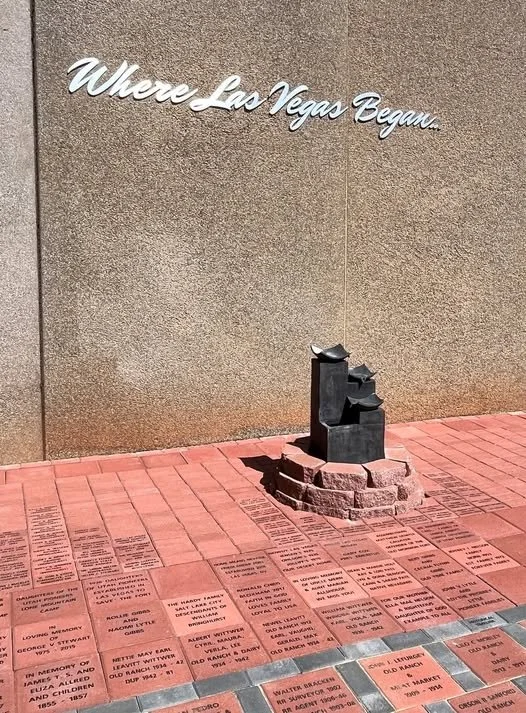
Though Native Americans had been here for centuries and the spanish had named Las Vegas (the Meadows) in the early 19th century, it was the Mormons who developed the fort along the las Vegas Creek that would subsequently become ‘The Birthplace of Las Vegas’.
The fort went through many owners and iterations. The Mormon fort lasted only two years until 1857, when it was abandoned after crop failures, poor mine yields, and dissension among the leaders. In 1861, it was used as a storage facility, then purchased in 1865 as a ranch, which was subsequently lost to the Stewarts due to unpaid loans.
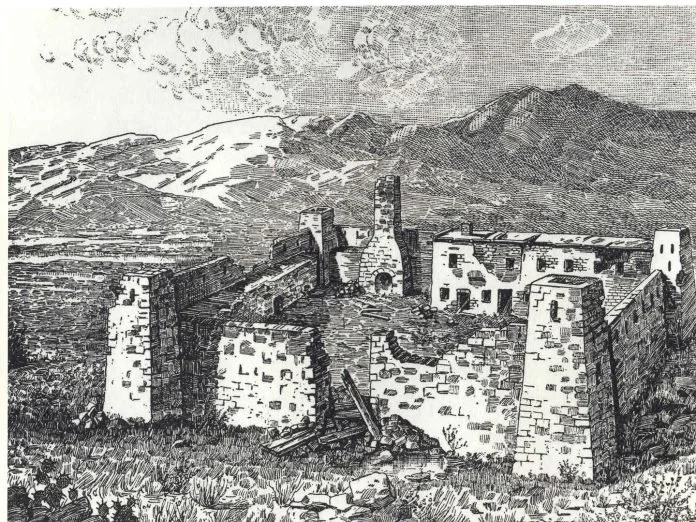
Line drawing of the Old Fort by Thaddeus Kinderdine, 1858
Helen Jane Wiser Stewart and her husband, Hiram, took over the Los Vegas Rancho (yup, Los Vegas) in 1881. Her husband was killed in a gunfight in 1884, and Helen Stewart, along with her father, managed the ranch for nearly two decades. She bought adjacent properties speculating on the arrival of the railroad. She subsequently sold the land to the San Pedro, Los Angeles, and Salt Lake Railroad in 1902. It is this land that was established as the city of Las Vegas in 1905.
A note of interest here… the town was referred to as Los Vegas until 1903, to avoid confusion with Las Vegas, New Mexico. It was only when the railroad arrived that the city was renamed Las Vegas.
A statue of Helen Jane Wiser Stewart stands proudly in the courtyard outside the fort's entrance. Considered the ‘First Lady of Las Vegas’, Stewart was a southern Nevada pioneer woman, the first postmaster of Las Vegas, and the first woman elected to the Clark County School District’s Board of Trustees. It was Stewart who donated land for the Las Vegas Grammar School, which was the first public school attended by Native American students.
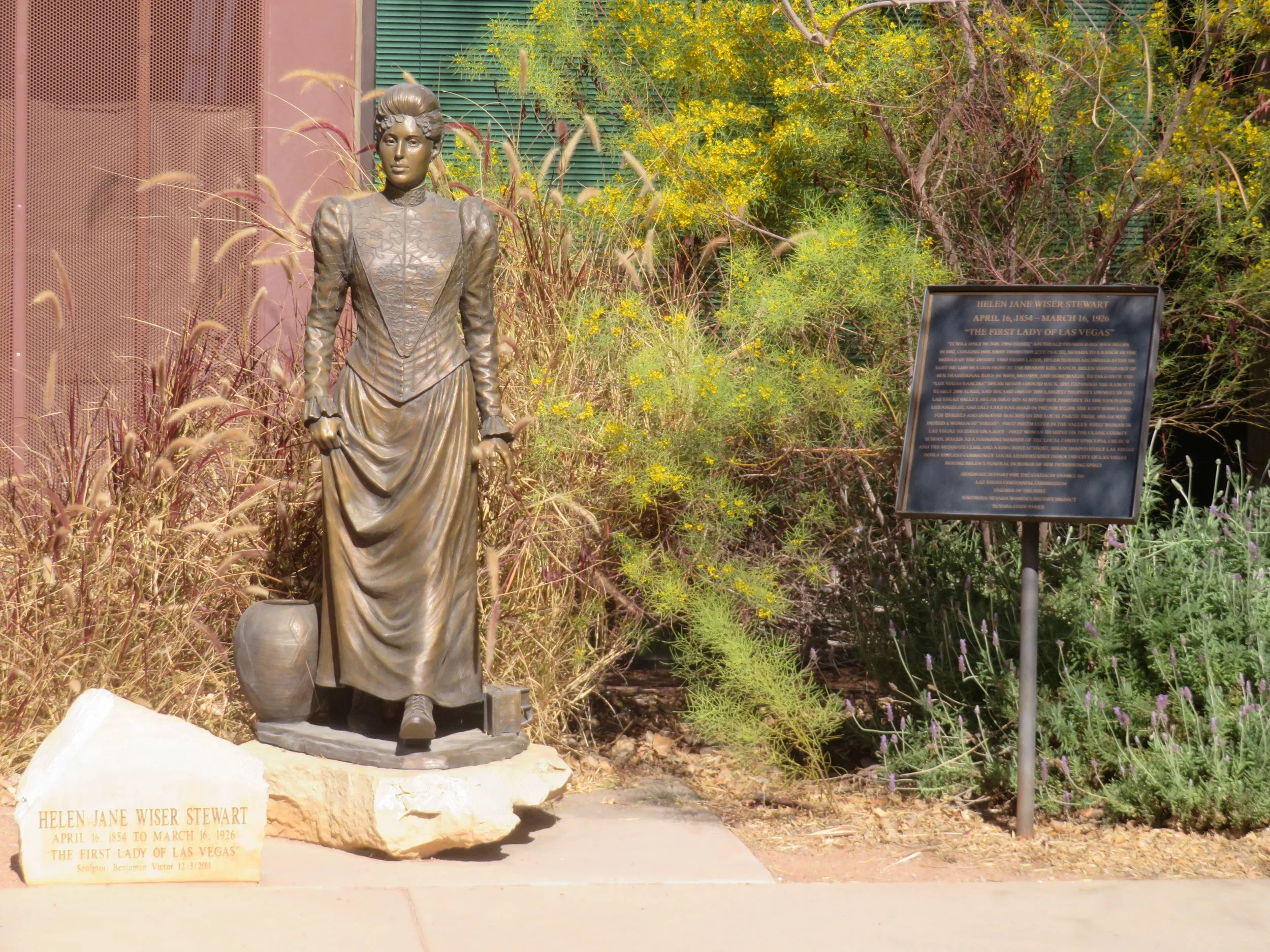
A tribute to Helen Jane Wiser Stewart, ‘The First Lady of Las Vegas”
We learned from the Park’s website that during the construction of Hoover Dam (1929 -1931), the Bureau of Reclamation leased the adobe building and used it as a concrete testing laboratory. Several families called the fort buildings home for a short time before it was acquired by the Las Vegas Elks, who operated a restaurant on the premises. The City of Las Vegas purchased the property in 1971, and the Nevada State Parks acquired the site from the City in 1991, and developed the grounds to include a partial reconstruction of the fort, a modern visitor center, and a re-creation of the Las Vegas Creek. The Old Las Vegas Mormon Fort State Historic Park remains committed to preserving and sharing the birthplace of Las Vegas…”
One building contains some of the original adobe bricks from the fort, but most everything else has eroded or been destroyed throughout the years and recreated when the park was developed.
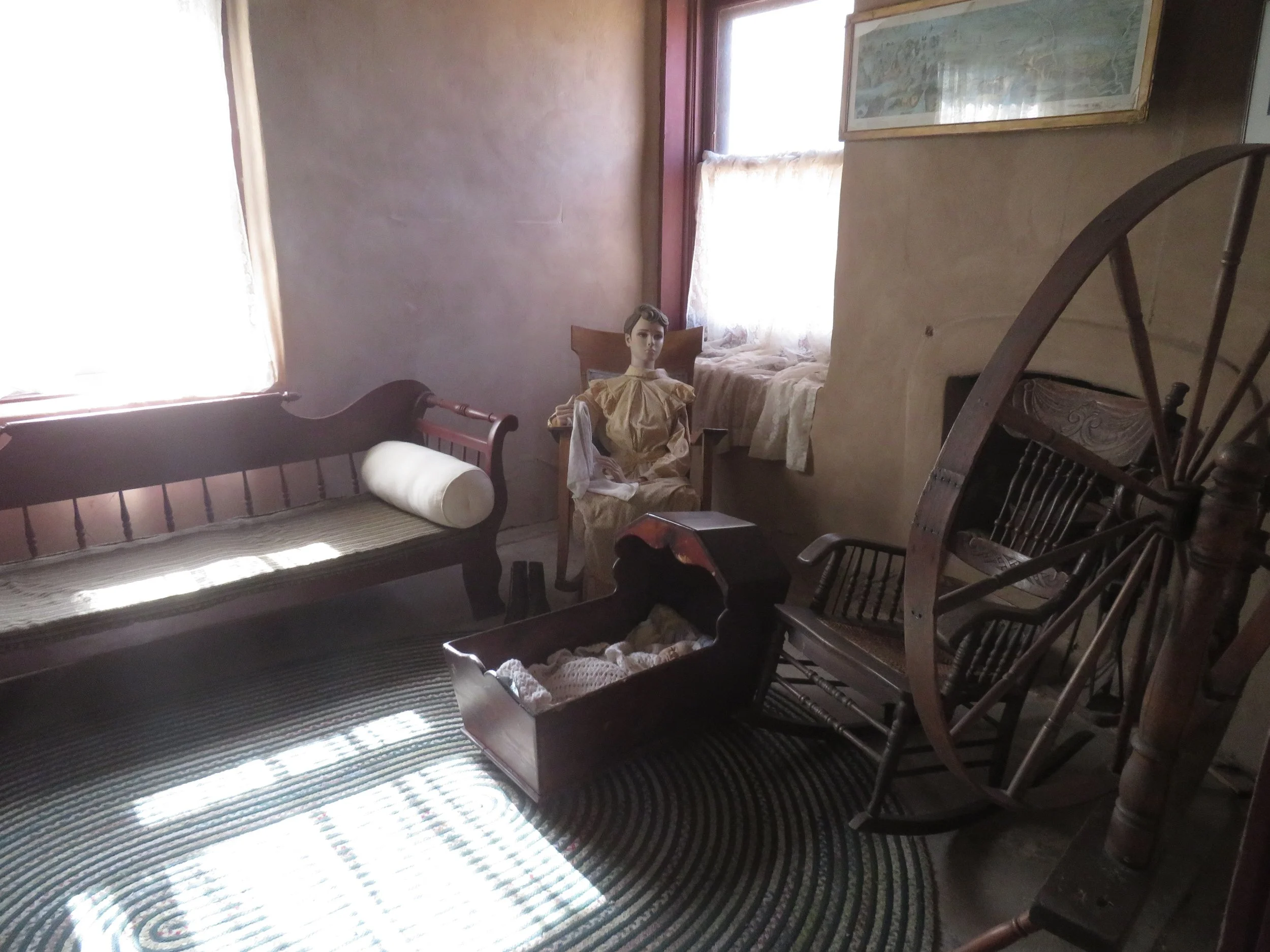
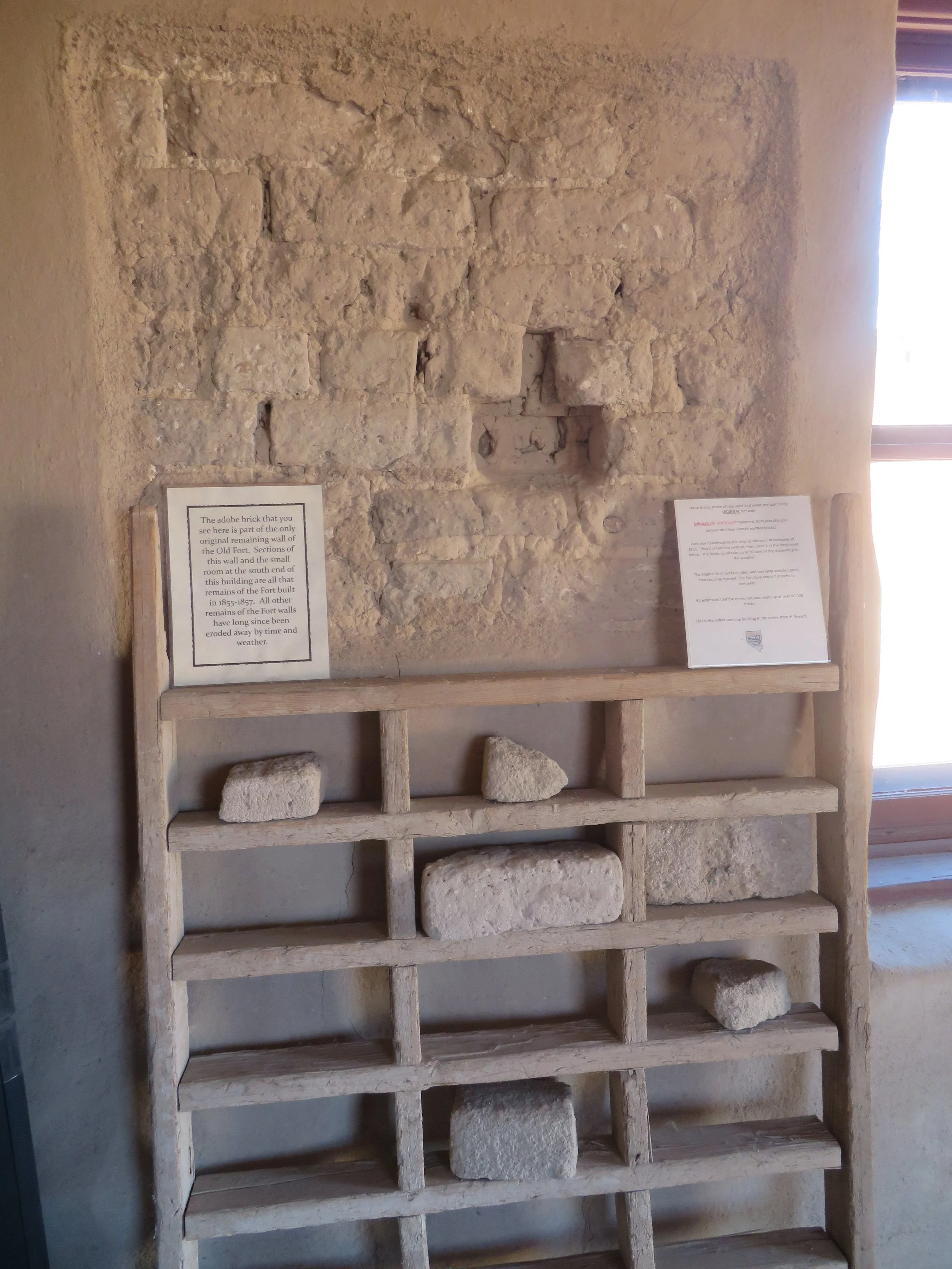
A re-creation of the Las Vegas Creek was developed on site, a reminder of the importance fresh water played in the establishment of the fort, the town, and subsequently the sprawling city of Las Vegas.
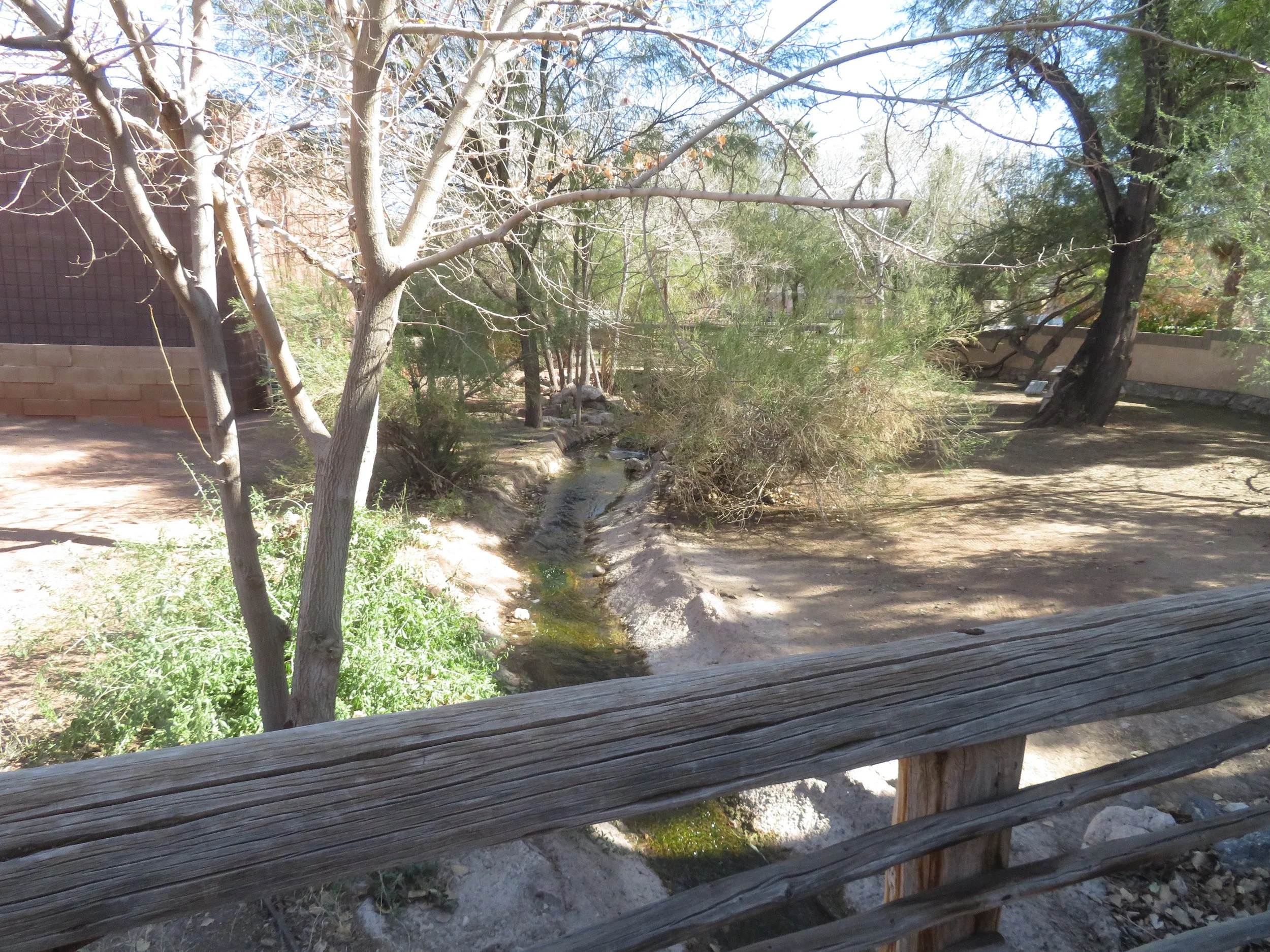
Re-creation of the Old Las Vegas Creek
It was interesting to wander around the grounds of the old fort, and we enjoyed the history lessons.
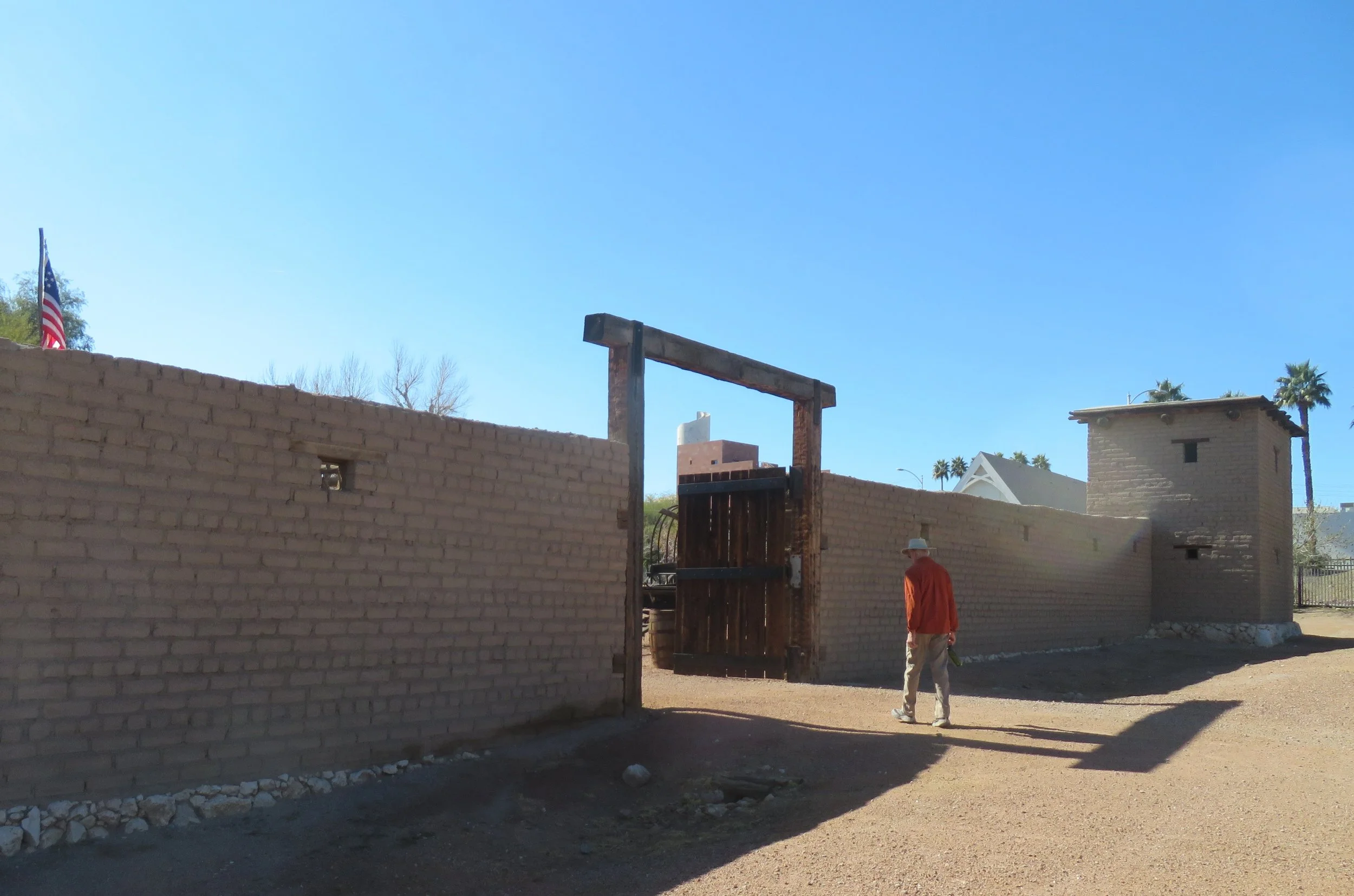
The original adobe brick fort walls have long ago eroded, but have been re-created by the historic park.
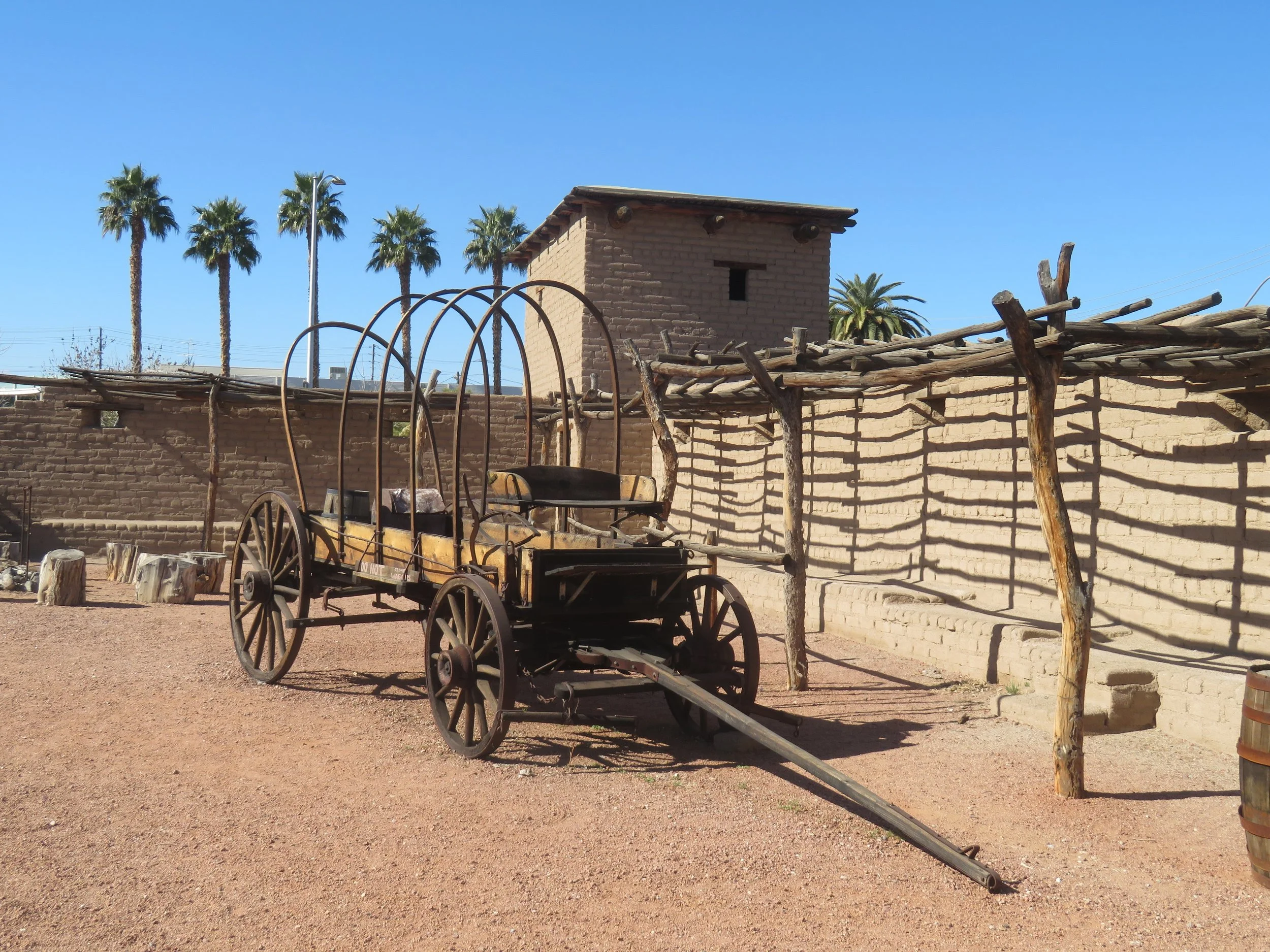
Interior view of the fort
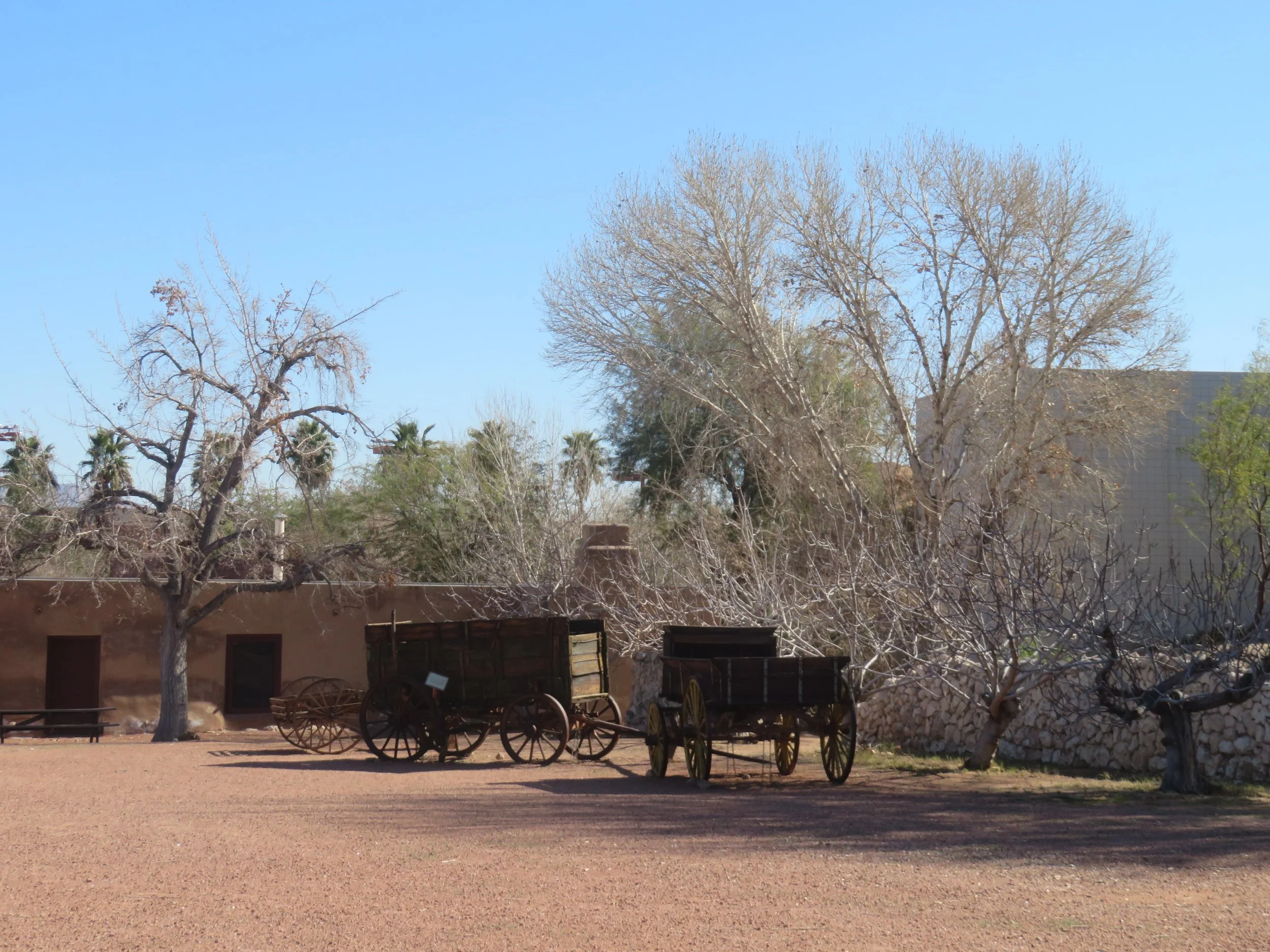
Old wagons and buckboards were on display.
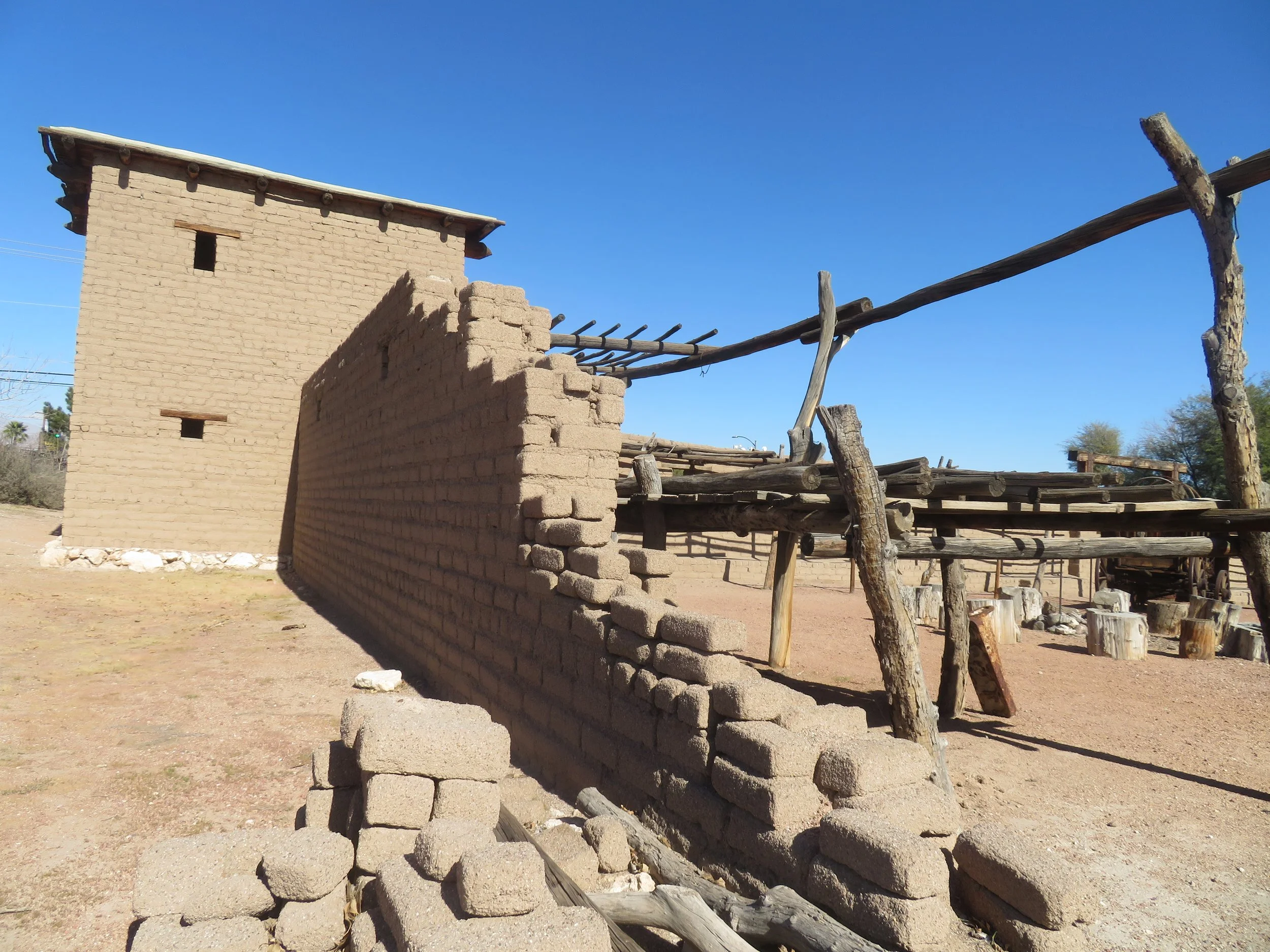
Piles of old adobe bricks
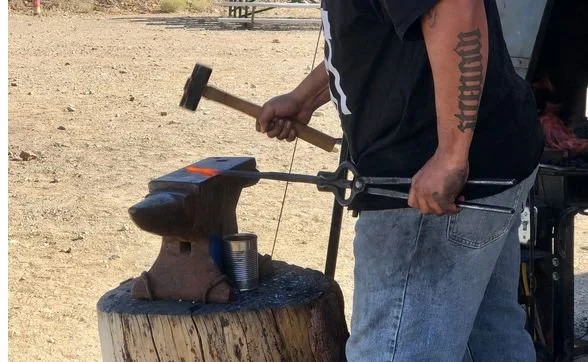
While we were there, a blacksmithing class was in progress. There are also tinsmithing classes offered which actually seemed like something that might be fun to do sometime in the future.
Learning more about the place we now call home is always a pleasure. We appreciate the history, the trivia, and the enormity of what has happened over the course of a century and half.