

Our Indoor Monsoon - A Slightly Damp Sequel
/In my last blog, I shared the soggy saga of five brass water fittings that all decided—within a few days of each other—to corrode, fail, and unleash an indoor rainfall into our laundry room, garage, bathroom, and walk-in closet. Replacing those five offenders, along with the remaining thirteen brass fittings before they joined the rebellion, took the better part of two days.
This week’s installment—Part II of the Saga of Unwanted Indoor Water Features—covers the less glamorous but equally important aftermath: drying out or removing wet drywall before mold could move in, then repairing, texturing, and painting everything back to something resembling a normal house.
Hunting for Moisture
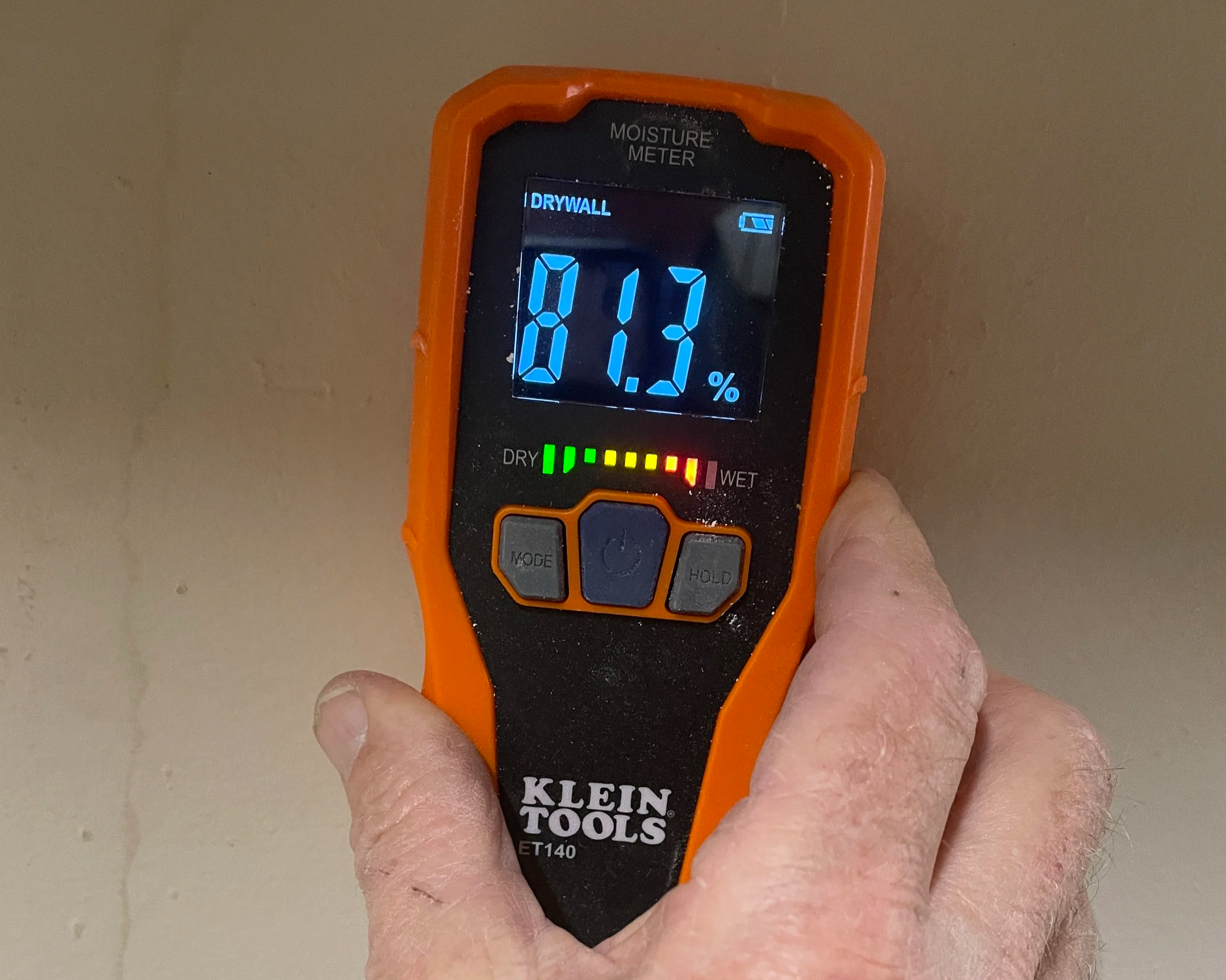
We started by checking the ceilings and nearby walls with my brand-new moisture meter, a device that makes me feel far more competent than I probably am. The readings ranged from a dry 10% to a totally sopping 99%.
The Laundry Room: A Ceiling with a Drain
In the laundry room, the ceiling had a “built-in drain” in the form of a light fixture, which allowed the water to pour directly into the room below instead of soaking the entire ceiling and adjoining walls. As a result, I only had to remove the wet drywall directly under the leak. Small victories.
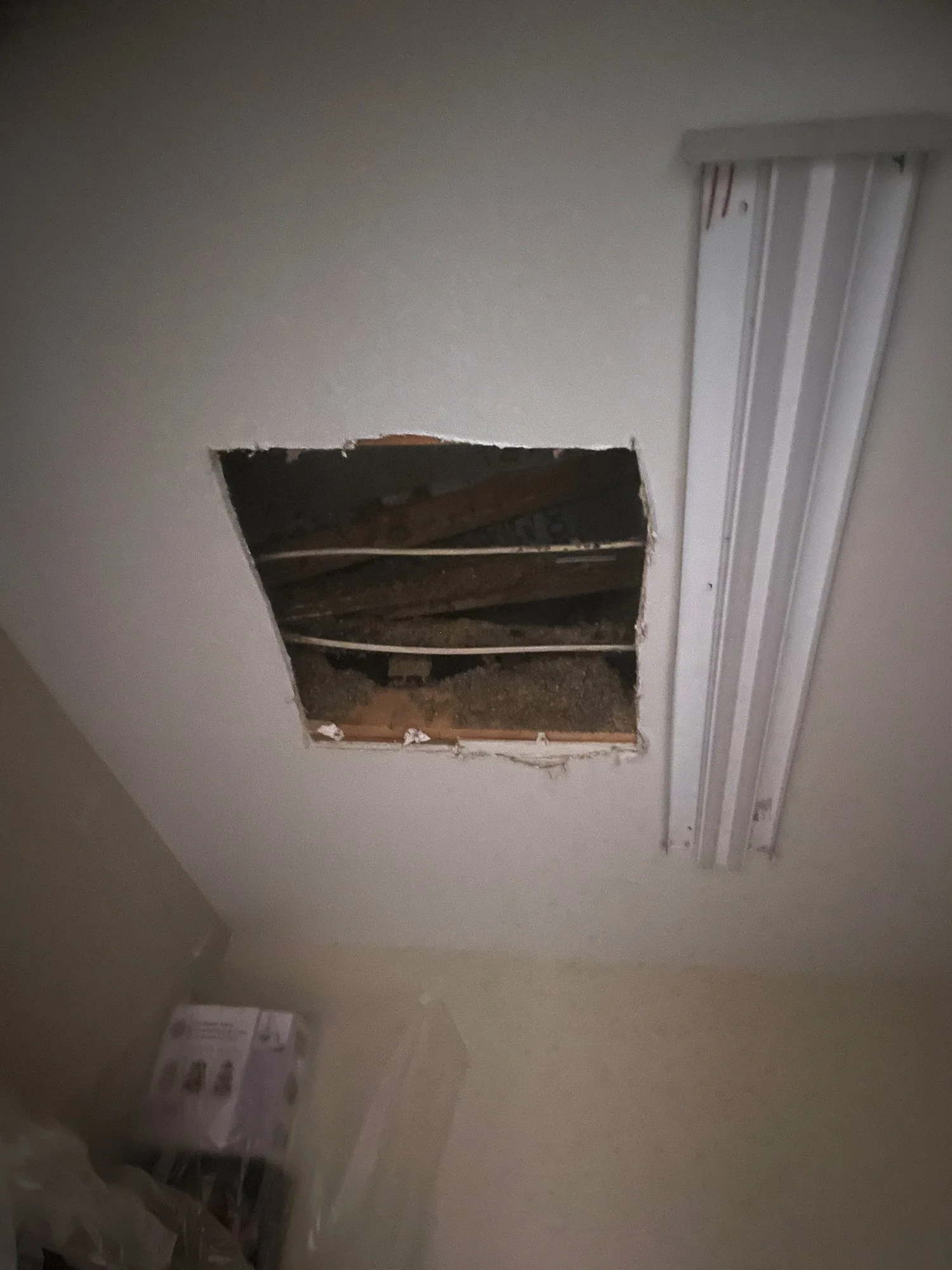
The Laundry Room Hole - next to the ceiling drain (aka Light Fixture)
The Closet: Overachiever of the Disaster
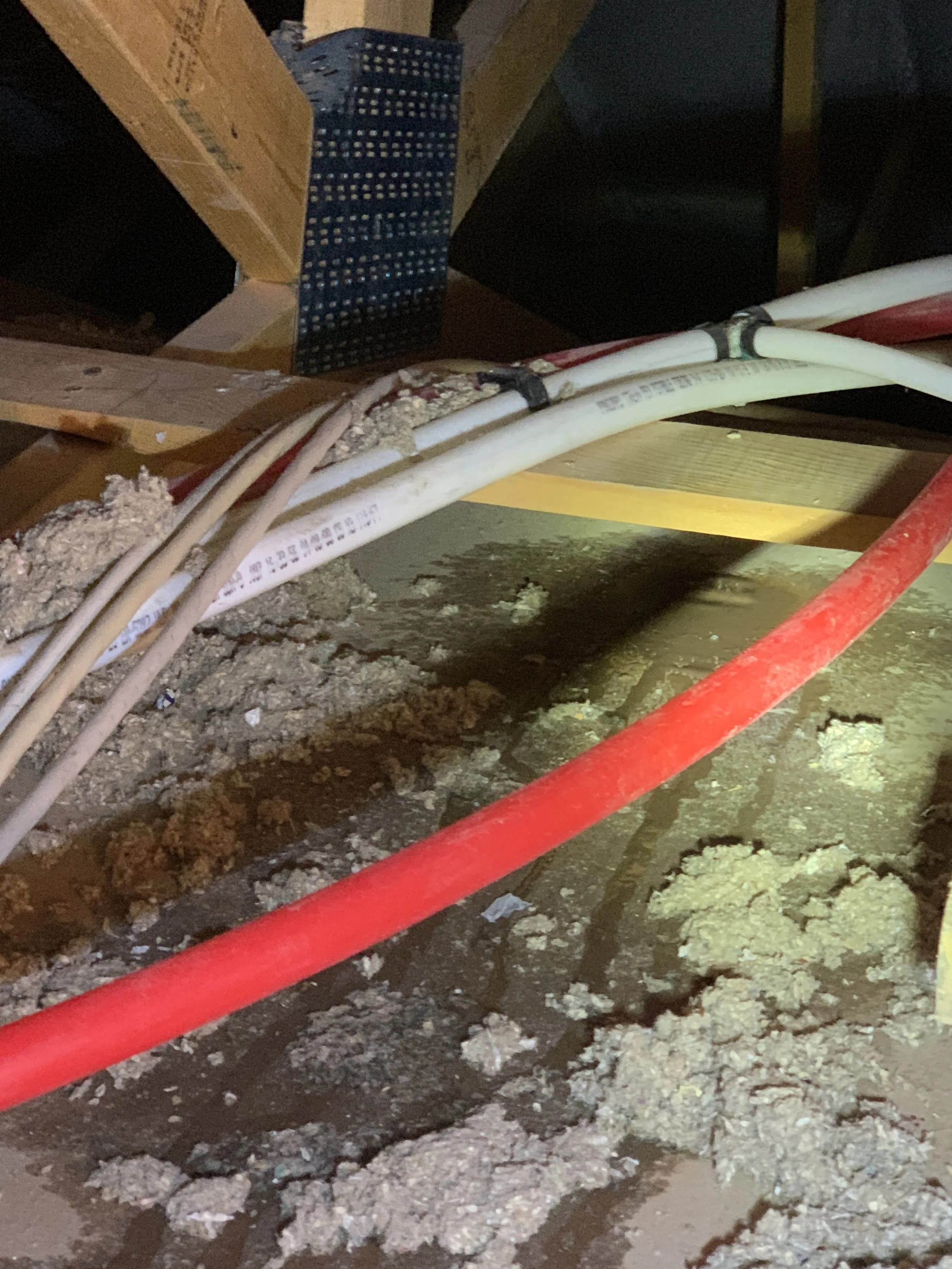
The walk-in closet wasn’t content with just one leak—it had two. One came from the attic, the other from inside a wall. The attic leak drained through an HVAC duct, leaving the ceiling drywall damp but not damaged. Because it was accessible from above, I was able to dry it out with a fan and heater.
The wall leak, however, was far less cooperative. It damaged a good chunk of drywall and required cutting multiple holes in two walls to locate and replace the corroded fitting and remove the wet drywall. Between the two leaks, the carpet and pad were thoroughly soaked, so out they came. Nothing says “homeownership” quite like hauling soggy carpet out of a closet.
Bathroom Antics
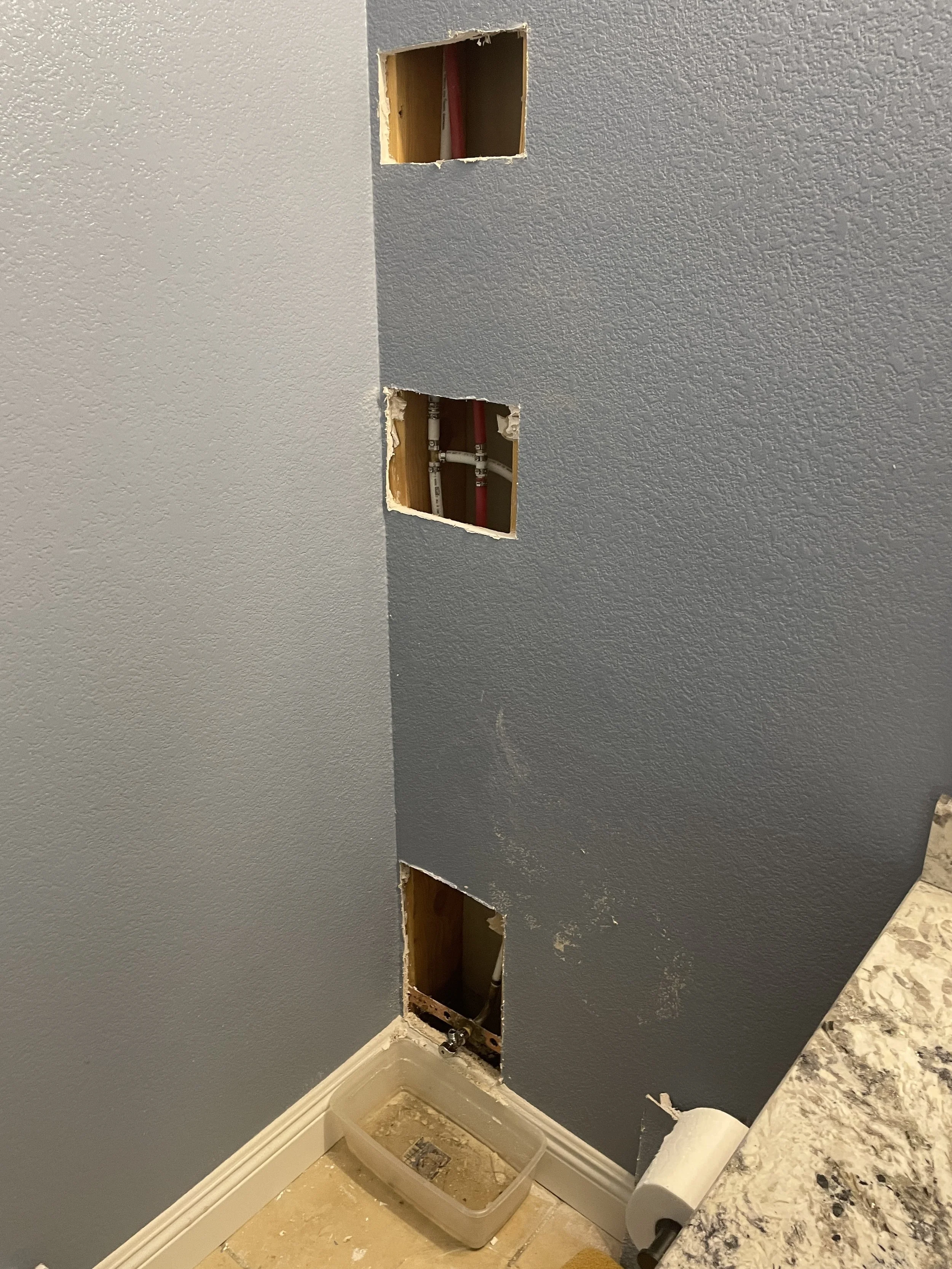
In the bathroom, water escaped by running down into two adjacent walls. One wall was soaked badly enough that the drywall had to be removed entirely. The other wall, thankfully, could be dried out with a little creativity.
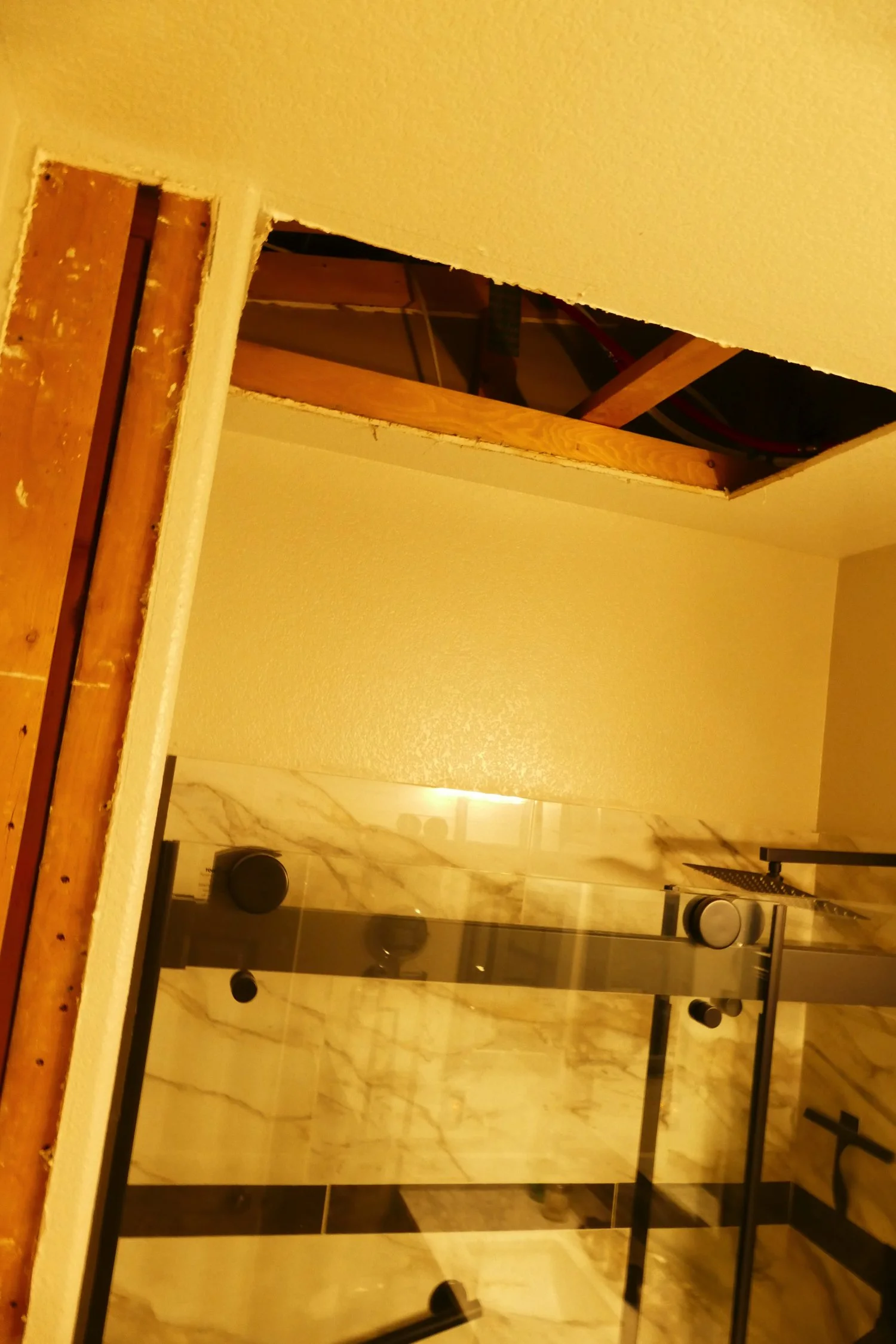
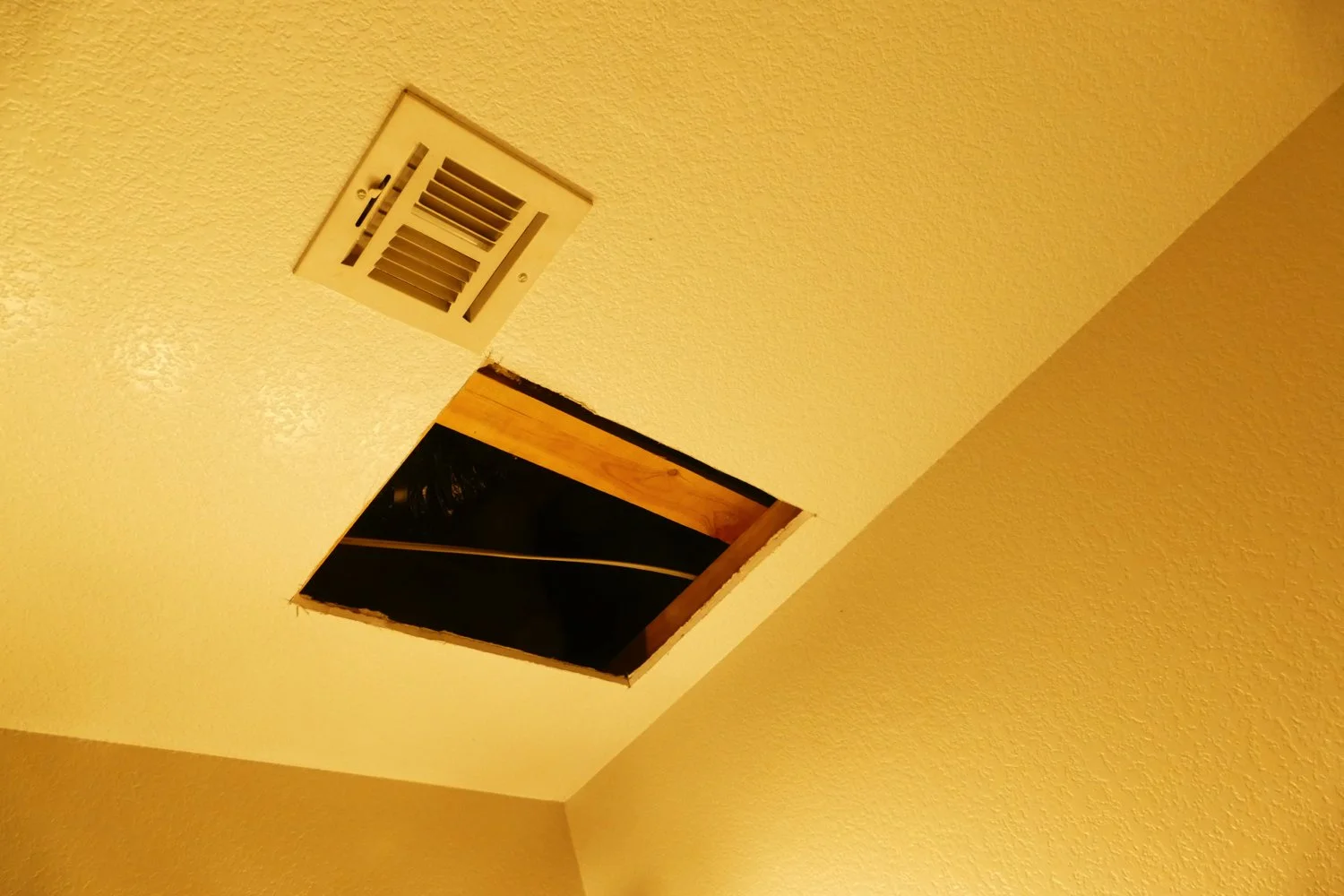
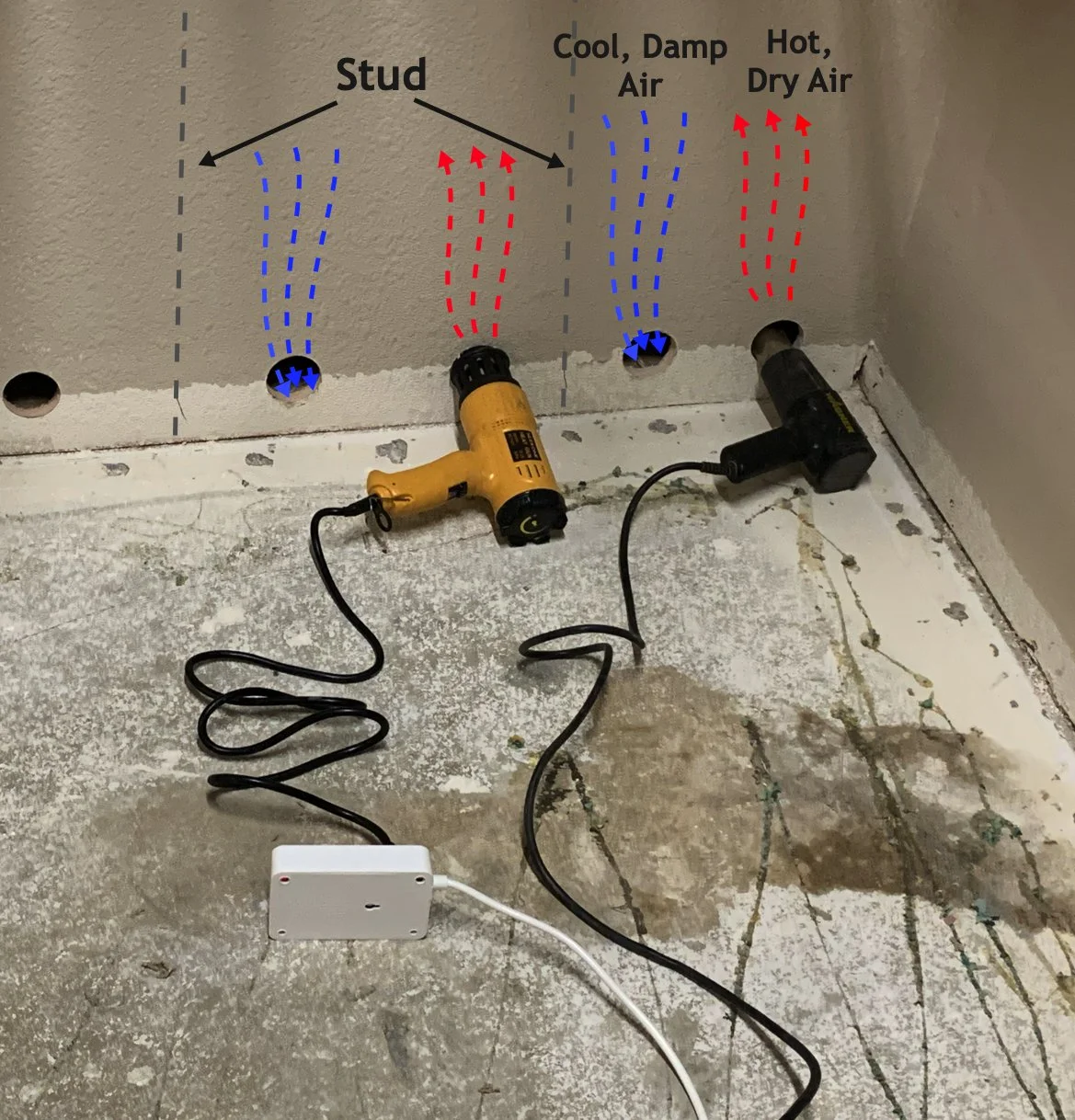
I removed the base molding and cut two holes at the bottom of the wall between studs. A heat gun—set on low—was placed in one opening, pushing hot, dry air behind the wall and forcing damp air out the other hole. Each section took about a day and a half to dry. It wasn’t fast, but it worked.
The Garage: A Nonpareil
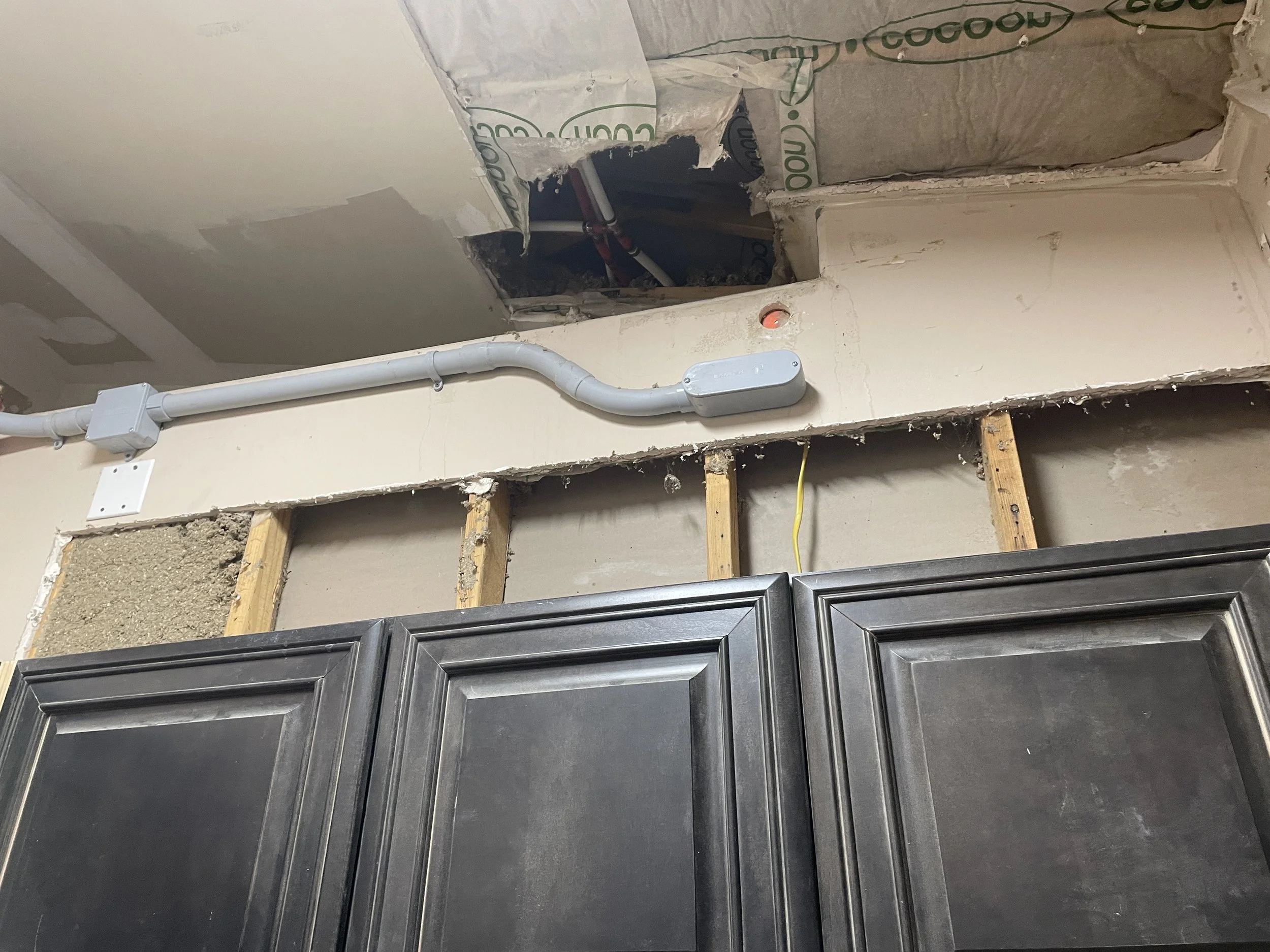
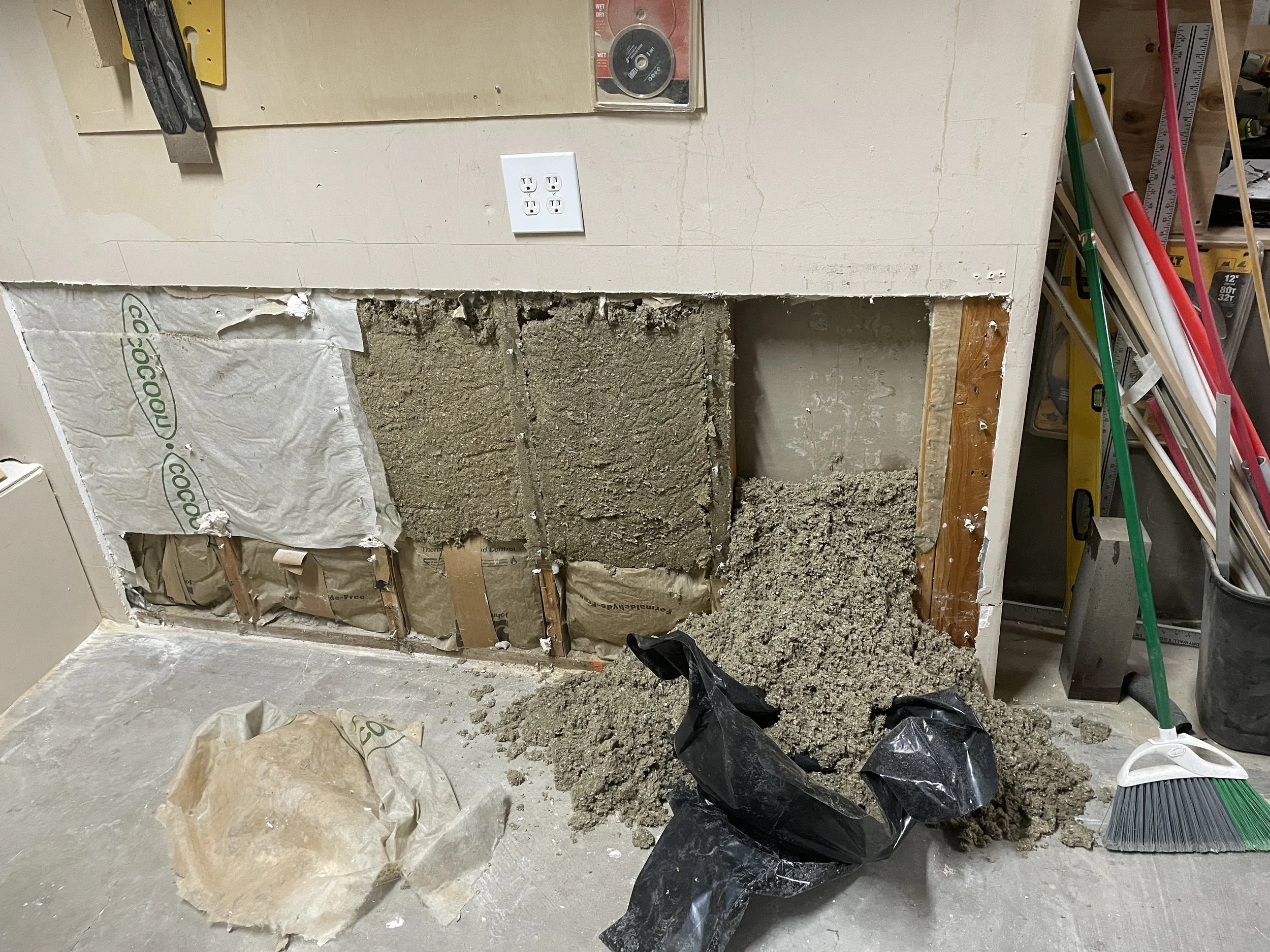
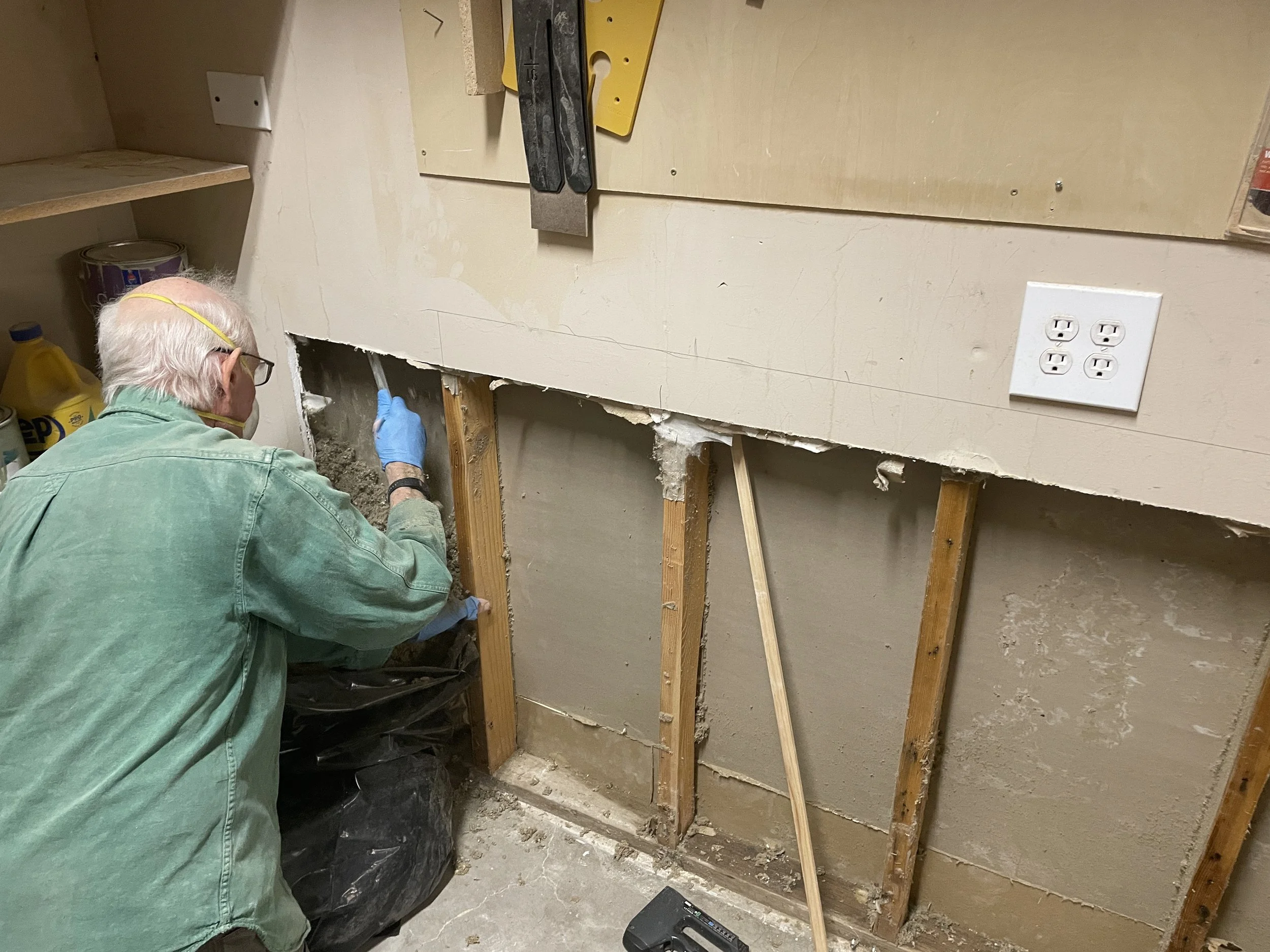
The garage leak was easily the worst. Water from the corroded fittings ran down into two walls, one of which was the insulated wall separating the garage from the laundry room.
This required cutting a large hole in the ceiling, two large holes in the insulated wall, and another large hole in the second wall. All the insulation was soaked, so Marcie and I pulled it out, bagged it, and sent it off to insulation heaven. We then ran a heater aimed directly into the wall cavity. Drying everything out took about four days, after which we installed new insulation.
Putting Humpty Dumpty Back Together Again
I’ll freely admit that matching drywall texture is not my strong suit, and I truly dislike ceiling repairs. I handled the drywall work in the closet myself, and it turned out well enough. For the remaining repairs, we hired professionals—and they did an outstanding job. Once finished, you’d never know the walls had been opened up.
Marcie had painted the entire interior of the house less than a year ago, and we still had the leftover paint, which made the repainting process much easier than it could have been. It still involved draping, masking, and plenty of ladder climbing, but she knocked it out in just a couple of days.
And with that, our house is once again dry, intact, and pretending none of this ever happened. The fittings have been replaced, the walls restored, and the paint refreshed. All that remains is a slightly deeper appreciation for moisture meters, professional drywallers, and the comforting sound of not hearing water where water should not be.
Until the next home-repair adventure—because there’s always a next one…