

National Mustard Day
/“Mustard is the little black dress of condiments. It goes with everything.”
Here’s a new one for you: a holiday dedicated to a condiment. Really? I kid you not. August 5th is National Mustard Day, “a culinary celebration dedicated to mustard, one of the world’s oldest and most versatile condiments.” In fact, mustard is the most popular and widely used spice and condiment in the world, according to Wiki.
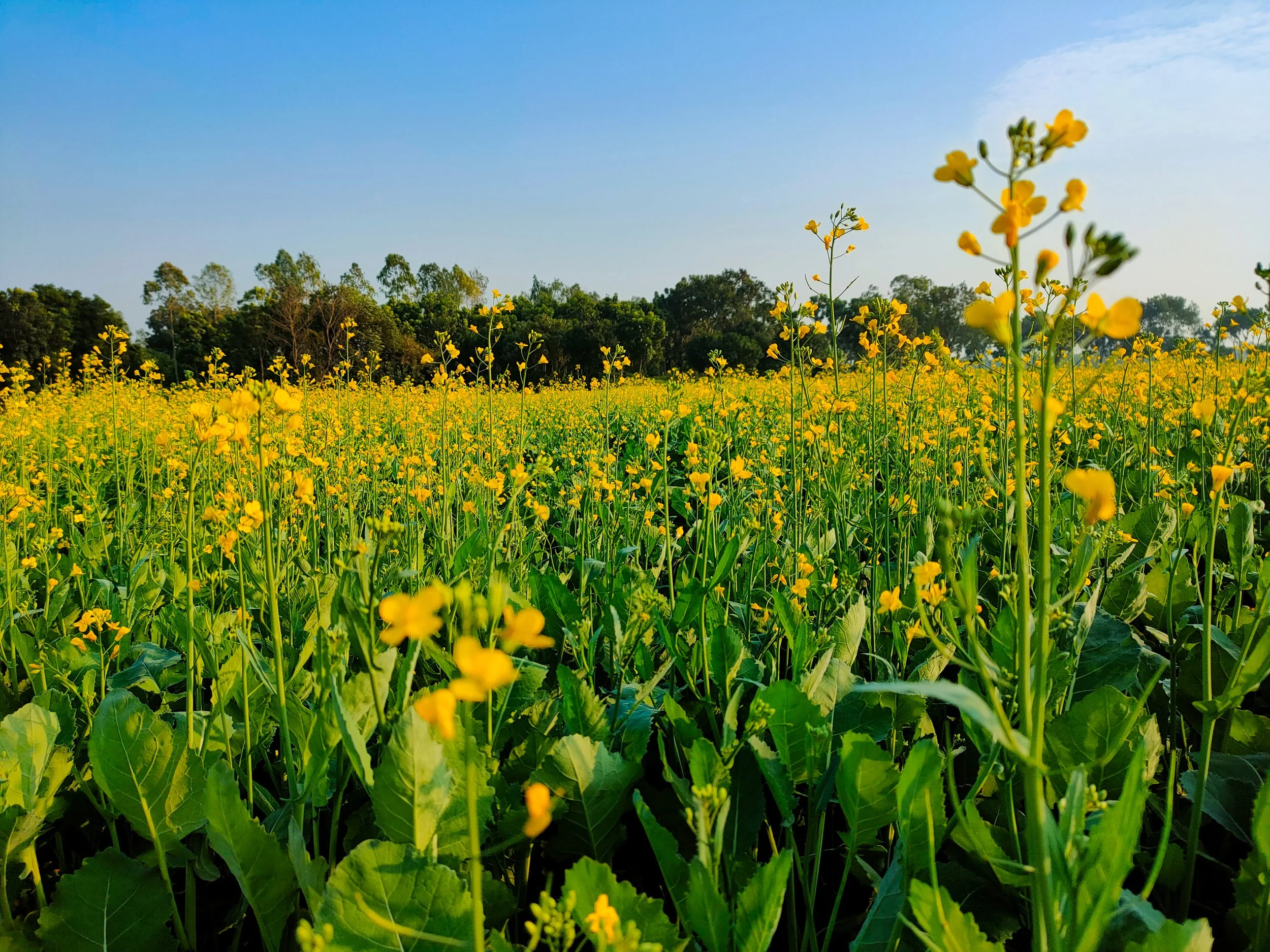
A Mustard field - Photo Credit: Nafiur Rahman
According to the website Serious Eats “At its most basic, mustard is made by mixing the ground seeds of the mustard plant with liquid, but it's the choice of seeds and type of liquid used that creates the varieties of mustard.” Dating back to early Roman cooks who combined ground mustard seeds with an unfermented grape juice called must to make the hot paste mustum ardens ( burning must), mustard has been one of the most favored condiments in the world for millennia.
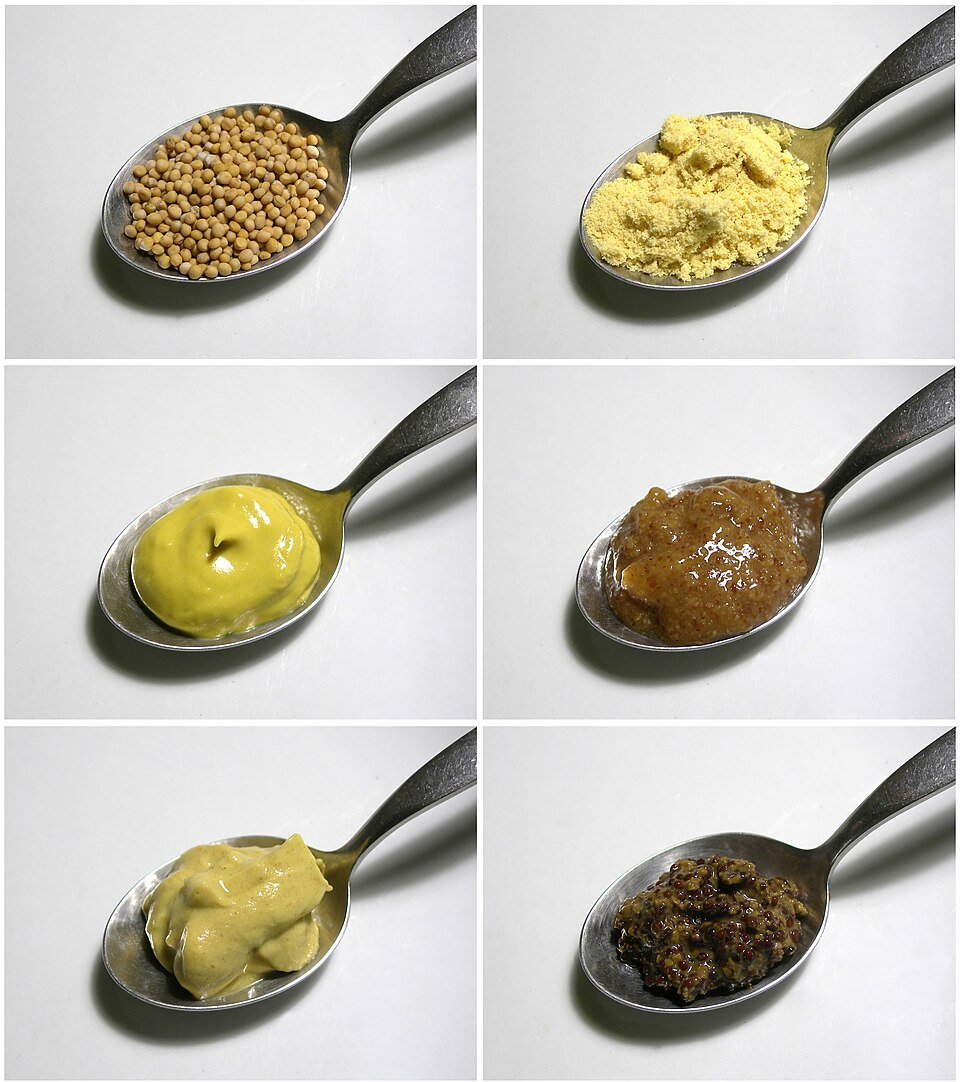
Mustard seeds, mustard powder and mustard paste Photo credit: Rainer Zenz
And, before you ask, yes, there is even a National Mustard Museum. (Of course, there is!) Events for National Mustard Day are centered in Middleton, Wisconsin, home of the National Mustard Museum. In fact, the holiday was created by the National Mustard Museum (why am I not surprised?) and takes place annually on the first Saturday of August, and it’s celebrated with a festival, special ‘mustard’ events, and tastings. Shoot! We lived in Wisconsin for five years, and we never knew about this. Darn!
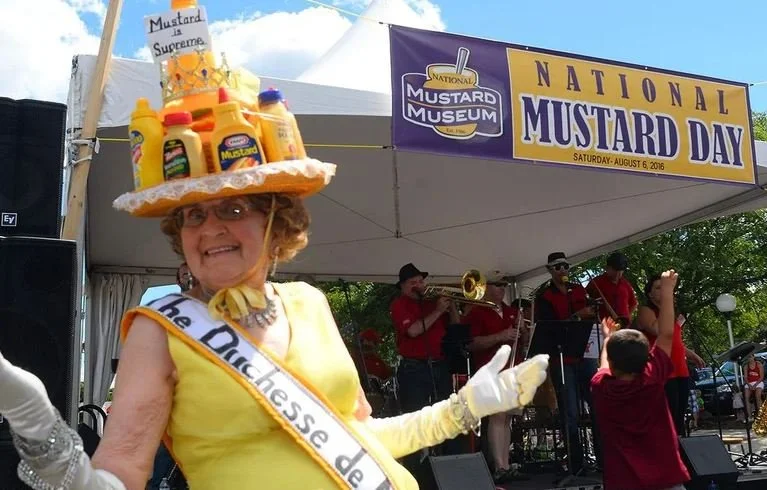
Photo credit: National Mustard Museum
For a household of only three, we have several different mustards in the fridge. David likes plain old yellow mustard. Mary likes horseradish mustard, and I like stone-ground on my burgers, but I use Dijon in several of my favorite salad dressing recipes.

Three people, five mustards, one fridge shelf - Yikes!
Here are a few ‘Did you knows?’ to add to your mustard trivia knowledge.
Sumerian records dating back to 3000 BC describe the growing, harvesting, and preparation of the mustard crop.
Mustard-makers are called moutardiers.
Mustard comes in three main types: yellow, brown, and black seed varieties.
The earliest record of people using mustard on hot dogs dates back to the St. Louis World’s Fair in 1904.
Dijon-style mustard originated in Dijon, France in 1777.
It was Maurice Grey who partnered with Auguste Poupon in 1860 to create Grey-Poupon, today a global mustard brand.
"Cutting the mustard" is a colorful idiom for meeting standards or expectations, with roots in figurative language linking mustard’s zest to human energy and performance.
It was the well-known Grey-Poupon ad that aired back in the early 1980s that inspired many Americans to give a mustard other than the good old yellow variety a try. Yellow mustard, however, remains the top choice for most folks in the USA.
The high acidity and naturally antibacterial properties of mustard retard the growth of bacteria and other microorganisms that could spoil it, which means mustard can be stored at room temperature and doesn’t require refrigeration. Interestingly, when we lived aboard Nine of Cups, we never refrigerated mustard. Now, for some reason, we have an entire area of our fridge dedicated to everyone’s favorite type.
So, do you use mustard? What kind? On what? And more importantly, do you own a ‘little black dress’?