

A Little Motown Sound
/“Motown was about music for all people – white and black, blue and green, cops and the robbers. I was reluctant to have our music alienate anyone. ”
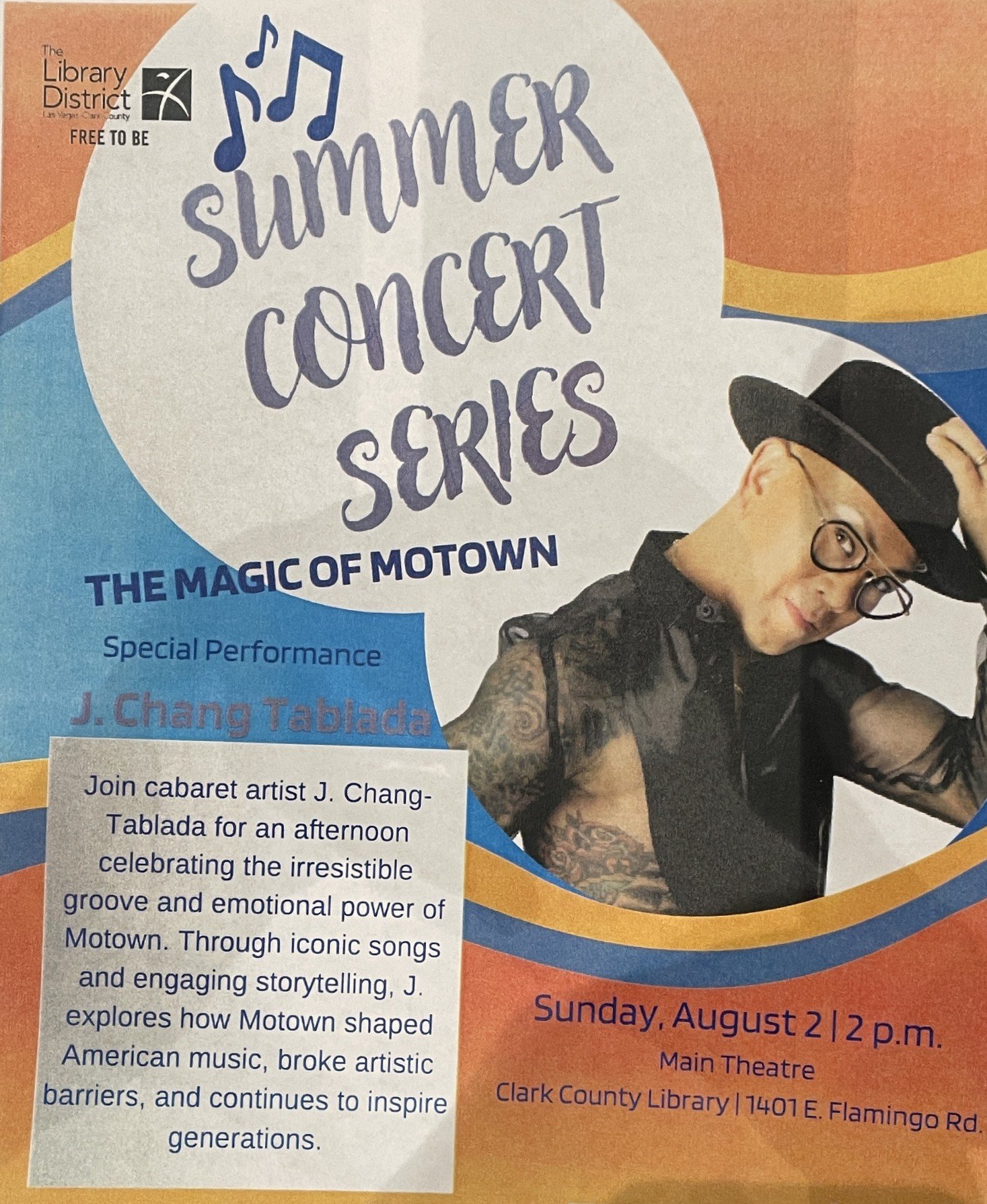
Last weekend we had the opportunity to take in the ‘Magic of Motown’, a combination history lesson and music concert. Think The Supremes, The Temptations, The Four Tops, Smokey Robinson, Marvin Gaye, The Commodores, The Jackson Five. It’s hard to conjure up an image of a Motown tune without waxing nostalgic… humming a few bars, singing a few lyrics and snapping your fingers. The presentation was another freebie offered by the Clark County Library as part of their Summer Concert Series.
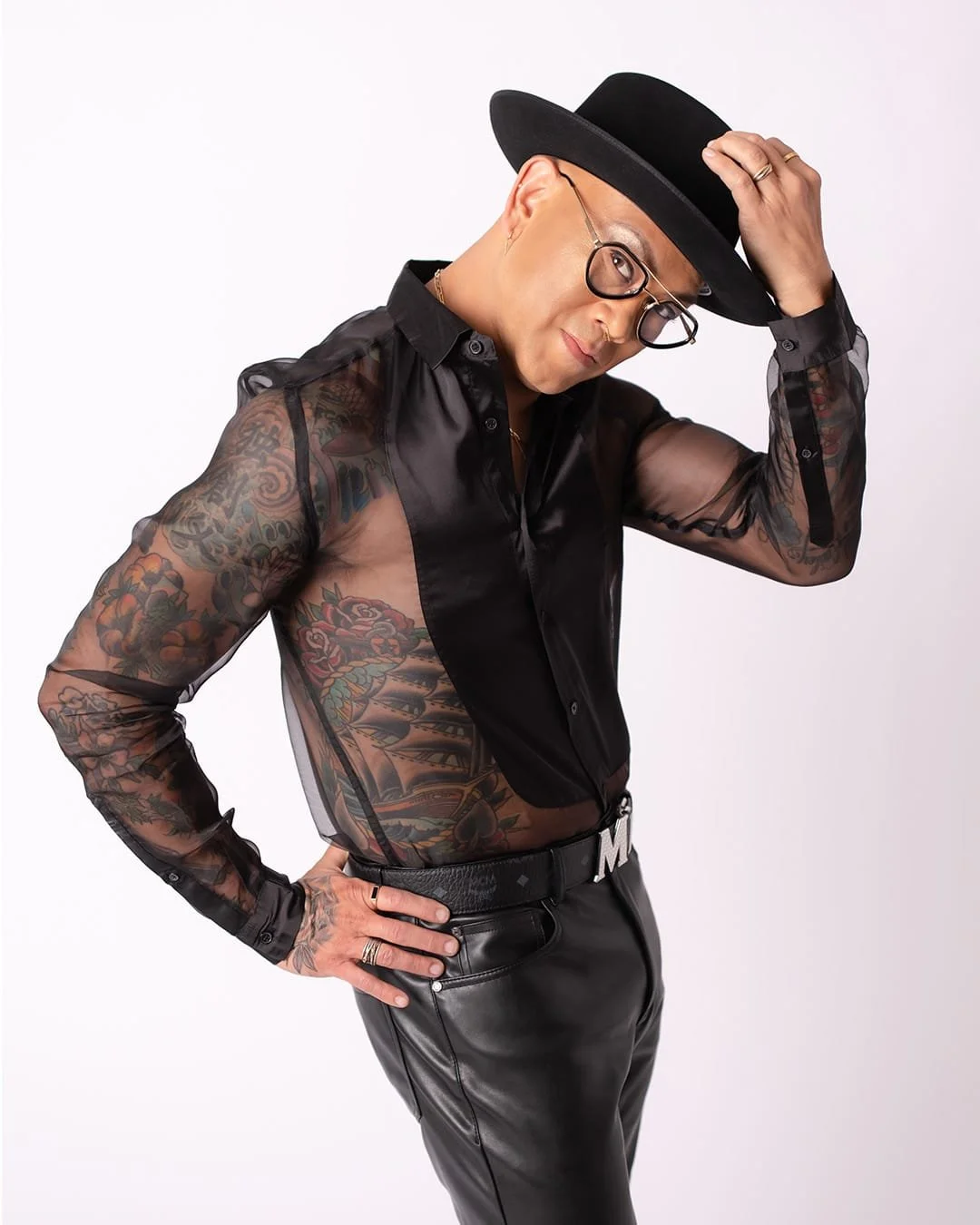
J. Chang-Tablada, a singer, pianist, teacher, music director, and raconteur of mixed racial descent… he’s Filipino, Korean, and Irish, seemed an unlikely candidate for a Motown presentation. Boy, were we ever wrong.
Described as a ‘cabaret artist’ in his promotional blurb, Chang-Tablada was absolutely captivating from the moment he walked on stage. With his outstanding singing voice, engaging insight into the 1960s+ world of Black music, combined with his flourishing, lyrical style on the grand piano, his presentation was informative and oh, so, entertaining.
From Wiki, I learned, “The name ‘Motown’ is a portmanteau of ‘motor’ and ‘town,’ reflecting Detroit's identity as the heart of the automotive industry. Motown Records was founded by Berry Gordy Jr. in Detroit on January 12, 1959.” Gordy, previously an assembly line worker at the Ford Motor Plant, was inspired to create a record label that would do it all in the same way that Ford built cars… from scratch and with a precise formula that delivered a high-quality finished product.
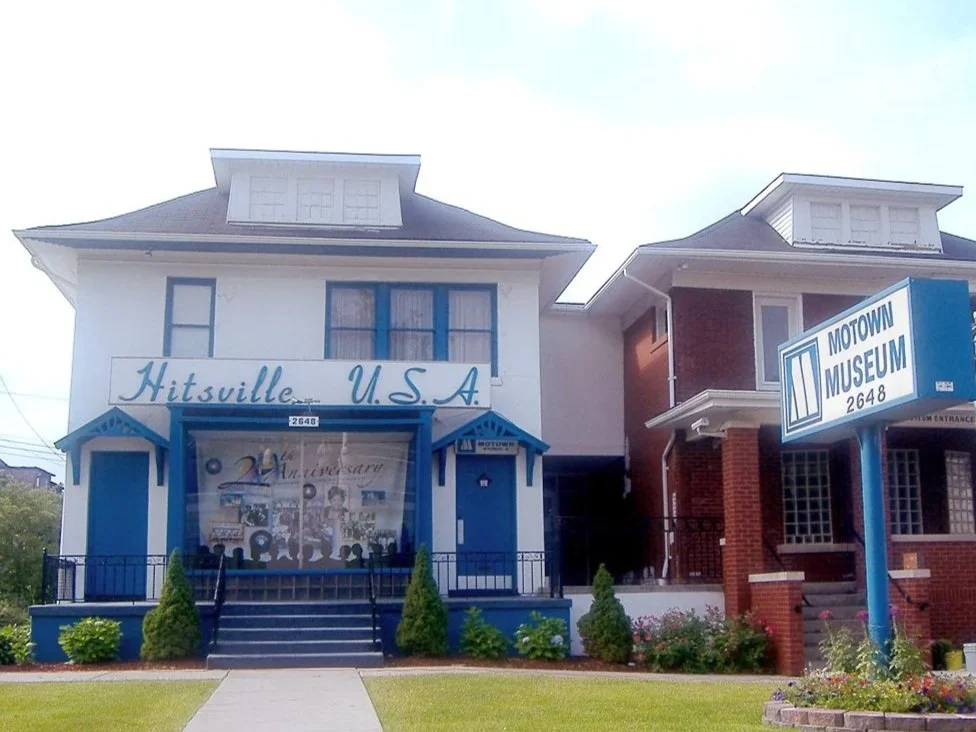
Hitsville USA was the first headquarters of Motown Records. It’s now a museum.
"Hitsville U.S.A.", the nickname given to a former photographer’s studio that Berry converted to a recording studio and Motown’s first headquarters, aimed not only to produce music, but also to foster a cultural movement that transcended racial barriers. Gordy’s formula for identifying, grooming, and growing black recording artists into Billboard hit-making stars is legendary.
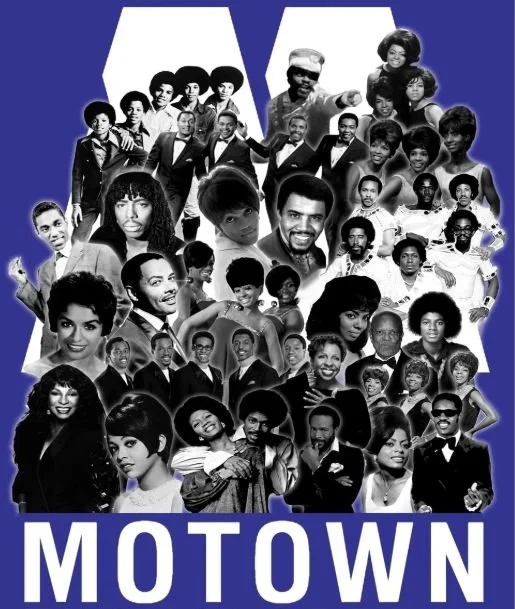
A Motown superstar collage - the cover of Motown Encyclopedia by Graham Betts
As a high school and college student during the height of the Motown years, I was oblivious to the societal impact of the genre and its significance as a musical movement that transcended and overcame racial barriers. I didn’t care if the artists were black or white. I liked the music. I liked dancing to the music and singing along with the artists.
As we watched Chang-Tablada segue into Motown song after song, it was hard not to feel nostalgic. The audience swayed to the music, clapped their hands, and tapped their toes. We were encouraged to sing along, and we did.”Baby love, my baby love, I need ya, (baby, ooh, baby love) oh, how I need ya” ... Can’t think of a better way to spend an all-too-short hour on a Sunday afternoon.