
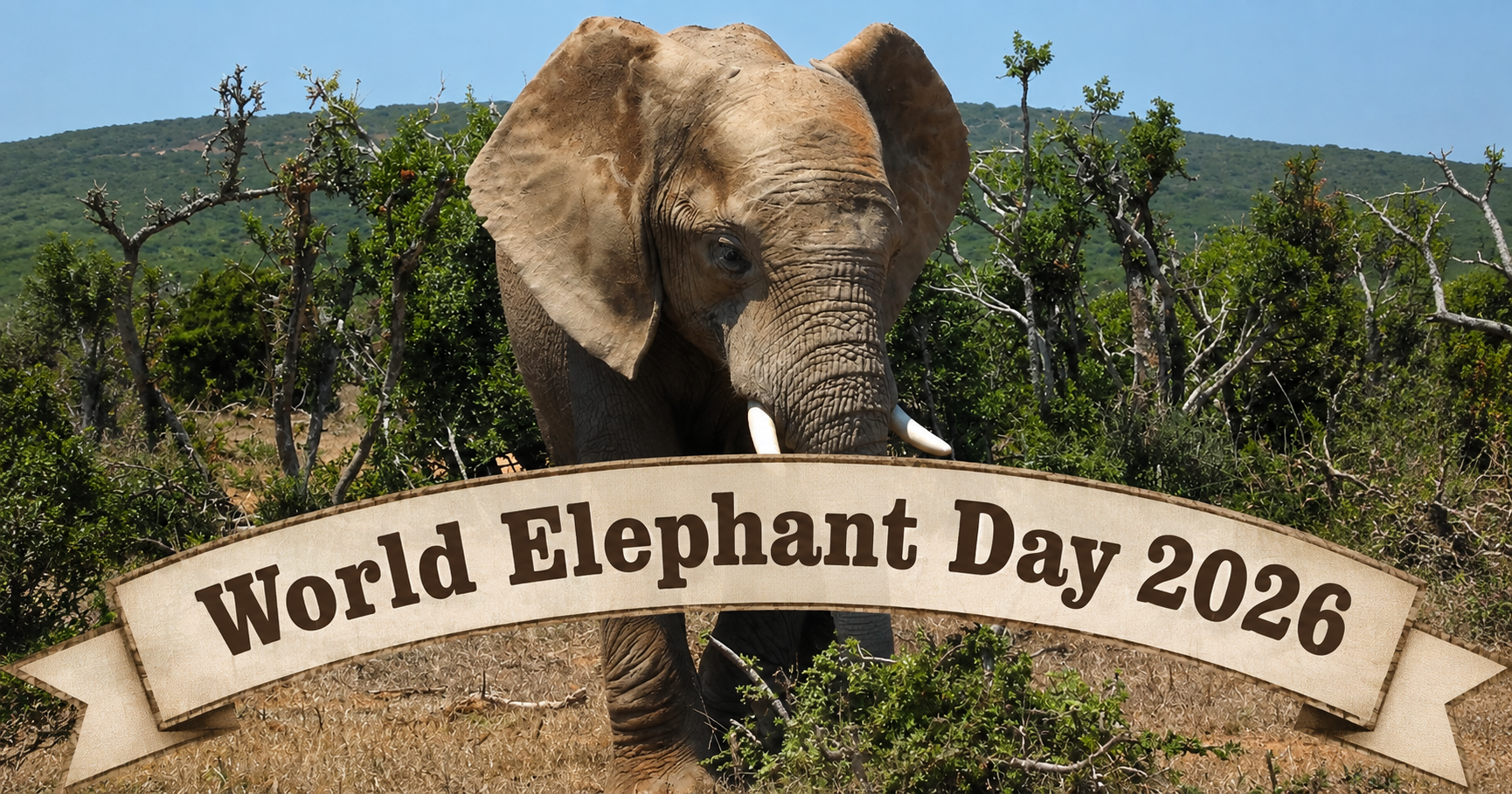
World Elephant Day
/
Because of the heat, we’ve been sticking close to home. We do have another trip to LA planned soon, and you’re invited to come along. More details to follow, but in the meantime, I noticed that it’s World Elephant Day today, which started me thinking about our encounters with elephants through the years.
If you’ve ever had the opportunity and privilege of seeing an elephant in the wild rather than in a zoo, it is a gob-smacking experience. During our time visiting South Africa and Namibia several years ago, we had the chance to visit several game parks and national parks in which elephants roamed freely.
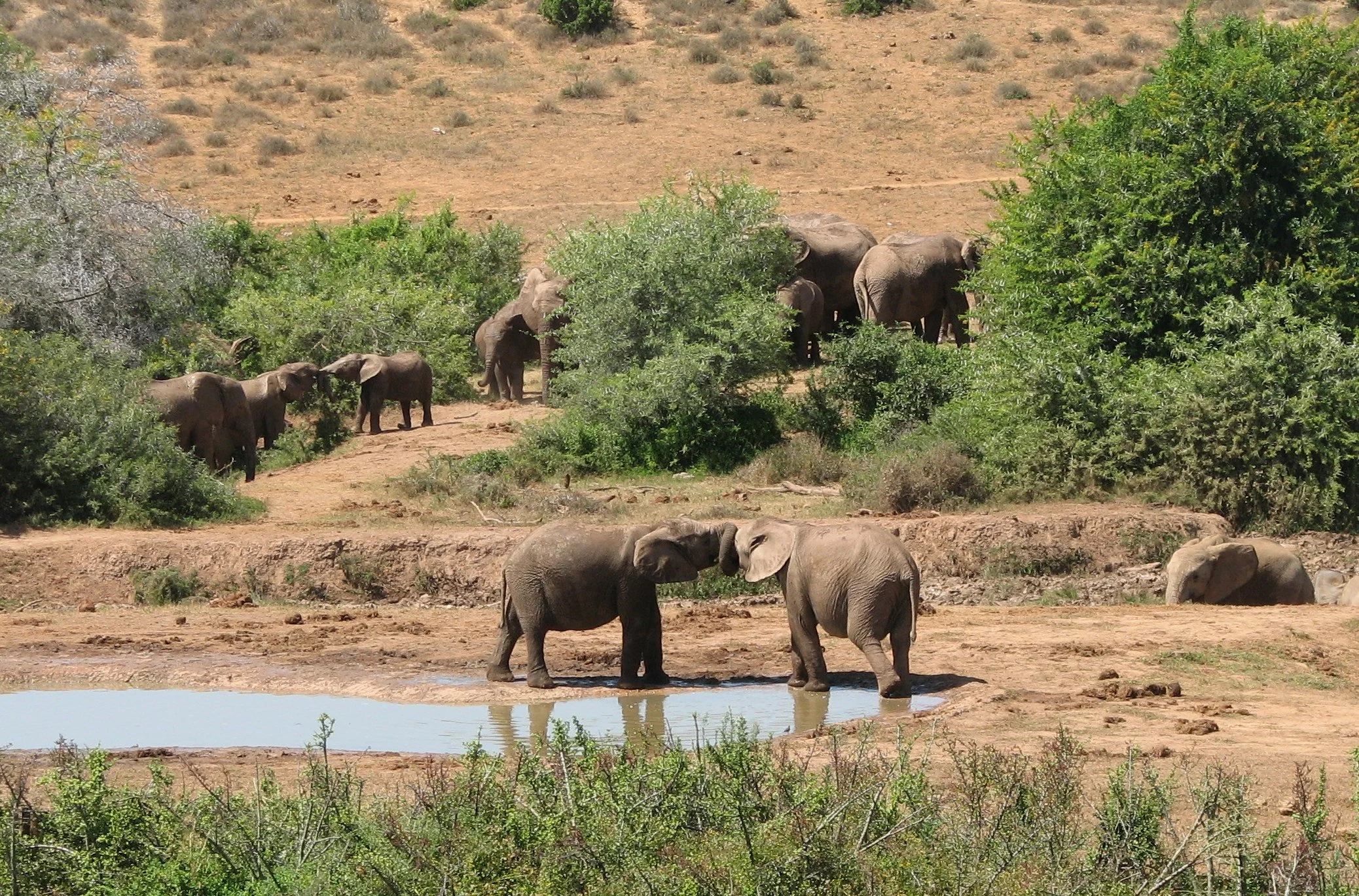
Addo Elephant National Park - south Africa
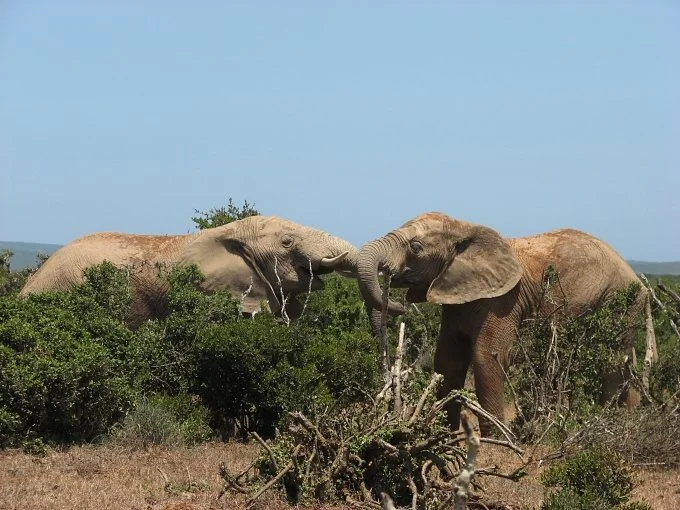
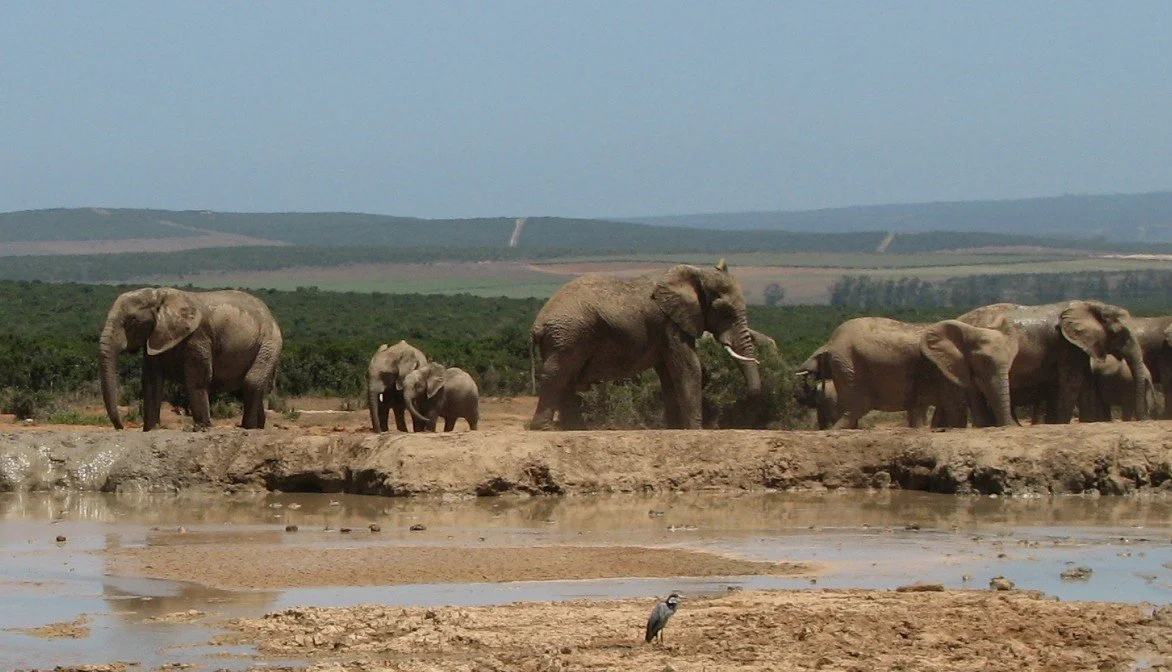
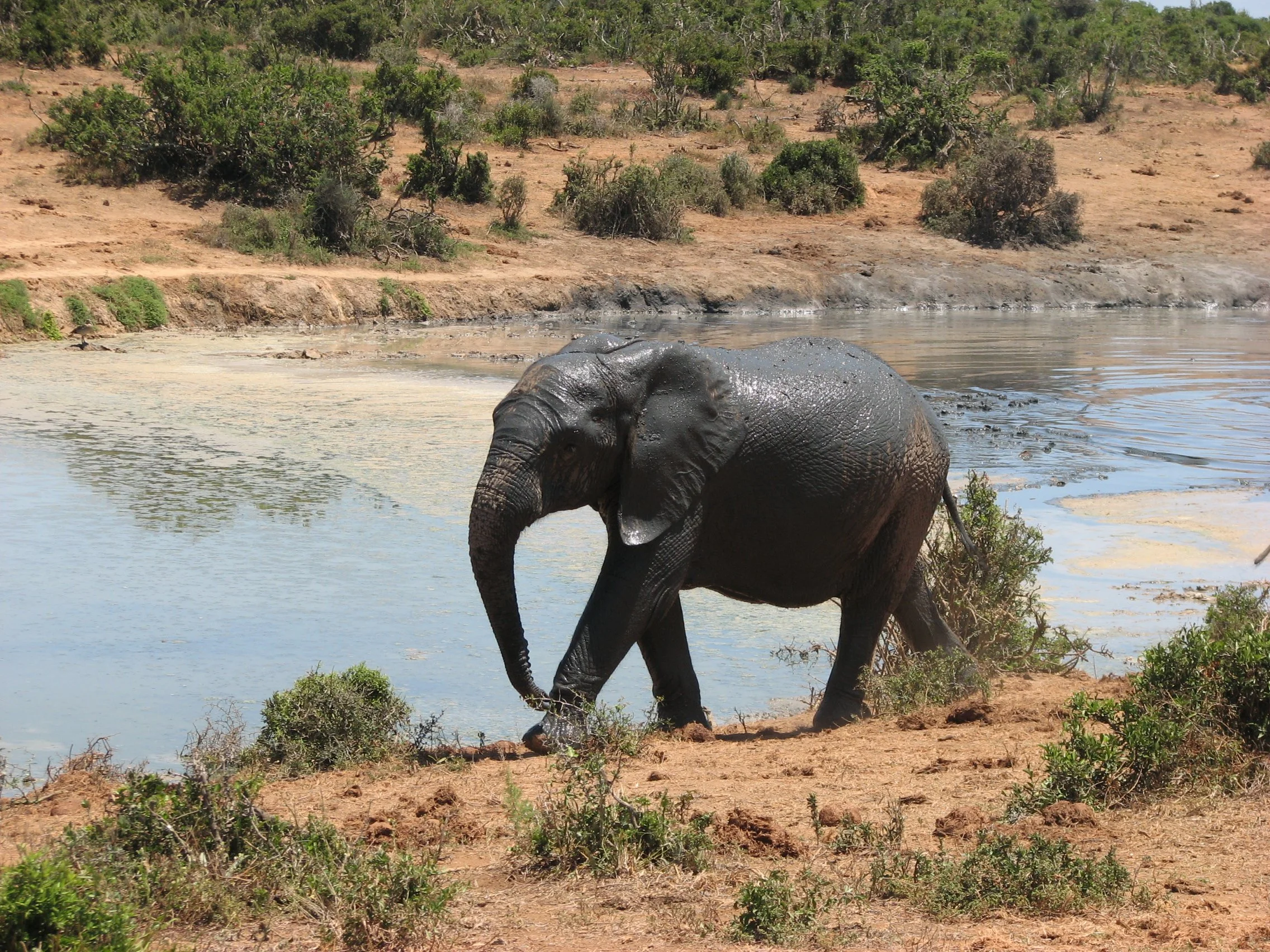
We’ve watched them at waterholes, socializing, cooling off, taking care of their young, attempting to mate. We’ve seen them in great numbers and sometimes lone individuals crashing through the forest and tromping across the road just in front of us. They are enormous, powerful animals, but watching them tenderly care for their young and interface with other elephants or reading how they mourn for those that have died, we developed a whole new view of these magnificent animals… a significantly different one than only having visited the elephant enclosure in a zoo.
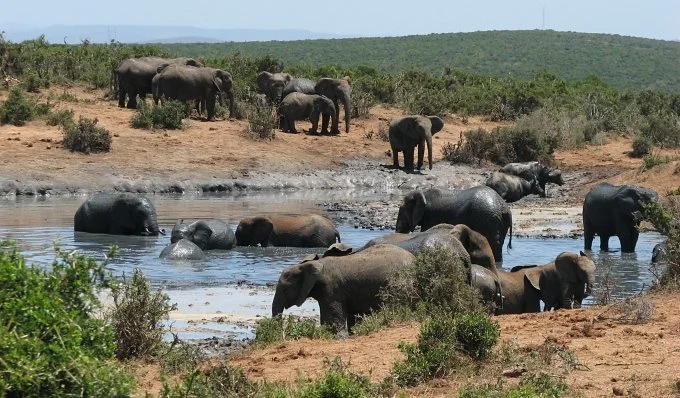
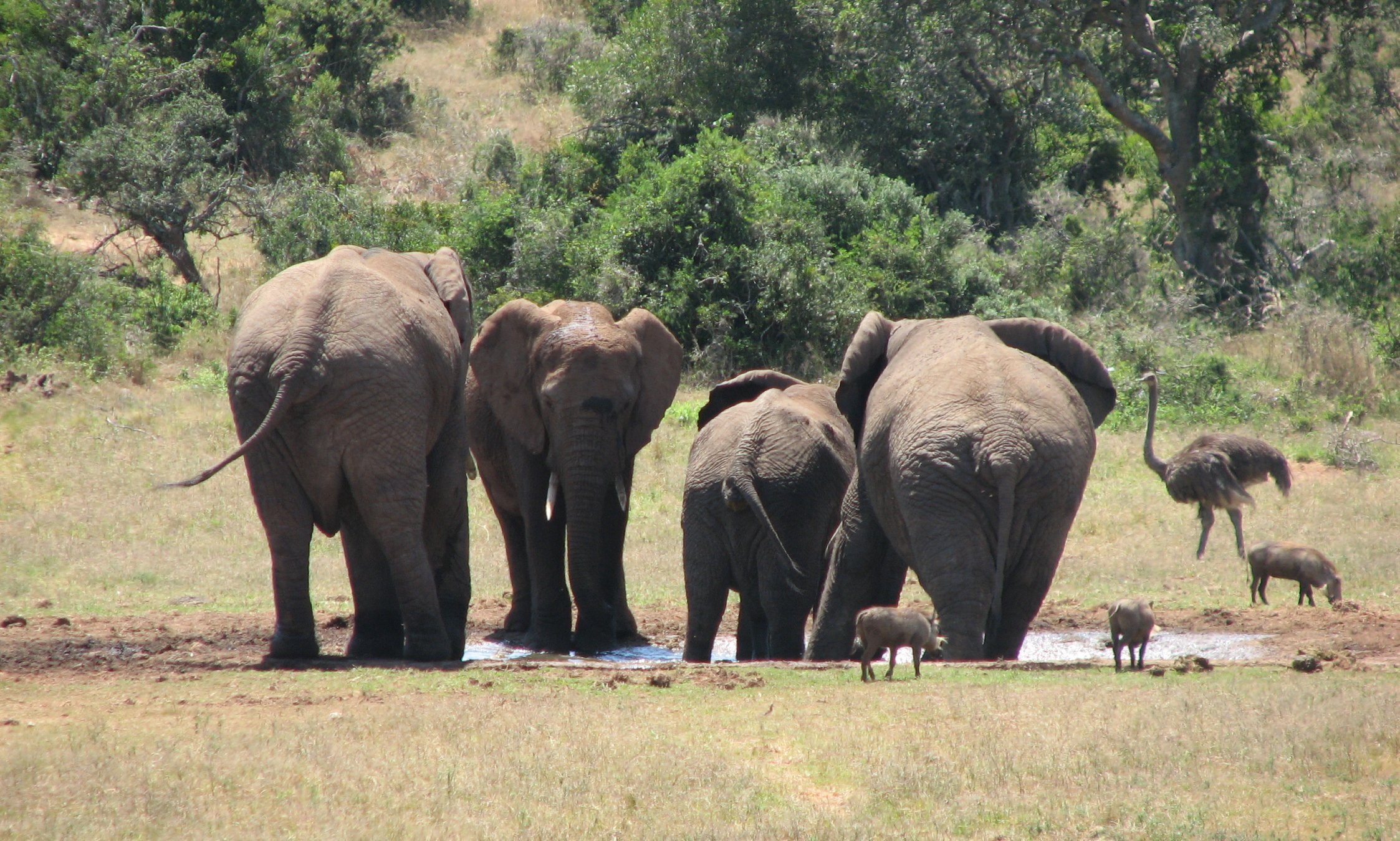
A herd of elephants at a waterhole At Addo Elephant National Park
Elephants are divided into two main species: African and Asian, with subspecies of both. We’ve never been to Asia, but our time in Africa gave us several opportunities to see African species. African elephants are by far the world’s largest land mammals, with males as tall as 13 feet and weighing up to 14,000 pounds. Big critters!
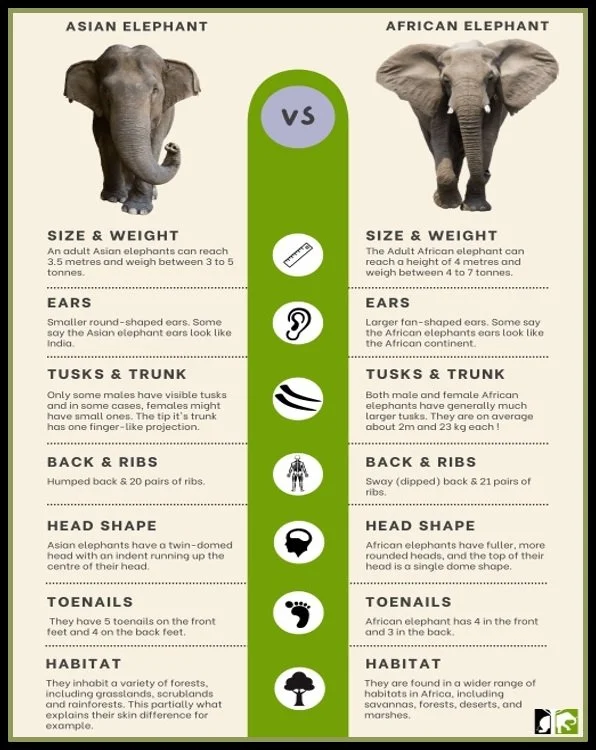
Photo credit: Worldelephants.org
From AI, we learned that “World Elephant Day was officially launched in 2012 by Canadian filmmakers Patricia Sims and Michael Clark, along with the Elephant Reintroduction Foundation in Thailand, to highlight the urgent threats facing both African and Asian elephants, including poaching, habitat loss, human-elephant conflict, and mistreatment in captivity.”
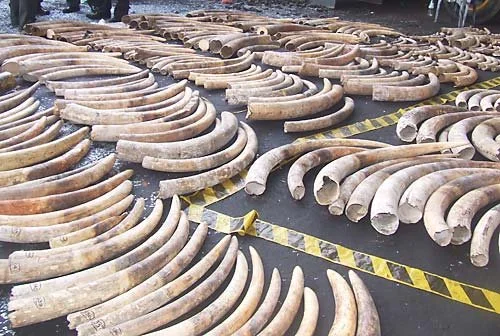
Poached elephant tusks - photo credit- news.sky.com
The main reason for poaching? Ivory… for jewelry, carvings, ornaments, billiard balls, piano keys. Particularly in Asia, ivory is used for traditional medicine and has a strong cultural significance. Iere.org indicates that “Raw elephant ivory can sell for hundreds to thousands of dollars per kilogram, creating strong financial incentives for poachers despite international bans.”
Wikipedia states that “African elephants are classified as "Vulnerable" and Asian elephants as "Endangered," with populations estimated at around 400,000 and 40,000 respectively, though many claim these estimates are high. The Indian Sumatran subspecies elephant is critically endangered, with only 2,400–2,800 individuals remaining in fragmented habitats. Experts warn that without aggressive conservation efforts, both species could face extinction within the next decade.”
Our forays in South Africa took us to Addo Elephant National Park. Originally, the Addo elephants here conflicted with the local fruit farmers. The elephants trampled farmland and ate the local citrus. At one point, the elephants were hunted and killed, leading to their near-extermination. When the park was finally established to preserve the remaining population in 1931, trying to secure the elephants within the park boundaries became a challenge. It took the building of a physical barrier known as the Graham Armstrong “elephant‑proof” fence in 1954, utilizing tram rails and lift cables to finally keep them in. The fence, in addition to restoration and expansion of natural habitat, has been an ongoing effort in the park to preserve and grow the herd. In 1931, there were only 11 elephants left. In 2025, there were 850. Quite the success story.
When we visited Addo in 2007, we were surprised by the ‘no citrus’ sign we saw at the entrance. We were aware of the ‘drunken elephant’ story, which we fell for… hook, line, and sinker, and figured that was the reason for the citrus ban.
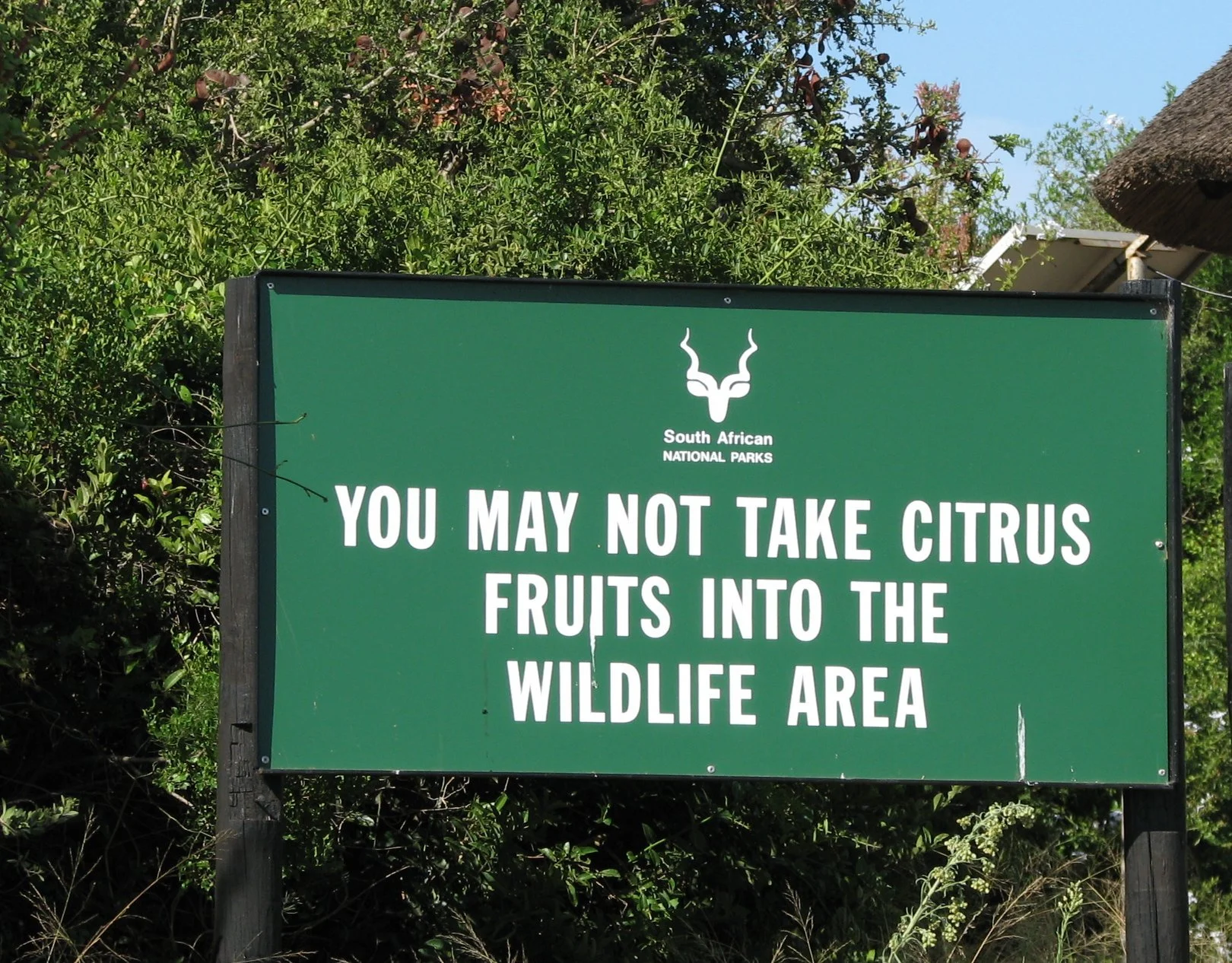
Sign at the entrance to Addo Elephant National park
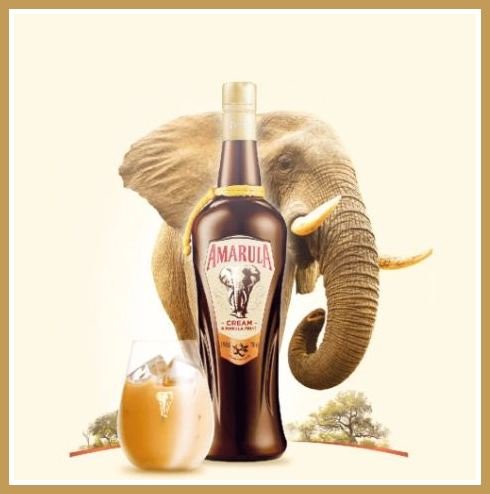
Actually, it wasn’t oranges that supposedly got the elephants drunk. The story assured us that it was fallen marula fruit that fermented after ripening and rotted on the ground. Elephants ate so much of it, they eventually got drunk. It was a great story which we later learned was yet another urban myth; there’s not enough alcohol in fermented marula fruit to intoxicate an elephant, but it sold lots of Amarula, a wonderful South African liqueur similar to an Irish cream. In actuality, it was the elephants’ memory of eating the local citrus that accounted for the ban, but as Mark Twain reputedly said, “Never let the truth get in the way of a good story!”
Of all the parks in South Africa and Namibia that we visited, Addo ended up being the best. Take a look.

On another road trip while moored in Cape Town in 2007, we ventured north into Namibia to visit Etosha National Park, which was wonderful. The park is home to about 2,500 African savanna elephants. Because the park is centered around salt pans and has permanent artesian waterholes, the park boasts the highest density of elephants in Africa year-round. We were told it would be impossible not to see an elephant if you ventured into the park for three days. We saw them daily.

In Etosha National park, Namibia
On our return to South Africa in 2015, we took a road trip from our marina in Durban and visited Hluhluwe–Imfolozi Park in KwaZulu-Natal province. The park was established in 1895 and is the oldest game park in Africa. It’s home to the Big 5 and a major breeding ground for elephants. Game parks, aka game reserves or preserves, are large land areas where wild animals are allowed to roam freely and mate naturally in a protected environment.

Hluhluwe–Imfolozi Park in KwaZulu-Natal province
We also visited Kruger National Park, South Africa’s largest park, on the same road trip. Kruger is home to an estimated 30,000 elephants, and we saw our share.
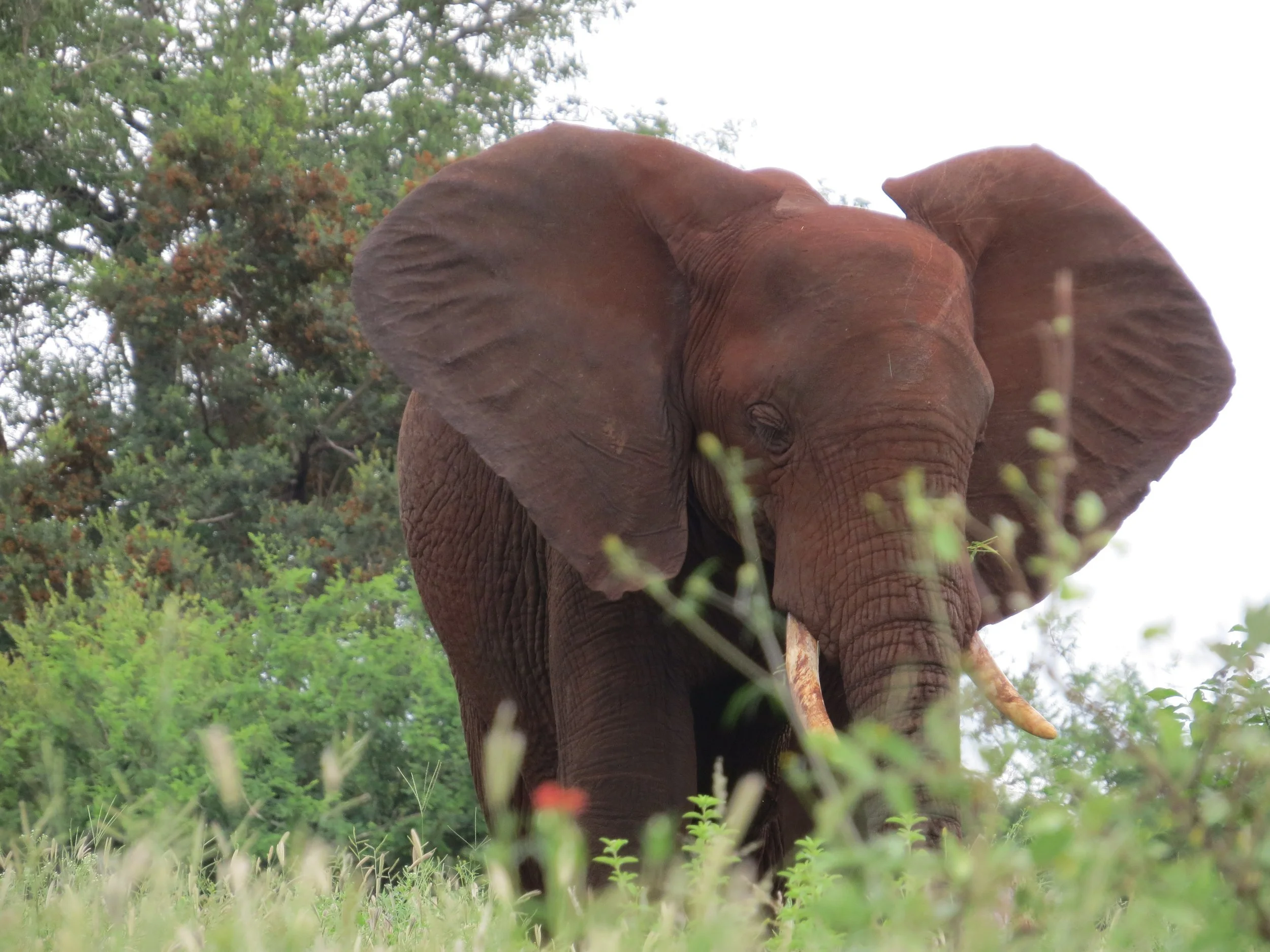
The park is huge, with a land area equal to about the size of the state of New Jersey. A network of dirt roads crisscrosses the park, allowing visitors to see animals in their natural habitat. We rented a hut in an enclosed area within the park. We were the caged ones during the night!
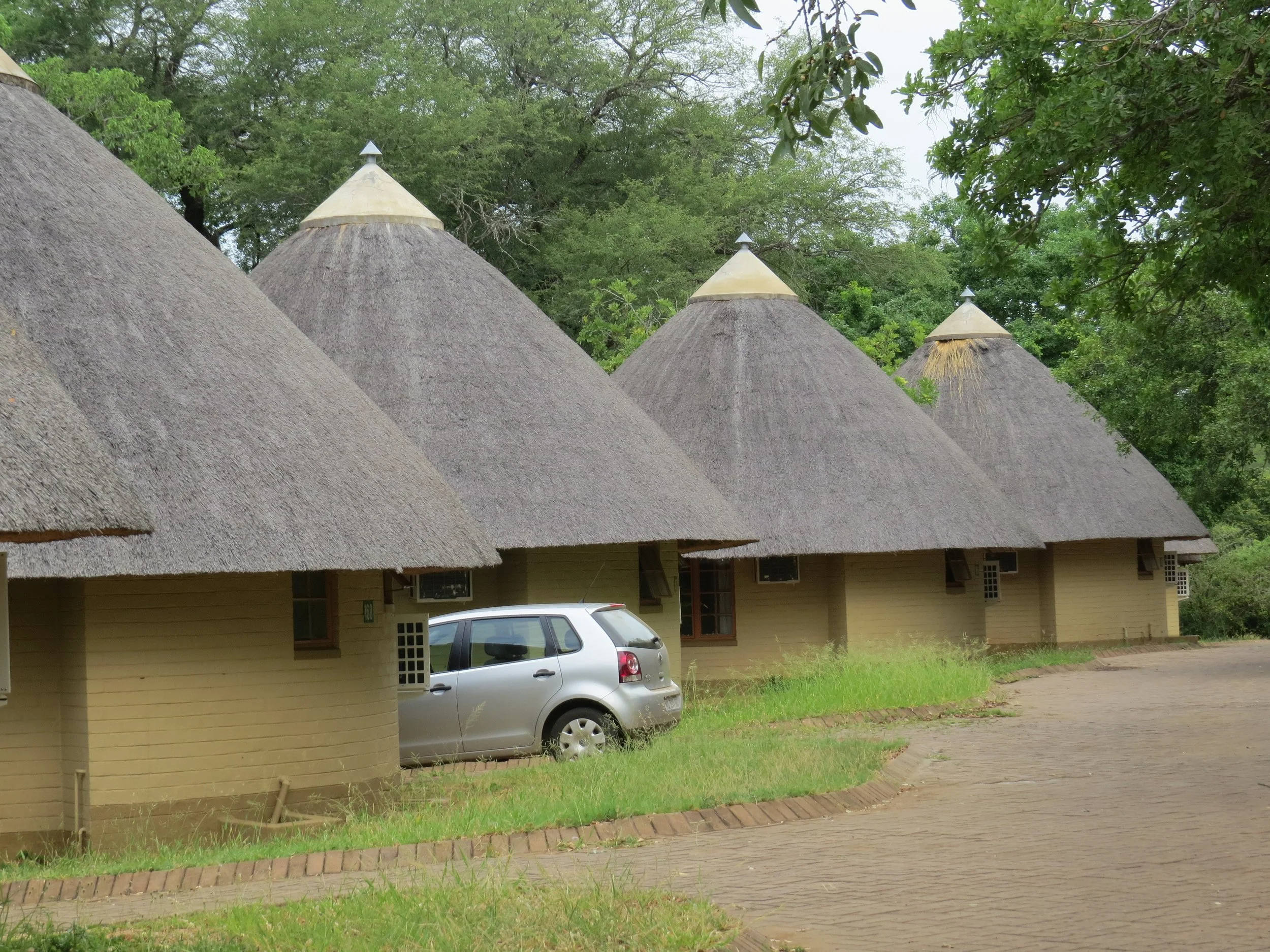
huts at Skukusa in Kruger NP - Here, we were the ones in cages at night.
Lest I forget some elephant trivia, here you go:
*Elephants are one of the few mammals that cannot jump, but they can run at a maximum speed of 25 miles (40 km) per hour.
*In addition to the familiar trumpet blast sound they’re known for, elephants also purr much like cats do.
*In the early 1900s, African Elephant populations were estimated to be in the millions, while there were around 100,000 Asian Elephants. According to the World Wildlife Fund, today there are around 700,000 African Elephants in the wild, and just 32,000 Asian Elephants. Populations have declined by 62% over the last decade, with an estimated 20,000 African Elephants poached in 2025.
The END!