

It’s #!?:* Hot Out There!
/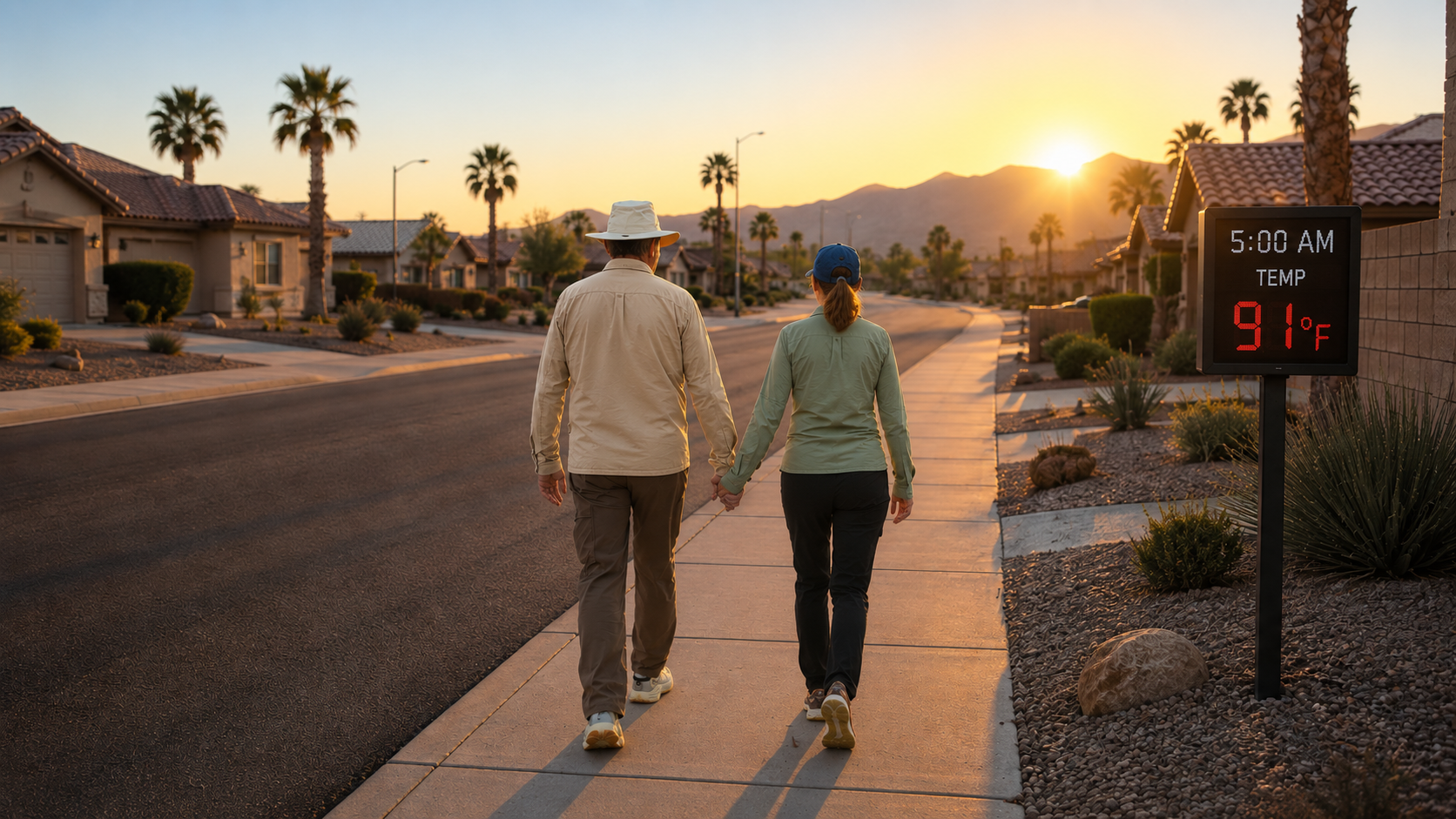
Our daily summer routine here in Las Vegas starts with a cup of coffee at 4 a.m. while we catch up on the news. Then we grab our water bottles and head out the door by 5 a.m. for our morning walk, taking advantage of what passes for the coolest part of the day.
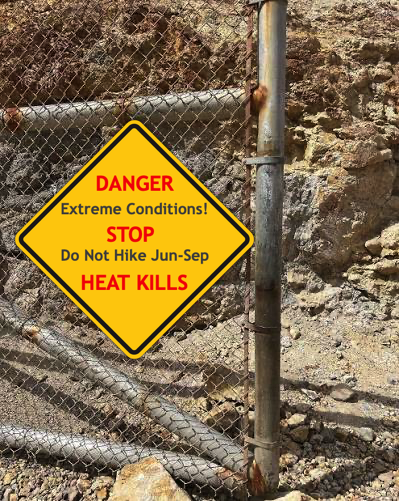
Even then, typical summer temperatures are already in the high 80s or low 90s. But it’s certainly better than being outside once the mercury starts its inevitable climb well into the triple digits.
Around here, we’re not the only ones who have figured this out. Landscapers, construction workers, roofers and all the others who make their living outdoors routinely start their workdays at 5 or 6 in the morning so they can get as much done as possible before the worst of the heat arrives. They battle the sun with floppy hats and loose-fitting, long-sleeved shirts and drink water by the gallon.
And here in the Mojave Desert, just as in much of the rest of the planet, summers seem to keep getting hotter.
July 2026 set a record as the hottest month ever recorded in the United States, surpassing the previous benchmark set during the infamous 1936 Dust Bowl. Globally, it tied for the hottest month ever recorded.
Our July was comparatively balmy by Las Vegas standards. It was only the third-hottest July on record. July 2024 was our hottest month ever, when temperatures reached a blistering 120°F on July 7—and then tied that record the very next day.
The Number One Killer
What surprised me was learning that extreme heat kills more Americans each year than hurricanes, tornadoes, lightning and floods—combined.
Official federal death certificates identify roughly 700 to 1,700 deaths annually as being directly caused by heat. But those numbers don't tell the whole story. Heat can aggravate underlying heart, lung and other medical conditions, making it difficult to identify it as the actual cause of death. Broader epidemiological studies suggest the true toll may be closer to 4,000 deaths a year.
Worldwide, the numbers are even more sobering. Global studies estimate that severe heatwaves may contribute to more than 546,000 excess deaths annually. Europe is particularly vulnerable, with more than 175,000 heat-related deaths estimated each year. Individual heatwaves can be devastating. One in late June this year was estimated to have claimed more than 10,000 lives across 27 European countries in a single week. Those are staggering numbers.
Many heat-related deaths occur in places that have traditionally been considered relatively cool, including the Pacific Northwest and much of Europe, where air conditioning is far less common. Portland, Oregon, is a good example. Known for its mild summers, the city reached an astonishing 116°F during the Pacific Northwest heatwave of 2021. An estimated 1,400 people in Oregon, Washington, British Columbia and Alberta died during that event.
And then there’s Clark County, Nevada, smack in the middle of the Mojave Desert, where virtually every home and car has air conditioning and most people know better than to venture outside during the hottest part of the day. But even here, heat takes a deadly toll.
Recent local data shows that 513 heat-associated deaths occurred in Clark County in 2024 and another 284 in 2025. People experiencing homelessness accounted for roughly 26% to 40% of those deaths, despite the availability of cooling stations and air-conditioned shelters.
Which brings us to something we encountered on one of our morning walks a few days ago.
We came across a man who appeared to be unconscious, lying partly on the sidewalk and partly in the street. We tried to rouse him, but he was completely unresponsive. We rolled him onto his back to check his pulse and see whether he was breathing. Fortunately, he woke up and sat up—but he was clearly confused and disoriented.
We wanted to call 911, but he was adamant that he didn't want medical help. We gave him some of our water, and a passing neighbor stopped and contributed a couple more bottles. We stayed with him for a few minutes. His name was Arthur and despite offering to call for help, he insisted he was fine and simply needed to sit and rest.
We’re 98% sure he was homeless. As we walked away, we really hoped that, somewhere down the line, he doesn’t become another Las Vegas statistic.
Staying Safe
If you live somewhere experiencing extreme heat—and these days, who doesn’t?—take it seriously. The heat can be deadly, even when you think you’re accustomed to it.
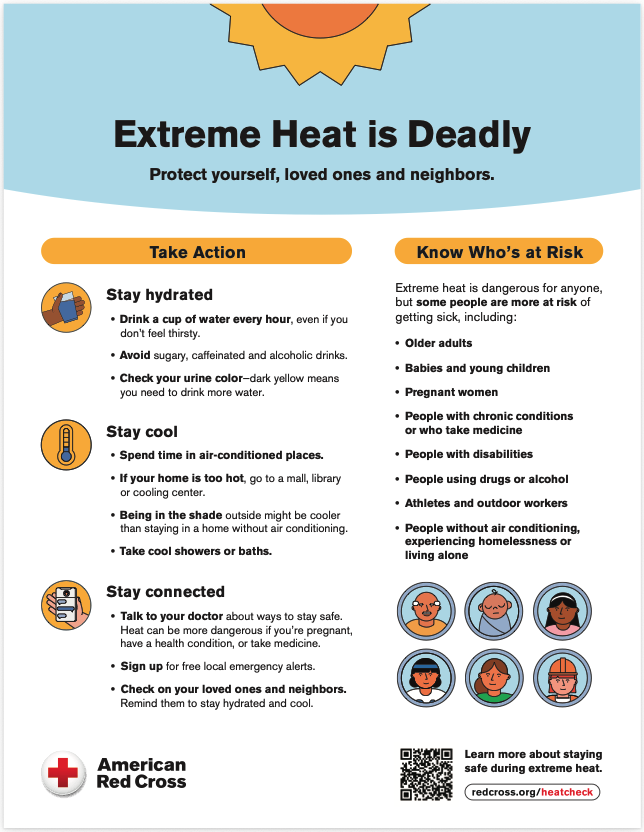
The Red Cross has some excellent information on staying safe in extreme heat, recognizing the signs of heat exhaustion and heat stroke, and knowing what to do if you or someone else starts showing symptoms:
Stay cool and stay hydrated!