

3 Days in the City of Angels - The Getty Center Museum
/
one of the many gems of the Getty Center Museum
Once again, we took advantage of all the ‘free’ culture that Los Angeles has to offer. The Getty Museum, located at two separate venues, is world-famous, and the estimated 1.8 million visitors annually make it one of the most visited museums in the United States. Admission is free but requires ticketed timed entry. We originally thought we could visit both venues in one day and then at least one more museum the next day. What a crazy idea! They’re huge, and there’s lots to absorb. We barely made it through one museum in a day.
J. Paul Getty, oil baron, industrialist, and philanthropist, was named the wealthiest living American by Fortune magazine in 1957. According to Wikipedia, “In 1966, Guinness Book of Records declared him to be the world's wealthiest private citizen, worth an estimated $1.2 billion… His collection formed the basis of the J. Paul Getty Museum; more than $661 million of his estate was left to the museum after his death in 1976.
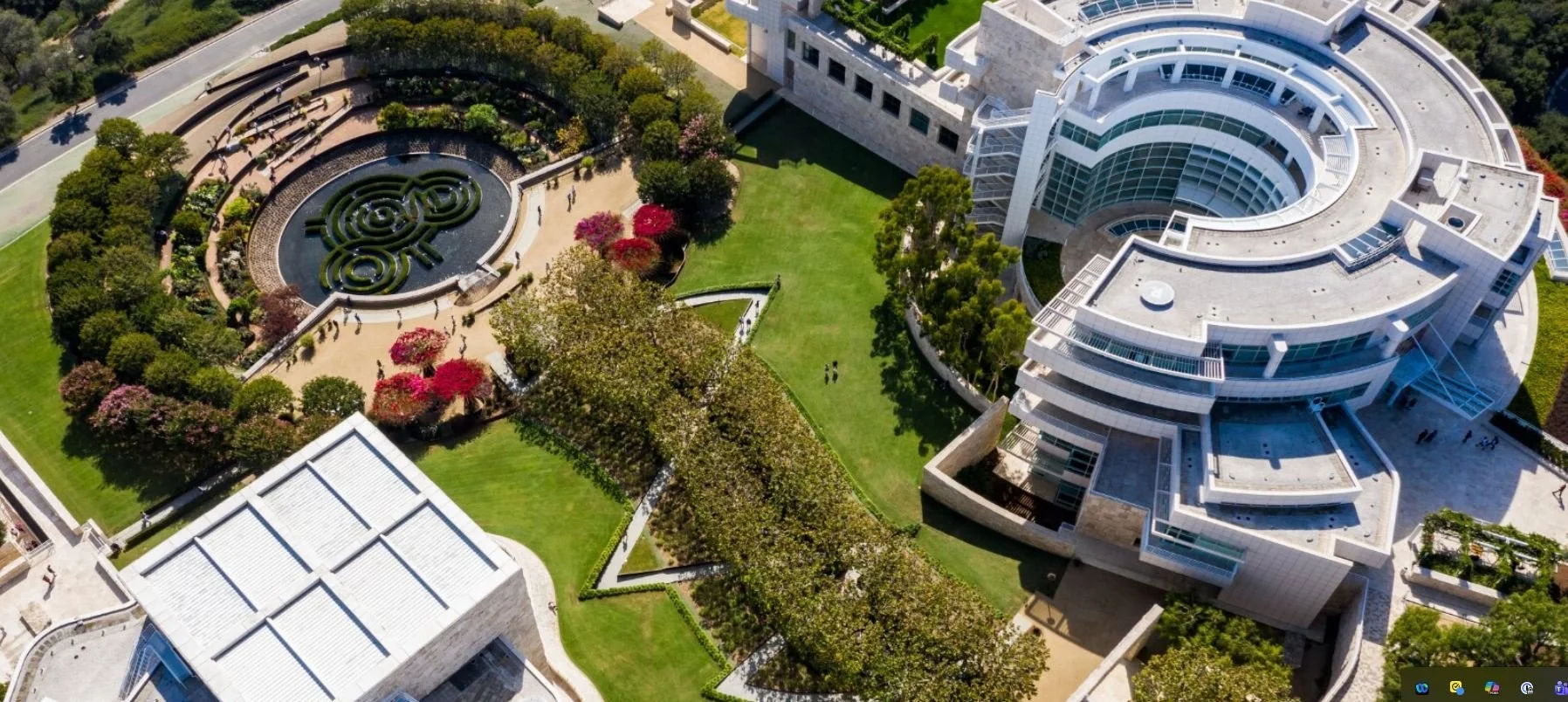
Aerial view of the Getty Center from the Getty Website
He established the J. Paul Getty Trust in 1953, the world's wealthiest art institution, which operates the J. Paul Getty Museum Complexes: the Getty Center, the Getty Villa, and the Getty Foundation, the Getty Research Institute, and the Getty Conservation Institute.” Getty’s stated mission says it all. “The J. Paul Getty Museum seeks to inspire curiosity about, and enjoyment and understanding of, the visual arts by collecting, conserving, exhibiting and interpreting works of art of outstanding quality and historical importance.”
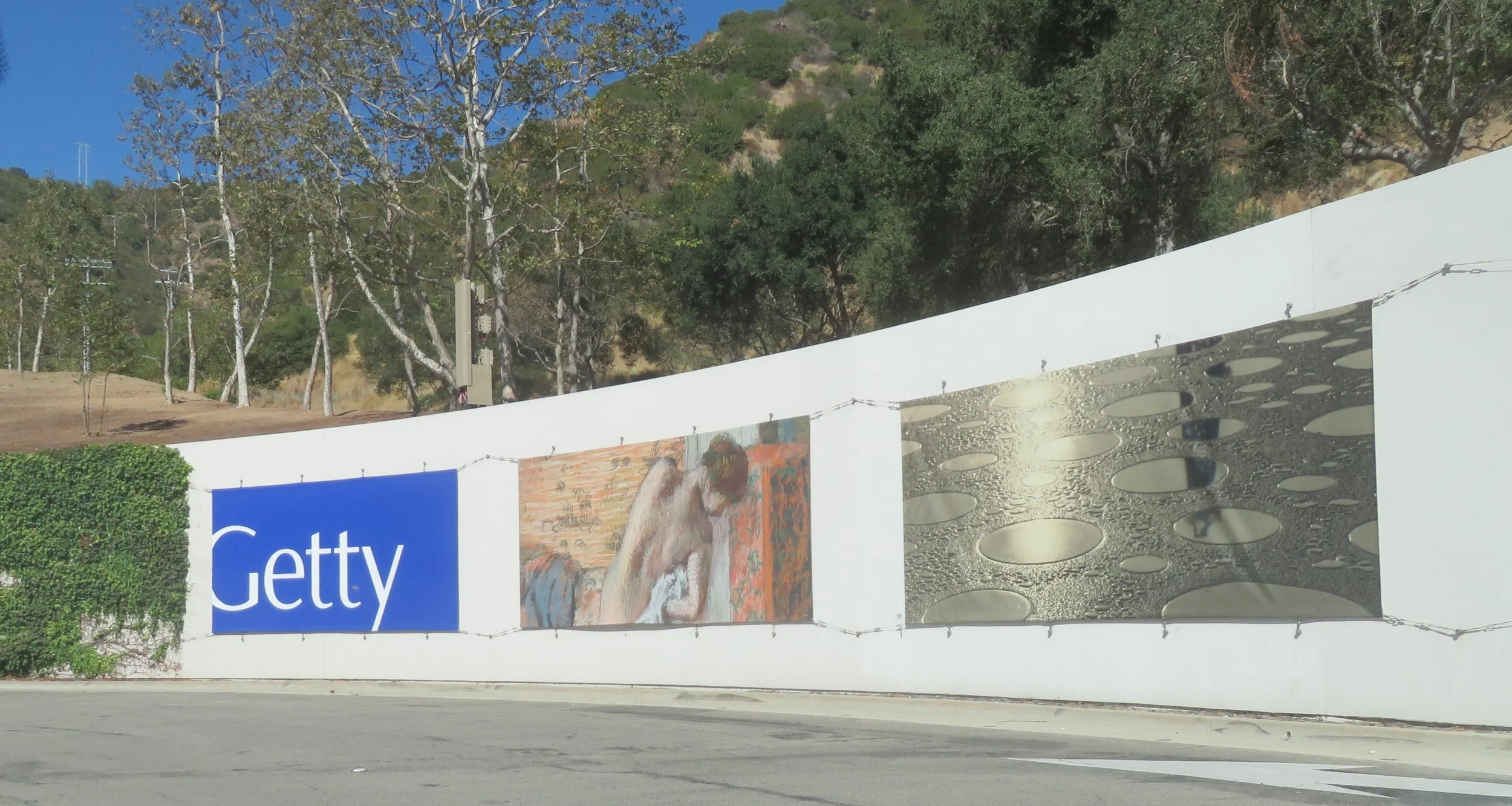
Getty’s art collection was originally housed in his home, part of which was open to visitors. When the collection outgrew that space, he built Villa dei Papiri, a new museum (now called the Getty Villa) on his property that overlooked the Pacific Ocean, which housed primarily Roman-Greek classical and ancient art. In 1983, the Trust purchased 110 acres of land in the Santa Monica Mountains with the intent of building The Getty Center to house the rest of the museum’s expanding collection.
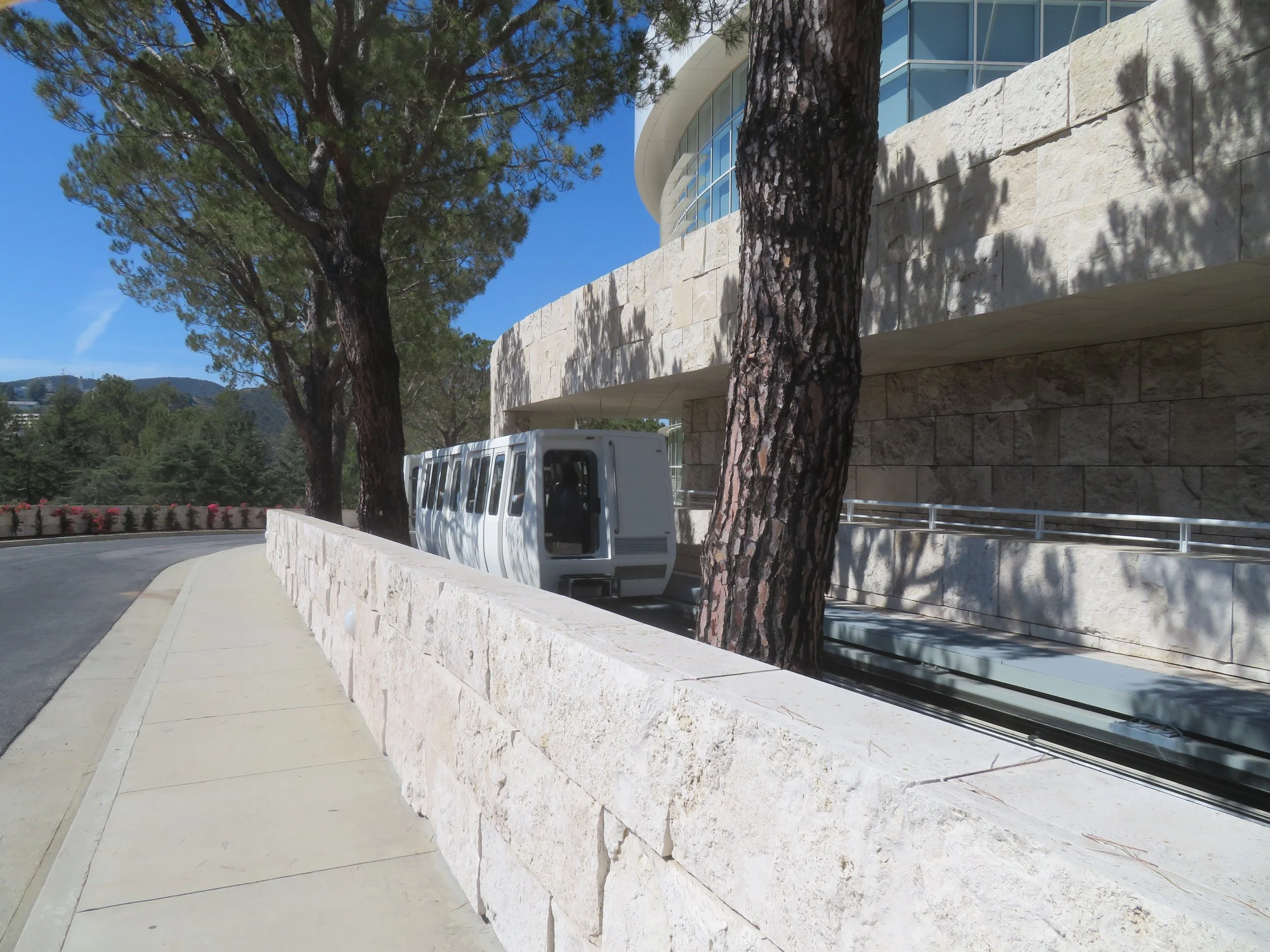
We visited The Getty Museum Center first, arriving at opening time, 10 AM. A tram takes visitors up the hill ~900’ to an arrival center at the main museum campus.
Walking up the stairs into the Entrance Hall is anticipatory of what’s to come.
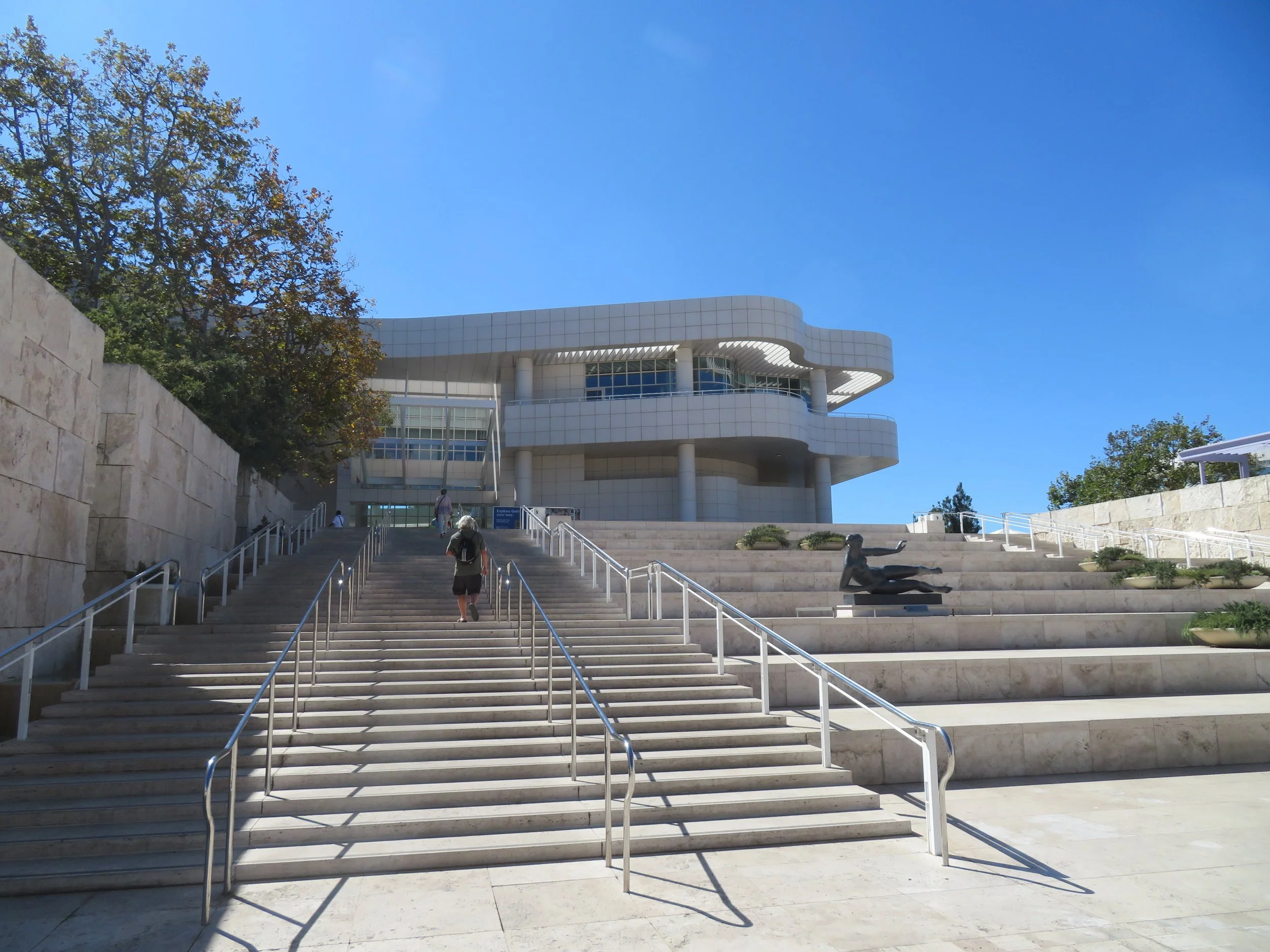
Off the tram and up to the Getty
We picked up a museum map and headed into the courtyard. An online Getty Guide is also available for your phone, but the map worked just fine for us.
Walking from the Entrance Center into the main courtyard is gobsmacking. It’s lucent and so expansive that even though there were lots of people around, it didn’t feel crowded, as if we had most of the place to ourselves. We grabbed a latte and scones at the courtyard coffee cart, sat at a tiny table under an umbrella, and planned our exploration.
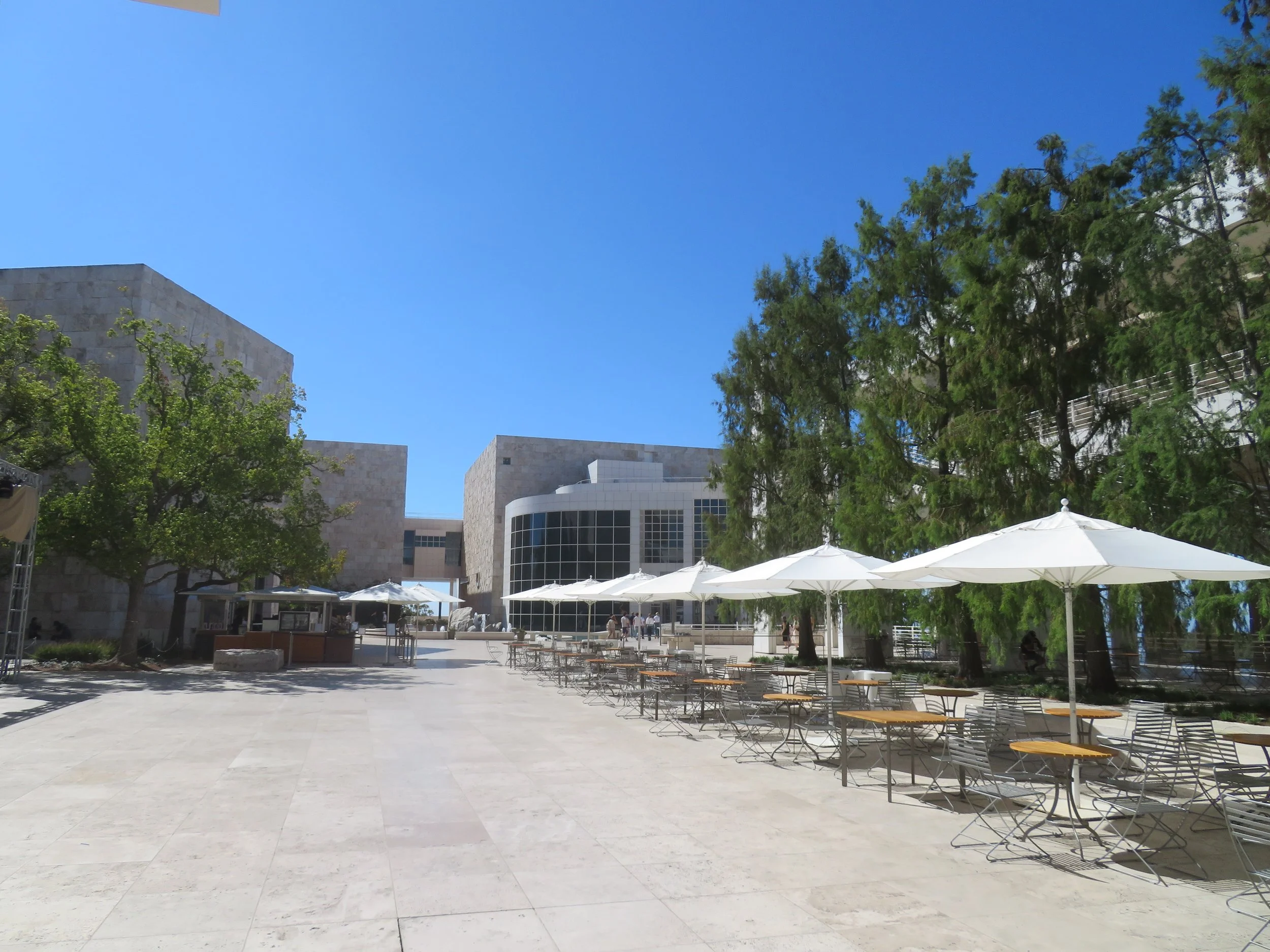
The complex is an enormous, spacious facility with a modern architectural design by Richard Meier geared toward open space and natural light. The decade-long project was begun in 1987 and not completed until 1997. Most of the walls and floor of the entire complex are composed of 1.2 million square feet of earth-toned Italian travertine stone tiles and expansive areas of glass.
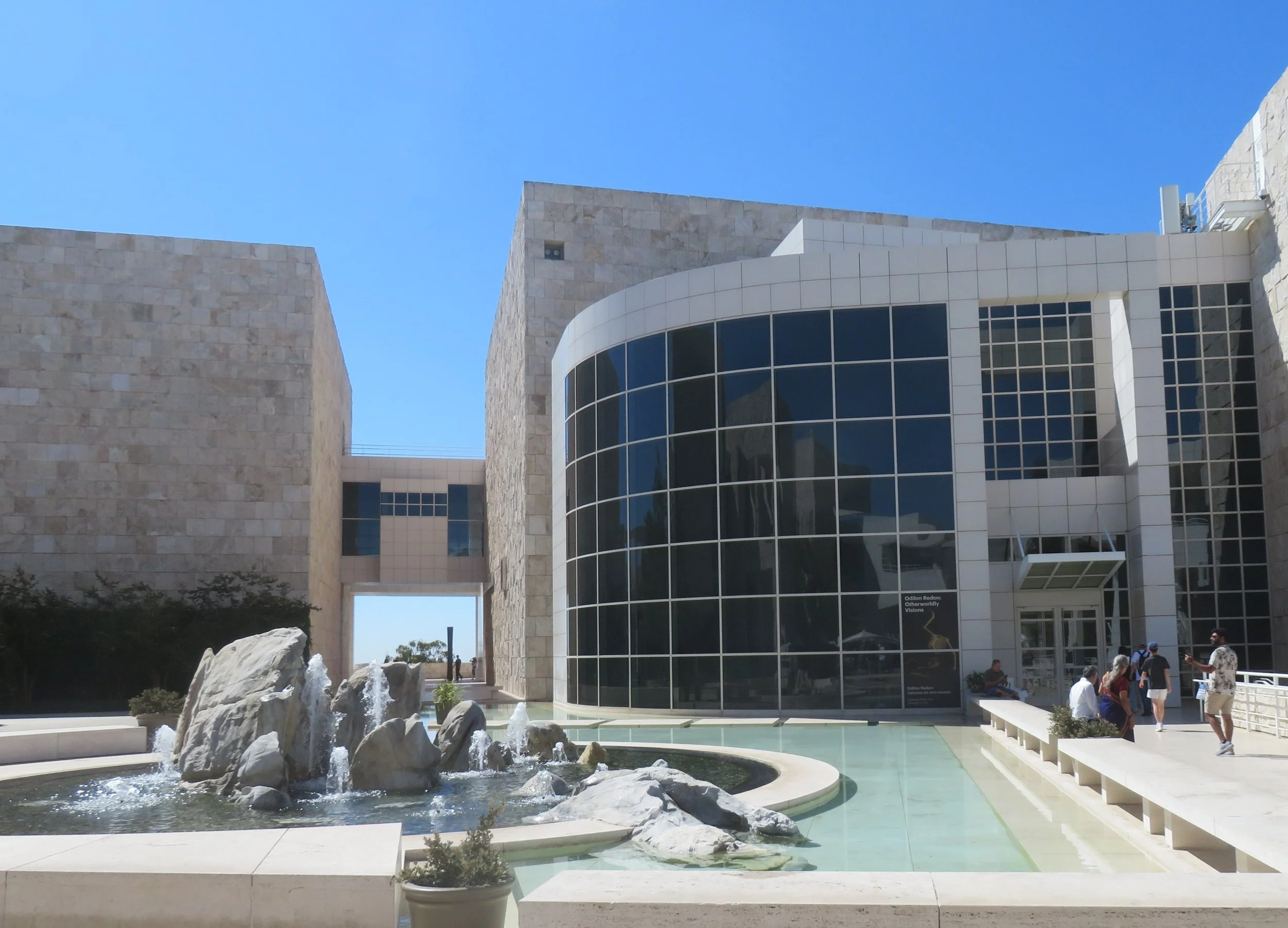
Wiki informed us that “The center branch of the museum features pre-20th-century European paintings, drawings, illuminated manuscripts, sculpture, and decorative arts; and photographs from the 1830s through present day from all over the world. In addition, the museum's collection at the center includes outdoor sculpture displayed on terraces.”
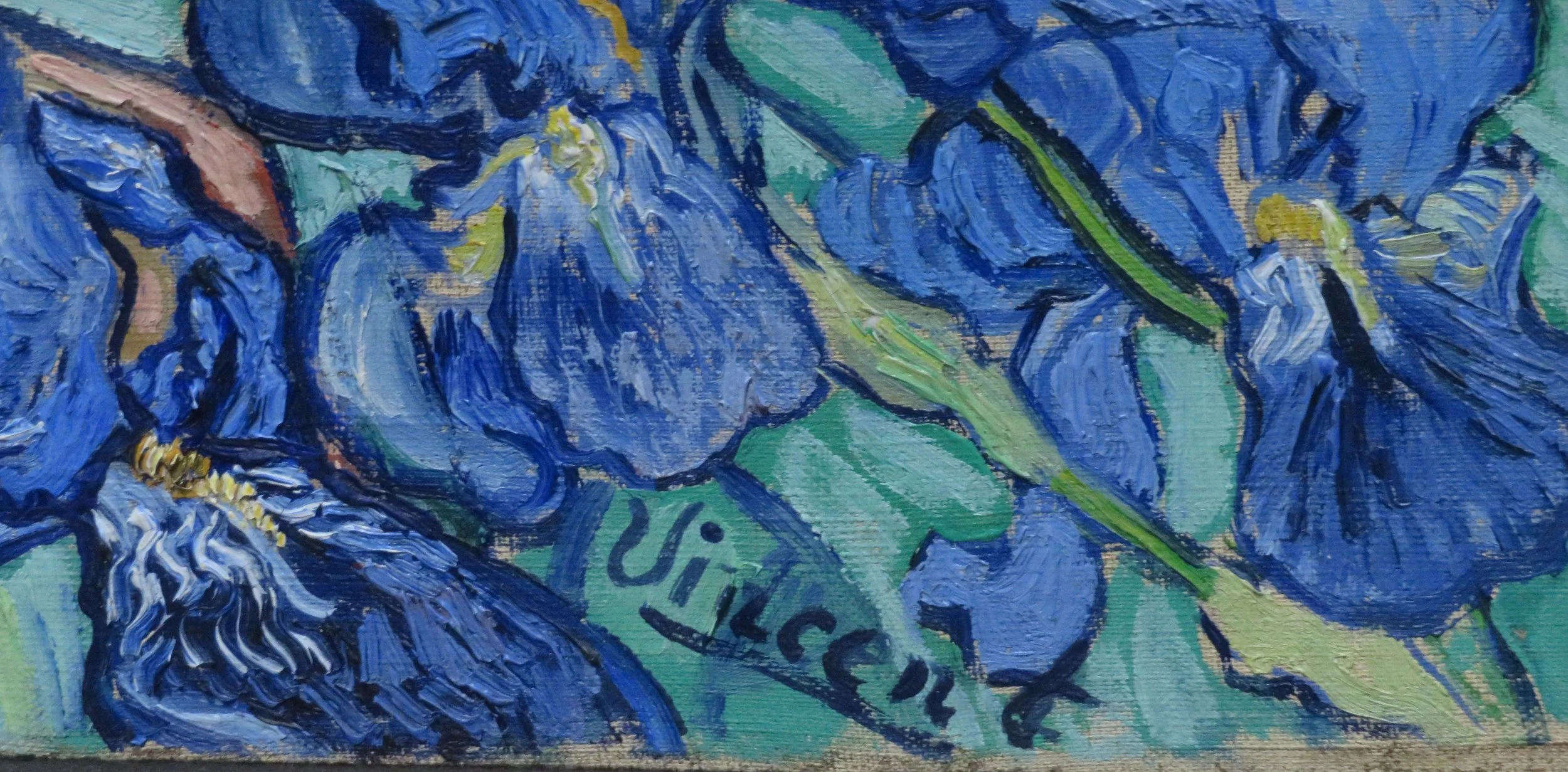
We soon discovered there was too much to see in a single visit, so we picked and chose our wanderings carefully. A couple of the pavilions were closed which was just as well, since we were already overwhelmed by all there was to view. We headed to the permanent collection first. Our main goal was to see Van Gogh’s ‘Irises’ (1889). Purchased in 1990, it set an historic 1987 auction record-setting sale at $53.9 million.
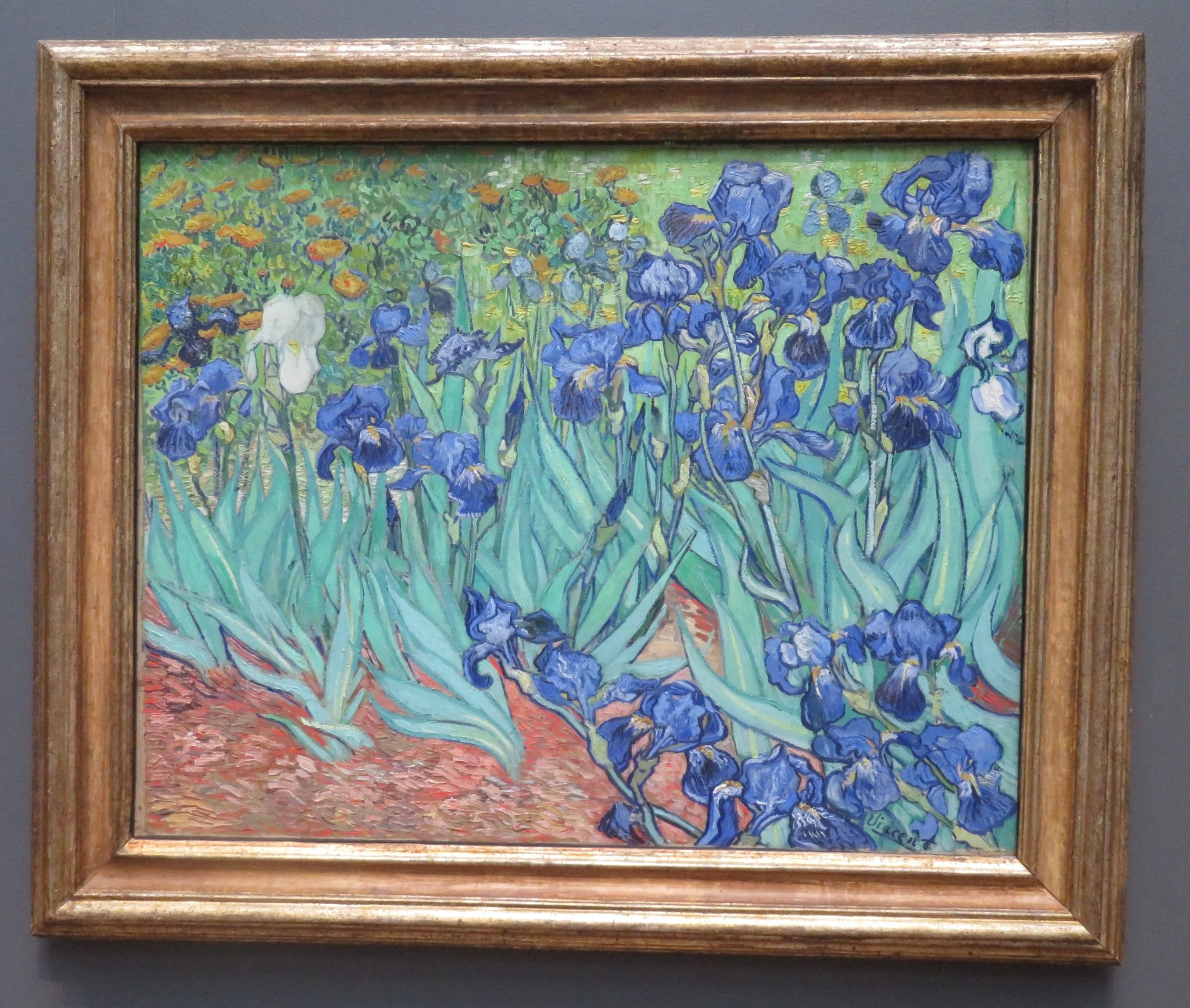
Seeing ‘Irises’ close up is almost surreal.
We’re not particularly knowledgeable in fine art and artists, but it was hard not to recognize names like Monet, Manet, Rousseau, Cezanne, Renoir, Degas, Gauguin, and so many more. Take a look… it’ll blow your mind.
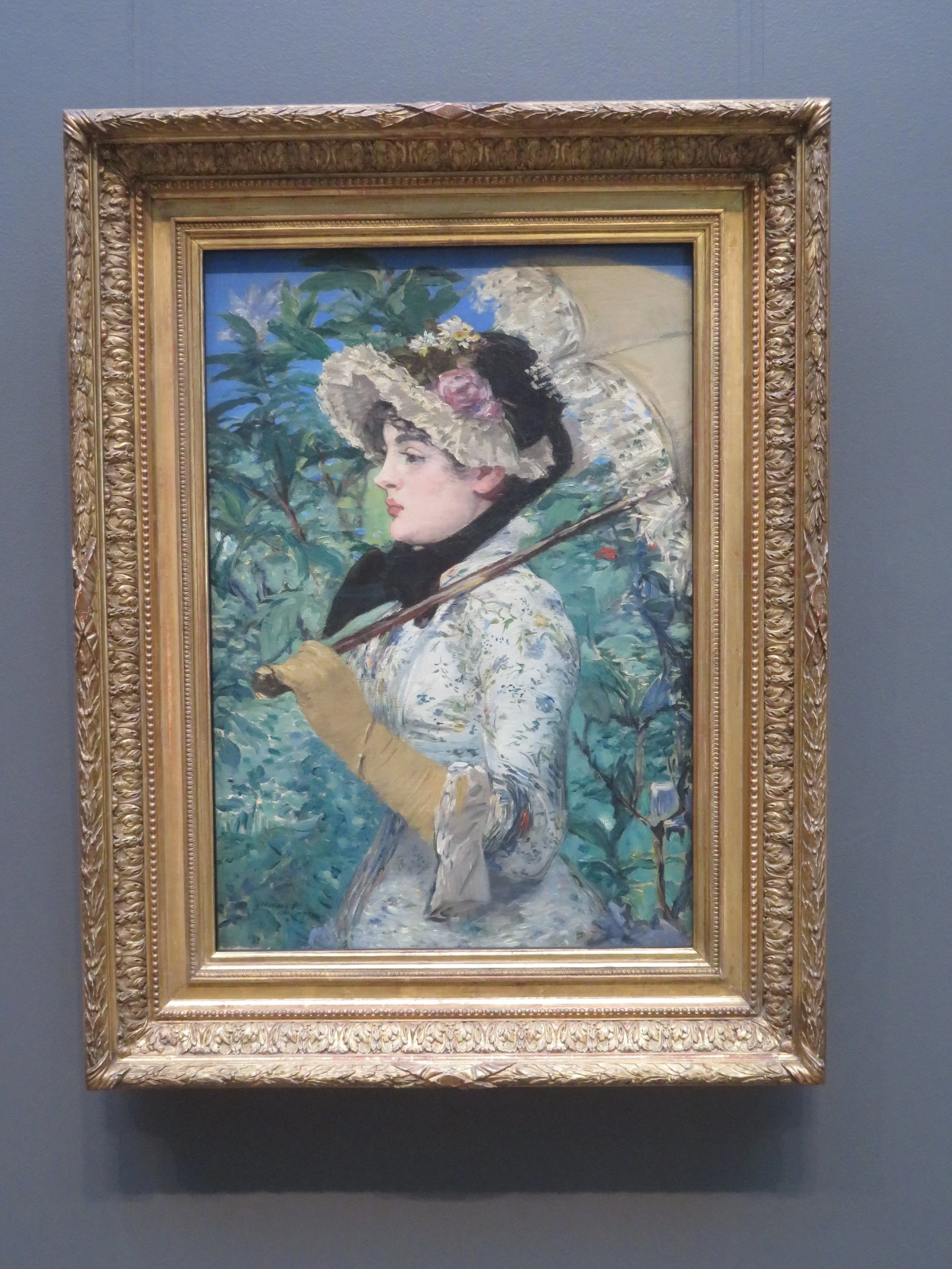
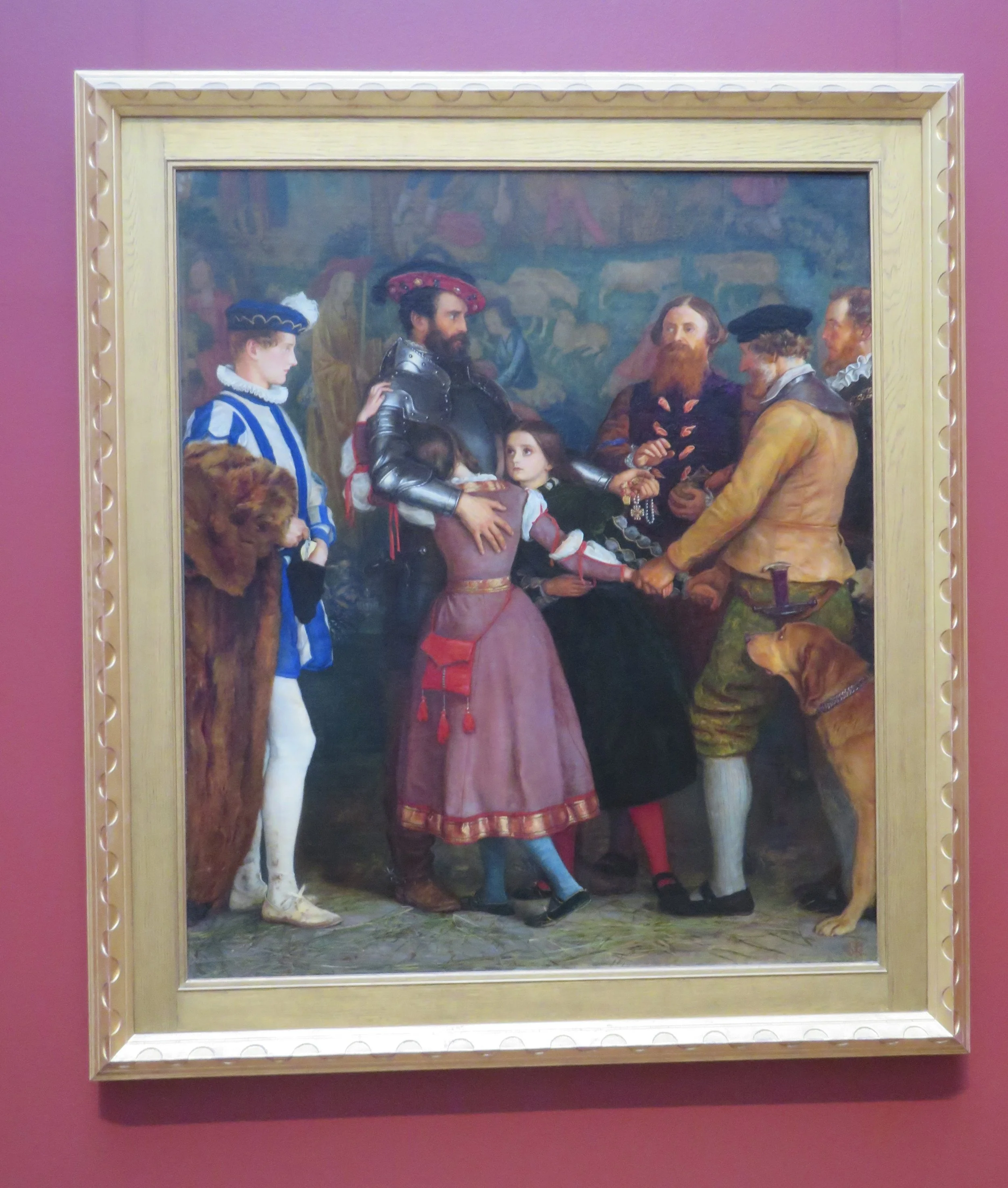
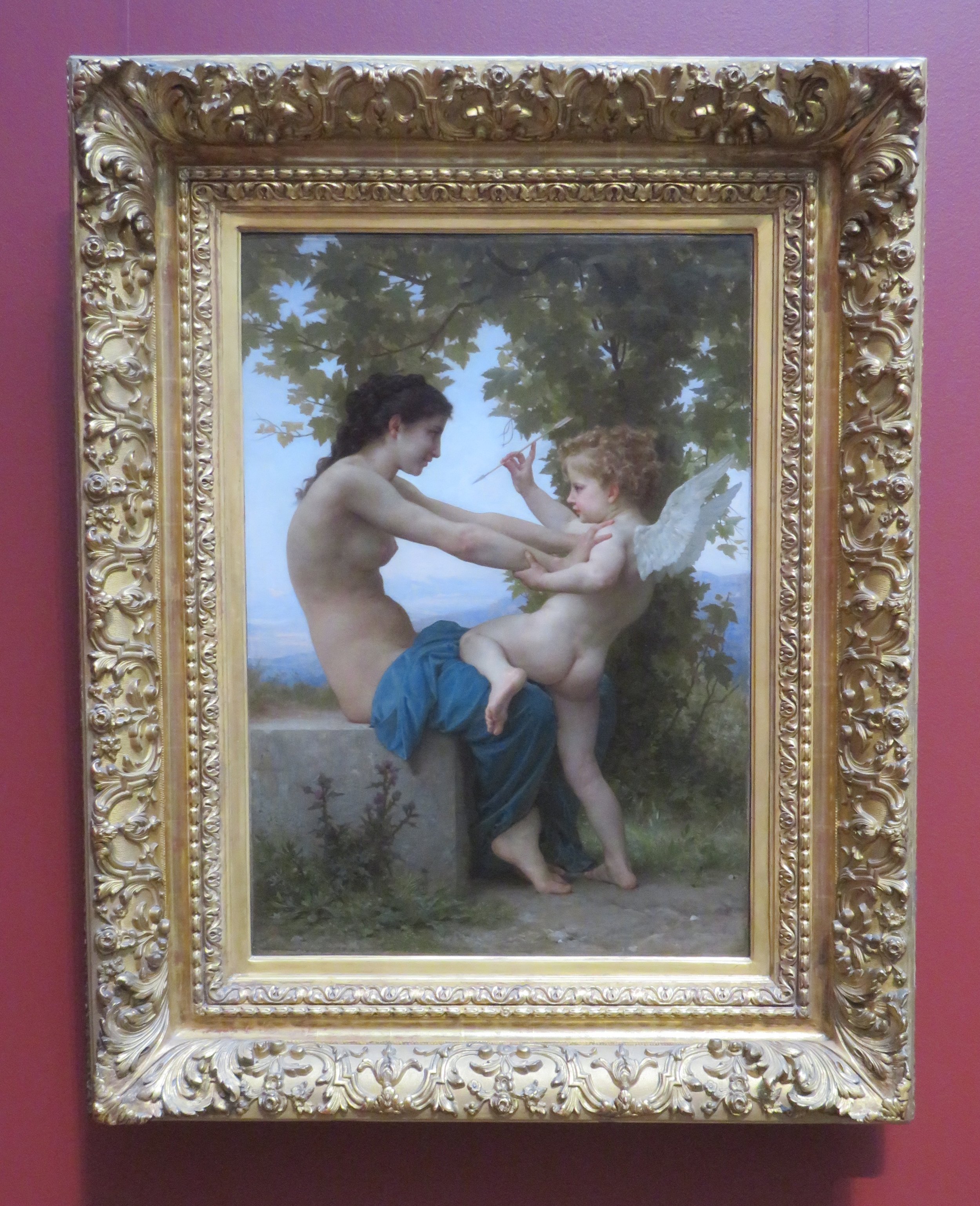
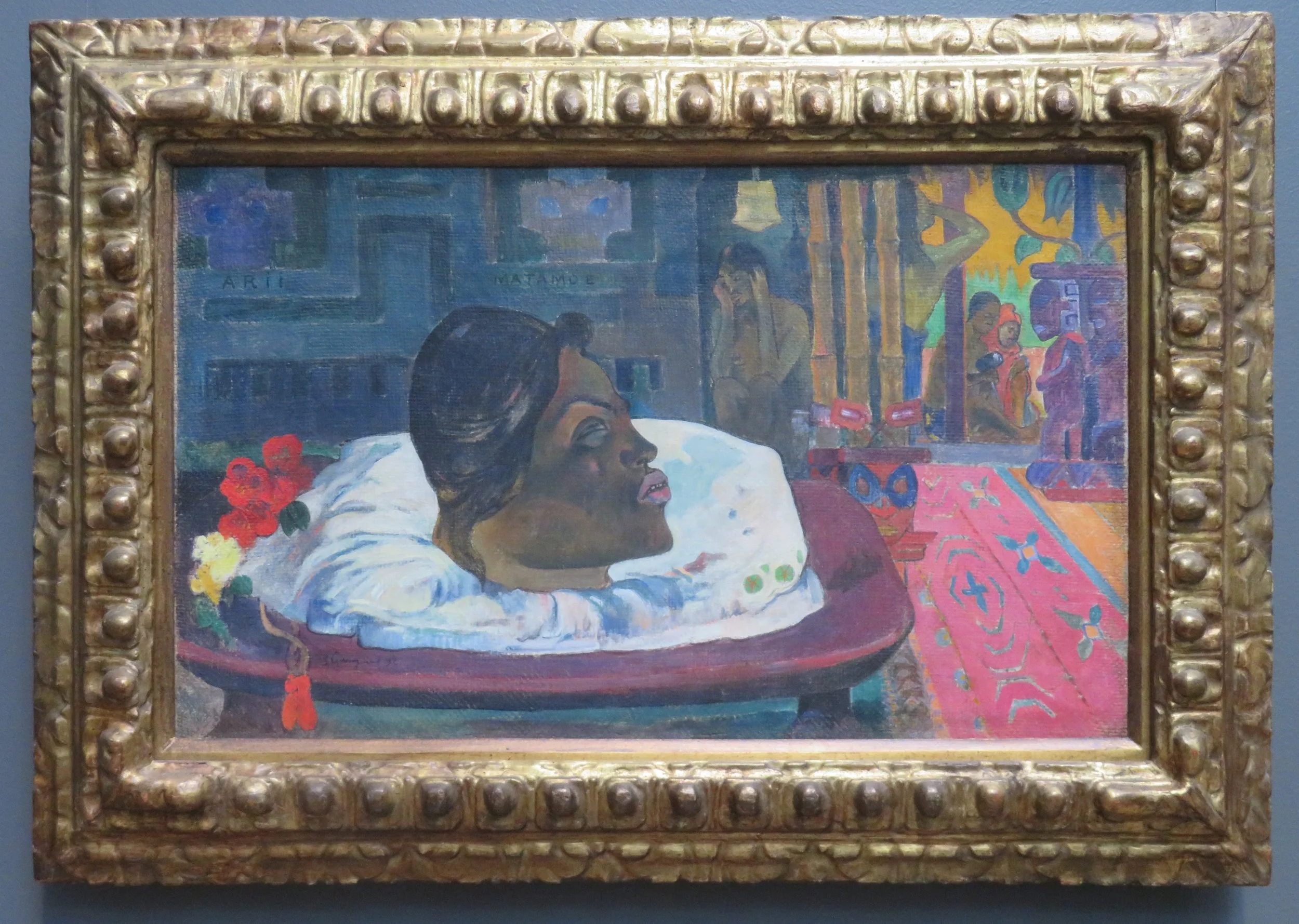
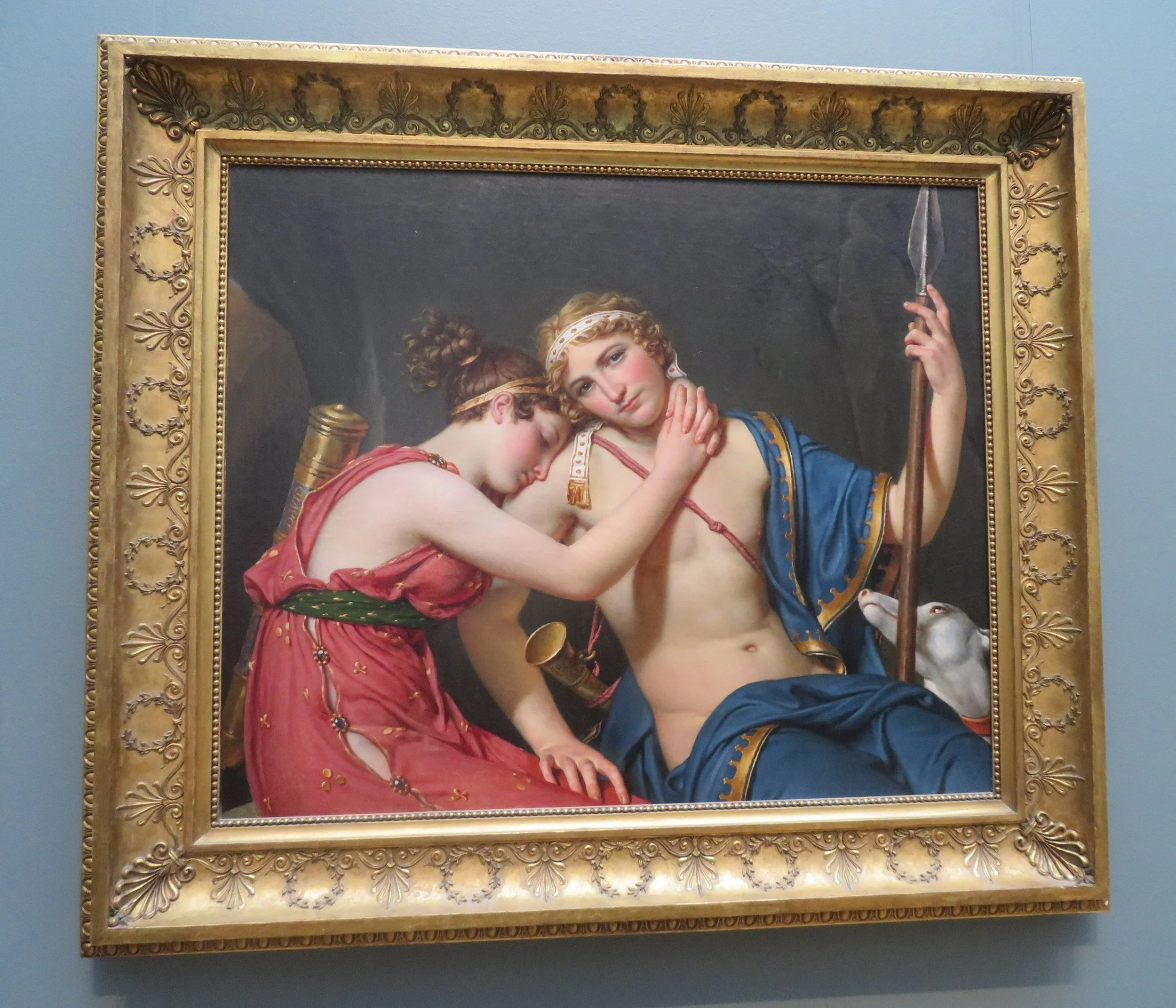
From the permanent collection, we walked to the Central Garden, the work of artist, Robert Irwin.
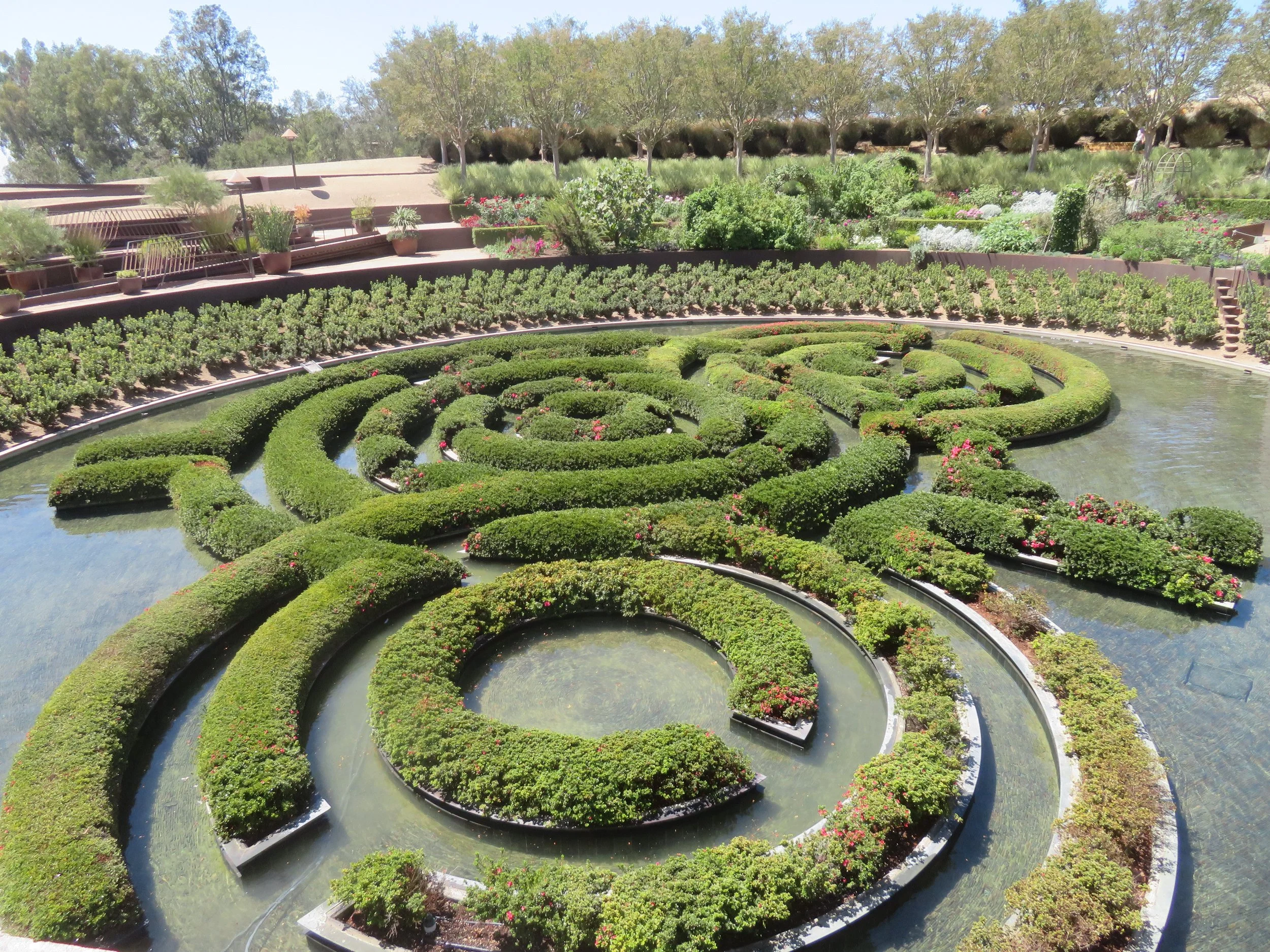
The Central Garden is just beautiful.
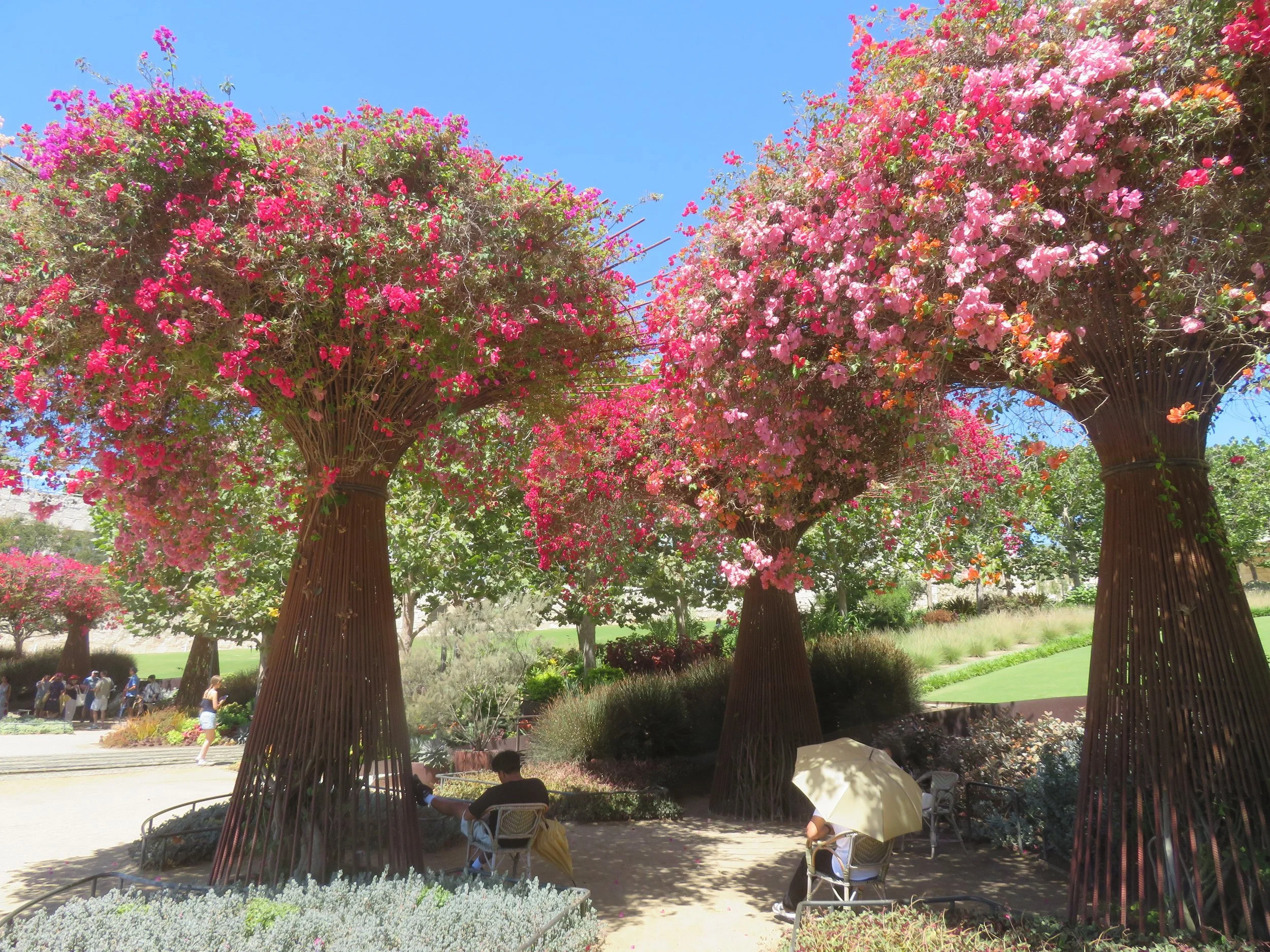
Parasols were available to protect visitors from the intense afternoon sun. We strolled through the gardens, parasols twirling, then sat in the shade of blooming bougainvillea trees to take it all in.
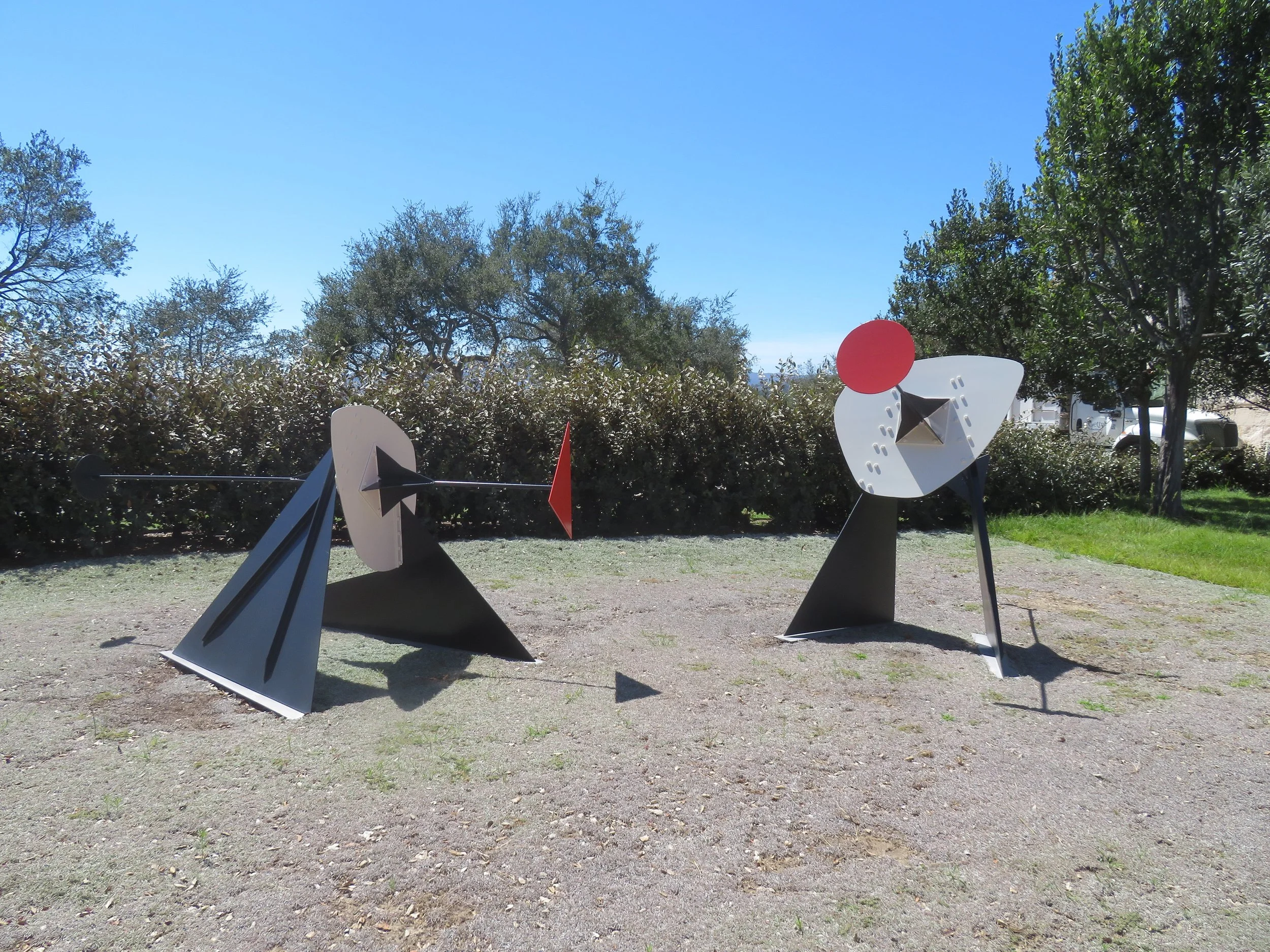
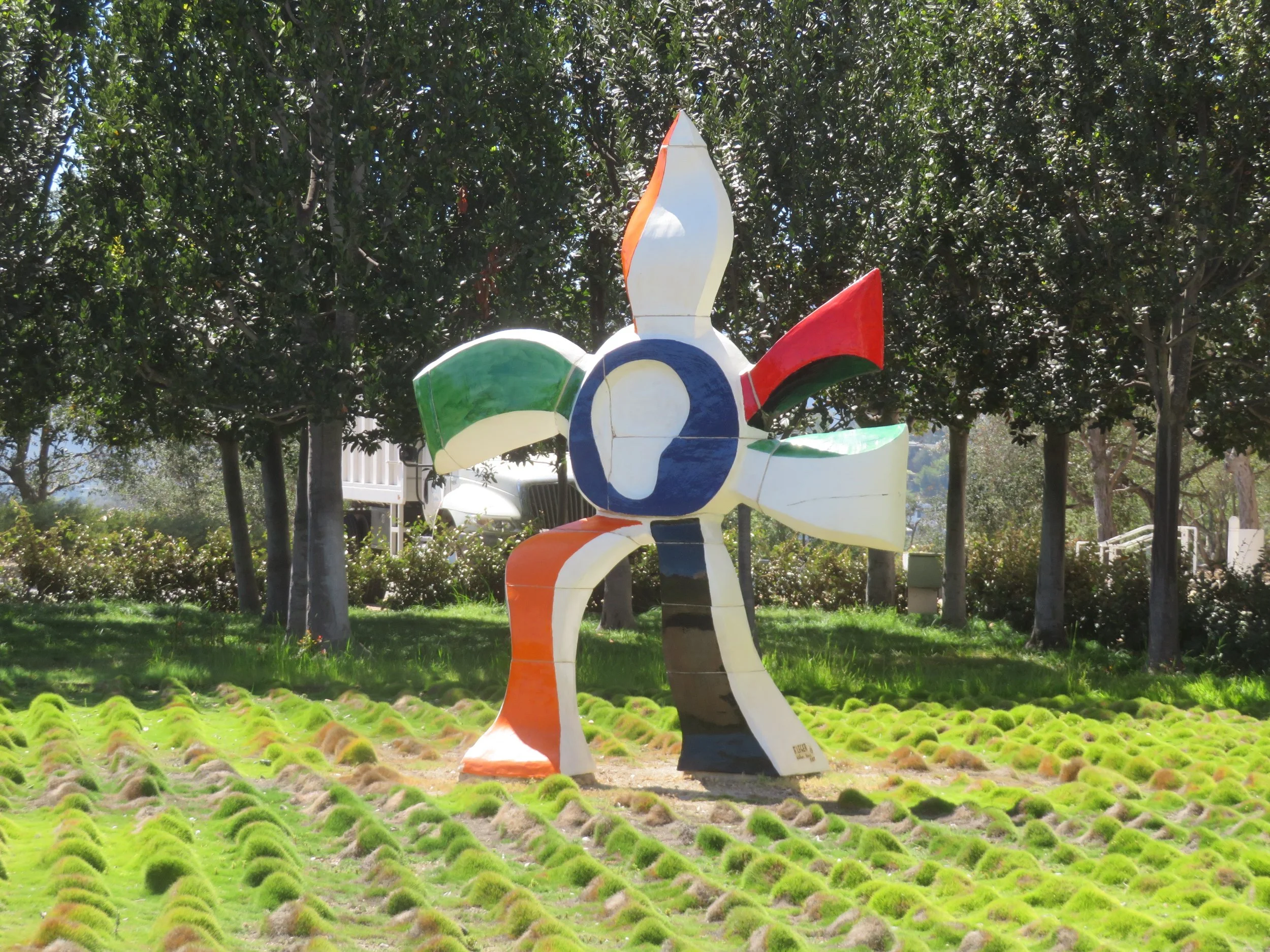
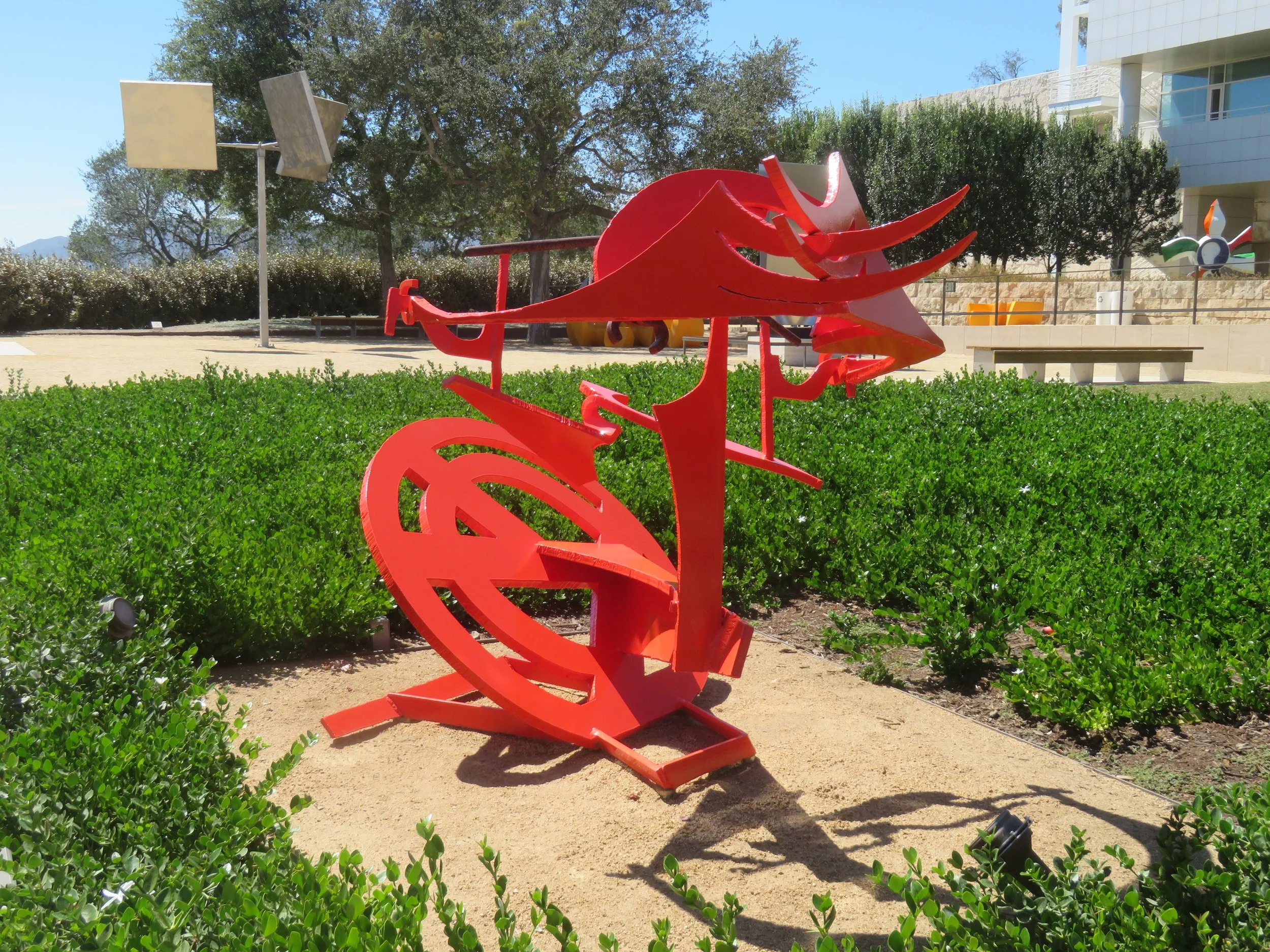
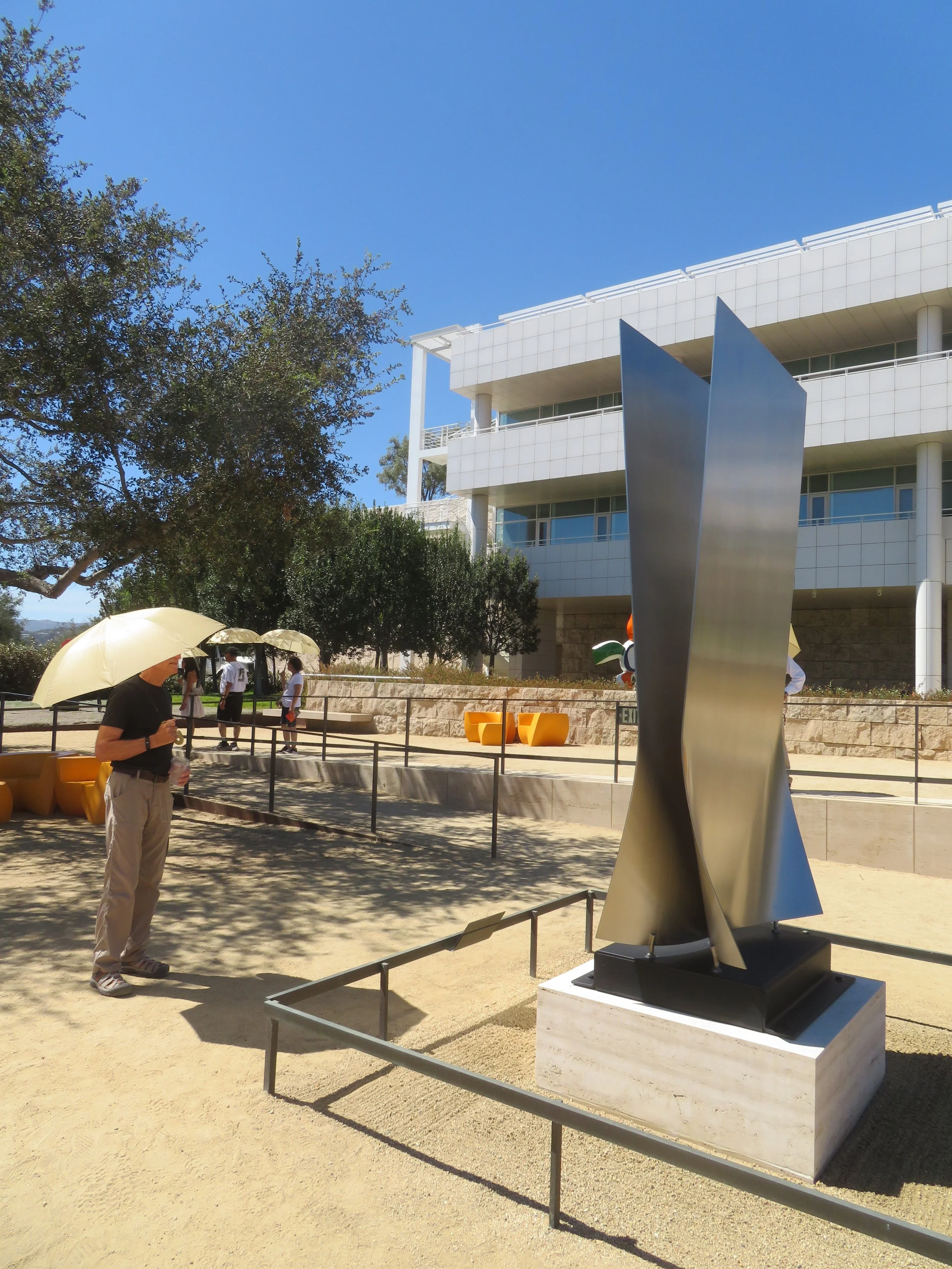
The sculpture gardens are on several levels, accessed by several ramps and walkways, which lead to terraces. There are 28 modern and contemporary outdoor sculptures donated to the J. Paul Getty Museum from the collection of the late legendary film producer Ray Stark and his wife, Fran. Take a look.
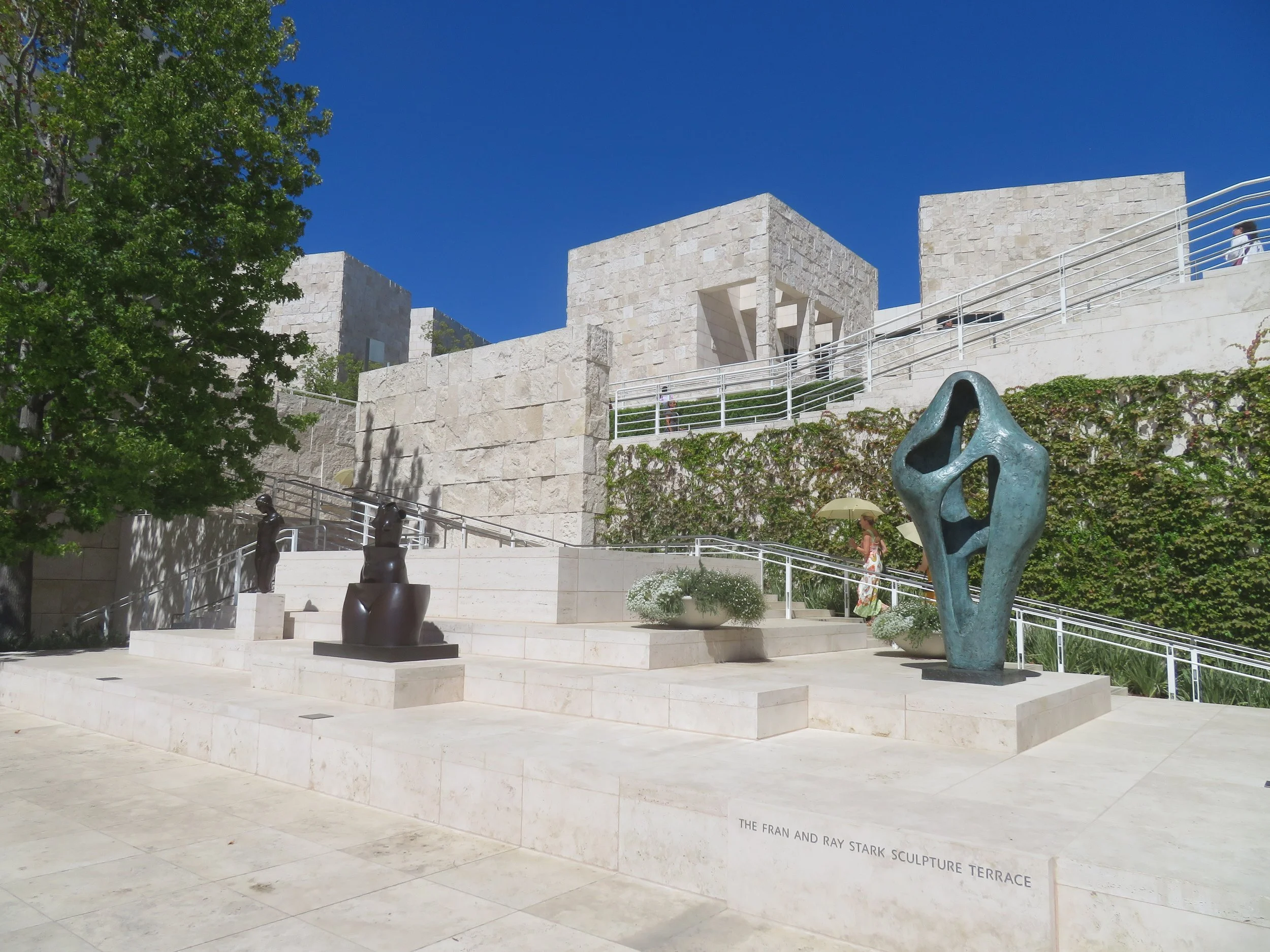
The Sculpture Terrace
We had a delightful late lunch at the Garden Terrace Cafe, sitting at an umbrellaed outdoor table overlooking the museum under a blue, blue sky on a beautiful LA day, then checked out some of the special exhibitions.
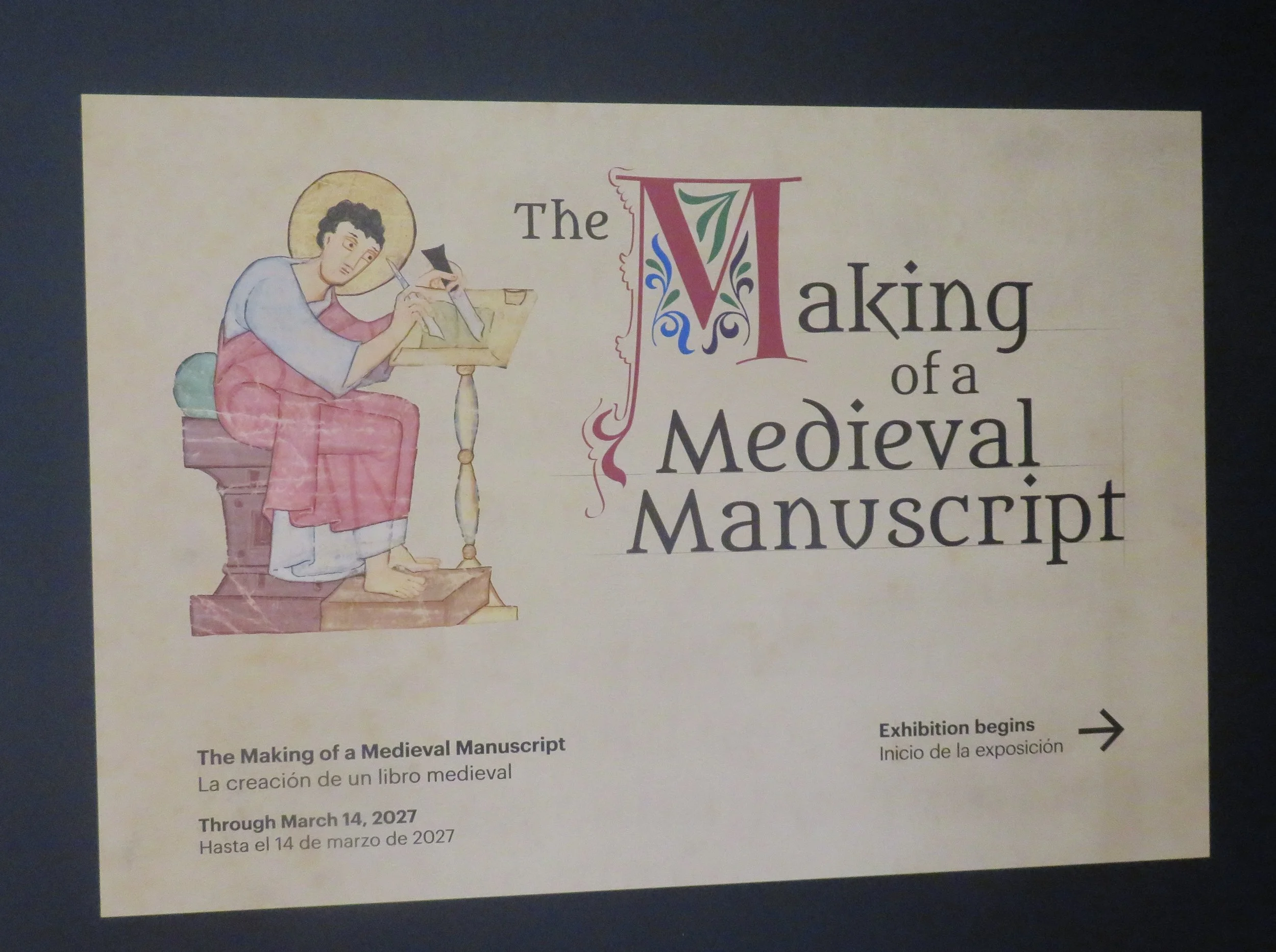
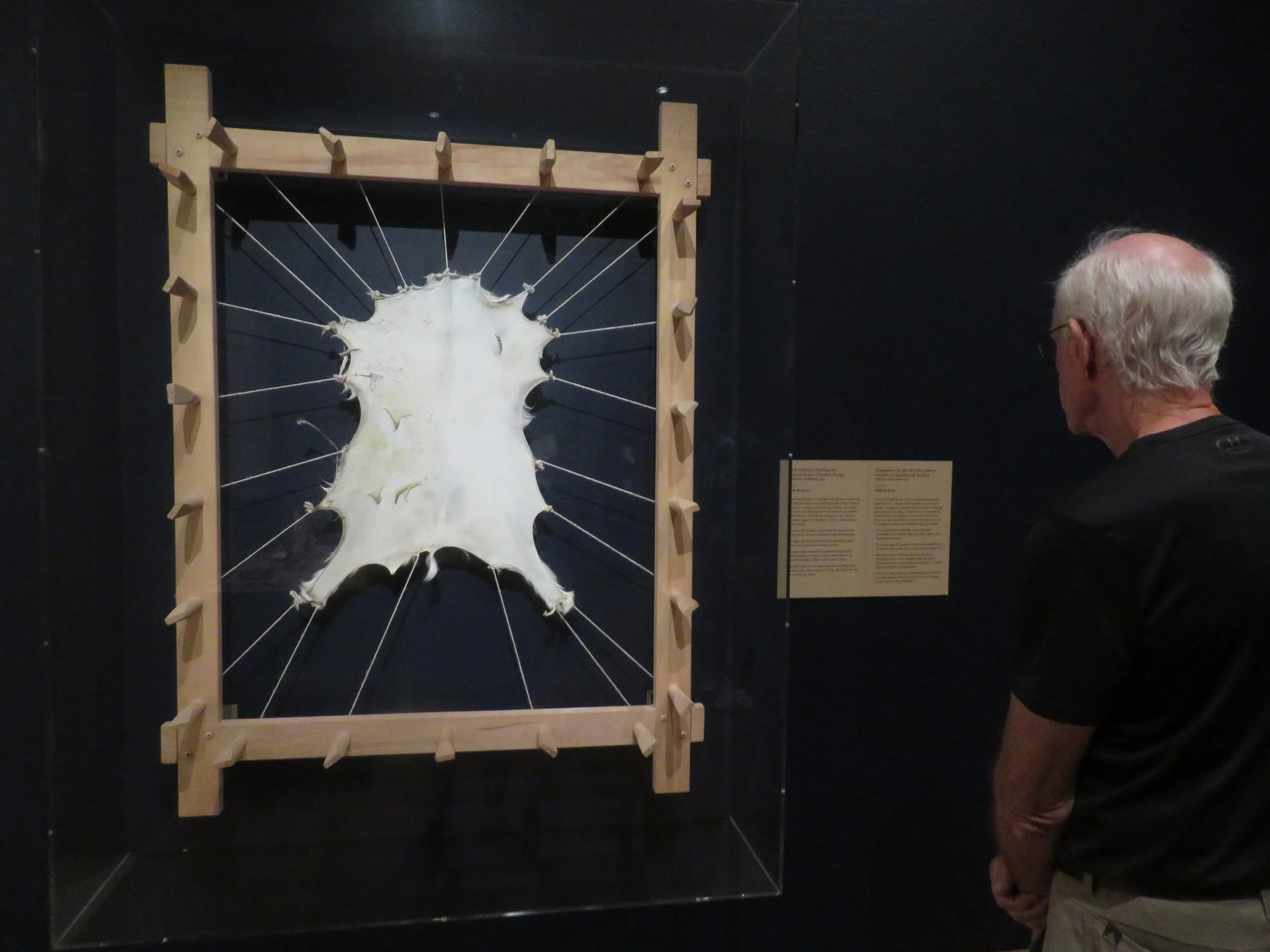
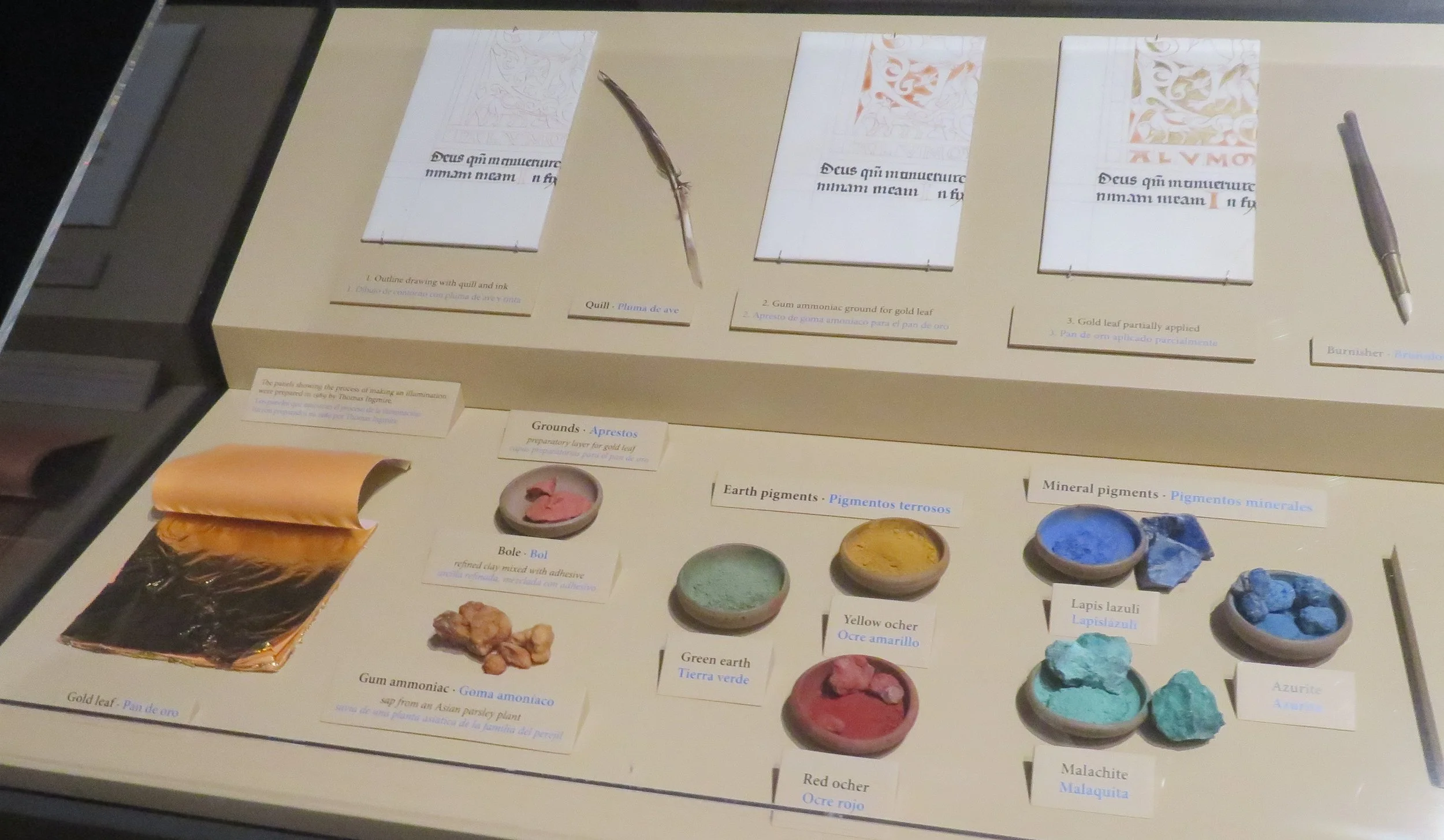
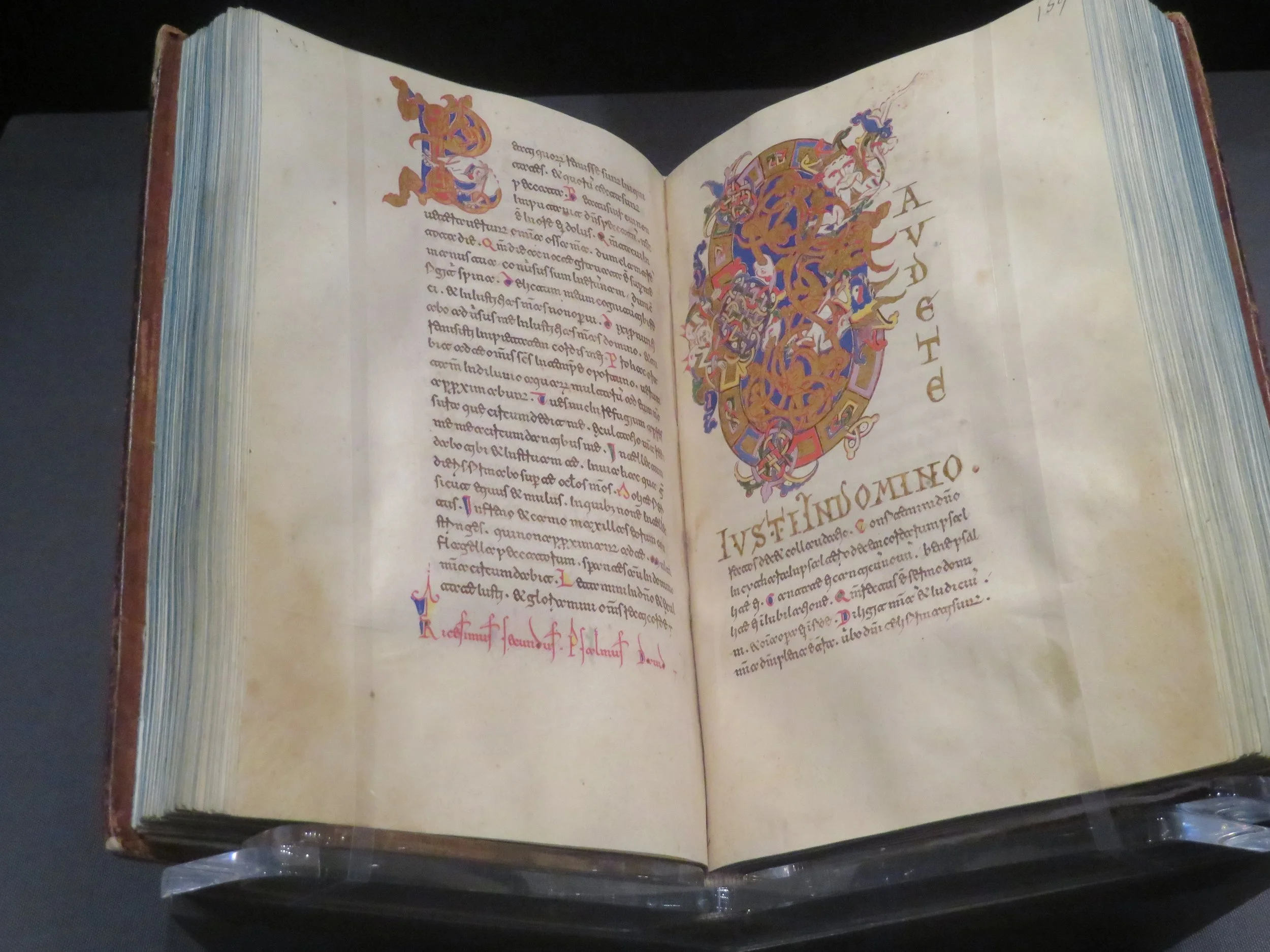
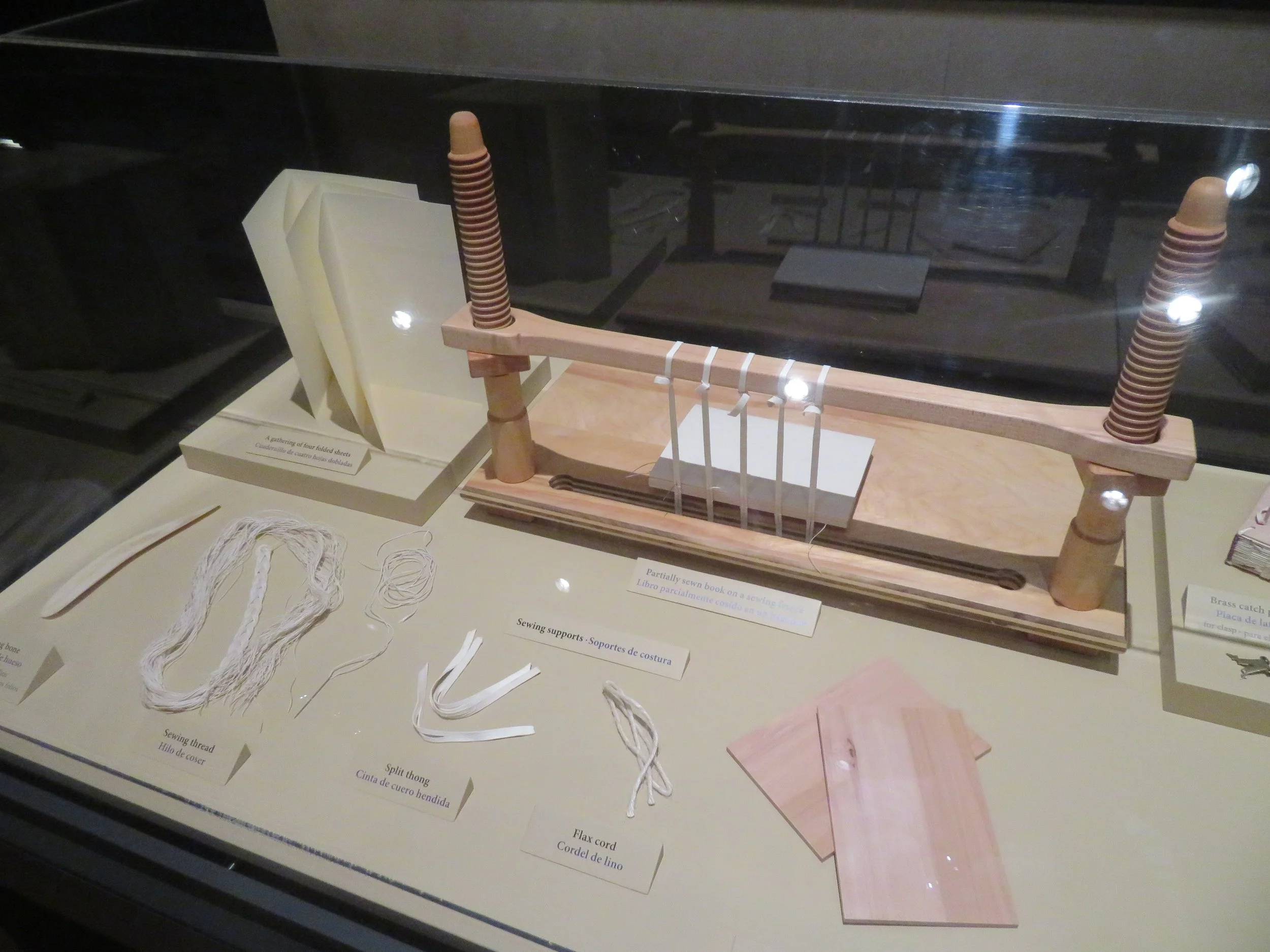
Though there were several exhibitions, we chose a couple that were of interest and then wandered into a couple more. First was the ‘Making of a Medieval Manuscript’, which was particularly interesting. It started with the stretching of a goatskin for parchment, then moved to the quills and pens used for writing, to the making and coloring of inks, to the art of illuminating, and finally to the bookbinding process itself. Some of the finished works were exquisite.
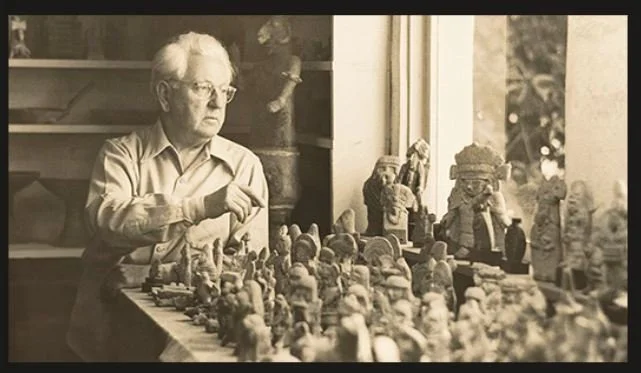
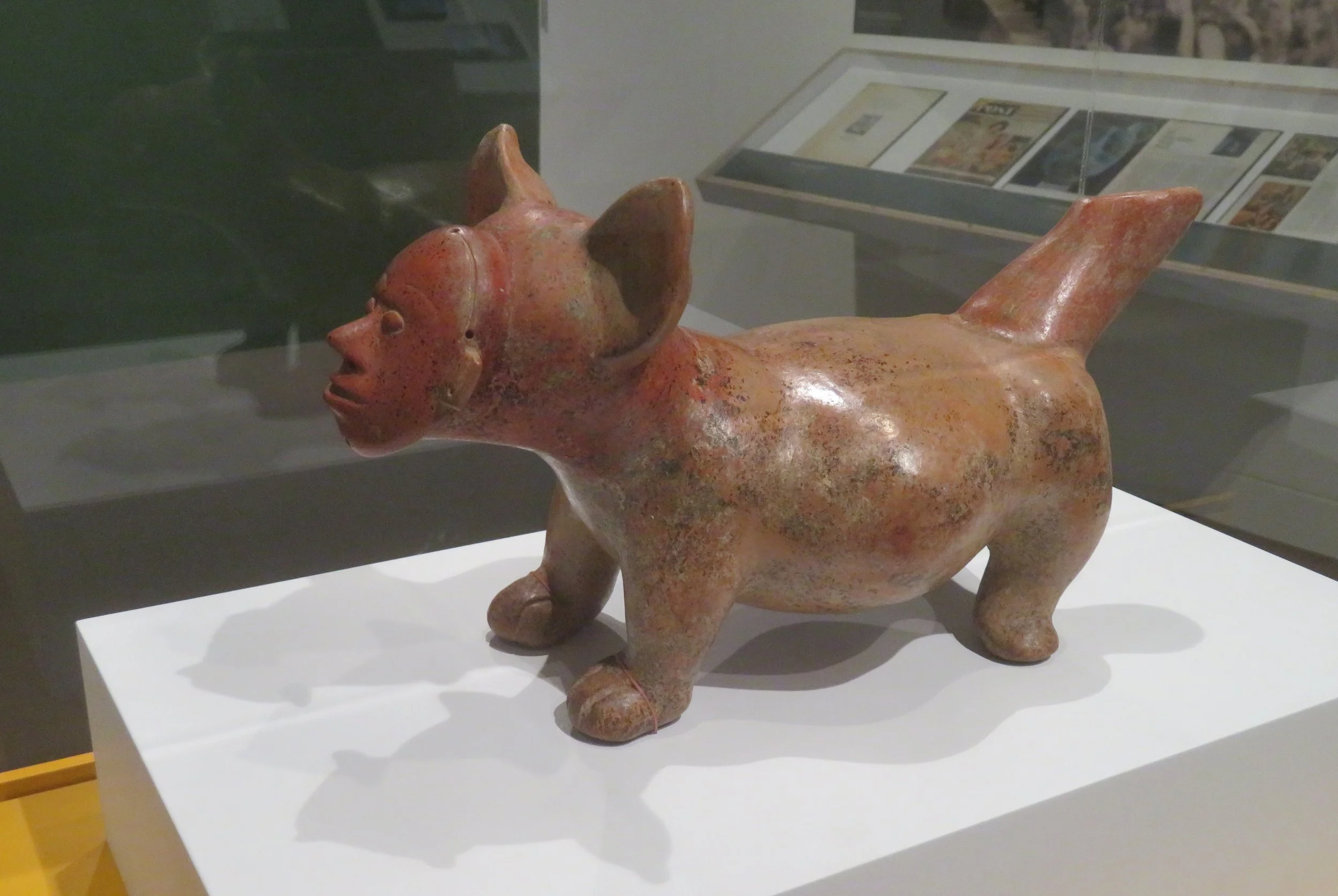
We wandered into the Stenhahl’s World quite by accident. Earl Stenhahl owned and operated the Stenhahl Art Galleries and was one of the most consequential dealers of pre-Columbian and pre-Hispanic art. Some of his dealings were a bit on the shady side. According to Wiki and the Getty Museum, “He sold Mexican and Central American antiquities that were often stolen, looted, or assembled from disparate fragments.”
The Lost, Found, Returned exhibit was particularly fascinating. So many works of art have been stolen, looted, or plundered, especially during World War II. During World War II, Nazi Germany and other Axis forces systematically looted cultural heritage from occupied territories, seizing paintings, sculptures, books, religious treasures, gold, silver, and other valuables. An estimated 187,000 pieces were lost, and to date only 14,500 have been recovered.
The Getty Provenance Research team works to trace the ownership and history of artworks and gave examples of recovered works of art, many of which were purchased by reputable collectors only to have their provenance prove that they rightfully belonged to other owners. Greiner’s ‘Standing Male Nude’ was an example of how provenance tracing resulted in the return of a piece of artwork to its original owner.

After tracing ledger entries and several auction catalogs through the years, this symbolist drawing was traced to the Simms Collection and then returned to the Dresden State Art Collections.
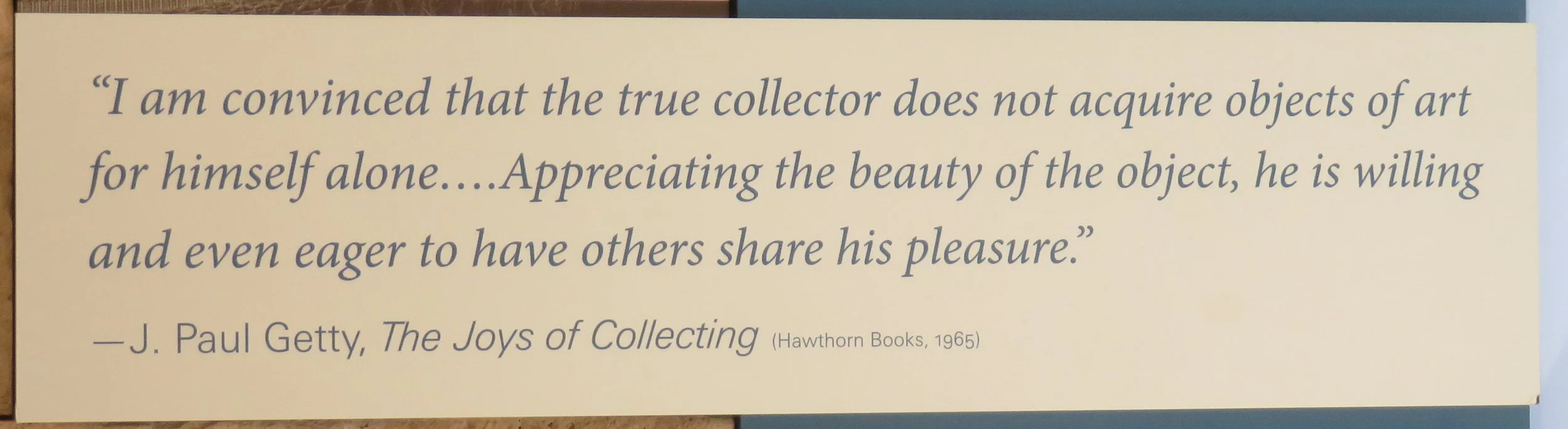
As we made our way to the exit after a very long day, we stopped briefly at the permanent J. Paul Getty exhibition to learn a bit more about the man, and we left with this quote:
Though admission is free, parking is $25. I’d read that veterans park for free this year, and sure enough, they do. The info desk gladly validated our parking ticket, giving us a totally free day… except for our $50 lunch at the Garden Terrace Cafe, which was worth every penny for the ambiance.
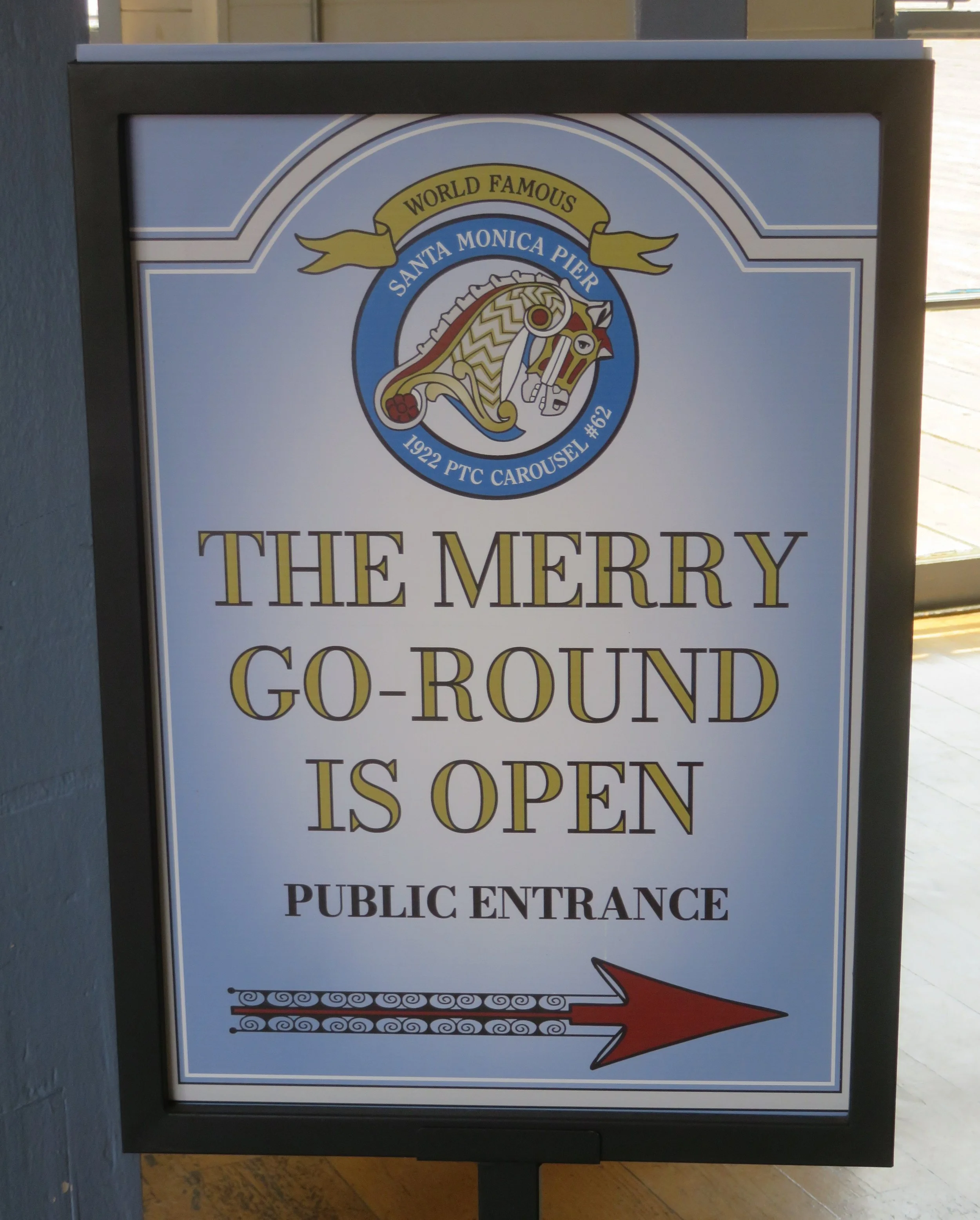
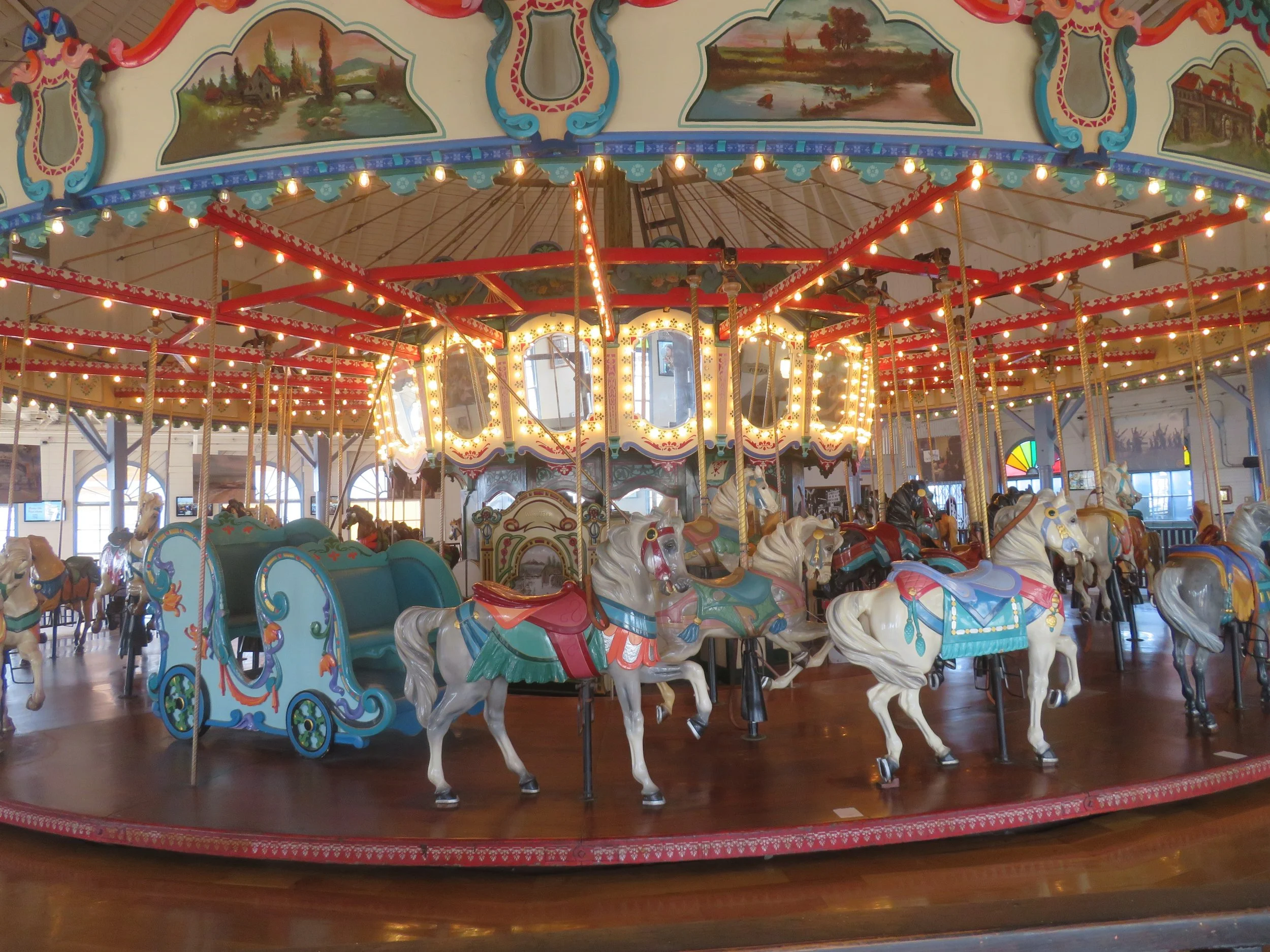
Our minds were full, and spirits were high as we departed the museum. One last detail to attend to before heading back to our hotel. We headed to the Santa Monica Pier for a merry-go-round ride on the historic 1916 Looff’s carousel. A little trivia: It’s a National Historic Landmark and was featured in the 1973 movie ‘The Sting’ in which Paul Newman’s character operates it.
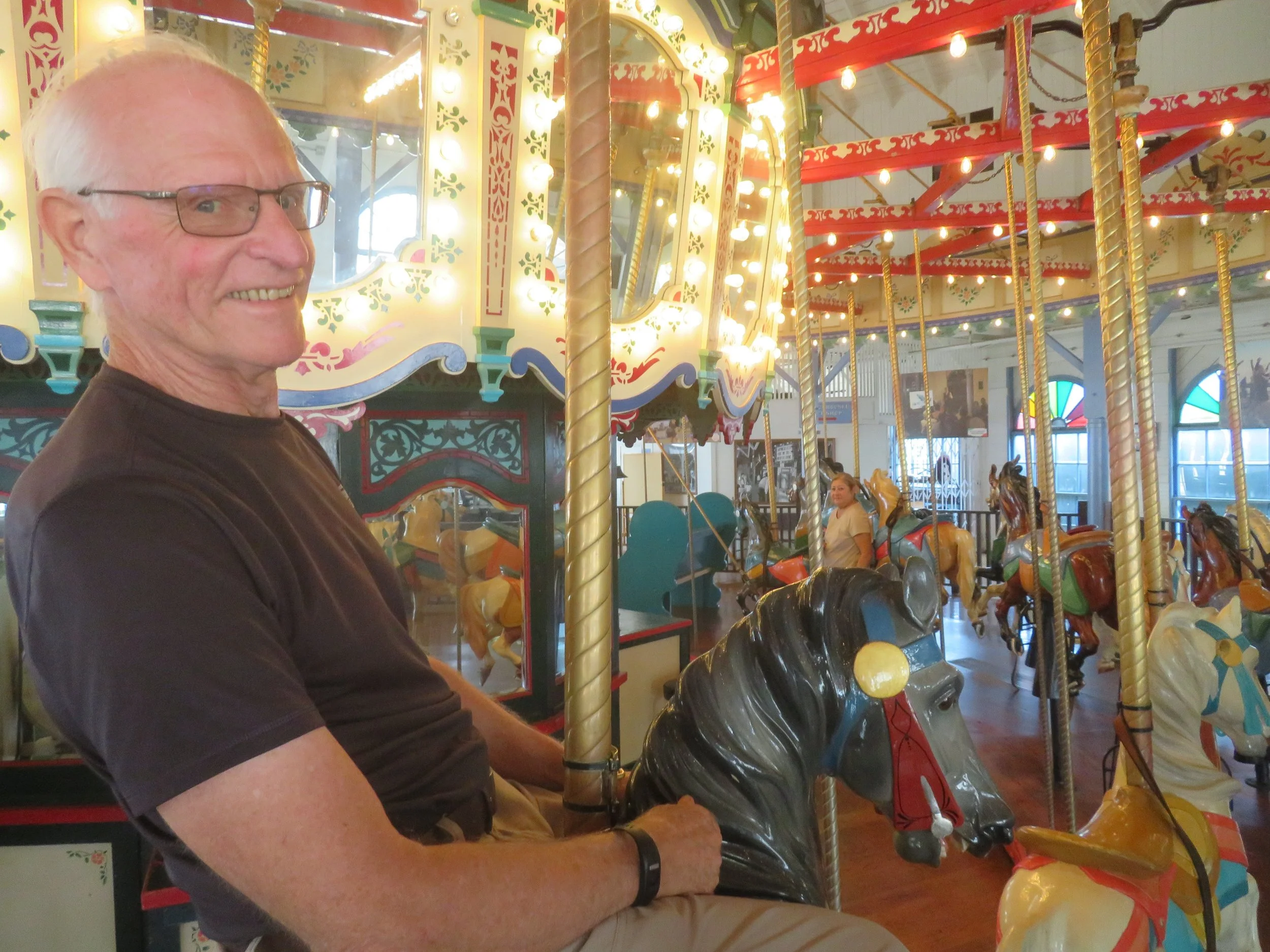
What a perfect ending to a wonderful day. Tomorrow, we’re heading to The Getty Villa in Pacific Palisades and then… a concert at the Hollywood Bowl. Join us!