
3 Days in the City of Angels – The Getty Villa & Dudamel
/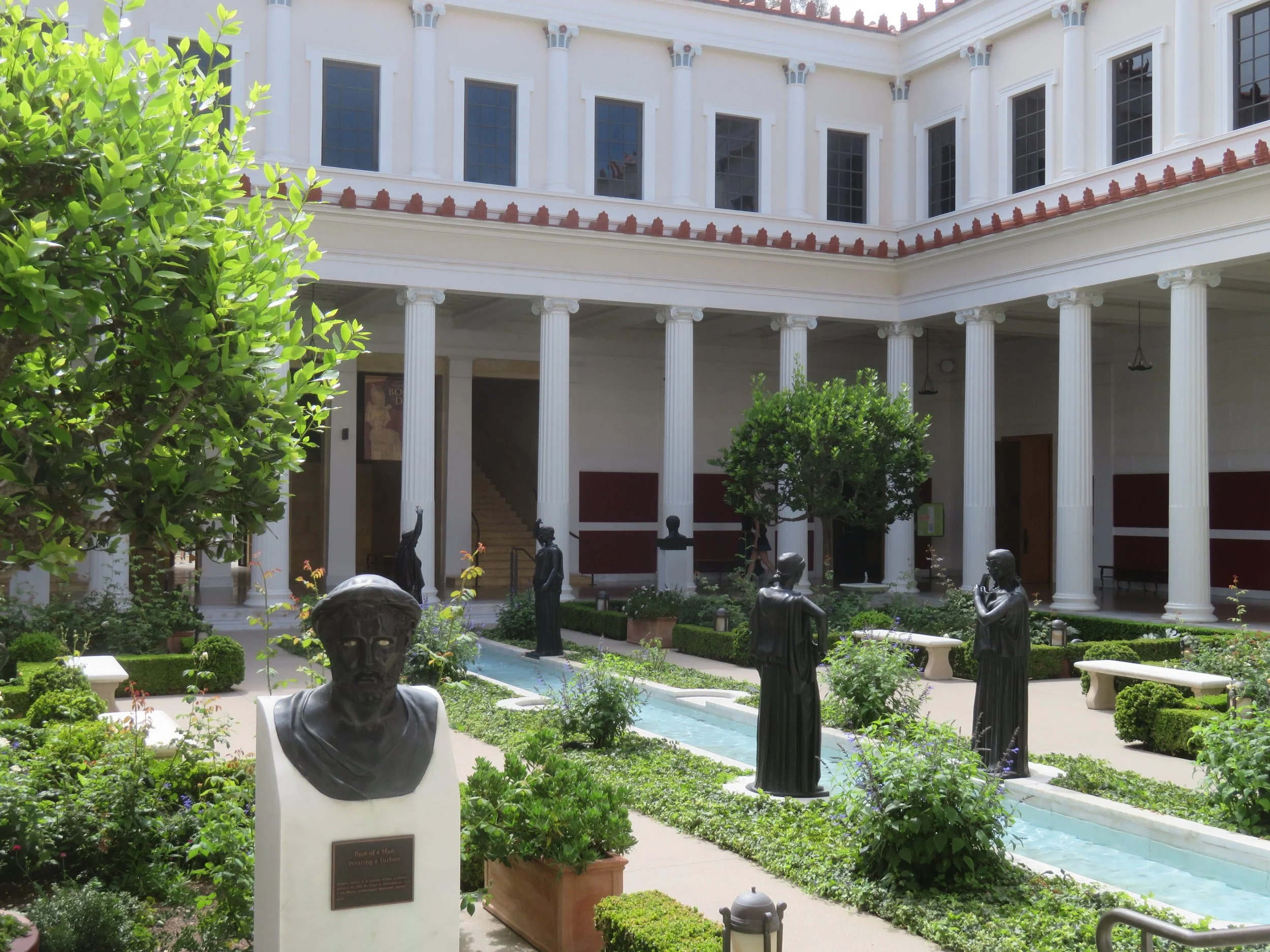
Welcome to the Getty Villa
We had planned to visit both Getty museums in just one day and then head to either the Hammer Museum or the Broad Museum and maybe wander through the Watts Tower one afternoon. Wow… were we naive or what? We barely skimmed the Getty Center Museum, and it took an entire day. We chucked all the rest of our plans and headed on Day Three to The Getty Villa. Once more, admission is free, but timed entry tickets must be reserved in advance.
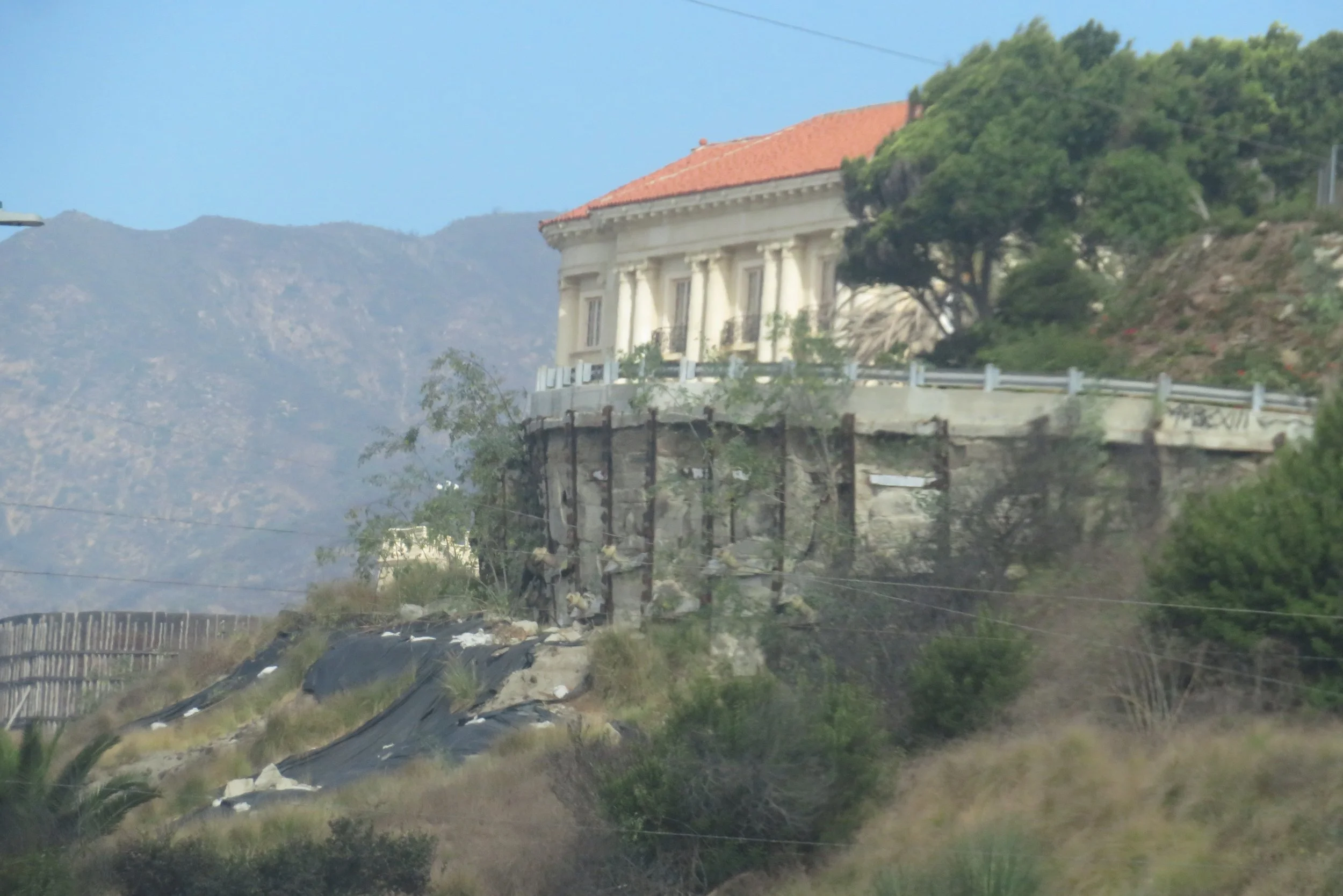
ApProaching the Getty Villa from the Pacific Coast Highway
We had yet to charge the Ioniq since we’d last charged in Barstow, but it was time. We checked out possible charge points en route, then, quite by accident, I learned that we could charge our EV for free in the Getty Villa parking garage. Problem solved. Free admission, free parking for vets, free EV charge, and a free culture ‘hit’. We couldn’t ask for more.
Getty’s art collection was originally housed in his home, part of which was open to visitors. When the collection outgrew that space, he built Villa dei Papiri, a new museum (now called the Getty Villa) on his property which overlooks the Pacific, and which houses primarily Roman-Greek classical and ancient art.
According to the Getty Villa brochure: “Getty wanted visitors to experience Greek and Roman art in a setting that would bring the object to life. […] The resulting Getty Villa was modeled on the Roman Villa del Papiri, a Roman aristocrat’s grand country residence on the Bay of Naples that was buried by the volcanic eruption of Mount Vesuvius in AD 79.” Archeological work over the years has allowed architects to determine what the original villa looked like. Opened in 1974, the villa concretizes Getty’s vision through classical art and architecture.
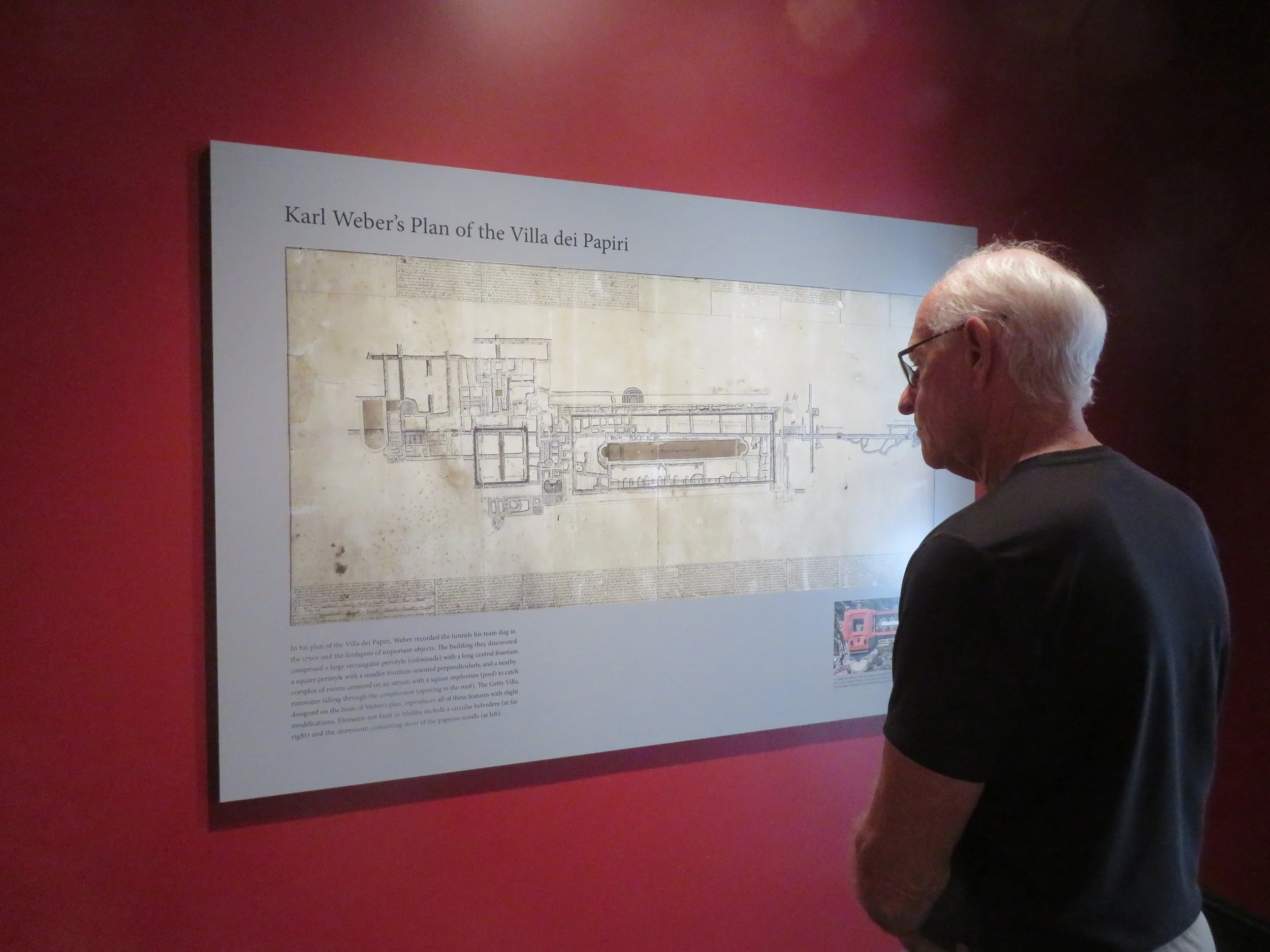
In the 1750s, the King of Naples commissioned Karl Weber to tunnel under the ancient Italian villa to recover countless Marble and bronze statues, artifacts, frescoes, and more. He discovered about 1,000 Papyrus scrolls, hence the villa’s name, Villa del Papiri.
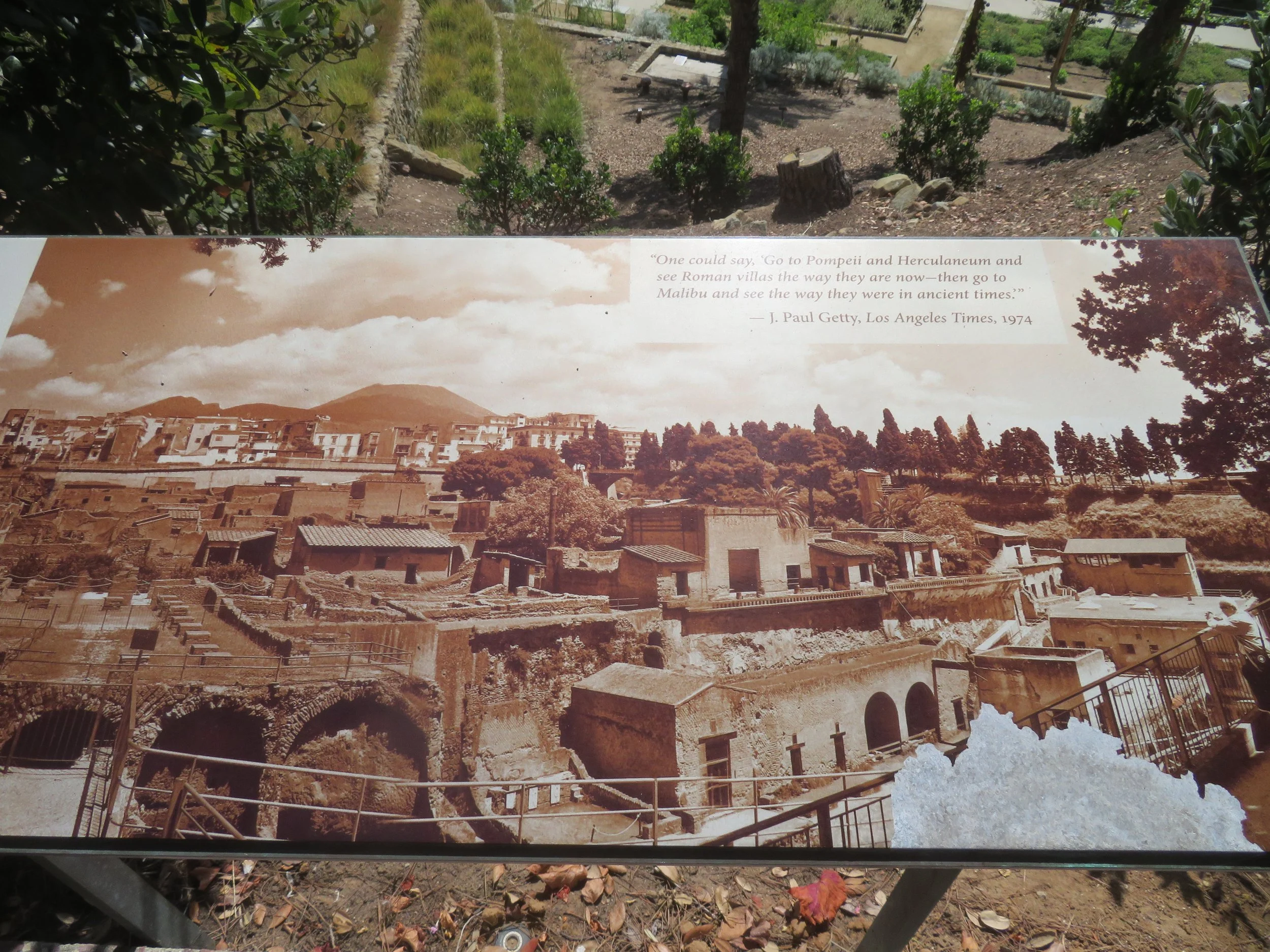
Photo of the partially uncovered Villa
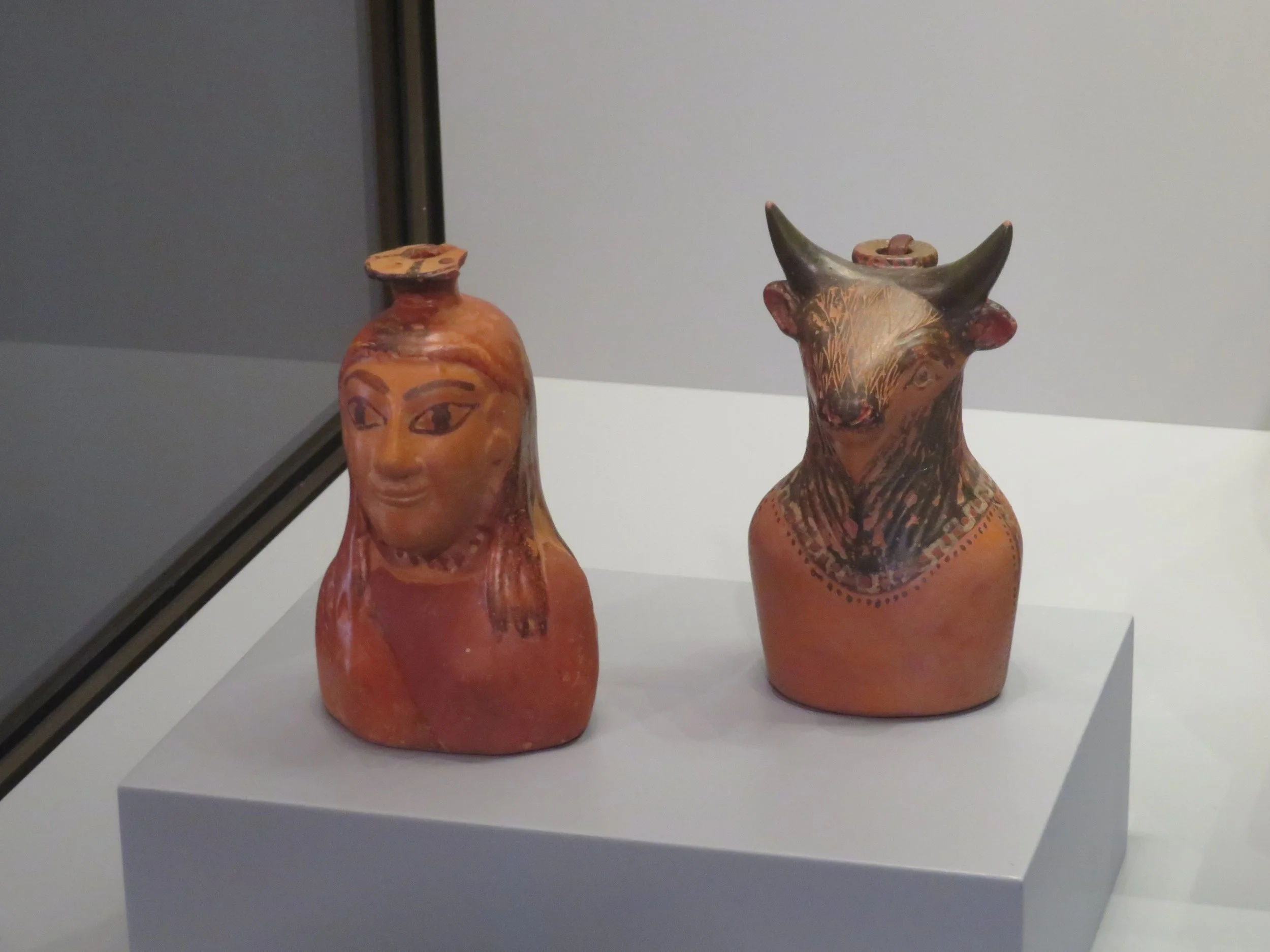
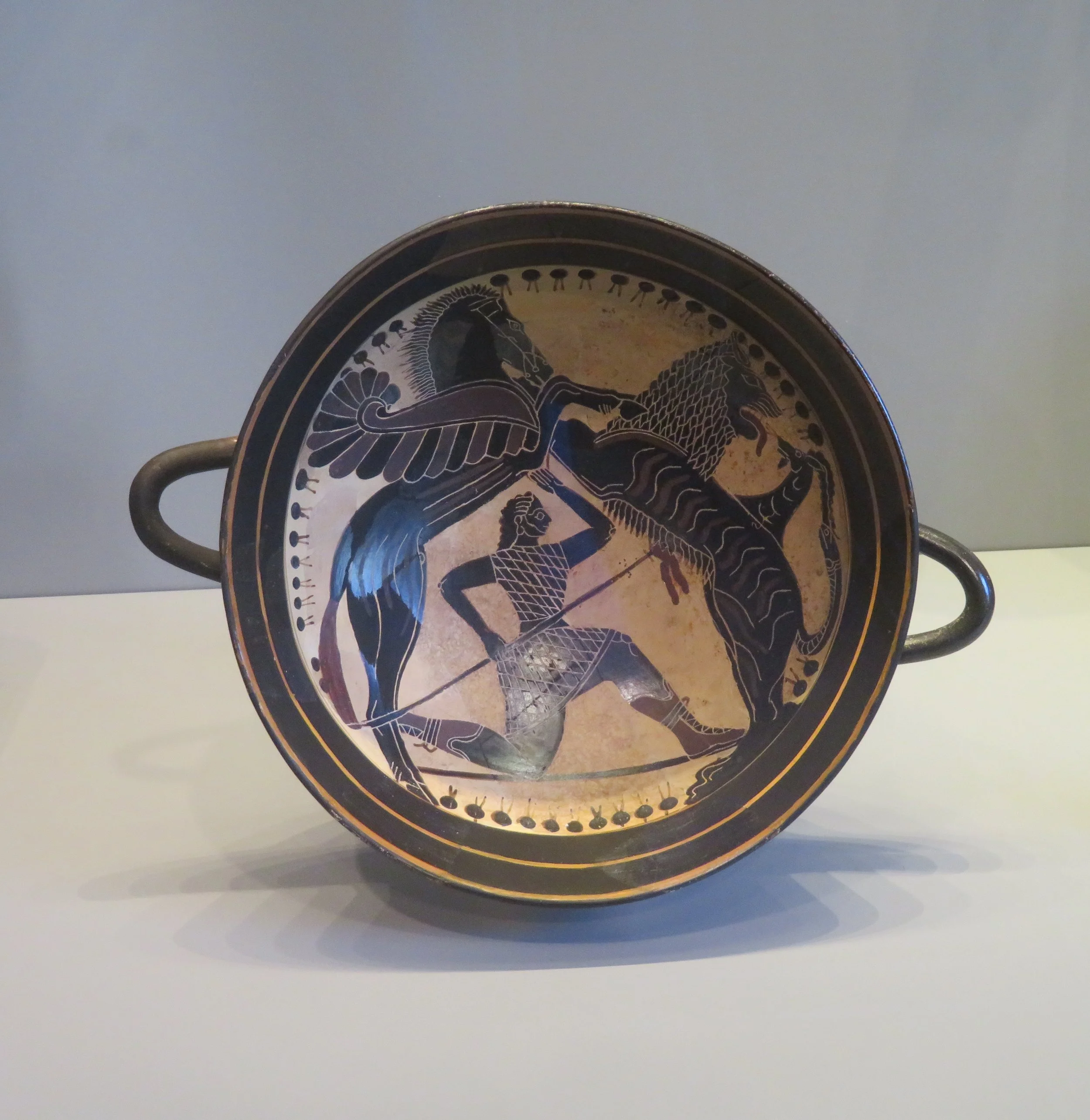
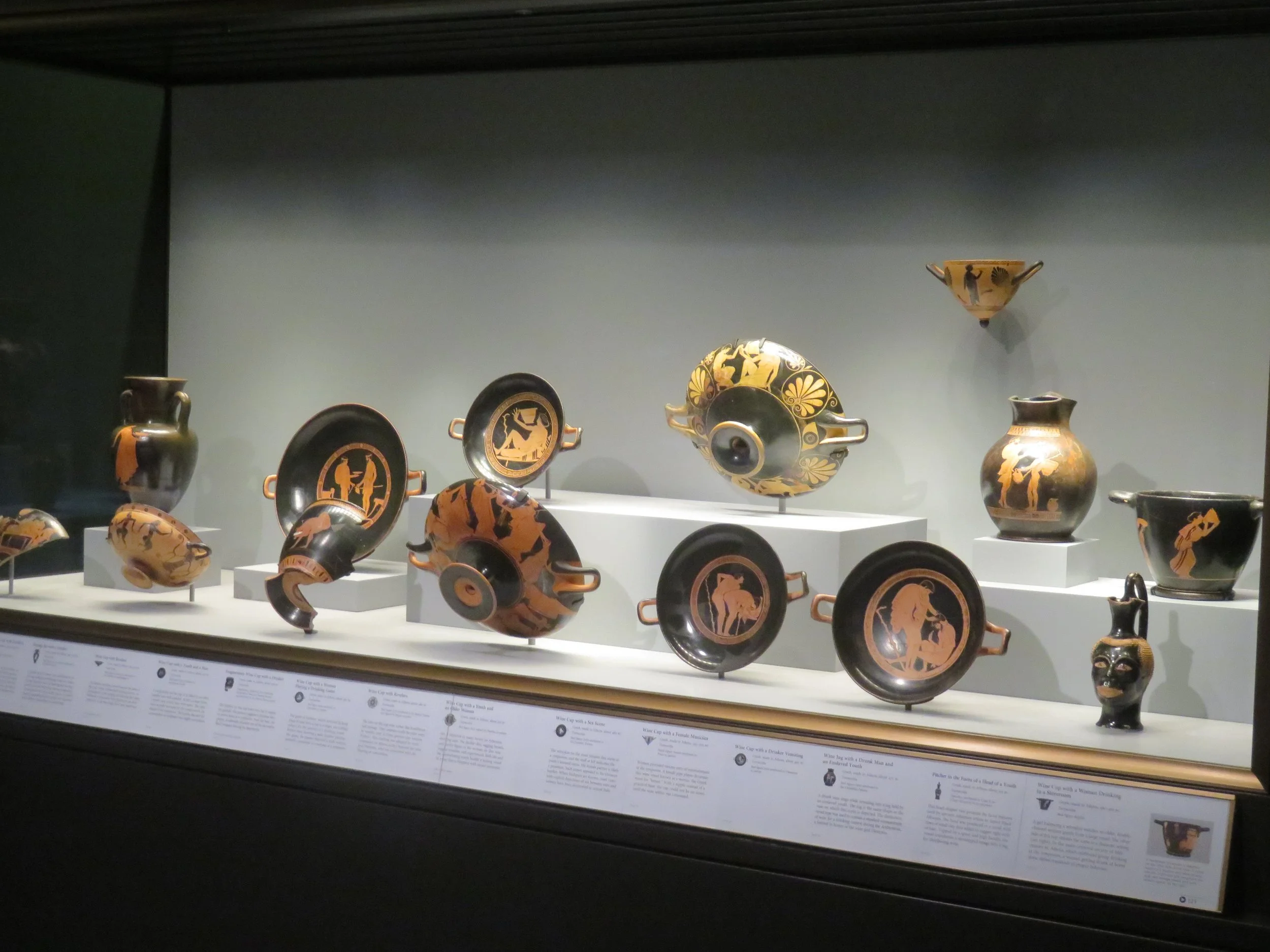
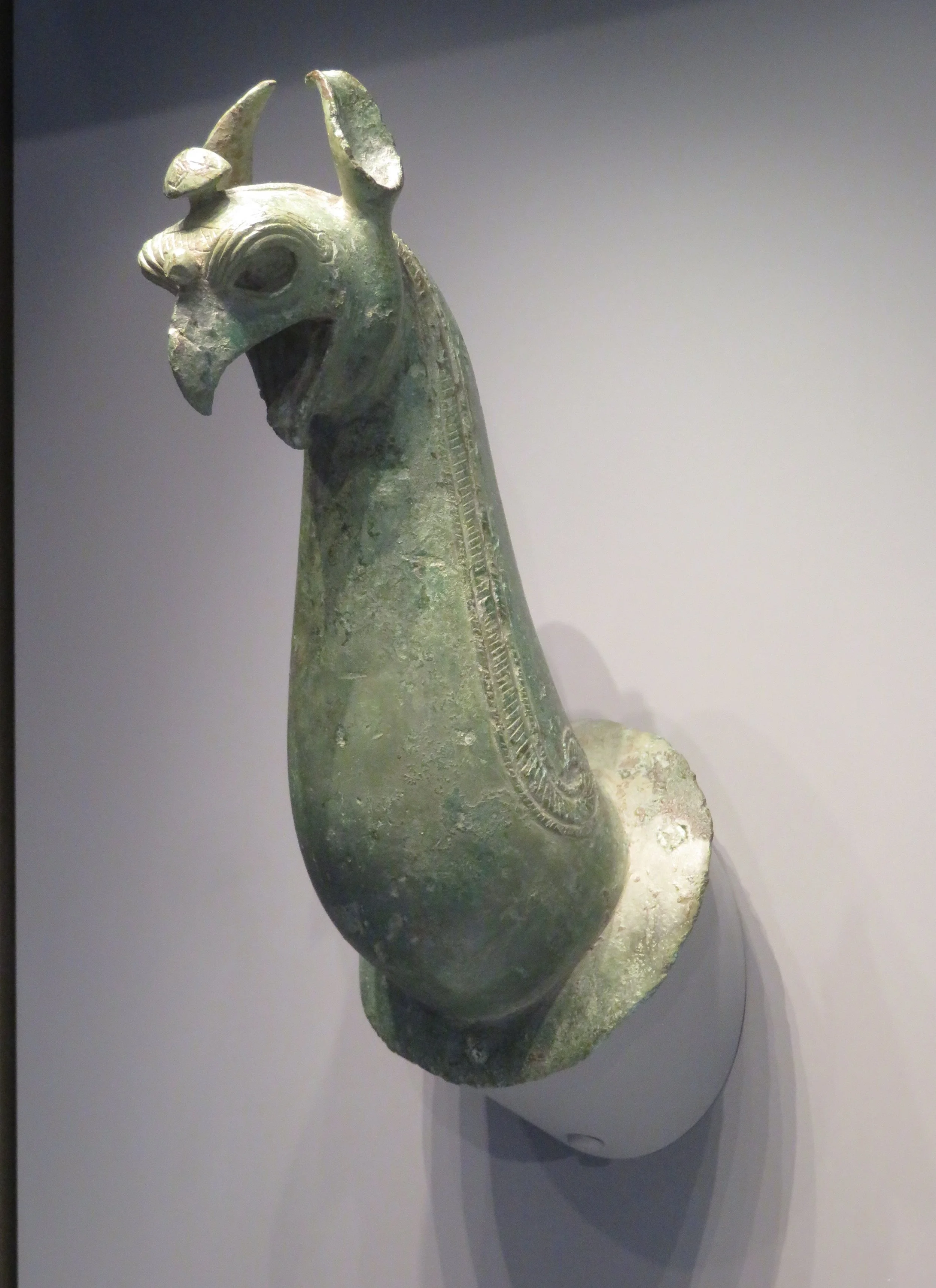
There weren’t many people when we arrived at 10 AM for our timed entry. It’s a wonderful venue for wandering. Gallery after gallery is beautifully appointed with statuary, artwork, ancient carvings and artifacts, all displayed in an opulent setting of fine imported marbles, muted lighting and rich ornamental embellishments on walls and ceilings.
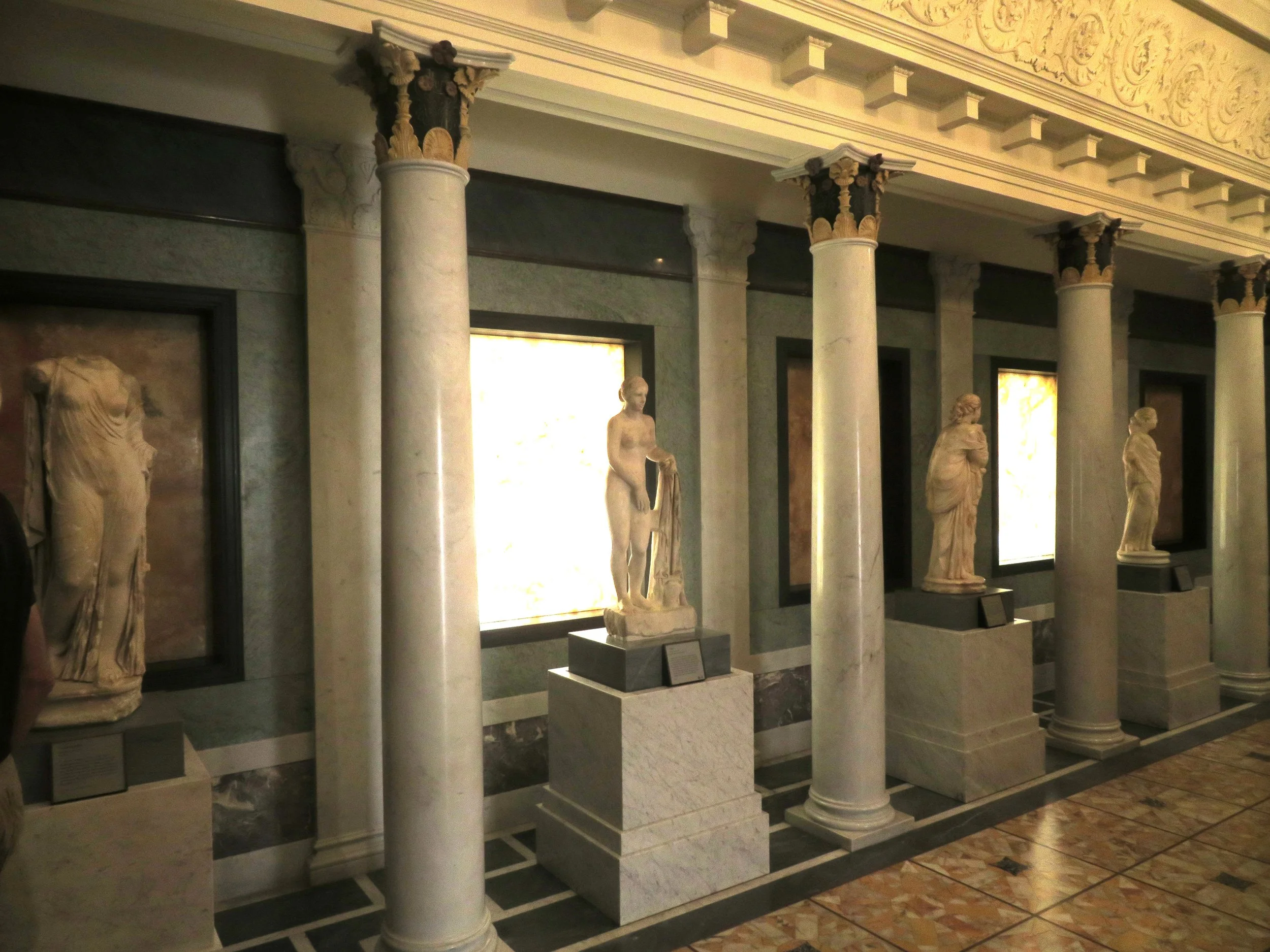
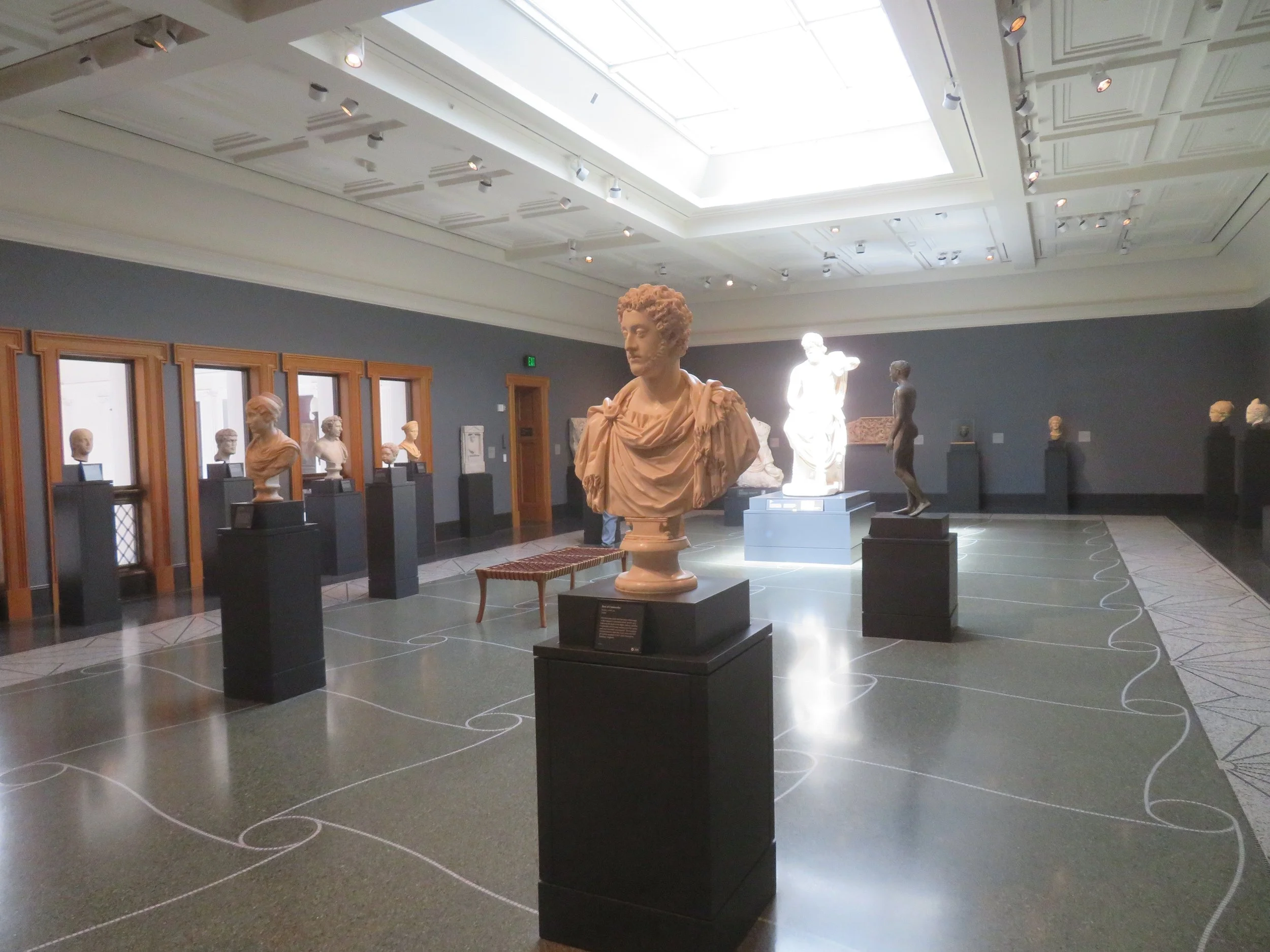
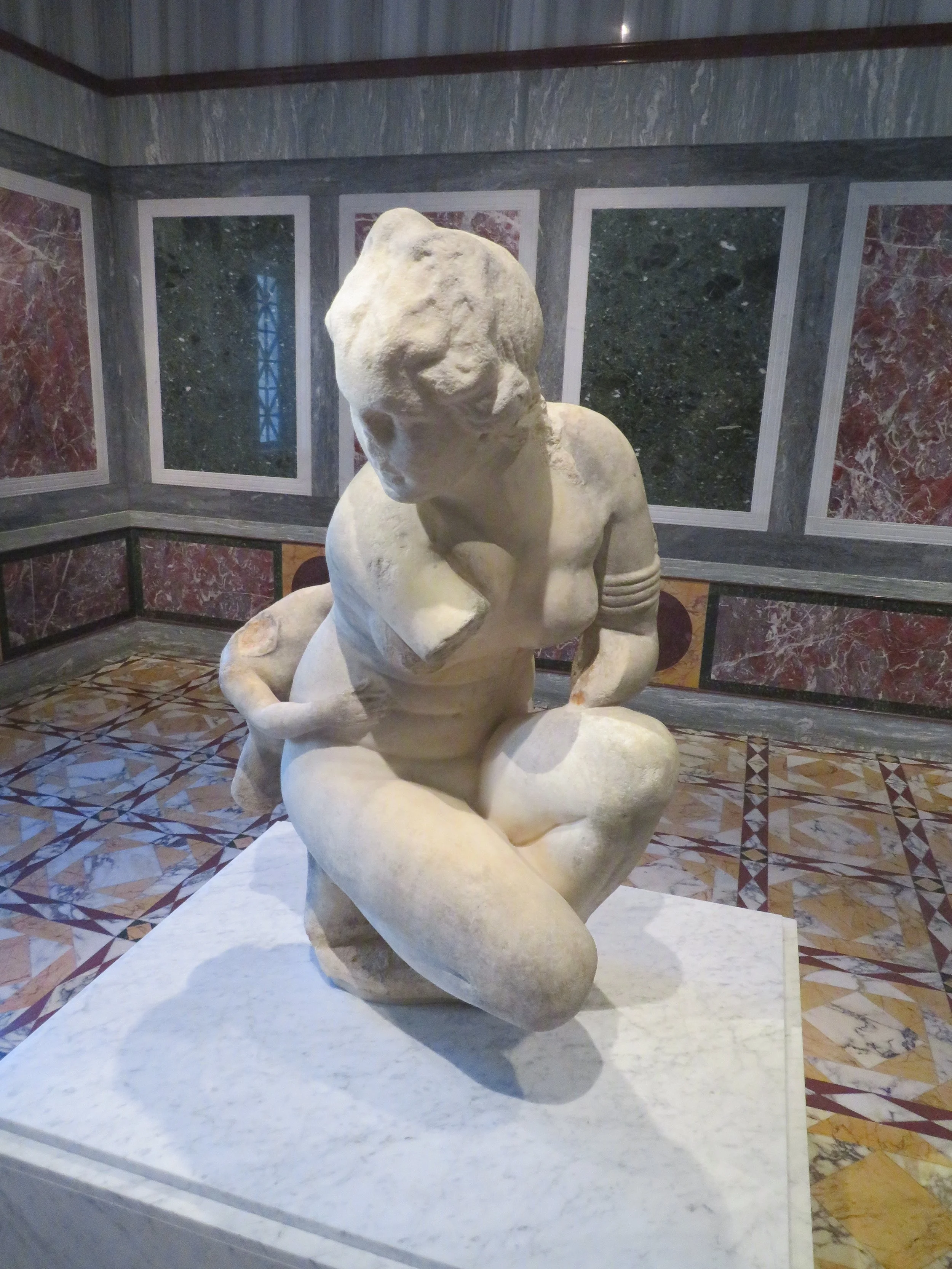
‘Crouching Venus’ statue holds center stage in a hall which depicts 12 different types of marble used in the villa from Italy, Greece, Turkey, Tunisia and Egypt.
The outside areas are airy and open with atria, shimmering pools, and lush landscaping. Stately Roman columns, arches, and marble floors lead the way to the galleries, their arrangement forming peristyles that surround the lush courtyards.
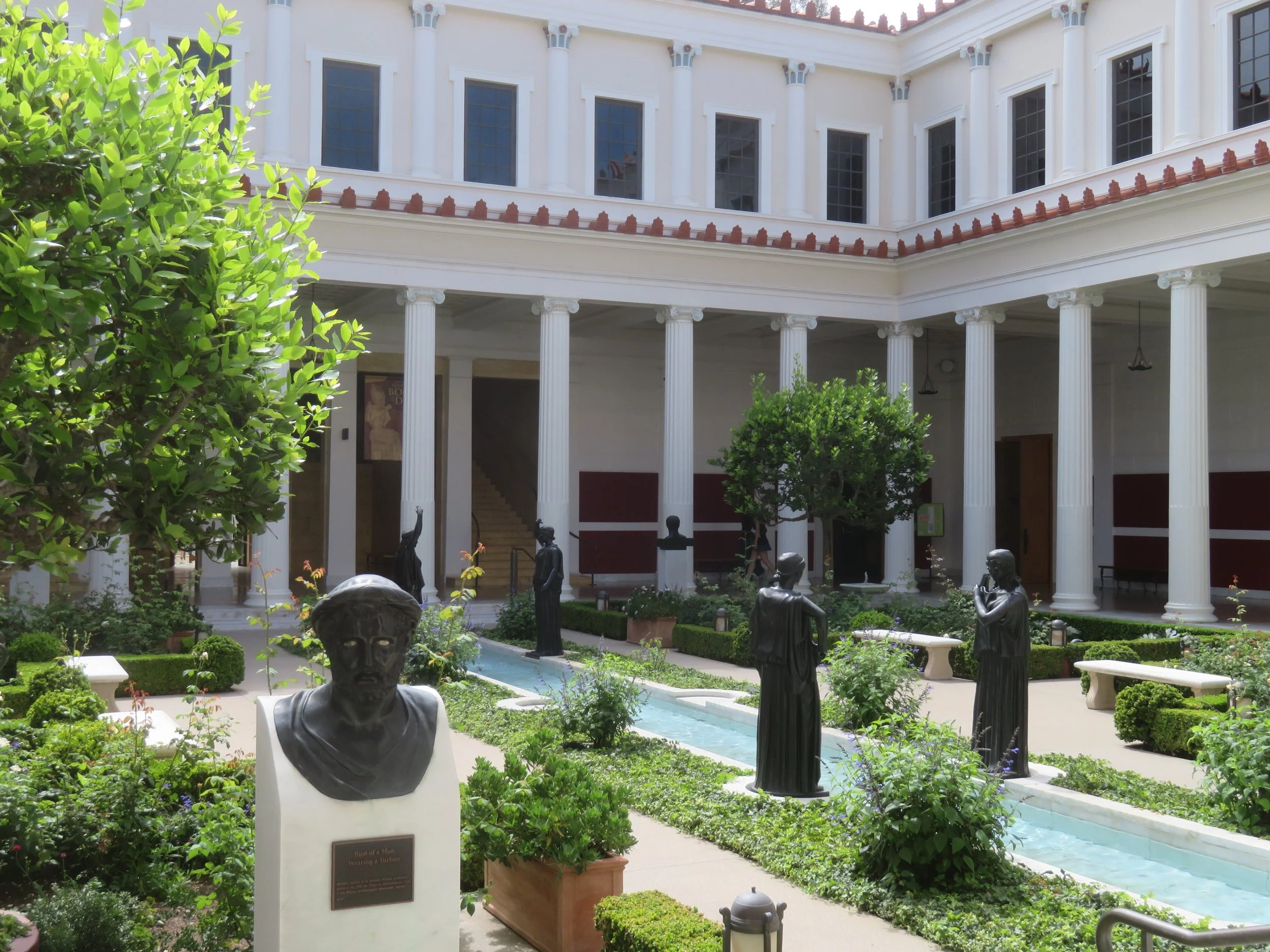
The Inner Peristyle with bronze statuary
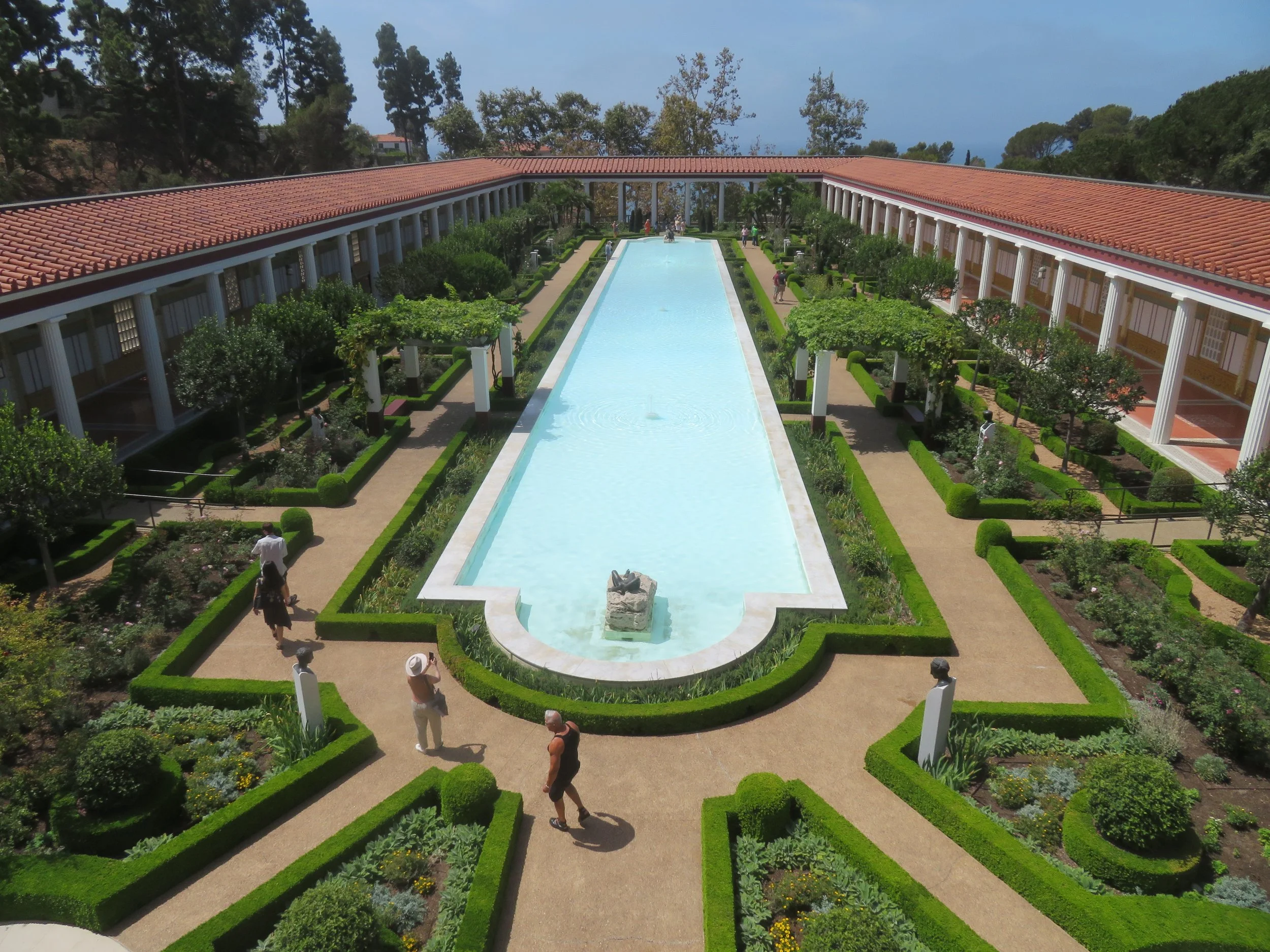
The lush outer Peristyle
From the Roman and Greek galleries, we made our way to a special exhibition, ‘The Egyptian Book of the Dead, ' which was enlightening and enjoyable. I was particularly captivated by Thoth, the ibis-headed Egyptian god of wisdom and divine knowledge. For Egyptians, he symbolized the connection between heaven and earth, the divine and the human.
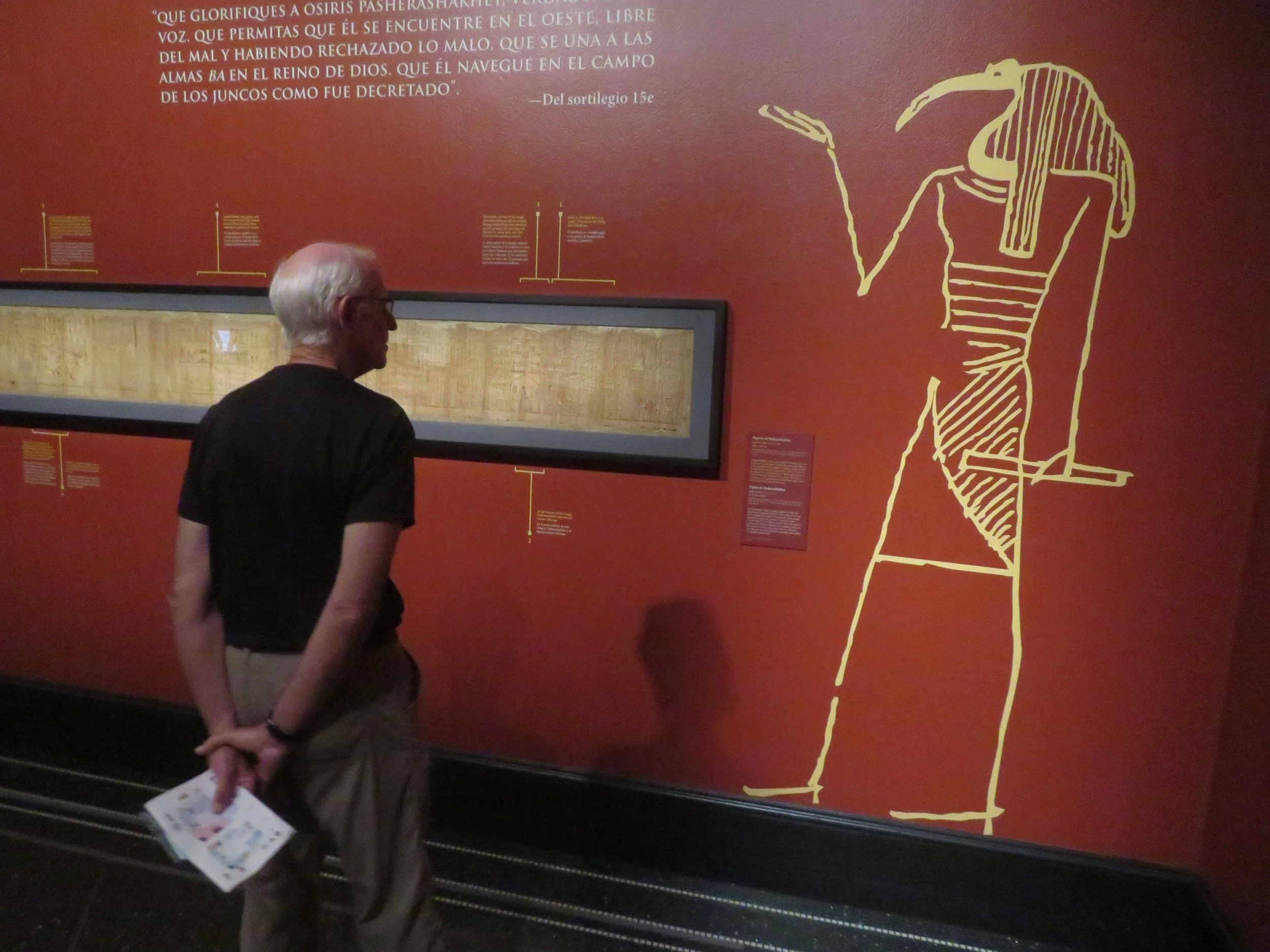
Thoth, the ibis-headed Egyptian God of wisdom and divine knowledge helped the dead make their way to heaven.
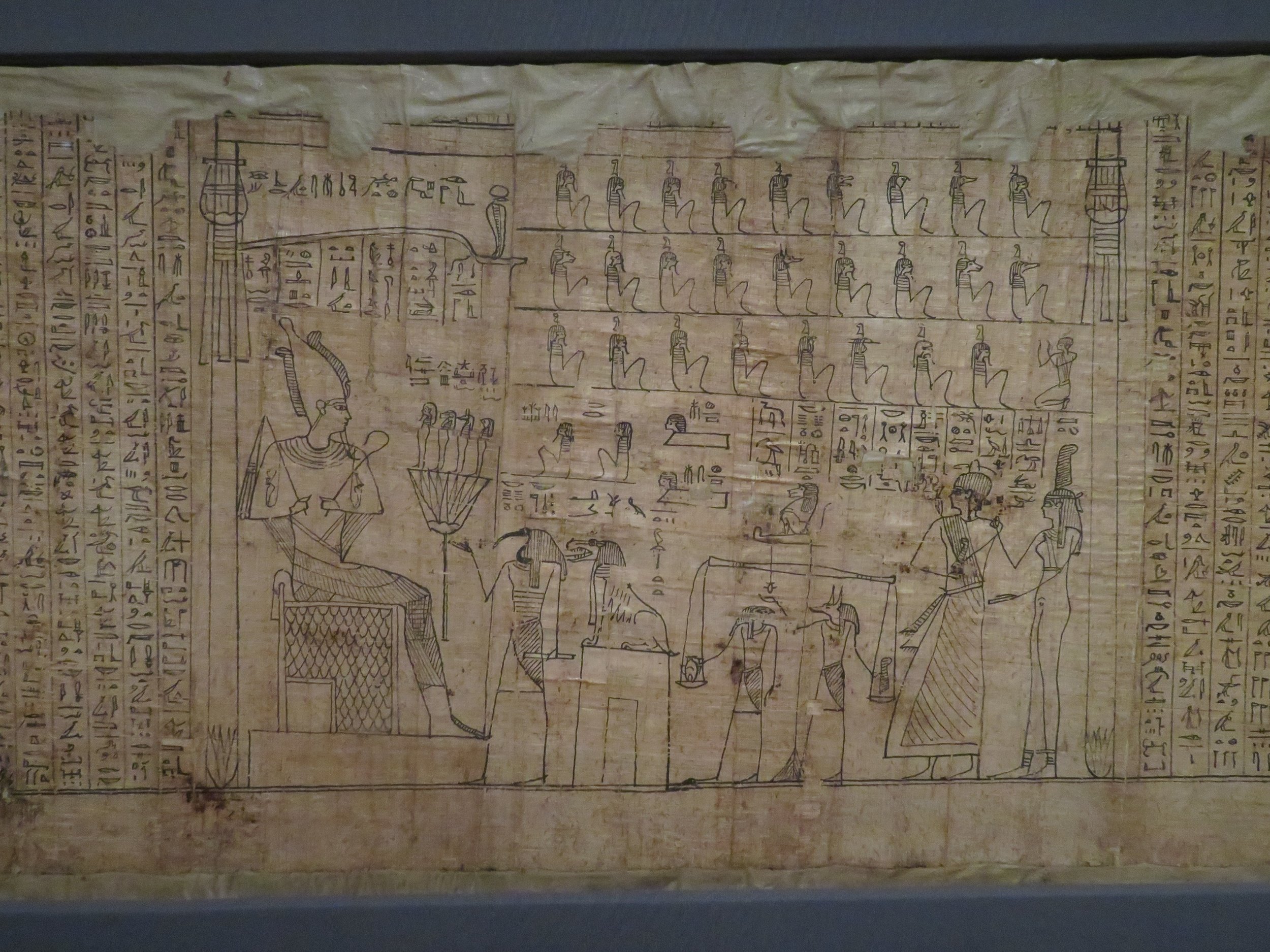
Fragments of hieroglyphic papyrus scrolls found in sarcophagi were fascinating.
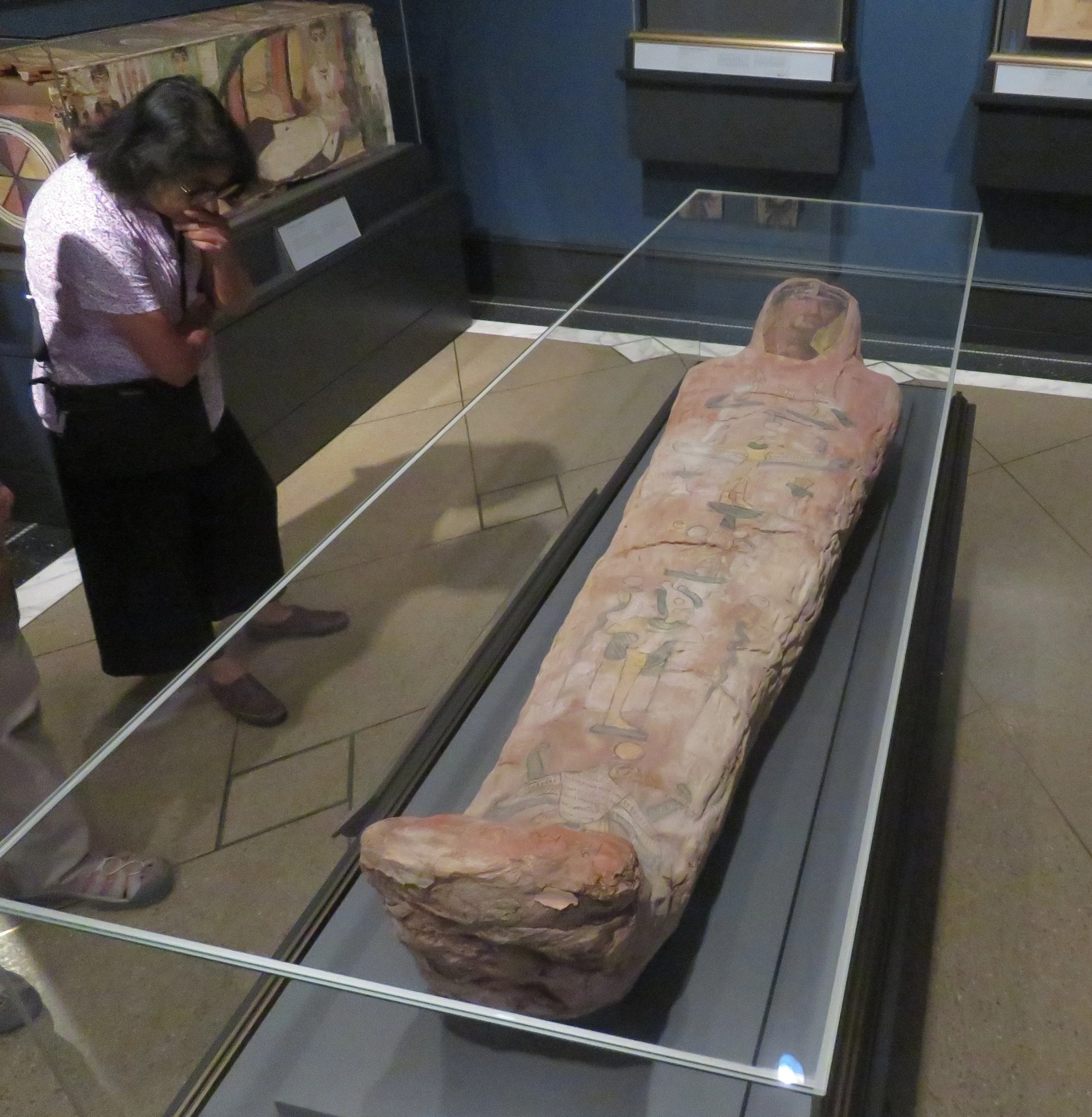
And then there was the red shroud mummy of Herakleides, a well-preserved young man (c.120-140AD). The exhibit described the mummification process and the forensics performed in order to determine the age of the man (~18 years old) and possible cause of death, a fractured skull.
After lunch, we wandered through the herb garden and generally strolled around the grounds before heading back to the hotel to prepare for the evening.
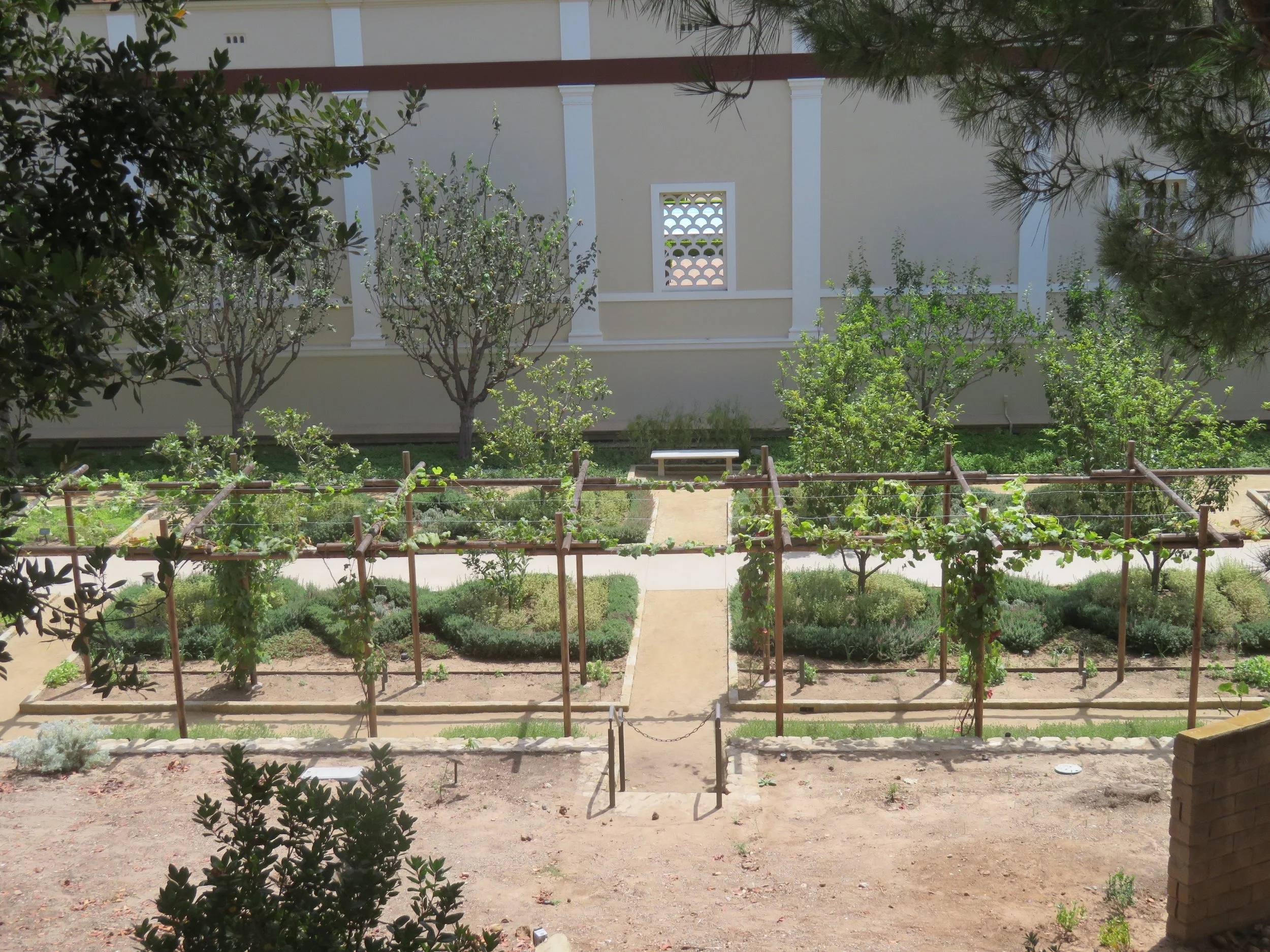
Chefs from the kitchen still visit the Herb Garden for fresh herbs.
John, an old cruising friend, had secured tickets to the Hollywood Bowl for the evening and invited us to join him. “Celebrating Gustavo at the Bowl: Beethoven 9” would be one of Dudamel’s final concerts as conductor of the LA Philharmonic, where he has performed for the past 17 years. Venezuelan-born, Dudamel’s four-night farewell series included a benefit for Venezuela’s earthquake relief. Watch the concert here on YouTube.
We’d never been to ‘The Bowl’ before, and it was exciting. This Hollywood Hills amphitheatre and public park is nestled in a shaded canyon known as Daisy Dell, chosen in 1919 for its natural acoustics and proximity to downtown Hollywood. Its official opening was back in July 1922, and since then, it has hosted over 2,600 live performances. It is considered one of the best live music venues in the USA and was placed on the National Register of Historic Places in 2023. It’s a rain-or-shine venue, and we watched the weather carefully, then remembered, ‘It never rains in Southern California…” (I know, I know... ‘it pours’… but it didn’t.)
We parked at Santa Monica College and took a shuttle to the Bowl to avoid traffic and parking headaches. We were glad we did. The 12-mile drive from our parking spot to the Bowl took over an hour in bumper-to-bumper traffic. The return trip was closer to 25 minutes.
We had great seats in the bleachers in the middle section with rented cushions for our tushes. Large monitors allowed us close-up views of the stage. Wine and food are allowed inside the venue for Philharmonic performances. We packed a picnic lunch and enjoyed it while waiting for the concert to begin.
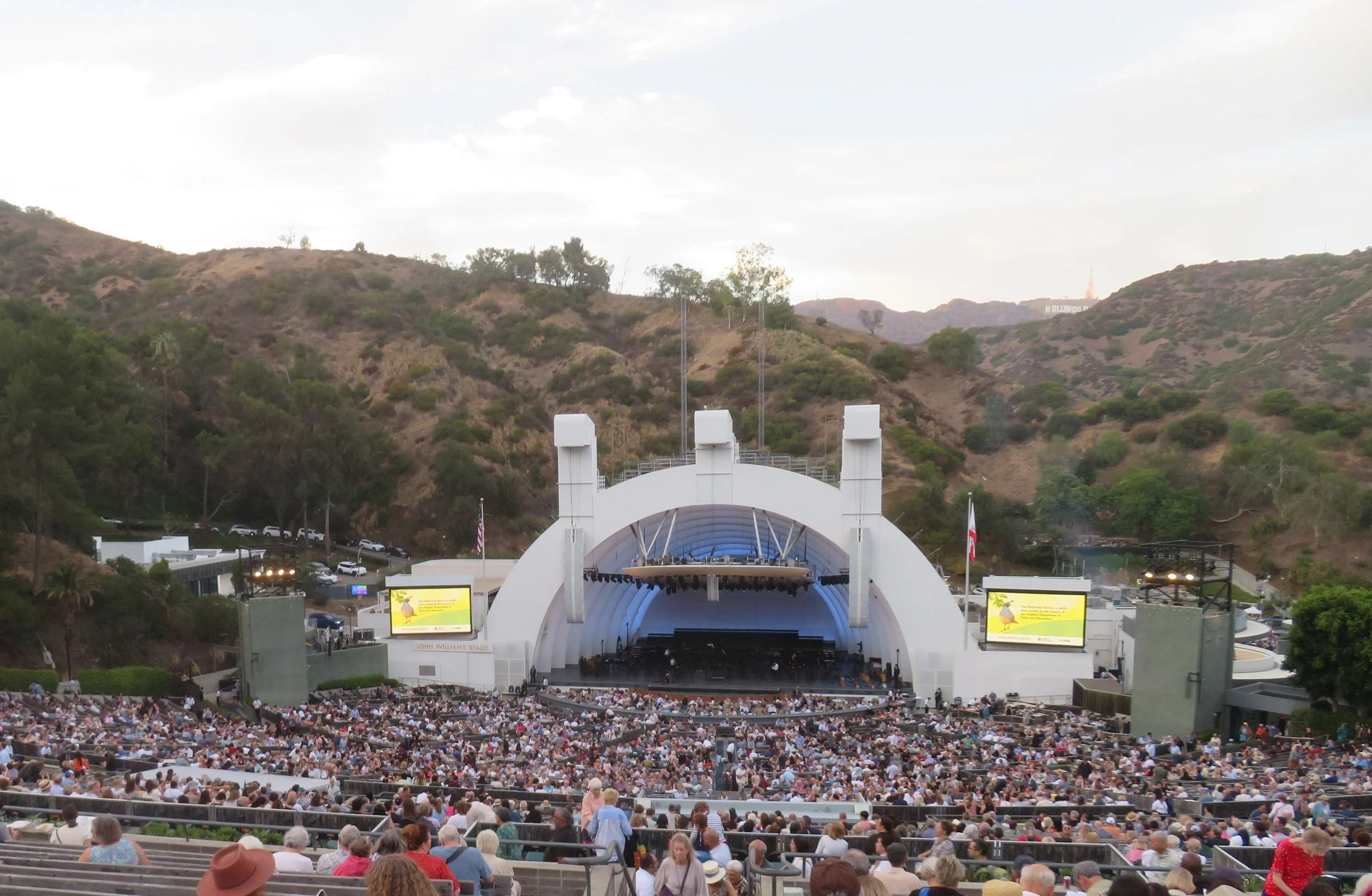
View of the stage from our bleacher seats
The concert began with the world premiere performance of Michael Giacchino’s “Hymns of the Heart”. Giacchino is best known for his scores for The Incredibles, Coco, Up, and Ratatouille, among others. The poet Amanda Gorman, best known as the Youth Poet Laureate who recited her poem ‘The Hill We Climb’ at the Biden Inauguration, wrote and narrated the lyrics. The piece featured students from under-resourced schools on instruments like xylophones and glockenspiels, along with the Los Angeles Children’s Chorus.
The pièce de résistance was Beethoven’s Ninth Symphony, which I must admit, I’d never heard in its entirety. It was wonderful, but the crescendo… the Ode to Joy finale was exhilarating. You could feel the music in your heart and your soul. If that sounds schmaltzy, I just can’t explain it another way. It was wonderful, and we left the Bowl feeling happy and uplifted.
What makes Dudamel so great? Is it the way his wild hair flies when he’s conducting? His energy? His obvious passion? The way he inspires both his orchestra and his audience? Read what the NY Times attributes to his success.
We shuttled back to the parking garage, dropped off John and headed back to our hotel. All in all, a very long, incredibly awesome day and week. We headed back to Las Vegas the next morning… not too early, but there was one more stop I wanted to make. Join us as we stop at the Liberty Sculpture Park just off I-15 in Yermo, California.