
Liberty Sculpture Park
/We’ve whizzed past the big Liberty Sculpture Park sign on I-15 on several trips between Las Vegas and Los Angeles and always meant to stop and check it out, but never did… until our last trip from LA, that is, when we made a concerted effort to exit at Yermo (the iconic Peggy Sue’s Diner exit) and see what the park was all about.
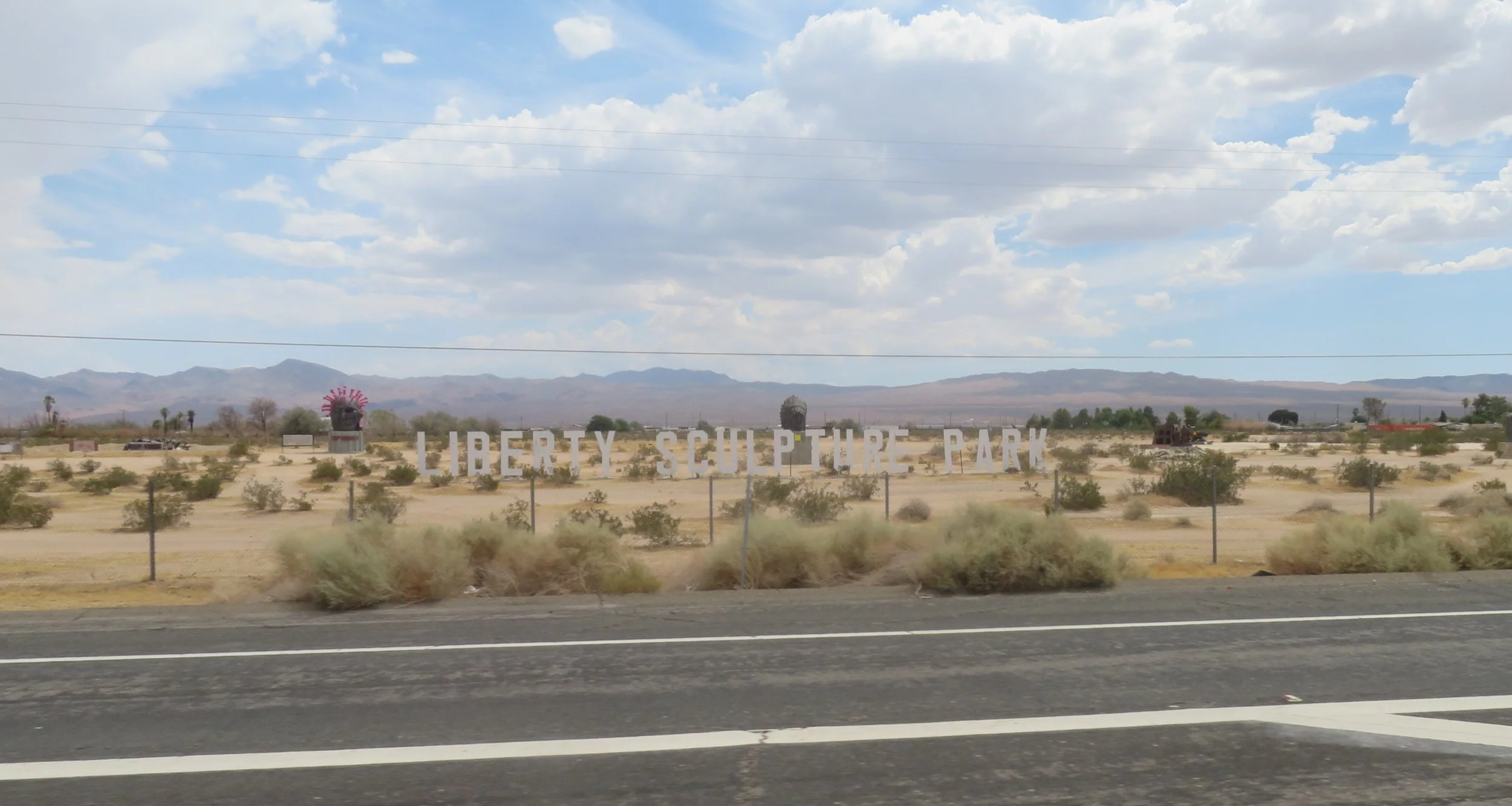
We’ve whizzed past this sign on I-15 but never stopped at the Liberty Sculpture Park
The park is a 36‑acre nonprofit, non-governmental open-air sculpture park located in the Mojave Desert. Established in 2017 by sculptor Chen Weiming et al in support of the Chinese democracy movement, admission is free, and the sign at the entrance gate says it all.
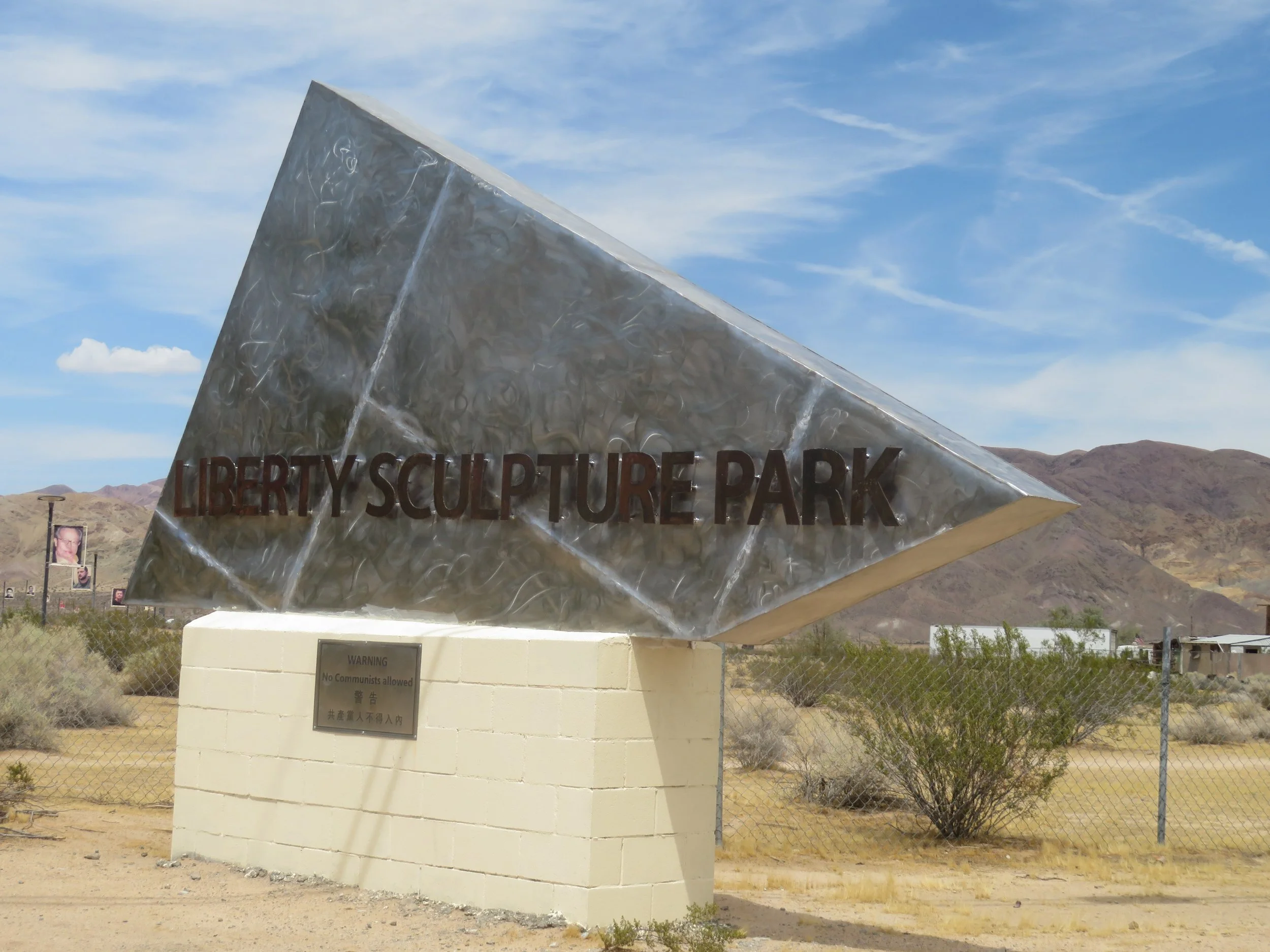
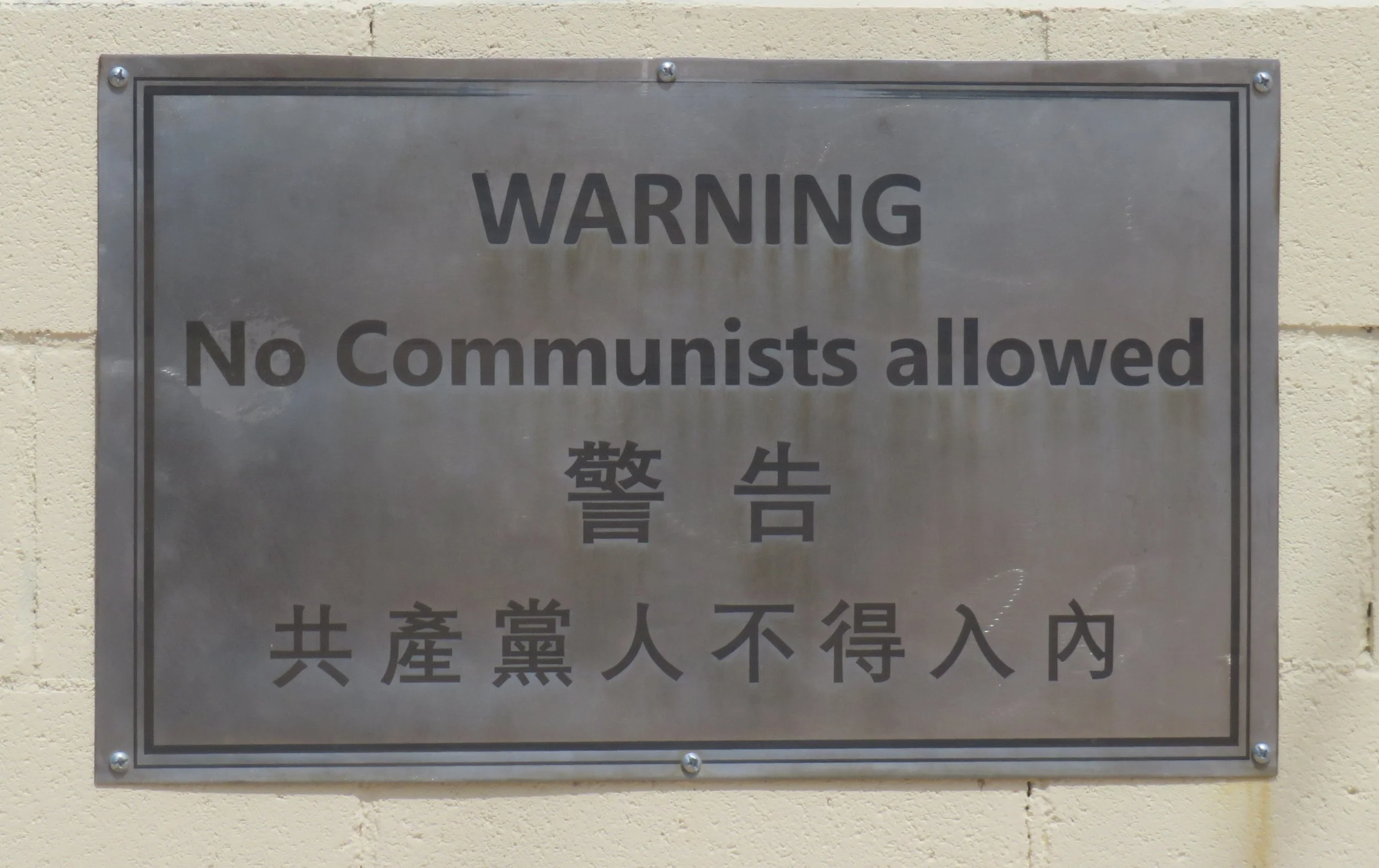
The sign at the entrance tells it all!
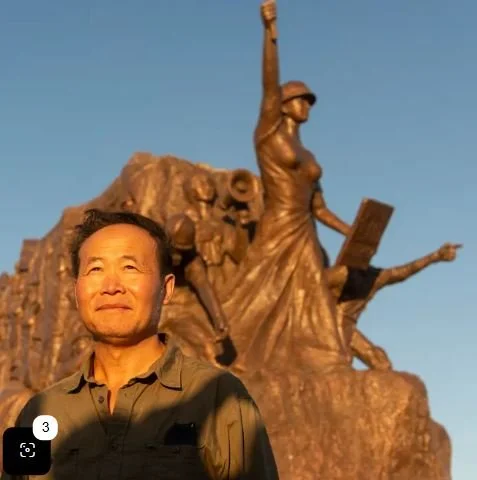
Chen Weiming at Liberty Sculpture Park - Photo credit: James Quigg for VV Daily Press
Chen Weiming was born in China, emigrated to New Zealand in 1988, and holds a New Zealand passport as well as permanent residency status in the USA. His raison-d’etre for the park is crystal-clear. The mission of the park is ‘to advocate for democracy and freedom for people worldwide, oppose the tyranny of communism, and commemorate the victims of communism.’
As we entered the park, banners with famous people fluttered from lampposts. Some we recognized, like the Dalai Lama and Volodymyr Zelensky, and others we did not. I researched all the ones I photographed and found that all were activists and human rights and democracy advocates. All were tortured, abused, and imprisoned, and several mysteriously ‘disappeared’ and are still missing or were killed.
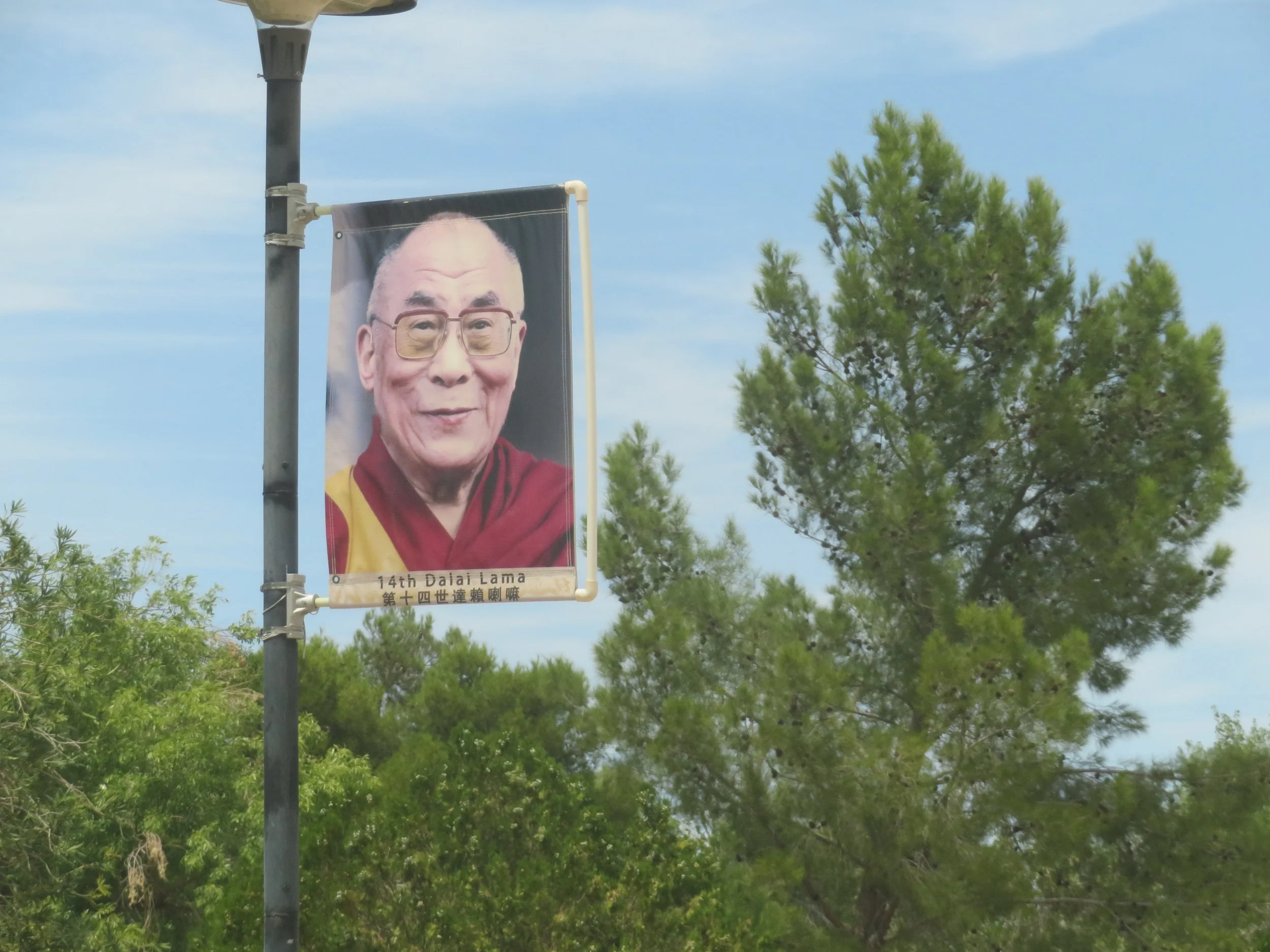
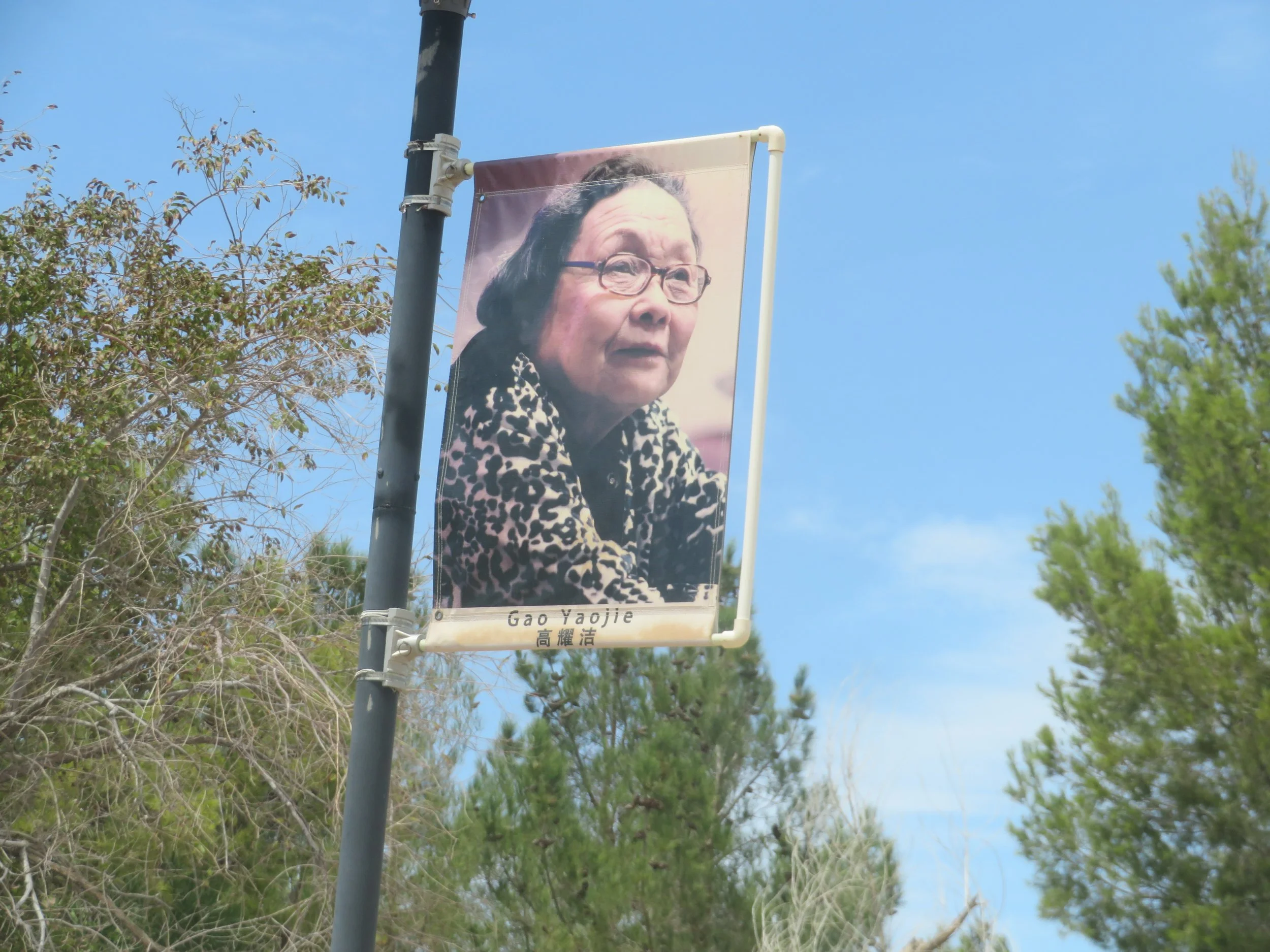
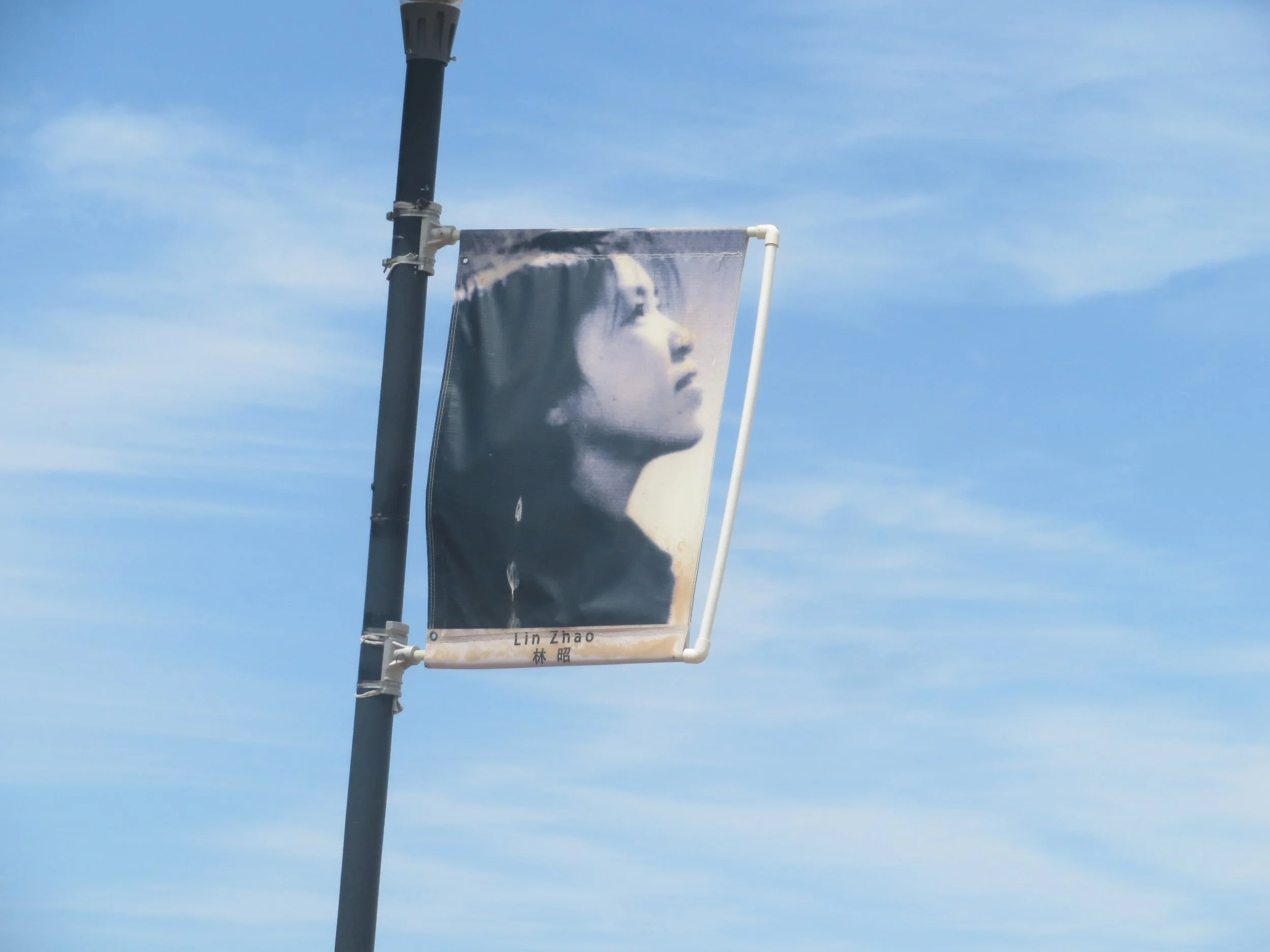
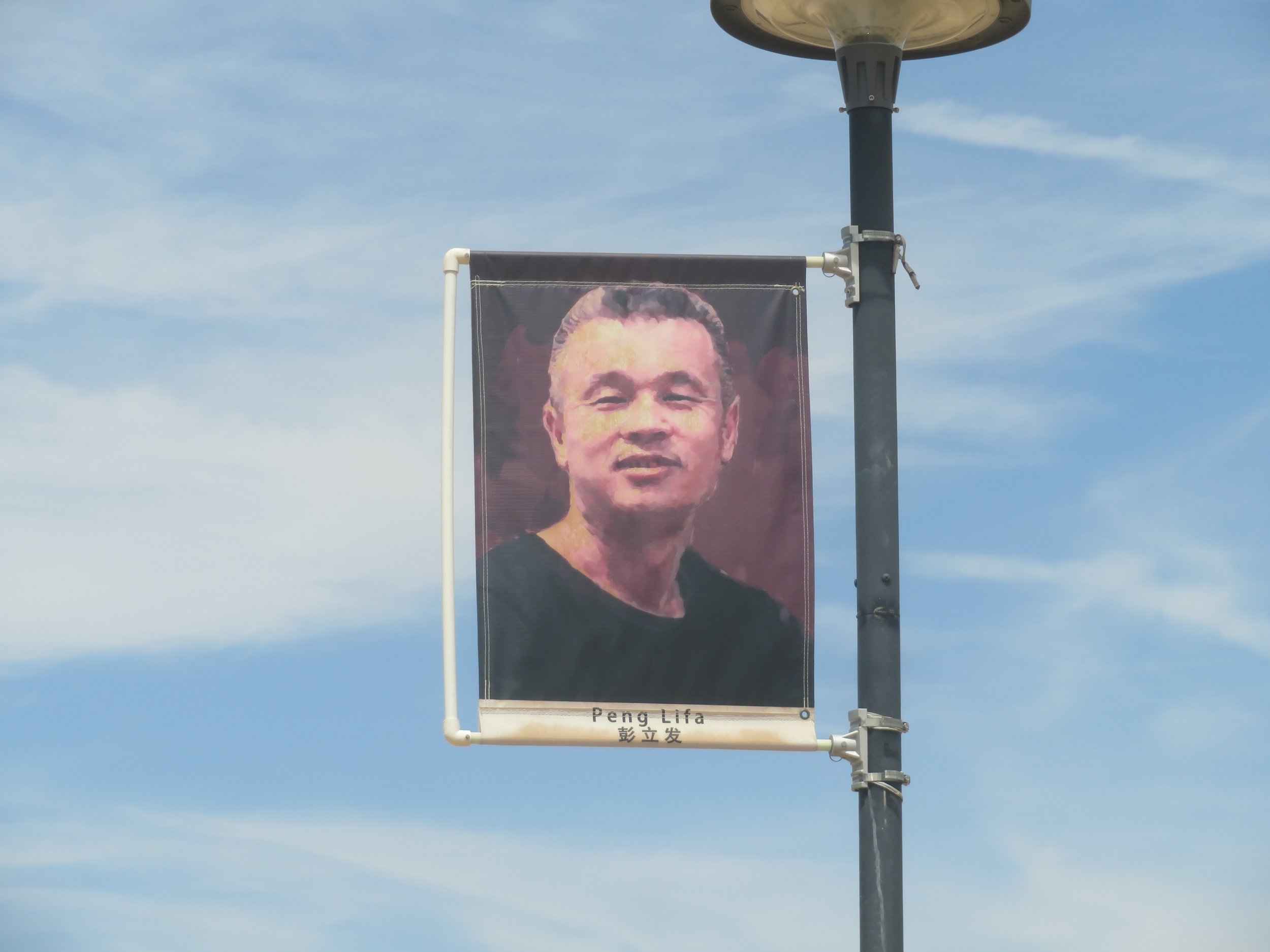
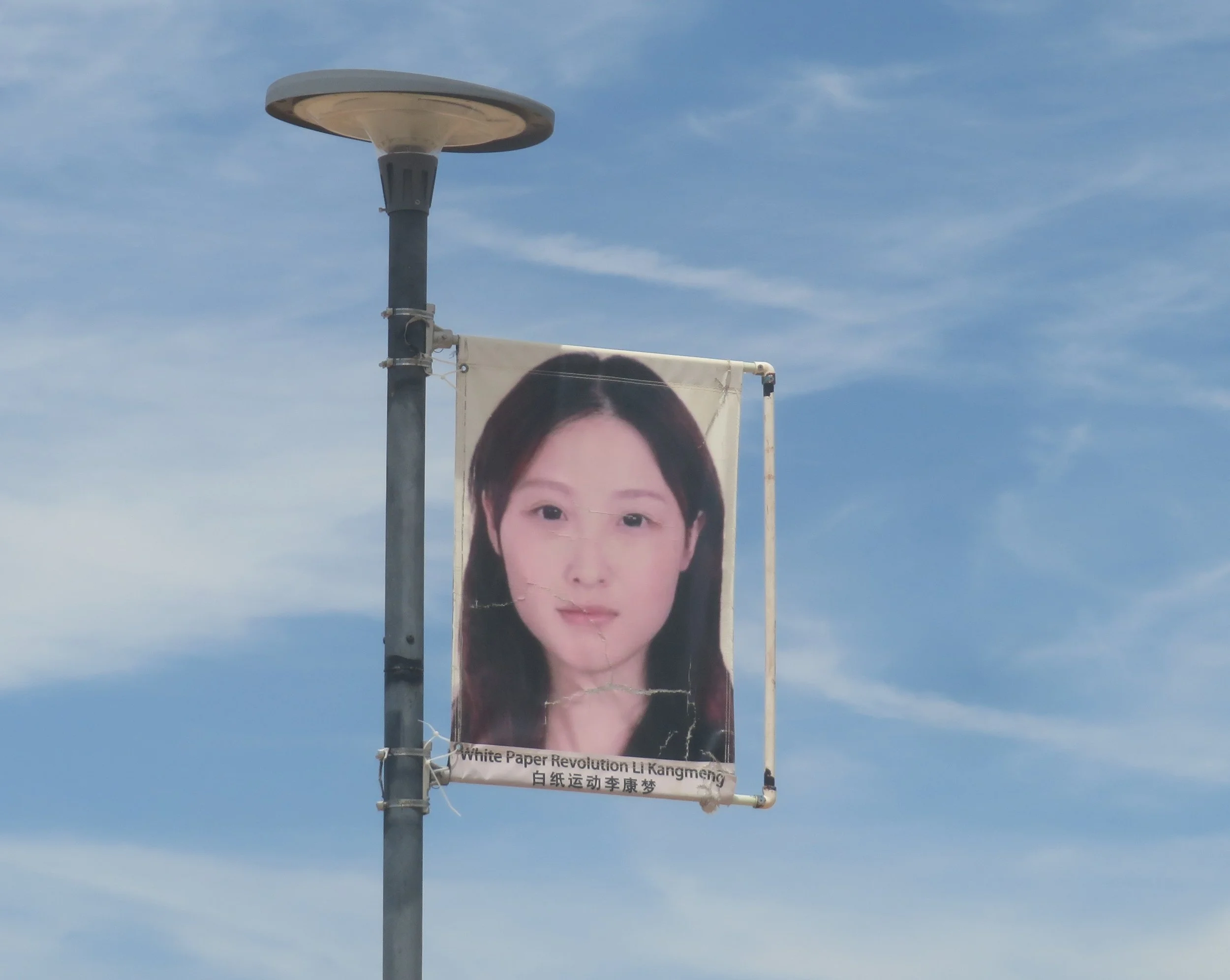
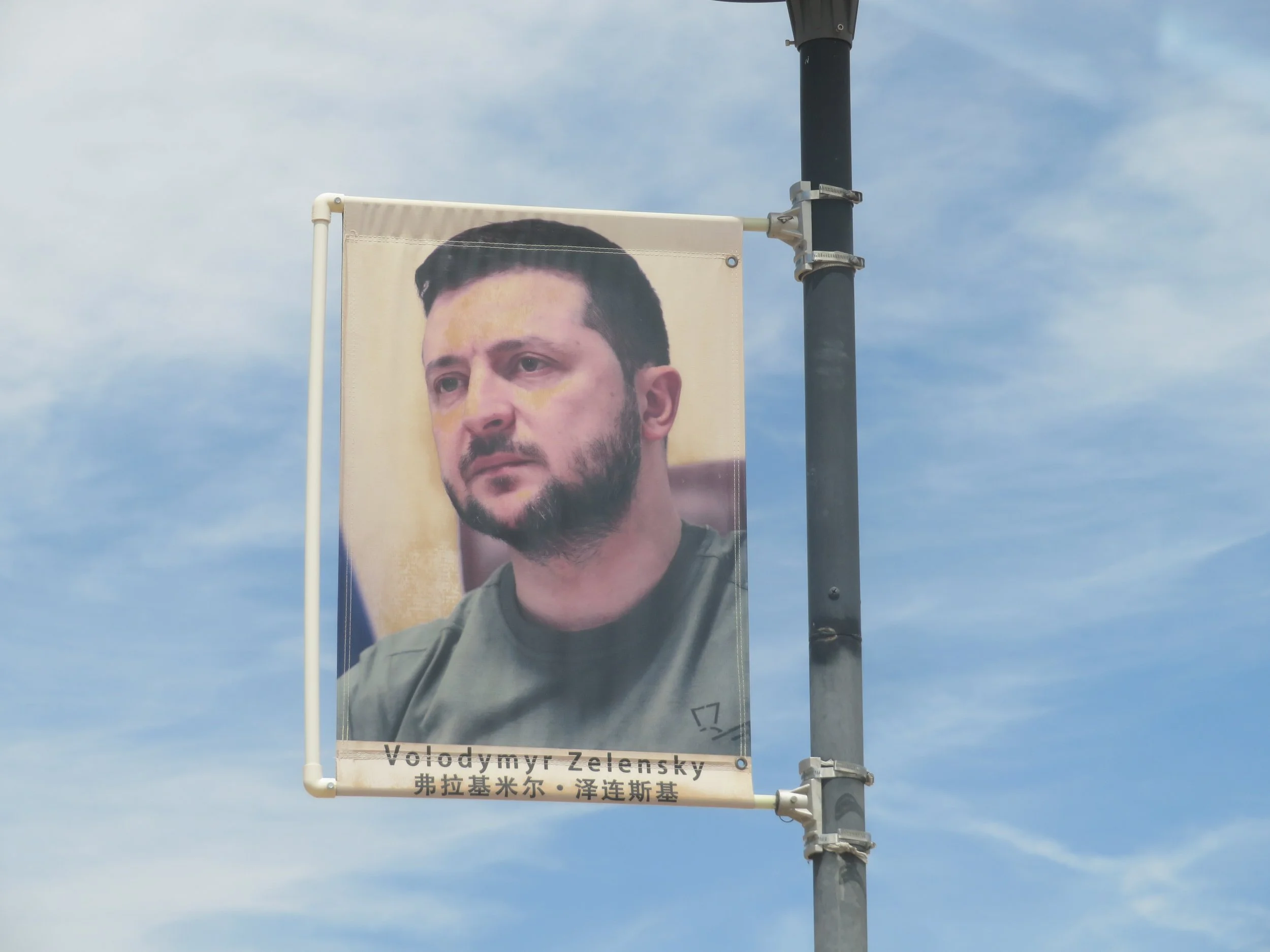
We drove slowly over the dirt roads that zigzagged through the park. Take a look at what we saw and the artists’ interpretations of their work taken from the sculpture park’s website and other sources.
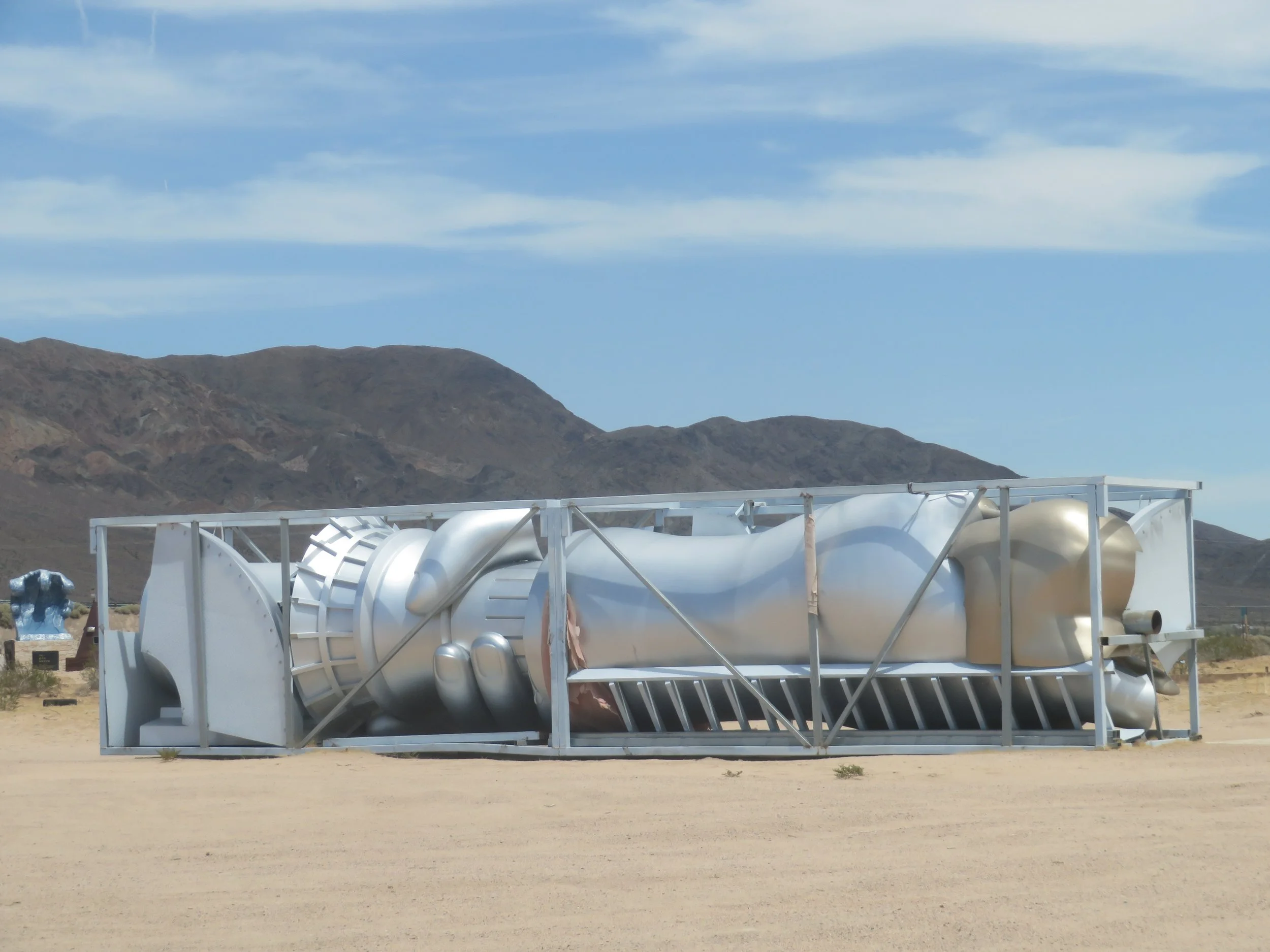
Statue of Democracy – though it’s listed as a sculpture in the park, what we saw was a crated arm holding a torch which led us to believe the sculpture is under construction.
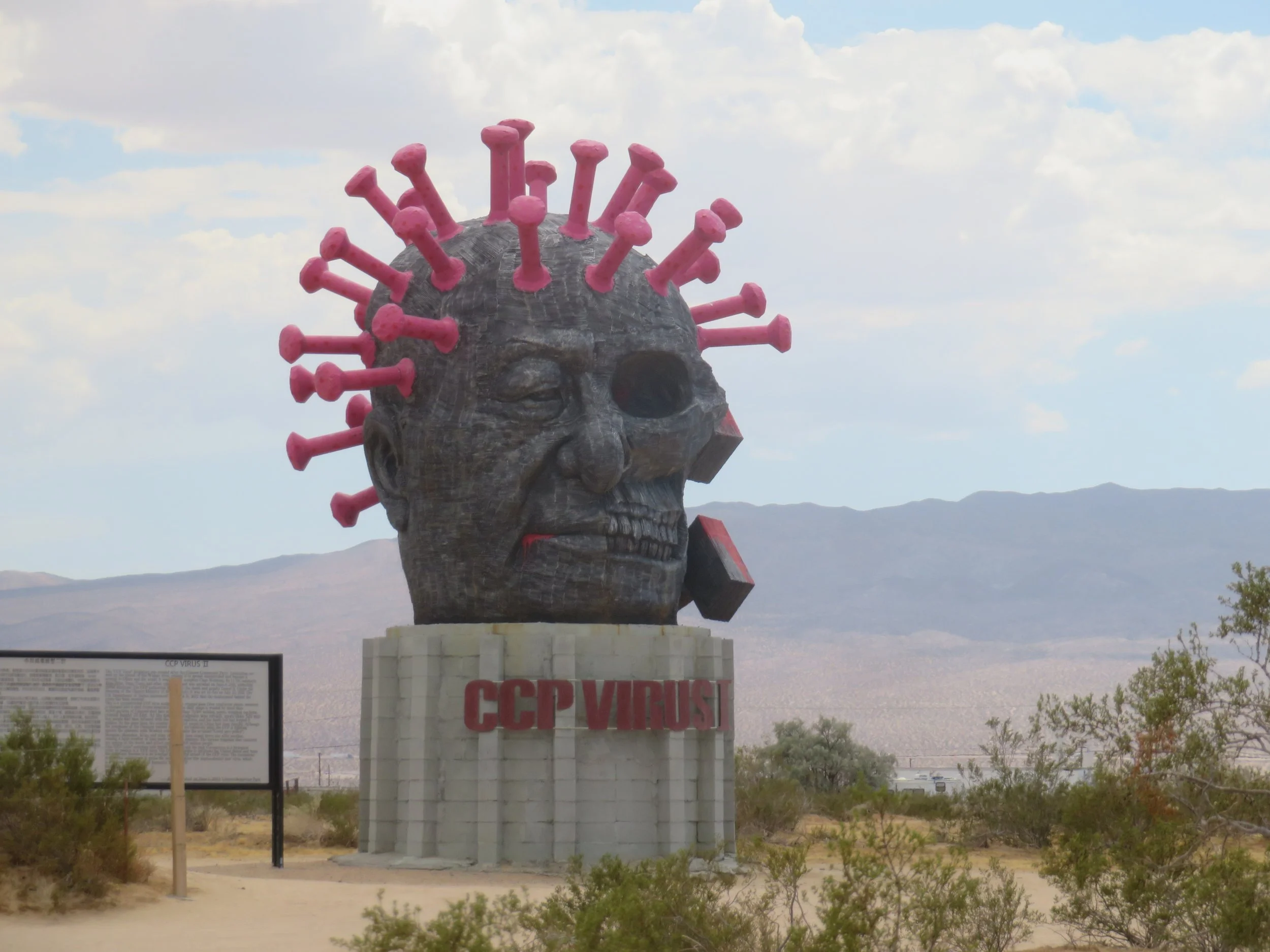
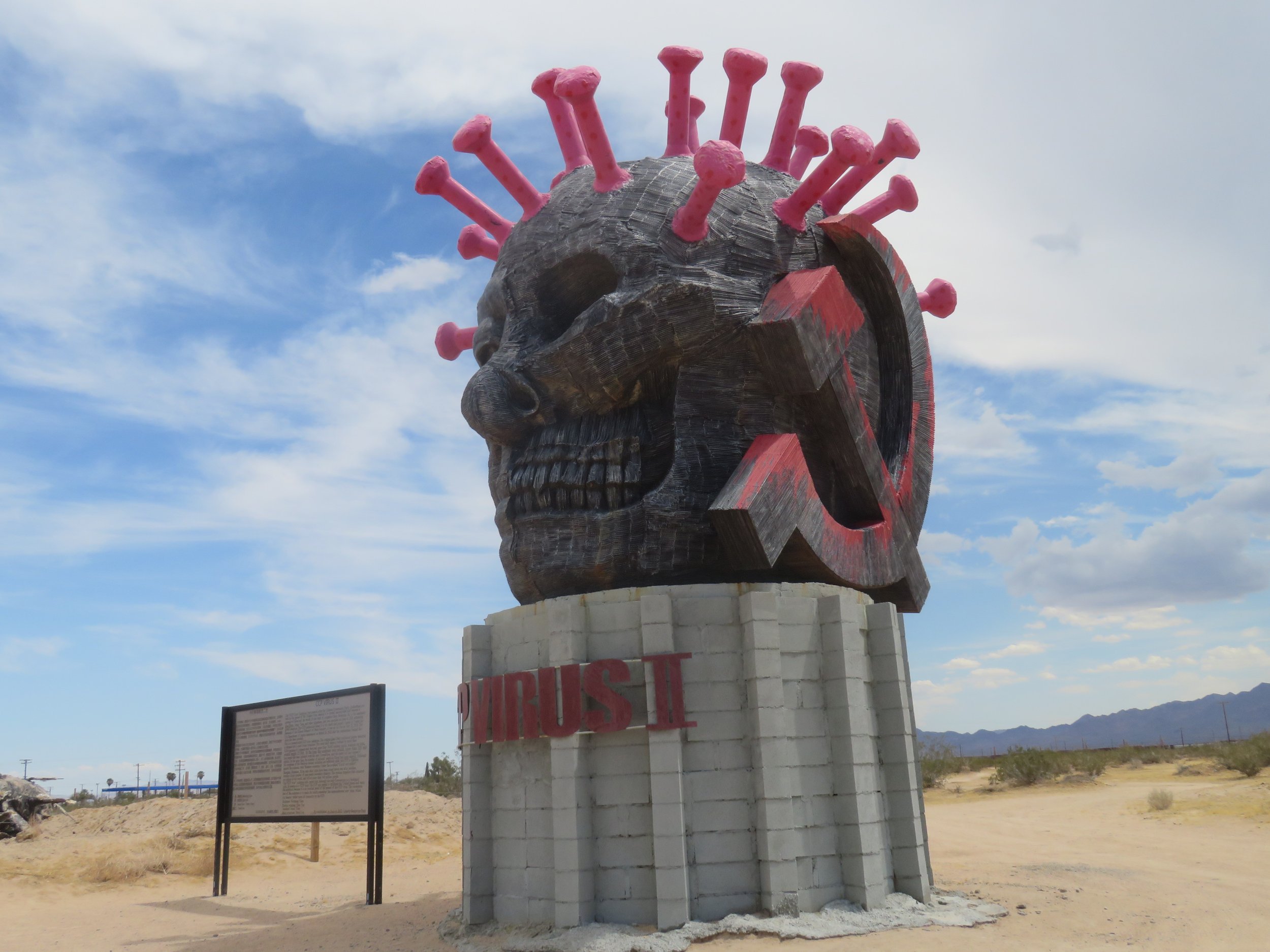
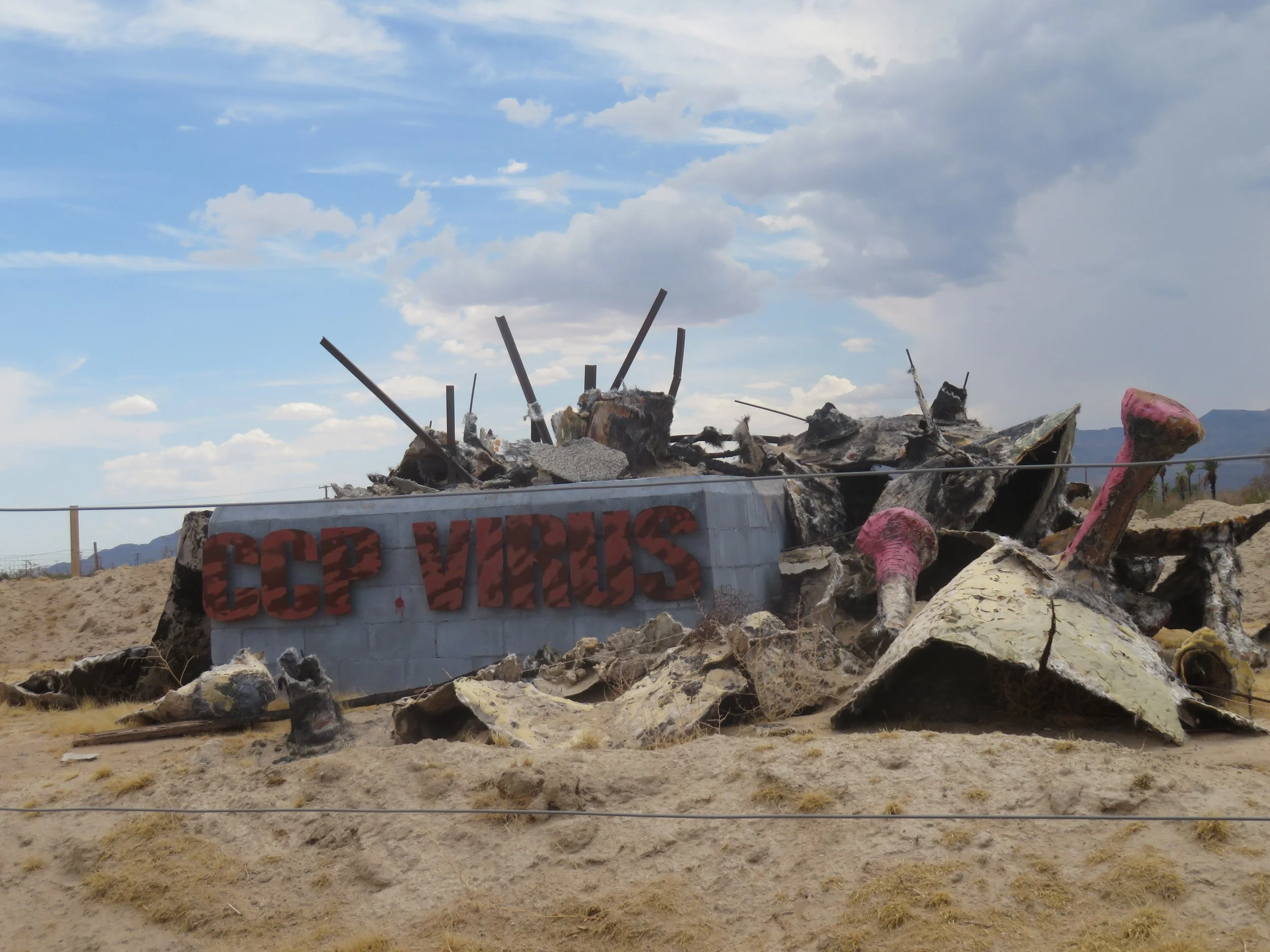
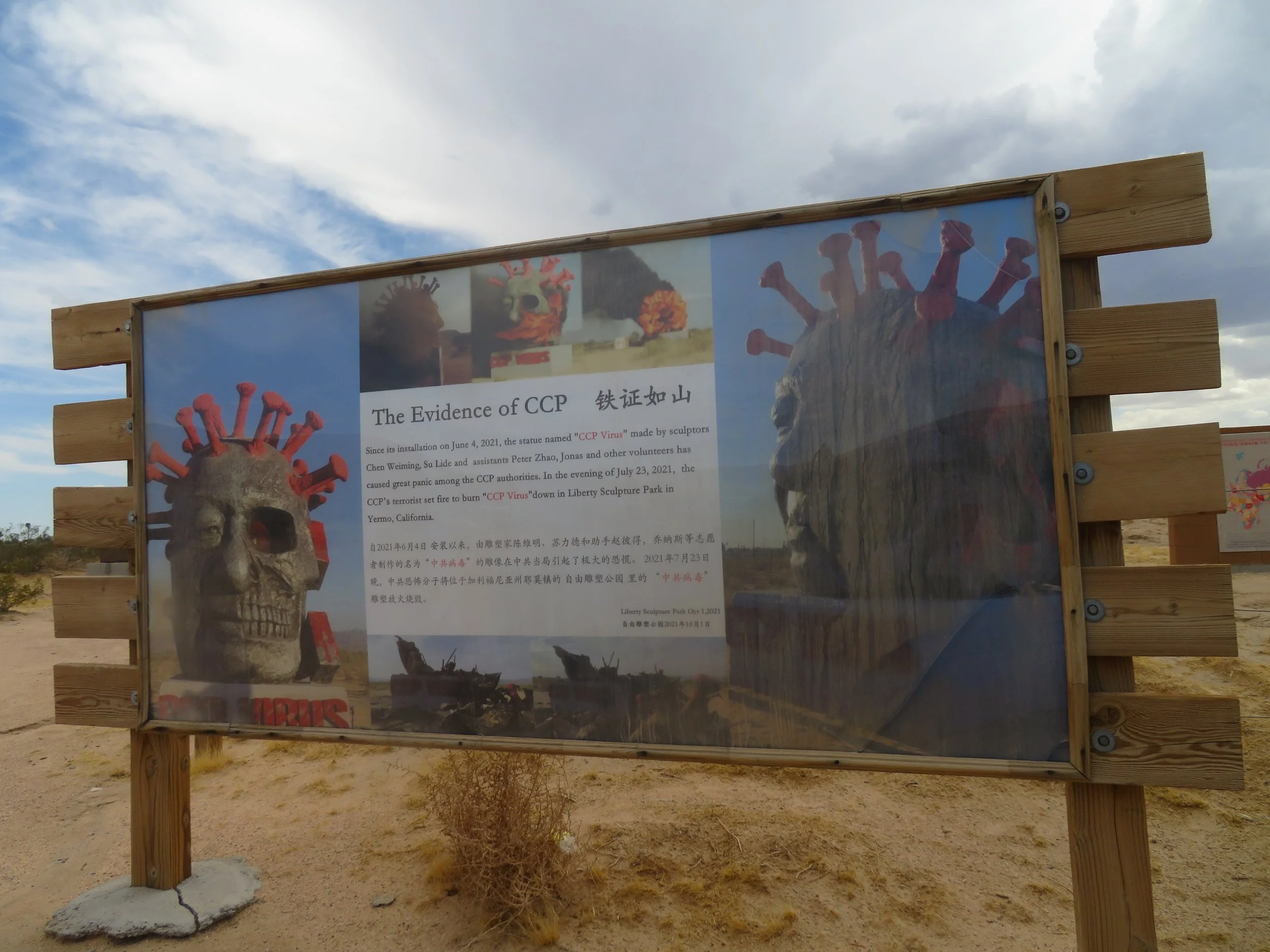
‘The CCP Virus” [monument] was originally created to remember the global epidemic that has not yet ended, and to remind the public that "the CCP's underreporting of the epidemic has led to the spread of the virus across the globe, and that the totalitarian ideology of communism is the most dangerous virus in the world."’
The original monument was destroyed by arson in 2021 and rebuilt as “CCP Virus II”. The charred remnants of the original remain in place next to the new sculpture. According to AI, “five individuals were charged in connection with the destruction of the “CCP Virus” sculpture, which was set on fire on July 24, 2021. The FBI and Department of Justice described the suspects as agents or operatives working on behalf of the Chinese government, allegedly part of a “transnational repression scheme” aimed at silencing critics of the Chinese regime.”
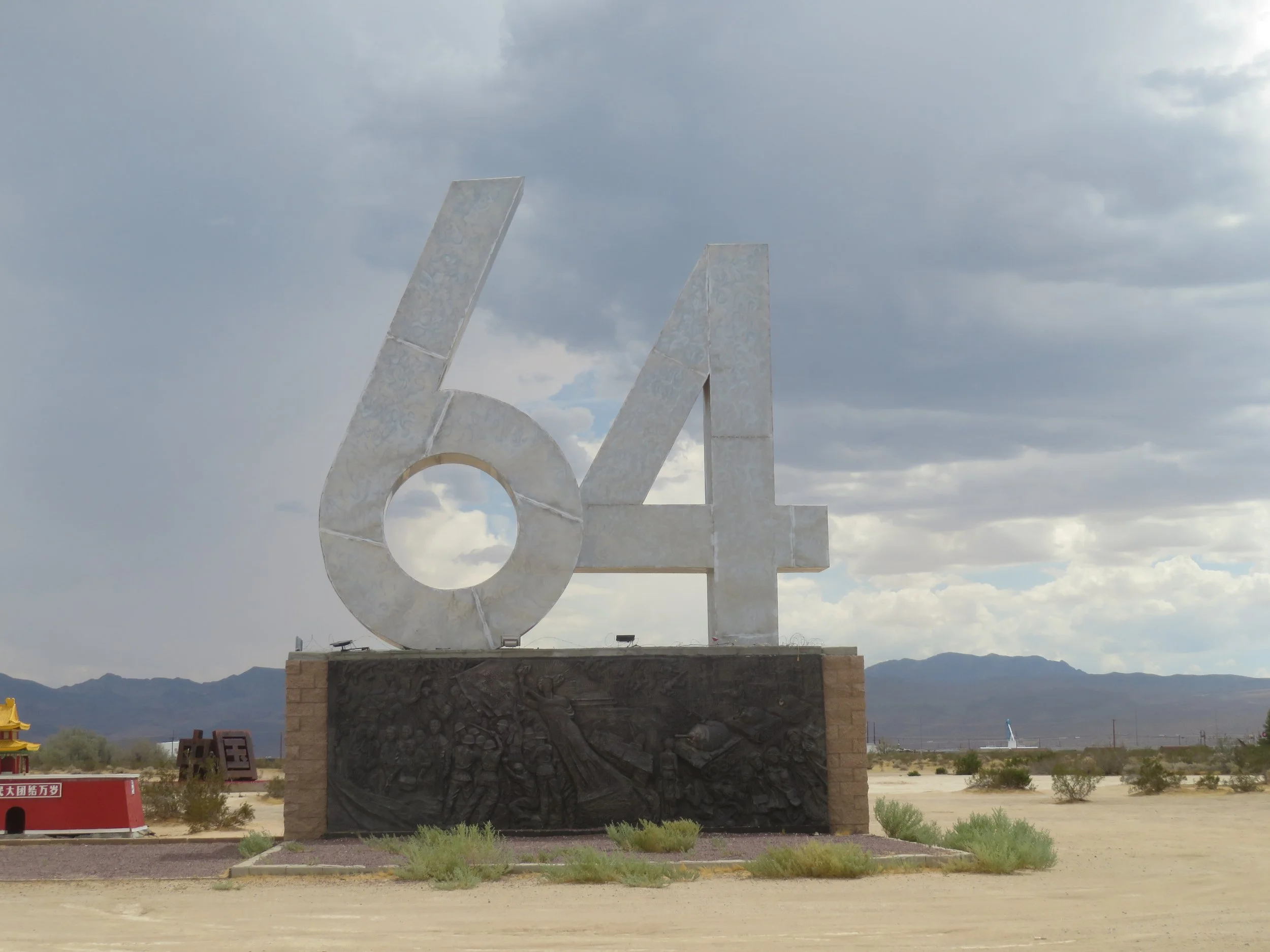
The 64 Monument
“The 64 Monument, also known as the 64 Holocaust Monument and the 8964 Tiananmen Massacre Monument. 64 is shorthand for the June 4, 1989 Tiananmen Square crackdown — the violent suppression of pro-democracy demonstrations in Beijing and other cities. The monument was built to commemorate the students and citizens who fell under the tanks and machine guns of the Communist Party of China in the June 4 Incident, and is the largest June 4 Monument in the world.” Estimates indicate 700-2,600 unarmed people were massacred.
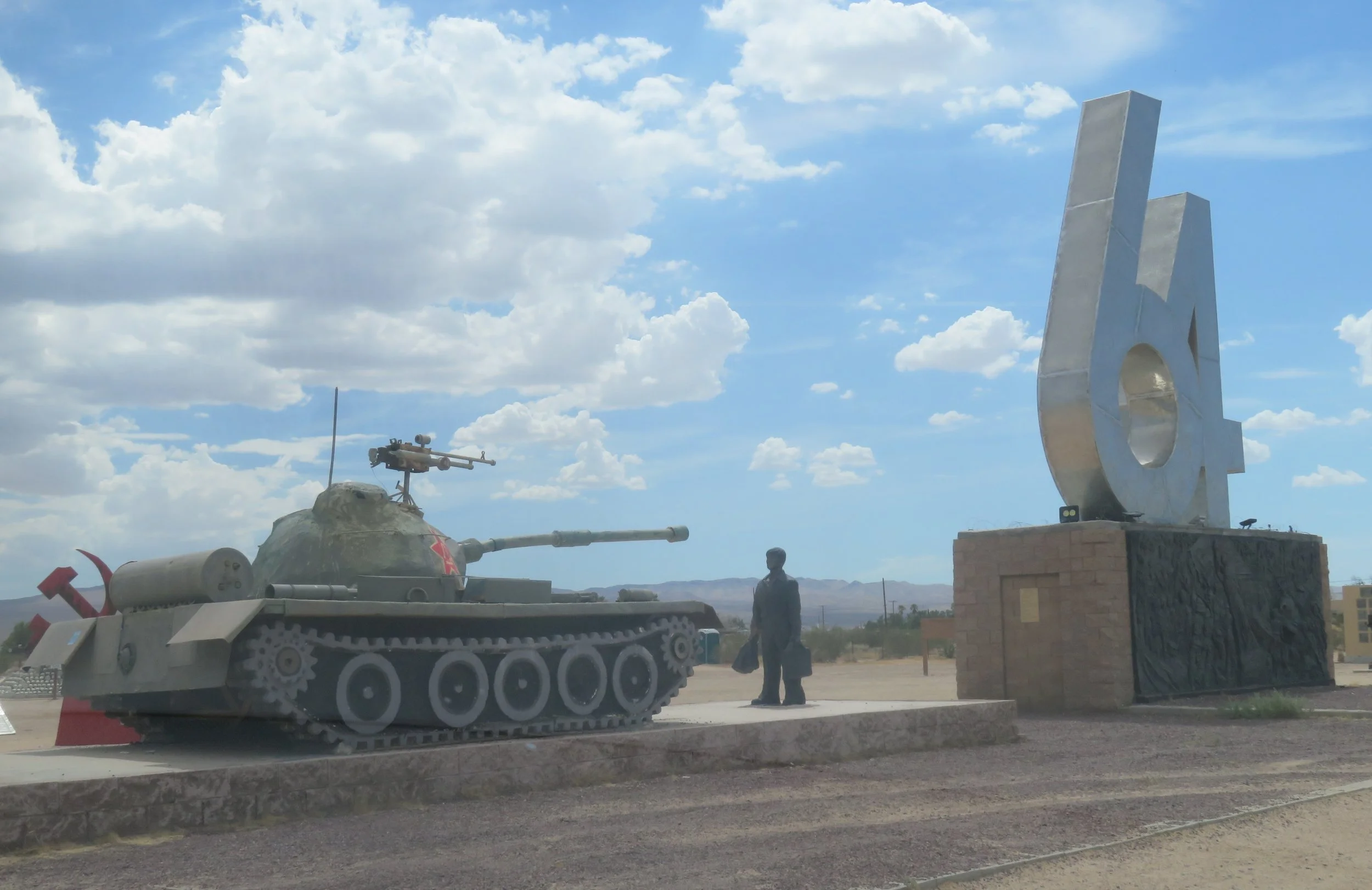
“Tank Man” is another reference to the Tiananmen Square Massacre, where a lone unidentified man was captured in a photo standing in front of oncoming tanks. “The image became a global symbol of nonviolent resistance against authoritarianism. His identity and fate remain unknown, with Chinese authorities censoring discussion of the event while it is commemorated and celebrated abroad.”
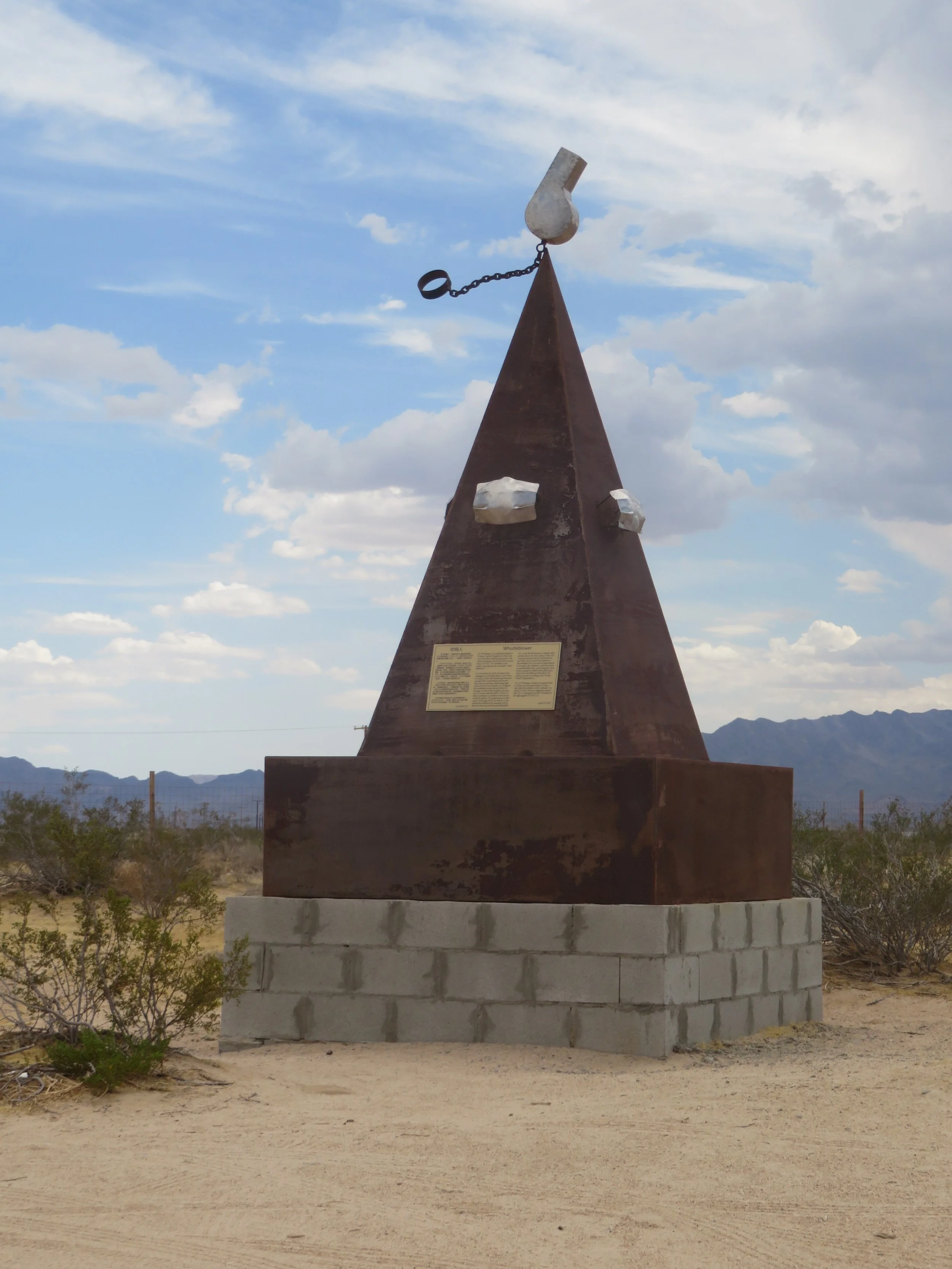
“Whistleblower” commemorates Dr. Wenliang Li, a physician at Wuhan Central Hospital, and the first medical official to disclose information about the 2019 coronavirus outbreak to the public. He died of the virus.
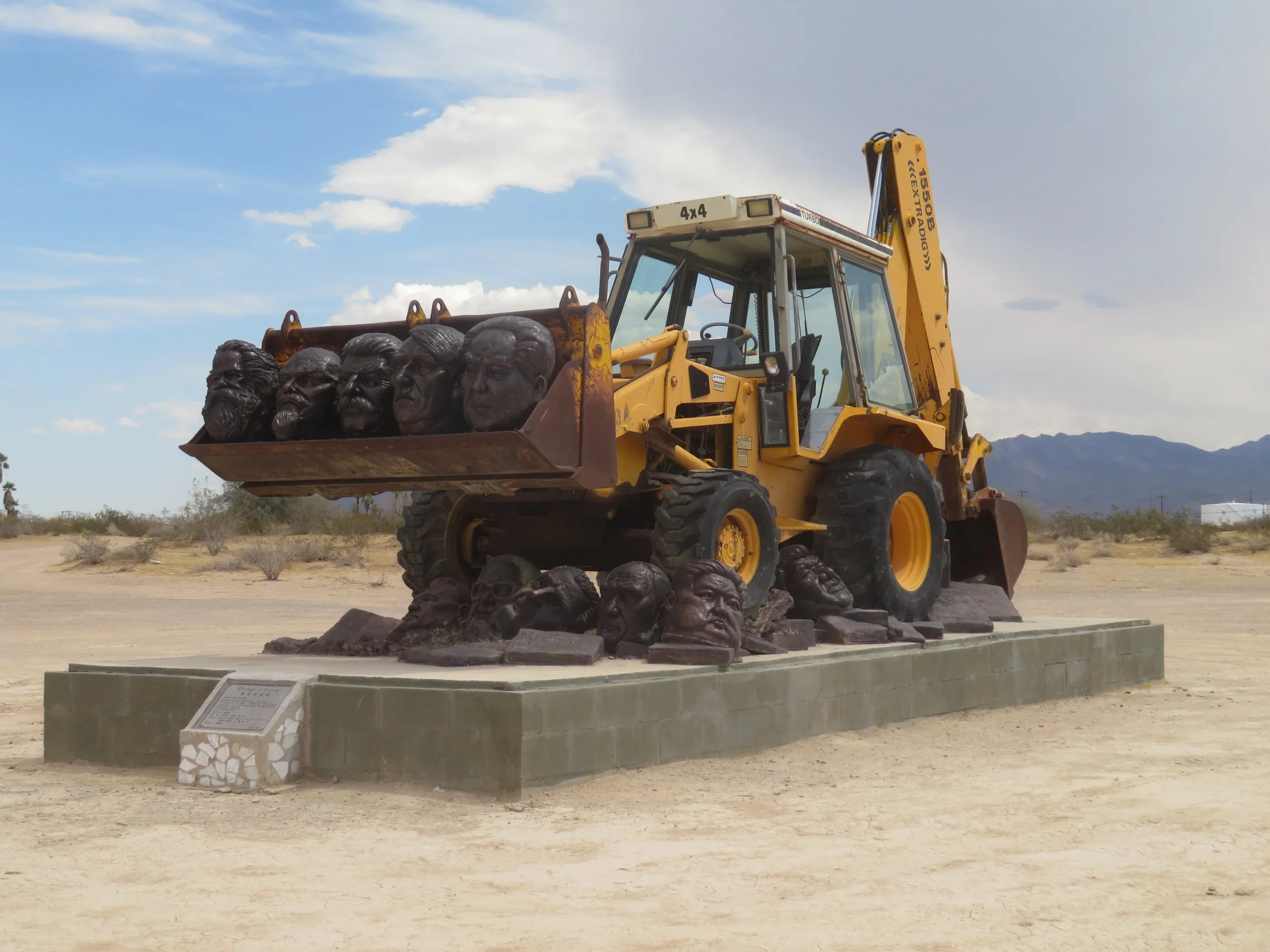
“Garbage of History” depicts a bulldozer with the heads of historical and present dictators/authoritarians including Xi Jinping, Stalin, Hitler, Lenin, Mao Zedong, Kim Jong Un, Putin and others. No further explanation required.
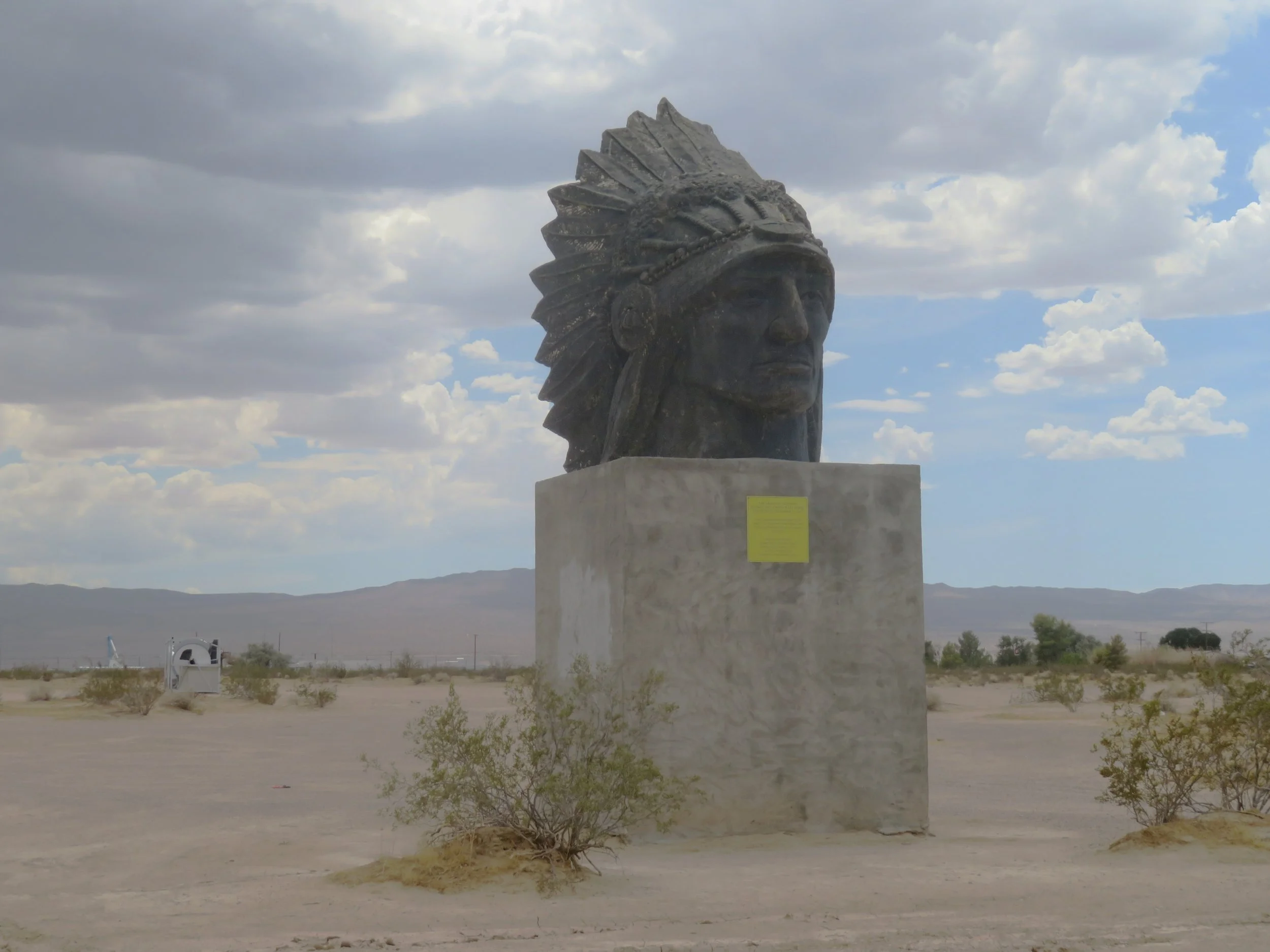
Crazy Horse (c.1840-1877)
“Origin of Freedom – Crazy Horse” was installed in 2017 on the 140th anniversary of Crazy Horse’s death. Again, resistance to oppression, in this case by the US government against the Lakota people, is a prevalent theme of the park.
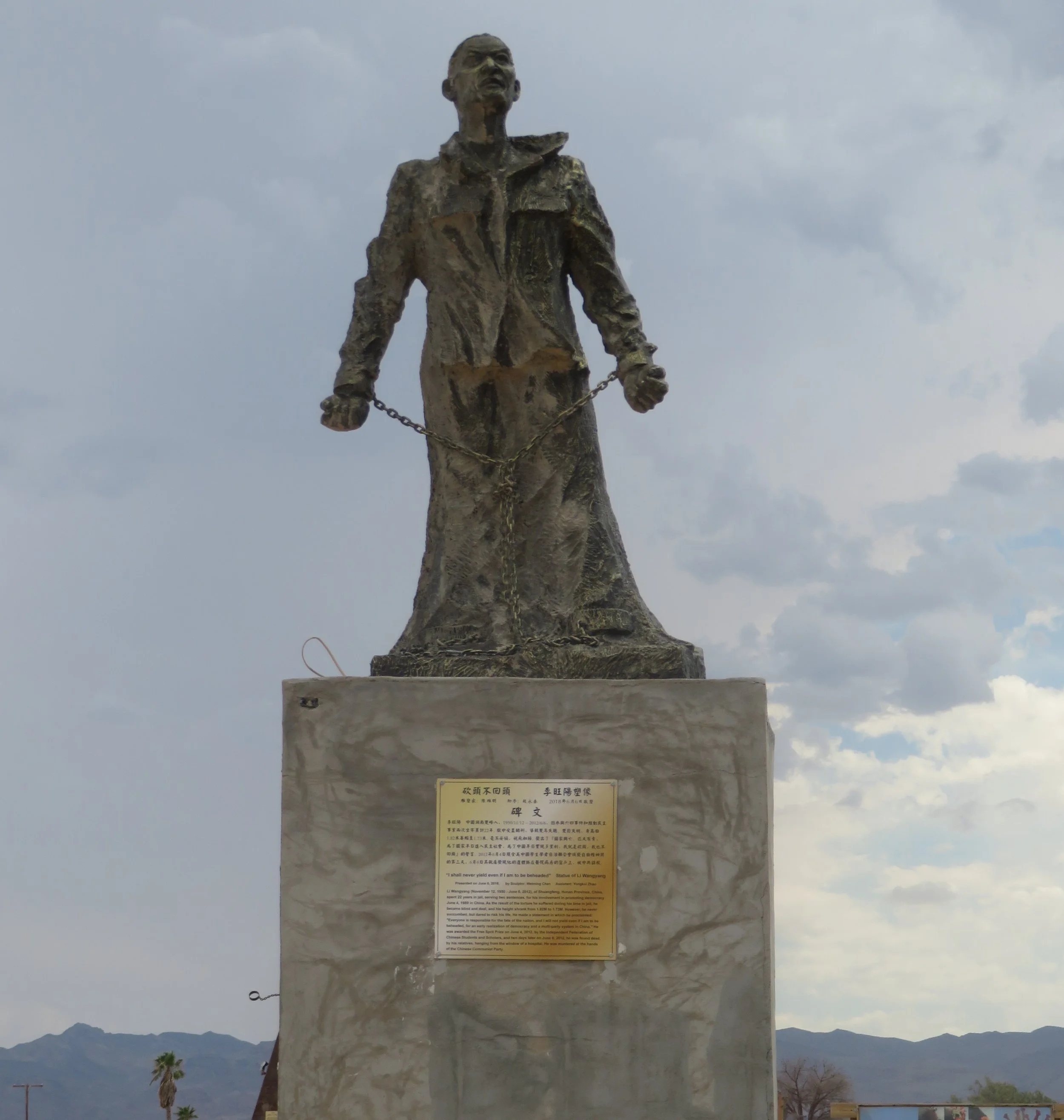
“Li Wangyang”
“Li Wangyang” was a Chinese labor rights activist and political dissident who became one of the longest-serving prisoners (21 years) for his role in the 1989 Tiananmen Square protests. A year after his release from prison in 2012, and following a TV interview calling for pardons for the Tiananmen protesters, he was found hanged in a hospital room. Authorities initially claimed suicide was the cause of death, but it was revised to 'accidental death' after the autopsy.
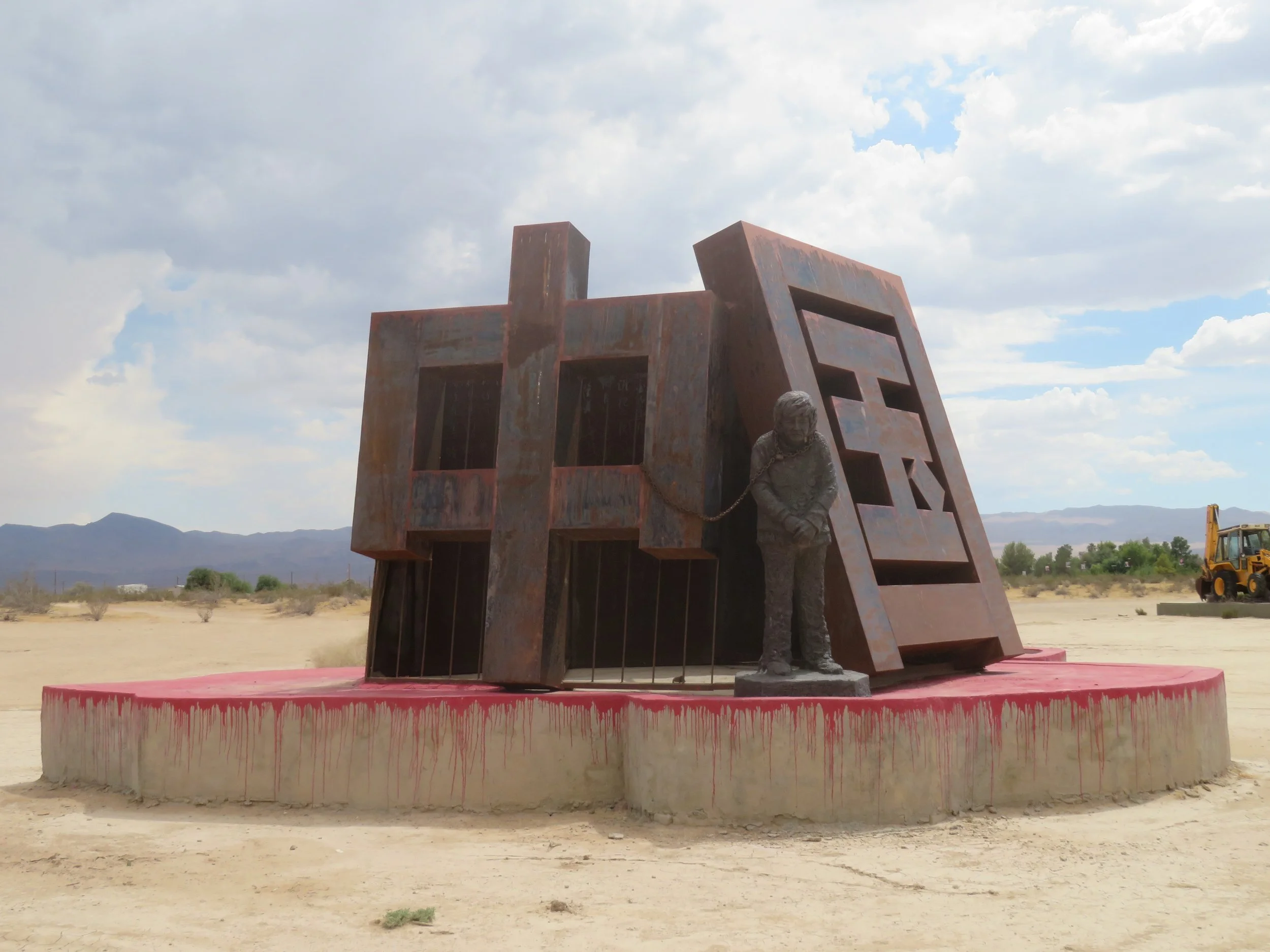
“Chained woman”
“Chained Woman” was a particularly powerful piece depicting a woman chained at the neck. It is the true story of a woman who was kidnapped, sold into slavery, gang-raped, forced to bear eight children, tortured, beaten, and imprisoned for years. The sculpture is a memorial to the 48,000+ women who have been trafficked in China, ignored and often facilitated by local officials.
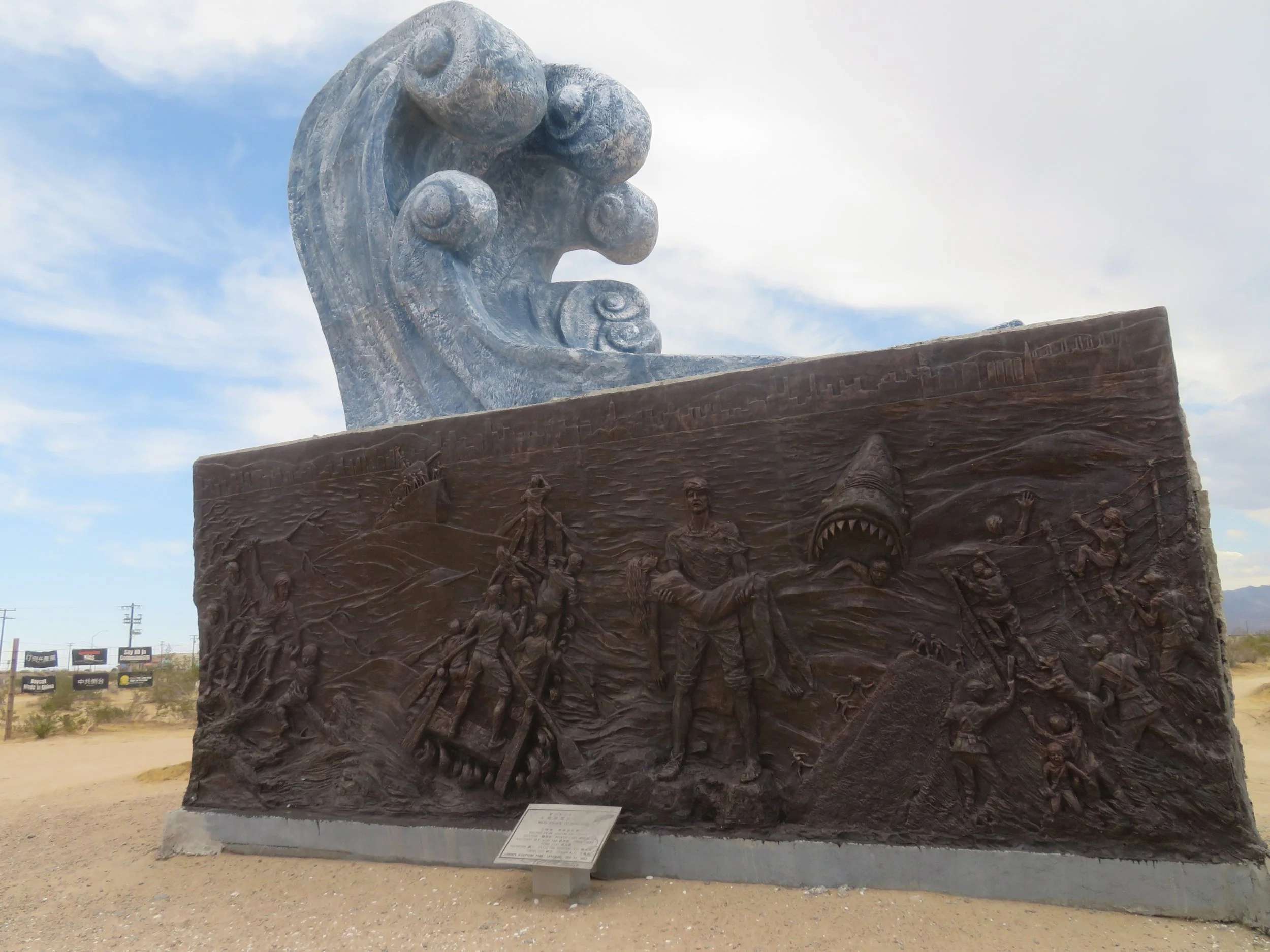
“Mass Escape to Hong Kong”
“Mass Escape to Hong Kong” represents the refugee wave from the People’s Republic of China to British Hong Kong after the Chinese Civil War. This movement began in earnest in the late 1940s and early 1950s, as the Communist Party of China (CCP) and Mao Zedong’s forces advanced across China, forcing many members of the Nationalist (Kuomintang) government, military, and civilians to flee southward.
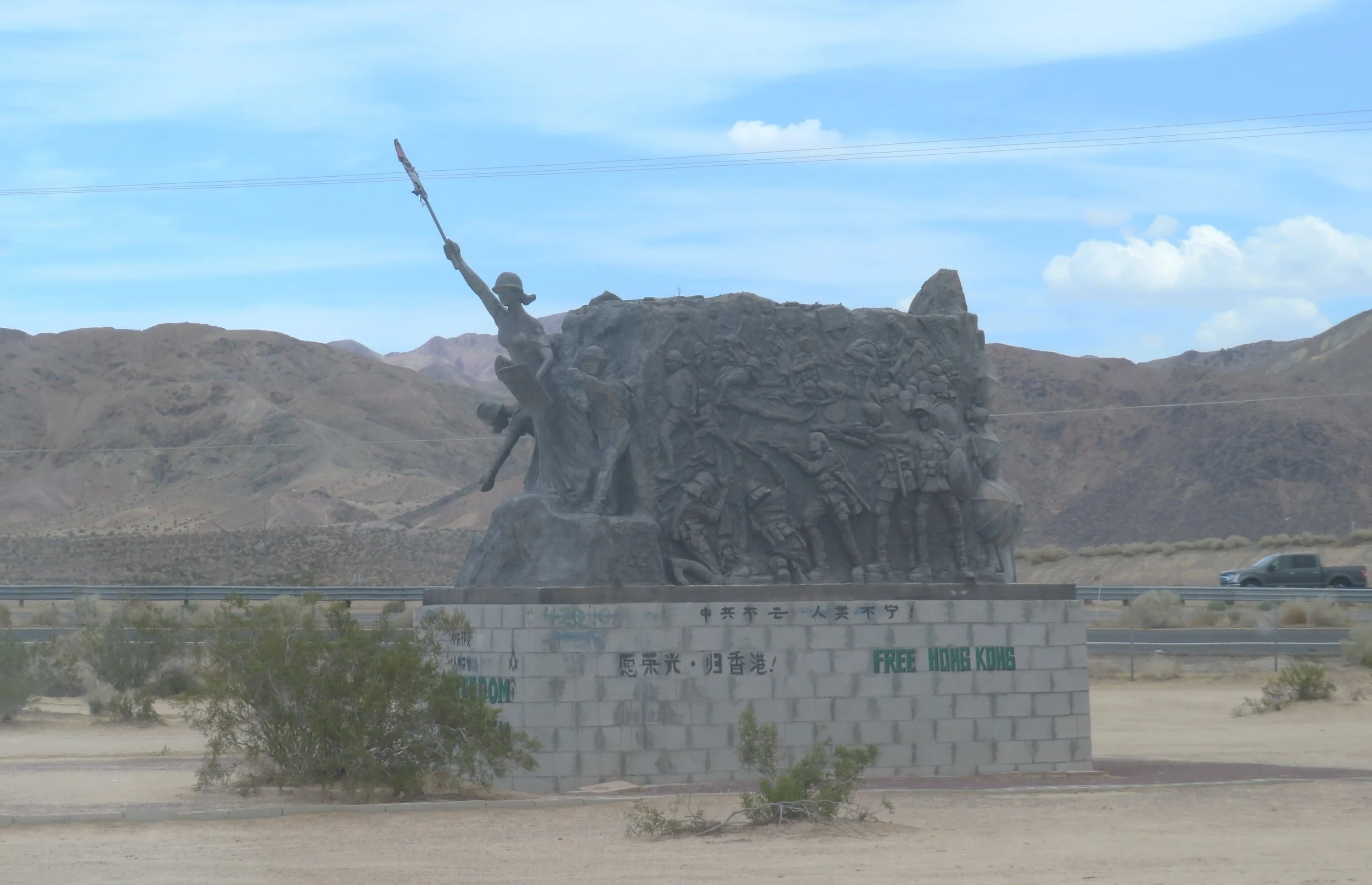
“Free Hong Kong” – After the UK returned Hong Kong to China in 1997, Chinese repression has caused significant human rights issues and loss of freedoms for the population.
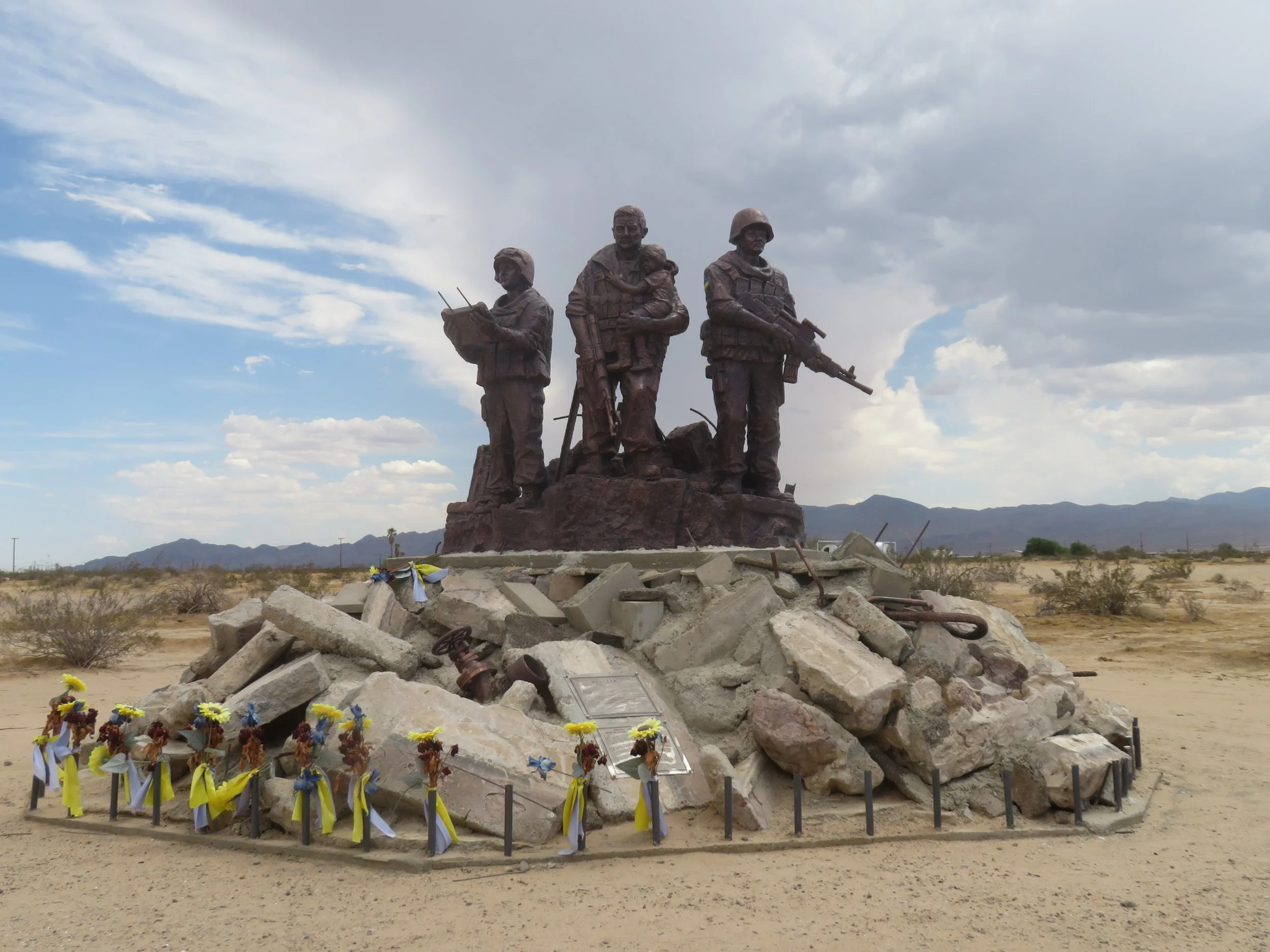
“Defending Ukraine” pays homage to the soldiers and the people of Ukraine in their fight against Russia.
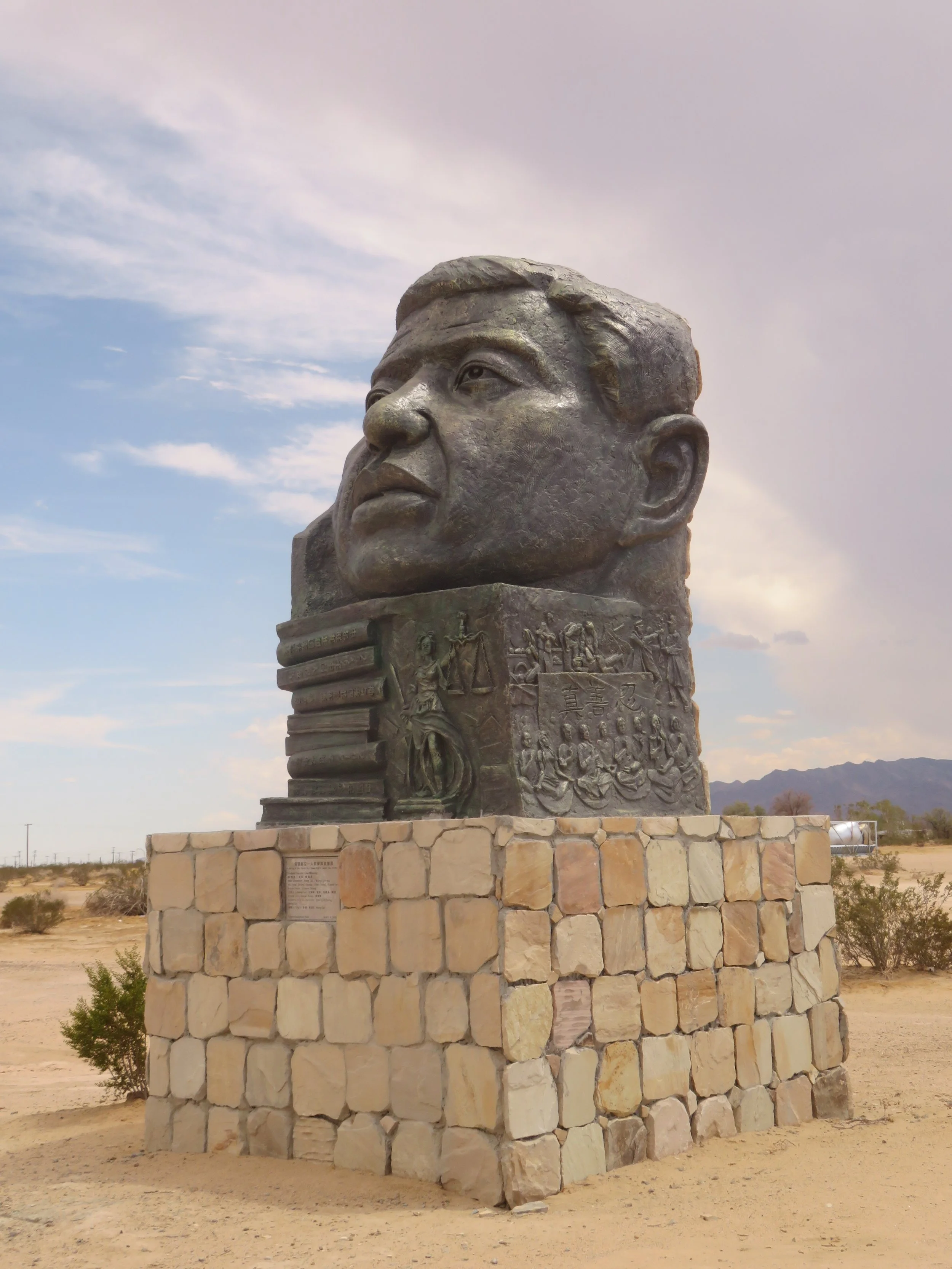
“Gazing at the Starry Sky” is a memorial to Gao Zhisheng, a Chinese human-rights lawyer known for defending activists, religious minorities, and victims of forced evictions, often taking on politically sensitive cases. He has undergone repeated government retaliation, including disbarment, imprisonment, torture, and enforced disappearances.
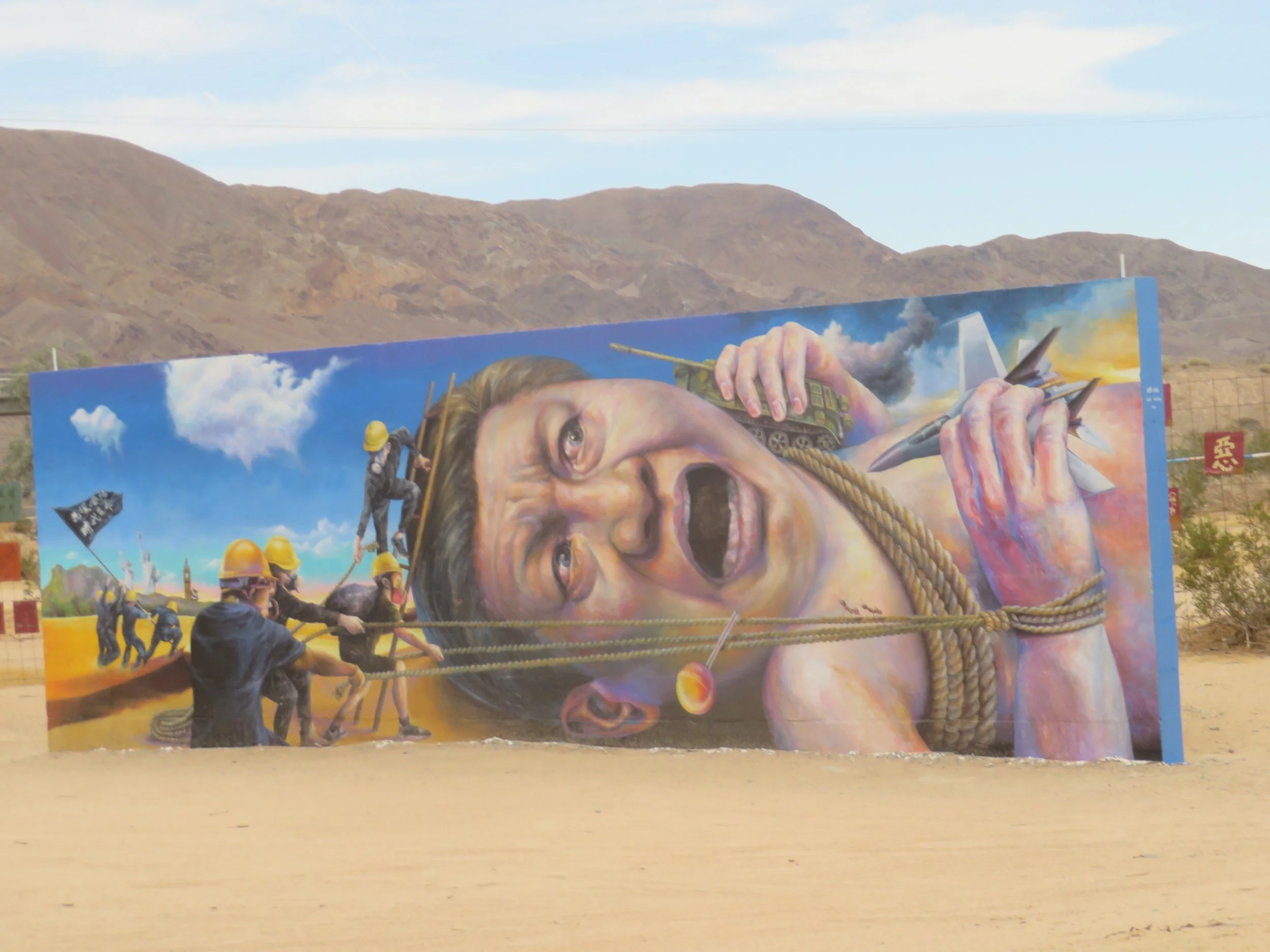
“Falling Down” is a large-scale open-air mural painted by Hong Kong artist Lin Li and her partner Lin Lang, depicting a giant figure of Xi Jinping being pushed down by Hong Kong people. The work expresses the continued hope that Hong Kong will someday again be free of Chinese tyranny.
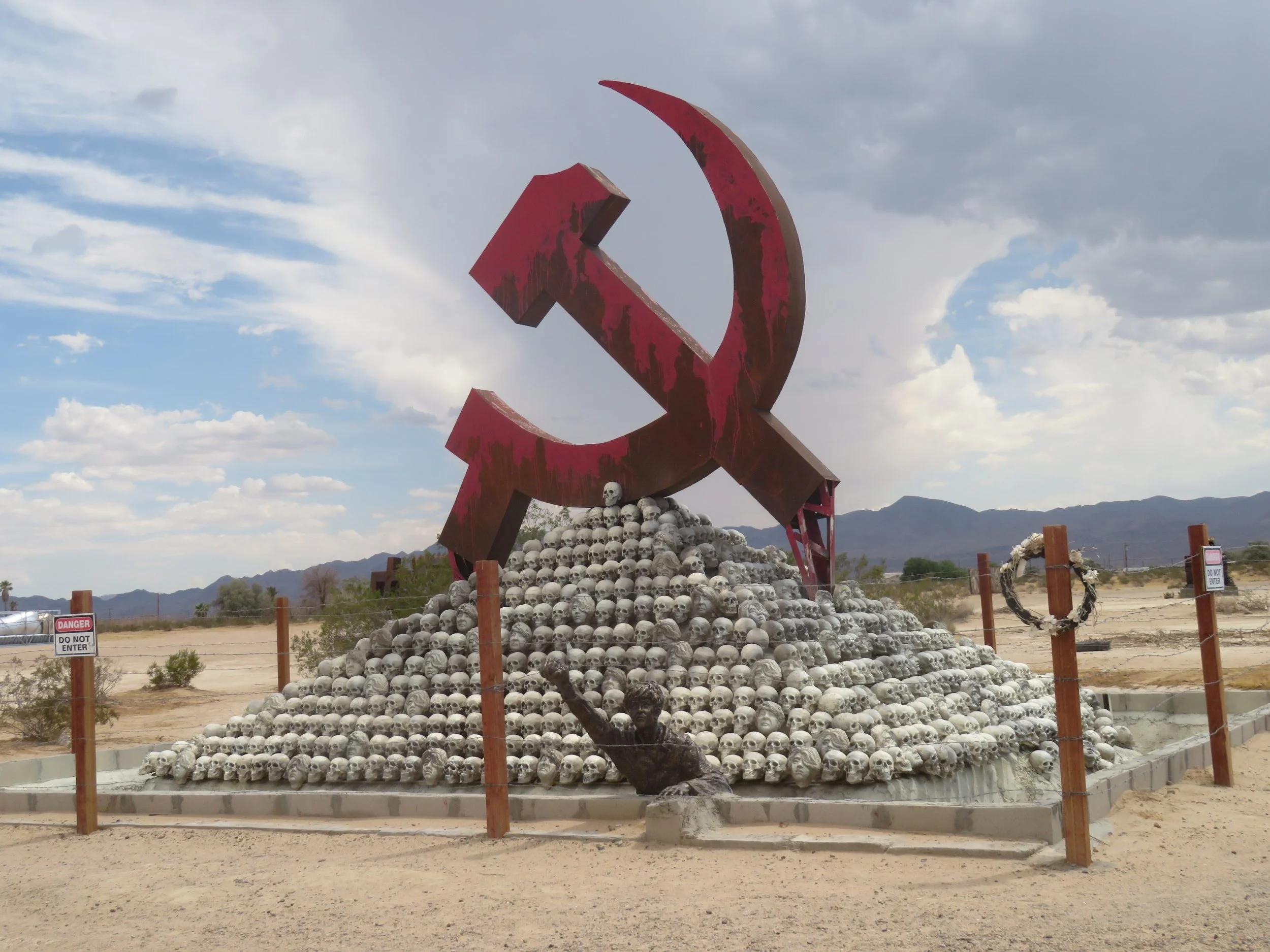
“Monument to Victims of Communism” and its accompanying sign enumerate the political campaigns launched over the years by the CCP (Chinese Communist Party), which have resulted in millions of deaths, the largest number of unnatural deaths in history.
It’s a sobering place. As we slowly drove from one large-scale sculpture to the next, we were saddened and dismayed by the violence, oppression, and abuse that people under authoritarian rule, like China, have endured, and impressed by the powerful sculptures and the stories they tell. The park was an eye-opener for us and well worth the couple of hours we spent there. It demands a return visit in the future.