The Blue View - Repairing Sail Slides

We've found a multitude of ways to break sail slides and consider ourselves quite adept at it. These are small T-shaped parts that are used to attach the main sail to the mast. On Nine of Cups, we use stainless steel sail slides at the high stress points and nylon sail slides at the intermediate points, and it is the nylon sail slides that break. We tried using all stainless sail slides, but found they were more prone to jamming than the nylon type, and we prefer to repair the odd broken sail slide to having a sail slide jam when we are in a hurry to get the main down.  

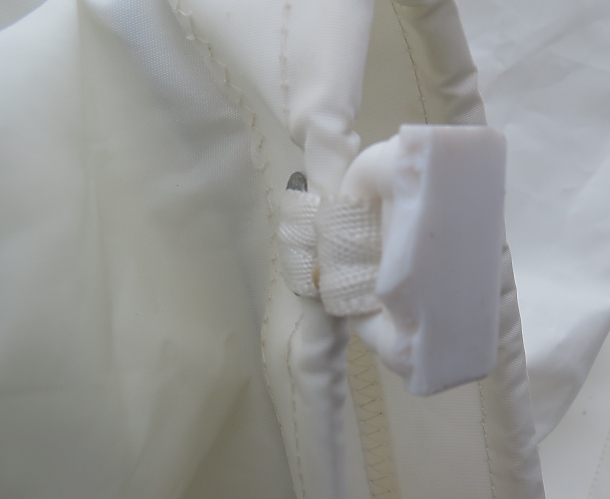
broken sail slide


They rarely break when the wind is strong. They are much more likely to break in light winds when the roll of the boat makes the main sail flog from side to side. When we are sailing downwind, we use a preventer to keep the boom from jibing, but the sail will sometimes try to jibe if the seas are running, and this often results in two or three broken sail slides. The lower slides are more prone to break, which is good, because they are easier to replace.


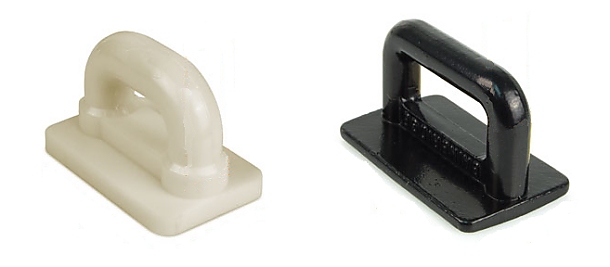
sail slides


We never set out without plenty of spares, and we've had enough practice that it now takes only minutes to replace a sail slide. While we have replaced several while at sea, we can usually reef the main enough to postpone the repair if conditions are bad or if we will be arriving in an anchorage soon.


repaired sail slide


Take a look at a video clip we made that shows how we replace a sail slide.

The Blue View - Paper Charts

  chilean charts


When we first moved aboard Nine of Cups, chartplotters were expensive and used a lot of power. Despite being the gadget freak I am, we opted to rely on paper charts. Over the last decade, chartplotters have become less expensive, and it has become pretty rare to find a cruising sailboat that doesn't have one. Now, with the advent of all the navigation apps for the tablet and smart phone devices, many cruisers actually have two or three chart plotters aboard.


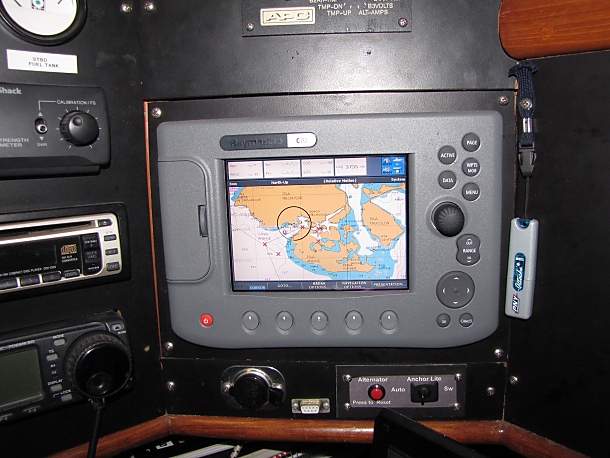
chartplotter


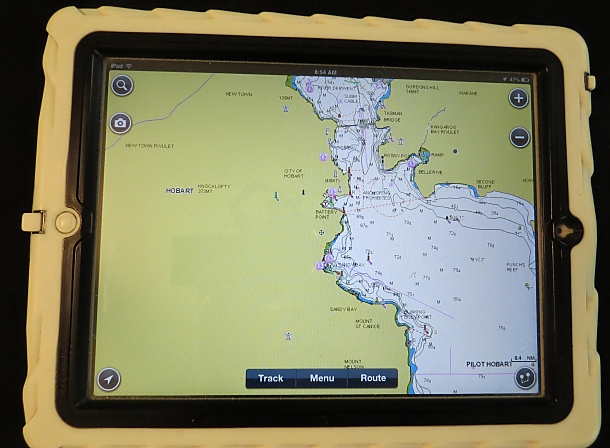
After delivering a friend's boat with a chartplotter aboard, we made the change to the electronic navigation world about five years ago with the addition of a Raymarine chartplotter. Then last year, we bought an iPad and the Navionics navigation app and charts. It is a true marvel to be able to glance at the electronic display and see in an instant exactly where we are, and to plot a course simply by moving a cursor around and dropping a waypoint. Nothing to figure out … just touch the screen.


ipad chart


Not only is it easier, but it is less error prone than marking waypoints on a paper chart, determining the latitude and longitude of each point, then calculating the heading and distance between waypoints. We would usually do this together, and check each others' calculations. For a complicated route, this process sometimes took us an hour or two. Now all the calculations are done by the computer, and a route is computed at the push of a button.

So is it time to get rid of all those expensive, heavy paper charts? A lot of our cruising friends no longer invest in paper charts. One chap we met actually decided his compass was now unnecessary, and got rid of it so as to be able to add a larger cup holder. Call us Luddites if you will, but we don't agree with this philosophy.

There are several pitfalls we see when relying solely on electronic charts. The first issue in my mind is a direct result of how easy it is to create a route on a chartplotter. If we are sailing a passage between ports, there is the tendency to zoom in to a high resolution view of the port at each end to plot waypoints, and then to zoom out to view the route connecting the two ports. This low resolution view of the route will miss any small hazards along the route. For example, the passage from Luganville, Vanuatu to Bundaberg, Australia passes right through Chesterfield Reef. This reef is very clearly marked on the paper charts for the area, but is only shown on the higher resolution views on our Raymarine chartplotter. Sailing onto this reef at 6 knots would certainly spoil your nightwatch.

Even if you painstakingly view your route at high resolution, you miss any hazards that are just off your route. If you're driving a motor vessel, this is probably not a problem, but sailboats don't always sail the rhumb line.

In addition, when we both spent an hour or more determining our route, by the time we were finished, we both had a pretty good familiarity with the route and any potential hazards along the way. The plotting process on the chartplotter is a one person activity, so usually only one of us has spent time reviewing the route.

Then there is always the possibility of losing the electronics due to a lightning strike or because of an electrical or equipment malfunction. We have a couple of handheld GPS's aboard as backup, one of which is stored in the microwave in the hopes it might survive a lightning strike. As long as we have the paper charts and a GPS, we'd be no worse off than we were a few years ago before the chartplotter.

And if all else fails, I still have my trusty sextant tucked away. Admittedly, I'm a bit rusty with it – I haven't used it in over a decade. Even when I was at my best, my accuracy was probably no better than +20 miles or so. But as long as we still had a compass, the sextant and the paper charts, we'd be able to jury rig a speed log, and I feel certain we could make landfall somewhere. Of course it would help if the land we were aiming for was big – like say Australia or South America.


reviewing charts


Finally, there is one more thought about paper charts. It is not uncommon to meet a fellow cruiser in some remote anchorage who is heading somewhere you've been and is coming from a place you're planning to go. It is very pleasant spending an evening going over the charts, exchanging information on anchorages, navigation, and swapping all the other good info we've each collected. I'm not sure if we can add little notes to our iPad charts, but even if we could, it just wouldn't be the same.


The Blue View - The Dremel Rotary Tool is an Essential Tool

Dremel Tool Ad  

When I was growing up, my dad had a Dremel “Moto-Tool” tool. It came in a nice dove-tailed wooden box with what seemed to be at least 6,000 attachments and accessories. He had purchased it in the early 50's and he used it a lot for his hobbies – miniature trains and building wooden replicas of boats and classic cars – as well as a myriad of little projects around the house. Sometime in the late 1980's, it finally wore out and quit. He dug out his original paperwork which stated there was a lifetime warranty on it, and being true to his Scottish heritage, sent his 35+ year old Dremel tool back for repair. The Dremel Manufacaturing Company sent a letter stating this particular model was no longer supported, as it had gone out of production about 25 years earlier. They would happily provide him with one of the new models at no charge, however, if this was acceptable – which was and which they did. Now that's customer service!
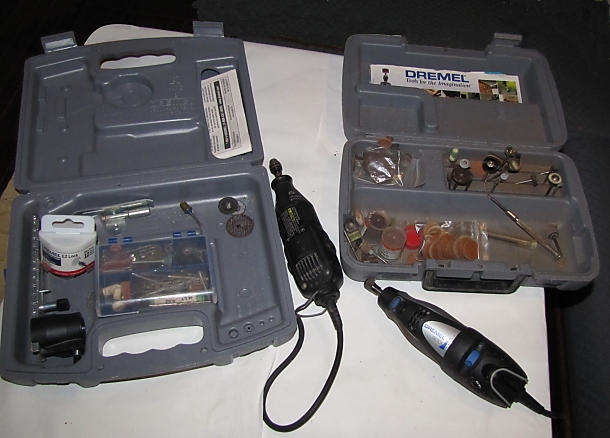
 

Dremel tool


When my parents downsized from a house to a condo, I inherited a lot of his tools, including the Dremel tool and attachments. Then, when we downsized from our house to the boat, I seriously doubted I would get much use out of a Dremel tool on-board Nine of Cups and debated whether to keep it. But it was small, especially if I kept only the essential attachments and accessories - probably no more than 500 or so. I was sure I could find room for it, and it made the final cut. I rationalized that if I didn't use it, I could always part with it later.


dremel accessories


It turns out that my dad's old Dremel tool is a pretty essential part of my tool kit. There's probably not a week goes by that I don't find a use for it. Here are some of the more common uses for my Dremel:

Bolt Cutting: I use it regularly to shorten small bolts (less than 1/2” or 12mm diameter). It is easier to handle and more precise than an angle grinder. I use the cut-off wheel attachment for this. It also works well to dress stripped threads on bolts of any size.

Rigging: I used it when we were replacing the stainless stays and shrouds. The cut-off wheel makes a very neat, square cut on stainless steel wire.

Lifelines: When we last used stainless wire for our lifelines, it was simple and easy to cut the stainless wire with the Dremel.

Cleaning small orifices: I have some tiny drill bits (5 of the 500 or so attachments) that I use for cleaning small orifices. For example, the tiny jets on our propane stove sometimes get clogged with carbon, and the Dremel works great for clearing them.

Routing: I have a routing attachment, and the Dremel is quite handy as a small, precision router. For example, I occasionally need to rout a small cutout in thin aluminum, which is simple with a small metal milling bit. Or by using a lettering template, I can engrave letters in aluminum or plastic.

Drill Press: I have an attachment that allows me to use it as a precision drill press. As an example, we bought a number of black pearls in the South Pacific. None of them had holes drilled in them. I used modelling clay to hold the pearl in place, and I drilled a hole through the center of each pearl using a small drill bit.

Shaping: There are innumerable times when I need to shape a small piece of plastic or soft metal, and the Dremel grinding stones and sanding drum work quite well. For example, a couple of years ago, an odd shaped plastic part in one of our cockpit winches broke. The winch is 27 years old, and Lewmar no longer stocked the part. Unlike Dremel, they didn't offer to replace it with the latest model. Using my trusty Dremel tool, I was able to fabricate a new one from a piece of aluminum.
 

dental work with the dremel


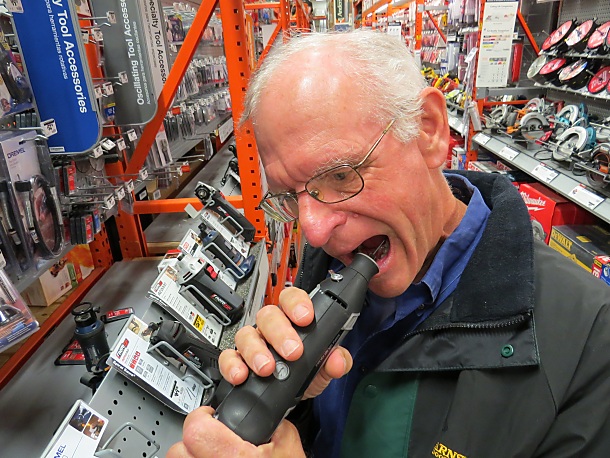
Dental Work: While I haven't actually used it for repairing either of our teeth, I have some small grinding accessories and a few tiny drill bits that I am sure it will work well for this application. Marcie has been particularly reluctant to let me give it a try, but I remain optimistic that we will eventually meet some sailor in dire need of some reconstructive dental work.

As I wrote this blog, I went to the Dremel website and discovered they have several new models and I'm thinking a tool this important should have a backup. There are also a whole host of cool new attachments and accessories, and I'm not sure how I ever managed to keep Cups afloat without some of them. I should have plenty of room for them if I give up a few of my extra hats and some of my older t-shirts. One has to have one's priorities right. And I'm sure I can convince Marcie that bringing back a Dremel will be a much more beneficial use of space than some extra galley gadgets.

I highly recommend the Dremel 4200, and if you're interested, it can be found on Amazon.