The Blue View - Godzilla El Niño?

This year looks like it is not only going to be an El Niño event, it's being referred to as a Godzilla El Niño – perhaps the strongest El Niño in recorded history. According to Scripps Oceanographic Institute, “an El Niño is a temporary change in the climate of the Pacific Ocean, in the region around the equator. You can see its effects in both the ocean and atmosphere, generally in the Northern Hemisphere winter. Typically, the ocean surface warms up by a few degrees Celsius. At the same time, the place where hefty thunderstorms occur on the equator move eastward. Although those might seem like small differences, it nevertheless can have big effects on the world's climate.” godzilla el nino
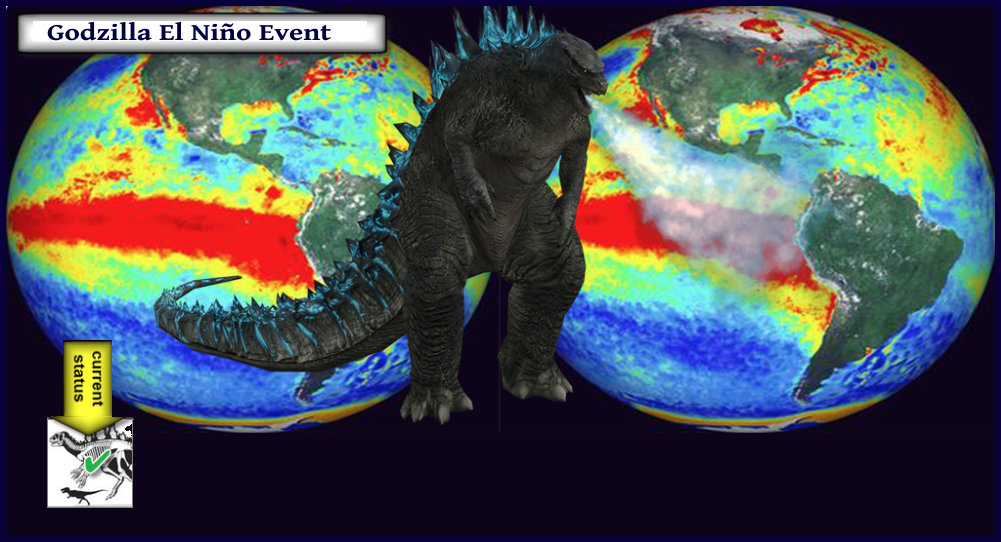
According to PBS Online, “The name El Niño (referring to the Christ child) was originally given by Peruvian fishermen to a warm current that appeared every year around Christmas. What we now call El Niño seemed to them like a stronger version of the same event, and the usage of the term evolved over time until it only referred to the irregular strong events. It wasn't until the 1960s that people started realizing this was not just a local Peruvian occurrence, but was associated with changes over the entire tropical Pacific and beyond. In effect, El Niño was too big to be seen as the mega-event it is; it just seemed like a lot of unconnected unusual weather events around the world. “ And Godzilla? We all know where that came from, although I didn't know until today that it is an Anglicized version of the fusion of the Japanese words for gorilla and whale.

As most of us recognize, the weather around the world has been even weirder than usual. In the U.S., December was the warmest and wettest in the country's history, and according to NOAA, an amazing 6372 (!) record high temperatures were registered during the month; there were a multitude of absolutely devastating winter tornadoes in the midwest and south - even San Diego was hit; and record rainfall and flooding have occurred in a number of states. Mother Nature seems especially ticked off.
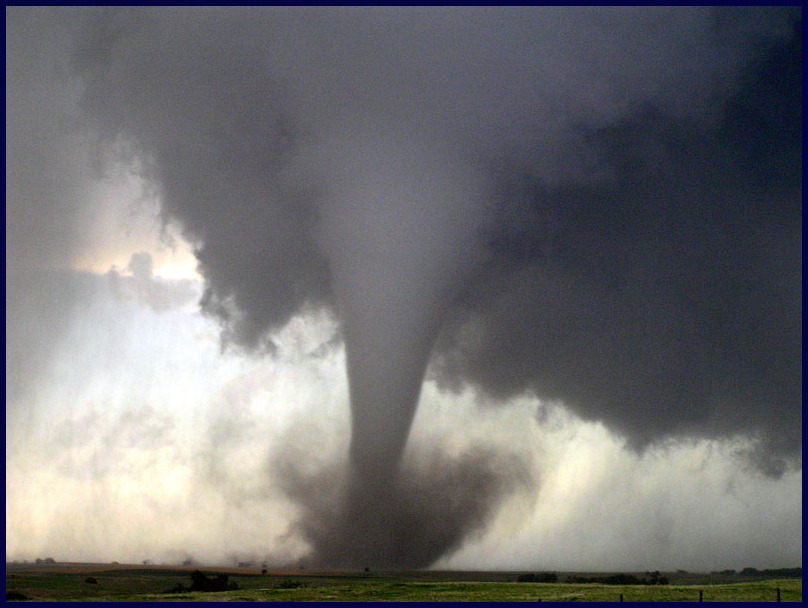
el nino tornado

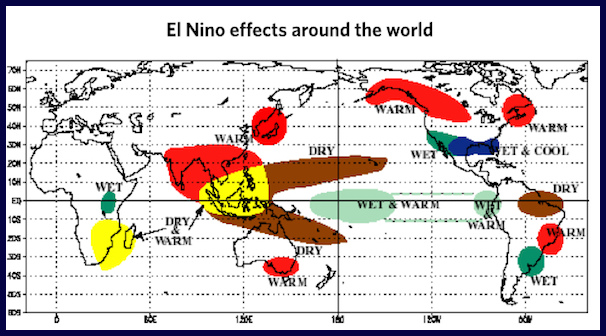
For sailors, a strong El Niño year is a mixed blessing. Depending on where they'll be sailing, the weather patterns may be better or worse, but will very likely be different than in a non-El Niño year. In the Atlantic, if the El Niño is still strong next summer, the number and strength of hurricanes will be less. On the other hand, there are likely to be more storms in the Gulf of Mexico and southeast U.S. coastal areas this winter.
el nino effects

In the North Pacific, there may be stronger storms and heavier seas in the central and eastern areas. California and northern Mexico will probably see more stormy weather and heavy rains this winter. The South Pacific will likely experience more cyclones. Often during an El Niño event, the cyclones persist later than usual and tend to make their way further east. The usually strong and dependable easterly trade winds may be lighter than usual as well. They may become light and variable, and even reverse direction on occasions. That'll make those long Pacific passages even longer.

We pay attention to big global weather patterns like El Niño events, but in actuality, we don't make or change our plans based on them. We avoid cyclone, hurricane and typhoon regions in the appropriate seasons. Even so, we've had a few close calls, like Cyclone Bune that made our passage from the Chatham Islands to the north island of New Zealand less than fun – and that was in 2011, a La Niña year.
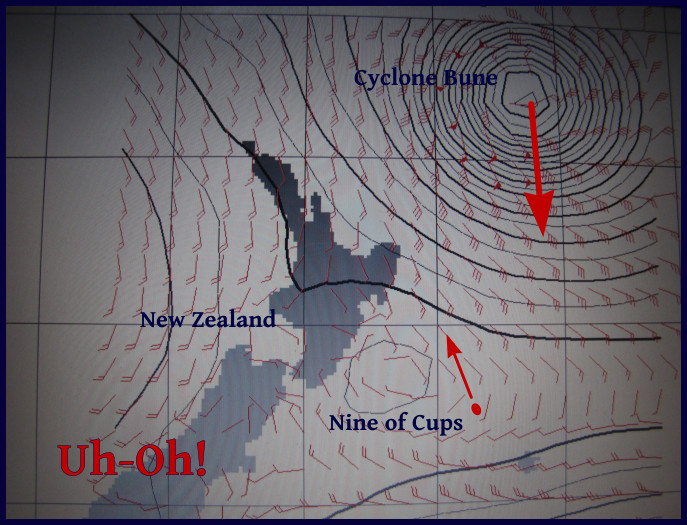
cyclone brune

Whether we're on a passage or anchored, we watch for storms or nasty weather approaching and try to be prepared. And we pay attention to the day-to-day weather heading our way. But we didn't postpone our 2009 Pacific crossing because it was an El Niño year, and while we did have our share of bad weather, it wasn't so bad that we regretted not waiting another year. On the other hand, our El Nino event in 2009-10 was considered moderate. There hasn't been a strong El Nino event since 1997-98, but if this really does turn out to be the “Godzilla El Niño” meteorologists are predicting, watch out this year.
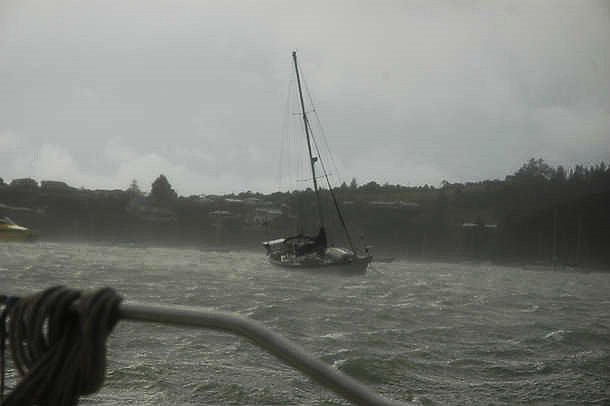
cups in a storm

The world's weather seems to be getting more abnormal every year. Our trek north from Trinidad in a couple of months shouldn't be greatly affected, but all the Puddle-Jumpers planning to head from Panama to New Zealand this spring will need to be extra careful.
The Blue View - Keeping Busy

Marcie and her sister Lin have a very enviable relationship. Although they are 11 years apart, they are as close as twins. They don't look alike, but do share many of the same mannerisms and have very similar personalities. They're inseparable when we visit Boston, and their farewells are always tearful when it's time to return to Nine of Cups. They also sound alike on the phone. In our early days together, if I was out and about and called the home phone, I sometimes thought I was talking to Marcie when, in fact, it was Lin I was talking to. Lin was all too happy to play along, and it sometimes led to some embarrassing conversations. Now I've caught on, and if I'm not sure which sister I'm talking to, I use my own set of 'security questions' – “Where do we keep the UHT milk on Cups?” or “What unusual anatomical feature do I have on my backside?”.

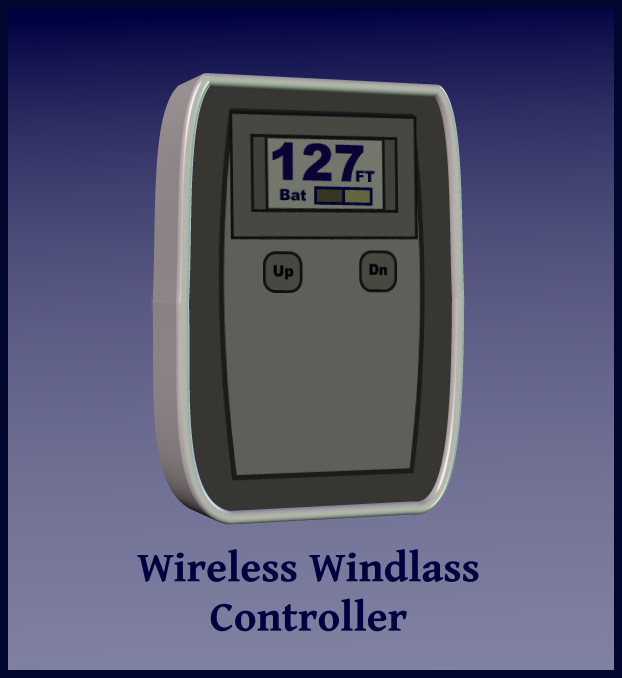
We aren't in Boston all that frequently, so when we are, the sisters spend a lot of time with each other catching up, and I've found that it's best if I find a project to immerse myself in. Sometimes it's a household project that Lin has been saving for me from her to-do list – install some motion-activated lights on the back steps or clean out and reorganize the garden shed. This time, however, there were no pressing household projects, and I have time to complete the design of our new wireless windlass controller.

The design will consist of two modules – the handheld, battery- powered module and the controller module located in the forepeak locker, close to the windlass. The controller starts and stops the windlass and keeps track of windlass revolutions. The handheld module monitors the Up and Down buttons and displays the amount of rode deployed. The two modules communicate using matching RF transmit/receive radio modules.

controller

I've been working on the handheld module, and it's coming along nicely. It is quite small and incorporates a sunlight readable, graphics display (one of the shortcomings of the previous design was that it was hard to read in the bright tropical sun). The wireless range (500 meters) should be more than adequate for our use – we rarely try to lower or raise the anchor from shore.

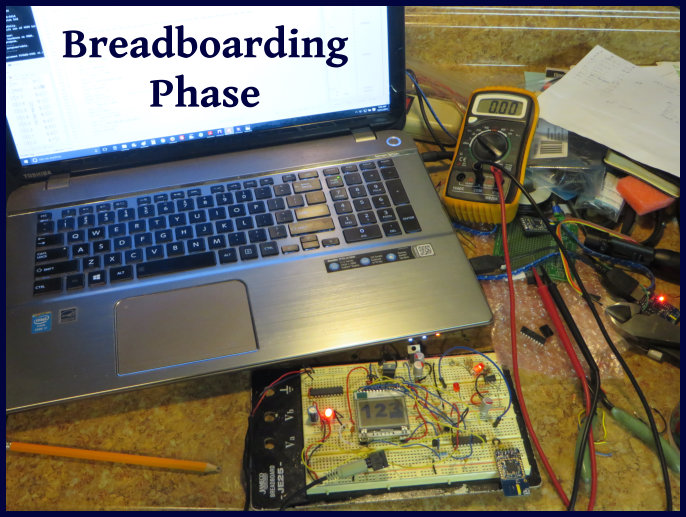
breadboard

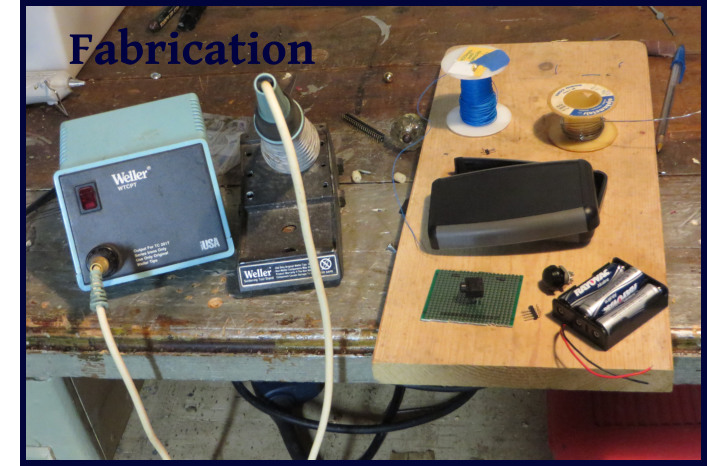
I've finished most of the breadboarding phase. I am using a prototyping breadboard to connect all the components, get everything functional and working, and to work out any hardware issues. As of today, the display is functioning and I'm able to communicate wirelessly between it and a wireless transceiver connected to my laptop. I'll start the fabrication phase next. Lin provides me a place to work, a few handy tools like a drill press, and all the power I can use, so I want to take advantage of it while I'm here. It's much more convenient than using the Nav desk aboard Cups as a workbench and having to rely on solar and wind to power my soldering iron.

fabrication

After the handheld module is built and functional, I will build the control module. This part of the design, other than the wireless communication, will be similar, to the previous design. The old design had a tendency to occasionally reset with the large electrical spikes that are generated by the windlass motor, so I will enhance its noise immunity in this version. The last phase will be to perfect the communications protocol between the two modules and complete the user interface software.

When it is finally complete and tested, I'll provide the design details to anyone who's interested.

The Blue View - Prepping Cups for Storage

stowing cups Saying goodbye to Nine of Cups, even for a couple of months, is always difficult. She looks so forlorn, sitting high and dry, as we leave. We'll try to make it up to her with some new paint on her topsides and new varnish on her brightwork when we return, but in the meantime, she's clearly unhappy.

There are always a number of things that must be done to prep her for an extended stay on the hard. In some climates, like the cool days of Tasmania or the hot dry days of South Australia, the list isn't all that long. When we are leaving her in a hot, tropical climate like Trinidad or Panama, however, there are a number of other things that should be done to prevent an outbreak of mold or an infestation by the local critters.

We have a checklist (yet another of David's @*%* checklists!) of things to do before leaving Cups for any length of time on the hard. We've never left her in a place that was likely to drop below freezing, so our list doesn't contemplate prepping her for the cold, but it does address the additional things that should  be done when leaving her in the tropics. We thought it was pretty complete until we made a new friend here in Trinidad who is the real expert on the subject. Frederick VerPlanck, aka Fast Fred, has been spending part of each year in Trinidad for longer than we've been sailing. He's put together a much more comprehensive list, and I added several things to our list after reading his. Here are the highlights of what we do.

Heads. The heads will really stink if left for more than a few days with seawater in the intake hose or pump. I drain the intake line to the head, then pump fresh water mixed with a little mineral or vegetable oil through the system. Then I fill the bowl with fresh water mixed with a few teaspoons of bleach and seal the top of the bowl with plastic wrap to keep it from evaporating.

Bilge. The only time our bilge high water alarm has ever gone off was when we were on the hard in Uruguay. We had shut off the automatic bilge pump, and enough rain water made its way into the bilge to slowly fill it up. Now I remove the water speed transducer, which is located low in the bilge. Any rain water that collects in the bilge will run out of this thru-hull before it gets deep enough to set off the high water alarm. The same thing could be accomplished by removing the hose from a thru-hull and leaving the valve open. I leave a big note on the saloon table to remind myself to replace the transducer before we splash.

bilge alarm

Dehumidifier. We rent a dehumidifier to keep the interior humidity low, which helps prevent mold from growing. We saw a boat in Panama that was left for a few months without one, and the walls and header were coated with black mold when the owners returned – nobody's image of a warm homecoming. We set the dehumidifier over the galley sink, so water from the hose and any drips will go down the sink drain. All cabinet doors and drawers are opened to help dry them out, and we put dryer sheets in all the clothes drawers. Since its operation depends on shore power, we arrange to have someone check on the boat once or twice a week to make sure it is working and that  the shore power hasn't been disconnected.

Vermin.  Rats, roaches, ants and termites are common in boatyards. We seal or screen every opening we can to make it as difficult as possible for them to find a way below. Since the sink drain and the speed transducer thru-hulls are open, we stuff these with stainless steel scrubbers, which block most vermin, but allow water to drain out. We sprinkle boric acid liberally on counters and the edges of the sole, and make up dozens of roach cookies as treats for any roaches or ants that do make it aboard.

Bees, wasps and birds like to nest in our boom, so we stuff a rag in the end to prevent them from getting in.

roach

Refrigerator. Marcie cleans out the fridge, turns it off and leaves it with the door open. She stores a bowl of baking soda inside.

Food. Any perishable food is removed. Any open containers of food, condiments or staples that could conceivably go bad are given away or dumped. With the boat closed up and the dehumidifier running, it is going to get quite hot inside, so anything that can melt is eaten or removed. (We were forced to eat the last few remaining chocolate bars in the days before our departure from Trinidad).

Power. With the fridge off and most of the DC and AC circuits shut down, the solar panels have no problem keeping the batteries topped up. If anything, they are likely to become overcharged unless a reliable solar power regulator is in place to divert or disconnect the solar output when the batteries are charged.

Propane. We close the tank valves, then open the solenoid valve and burn off any propane in the lines. Then we close the solenoid.

Electronics. If the boat is in an area where the possibility of thunderstorms exists, we disconnect any antennas and power connections. We store handheld electronics in the microwave in the hope it will act as a Faraday cage and protect the circuitry from electromagnetic impulses.

Dinghy and engine. We stow the dinghy on our foredeck and cover it with a tarp. I add a fuel stabilizer to the dinghy fuel and run the engine in freshwater for several minutes to flush it out. Then I shut the gas line off and let it continue to run until the carburetor runs dry.

Flags and halyards. I remove all flags and burgees, and tie off the halyards to prevent them from slapping against the mast or shrouds.

Security. On occasion, we've had a few things go missing from the boat while it was being stored. Now we remove or lock everything on the deck that might find 'legs' in our absence. The hatches are secured and the companionway locked. We leave the combination with the boatyard in case of an emergency.

Fred's list is much more comprehensive, and he has given us permission to distribute it. If you would like a copy, send us an email and we'll happily send it along to you.