Visiting the Springs Preserve

Ever since we started coming to Las Vegas, the Springs Preserve has been on my “to-see & do” list, but we never seem to make it. The tickets are $17/pp for Seniors and about half price for resident Seniors (that's us). We, however, are Bank of America customers and the first full weekend of every month BOA sponsors “Museums on Us”, free admission to about 150 museums across the country, including the Springs Preserve. We figured it was time to visit. You can tell when you're getting close to the highway exit for the Preserve. The resident critters catch your attention and invite you in.

springs preserve sign las vegas nevada

Built around Las Vegas' original water source, the Las Vegas Springs, the Springs Preserve encompasses about 180 acres of land within sight of the Las Vegas Strip. Owned and operated by the Las Vegas Valley Water district, the Preserve is dedicated to celebrating the history and culture of the Las Vegas Valley and encouraging environmental stewardship. The sprawling facilities offer two museums, galleries, outstanding botanical gardens, interpretive walking trails and so much more … definitely more than we could absorb in a single visit.

spring preserves las vegas nevada

We began our visit at the Nevada State Museum. Christopher the Columbian Mammoth greeted us on arrival. We learned about dinosaurs and other prehistoric animals that roamed the Las Vegas Valley tens of millennia ago and we found it fascinating

springs preserve las vegas nevada

dinosaurs of las vegas nevada

We wandered through exhibit after exhibit, taking in not only sights, but sounds. From the desert animal cries of coyotes, owls hooting and rattlesnakes hissing to the sounds of miners working their claims and steam trains chugging and slot machines spilling out coins. The history of the Las Vegas Valley was recounted before our eyes … and ears.

We headed to the botanical gardens for a guided tour by the Preserve's volunteer Master Gardeners. We had a mission here. We're in the process of planning the landscaping for our backyard and are, of course, especially interested in native plants and certainly desert tolerant plants. We currently have a rather uninteresting collection of cacti, yucca and aloe in the front yard, and we are searching for a bit more variety in the back. The three tour guides were excellent. I wish we'd brought notebook and pencil, but we did the best we could with our poor memories and photos of plants that would fit well in the yard. Brochures were offered and accepted and ongoing classes and gardening events might well be in our future.

gardens at springs preserve las vegas nevada

We walked along some of the interpretive trails, listening to mockingbirds sing and watching butterflies and hummingbirds flit about. We ended up in Boomtown 1905, a new exhibit that has just opened featuring a streetscape of Las Vegas at the turn of the 20th century. We took a peek inside the bank and the Wells Fargo stagecoach then progressed down the street to the mercantile, movie theater (showing silent movies), the Arizona Club, the hotel and the train station.

boomtown springs preserve las vegas nevada

An old operating player piano was being demonstrated at the Arizona Club and the kids were thrilled to take their turns “pumping” out out WWI tunes. Several small houses lined the opposite side of the street and it was interesting to view the period furniture and furnishings.

player piano springs preserve las vegas nevada

We never made it to the Origen Museum nor did we tour the galleries nor suss out all the garden art that's placed throughout the grounds. Many trails were left unwalked. Too much to see, too little time, but there's always another day. We'd rate the Springs Preserve an “A” place to visit.
Meteors in the Desert

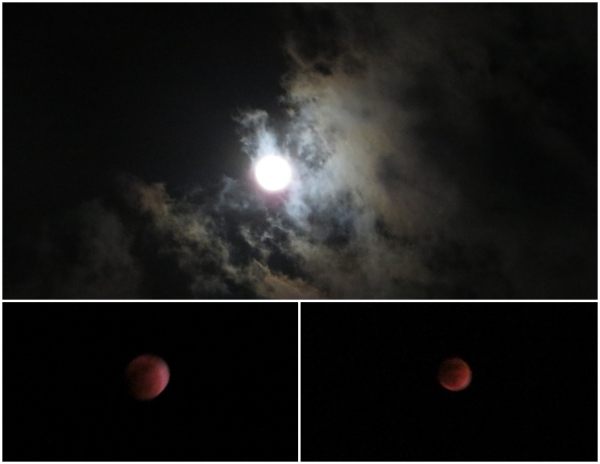
Every August we vow we'll get up to watch annual Perseid meteor shower and we usually remember to do it some time in mid-late September. We've observed several astronomical events while aboard Nine of Cups. Its a rare night that we don't see a shooting star or two during night watch. Clear nights at sea, away from city lights, are particularly amenable to stargazing. The blood moon eclipse in September 2015 was one such event and we took advantage of it by lying on deck with our pillows to view it. Photos of a slow event on a rocking boat, however, are never easy. super blood moon eclipse

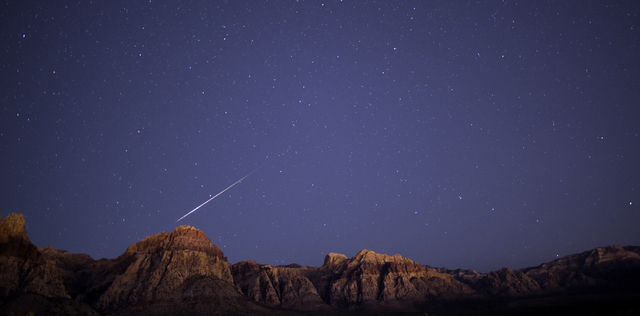
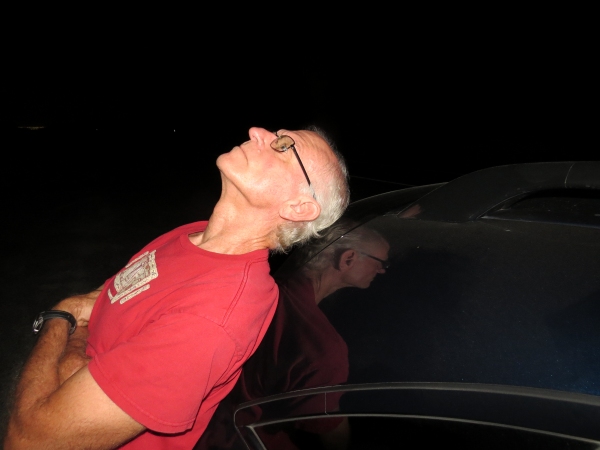
This year we remembered the annual Perseid meteor shower. It was at its peak the other night and we ventured out into the desert to watch the show. We set our alarm for 0245 and the four of us were out the door by 0300. The night was cool, compared to the sweltering 110F+ (45C) temps during the day. The sky was clear, but the loom of the Las Vegas lights occluded our view. We drove north on Interstate 15 about 20 miles, turned off the highway and parked midst the hills. We leaned against the car and gazed up at the stars. The moon had set. Orion was rising and the Pleiades were bright and sparkling. A perfect night in the desert.

stargazing

The meteor shower was at its peak and shooting stars streaked across the sky in every direction. It was estimated that as many as 200 meteors per hour could be expected to whiz past. We didn't see quite that many, but it was quite the spectacle nonetheless.

photo by Sam Morris

According to several sources, the shooting stars are “the result of debris left behind by the Swift-Tuttle comet which passes close to the Earth every 133 years. The comet last passed through our solar system in 1992. As it did so, the Sun’s rays heated its frozen surface and released trillions of small particles.

The Earth passes through this debris once each year. The particles strike the Earth’s atmosphere at speeds of 125,000 mph (200,000 kph) and burn up, creating the dazzling bright streaks.

The Perseid meteor shower has been observed for at least 2,000 years.” How cool is that? Two thousand years ago, people stood and gazed up to watch the show just as we were doing now.

Back to Las Vegas

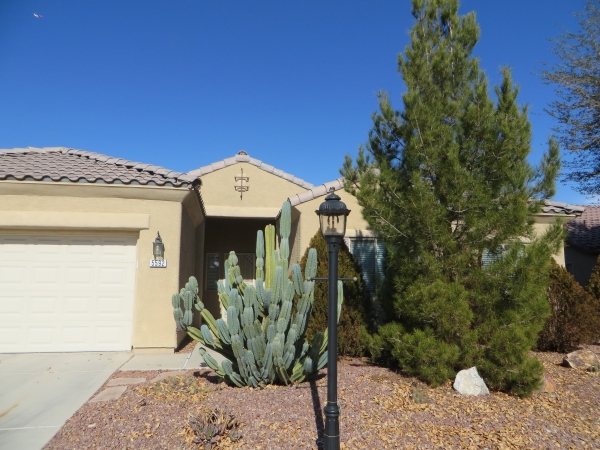
After a wonderful month visiting with Lin, we bid Boston adieu and headed to Las Vegas. David's family lives there and, if you'll remember, we bought a house out there last Spring and we haven't been back since. David's sisters, Mary and Karen, have been keeping the proverbial home fires burning, but it's about time we returned to remember just what we bought. cactus in the front

Lin dropped us (and 4 large duffels, 2 suitcases, a backpack with two laptops and another larger than practical carry-bag) off at Boston's Logan Airport. Departing wasn't quite as traumatic this time. In the past we knew it might be another year or more before we'd see each other again. This time, we're hoping to get back to Boston for a few days in October, so no tears were shed.

Our 2-1/2 hour flight connected at Chicago's Midway Airport, a distant and bedraggled cousin of the glitzy O'Hare Airport. Midway's ill-kept terminal was depressing 20 years ago and it's still depressing. There were signs that said “Excuse the carpeting … we're hoping to replace them this autumn.” I think we saw that same sign in 1996 when we passed through then. We were glad it was only a one-hour layover and a quick plane change. Once on the plane, we settled in for another four hours of flying time and arrived, no worse for wear, but definitely tuckered out, in Las Vegas right on time. Mary was waiting for us with a cart, forewarned of all the luggage that was traveling with us. The heat hit us as soon as we left the terminal … all 109 degrees F of it. We crammed all the luggage and ourselves into her Kia Soul. We were home and unloading by 10:30 pm Pacific time … 1:30 am for us. Quick hellos and hugs and we were off to bed.

backtovegas_109F

Over a couple of days, we've adjusted to the time change. The temps have been well over 100 F since we arrived. “It's a dry heat”, we're told. Quite honestly, 100 F is hot even with low humidity. We're still managing to walk every morning, but it's at a much slower pace. By mid-afternoon, it's literally hot enough to fry eggs on the sidewalk.

frying an egg on the sidewalk

The landscape has changed drastically: flat desert compared to hills and trees. Flora is hardy and sparse. Cactus, yucca and sagebrush rule instead of dense evergreens and ferns.

cactus in las vegas

Rather than counting flying fish in the scuppers each morning, we count bunnies (desert cottontails) which seem to be in great numbers. Our highest count to date is 15 … one of which was in our front yard. We see pigeons, doves, starlings and hummingbirds now rather than bluejays, robins and cardinals.

desert cottontail

It's a far cry from the sea and definitely different from Boston, but we like the change. We'll be here about a month before heading back to Chesapeake, Virginia where Cups is patiently waiting for us. Desert life makes us appreciate going back to Nine of Cups all the more. Absence does indeed make the heart grow fonder.