Prince Henry the Navigator

Today is Prince Henry the Navigator's birthday … as good a reason as any to celebrate. Born on March 4, 1394, this Portuguese prince, soldier, and patron of explorers, was an armchair sailor of sorts. He funded many expeditions from Portugal to explore the western coast of Africa, but never actually went on any of the voyages himself. Without a doubt, the safest way to sail and explore. henry the navigator
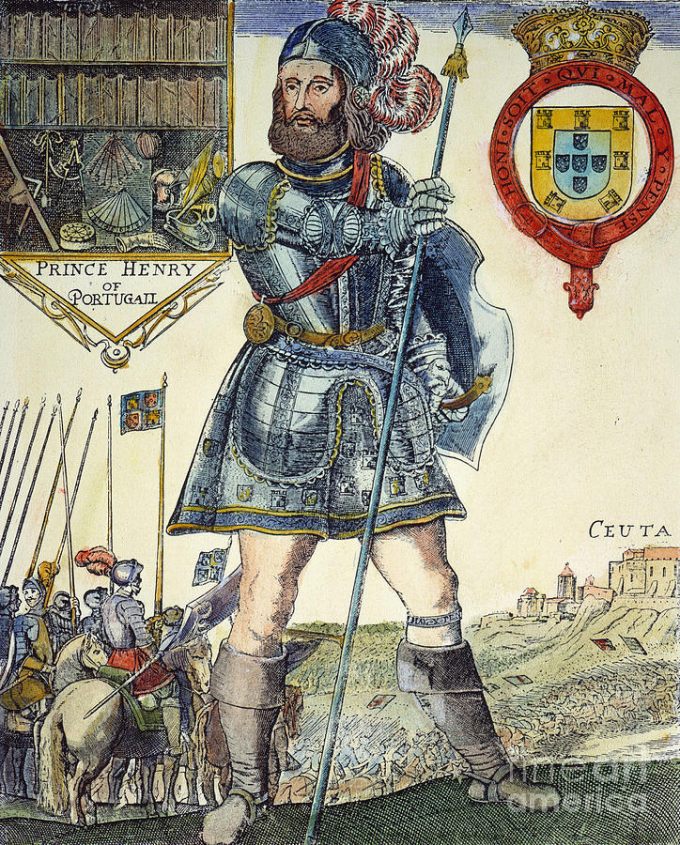
Instrumental in the launch of Europe's Great Age of Discovery in the 15th and 16th centuries, Henry was responsible for establishing the first European maritime school for ocean navigation c.1418 which included an astronomical observatory in Sagres, Portugal. He gathered together cartographers, mathematicians and navigators  to document and share their knowledge and learn from each other.  Their knowledge base of wind patterns, currents and trade winds in the Atlantic plus the determination of latitude were invaluable to the expansion of the Portuguese empire. Henry's goals were to chart the West African coast and beyond, establish trade routes and spread Christianity.
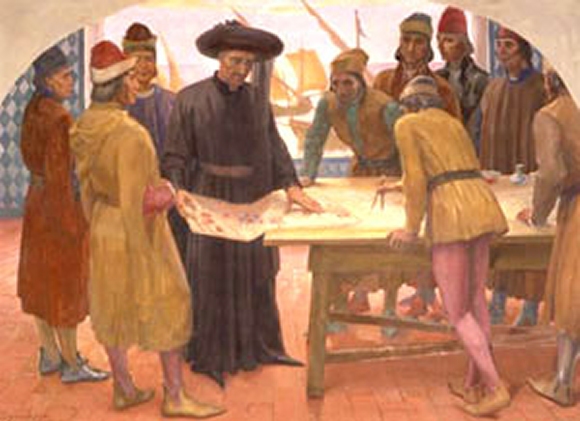
henry looking at charts

Up until Henry's sponsored voyages, the most southerly point explorers had managed was Cape Bojador, a rough stretch of water  off the coast of Africa's western Sahara Desert. Henry's sponsored voyages pushed further and further south resulting in the discovery and colonization of several Atlantic archipelagos like the Azores and Madeira.

henrys sponsored voyages

The development of the caravel, an easy-to-navigate ship based on existing fishing boats, was instrumental in furthering Portugal's discoveries.

the caravel

By 1462, only two years after Henry's death, the Portuguese had explored the African coast as far south as present-day Sierra Leone. Bartolomeu Dias reached the Cape of Good Hope at the southern tip of Africa in 1489. Vasco da Gama became the first European sailor to make landfall in India in 1498. It led to the discovery of Brazil and South America and ultimately, first circumnavigation of the world by the Portuguese explorer, Ferdinand Magellan.

As we get ready to sail around the bottom of Africa and round the Cape of Good Hope (previously known as Cape of Storms … hmmm) with some amount of anticipation, it's hard not to think of the bravery of early navigators and explorers and those who supported their efforts. They paved the way, little by little, to new worlds … not relying on charts and navigational aids as we do, but rather creating them as they sailed.

Happy Birthday, Henry … and thanks for your support.
Shaka and the Zulus

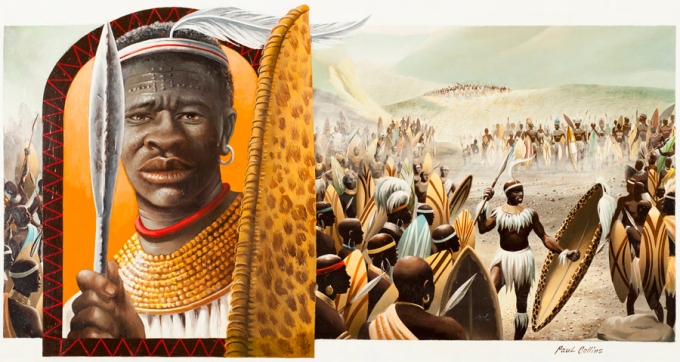
Having been berthed here in Durban for nearly three months, we've come to learn a bit more about the history of the area, especially the Zulu. In Kwa-Zulu Natal province (KZN, it's called), there is a specific municipality known as Zululand, but historically a large part of KZN in which the Zulus dominated is referred to as Zululand. isiZulu is the most widely spoken language in South Africa and Zulus comprise about 97% of the population here. Shaka, legendary king of the Zulus nearly two centuries ago, is still an influence on the Zulu culture today. shaka

Shaka kaSenzangakhona was born c.1787, the illegitimate son of Senzangakhona kaJama (his father) and Nandi (his mother). He is considered one of the most significant monarchs of not only the Zulu kingdom, but of all southern Africa. He lived in an area between the Drakensberg and the Indian Ocean, territory through which we've just traveled.

shaka

He rose to power by becoming a fierce warrior with a strong following and subsequently killing his half-brother and usurping power. According to several sources, there were no Zulus prior to Shaka. Many individual Nguni tribes inhabited the area. Through war and diplomacy, he is credited with uniting many of the Nguni people into a powerful nation which exerted significant influence over much of South Africa. He named his people Zulus after his grandfather, Dinizulu.

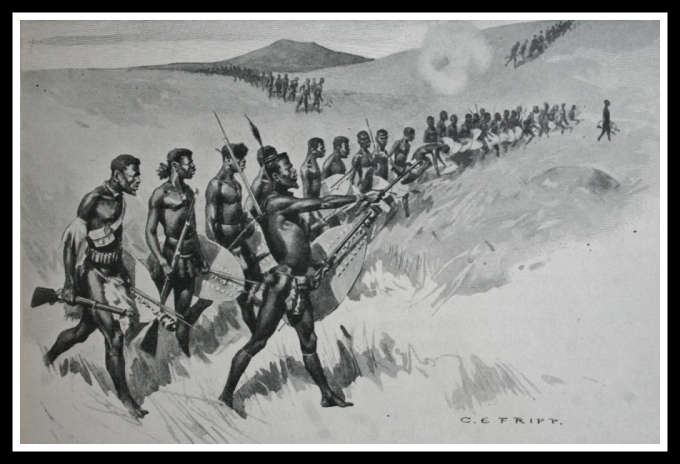
shaka zulu warriors

Shaka has been called a military genius for the reforms and innovations he introduced. His innovations included the introduction of the short thrusting spear (iklwa) which was very efficient and deadly in hand-to-hand combat. He was noted early on for fast-moving, surprise attacks and ambushes. He later developed and utilized the “buffalo horn” battle tactic very effectively. The Zulus were formidable enemies.

buffalo horn strategy

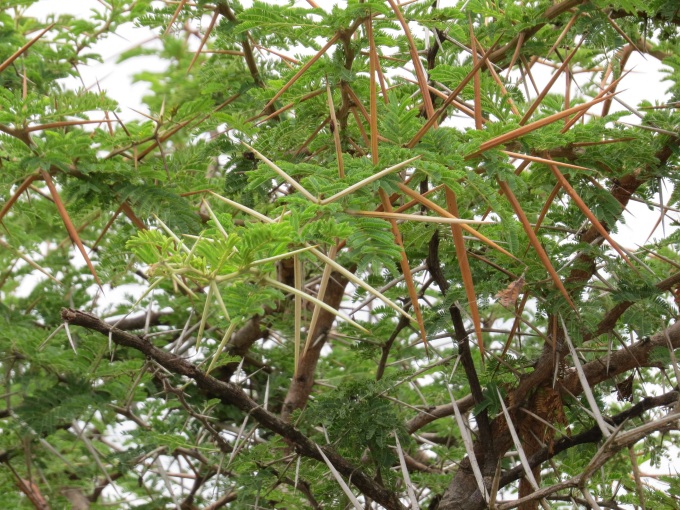
Shaka is also noted for the brutality of his reign. He was purportedly responsible for more Zulu deaths than his enemies. After battles, any warrior with wounds on his back was killed because he was thought to have been running away. Young warriors who were thought to be less than brave were required to run full speed into thorn trees. If they did not run fast enough or with enough zeal, they were killed. When his mother died, Shaka ordered a year of mourning during which no crops could be planted, all calves born were killed and all pregnant women and their husbands were killed. He is known for total annihilation of his enemies in battle. There was no surrender.

thorn tree

On September 22, 1828, Shaka was stabbed to death by his bodyguard, Mbopha, and his two half-brothers, Dingane and Mhlangana ending his decade-long reign. At the time of his death, the Zulu nation was over 250,000 people strong with more than 50,000 warriors.

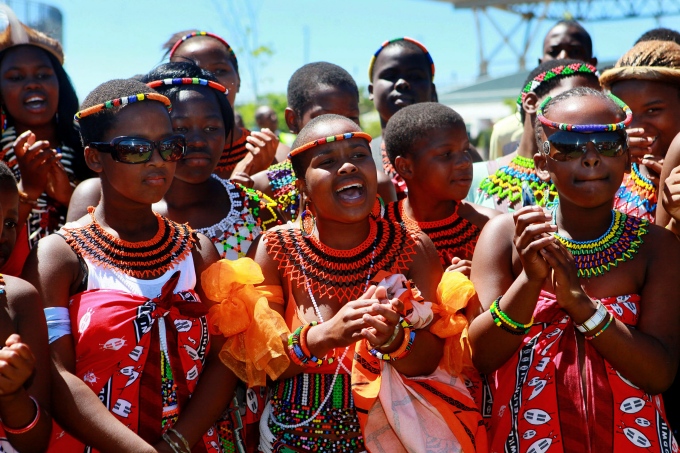
Today, Shaka Zulu  is remembered in many ways, but primarily as the founder of a proud and fierce people. There's uShaka Marine World here in Durban, King Shaka International Airport and Shakaland cultural village among his namesakes. September 24th is a national holiday in South Africa celebrated by all as Heritage Day, but previously celebrated by the Zulu as Shaka's Day. In 2016, Zulus will celebrate Zulu 200, the bicentennial anniversary of the founding of the Zulu nation.

shaka day celebration

Learning a Few South Africanisms

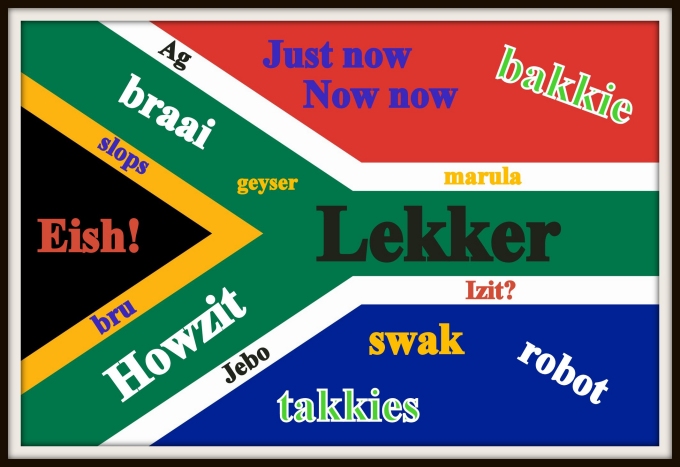
We bellied up to the Point Yacht Club bar the other night and ordered a Hansa draft. It was cold and luscious, and the glass immediately began to sweat … exactly what we'd been doing all day long. As we sat there, Ed, a young fellow who'd been out sailing all day, walked in and we started up a lively conversation regarding South Africanisms. south africanisms flag

South Africa has 11 official languages:  English, Afrikaans, and the nine major African languages including isiZulu, isiXhosa, seTswana and seSotho. Other languages such as Hindi, Arabic, Khoi-San, Portugese as well as other community and religious languages are also recognized. Google is offered in English, and six other languages here. With all those languages floating around, the chances of borrowing bits from everyone's language to spice up the local lingo was inevitable.

google zulu

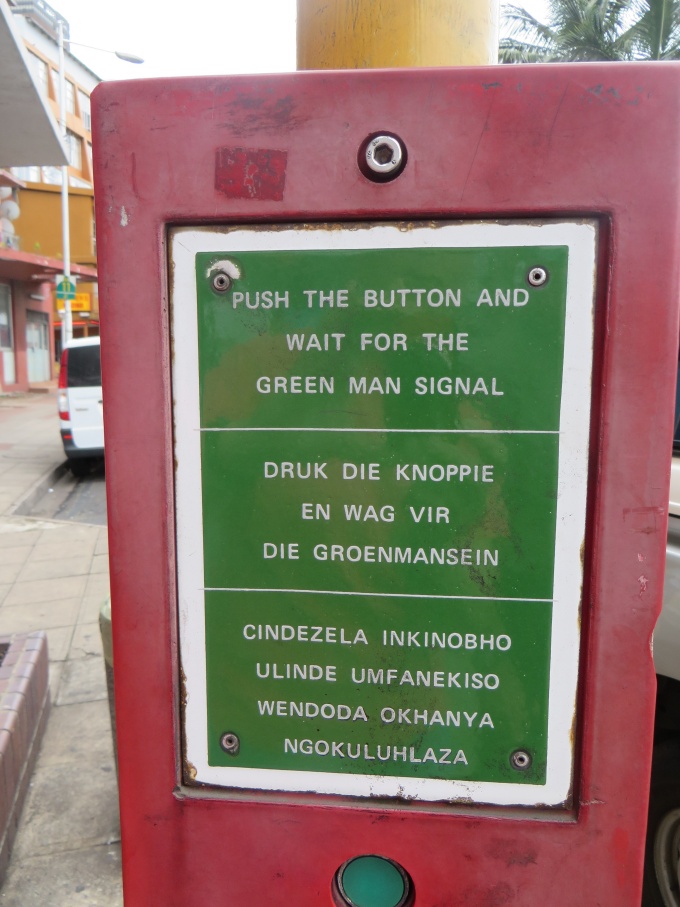
I had read that officially, Afrikaans is the youngest language in the world. By the early-20th century Afrikaans had developed from Dutch, German, French and other influences into a full-fledged language complete with its own dictionary. After just a century, Afrikaans, not English, is the third most spoken language in South Africa, right after isiZulu and isiXhosa. Many street signs here are written in three languages: English, Afrikaans and Zulu.

street sign in three languages

Ed told us he'd been brought up in a “proper” Afrikaans-speaking household with English as his second language. A female friend of his at the bar noted that she'd had to learn Afrikaans the hard way, as a required language in school. Afrikaans words are very prevalent and in common usage in South Africa, mixed with English and a little Zulu and ... I asked Ed to give us few examples and he happily complied.

The most common one we learned when we first visited South Africa and Ed didn't have to help us. It's braai … a South African BBQ. “Come on over for a braai.”

Lekker – Cool, great, sexy, awesome.

Slops - flip-flops

Swak – literally “weak” in Afrikaans, but it can mean you're broke (no money) or can be used to describe varying forms of harsh behavior or rudeness.

Bru – literally brother, but comparable to “bro” or “dude”

Robot – traffic light (really?) When I asked for directions to the bank, here's what I was told. “Turn right at the second robot. Cross at the zebra.” (Pronounced Zeh-bra not zee-bra which of course makes sense … you don't say Dee-bra, you say Deh-bra.) Why are traffic lights called robots? Zebras are crosswalks designated with striped lines.

Bakkie – pick-up truck

Geyser – hot water heater

Takkies – sneakers, athletic shoes, trainers

Eish! (Zulu) –  Geez! Dang! Heck! Or the like

Babelaas/babbelas – hangover (of Zulu origin); there's also stukkend from the Afrikaans. Perhaps it depends on the type of hangover … not sure.

Dagga (Khoikhoi) – (dak.hah) slang for marajuana

Howzit – short for “how's it going?” except used by itself as a greeting

Is it (izit) – in response to a statement where you're usually say “Really?”

Yebo or ja (yah) – Yes, affirmative

Certain words have been borrowed directly like mamba (as in snake) or impala from Nguni and marula (as in the fruit from which Amarula is made) and tsetse (as in fly) from Sotho.

Just now and now now – This was a difficult one for us to learn, especially when dealing with tradesmen. “I'll be there just now.” You'd think we'd expect them immediately, but no, it means perhaps sometime today. Whereas as “now now”, that's more immediate, but still not necessarily within the next 10 minutes.

We're still learning and there's much more to learn. By the way, here we're from America, rather than the United States or the States. Vive la difference!