
The Portuguese Age of Discovery
/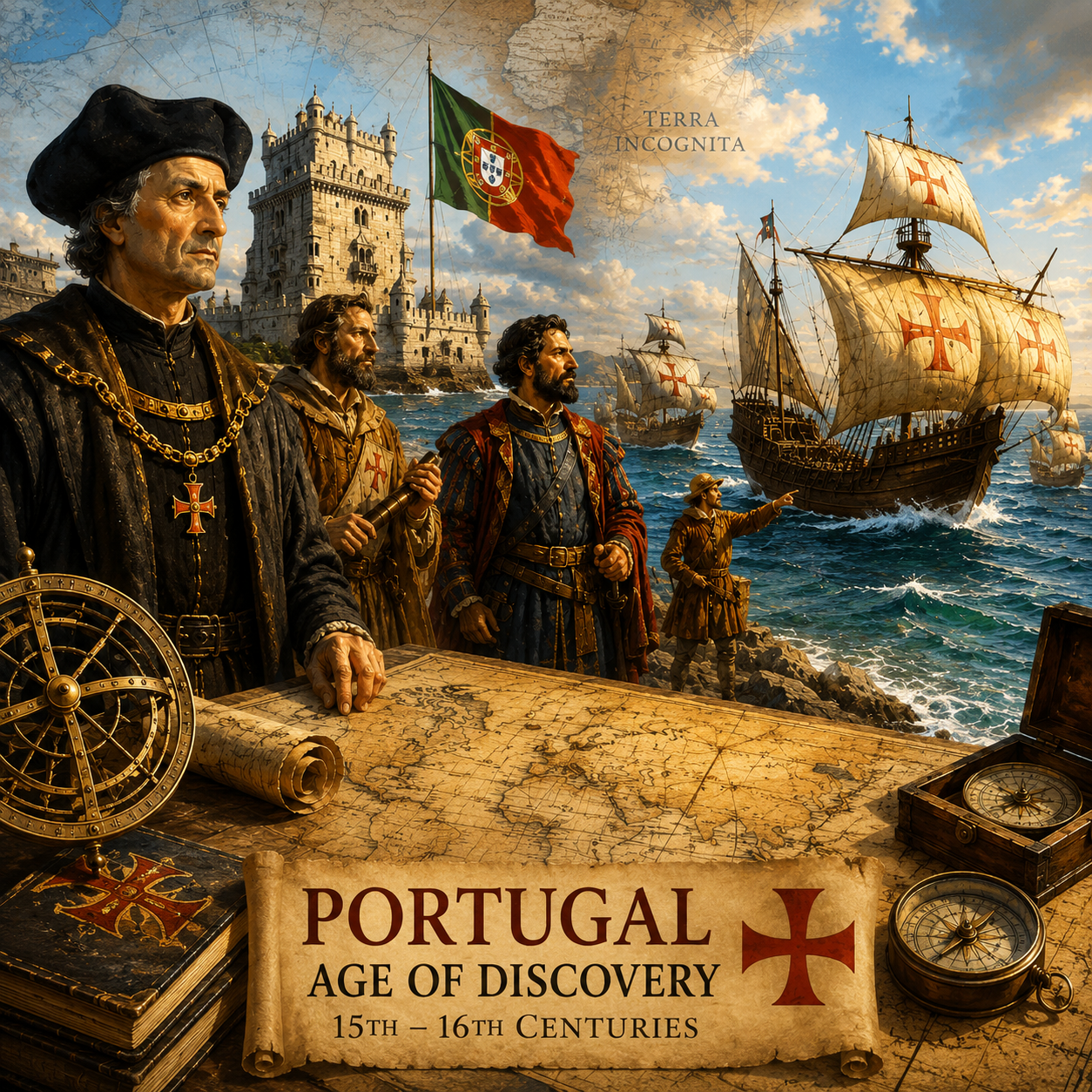
The Portuguese Age of Discovery transformed the small European nation into a vast, wealth-generating global empire…
Read MoreThe Portuguese Age of Discovery transformed the small European nation into a vast, wealth-generating global empire…
Read MoreIf you’ll remember, when we first arrived in Lisbon, Catherine and Michael met us at the airport and whisked us away to their home for de-jetlagging and outstanding hospitality. That said, we hadn’t had the opportunity to explore Portugal’s capital city at all, so we thought it was about time to check it out.
Read MoreToday is Prince Henry the Navigator's birthday … as good a reason as any to celebrate. Born on March 4, 1394, this Portuguese prince, soldier, and patron of explorers, was an armchair sailor of sorts. He funded many expeditions from Portugal to explore the western coast of Africa, but never actually went on any of the voyages himself. Without a doubt, the safest way to sail and explore.
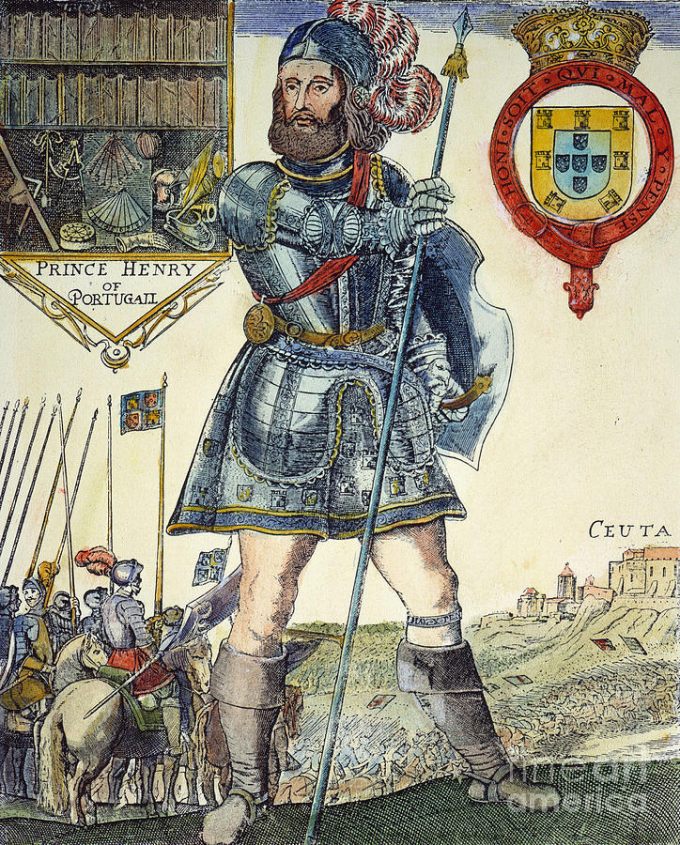
Instrumental in the launch of Europe's Great Age of Discovery in the 15th and 16th centuries, Henry was responsible for establishing the first European maritime school for ocean navigation c.1418 which included an astronomical observatory in Sagres, Portugal. He gathered together cartographers, mathematicians and navigators to document and share their knowledge and learn from each other. Their knowledge base of wind patterns, currents and trade winds in the Atlantic plus the determination of latitude were invaluable to the expansion of the Portuguese empire. Henry's goals were to chart the West African coast and beyond, establish trade routes and spread Christianity.
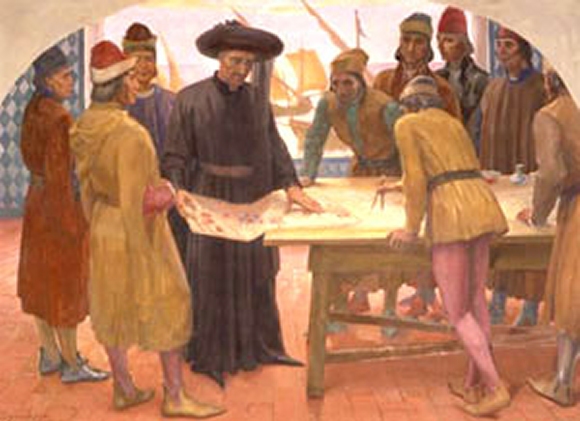
Up until Henry's sponsored voyages, the most southerly point explorers had managed was Cape Bojador, a rough stretch of water off the coast of Africa's western Sahara Desert. Henry's sponsored voyages pushed further and further south resulting in the discovery and colonization of several Atlantic archipelagos like the Azores and Madeira.

The development of the caravel, an easy-to-navigate ship based on existing fishing boats, was instrumental in furthering Portugal's discoveries.

By 1462, only two years after Henry's death, the Portuguese had explored the African coast as far south as present-day Sierra Leone. Bartolomeu Dias reached the Cape of Good Hope at the southern tip of Africa in 1489. Vasco da Gama became the first European sailor to make landfall in India in 1498. It led to the discovery of Brazil and South America and ultimately, first circumnavigation of the world by the Portuguese explorer, Ferdinand Magellan.
As we get ready to sail around the bottom of Africa and round the Cape of Good Hope (previously known as Cape of Storms … hmmm) with some amount of anticipation, it's hard not to think of the bravery of early navigators and explorers and those who supported their efforts. They paved the way, little by little, to new worlds … not relying on charts and navigational aids as we do, but rather creating them as they sailed.
Happy Birthday, Henry … and thanks for your support.
Hi there and welcome to Just A Little Further!
We are David and Marcie Lynn and we've lived aboard our Liberty 458 cutter-rigged sailboat since 2000.
What began as an urge to travel slowly and economically at our own pace ended up an adventure of a lifetime.
Well, here we are ... nearly 90,000 miles under the keel, 5 continents, 5 Great Southern Capes, 36 countries and almost two decades later, still taking one passage at a time and going just a little further.