
Exploring Lisbon, Portugal’s Capital City
/
If you’ll remember, when we first arrived in Lisbon, Catherine and Michael met us at the airport and whisked us away to their home for de-jetlagging and outstanding hospitality. That said, we hadn’t had the opportunity to explore Portugal’s capital city at all, so we thought it was about time to check it out.
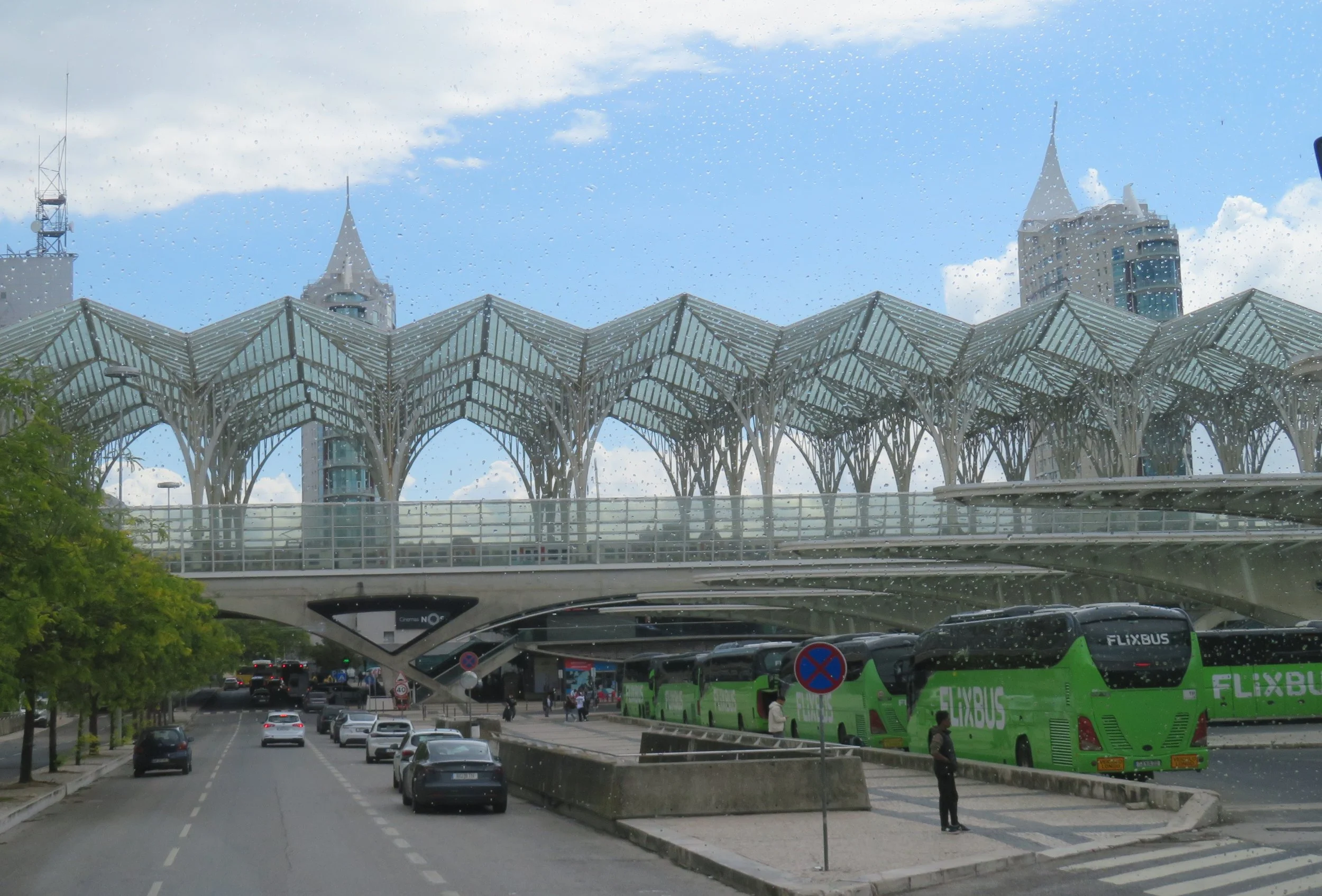
Our bus from Tomar arrived on time at the Oriente Bus Station, a rather impressive bus/train station near Lisbon’s city center.
Lisbon is a vibrant city with so much history that it’s hard to describe easily. According to Wiki, Lisbon was founded by the Phoenicians c. 1200 BCE as a trading center, making it one of the oldest cities in Western Europe. The Phoenicians named it Alis Ubbo, ‘safe harbor,’ due to its strategic location at the mouth of the Tagus River. Over the centuries, it was occupied by the Greeks, Carthaginians, Romans, Visigoths, and Moors. It was under the rule of Afonso I in 1147 that the Portuguese Christian rule was restored. In 1257, under Afonso III, Lisbon became the capital of Portugal and flourished as a trading center and a hub for maritime exploration during the Age of Discoveries in the 15th and 16th centuries.
Early the next morning, we Uber’ed down to the waterfront to begin exploring Belém, Lisbon’s port area. We were heading to the historic Belém Tower when we saw the Monument to the First Aerial Crossing of the South Atlantic, celebrating the 1922 South Atlantic flight of Portuguese naval aviators Gago Coutinho and Sacadura Cabral. The monument is a stainless steel replica of their Fairey III biplane with life-size busts of the aviators in the cockpit.
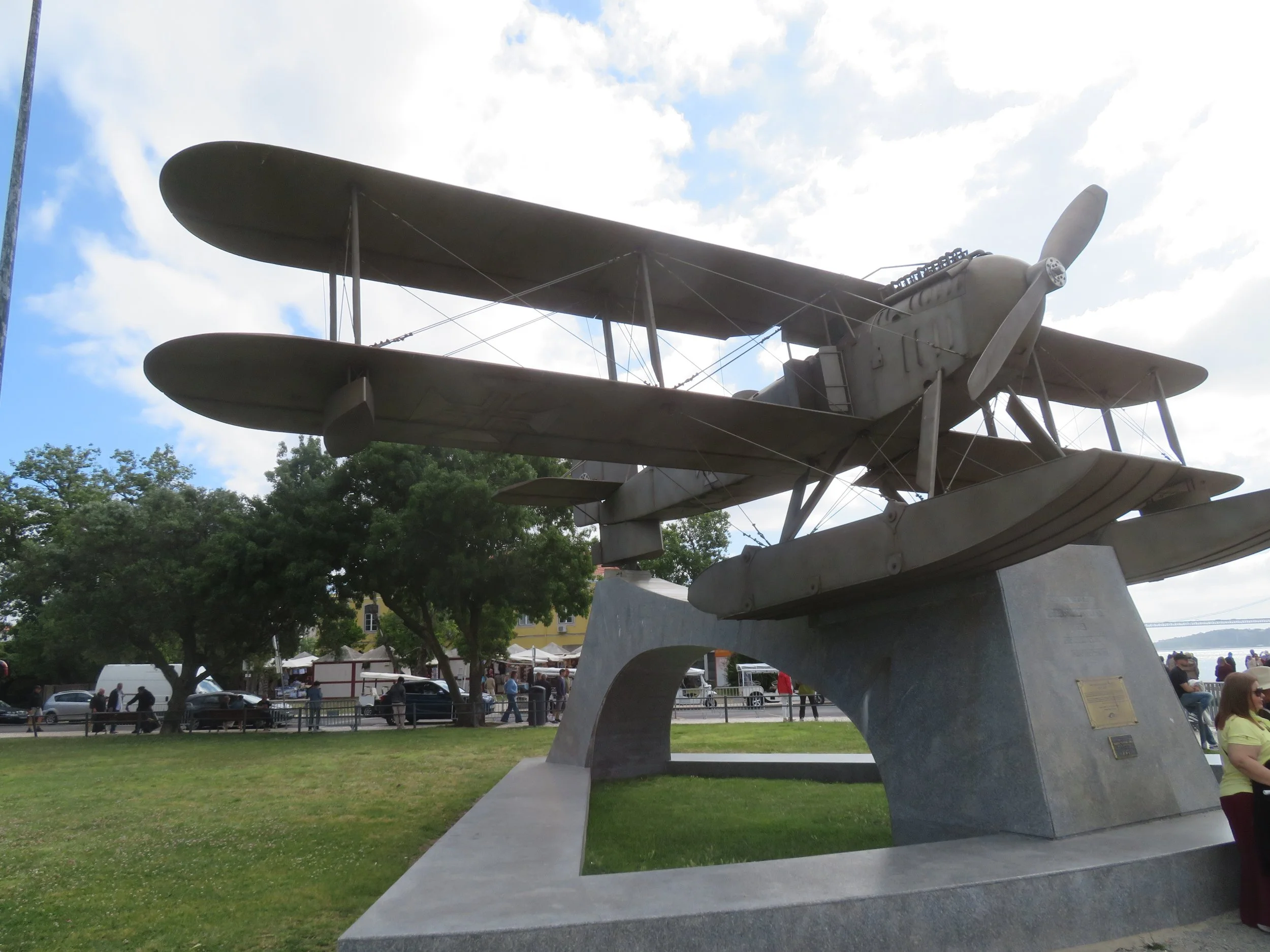
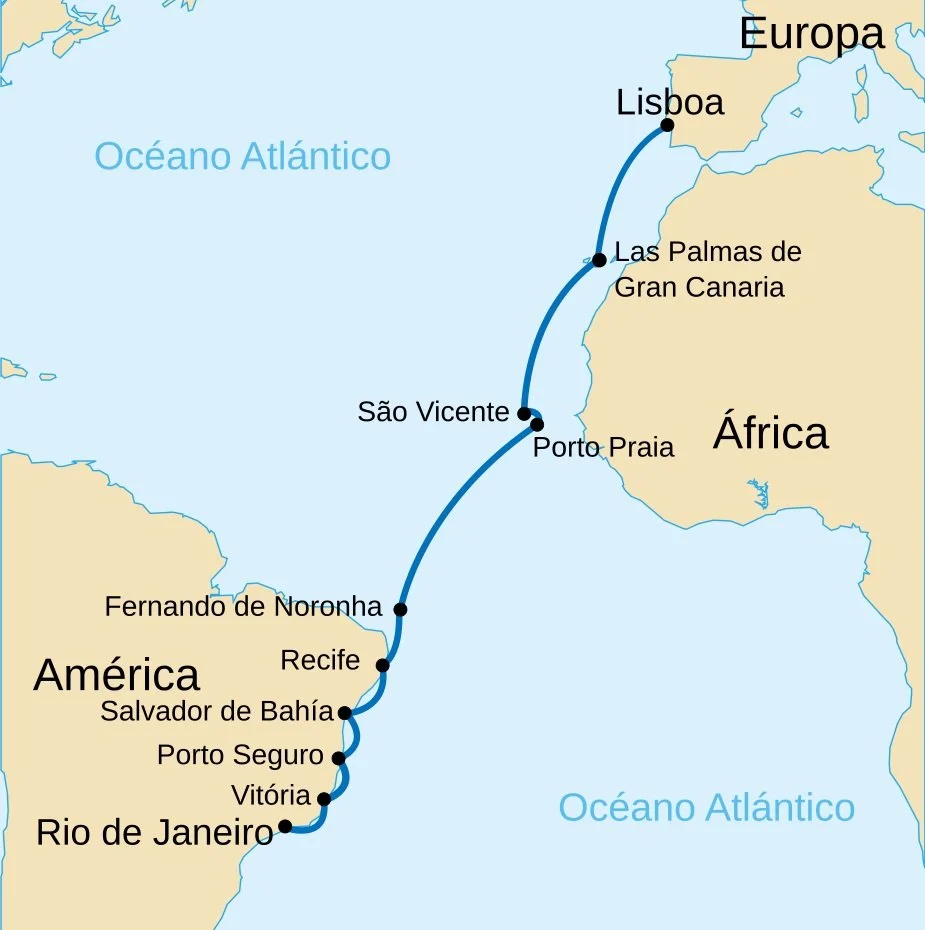
A little trivia… The pilots flew from Lisbon to Rio de Janeiro to mark 100 years of Brazil’s independence. The crossing covered ~5220 miles (8400 km) and took 79 days to complete.
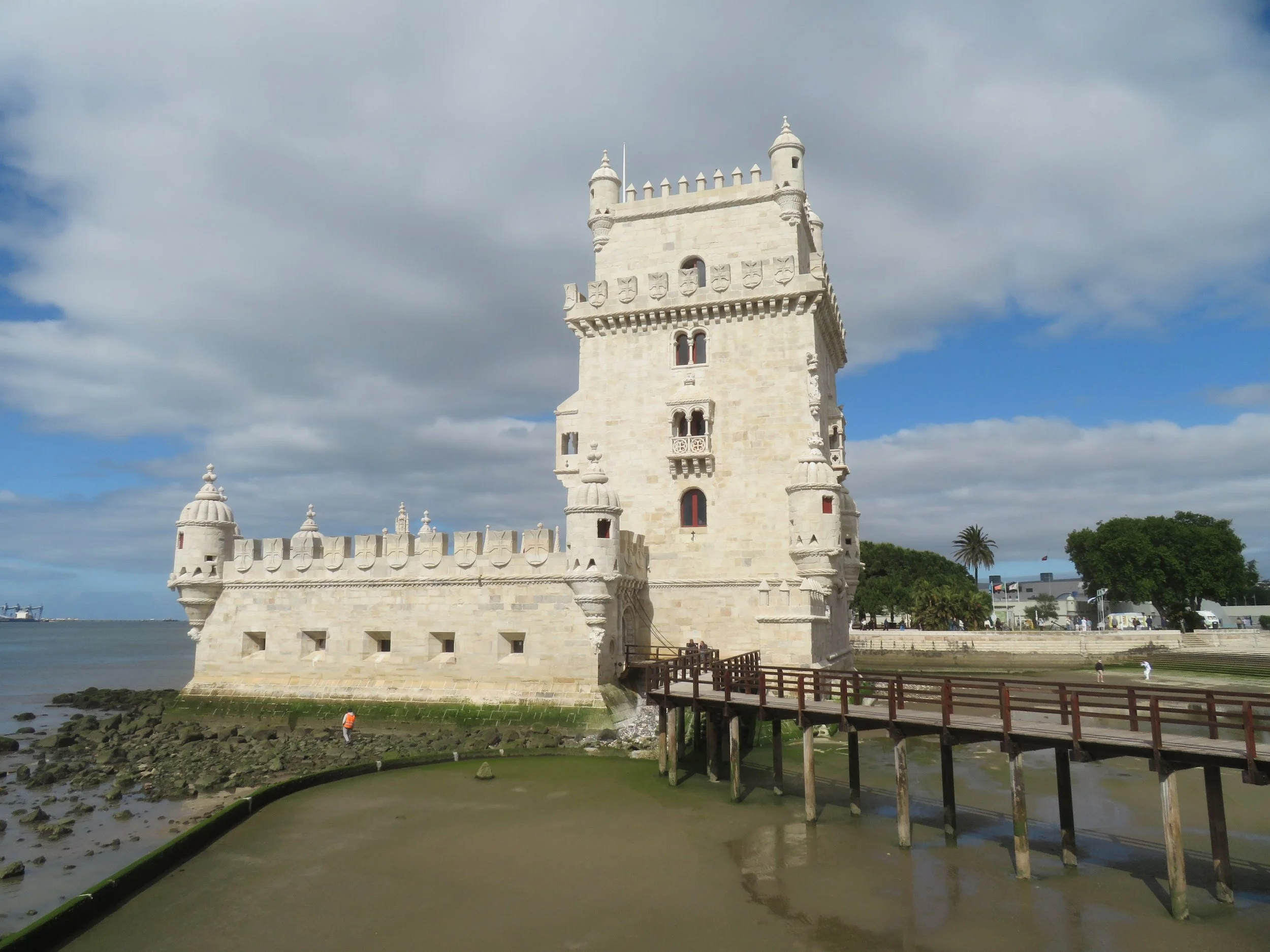
A short distance away, we spotted the Belém Tower. With its rich history and designated as a UNESCO World Heritage Site, construction of the Torre de Belém (Bethlehem or BelémTower) was completed in 1519 under the reign of Manuel I as a fortress guarding the Tagus River entrance to the city. Built of local limestone, the tower is symbolic of Portugal’s maritime history and colonial power and served as the ceremonial arrival and departure point for Portuguese explorers.
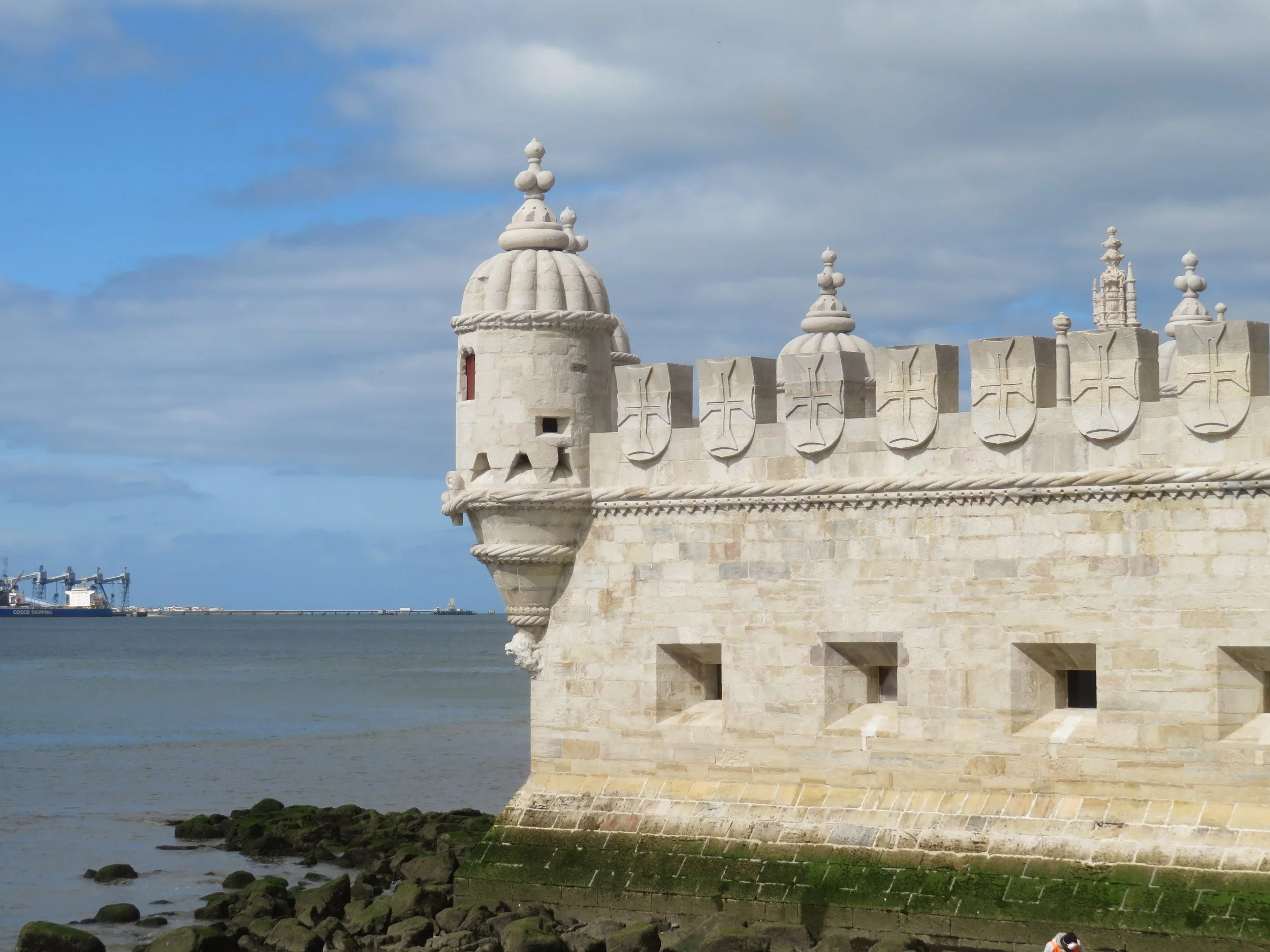
Close-up views of the detail of the Tower reflect the nautical symbols associated with the Portuguese Age of Exploration, very similar to those we saw at the Templar Castle, including the Order of Christ cross.
The Tower was undergoing a year-long, €1.5 million major EU-funded conservation and restoration project, so we were not allowed to enter. Our bad luck, the Tower reopened at the end of May 2026, shortly after we left Lisbon.
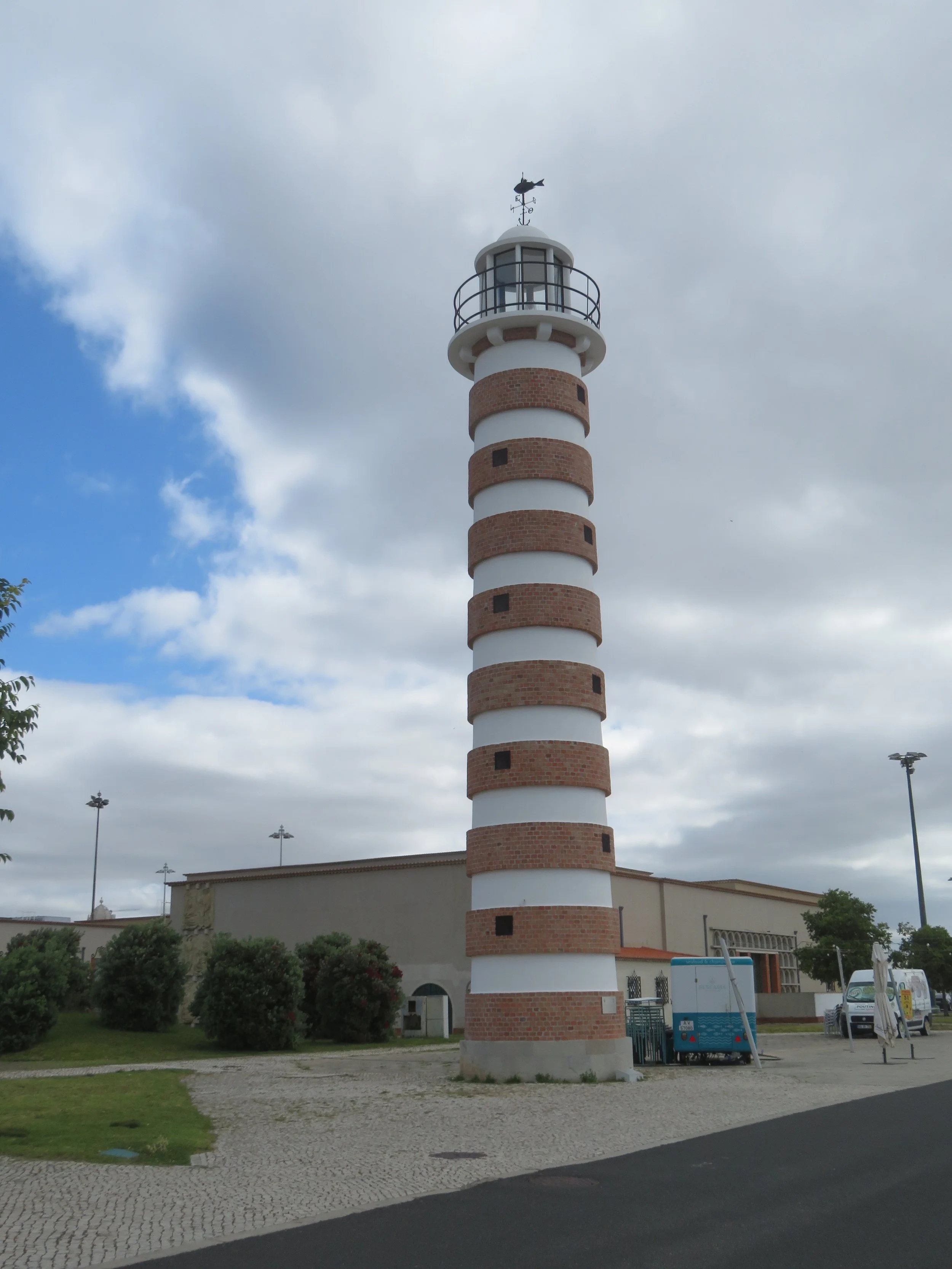
We walked along the historic waterfront promenade past the 19th-century, red and white striped Farol de Belém ( Belém Lighthouse), on to the Monument of the Discoveries.
The Monument of the Discoveries (Padrão dos Descobrimentos), is an enormous sculpture that celebrates the Portuguese Age of Discovery during the 15th and 16th centuries. We’re talking the likes of da Gama (first to India), Magellan (first circumnavigation of the globe), Dias (first around Africa’s southern cape, which he named Cape of Good Hope), Cabral (first European to set foot in Brazil and claim it for Portugal), among many, many others.
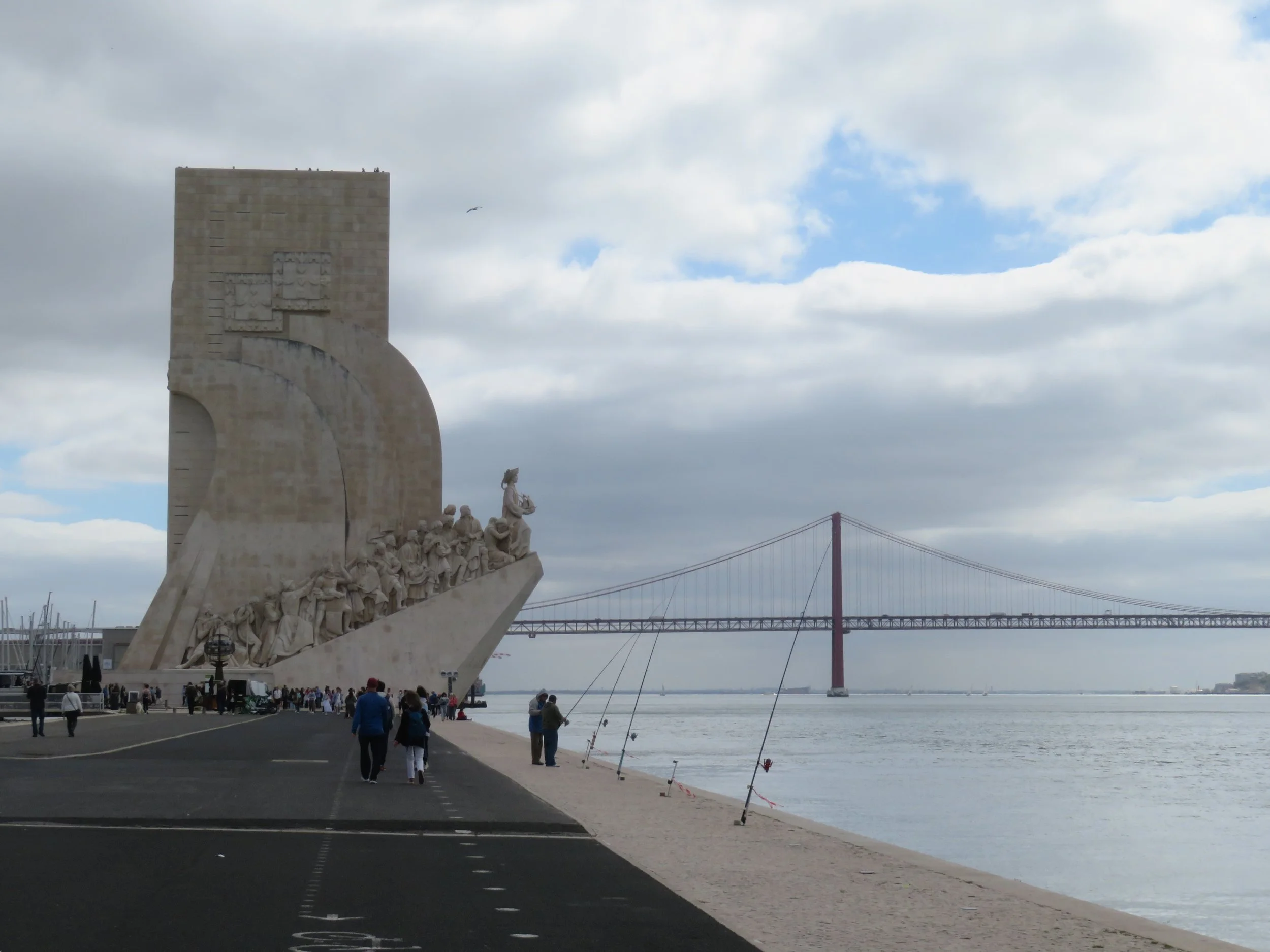
Monument of the Discoveries with the the 25 de Abril (Salazar) Bridge spanning the Tagus River
Completed in 1960, the monument celebrated the 500th anniversary of the death of Prince Henry the Navigator. Comprised of reinforced concrete and limestone along with locally sourced stone, the structure rises 184 feet (56m), is 65 feet wide (20m), and 151 feet (46m) long. It’s quite impressive!
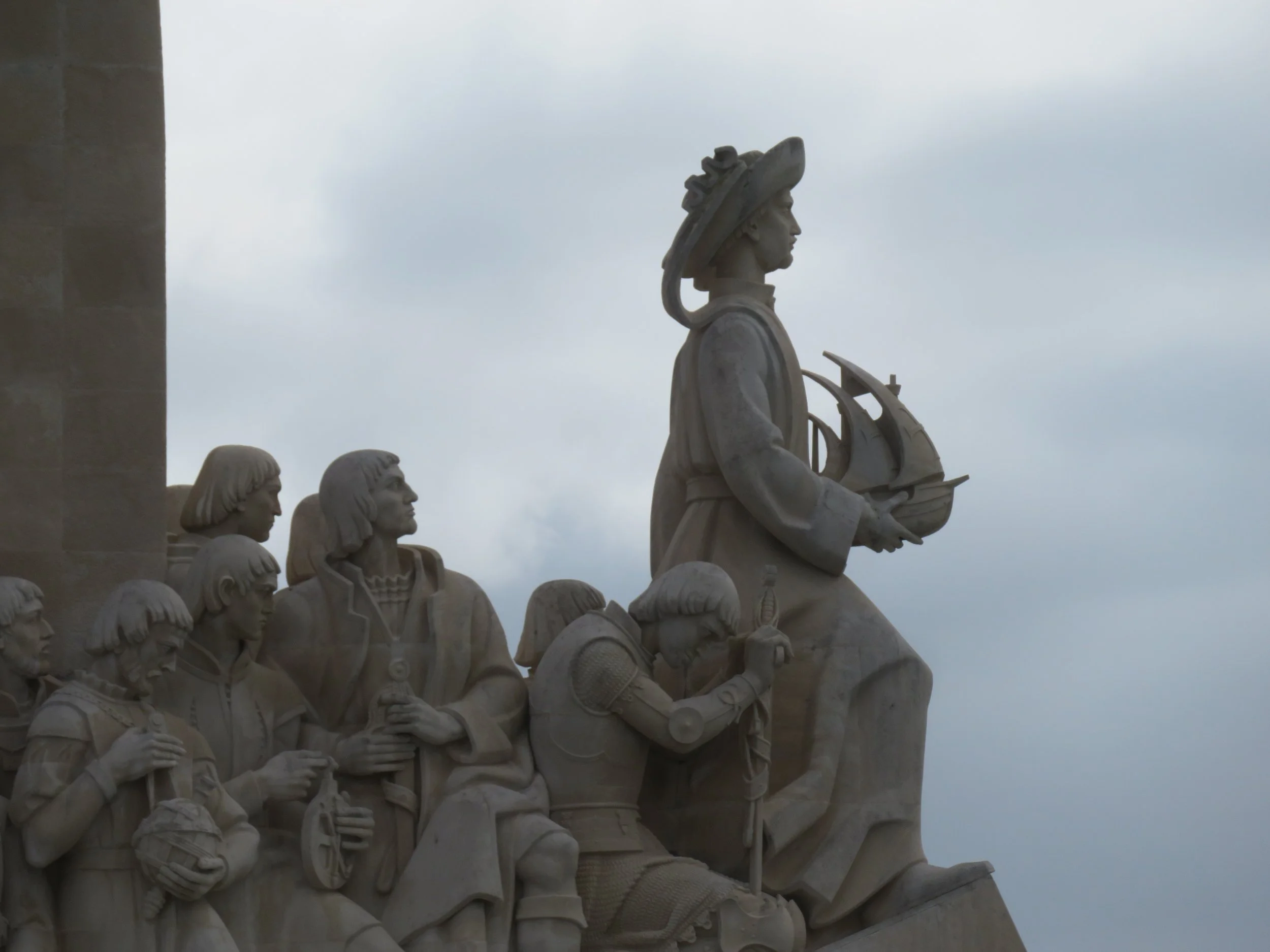
Prince Henry the Navigator stands at the bow.
On each side, there are 16 figures (33 in total) representing figures from Portugal’s Age of Discovery, including King Alfonso V, Vasco da Gama, Cabral, Magellan, and Dias on the east side, as well as cartographers, financiers, artists, scientists, and missionaries on the west side. The only female shown is Queen Philippa of Lancaster, Prince Henry’s mother.
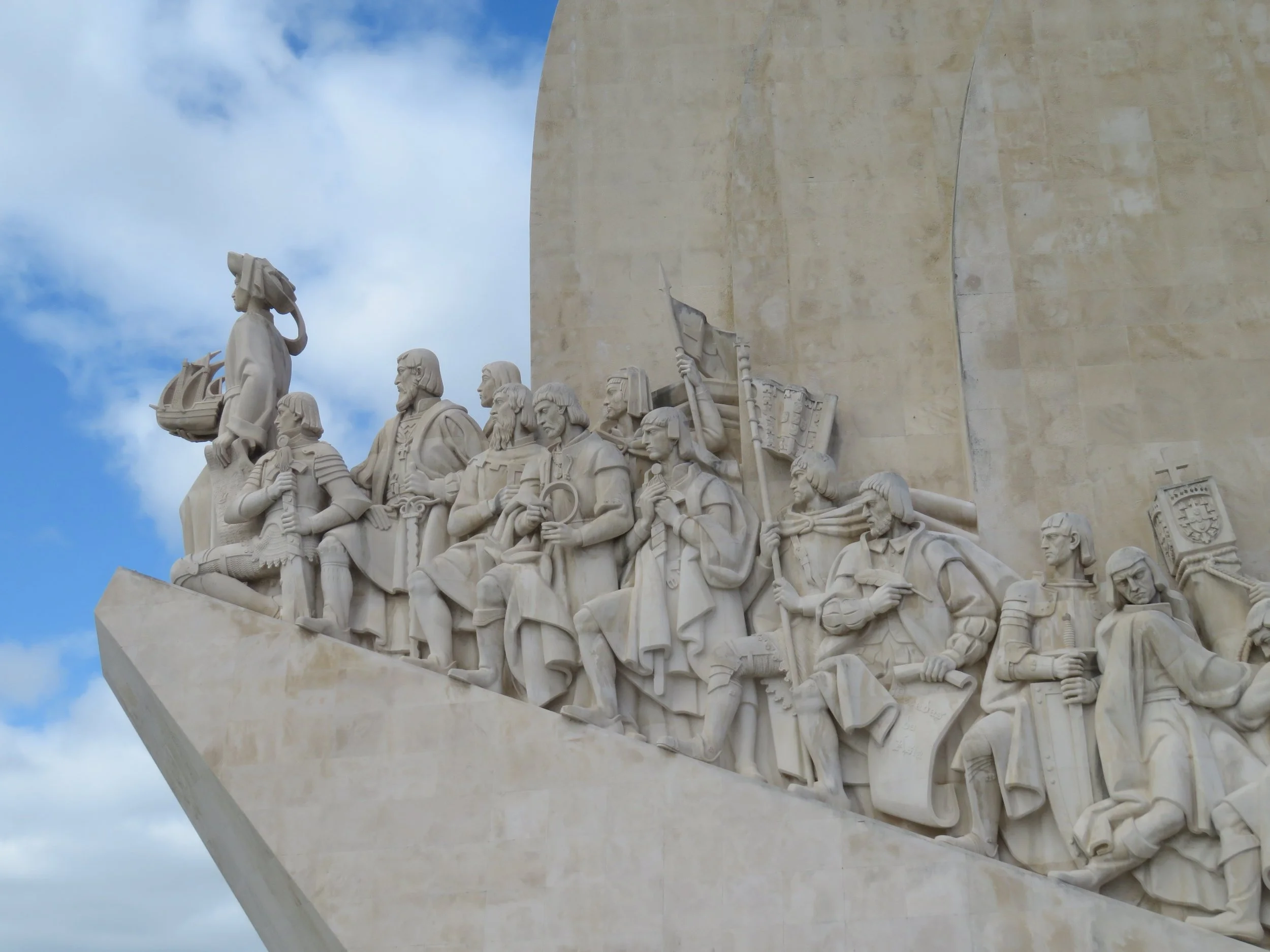
Monarchs, explorers and navigators on the East side of the Monument
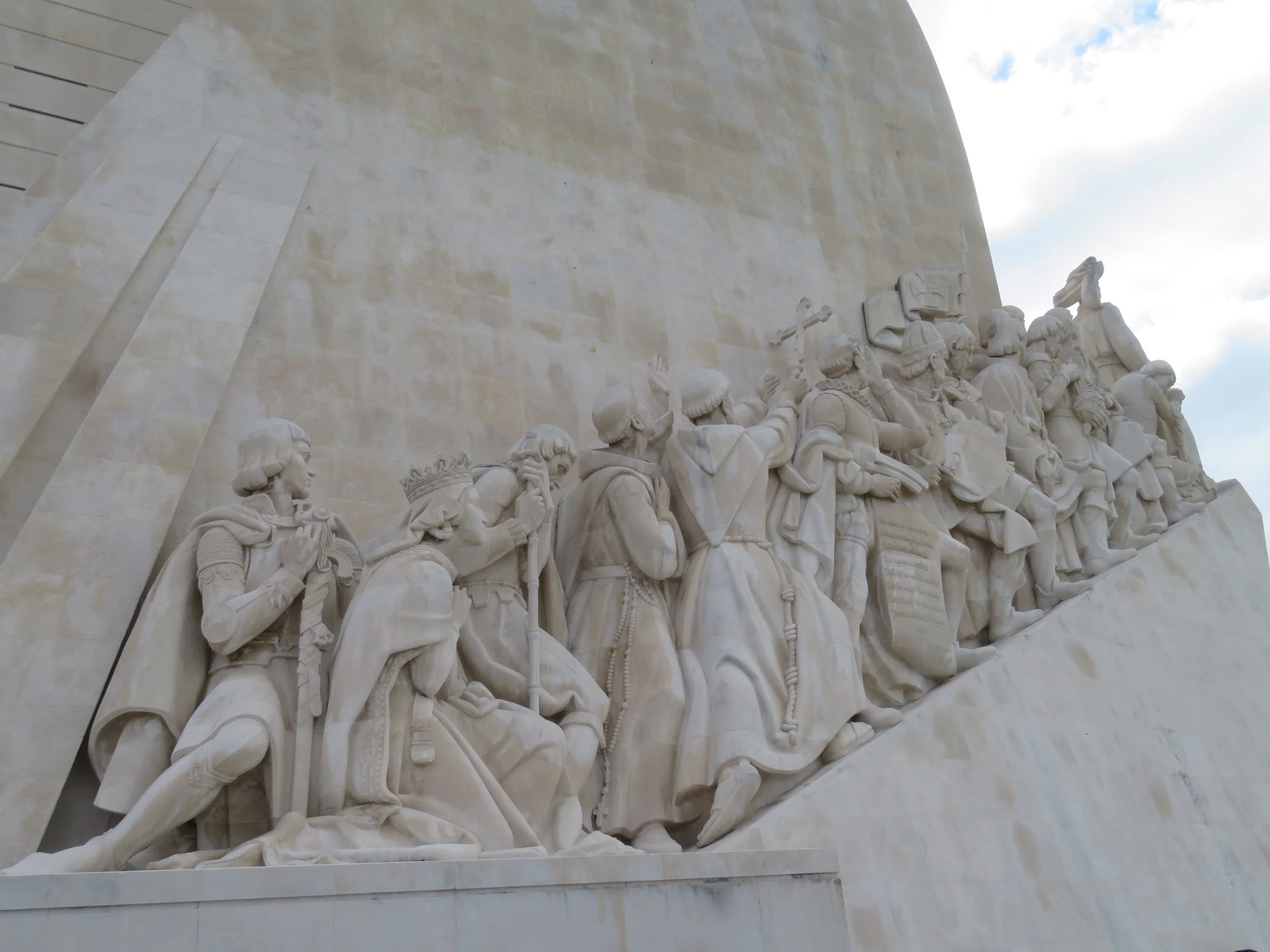
Cartographers, financiers, artists, scientists, missionaries, and the Prince’s mother on the west side.
Access to the top via stairs or an elevator for panoramic views of the Tagus River and the Belém waterfront is via ticket (€10/pp - €8.50 Seniors), but the line was so long, we gave it a pass.
In front of the monument is an enormous marble compass rose with a world map, a gift from South Africa, depicting the routes of Portuguese explorers.
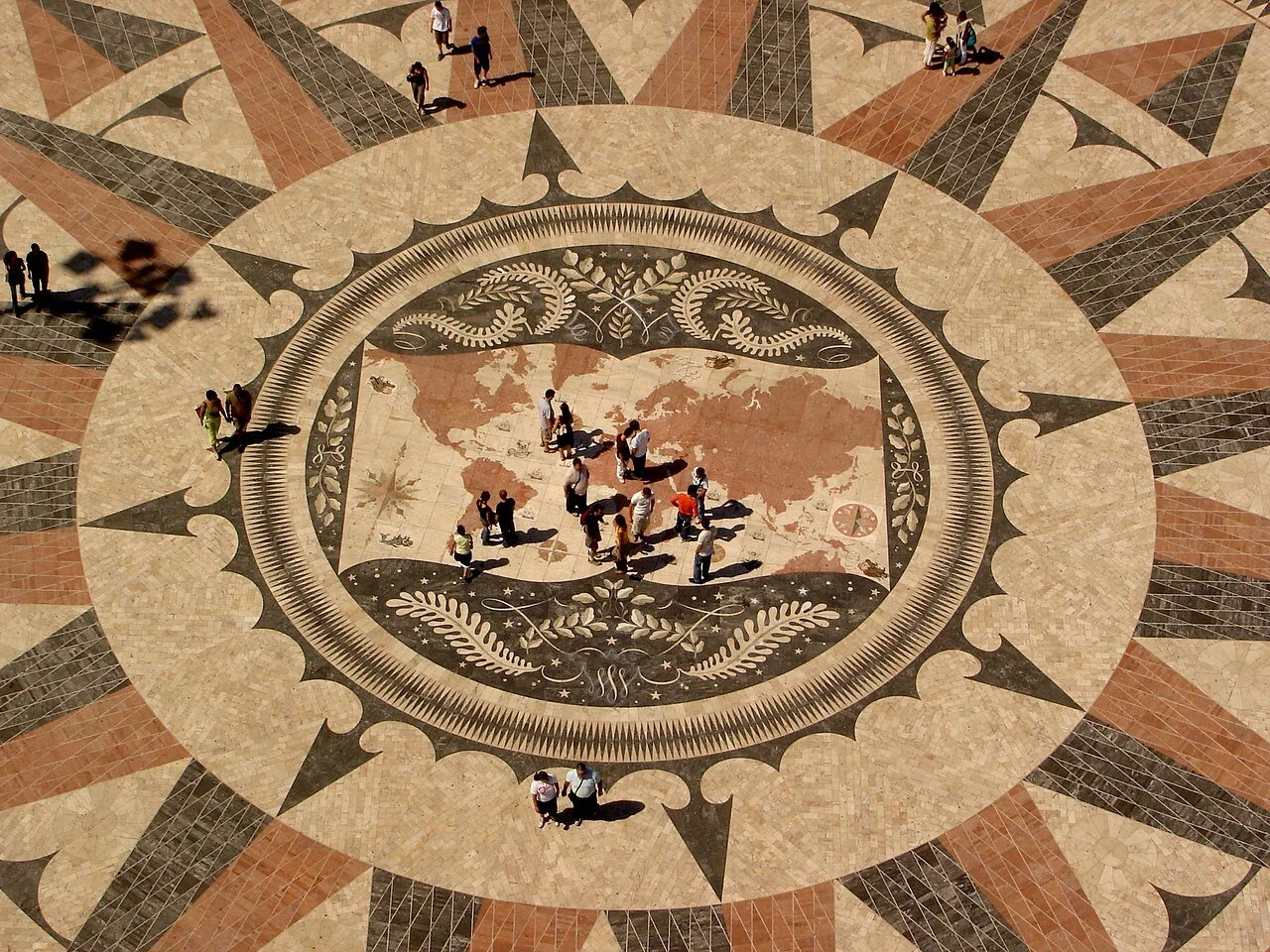
View of the Compass rose from the top of the monument - Photo credit: Tiago Fioreze
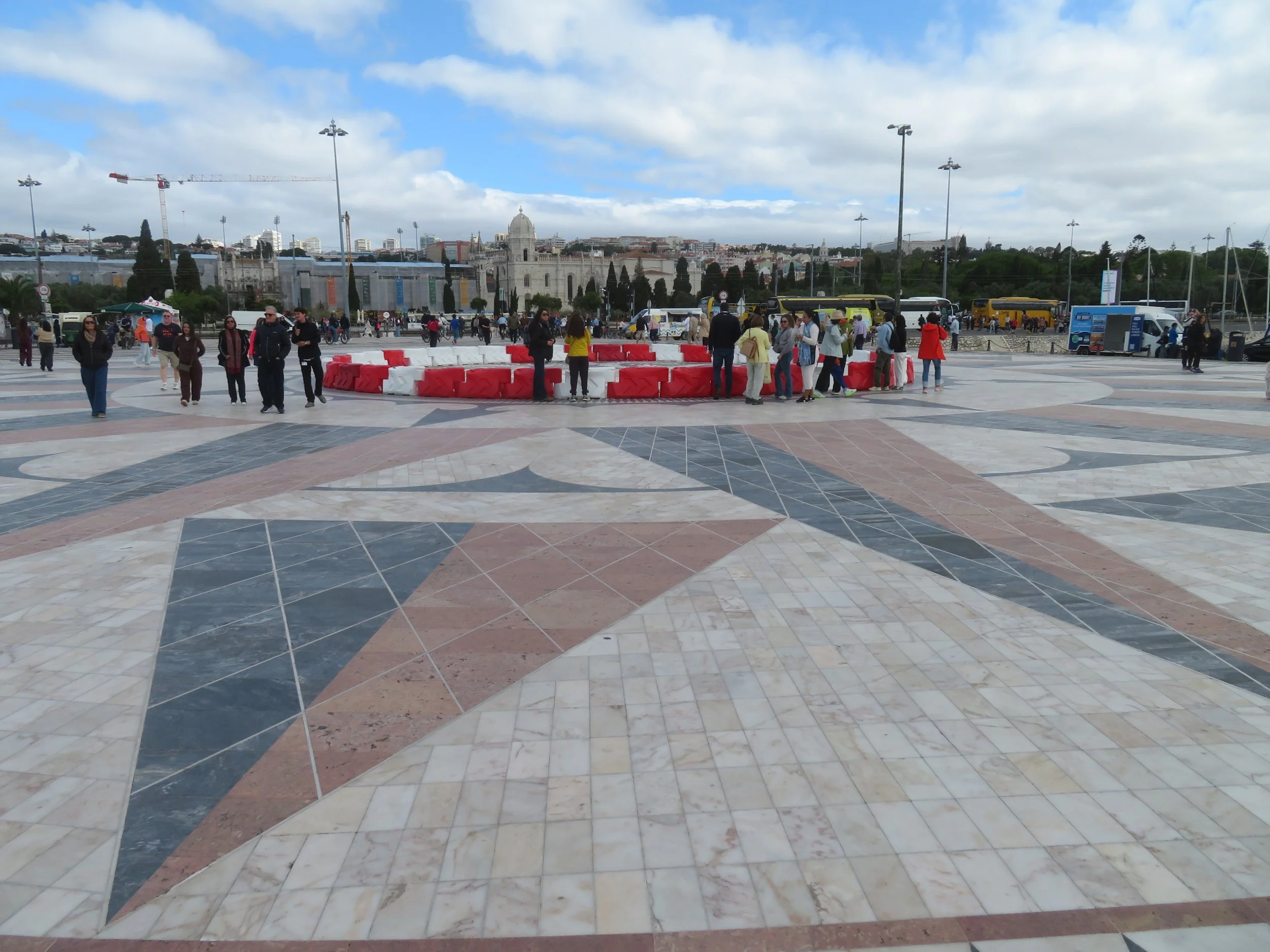
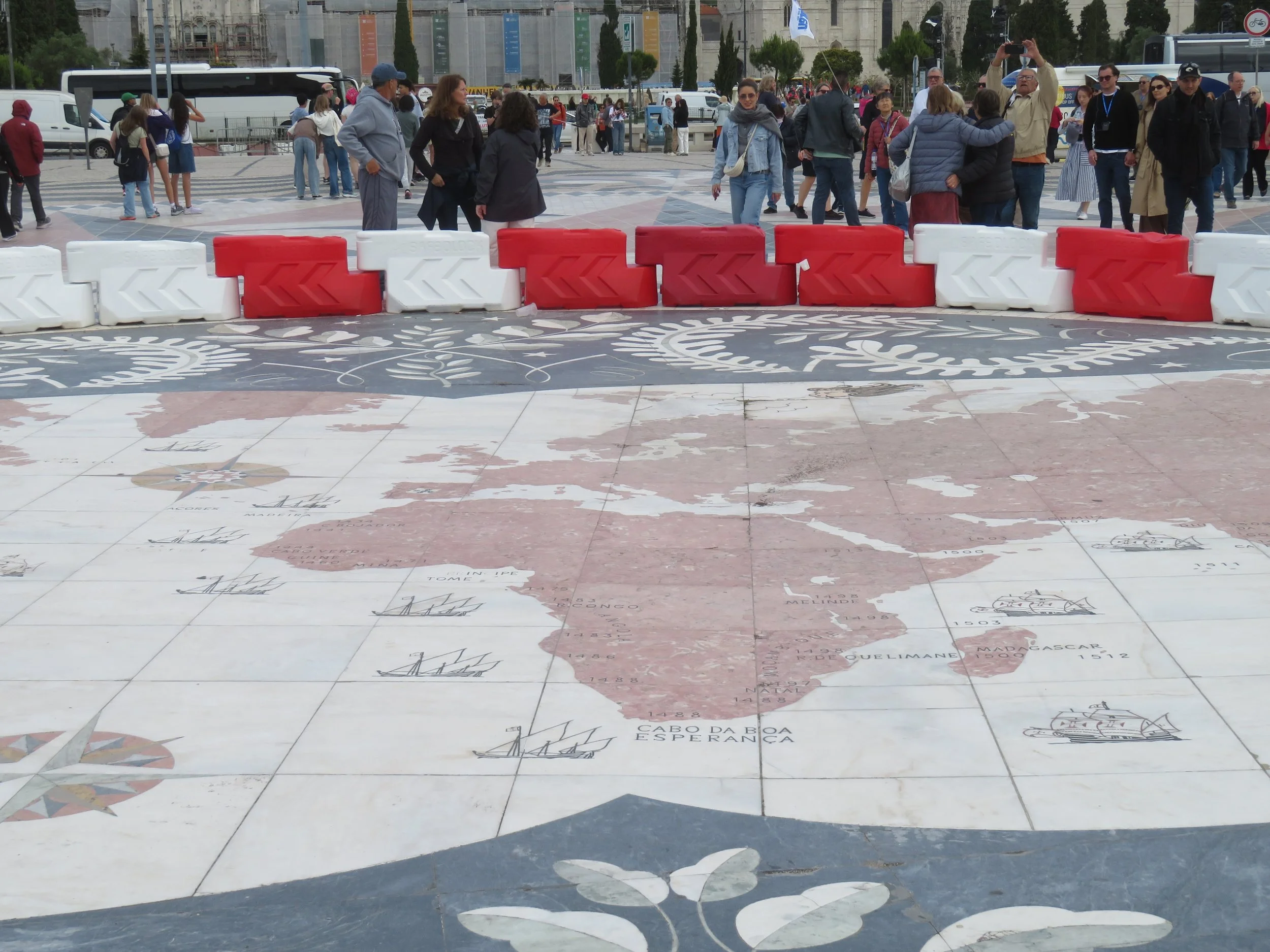
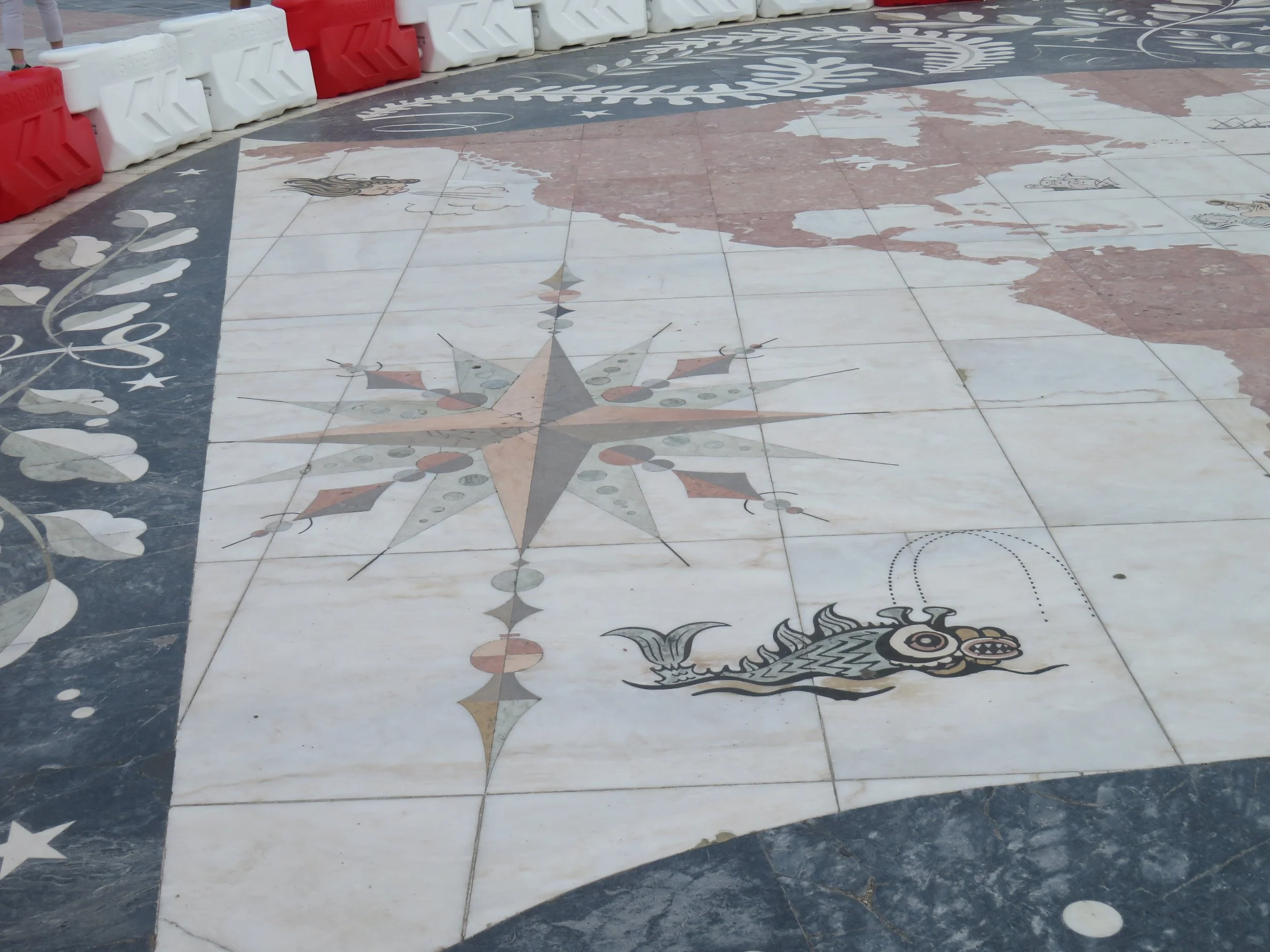
We walked through a tunnel under the street to the Jerónimos Monastery.
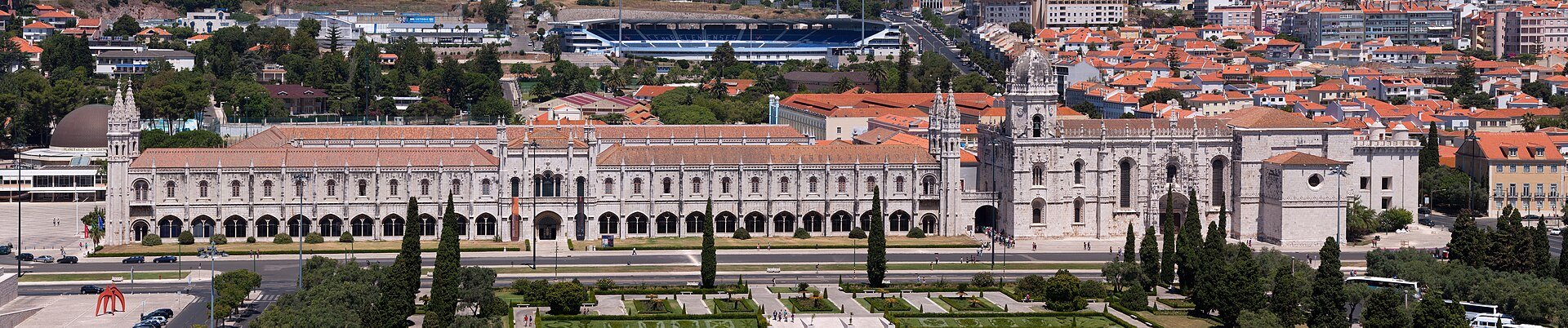
Panoramic view of the Jerónimos Monastery - Photo credit: Masimo Catarinella
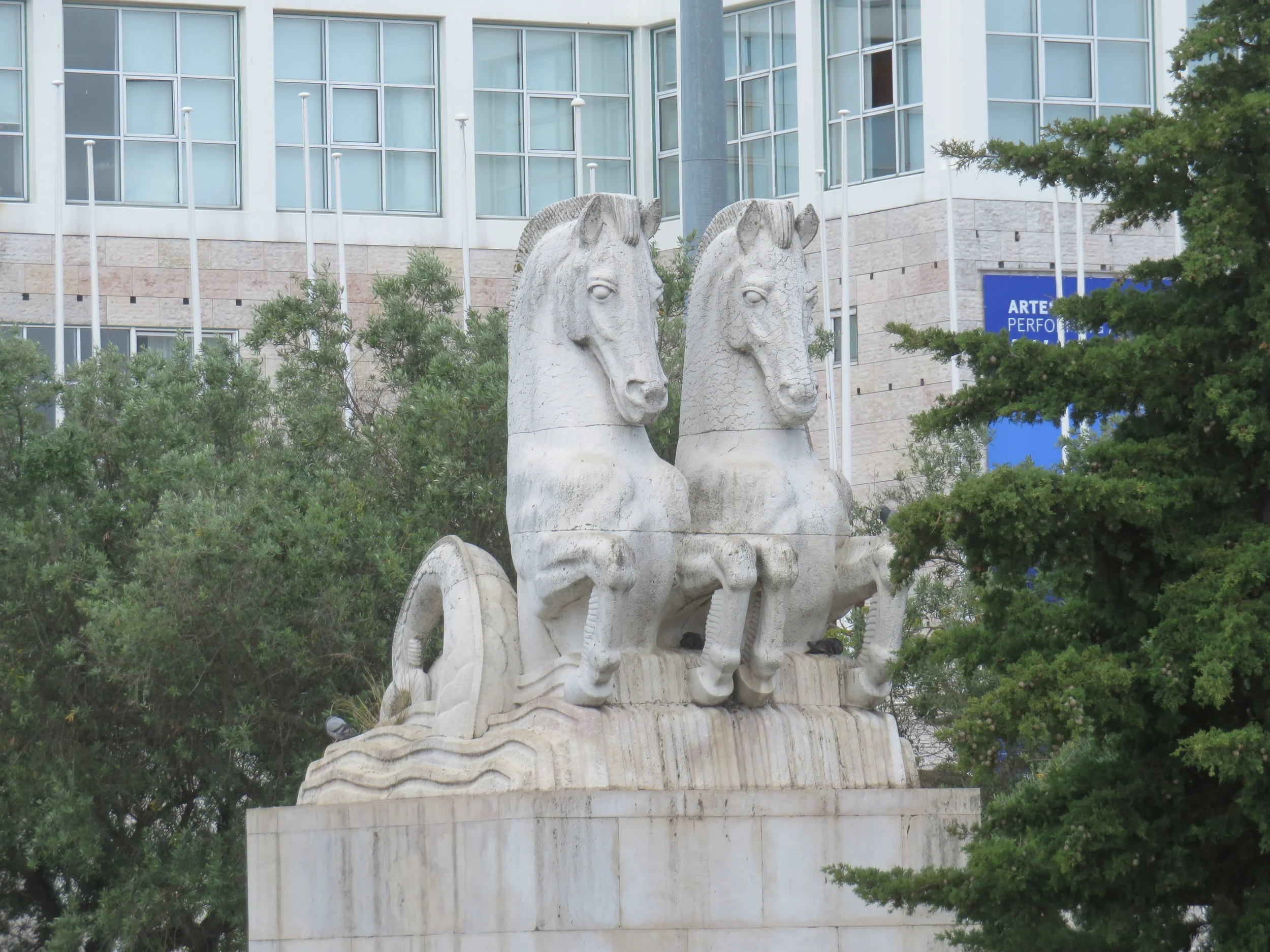
A pair of sculpted horses by Nicolau Chanterene drew our attention as we walked across manicured lawns towards the monastery.
Historically, the monastery was built on the banks of the Tagus as a place of prayer and meditation for sailors contemplating their departure on perilous voyages to the far ends of the world in unknown seas. The monastery was built on the site of the former Santa Maria de Belém, where the Order of Christ (formerly Templars) aided sailors in transit. Construction began in 1501 and took 100 years to complete.
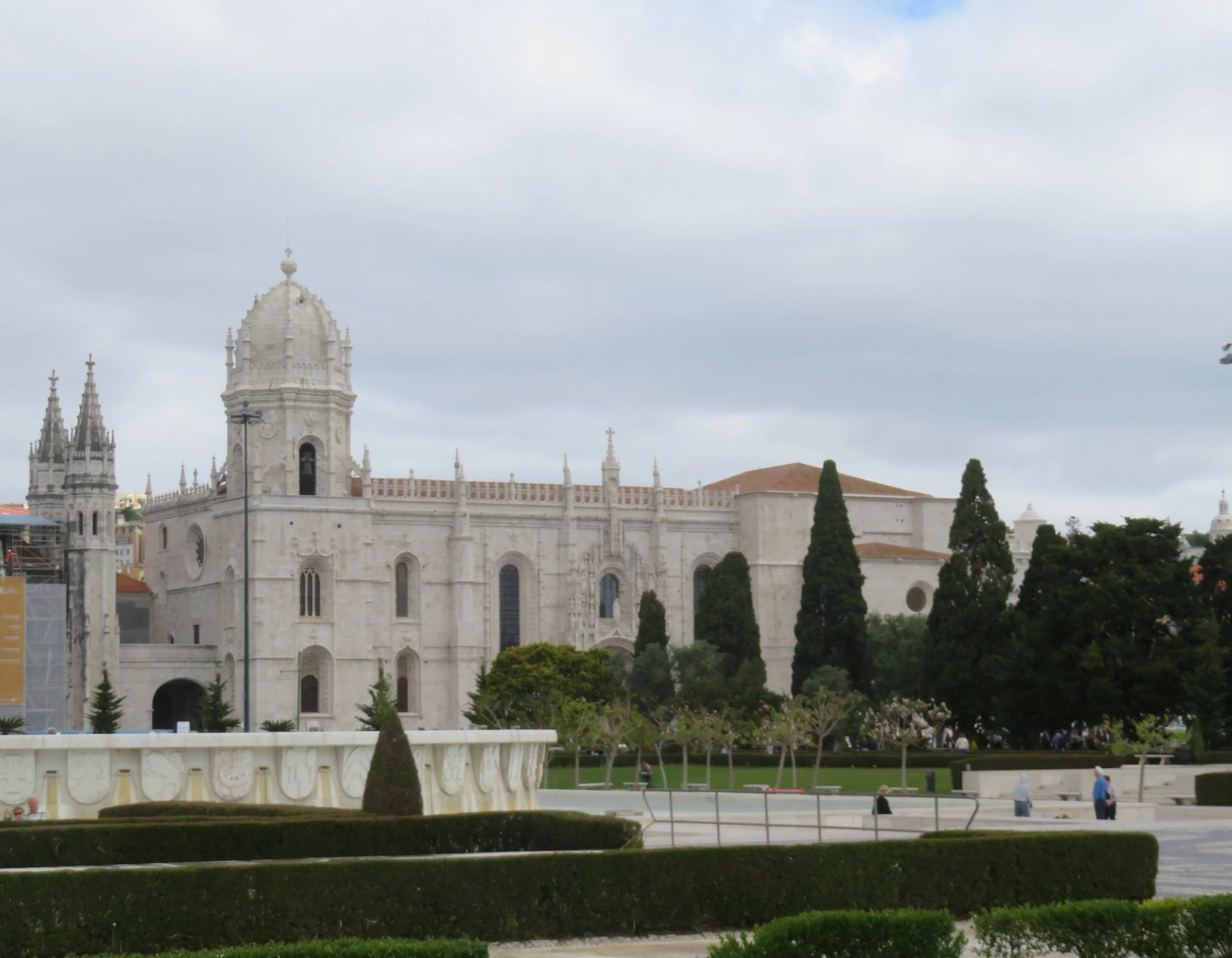
Famous Portuguese navigator and explorer, Vasco da Gama is entombed in the nave of the church along with several Portuguese monarchs and Luis de Camões, a famous Portuguese poet who celebrated da Gama in his epic poem ‘The Lusiad’.
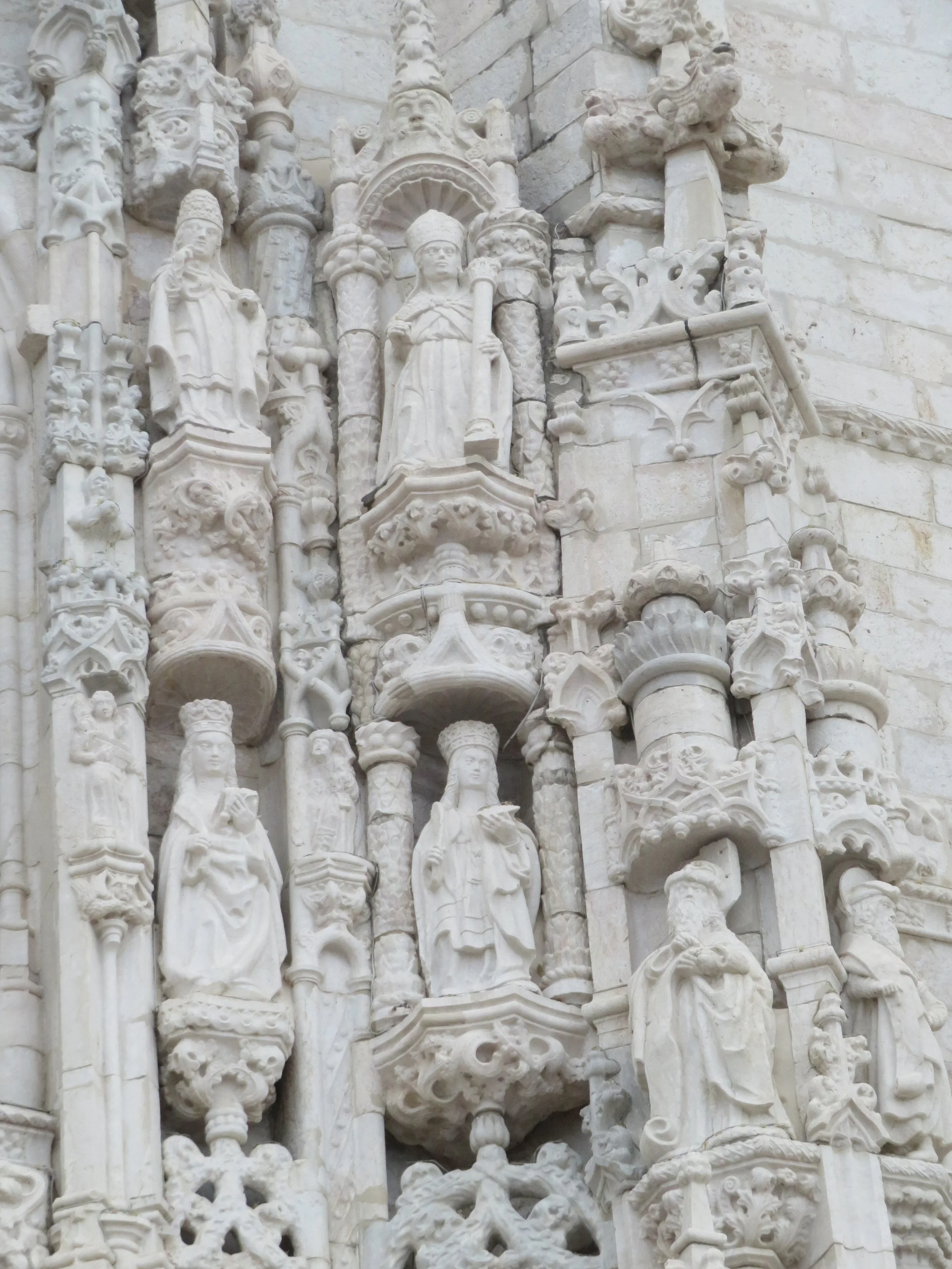
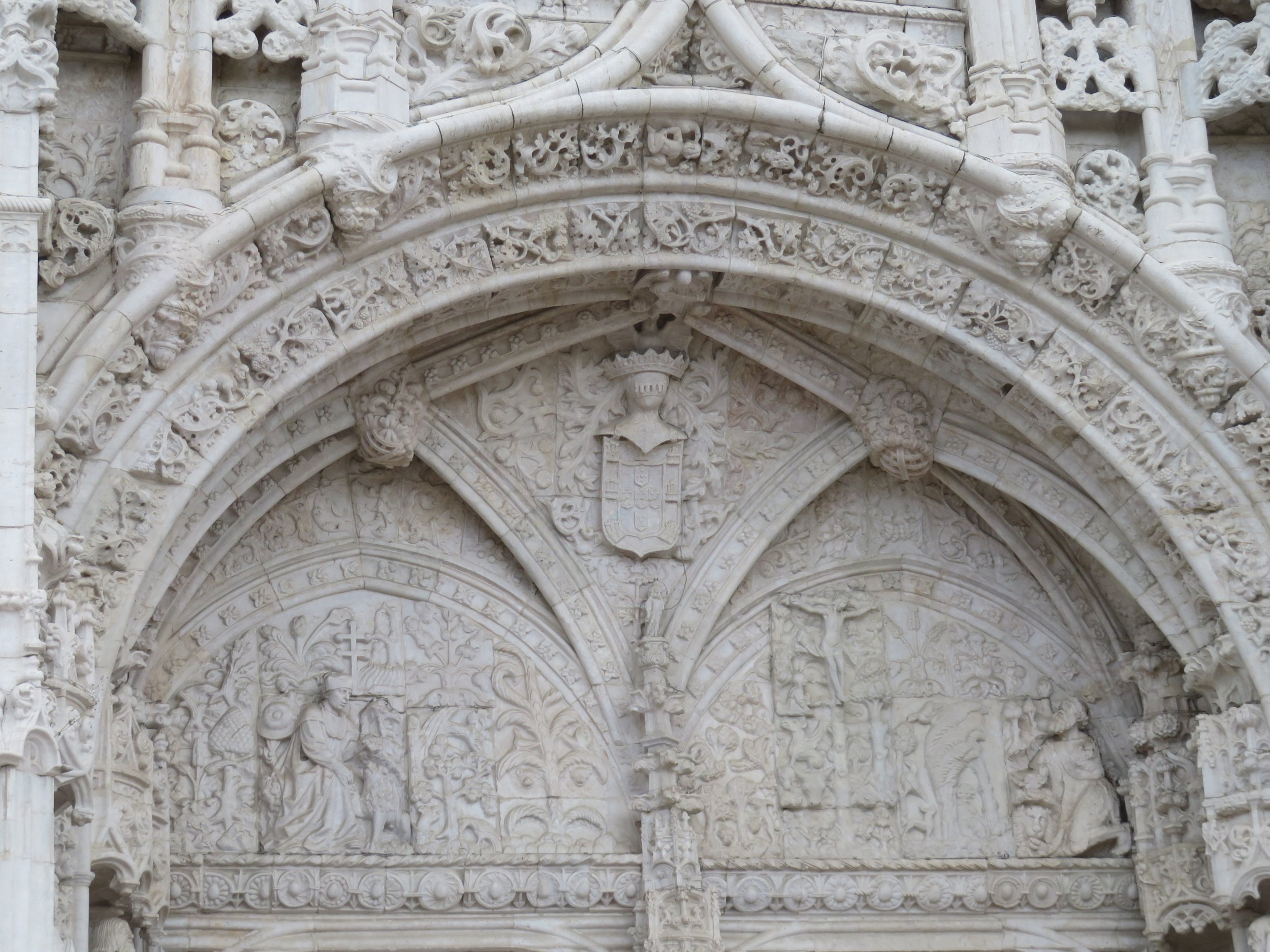
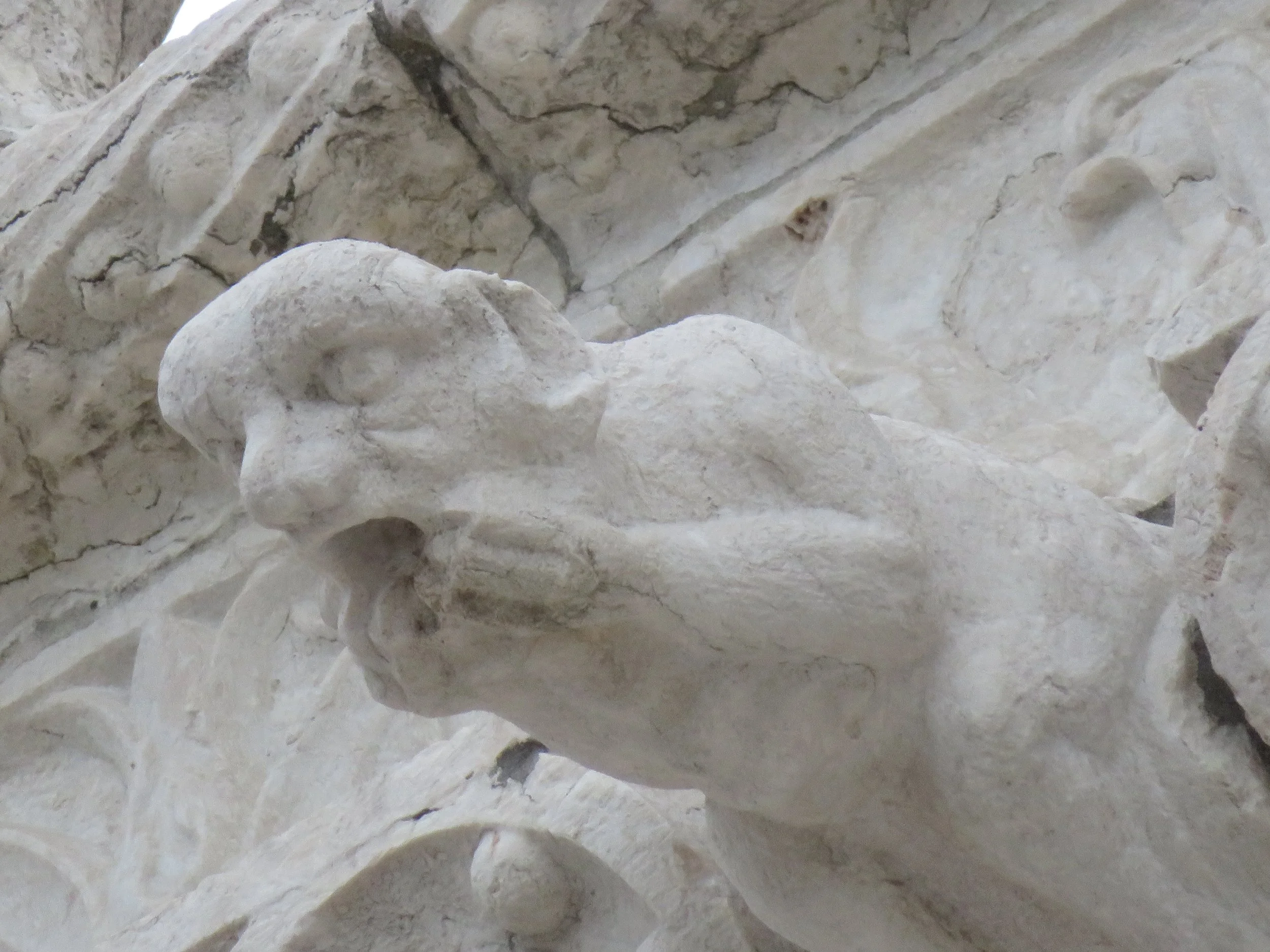
We would have loved to have toured the monastery, but the lines were way too long, and the entry price of €31.50 (€22) seemed a bit dear. Admittedly, we’re not very tolerant of long lines.
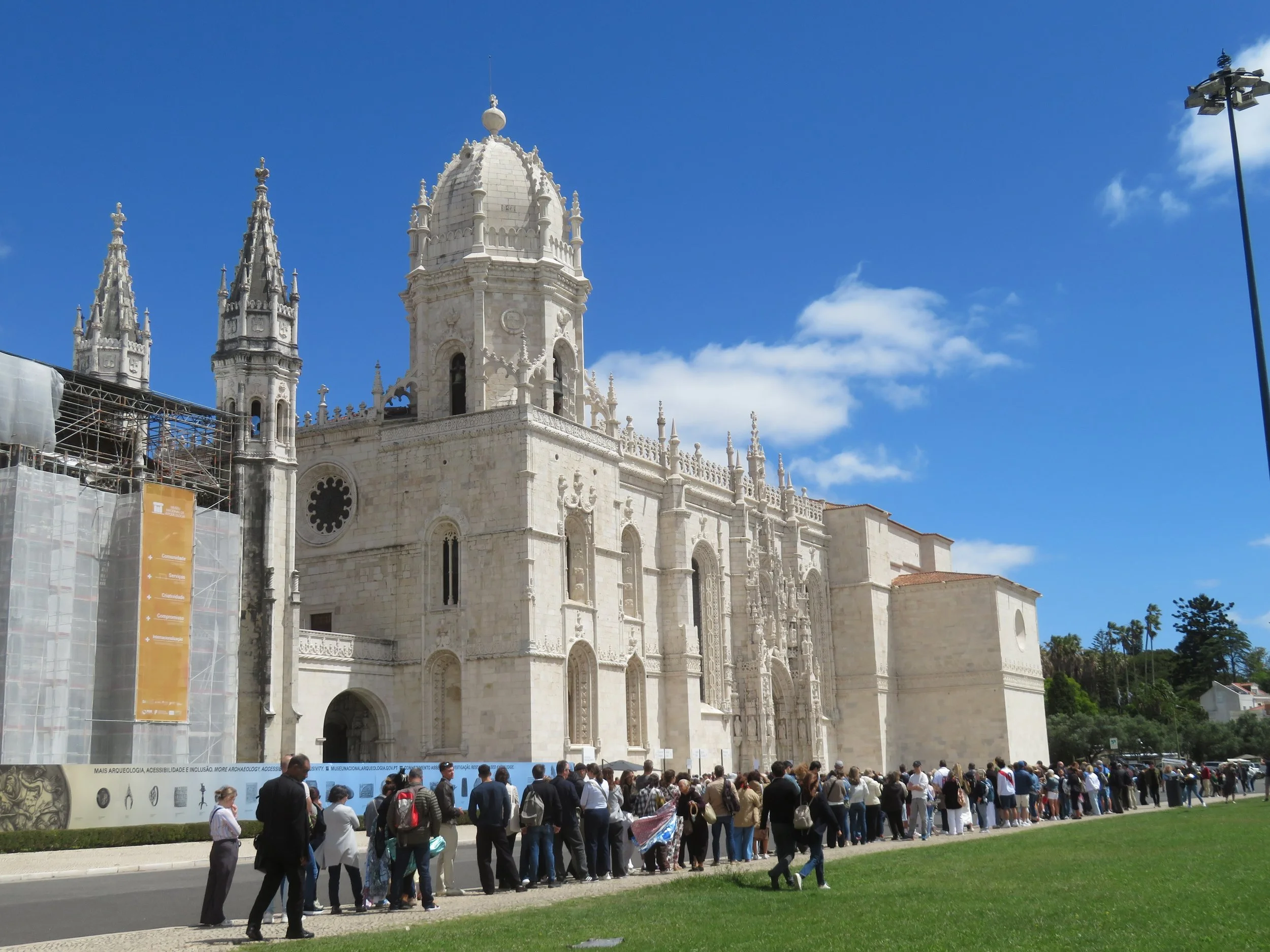
Long lines and long waits for entrance to the Monastery and church
Instead, we walked to the end of the complex and opted to visit the Maritime Museum (€6 adults/€3 Seniors). Founded in 1863 by King Luís, the museum touts an impressive collection of over 23,000 pieces of nautical and navy memorabilia, artwork, models, and full-size vessels.
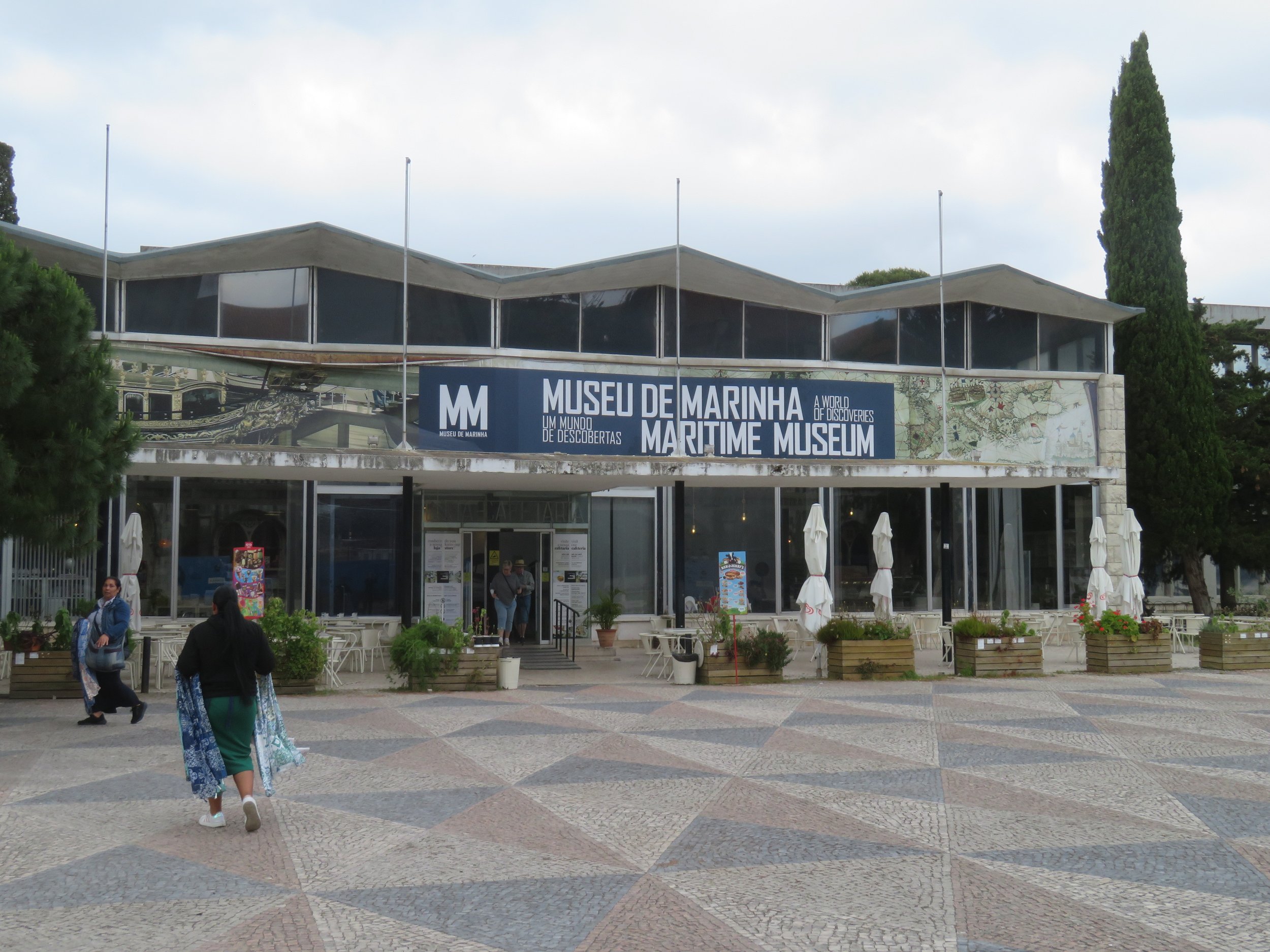
The museum’s initial purpose was to honor Portugal’s Navy, aka the Armada Portuguesa, which dates back to the 12th century and is the world’s oldest continuously serving Navy. Take a look at some of what we saw.
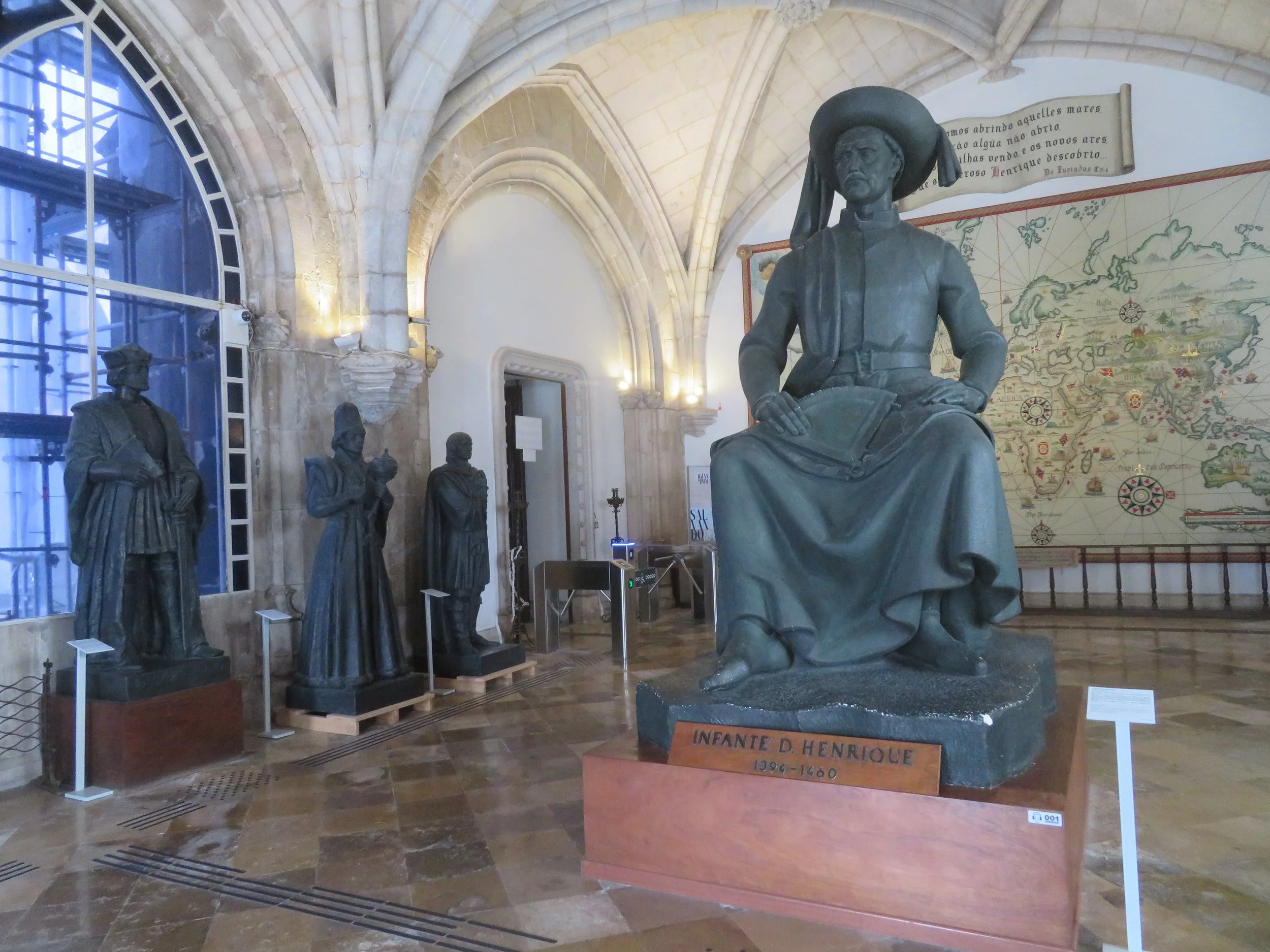
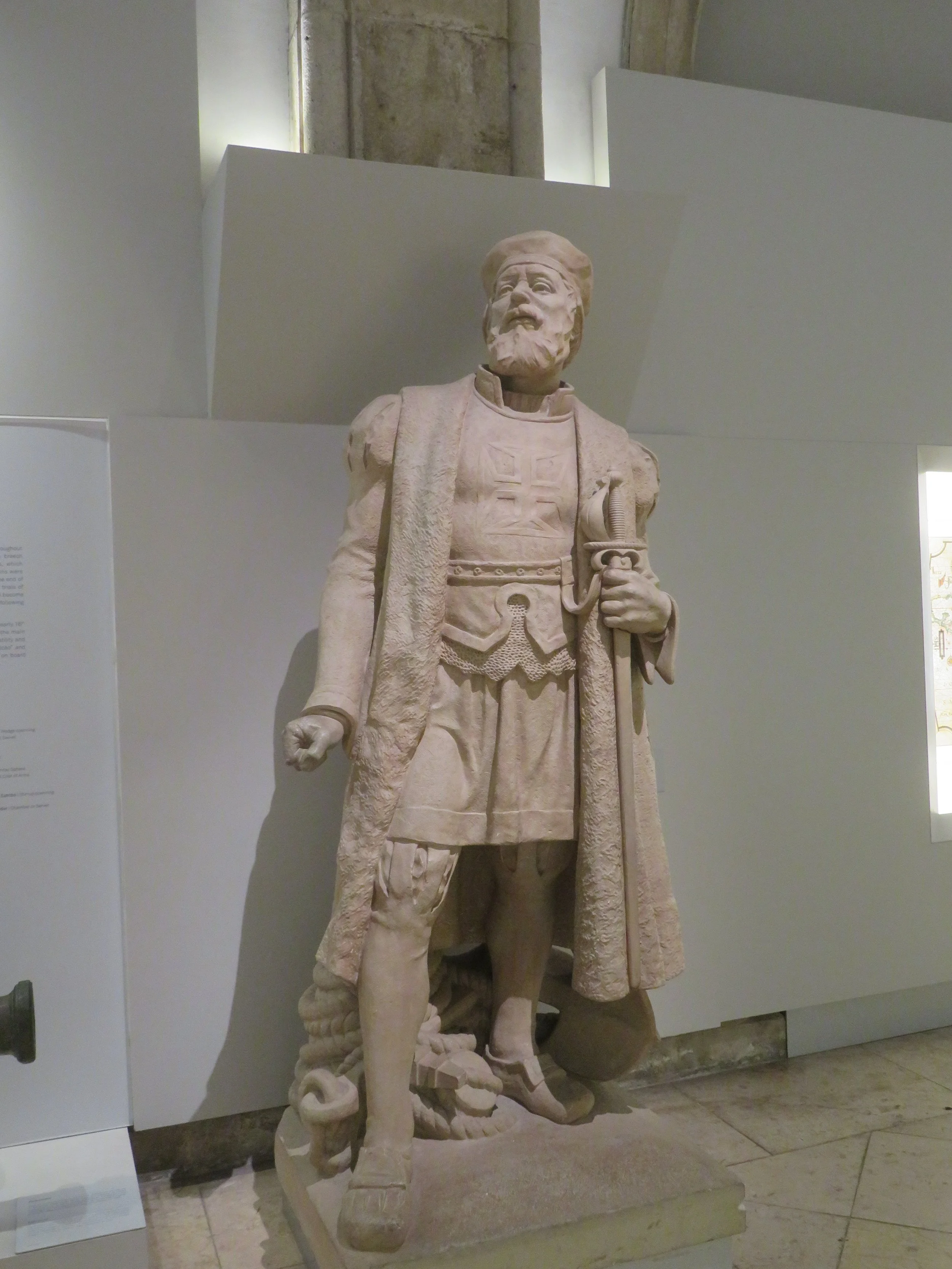
Prince Henry the Navigator met us in the lobby.
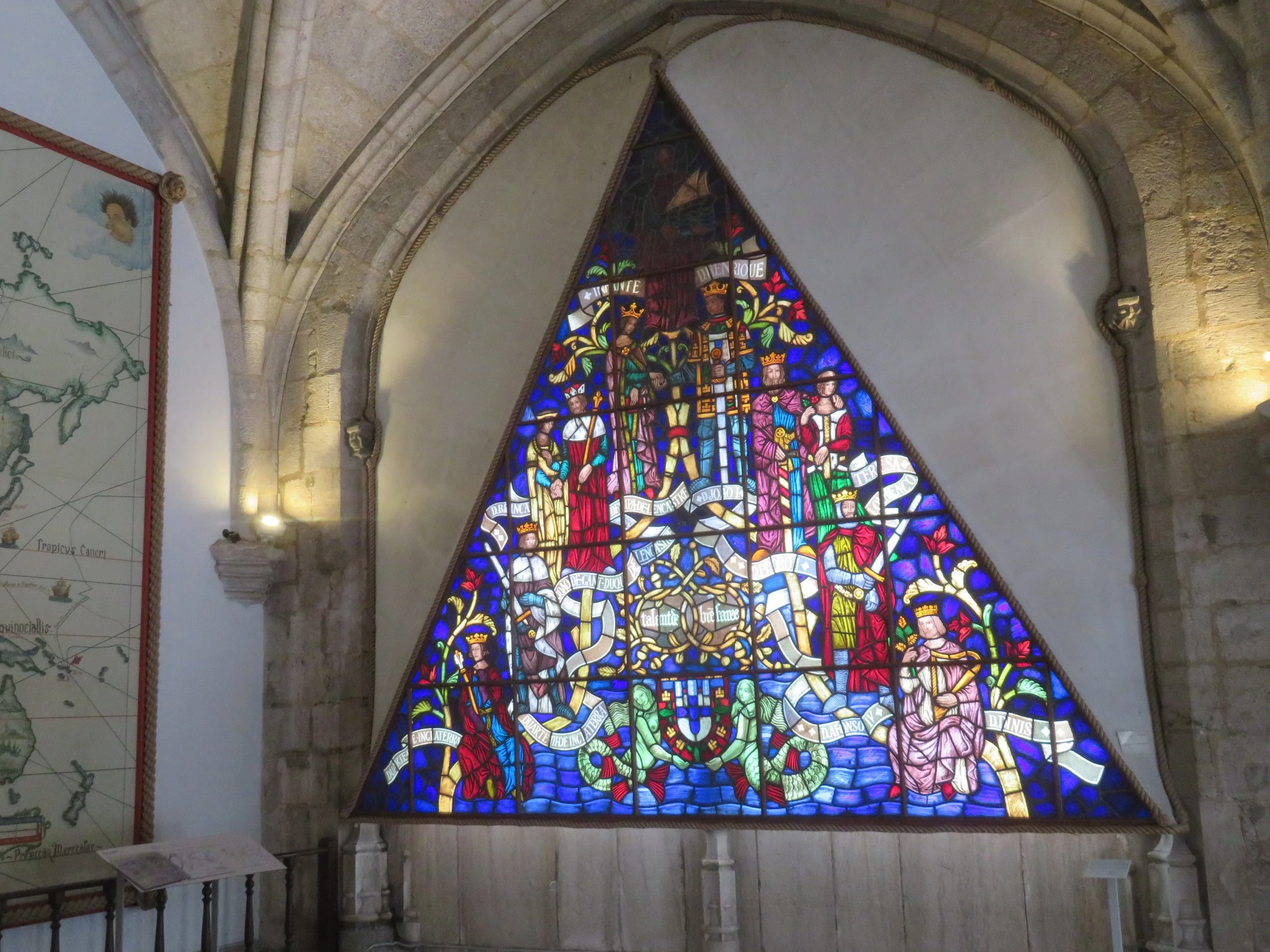
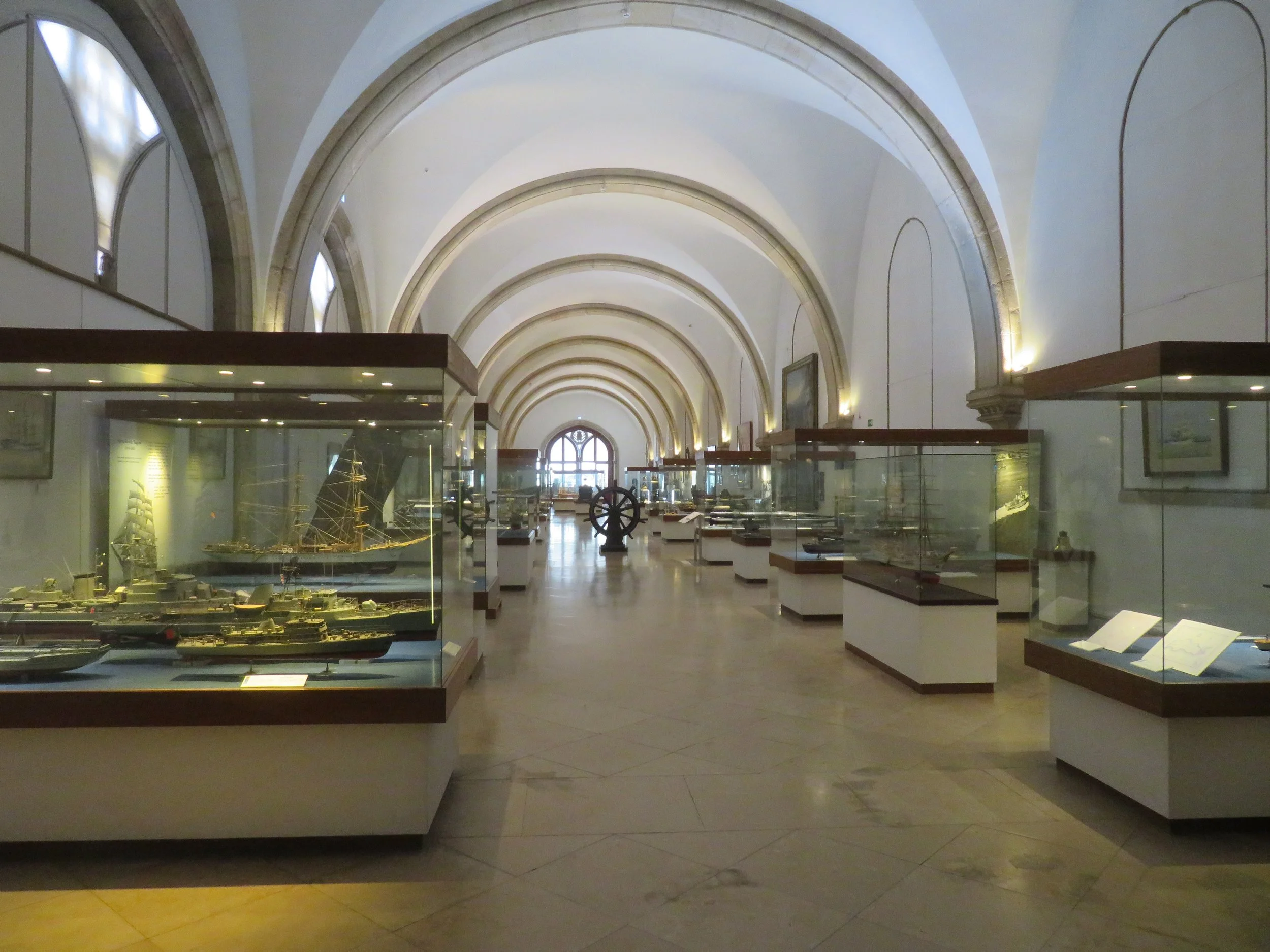
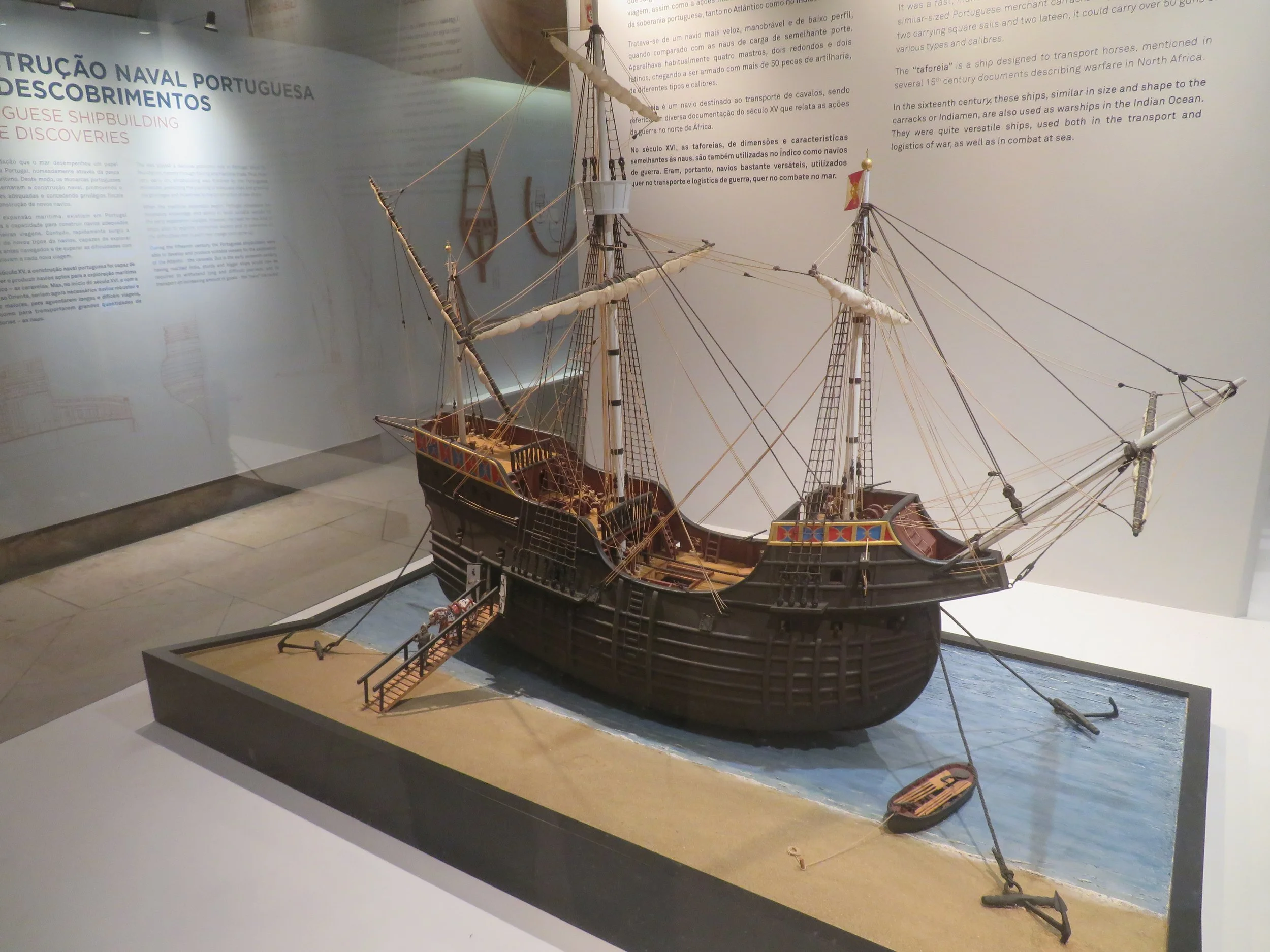
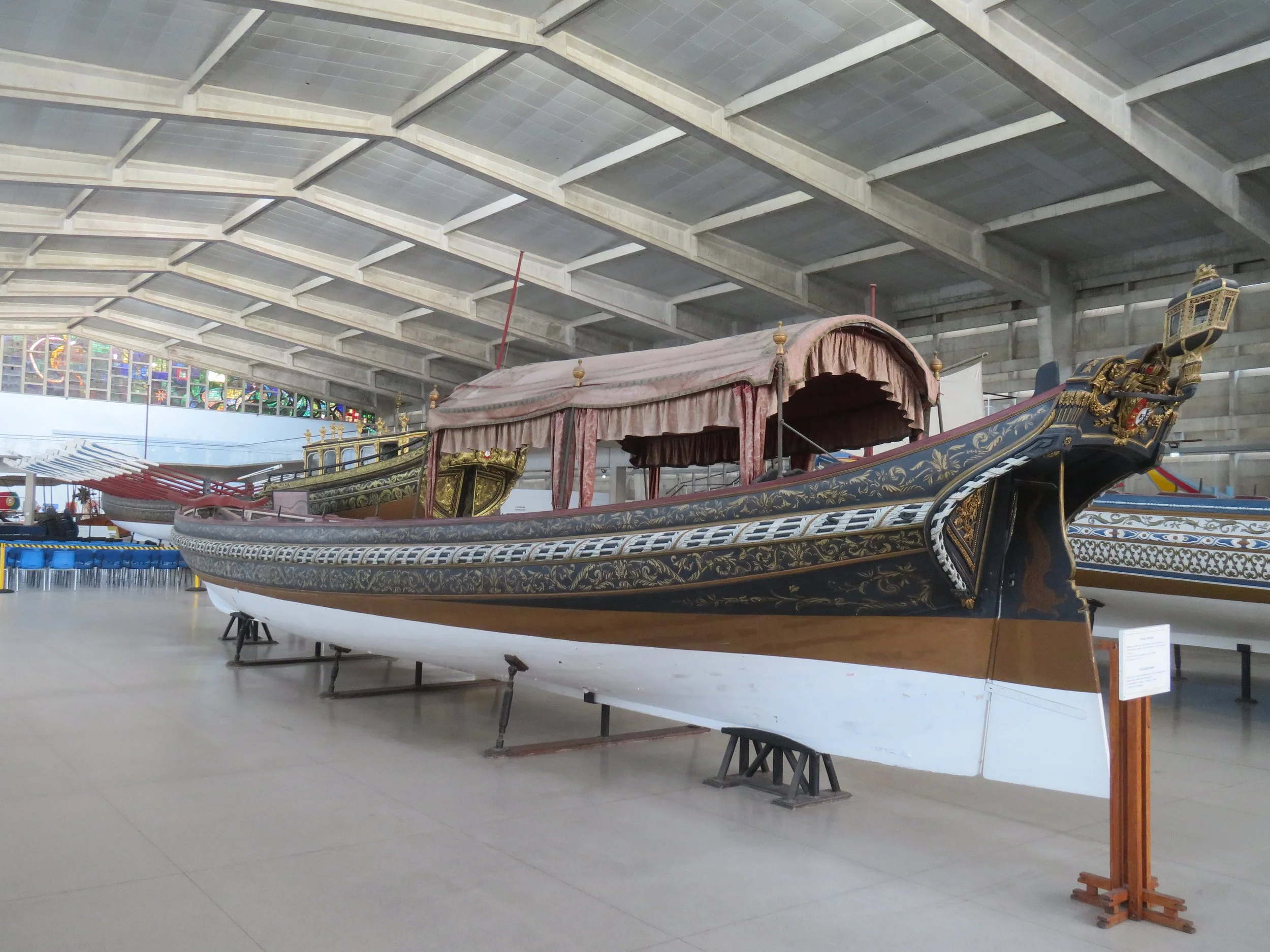
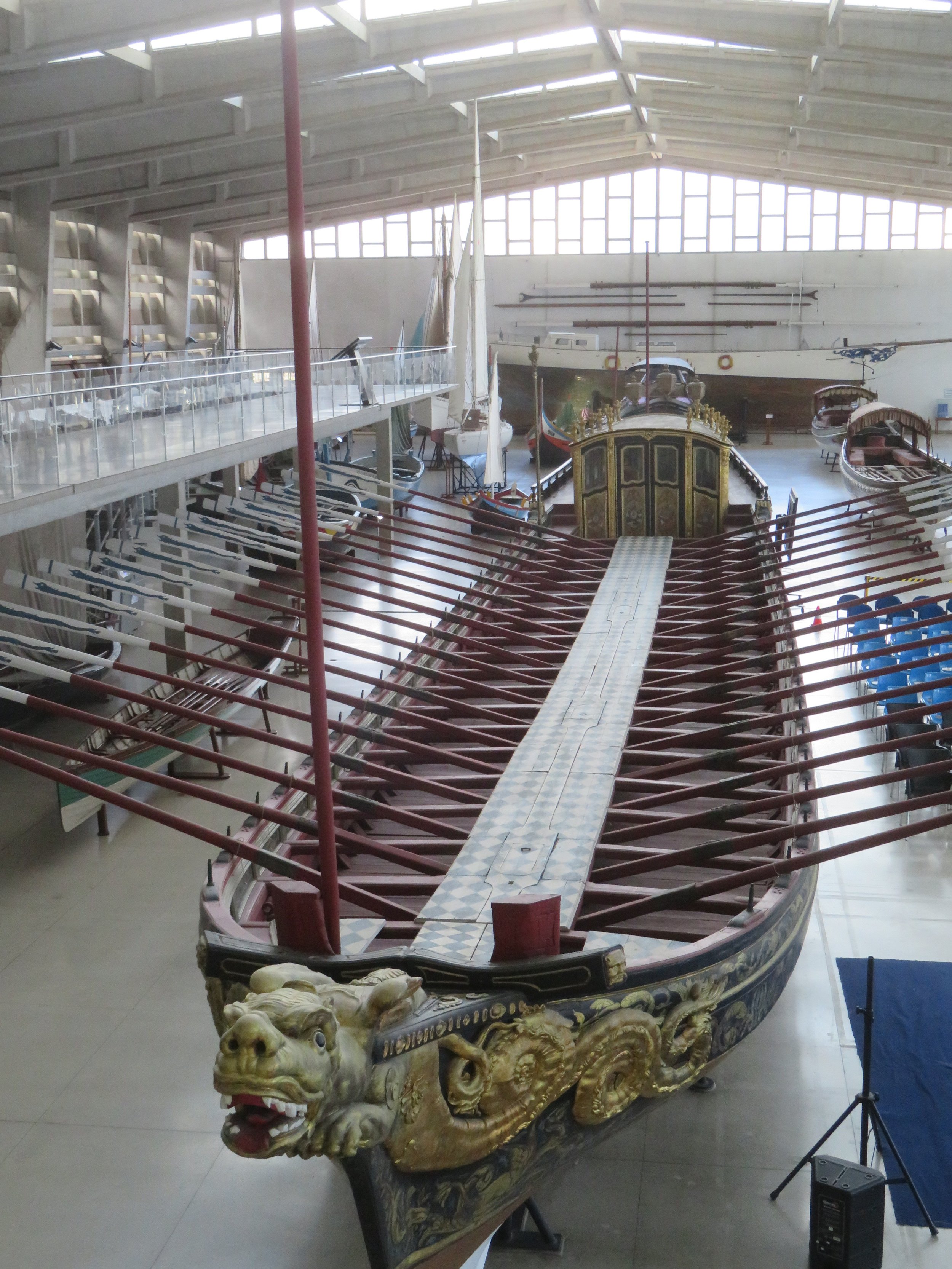
What next? We headed to the nearby Tropical Botanic Garden (€4/pp), which was a bit of a disappointment since much of the garden is in disrepair and many buildings and exhibits were closed to the public, including the tea room.
Occupying ~12.5 acres, the garden was initially established in 1906 by royal decree as the Colonial Garden with species from Portugal’s many colonies, i.e., Angola, Cape Verde, Mozambique, et al.
In 1940, the garden became a centerpiece in the Colonial Section of the Portuguese World Exhibition. According to Wikipedia, “As part of the exhibition, members of a tribe from Guinea-Bissau were kept on an island in a lake in the Garden, effectively in a human zoo.”
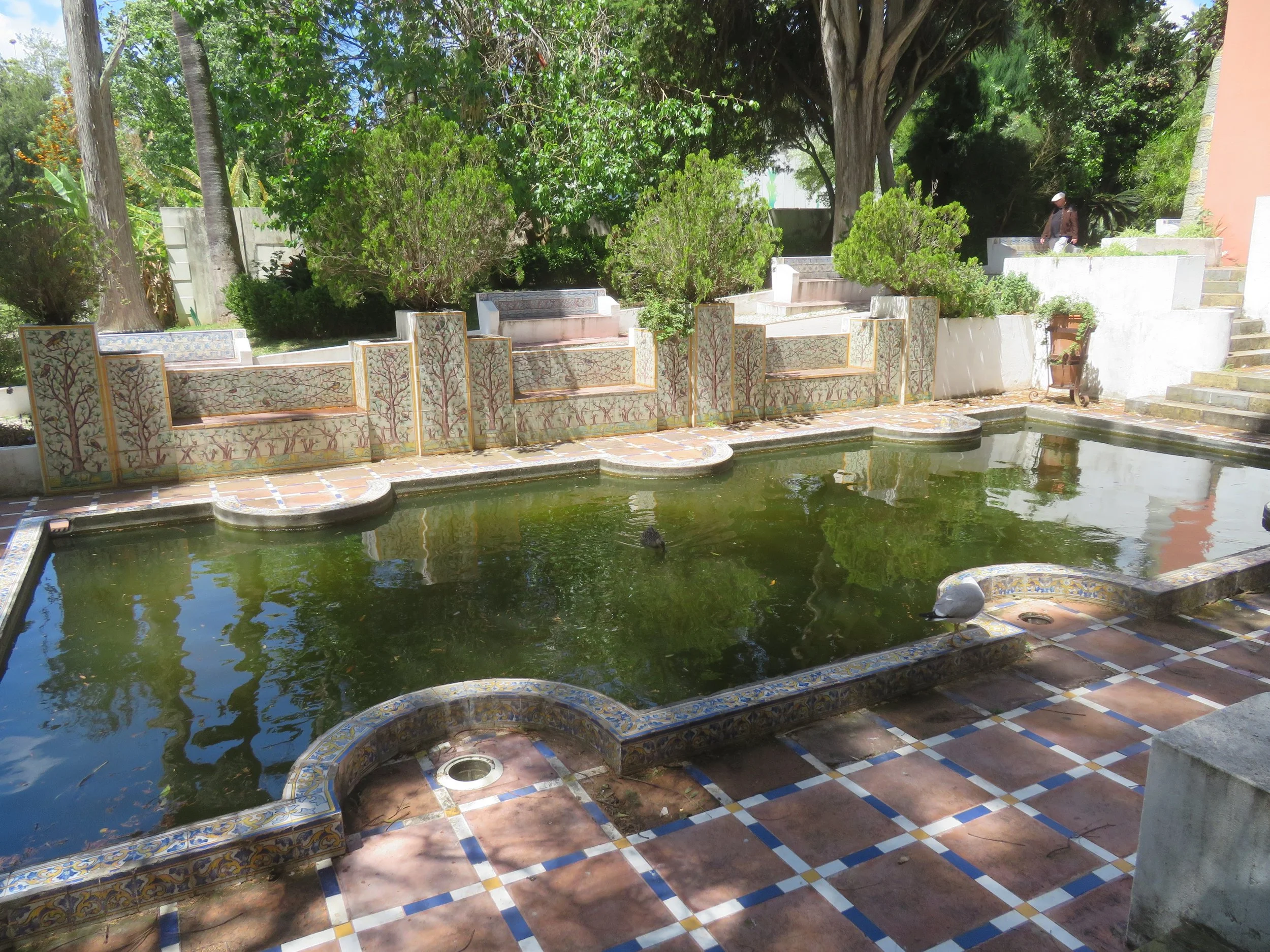
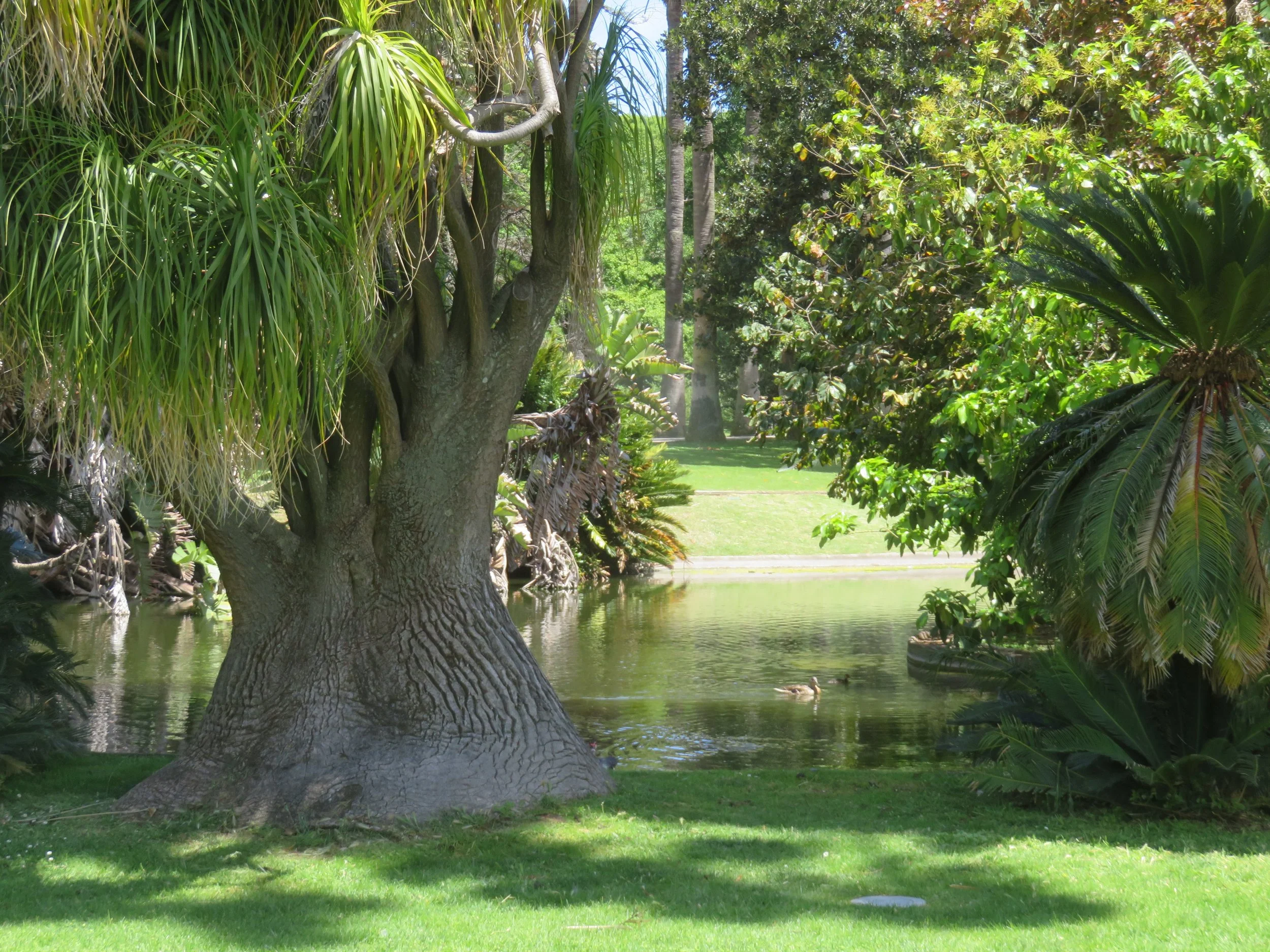
Some highlights and ‘lowlights’ from our wanderings at the garden.
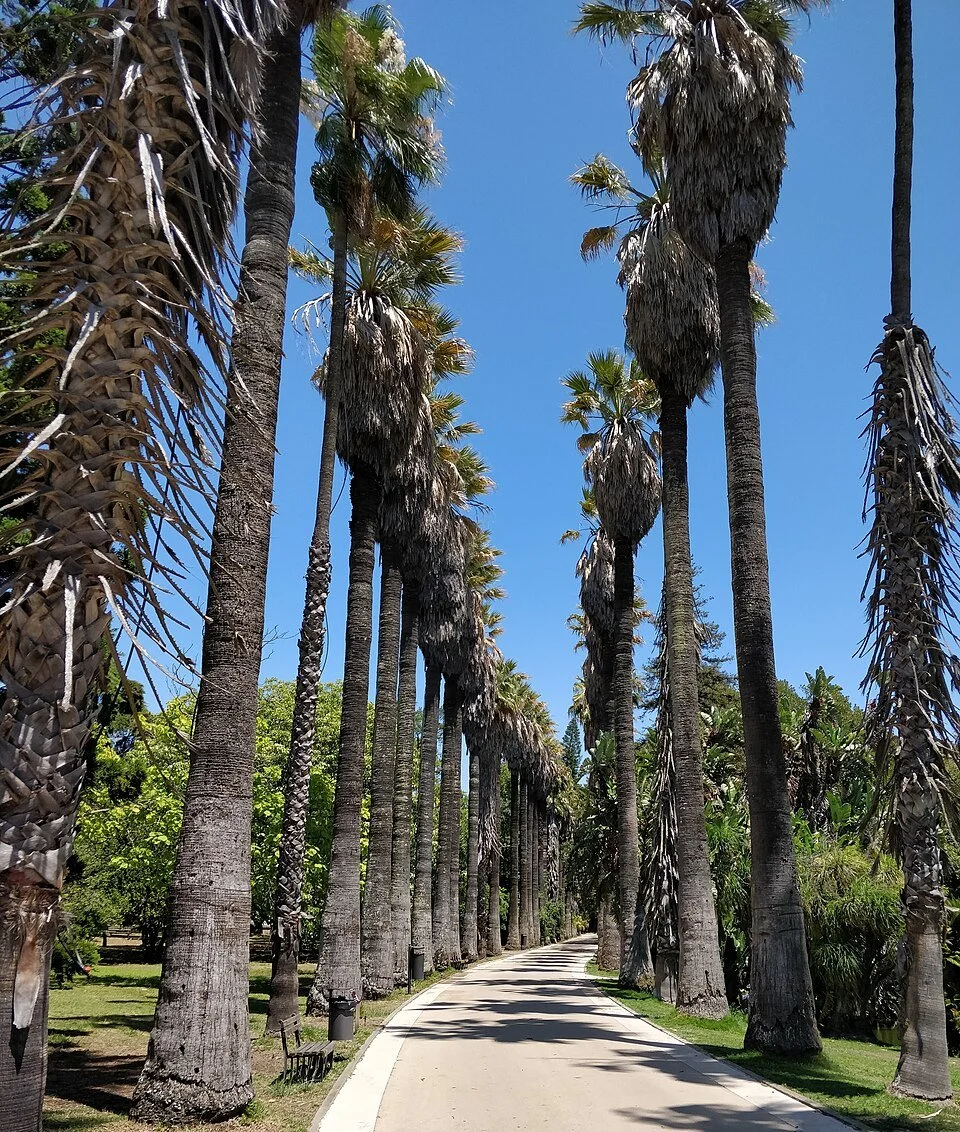
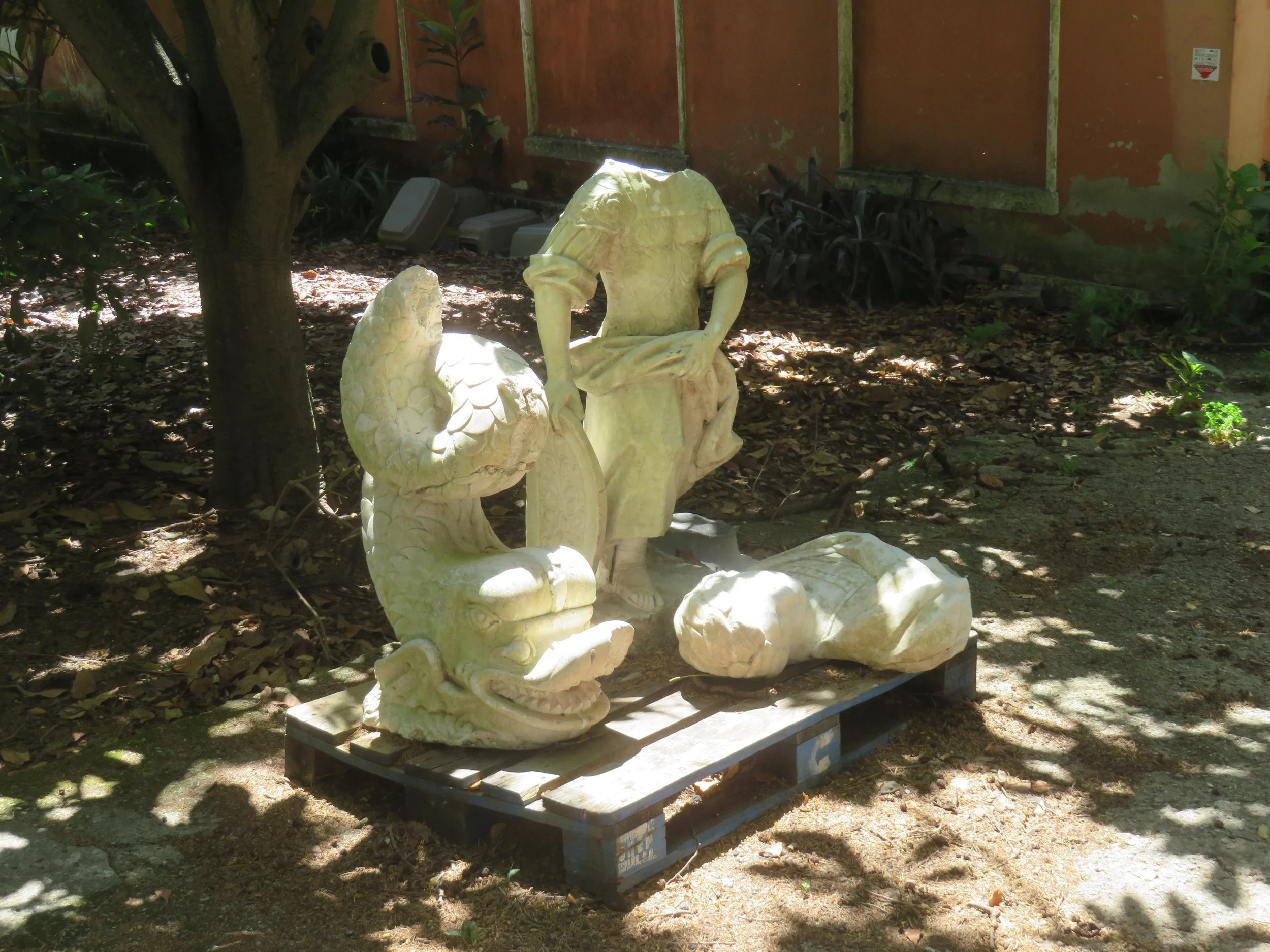
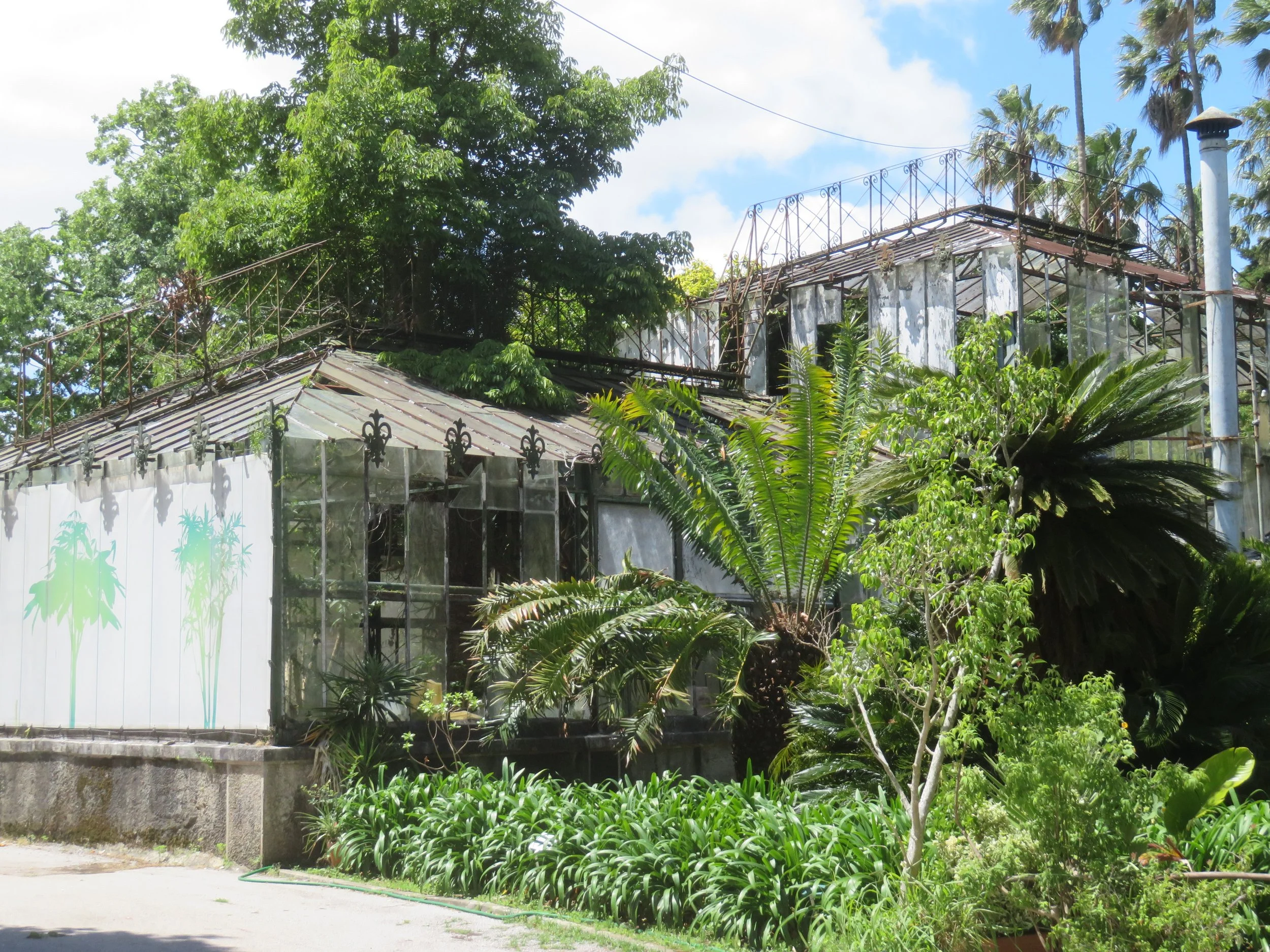
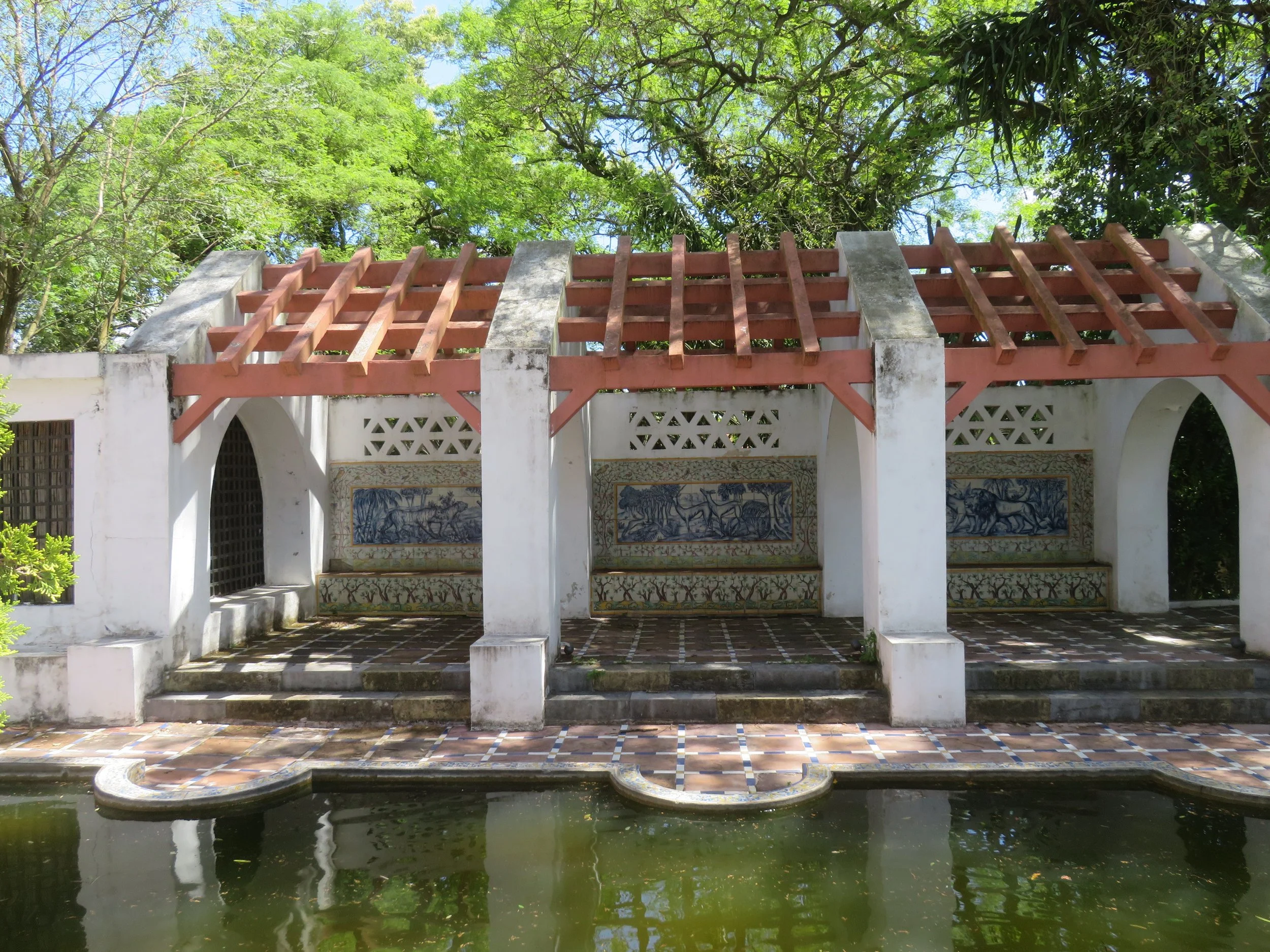
It was late afternoon when we wandered back to Rua de Belém’s busy restaurant and shop district. We thought we’d stop at Pastéis de Belém Bakery for a pastel de nata and a coffee. Pastéis de Belém Bakery is known worldwide as the original producer of that incredibly wonderful custard tart, pastel de nata, that we indulged in and enjoyed through our Camino walk. Since 1837, this bakery has pumped out these delectable treats using the same secret recipe concocted by the monks at the nearby Jerónimos Monastery. They claim to produce about 20,000 pastéis per day at peak capacity.
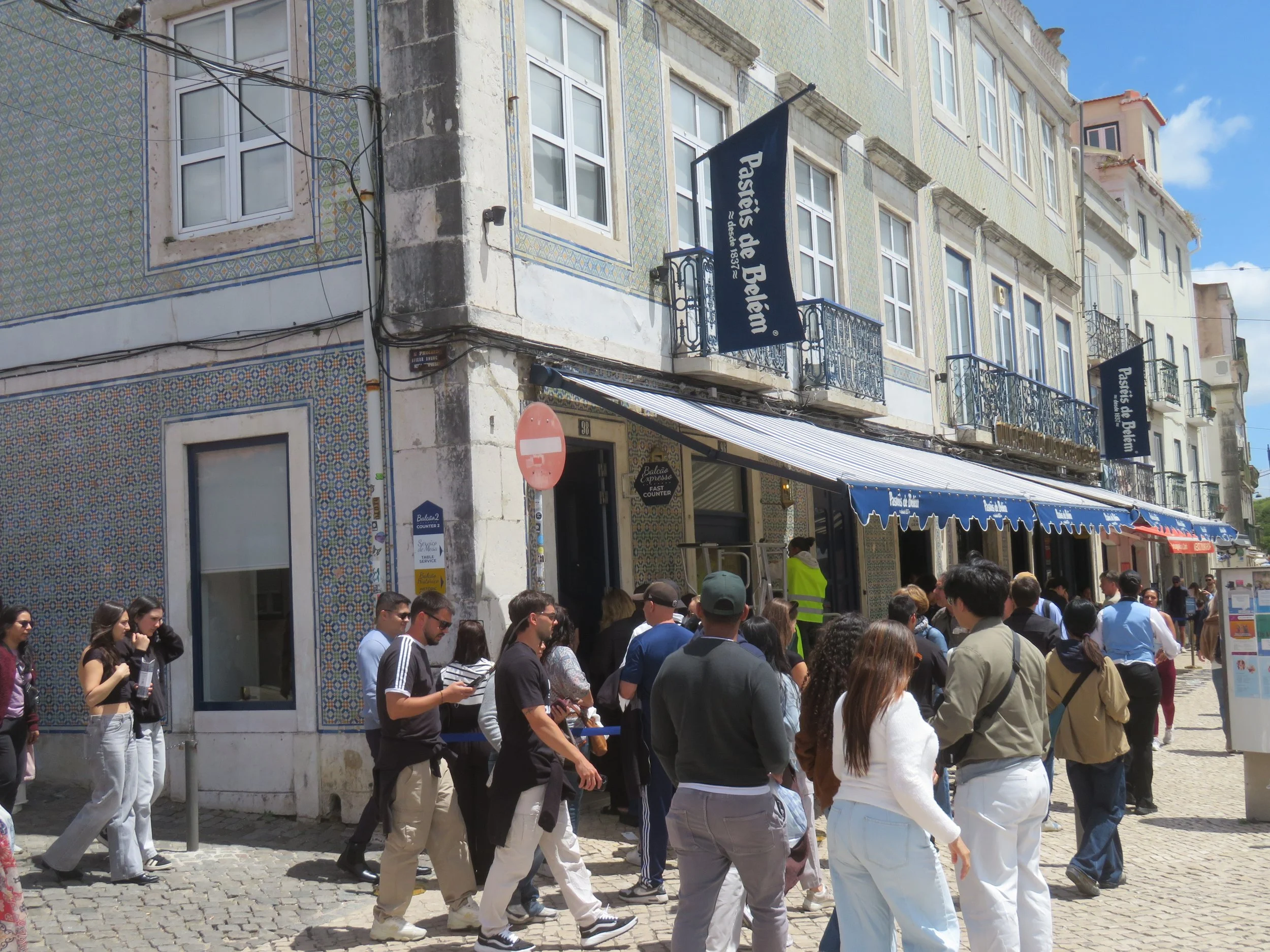
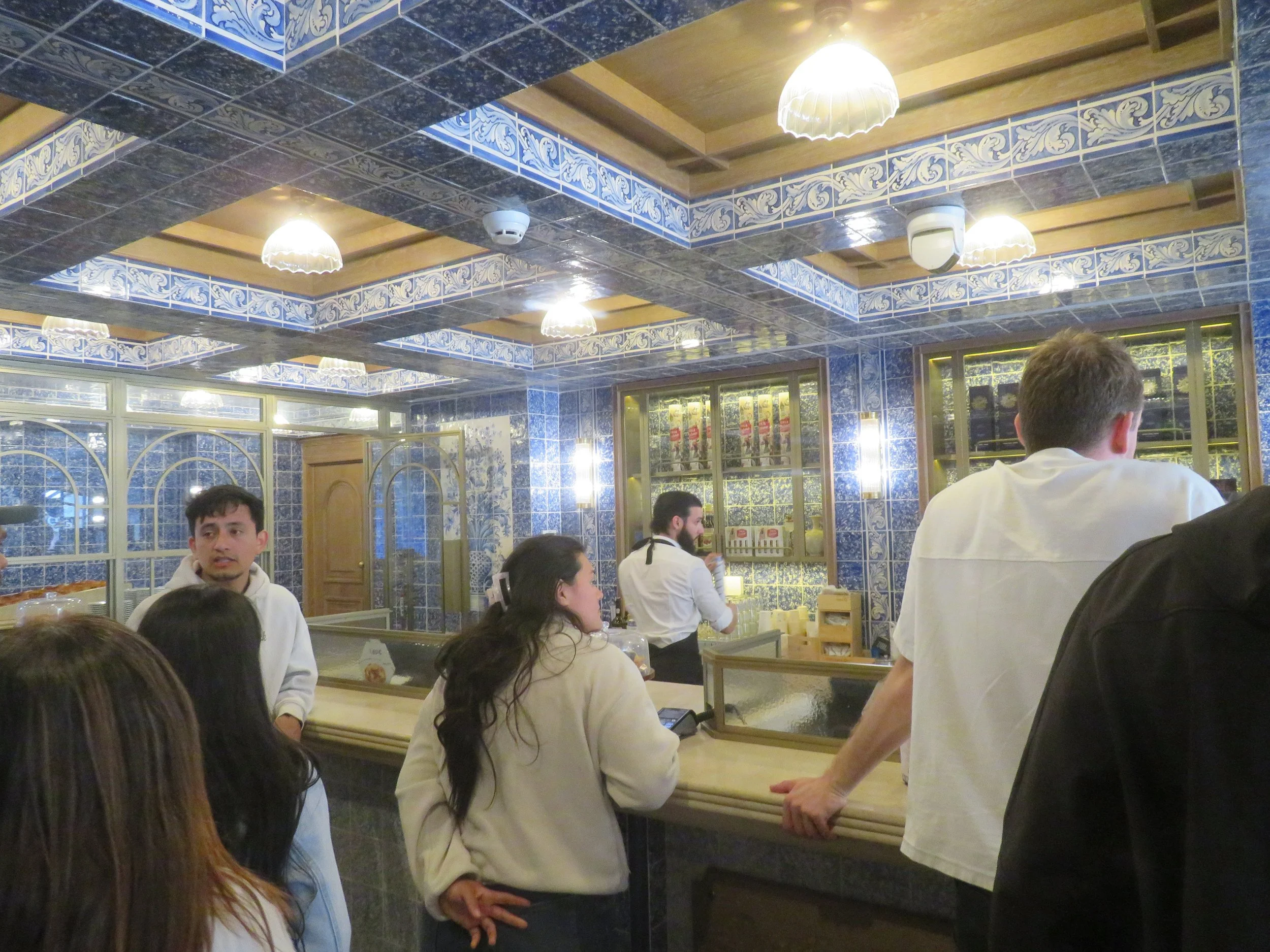
No such luck for getting into the restaurant. Once again, long lines and long waits deterred us. We did stop quickly at their small shop, which was also mobbed for a couple of photos, but no pastéis de nata for us today.
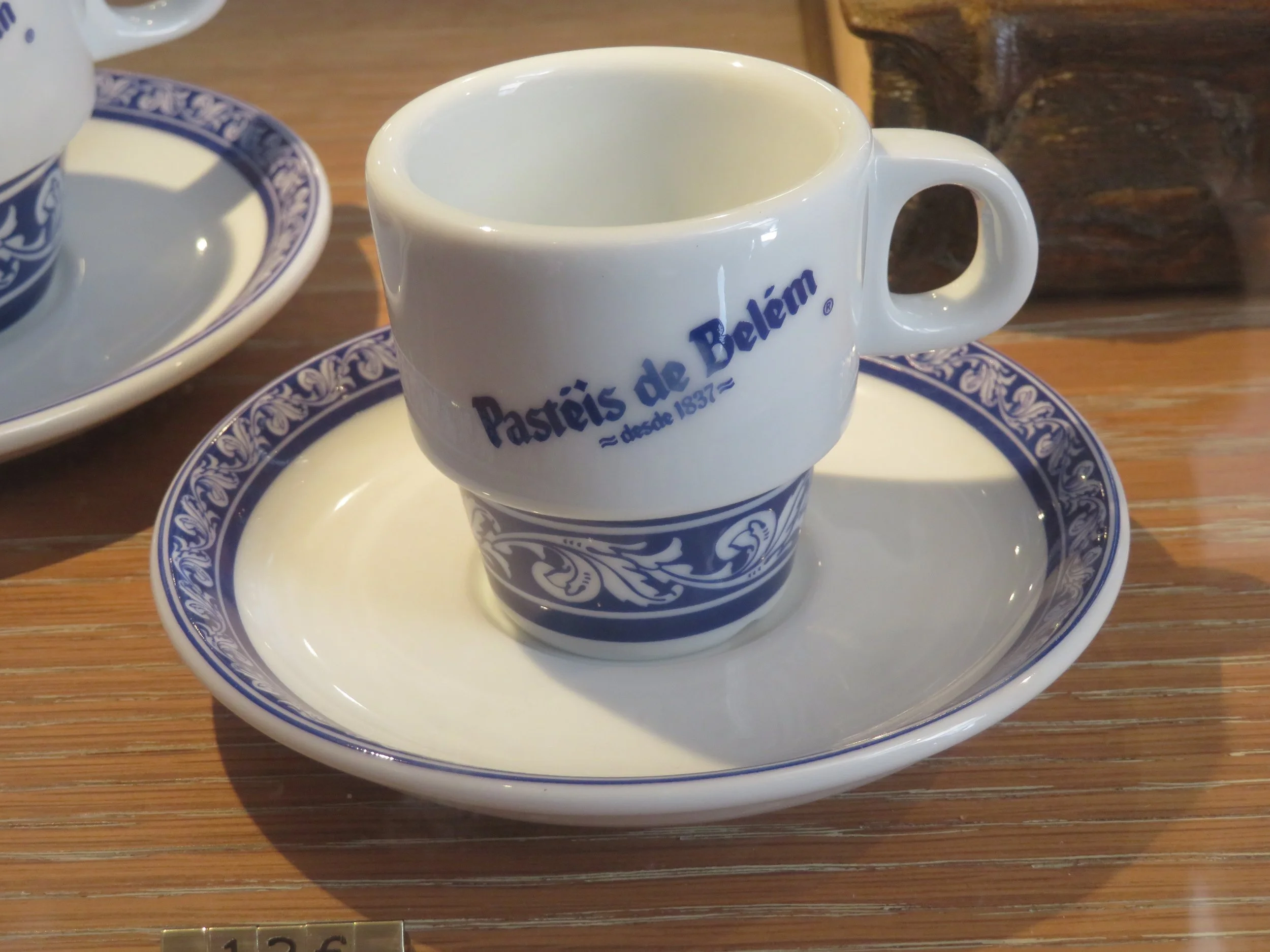
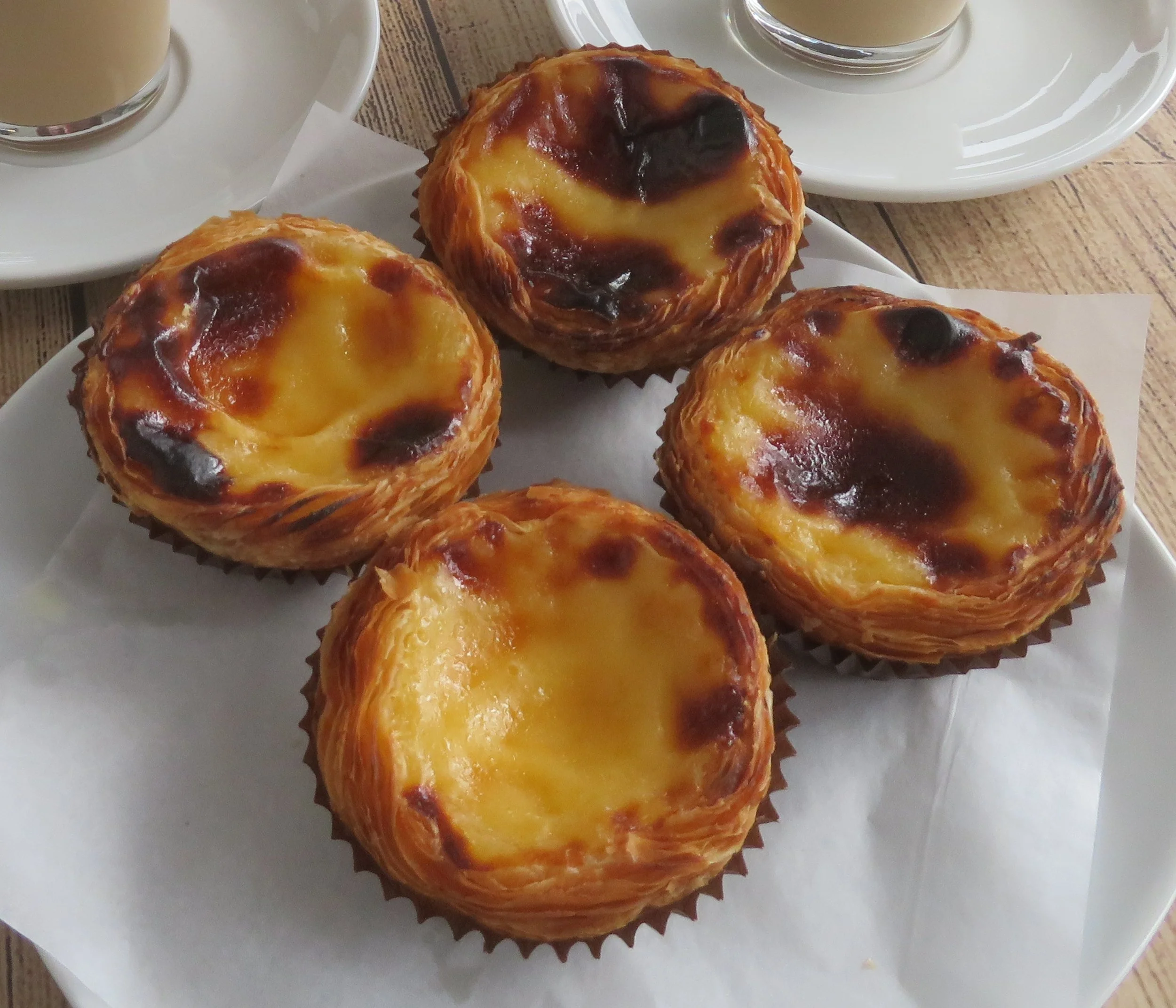
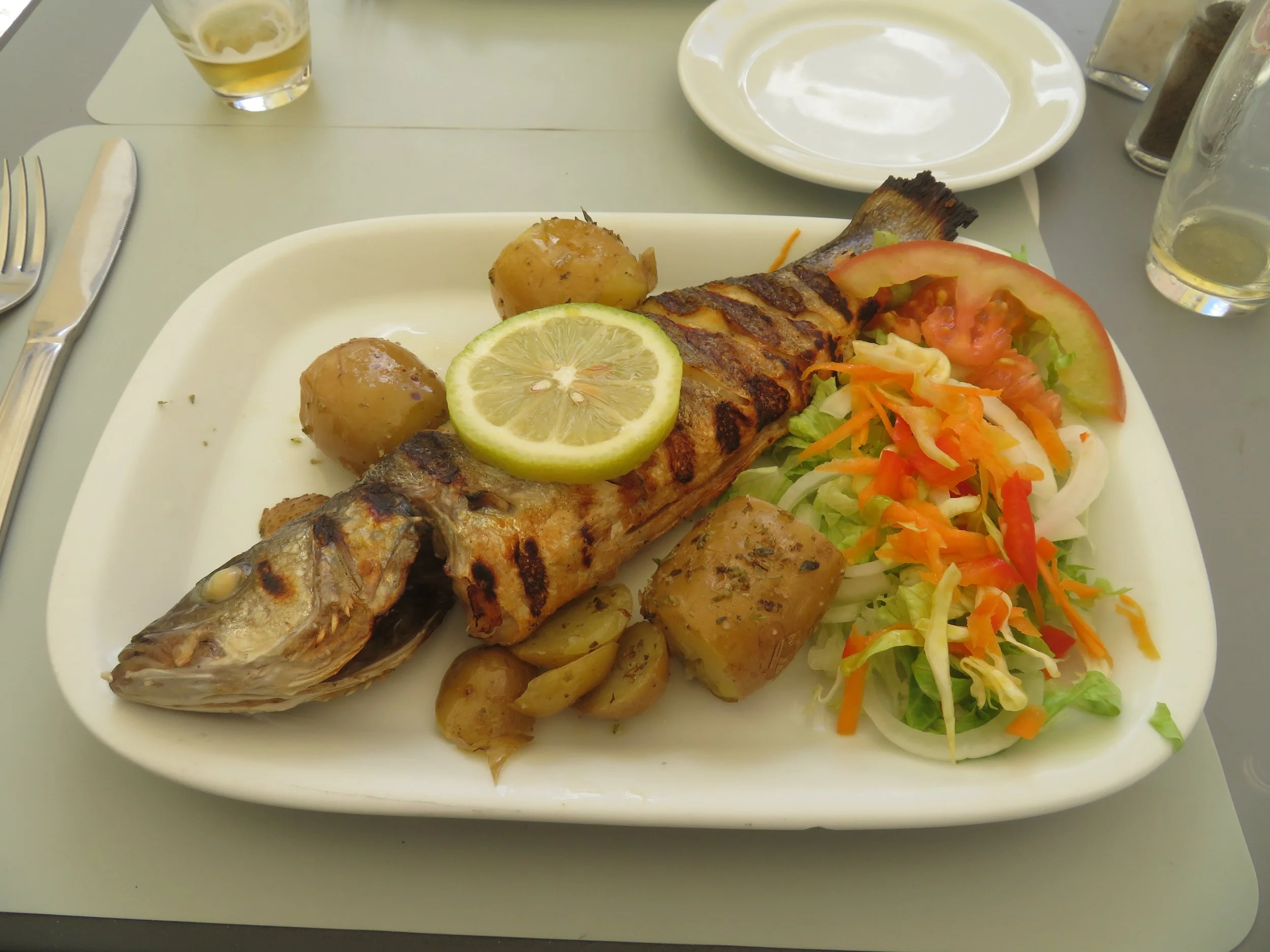
Instead, we found a table under an umbrella at a little restaurant for a very late lunch that also ended up sufficing as dinner. The grilled sea bass was wonderful!
We had hoped to visit Lisbon’s National Tile Museum (Museu Nacional do Azulejo), set in the 16th-century Madre de Deus Convent, and view the history of Portugal through its famous azulejo tiles.
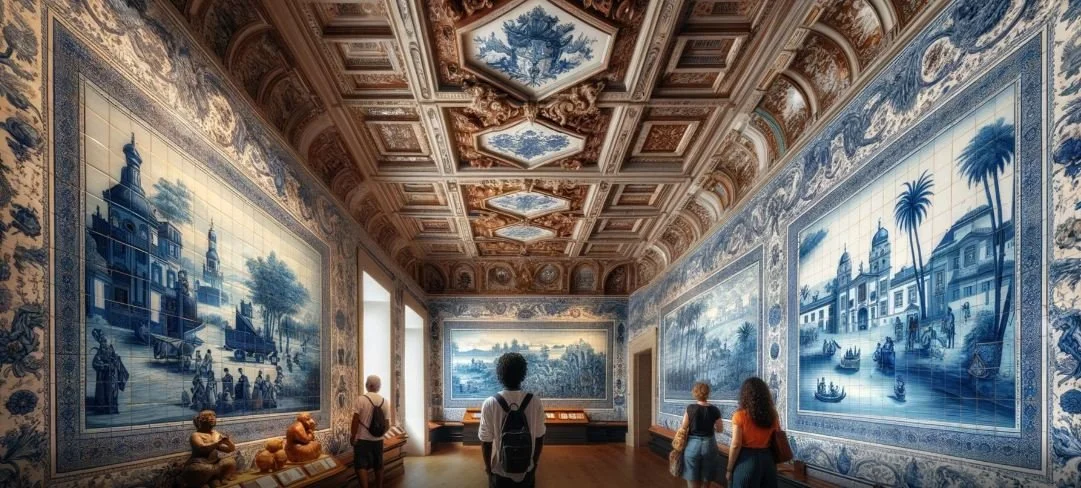
Unfortunately, the tile museum was closed. This is a sample of what we missed from the museum website.
Lisbon has so much more to offer than we had the time to explore, which only means one thing… we must return.
Tired and satisfied with our sightseeing day, we returned to our hotel to make plans for our next adventure… a trip south to the Algarve to visit some old cruising friends. Join us!