TIA - This is Africa

We've not complained much since we've been in South Africa, mostly because 1) we really love the country and the people and 2) we're visitors and are mindful of that. I guess I did spout out about load shedding once, but overall we've been pretty good. There's an expression here that we've heard time and again … TIA … This is Africa … usually used to explain to non-Africans why things don't always work out as planned or simply don't work at all. Lately, it's been more and more applicable. africa map
At the end of March, David ordered a part from the USA that he was unable to locate in South Africa. He paid for expedited service and the part arrived in Johannesburg within three days. Since that time, we have been waiting for the parcel to be sorted, clear Customs, put on a plane/truck to Cape Town and be delivered to us. Folks at the yacht club have been extremely helpful making calls, trying to locate the package, trying to expedite the processing … all to no avail. One day we hear the package is in Johannesburg, the next day we're told it's already in Cape Town and the day after that … it's in Johannesburg and hasn't cleared Customs yet. Subsequently, we went on a wild goose chase one day when we were told it had been sitting at the local post office for over a week. We spent an hour in the post office, only to be told it was still in Customs up in Johannesburg.

Phone calls to appropriate numbers go unanswered. E-mails are rarely acknowledged and when they are, there is no information available. The on-line tracking program doesn't have the package in the system yet, though it arrived three weeks ago. One woman indicated it was locked in a container at the Cape Town distribution center, but the postal workers were on a work slow-down and she wasn't sure when they'd get around to opening the container. To date, we're really not sure where it is or when or if we'll see it. Frustrating … you bet! But This is Africa.

In Search of Shweshwe

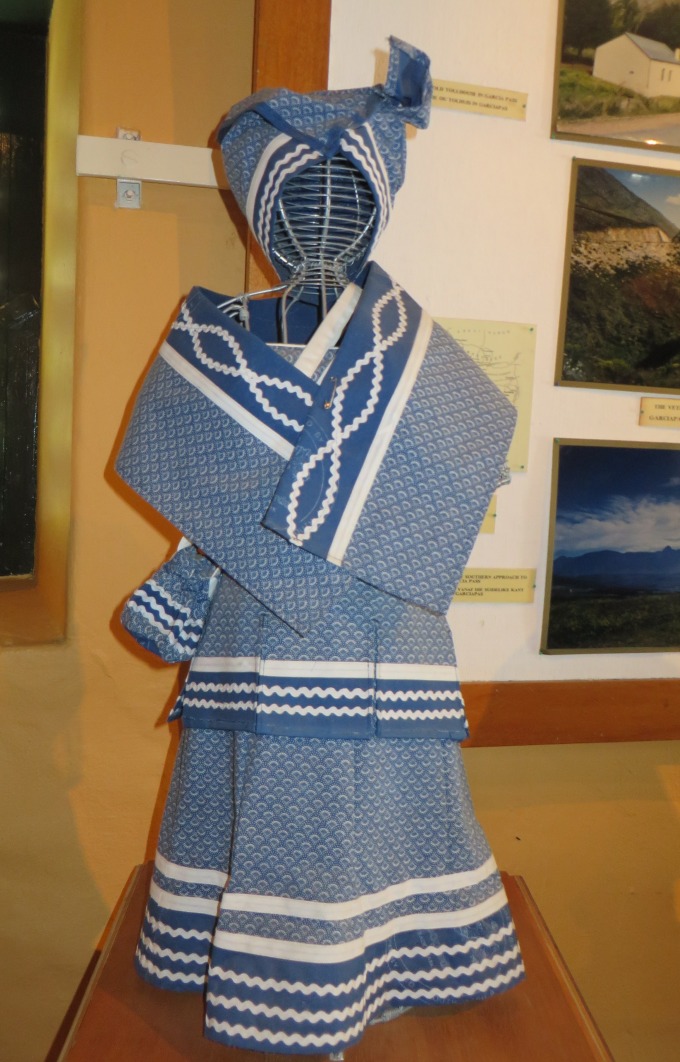
Sometimes I get sidetracked by some trivial thing I see or read about. While at the Dias Museum the other day, I was interested in an exhibit about a unique fabric known as “shweshwe” (shway-shway). It's considered the “denim or tartan of South Africa”, incorporating intricate geometric designs in a range of colors, but more traditionally indigo blue, and manufactured using an acid discharge and roller printing technique on pure 100% cotton calico. dias museum shweshwe display

Evidently, the early German, Dutch and eastern European settlers in South Africa were familiar with “blaudruck” (blue print) fabric, used by peasants and farmers, and brought it to South Africa with them when they emigrated here. The story goes that French missionaries gave Lesotho's King Moshoeshoe I (pronounced Mu-shway-shway) a gift of the blue print fabric in the 1840s. He liked it and it became popular with the locals as well as the immigrants. The name of the fabric was referred to thereafter as shweshwe or isi-shweshwe. Today, the same fabric is even used in high fashion.

high fashion shweshwe

I asked Brigita, a pleasant docent at the Dias Museum, about the current availability of shweshwe. She actually took the time to call around and found a shop right in Mosselbaai that sold it. We visited Lekker Lap Materiale the other day and sure enough, there were several shweshwe colors and prints available.

shweshwe assortment

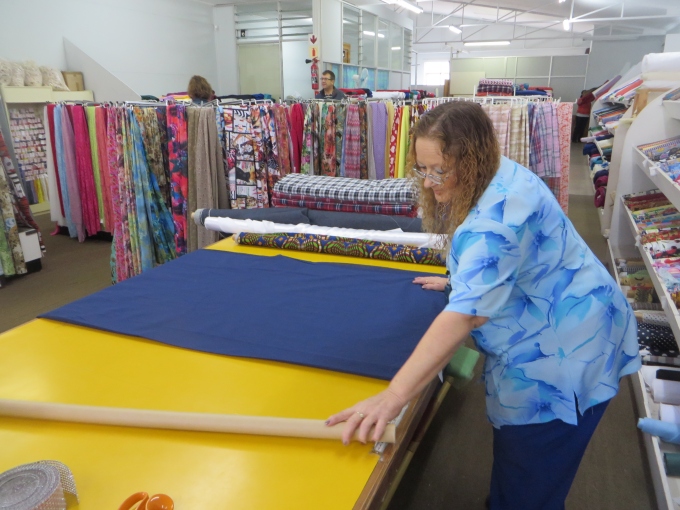
Corne (Cor-nay) was happy to help. I chose a more traditional blue print and purchased some.

corne cutting fabric

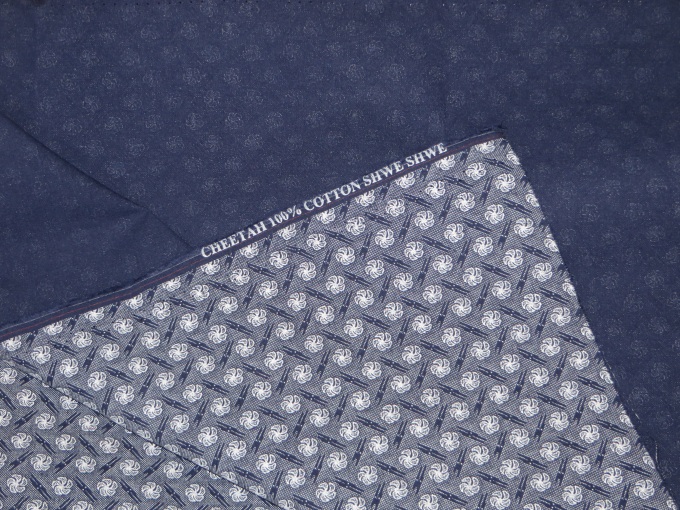
It had the official shweshwe mark on the selvage. I noted that it was printed on one side and solid on the other, one of the characteristics of shweshwe fabric.

officially shweshwe

Used for dresses, skirts, aprons and more, shweshwe is traditionally worn by newly married Xhosa women (makoti) and married Sotho women. After I knew what it was, I reviewed some of the pictures I'd taken of women in traditional dress in Durban and there it was … shweshwe fashion right before my eyes. By the way, evidently it is available in the USA and used primarily as a quilting fabric.

durban women wearing shweshwe

In Eastern Europe, the traditional blaudruck fabric was worn by women as a sign of solidarity during the socialist movement. Here in South Africa, shweshwe was worn as a political statement by white women opposed to Apartheid.

While at the fabric shop, Corne also pointed out a bright, colorful African pattern on a Dutch waxprint fabric (like batik) that was called Mama Africa. How could I resist?

mama africa fabric

So, what will I do with the fabric. Well, I've covered pillows with fabric showing local designs before and made aprons and placemats … Panama, Fiji, New Zealand. This time, however, I haven't given it much thought. It's a souvenir of Mosselbaai and South Africa and I'm sure I'll put it to good use … and it stows more easily than that 8' tall carved giraffe I wanted to buy.

Prince Henry the Navigator

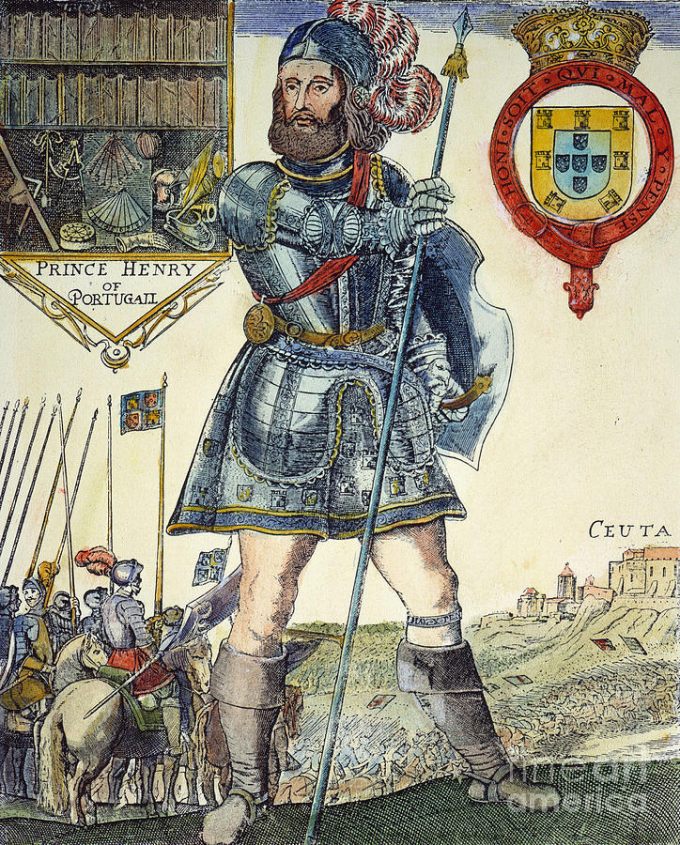
Today is Prince Henry the Navigator's birthday … as good a reason as any to celebrate. Born on March 4, 1394, this Portuguese prince, soldier, and patron of explorers, was an armchair sailor of sorts. He funded many expeditions from Portugal to explore the western coast of Africa, but never actually went on any of the voyages himself. Without a doubt, the safest way to sail and explore. henry the navigator

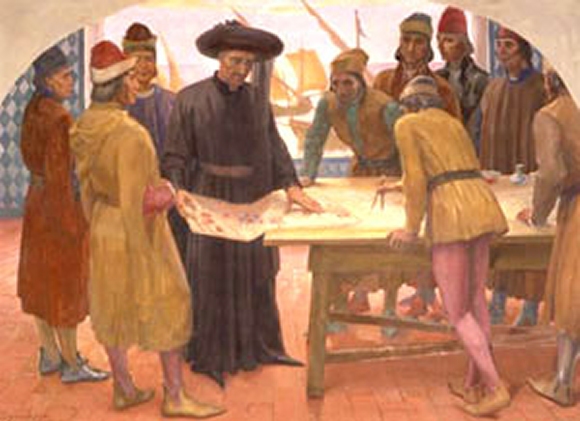
Instrumental in the launch of Europe's Great Age of Discovery in the 15th and 16th centuries, Henry was responsible for establishing the first European maritime school for ocean navigation c.1418 which included an astronomical observatory in Sagres, Portugal. He gathered together cartographers, mathematicians and navigators  to document and share their knowledge and learn from each other.  Their knowledge base of wind patterns, currents and trade winds in the Atlantic plus the determination of latitude were invaluable to the expansion of the Portuguese empire. Henry's goals were to chart the West African coast and beyond, establish trade routes and spread Christianity.

henry looking at charts

Up until Henry's sponsored voyages, the most southerly point explorers had managed was Cape Bojador, a rough stretch of water  off the coast of Africa's western Sahara Desert. Henry's sponsored voyages pushed further and further south resulting in the discovery and colonization of several Atlantic archipelagos like the Azores and Madeira.

henrys sponsored voyages

The development of the caravel, an easy-to-navigate ship based on existing fishing boats, was instrumental in furthering Portugal's discoveries.

the caravel

By 1462, only two years after Henry's death, the Portuguese had explored the African coast as far south as present-day Sierra Leone. Bartolomeu Dias reached the Cape of Good Hope at the southern tip of Africa in 1489. Vasco da Gama became the first European sailor to make landfall in India in 1498. It led to the discovery of Brazil and South America and ultimately, first circumnavigation of the world by the Portuguese explorer, Ferdinand Magellan.

As we get ready to sail around the bottom of Africa and round the Cape of Good Hope (previously known as Cape of Storms … hmmm) with some amount of anticipation, it's hard not to think of the bravery of early navigators and explorers and those who supported their efforts. They paved the way, little by little, to new worlds … not relying on charts and navigational aids as we do, but rather creating them as they sailed.

Happy Birthday, Henry … and thanks for your support.