
Life on the Hard
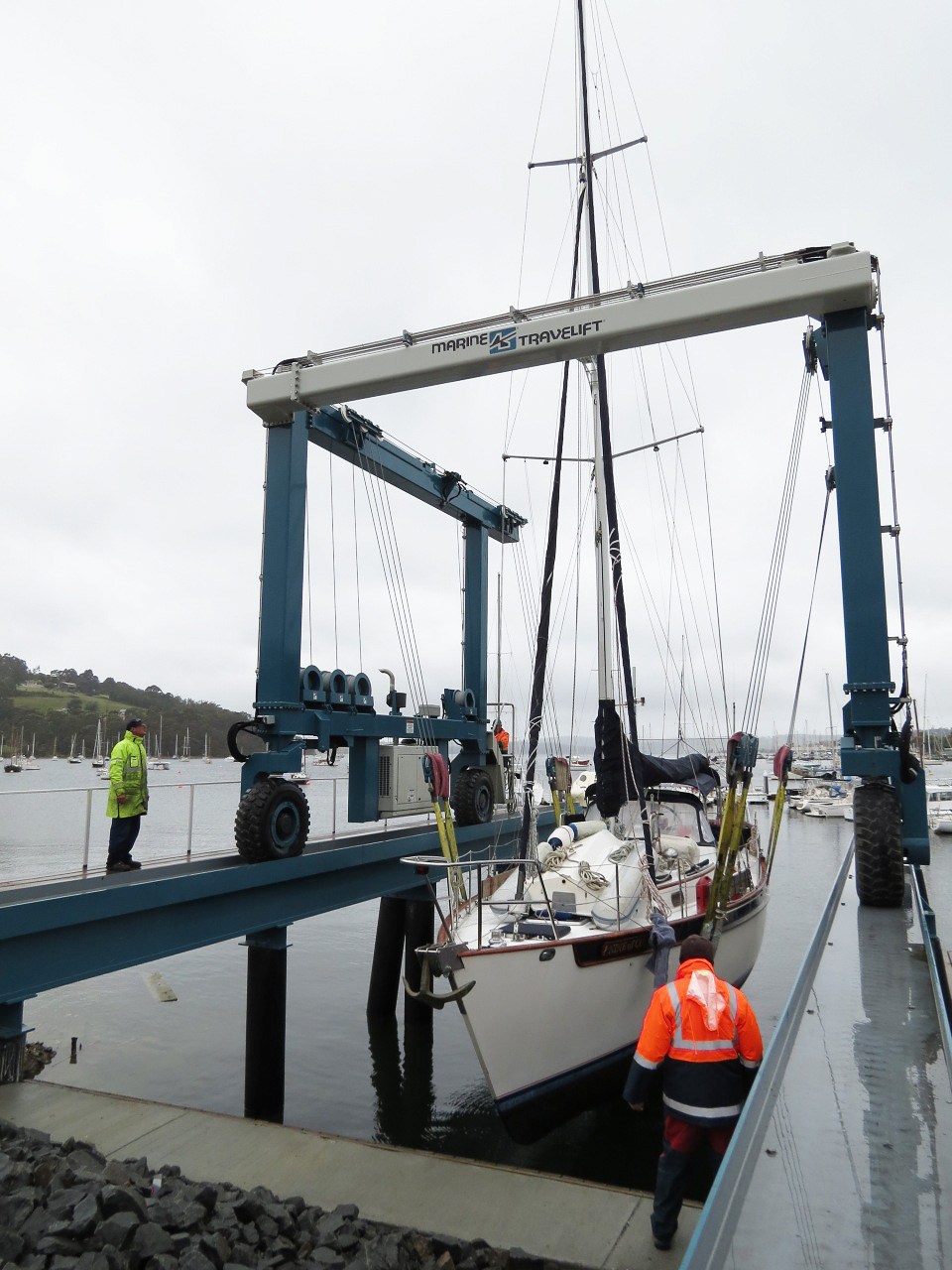
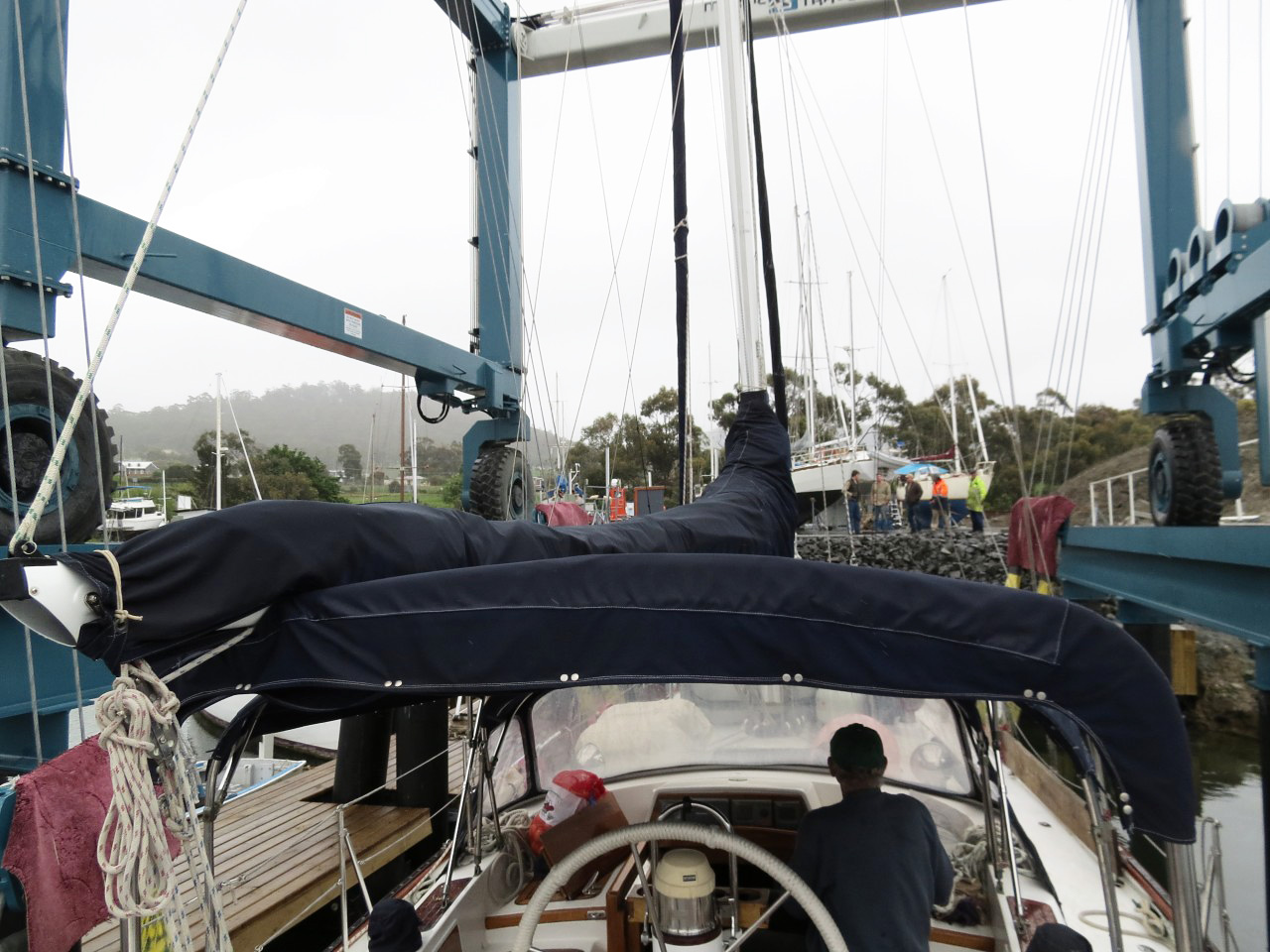
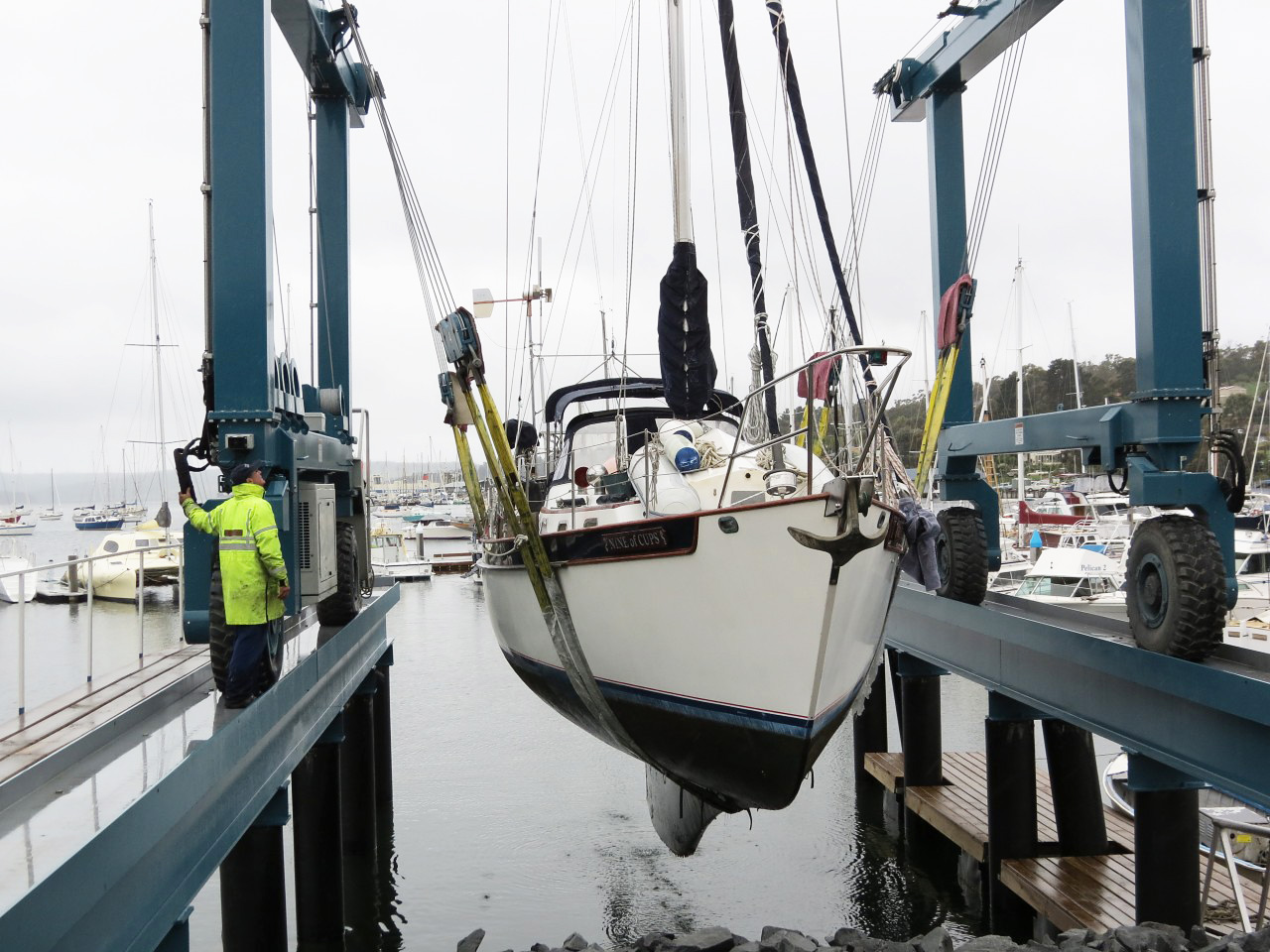
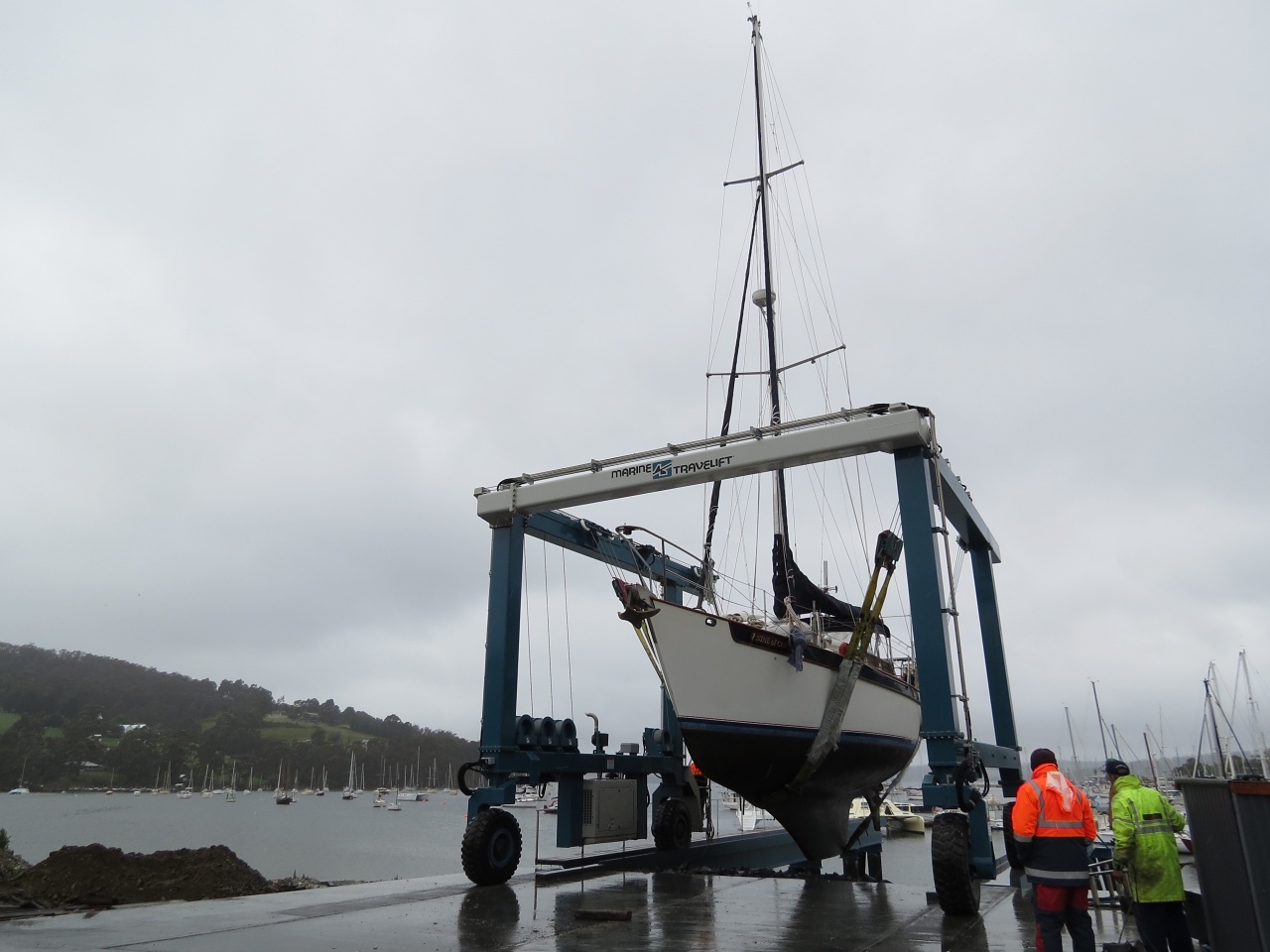
/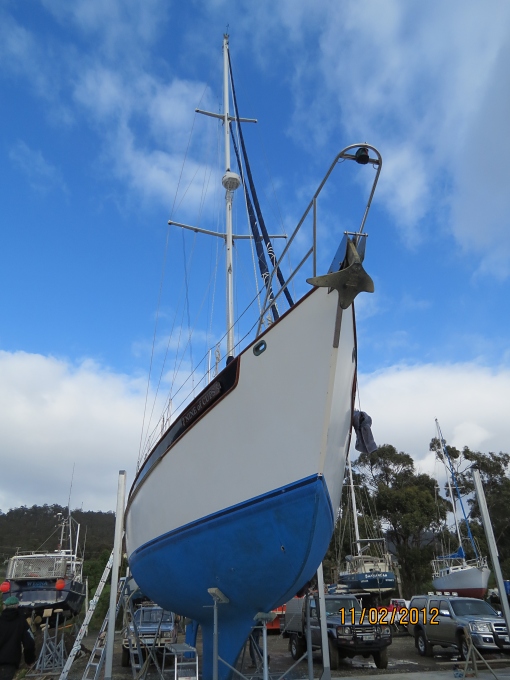 It's a hard life “on the hard”. Living on land is usually a pleasant treat for us once in awhile, but not when the boat is hauled out of the water and we're living aboard. Many times when we've hauled out for big projects like in Ecuador and Uruguay, we've rented an apartment or a little house locally to make life a bit easier and we'd bike back and forth to the marina. This time, however, we're only planning to be out for week or so, and we've opted to live aboard ... on a boat out of the water, 12' above the ground, propped up by stands strategically placed around the hull to prevent us from tipping over, accessible only by ladder.
 This is not the ideal life and certainly not one to be envious of. We climb up and down a vertical ladder to get on and off the boat. This is not an easy feat when 1) your hands are full going up or coming down or 2) you really have to go to the bathroom. The hands-full thing is easy. We use a line and heave or lower as necessary or even place things in a bucket for easy transport. Forgetting something up above or needing a tool down below in the middle of a project sometimes elicits curses.
 Having to go to the bathroom, on the other hand, is a real pain. We can't use the holding tanks when we're out of the water and thus, every time we need to go (which seems to be quite frequently at our age), we climb down the ladder and walk quite a distance to take care of our business. I counted 270 steps to the toilet block. David counted in yards and we compared measurements to determine that we're ~606' or close to 1/10 of a mile from the toilet. That's a long, long walk when you've really gotta go. We travel down the ladder, down a hill, across the slipway tracks, up a hill and, if it's rainy, through the mud, just to get to the toilet. I confess, we use a pee bucket for middle of the night needs. I'd rather carry the bucket to the toilet block in the morning and empty it out, than climb down the ladder at 2am.
Another issue, of course, is cleaning up after cooking. Where does the water go? Gray water usually just drains back out into the sea. On the hard, we can't do that. We usually stick a hose in the galley sink through-hull on the bottom of the boat and move a large bucket underneath. I use water sparingly to wash and rinse dishes, brush our teeth, etc and we empty the gray water bucket regularly.
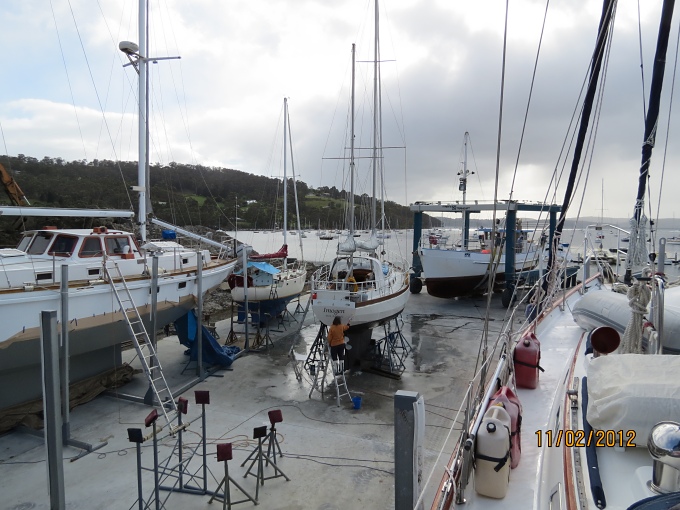 There are new and different sounds. Gone is the gentle lap of water against the hull and the usual boat sounds like the eeeek of the docklines as they stretch and strain or the crunch of the fenders between us and the dock. Instead wayward halyards are slapping or plastic tarps are flapping on nearby, unoccupied boats.
Everyone else here lives locally. There are no other liveaboards, so we're quite by ourselves in the evenings. When the wind whips through the boatyard, the boat shakes and shivers. She's well balanced and supported in her cradle, but she still shudders when the wind gusts and it's an unnerving feeling.
 Only a week on the hard is planned and it'll go by quickly with so much to do. There's nothing like a little inconvenience to make you appreciate what you usually take for granted.
On the positive side, our new altitude provides us with an absolutely commanding view of the boatyard. When we're not down on the ground working ourselves, we can watch all the activity going on around us from a front row seat, high above it all.
And, we now have three bars on our mobile phone.