Flotsam and Jetsam in the Indian Ocean

Have you watched the 2013 Robert Redford movie All Is Lost? It gives you pause for consideration if your plan is to cross the Indian Ocean soon. We watched the movie and actually enjoyed it though other sailors panned it as unrealistic if you're a real sailor. He made mistakes and perhaps didn't prepare for potential problems. Conversely, he did some pretty innovative things in an attempt to save his boat. There were some issues with details, but in general, we thought it was a reasonably good flick. The fact that his boat ending up sinking certainly didn't dissuade us from wanting to cross the Indian Ocean.  

all is lost


There seems to be an inordinate amount of flotsam and jetsam in the Indian Ocean however. First, let's define flotsam and jetsam. Flotsam is debris floating in the ocean that got there by accident and it apparently comes from the French word floter, to float. Jetsam, a derivative of jettison, is debris floating out there that was deliberately thrown overboard, perhaps from an overburdened vessel. You've heard of the horse latitudes, haven't you? There's a lot of both flotsam and jetsam floating around out there, we imagine. We've certainly seen what washes ashore and it's got to float in from somewhere.


flotsam on the beach


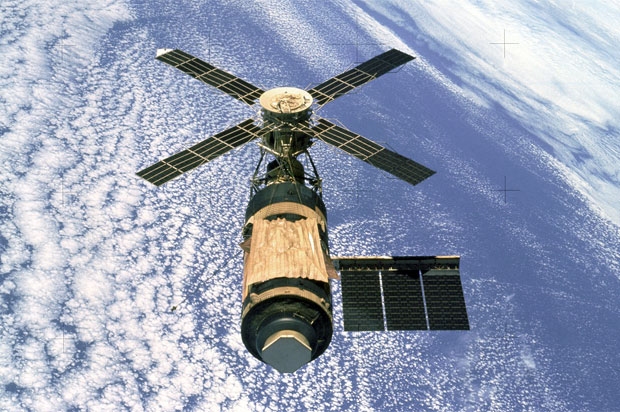
There's the possibility of finding some debris from the Malaysian Airline Flight 370 that purportedly disappeared over the Indian Ocean. Those loose ship containers are found in the all the oceans including the Indian. The odds of hitting one are low, and we're hoping since Robert Redford found one, we won't. And don't forget that the SkyLab crashed over the Indian Ocean back in 1979. Though much of the debris ended up near Esperance in the Australian Outback, who's to say that NASA didn't do a thorough enough clean-up and there's still SkyLab remnants floating around in the Indian? I think it would be classified at jetsam, by the way.


skylab


In case you're wondering, we also read and watched The Perfect Storm way back when we were first started out on Nine of Cups in 2000. We actually anchored in Gloucester Harbor, Massachusetts, the home port of the fishing vessels involved. It did not deter us from sailing, but big waves certainly get our attention as do “perfect” weather patterns. We'll try to avoid both.

Crossing the Indian Ocean - Mauritius to Durban Days 3-5

madagascar

madagascar

Day 3 Miles to go:  1369 nm

We had originally planned to stop at the French overseas territory of Reunion Island only 120 nm from Mauritius. We'd heard good and bad about it. The marina in Le Port was in an industrial area and a rental car was necessary to get anywhere. The marina at St. Pierre was in a great downtown location, but the entrance could be difficult and the port was closed in bad weather, making a speedy departure a challenge. In the end, Neptune made the decision for us. We were delayed in Mauritius long enough to make a reasonable stay in Reunion imprudent, given the imminent onset of cyclone season. A day for check-in and getting settled, a day to check-out and no time to see the island in between.

We weren't feeling all that good as we sailed past Reunion,  so changing our plans wasn't in the cards. La Reunion is a high, volcanic, mountainous island and yet from only four miles out, all we could see was the hazy outline of a land mass shrouded in heavy, grey clouds and mist ... not much more than a blurry smudge on the horizon. It looked as of the French were deliberately trying to hide it from us. No matter, we gave it short shrift and passed on by. When darkness approached, the island was more prominent, its ghostly loom illuminating the night sky for miles and miles behind us.

We're seeing lots of ships during our watches ... several heading to Durban , just like us. So far, none have come all that close and for that we are thankful. Also, thankful to be among the living again.

Day 4 Miles to go: 1226 nm

We rigged the pole yesterday afternoon when the wind backed to the east. By nightfall, it had clocked south/southeast again and we were beam-reaching again. Errant clouds have been sprinkling on us, but for the most part, we're enjoying sunny weather by day and clear skies at night. We're in the midst of a huge high pressure area at the moment, but the GRIBs are showing a low pressure making its way east. We're giving the south coast of Madagascar a wide berth, nearly 150 miles. Its southern coast is known for huge freak waves which we'd prefer to avoid.

We had been doing fairly well distance-wise each day, but we've slowed down a bit. Otherwise, all is well and we're pretty much in the watch groove now.

Day 5 Miles to go:  1129 nm

Though it felt like we were making reasonable speed with the 12 knots of wind we had at our disposal, the GPS showed us going slower and slower as the night progressed. We switched the pole to the port side again around dusk, preparing for the winds to switch to the north. By 0300, we were limping along under 3 knots and by the 10am log, we'd sailed under 100 miles for the 24-hour period. What's up?

It could only be a couple of things. There was enough wind and we had all the sails out and trimmed, so that wasn't it. We could be dragging something ... part of a jetliner, or a whale, or maybe a container, or a longline net with a fishing boat attached? Without actually checking the hull and rudder, the best we could do was hang over the side and stern to see if we could see something. There was nothing apparent.

We thought initially it might be current, but in checking the Indian Ocean pilot for currents in the area in November and December, if there was any current at all, it should have been helping us. David had removed the speed transducer when we got to Port Louis because the marina was so foul and had forgotten to replace it when we left. Since it was the only thing we could think to do short of heaving-to and going overboard to check Cups' bottom, he re-installed it and ..mystery solved. An adverse current of  nearly  2 knots had been impeding our progress for over 15 hours.

We switched the pole once again and headed due west with hopes of evading the current. Sure enough, within a couple of hours the GPS speed and the speed through the water were in sync. There's still a good chance we'll make it to Durban by Thanksgiving. No more delays, please!

Continue on our Indian Ocean crossing here.
Crossing the Indian Ocean - Mauritius to Durban Days 1-2

durban mileage 1605

durban mileage 1605

Day 1 Beginning mileage:  1605 nm

No matter how ready we are to leave, we're never really ready till we're casting off the lines. There always seems to be a hectic rush doing all those last minute things that need to get done.

We were up at dawn making Skype calls to family, letting them know we were heading out and wouldn't be calling for a couple of weeks. David washed down the decks as they were filthy with Port Louis dust and grime; then he filled the water tanks. We plugged in everything to charge while we still had shore power...iPads, camera batteries, toothbrush, Davids razor.

I was busy in the galley. Chicken and rice passage soup, a coffee cake, extra rice for a rice salad in a day or two. I sent last minute emails and blog posts and posted on Facebook. Last minute cleaning and trash disposal. We took showers...our last good, hot showers for a couple of weeks.

We walked down to the market to spend our last Mauritian rupees on bread and fruit. We did an excellent job ... not a rupee left. Last, but not least, we headed to the Customs and Immigration office to check out of the country and get our clearance papers for Durban, South Africa. We had one hour to return to the marina and get out of Dodge. We were ready.

We sprung off the dock. David torque-turned Cups in the narrow channel while I coiled lines and stowed fenders.Ten minutes out into the harbor, an alarm went off. The starboard battery was overcharging. We pulled off to the side of the channel, dropped the anchor quickly and killed the engine. David sussed out the problem and corrected it immediately. He'd just equalized the batteries and a switch had been left in the wrong position. We were on our way again within the hour.

The S-SE winds we were expecting ended up being light noserlies ... from the WSW and right on the nose ... just like the swell. We motored for a few hours, frustrated with Neptune's pranks, but there wasn't much we could do about it. By1800, we had cleared the end of the island and the wind was a bit more southerly allowing us a tight point of sail. We were close-hauled,  but at least we were sailing.

We dined on passage soup and Saltines and settled in to our watch schedule.

Day2 Miles to go:  1491 nm (at 10am - 19 hour day)

Not much writing was done after we began our night watches. The wind picked up, the waves grew. We were still close-hauled, hard on the wind. We were heeled over, the starboard rails swallowed up by the sea. First came the slight headache, then the nausea, then seasickness like we'd not experienced in quite awhile. The puking onto the side deck, can't catch your breath, it would be okay to die now kind of seasickness. Nothing stayed down...not water or meds.  We heaved till our stomachs ached and our throats were raw. It was an endless night of long, cold watches accentuated by retching and nausea and dizziness. And then, the night faded into day, the seas calmed, the winds backed to the SE and we regained our sea legs. Another of Neptune's little tests.

As I write, we're both feeling much better, thank you very much. It's always worse when it's happening, and not as bad in retrospect although we'd prefer not to relive it any time soon.

Making slow but forward progress. Hoping to arrive in Durban in time to celebrate Thanksgiving.

Continue on our Indian Ocean crossing.