
Crossing the Indian Ocean - Mauritius to Durban Days 6-8
/
Day 6 Miles to go: 1006 nm
The past few nights have been very clear, so stargazing has taken up chunks of my night watches. My favorite constellation, Orion, is directly overhead when I take over the watch at midnight. I always greet him like an old friend "Hello, Orion!", and figure he's standing watch with me. I admit to talking to stars, the rising moon, the rising sun and a planet (usually Venus) quite regularly. They don't answer, but they're good listeners. Talk to other cruisers, this isn't all that abnormal.
The rising moon usually gets a lot of attention because although I know it's going to be rising in the eastern sky, it nearly always startles me when I first see it. Bright lights on the horizon at night are usually ships. The moon does a kind of head-fake thing, showing herself, ducking behind a cloud, and then bursting up from the pitch black horizon, all bright and yellow and huge. I invariably do a double-take, get a tiny adrenalin rush and then sigh, "It's only the moon." I chide myself because I'm fooled like this quite often. David admits to the same thing ... startled by a stealth moon.
The weather forecast isn't all that encouraging for the next 24 hours. Southwest winds (those would be nose-erlies once again) and big southerly swells 17-21' (5-6 m) probably remnants from a nasty low way south of us. Don't worry about what you can't control. Just be ready for it. Heaving-to might well be in our future.
Day 7 Miles to go: 1001 nm
A grey sky and another darned adverse current greeted me on my 0600 watch. We figure the island of Madagascar causes all kinds of errant eddies and current deviations even though we're more than 100 miles offshore.We're finding them all, it seems, and you can only imagine our frustration as we watch our speed and mileage drop by a knot or more for hours at a time. The wind was steady from the NNE at 15 knots.
The sun rose, but hid himself behind a mottled sky. Patches of washed-out blue showed through every once in awhile, but were gobbled up quickly by massive grey clouds that portended a crappy day ahead. How many shades of grey are there?
Around 1500, the wind died. We had dead calm and black clouds gathered in tight thin bands before us. Trouble ahead. Maybe just a squall, but based on the forecast, probably not. We reefed the main and pulled in the staysail and waited. It didn't take long. As fast as you can say, "Here it comes!", the wind switched to the south with a mighty vengeance and climbed to 30 knots. We tacked. Waves built quickly and crashed on the bow. We were close-hauled once again and the ride was miserable ... tough on Cups and tough on the crew.
We hunkered down below, both cuddled up on the starboard settee with the iPad and remote instrument control on the saloon table in front of us. It was too nasty to read. We dozed. It was too yucky to even chat. We each took a Stugeron in hopes of staving off the dreaded mal de mer. By 1800, with waves continuing to build and Marcie succumbing to seasickness, we hove-to. The noise subsided almost instantly and life below became somewhat tolerable. The wind gen was having problems and while Marcie attempted to sleep away the nausea, David attempted to fix the wind gen issue. After over an hour, with David hanging precariously over the rail, he was successful. Marcie was not. We decided to wait it out and remain hove-to. Dinner was easy enough. I'd prepped it earlier in the day. David took over the cooking ... a meal for one. I was down for the count.
We hove-to all night long. Marcie mostly slept. David mostly didn't. Heaving-to is like parking the boat in the middle of the ocean using the mainsail and jib in counterbalanced positions ... not to be confused with Marcie's type of heaving. Cups just floats over the waves. Comparative to the bucking, rolling and pitching we'd been experiencing, this was heaven. Typically, when hove-to, Cups drifts a half knot or so each hour. Aided by the strong SSW wind and the east setting current, we found ourselves drifting northeast 3-4 knots/ hour. All those hard fought miles and we were drifting backwards!
By 0600, we were ready to tackle the winds and seas again. The winds had lessened a bit to the mid-20s, but were still howling from the SSW. The waves were 12-15', but at a 12-second period, so tolerable. It was grey and raw. The sea was all churned up and foamy. The wind lopped the tops off the waves like a guillotine. David adjusted the sails ... a double-reefed main, a reefed jib, a little staysail ... and we pointed Cups in the right direction again, looking to recover those lost precious miles and make some forward progress.
The morning mileage tally told the sad tale. We'd sailed a paltry 83 miles in the last 24 hours ... 32 miles backwards and only 5 miles to the good. Just for kicks, David calculated days remaining in the passage at today's average speed, a whopping .2 knots/hour. 5002 days! For sure, I haven't provisioned nearly enough. If only we could walk on water, we'd get there much faster.
Day 8 Miles to go: 923 nm
The sky has remained grey and the wind is a constant blow from the southwest, but seems to be slowly lessening. The barometer is rising slowly. Perhaps the worst has passed by. We've not transmitted or received SailMail in the last day or so, but our 2-day old forecast indicates this weather should move on to plague some other sailor in about 24 hours. We're hoping it's still accurate because we're watching the clock.
The going is still slow. The 1-knot counter-current still has us in its grasp and why wouldn't it? We're sailing the same track we did yesterday and at Noon today, we still have 13 miles to go to make up for our lost mileage yesterday. (Note:I just re-read this and thought "Boohoo, poor Marcie, is feeling sorry for herself." Nah, don't think that at all. This just gives a picture of what living aboard and sailing is like ... some good, some crappy. Just like life, in general .. not all beautiful sunrises and sandy beaches.)
As I sit in the cockpit, getting knocked about by the wind and waves, but still comfortable enough, I daydream. No reading or writing possible at the moment. I think of luxurious, hot showers that wash away the salt and grime of a long, hard passage. I think of the pleasure and relief when Nine of Cups is berthed and her dock lines are secure and tidy in the Durban Marina. I think about roasting a small turkey that barely fits into the galley oven and that will cost us a small fortune, but we'll buy it anyway. I think about shopping for all the things that will make our Thanksgiving a particularly special and traditional occasion for us, like cranberry sauce and a pumpkin pie. Just the shopping excursion itself will be a pleasure. I conjure up all these images and more, and while the waves are crashing over the bow and the wind shrieks through the rigging, I can't help but smile at the things we sometimes take for granted.
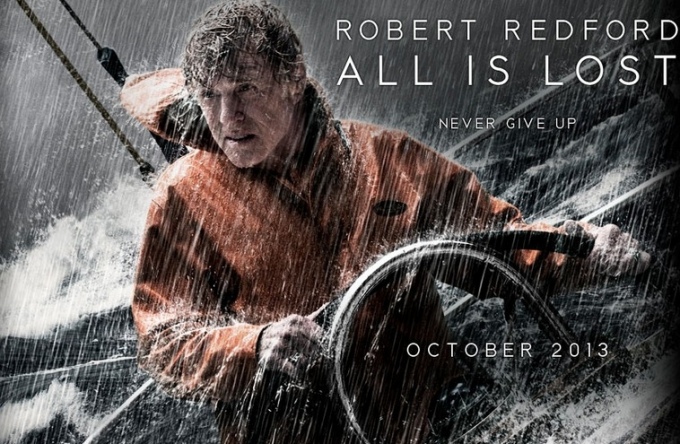
 ? It gives you pause for consideration if your plan is to cross the Indian Ocean soon. We watched the movie and actually enjoyed it though other sailors panned it as unrealistic if you're a real sailor. He made mistakes and perhaps didn't prepare for potential problems. Conversely, he did some pretty innovative things in an attempt to save his boat. There were some issues with details, but in general, we thought it was a reasonably good flick. The fact that his boat ending up sinking certainly didn't dissuade us from wanting to cross the Indian Ocean.

 way back when we were first started out on Nine of Cups in 2000. We actually anchored in Gloucester Harbor, Massachusetts, the home port of the fishing vessels involved. It did not deter us from sailing, but big waves certainly get our attention as do “perfect” weather patterns. We'll try to avoid both.