
CPR – Teaching an Old Dog New Tricks
/
I haven’t taken a CPR course in 40+ years. I was feeling a little rusty (in more ways than one!). Last time, my employer paid for the class, which was offered to company employees. This time, as a Red Cross volunteer, I was given the opportunity to take a course along with seven other people, all seeking certification for their jobs.
The course was very different from the one I took in the 1980s. First of all, the course was entitled “Adult First Aid/CPR/AED”. Quite a lot to include in a 3-1/2 hour session. The entire class was a PowerPoint presentation interspersed with videos versus the lecturing instructor of yesteryear. Because we previously worked for Burdick, an ECG company, and they sold AEDs, I was familiar with them, but had never used one. Why would I? AEDs were not available for public commercial use till the mid-1990s, so this part of the program was all new to me.
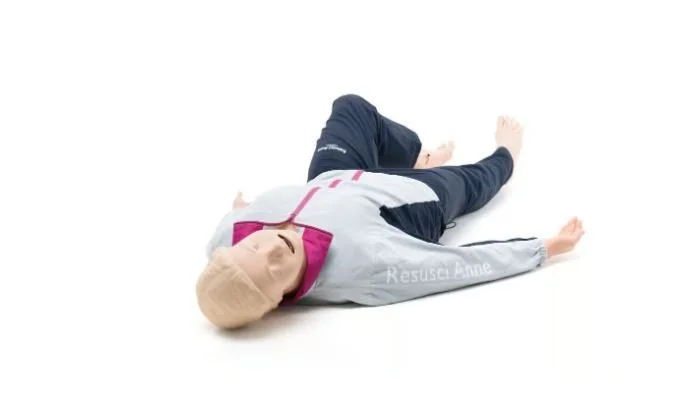
In my initial course, CPR training mannequins (aka "Annie") were used. No more Annie... my mannequin was a half-torsoed guy without a name. He’s manufactured in the USA by PRESTAN, which touts that this “Ultralite Manikin is our most portable manikin, easy to transport & ship and simple to set up, use & clean. Equipped with visual chest rise and available with or without CPR feedback.” We had no CPR feedback, and though we followed instructions to a tee, PRESTAN still seemed unresponsive.
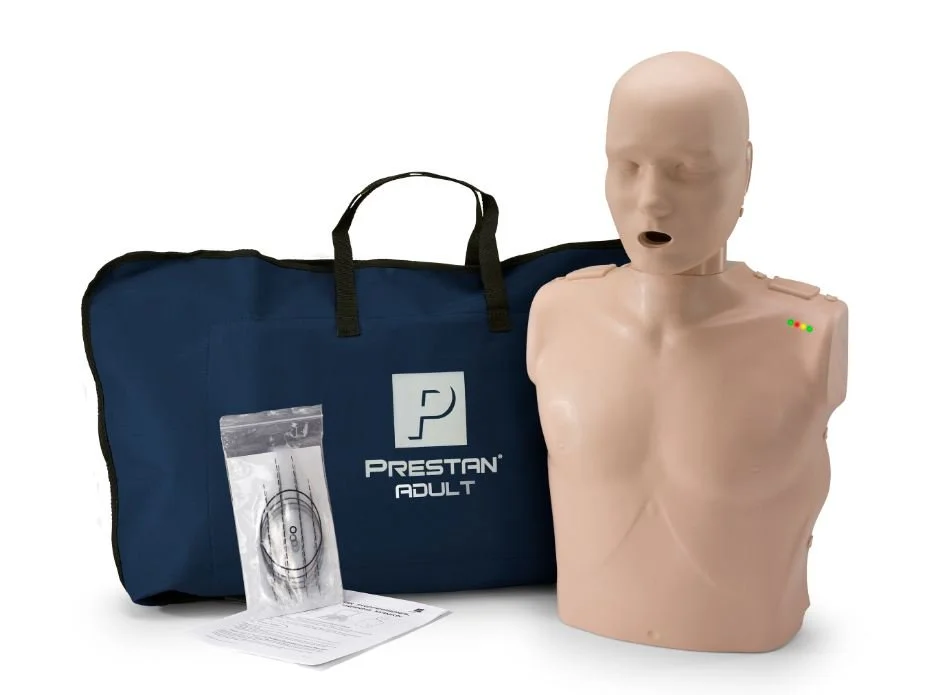
Back in the 80s, direct mouth-to-mouth was the accepted standard for breath resuscitation. No more. Now, a face shield is recommended (single-use only), and one was distributed to each participant. We attached the shield with straps around PRESTAN’s ears, tilted his head back, pinched his nose, and blew through the shield. Seemed awkward, but that’s the current standard. His chest did rise as we blew breaths of life into him.
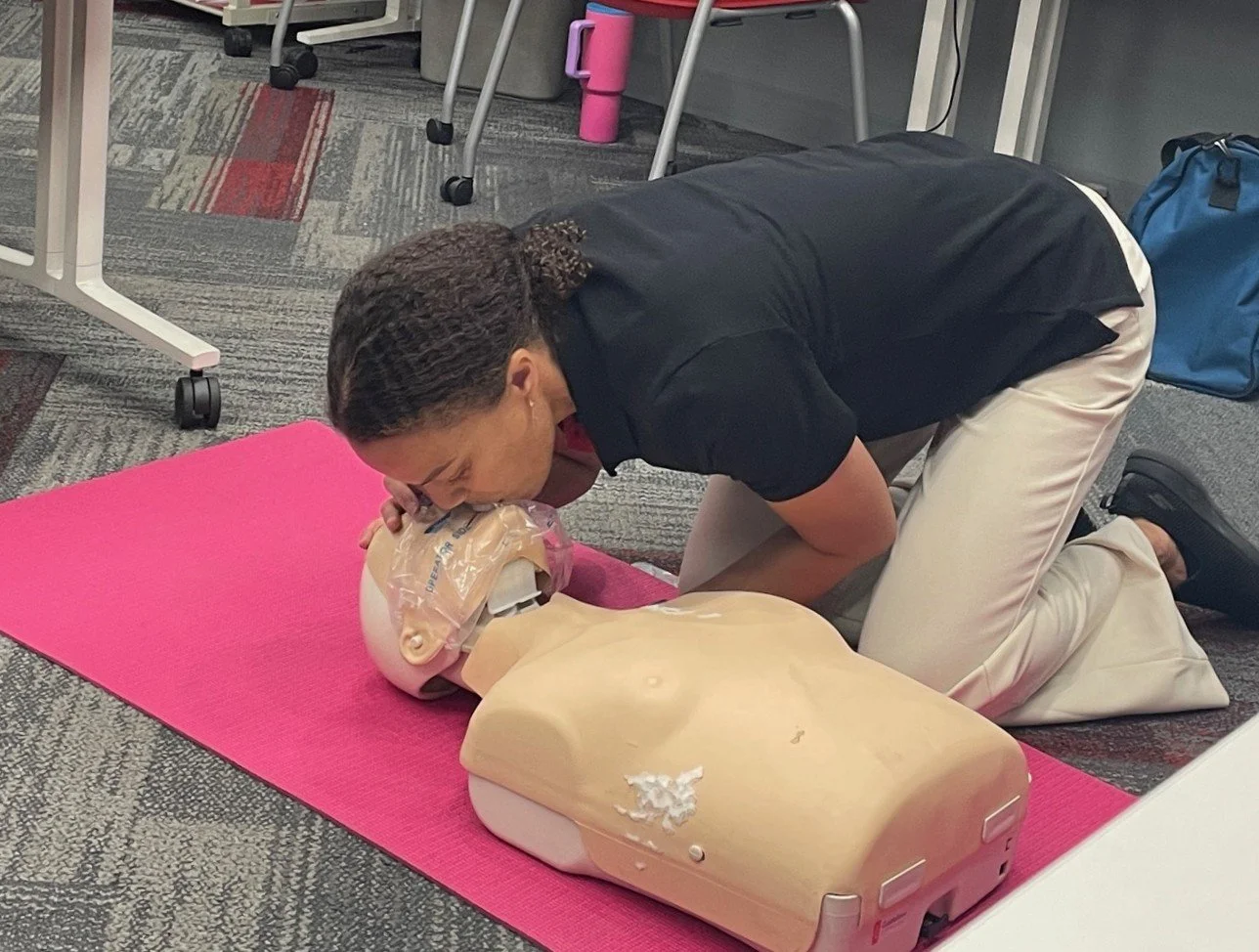
Serita, our instructor, demonstrates mouth-to-mouth using a face guard
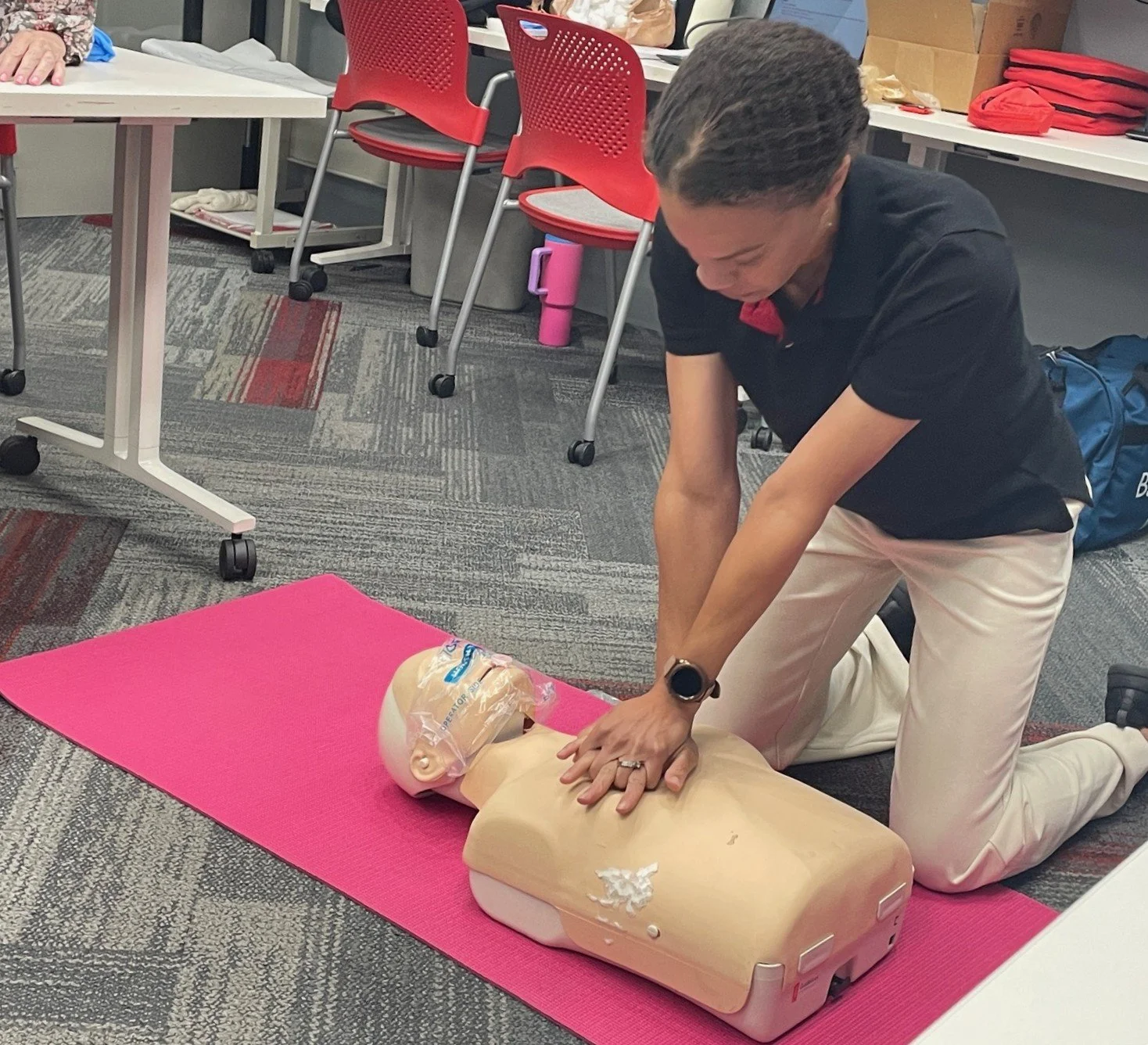
Chest compressions demonstration
Another thing I don’t remember from the old class. We had to ask for consent to treat. If the individual was ‘unresponsive’, it was implied that we could proceed. Otherwise, we needed to tell the injured, cardiac-arrested, and/or choking person that we were trained in first aid and CPR and we could help them. Did we have their permission?
Using the AED (Automatic External Defibrillator) is pretty foolproof. Ours talked to us and led us through every step. The setup took seconds, and the placement of the two leads was shown in a diagram on the unit. The instrument analyzed the patient’s heart rhythm and determined if an electric shock was necessary to restore normal heart rhythm.
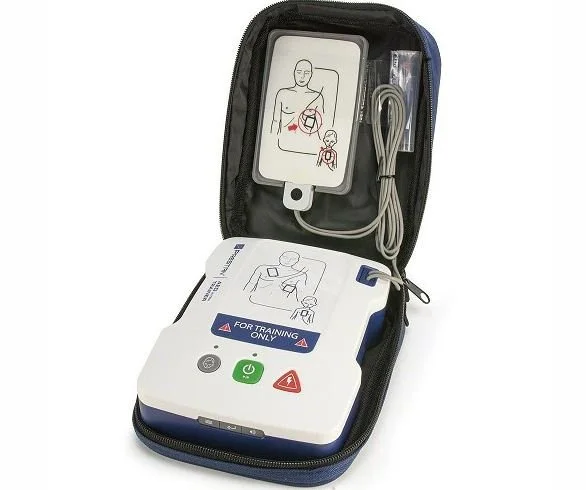
PRESTAN AED Trainer from the AED Superstore
Since we were using ‘training instruments’, the AED told us that our patient needed a shock. We were prompted to remove ourselves from the patient, say ‘CLEAR’ while the unit charged, and then CLEAR once again as the magic button delivering the shock was pushed. No actual shocking occurred since PRESTAN really didn’t need the boost. Like the tin man, he had no heart.
Everyone relished saying ‘CLEAR’. It was heard loud and strong multiple times during this section of the training… made us feel as if we were in an episode of ‘ER’ or ‘Chicago Med’.
We learned what I previously called the Heimlich maneuver which the Red Cross calls a "five and five" method (five back blows followed by five abdominal thrusts). We practiced on each other and only simulated the maneuvers since a proper abdominal thrust could potentially break a rib.
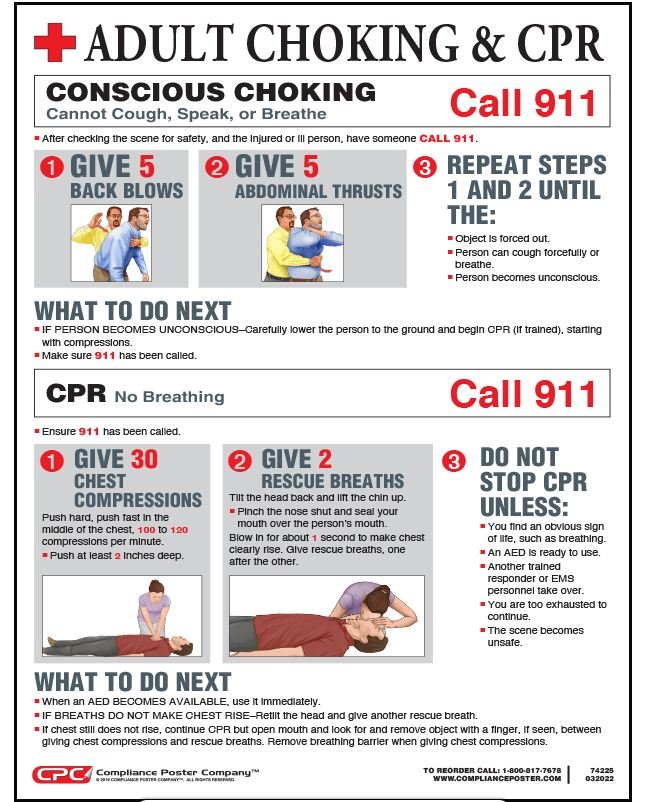
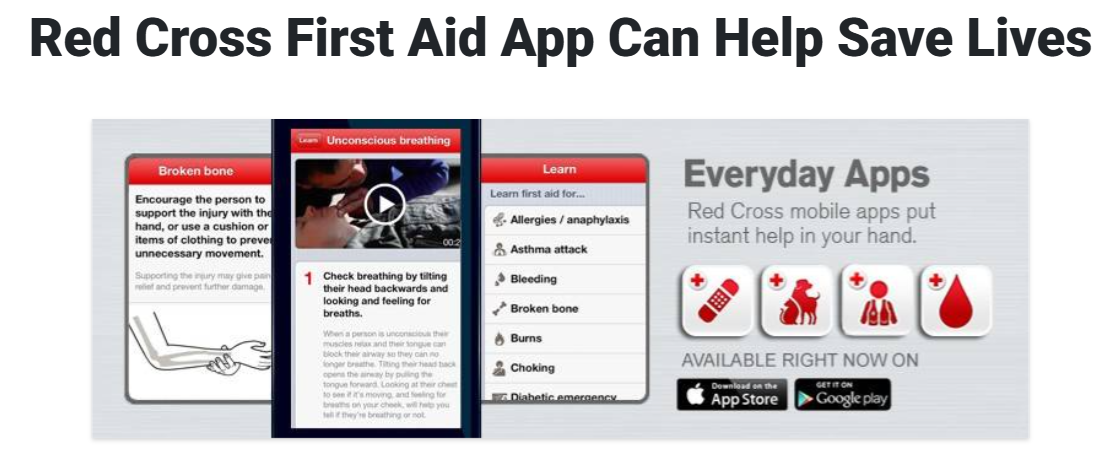
We moved on to First Aid, which included all the usual suspects: choking, cardiac arrest, bites, stings, hypothermia, heatstroke, burns, bleeding… You get the picture. We glossed over each potential emergency, but were encouraged to download the Red Cross First Aid app, which I did. It’s pretty comprehensive and offers good advice for on-the-spot emergency care.
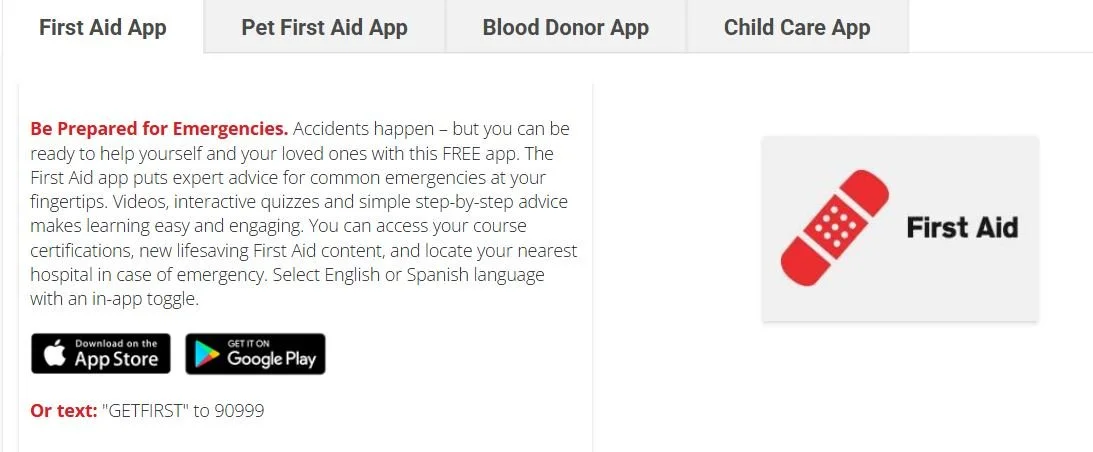
I downloaded the free Red Cross First Aid app just in case
Throughout the class, the key words Check, Call, Care were stressed over and over. Check your surroundings to be sure they’re safe to proceed. Call 911 or emergency services immediately. Provide care according to your training until professional help arrives.
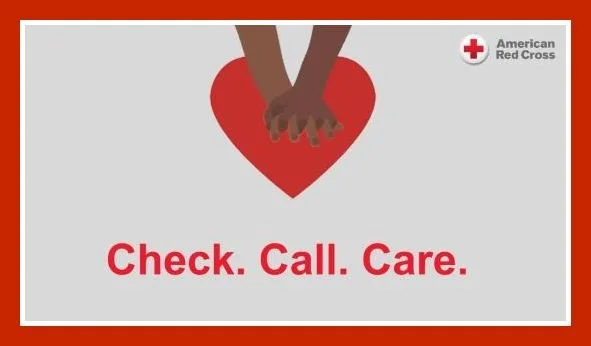
By the end of the class, my team of three was congratulating itself. We’d resuscitated three people, aided several others, kept several people from choking and bound the wounds of three others. A pretty good day all around.
Do I feel ready to handle any emergency that comes my way? Absolutely not, but I feel more prepared than I did before the course. Having the Red Cross First Aid app on my phone seems like a good idea… just in case. By the way, they have an app for Pet First Aid, too. Just Google Red Cross First Aid… It’s a free download.