

Nevada's Ice Age Fossils State Park
/
Opened in January 2024, Ice Age Fossils State Park is Nevada’s newest state park. It’s a 315-acre park in the Tule (TOO-lee) Springs area that highlights the area’s wealth of paleontological and historical riches. They refer to it as “A New Park With Old Bones’. Adjacent to Tule Springs Fossil Beds National Monument, which we’ve visited previously, both parks work jointly to protect these prehistoric specimens.

Ice Age Underwater - Beneath the Surface- Tule Springs by Beth Zaiken
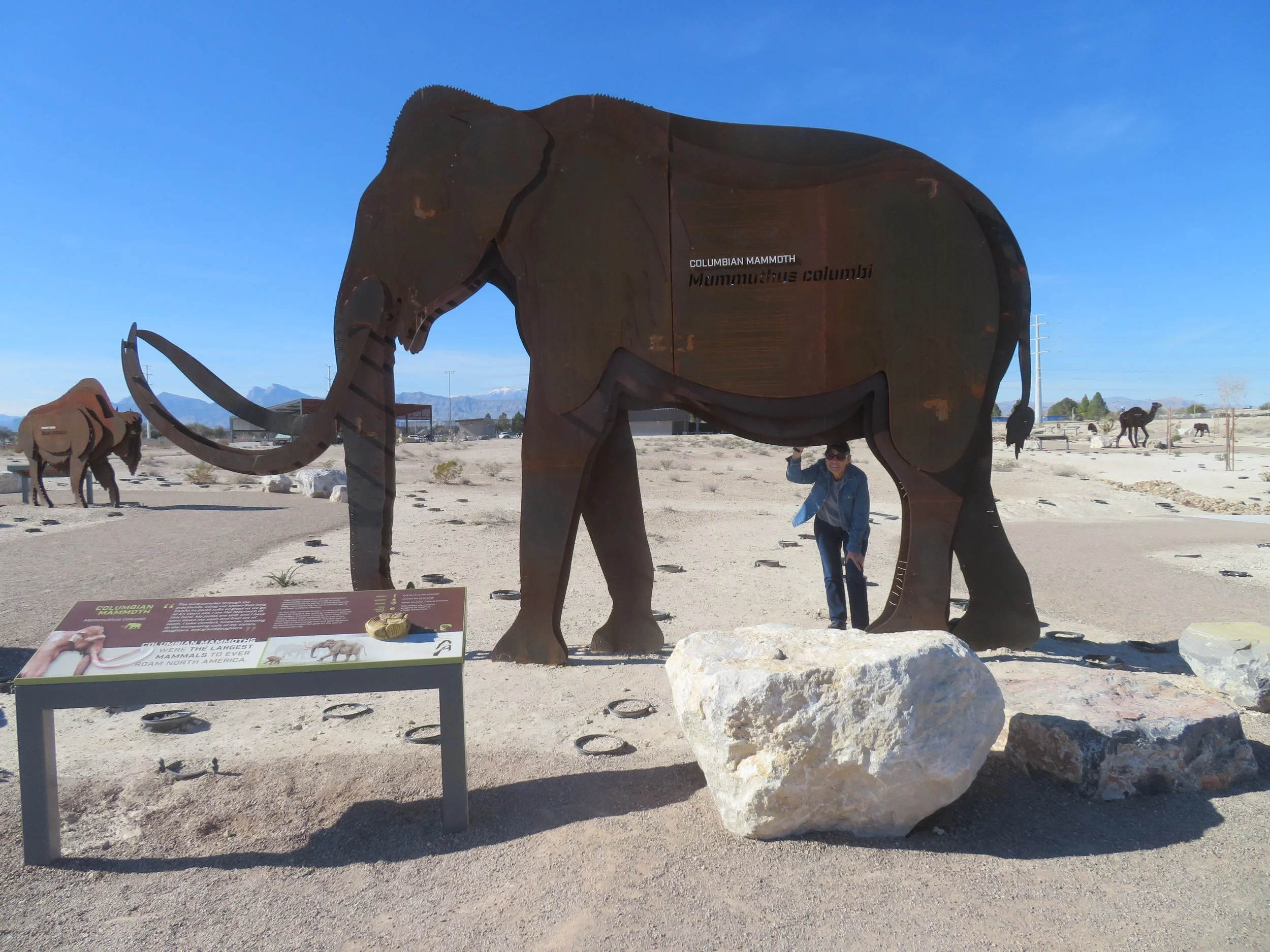
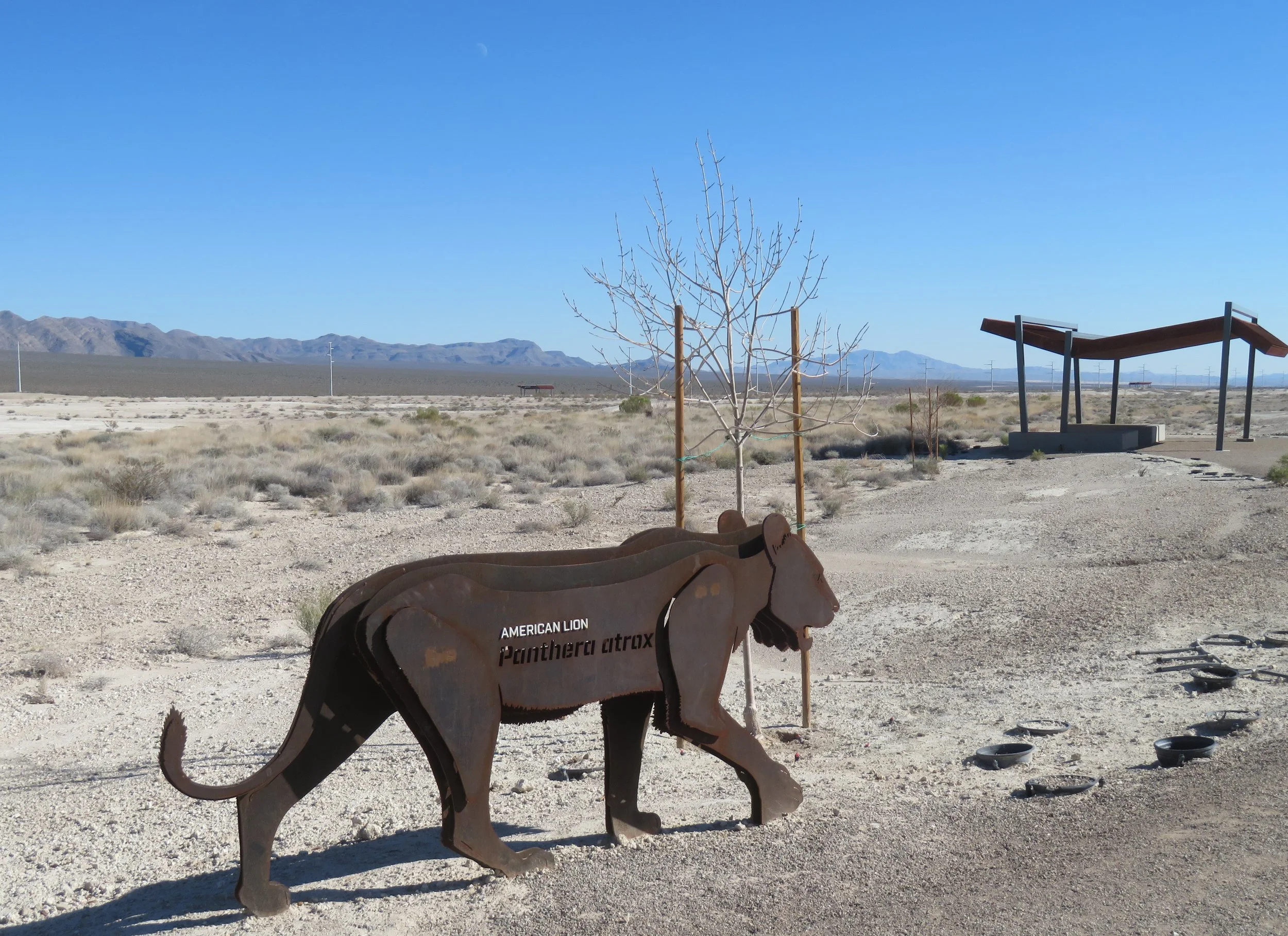
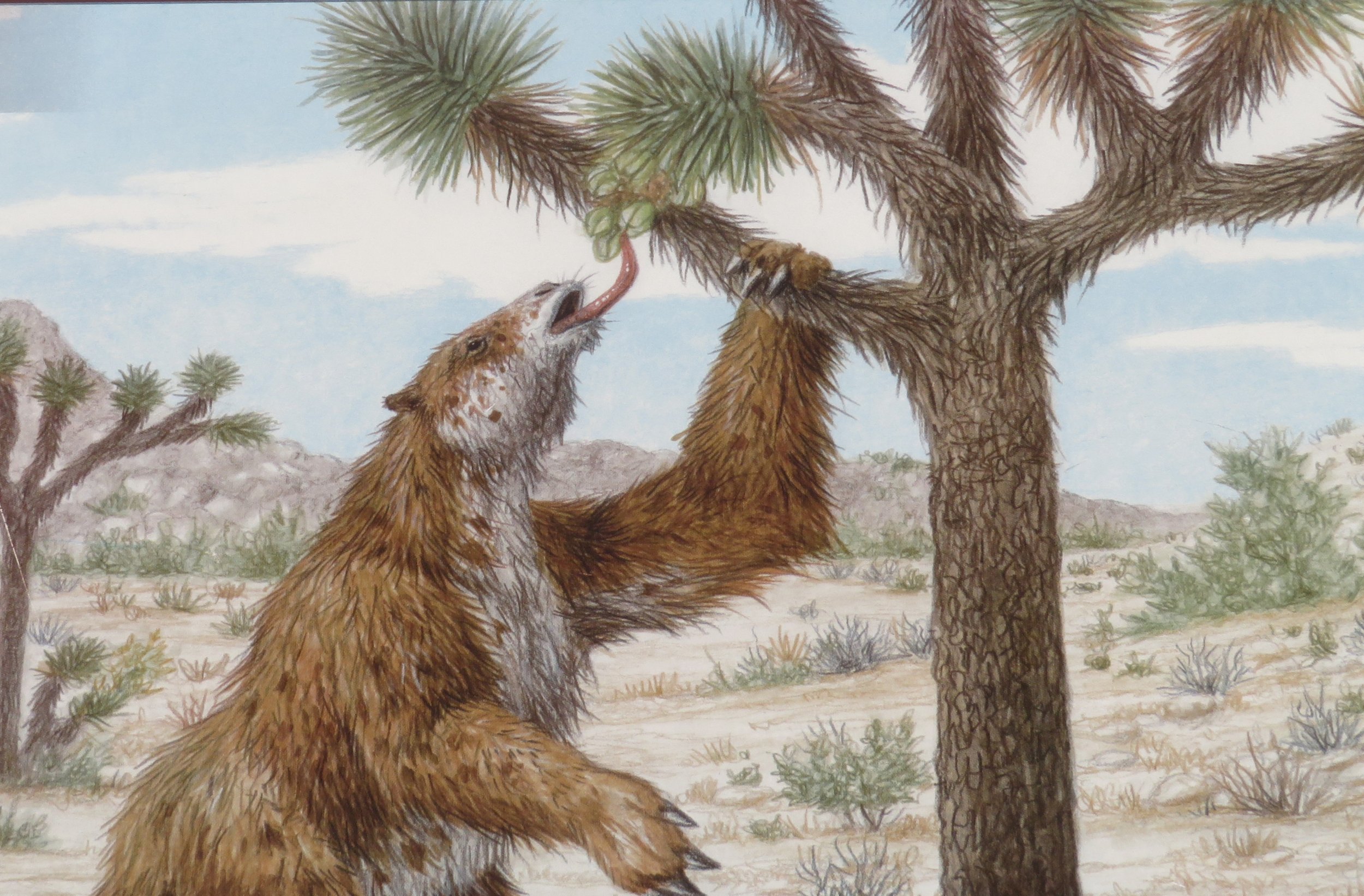
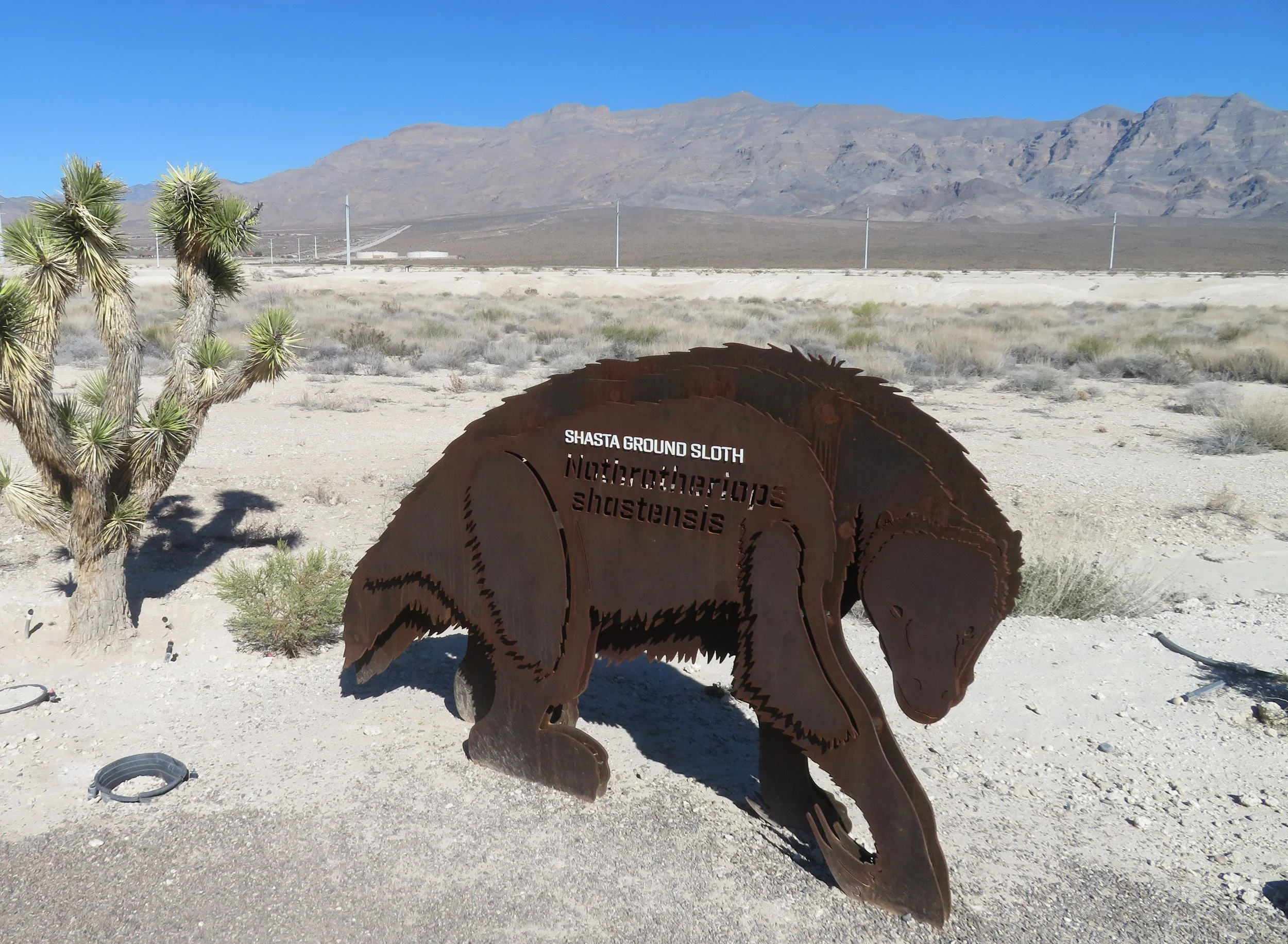
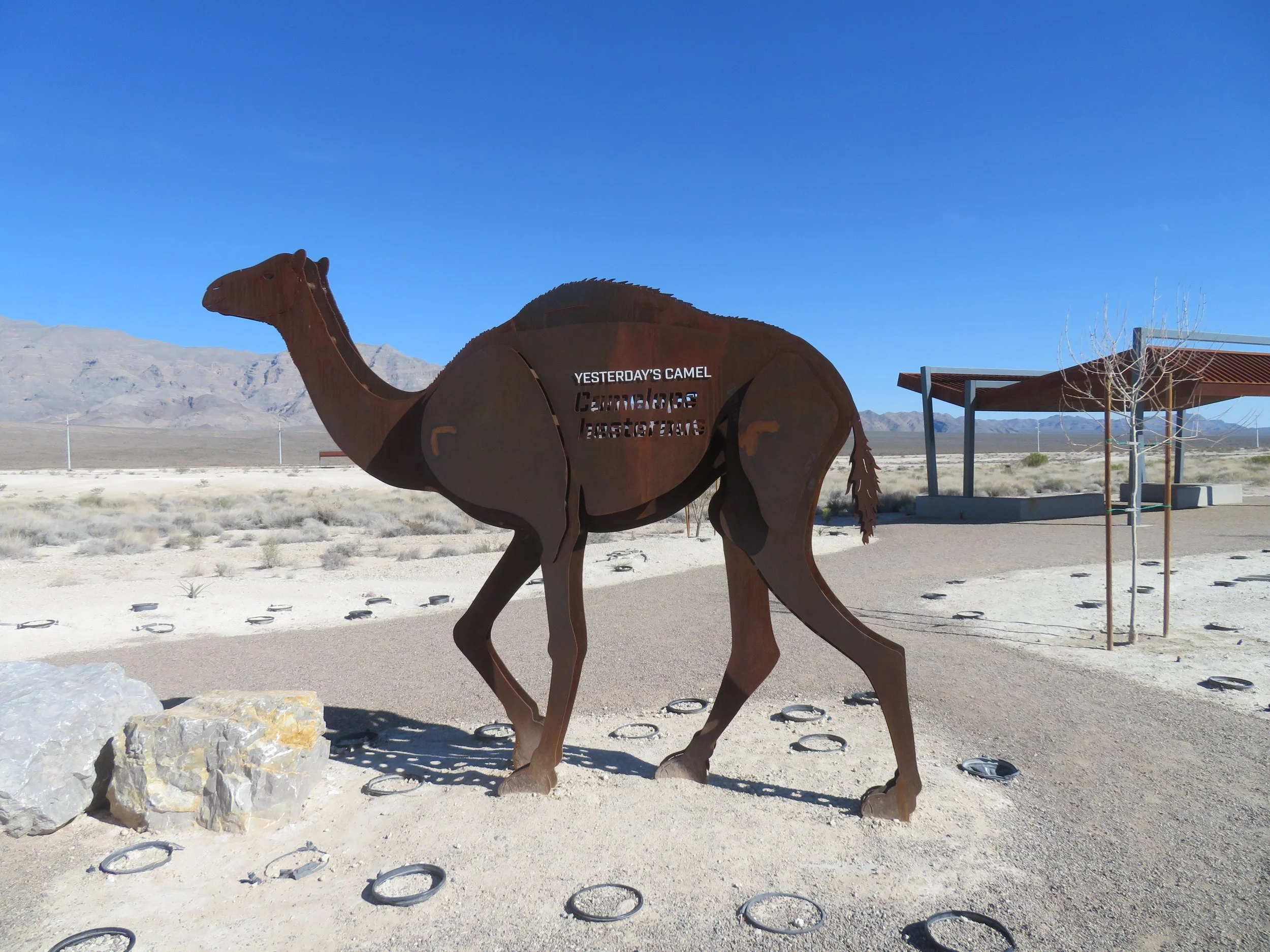
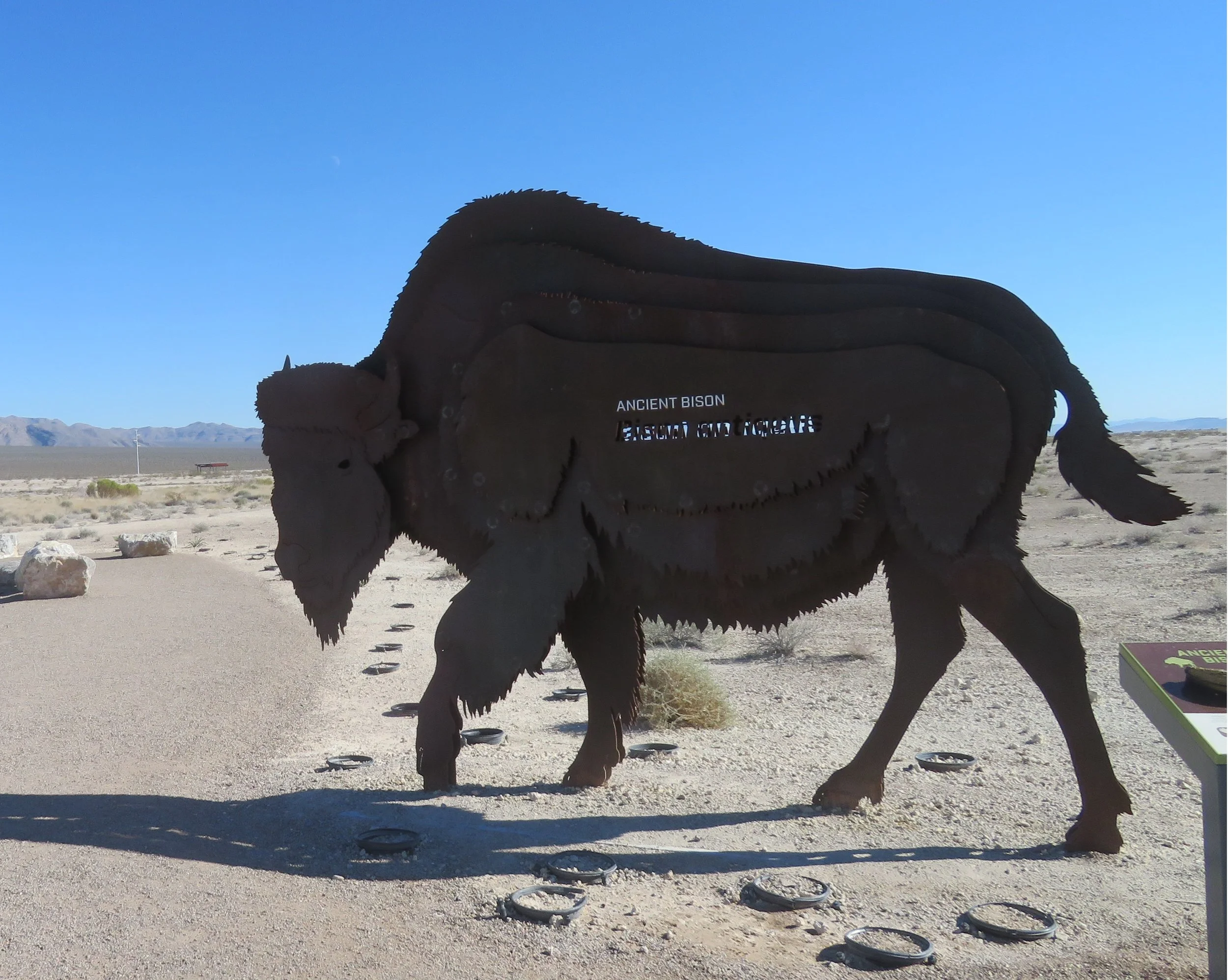
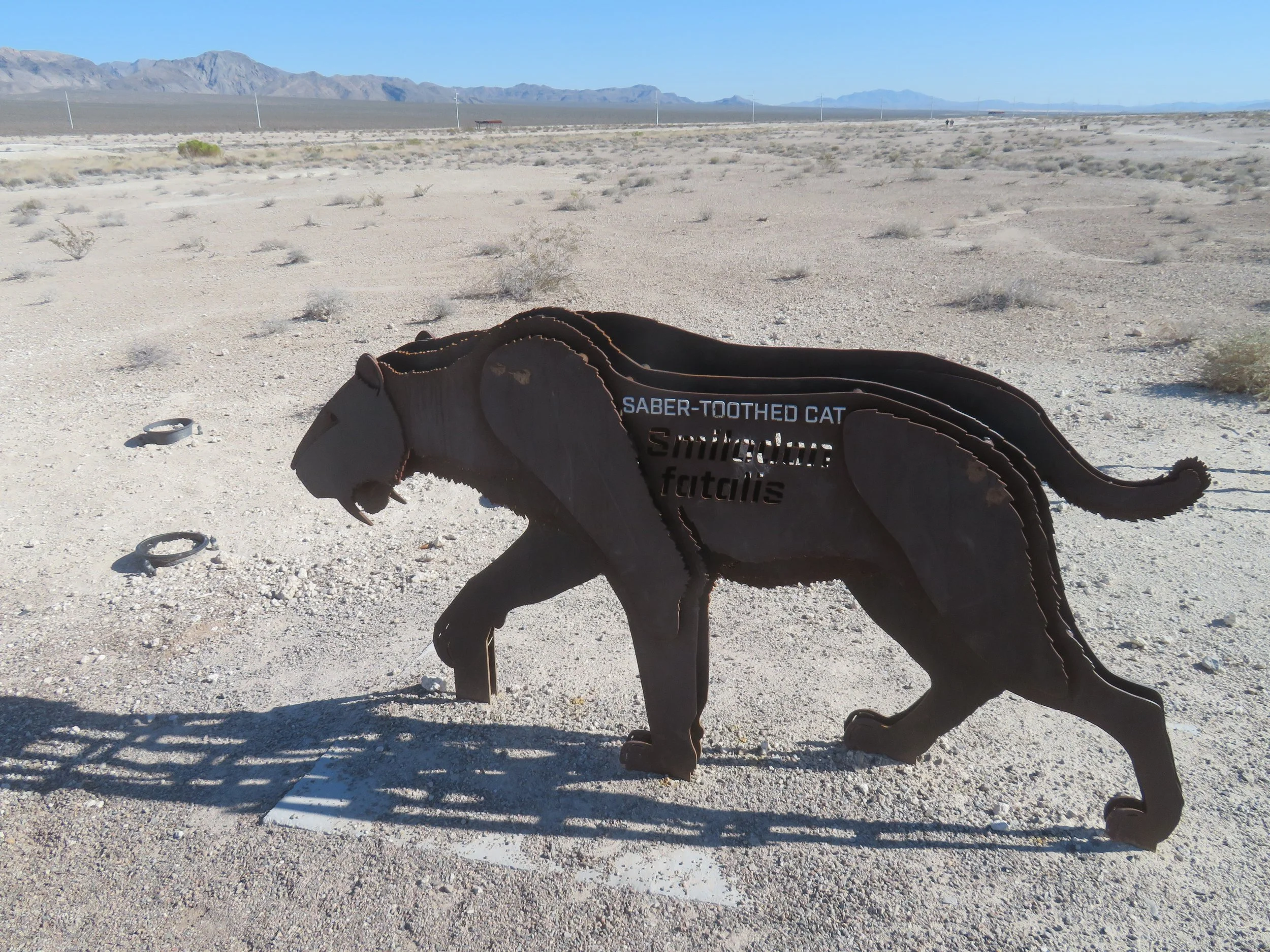
During the Ice Age (aka the Pleistocene Age), the Las Vegas Wash was lush and green with flora and now-extinct megafauna, i.e., ‘megafauna’ like really, really big animals… Columbian mammoths, dire wolves, camels, American lions, saber-toothed cats, ancient bison, and giant ground sloths.
We visited the park last summer, but it was just too hot to explore the trails or the area, so we decided to return for some hiking and exploration when the weather cooled down… like now. Three short trails provide visitors with a feel for what the park has to offer and what has been discovered.
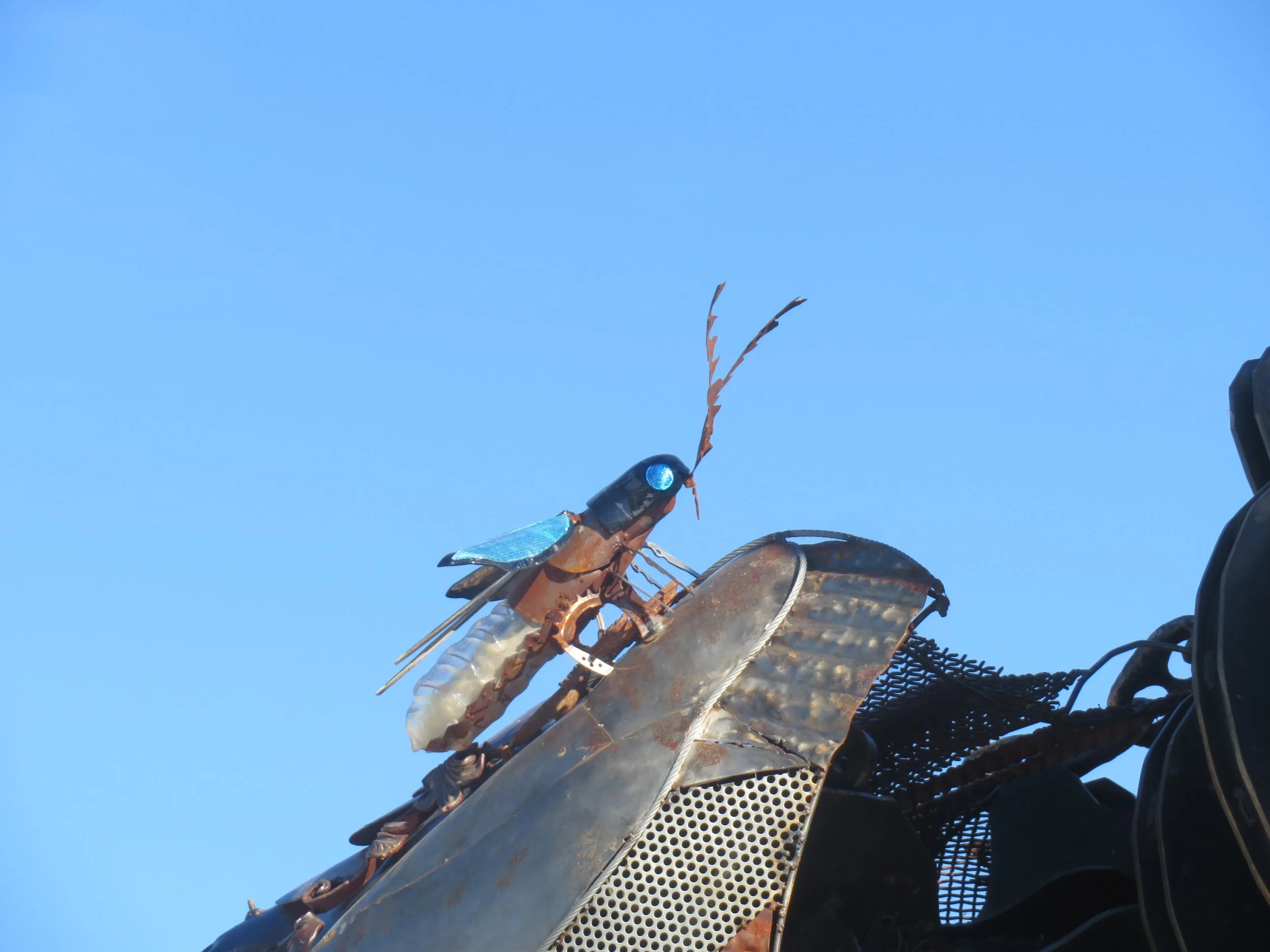
The first thing you see when you arrive at the park is a huge mammoth sculpture, which provides visitors with a unique story. "Monumental Mammoth" is a massive life-sized sculpture that was a collaborative undertaking.
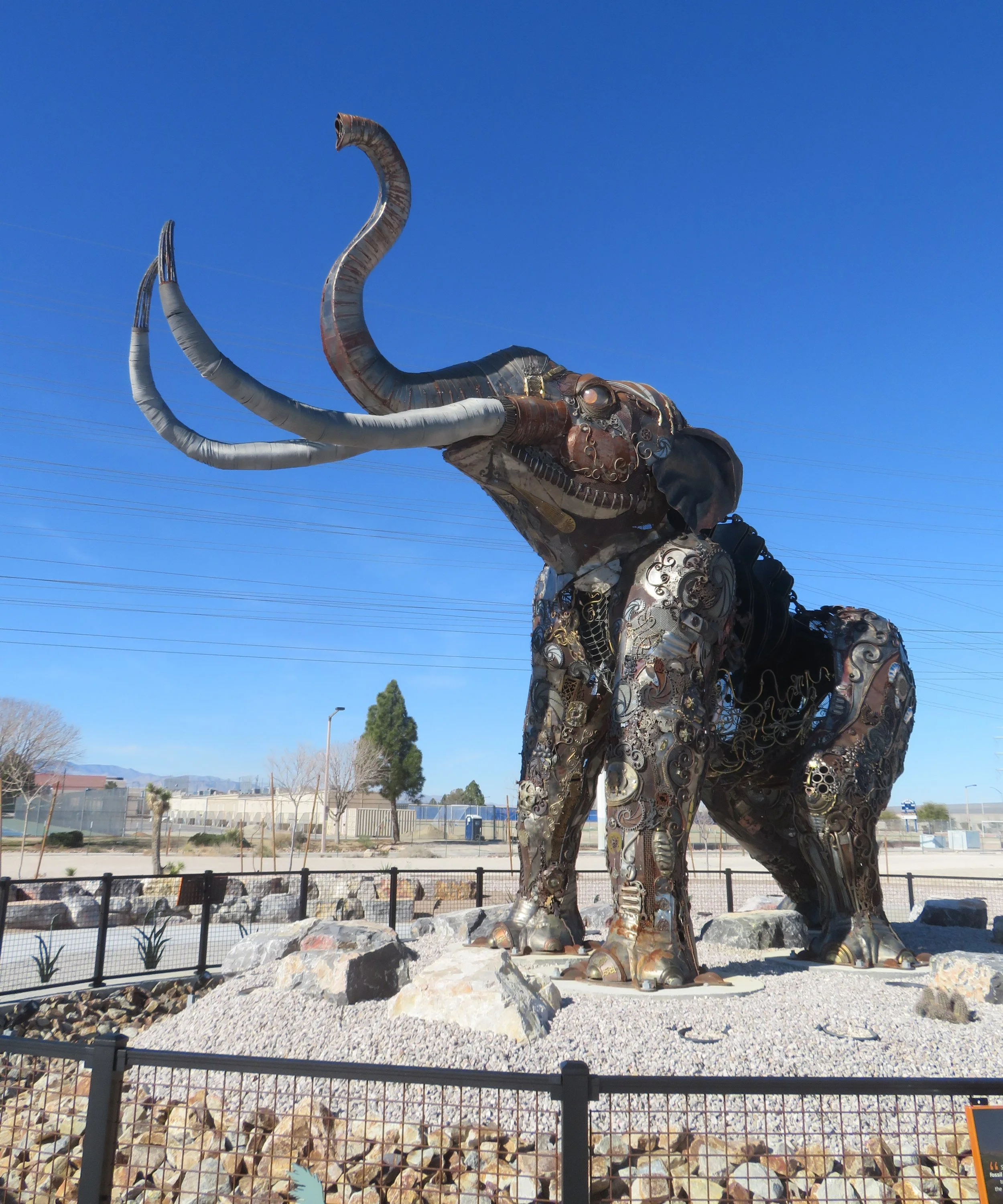
The Monumental Mammoth weighs 7,610lbs ( 3.81 tons), tusks and all!
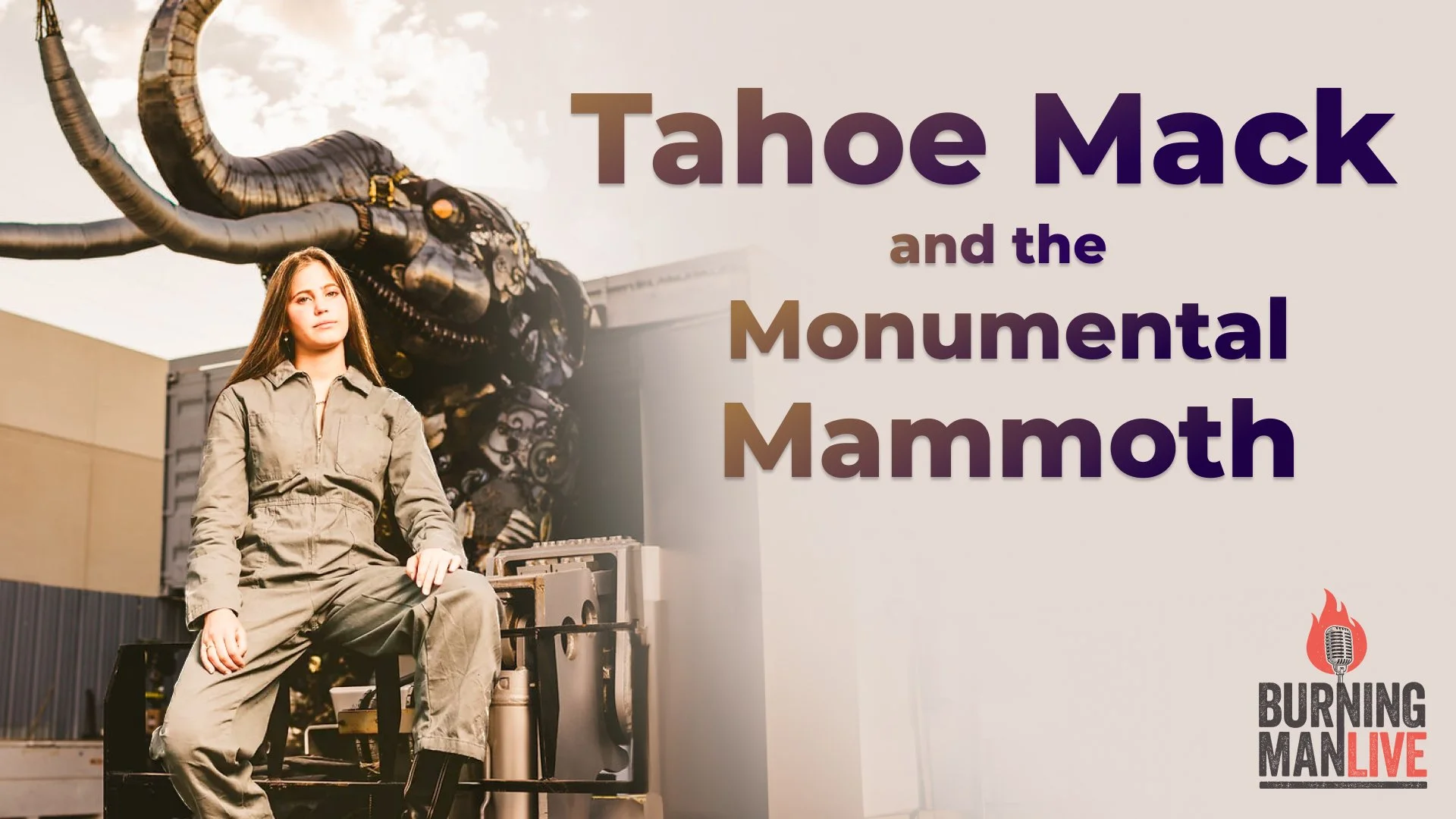
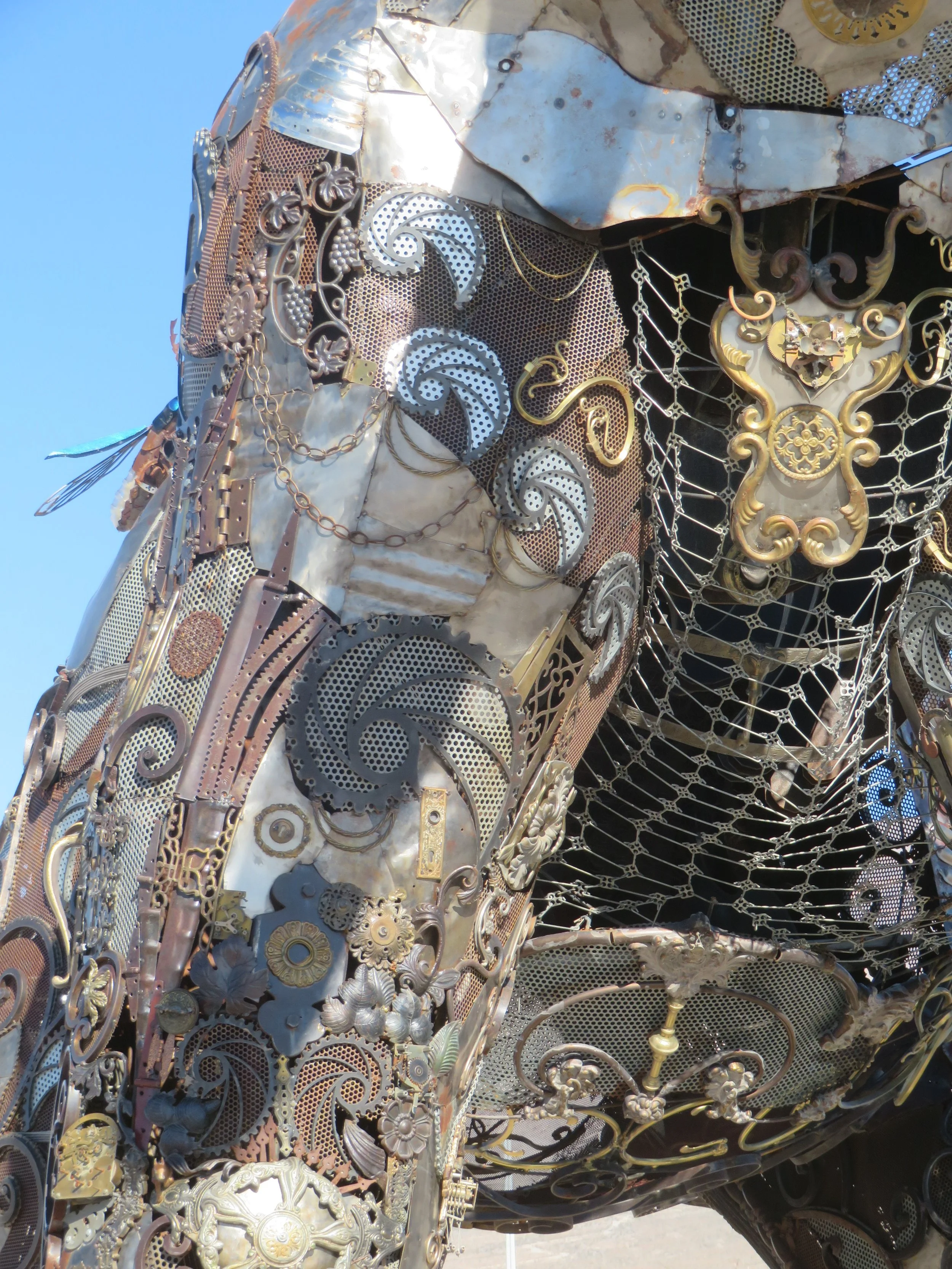
Tahoe Mack conceived the idea for a Girl Scout Gold Award project when she was 15. A couple of years later, she partnered with Luis Varela-Rico, who fabricated the interior skeleton, and Dana Albany, who created the external metal skin made from repurposed objects collected during clean-up efforts, giving new life to discarded materials while paying tribute to the ancient giants that once roamed this landscape.’ A lesson in how repurposed trash and salvaged materials can be made useful. The sculpture debuted at the Burning Man Festival in 2019 and was later donated to the state park as a permanent installation representing Tule Springs.
We checked in at the Visitor Center. The entry fee is $3/pp, but free to Nevada State Park senior pass holders like us. W headed directly to the Big Dig’s 1.2 mile loop trail which begins at the Trench K Trailhead. It’s easy walking and well-marked.
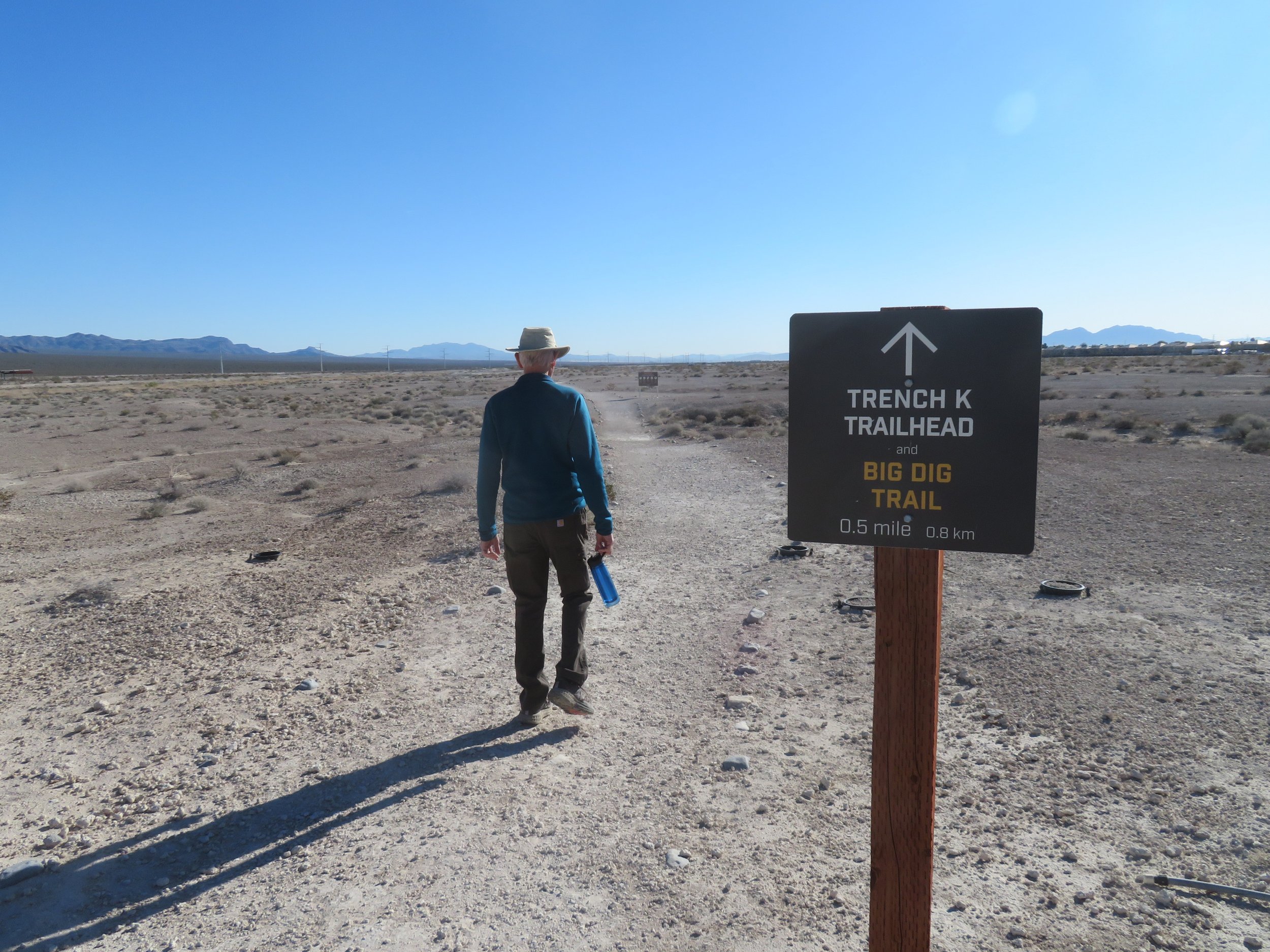
Heading down the Big Dig Trail
According to the park website, “The discovery of abundant fossils onsite triggered a long history of scientific research, which includes the famous ‘Big Dig’ of 1962-3, the largest interdisciplinary scientific expedition of its kind up to that point.”
Interestingly, when the Big Dig began in the early 1960s, it was a very isolated area, ~10 miles from the city. Now with Las Vegas’ suburban spread, it’s pretty much in the middle of a housing community with rooftops all around.
The path led us through the trenches bulldozed by the Tule Springs Expedition during the Big Dig. Paleontologists at the time were thrilled with the convenience and time-saving use of big, heavy equipment to dig the trench. Nowadays, it would be considered a big no-no because of the damage and destruction done to the local environment. Live and learn… hopefully.
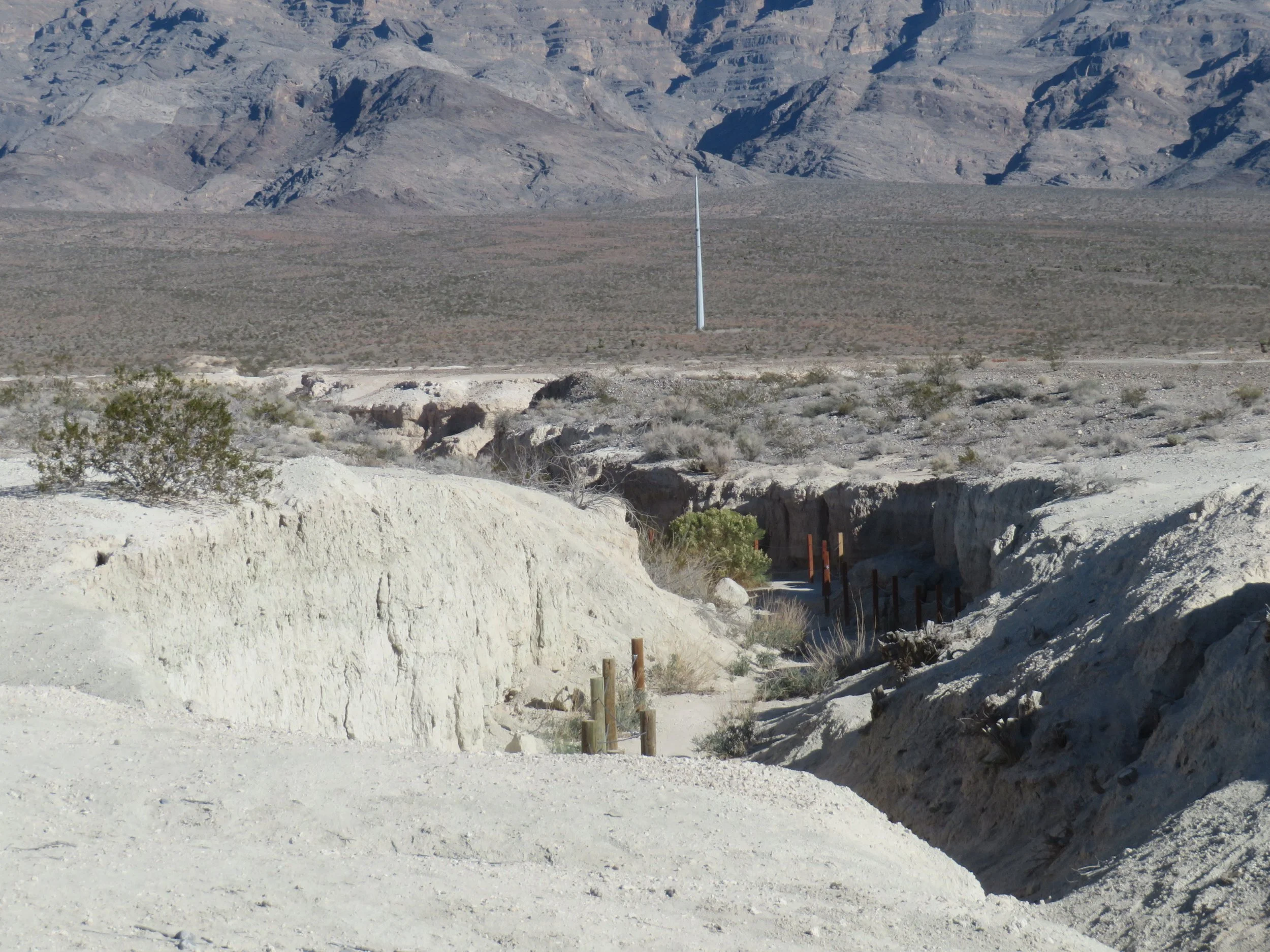
View of Trench K from above as we were descending
Walking through the trench was a bit disconcerting with tall, unstable mud walls towering above us on both sides. We searched for fossils and found a couple of seashells embedded in the walls, but nothing else.
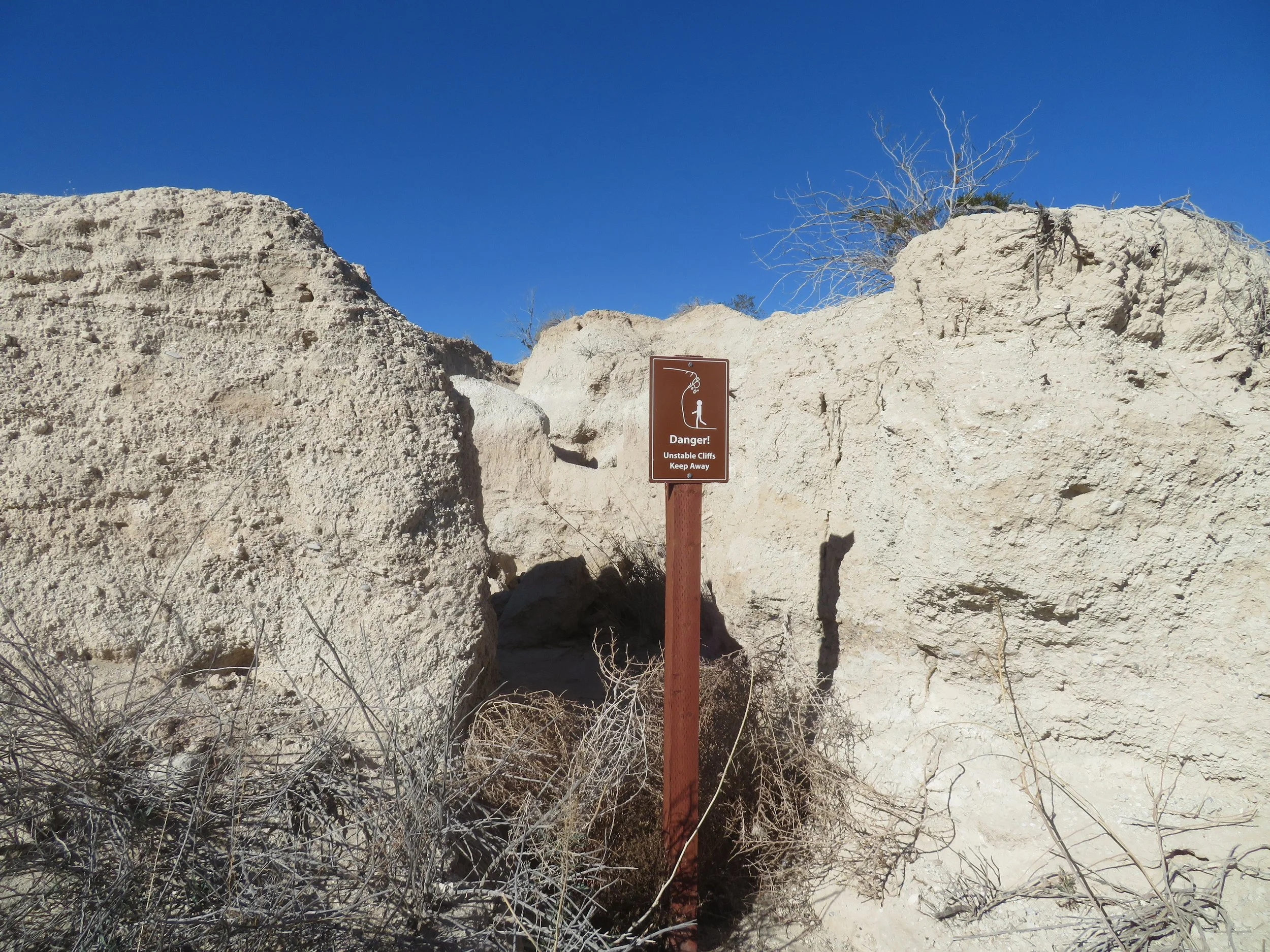
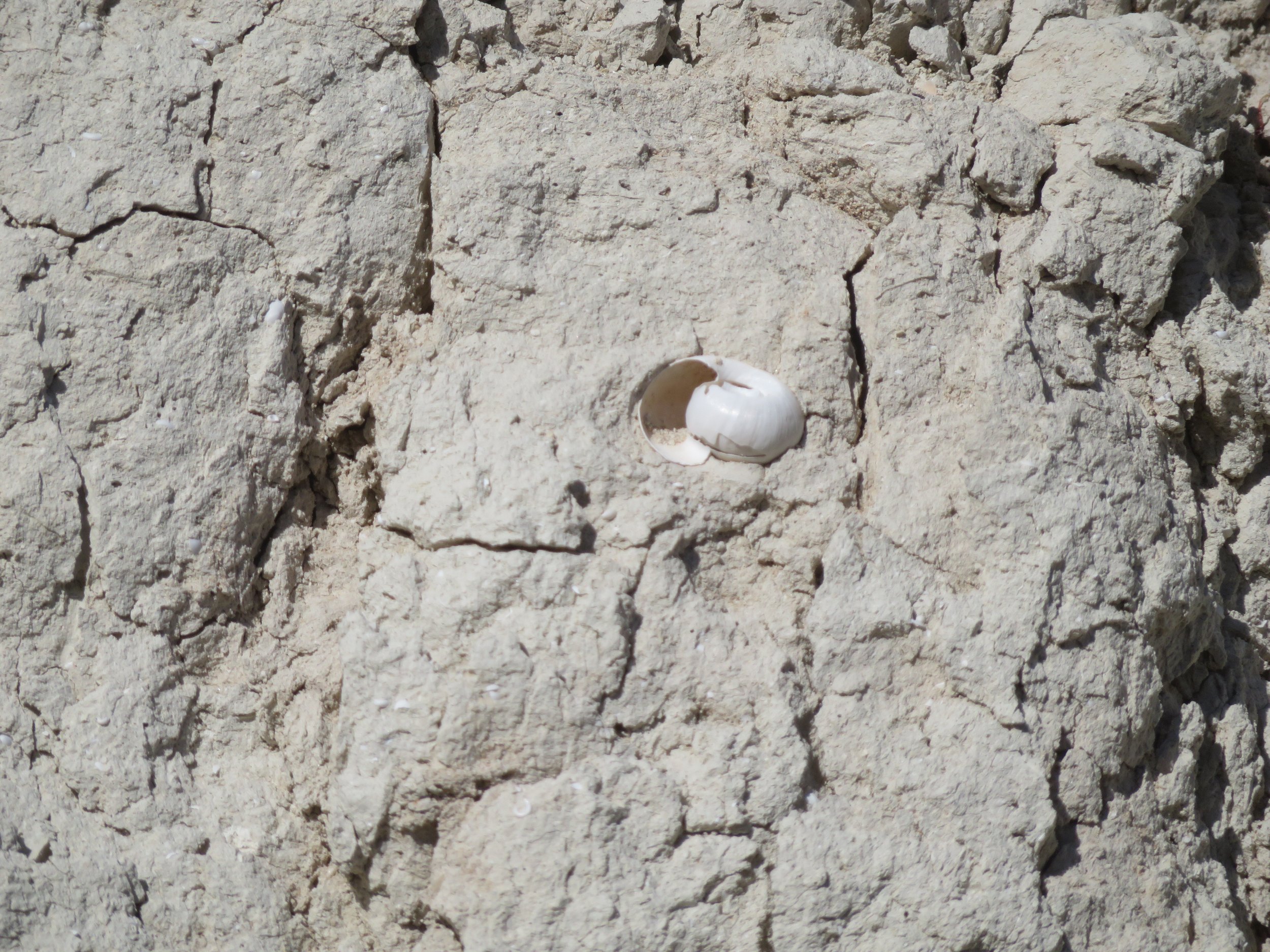
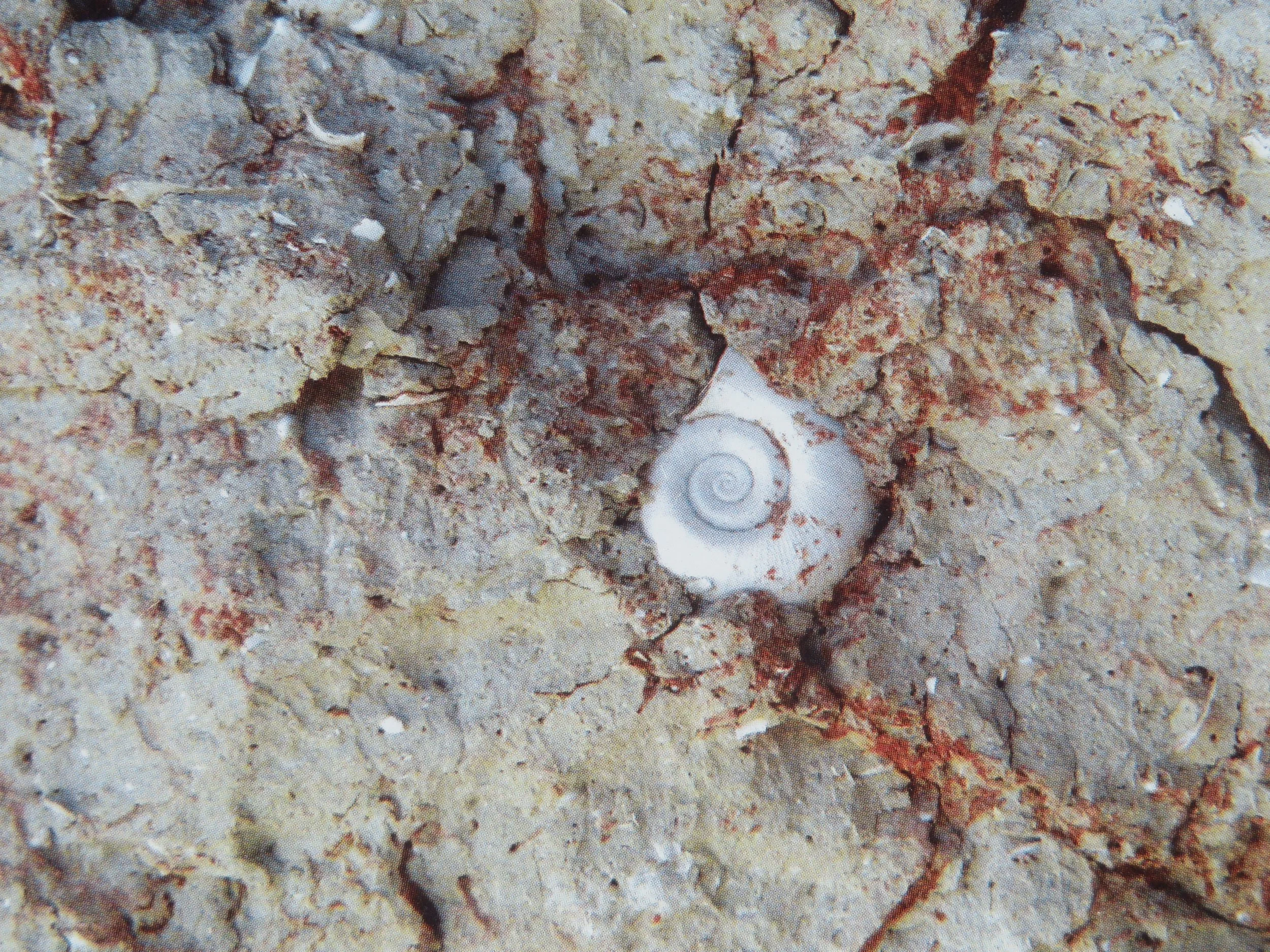
Trench K, the westernmost and longest of 10 trenches dug in Tule Springs, is ~3600 feet long, and we estimated about 15-20’ deep in spots. Some of the trenches reached up to 43 feet deep. The trenches were dug into the sediment layers specifically to find and study fossils of the animals that once existed in the area.
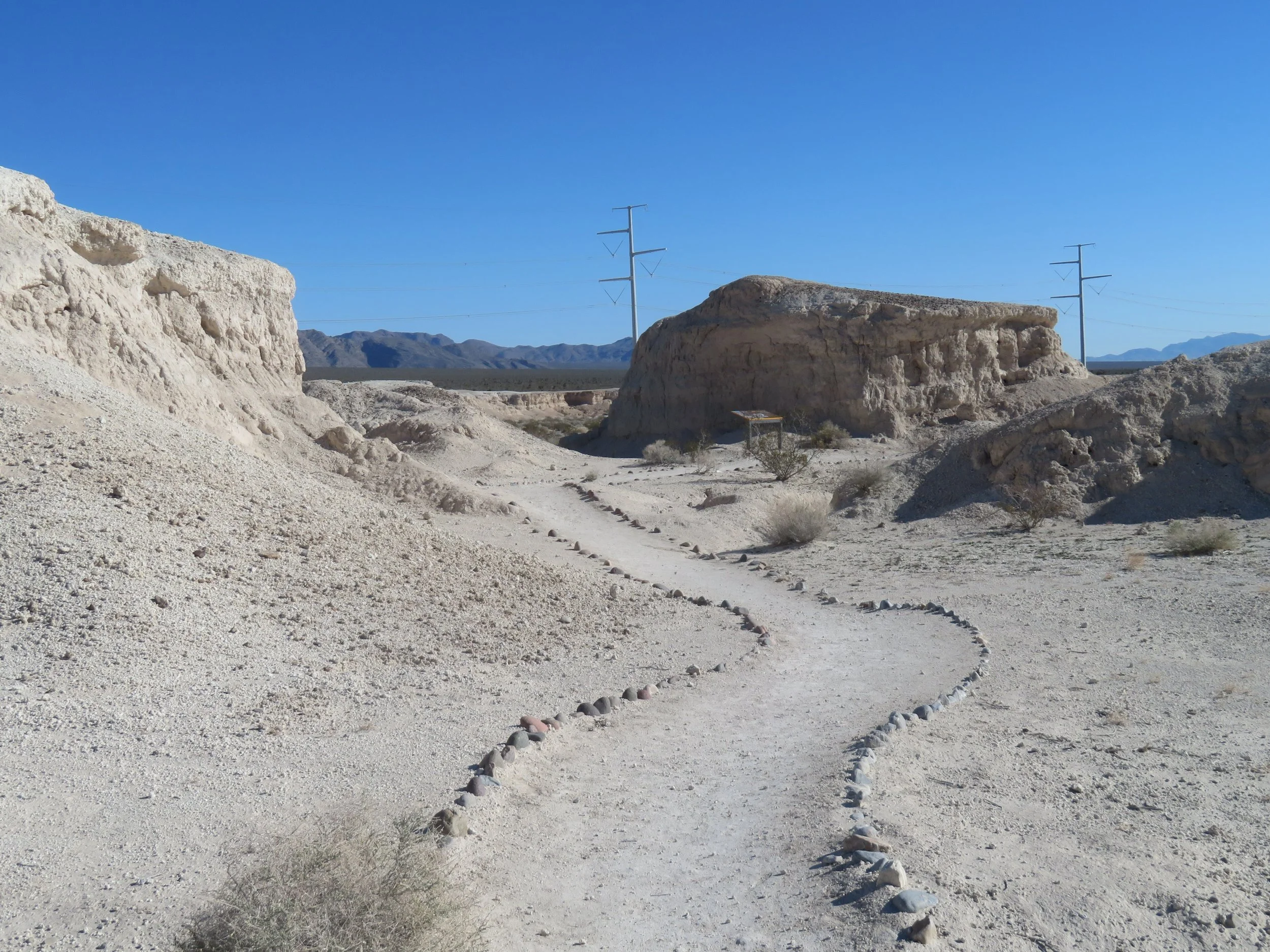
We exited the trench and continued along the winding Big Dig Route.
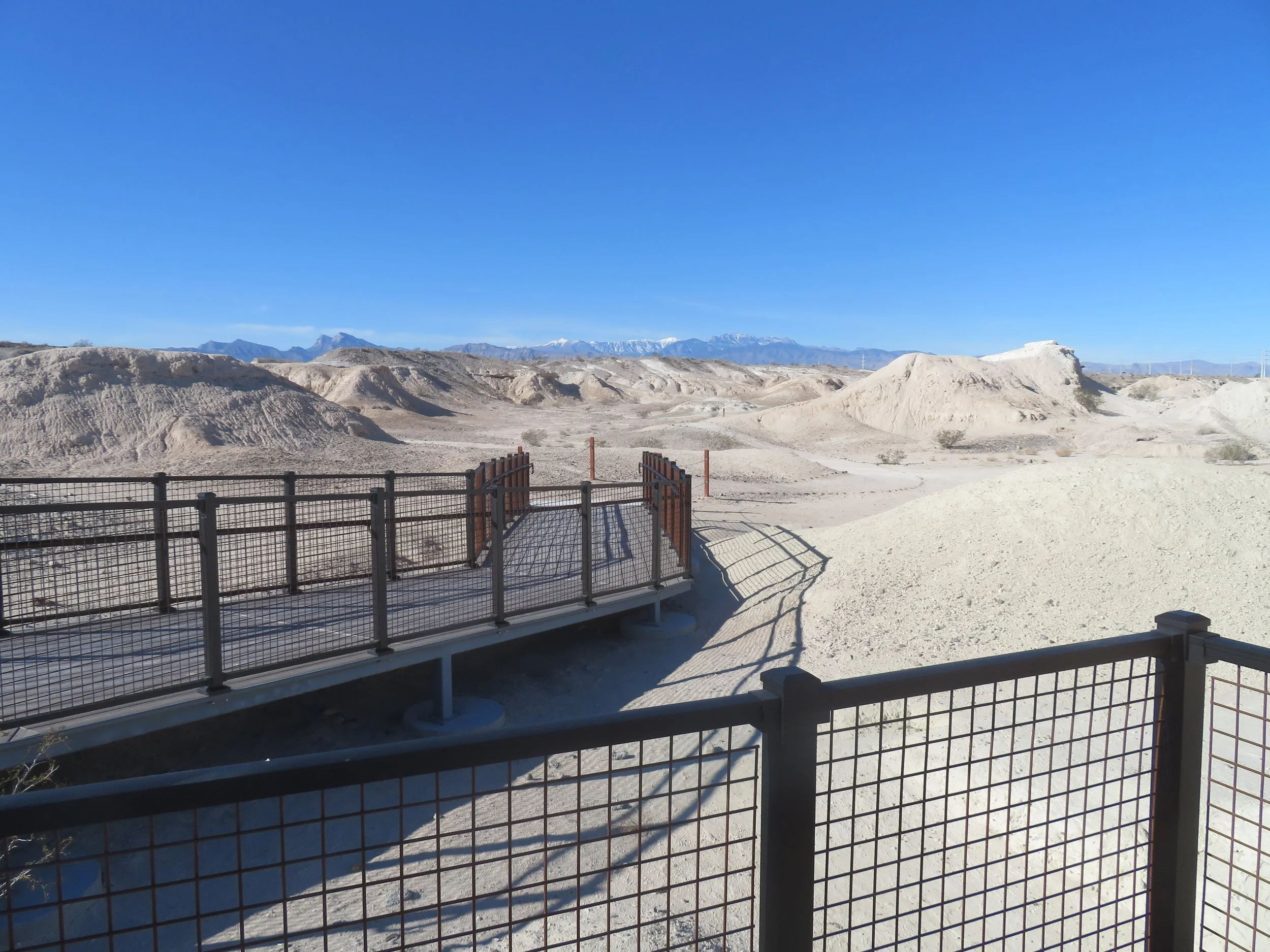
A boardwalk was constructed over one of the digs. The mounds of dirt are leftovers from the Big Dig.
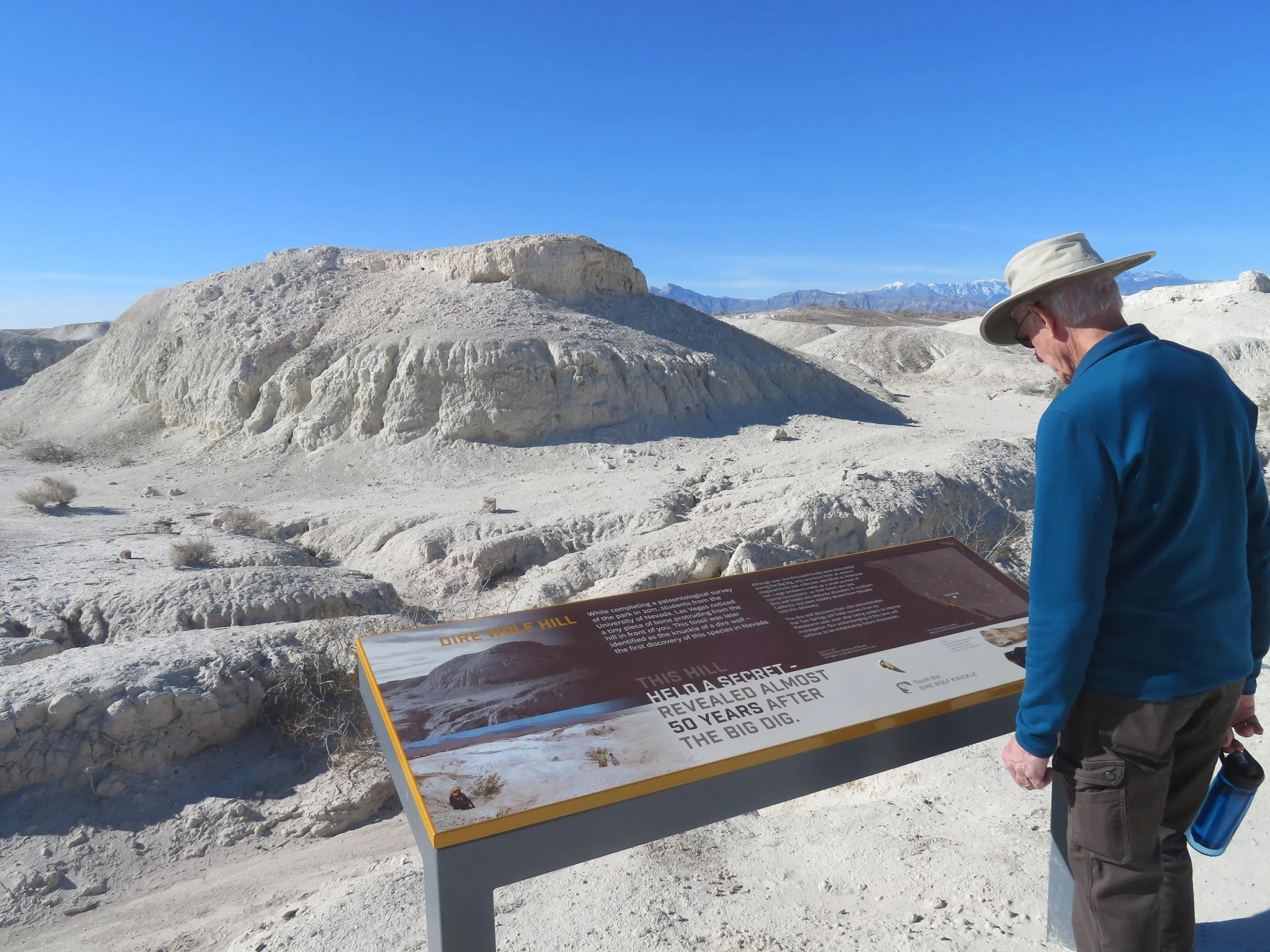
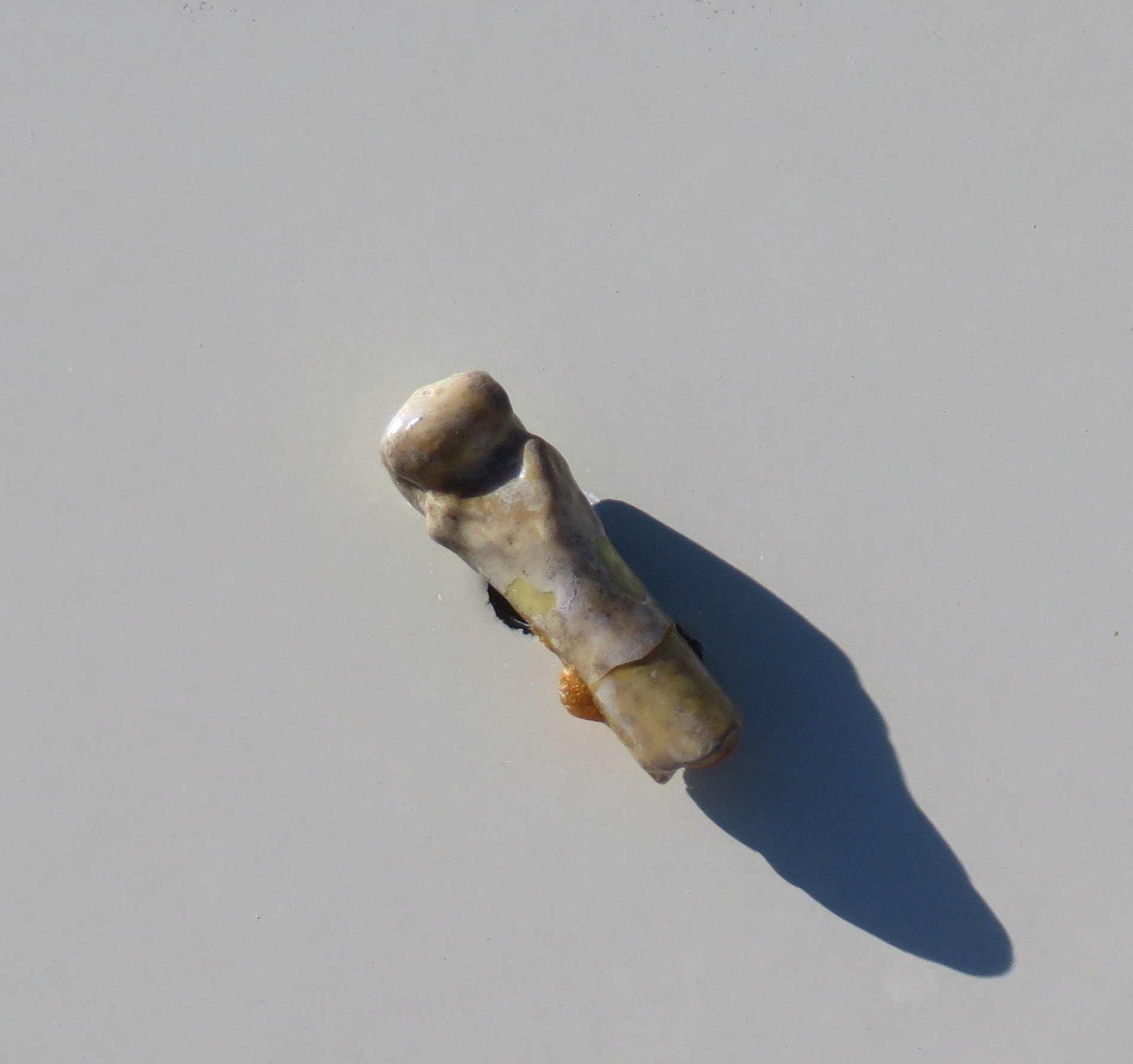
Dire Wolf Hill, where a dire wolf knuckle was found, provided the first proof that dire wolves once lived in the area. The bone was compared to those found and identified earlier at the Brea Tar Pits. David and I both remarked that if we’d found this bit of bone, we’d probably have discarded it. Obviously, we’re not paleontologists.
Completing the Big Dig Trail, we circled back and joined the 1.2 miles Las Vegas Wash Trail, a more wide-open space for viewing the park on a grander scale. Some of the cliffs showed exposed sedimentary layers (strata) which were dated to 45,000+ years ago.
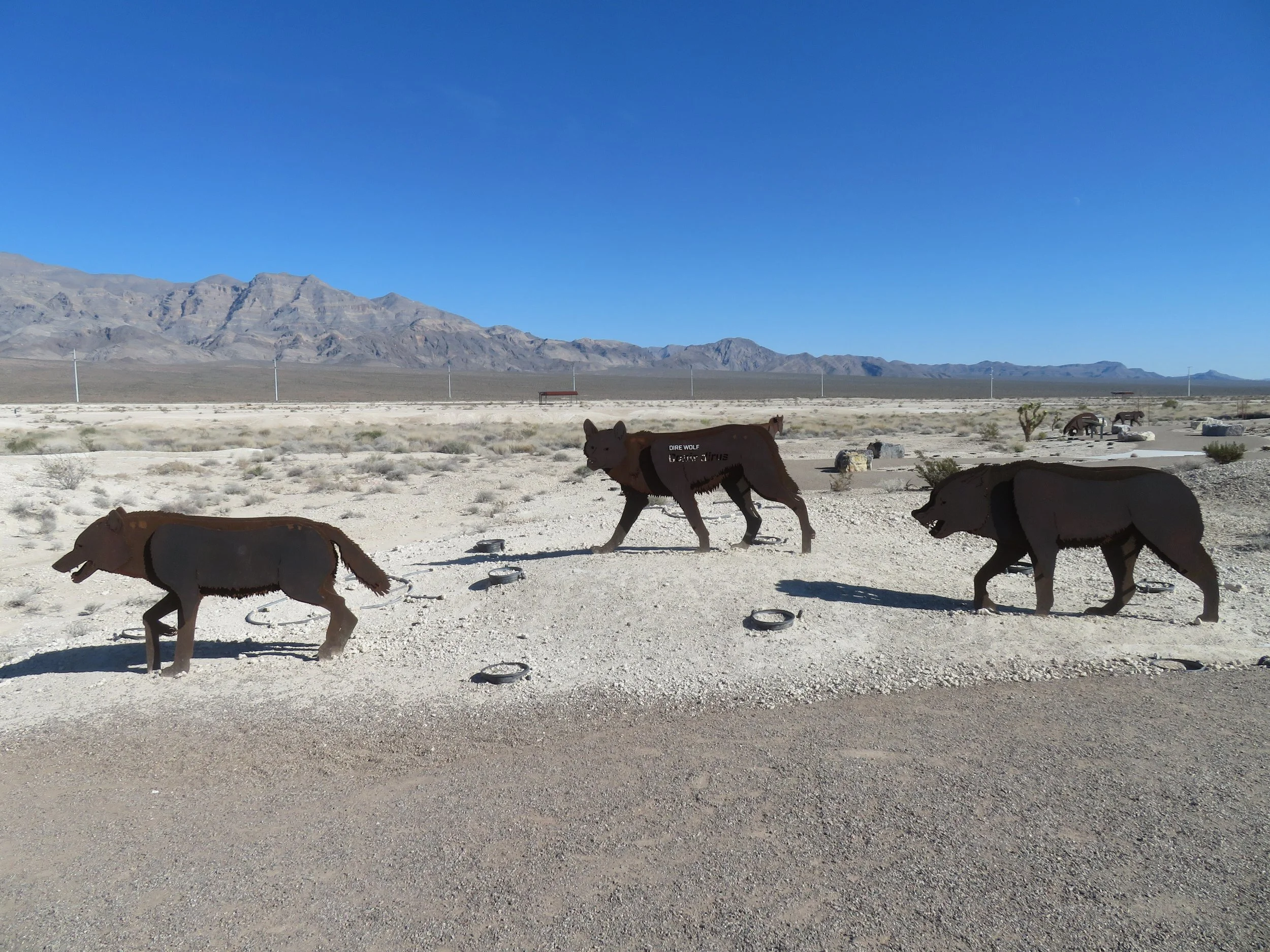
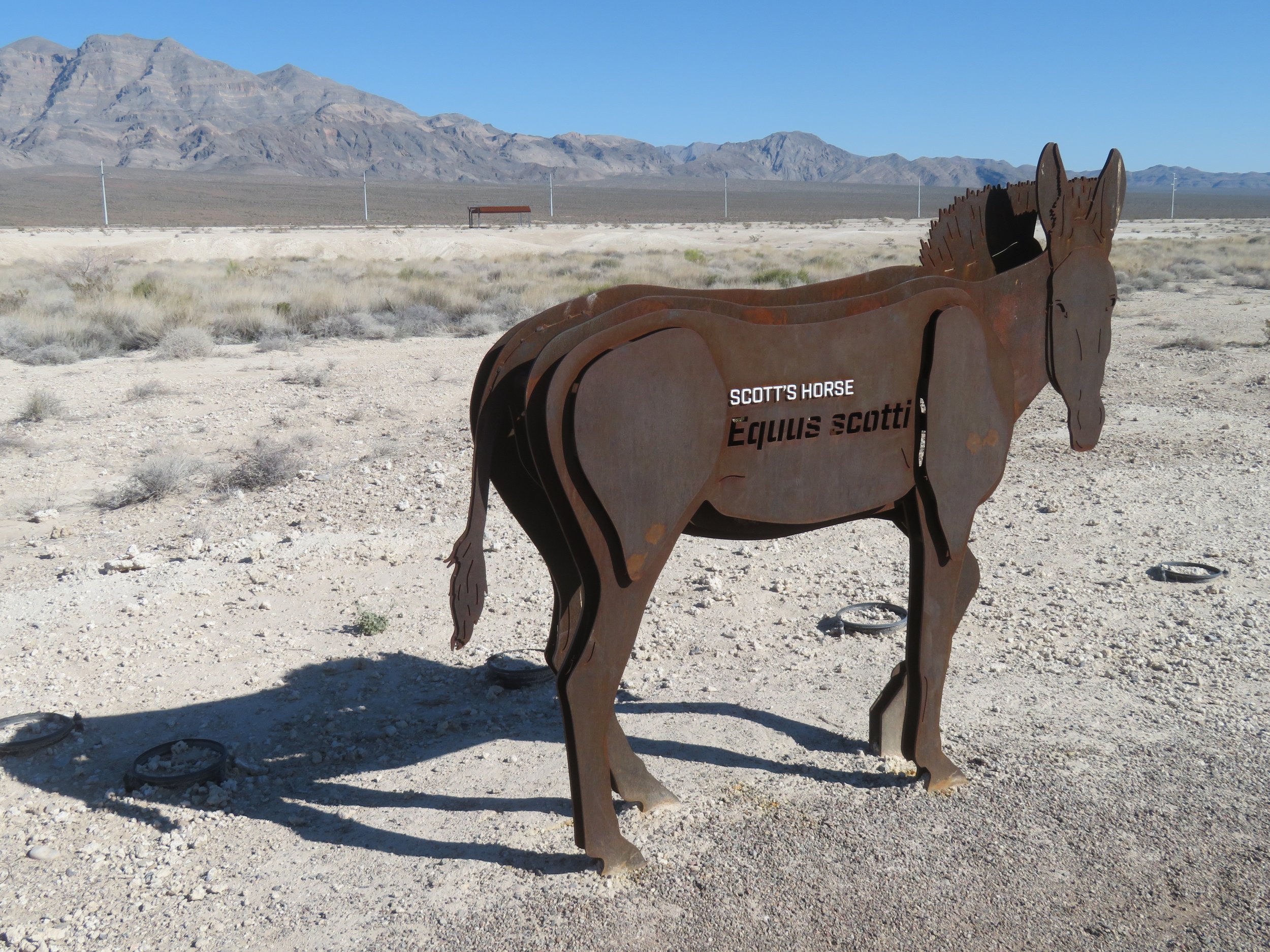
We finally reached the Megafauna Trail, a short, .3-mile path lined with life-sized megafauna sculptures located close to the Visitor Center. It’s an easy stroll on a gravel walk, and the associated signs provide lots of insight into the prehistoric animals that once roamed this area. Take a look.
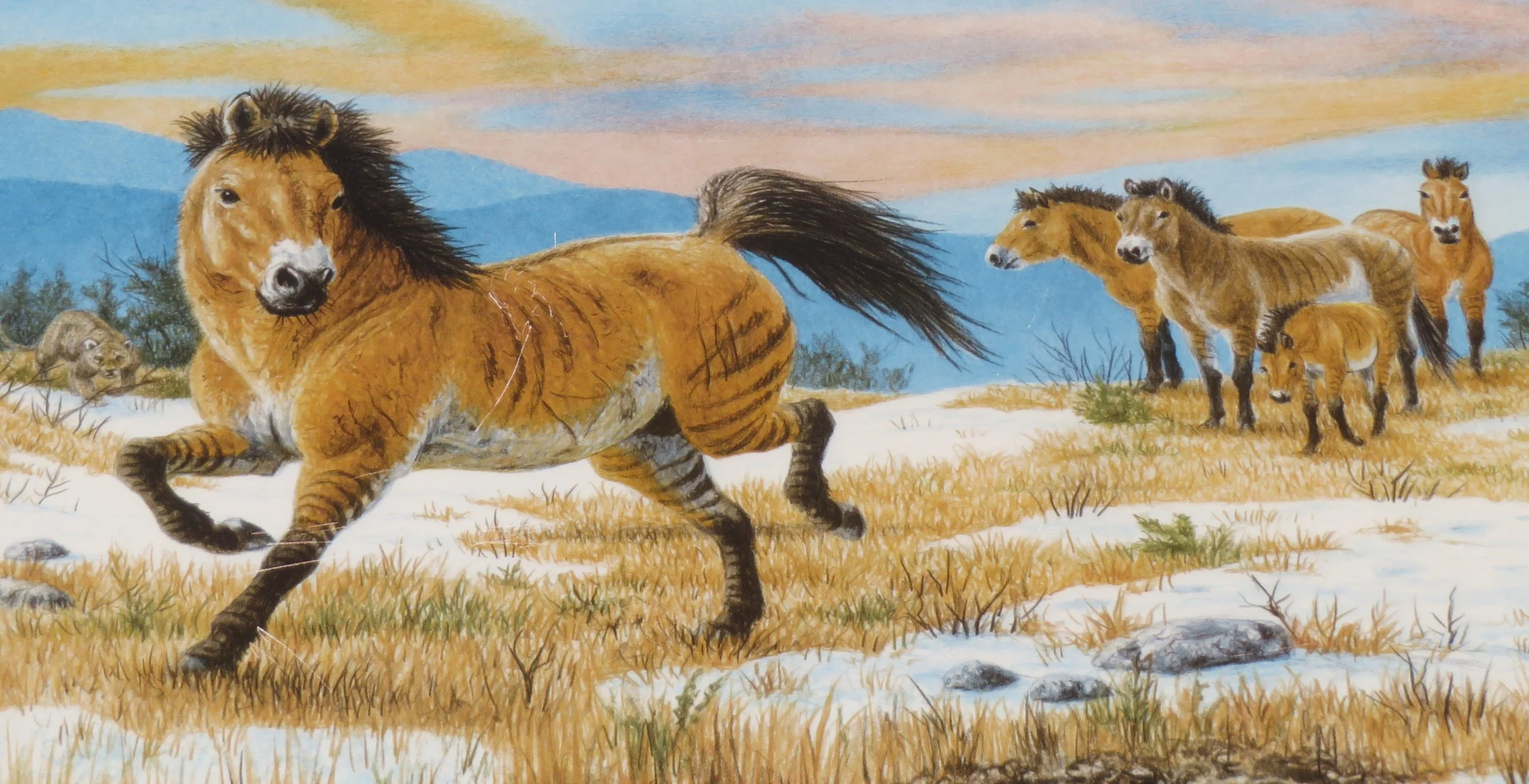
Trails complete, we ducked inside the Visitor Center for a quick look. It’s an impressive place with well-presented displays and lots of great information. All the fossils and bones displayed have been found within 4 miles of the Visitor Center.
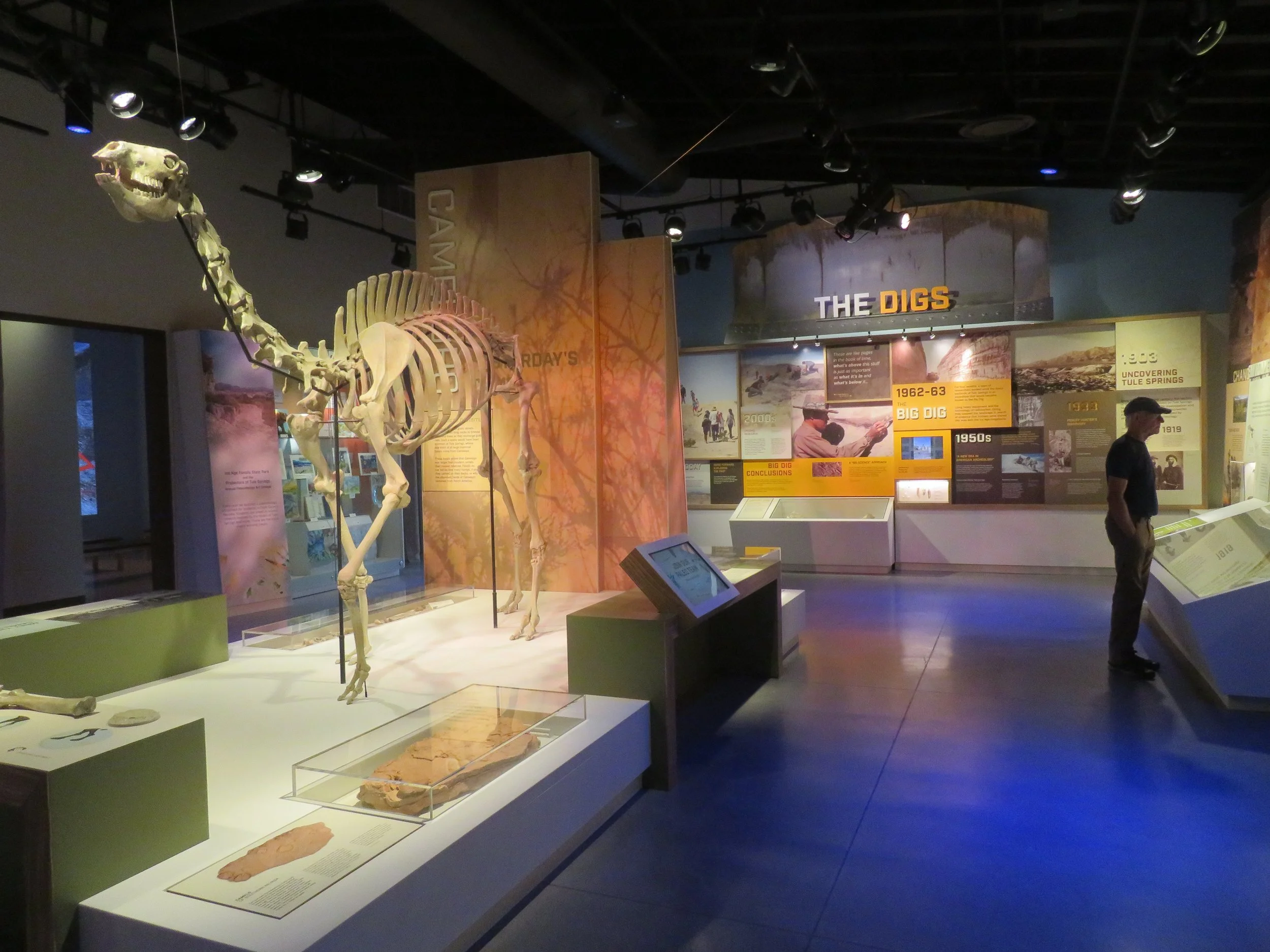
The Visitor Center gallery offered well-presented, interesting displays.
We love exploring Nevada, our adopted state. State Parks, National Parks, trails, landmarks, ghost towns, festivals, and so much more beyond casinos and The Strip. We just subscribed to the free Discover Your Nevada magazine and newsletter, which highlights all of the places and things to see and do in the Silver State. We’ll keep exploring and keep sharing with you.