

Gearing Up for the Camino Portugués
/
A gold scallop shell on a blue background is the icon for the Camino de Santiago.
The Camino de Santiago de Compostela, known in English as the Way of St. James, is a medieval network of paths that all culminate in Santiago de Compostela, Spain. This ancient pilgrimage route has historic and religious roots dating back to the 9th century.
Santiago translates in English to St. James, one of Christ’s inner-circle apostles who ventured out after Christ’s death to spread the ‘Word’, and spent time preaching the gospel in Spain. When he returned to Judea in 44AD, he was promptly beheaded in Jerusalem on the orders of King Herod Agrippa. Legends and myths abound about St. James, but tradition has it that his body was returned to Spain and his remains are buried on the site where the Cathedral Santiago de Compostela now stands. For centuries, pilgrims have walked to Santiago de Compostela to pay homage.
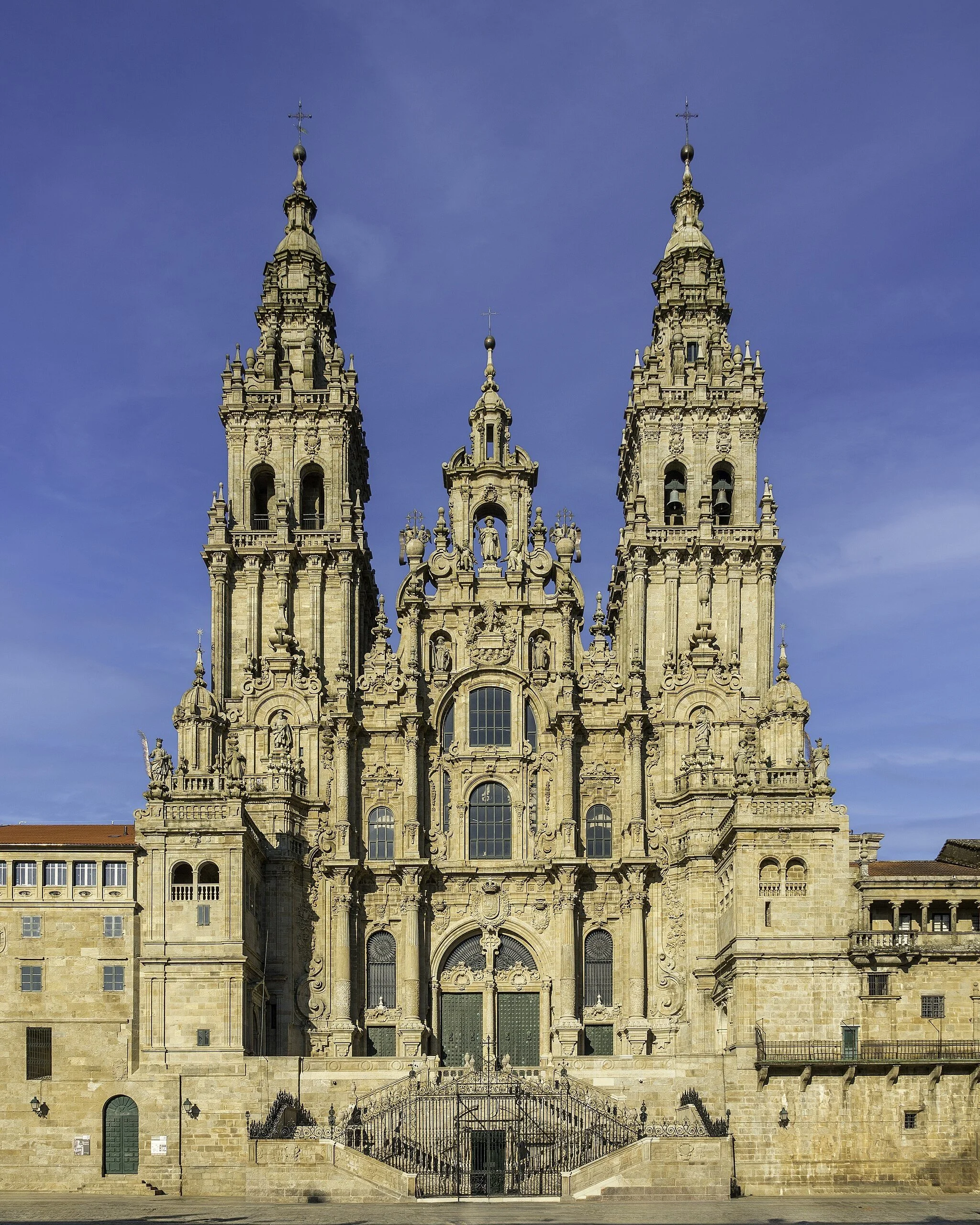
Cathedral Santiago de Compostela Photo credit: Wiki Commons - Fernando
The best-laid plans of mice and men… (and David and Marcie)
Way back in 2020, a half a decade ago, our plan to walk the Camino was thwarted by the Covid Pandemic. We canceled our airline tickets and re-booked in 2021 only to learn that much of the infrastructure supporting the walk, like small hostels and restaurants, was still suffering from the effects of the pandemic. We canceled again. Fast forward to 2026. We’re older, probably not much wiser, but still keen to walk the Camino Portugués.
The traditional Portuguese route starts in Lisbon, but we plan to take an abbreviated route from Porto to Santiago de Compostela on the advice of friends who indicated from their experience that much of the route from Lisbon is on main roads and not very pleasant walking. We’ve chosen to walk the Central Route to Santiago de Compostela ~157 miles (252 km).
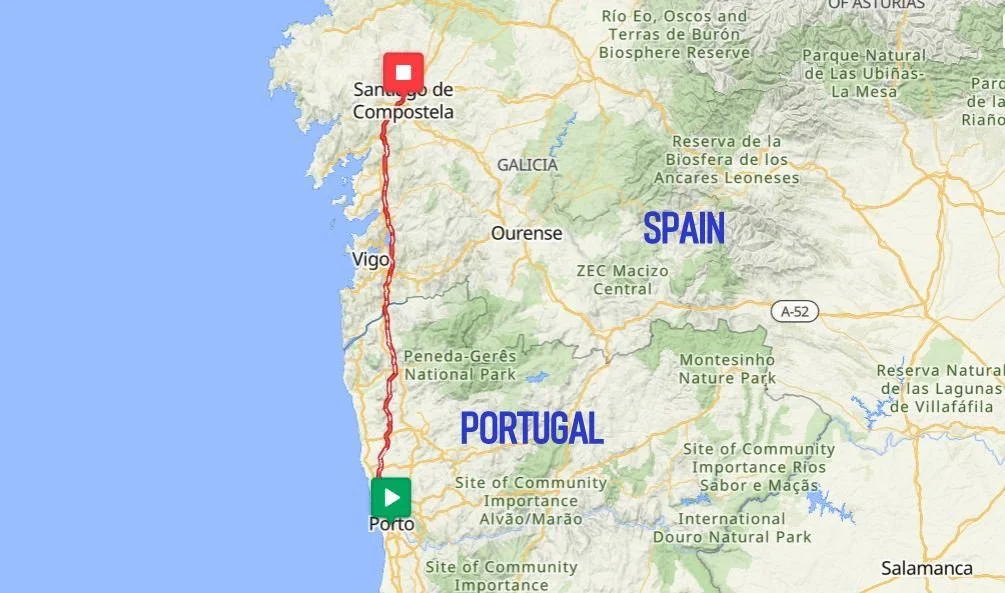
Camino Portugués Central Route from Porto to Santiago de Compostela - Map credit: Camino Ways
There’s lots to do to prepare for the trip, the walk, and ourselves. We booked the airline reservations last week for departure in mid-April from Las Vegas to Lisbon, Portugal, returning in mid-May. We’ve been slowly working on hotel/hostel/albergues reservations, though we hate reserving too far in advance in case our plans change. We’re told, however, that lodging books up quickly, and we’d hate to find there was ‘no room at the inn’ one night after walking all day. Call me a princess, but I’ve never been keen on sleeping in stables or on park benches.
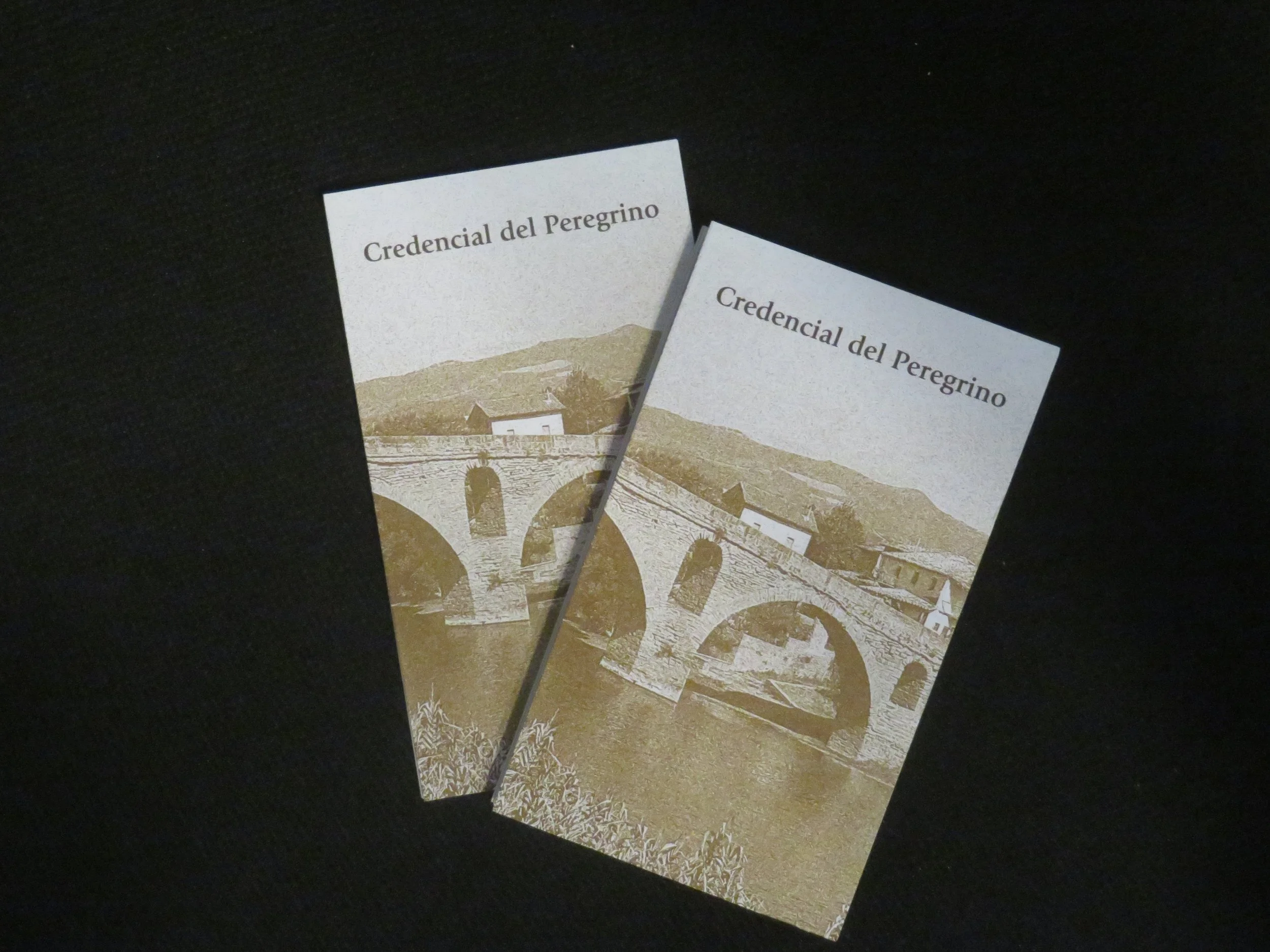
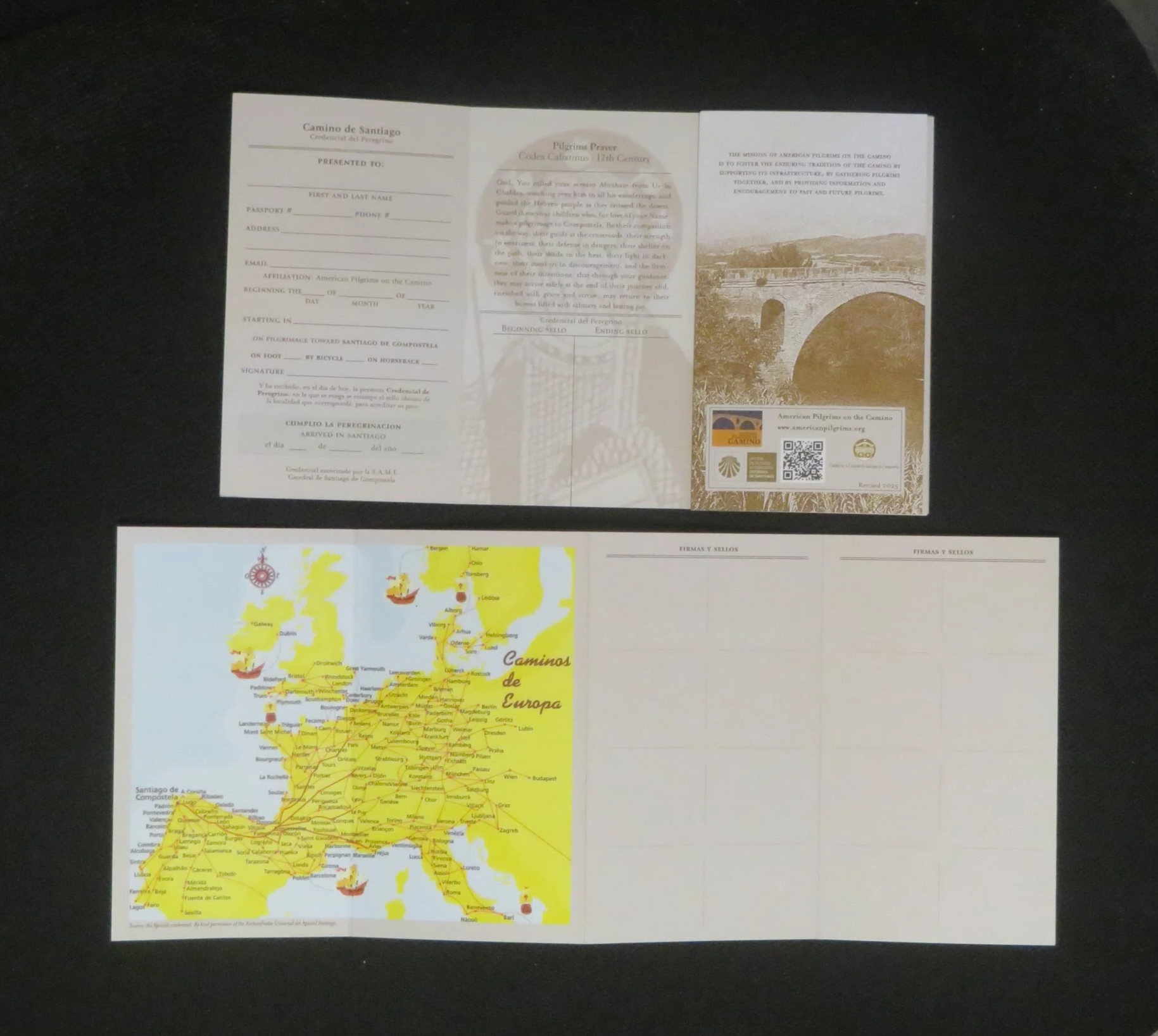
We’ve ordered, and each received a‘Credencial del Peregrino’ from American Pilgrims on the Camino. The credencial which documents your trek is a Pilgrim’s Passport. Many places that pilgrims stop have ink stamps (sellos) that walkers collect throughout their journey. Many alburgues (public and private hostels along the camino) will only accept pilgrims with credenciales, especially the public ones. Once a walker reaches Santiago de Compostela, they can apply for a Compostela certificate verifying their pilgrimage by showing their credencial with dated stamps proving at least 100km (~62 miles) walked on the Camino. It’s a tradition and part of the Camino experience. Our lodging plans include hotels, hostels, B&Bs, and alburgues. We had similar credenciales when we walked the Via Francigena.
We still have our Camino patches from our 2020 planned trip. I’ll sew them on our backpacks and daypacks.
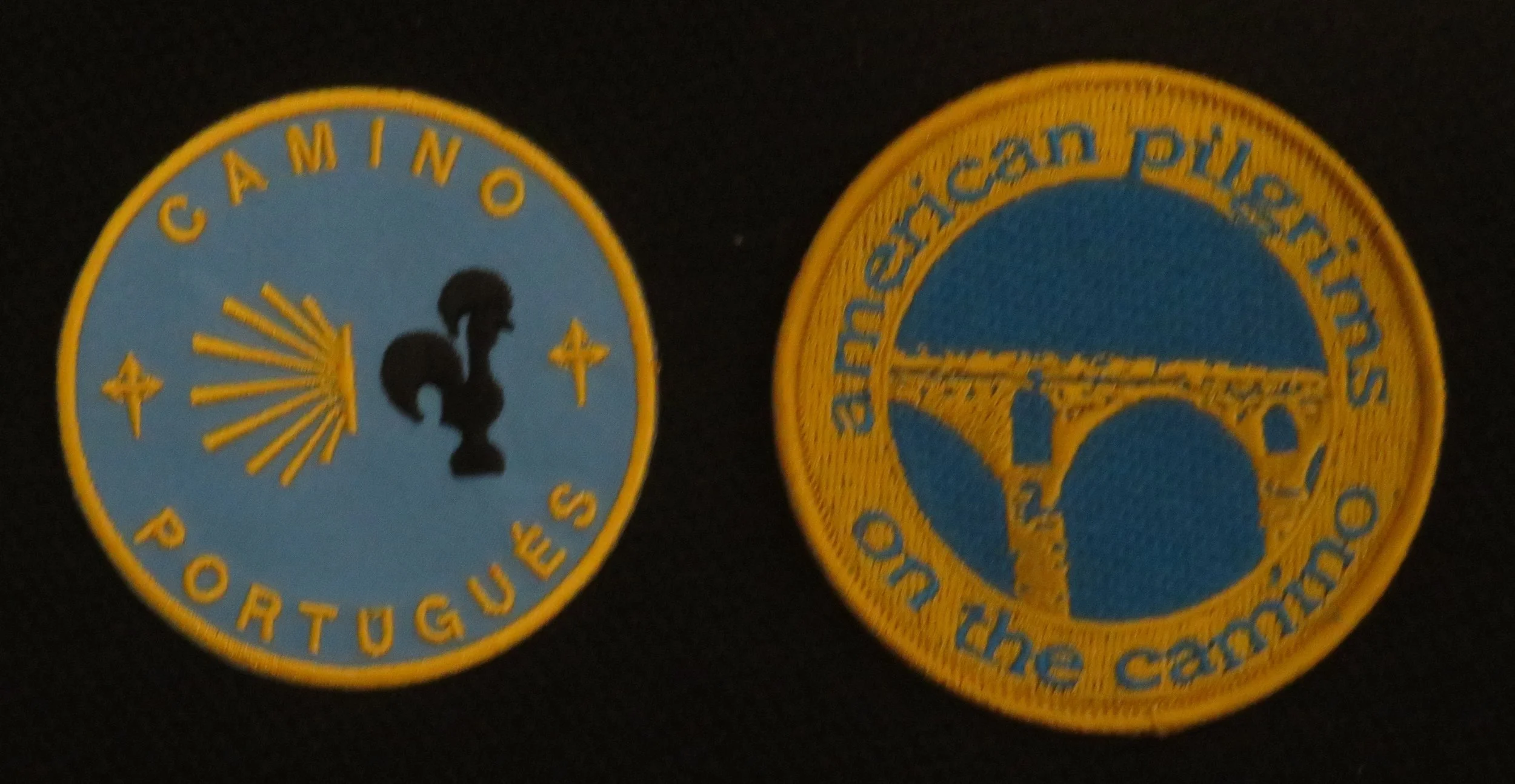
Patches for the Camino and the Camino Portugués
We’re also considering having a service transport our backpacks from one lodging to the next. Being six years older and remembering the struggle on the Via Francigena (2018), carrying 25-30 lb packs for long distances, we’re thinking we’d benefit from less weight on our backs. We’ve sent an itinerary to transport services for estimates. It looks as if €7/bag per move is the going rate. We’ll see how that plays with our budget. Maybe we’ll carry the bags on shorter days and have them transported on longer ones. We have purchased new Camelbak daypacks for our daily walks.

Memrise, a clearly better choice for learning European portuguese.
Part of the ‘me’ preparation is learning Portuguese. I’ve started taking a European Portuguese language course on Memrise, which so far is excellent. It was difficult to find an app that offered European Portuguese versus Brazilian Portuguese. I started with Duolingo, but they only offered Brazilian Portuguese. Memrise offers both. I’m finding the differences in pronunciation are significant. We’re told English is widely spoken in both Portugal and Spain, but I feel that if I’m a guest in a country, I should at least make an effort to learn some basics in the country’s language. Not to mention, I love learning languages. Since the Camino begins in Portugal and ends in Spain, David is brushing up on his Spanish using the same app.
We have a main list which contains many sub-lists. In other words, a list of lists. One list for what to bring broken into categories like clothing, personal/toiletries, electronics, hiking gear, and more. Another list for accommodations with dates and one for transportation requirements (trains, buses, airlines). Then there’s the list for what we need to buy… new trail shoes, maybe? Lightweight shirts and layers that need replacing? How about hiking socks? I’m creating yet another list for possible places to visit in each city, as well as possible off-the-camino venues that might be fun to explore. We’ve got guides, and I’m honing in on FB groups and blogs focused on Camino walking for ideas.
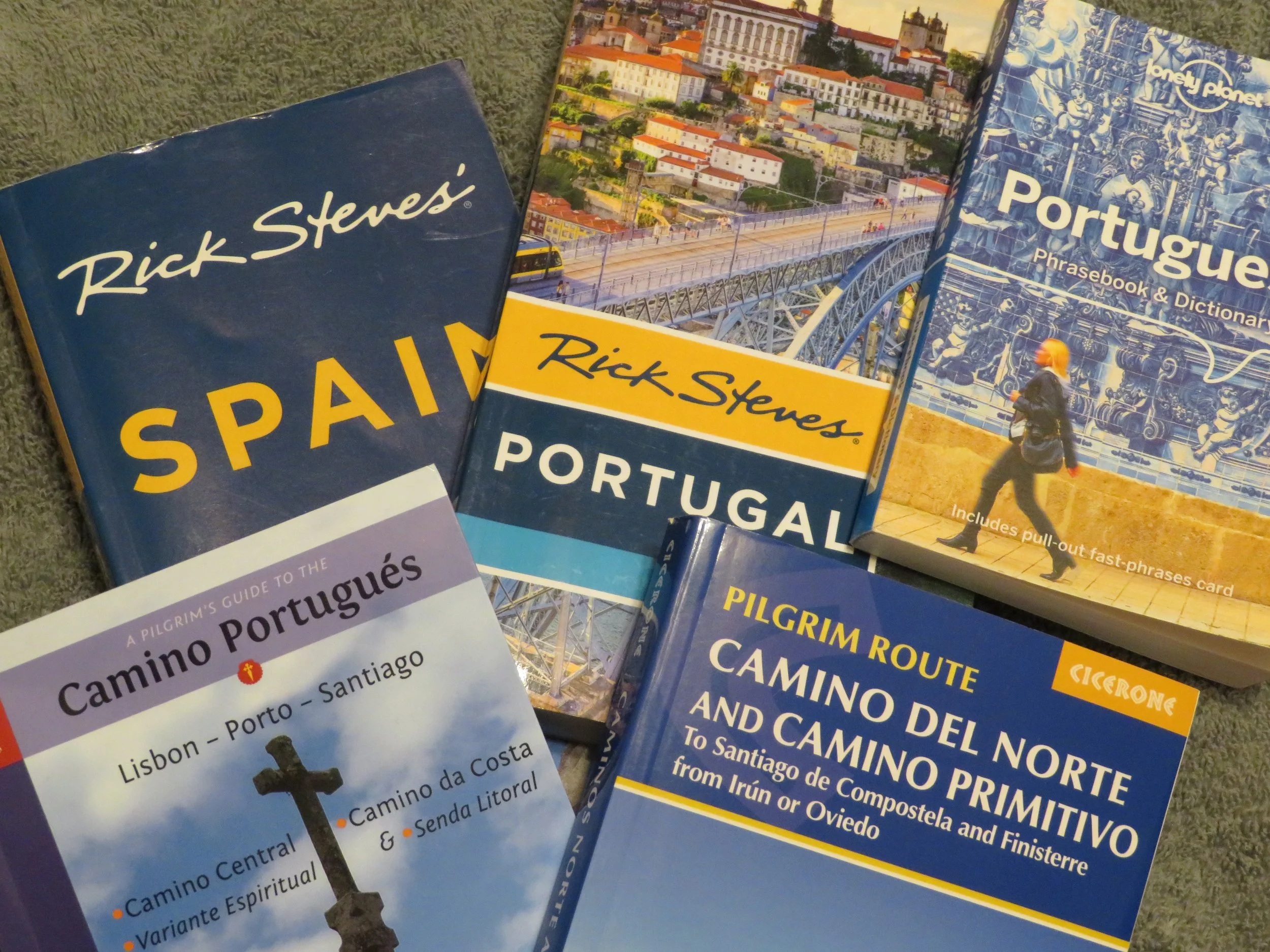
So many options… Can’t Wait!
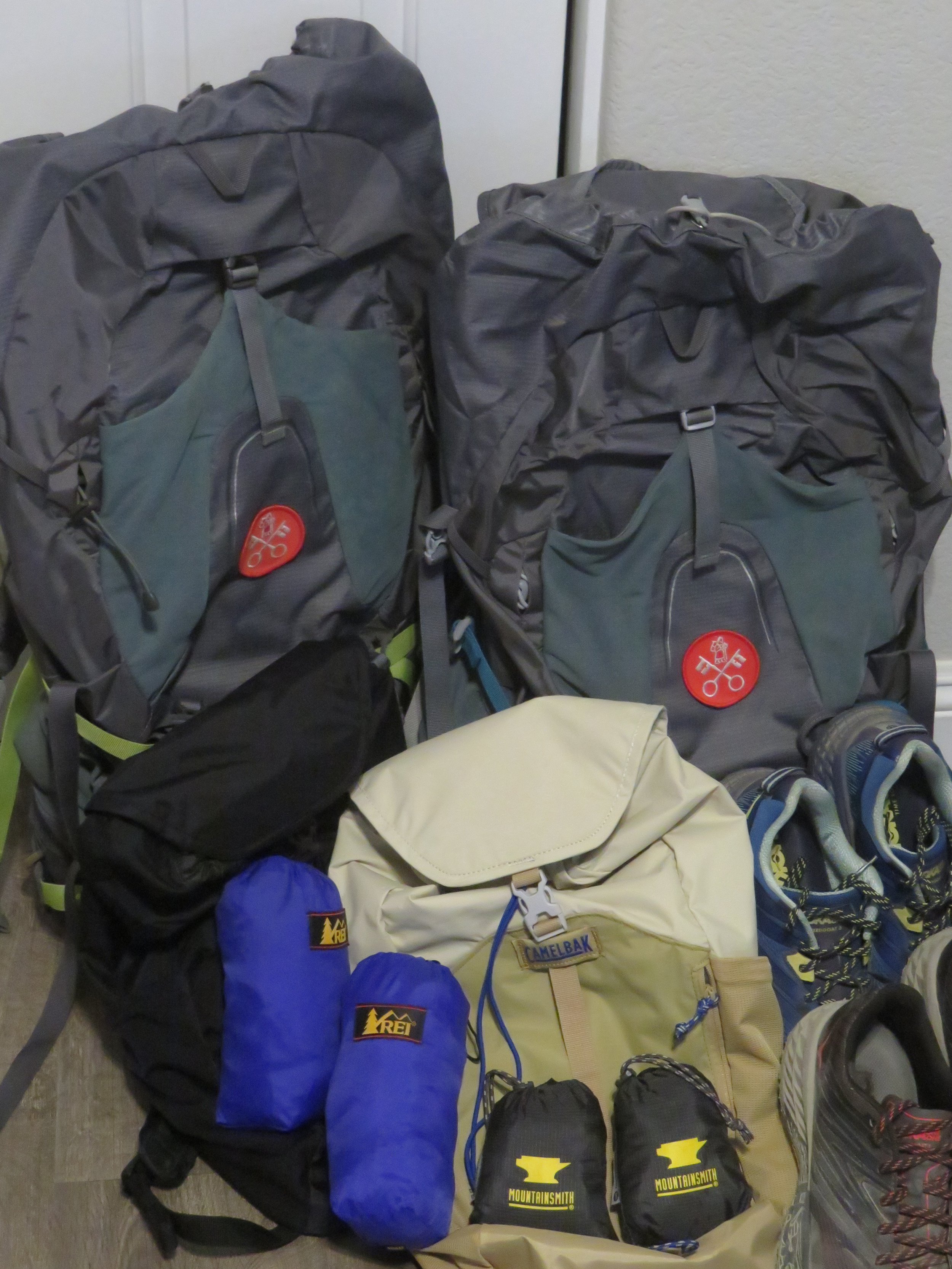
Figuring out what we have and what we need
I’ve recently rifled through our storage closet to find our well-hidden backpacks and hiking gear. So far, so good, though David wants to waterproof them again before we leave. It’s supposed to be rainy in Portugal in the Spring, though that’s one of the prime times to walk the Camino without crowds. We definitely plan to take our rain gear.
Last, but certainly not least, we need to accustom ourselves to walking longer distances. David’s mapped out our route with distances of ~12-13 miles/day… shorter days than our Via Francigena average of 16 miles/day, but more acceptable to the princess.
Currently, we’re walking a minimum of five miles every day with at least one to two hikes of 8+ miles each week. Last Sunday’s hike at Ice Age Fossils State Park netted us 11 miles, and we did just fine, though our legs were a bit tired at day’s end. More long walks, and we’ll be conditioned and in fine fettle for the Camino walk.
It’s still 2-1/2 months away, but time is flying by, and we’re excited to be preparing. The anticipation is half the fun. Stay tuned as we get closer to our departure date. We’re hoping you’ll be traveling with us. Don’t worry… no blisters for you!