

Celebrating an American Folk Hero - Johnny Appleseed
/“Surely the apple is the noblest of fruits.”
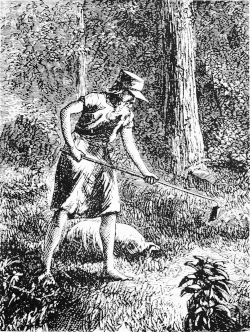
John Chapman was an American pioneer, orchardist, and American folk hero best known by his nickname, Johnny Appleseed. Born at the start of the Revolutionary War, I was surprised to learn he hailed from Leominster, Massachusetts… my home state. I’m sure I knew this once, but I’ve long since forgotten. As I was researching, I found I didn’t know that much about him and he was a pretty interesting, albeit eccentric, guy.
Johnny was a wanderer… a nomad. As a teenager, he traveled west, which in those days was today’s Midwest... Pennsylvania, Ohio, Indiana, Illinois, and he even ventured into Ontario, Canada. He carried with him appleseeds that he gathered from cider mills. It wasn’t a random sowing as I had imagined, but rather he planted in fenced nurseries and returned now and then to tend them, offering, for a fee or trade, apple trees to the locals.
According to the website, All That’s Interesting, “Appleseed’s main goal in planting apples was to sell orchards to homesteaders who were moving west en masse in the 19th century in search of new frontiers and new opportunities. Appleseed set out to profit from this trend in westward migration. And the apples he planted? They were not meant for pies or cobblers or even to enjoy fresh from the tree. Rather, they were used to make hard apple cider… He did plant apples — more than 1,000 acres of them.” Other websites dispute his overzealous business entrepreneurship and praise his legacy of promoting conservation and sustainable agriculture.
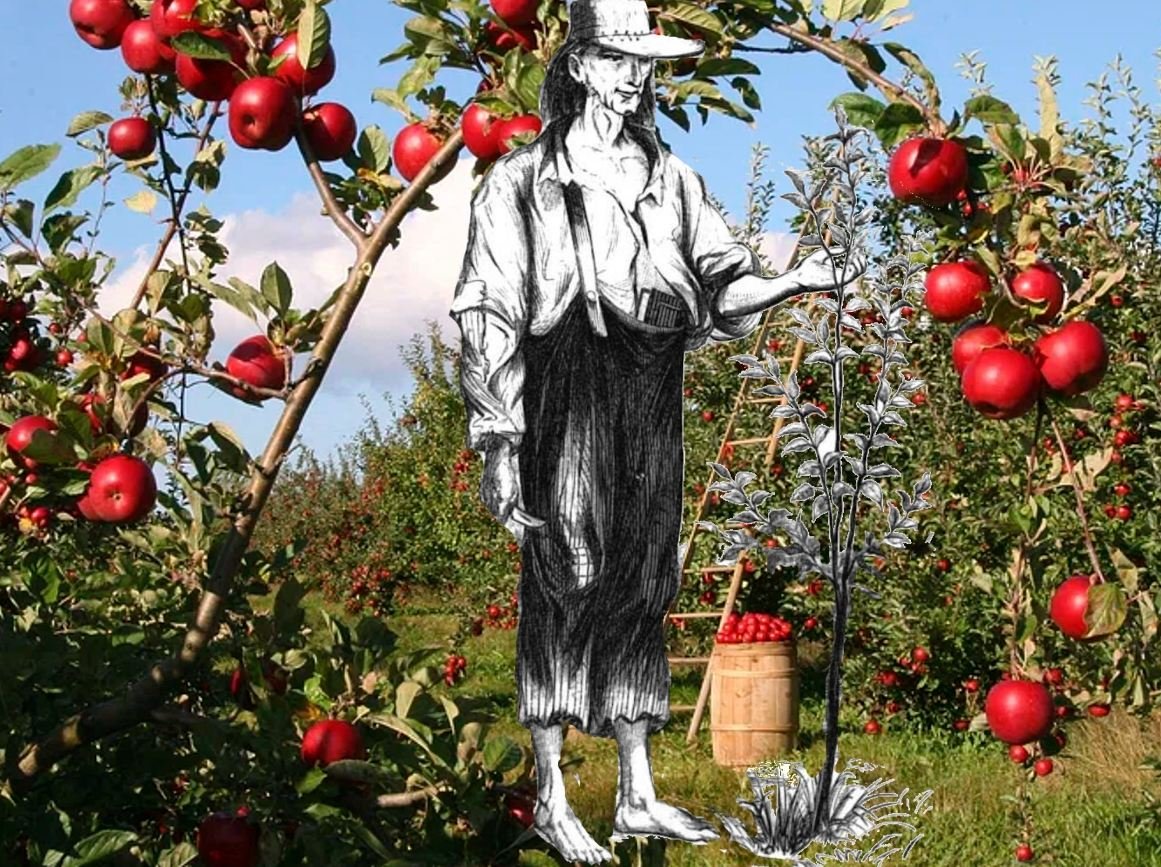
He’s been the inspiration and focus for several museums and historical sites. The Johnny Appleseed Museum in Urbana, Ohio, is one, and it purports to hold “the world's largest collection of memorabilia and information about the life of John ‘Appleseed’ Chapman.” A small orchard with apple trees descended from Johnny’s original planting is on site and dedicated to those who dedicated their time to preserving Johnny Appleseed’s legacy.’
There’s also the Johnny Appleseed Visitor’s Center in Lancaster, Massachusetts, which hypes the “Big Apple of New England” sculpture, a 10’ tall apple that “is the largest apple sculpture of its kind in all New England… large enough to hold an estimated 20,639 apples inside”… quite the boast!

Big Apple of New England
”The center also features a bronze sculpture of the young Johnny Appleseed that greets visitors outside the doors of the… the Visitors’ Center. There are also 91 apple trees located on the premises, including three Rambo trees that are direct descendants of the last remaining tree known to be planted by Johnny Appleseed.” Incidentally, Johnny Appleseed is the official state folk hero of Massachusetts. Who knew? I’m not sure I realized states had ‘official’ folk heroes. Live and learn.
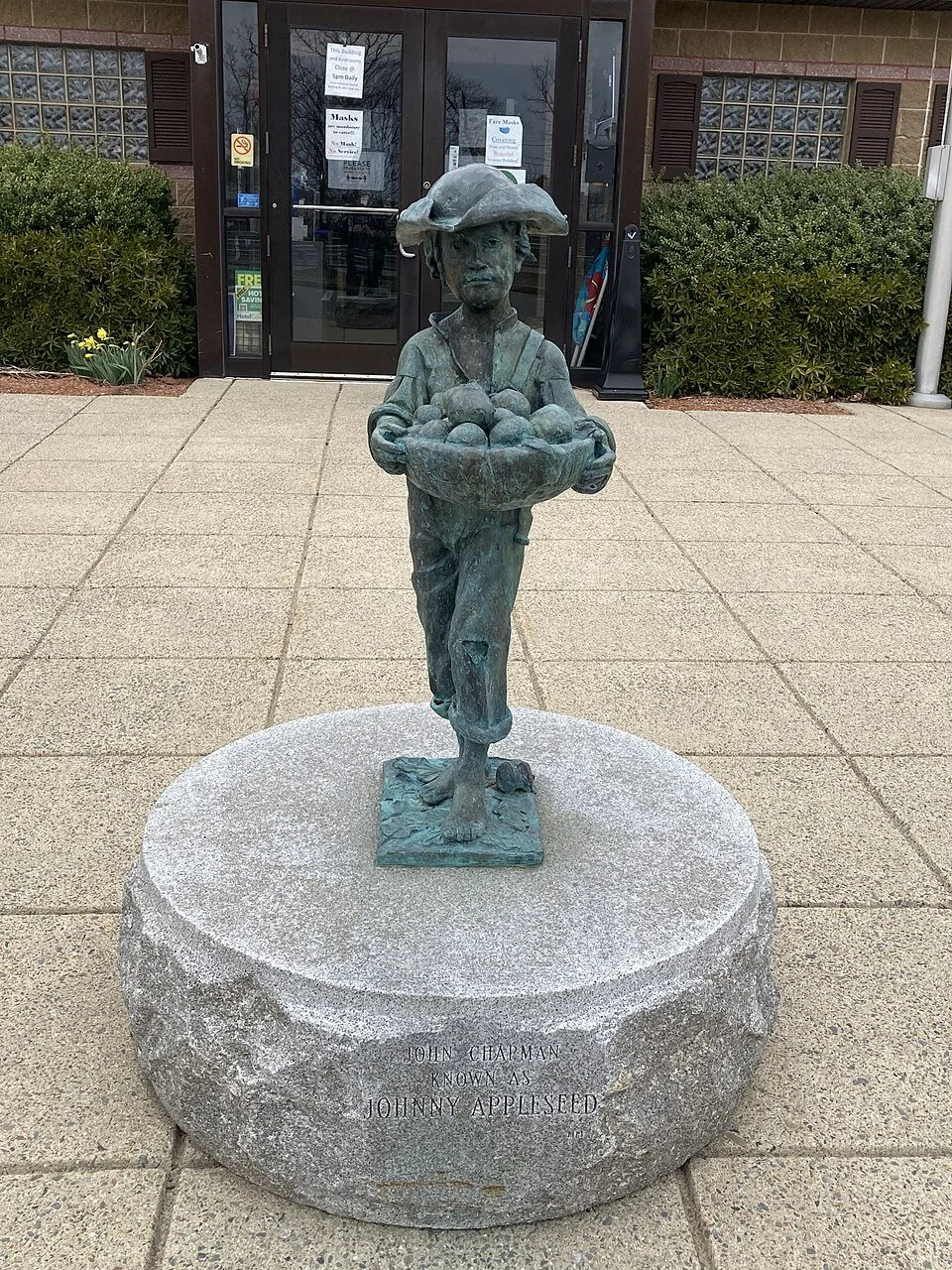
A bronze statue of Johnny Appleseed at the Visitor’s Center Photo credit: rESEARCHabc
I’ve not visited either, but the next time I’m in Massachusetts or Ohio, I might talk David into stopping.
There’s not much recorded history about John Chapman. He was a loner, never married, never had a family. He carried a Bible and preached on occasion. Oral history indicates he was kind, hard-working, self-effacing, and a minimalist. He usually went barefoot, summer and winter, wore used clothing, and was definitely an eccentric. An obituary from the Fort Wayne Sentinel (March 22, 1845) stated, “The deceased was well known through this region by his eccentricity, and the strange garb he usually wore.”

Some celebrate on September 26th, his birthday, but March 11th is considered more appropriate because it’s planting season and more in keeping with his mission. So celebrate apples today… eat an apple, drink some cider, make an apple pie, and give a nod to an American folk hero… Johnny Appleseed.