

Chloride Arizona - A Living Ghost Town
/Quirky, quaint, charming… an apt description for the old mining town now a ‘living ghost town’ of Chloride, Arizona. Founded ~1863, Chloride, named by the miners who discovered silver chloride in the nearby Cerbat Mountains, was once home to 2000+ residents and boasted 75 working mines. Now the town has a population of ~250. It was called ‘The Gem of the Cerbats’ and is considered the oldest continuously inhabited mining town in Arizona.
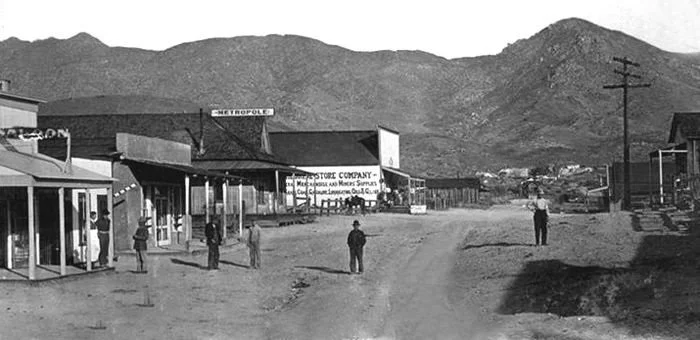
Chloride 1914 - from the Chloride Historical Society collection
An estimated 88 miles from home, we sped south down I-11/US-93 from Las Vegas, passing by Lake Mead, the Hoover Dam and crossing the state line into Arizona. We lost an hour in the process, which, by the way, we did not reclaim since it was the weekend to ‘spring ahead’ to daylight savings time.
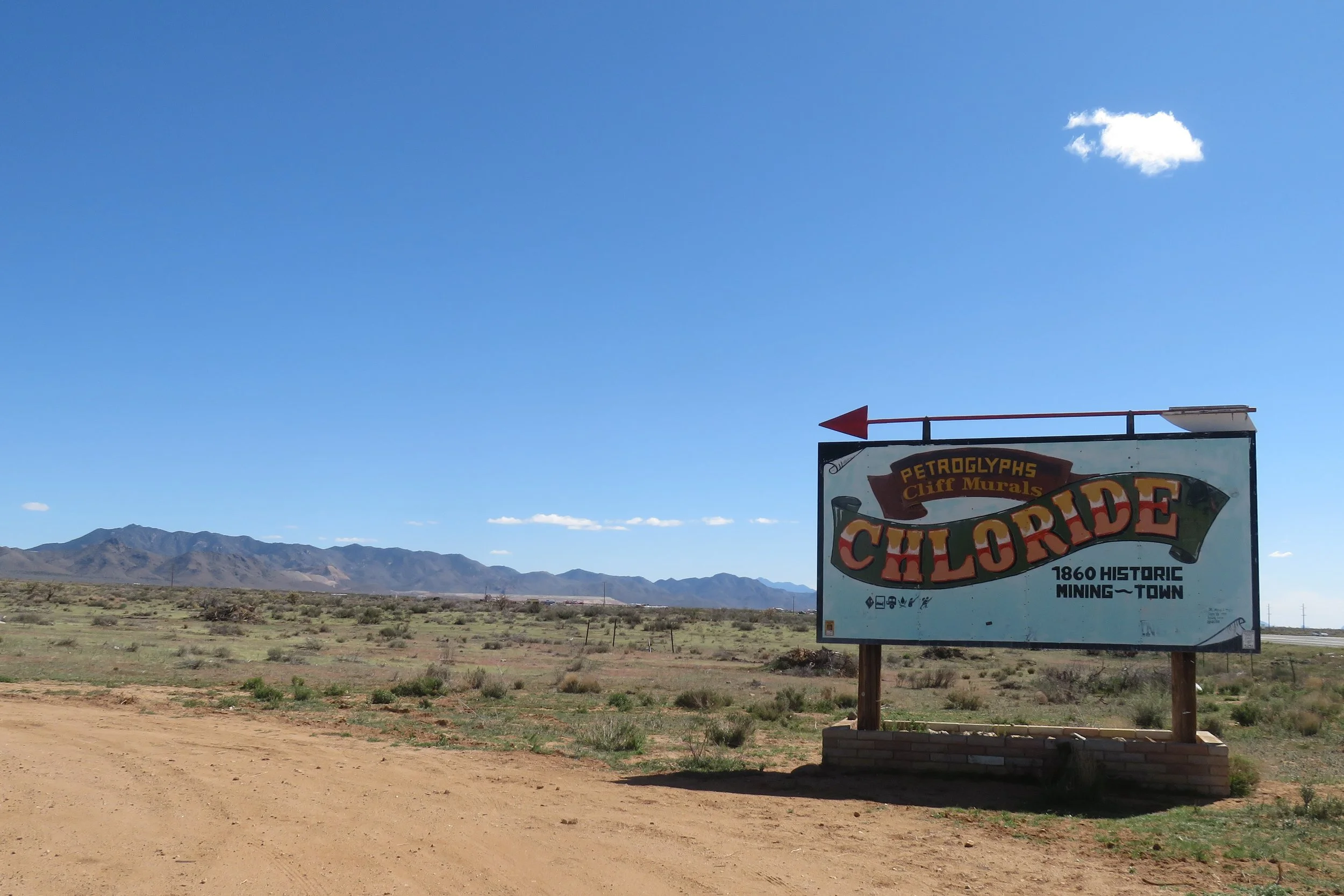
We saw the sign for Chloride pointing us up into the hills four miles west up AZ-125. We have passed by the Chloride sign innumerable times on the route between Kingman and Las Vegas and never paid much attention. This time we planned to check it out and we’re glad we did.
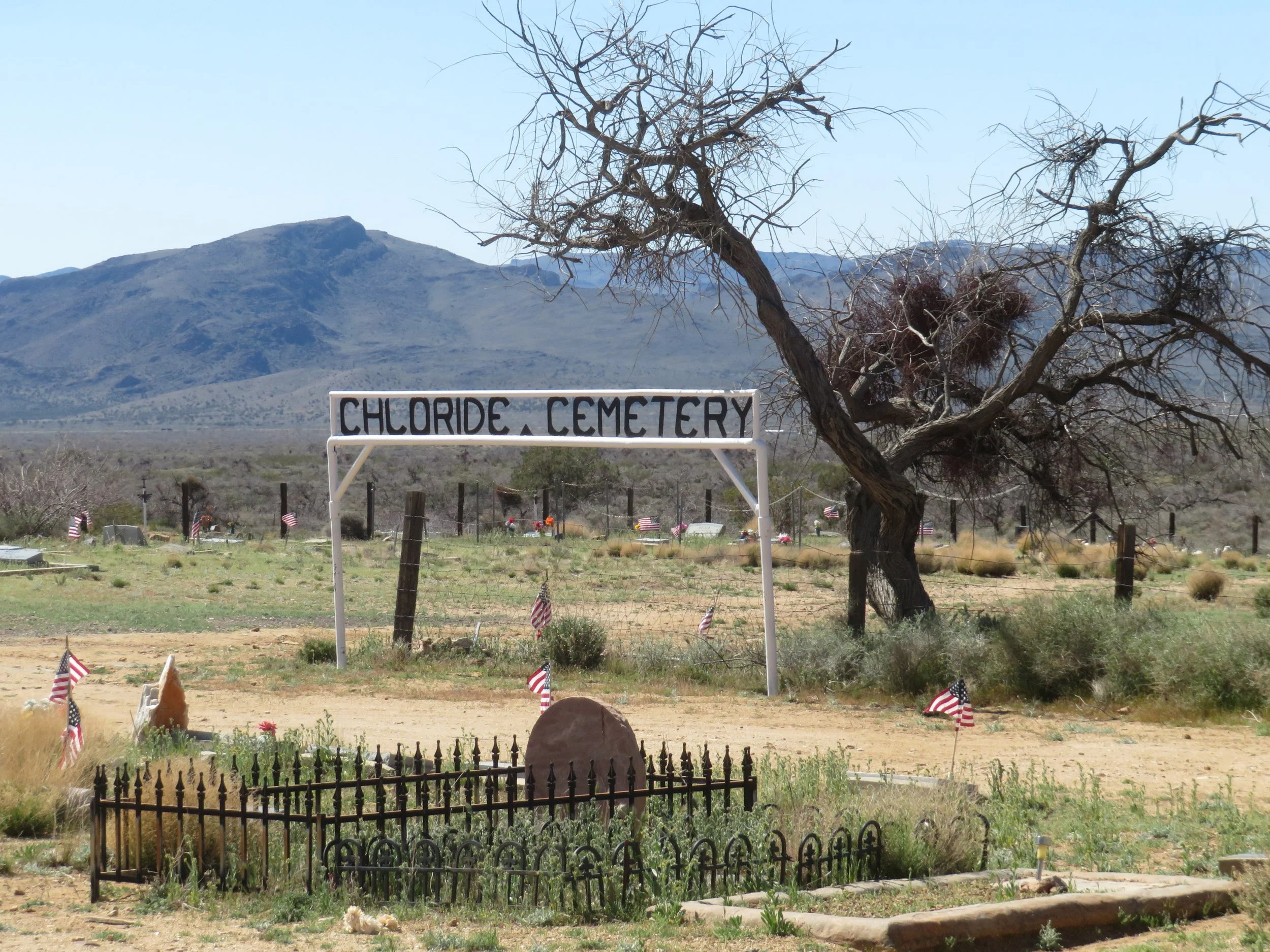
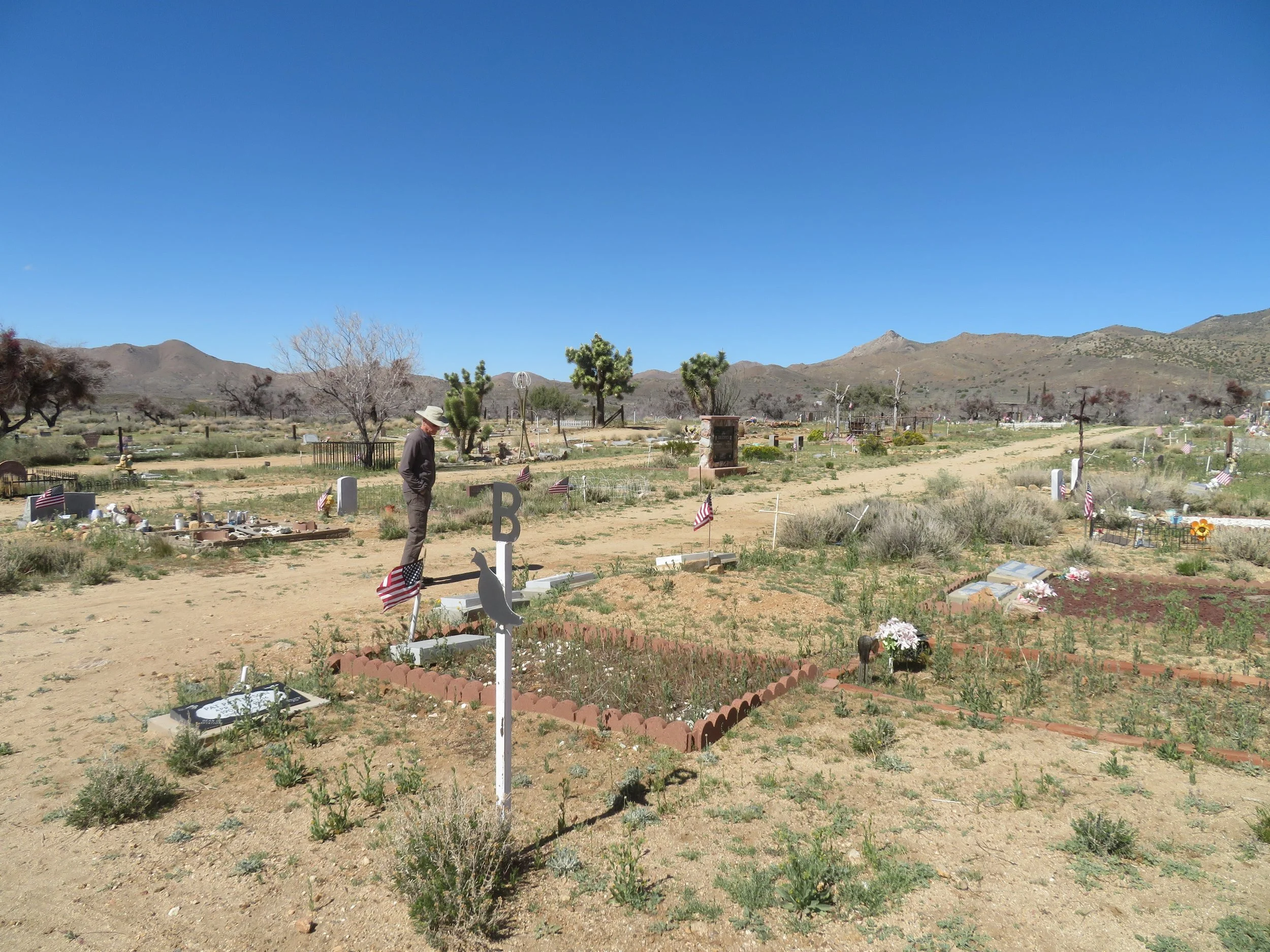
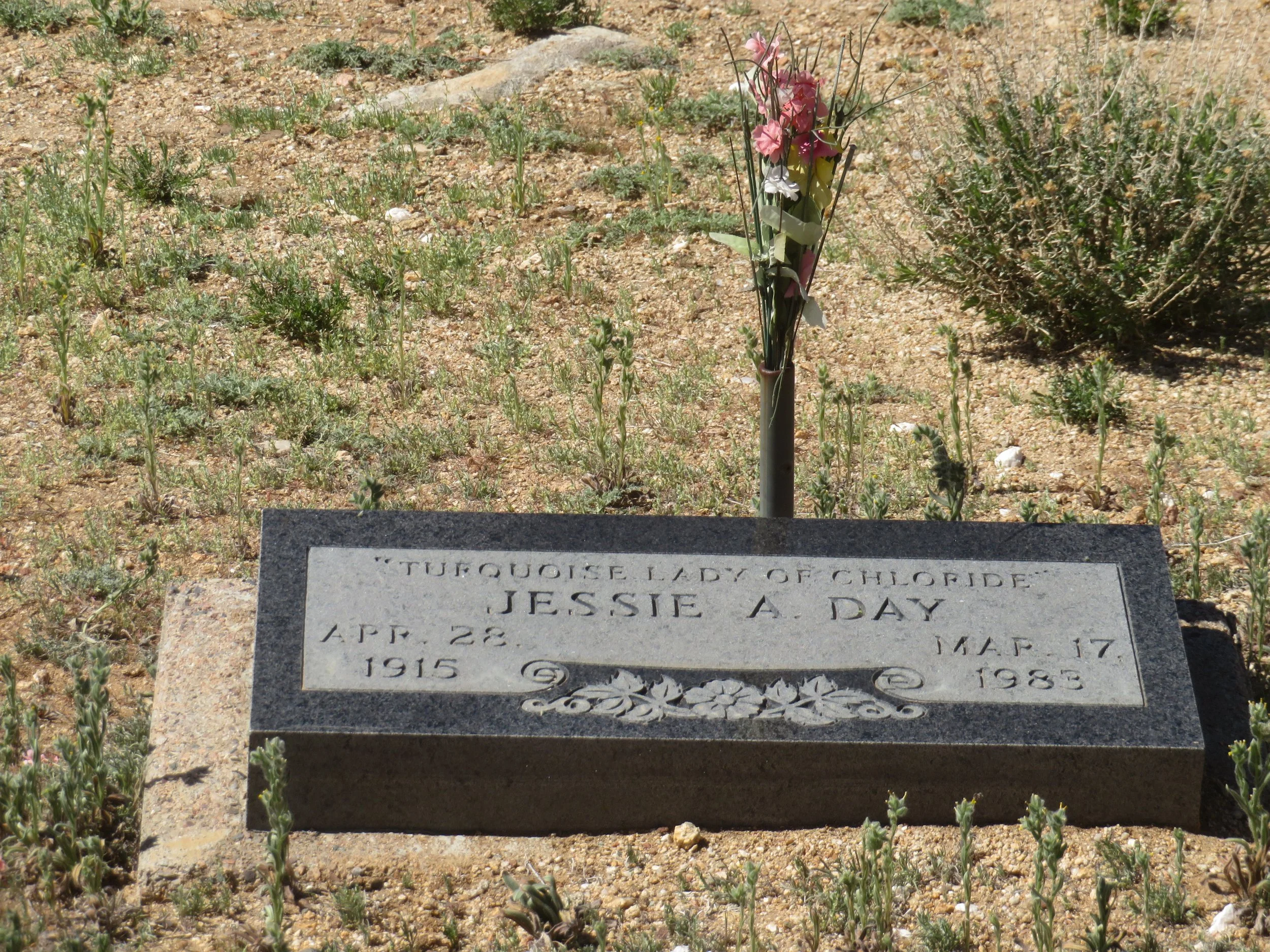
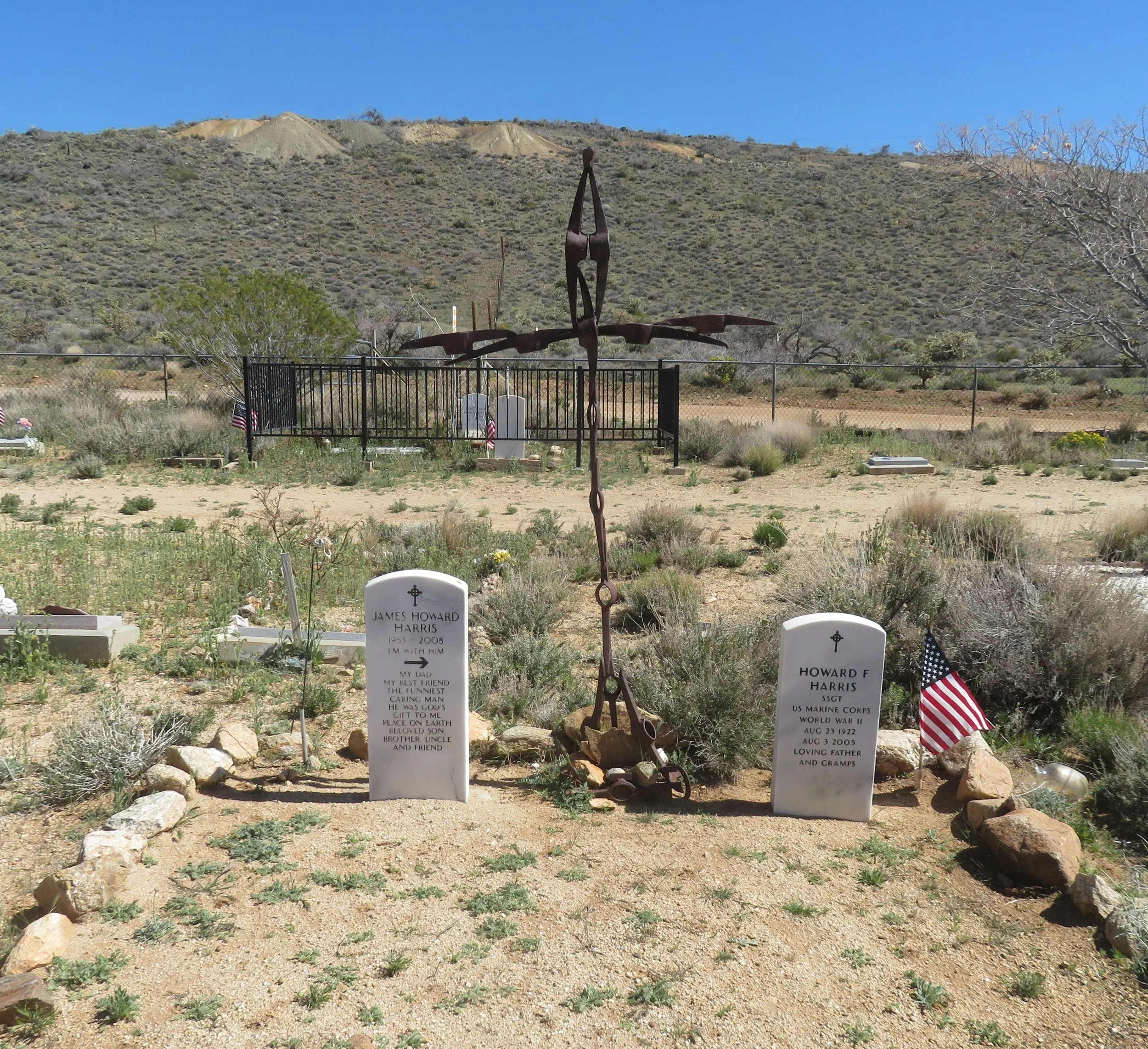
On the outskirts southwest of town, we saw a sign for the Chloride Cemetery and decided to stop. We walked quietly among the graves and pondered the stories of the people who were buried there… miners, old folks, young folks, couples, ‘the turquoise lady’, an iron worker with a sense of humor who thought ahead, a beloved father, his adult son interred beside him. US flags decorated the graves of all the veterans. There were lots of flags.

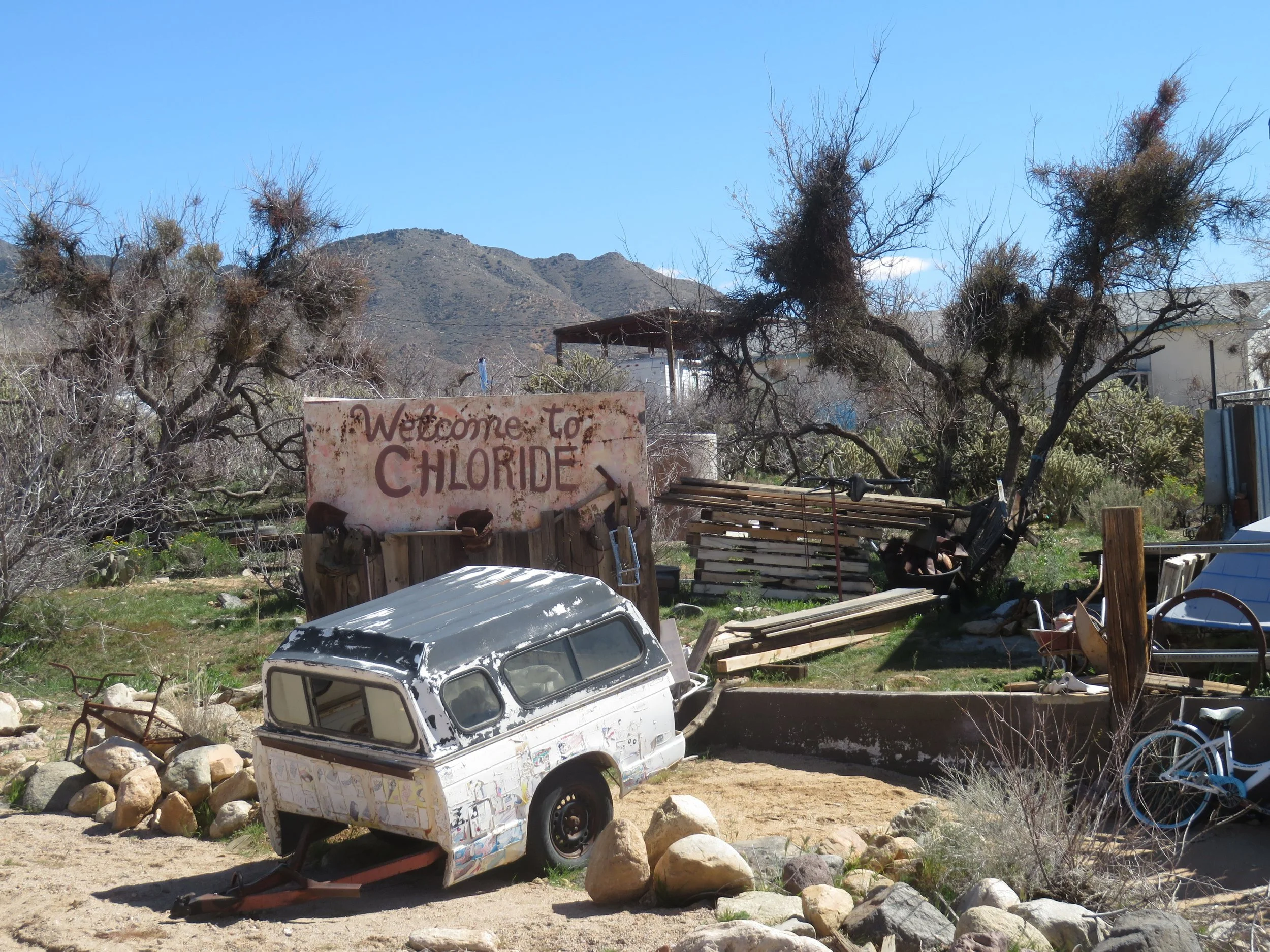
We proceeded into town. A welcome sign planted midst what we learned from the town brochure was described as ‘yard art’, greeted us.
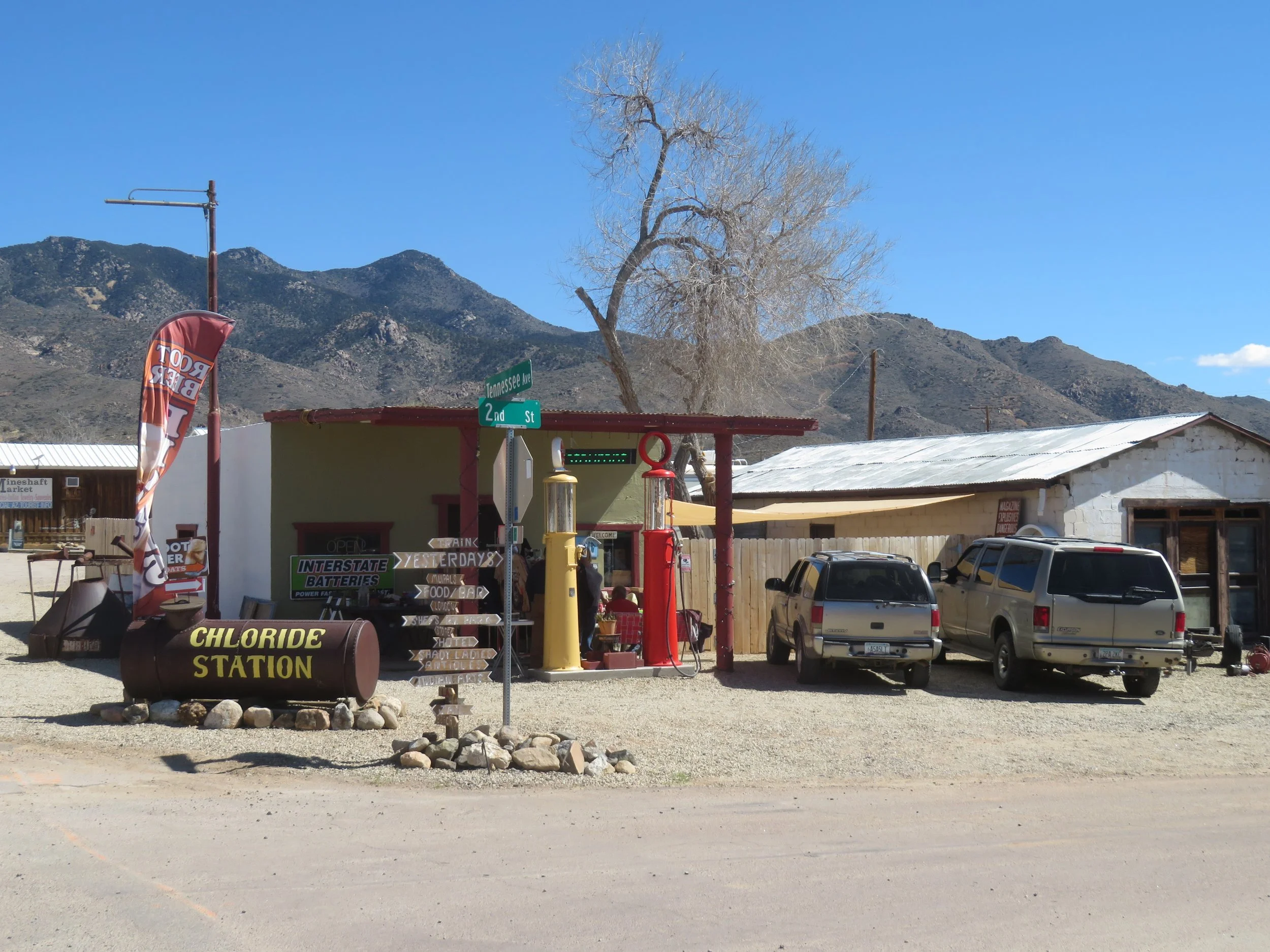
An iconic gas station, its antique pumps long ago abandoned, still stood as a testament to the old days. There’s vintage Americana and signs of a once-flourishing past everywhere you look.
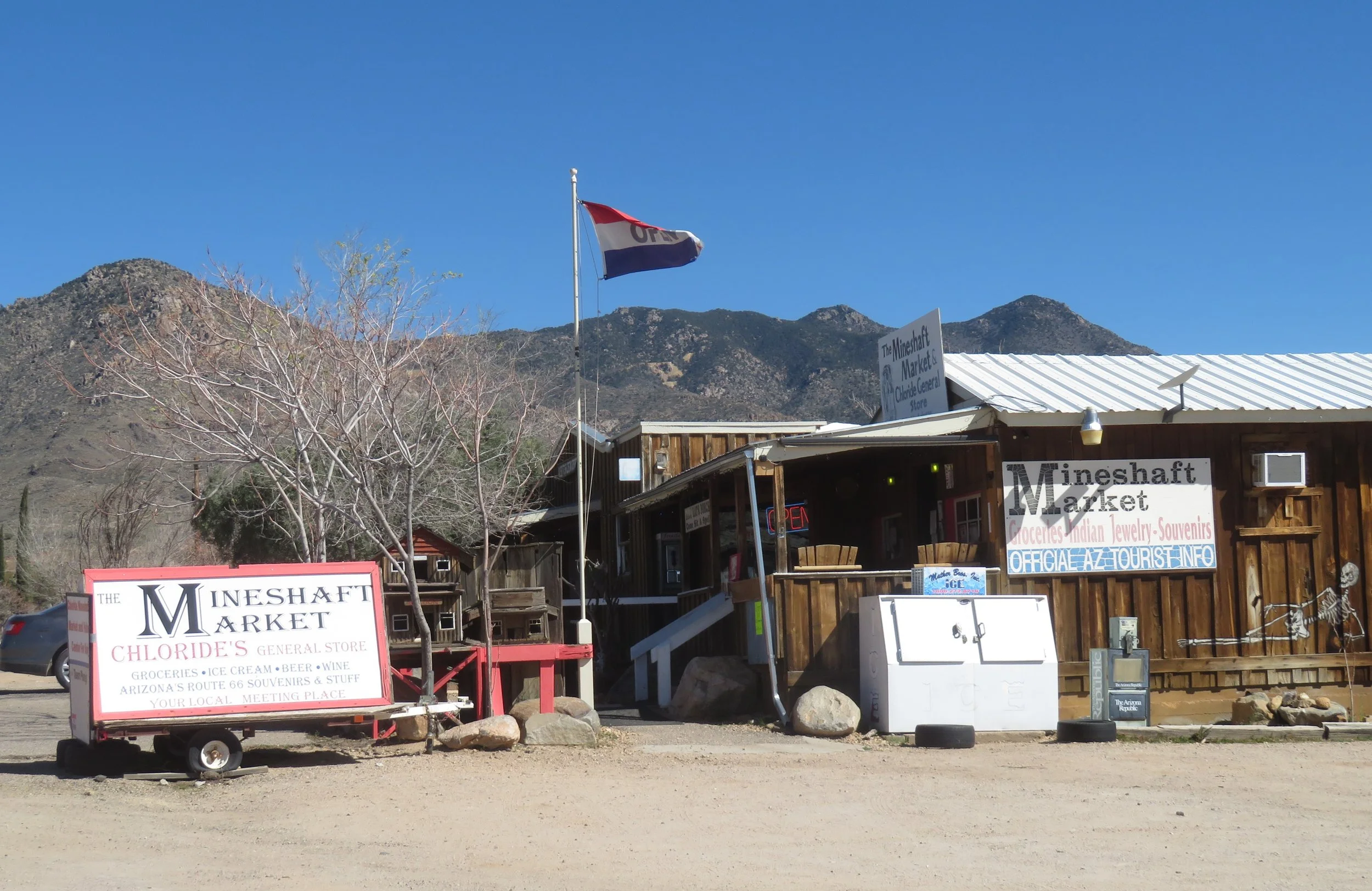
We stopped at the Mineshaft Market and Mercantile, a souvenir/grocery/sundries/official Arizona Visitor Center, where we were welcomed warmly and given a town map and brochure. We asked if there was any place other than the RV park to camp in town. She suggested we could dry camp right in the parking lot overnight if we wanted to. A nice offer to consider.
It was past lunchtime, so we headed over to Yesterday’s Restaurant, a pleasant little eatery decorated with mining memorabilia and western-themed artwork. Originally a stop on the Butterfield Stage Line, it is open Friday-Sunday from 8am-5pm, serving breakfast, lunch, and dinner. They serve what I’d call American comfort food… pancakes, eggs, sandwiches, burgers, steaks, chicken, and cold beer. The food was hot, good, and very reasonably priced. We’d go back without hesitation.
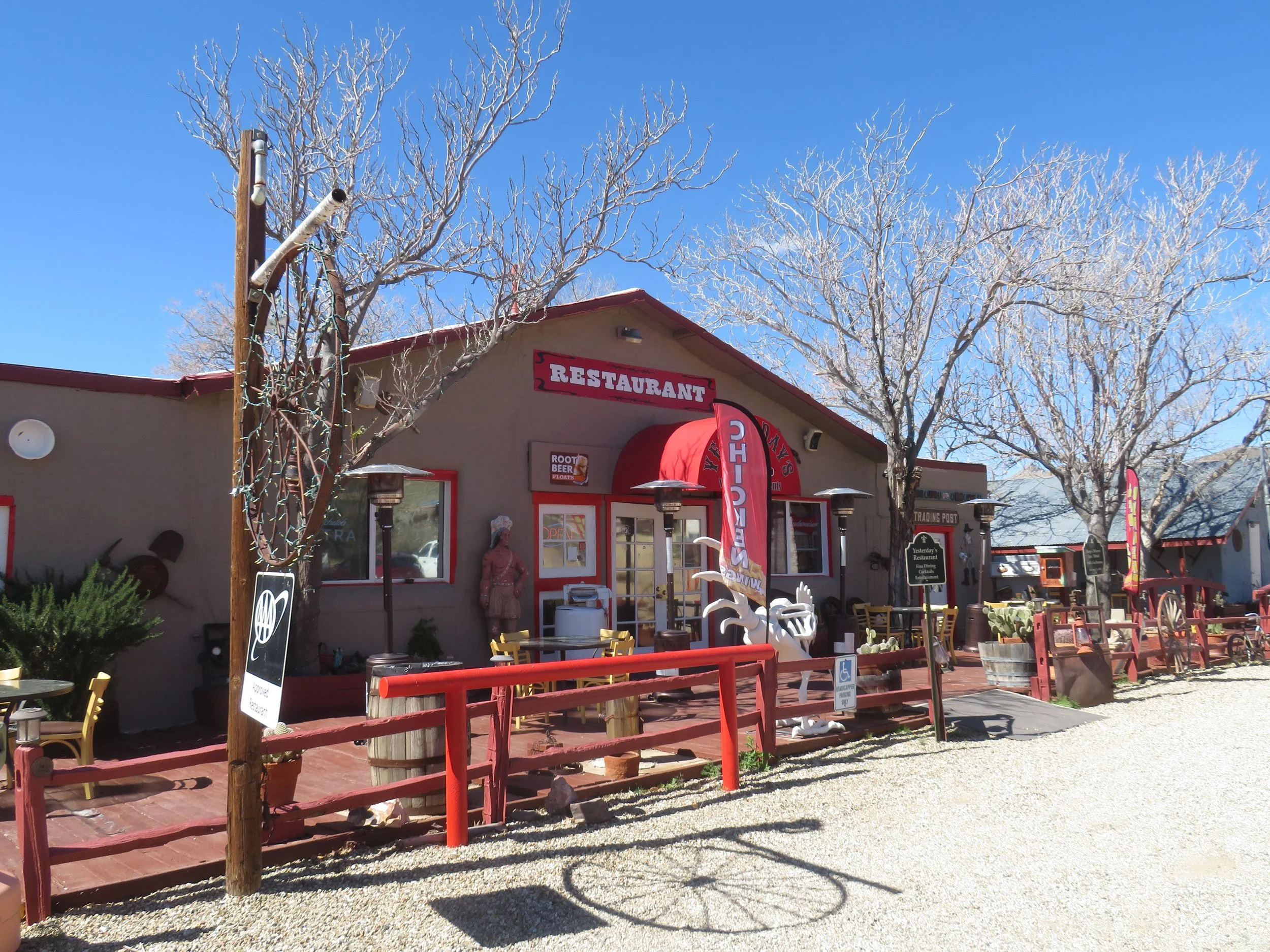
Yesterdays was a fine little eatery!
Adjacent to the restaurant is Shep’s Miners Inn, a historic adobe inn constructed with sand and mud from the local streambeds. It’s been newly renovated and still operates as the only lodging in town. We might consider this as a getaway weekend to attend their Old Miner’s Day celebration in October. We got a kick out of the Miner’s Ten Commandments posted outside the entrance.
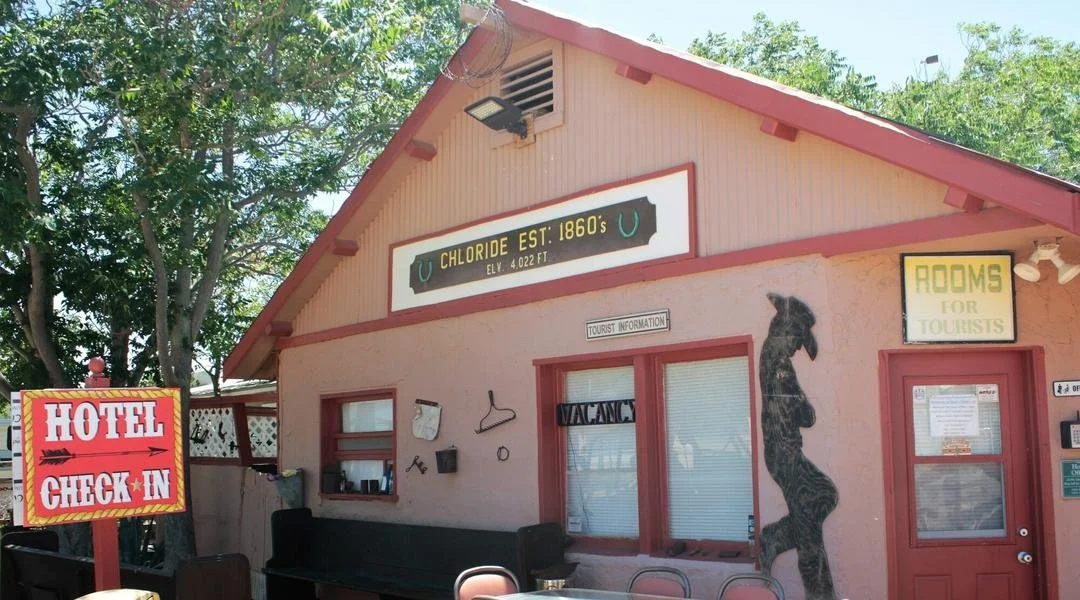
Shep’s Miners Inn photo credit: from Sheps website
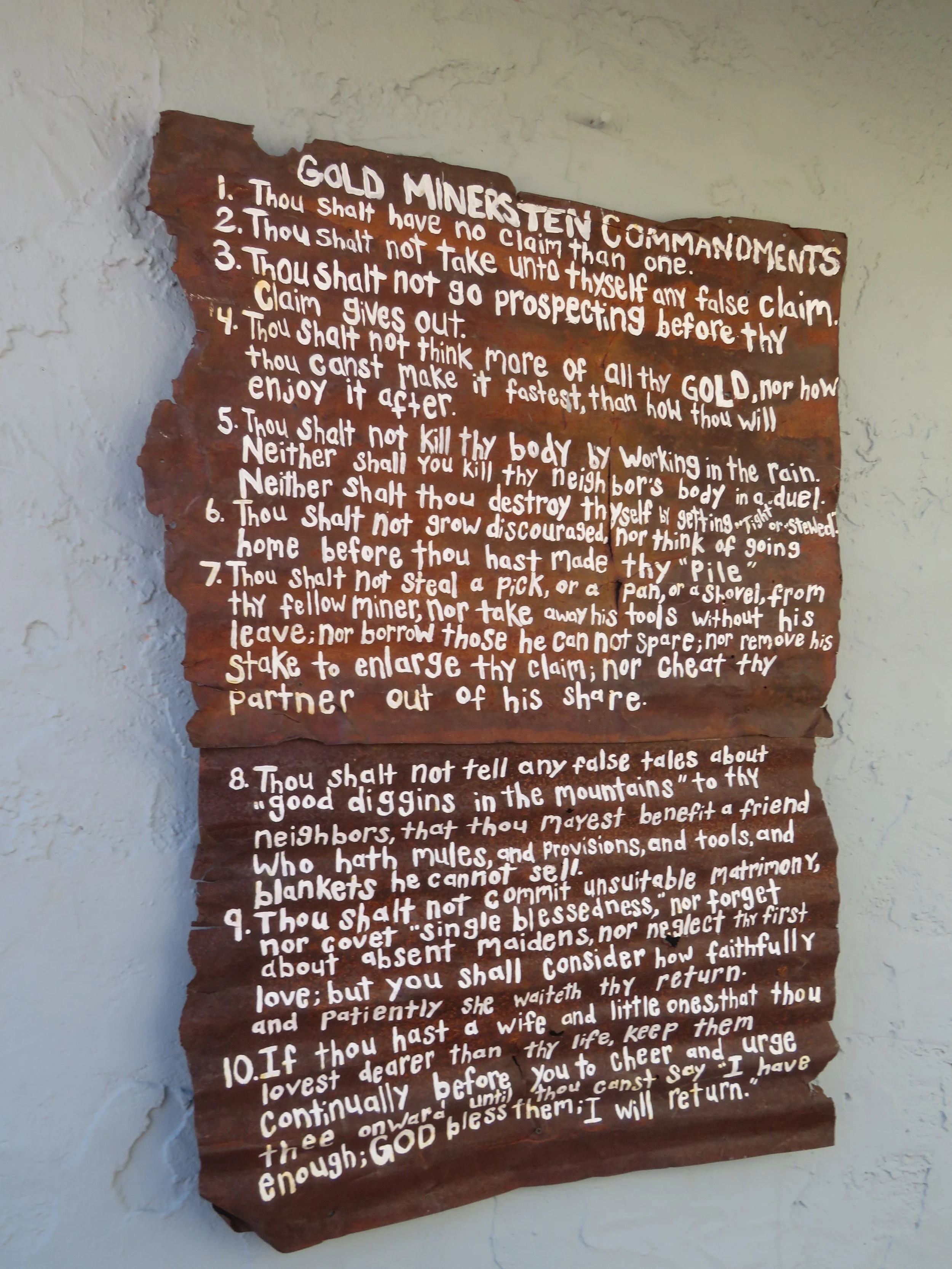
Gold Miner’s ten commandments which we assume also applies to silver miners!
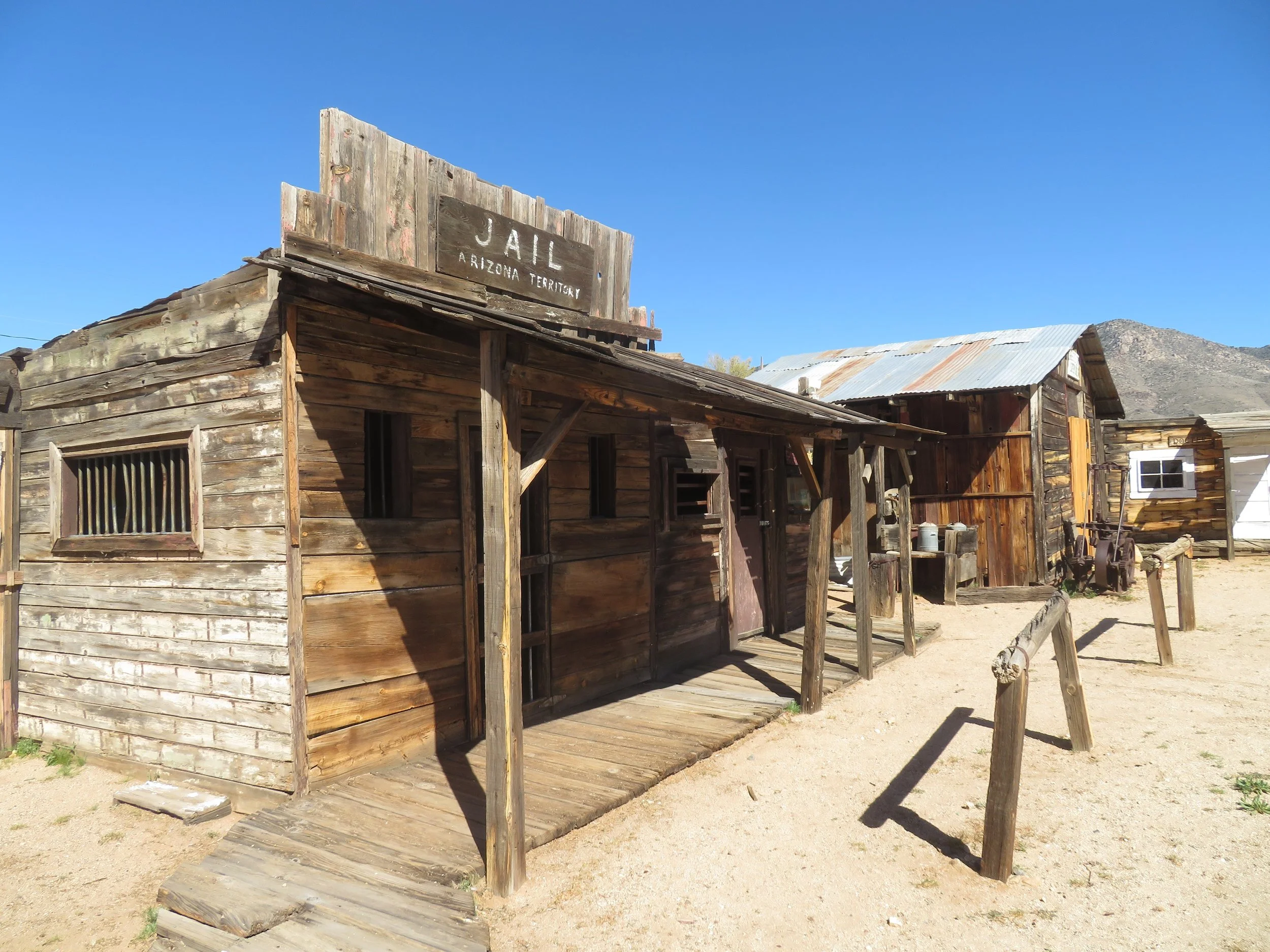
Across the street is a local park with a public restroom, and a little beyond is the entrance to Cyanide Springs, a western frontier town facade built by Chloride’s gunfight reenactment group. Using lumber from local mines and only tools and techniques used during the mining boom, the little ‘town’ is fun to walk through. Shops are open whenever there are gunfights scheduled, which are the first and third Saturdays (Sept-Dec and Feb-May) at high noon. We arrived too late for the shoot-out, and everything was closed. Take a look at the ‘town’.
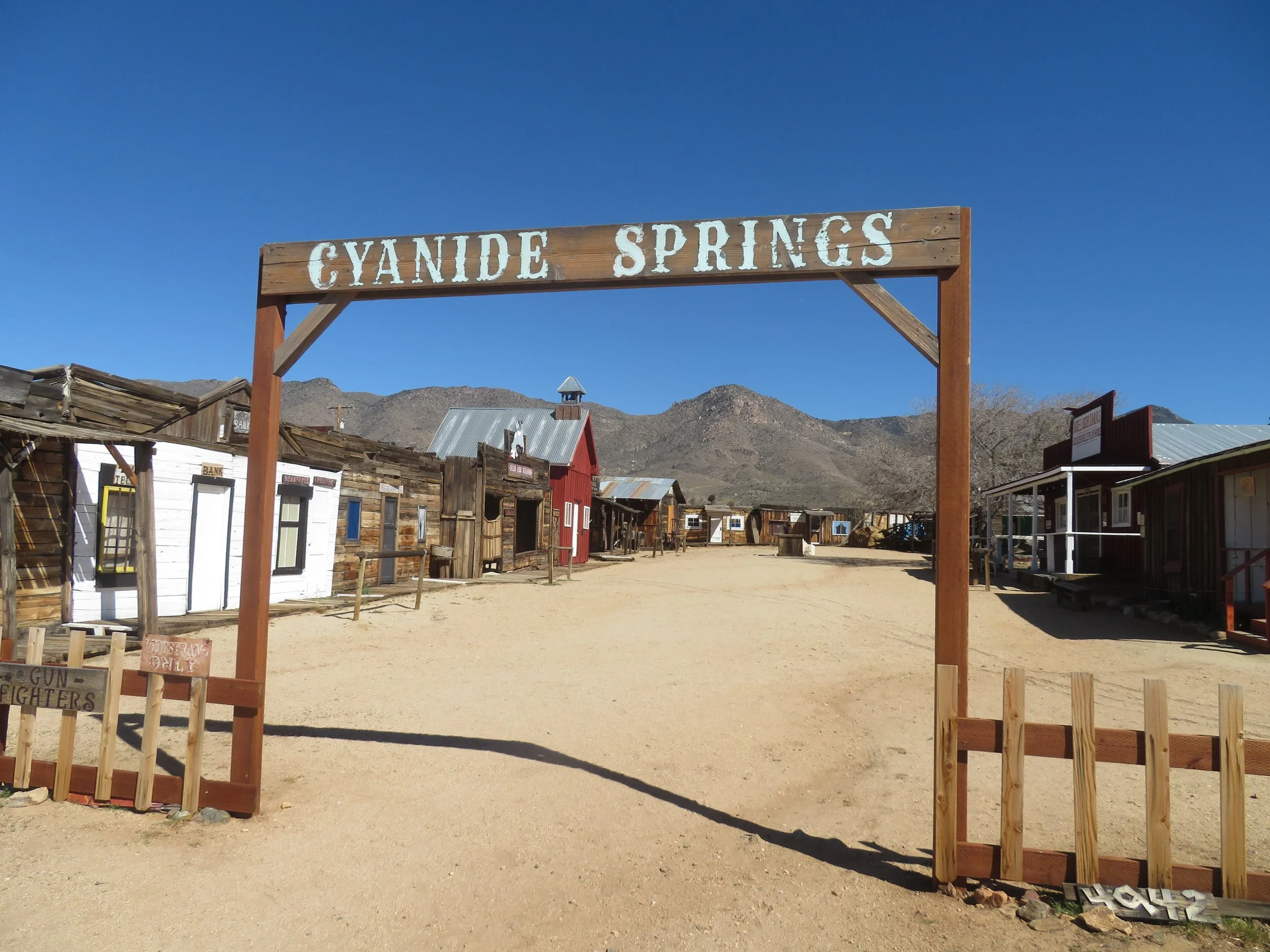
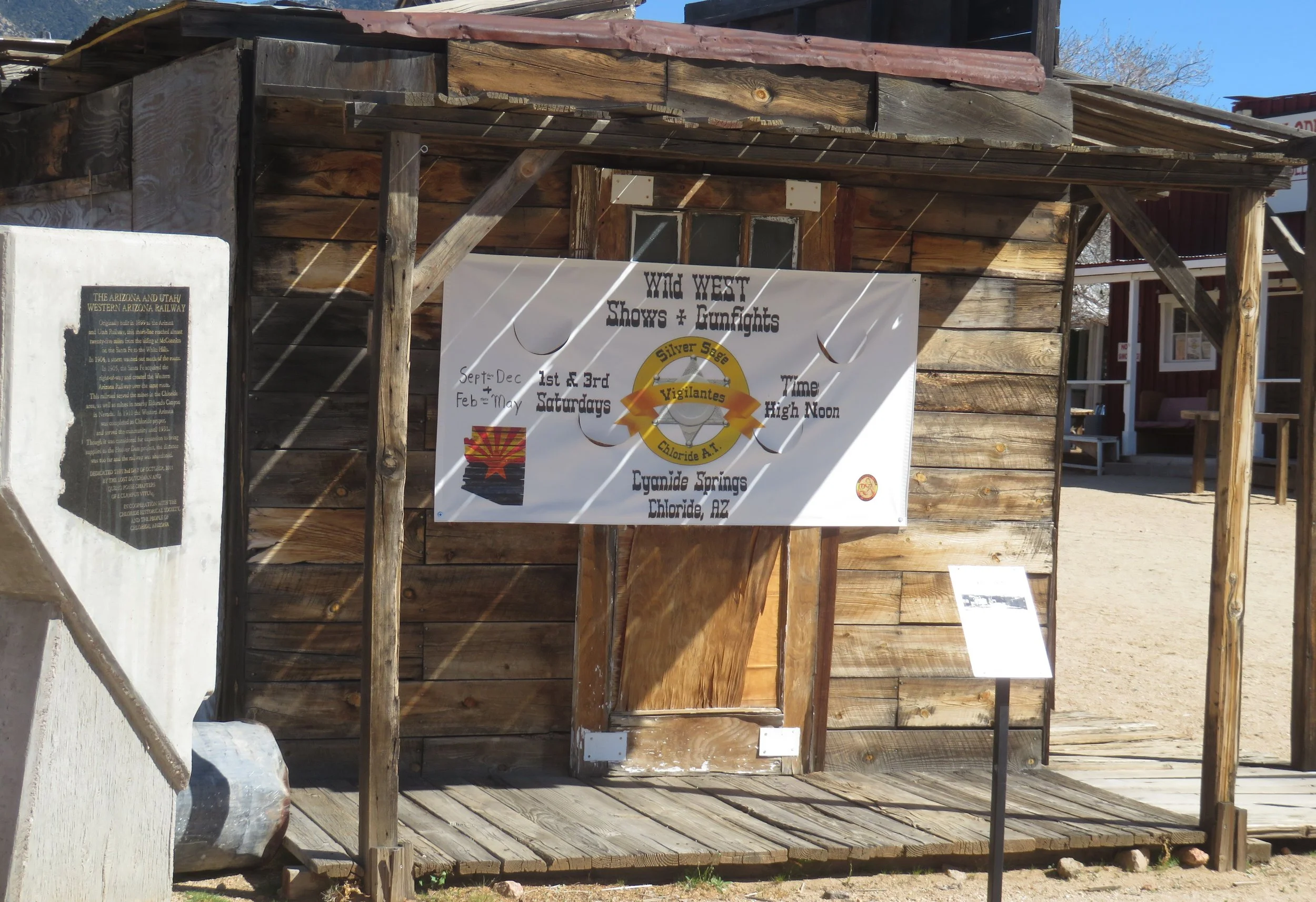
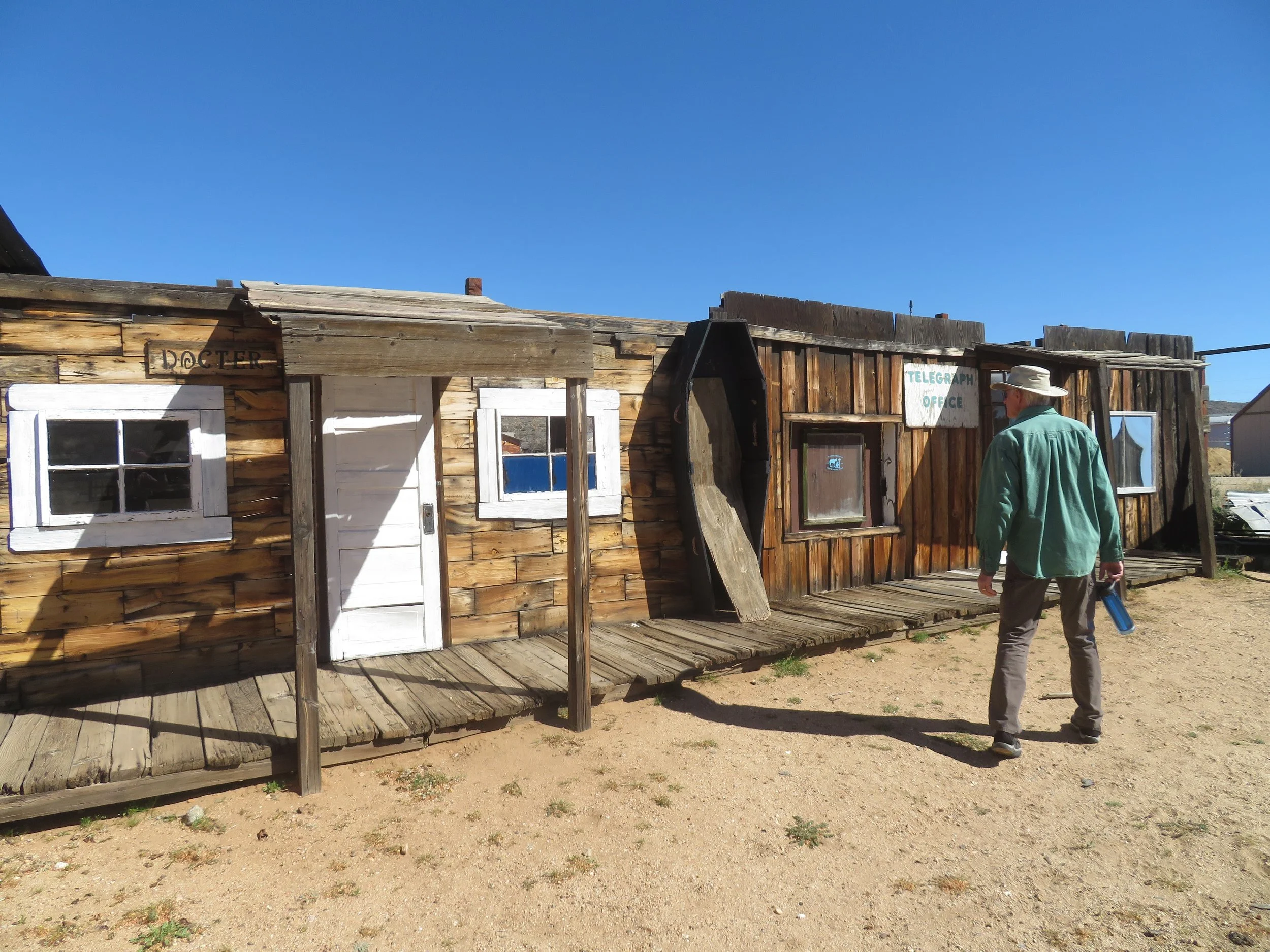
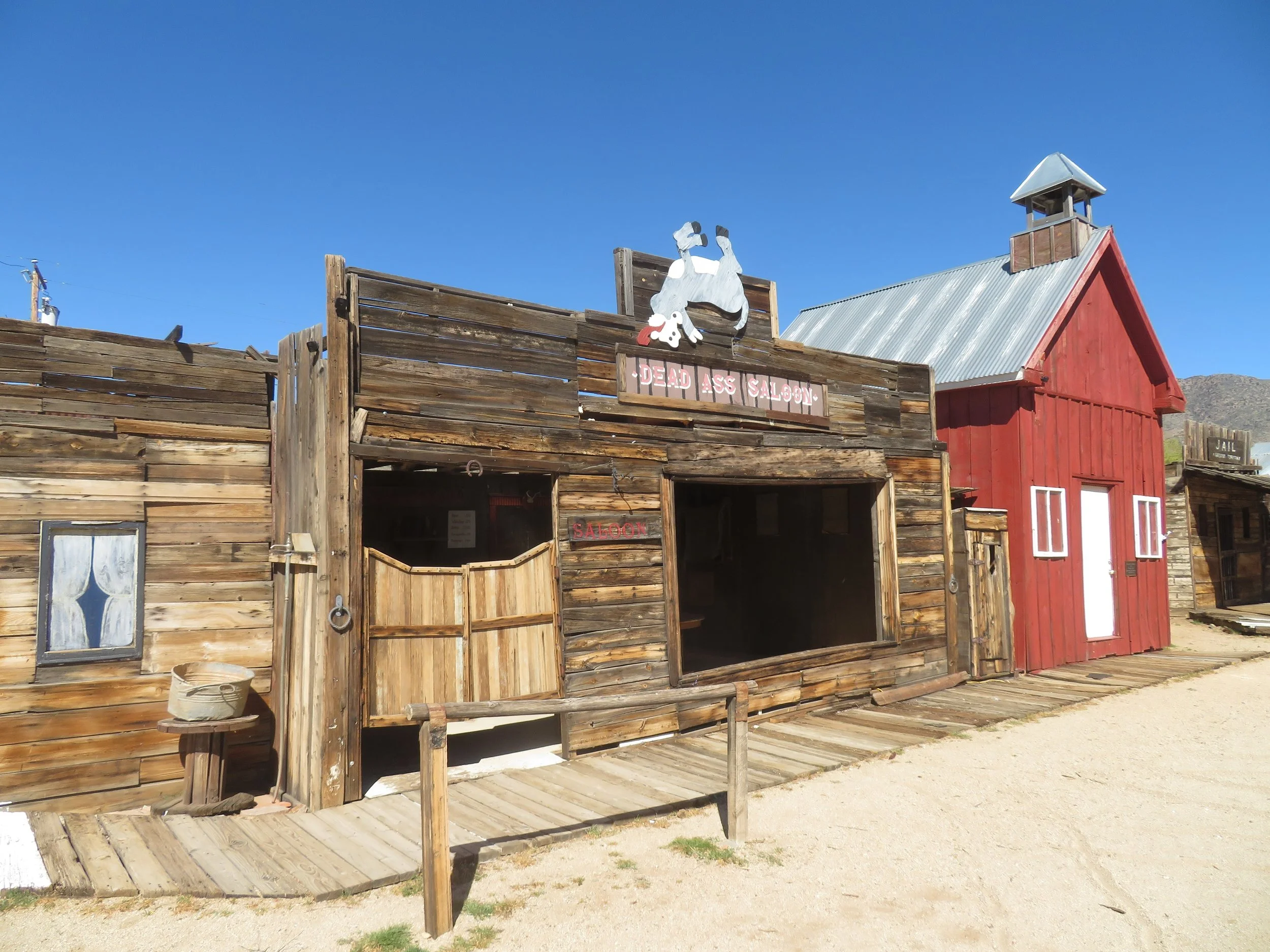
Jim Fritz was a long-time Chloride resident and originally lived in the house that is now the town museum. He and his sister used to provide meals for the miners. When he died, he left his home to the townsite, which is now maintained and operated by the Chloride Historical Society.
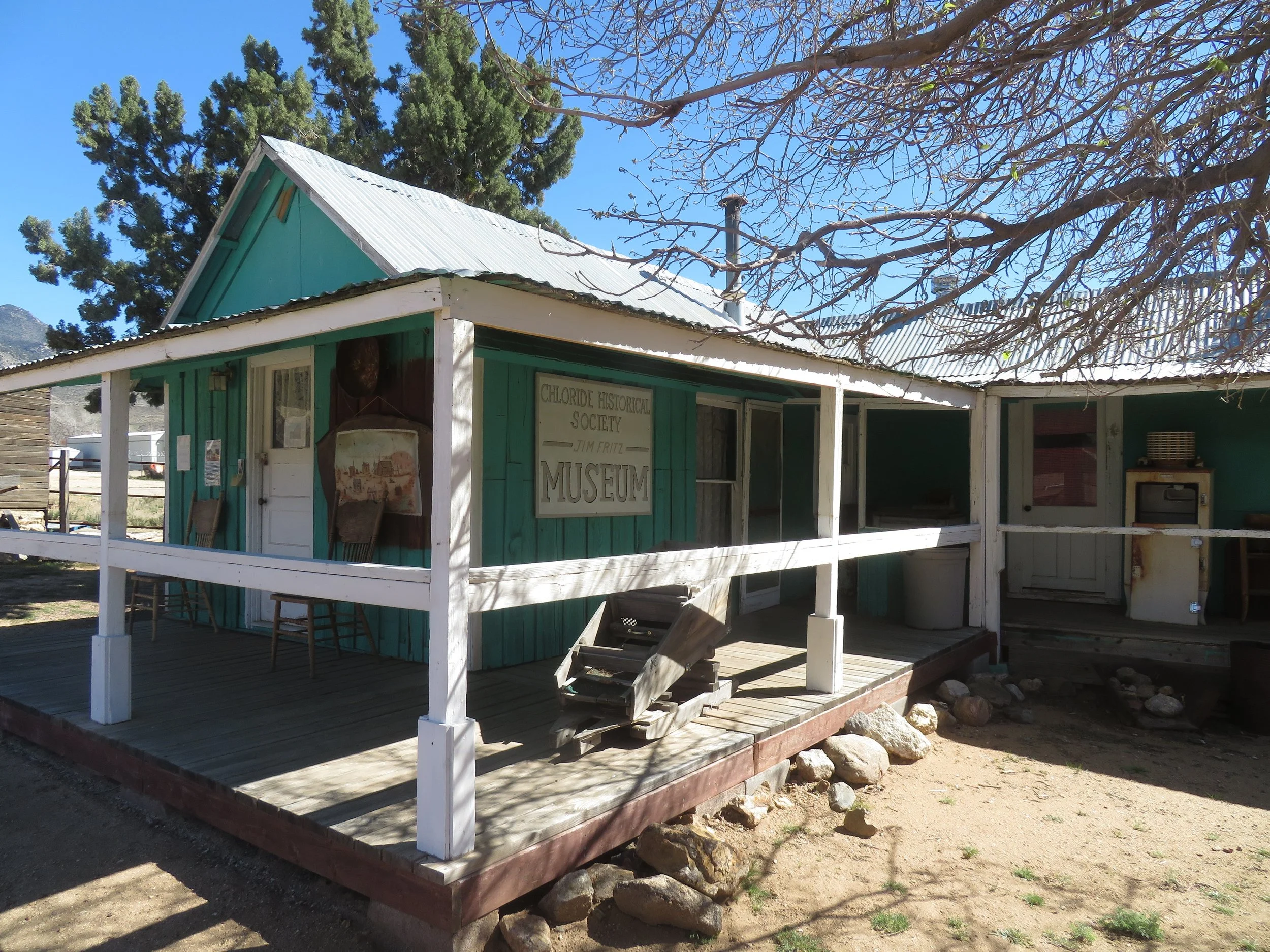
Jim Fritz’s home and miner’s kitchen is now the Chloride museum.
We strolled up Payroll Avenue to get a look at the Chloride Baptist Church. Started in 1891 as a Methodist Episcopal church, it later became a Presbyterian church and is now a Baptist church. It is considered to be Arizona's oldest continuously operating church.
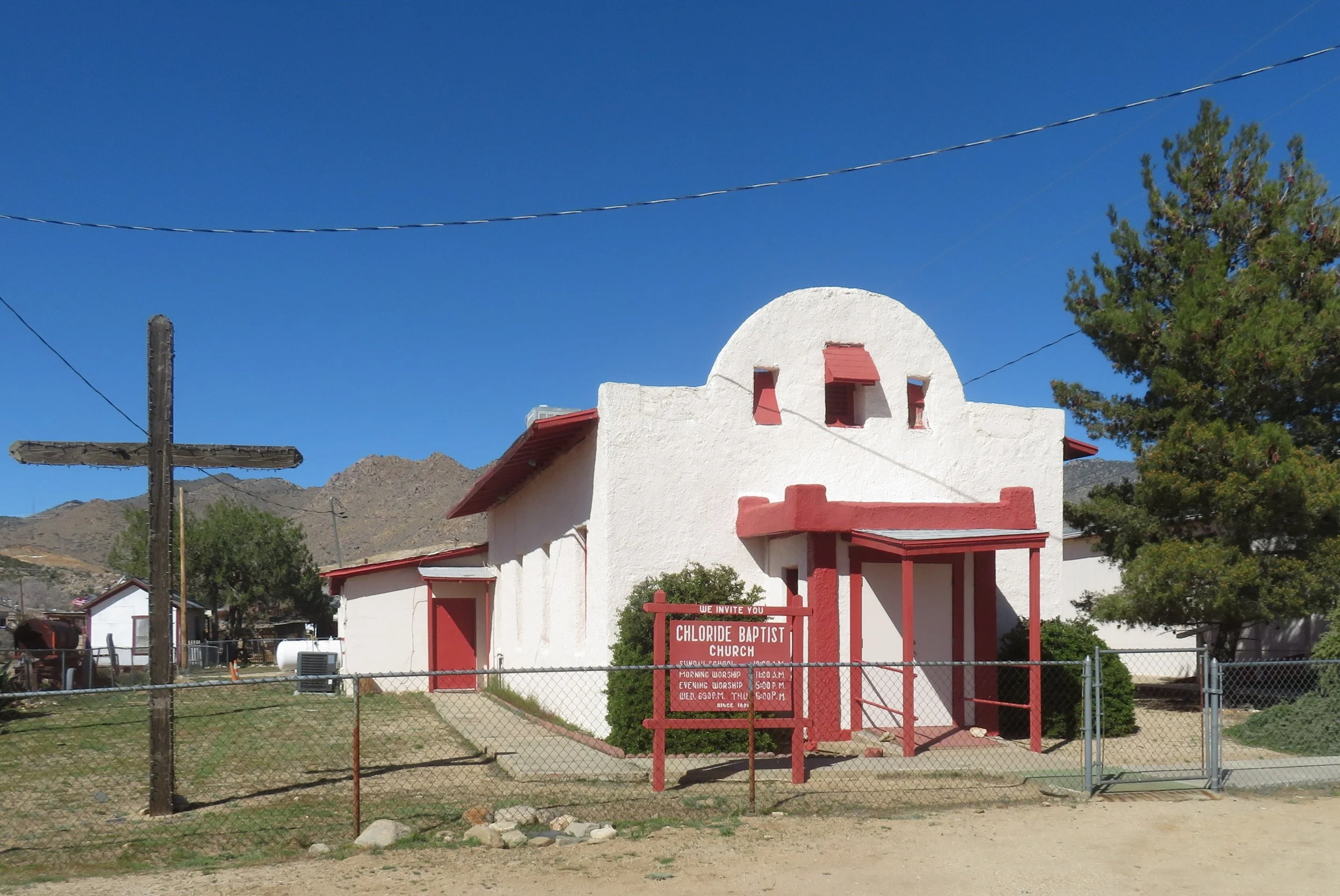
The Chloride Baptist Church is considered to be Arizona's oldest continuously operating church.
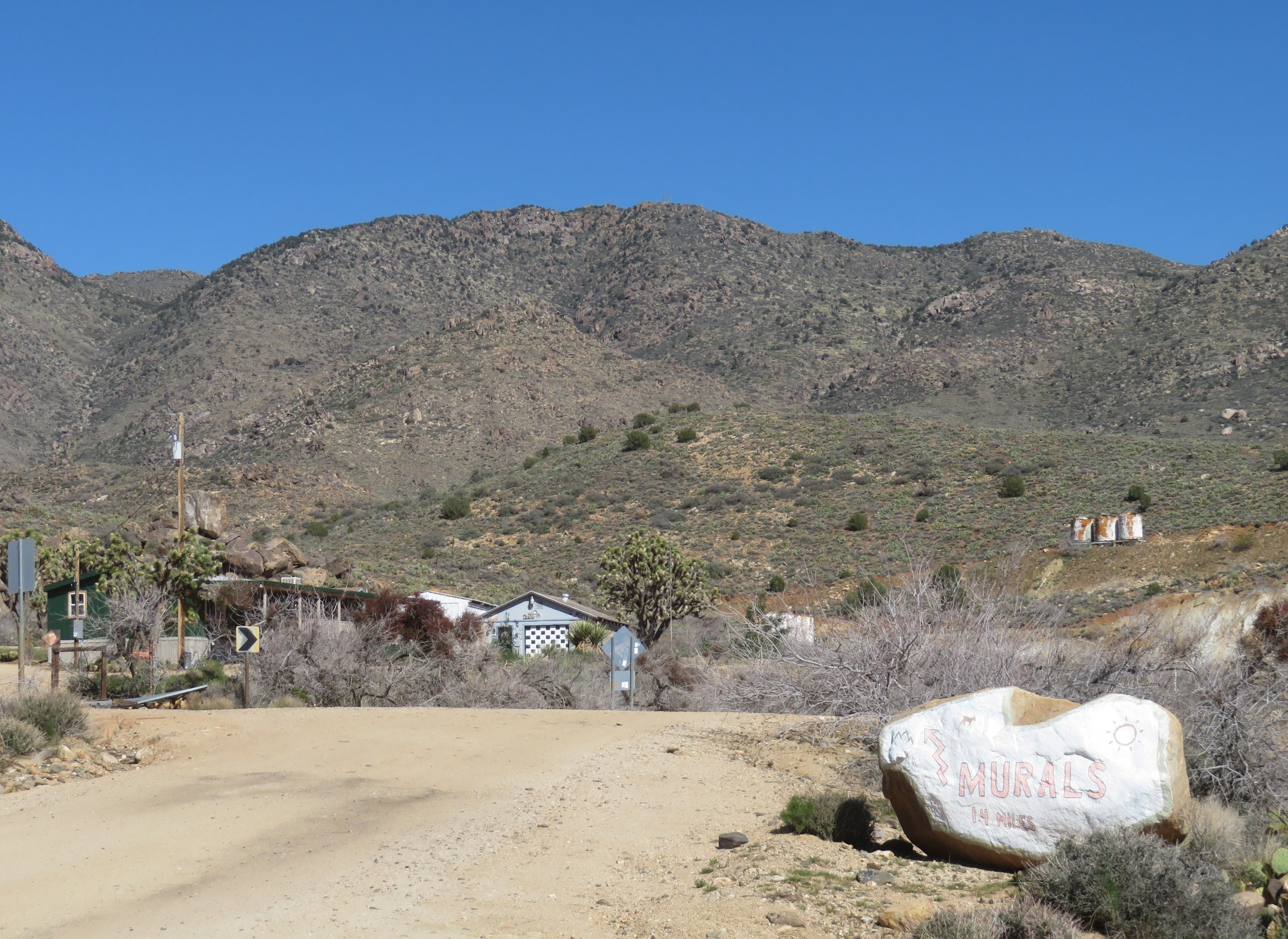
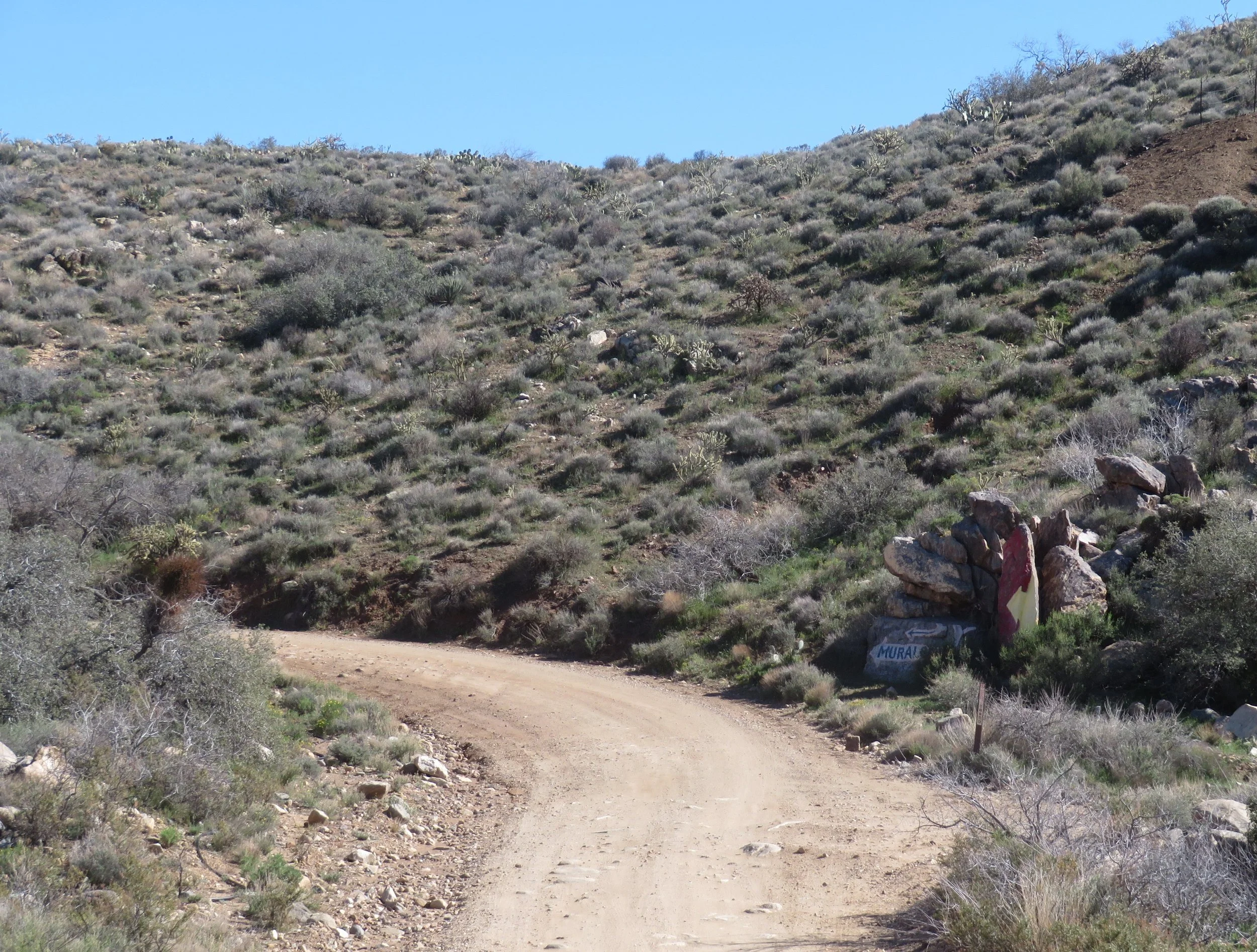
The highlight of the day, however, was the 1-1/2 mile walk up a rough gravel road east of town into the Cerbat Hills to view the Purcell Murals, aka the Chloride Murals. The road was well-marked with signs painted on rocks directing us up into the hills. We actually weren’t expecting much.
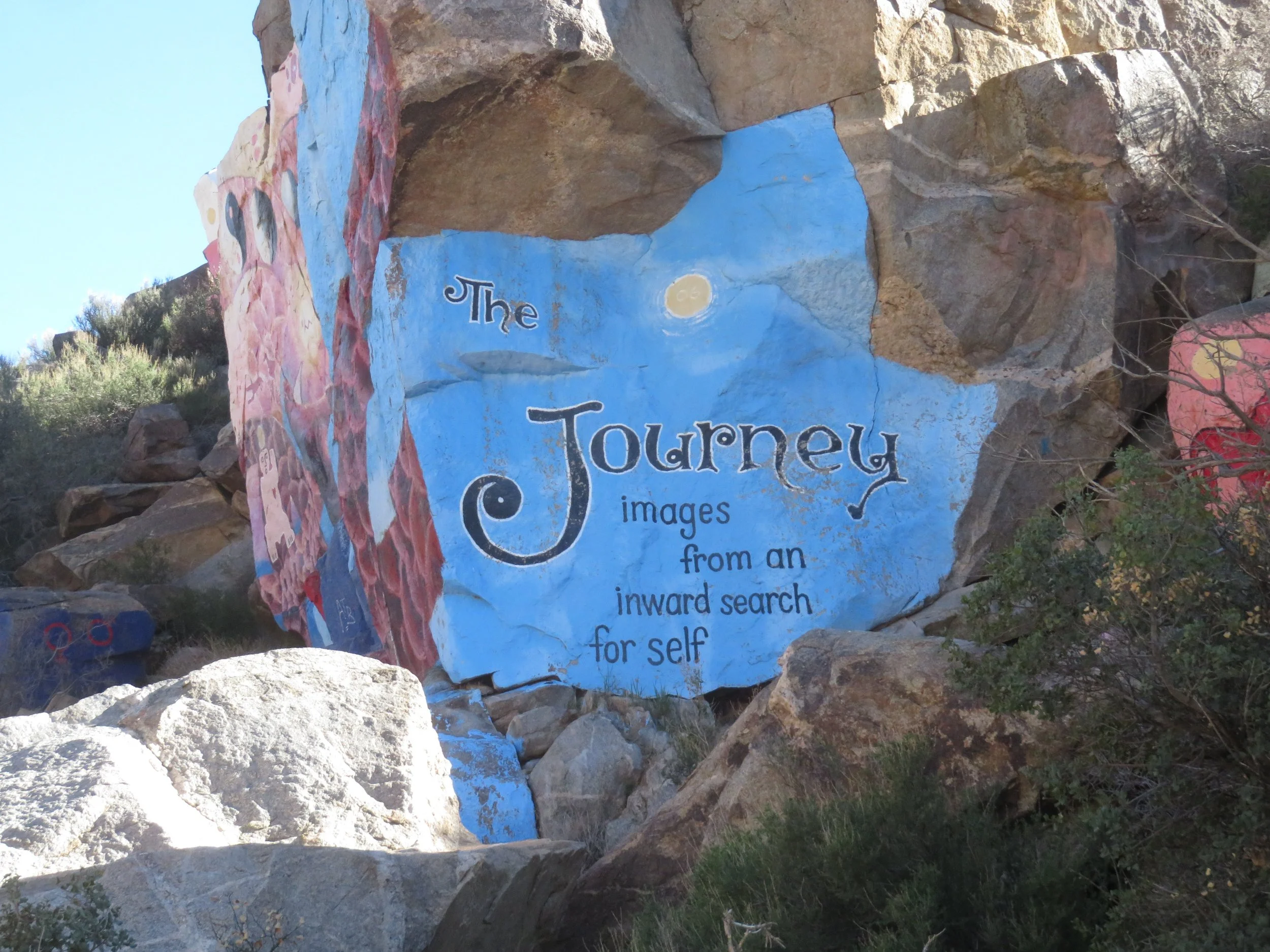
In 1966, Roy Purcell, an aspiring young artist and part-time miner, decided to paint a collage of bright, bold, vibrant murals on the massive, towering boulders lining the trail. He named it “The Journey: Images from an inward search of self”.
Covering ~2000 square feet of rockface up to 30’ high, the stunning artwork surprised us as we rounded a bend in the road, and there it was! A breathtaking blend of psychedelic mysticism, history, and the abstract, this open-air art installation knocked our socks off! It was so surreal, so unexpected, nestled into the otherwise drab rock walls. We were enthralled. Wow!
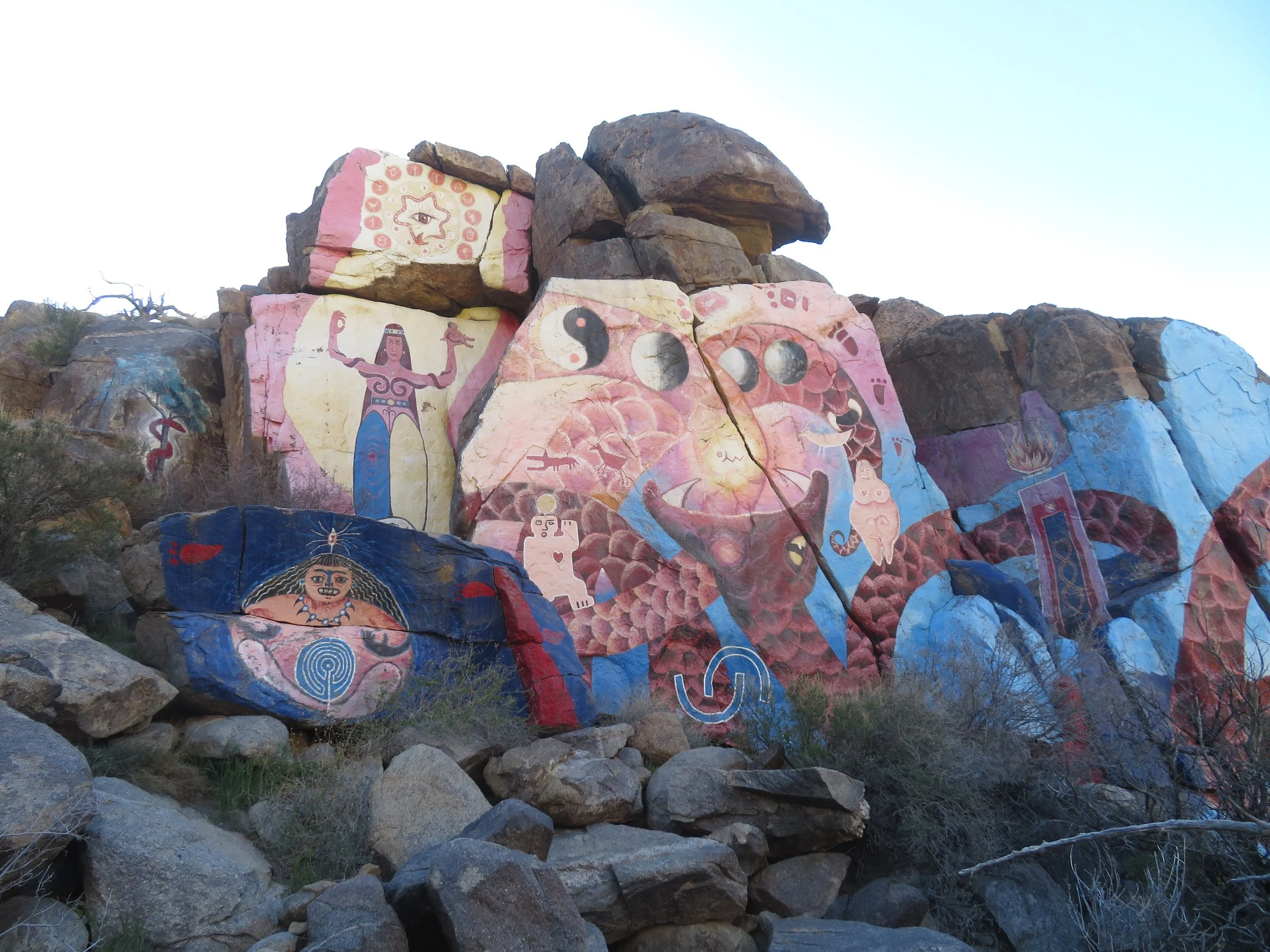
What a surprise! What a delight!
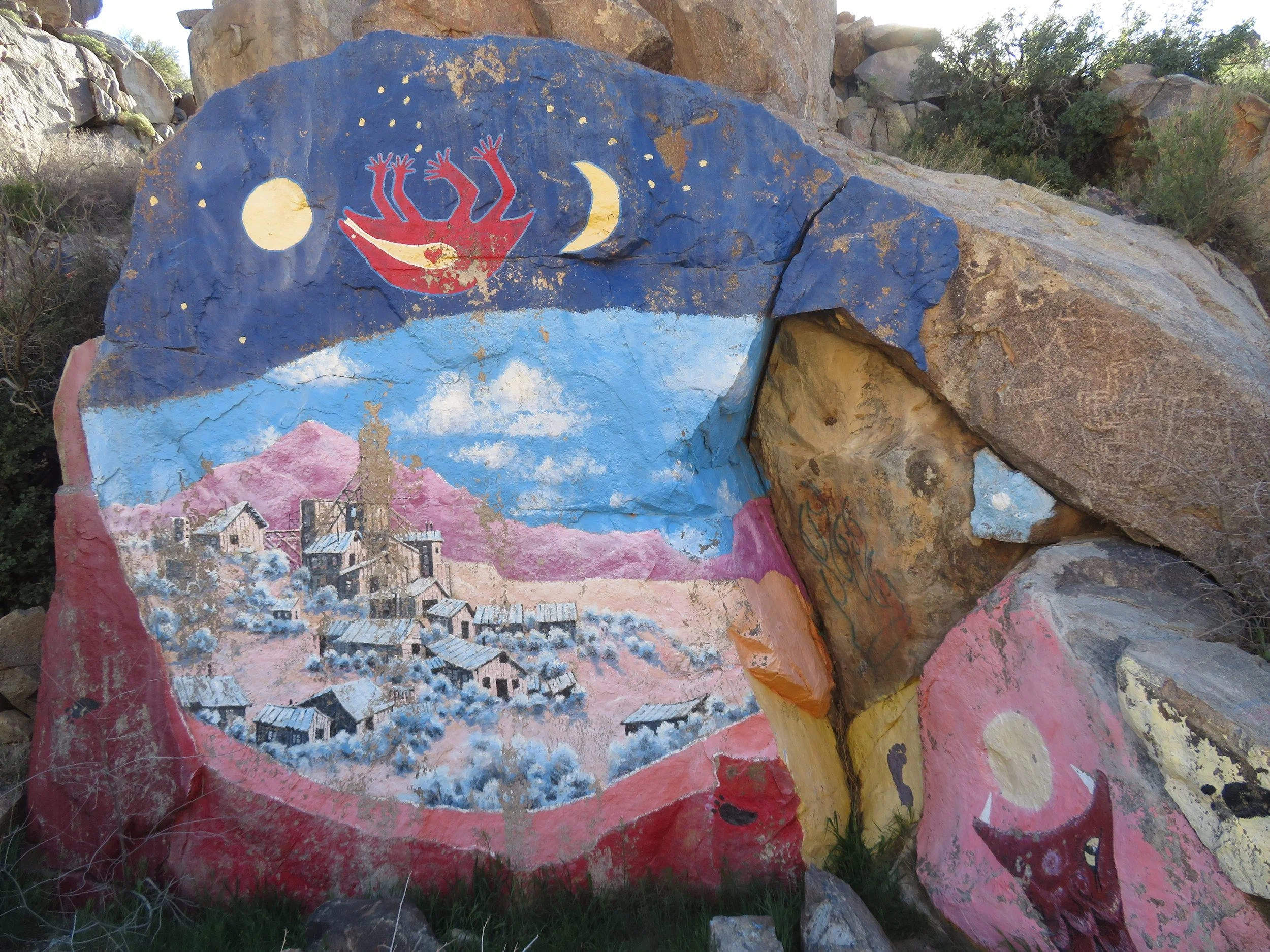
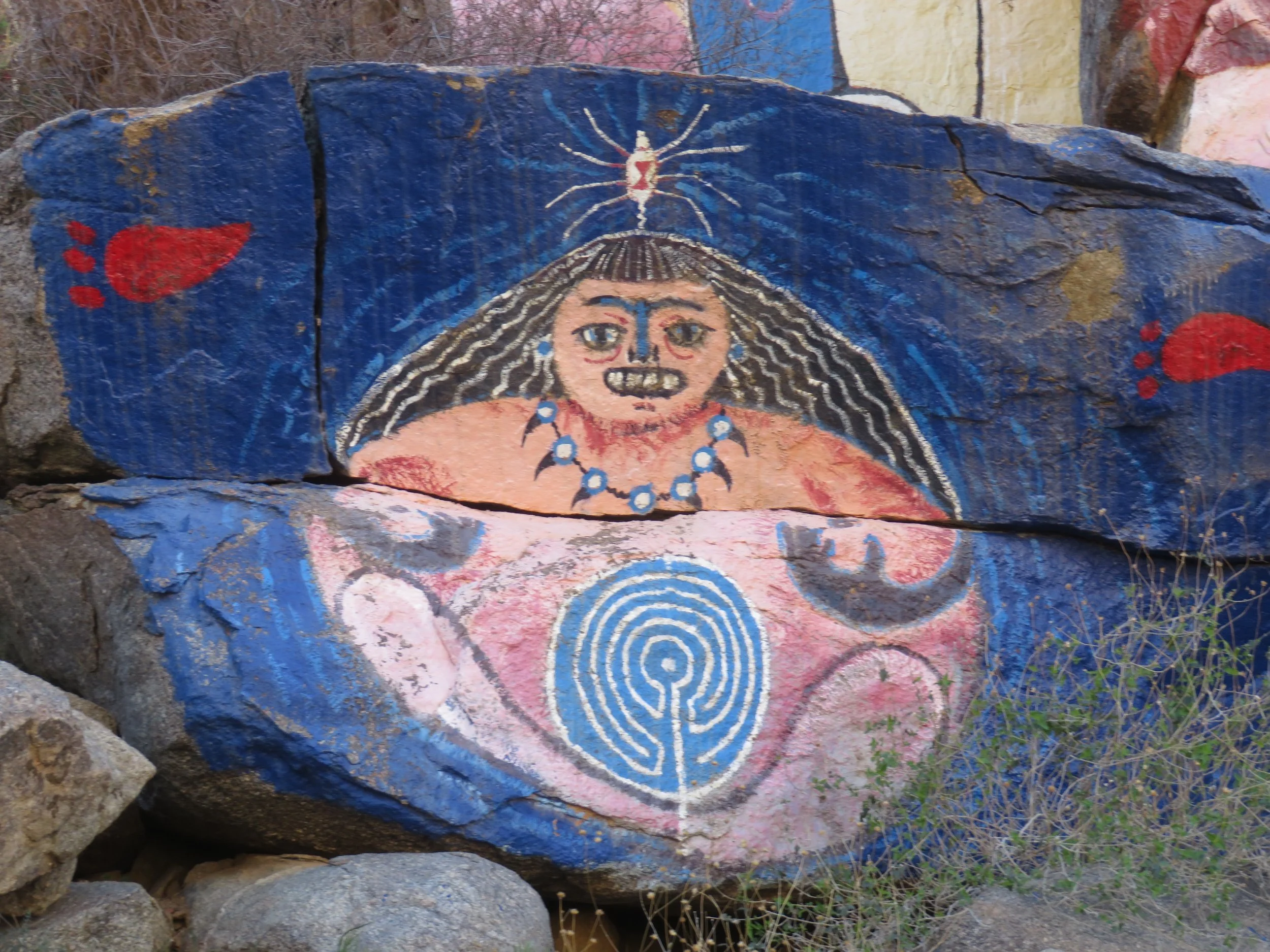
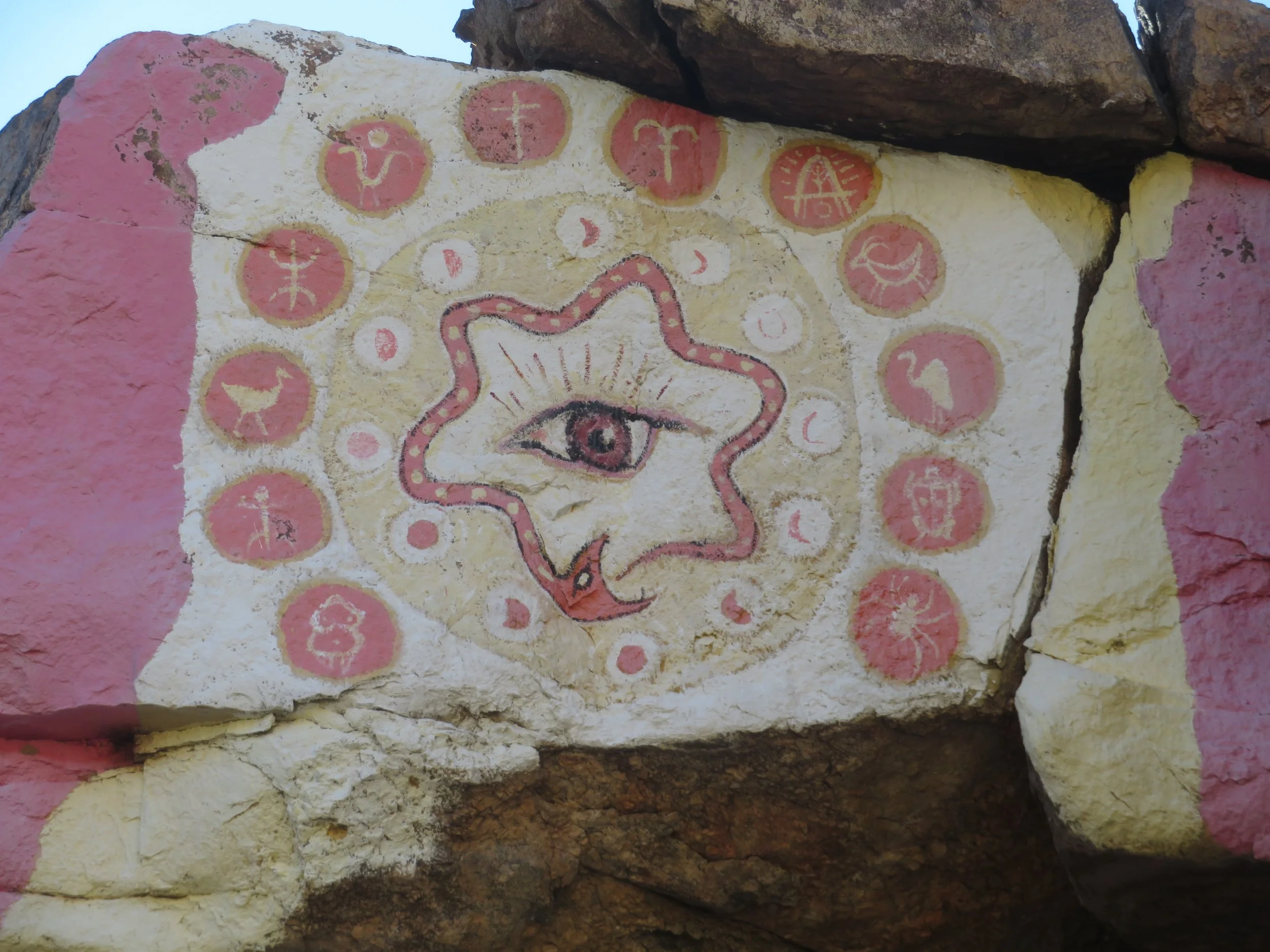
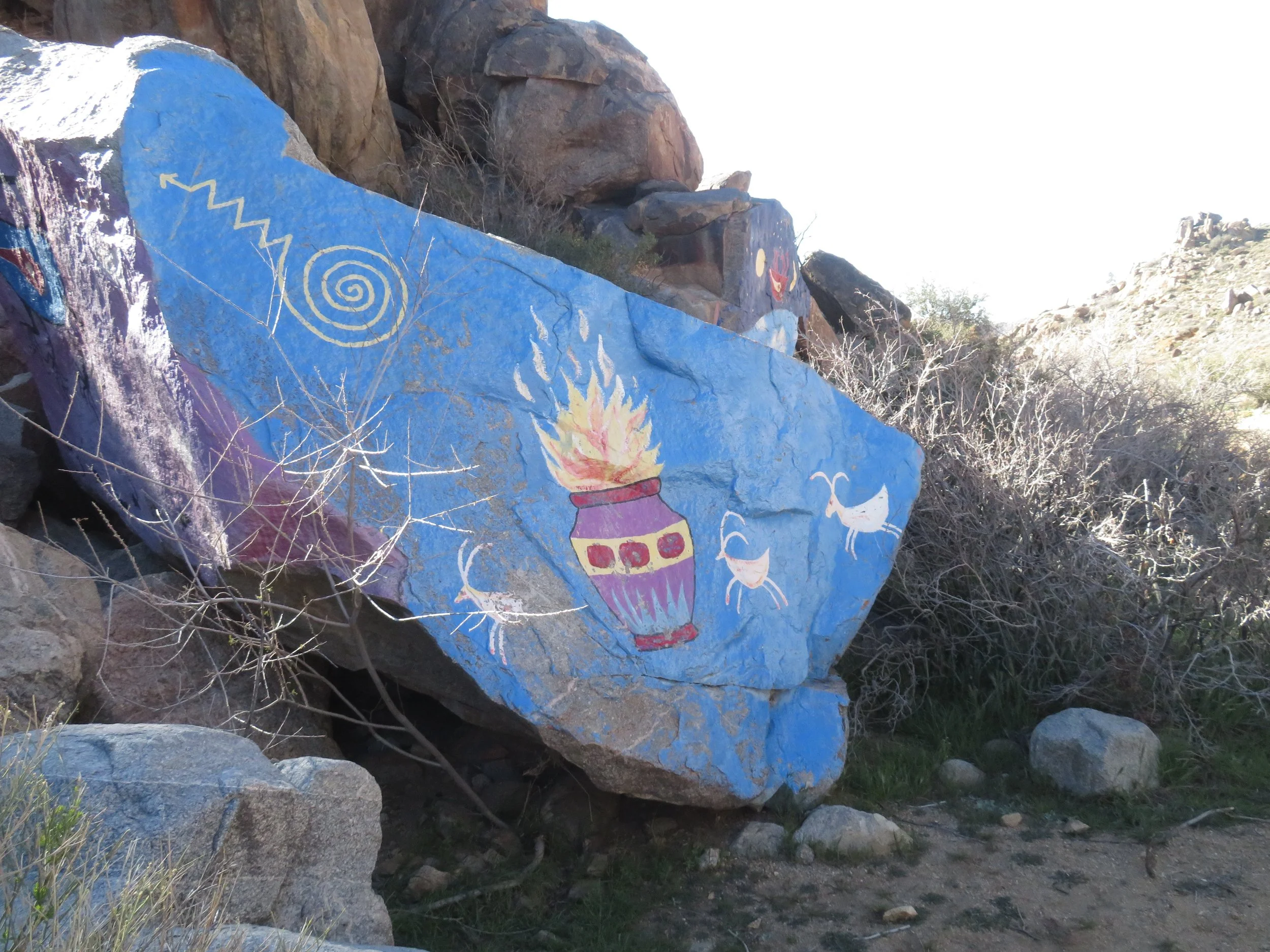
According to the Pahrump Valley Times, “Purcell... retouched the color of the murals in 1975, and then vibrantly repainted them in 2006, in honor of his 70th birthday.” In 2006, he was joined by 10 other artists and restored 19 murals using automotive paint to keep the colors sharp… and they certainly are!
The walk back to town gave us great views of the town far below.
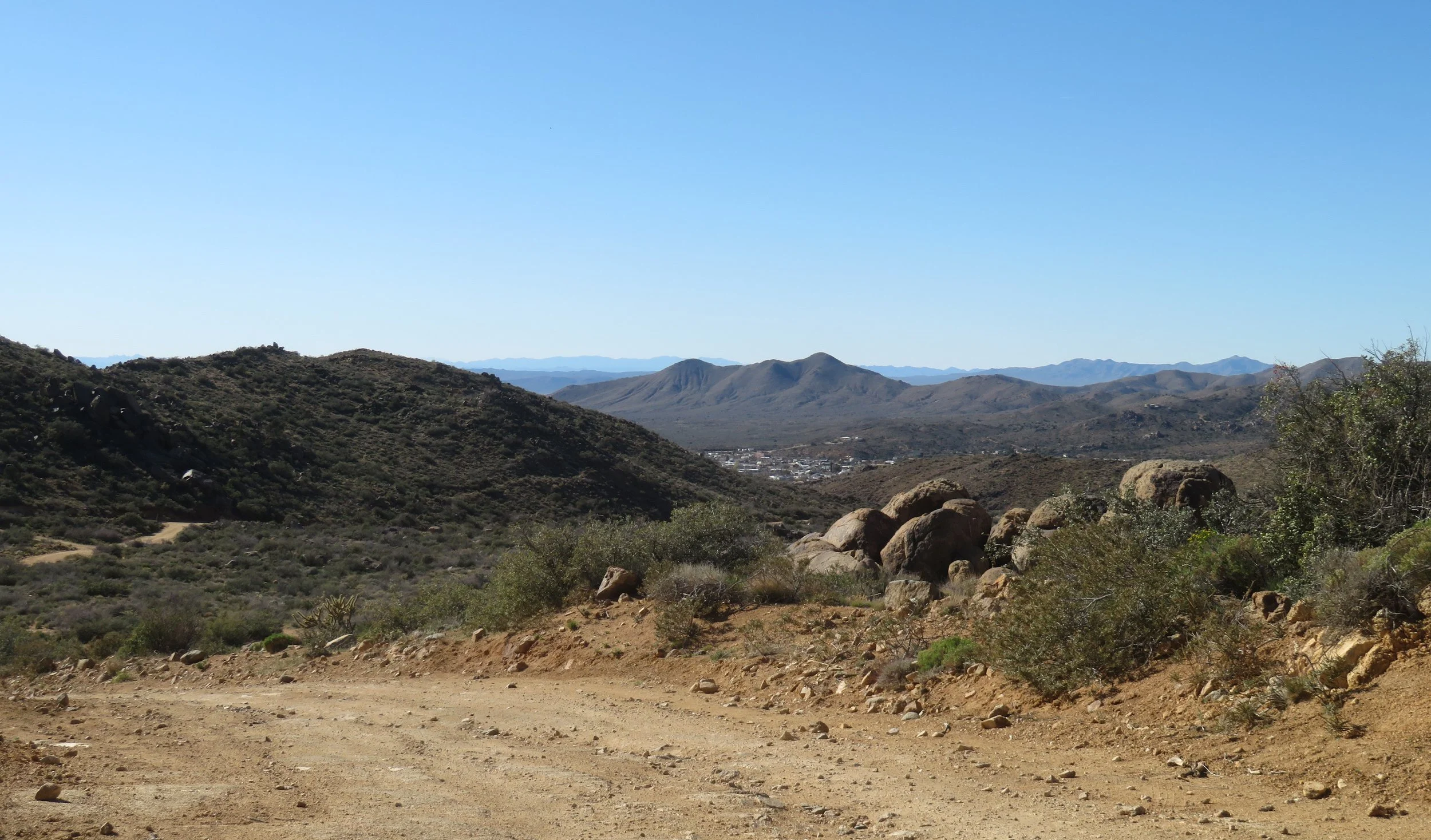
Chloride looked so tiny and far away.
We passed by the old post office on Tennessee Ave on our way. According to the town brochure, it opened in 1868, closed briefly, then reopened in 1893 and has been in operation ever since. It’s the longest continuously operating post office in Arizona. It’s known locally for having changed locations five times, and it now resides in what was once a pool hall and bar.
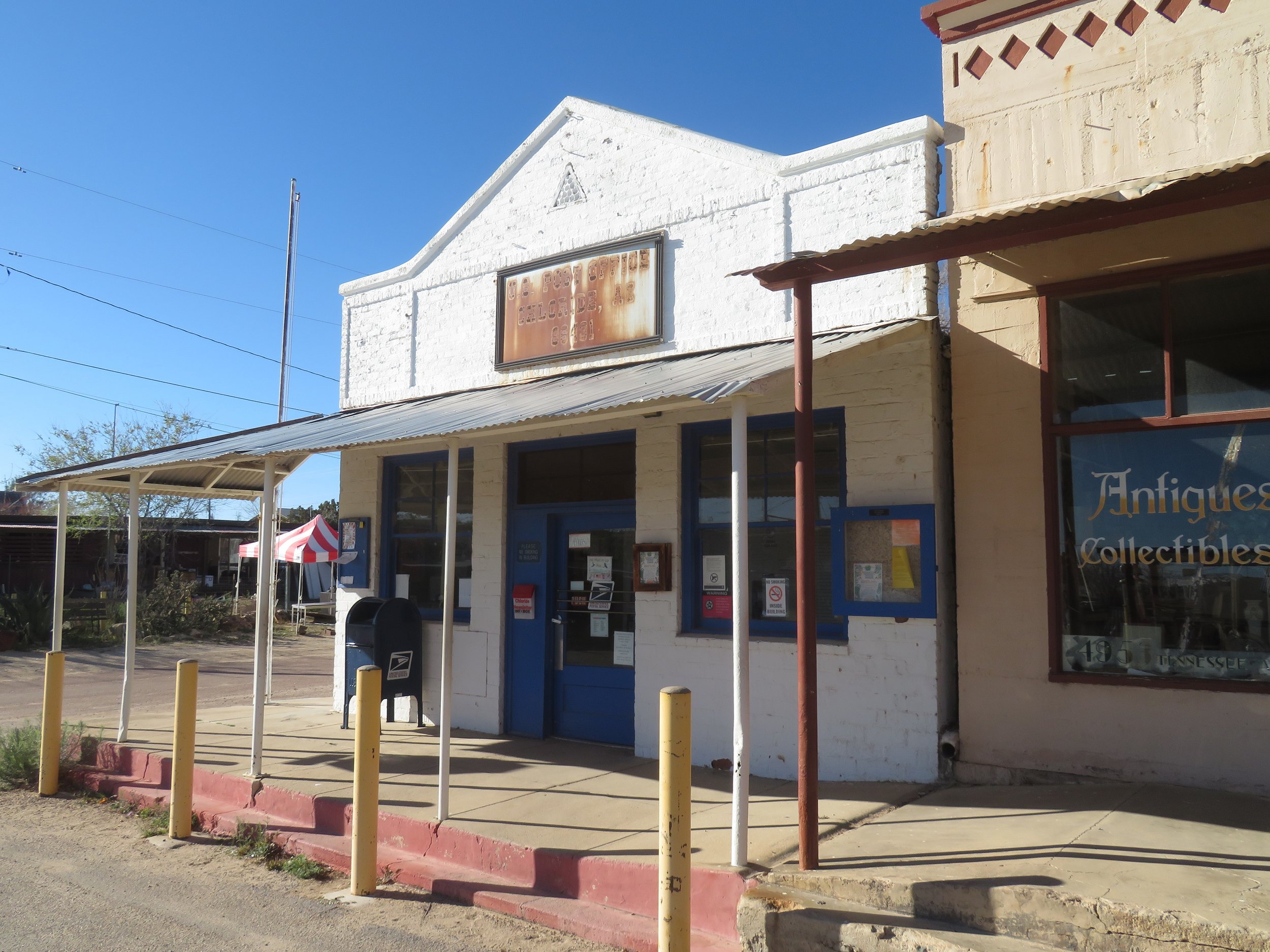
I think we missed as much as we saw in Chloride. The more I researched, the more I learned. We plan to return and maybe spend a weekend. One afternoon was definitely too short a time to savor the flavor of the town and all it had to offer
By the way, if you’re interested in old ghost towns, Jolene Ewert-Hintz has a great website dedicated to Montana ghost towns and beyond. I’ve contributed several times. Check it out at https://ghosttownshistoryofmontana.wordpress.com/
We camped overnight at Packsaddle Campground, a rough, rugged, rocky ascent into the Cerbats. At 6,000’ altitude, it was a very chilly night, and we were thankful for the diesel heater. There were only three rough campsites, and the road, with its 15+ switchbacks and deep ruts, was tooth-loosening, but the views were great.
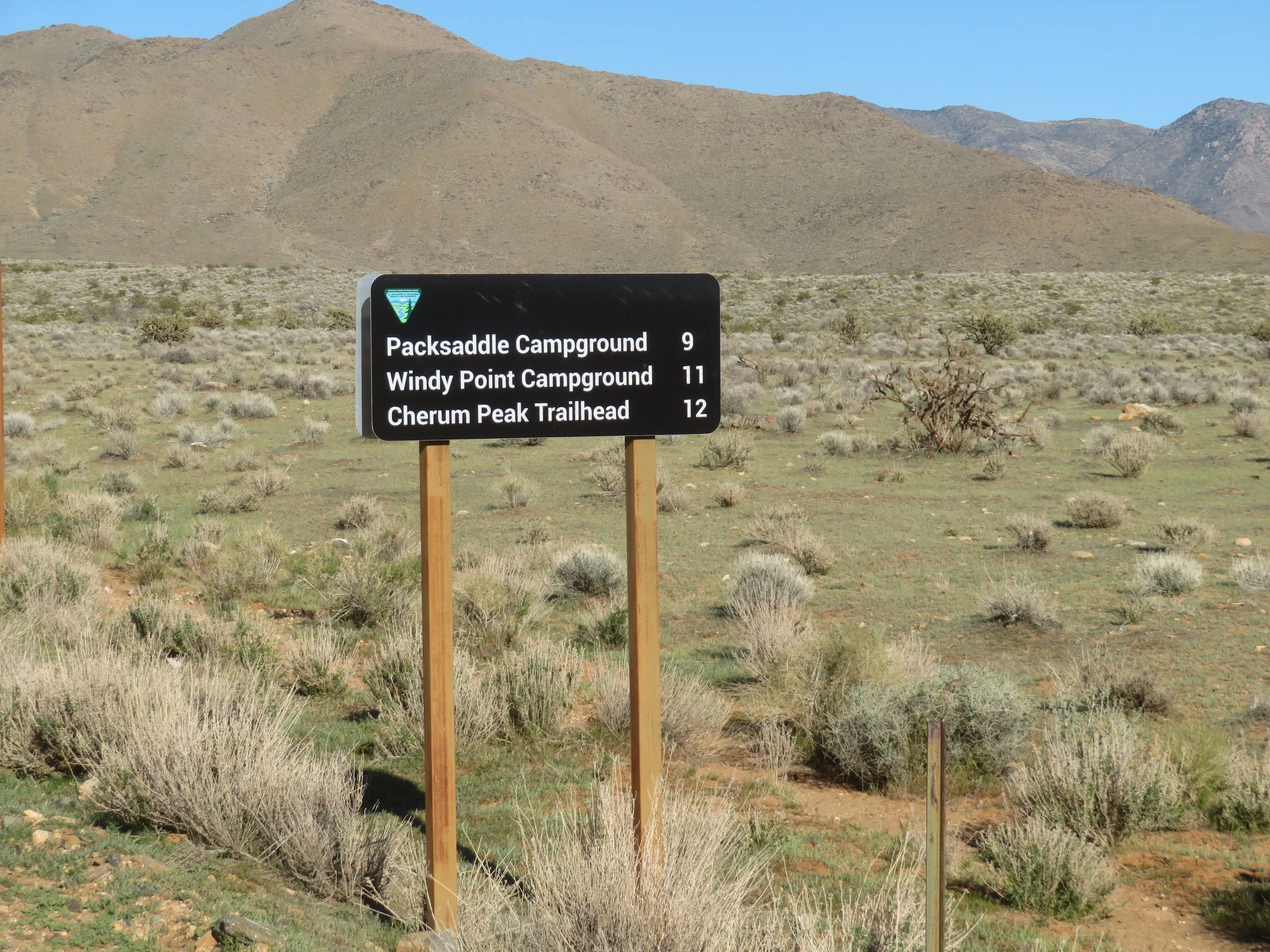
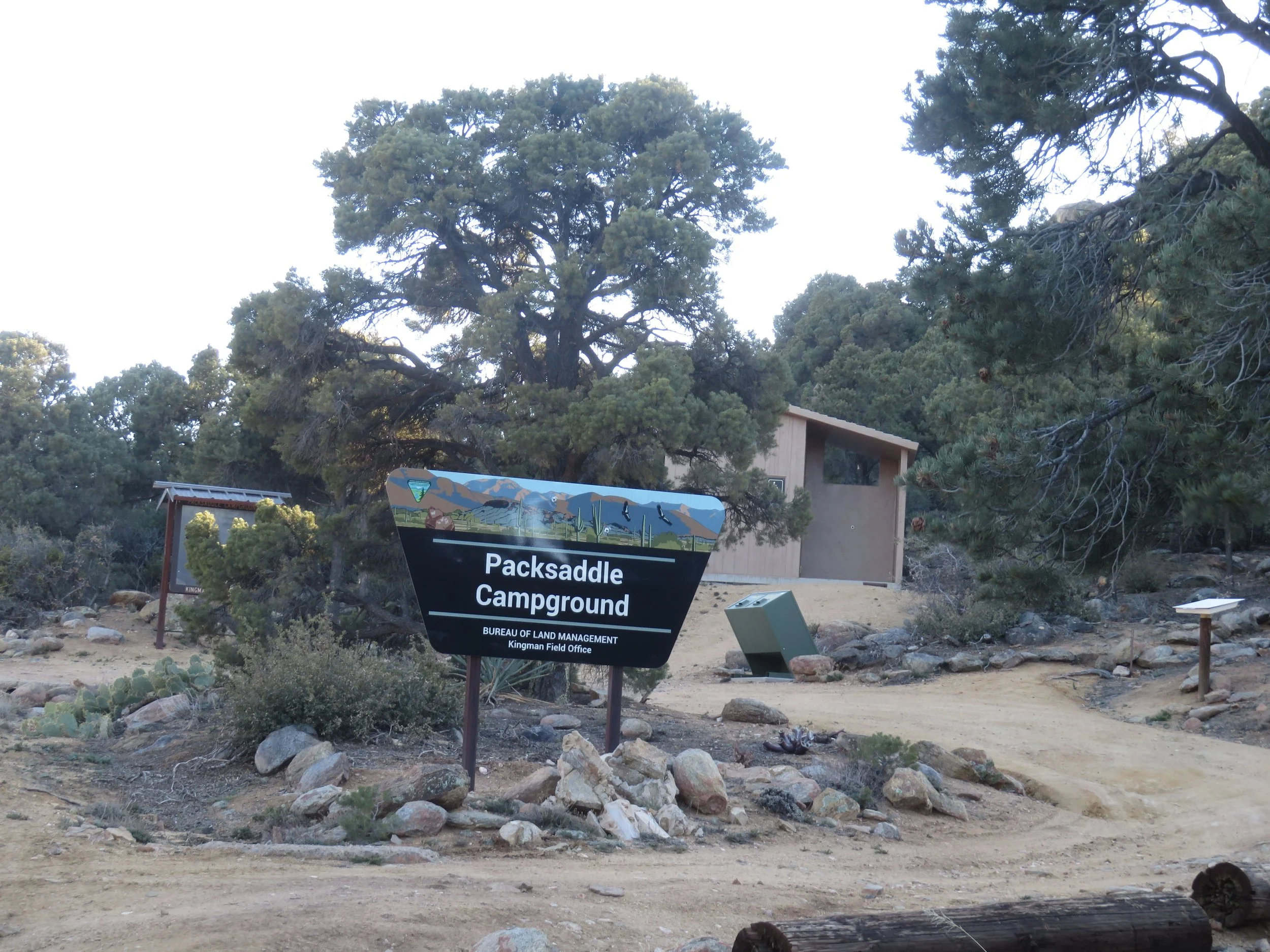
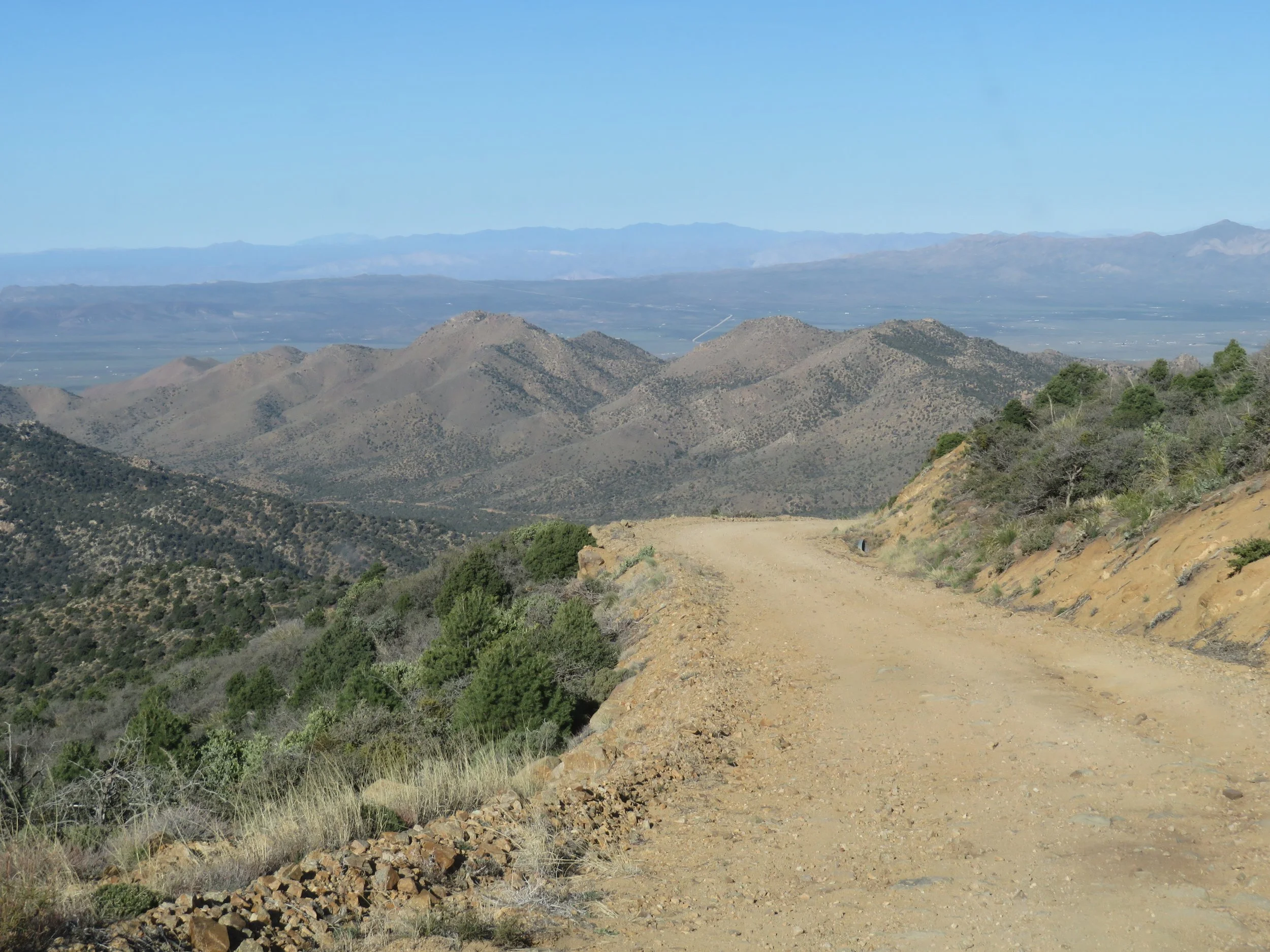
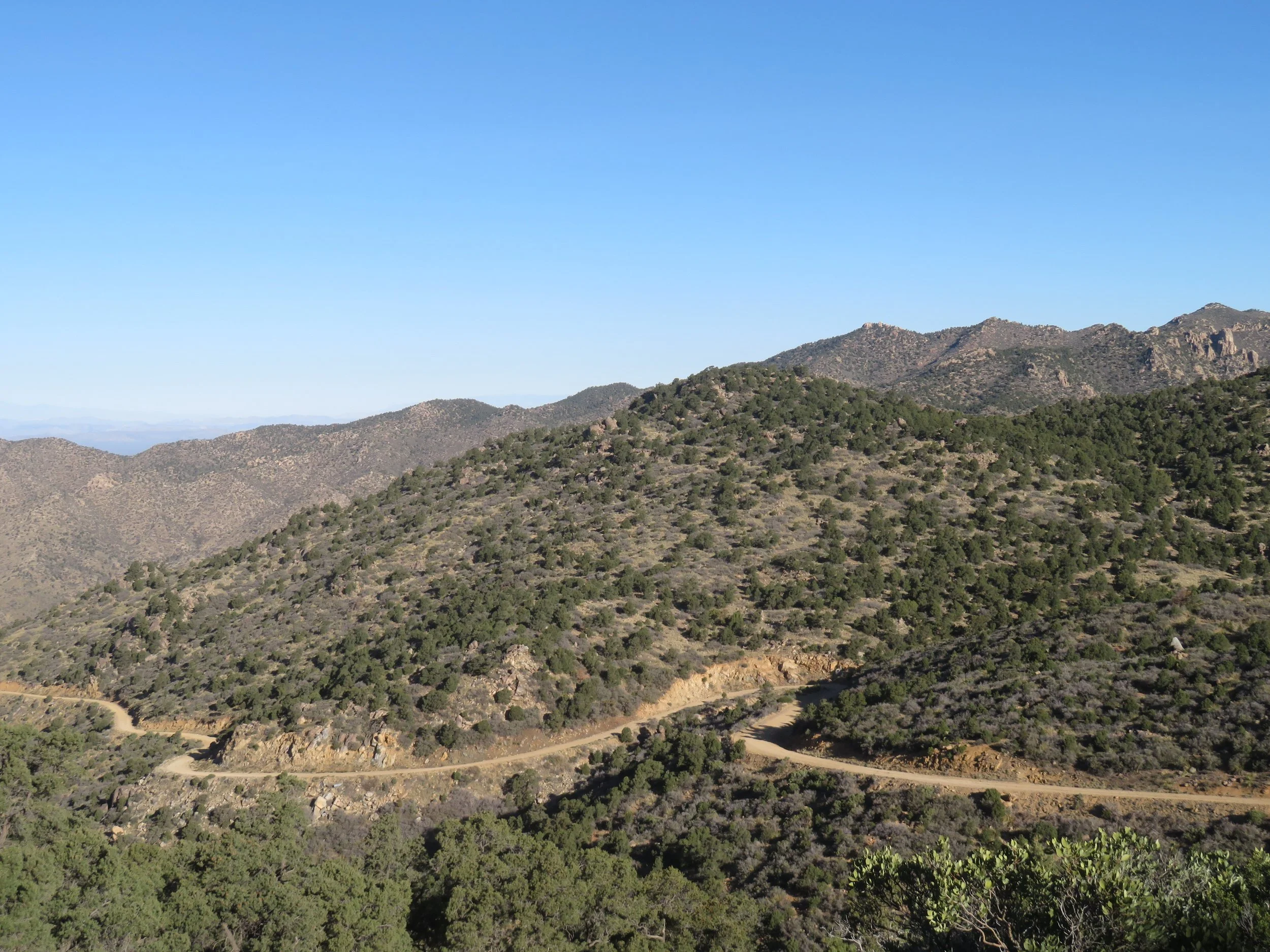
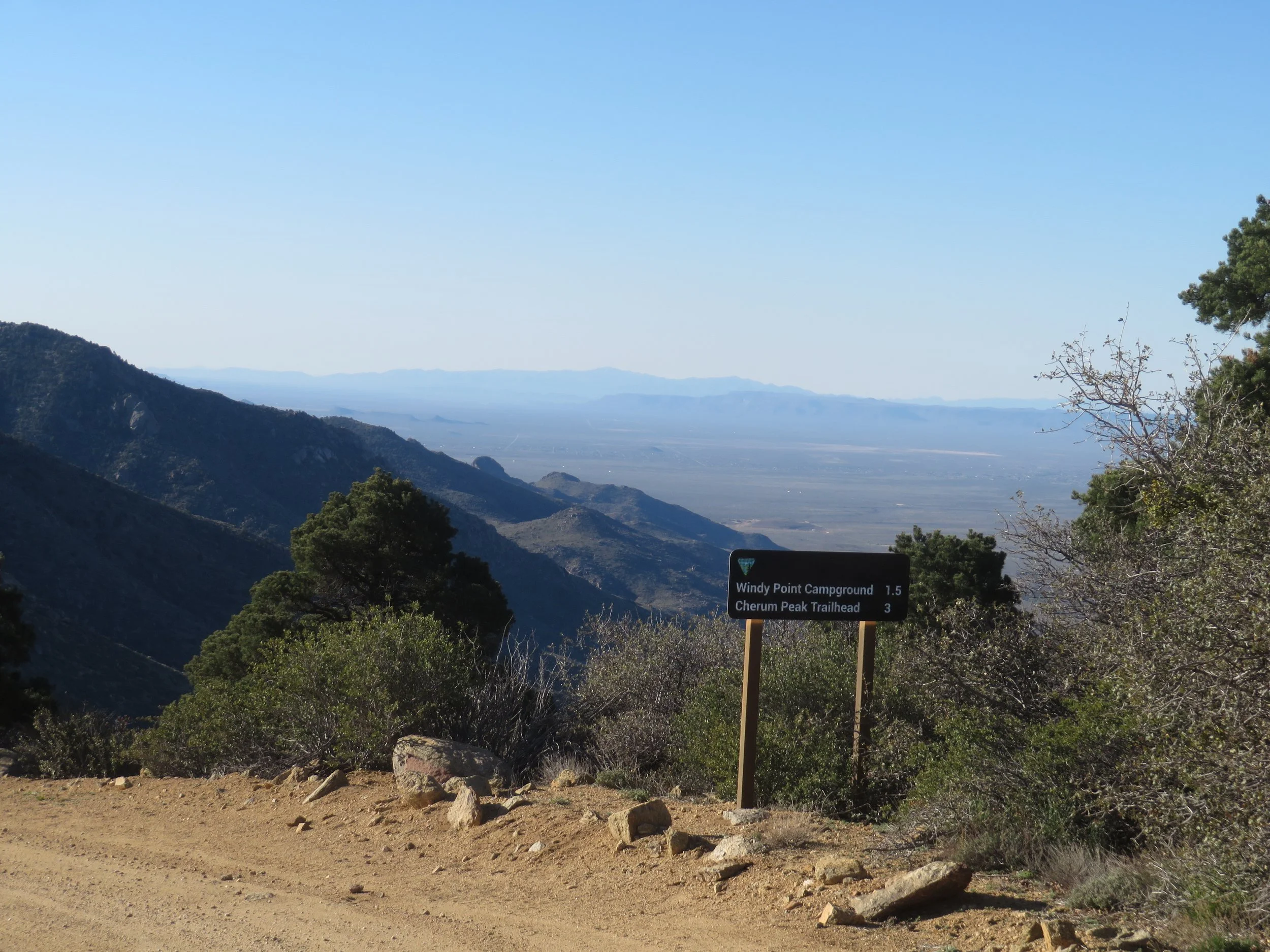
We could have traveled further, but our teeth couldn’t handle it.
Back on I-11/US-93 headed home, we were treated to fields of California poppies in bloom—a fitting ending to a fine road trip.
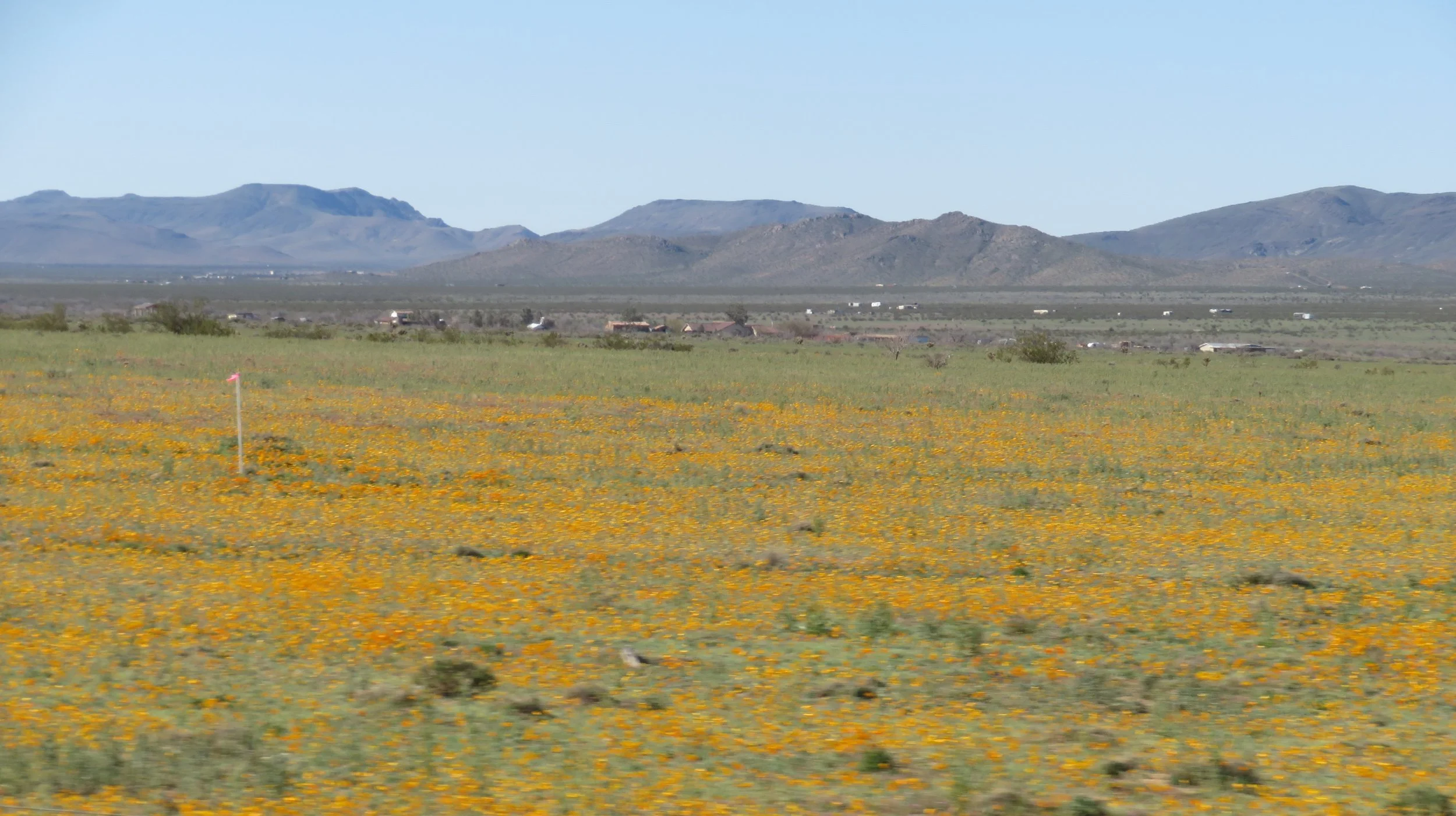
A field of California Poppies in bloom. What a sight!
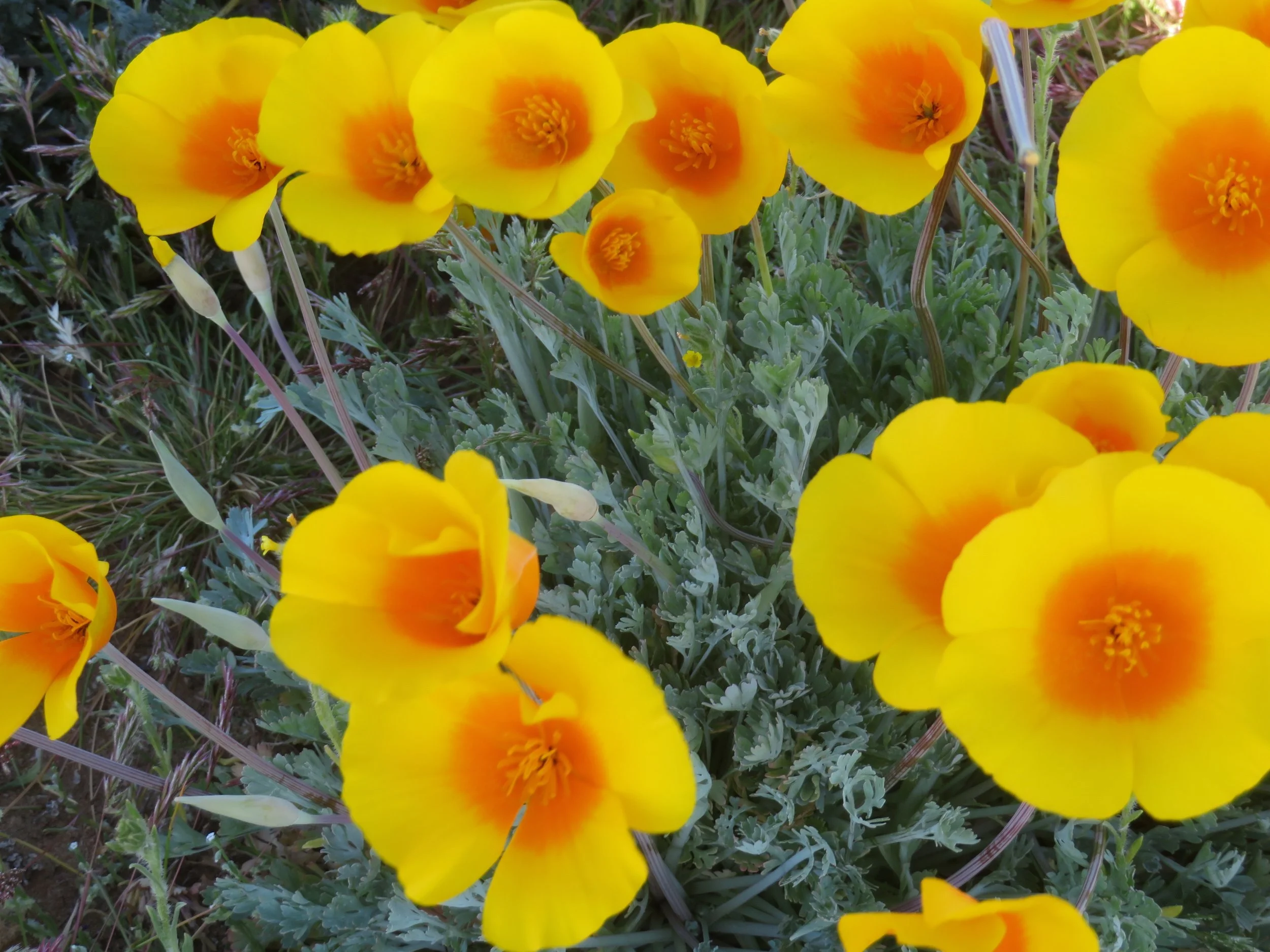
Close up, the poppies are even more stunning.