

Day 5 - Walking Through Barcelos to Tamel
/After a good night’s sleep and a great breakfast (did I mention the scrambled eggs?) at the historic Top ‘Otel, we headed off across the Ponte de Barcelos, a medieval bridge dating from 1325 that crosses the Rio Cávado.
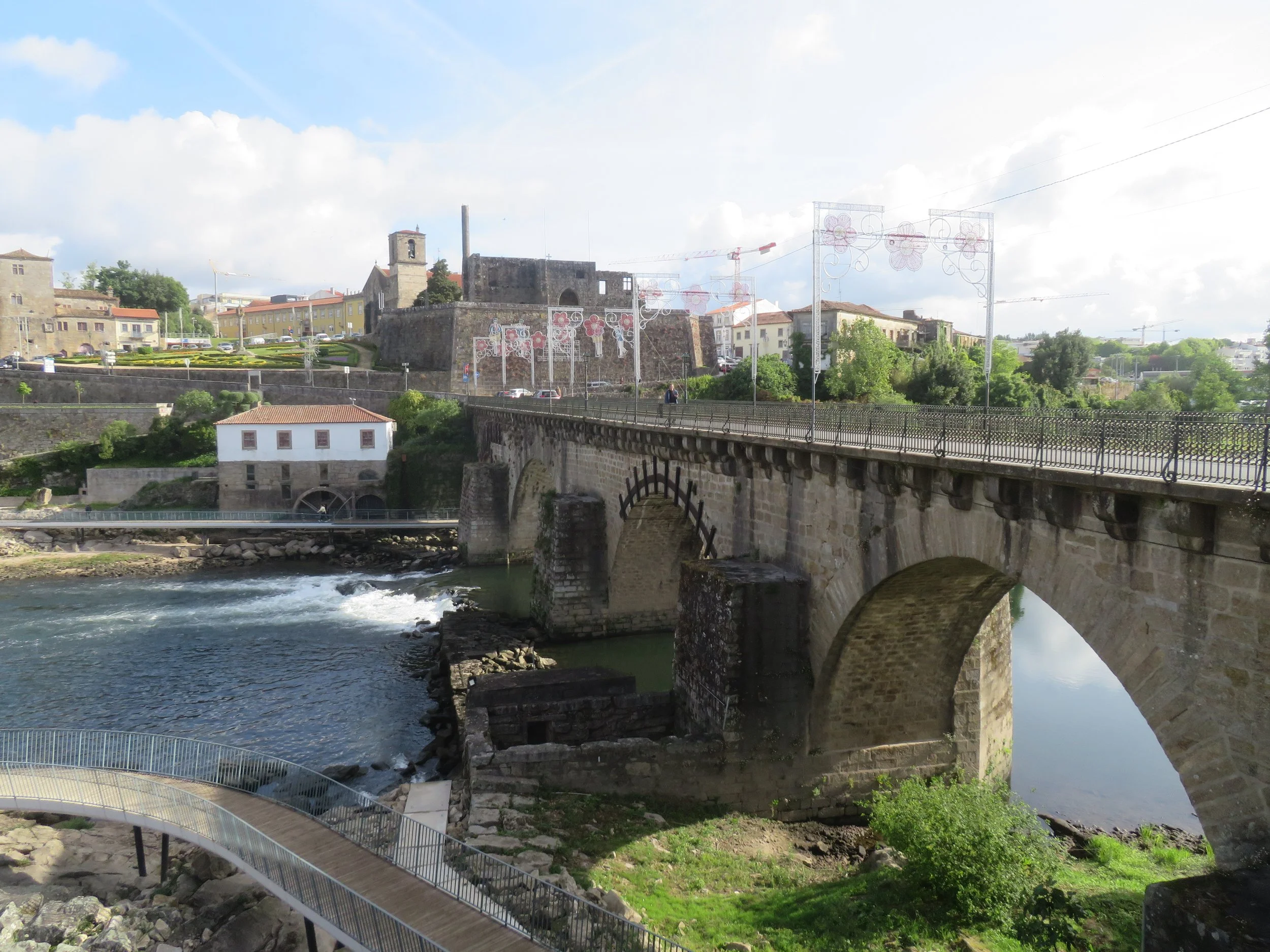
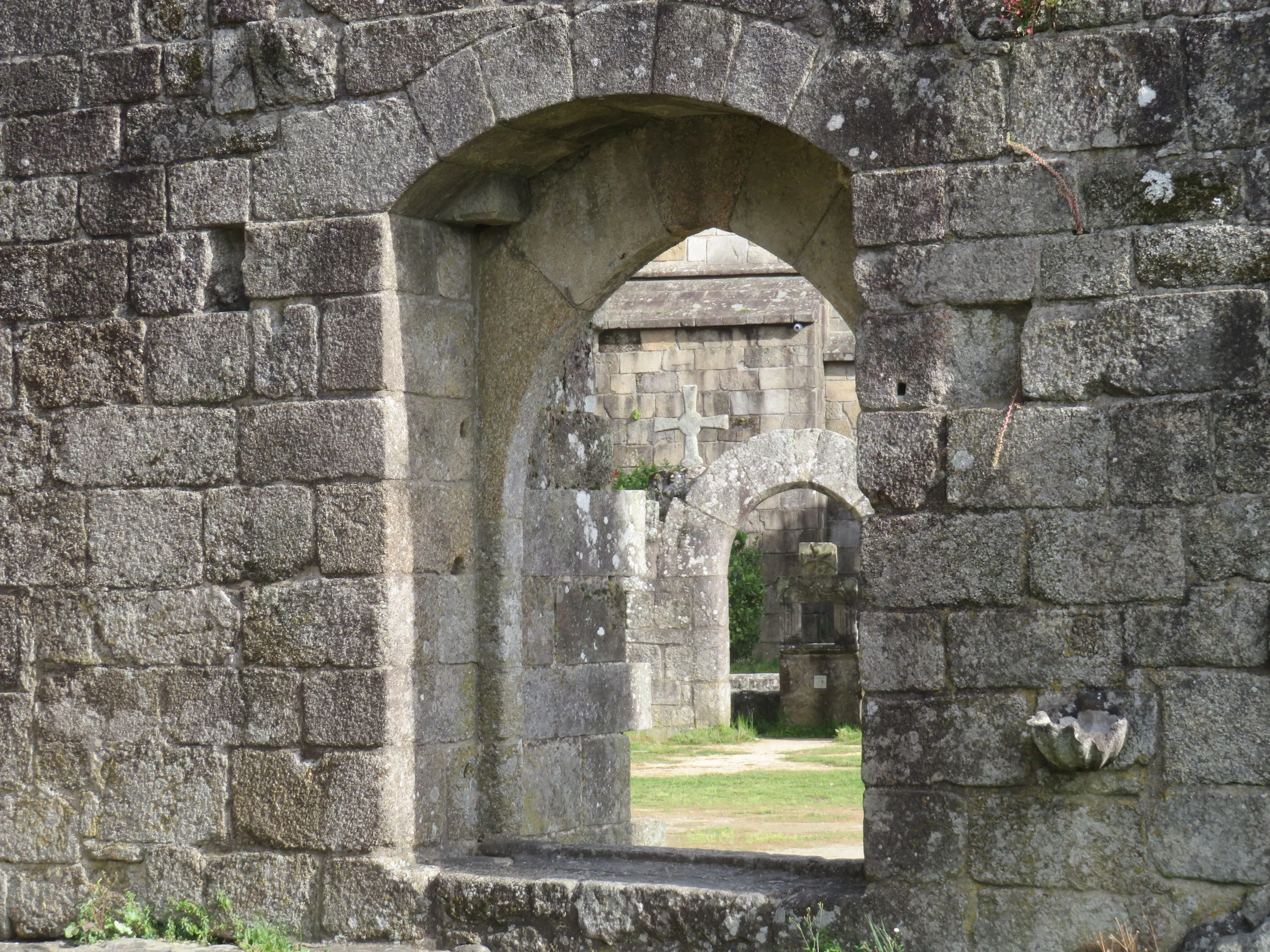
High on a hill above the river is a huge stone edifice that we assumed was a fortress or perhaps a monastery or church. The Camino path headed in that direction and we soon discovered the enormous Gothic building was the ruins of O Paço dos Condes de Barcelos… The Palace of the Counts of Barcelos. Built in the 15th century, the building served as a residence until the 17th century. It fell into disrepair, was donated to the city, and is now an open-air archaeological museum known for its famous medieval stonework.
Absolutely no one was around. Other pilgrims passed by without stopping. The site was open and we roamed freely, ducking through narrow, height-challenged doorways and admiring stonework, statuary and carvings, spellbound by the beauty and history of the place.
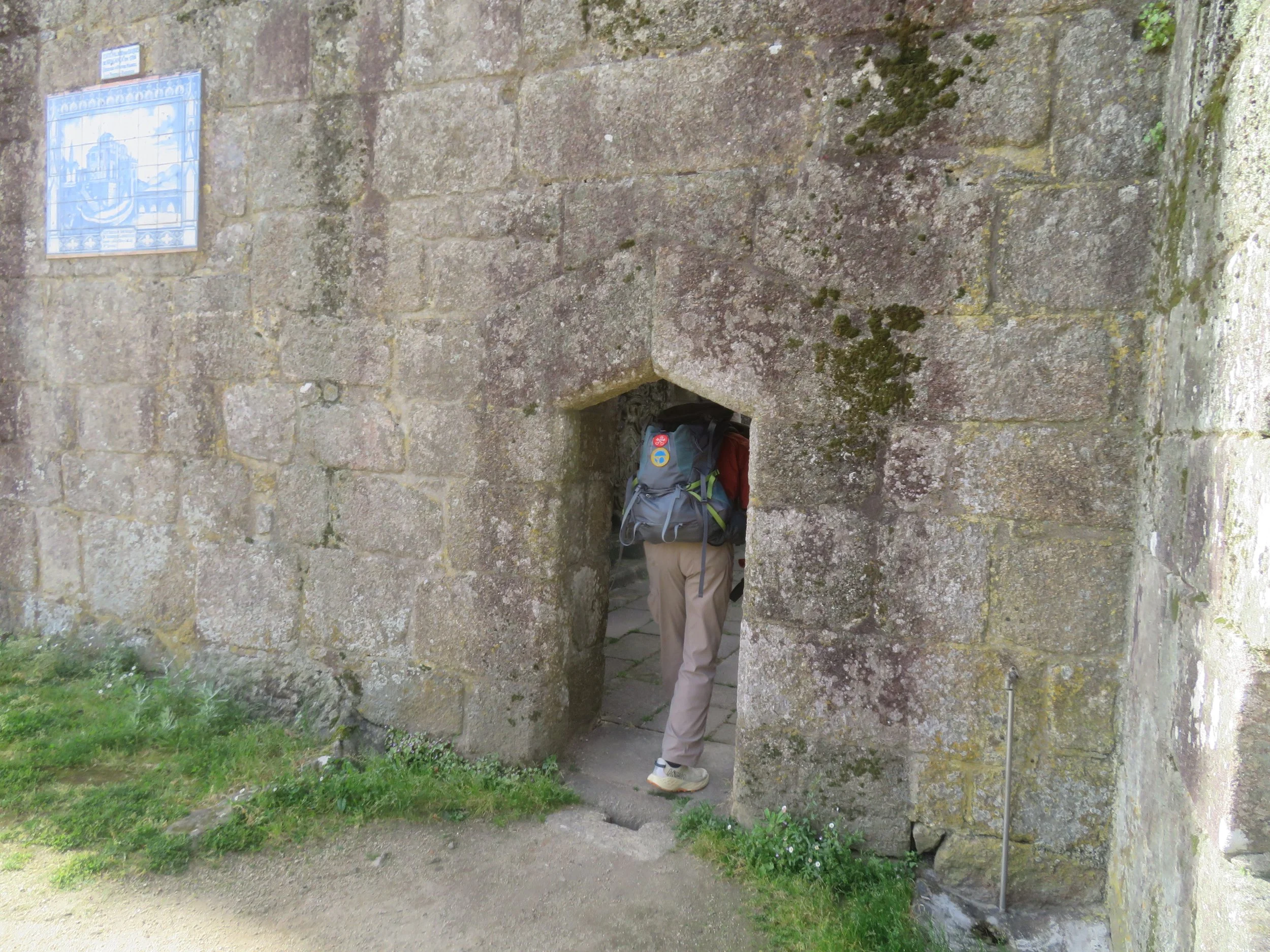
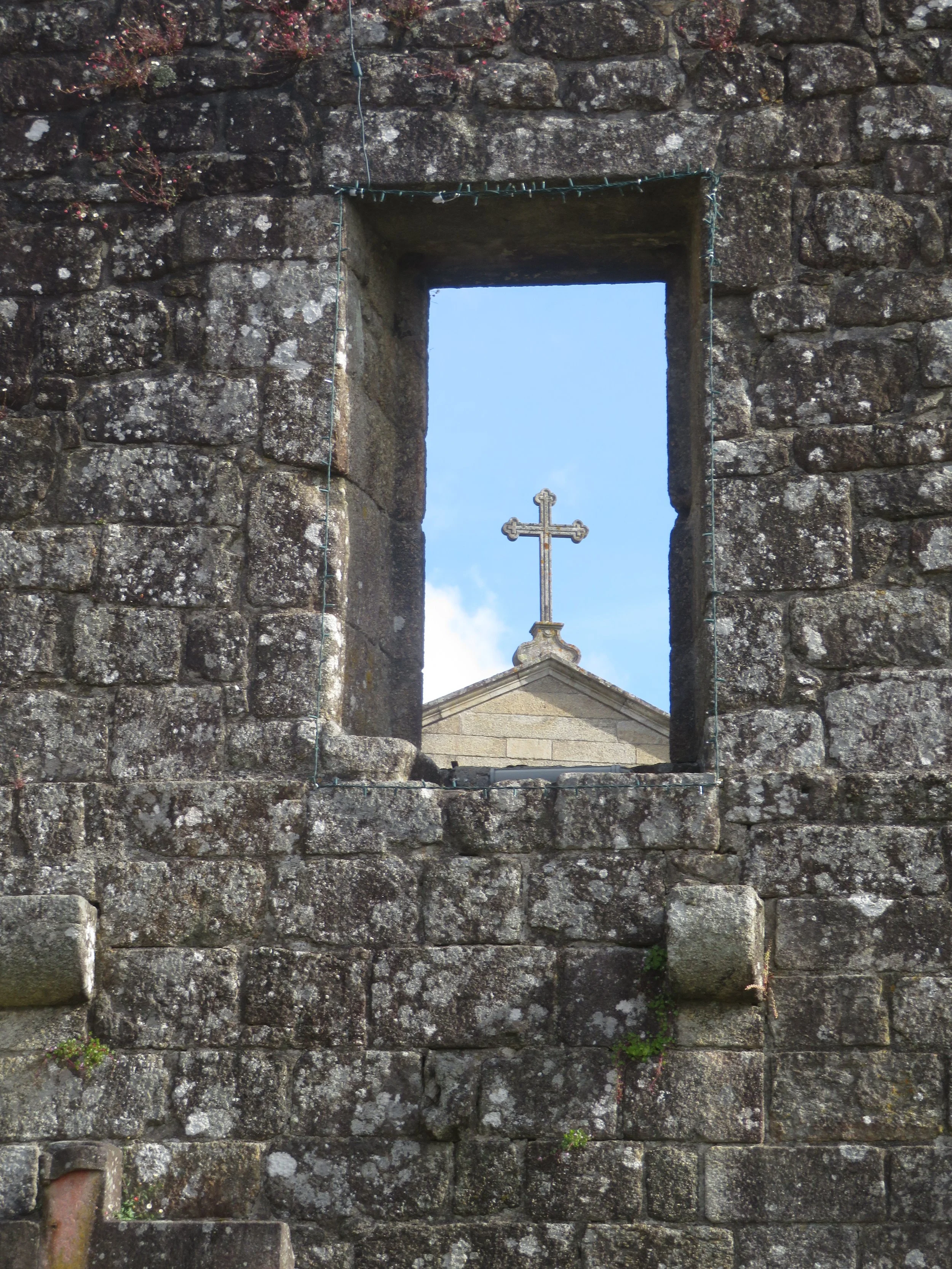
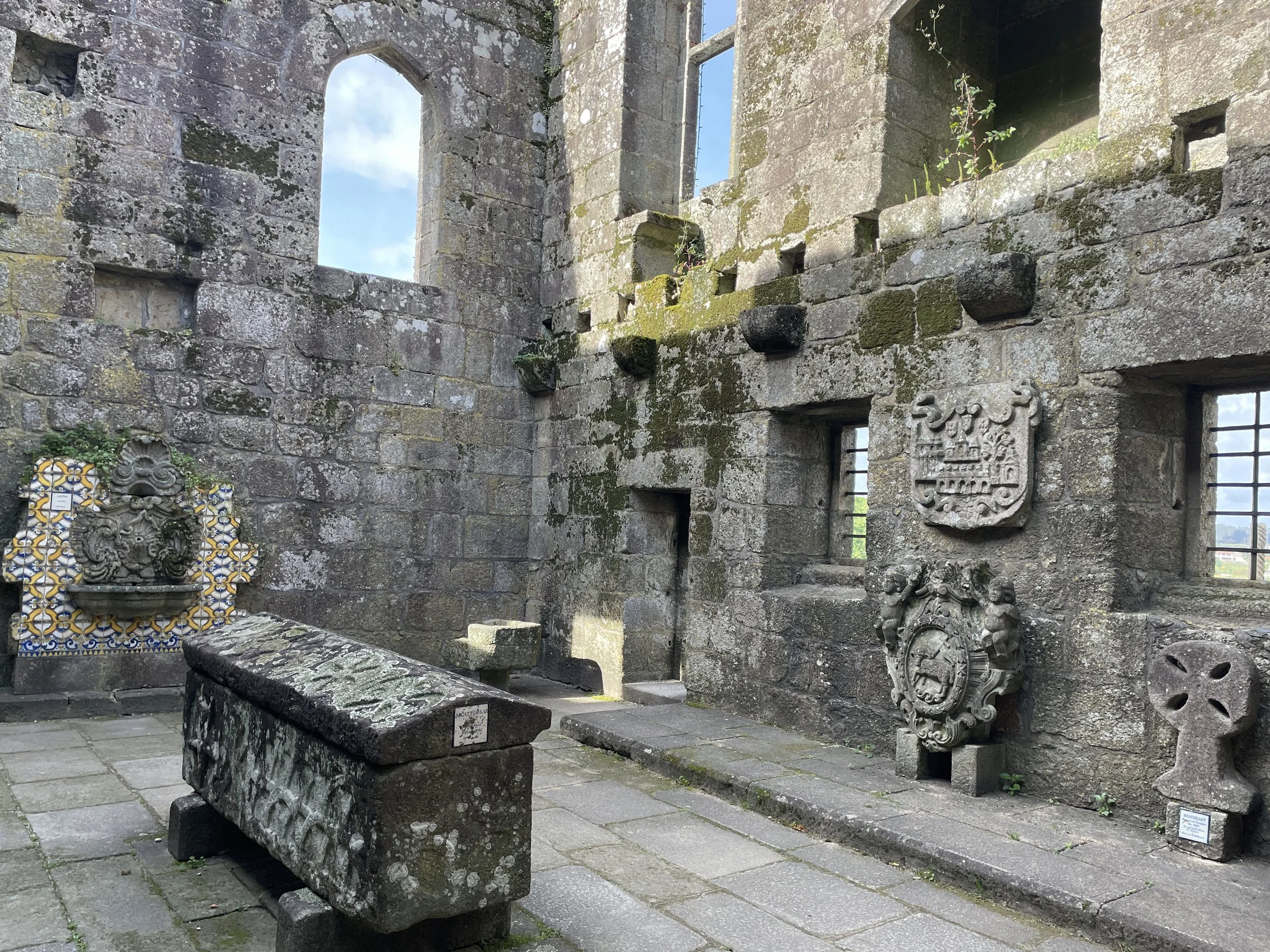
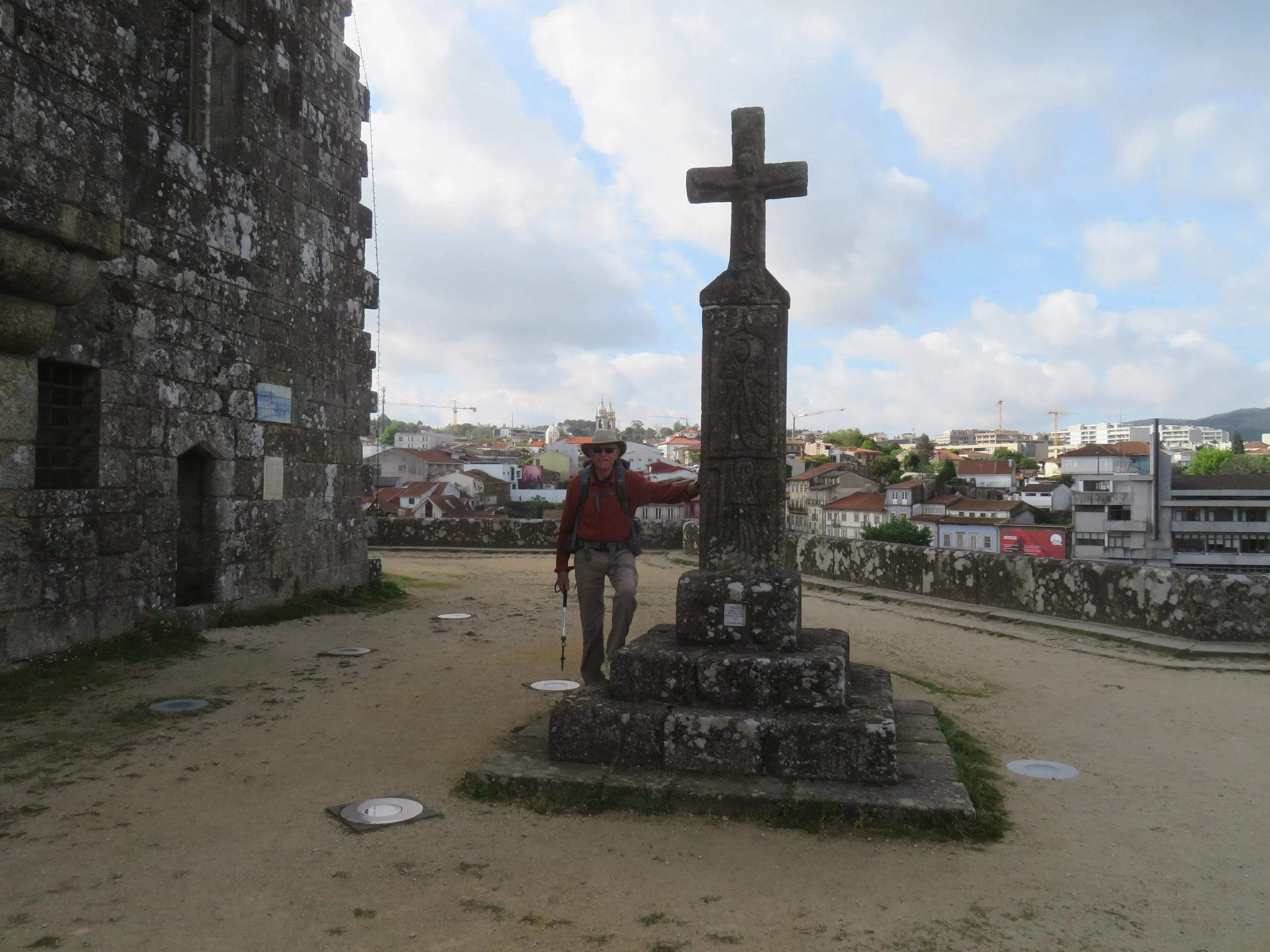
In front of the palace stood the Cruzeiro do Senhor do Galo, The Rooster Cross, dating from the 18th century, its weather-worn, low-relief carvings recounting the story of the city’s most famous legend.
After nearly an hour, we returned to the Camino and continued on our walk through the old city of Barcelos. The city traces its roots to Roman times, though it was formally established as a town between 1156-1169. It’s 870 years old!
It was a pleasure walking through the city. It was bustling with cafes and shops and people walking their dogs and locals sipping coffee and old folks feeding pigeons, and pilgrims, straining under the weight of their backpacks, walking the Camino which led them right through the middle of it all.
Street art in the city is wonderful. Most that we saw tied into the city’s legends, artistry, and history. It was all eye candy. We stopped so many times to take photos, we weren’t sure we’d make it to our evening’s destination.
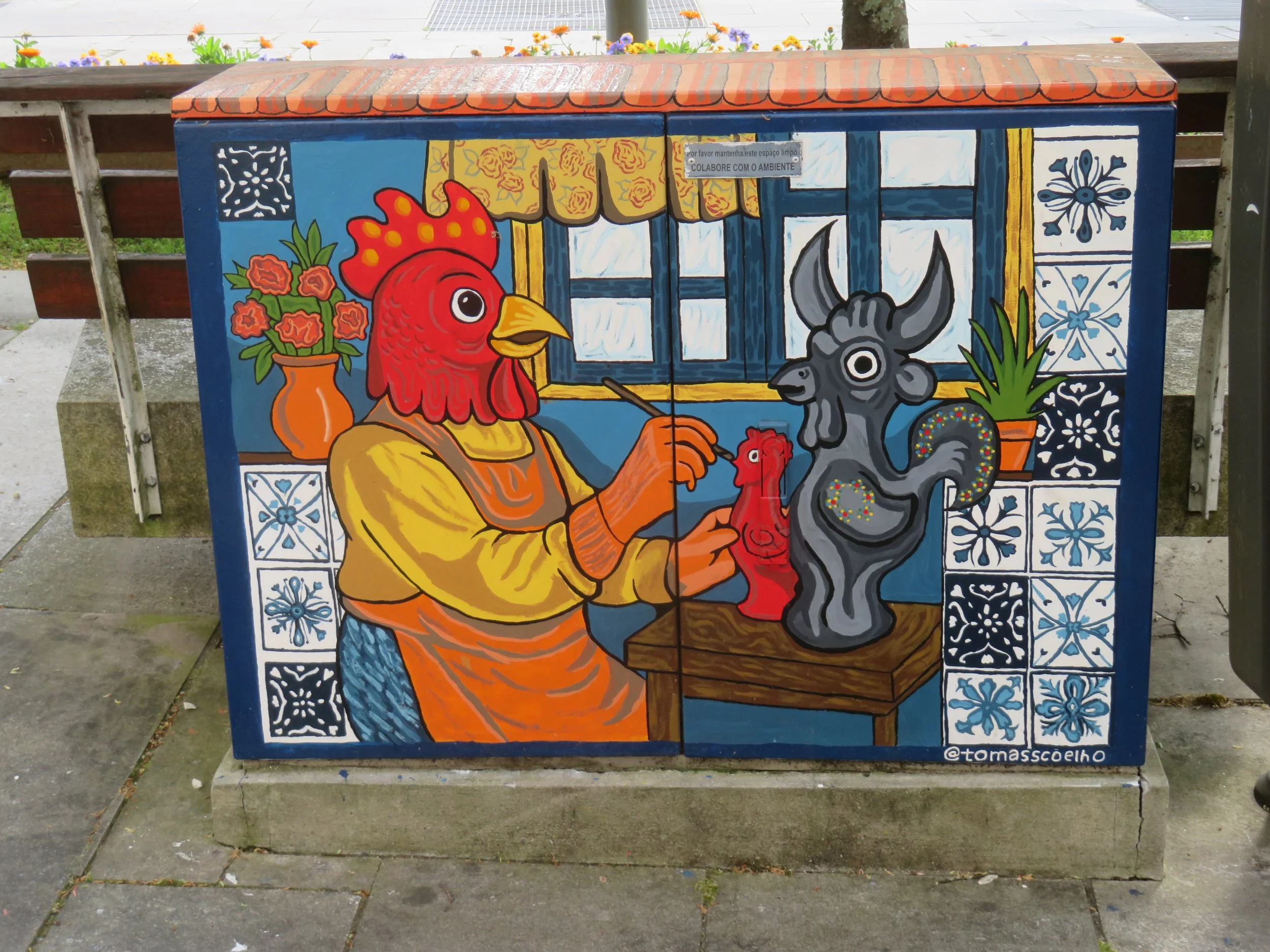
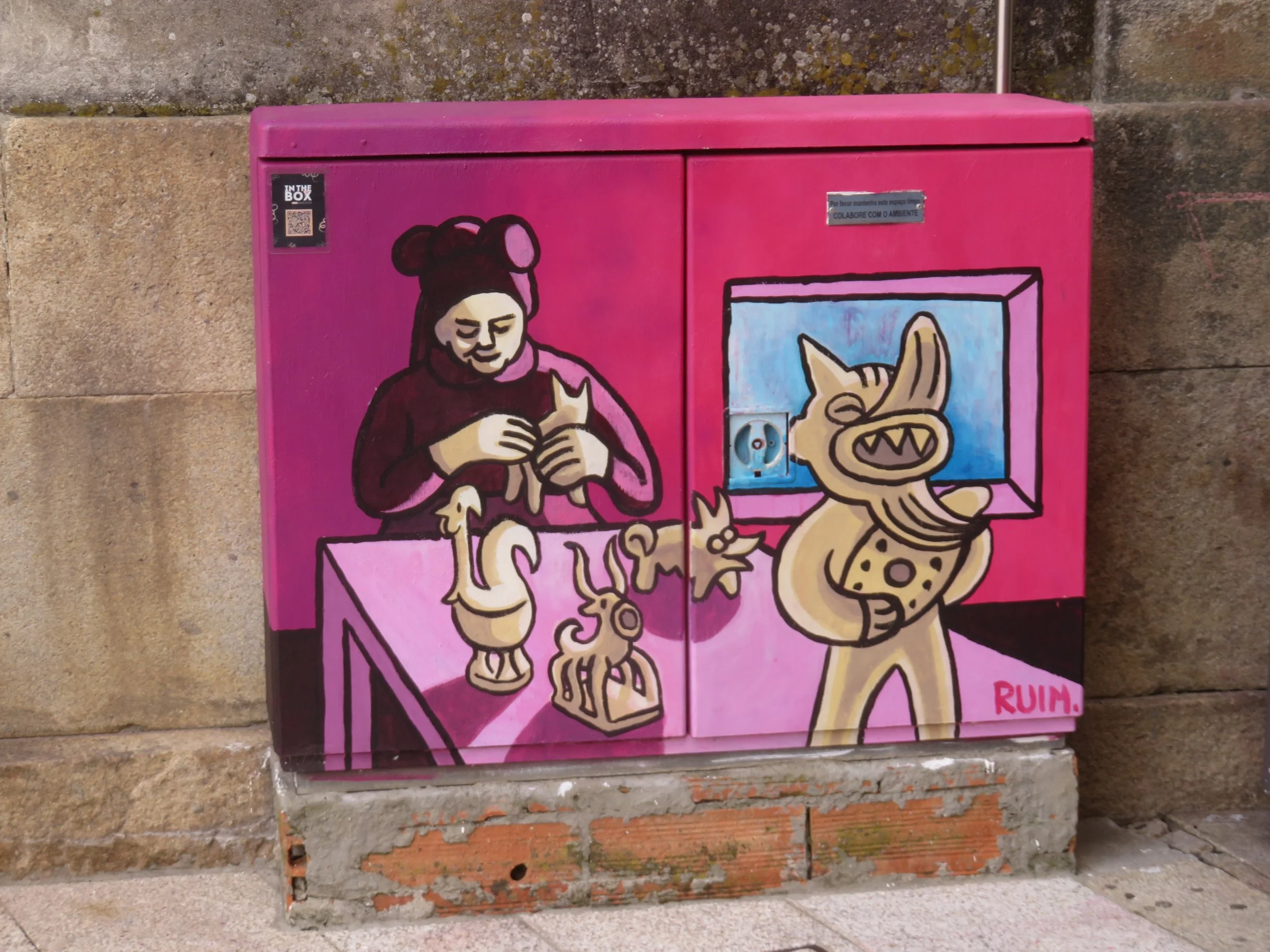
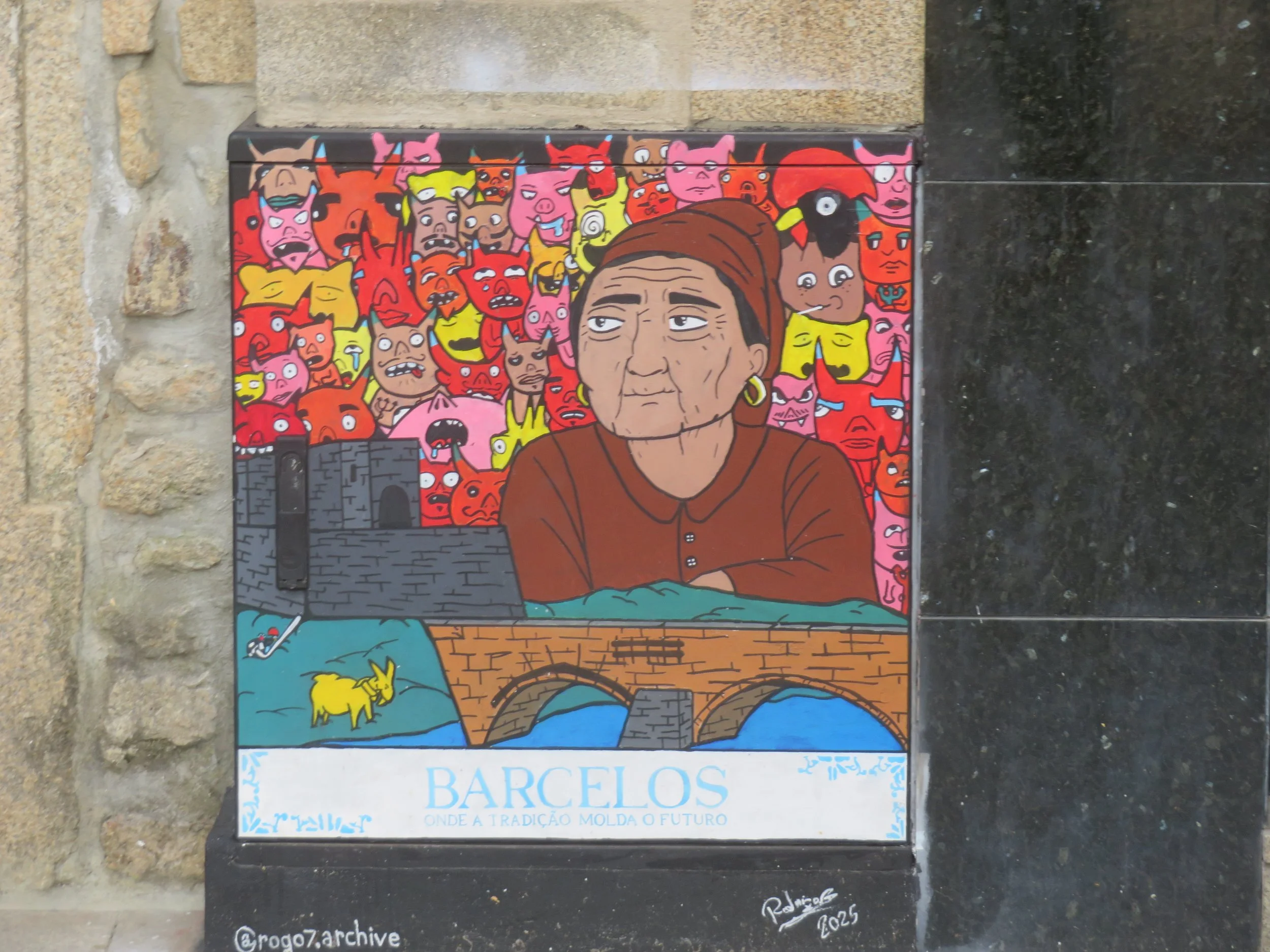
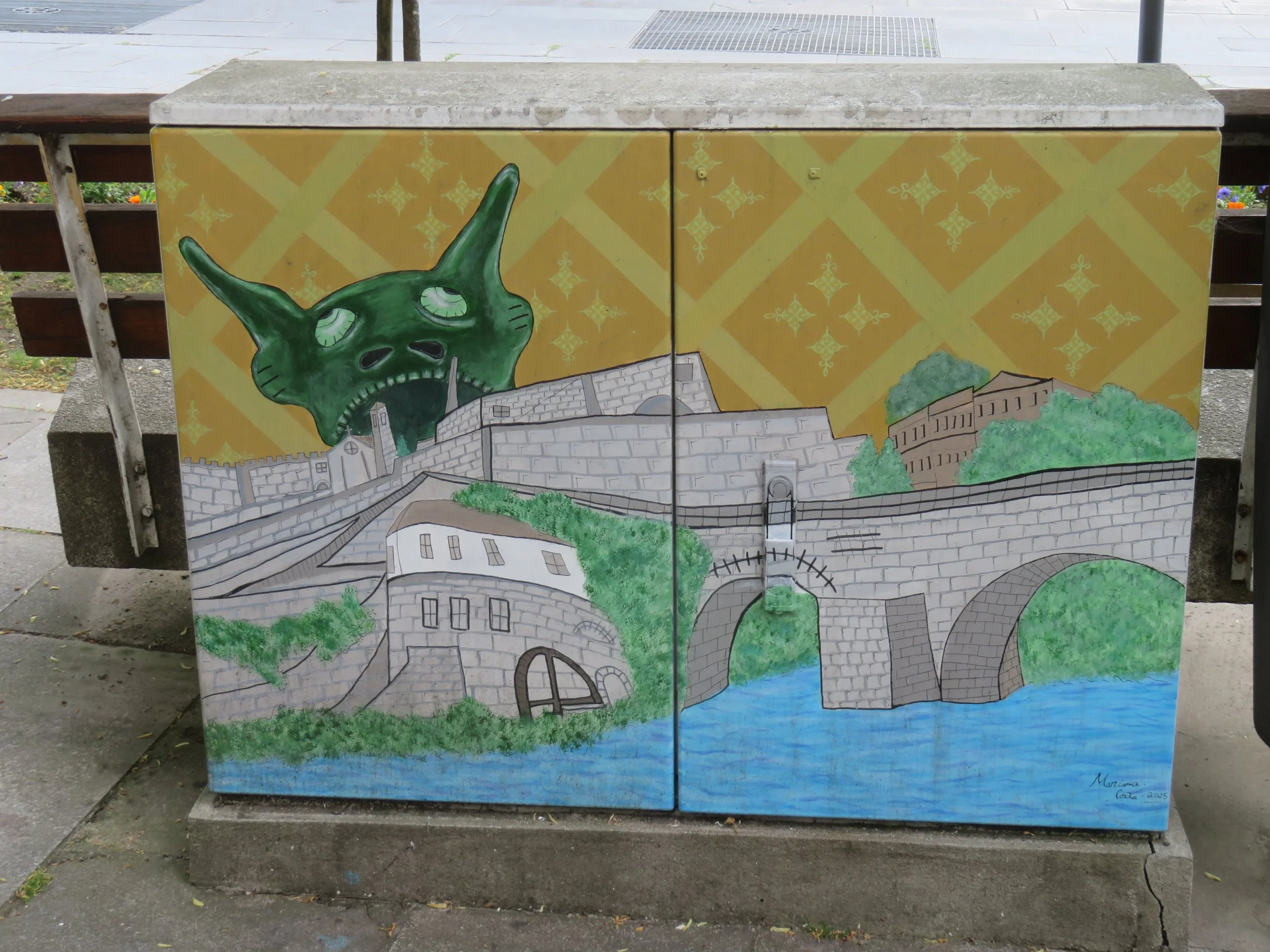
We stopped for small rooster souvenirs to attach to our backpacks and made another stop for our morning favorites: galão and pastel de nata. David will elaborate about our interchanges with locals and pilgrims along the way in a future blog. They were all interesting.
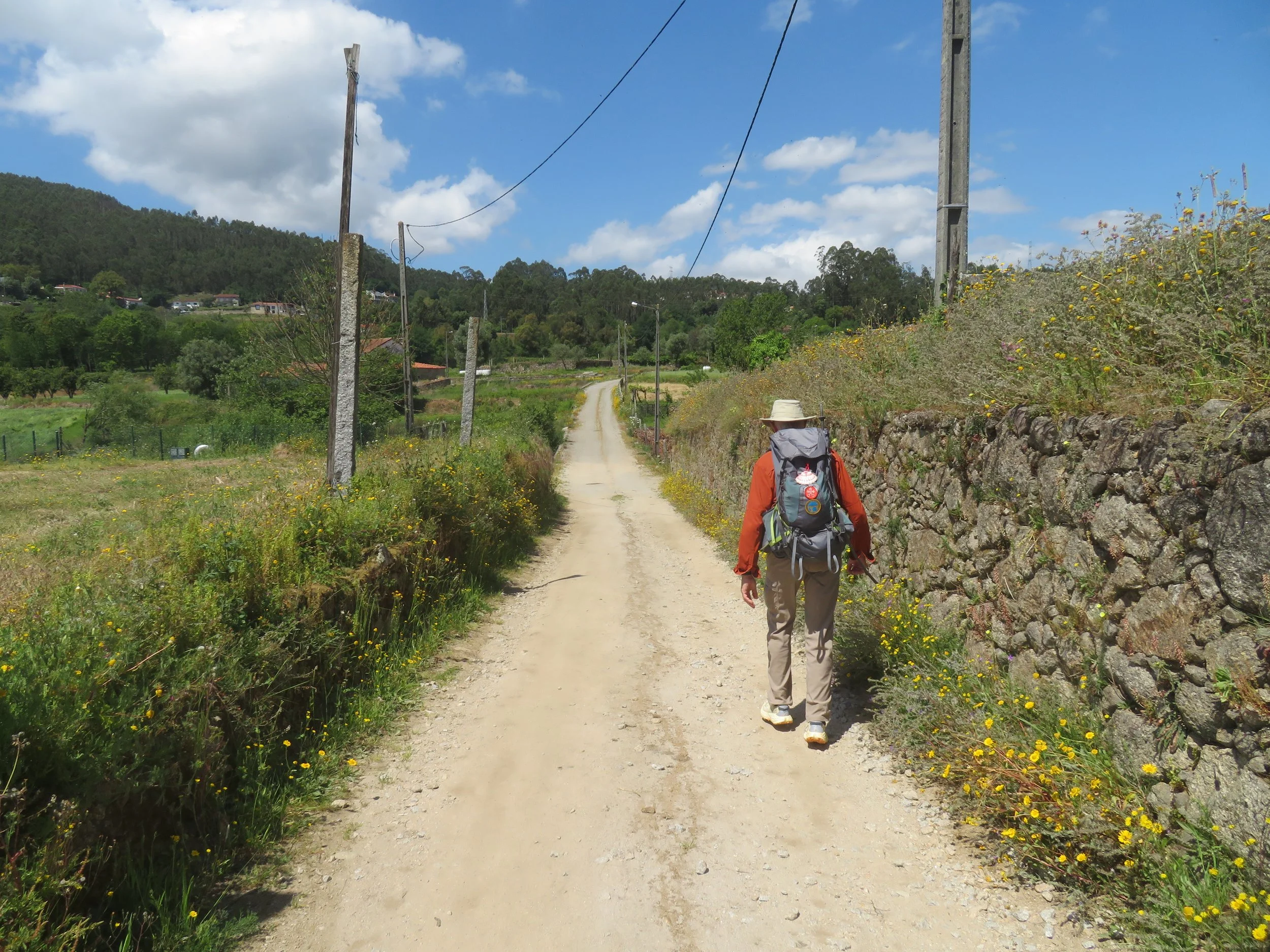
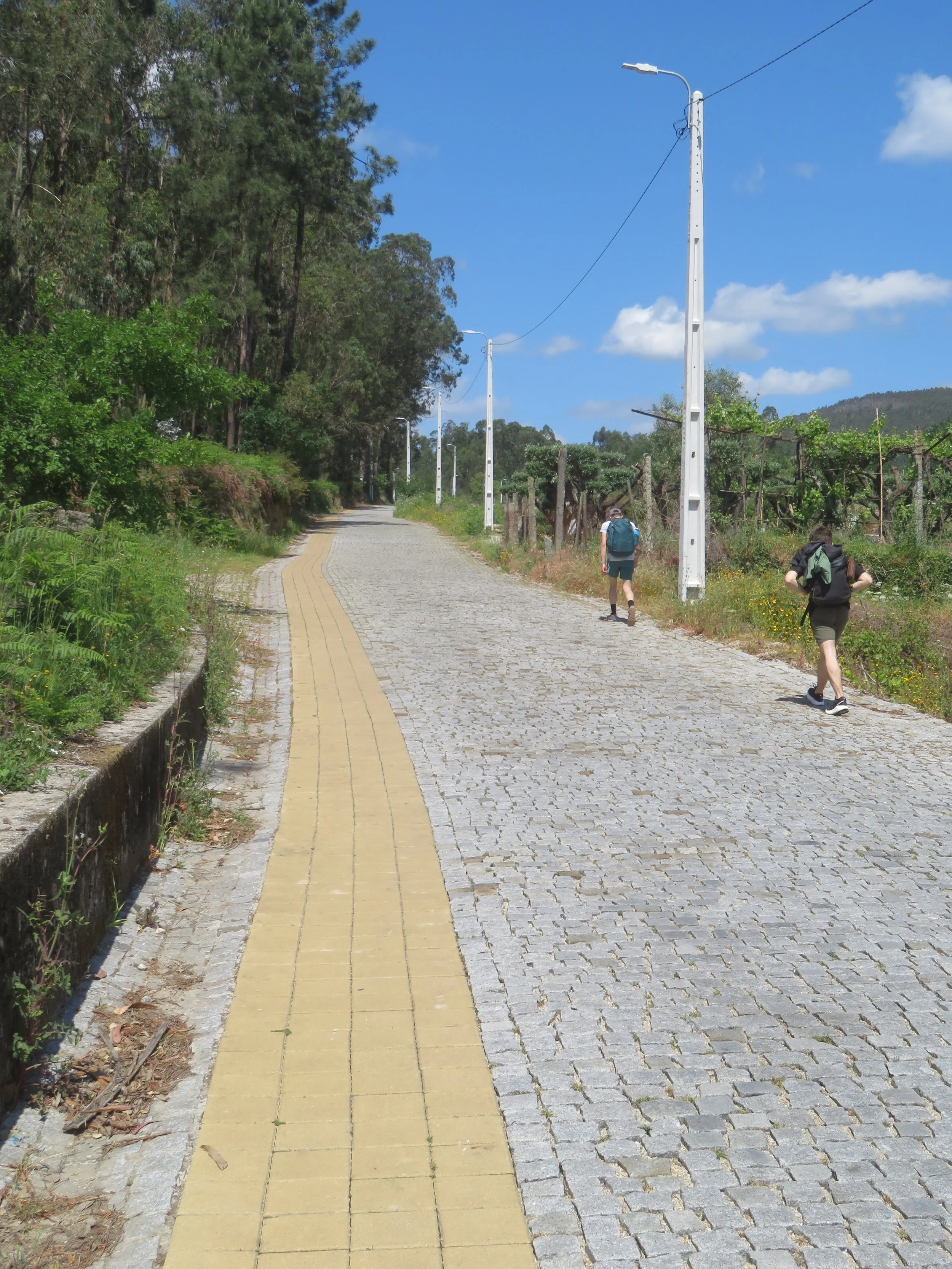
Once we were out of the city, we walked on cobblestones and dirt roads.
Sometimes, we just followed the yellow brick road.
Wildflowers were in bloom all over the countryside. Some I recognize; some we identified with Seek… yup, the free iNaturalist app we use in the States works great here, too.
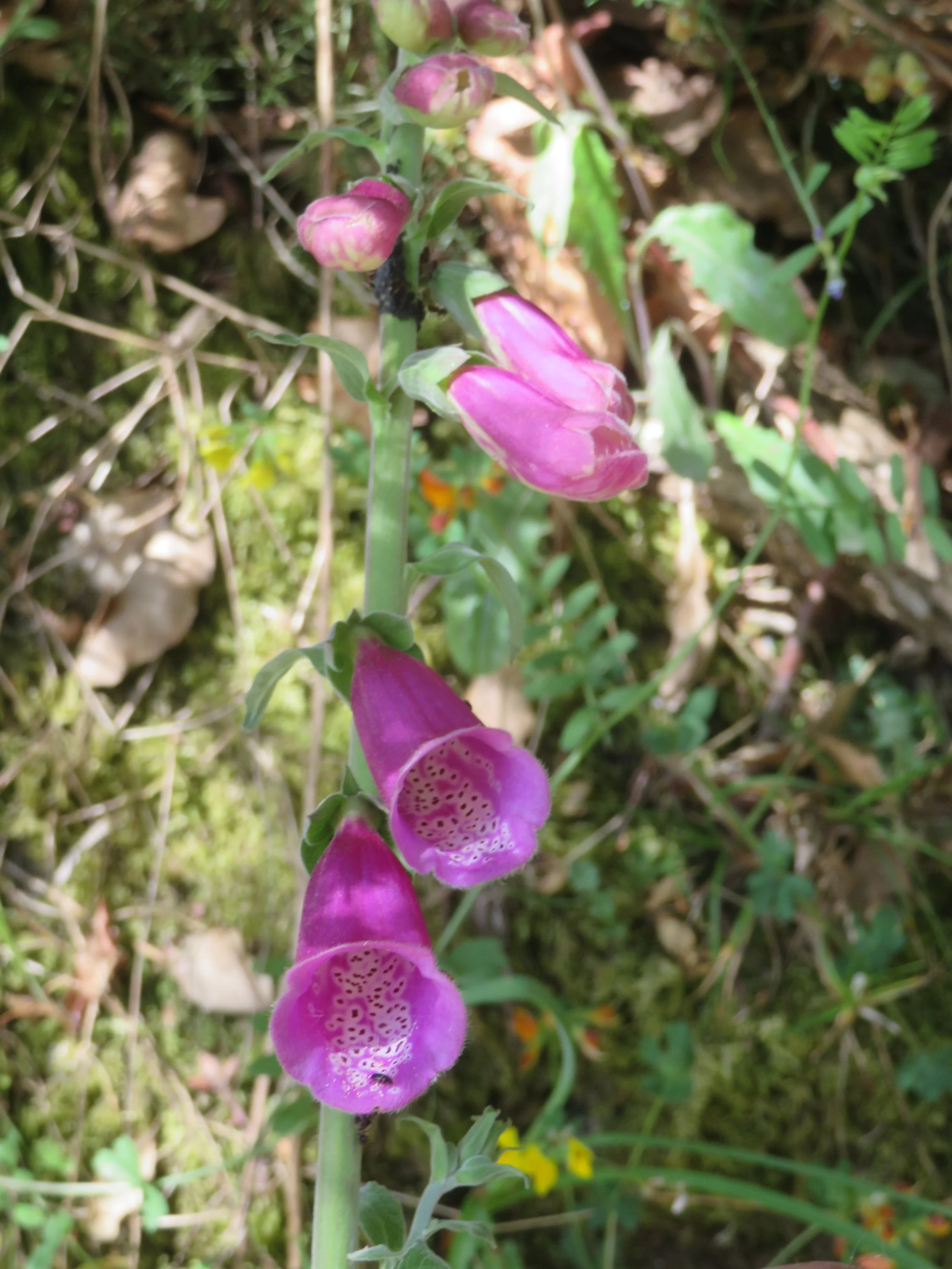
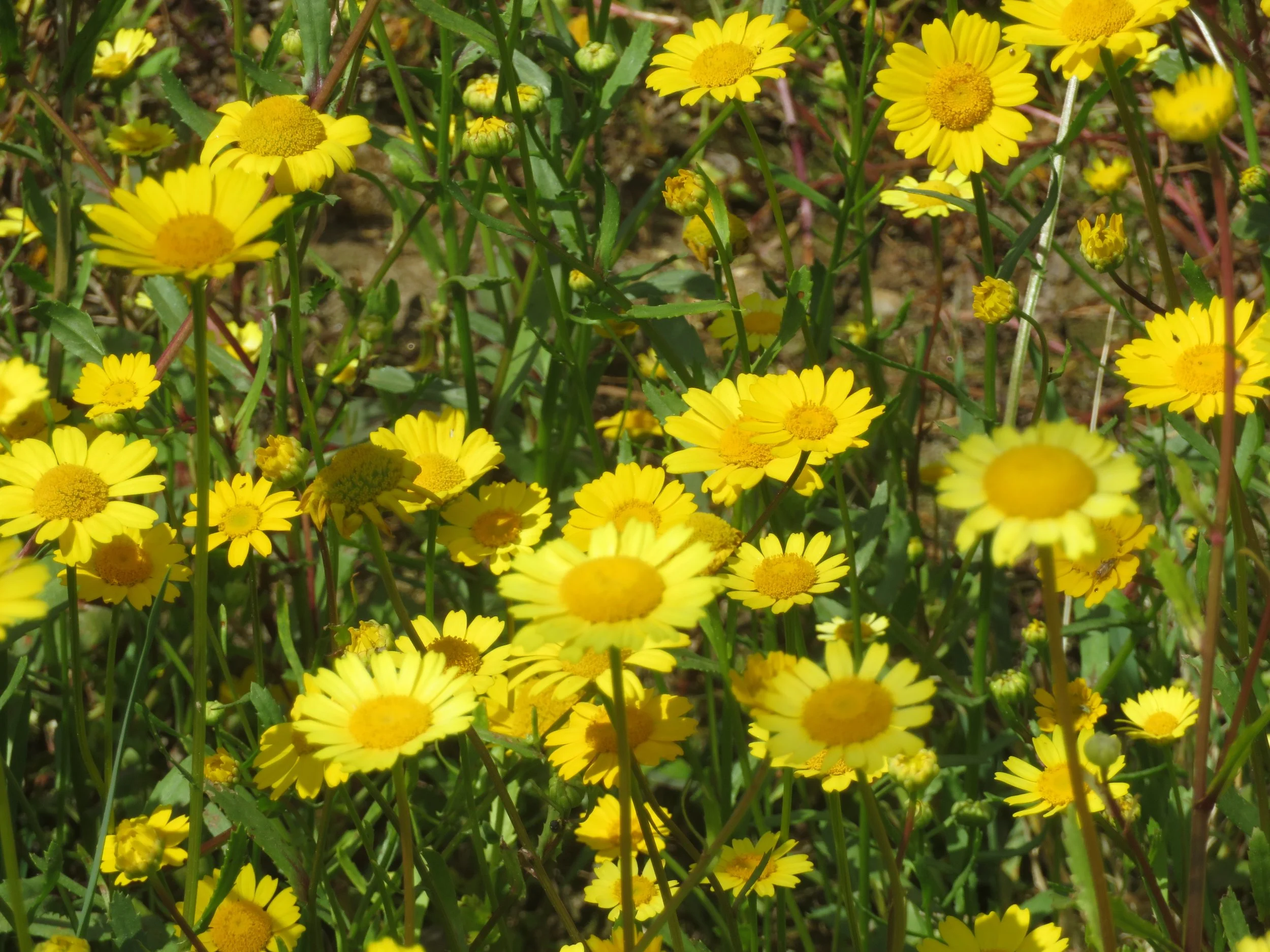
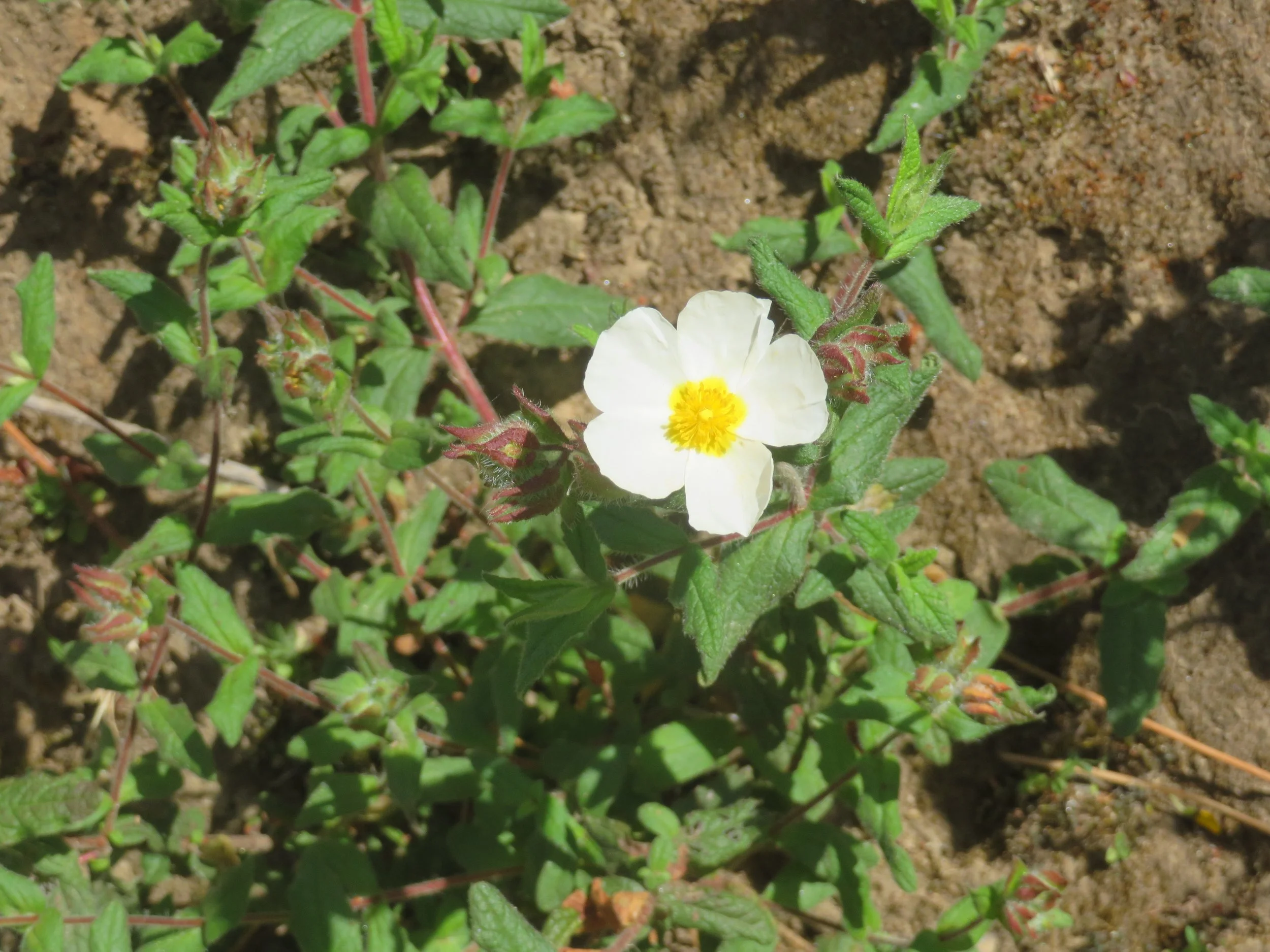
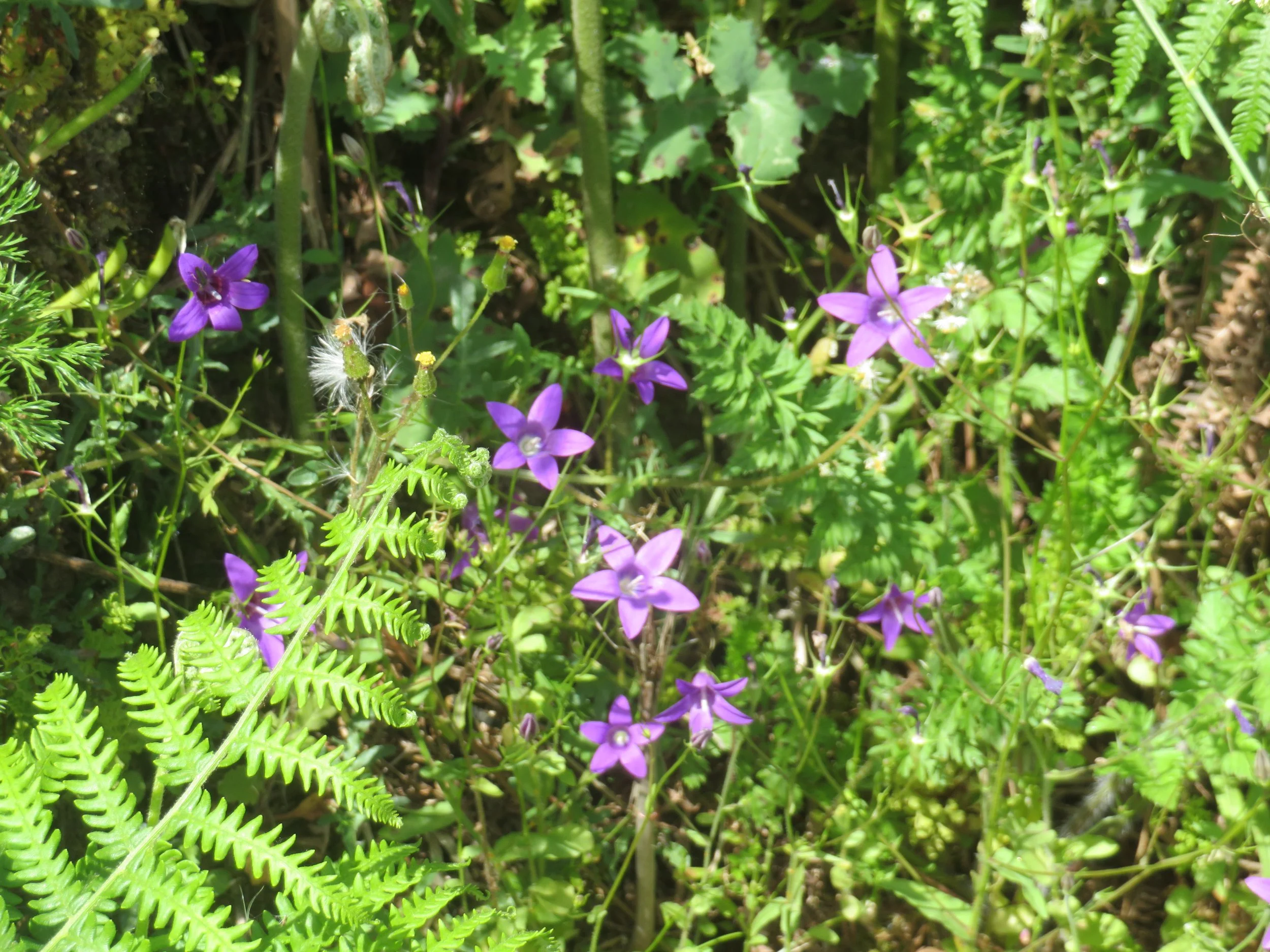
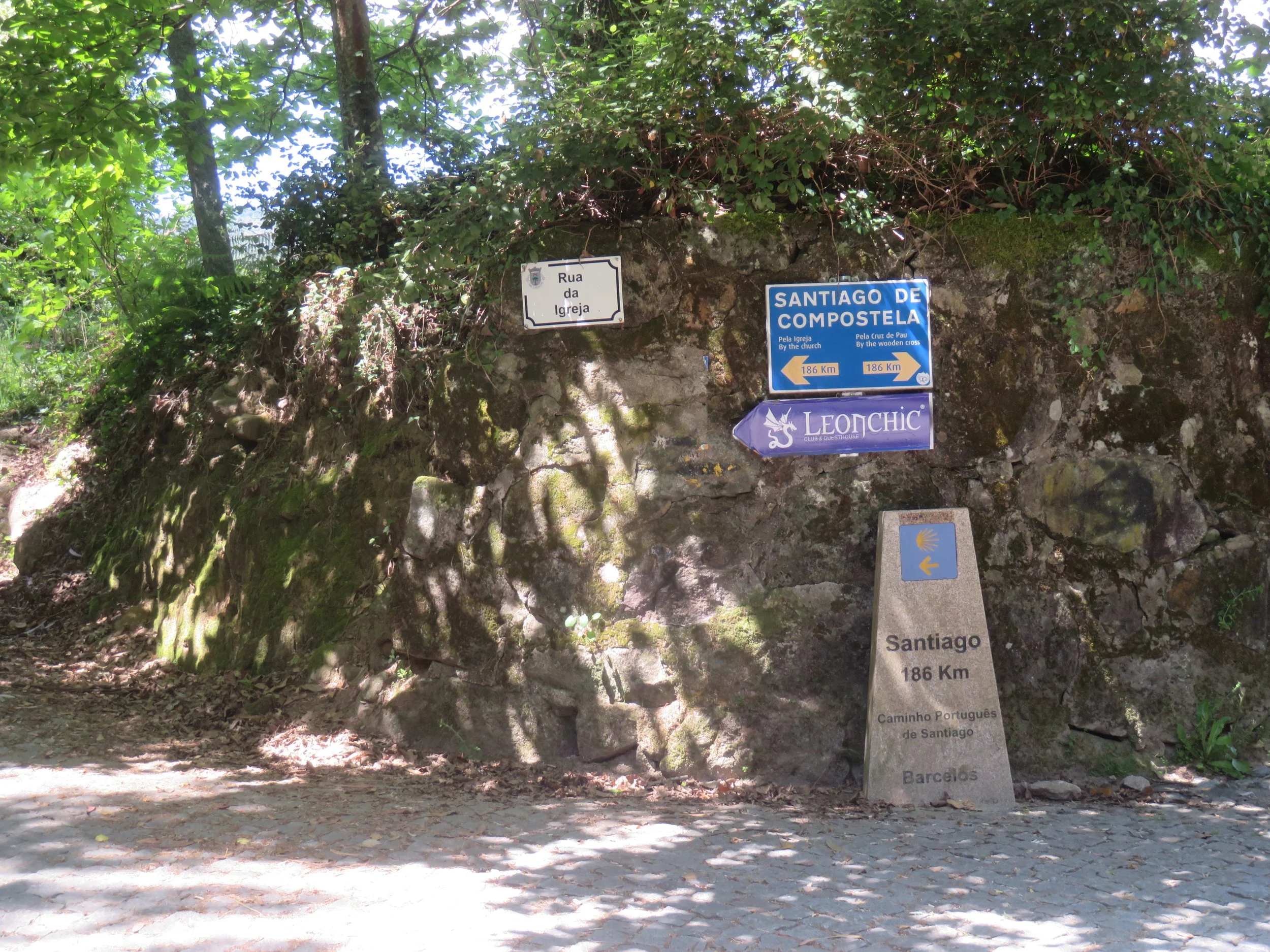
Finally, we saw a sign for Leonchic, our lodging for the night. We climbed a steep, cobblestoned hill and arrived to find everything all locked up. We texted, and within a few minutes, the owners arrived to welcome us and showed us to our room.
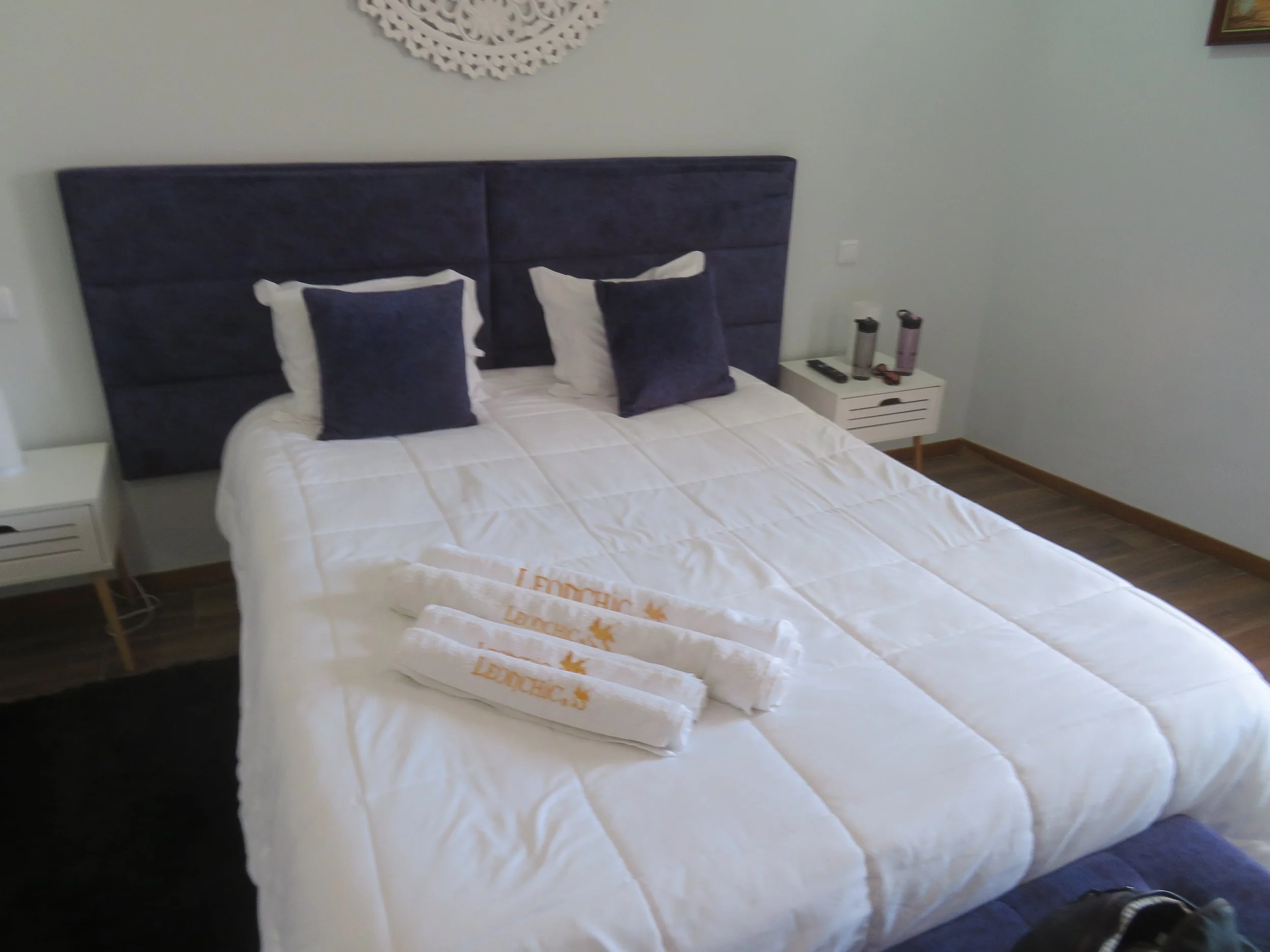
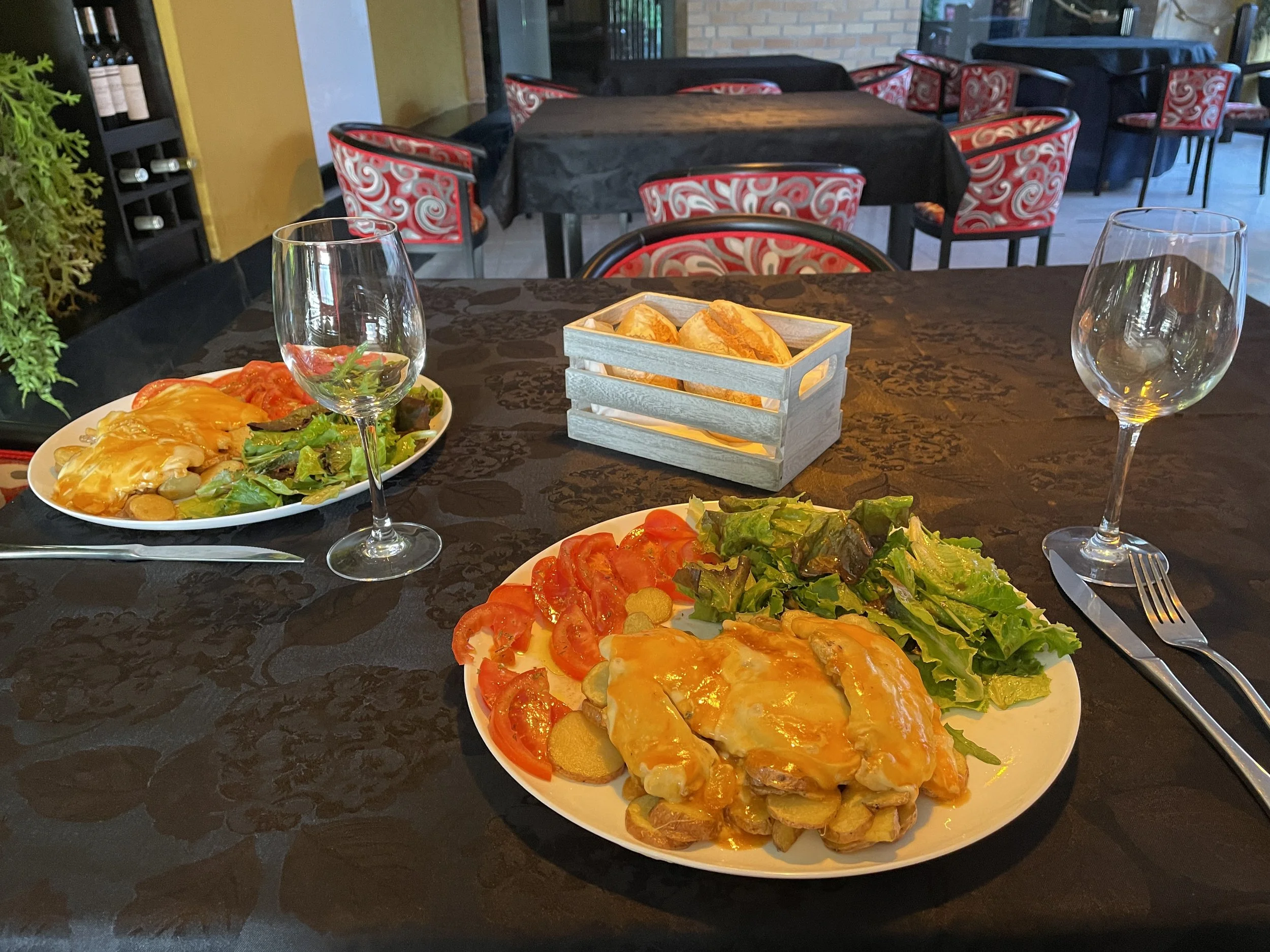
The Portuguese brothers who own Leonchic spoke no English, but they did speak Spanish. We managed just fine. Dinner was served at 7 pm and it was wonderful… accompanied by vinho verde, a lovely, light Portuguese sparkling wine. We were all alone in the restaurant and it was magical.
We retired to our room, planned the next day, relaxed a bit, read, wrote a little, and by 9:30 pm, we were both snuggled down under the covers ready for sleep. Tomorrow, we head to the little town of Vitorino dos Piães. Each day holds new surprises, new sights, new people.