
Celebrating Japanese Haru Matsuri - Spring Festival
/
We enjoy cultural and ethnic festivals… Scottish Highlander fests, Greek Fests, Italian Fests, St. Pat’s parades, Chinese New Year, so when we picked up a flyer for the Japanese Haru Matsuri (Spring Festival) recently, we put the date on the schedule.
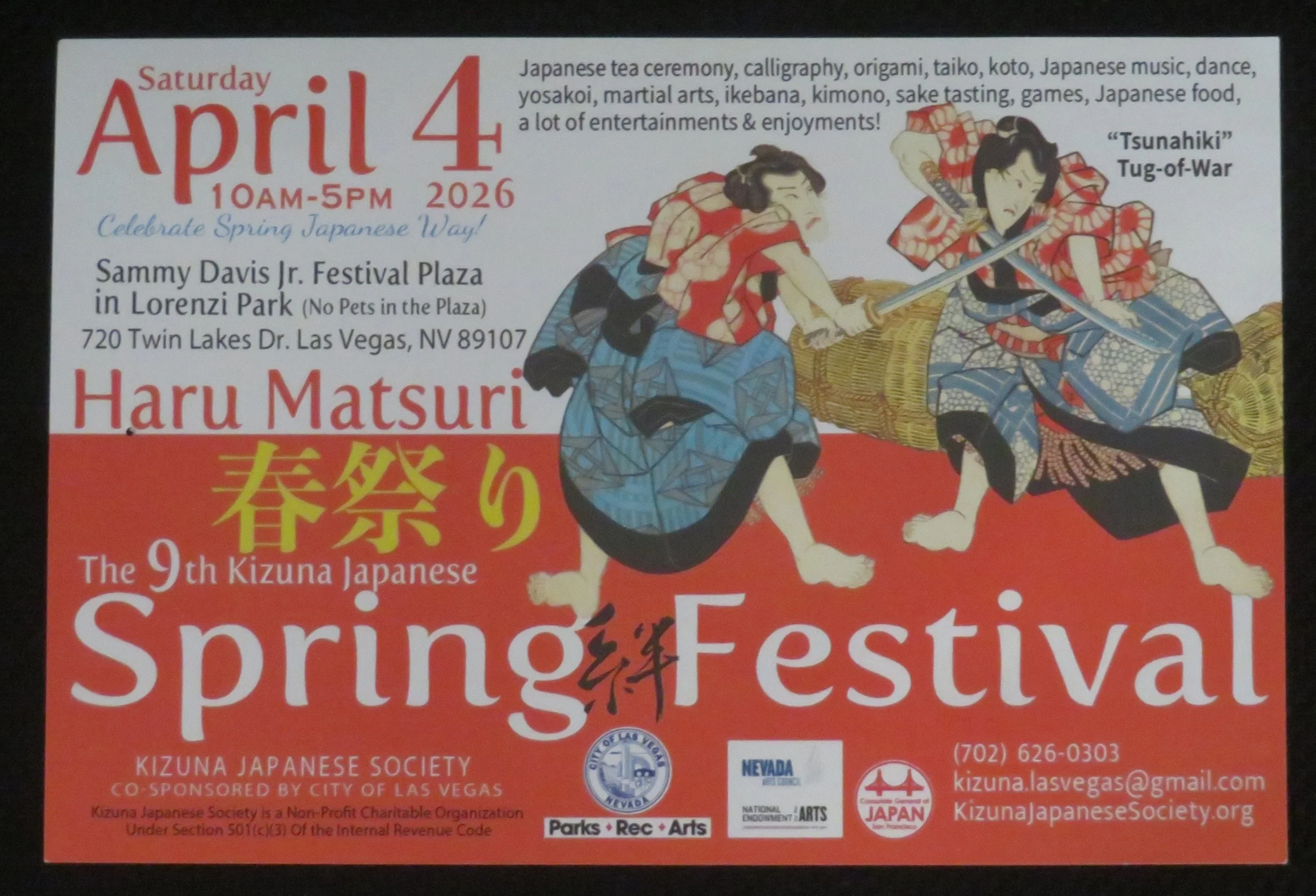
We find it hard to resist attending cultural festivals.
It was a perfect day for a trip to Lorenzi Park and the Sammy Davis Jr. Festival Plaza Pavilion. The temp was in the mid-70s; the sky was cerulean blue and cloudless; people were smiling and happy to be participating in this cultural event.
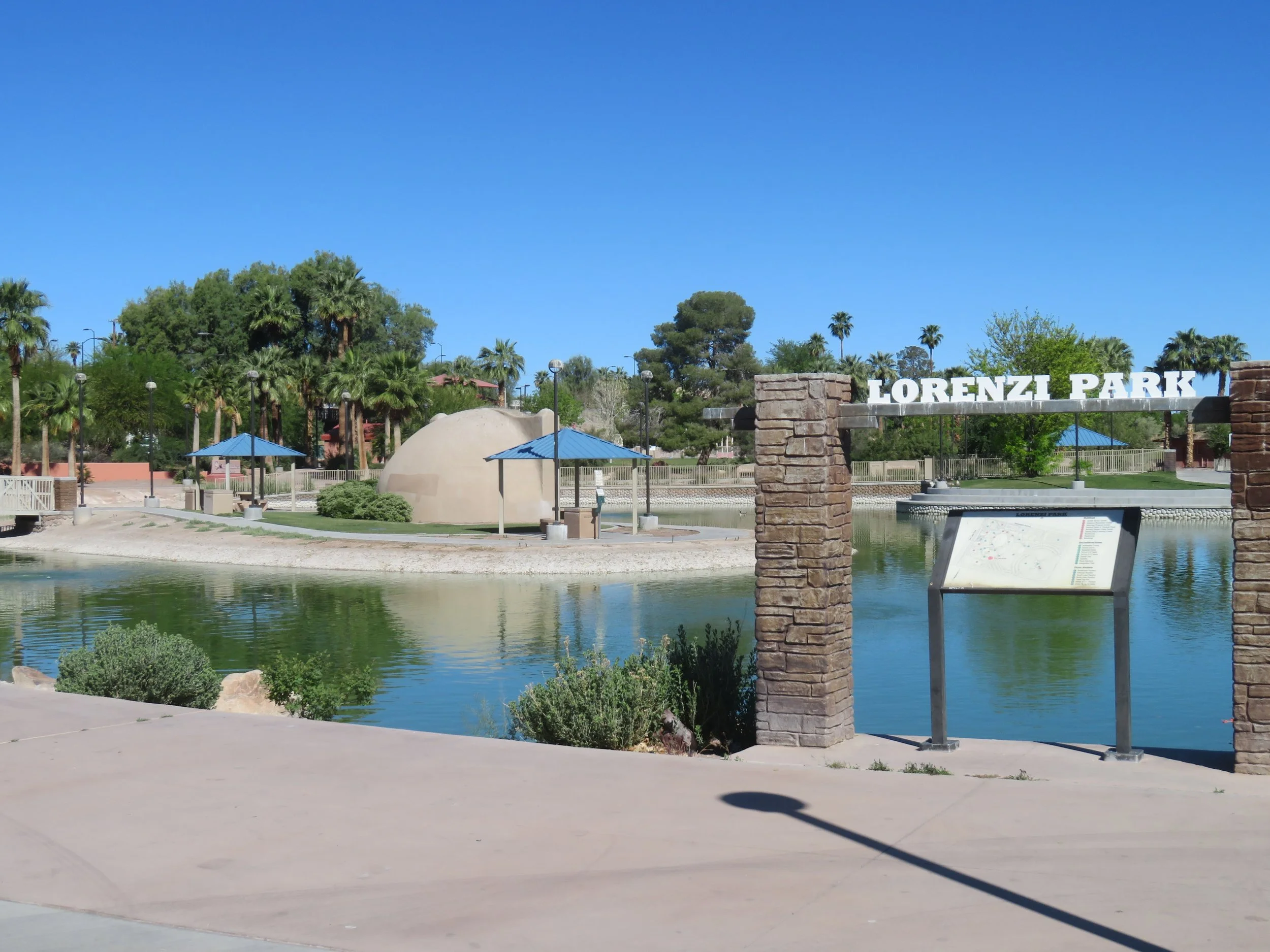
A magnificent day and a perfect venue for Haru Matsuri.
According to the Harvard University Pluralism Project, Haru Matsuri is an important Japanese festival celebrating the arrival of spring and the hope for a bountiful autumn harvest. Tracing its roots to Shinto and Buddhist traditions, Haru Matsuri dates back to ancient times in Japan, as so many spring and autumn festivals around the world do, reflecting agricultural cycles.
In Japan, this is also the time for the cherry blossoms (sakura) to bloom and lots of flower viewing activity (hanami). You’d have to travel far and wide in Las Vegas to find cherry blossoms in bloom this time of year. The closest we came was checking out the Bellagio Conservatory’s display a few weeks ago.
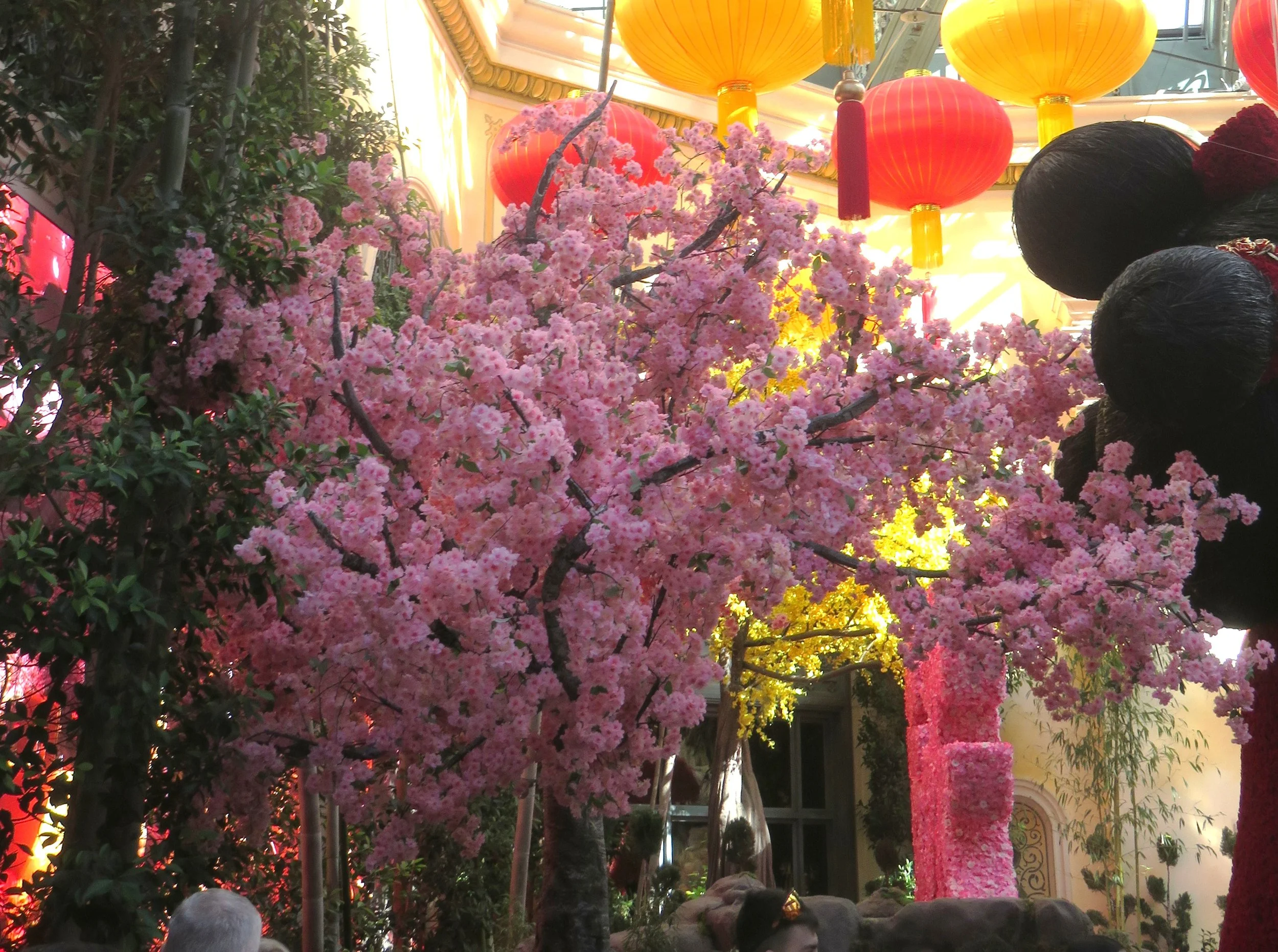
Cherry blossoms at Bellagio’s Conservatory display
We arrived early for a walk through the park’s network of paths and then grabbed a seat in the shade to watch some of the festivities. After standing for the singing of both the national anthems of the USA and Japan, the emcee introduced the audience to ‘taiko’, the art of Japanese drumming. I have to tell you, though we had nothing to compare it to, the performance was awesome. So much energy! The group was totally in sync and didn’t miss a beat. We were impressed.
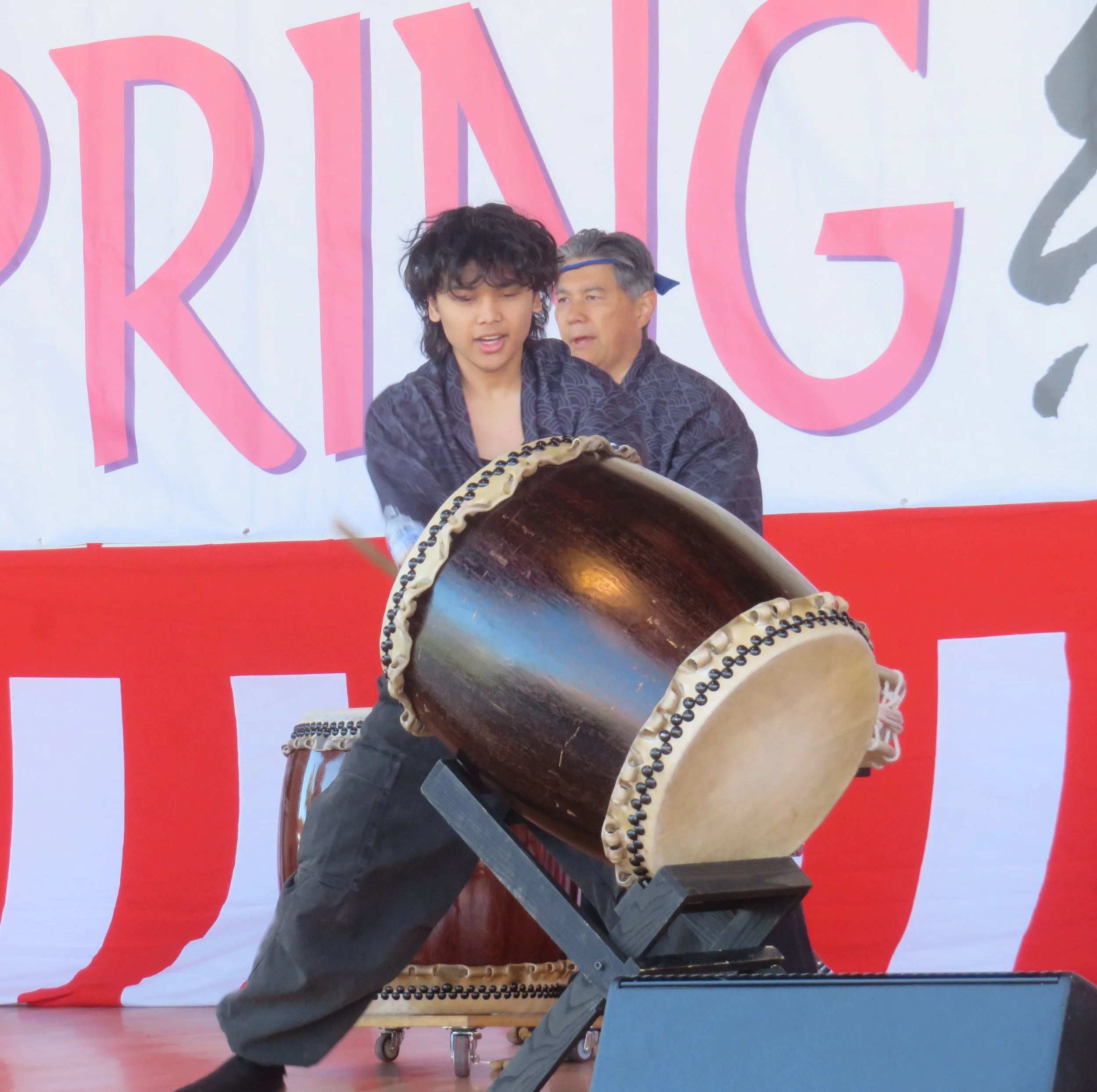
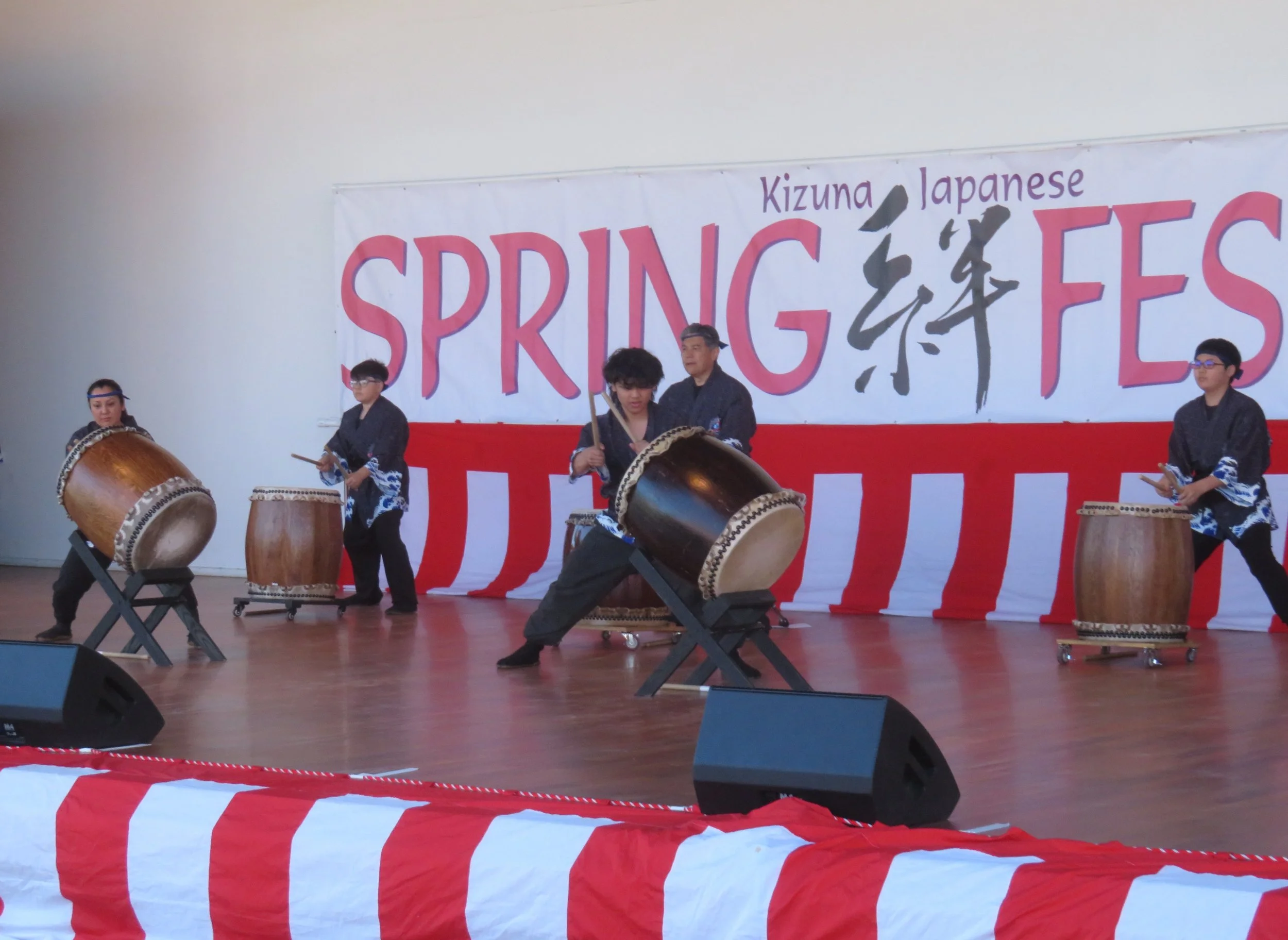
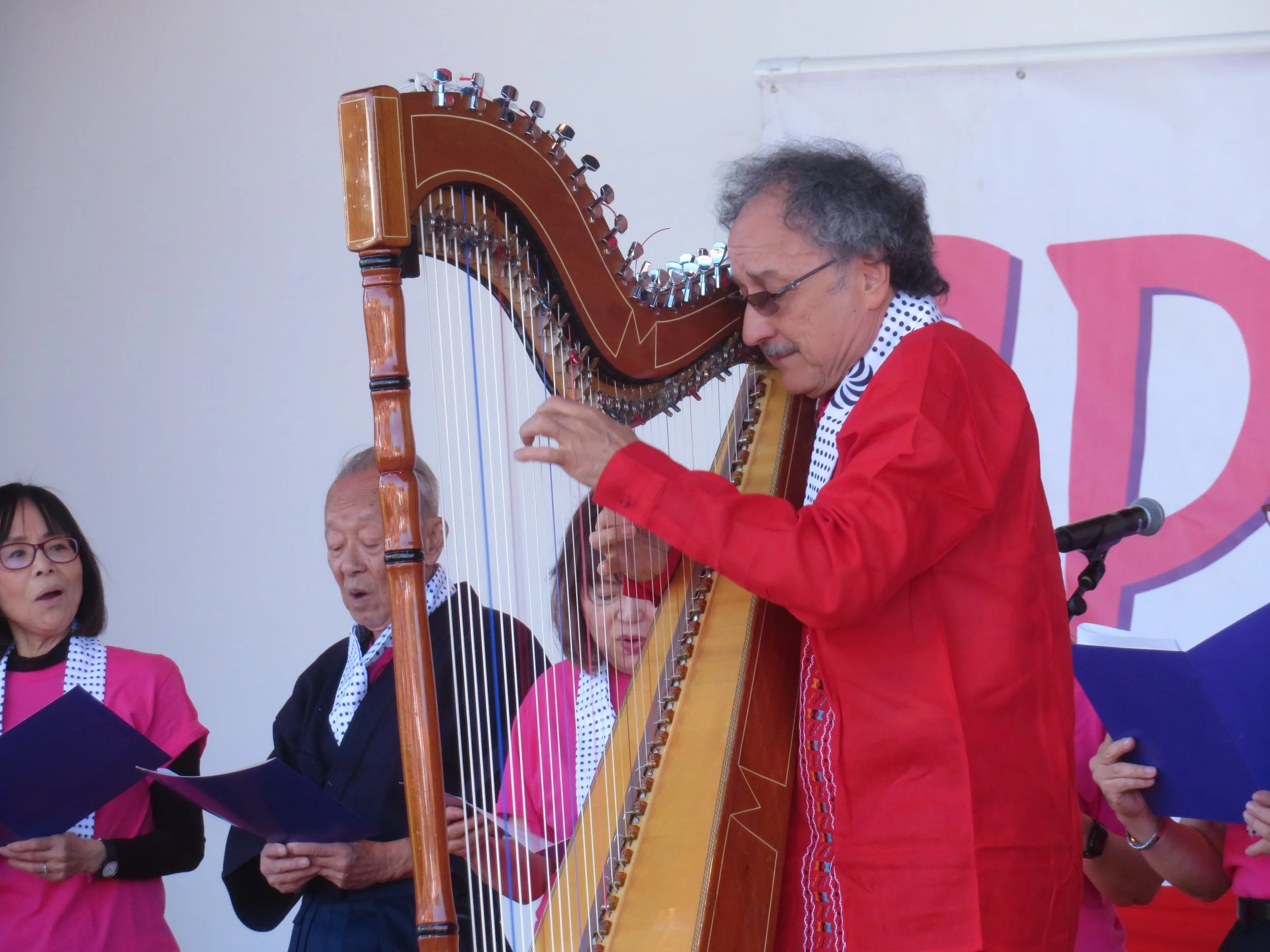
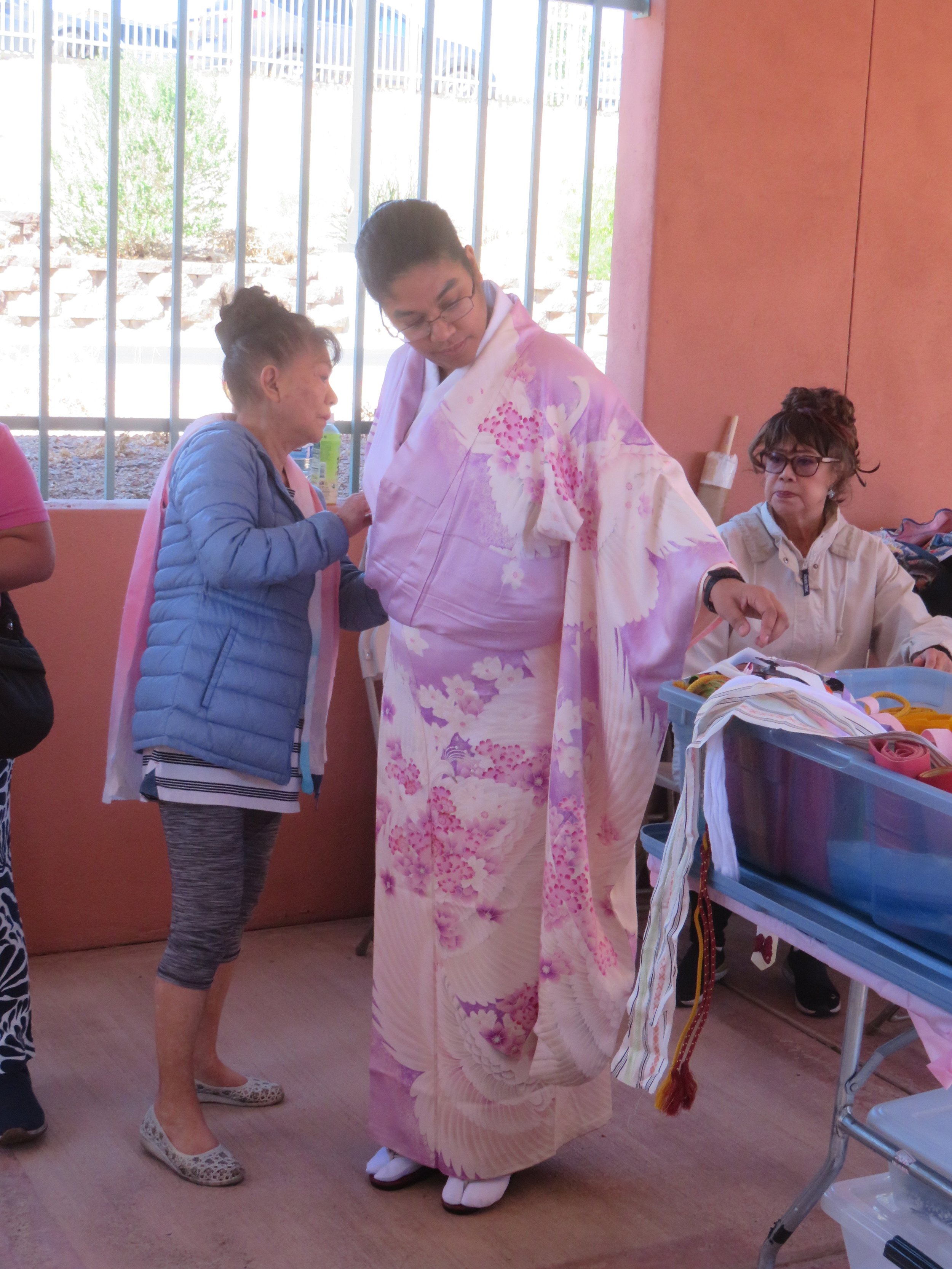
After performances of Judo, a harpist (‘koto’), a choir, and a Japanese comic (not very funny, though he tried), we decided to visit several booths dedicated to traditional Japanese arts. In one booth, Japanese women were formally dressing other women in kimonos.
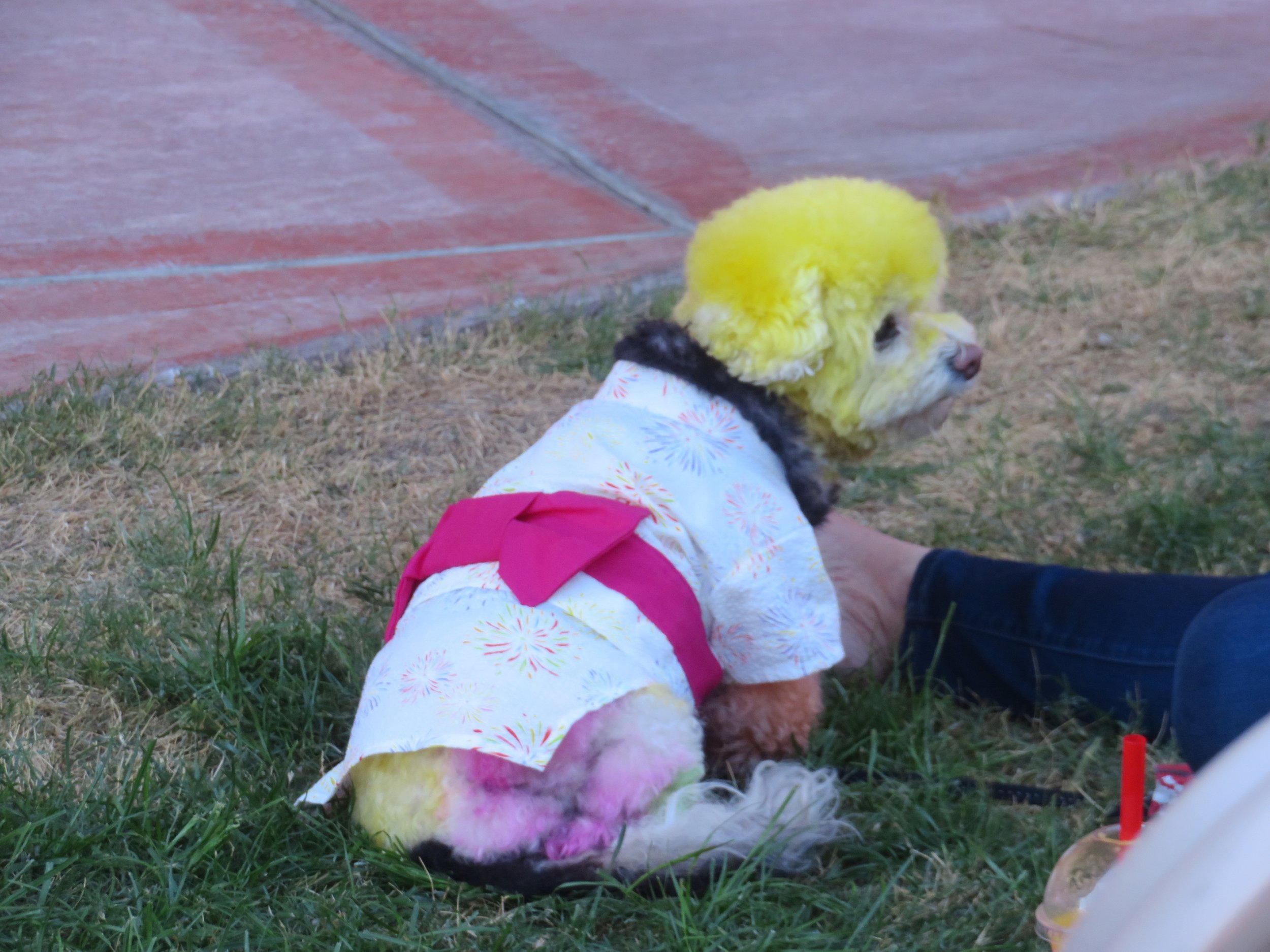
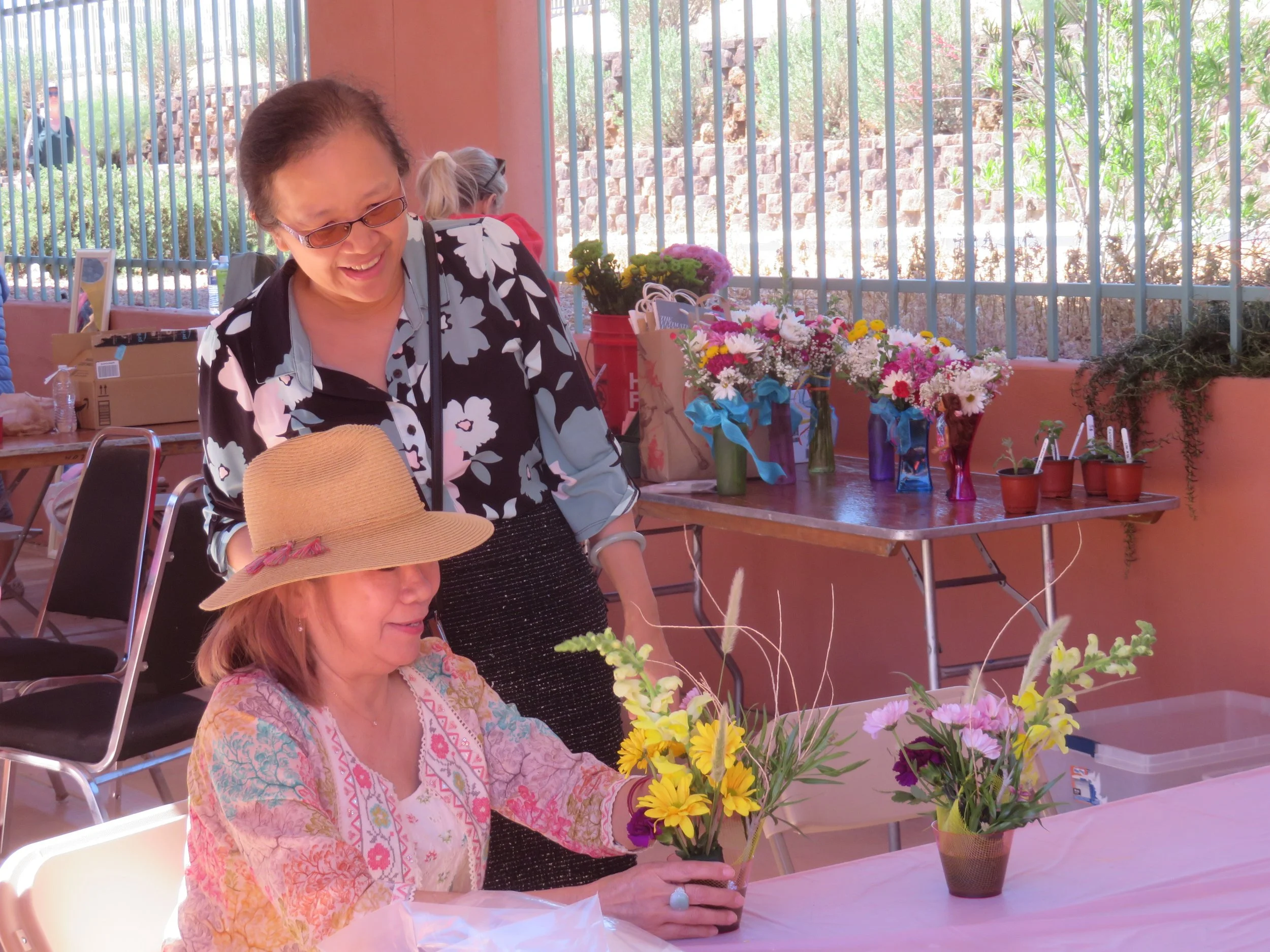
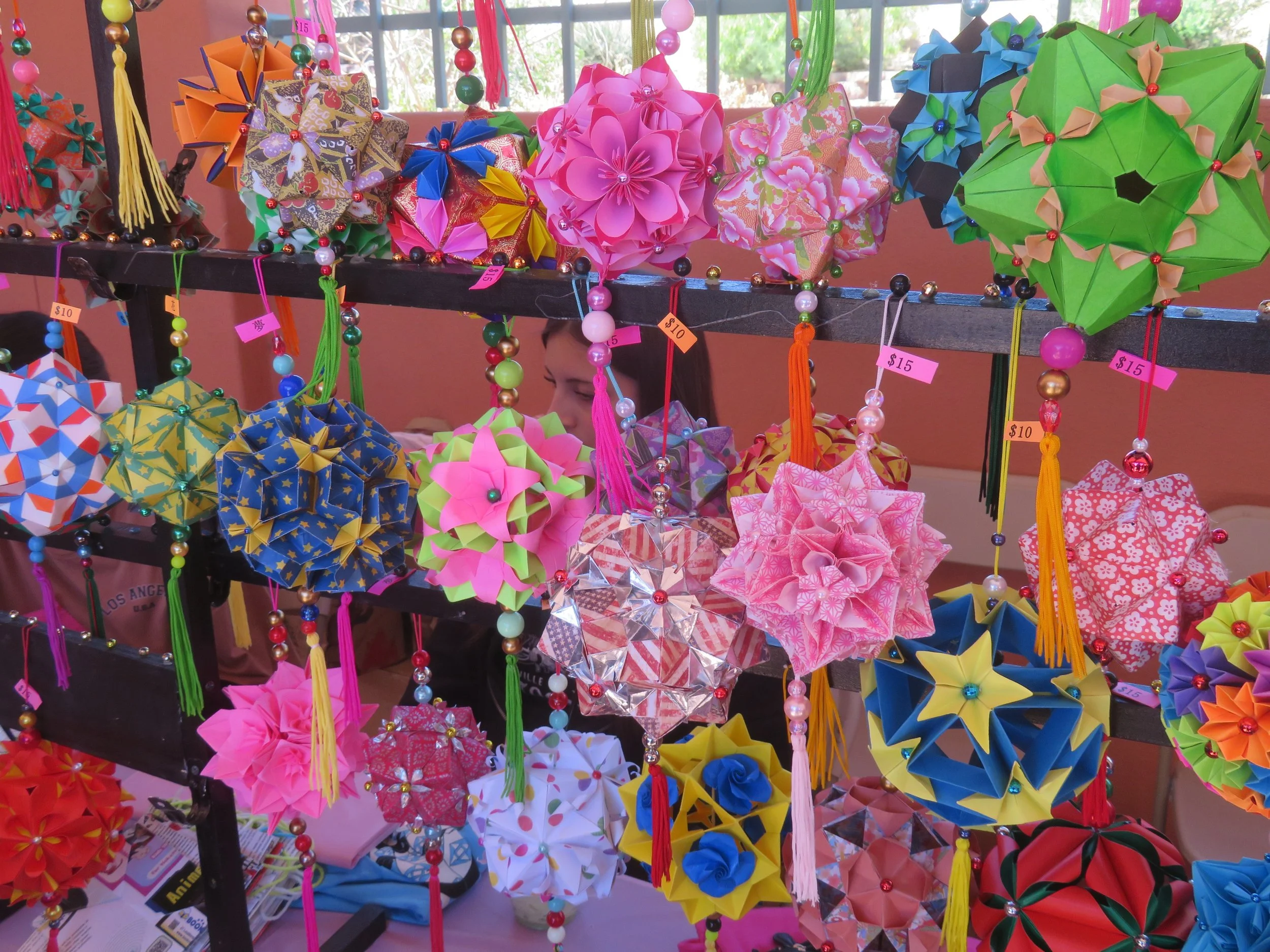
We checked out the ‘ikebana’ booth (Japanese art of flower arranging) and moved on to ‘origami’, paper folding. We were impressed with the intricacy of some of the artwork.
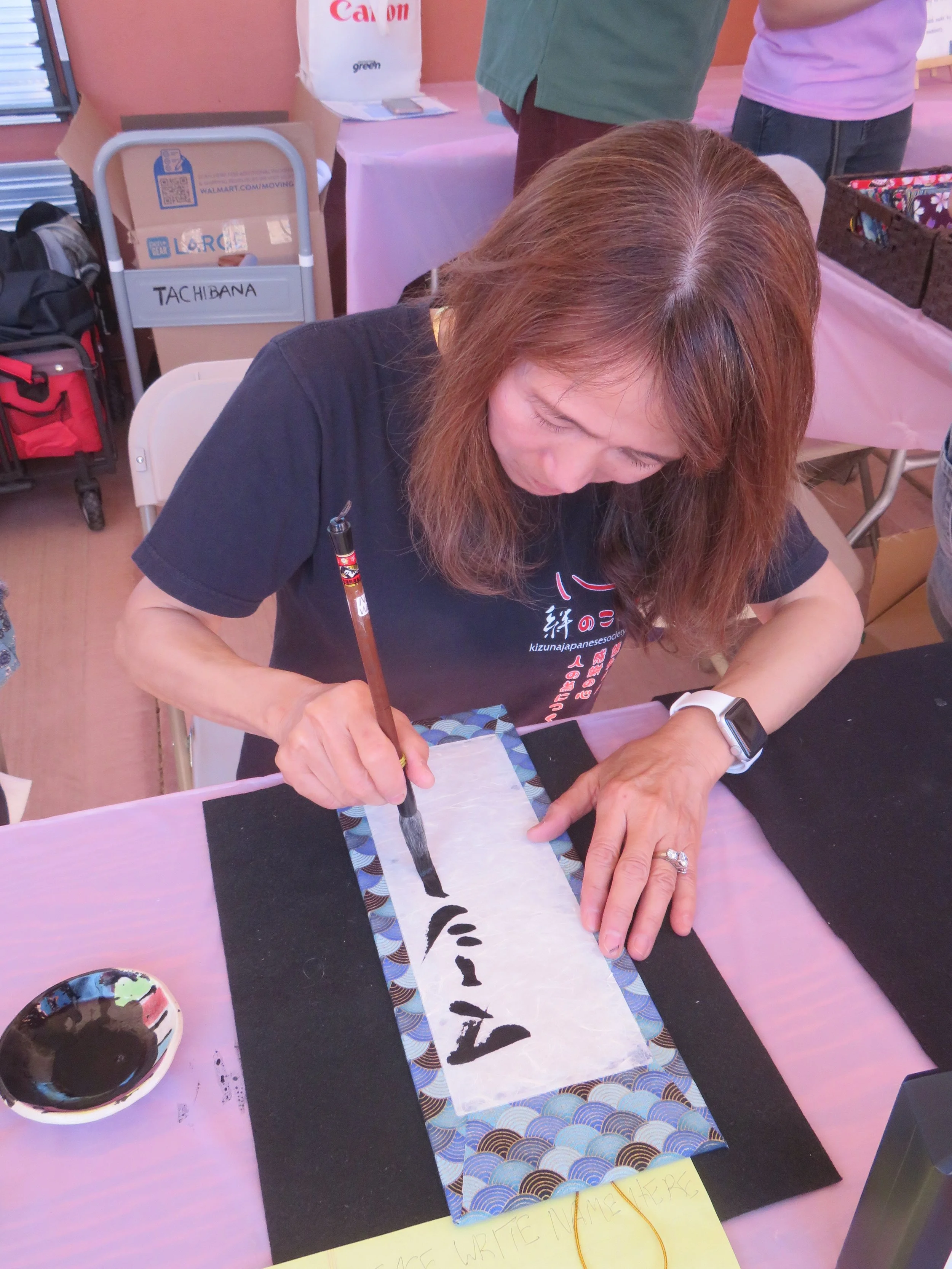
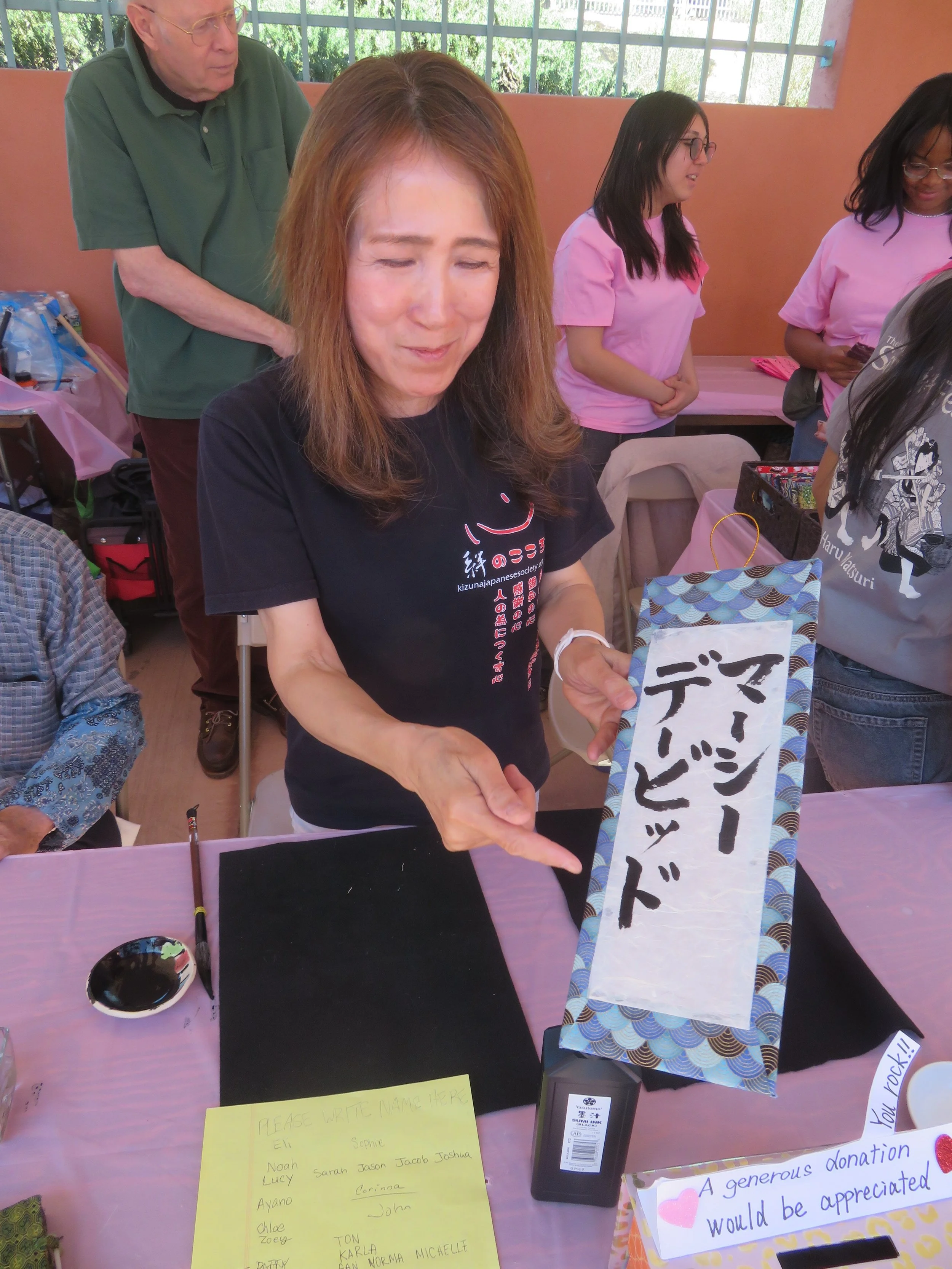
We stopped at the ‘Shodō’ booth to watch caligraphers write people’s names in traditional Japanese characters on rice paper. It looked so graceful and beautiful that we joined the queue to have our names inscribed on a silk-bordered rice paper hanging. We plan to hang it in our office.
Long lines of hungry folks stood in the queues for Japanese food on offer. It smelled wonderful, but waiting in line deterred us. Sake-tasting was advertised, but at 11 am, we figured we’d give it a pass.
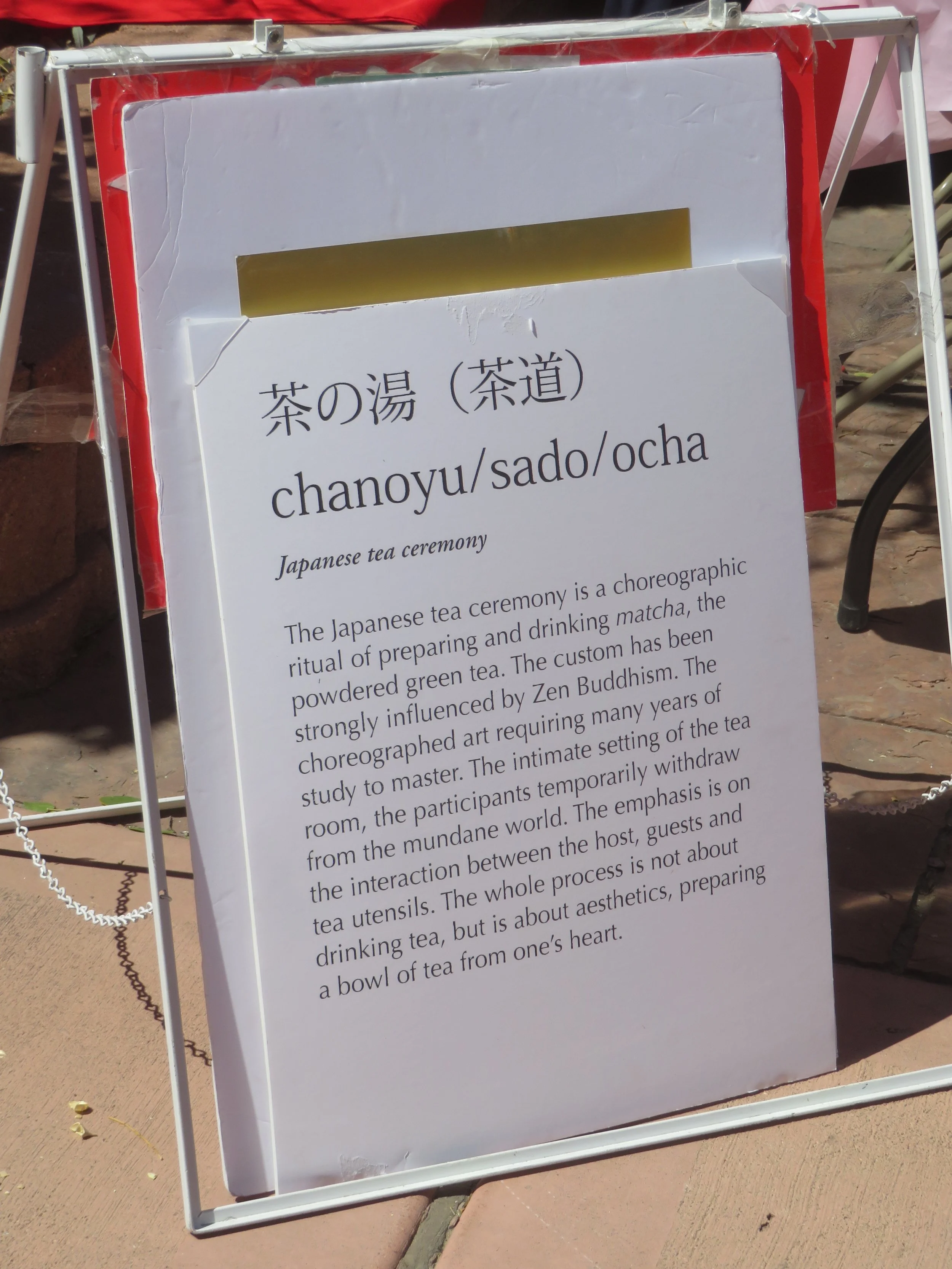
Participating in a Japanese tea ceremony was a cultural activity on offer. Known as ‘sadō/chadō’ (茶道, 'The Way of Tea') or’ chanoyu (茶の湯)’, 'Hot water for tea'), this very formal ceremony focuses on the preparation of matcha (green tea). It’s really not about just drinking tea. The preparation, presentation, and interaction with the tea drinkers is a venerated art and tradition. We didn’t have a chance to try it, but after attending this festival, a visit to Japan has made its way onto our bucket list.
Though Las Vegas is a large city, attending and participating in festivals such as Haru Matsuri reflects the small-town, community appreciation for all the different cultures and ethnicities represented in our city’s population. It’s enjoyable, educational, and many times eye-opening.
Do you enjoy cultural festivals in your town?