
Lost in Translation in Galicia
/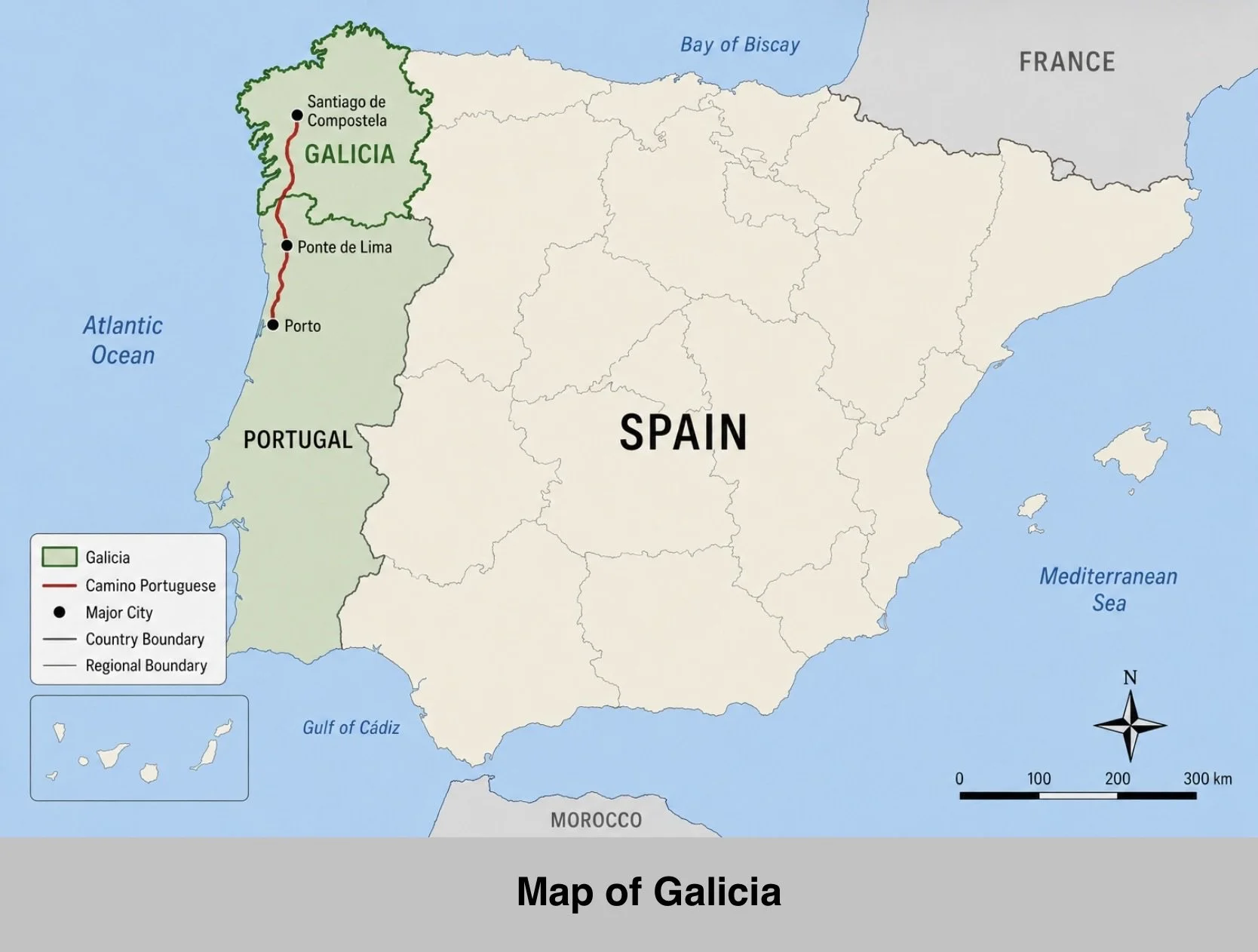
Galicia surprised us before we even had the chance to appreciate its rugged coastline, green hills, and Celtic mystique. As we crossed the border from Portugal into Spain, I expected at least one thing to become easier: understanding the language.
Marcie is the linguist of the family and somehow manages to communicate almost anywhere we travel. I, on the other hand, have spent years enthusiastically butchering foreign languages across multiple continents. Even after nearly five years of living in South America, my Spanish remained questionable at best. Still, it was—and remains—far better than my extremely limited Portuguese.
So when we crossed into Spain, I was looking forward to hearing familiar Spanish words again and finally understanding at least a smidgeon of what people around us were saying. Except…the language didn’t seem to change.
Menus, road signs, conversations drifting from café tables—all of it still sounded suspiciously Portuguese. For a brief moment I wondered if we had somehow failed to cross the border at all.
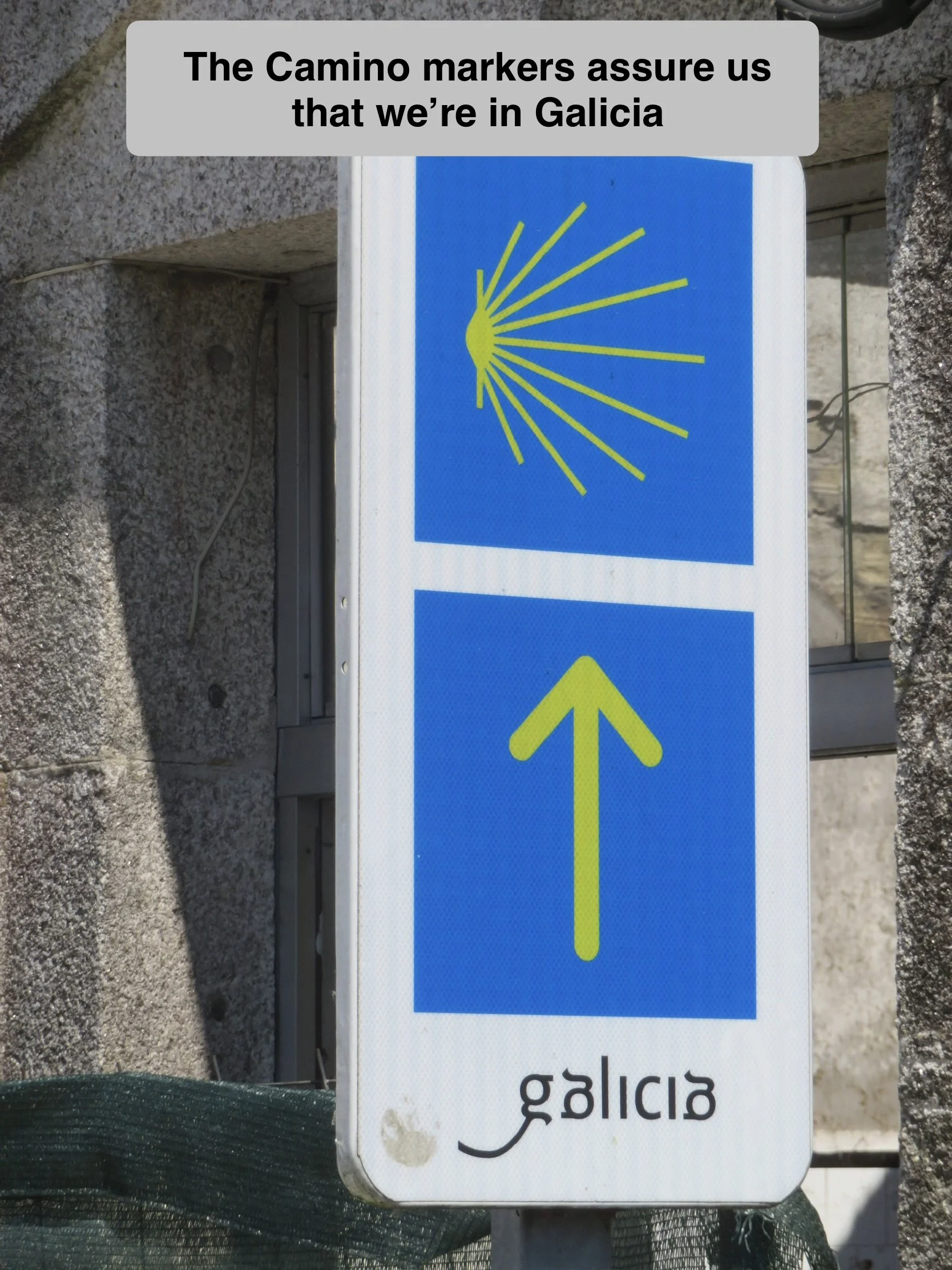
It turns out the region we had entered, Galicia, has its own official language: Galician. And Galician is remarkably close to Portuguese, sharing centuries of intertwined history and culture. In fact, linguists trace both languages back to the same medieval root language, Galician-Portuguese, which was once spoken throughout the northwest corner of the Iberian Peninsula.
Suddenly my confidence in “finally understanding Spanish again” evaporated.
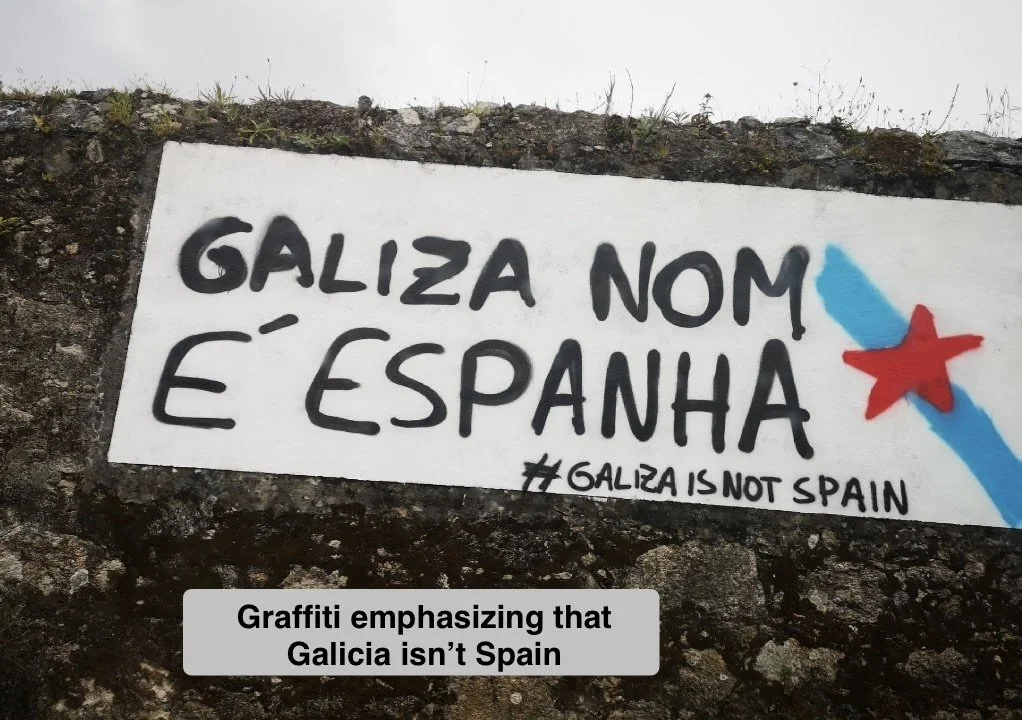
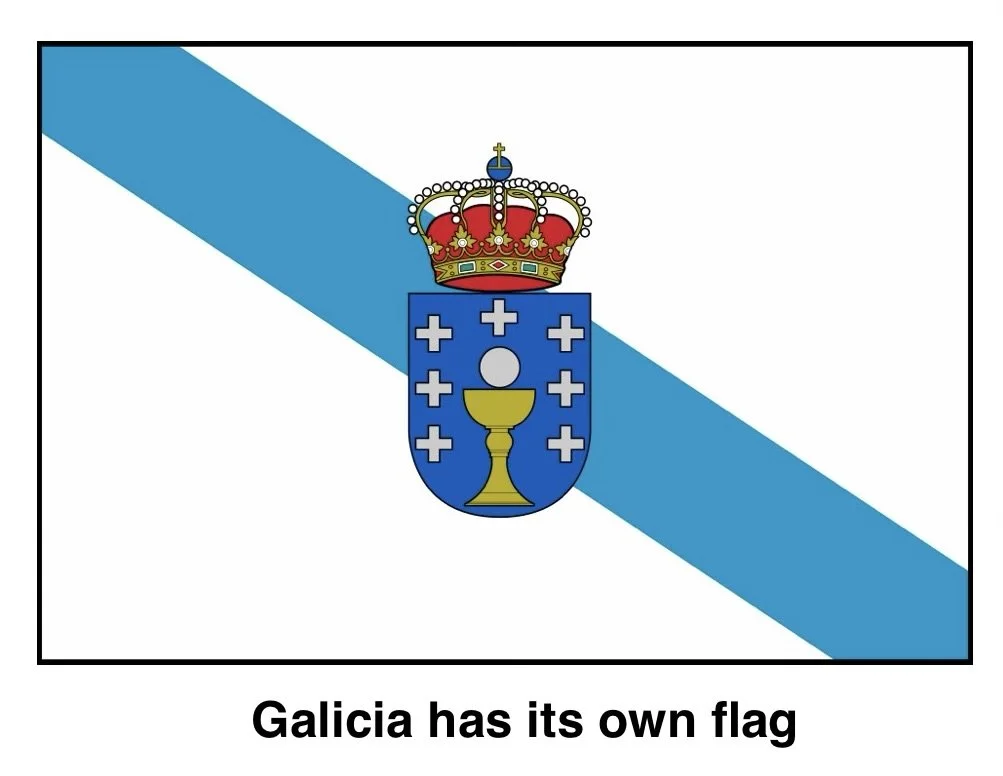
But Galicia is fascinating for far more than just its language. Officially known as the Autonomous Community of Galicia, it is one of Spain’s historic nationalities, with its own parliament, government, and strong regional identity. Like other autonomous communities in Spain, Galicia has a significant degree of self-government, overseeing areas such as education, healthcare, and cultural affairs while still remaining part of the Spanish state.
Galicia’s distinct identity runs far deeper than modern politics. Perched in Spain’s northwest corner along the Atlantic coast, the region has long looked outward toward the sea and northward toward the Celtic cultures of Europe. The landscape feels dramatically different from the sunbaked images many travelers associate with Spain. Here, misty hills roll down to rocky coastlines, fishing villages cluster around quiet harbors, and rain is less an occasional inconvenience and more a defining trait.
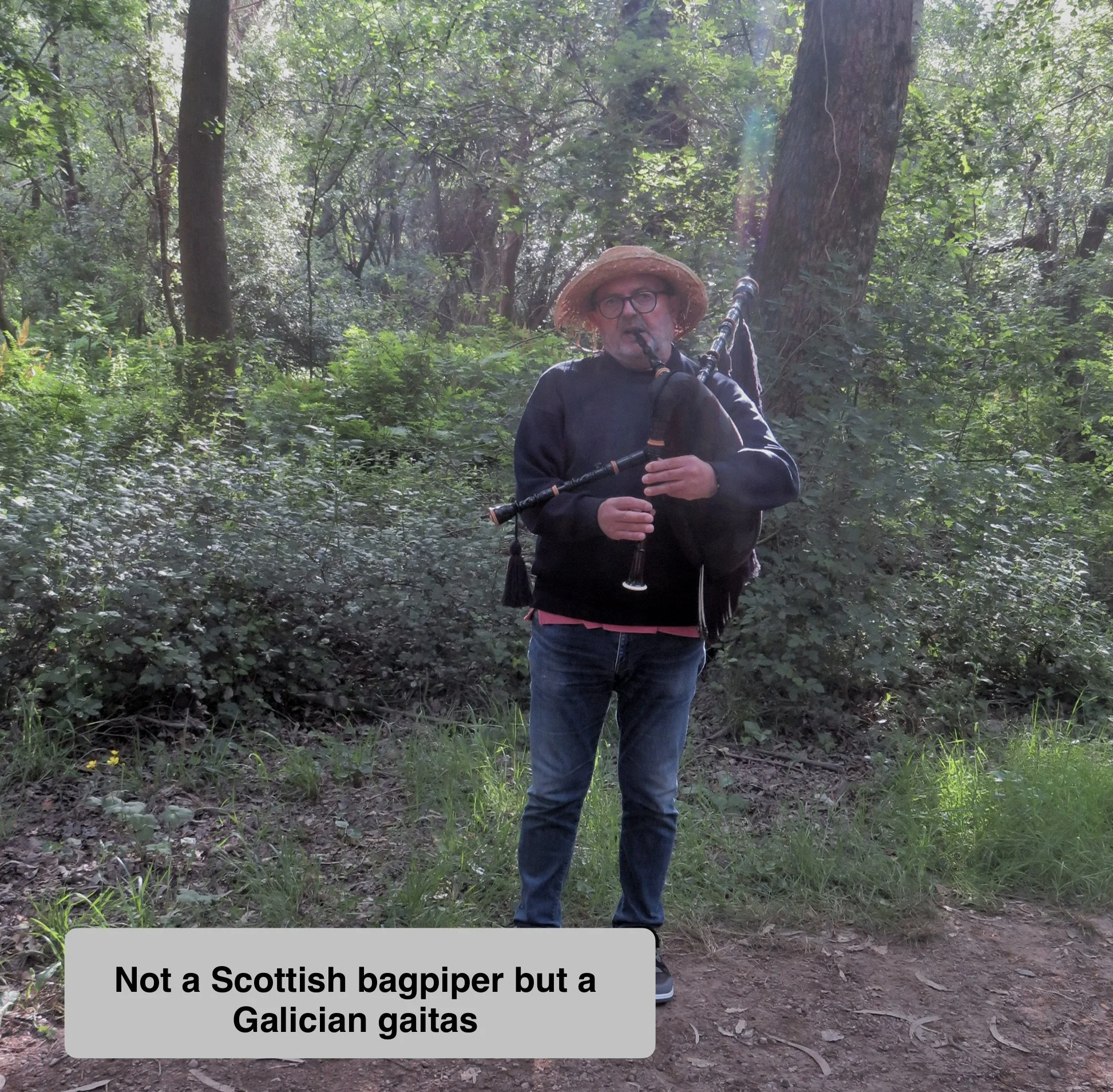
Long before Spain existed, Celtic tribes settled throughout this corner of Iberia, leaving behind a culture that still quietly shapes Galicia today. Beginning around the first millennium BCE, these communities built fortified hilltop villages known as castros, many of which still overlook the countryside. Their influence survives not only in archaeology but also in the region’s music, mythology, and sense of identity. The bagpiper we heard as we walked the Camino a few days back was actually a traditional Galician bagpiper, or gaitiero, and not a lost Scottish bagpiper like we originally thought.
Then came the Romans. By the first century BCE, Roman legions had conquered the region as part of their expansion across Hispania. They named it Gallaecia, a name that eventually evolved into modern Galicia. The Romans brought roads, bridges, mining operations, and urban infrastructure, layering their empire atop the older Celtic foundations already rooted there. Yet unlike in some parts of Iberia, Roman culture never fully erased what came before. Instead, Galicia became a blend of civilizations: Celtic traditions underneath Roman engineering, later mixed with Visigothic influences, Christianity, and eventually the Spanish state itself. That layered history still gives Galicia a personality distinctly its own.
Its closeness to Portugal is impossible to ignore. The border itself feels almost arbitrary at times, with architecture, food, and language flowing naturally across it. Even today, Galician and Portuguese speakers can often understand each other surprisingly well.
That regional identity faced tremendous pressure during the dictatorship of Francisco Franco. During the Franco years, regional languages and cultures throughout Spain were heavily suppressed in favor of a centralized Spanish national identity. Public use of Galician declined, particularly in formal settings like schools and government institutions where Castilian Spanish was enforced.
Yet Galicia held onto its traditions. After Spain transitioned to democracy following Franco’s death in 1975, regional autonomy was restored, and Galician experienced a major revival. Today, both Galician and Spanish are official languages in the region, and you’ll hear them used interchangeably in daily life.
So for now, I’ll continue stumbling through my terrible Portuguese, smiling politely, and hoping the context of the conversation fills in the gaps. Fortunately, Marcie is close by as translator and cultural diplomat. With her help, there’s still a decent chance I’ll manage to order coffee and a croissant without accidentally ending up with a plate of roasted gizzards instead.