
Camino Stats and Retrospectives
/
After finishing a long trek, one of the first things we do is sit down and compile the statistics from our walk and reflect a bit on the trip.
The Numbers
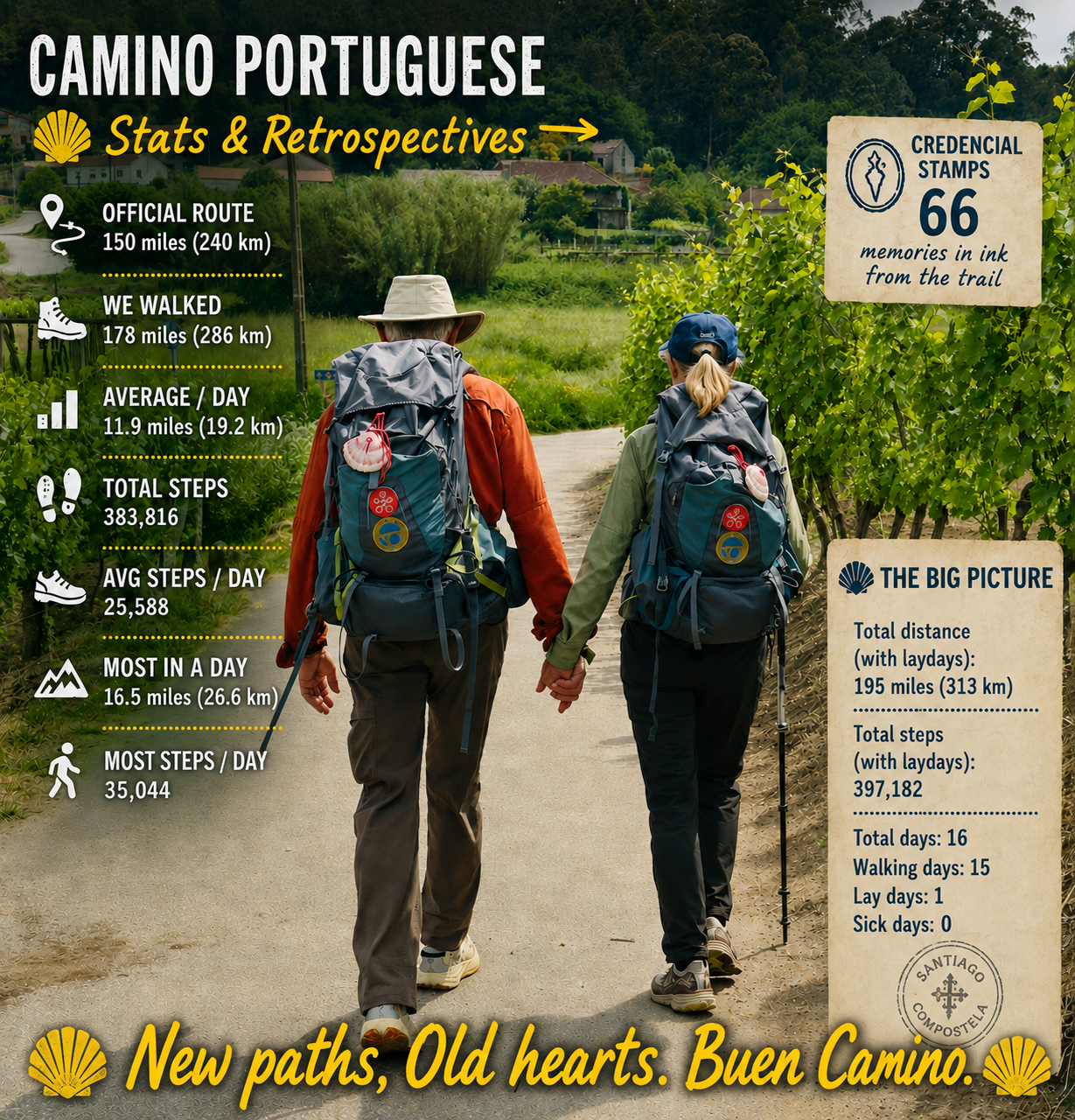
The official length of the Camino Portuguese from Porto to Santiago de Compostela is approximately 150 miles (240 km). As usual, however, we managed to find a few extra miles along the way. Between exploring towns, locating lodging, wandering off to see interesting sights, and occasionally taking the scenic route by accident, our total came to 178 miles (286 km).
Camino Portuguese Statistics
Official route distance: 150 miles (240 km)
Distance we walked on the Camino: 178 miles (286 km)
Average distance per walking day: 11.9 miles (19.2 km)
Total steps: 383,816
Average steps per day: 25,588
Longest day: 16.5 miles (26.6 km)
Most steps in a day: 35,044
Including our day off and all our additional wandering:
Total distance walked: 195 miles (313 km)
Total steps: 397,182
Trip totals:
Total days: 16
Walking days: 15
Lay days: 1
Sick days: 0
Meds and Maladies
No long-distance walk would be complete without a discussion of aches, pains, and the contents of the medicine kit.
Marcie started the trek with a troublesome knee, and I began with a less-than-perfect hip. Both performed adequately enough to get us to Santiago, but both will probably receive some professional attention before our next major trek.
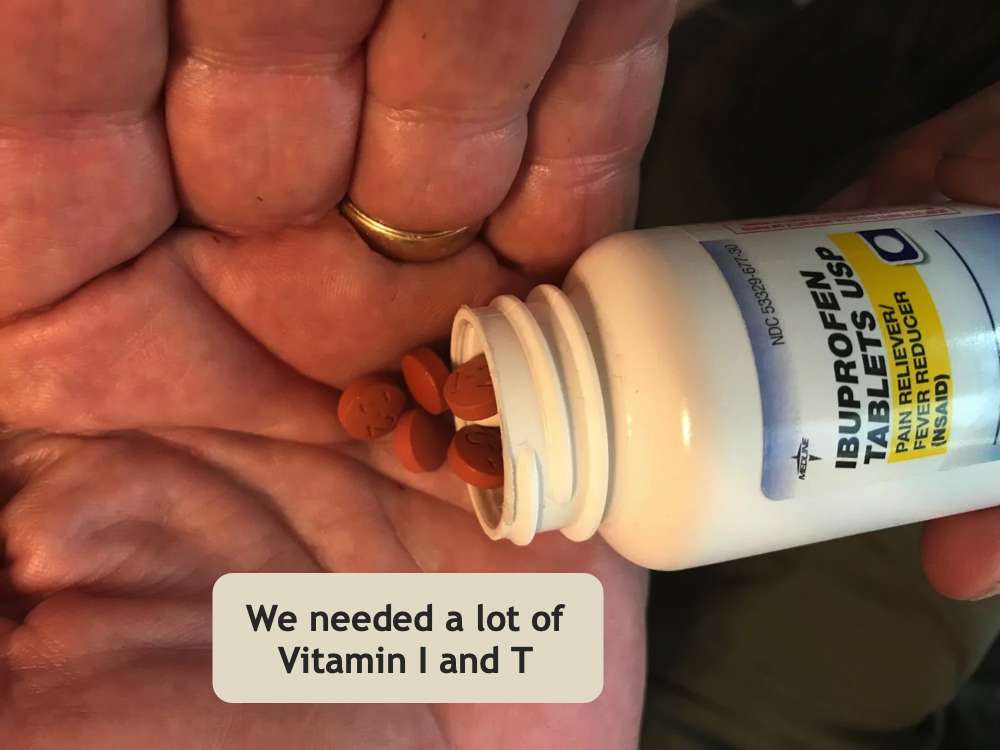
To keep ourselves moving, Marcie consumed approximately 3,136 tablets of Ibuprofen, while I swallowed roughly 2,186 tablets of Tylenol. Okay - maybe I exaggerate a bit, but we certainly took quite a few. Vitamin I, Vitamin T, Ranger Candy, magic beans—call them what you will, those little tabs earned their places in our packs.
Between the two of us, only I developed a blister, and it was a tiny one on a single toe. We credit much of that success to our beloved Injinji toe socks, which continue to prove their worth on every long-distance walk we undertake.
Aside from the usual sore muscles, old joints, and tired feet, we escaped remarkably unscathed. Neither of us fell nor was injured, other than the occasional stubbed toe. We both picked up mild colds somewhere along the way, most likely courtesy of long airline flights and crowded airports. Fortunately, neither illness slowed us down enough to require a day off, and we were able to keep walking every scheduled stage.
Collecting Credencial Stamps
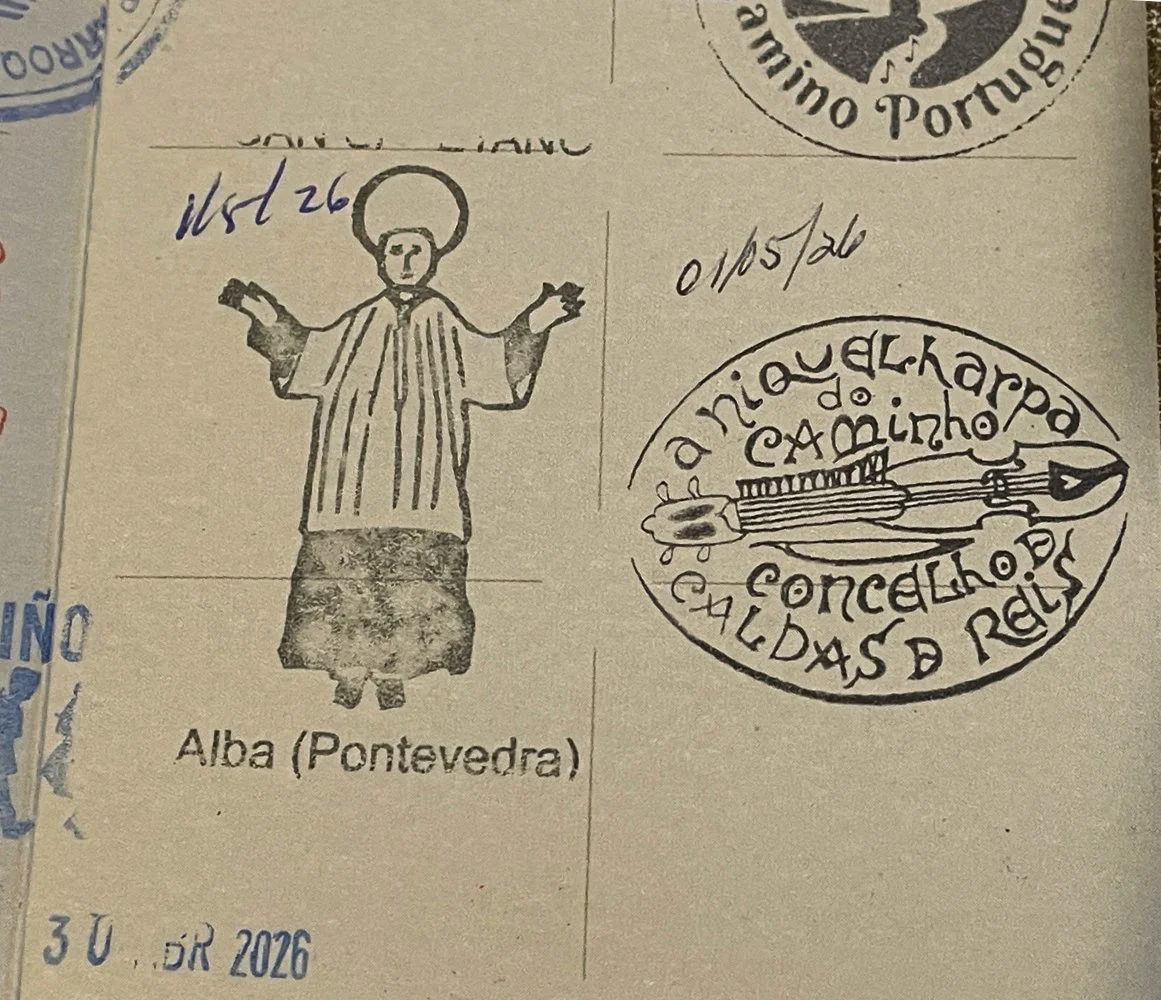
One of the enjoyable traditions of the Camino is collecting stamps in your Pilgrim Credencial. Each stamp serves as both proof of your journey and a souvenir from the places you've visited.
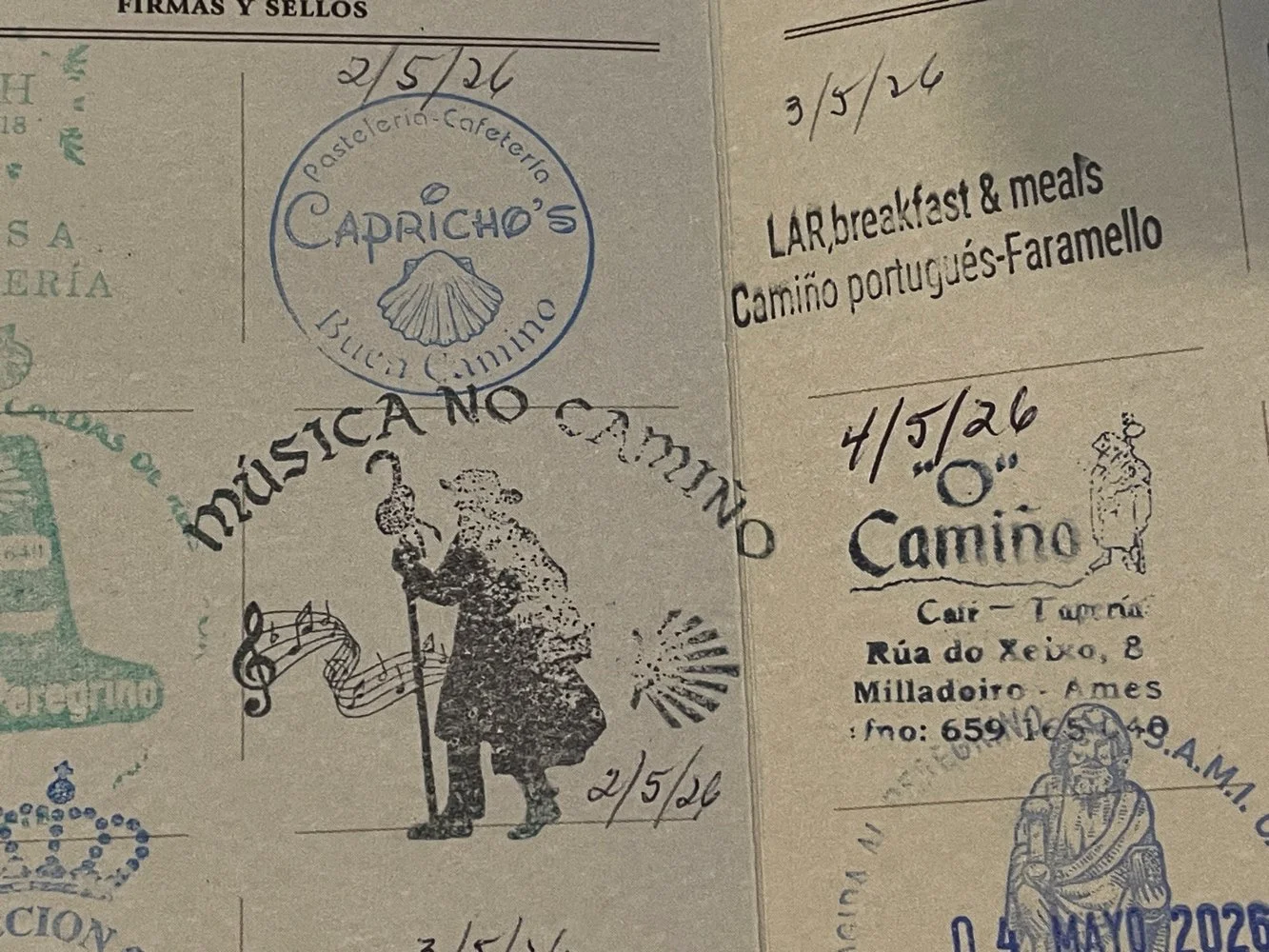
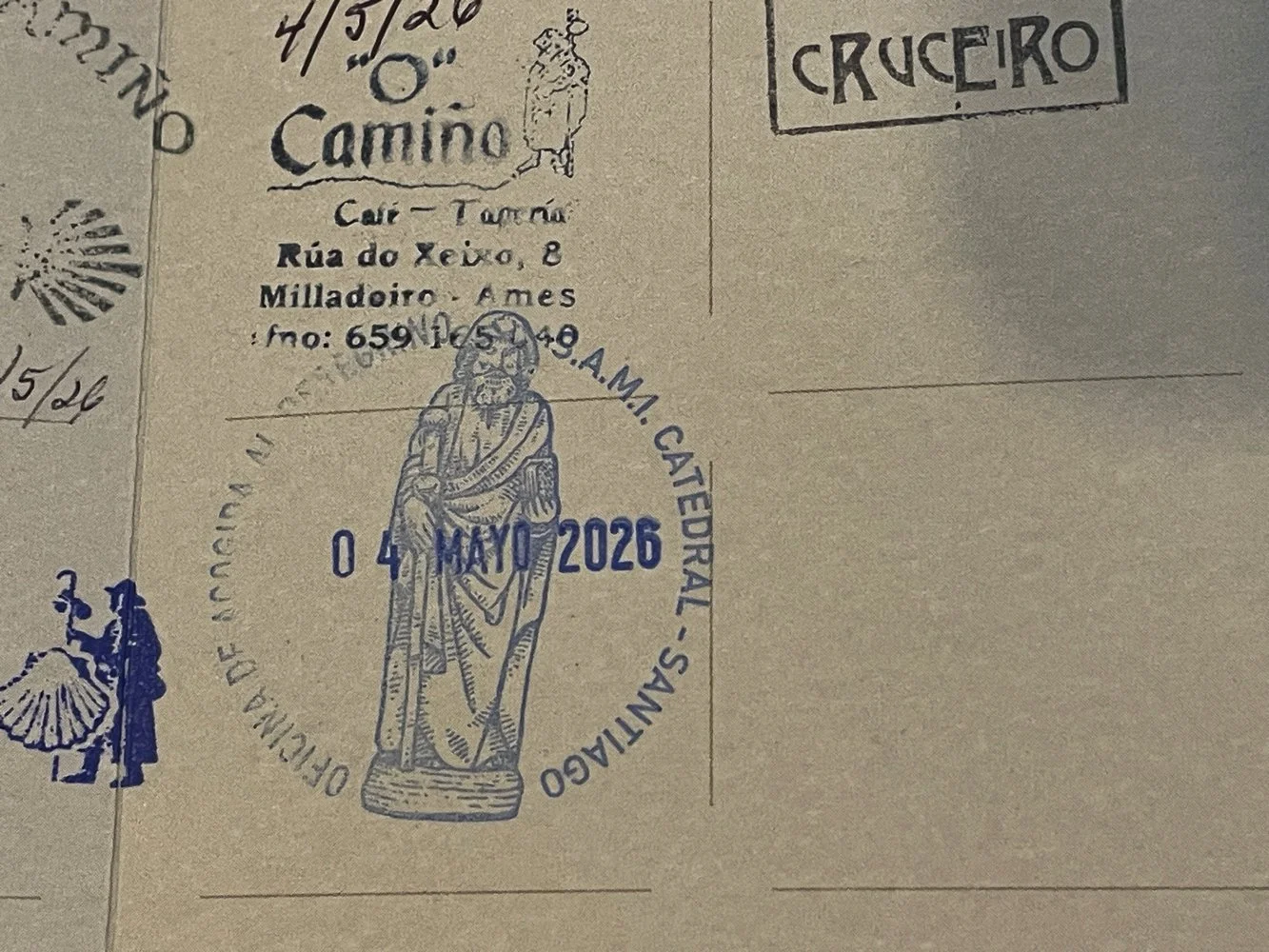
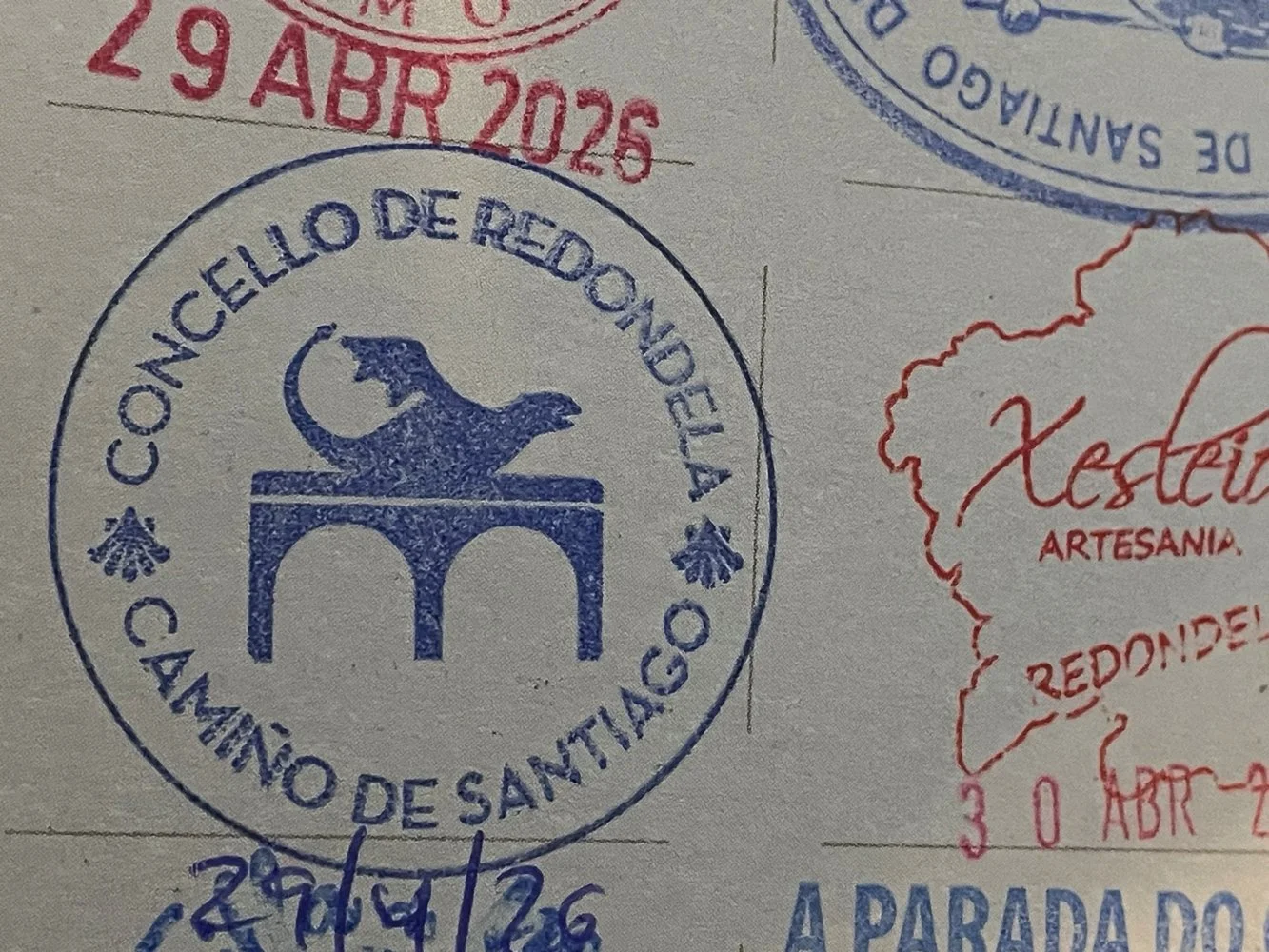
Over the course of our Camino, we each accumulated an impressive 66 stamps. Some came from churches and cathedrals, others from hostels, hotels, cafés, restaurants, tourist offices, and the occasional unexpected location, like our bagpiper who serenaded us as we trekked along a forest path. Many featured unique artwork or symbols associated with the town where they were obtained.
By the end of the walk, our credencials had become miniature travel journals. Some of our favorite stamps are shown below.
What We'd Do Differently
No trek is ever perfect, and every journey teaches us something for the next one.
Pack Lighter
We've said this after every long-distance walk we've ever completed, and yet somehow we always manage to bring more than we truly need.
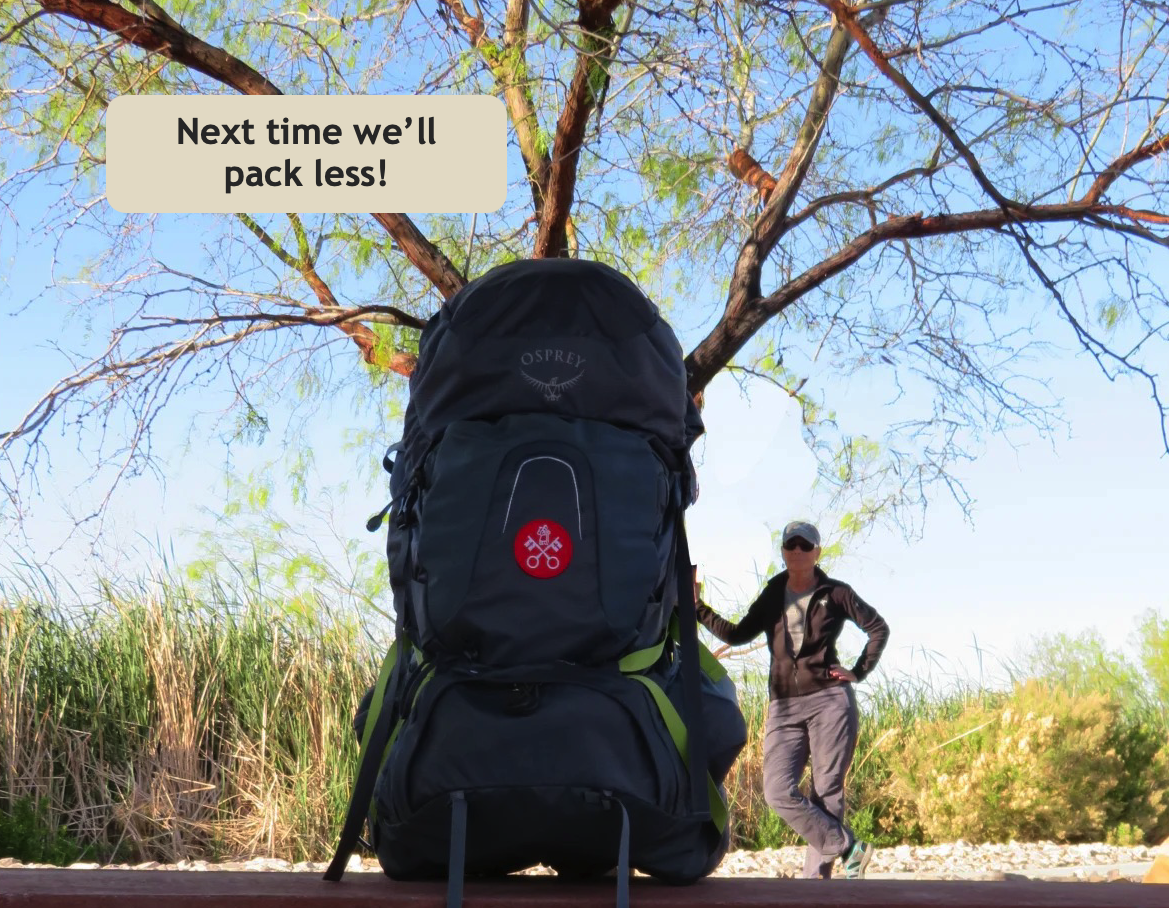
On the Thames Path, we packed too many heavy clothes. On the Via Francigena, we had the challenge of packing for everything from Alpine snow to Mediterranean sunshine. This time we improved considerably, but because we planned to spend an additional three weeks exploring Portugal and Galicia after the Camino, we still carried more clothing than was necessary for the walk itself.
Next time, we'll leave the extra travel clothing in storage and carry only what we need for the trek.
Skip the Sherpa Service
Because of all that extra clothing, we used a luggage forwarding service, often referred to by pilgrims as a "Sherpa Service." Each morning, our bags were collected and delivered to our next lodging, while what we carried was only our backpacks filled with the essentials for the day.
For the most part, the system worked well. However, it also created some constraints. Bags needed to be packed and ready for pickup by 8:00 AM, and there were occasional complications when certain accommodations couldn't accommodate the service.
In hindsight, if we had stored our extra clothing in Porto and carried only our Camino gear, we likely could have managed perfectly well without the luggage transfers. We would have enjoyed greater flexibility and one less logistical detail to think about each day.
Avoid Pre-Booking
Before leaving home, we heard countless warnings about crowded pilgrim routes and limited lodging. To be safe, we reserved every single night's accommodation months in advance… which is so unlike us!
The good news is that we always had a bed waiting for us.
The downside was that our schedule became fixed. If we wanted to stay longer in an interesting town, avoid walking in terrible weather, or simply take a spontaneous rest day, our reservations made that difficult.
What we discovered was that many fellow pilgrims were successfully booking accommodations only a day or two in advance, which is exactly what we did on the Via Francigena, and it worked out well. If we were doing it again, we'd probably reserve only the first few nights and then make decisions as we went.
There would be some risk involved, but we're convinced we could always have found somewhere warm and dry to sleep… maybe not our first choice, but never relegated to a park bench.
Take More Lay Days
Several towns along the route deserved more than a single overnight stay.
Barcelos immediately comes to mind. There were others as well where we wished we had more time to wander the streets, visit museums, linger over meals, or simply relax.
Our original plan was to revisit some of those places after reaching Santiago, but as often happens during travel, other opportunities arose, and those return visits never materialized.
Next time, we'll build additional rest days directly into the itinerary.
Prepare Better Before Departure
One unexpected discovery while writing these blog posts has been the number of interesting sites and stories we completely missed.
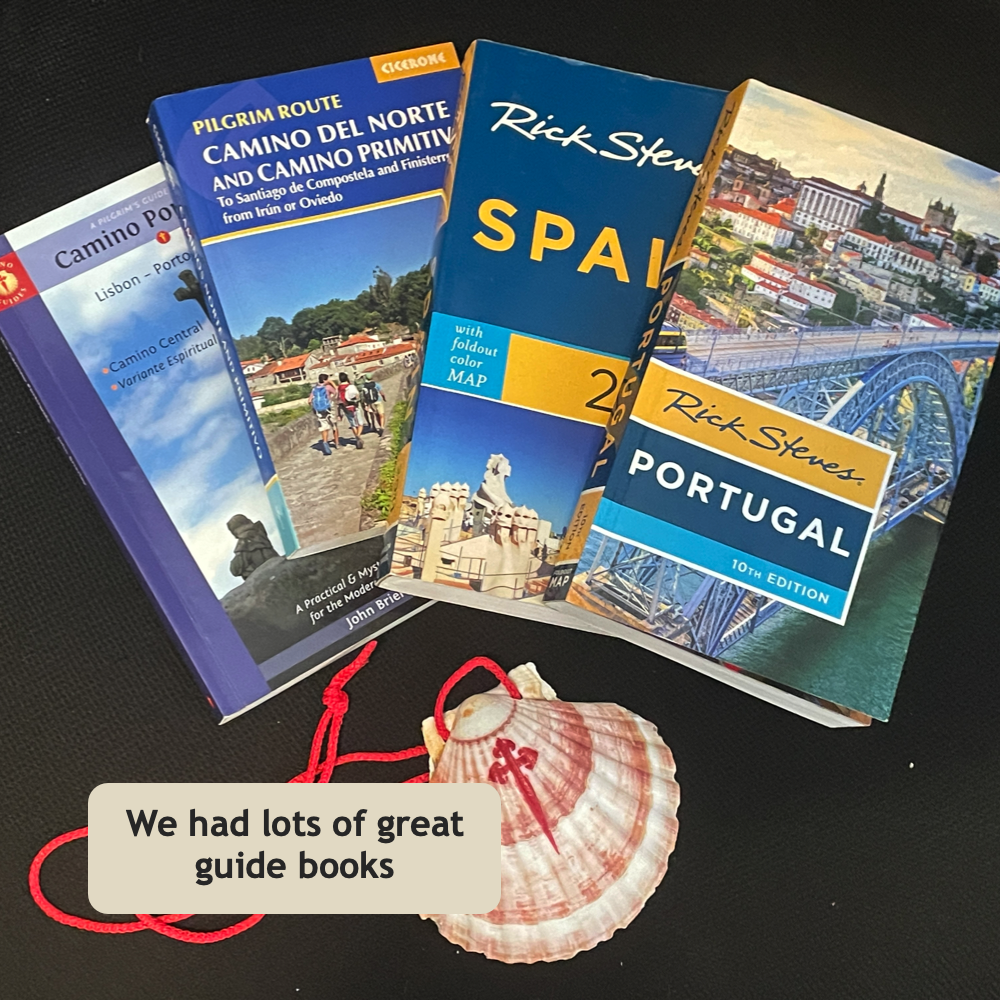
We owned several excellent guidebooks, but we postponed reading them until closer to departure. Then the final weeks before the trip disappeared into travel preparations, errands, and last-minute tasks. Eventually we decided not to bring the books because we didn't want the extra weight.
In retrospect, a little more advance planning would have helped us identify attractions, historical sites, restaurants, and detours we would have enjoyed along the way.
For our next Camino, we'll do more homework before we ever lace up our boots.
Final Thoughts
Looking back, there are certainly things we would change. We'd pack lighter, schedule more flexibility, spend extra time in some towns, and do a bit more research beforehand.
But those are relatively minor adjustments.
In retrospect, the Camino Portuguese delivered all that we hoped it would: beautiful scenery, welcoming people, interesting history, excellent food, and plenty of exercise.
Now that we’re finished, we’re already discussing possible future routes. That's probably the strongest endorsement we can give. I have no doubt that it won't be long before we're studying maps and wondering where the next trail might lead.