
Two Days in Porto
/
We pondered whether or not to return to Porto. With just under two weeks left to explore Portugal, our list of possibilities was long. Whittling down the list was a nighttime discussion for several days. There was so much to see, but quite honestly, we were becoming a bit travel-weary. One can only absorb so much during a short period of time before everything blends and blurs. Rather than trying to see everything, we decided we’d confine our Portugal explorations to 3-4 places for 2-3 days each, allowing us to relax and enjoy rather than cramming in city after city. Returning to Porto seemed a good place to start.
The bus trip back to Porto was uneventful. It was early afternoon when we arrived at Terminal Intermodal Campanhã (TIC), the city’s main bus station. We ordered a Bolt (less expensive than Uber) and headed into the city. We had found a brand new boutique hotel on Booking.com (we were its second guests!) and booked in for three nights. We felt like celebrities… all the staff knew us, called us by name, and treated us like royalty. After checking in, enjoying a complimentary glass of tawny port, we headed to our room and kicked back for a few hours. No sense rushing things! There were several restaurants in the vicinity as well as a Pingo Doce supermarket. We picked up bread, cheese, and strawberries at Pingo and had a picnic dinner in the room.
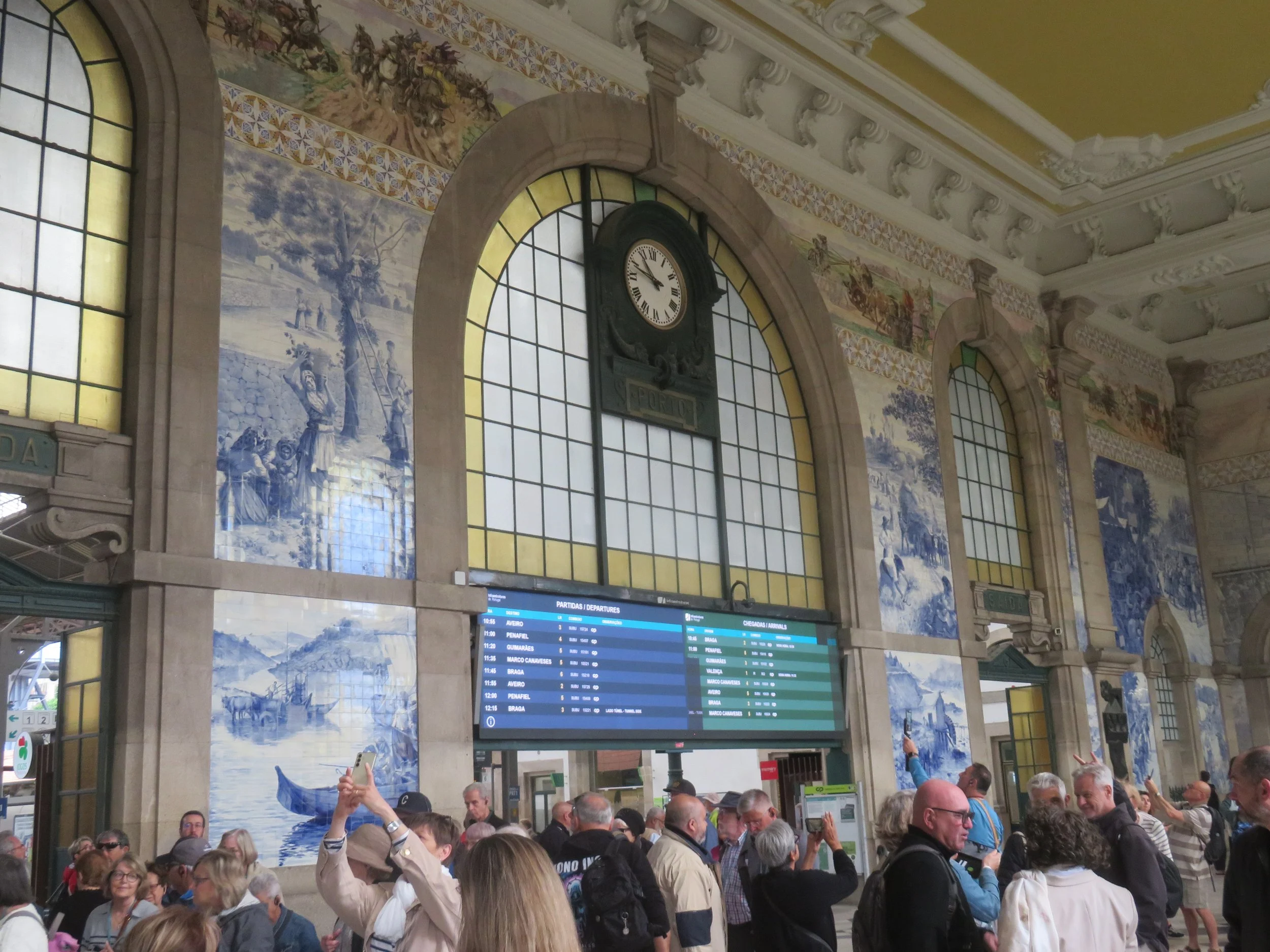
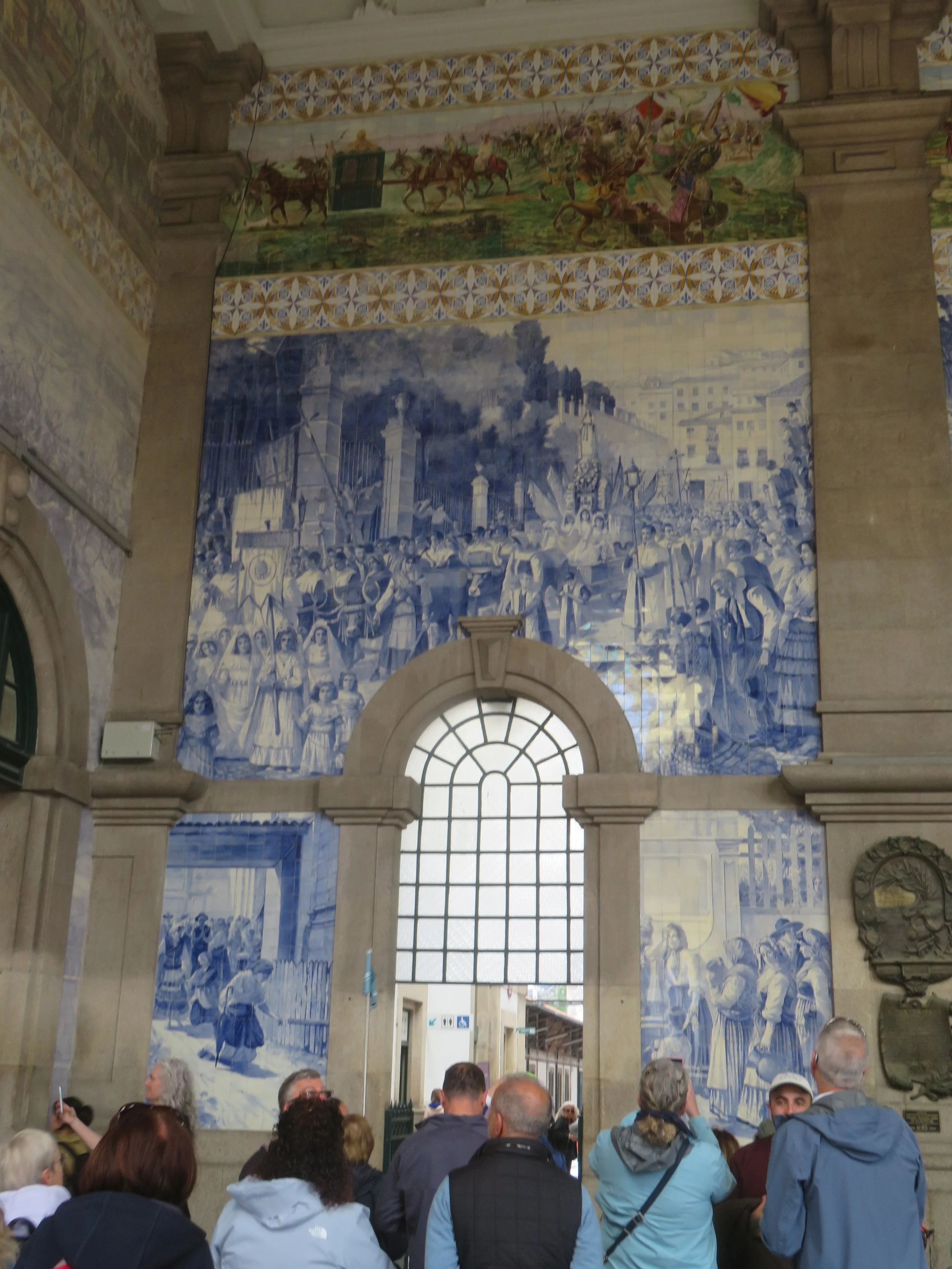
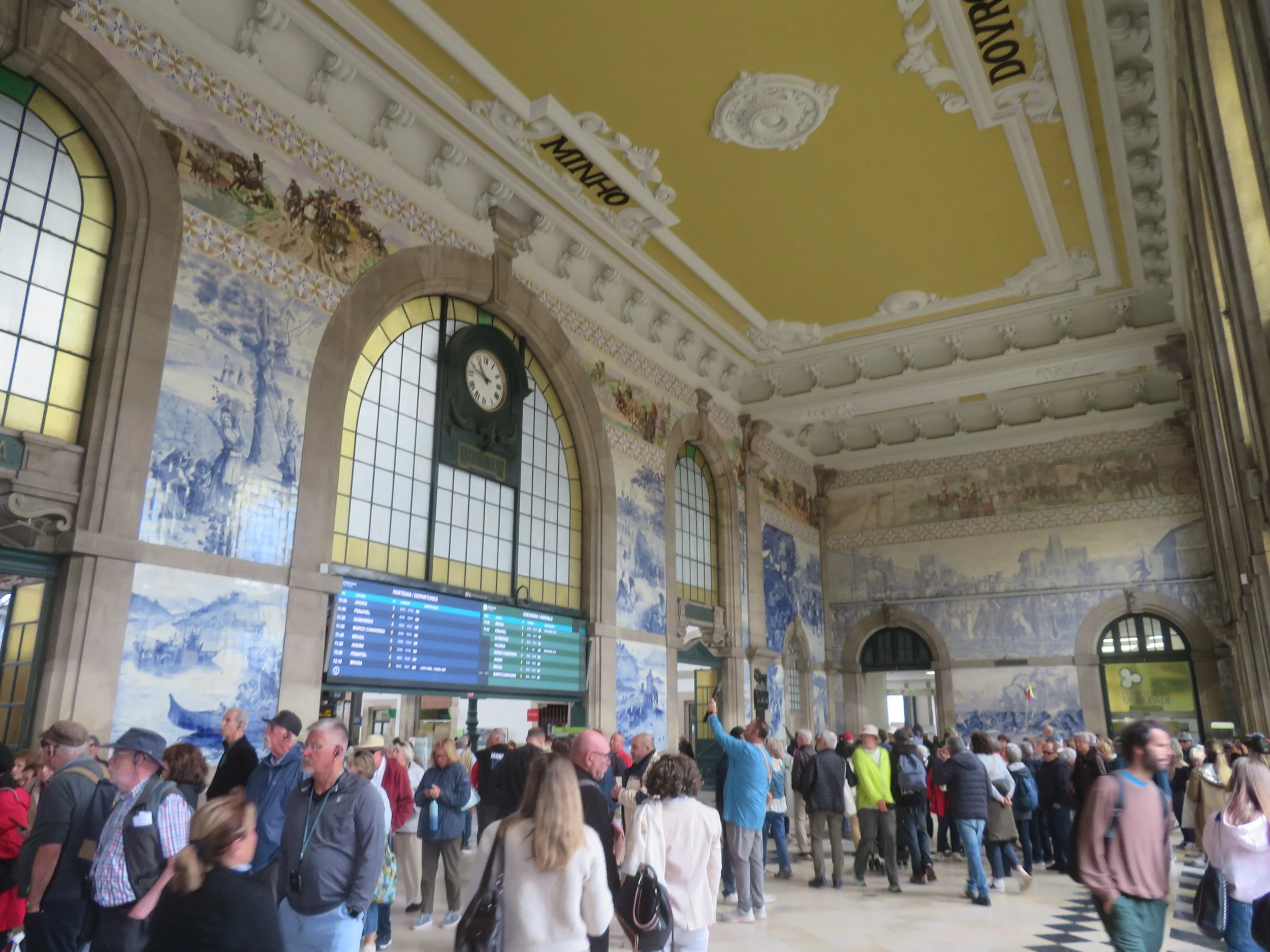
We were close enough to the city center to walk everywhere we wanted to go. We began with a quick visit to Sao Bento, Porto’s iconic early 20th-century railroad station. A Portuguese National Monument and UNESCO World Heritage site, Sao Bento is best known for its tile art. The 20,000 azulejo tile panels, painted by artist Jorge Colaço between 1905 and 1916, depict key moments in Portuguese history and rural life. It’s a working train station, so checking out the tiles is free and pretty impressive.
Directly across the Douro River from Porto is the city of Vila Nova de Gaia… just Gaia to the locals. Built between 1881 and 1886 and designed by Théophile Seyrig, a former partner of Gustave Eiffel, the Ponte Luiz 1 (Luiz 1 Bridge) is a double-decker, metal arch bridge that connects the historic center of Porto with Gaia.
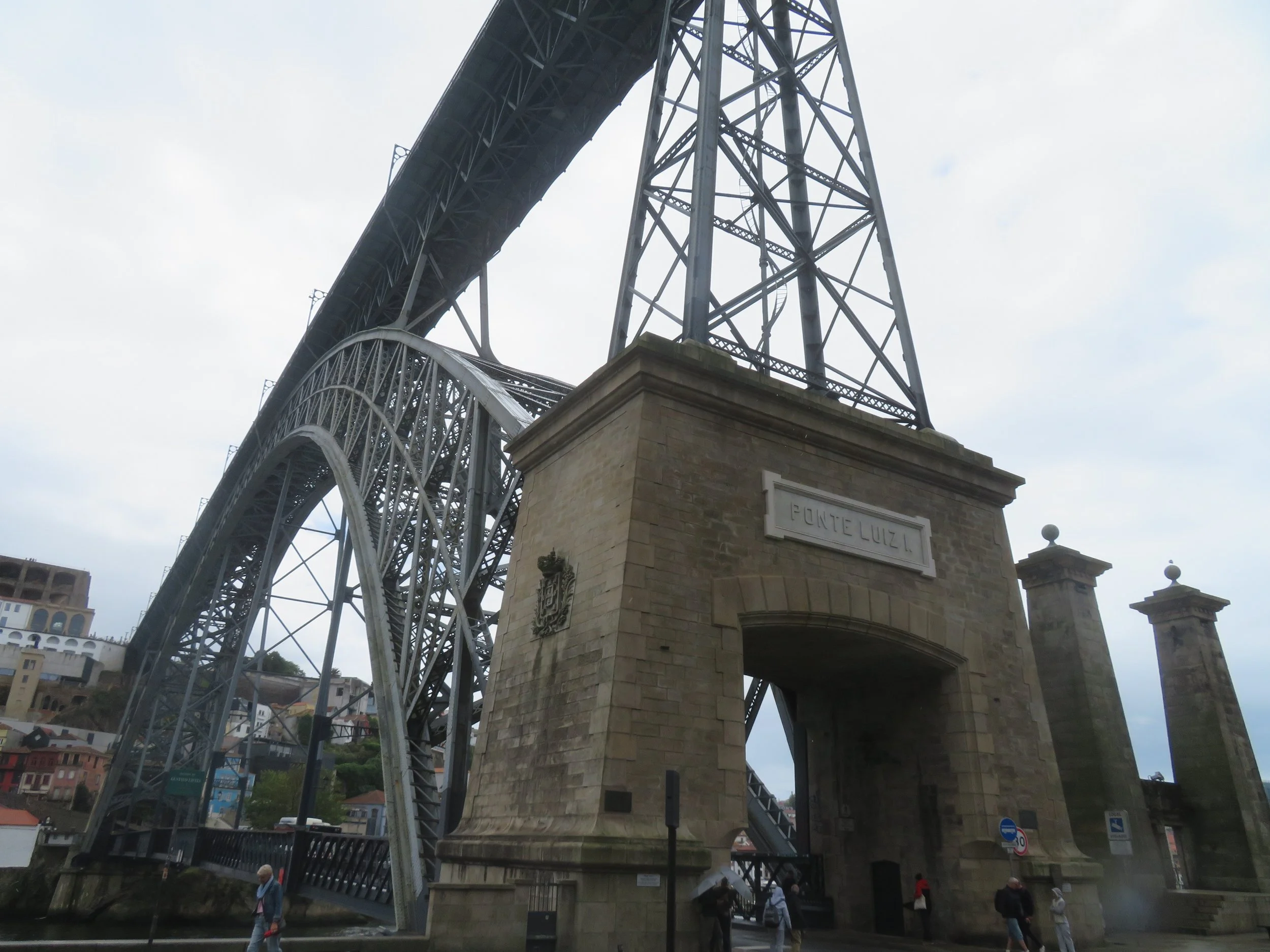
Ponte Luiz IV, a double-decker metal arch bridge across the Douro River
Pedestrians and the Metro use the top level, and regular vehicular traffic, bicyclists, and pedestrians use the lower deck.
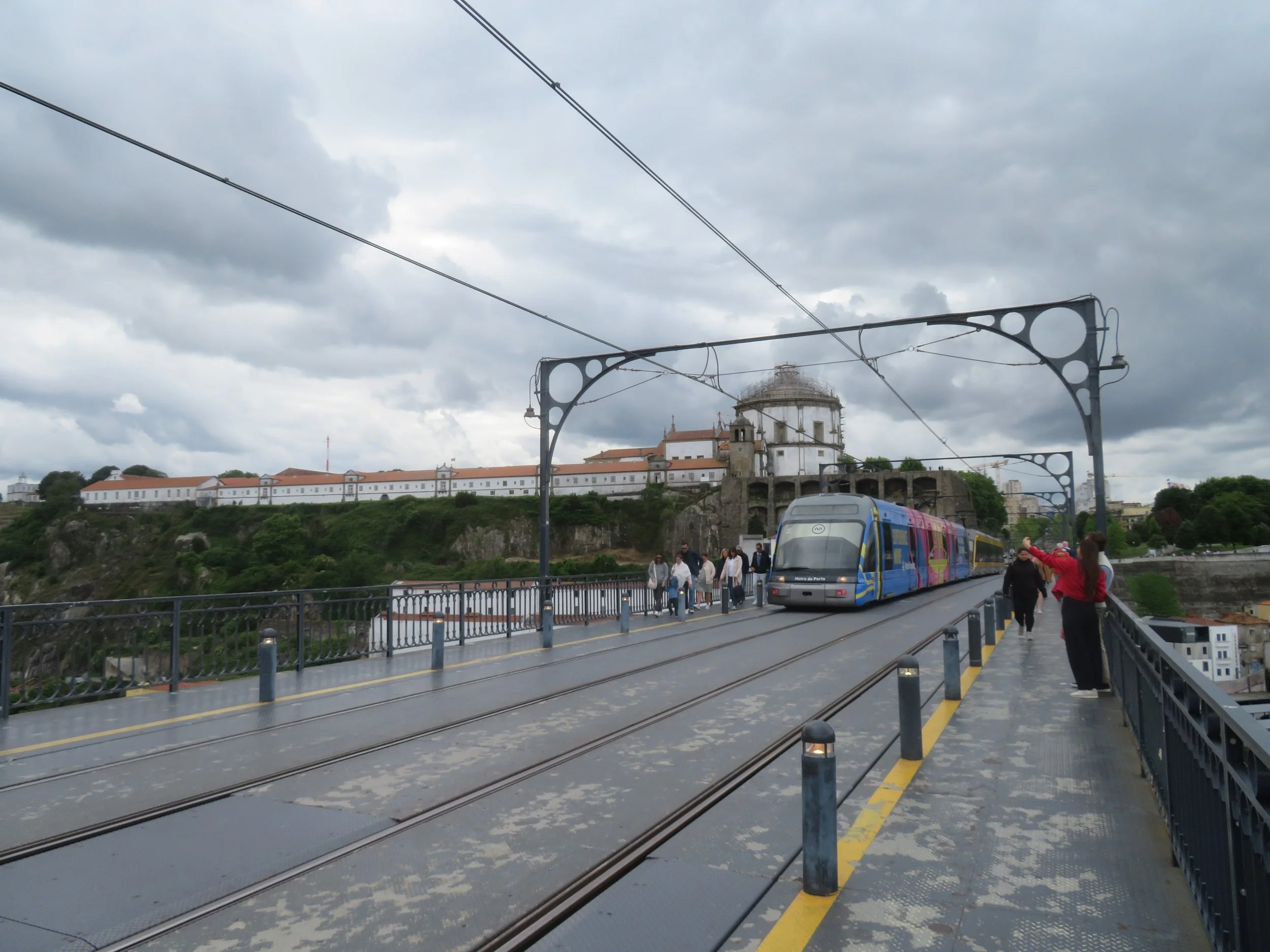
Pedestrians share the upper deck of the bridge with Metro trains.
We walked across the upper deck with great views of Gaia before us and, when we reached the Gaia side, Porto behind us.
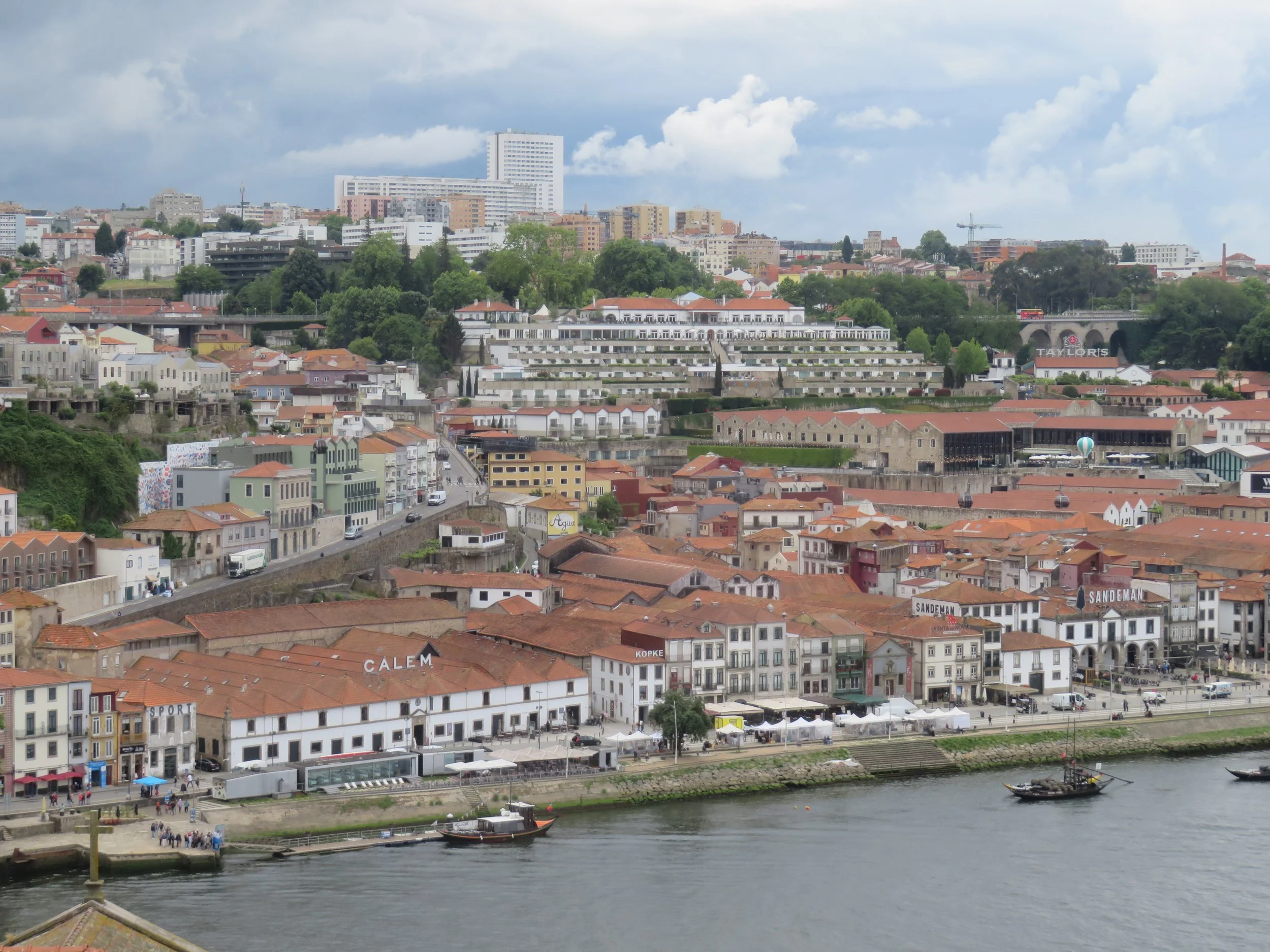
Gaia riverfront view from the Porto side of the Bridge
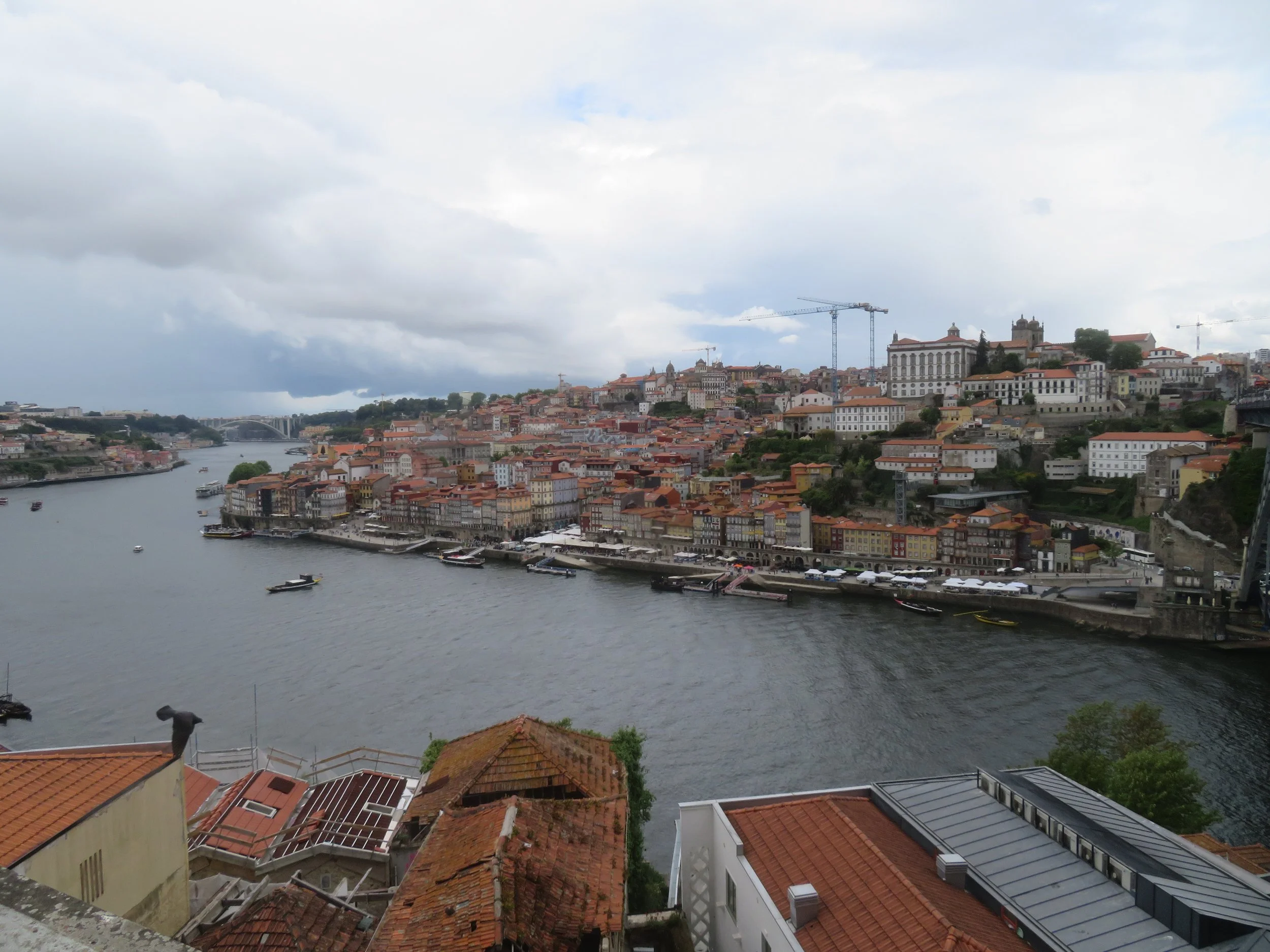
View of Porto from the Gaia side of the bridge
The 16th-century Monastery of Serra do Pilar, unique in its circular design, sits high on the hill overlooking the Douro River in Gaia. It’s no longer a monastery and is currently closed for renovation.
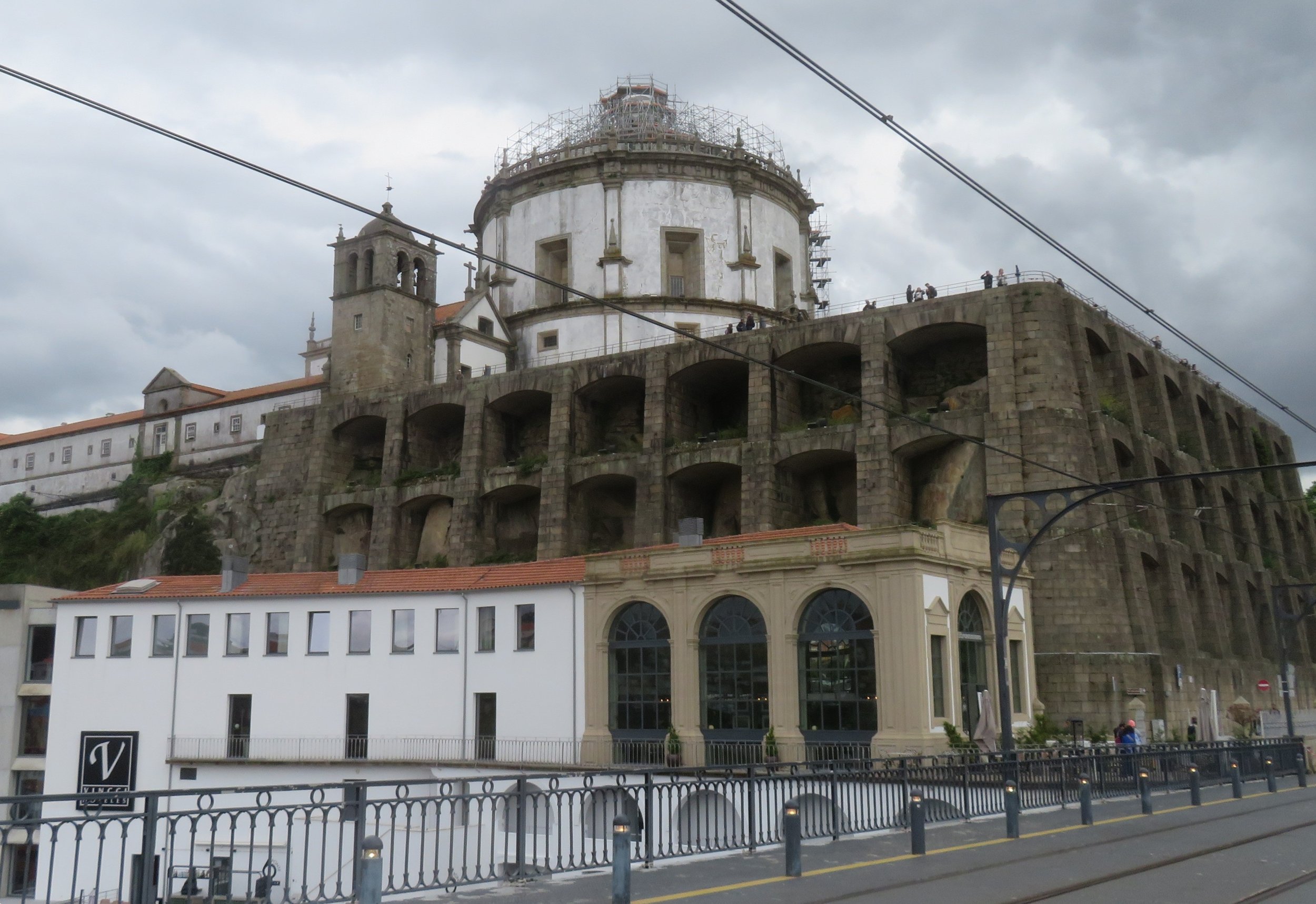
Monastery of Serra do Pilar
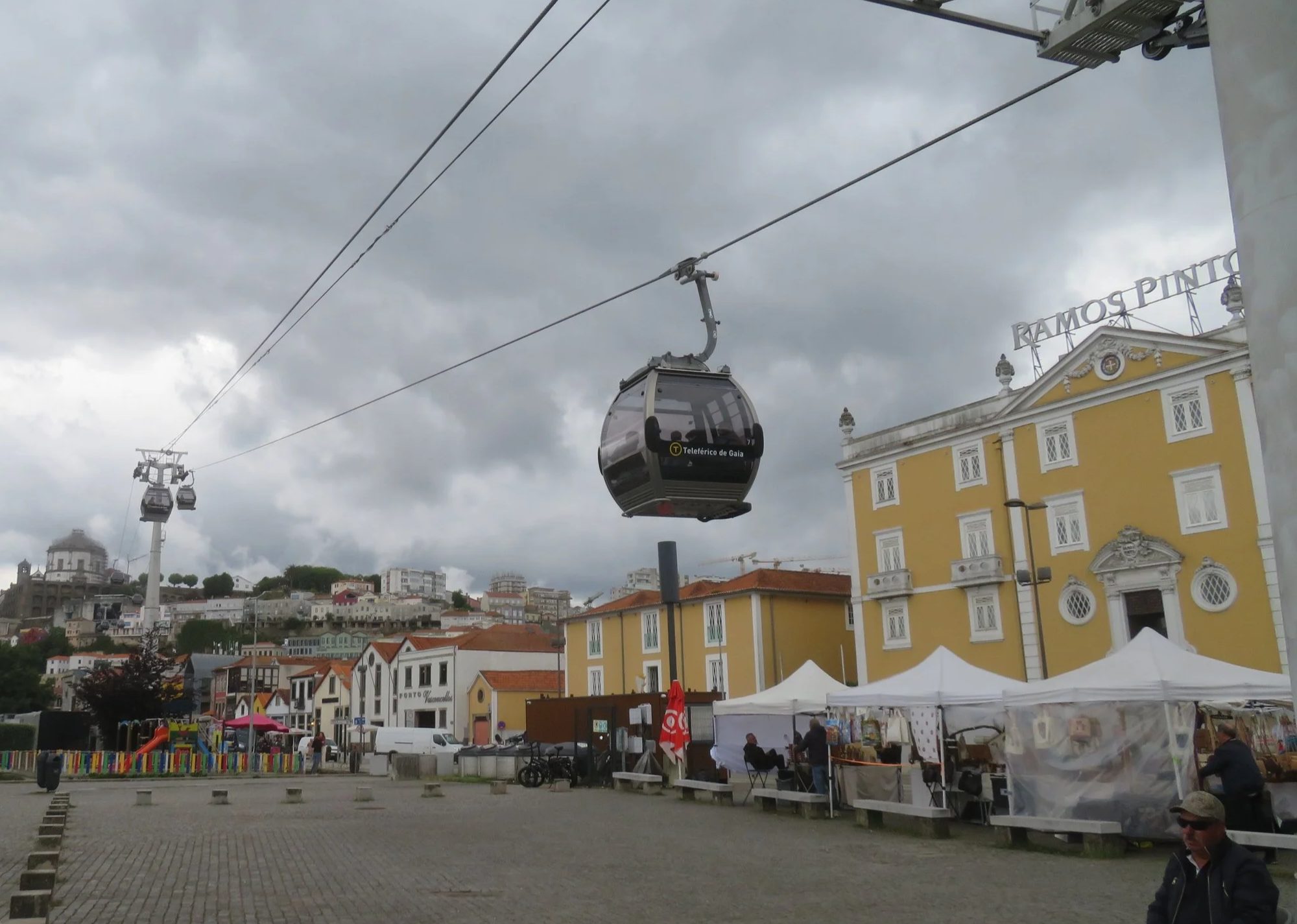
To descend to the Gaia riverfront, we opted to take the Teleférico de Gaia (Gaia Cable Car). It’s a 3-minute, 45-second ride for €7/pp, but it’s part of the Gaia experience.
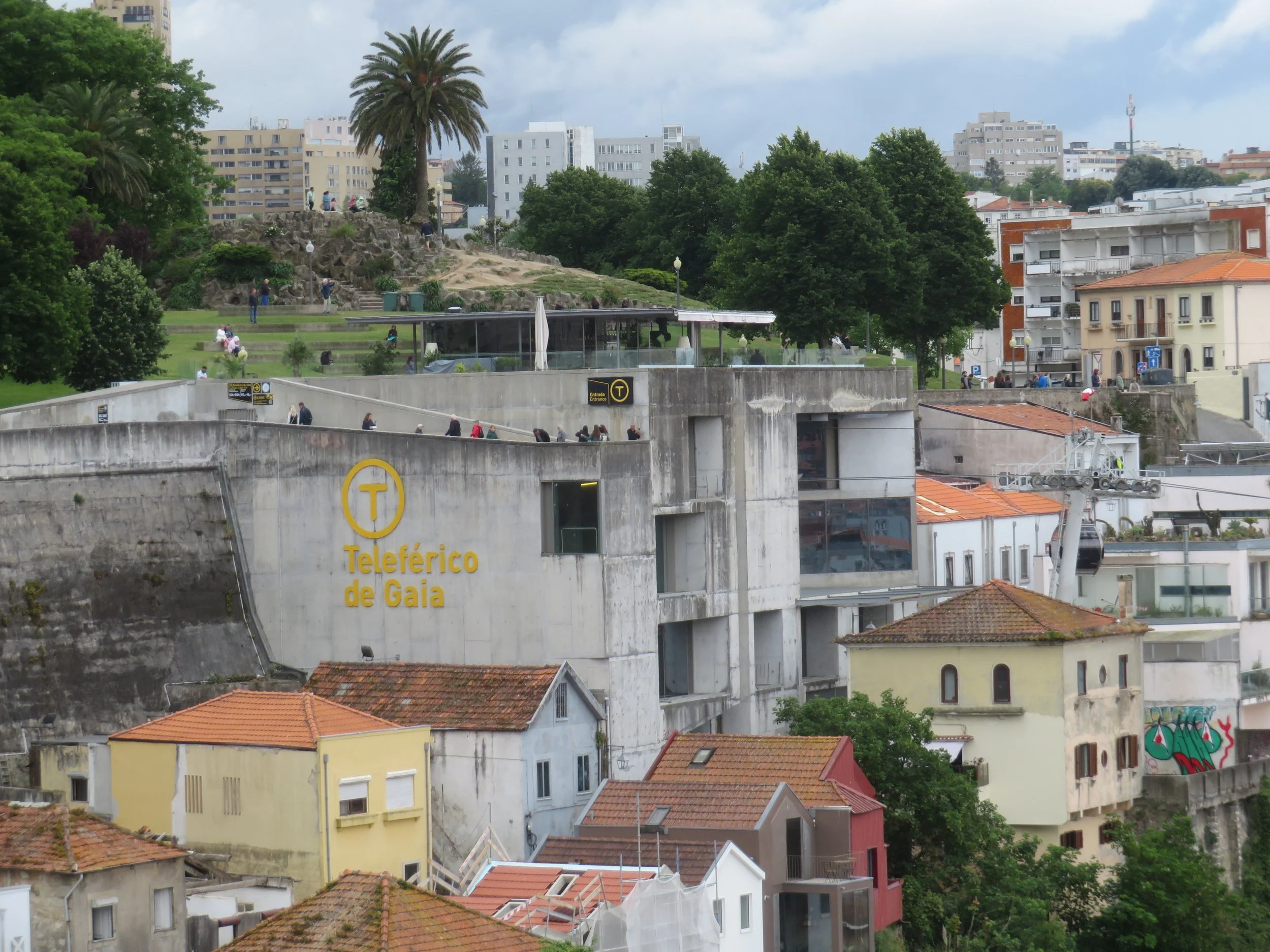
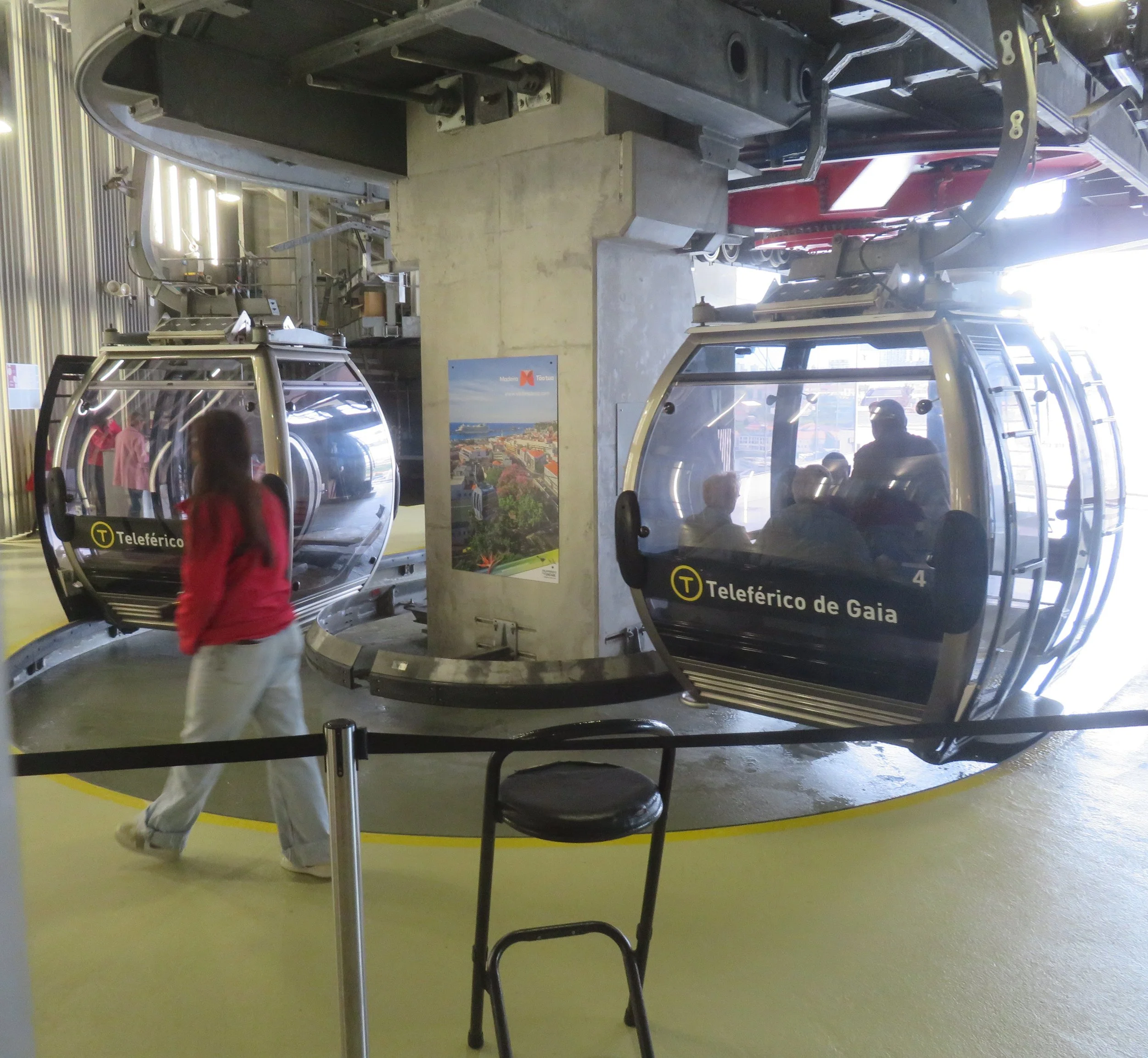
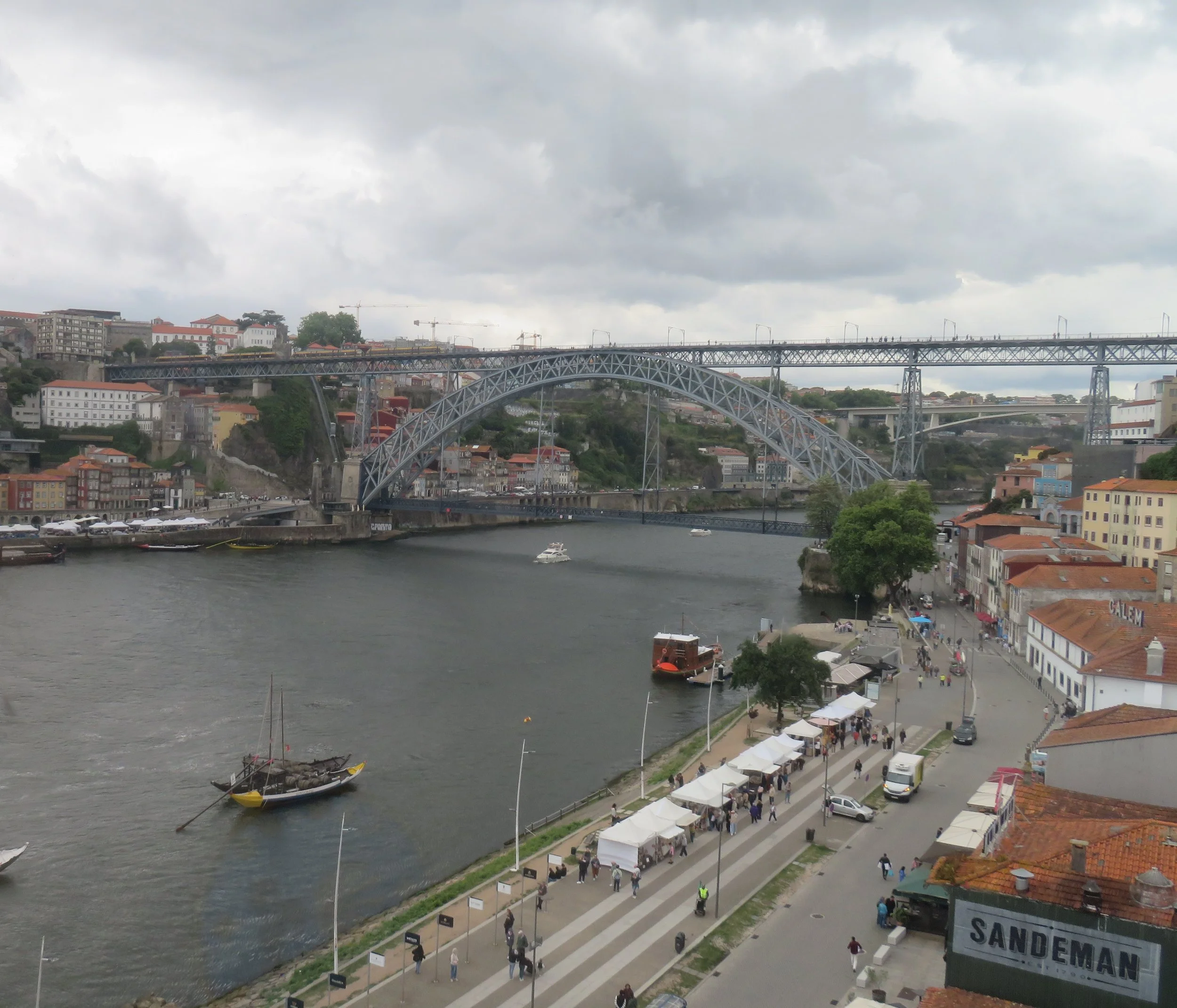
View of the bridge and the Gaia Riverfront from the Teleférico were great!
It was drizzling off and on when we emerged onto the Gaia riverfront, which is lined with all sorts of restaurants, bars, and shops. Especially notable are the port cellars. It’s interesting to note that Port wine, a sweet fortified wine produced in the nearby Douro Valley, is not made in Porto, but rather on this side of the Douro River. Several port wine cellars offer tastings, but David doesn’t care for Port and I’d already tried some, so we gave the wine tastings a pass.
We’d read about the ‘Half Rabbit’ sculpture on Atlas Obscura and set out to find it. The sculpture by Portuguese artist Bordallo II was created using repurposed materials found locally. It’s positioned on the corner of a building and appears to be folded in two, half in color and half in the natural colors of its components like street signs, plastic containers, and odd metal pieces… hence the name, Half Rabbit.
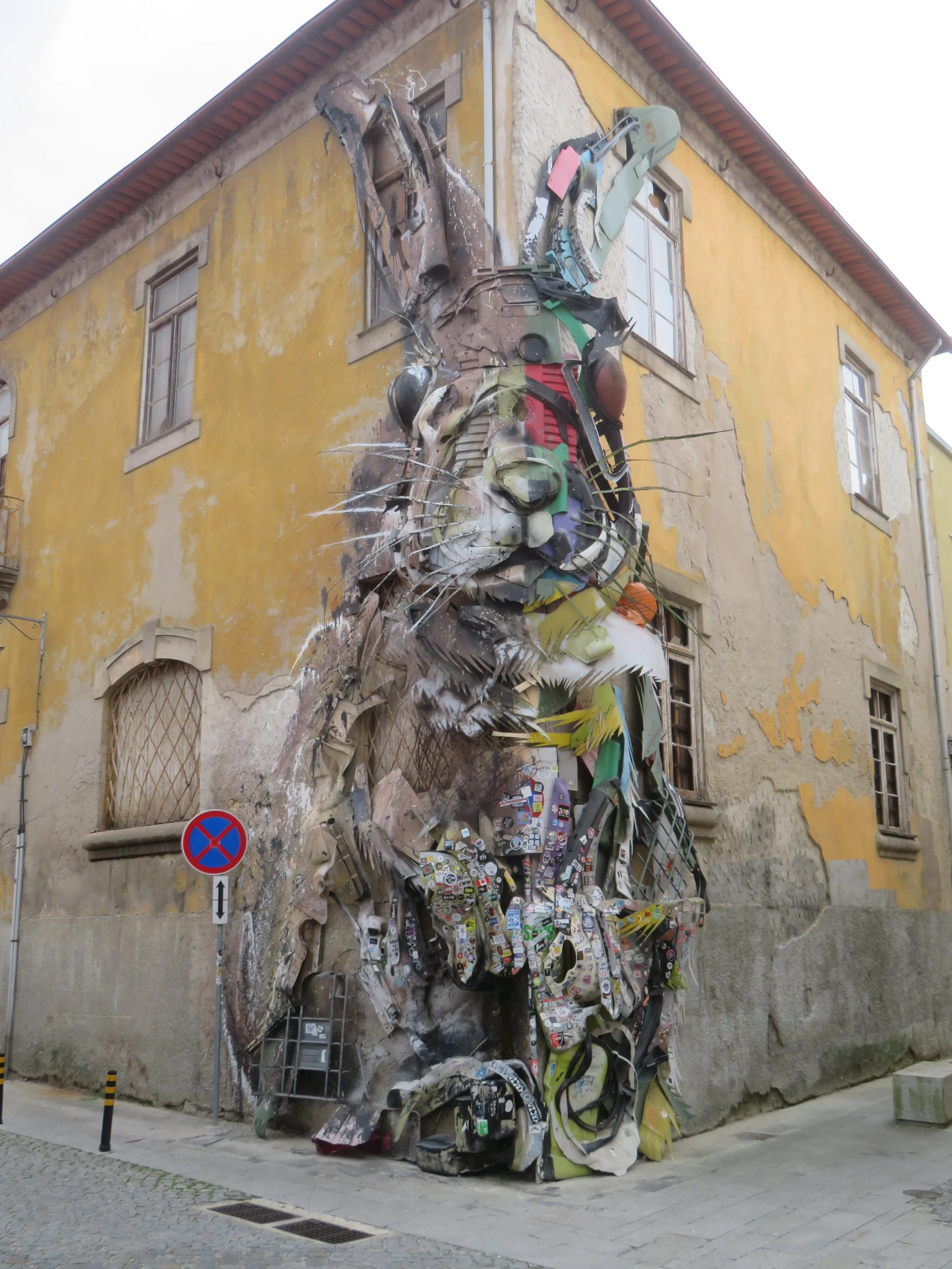
Half Rabbit
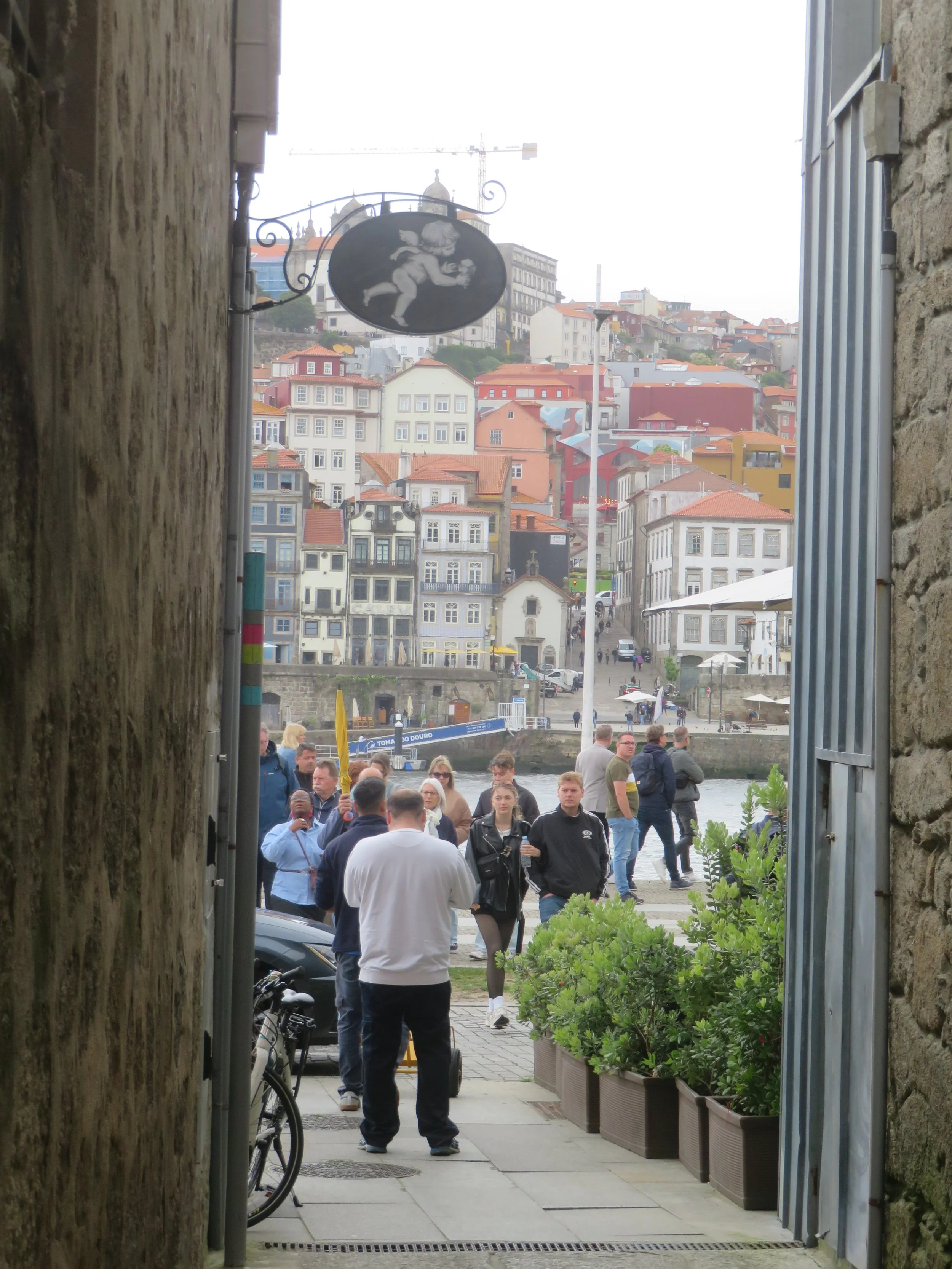
We turned down a narrow alley with views of the river before us. There was eye candy everywhere.
When the drizzle turned to rain, we looked for some place to duck into. What better place than The Fantastic World of Sardines? Bright and inviting (and dry), this place elevates the sardine to a new level. An important part of Portugal’s economy and a cultural tradition, the sardine industry thrives here. Tinned sardines lined the walls in various flavors. Tastings were available. Lively music played.
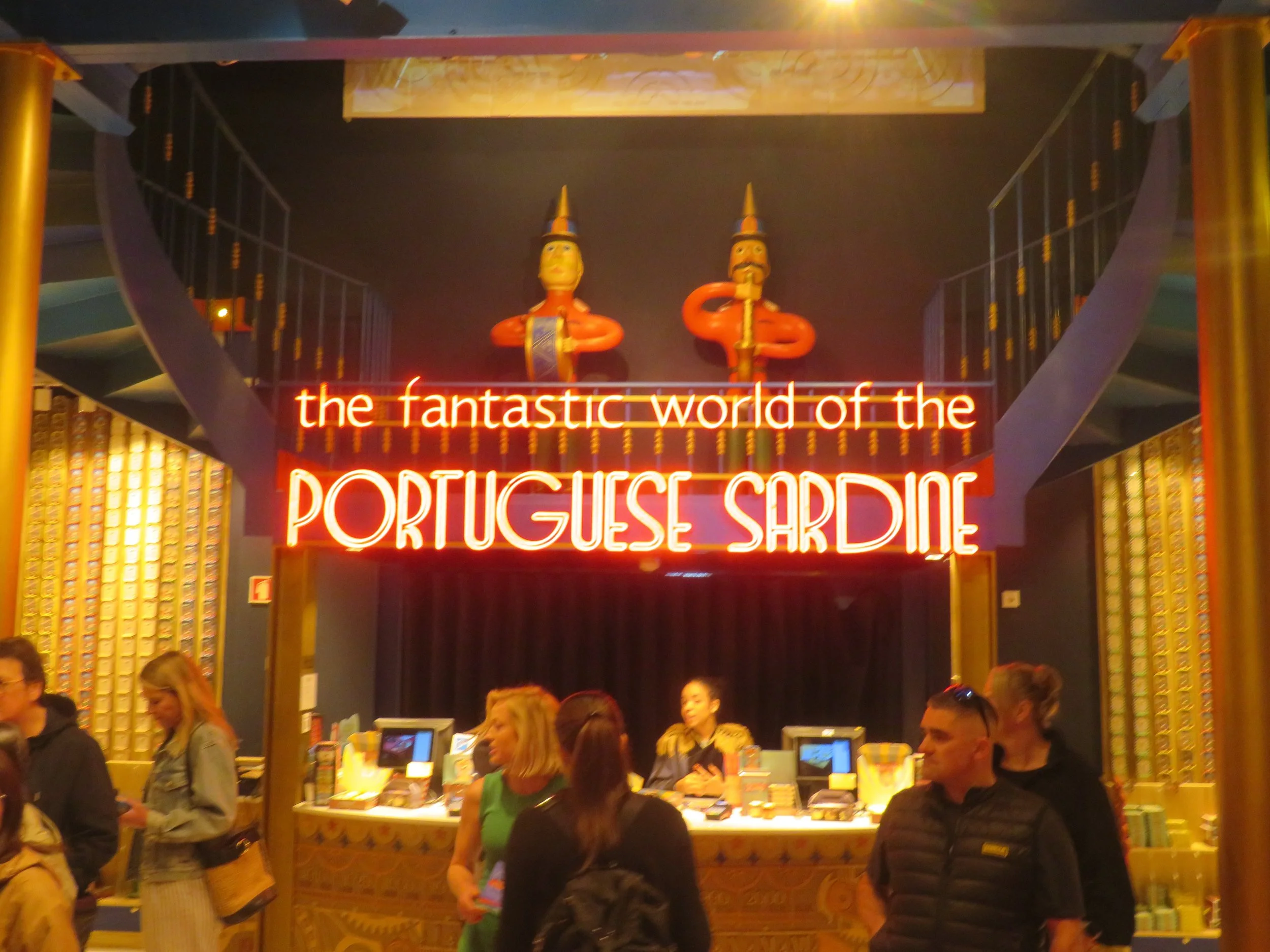
Tastings anyone?
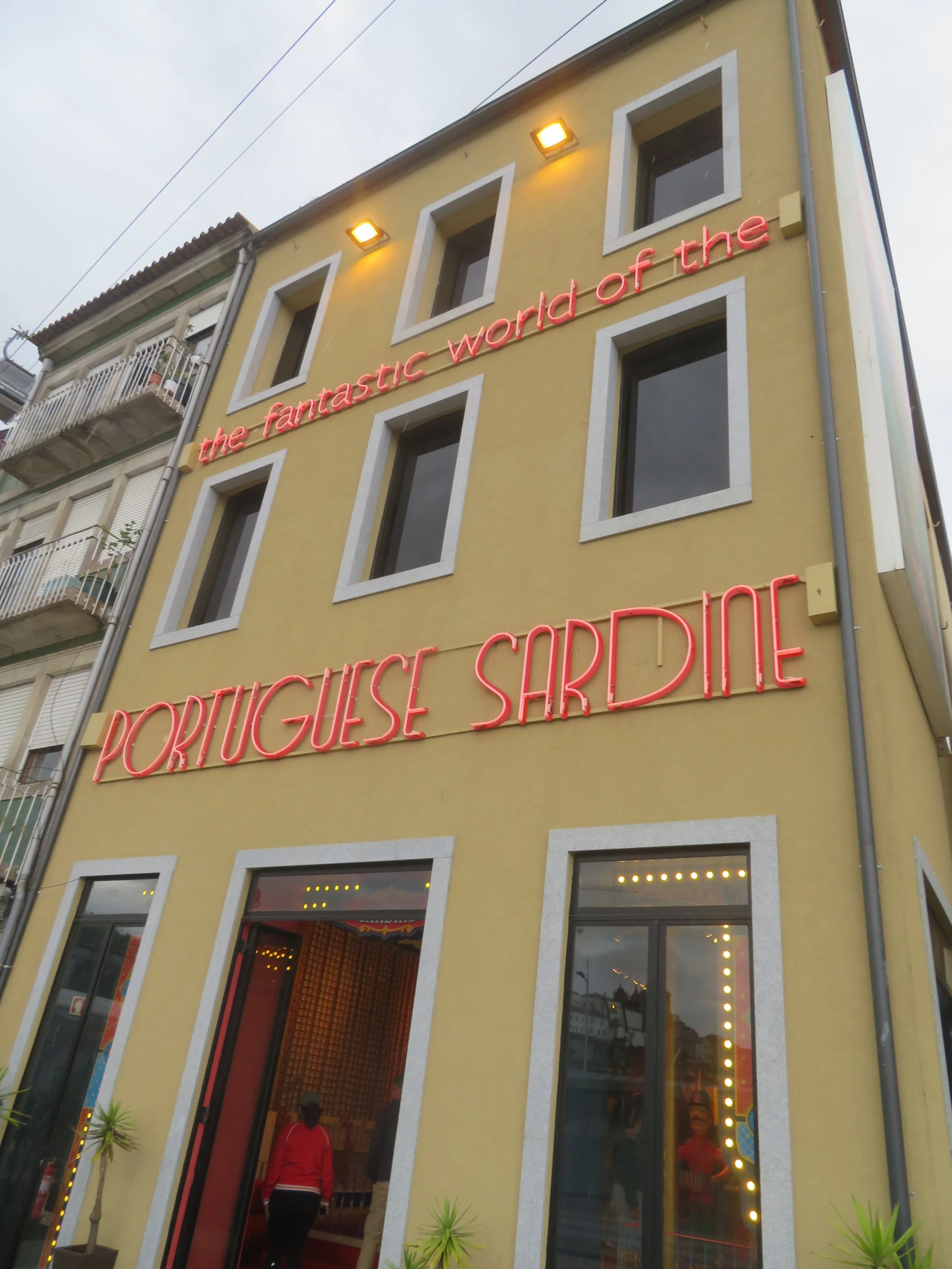
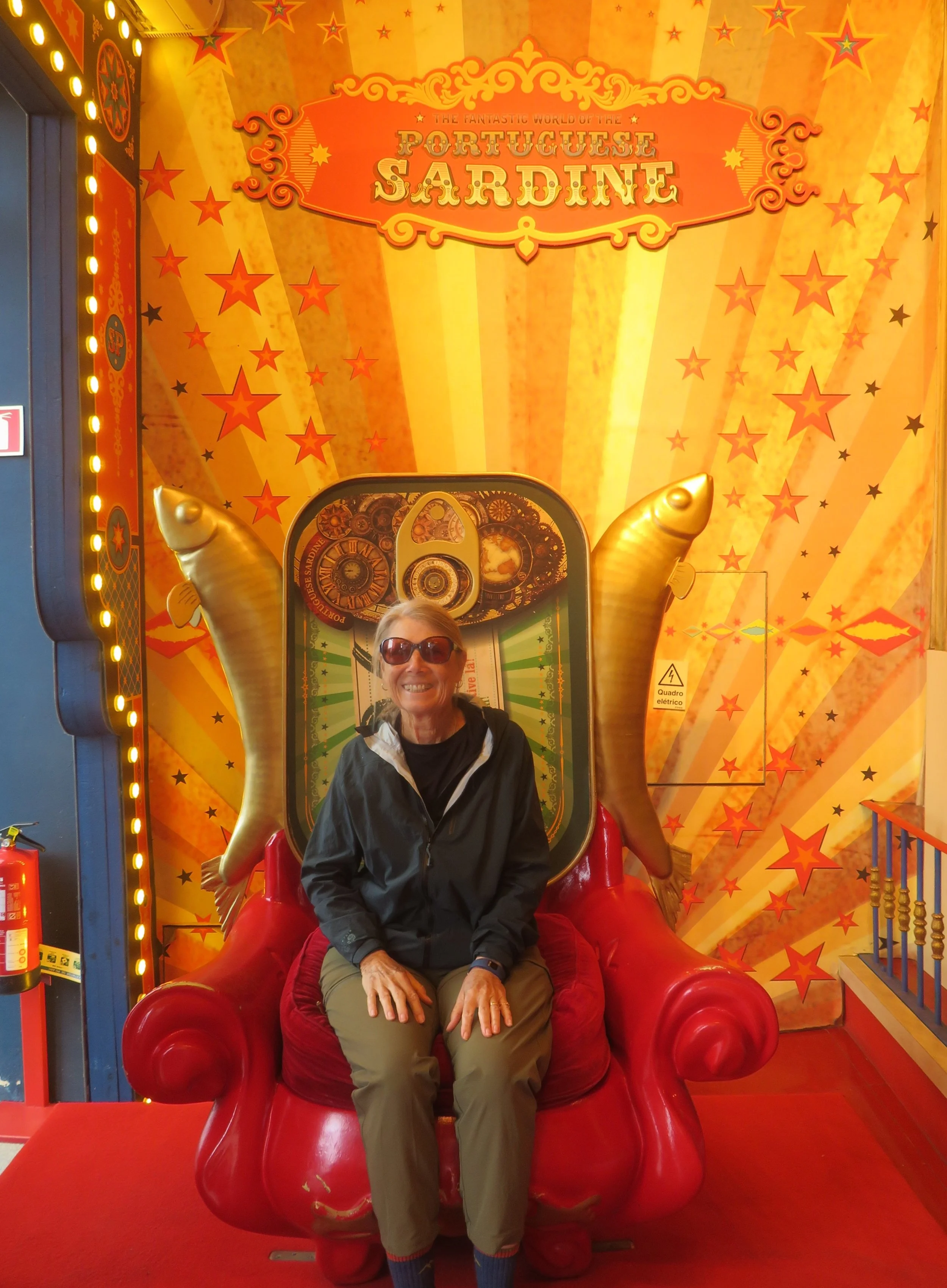
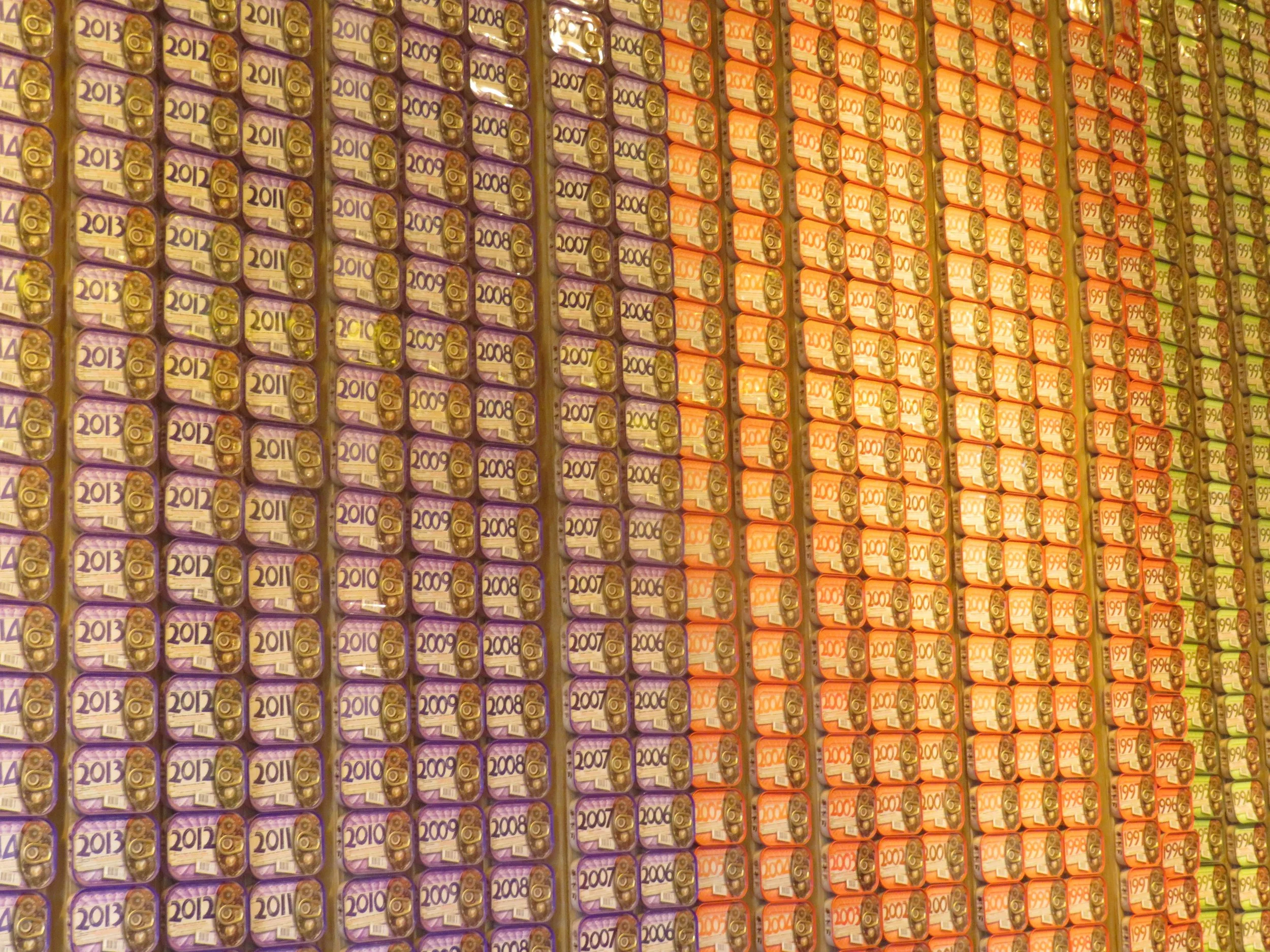
When the rain let up, we ventured back out onto the riverfront past all the port wine cellars, ducking into shops and window shopping along the way. We headed back on the less pleasant, lower level of the Luiz 1 Bridge with all the traffic.
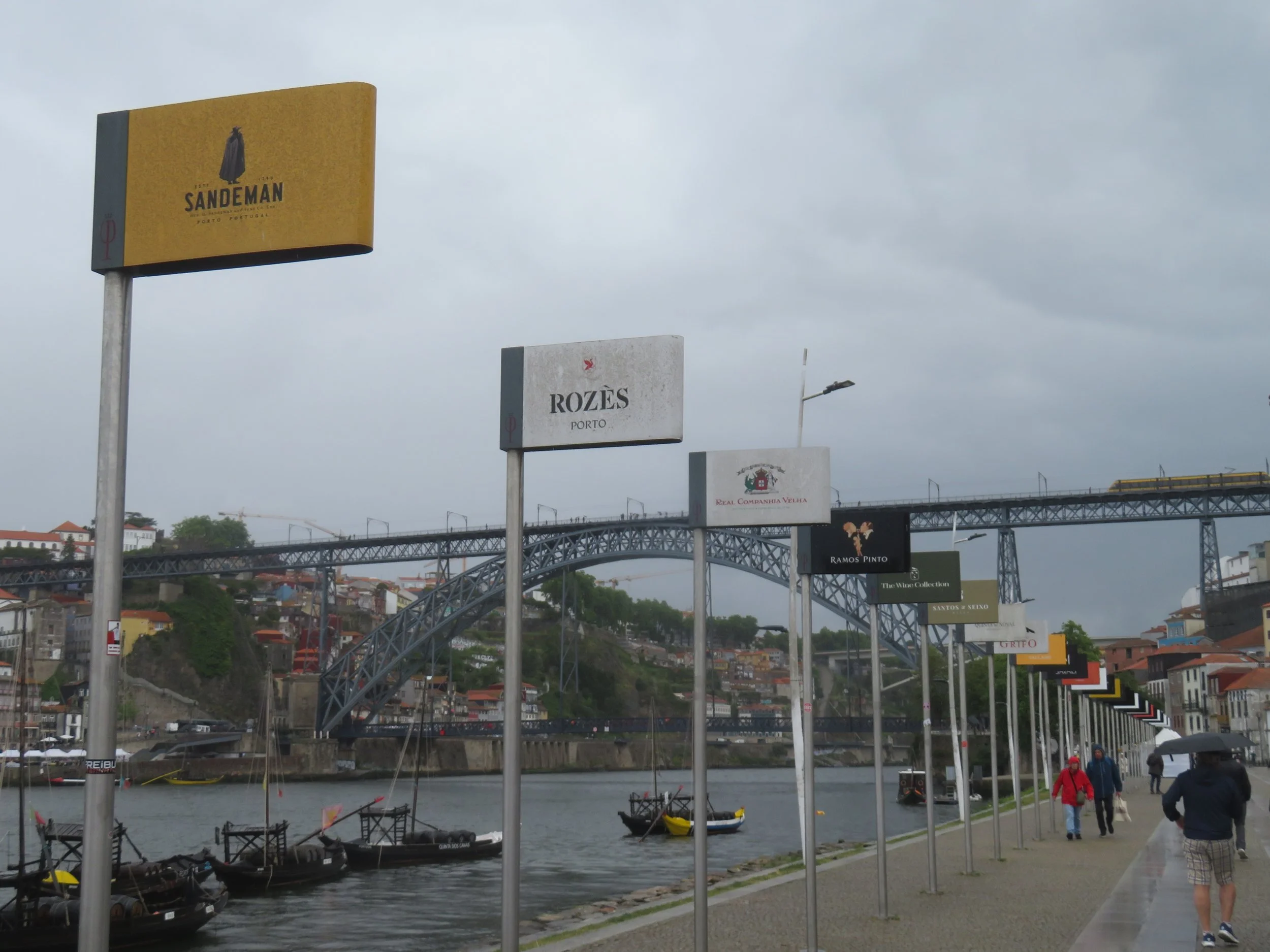
There are numerous port cellars along the Gaia Riverfront
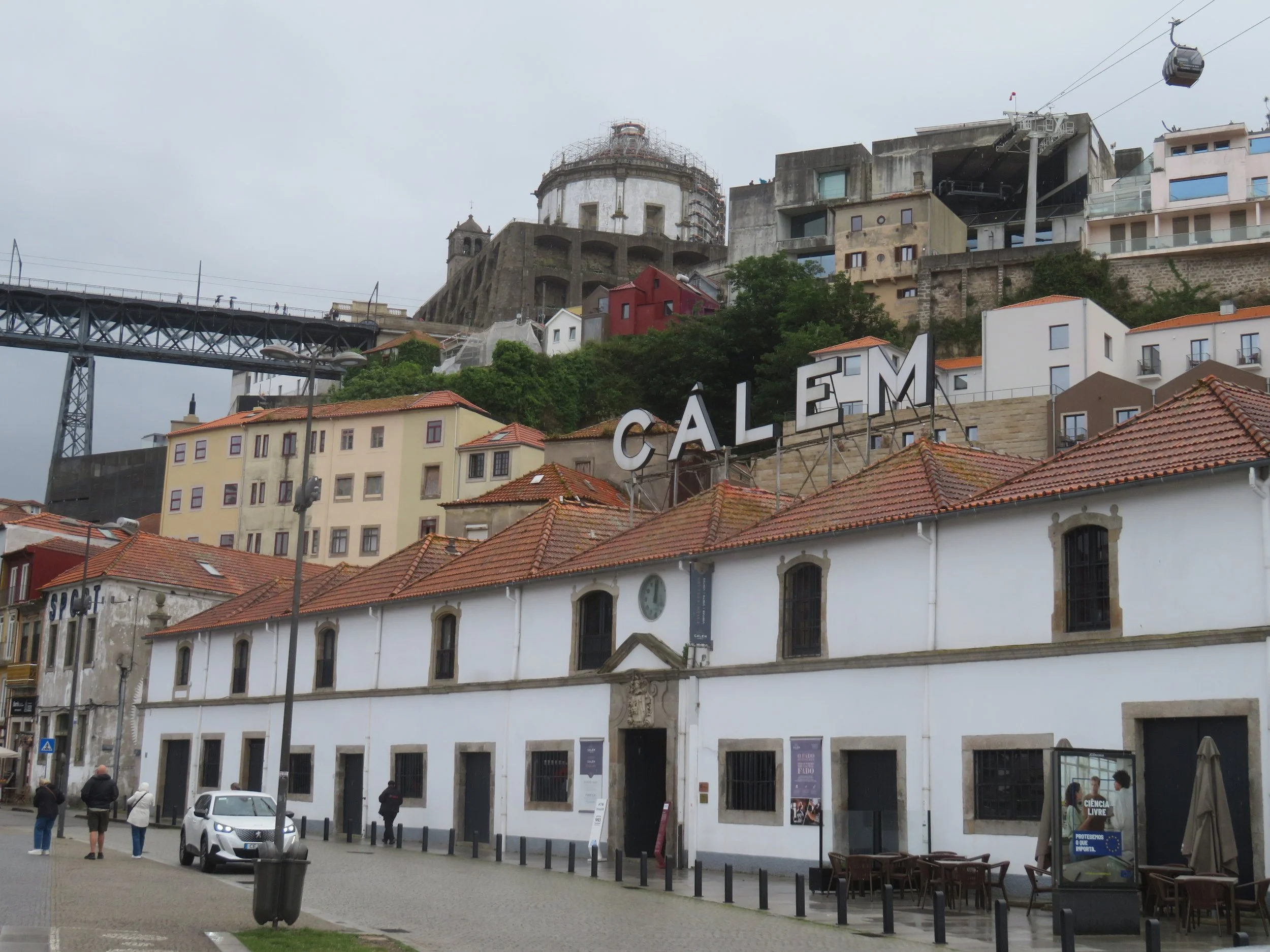
Calem is one of the larger and better known of the Port houses
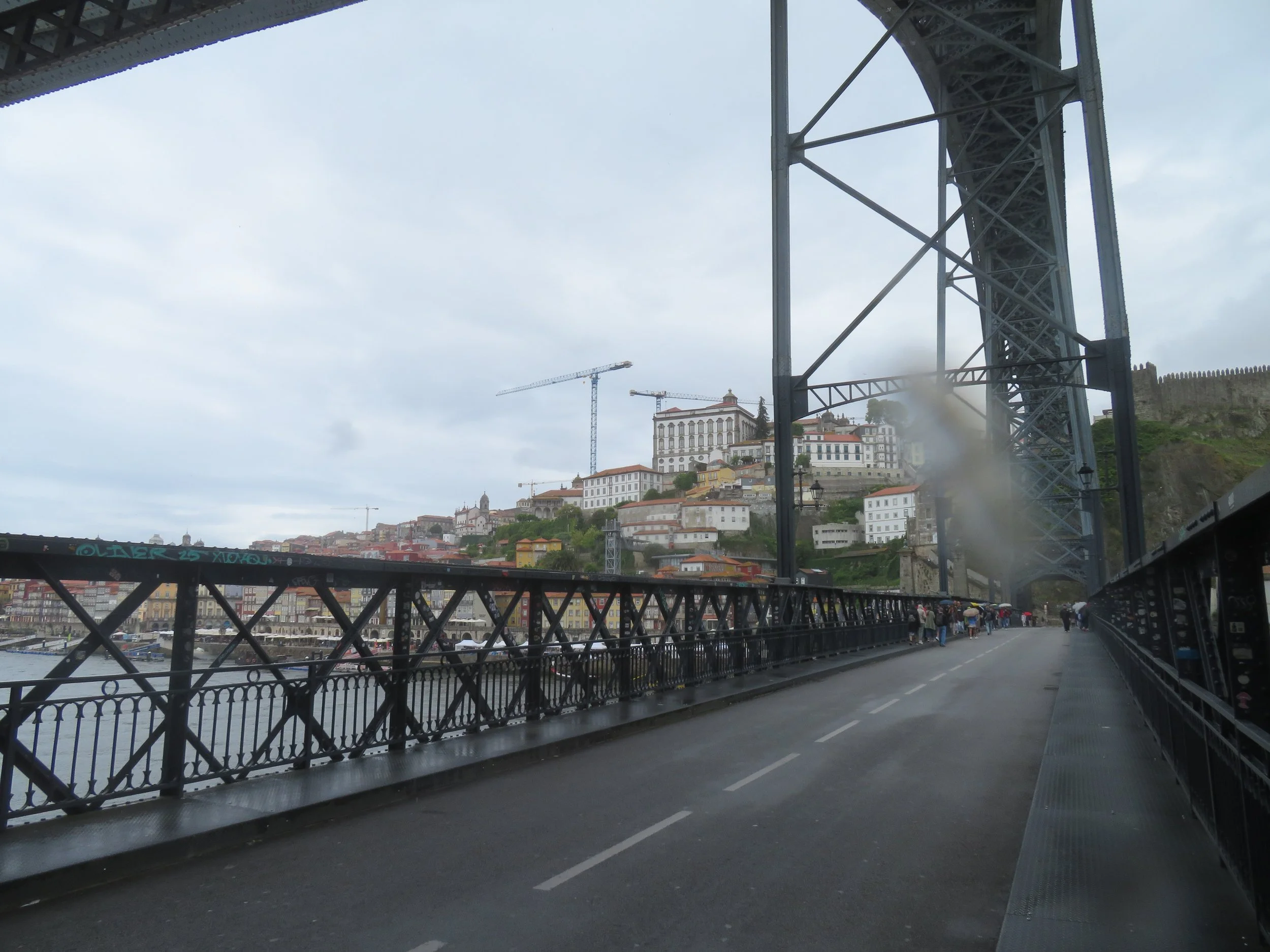
The less pleasant lower level of the bridge complete with a large raindrop on the shutter.
Since we were now at river level, we had to climb back up to Porto city via a 262 step, steep staircase that winded around and seemed to go on forever.
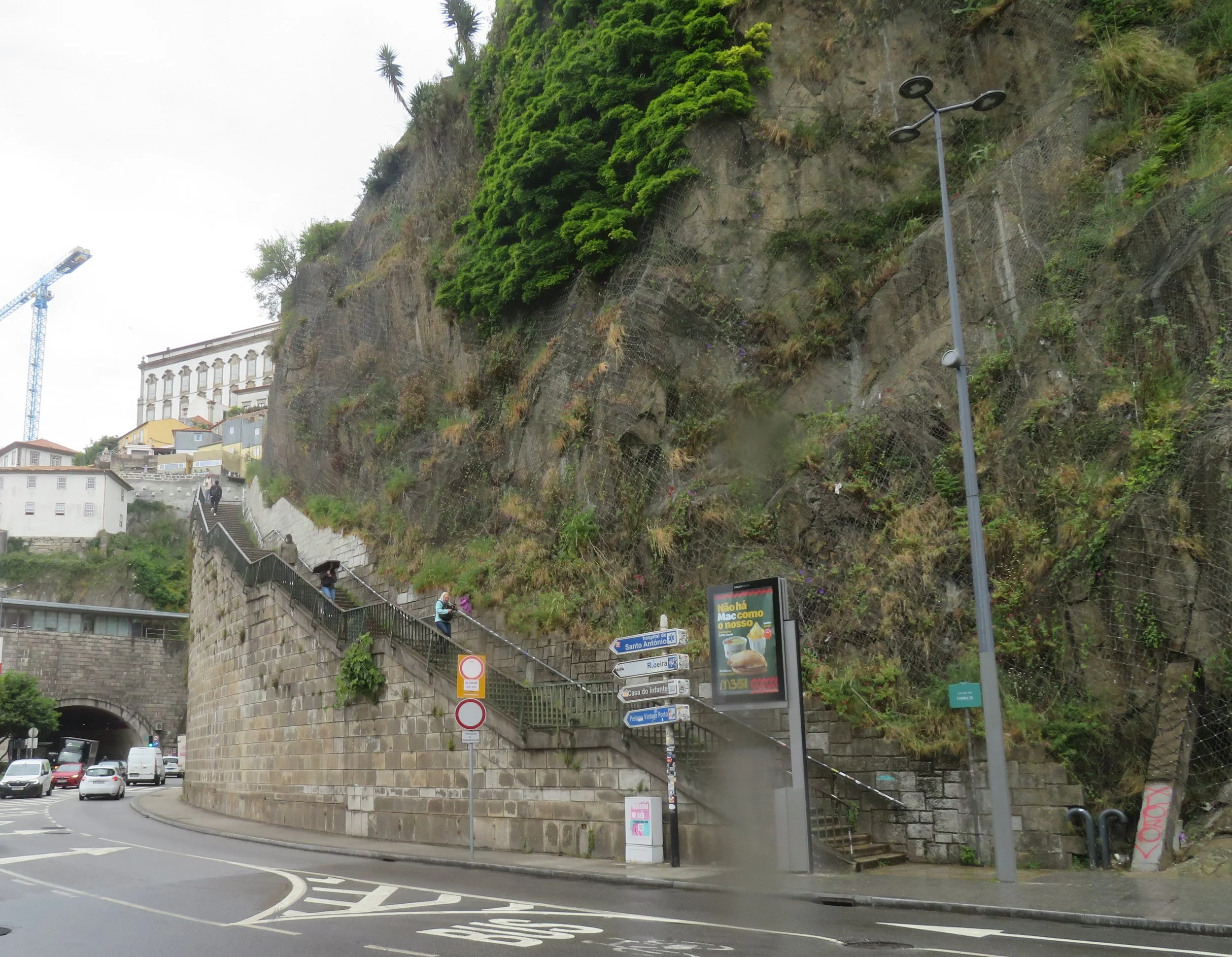
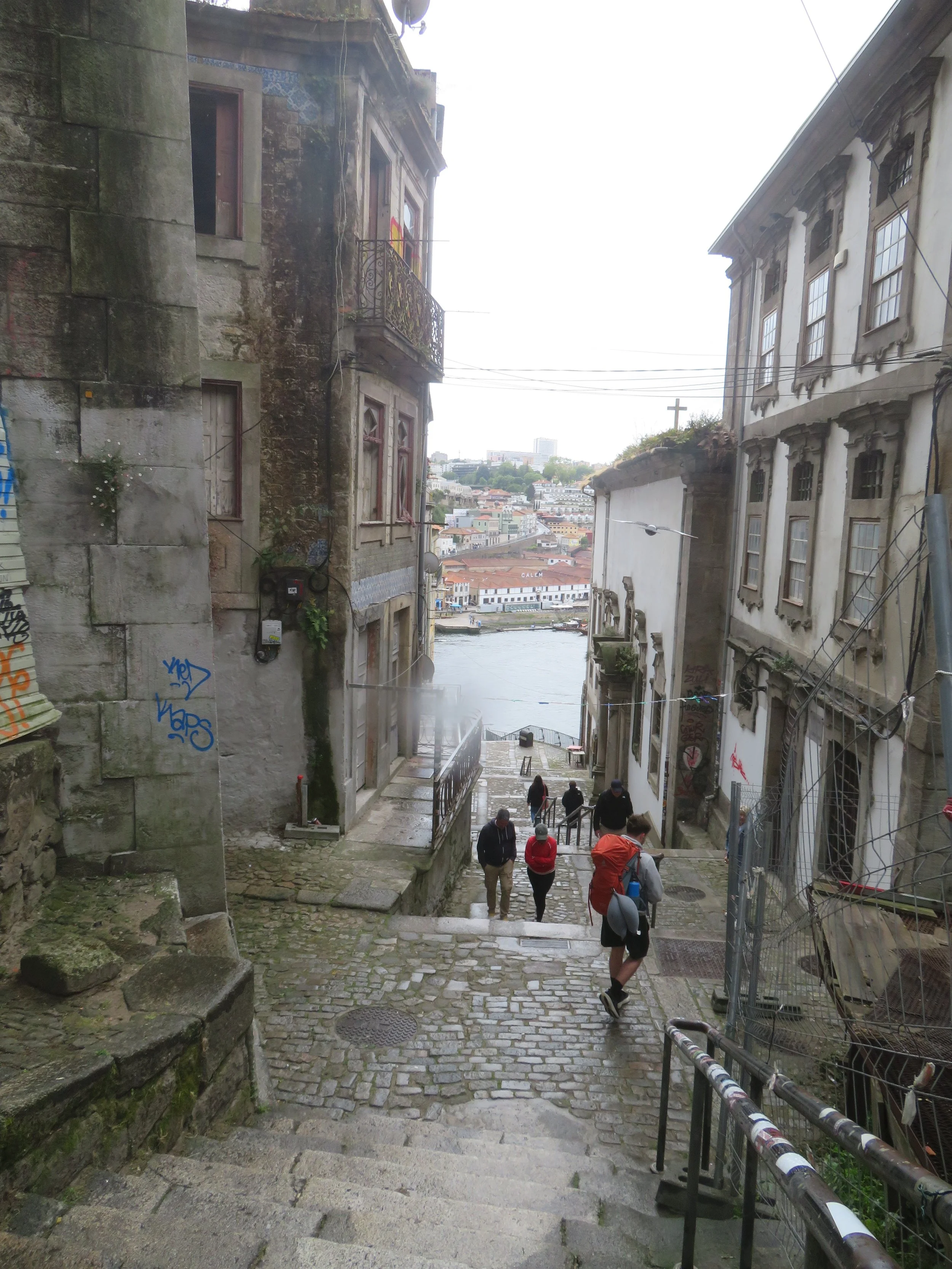
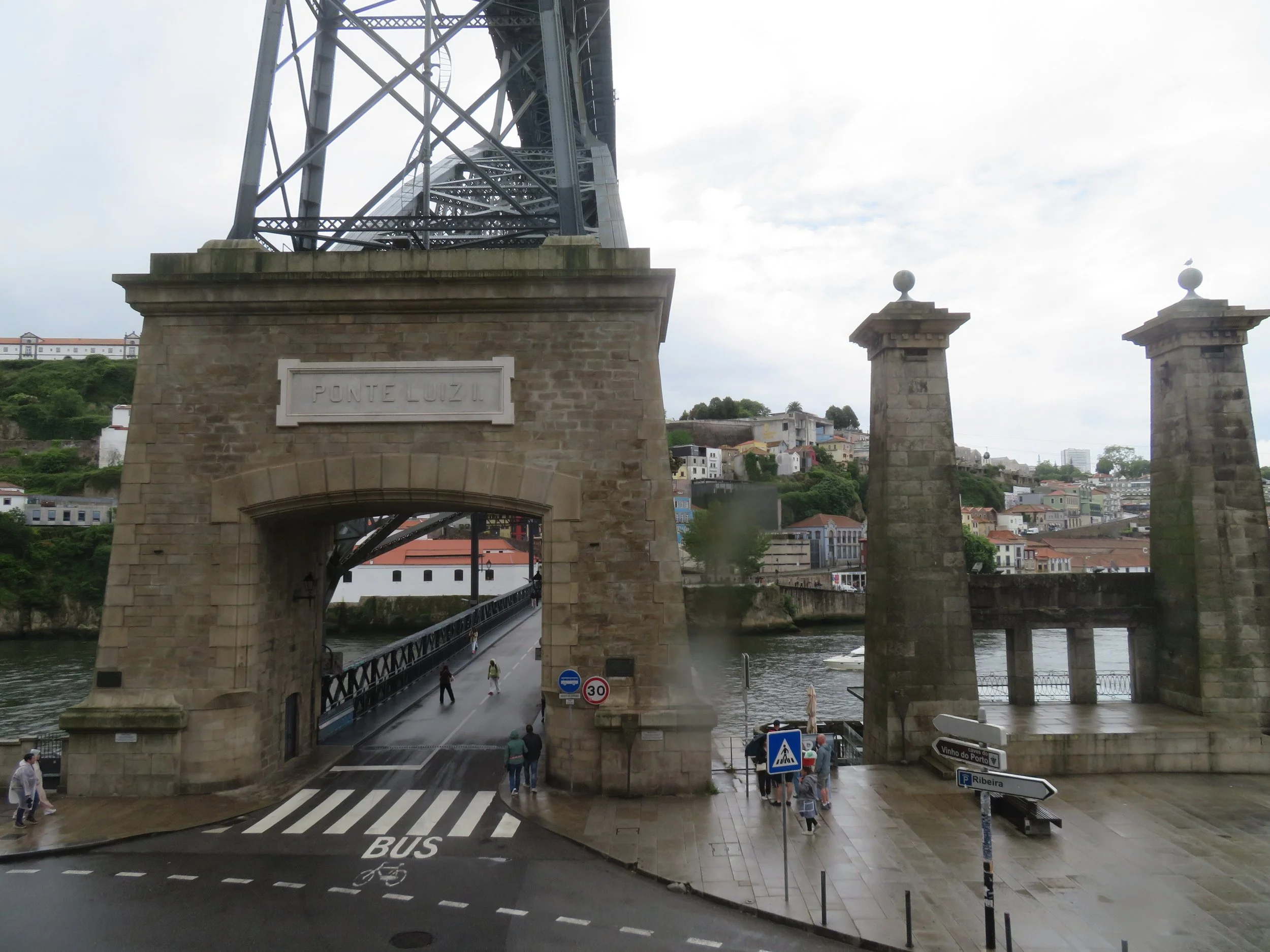
One positive in climbing the steep staircase back to Porto was the view of the bridge as we climbed.
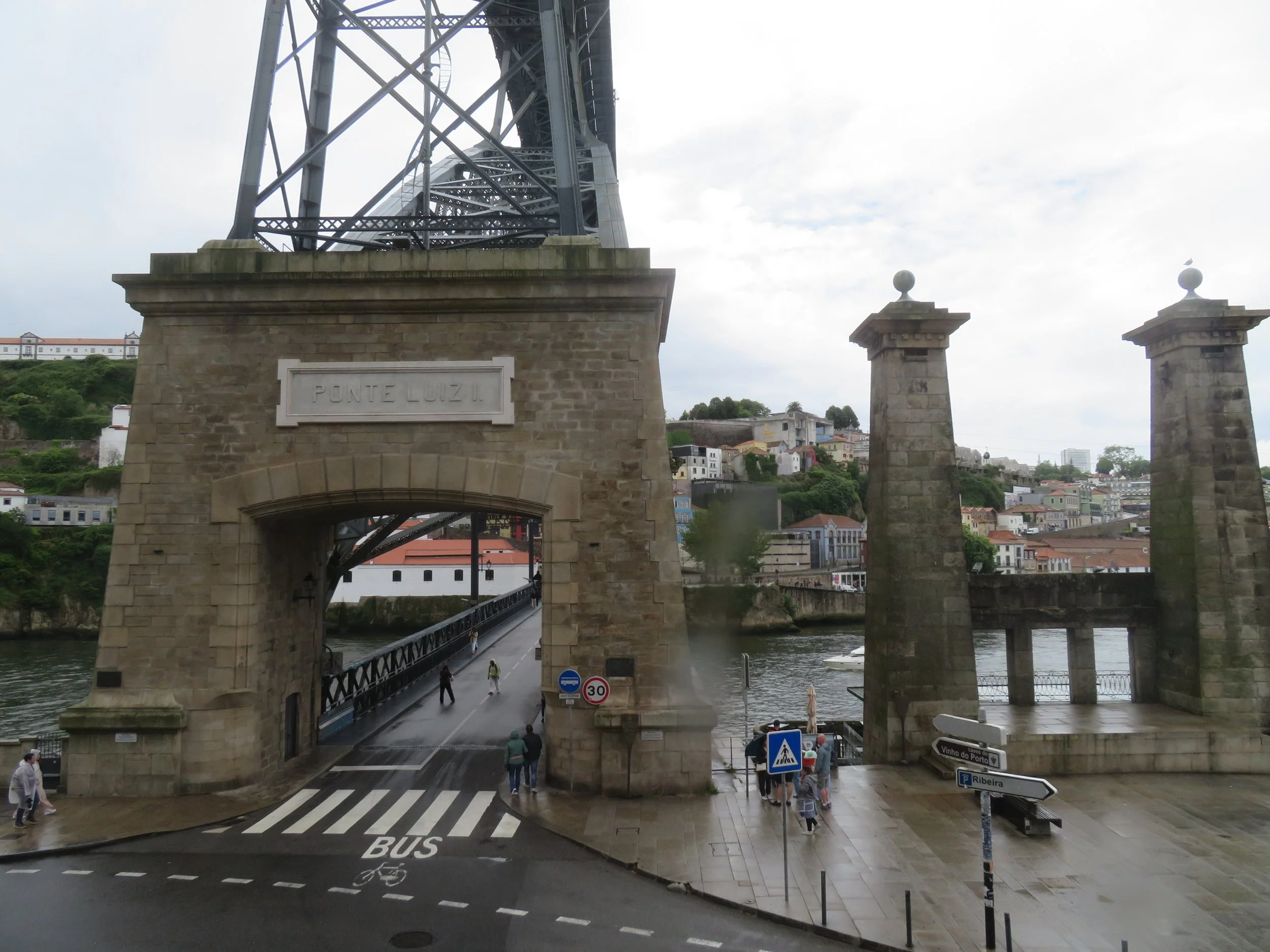
Another great view of the bridge from the staircase.
It was late afternoon by the time we returned to our hotel. We were done sightseeing for the day, so we grabbed some dinner, and headed to our room, ready to plan our next day’s agenda.
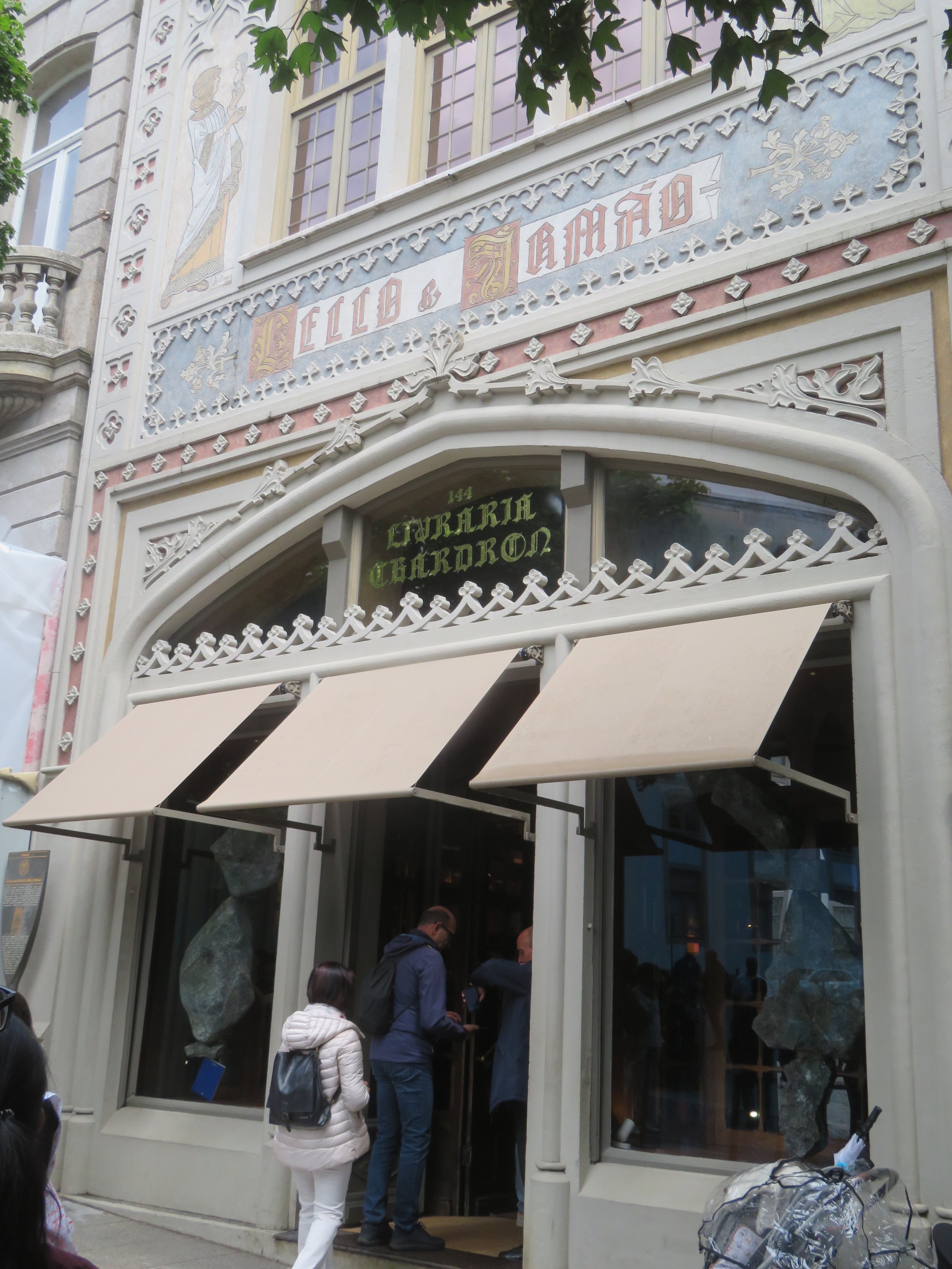
It rained throughout the night, but it was dry by morning. Today’s plan included checking out churches and city landmarks, and a visit to the World’s Most Beautiful Bookstore – Livraria Lello. We’d purchased tickets in advance (€12/ea) for a timed entry at 10:30 AM. We arrived a few minutes early and were gobsmacked when we saw the line waiting for entry.
Whoever heard of buying tickets to get into a bookstore? Livraria Lello is no ordinary bookstore. It’s one of the oldest bookstores in Portugal and is considered one of the world’s most beautiful. Founded in Porto in 1869 by French publisher Ernesto Chardron, the bookstore was purchased by José Lello in 1906. It’s known for its beautiful Art Nouveau façade and Gothic Revival features. J.K. Rowling, author of the Harry Potter books, lived and wrote in Porto for two years. Several of her descriptions in the Harry Potter series were inspired by places she visited in Porto, including Livraria Lello.
Take a look at Livraria Lello’s interior. It’s spectacular! Just click on the thumbnail to enlarge the image.
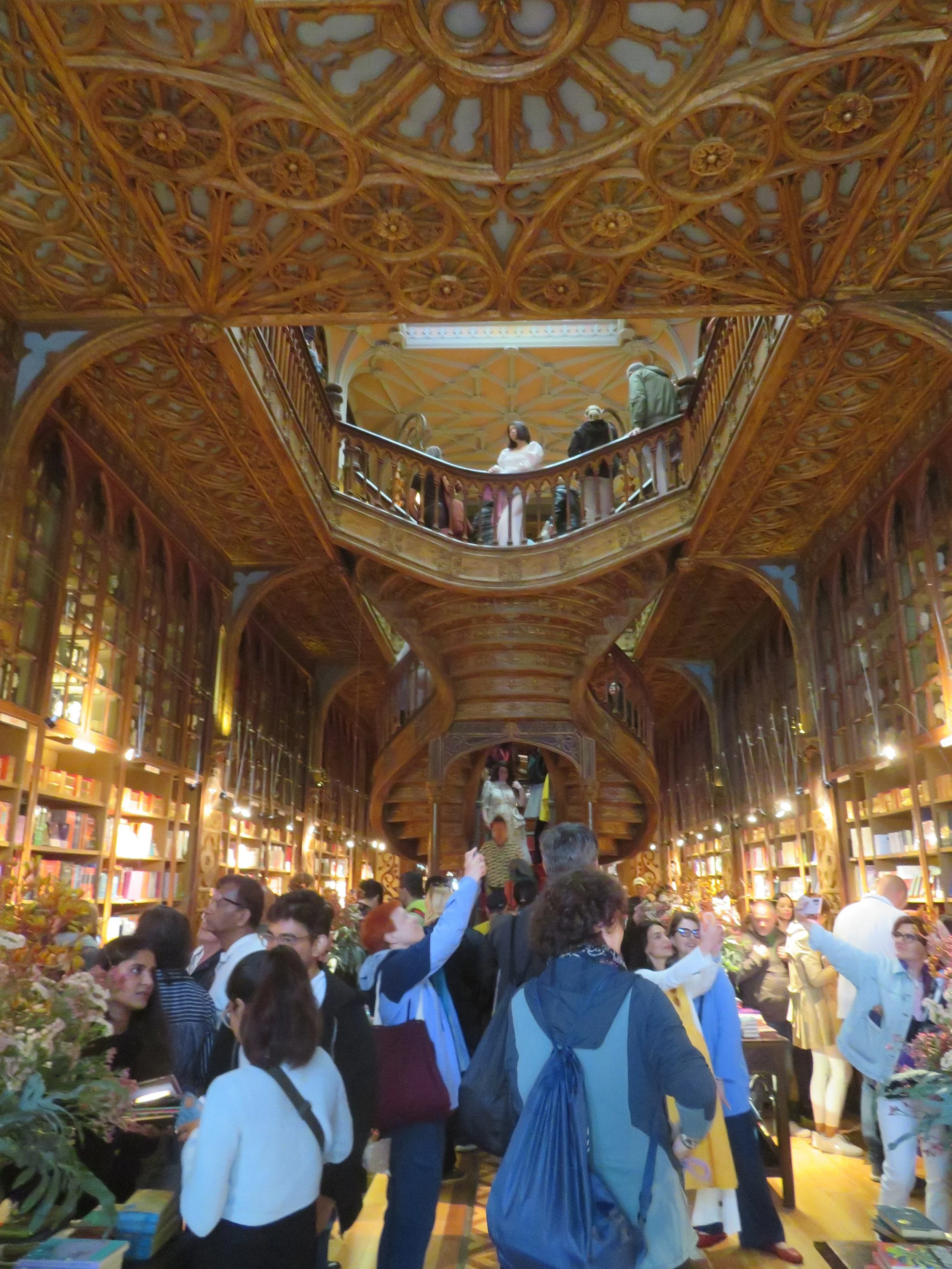
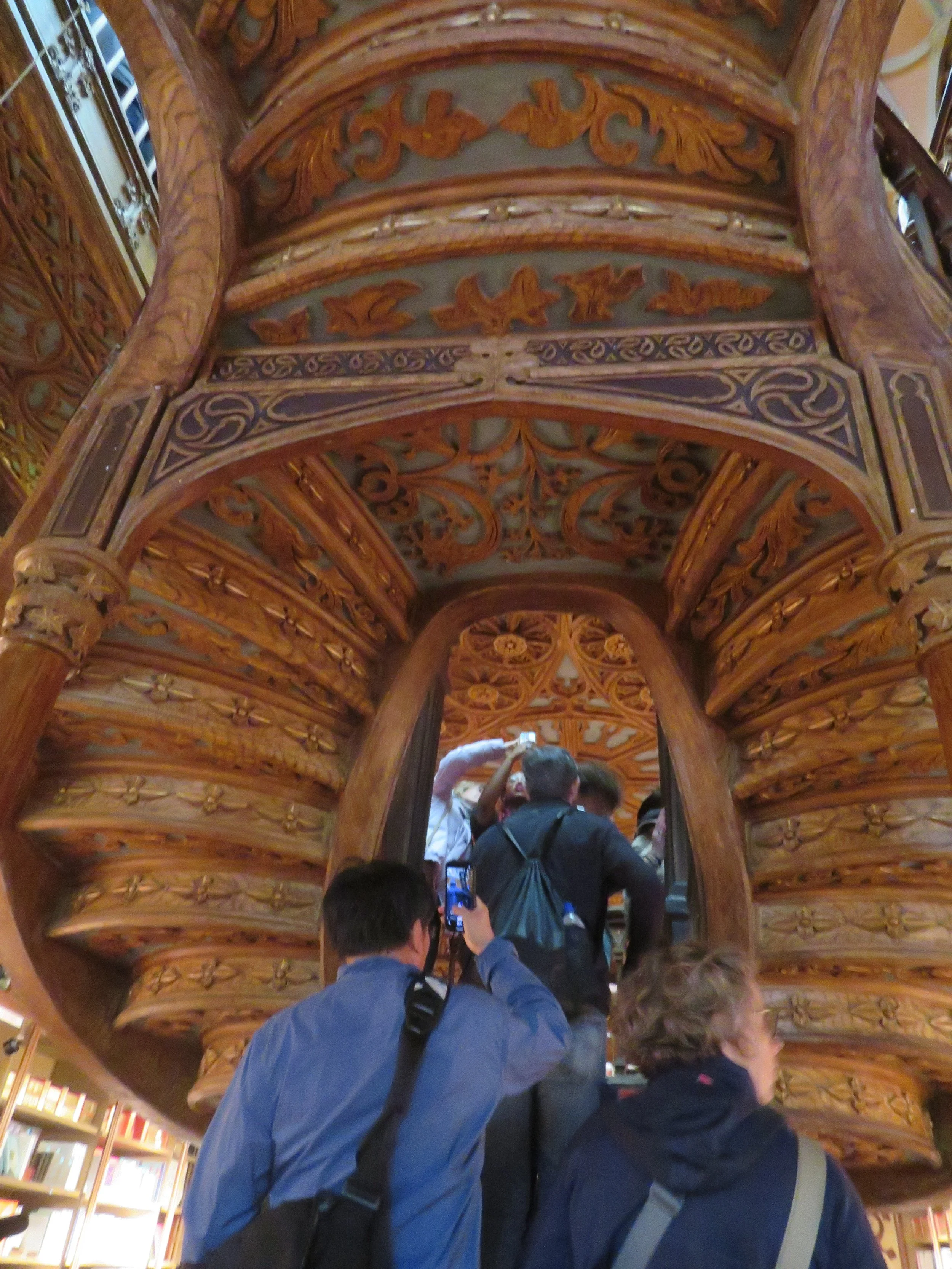
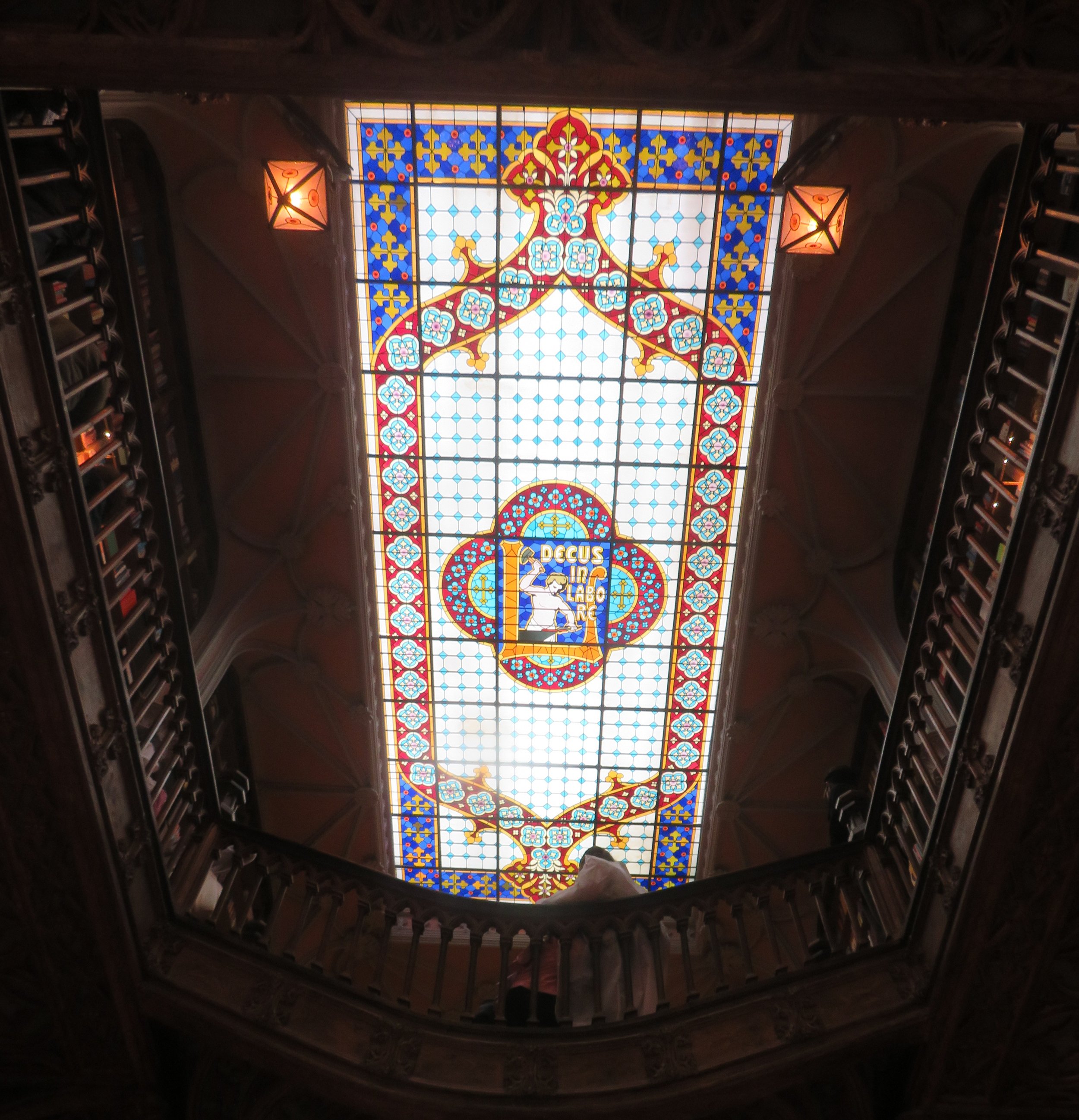
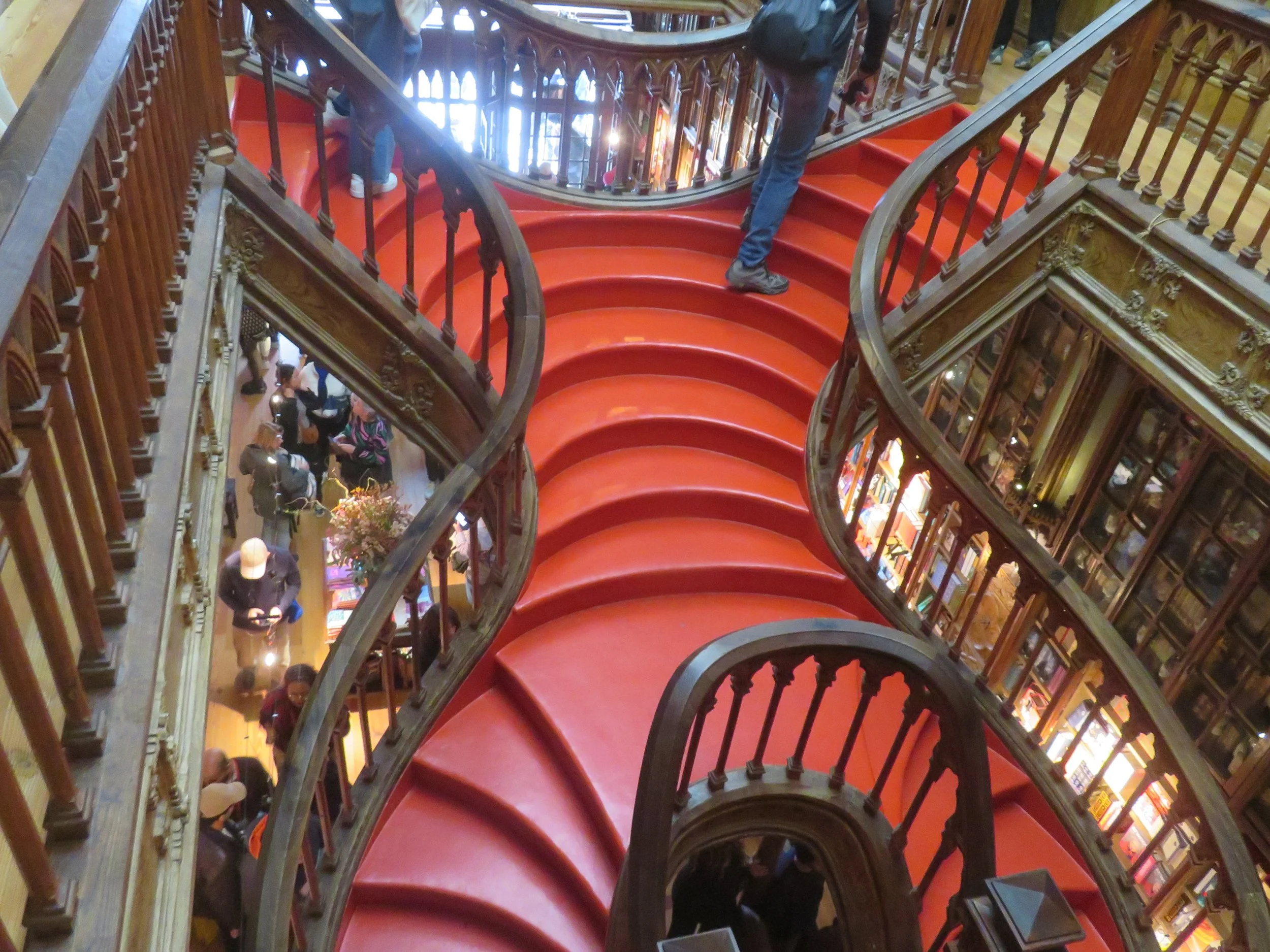
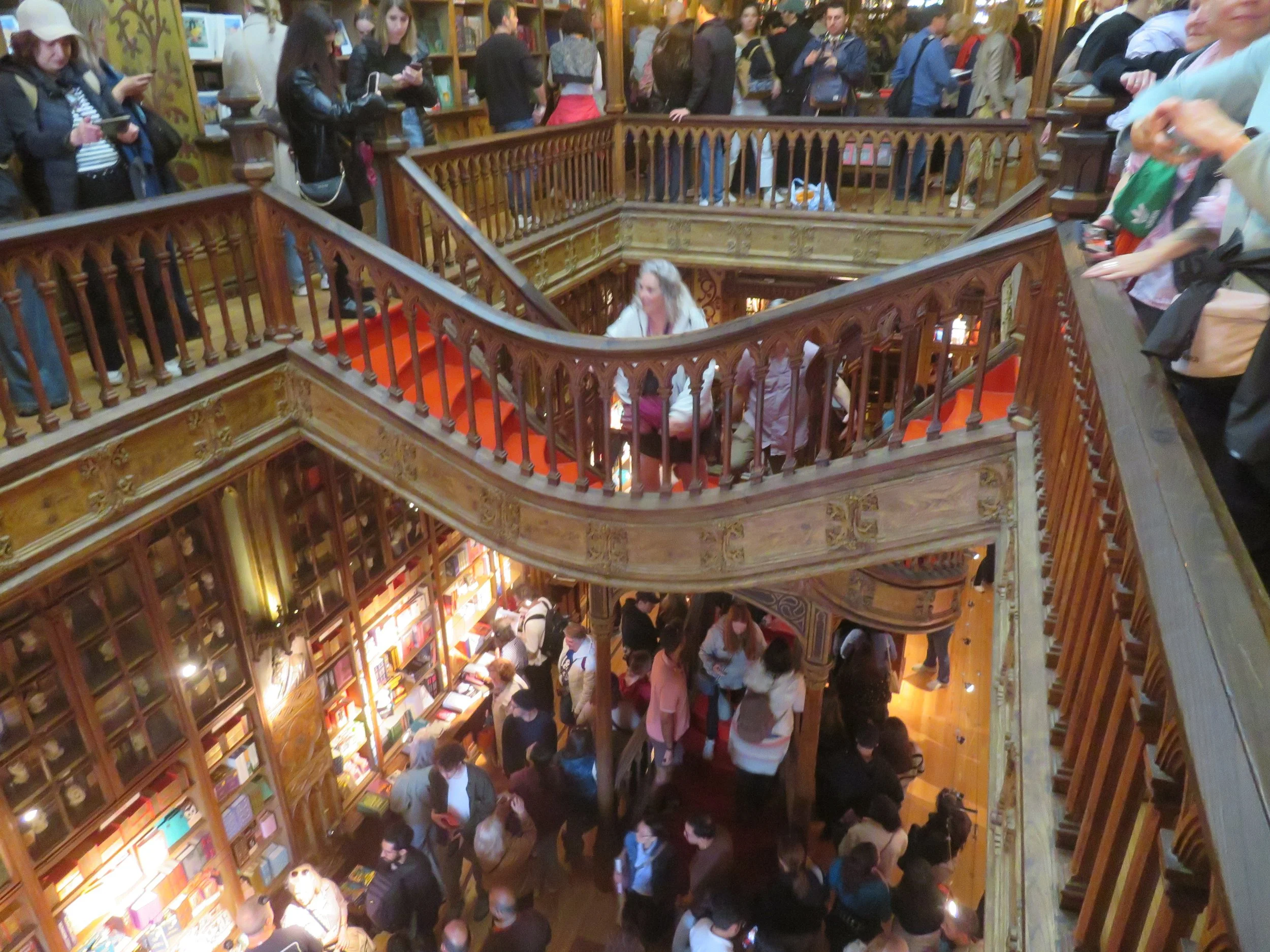
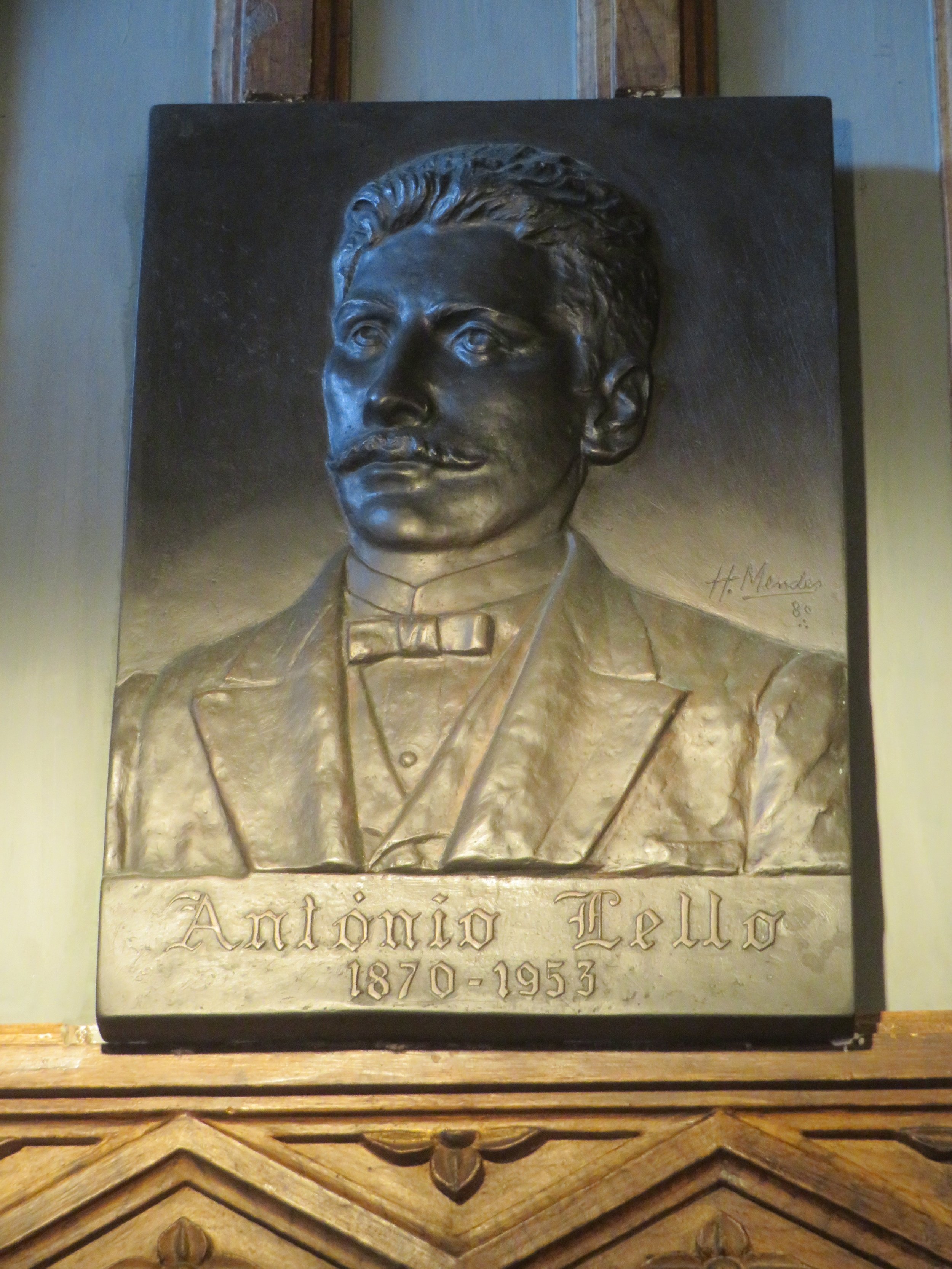
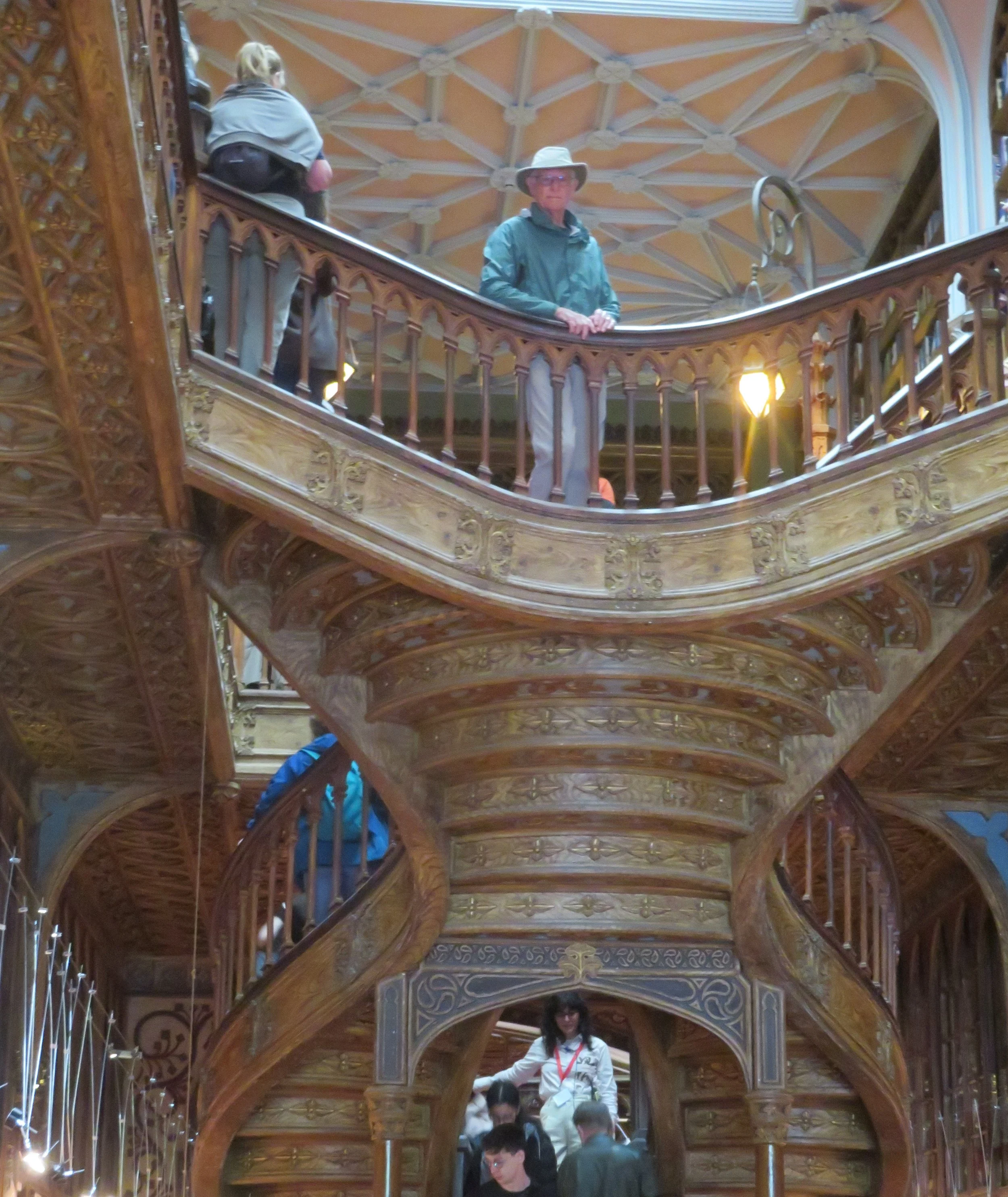
David had taken the time to map out landmarks and churches to see. We began our landmark scavenger hunt by checking out the Igreja de Santo Ildefonso. This eighteenth-century church constructed of granite has approximately 11,000 azulejo tiles, created by artist Jorge Colaço.
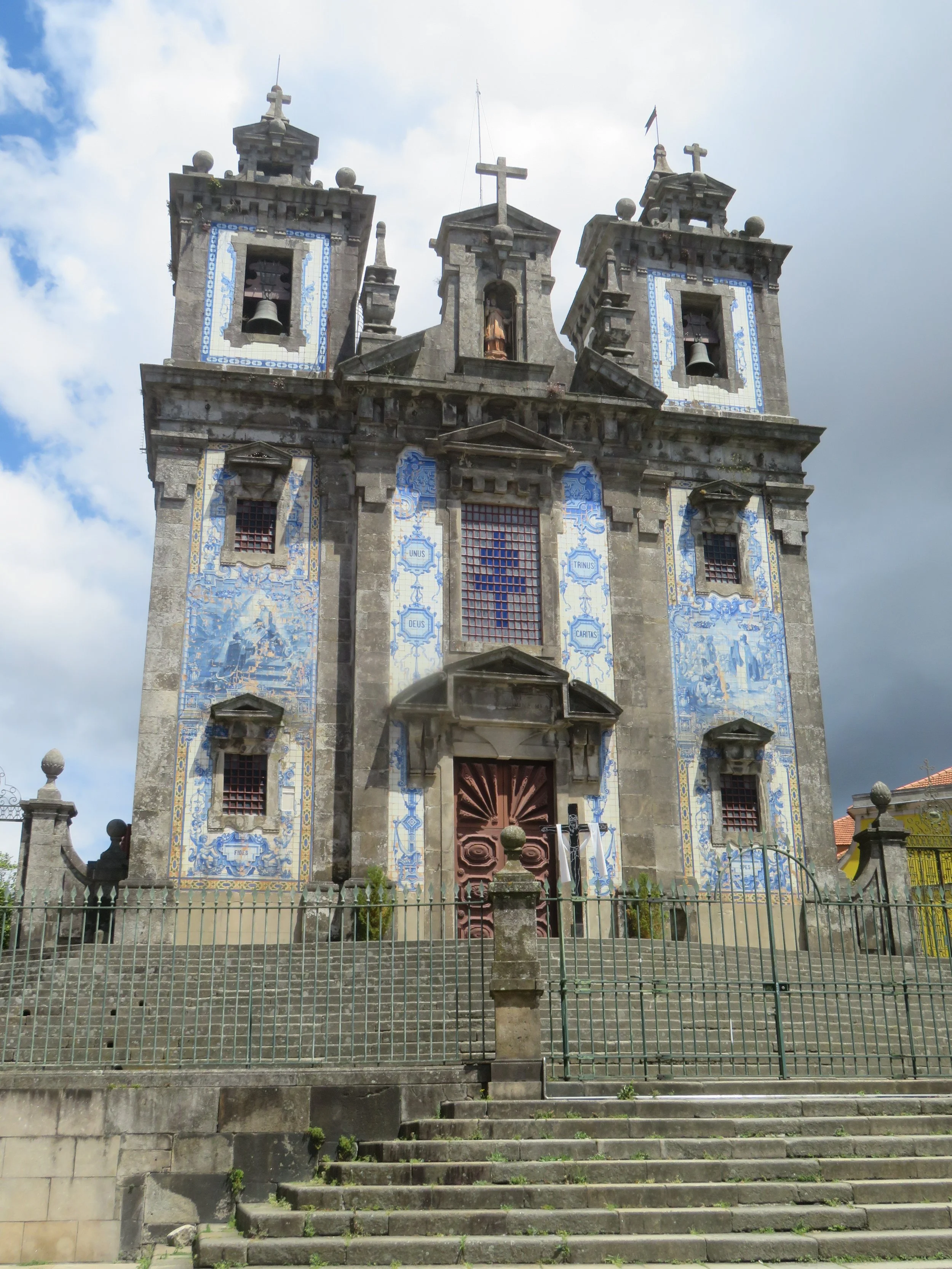
Igreja de Santo Ildefonso
Visible from most anywhere in Porto’s city center, the Torre dos Clérigos, standing next to the Clérigos Church, dominates the cityscape. The 18th-century Baroque-style church, with its lavish interior, is the venue not only for the celebration of Mass but also for cultural events, concerts, and choral performances. Its 75.6m (250’) bell tower’s 240 steps can be climbed to the top.
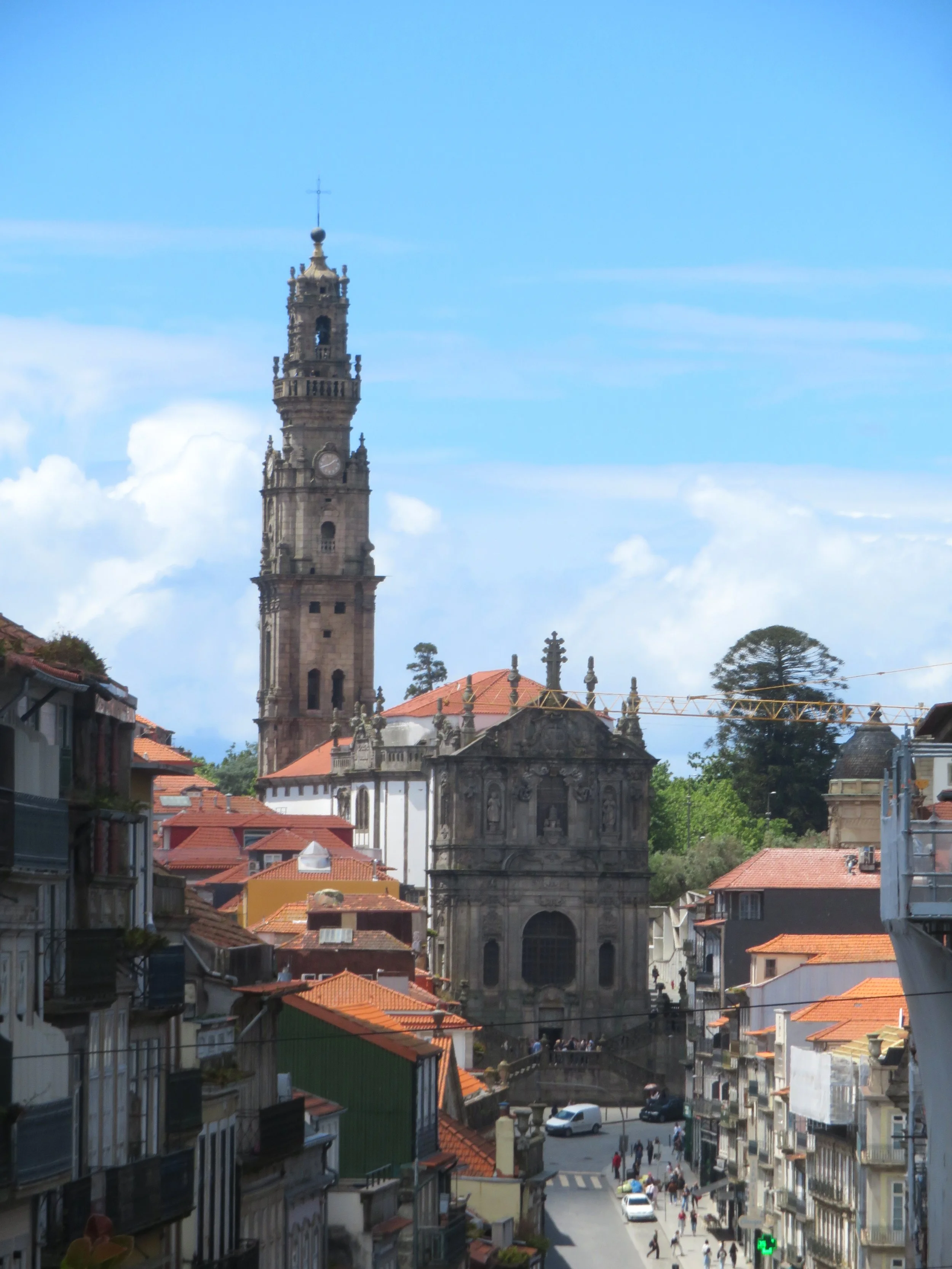
Clérigos Church and its bell tower dominate the cityscape in Porto’s historic center
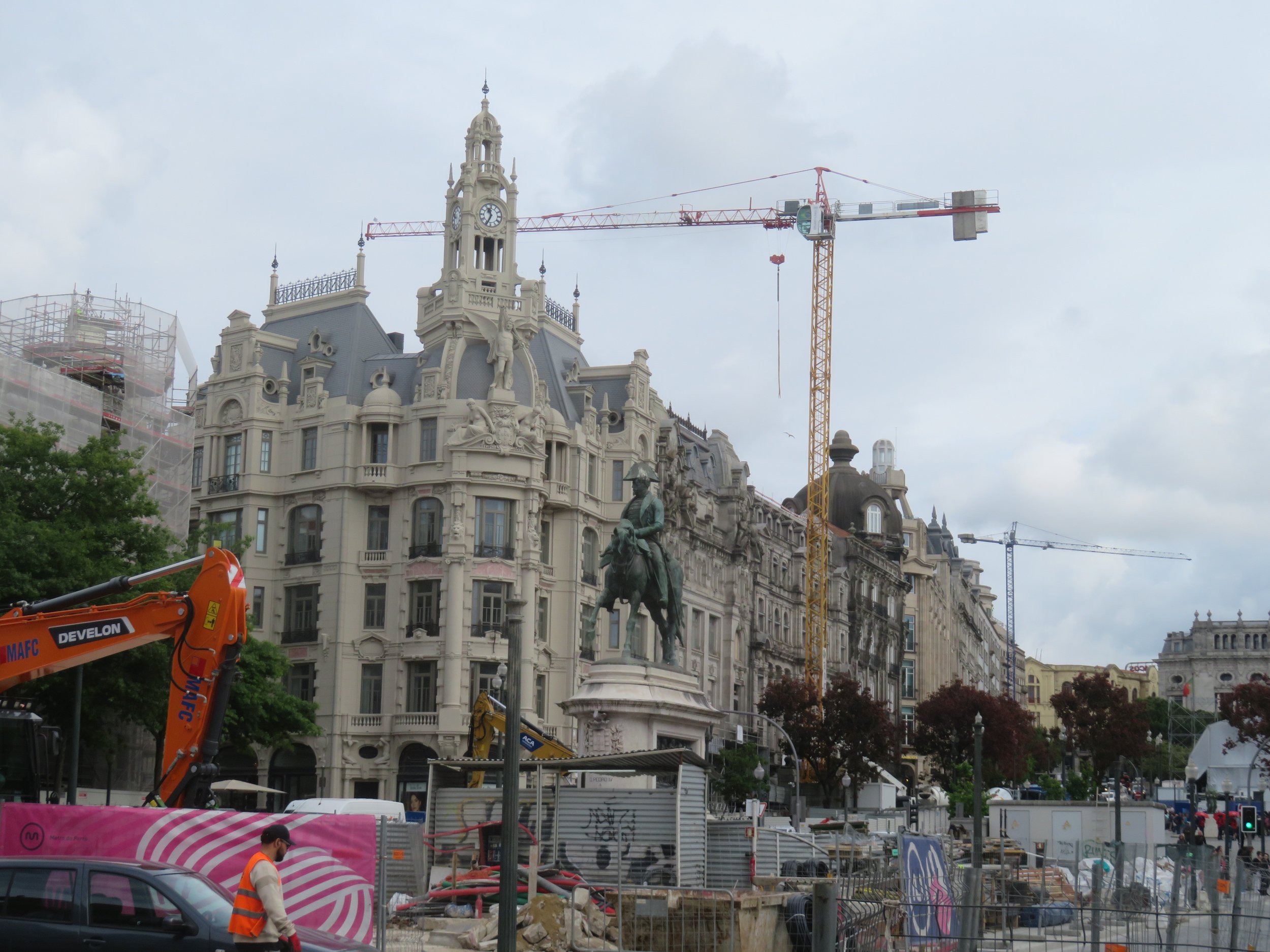
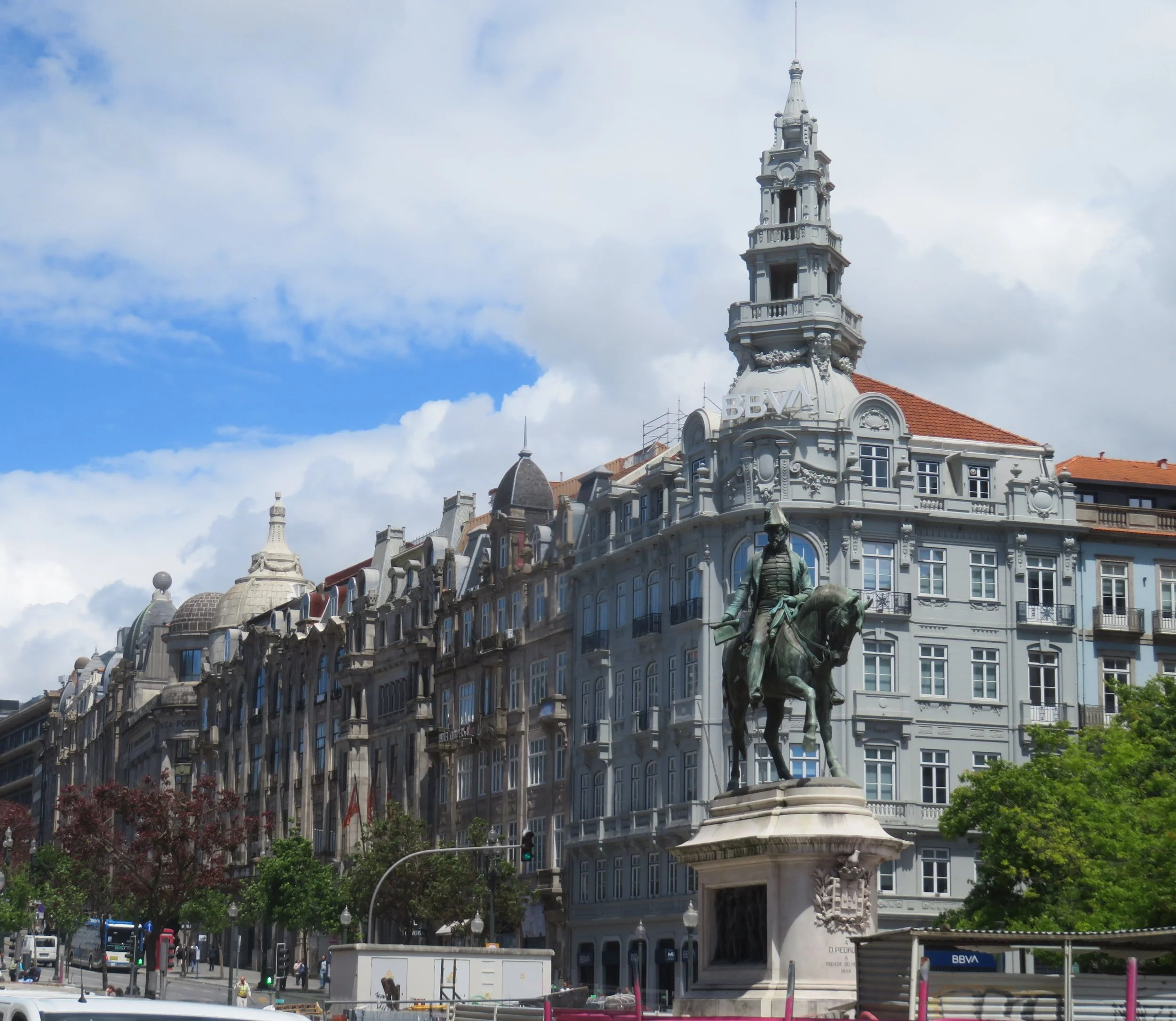
A new Metro subway line is currently being constructed in downtown Porto, which accounts for major disruptions in traffic and pedestrian paths. Praça da Liberdade (Liberty Square) is smack dab in the middle of the city center. Unfortunately, the current construction significantly obliterates much of the plaza from the view. Rising above it all, however, is the equestrian statue of Dom Pedro IV, king of Portugal between 1826-1834 and the first emperor of Brazil.
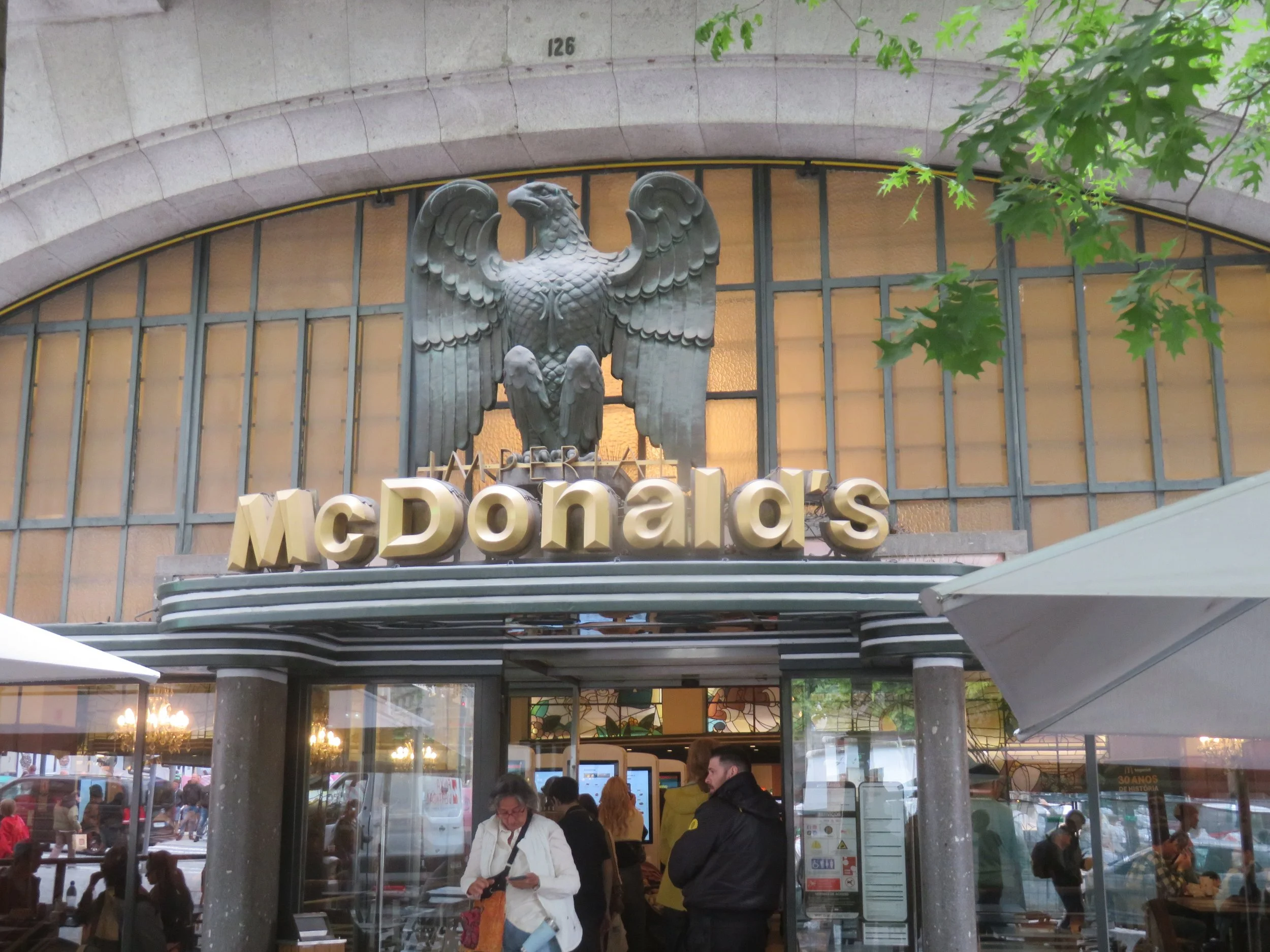
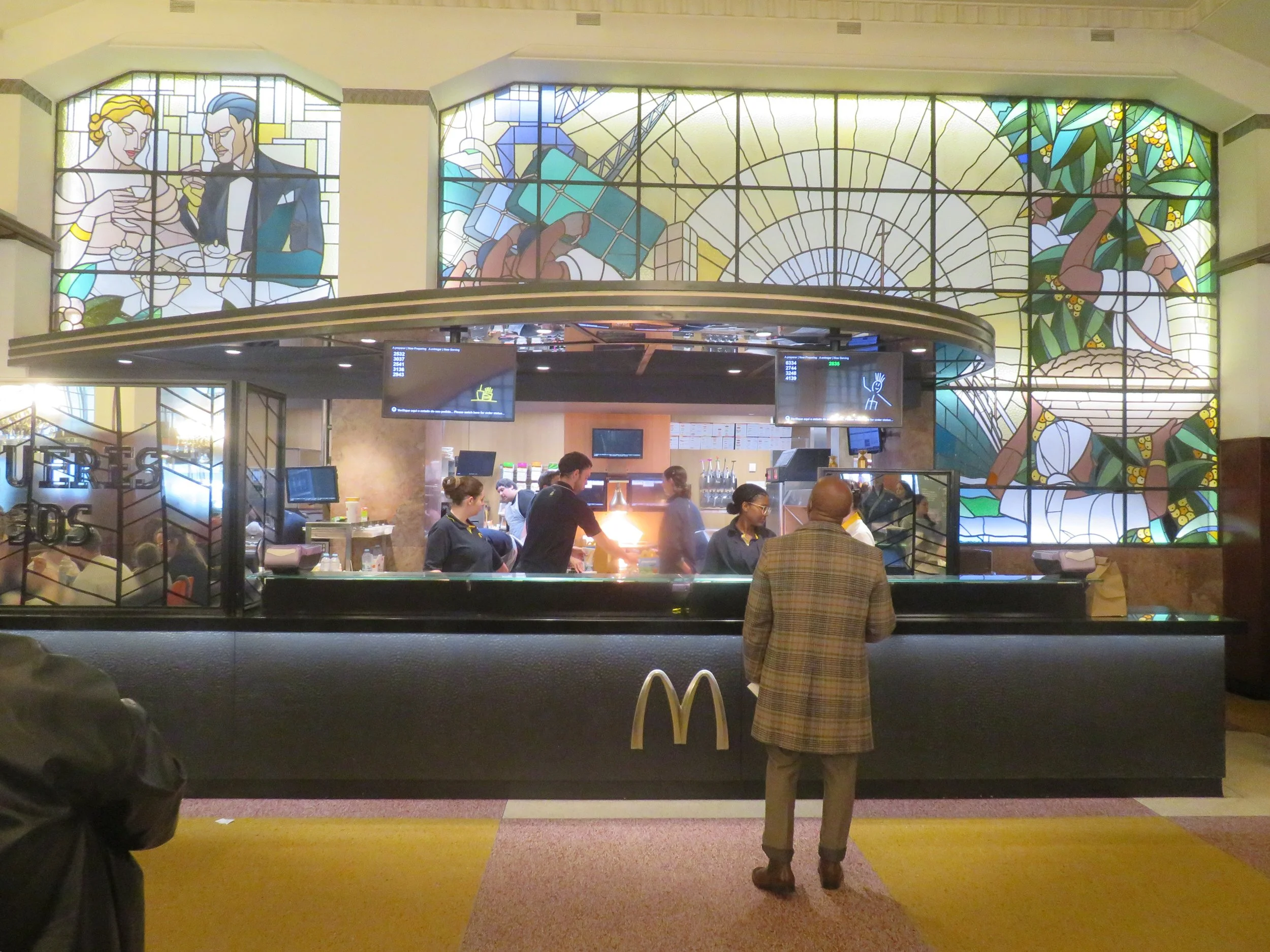
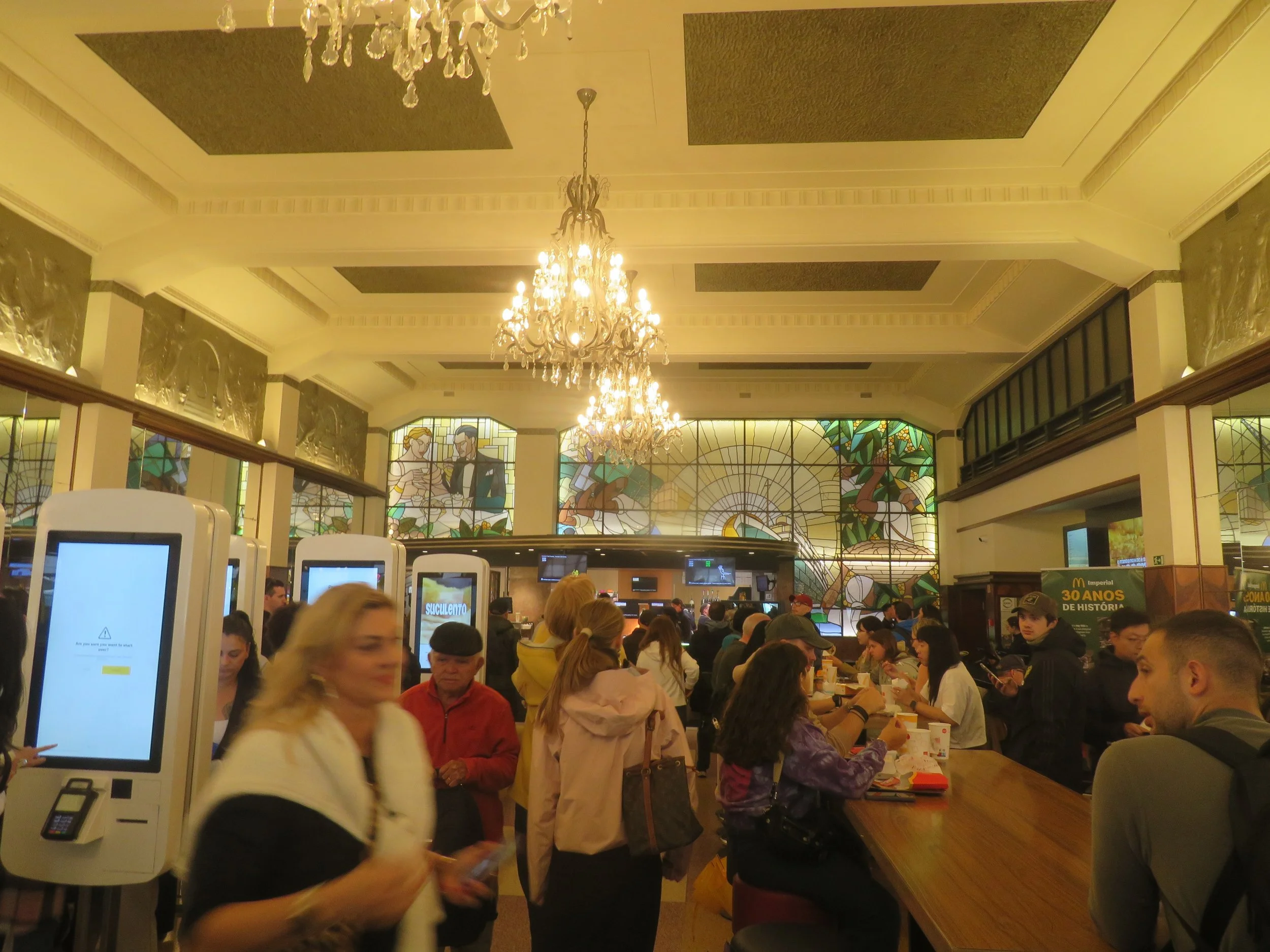
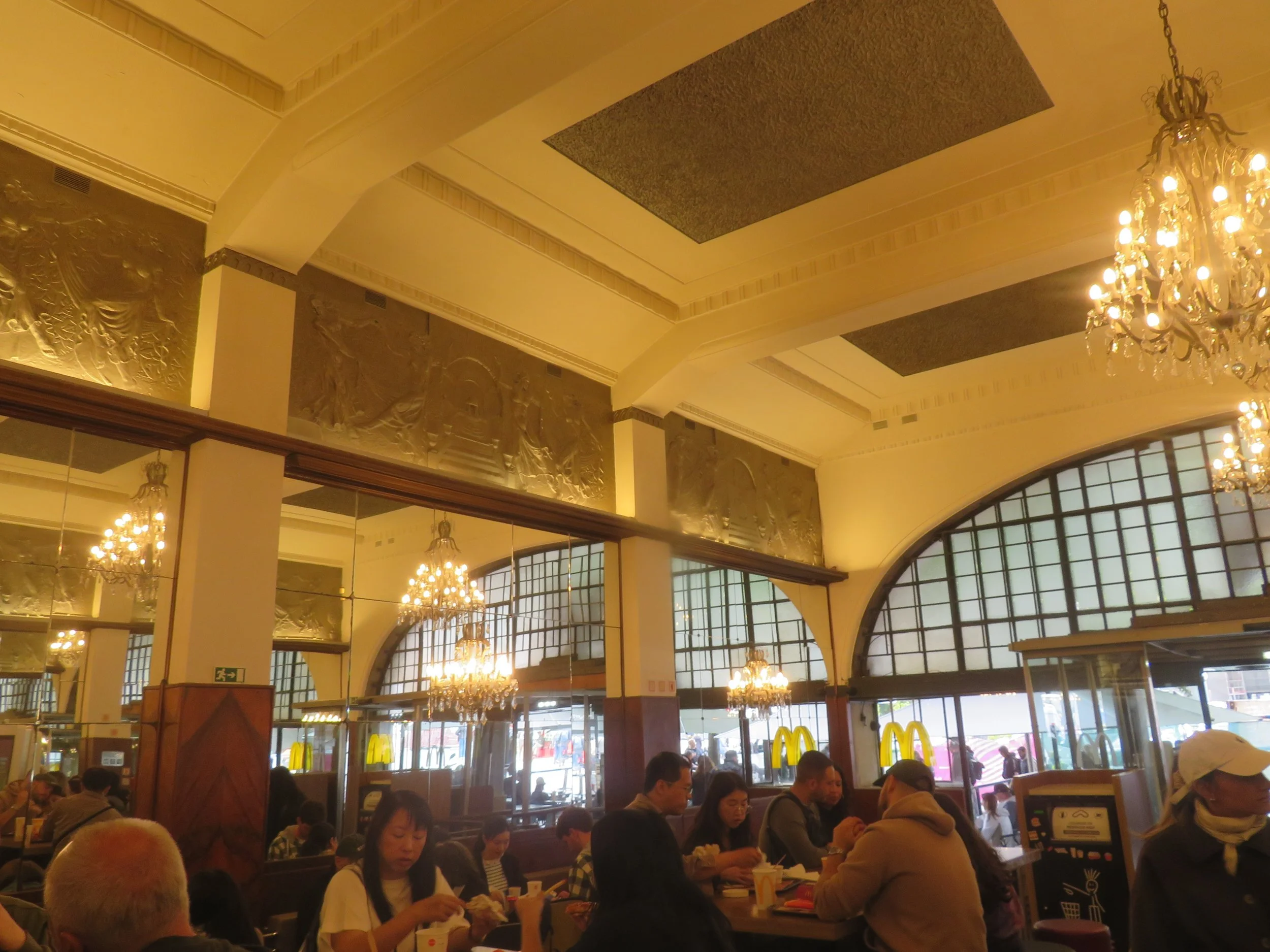
We couldn’t resist stopping in for a quick look at what is touted as ‘the Most Beautiful McDonald’s in the World’. McDonald’s Imperial in Praça da Liberdade opened in 1995 and occupies the historic 1930s era Café Imperial, a landmark Art Deco café and cultural hub that once served artists, writers, and political dissidents. This two-level McDonald’s managed to preserve a giant eagle sculpture by Henrique Moreira at the entrance, art deco stained glass windows, crystal chandeliers, and grand vaulted ceilings. It definitely ain’t your corner McDonald’s. They even serve pastel de natas!
The 18th-century Igreja do Carmo and Igreja dos Carmelitas are two churches that stand almost side by side, an unusual situation. Separating them and hardly noticed is a 1 meter wide (39 inch) house known locally at the Casa Escondida (Hidden House). According to legend, the house was built so that the two churches would not share a common wall and would thus prevent any relations between the nuns of Igreja dos Carmelitas and the monks of Igreja do Carmo. We totally missed this, but it was such an interesting piece of trivia, and I thought I’d include it anyway, especially since we visited the church twice and never realized it was actually two churches.
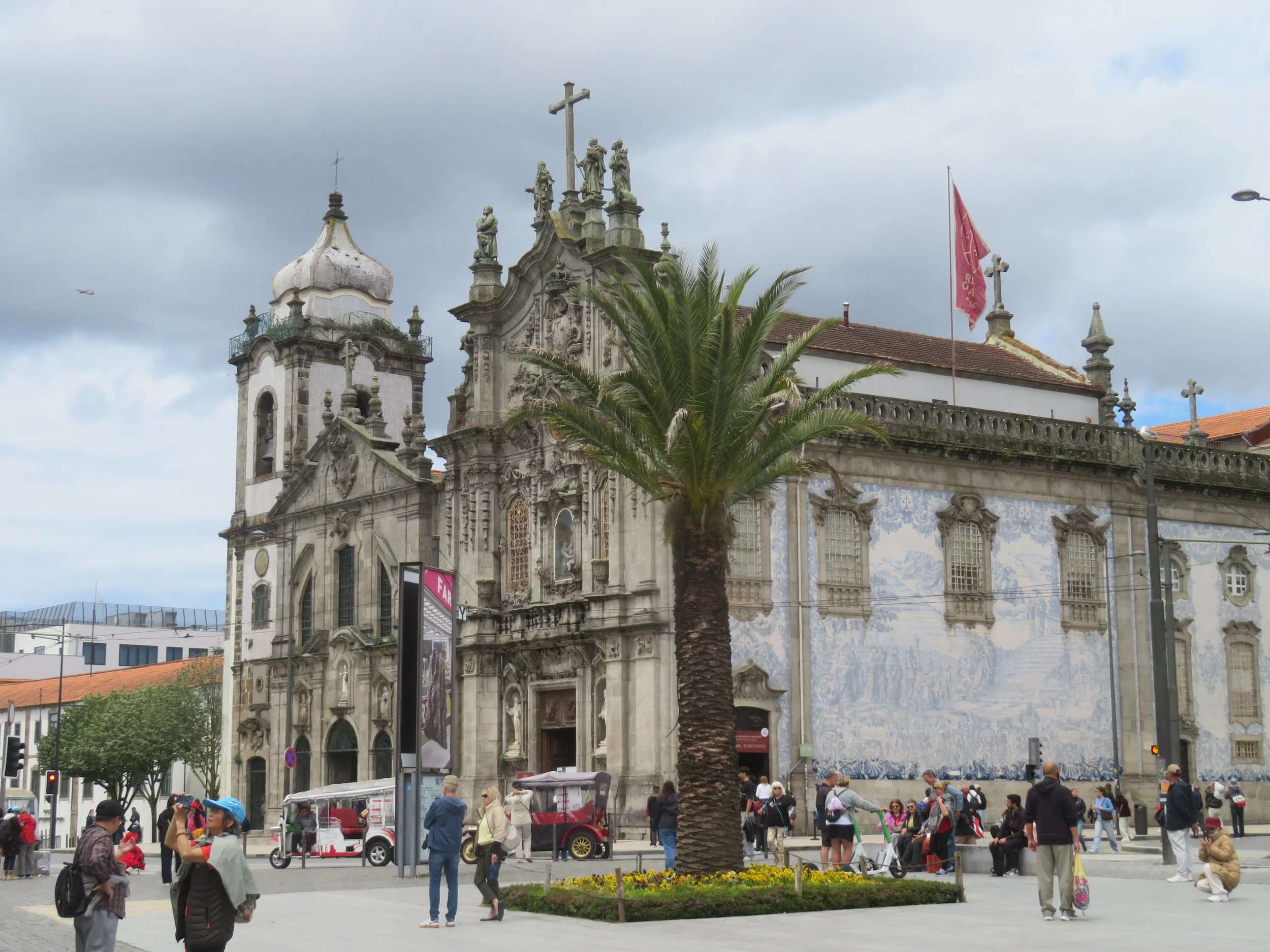
Two churches side by side with a one meter house in the middle.
The rain came rather unexpectedly, and it arrived in torrents. It chased us into a small cafe for a late lunch and abated enough for us to make a scramble to get back to the hotel with a minimal soaking. We’d passed a particular piece of street art several times in our walks to and from the hotel. I photographed it and then did a little research. ‘Luanda Leaks’ was created in 2019 by artist Kilos. According to Kilos’ website “This artwork features an African child sitting naked, with a blue bag over his head, desperately flailing his arms in a futile attempt to escape. This piece directly critiques the Luanda Leaks scandal, where the embezzlement of billions by Angola's elite left the population suffocating under the weight of corruption.”
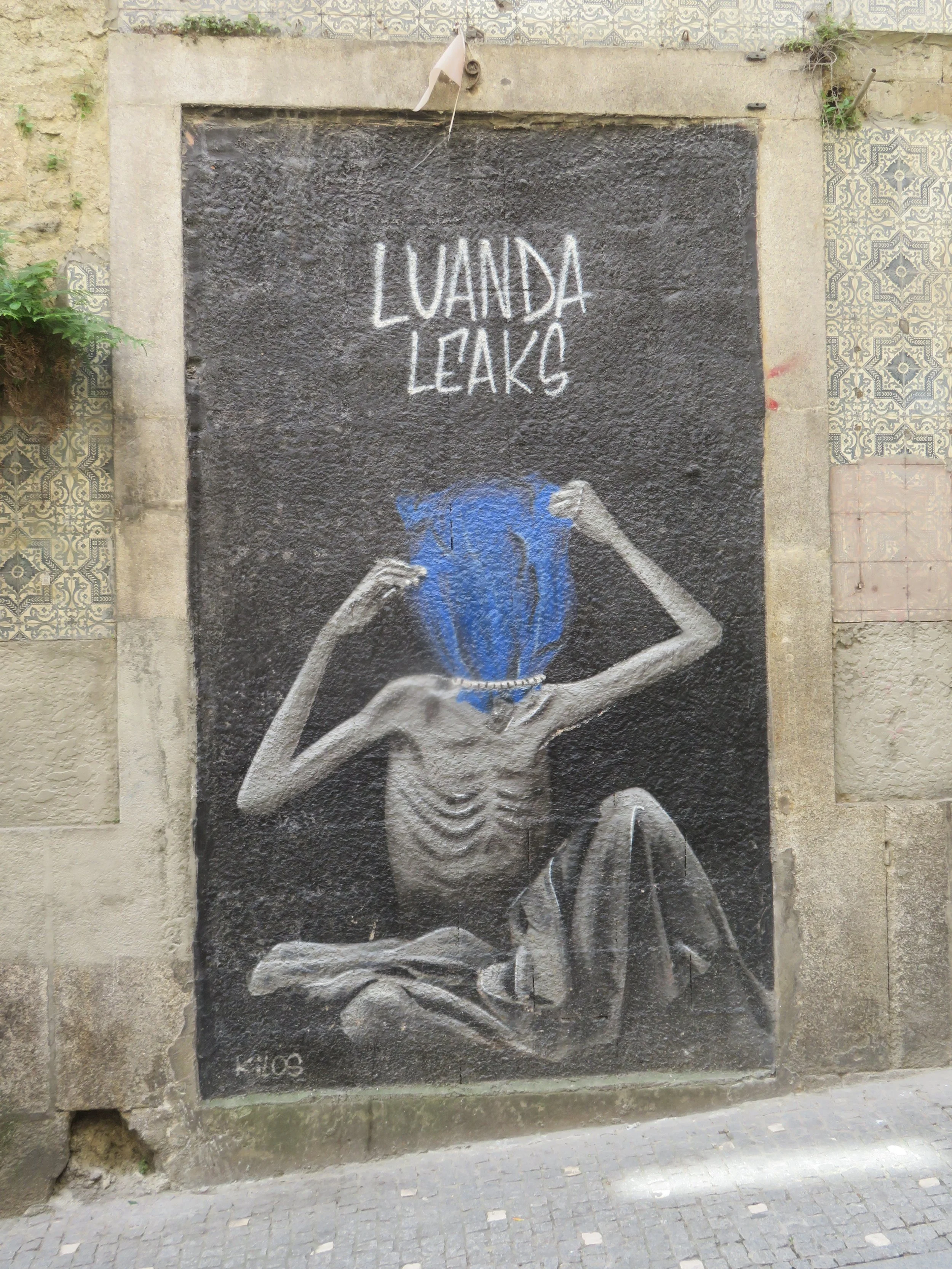
Sac Azul (Luanda Leaks) by Kilos - street art in Porto
Our late lunch sufficed for dinner, and feeling that we’d seen about as much of Porto as we could see this trip, we called it a day. There’s so much we missed. We could easily have spent a week here and still not seen and experienced all there was to see, but we felt the need to move on.
Ever heard of the Knights Templar? Ever read Dan Brown’s DaVinci Code or seen the movie? Yup, next time we’re heading to Tomar, widely regarded as the historical seat of the Knights Templar. Come on along for the ride.