
A Trip to Finisterre - The End of the World
/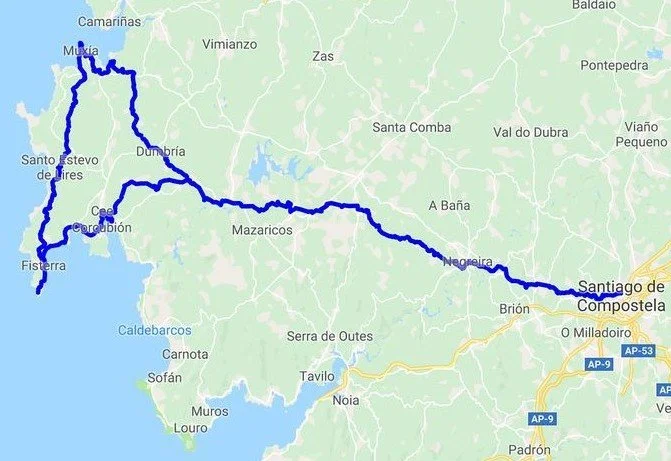
It’s Finisterre in Spanish, in Galician it’s called Fisterra. It is that mystical place with sea-monster-infested waters that the Romans called the end of the world. We could have walked; it’s an extension of the Camino. We booked a 9-hour bus tour to Finisterre instead. The tour described seven major stopping points and ticked all the boxes for highlights of the area.
We don’t mind riding buses, but bus tours are notably not our favorite way to visit an area. The guides generally talk too fast (in multiple languages), gloss over the stuff we find interesting and the buses are crowded. This was, however, the best we were able to do in our self-imposed timeframe if we wanted to see the area and we did. So off we went.
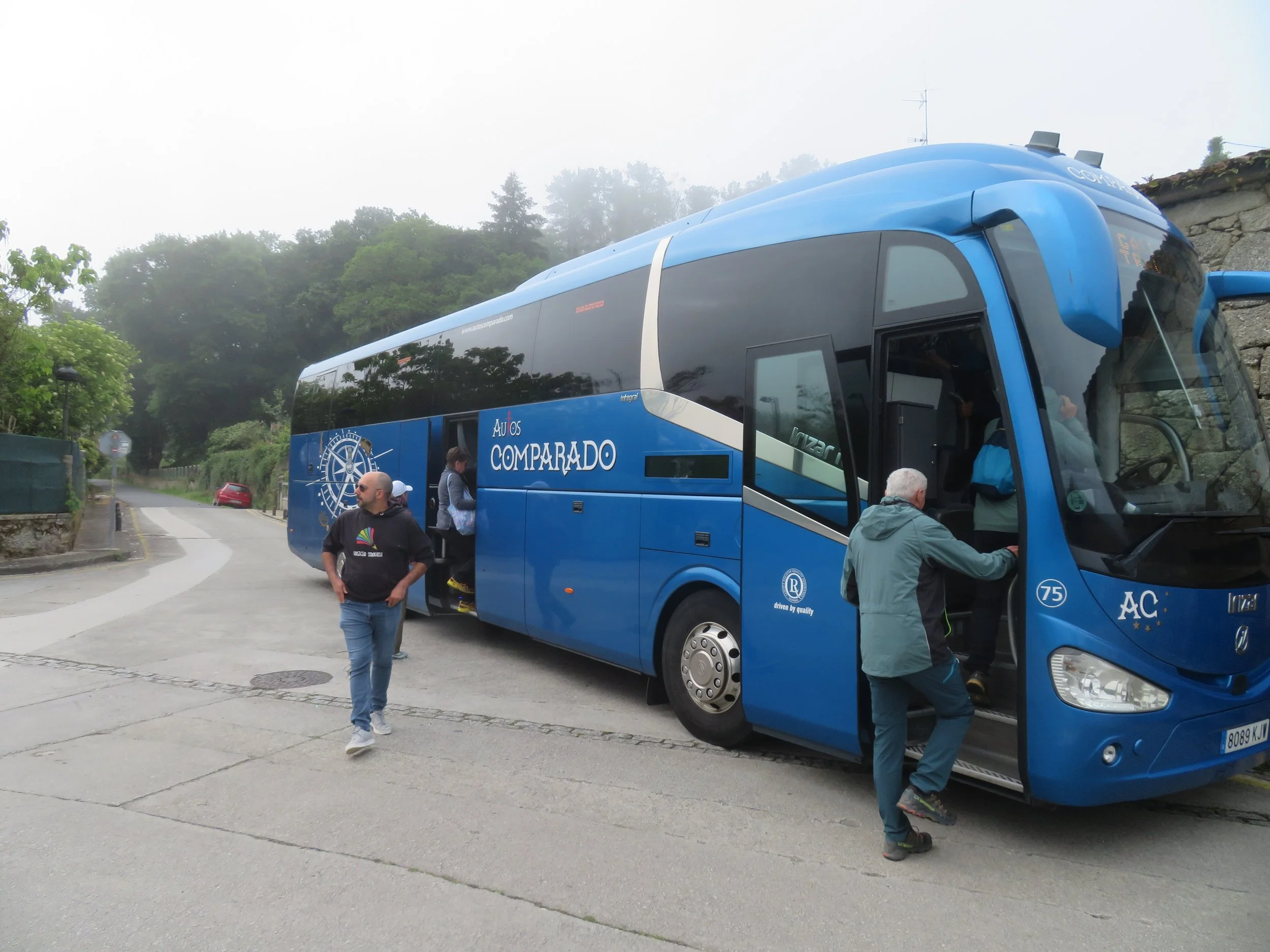
All aboard!
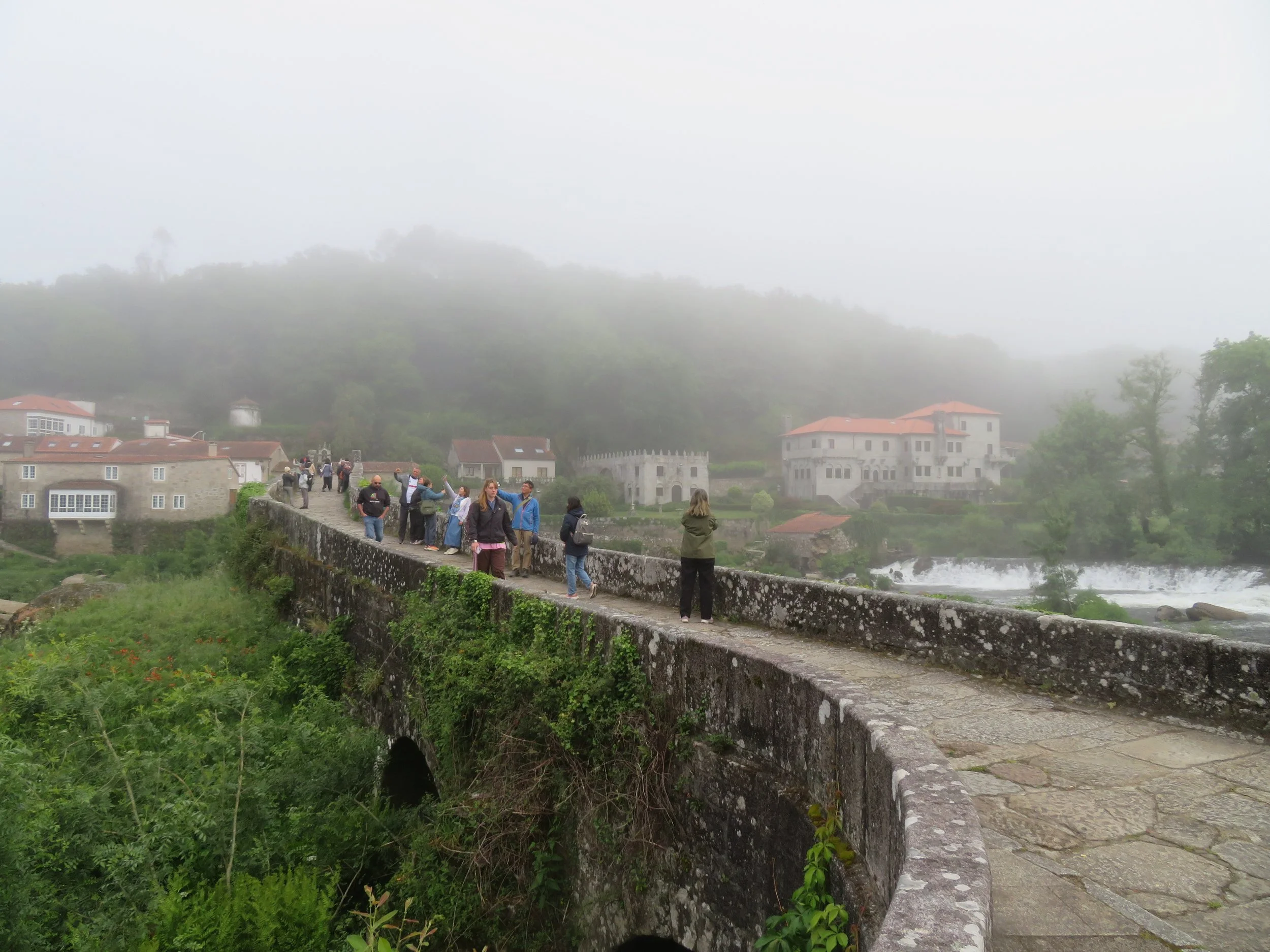
The first stop was Ponte Maceira, a medieval bridge constructed on the pillars of an ancient Roman bridge over the Tambre River. There are numerous legends connected with the bridge and our guide recounted the most popular one.
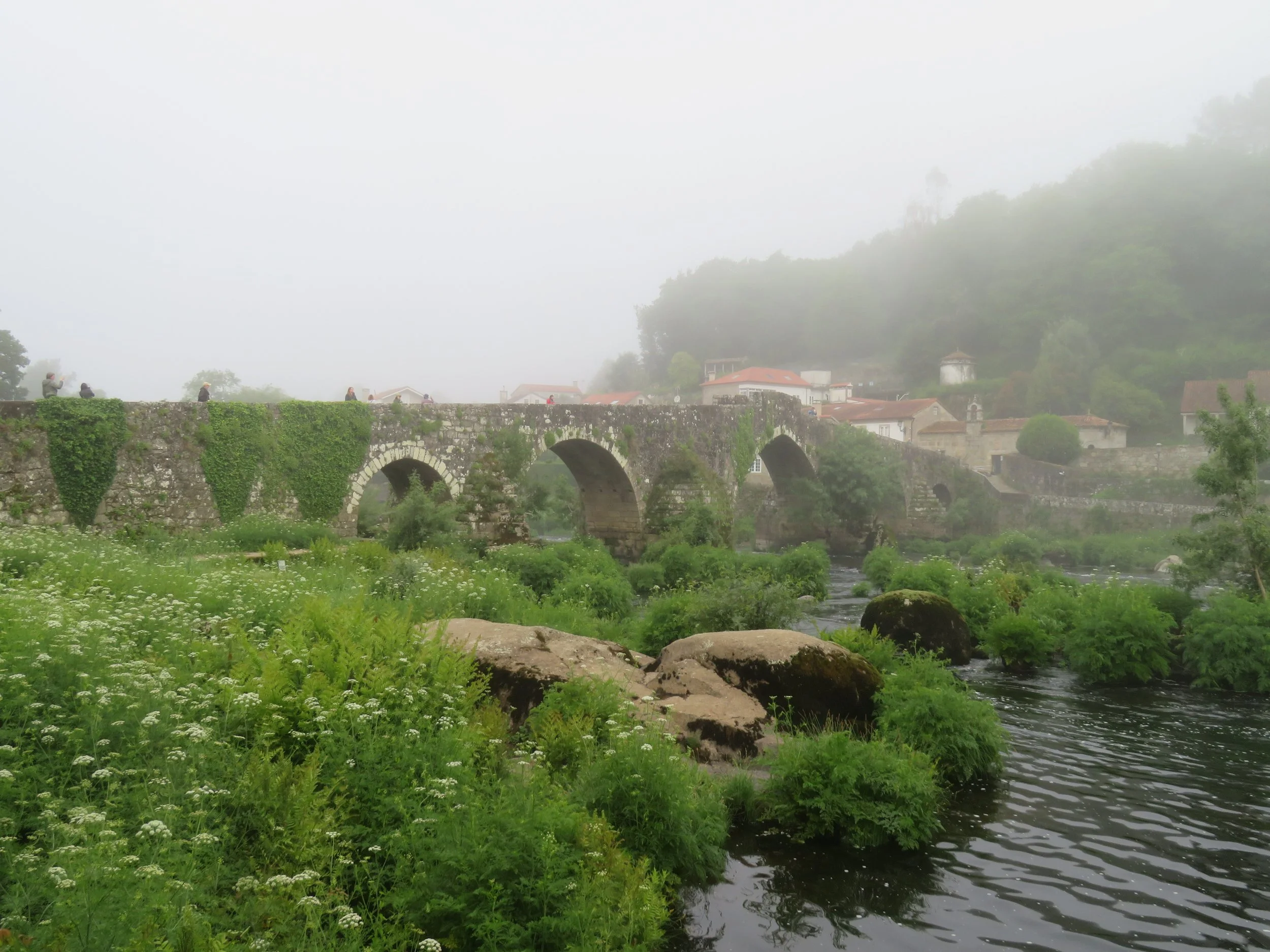
When St. James’ disciples fled south searching for a place to bury the St. James’ decapitated body, they were pursued by Roman soldiers. The Christians managed to cross this very bridge, but when the Romans tried to follow them, the bridge collapsed by "divine" intervention, allowing the Christians to escape.
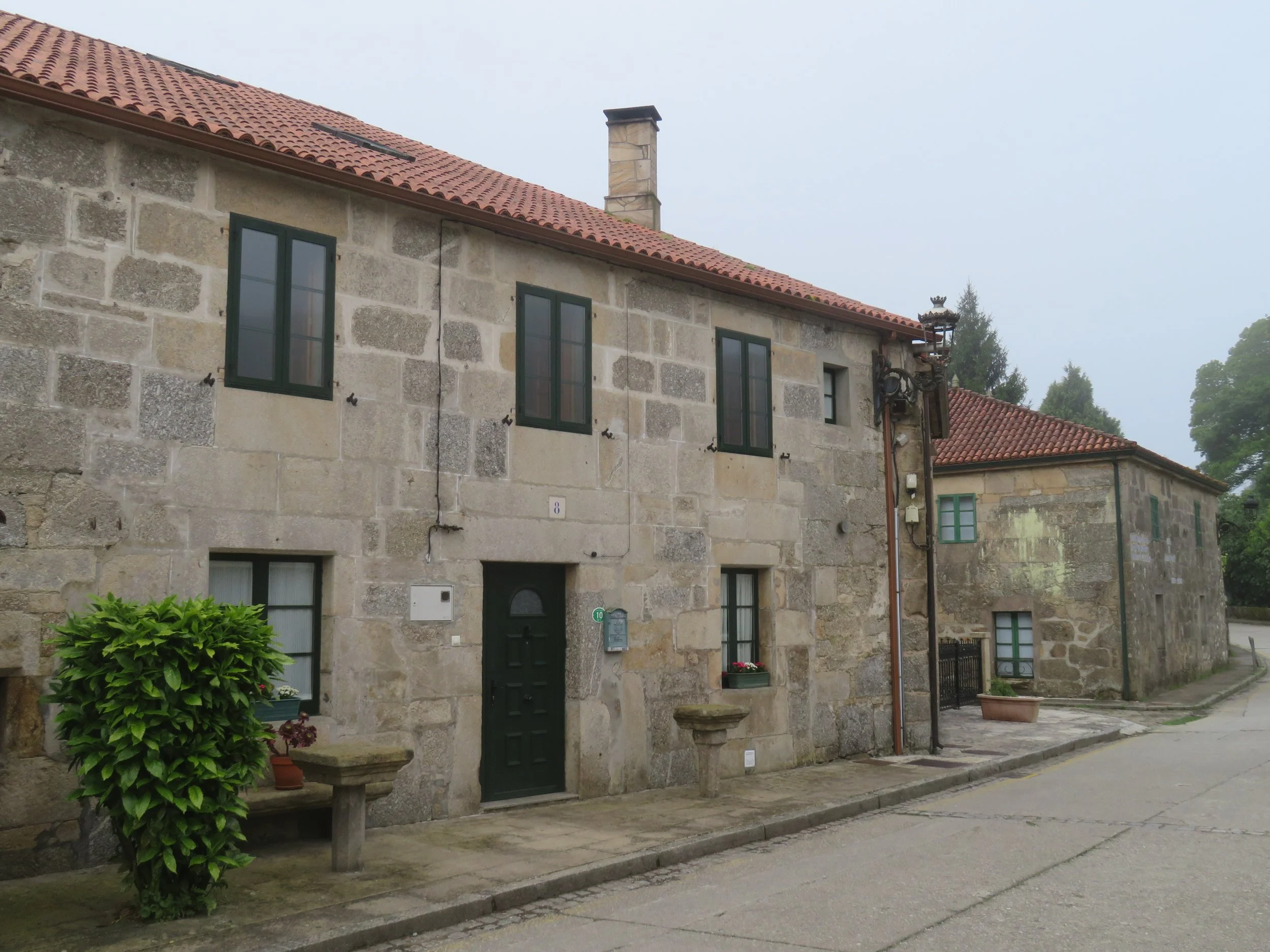
The town’s cobblestone streets and traditional Galician buildings added to the historical allure of the place.
We piled back into the bus and sped along the Costa da Morte (“Coast of Death”) known for its treacherous maritime dangers and shipwrecks. We could see the floating mussel rafts (bateas) in the rich estuary waters. The area is also known as the Costa do Marisco for its abundance of seafood and shellfish.
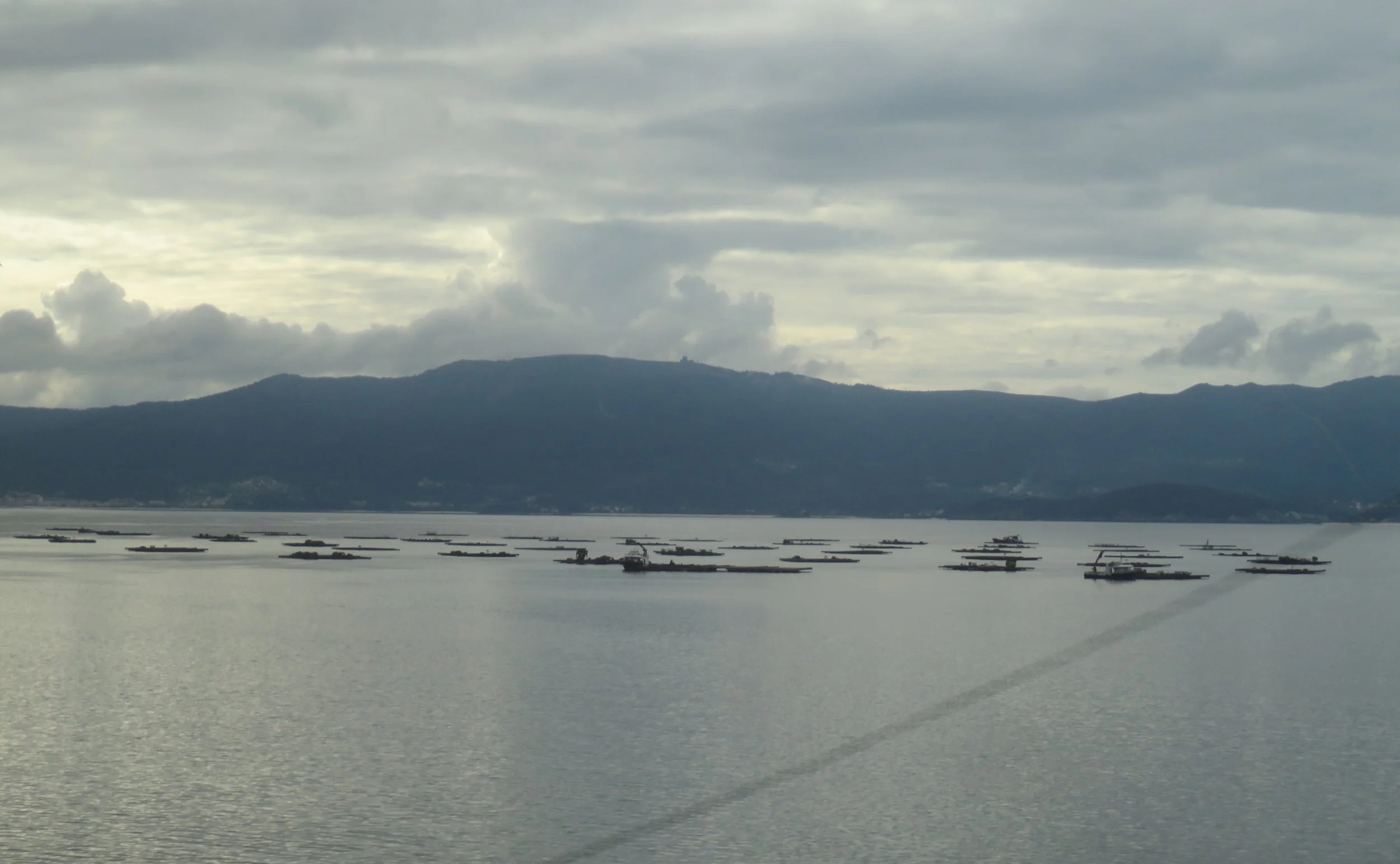
‘Bateas’ - floating mussel farms
In La Coruña’s Old Town, we climbed the steep stone steps to visit Santa Maria do Campo church, one of the city’s oldest surviving religious buildings, dating from the 12th century.
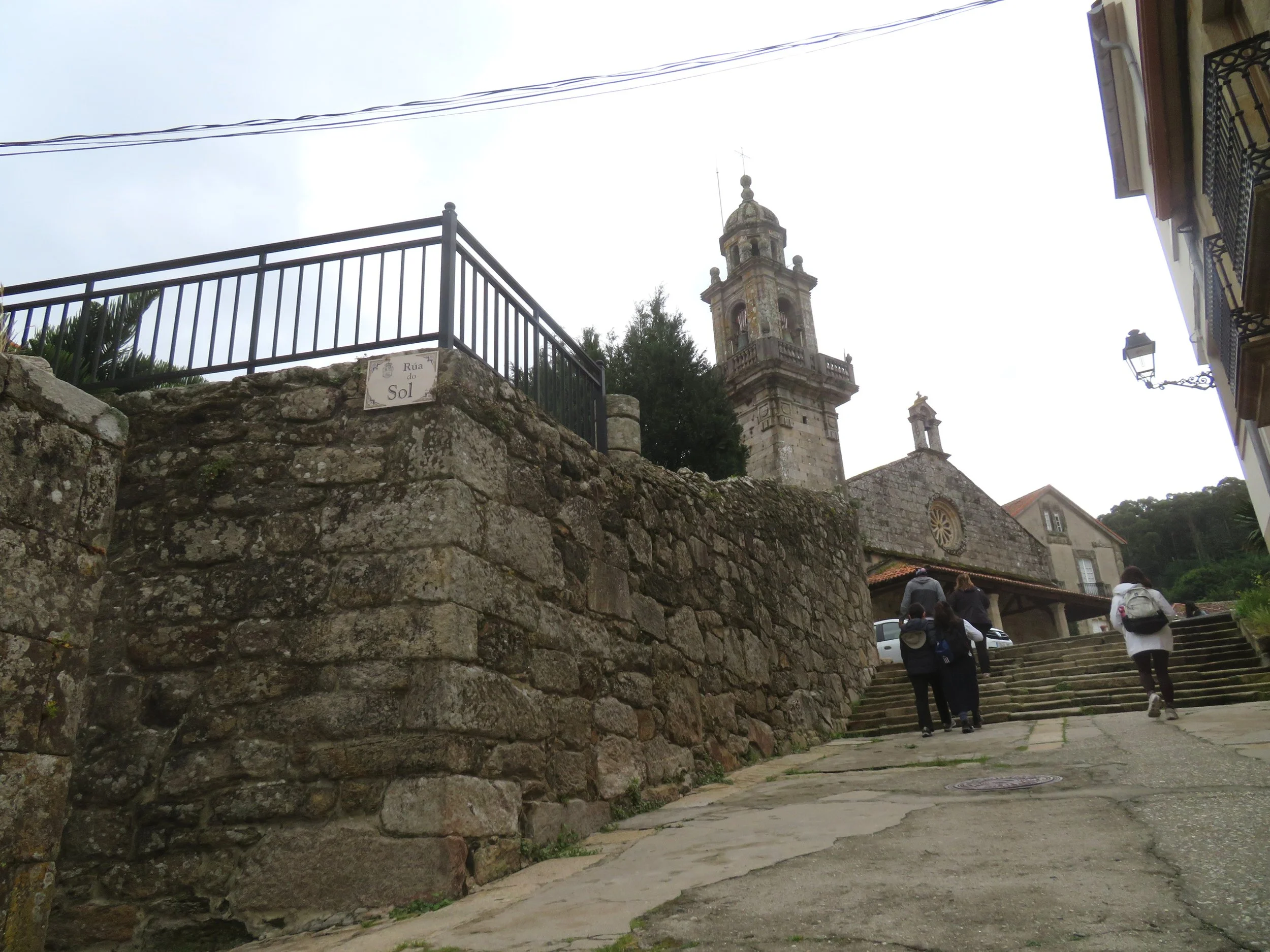
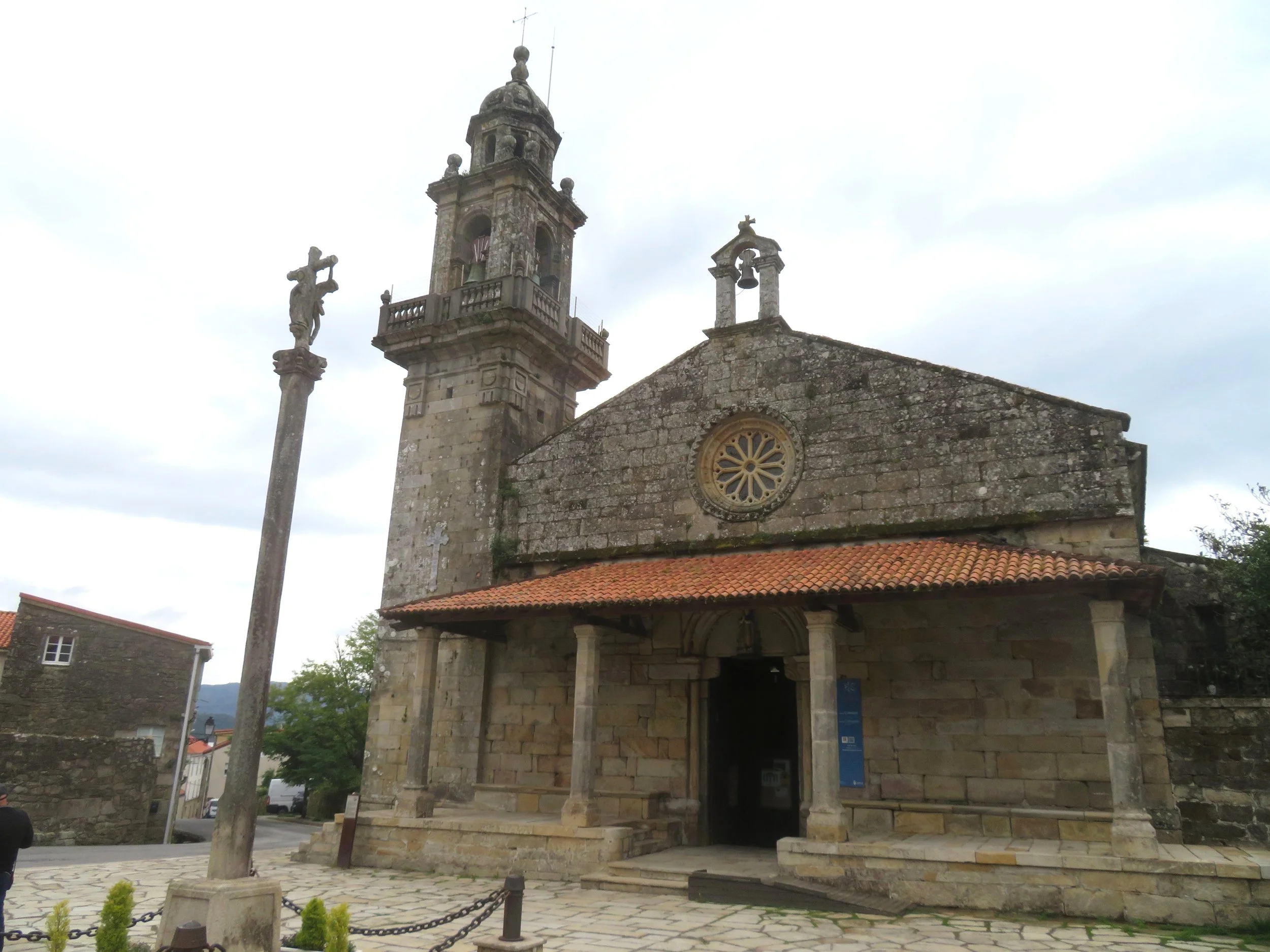
The church is particularly noted for its nave in the shape of an upturned ship’s hull, known as the Maritime Gothic style.
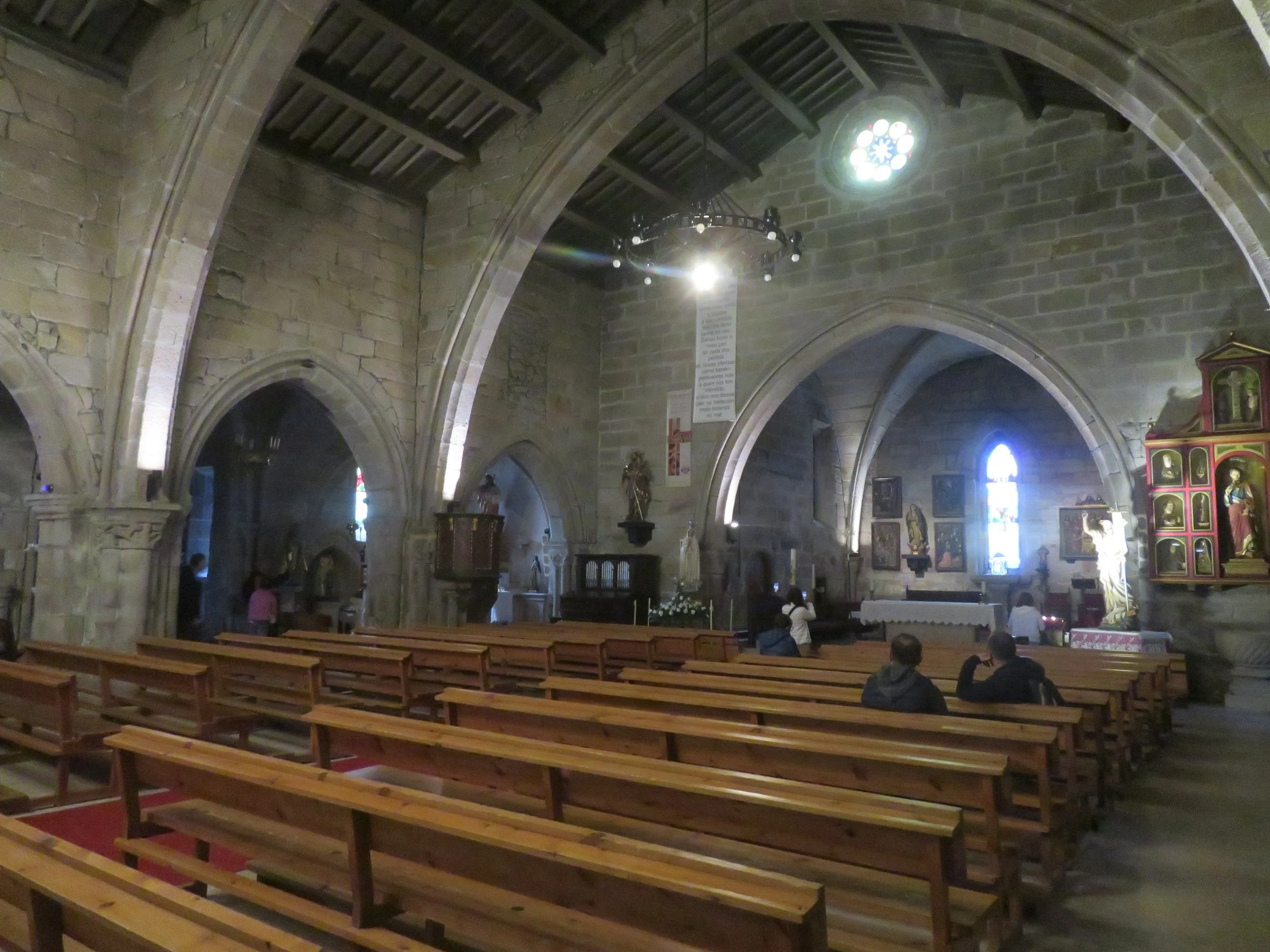
Maritime Gothic architechtural style
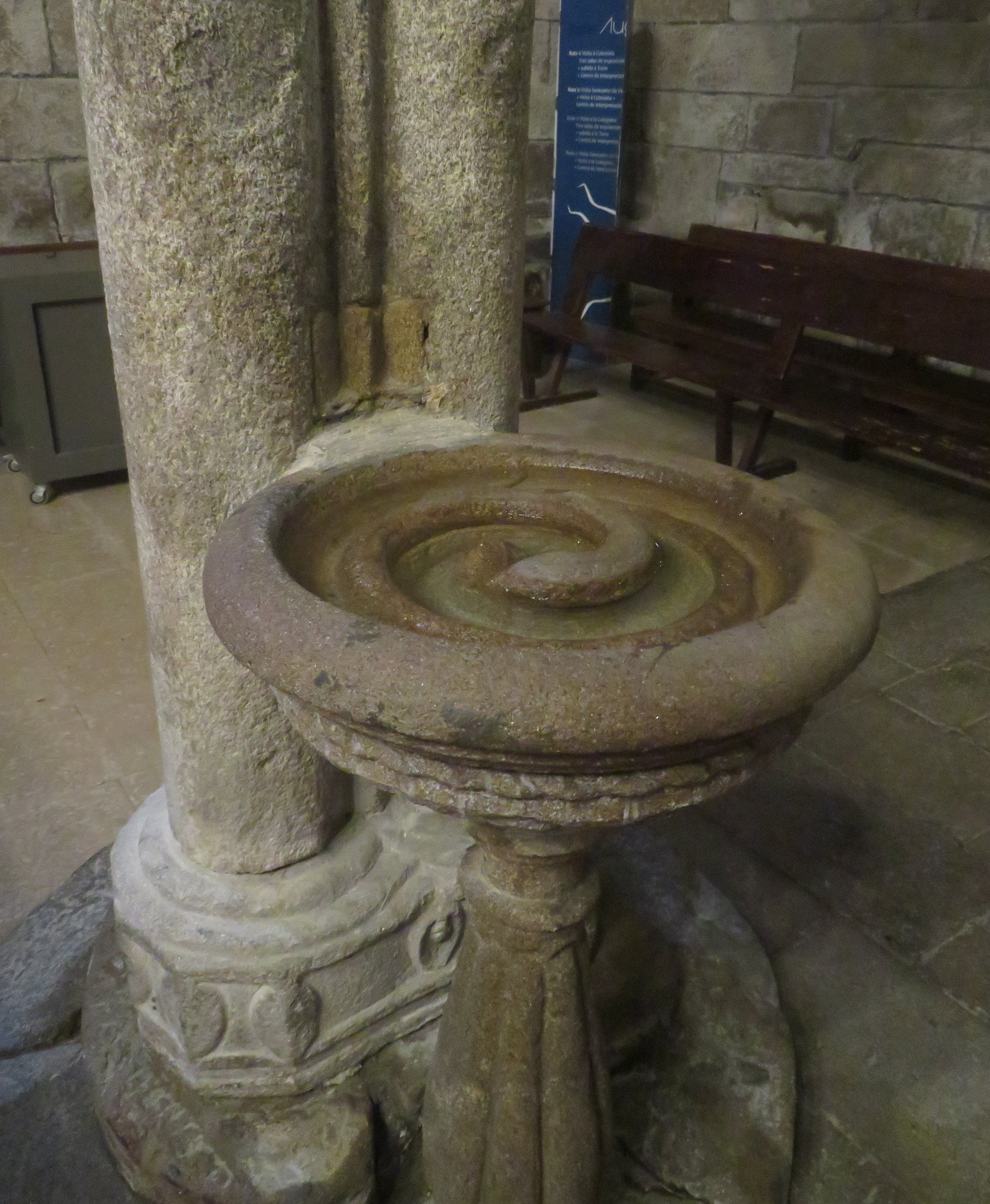
The holy water font was unusual, to say the least. A snake lay at the bottom of the font beneath the water level, symbolic of good over evil. The snake didn’t attack when I dipped my fingers in to bless myself, which I took as a good sign.
The guide corralled his flock once again, and after a quick pitstop in Muros, we headed to Spain’s Longest Granary. The granary is 33m (108’) long and was built in 1760 with an addition added in 1783.
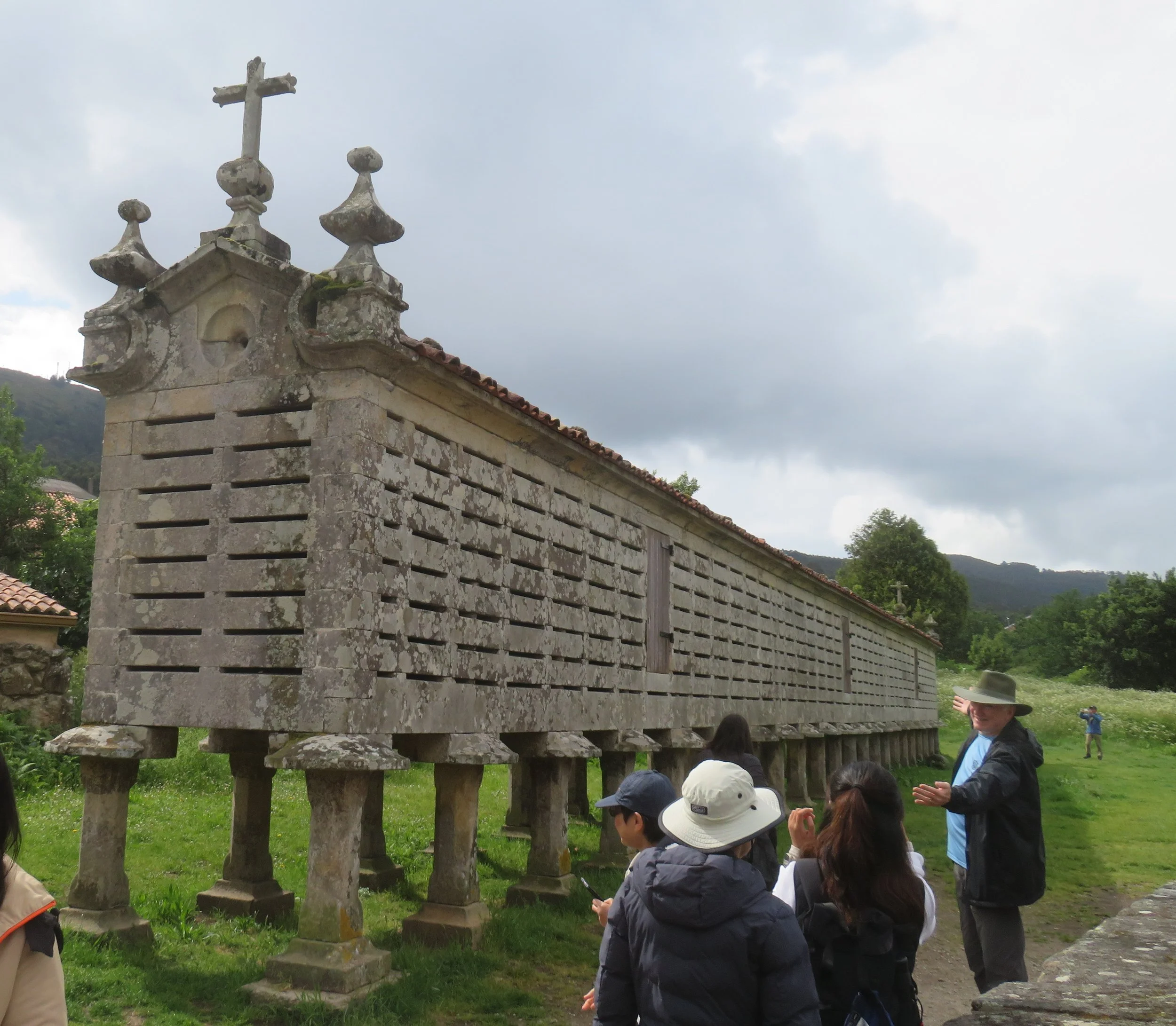
The granary was owned by the church and required its great size in order to hold the parishes’ grain stores. The Hórreo de Carnota is a National Monument and one of the most famous examples of the Fisterrán style of Galician architecture.
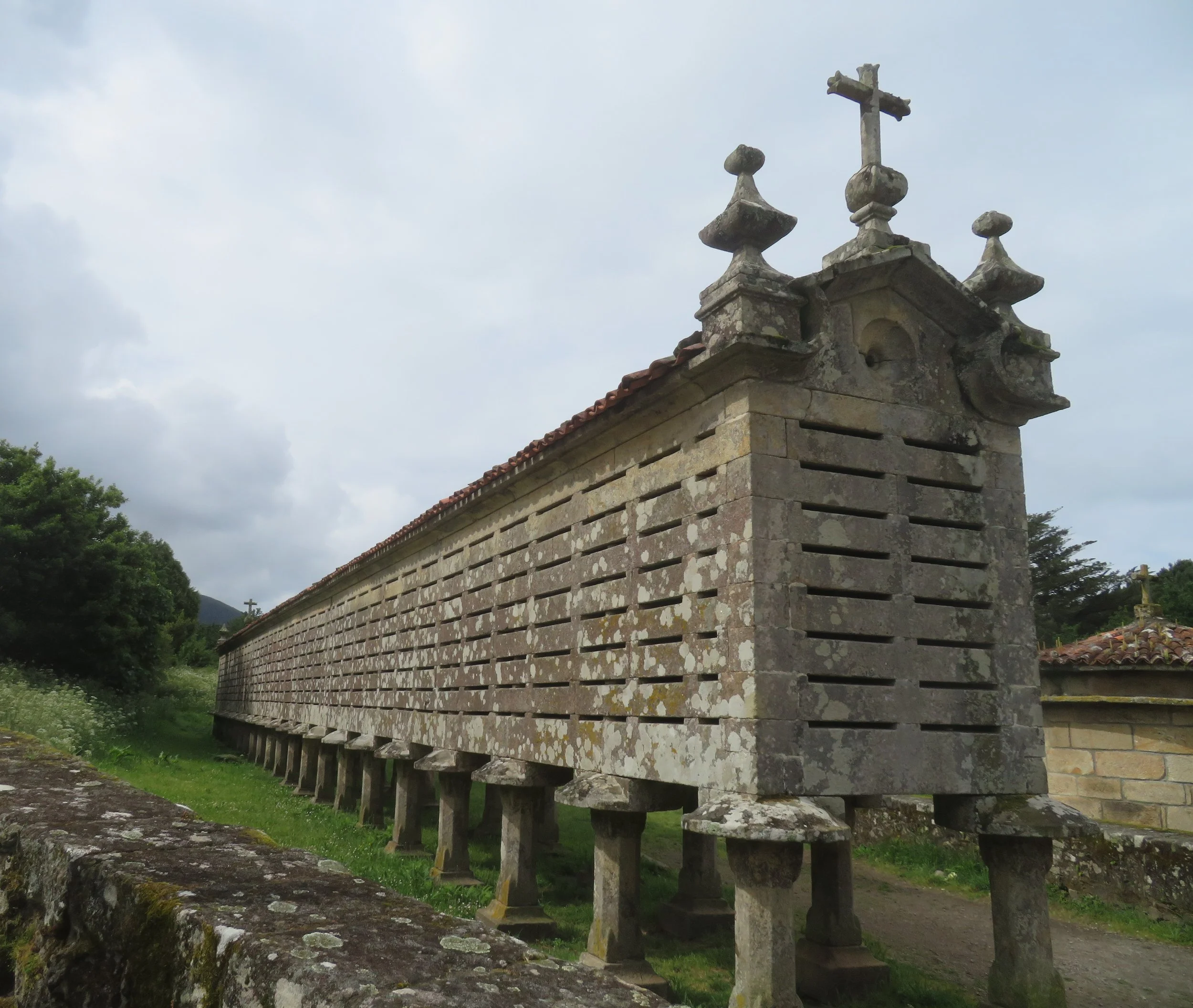
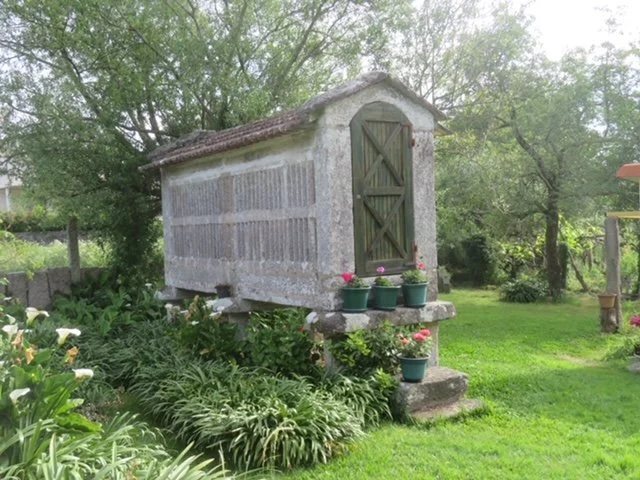
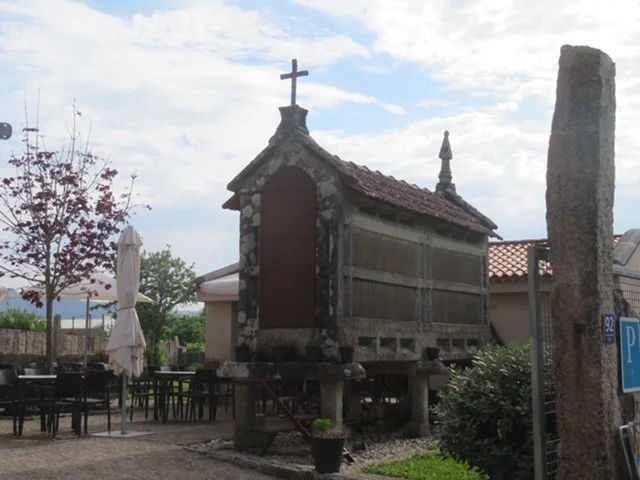
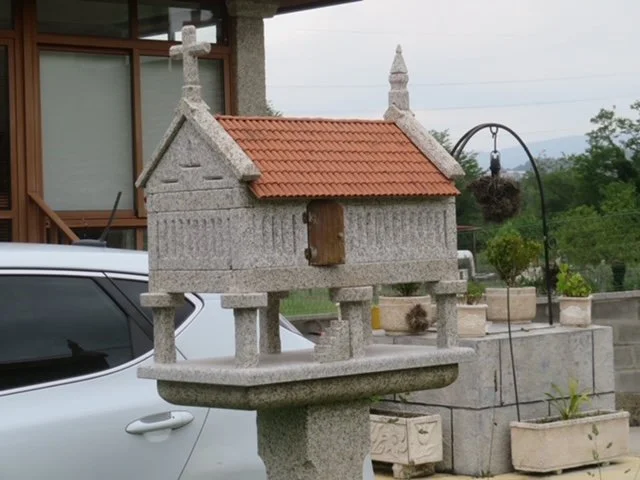
We’d seen ‘horreos’ throughout our walk through Portugal and Spain. At first, we thought they were raised burial vaults, but seeing so many of them, large and small, in so many yards, we finally asked someone. The horreos were constructed to protect stored food from moisture, pests, and animals. Built on stone pillars with venting at the ends, the elevated design allowed air to circulate, drying the grain naturally and preventing rodent and animal access.
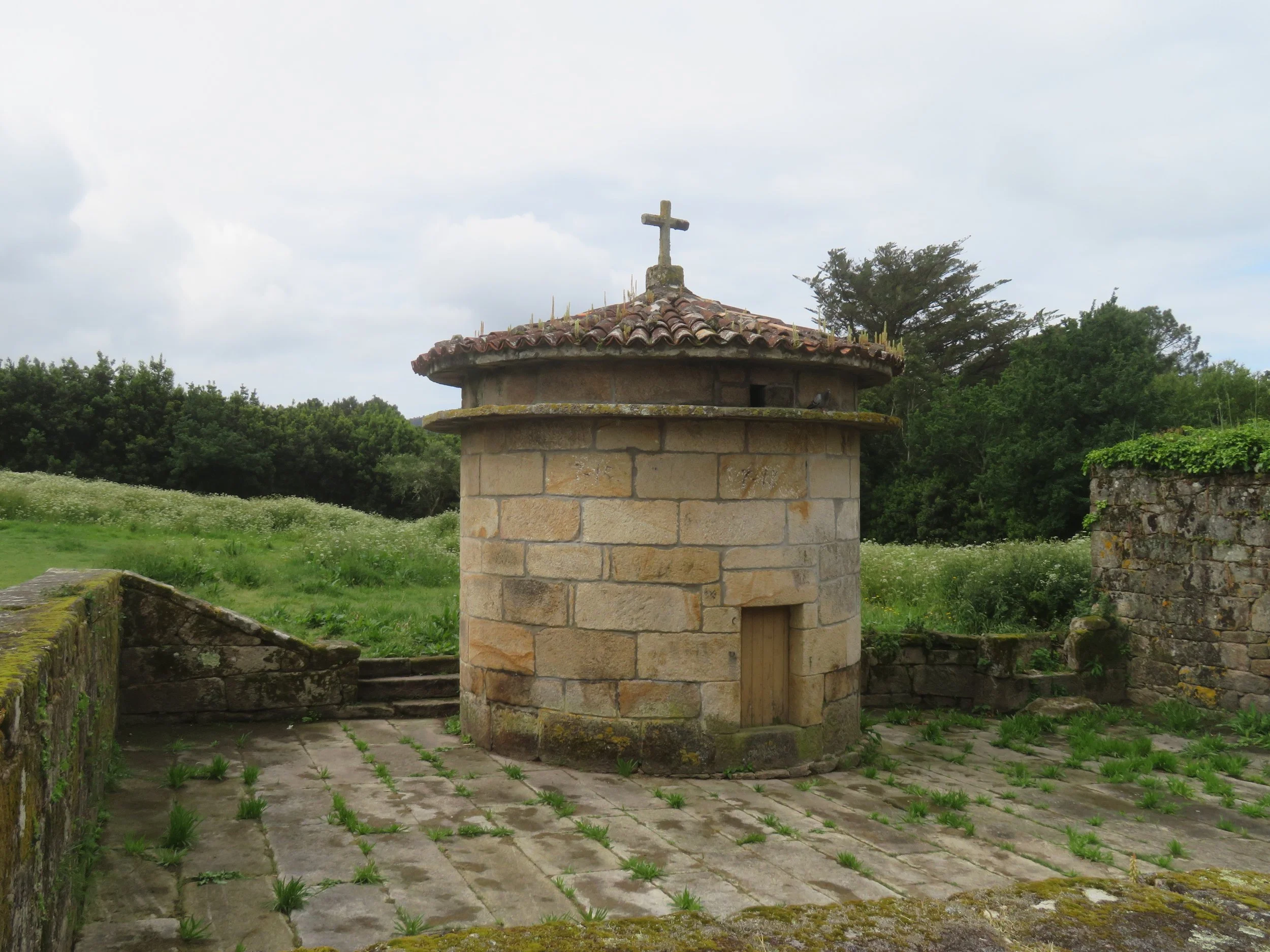
Next to the Horreo de Carnota stood a large, round, stone ‘pombal’ which translates into English as a dovecote, a word with which we were unfamiliar. It’s basically a place for doves and pigeons to hang out.
Rain had been threatening all day, and as the bus maneuvered the winding coastal road, we could see dark storm clouds above the hills.

By the time we reached Fervenza de Ezaro, the only waterfall in continental Europe that flows directly into the Atlantic Ocean, the rain began. We followed a walkway along the inlet and by the time we reached the waterfall, rain was falling in torrents. We were soaked to the bone by the time we returned to the bus.
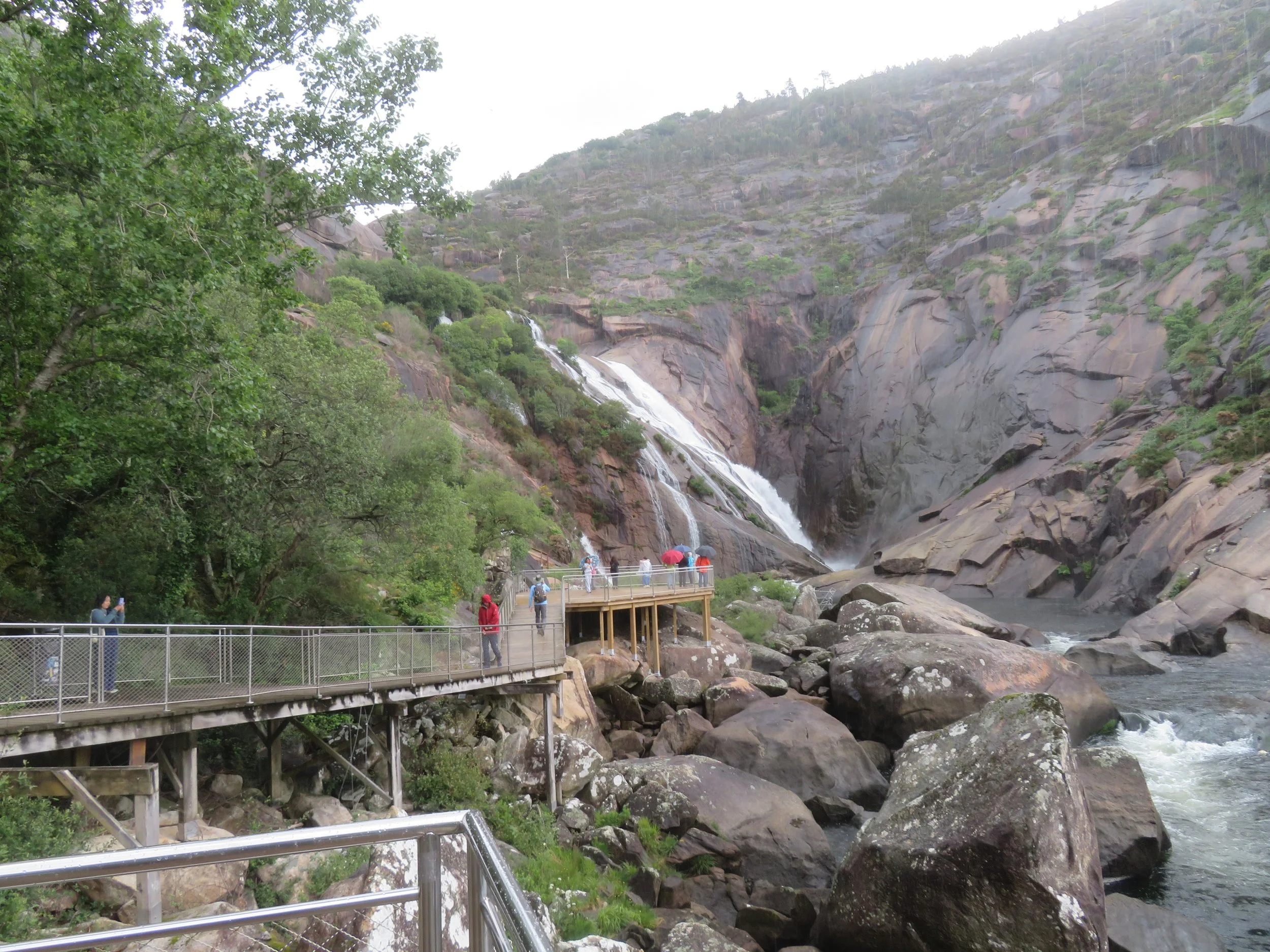
Fervenza de Ezaro, the only waterfall in continental Europe that flows directly into the Atlantic Ocean
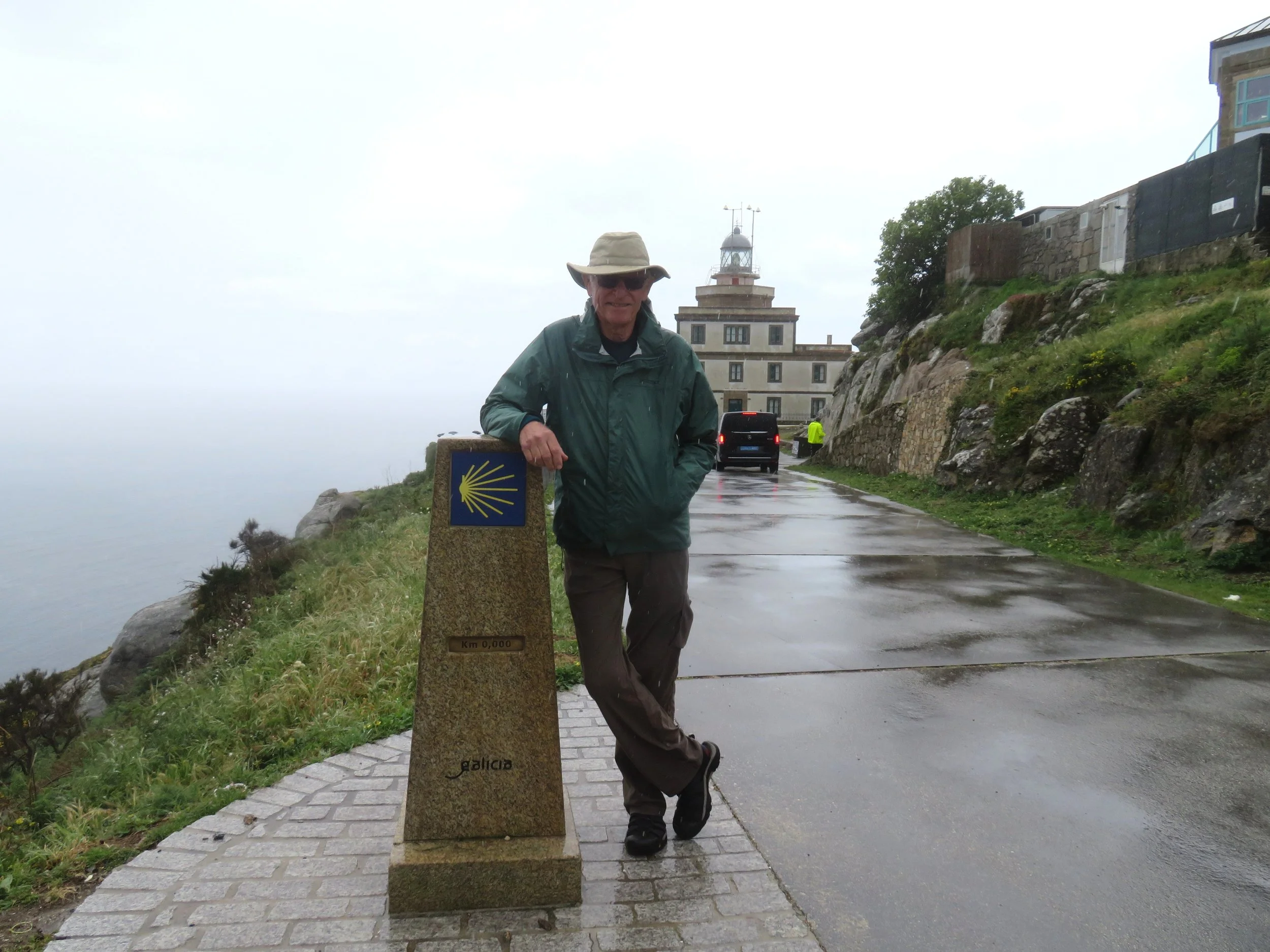
An hour’s ride later, we arrived at the end of the world, Finisterre (Fisterra). Despite the rain, we walked to the 0 Camino mile marker for a photo opp.
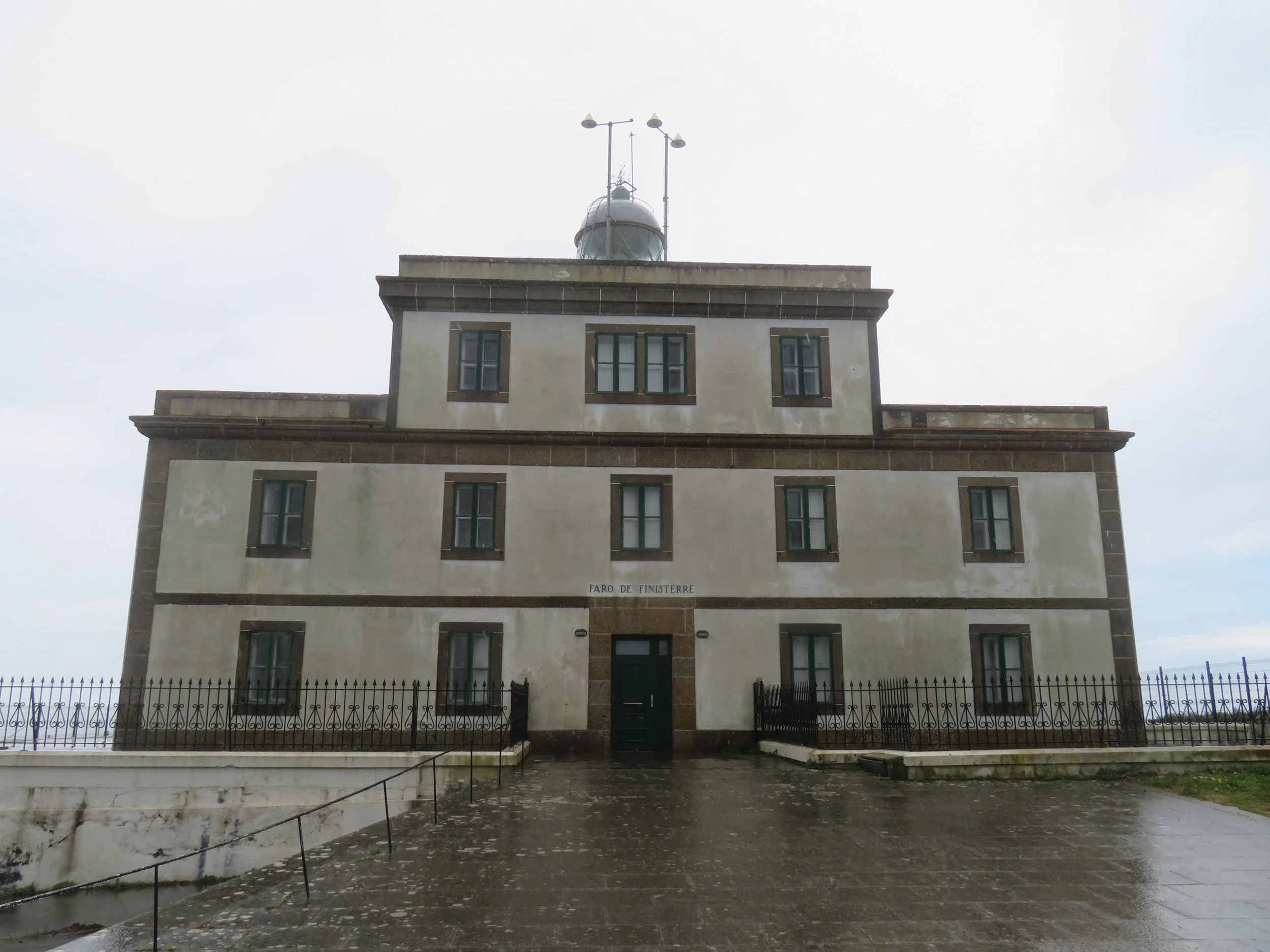
We walked a bit further for a picture of the Finisterre lighthouse. Built in 1853, it’s an icon for pilgrims who have walked the Camino de Finisterre from Santiago.
The town of Finisterre itself is touristy with lots of shops and restaurants. The guide suggested El Puerto for lunch, and we followed in the rain. David chose a traditional Galician soup to try. He was not enthralled. I stuck with a seafood salad which was great.
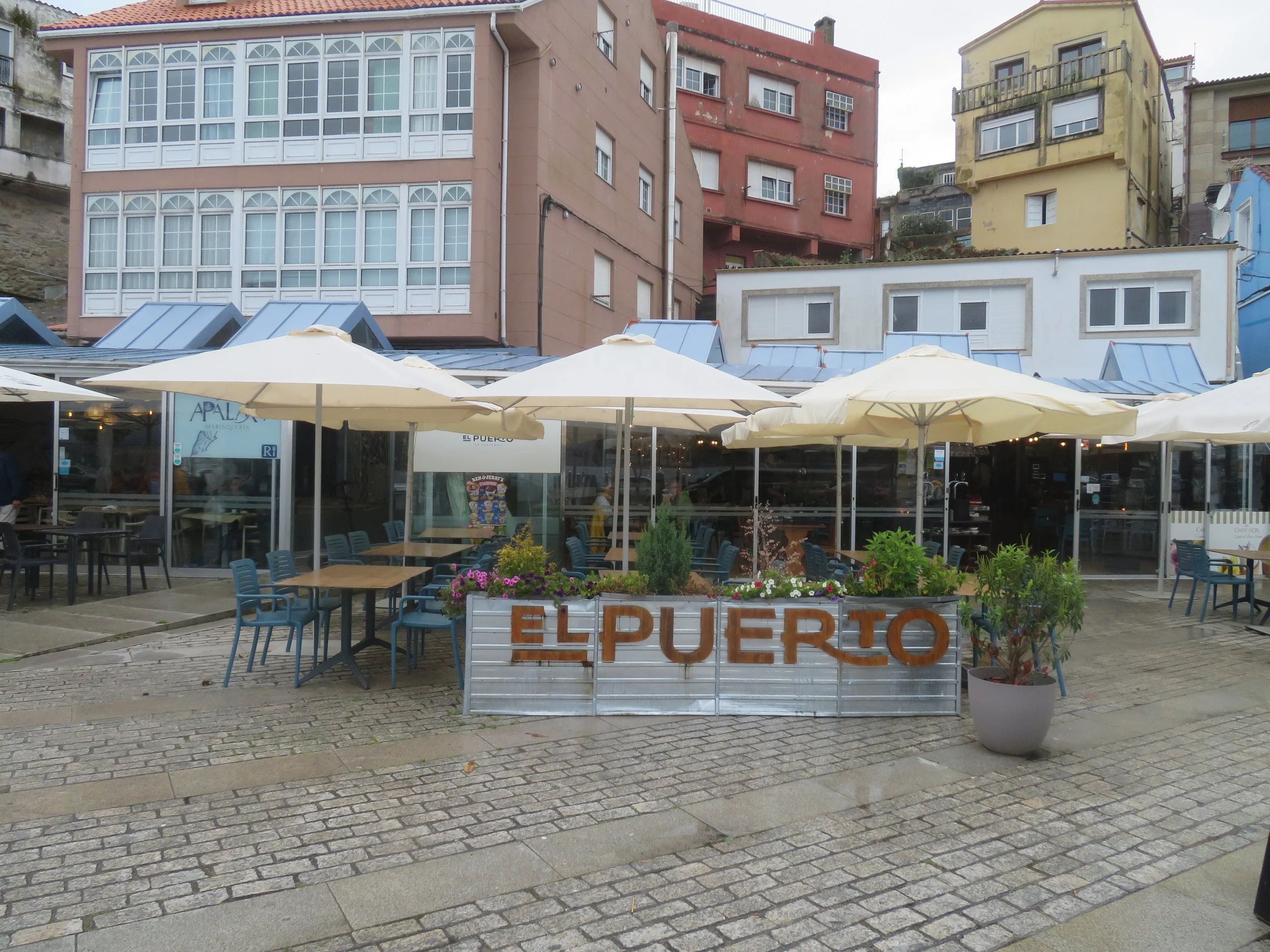
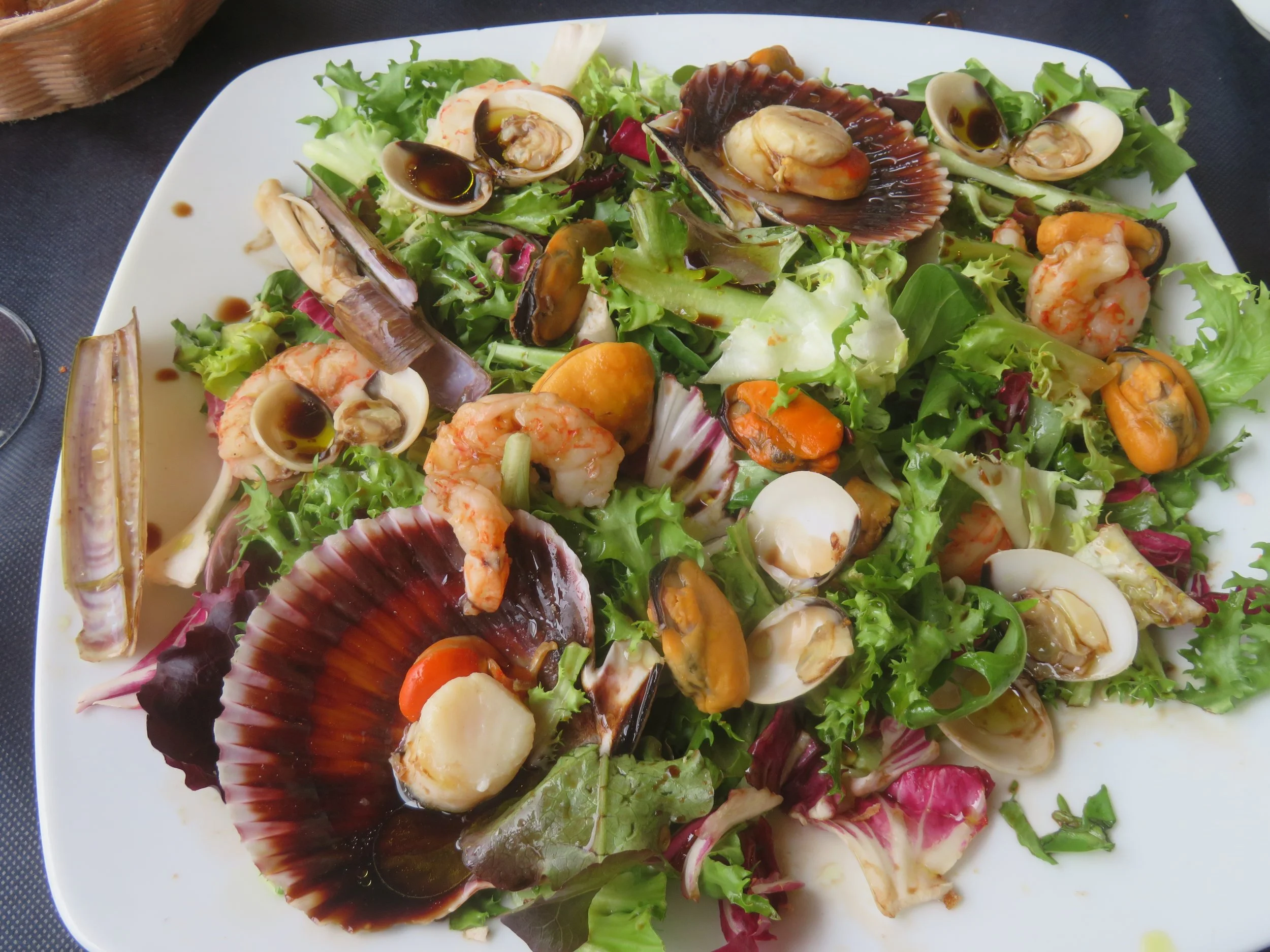

We finished before the rest and took a stroll in the drizzle a bit further into town. We were impressed by the bronze and stone Monument to Emigrants by Agustín de la Herrán Matorras that stands proudly in a roundabout in the Plaza de Santa Catalina.
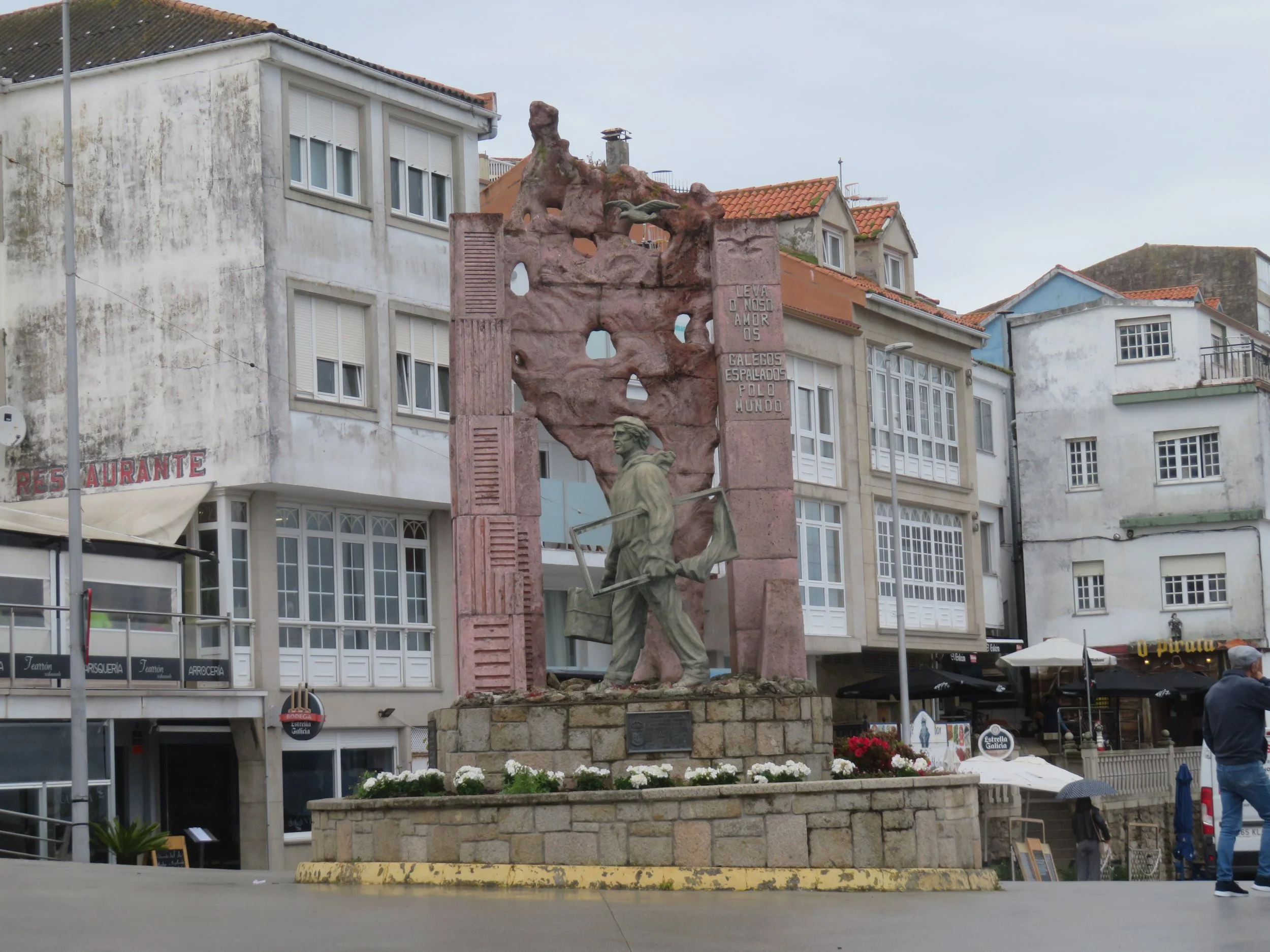
Monument to Emigrants in Finisterre
Bellies full and back on the bus, we continued on to our last stop, Muxia, an alternate end to the Camino de Finisterre. Though it was only a 30-minute drive, we were greeted with sunshine instead of rain when we arrived.
We climbed the Corpiño Mirador to the alternate Camino mile marker 0.
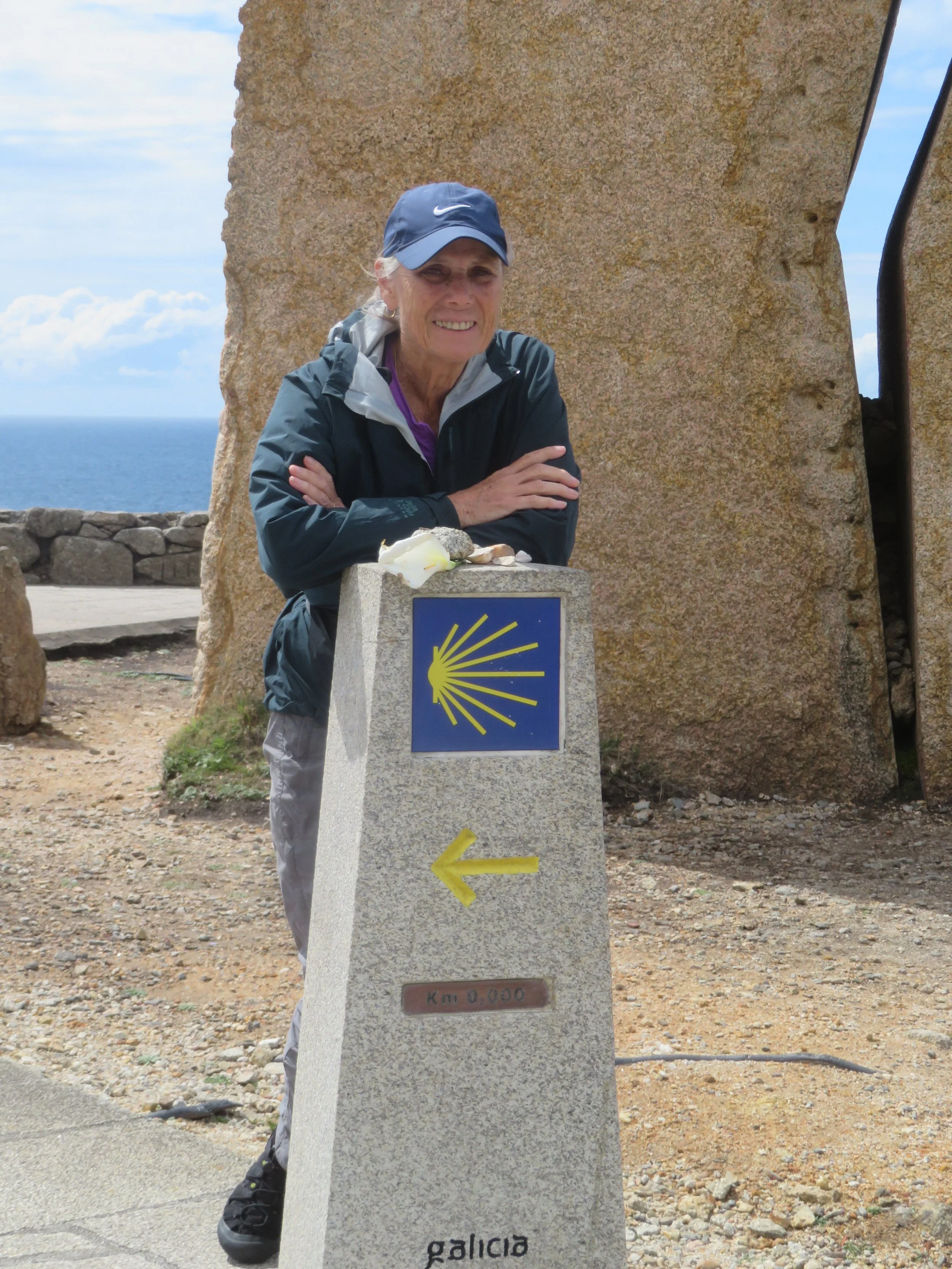
The marker stands in front of Spain’s largest sculpture, the 11m high (36’) A Ferida (The Wound) by Alberto Bañuelos Fournier.
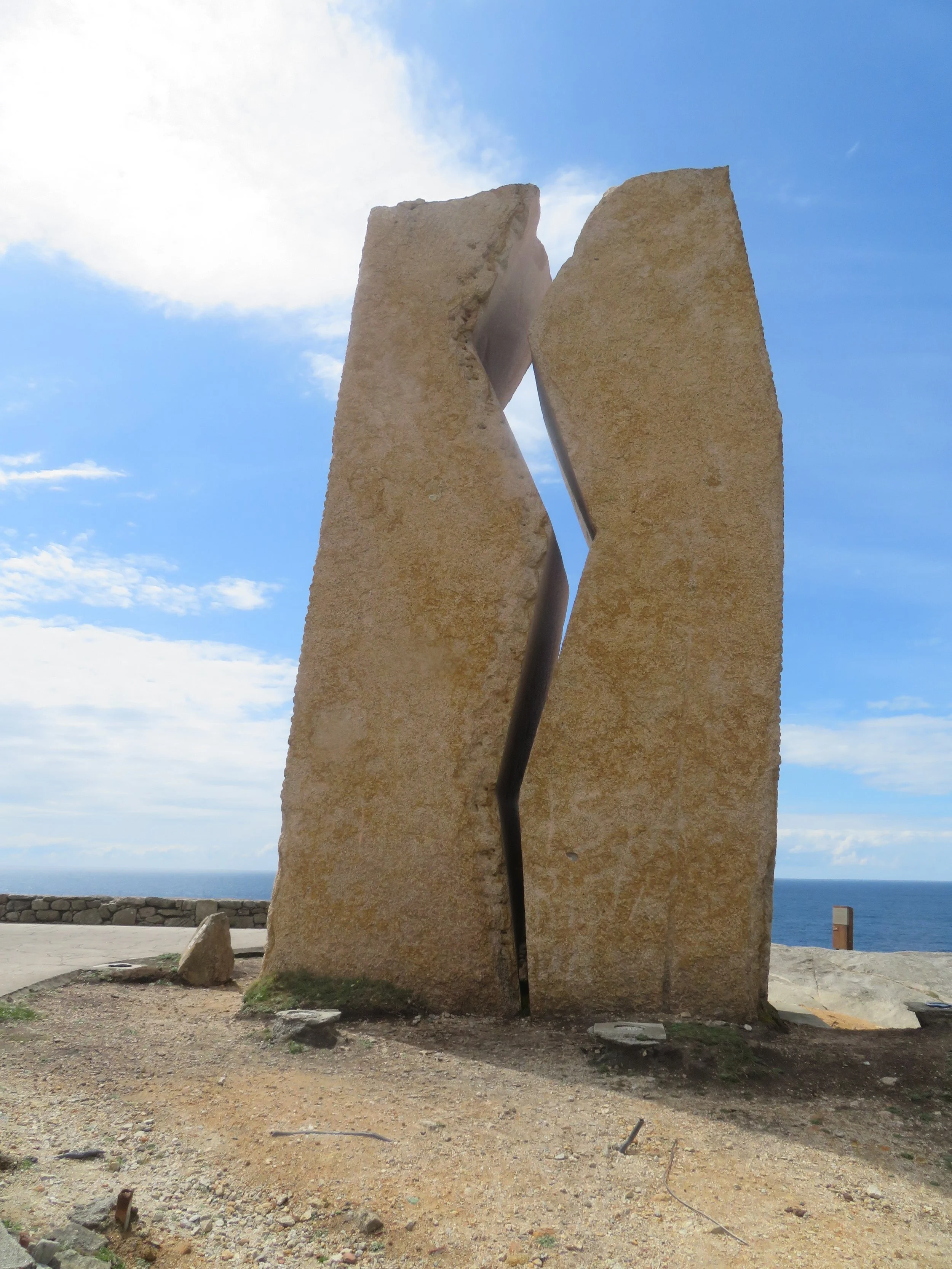
A Ferida, Spain’s largest sculpture
From the lookout point atop the hill, we had great views of the Virxe da Barca sanctuary below.
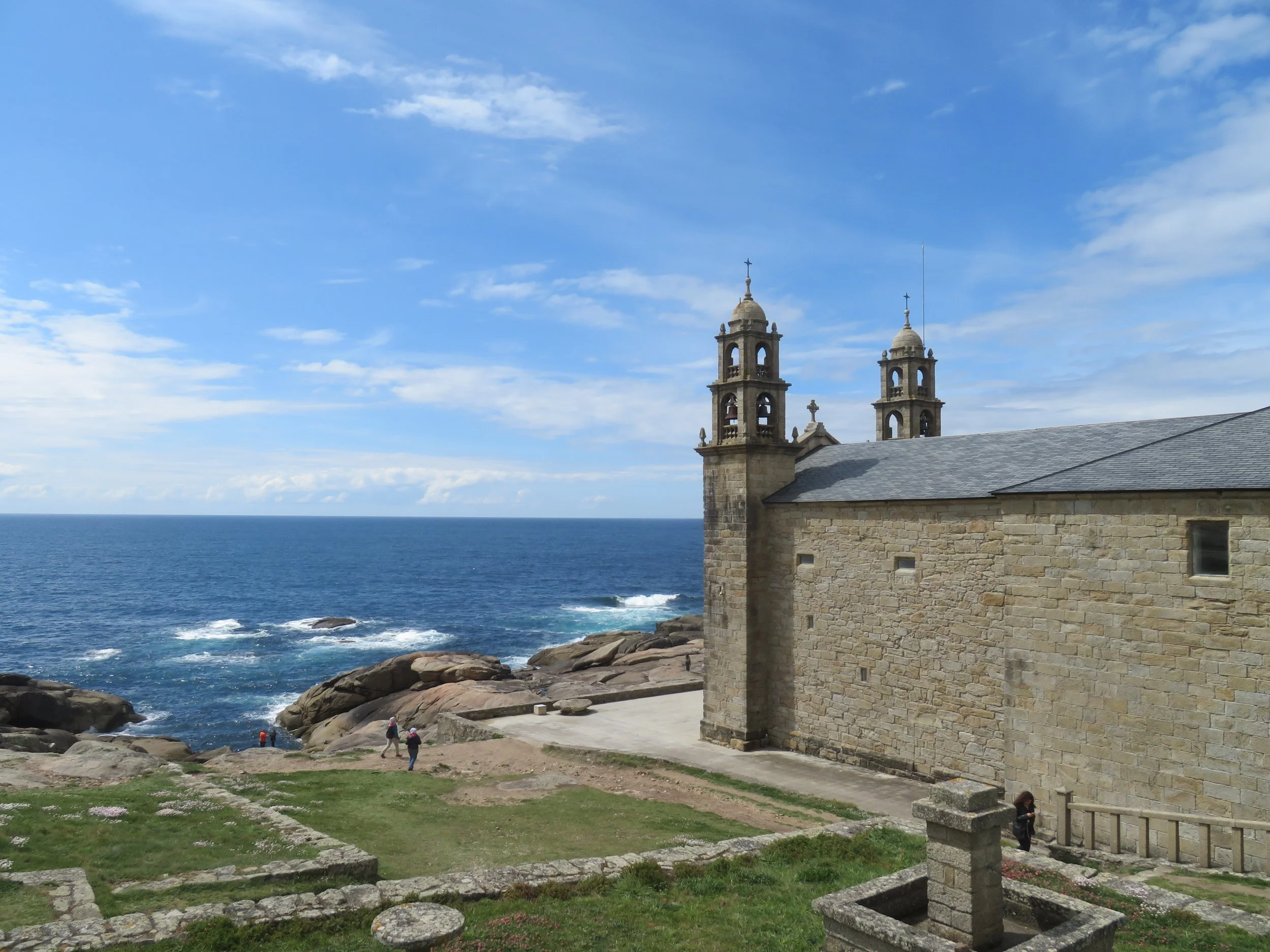
Virxe da Barca sanctuary
The sanctuary was originally a pre-Christian Celtic shrine and sacred spot. The original structure dates to the 12th century; the most recent major rebuilding and restoration took place in 2015 after a fire started by lightning on 25 December 2013 caused massive destruction.
We walked down the hill to visit the church. The place is imbued with religious spirituality, myth, and legend. The cult of the rocks is a legend that recounts the Virgin Mary's arrival in Muxía on a stone boat to encourage St. James in his mission to evangelize Galicia. According to legend, the huge granite slabs in front of the church are all that remain of the boat.
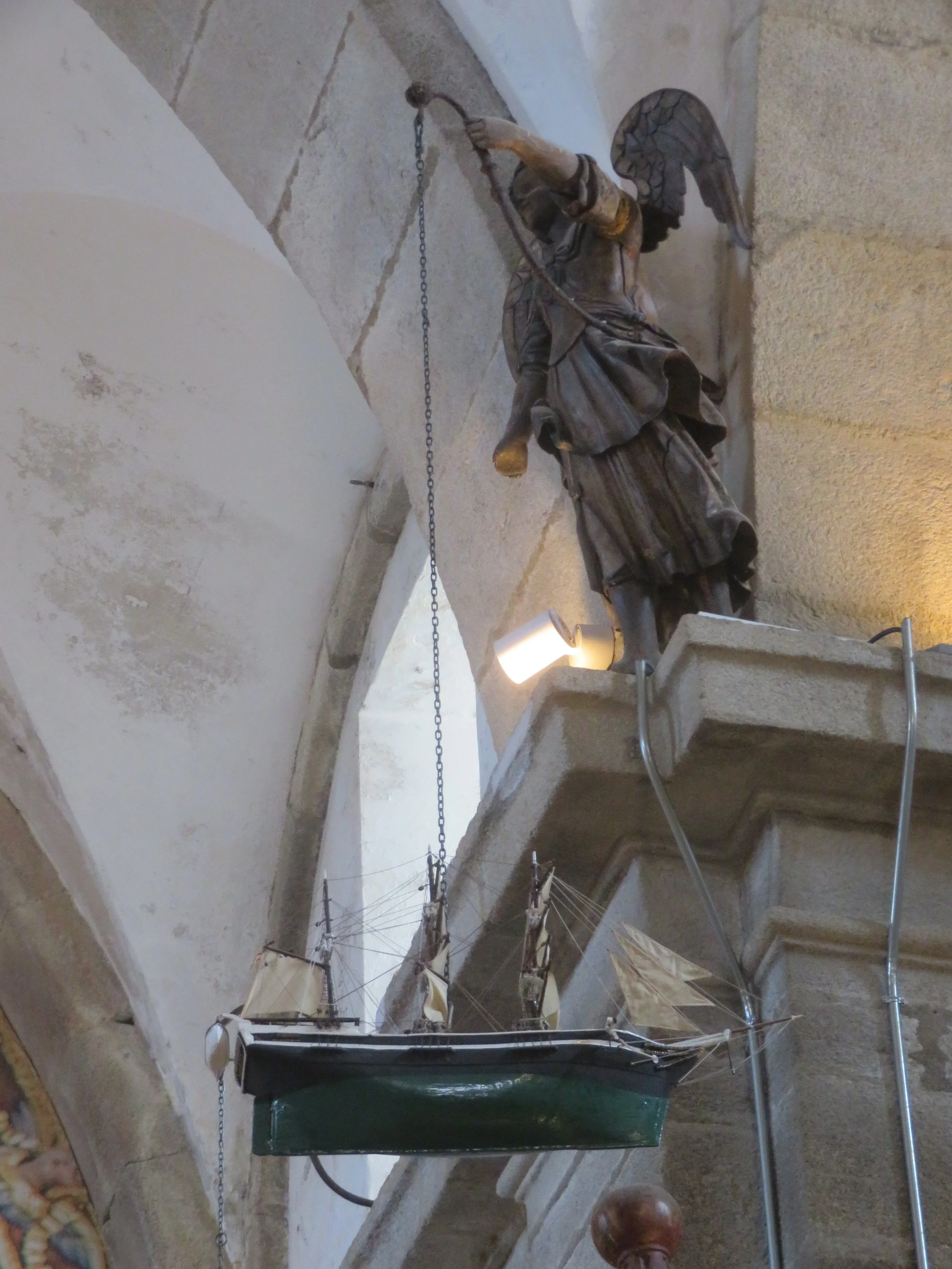
The interior of the church is lovely with a definite nautical theme.
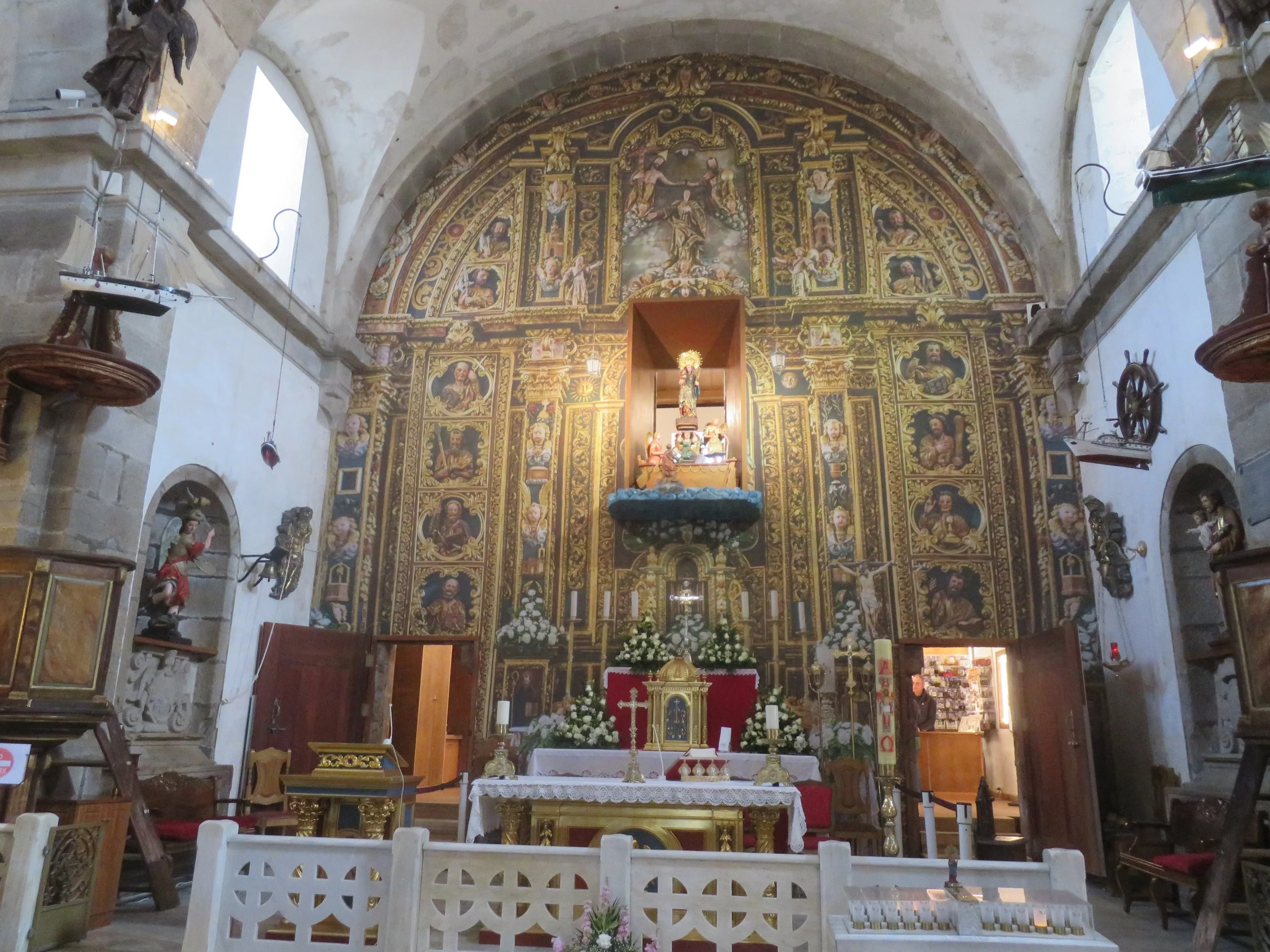
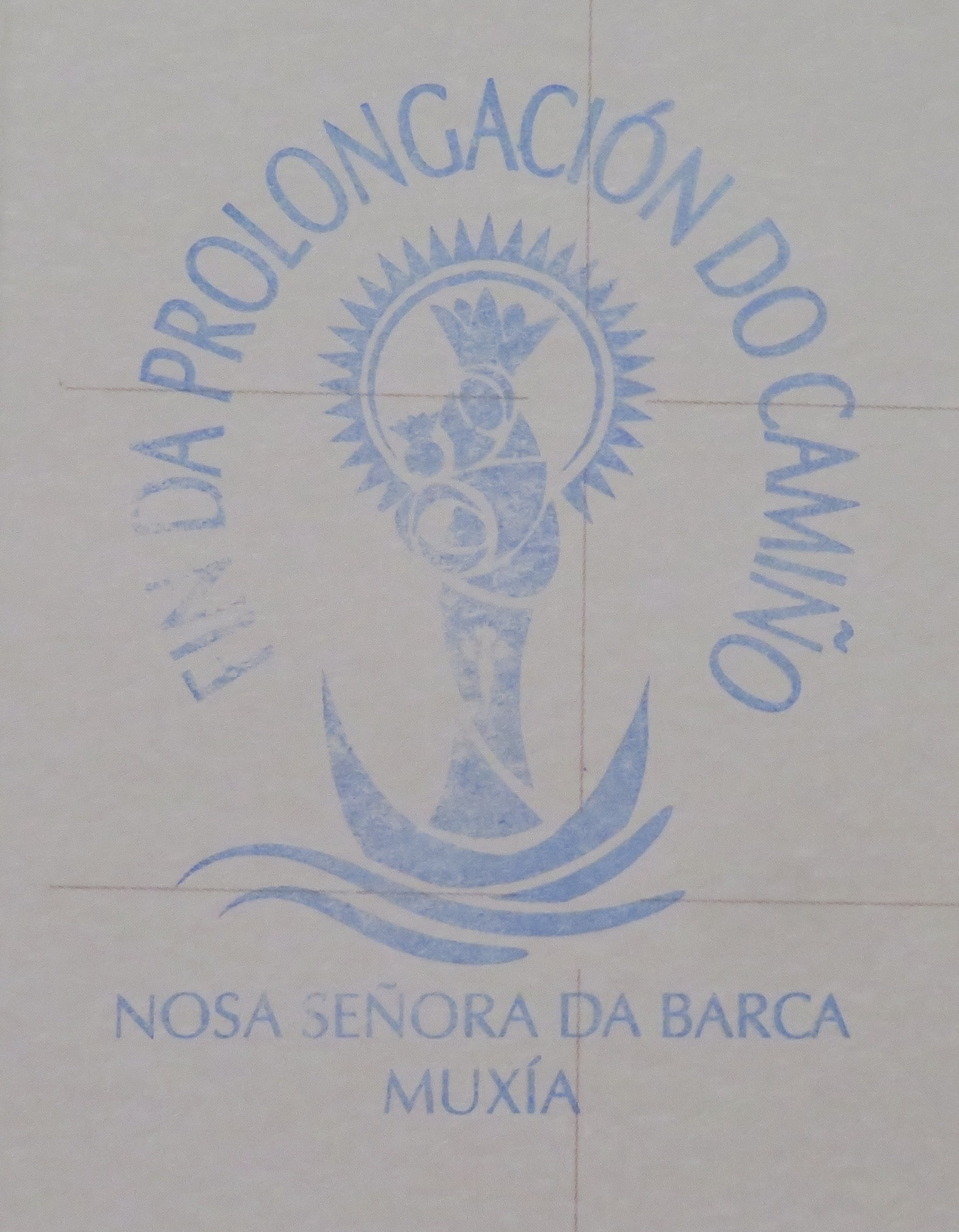
We were surprised when a door behind the altar was open, and folks were going in and out. We followed and found a small church shop that was selling religious Camino souvenirs and stamping pilgrims’ passports for the stop on the Camino de Finisterre. We explained that we’d walked the Camino, but not the Camino de Finisterre. The obliging attendant provided the stamp anyway.
The ride back to Santiago was long, and most passengers, including Marcie, fell asleep for the journey. Nine hours was a very long tour with most of it spent sitting down in a bus, and it only reinforced our dislike of bus tours. Though we would have regretted not visiting Finisterre, it’s always better to walk, rent a car and drive yourself, or even hire a guide for the day if you really want to explore an area.
Though there was more to see and do in Santiago, this would be our last night here. We returned to the hotel, packed our backpacks, and went out for our last dinner in Galicia and Spain. We booked an early morning bus back to Porto.
It always amazes us that it took over two weeks to walk from Porto to Santiago, but we’d be back in Porto by bus in ~3 hours. Since we’d rushed our time in Porto when we first arrived, we thought we’d return to explore a little more. Join us!