
The Compostela At Last!
/
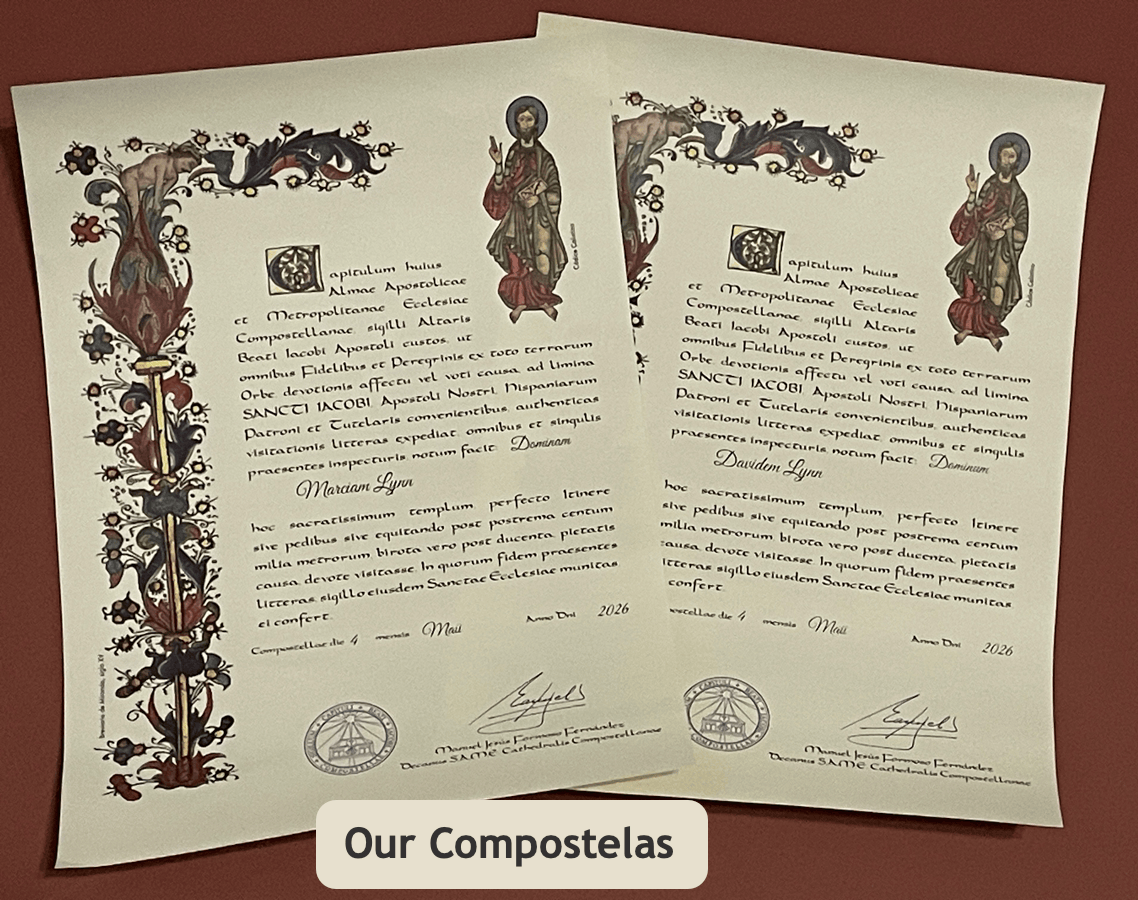
The "Compostela" is the official pilgrim's certificate awarded by the Catholic Church in Santiago de Compostela upon completion of the Camino de Santiago. It is more than just a certificate, however. The Compostela is a centuries-old symbol of perseverance, faith, exhaustion, blisters, shared meals, wrong turns, and the quiet determination that carries pilgrims all the way to Santiago de Compostela. Written entirely in Latin, the document officially recognizes that a pilgrim has completed the pilgrimage by walking at least the final 100 kilometers on foot or horseback, or the final 200 kilometers by bicycle.
Long before printed certificates existed, pilgrims proved they had completed their journey by carrying home a scallop shell badge purchased in Santiago. The shell quickly became the universal symbol of the Camino — but it also became a tempting opportunity for counterfeiters. Fake badges began appearing at the city gates, sold to travelers who wanted the appearance of having completed a pilgrimage without the hardship behind it. The fraud became so widespread that the Pope reportedly threatened counterfeiters with excommunication. By the 13th century, the shell badges were gradually replaced by cartas probatorias — evidentiary letters — which eventually evolved into the modern Compostela.
Centuries later, the Camino faced a different challenge. With the arrival of automobiles and the rise of mass tourism, a pilgrimage no longer required weeks of muddy roads and aching feet. It became possible to arrive comfortably in Santiago and simply claim to have walked. False claims once again threatened the integrity of the pilgrimage tradition.
To preserve the authenticity of the Camino, pilgrims today carry a “Credencial del Peregrino,” or pilgrim’s credential — essentially a travel diary documenting your progress along the route. Our own credential was issued by American Pilgrims on the Camino, a U.S.-based nonprofit that supports people preparing for and walking the Camino de Santiago, and which has been authorized to issue its own version of the credential. It differs slightly from the official credential, but serves the same purpose.
The credential itself is wonderfully old-fashioned: a sturdy cardboard booklet with sixteen accordion-folded pages. The front pages contain the pilgrim’s information, prayers, and spaces for official cathedral stamps marking both the beginning and end of the pilgrimage. The back cover has a map of all the Camino routes. The remaining pages are reserved for sellos — the stamps that document your journey day by day.
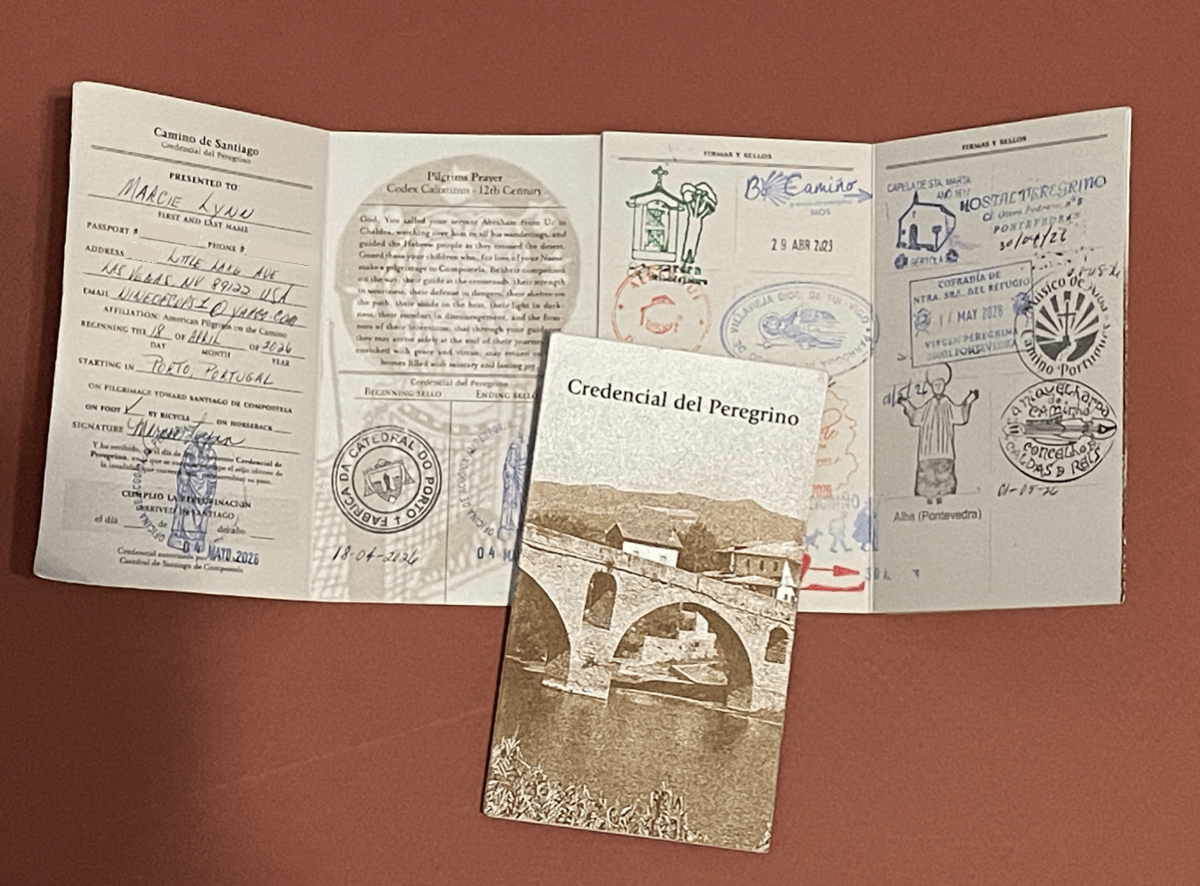
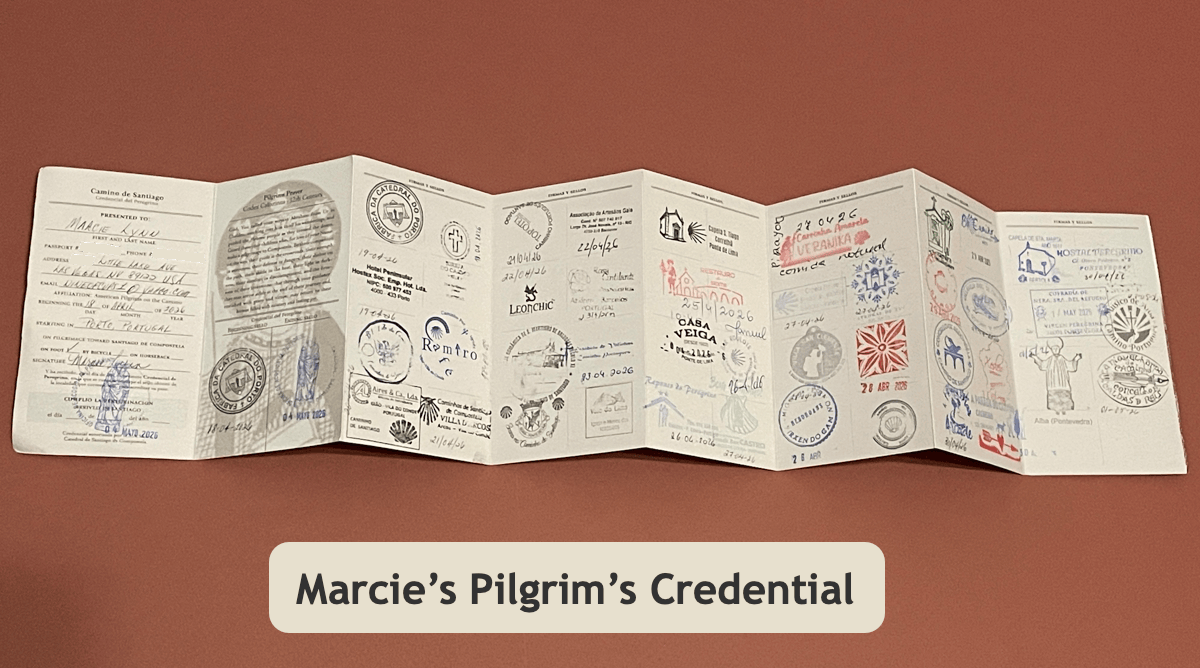
Pilgrims are expected to collect at least two stamps per day. Most come from albergues and hostels where pilgrims sleep, but stamps can also be found in churches, monasteries, cafés, hotels, town halls, and small shops along the route. Some of our favorites came from unexpected places, including two buskers — a bagpiper and an accordion player performing beside the trail — whose stamps felt every bit as memorable as those from the great cathedrals.
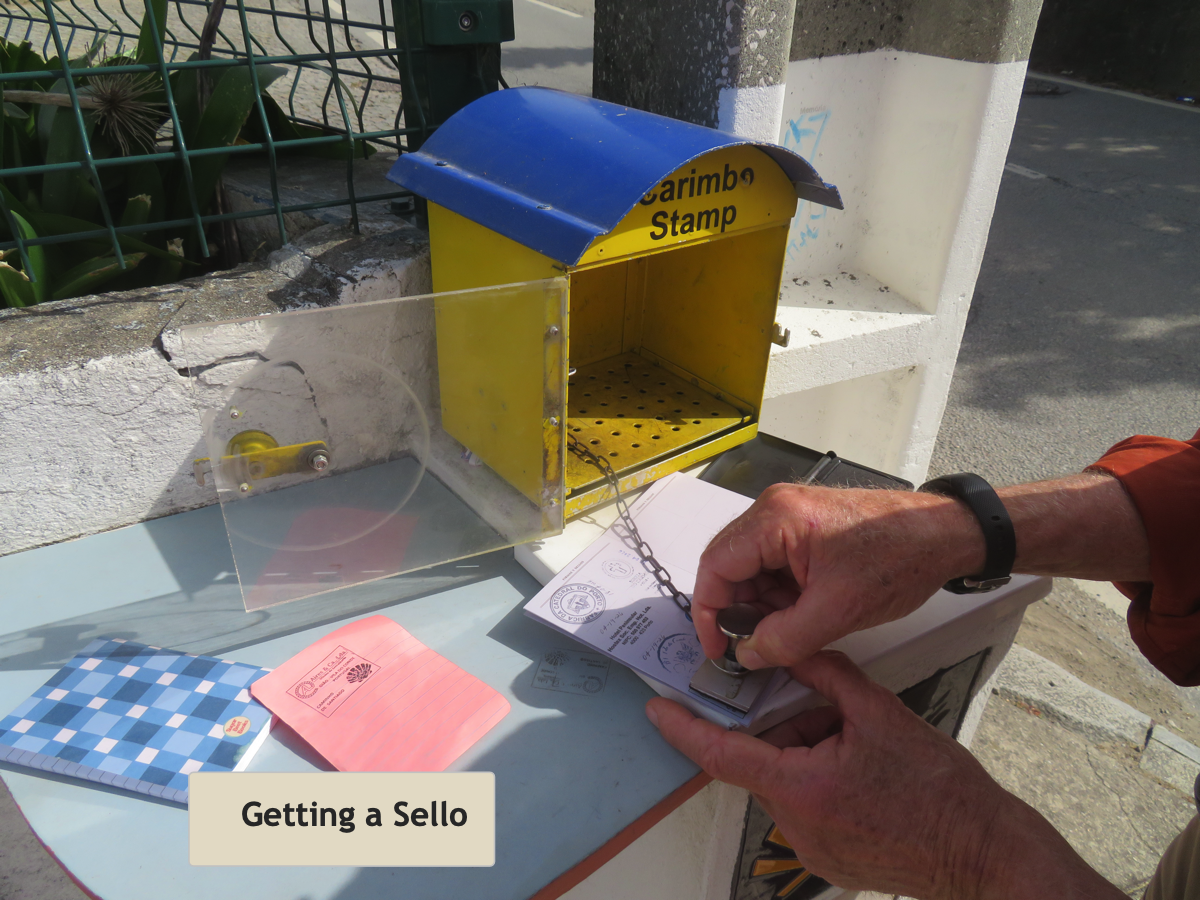
The credential serves two practical purposes. First, it grants access to many pilgrim hostels along the Camino. Second, and more importantly, it becomes the proof required to receive the Compostela itself in Santiago.
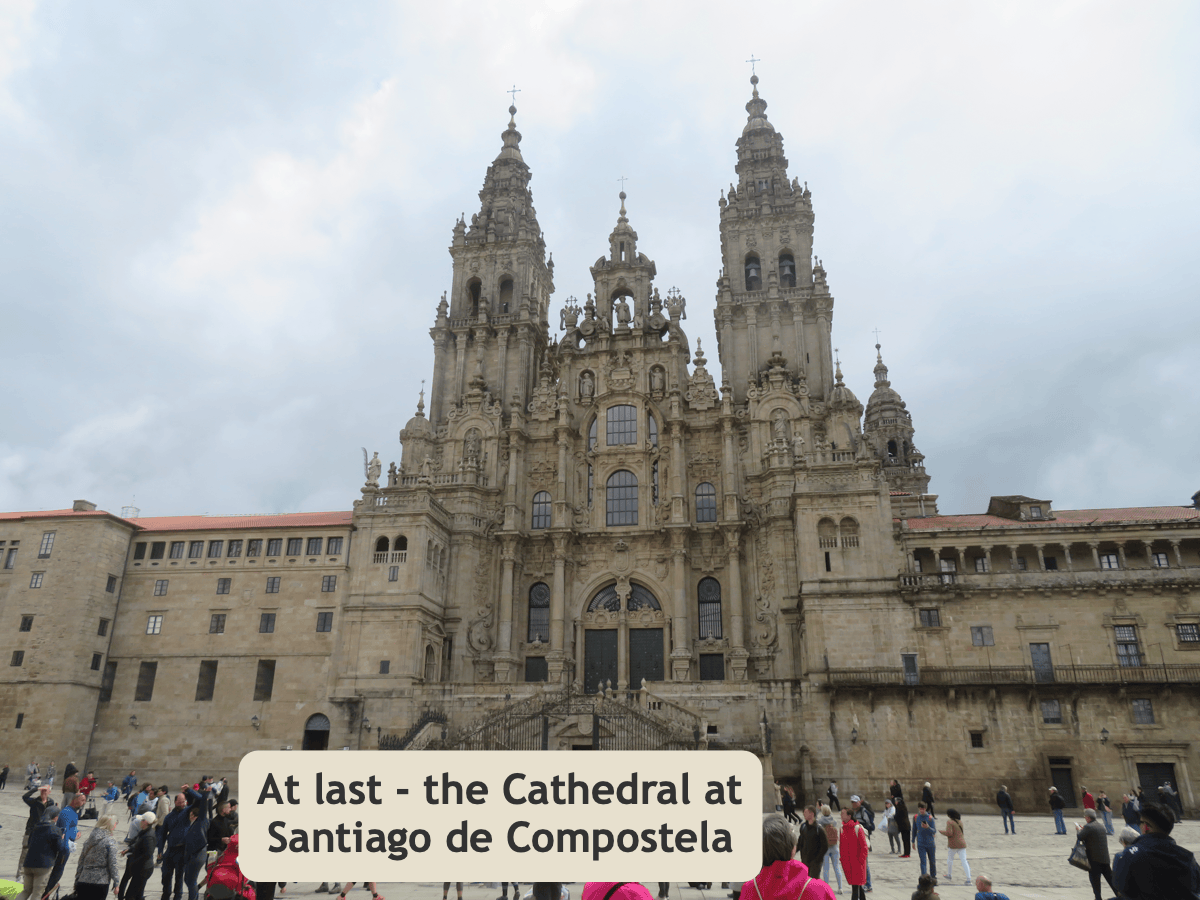
After completing the final stretch of our pilgrimage and arriving at the magnificent Cathedral of Santiago de Compostela, we made our way to the nearby Pilgrim’s Reception Office — the Oficina de Acogida del Peregrino. I had imagined a quiet medieval-style office where a solemn cleric would carefully inspect our credentials before hand-lettering our Compostela with a fountain pen - or maybe even a quill pen.
Reality, of course, was very different, and just a little disappointing.
During peak season, the office processes as many as 4,000 pilgrims in a single day. Out of necessity, the operation is less medieval and more of an efficient bureaucracy. Upon entering, we were directed to a room filled with computer terminals. After a short wait, terminals opened up and we entered our names, starting point, and pilgrimage details before receiving a queue number.
From there we joined a short line outside a second room containing about twenty service desks. Marcie’s number was called first, then my number a couple of minutes later. At the desk I was directed to, I was greeted not by a stern church official, but by a cheerful young woman who spoke perfect English. She turned out to be a fellow pilgrim who had recently completed her third Camino and was volunteering at the office.
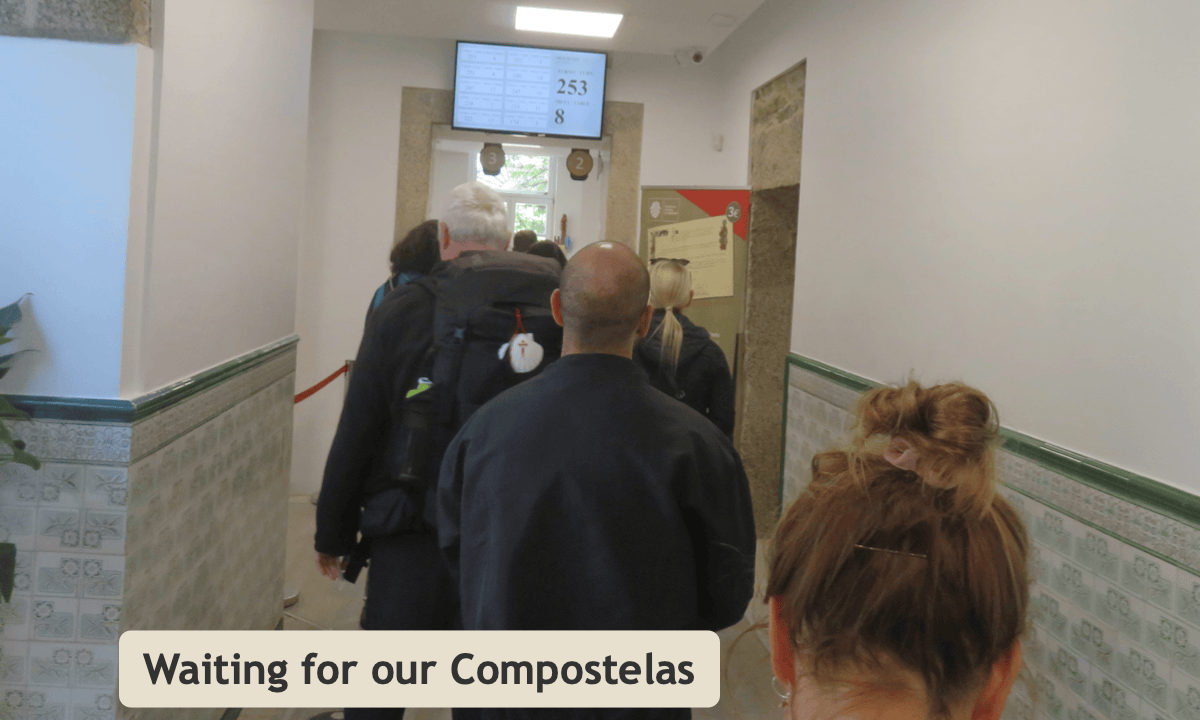
She examined my credential carefully, asked a few questions about the route, and stamped it with the official cathedral sello. Then came the moment every pilgrim waits for: she printed the Compostela itself — my name elegantly rendered in Latin along with the date of completion.
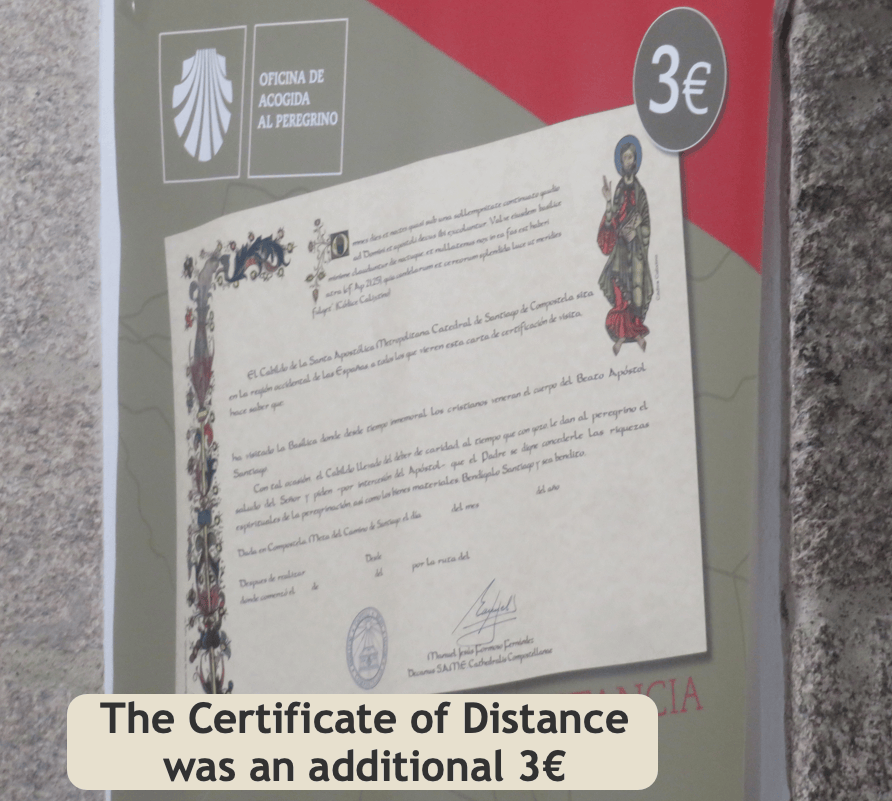
The Compostela is free, though pilgrims can also purchase an additional Certificate of Distance for a small fee, documenting the exact number of kilometers traveled and the starting point of the journey. We did, of course, buy ours. We also bought a small tube that we used to protect our precious documents.
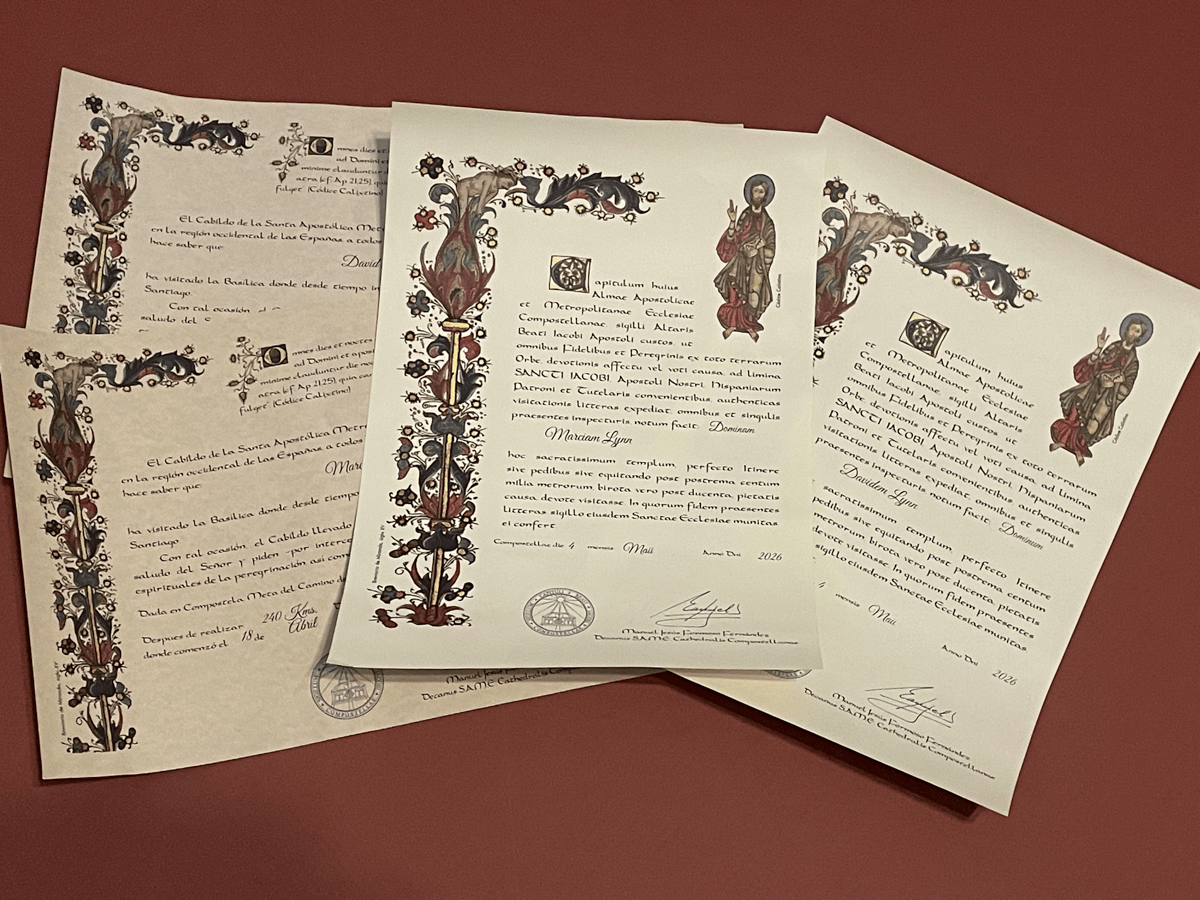
Now we have our Compostelas carefully rolled into protective tubes like priceless historical documents. What will we do with those hard-earned papers? We always have grand plans to frame and display them, but more likely they’ll spend most of their lives tucked away in a drawer or a storage box along with old passports, ticket stubs, and all those souvenirs from other trips that mattered to us. I’d like to say “but we’ll always have our memories of the Camino”, but at our age, that’s no even a given.