On the Rocks

I know, when you think rocks you're thinking ice cubes and sundowners or maybe diamonds or pop music? And me? I'm thinking plain, old, big, hard rocks. We've hit them, been aground on them and narrowly avoided them in the boat. We've climbed on them, photographed them and thoroughly enjoyed exploring them on land. Seems rocks are pretty much everywhere. In fact, Earth has even been referred to as “The Third Rock from the Sun.”  

anchorage rocks


At sea, rocks are not good. They're harder than our fiberglass hull and tend to do a lot of damage. Luckily, our scrapes and bruises have been superficial. Two close calls occurred in the middle of nowhere in Patagonia. Once, the engine crapped out just as we were approaching the entrance to a little cove on the south Chilean coast. This was just happenstance and we managed to avoid the rocks without any mishap.

The other incident occurred in an anchorage off the Beagle Channel and was due to an inattentive crew. Rocks in Patagonia are usually marked with kelp growth. We had just raised anchor and were too busy drinking our morning coffee and chatting to pay proper attention to our route. The rock was not marked on the chart, but there was certainly kelp growth. We were lucky … no major damage and we were off the rocks within an hour, thanks to the rising tide. David chocked up having to dive into the icy Beagle Channel waters to check for hull damage as his penance for inattention. Both incidents were nerve-wracking and could have been devastating. We thanked Neptune profusely (that means extra rum overboard) once we were safe again.


pompey's pillar


On land, rocks and rocky outcrops are a fascination, not only to us, but to folks that have discovered and looked upon them for centuries. People have drawn pictures on them, written their names on them, and inscribed them. Take Pompey's Pillar, for instance, in Montana, used as a landmark for native American travelers as well as later explorers like Lewis and Clark.


devil's tower


Devil's Tower in Wyoming is awe-inspiring and was the setting for Close Encounters of the Third Kind. Native Americans have always held this site sacred and when you're standing at its base, you can easily understand why.


Mount Rushmore


Mount Rushmore is a good example of an in-situ sculpture … it's the whole side of a granite face.


famous rocks


There are lots of famous rocks … the Rock of Gibraltar, Plymouth Rock, Uluru (Ayers Rock), Balancing Rock, Stonehenge. There's the Rosetta Stone, the Blarney Stone, the Rock of Ages, acid rock and Rocky.


dog rock


Locally, we pass by Dog Rock regularly. It's located at a sharp curve in the road and someone takes the time to paint it so it's very obvious to drivers that it's a dangerous spot.


fancicul rocks


Other folks have used their “homegrown” rocks as fanciful additions to their properties.

Ships of old used to carry rocks in their bilge to provide extra ballast. On Nine of Cups, this is not necessary. Our lead keel and David's tool collection provide all the ballast we need.

Just for kicks, test your rock knowledge here.

Here's to Great Knockers

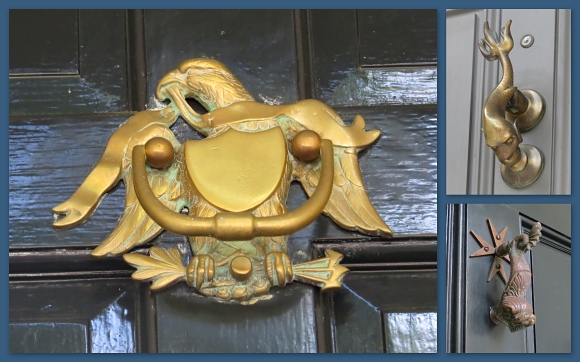
We really appreciate great knockers … doorknockers, that is. On our recent morning wanderings through the streets of Boston's historic Beacon Hill, we couldn't help notice the unique brass knockers that adorned the doors of the brownstones, mansions and row houses. The only time we remember such elaborate doorknockers before was in Cartagena, Colombia, of all places. Here's a look at some Boston knockers...  

lion and lady doorknockers


I really like the old ones. It makes us wonder who might have used them to announce their arrival at some of these prestigious doors. They're weathered and verdigrised and look well-used. But I found out that you can buy them that way … already aged, so they're less appealing. It's cheating, like buying distressed jeans. I'd like to think that these particular doorknockers have been in place for at least a century or so.


leaves and acorn doorknockers


Some are thematic for the area, like oak leaves and acorns on cobble-stoned Acorn Street.


pineapple and pear doorknockers


The pineapple is a traditional symbol of welcome and hospitality, so it's a very appropriate door decoration. I'm not so sure about other fruit.


nautical and patriotic doorknockers


A nautical motif is very apropos for Boston as are patriotic symbols.


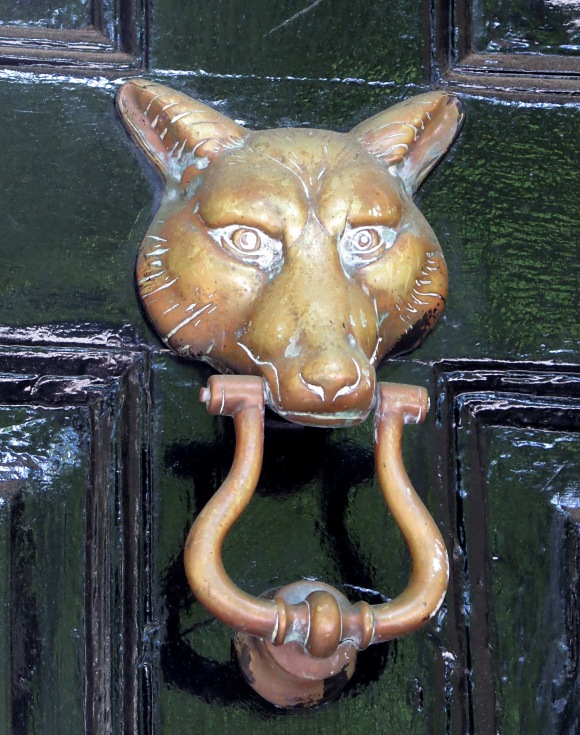
fox doorknocker


My personal favorite … a weathered old fox.

I did a little research to see how many doorknocker designs were available. It's a pretty extensive offering. Some websites advertise “See our entire knocker collection”. Others boast “Free shipping on all knockers over $99.”

For a look at some very distinctive Colombian knockers, visit our website.

Signs...Don't Beat Around the Bush!

Continuing with our ongoing fascination with signs, we offer some signs that leave no doubt as to their intent.


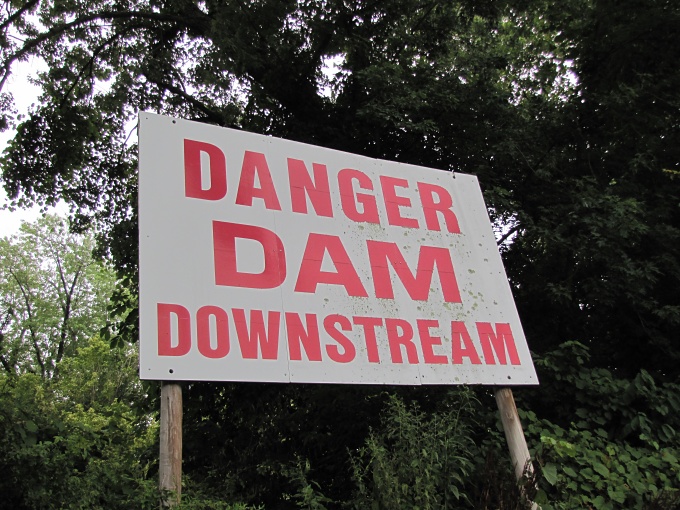
danger dam downstream


Good to know if you're in a boat!


danger sharks no swimming


We could see them circling. No fear that we'd swim there.


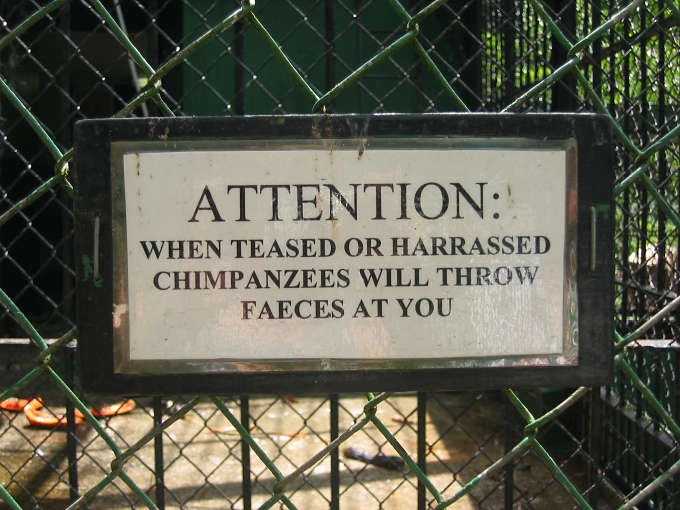
chimps will throw feces at you


Duck!


manchineel tree is poison


Don't touch!


There are some signs that left us scratching our heads a bit or cracked us up.


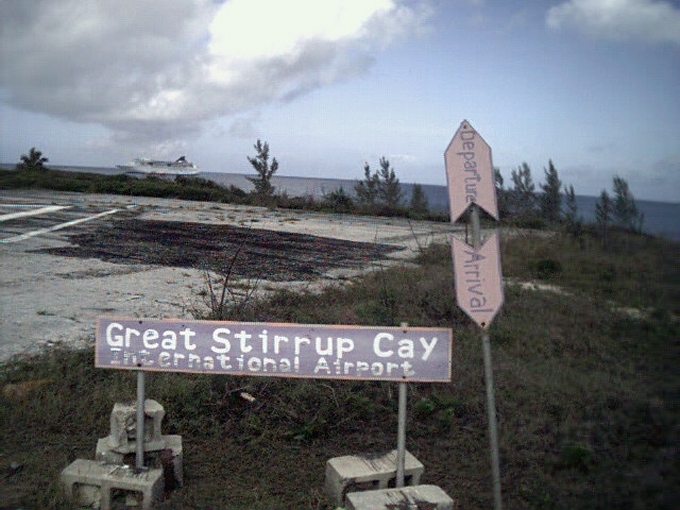
great stirrup cay airport


Up – Down … very imaginative


lost brakes? do no exit


Where exactly should you go?


whistle


We did whistle. Nothing happened.


lady farmer piggery


Pigs for every occasion.


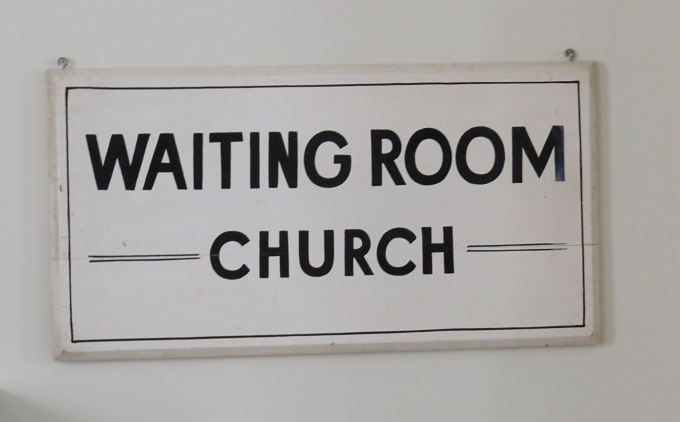
waiting room church


This was taken in the church bathroom. I just couldn't wait … despite the sign.


tapu kai kale


Our friend Mary McCoy had to translate this Tongan sign for us. It means literally:"You are forbidden to eat curry." The message they are trying to get across is "Don't litter." When Tongans go to the little shops all around, they buy curry to eat. The curry is "packaged" in aluminum foil and they eat directly out of it. When they're done, they throw the aluminum foil on the ground. It is normal for Tongans to talk AROUND the point that they want to make -- in fact, our directness is very abrupt, bordering on rude to them.” Hmmm... who knew? Thanks, Mary!