
Dodge City, Kansas … Queen of the Cowtowns
/“Dodge City... rolling in wealth from the great Texas trail-herds... the town that knew no ethics but cash and killing.”
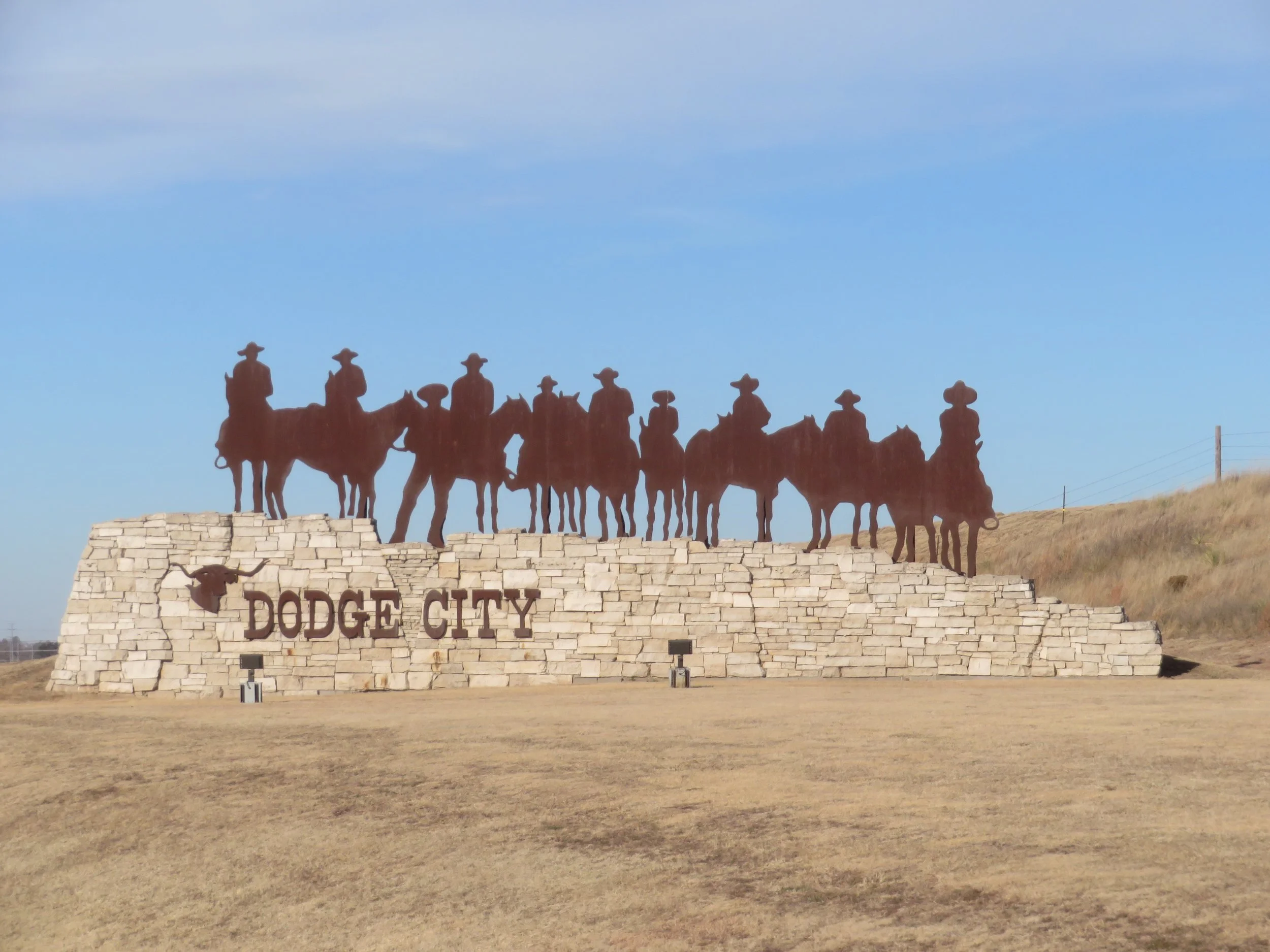
Welcome to Dodge City, Kansas “Cowboy Capital of the West'“
Since we were in Kansas, stopping in the historic, infamous town of Dodge City seemed like it might be fun. We passed by herds of wind farms and miles upon miles of prairie lands and finally arrived in Dodge. We headed down Wyatt Earp Boulevard and found a hotel for the night, devised our next day’s plan for some Dodge City exploration, kicked back, chilled out, and had a picnic dinner in the room.
Dodge City, Kansas… Folks call it the “Queen of the Cowtowns”, signifying its prominence in the cattle industry. It’s called the “Cowboy Capital of the West” for the legendary role cowboys played in driving the cattle herds. It’s also known as “The Wickedest Little City in America” because of its reputation for gambling, drinking, whoring, gunfights, and total lawlessness.
Fort Dodge was a military fort established in 1865 to protect travelers, mail, and troops on the Santa Fe Trail. Nearby Dodge City was a buffalo hide trading and hunting supply depot … till the buffalo were nearly gone. The fort was decommissioned in 1882 and today serves as the Kansas State Soldiers’ Home for Kansas veterans. It is a stop on the U.S. National Park Service’s Santa Fe National Historic Trail.
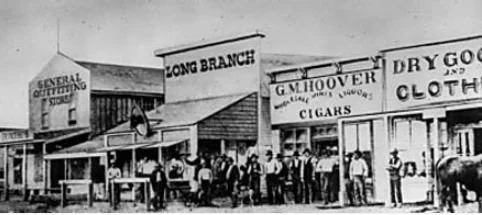
Front Street, Dodge City from the Ford County Archives
It was, however, the arrival of the Atchison, Topeka & Santa Fe Railroad in Dodge City in 1872 that cemented the city’s definitive role as a major transport hub, first for shipping buffalo hides and subsequently for transporting cattle, providing a major link for moving millions of Texas longhorn cattle from Texas to the hungry eastern markets.
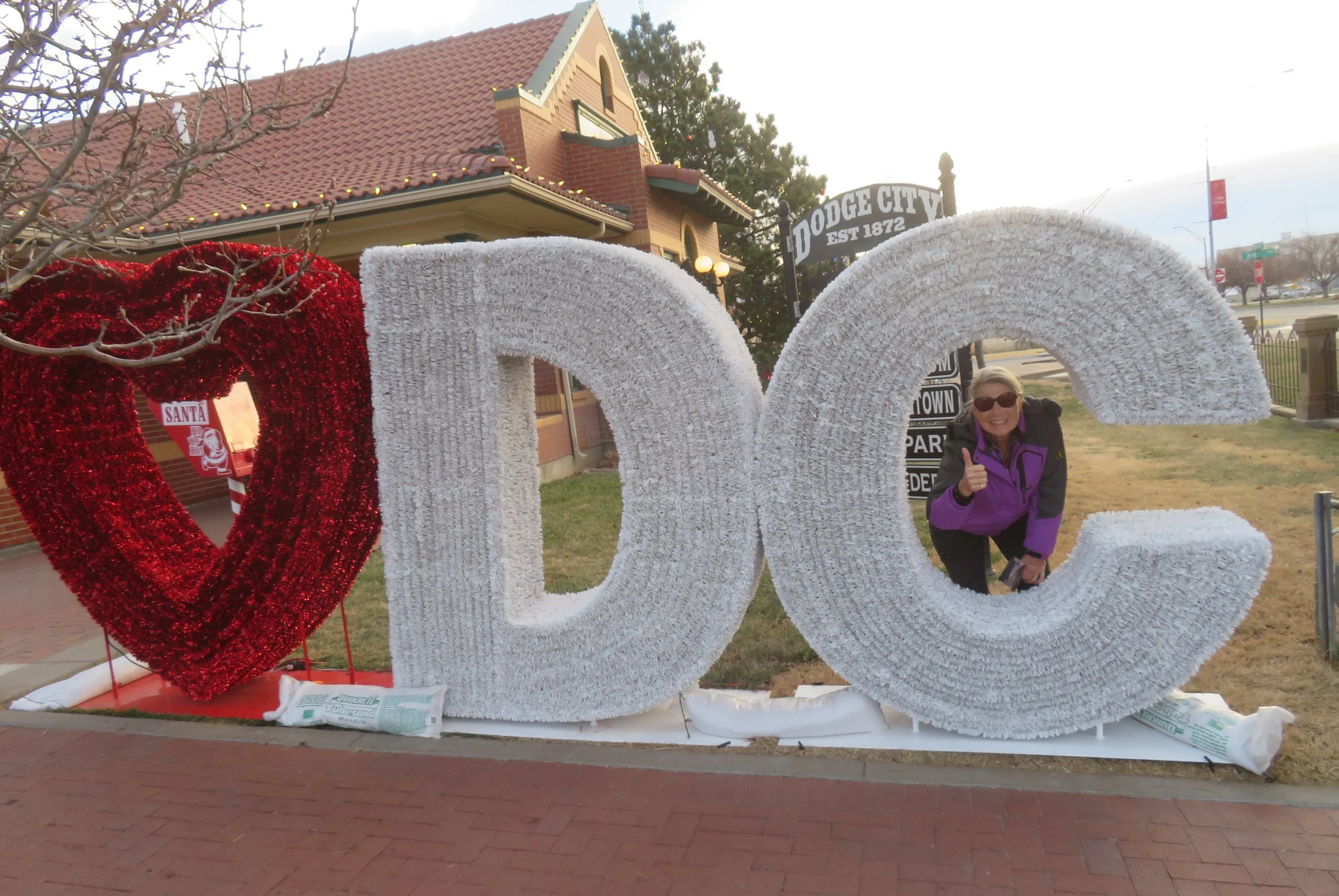
The morning was cold, raw, dark, and gusty. The gusty winds, we learned, are not unusual as Dodge City is considered one of the windiest cities in the USA. It is also on the extreme western end of the Central Time Zone and, subsequently, the sun didn’t rise till 0805. We were up, however, and out of the hotel by 0730 in the dusky morning light. We headed to the Visitor Center first and though it was closed, brochures and a city map were available outside the entrance and we grabbed what we needed. There was quite a bit to see in the immediate vicinity including an “I heart DC” display.
The old 1139 ATSF steam engine, nicknamed the Boot Hill Special, was parked nearby. We walked over for a closer look, and David climbed into the engine compartment for a look-see. It was donated to the Boot Hill Museum by the ATSF in 1954.
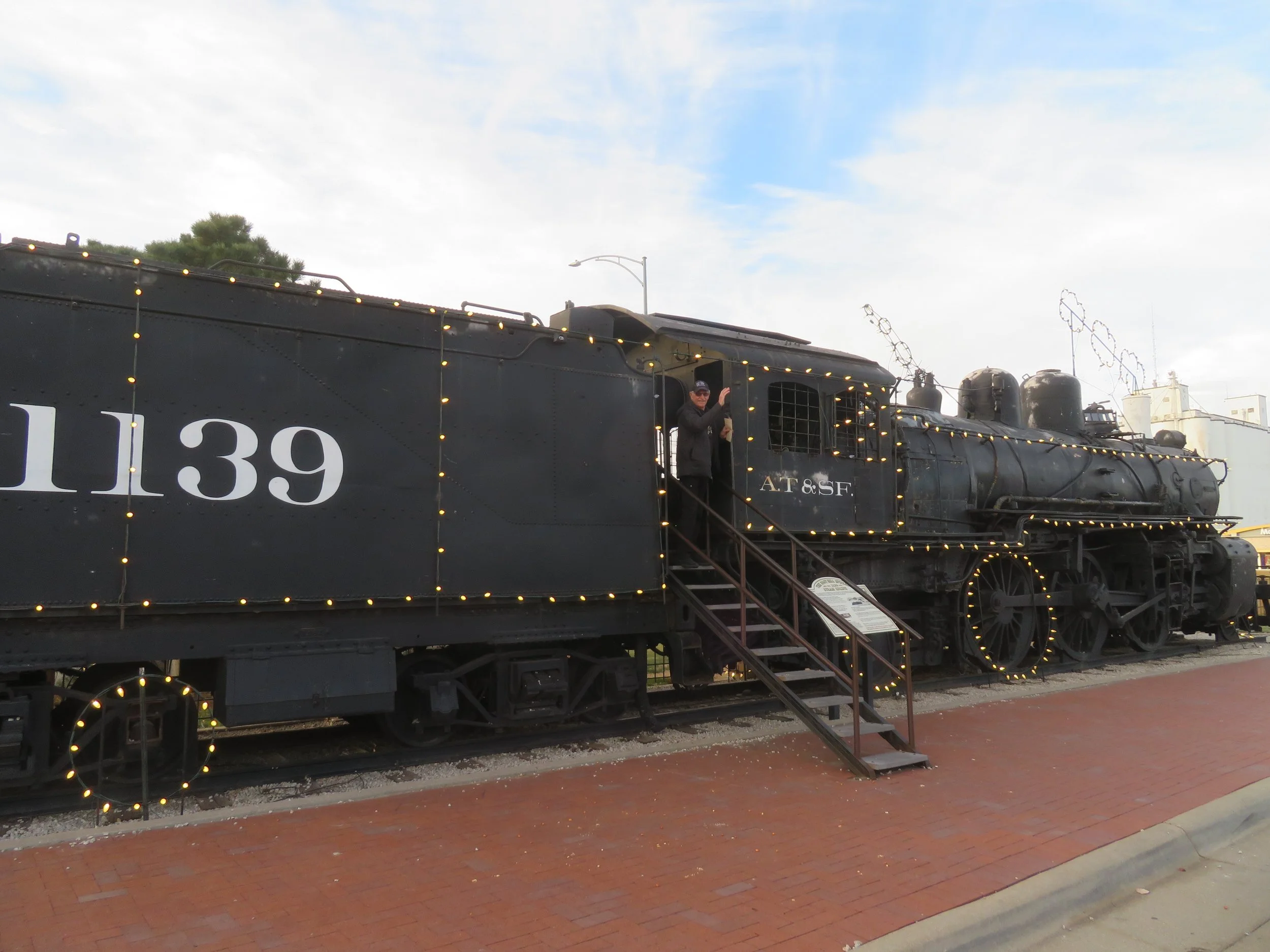
Boot Hill Special
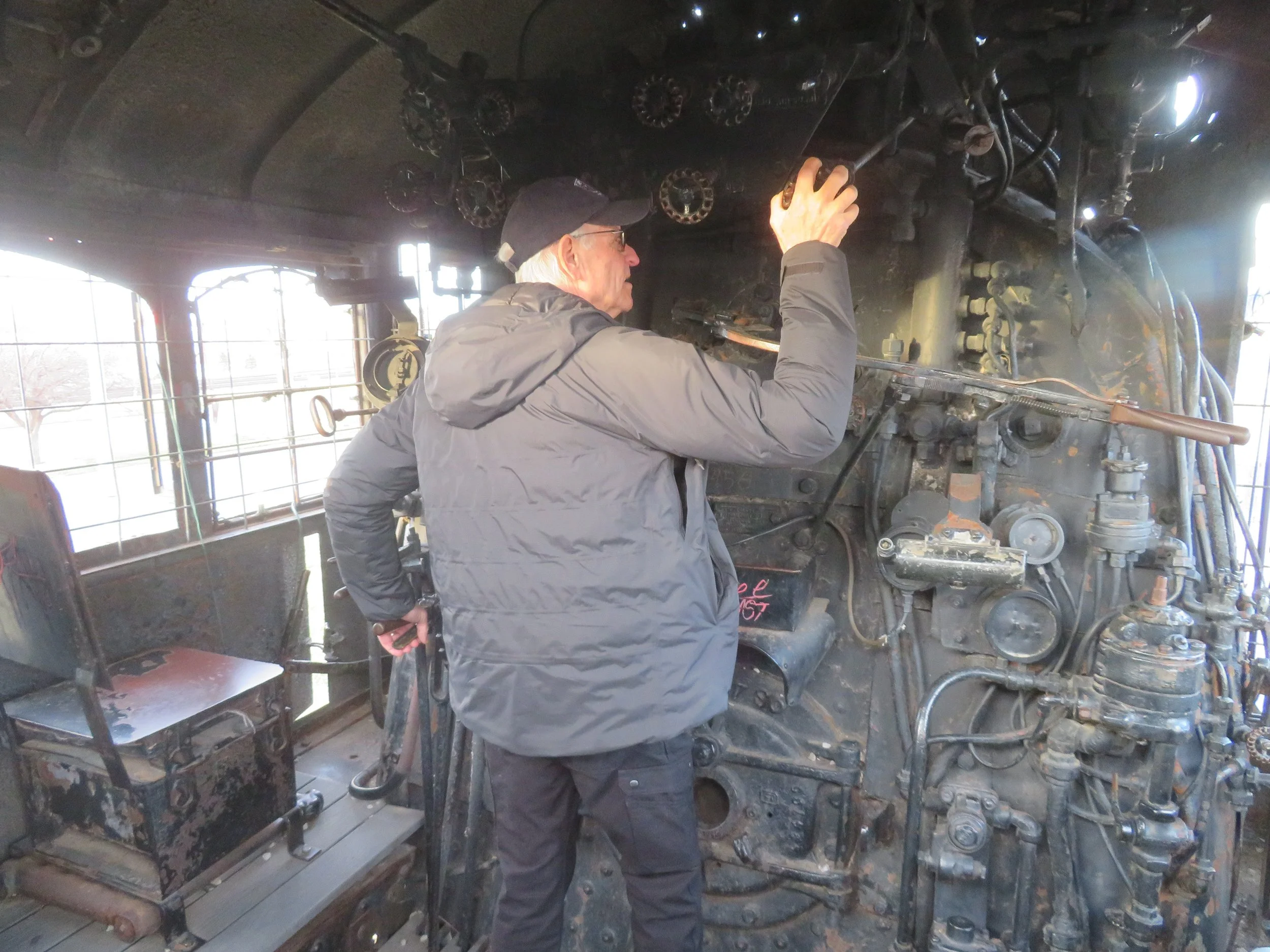
Gives new meaning to David being an engineer!
Just outside the Visitor Center’s fence was an impressive, intricately detailed bronze statue of Doc Holliday, sitting at a table playing cards.
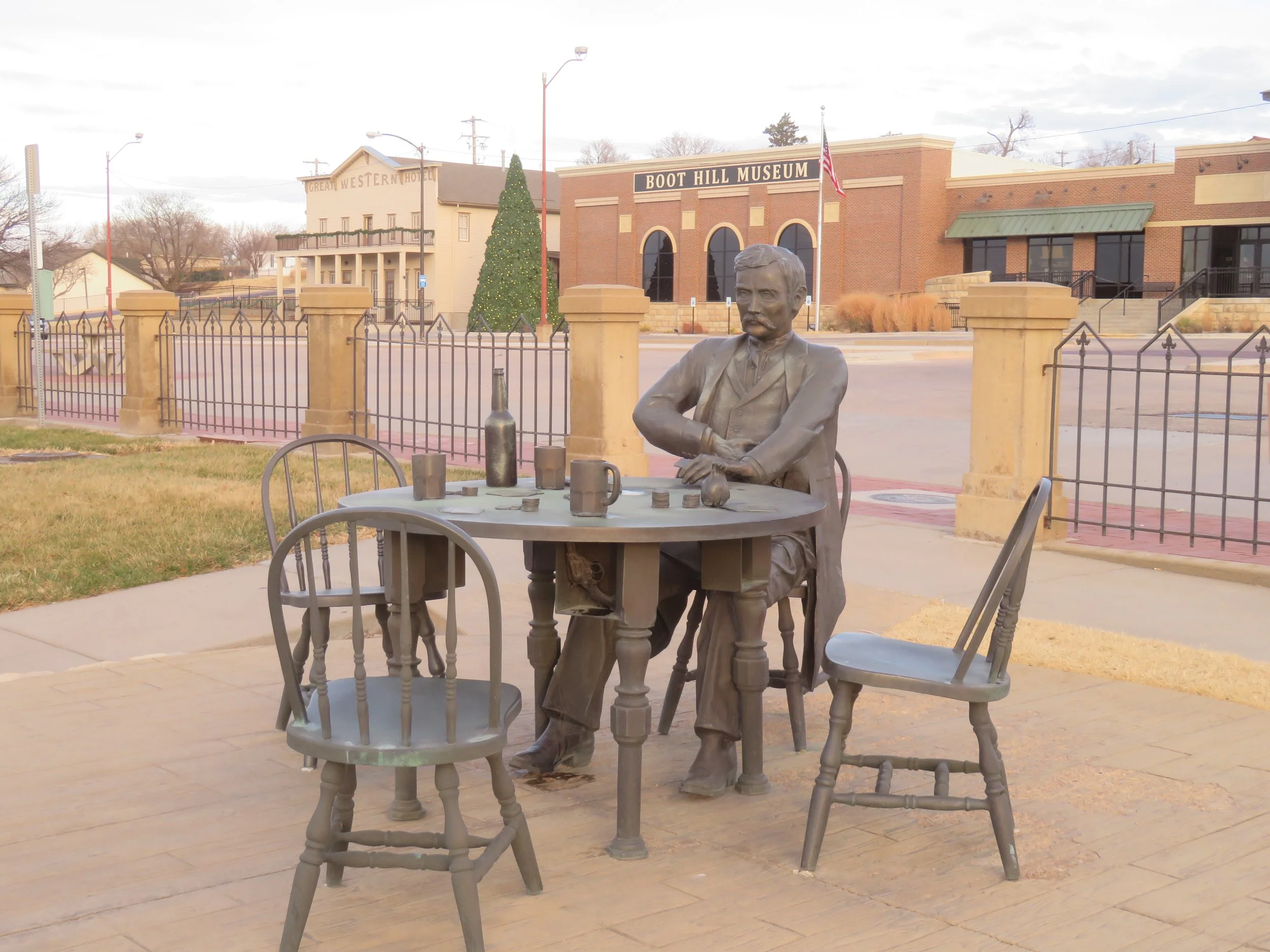
Doc Holliday
Across the street was a 32’ high (9.75m), bronze “Kansas Wheat Shock”, an iconic symbol of Kansas cast in bronze by artist Hoss Haley.
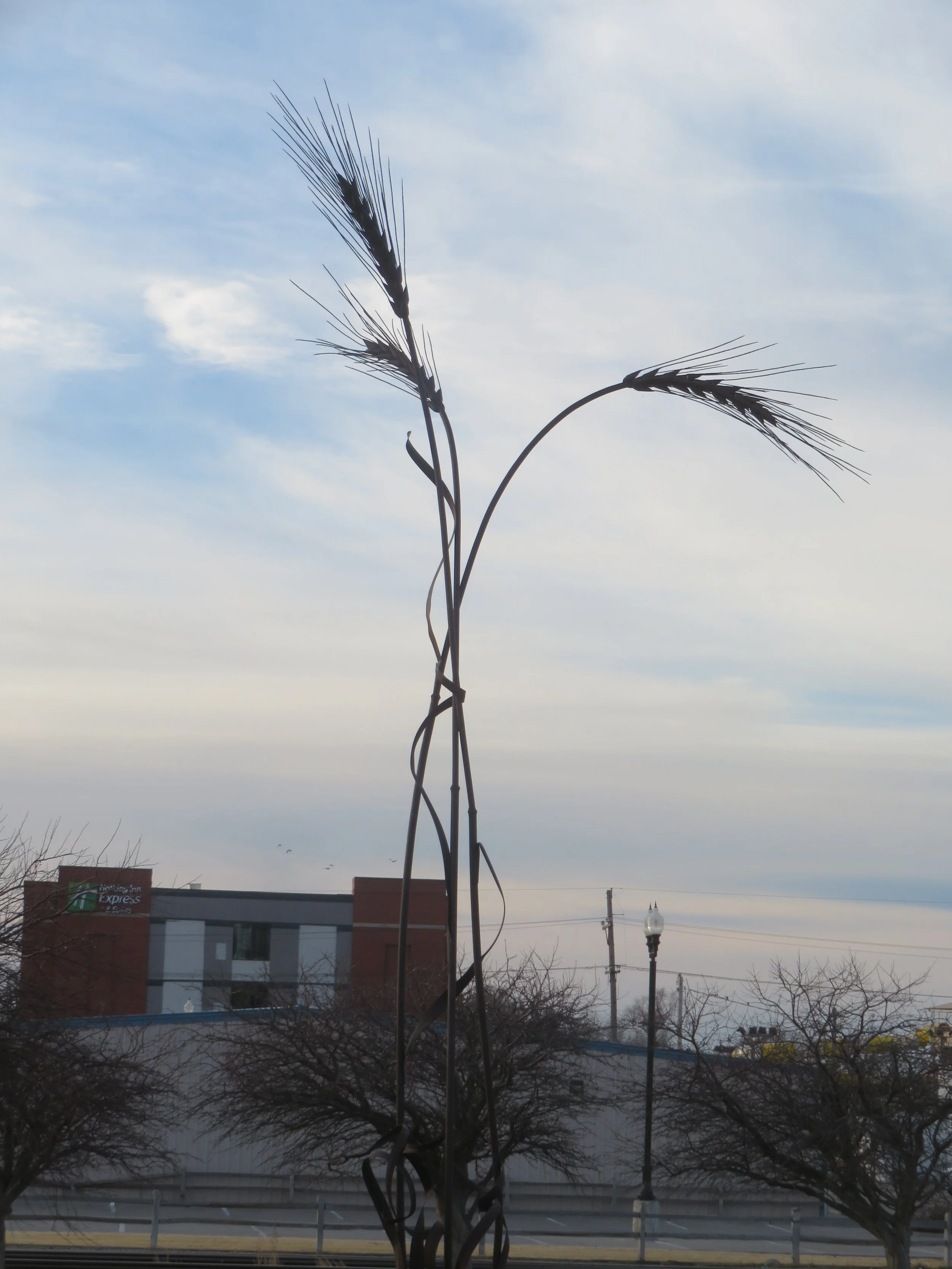
An iconic symbol, the Kansas Wheat Shock
Directly in front of the Visitor Center is a life-sized bronze statue (6’7”/ 2m) of Matt Dillon (aka James Arness), the fictionalized sheriff of 1870s Dodge City.

James Arness as “Gunsmoke” Sheriff, Matt Dillon… David as himself
According to Wiki, Gunsmoke was ranked television's number one show from 1957 to 1961 and aired for a total of 20 seasons, becoming the longest-running, primetime, live-action television series until September 2019, when the 21st-season premiere of Law & Order: Special Victims Unit aired. We noted several other references to Gunsmoke as we wandered around town.
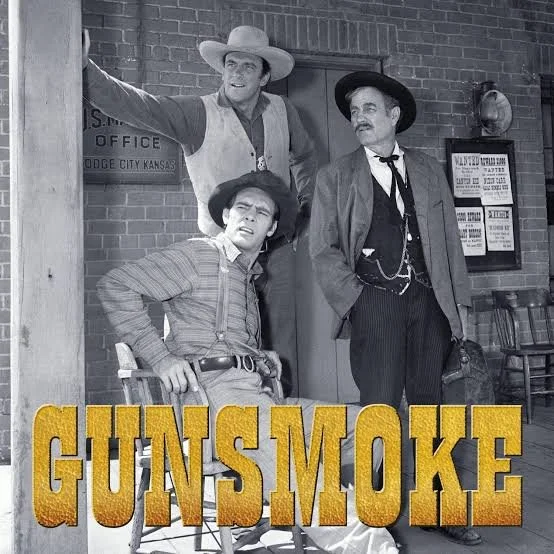
Where’s Miss Kitty?
One of the brochures provided a walking tour known as Dodge City’s Trail of Fame, which included statues, storyboards, plaques, medallions, and murals. Some memorialized famous folks that we recognized, while other plaques indicated historic sites or touted prominent Dodge City citizens of the past. There were 78 ‘stops’ in all. We picked and chose as we made our way along the Dodge City streets.
We continued up brick-lined Front Street, where we encountered “El Capitan”, a bronze sculpture by Jasper D'Ambrosi that commemorates the 1875-1885 Texas cattle drives to Dodge City. According to the brochure, over 5 million head were driven up the trail to the Santa Fe Railhead in Dodge City, purportedly making it the "greatest cattle market in the world" for a decade.
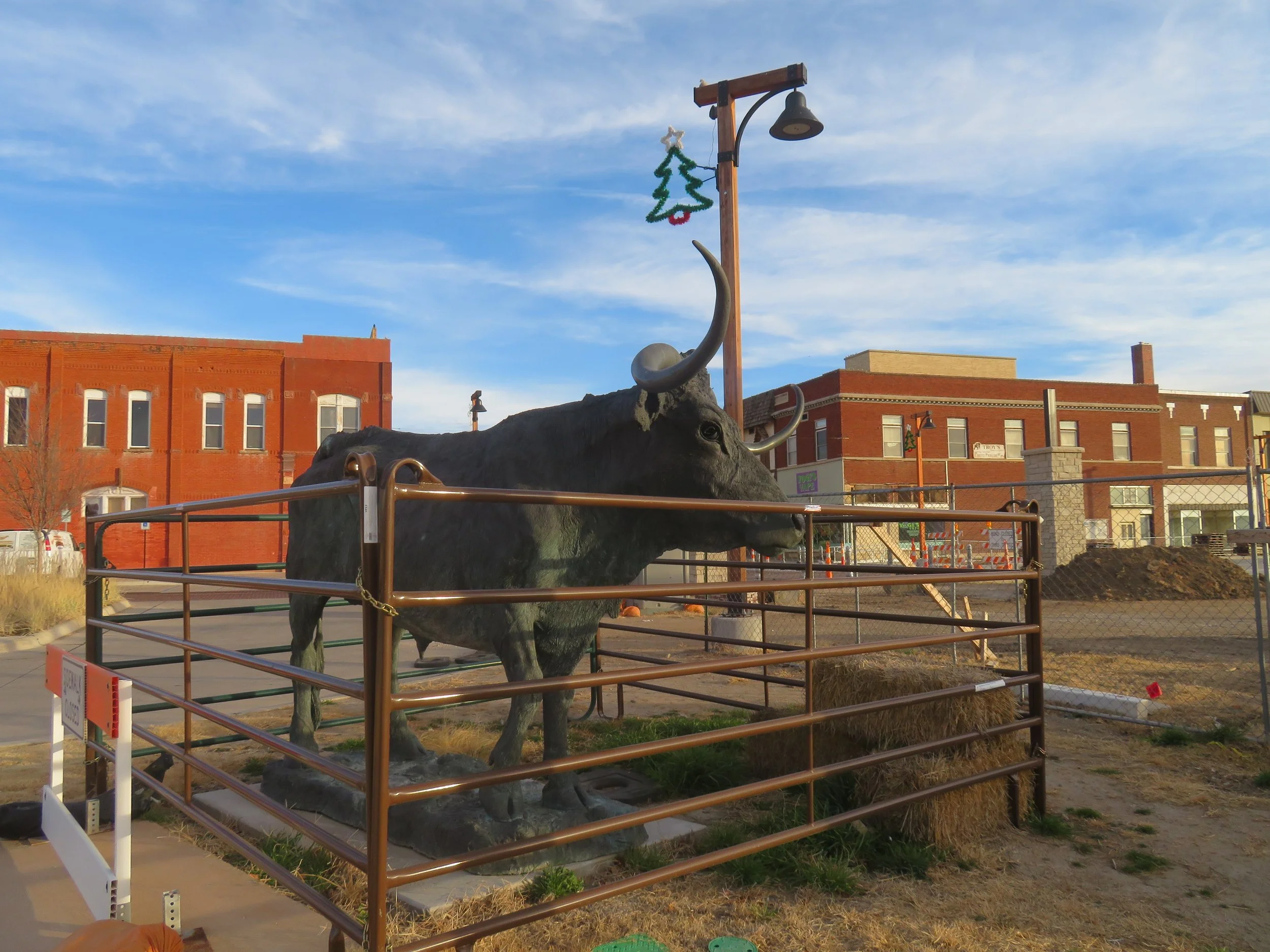
El Capitan
The historic windmill monument just down the street represents another icon of the windy Great Plains and Kansas.
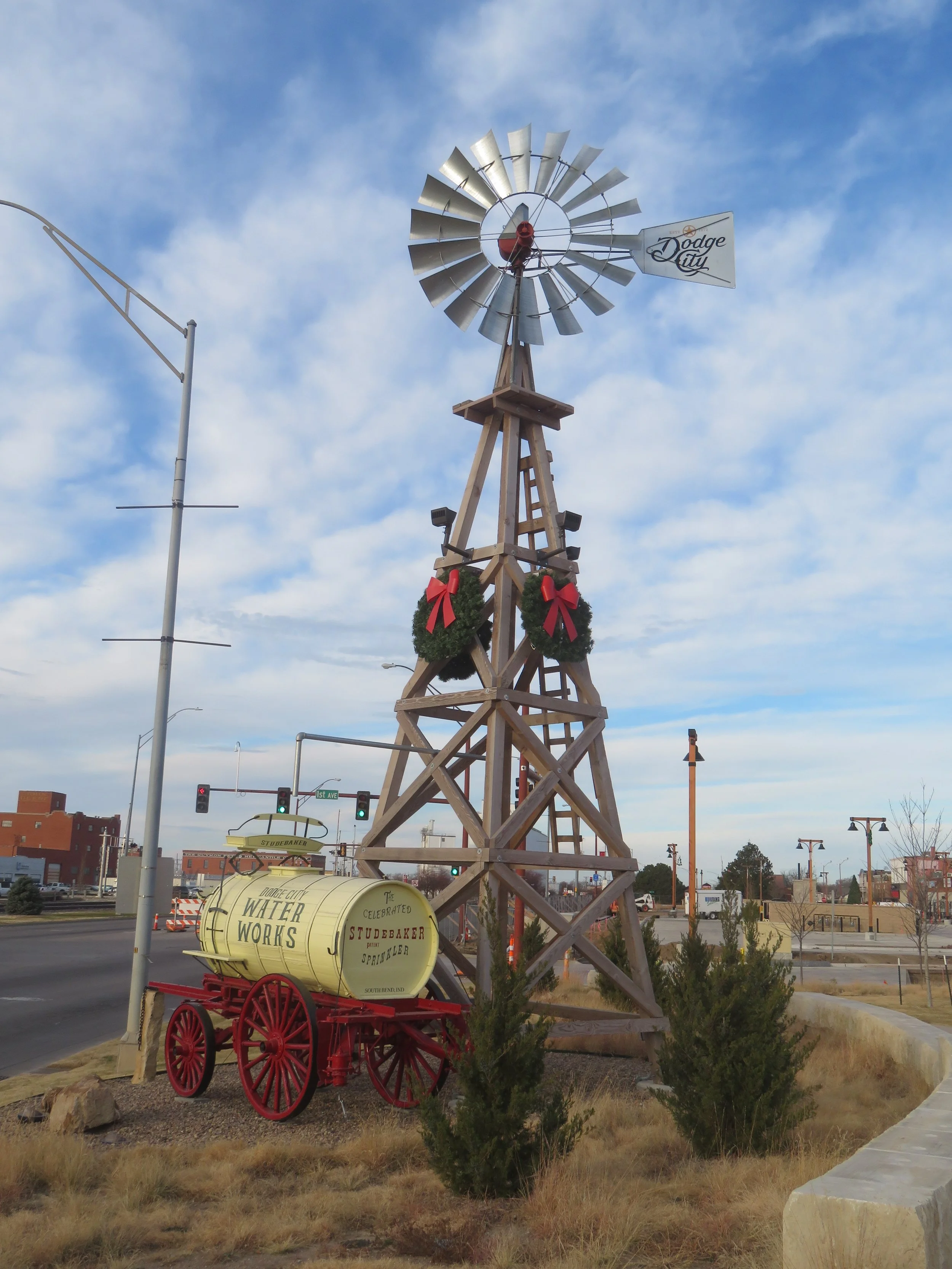
Another iconic symbol of Kansas and the Great Plains… the windmill
Legendary Wyatt Earp stood in a small square just off Wyatt Earp Boulevard. Earp worked on and off in Dodge City as a deputy marshal from 1876 to 1879 before moving on to Tombstone.
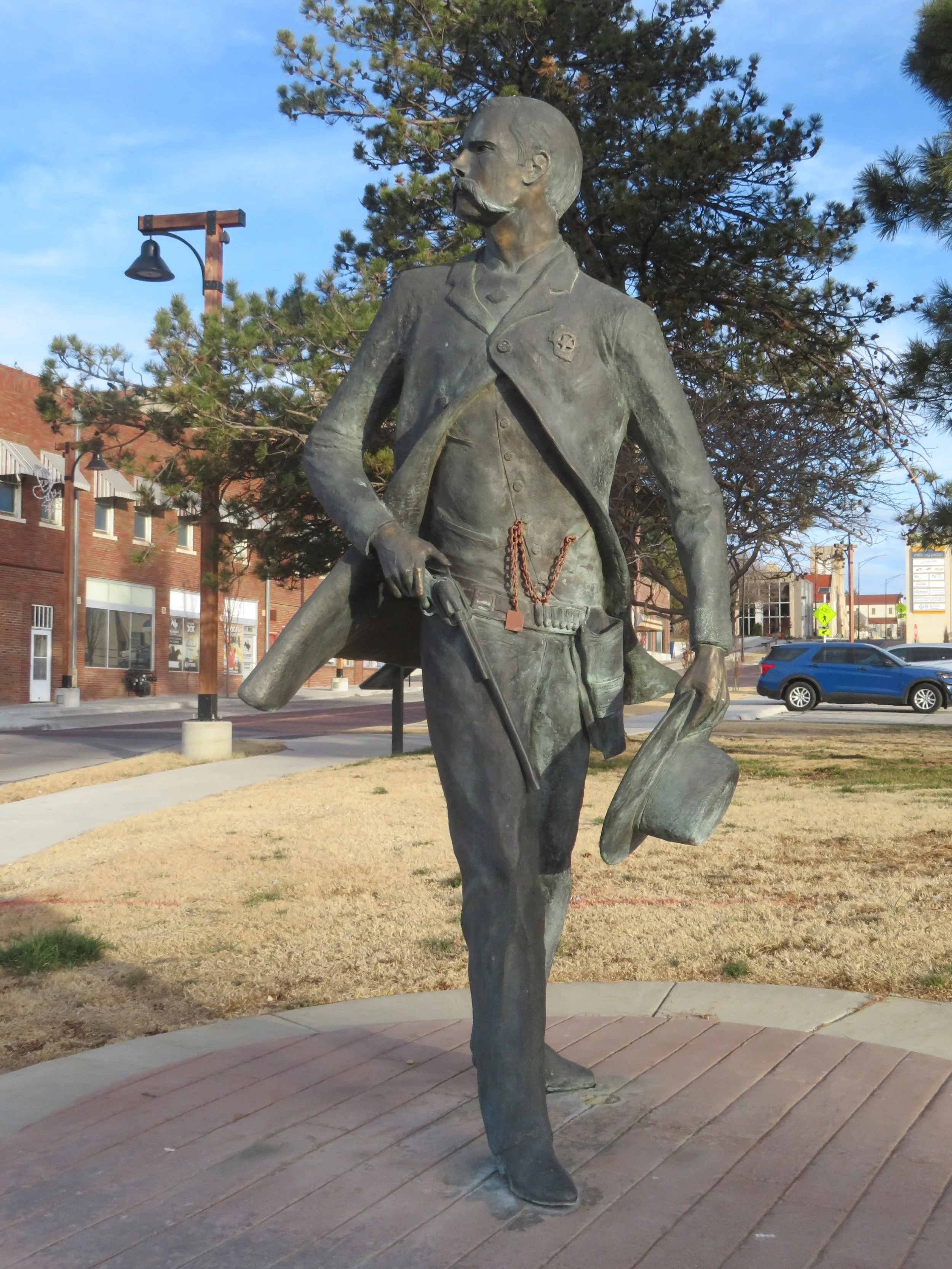
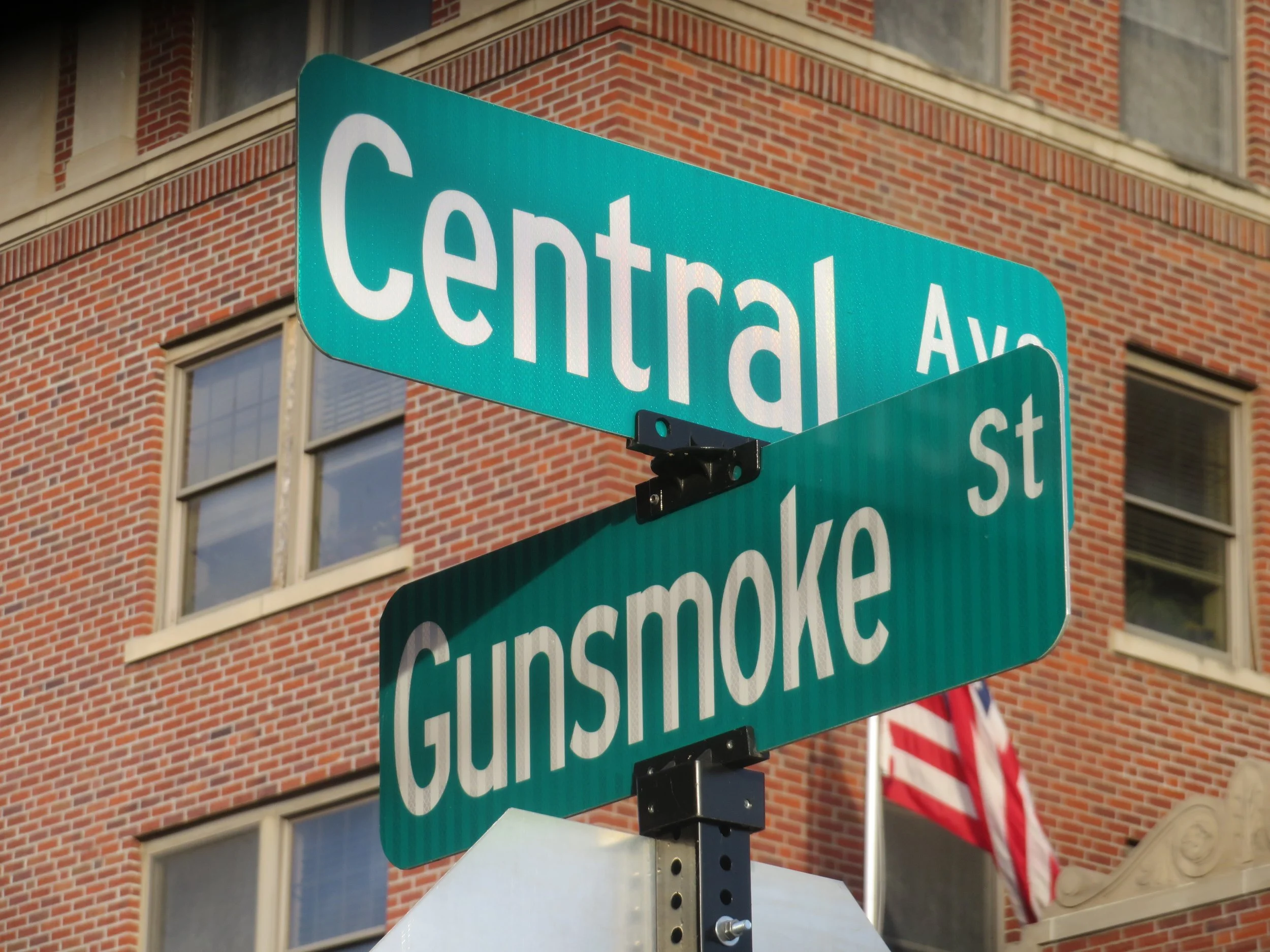
We walked up Central Avenue a block before turning onto… wait for it… Gunsmoke Street!
We passed by the murals at Eisenhower Park and found a Gunsmoke mural further up the street complete with Matt Dillon, Miss Kitty and the gang.
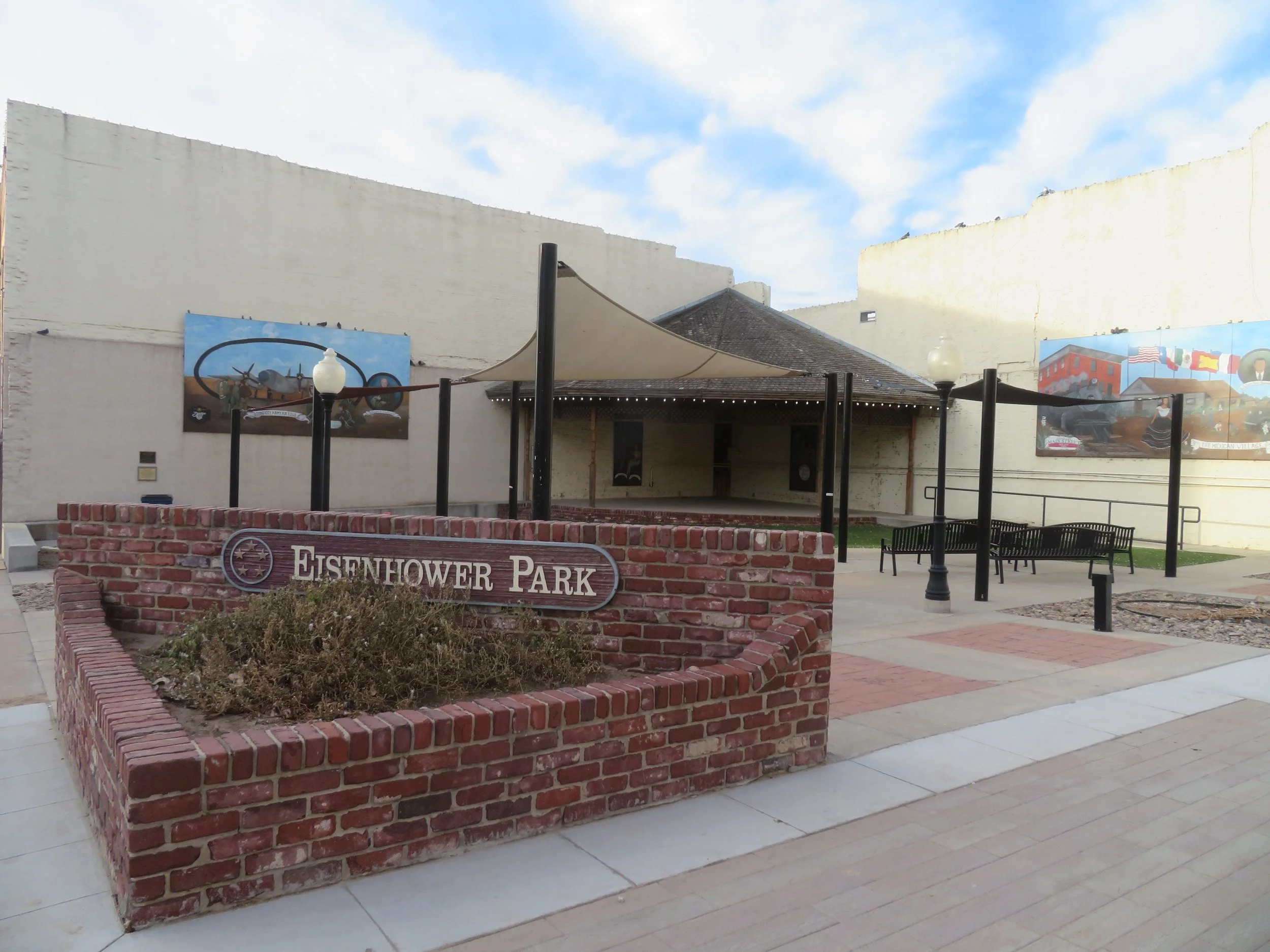
Pleasant little eisenhower Park
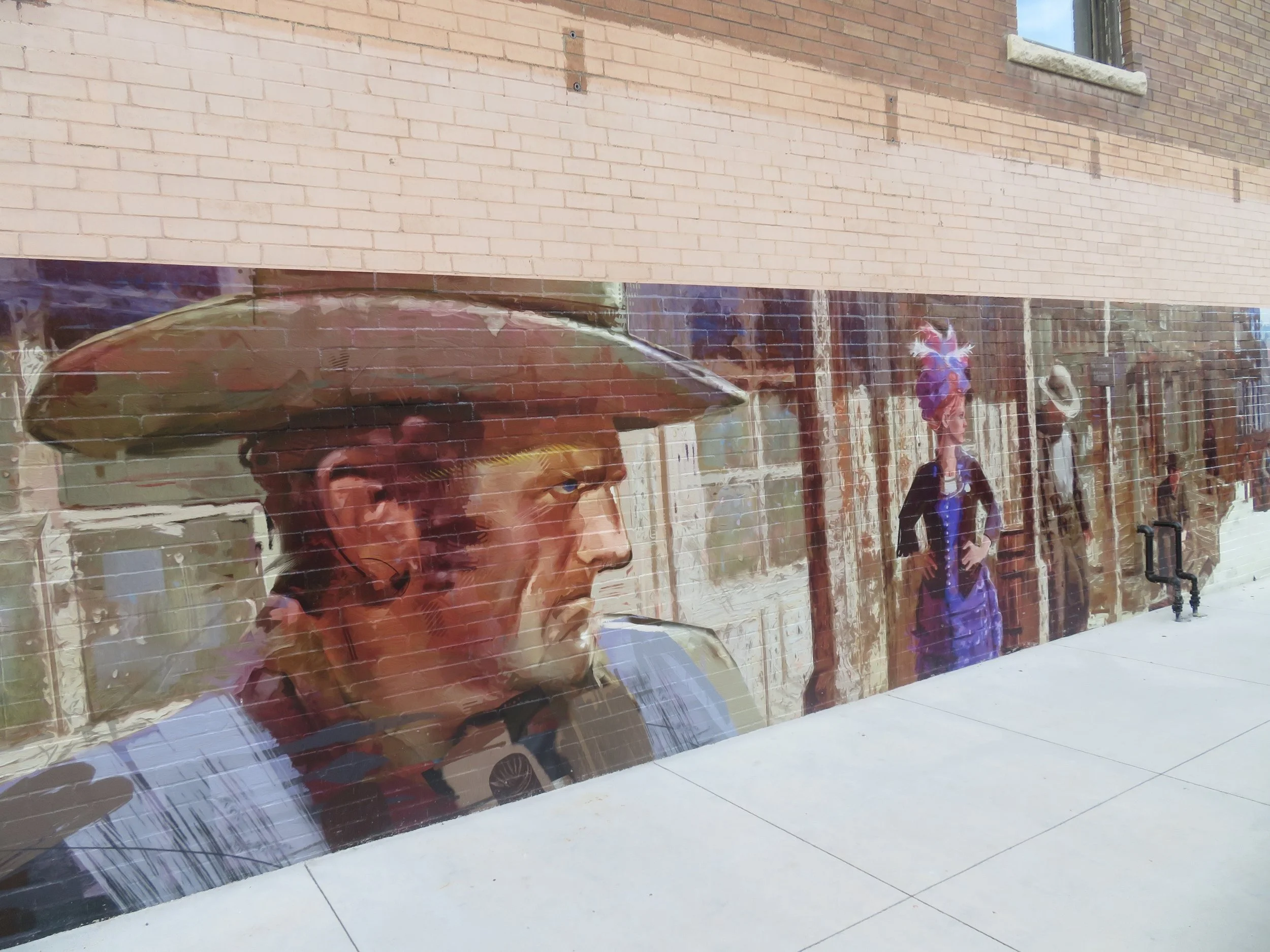
The Gunsmoke Mural stretched down the block
We headed back to the Visitor Center to pick up Blanche, then drove to the Boot Hill Distillery to catch a glimpse of ‘Cowboy’, a sculpture by Dr. O. H. Simpson completed in 1927 and dedicated to the Dodge City cowboy era and the cattle drives. The inscription on the statue reads: “On the ashes of my campfire this city is built.”
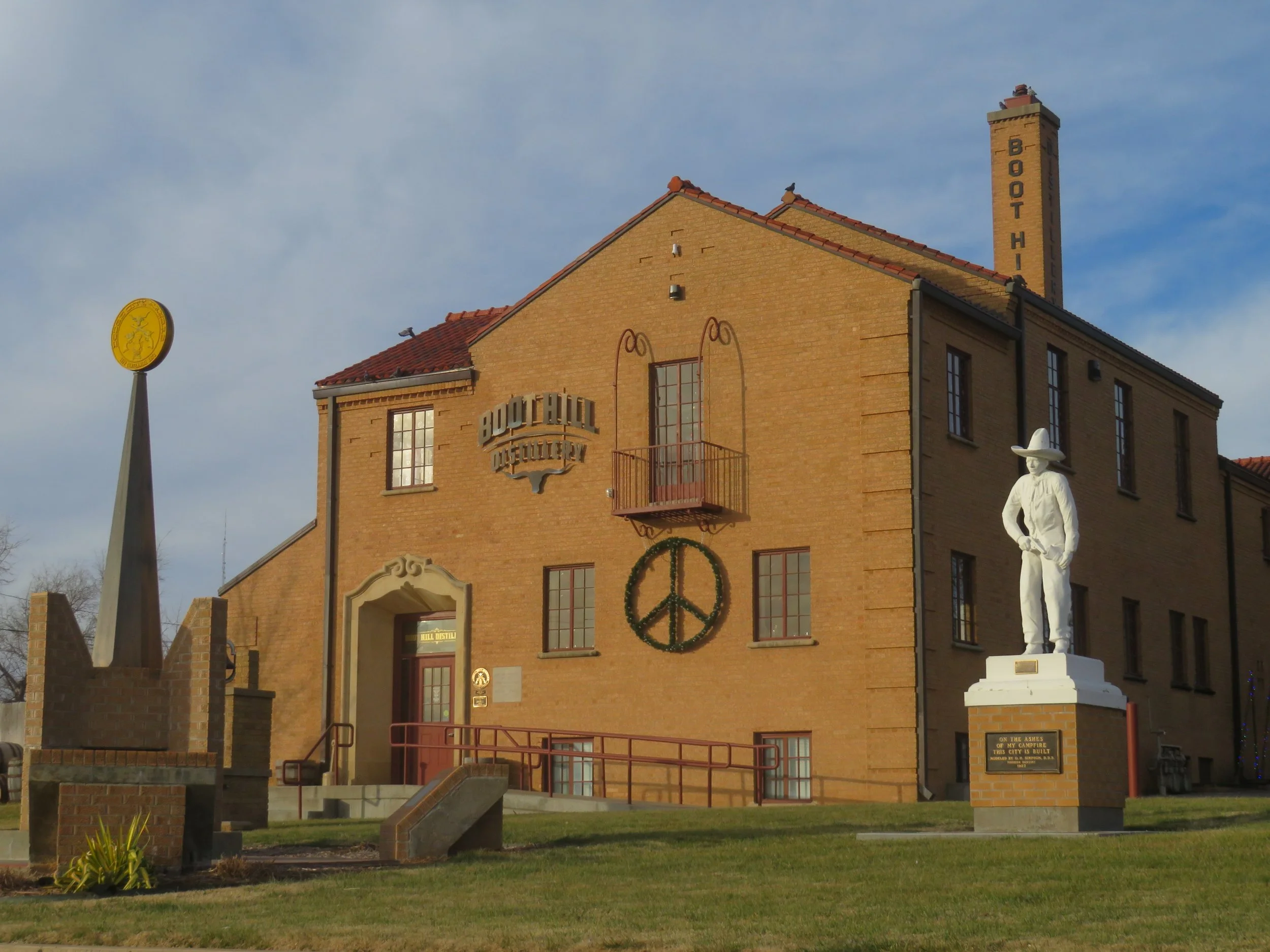
The Cowboy
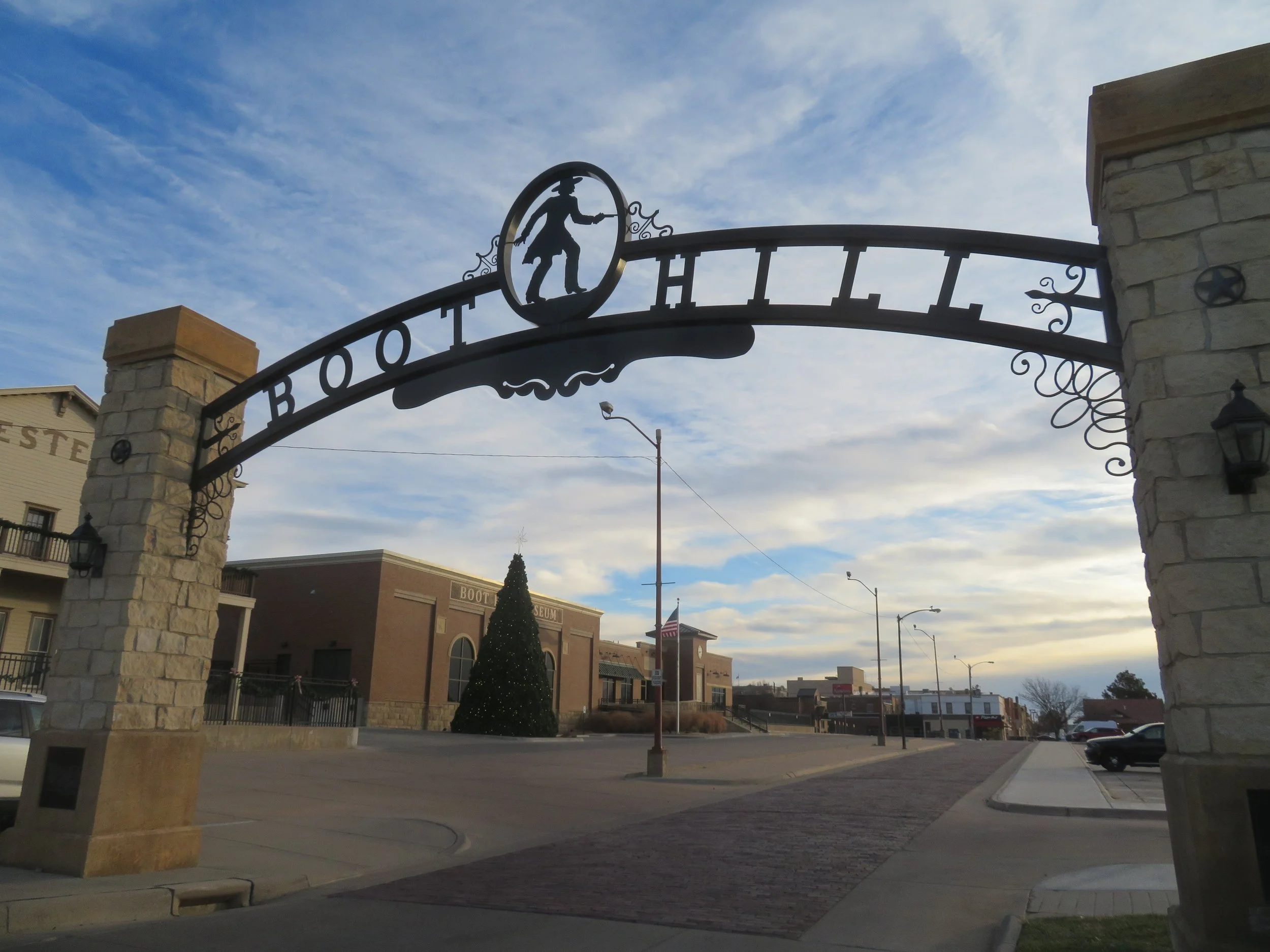
As an aside and a bit of a disappointment, we learned that Dodge City’s Boot Hill Museum is now located on the original site of the Boot Hill Cemetery.
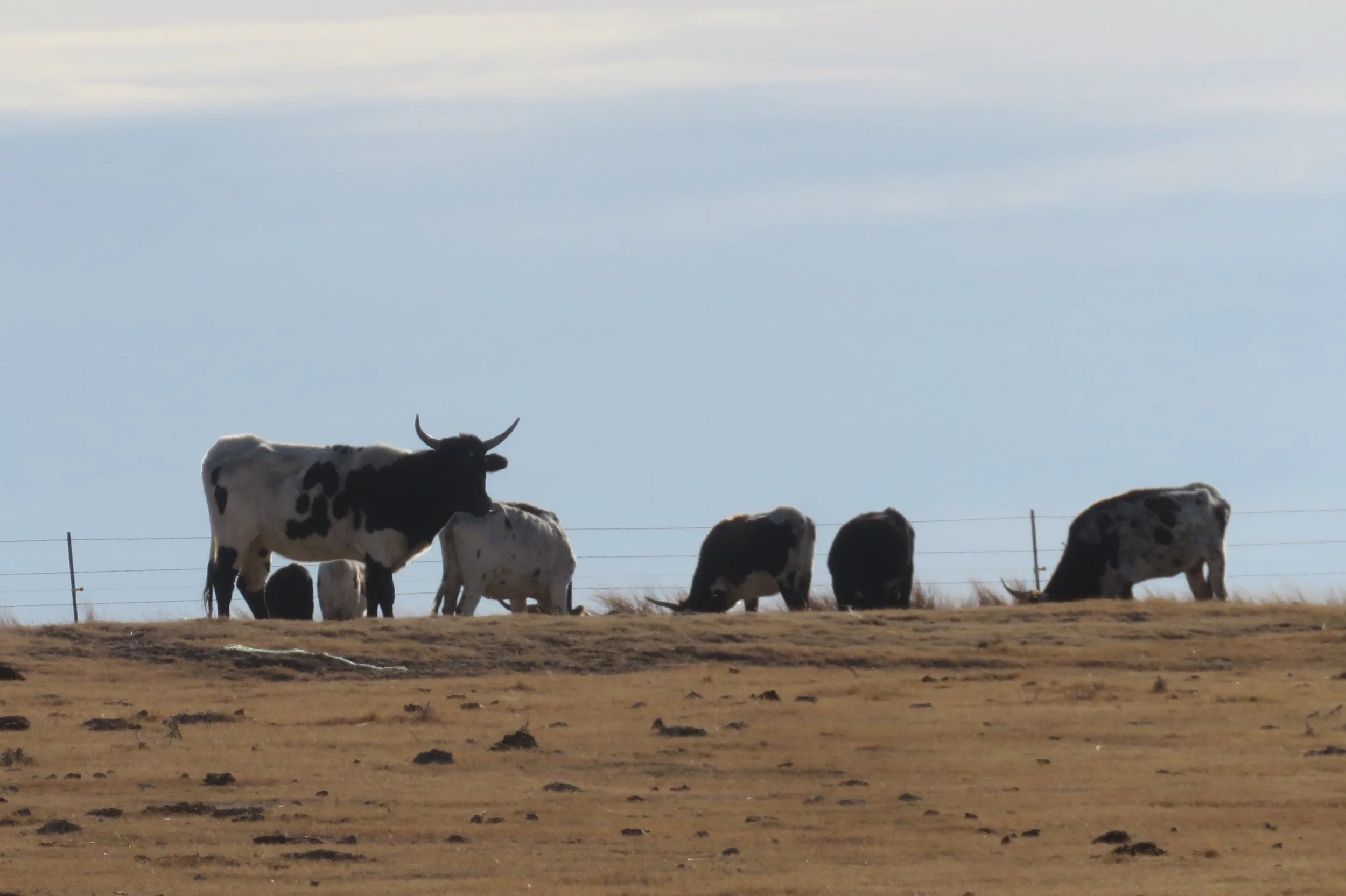
It was mid-morning by the time we began heading out of town. We passed by a feed lot, a meat-packing plant, and then out by the airport, we spotted a few Texas longhorns, part of a herd that grazes in a 40-acre park at the entrance to the Dodge City Regional Airport. Every August, the city still sponsors a Texas Longhorn Cattle Drive, herding the cattle right down Wyatt Earp Boulevard.
And then it was time to… Get out of Dodge!
Join us next time… it’s David’s turn at bat.