
Day 14 - Pontevedra to Caldas de Reis
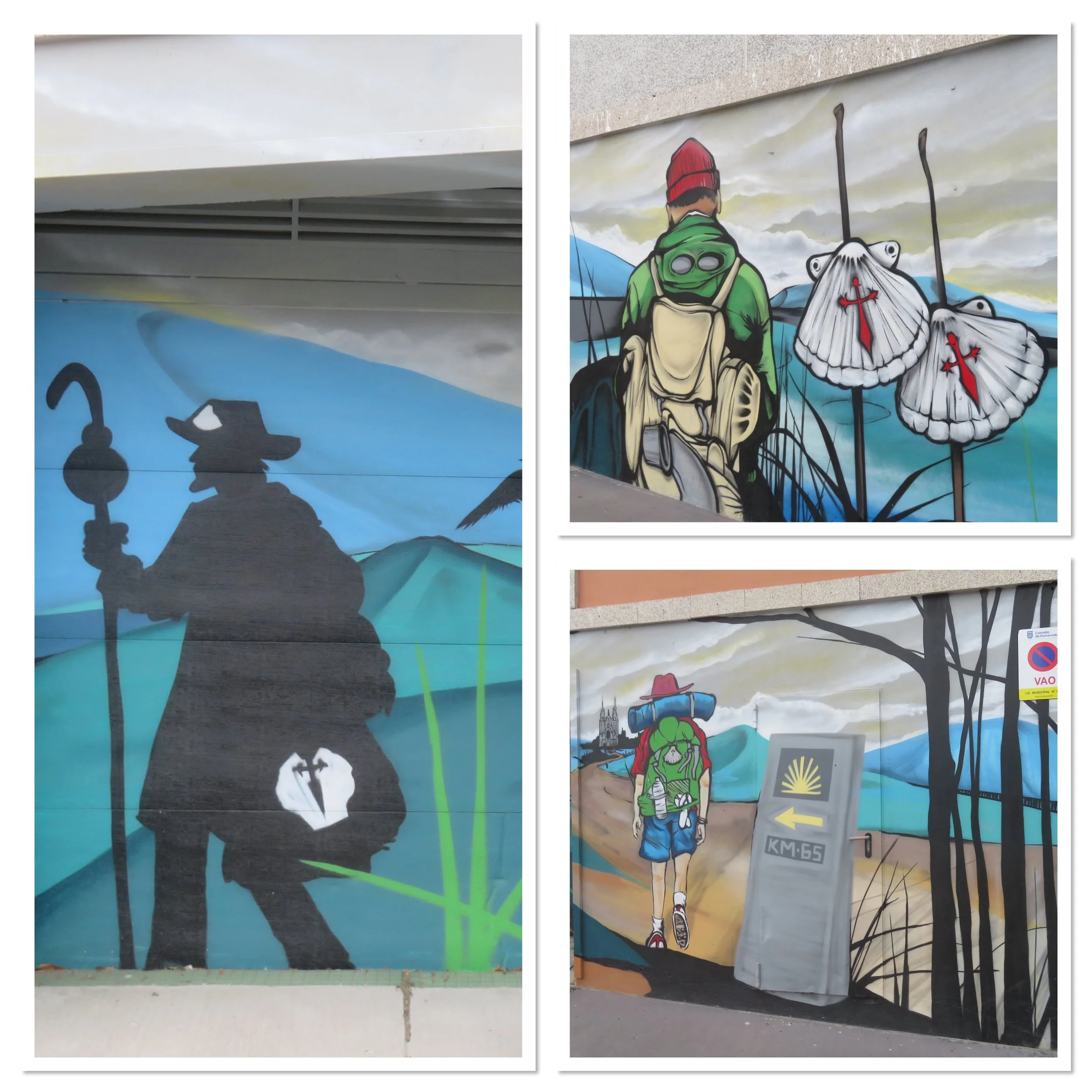
/It rained hard during the night and it was damp and raw as we left Pontevedra headed for Caldas de Reis in the early morning. Colorful murals bid us adieu as we walked out of town.
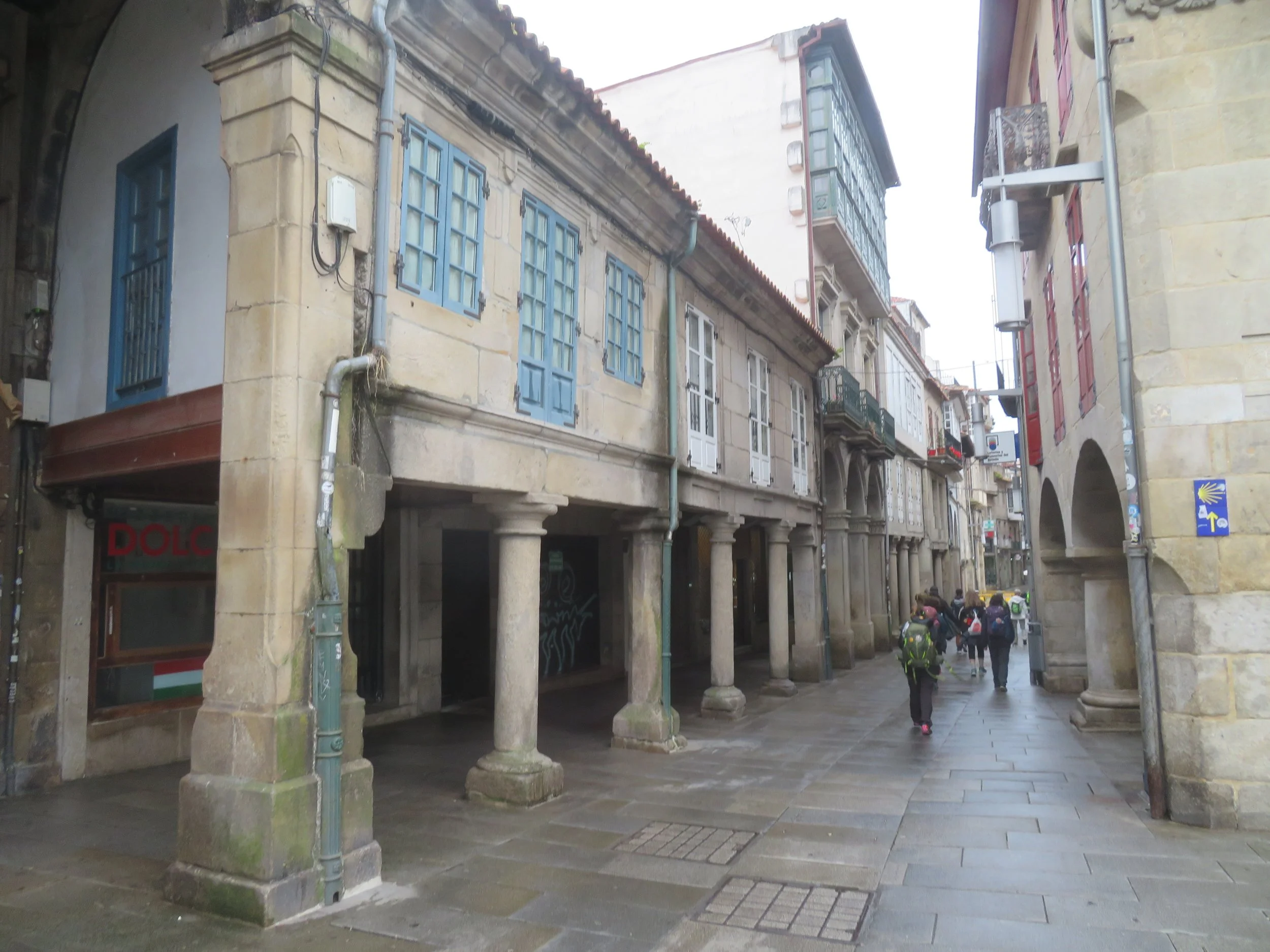
The streets were wet and the cobblestones a bit slippery as we wended our way through the city streets. We weren’t alone. The closer we get to Santiago, the more crowded the path has become.
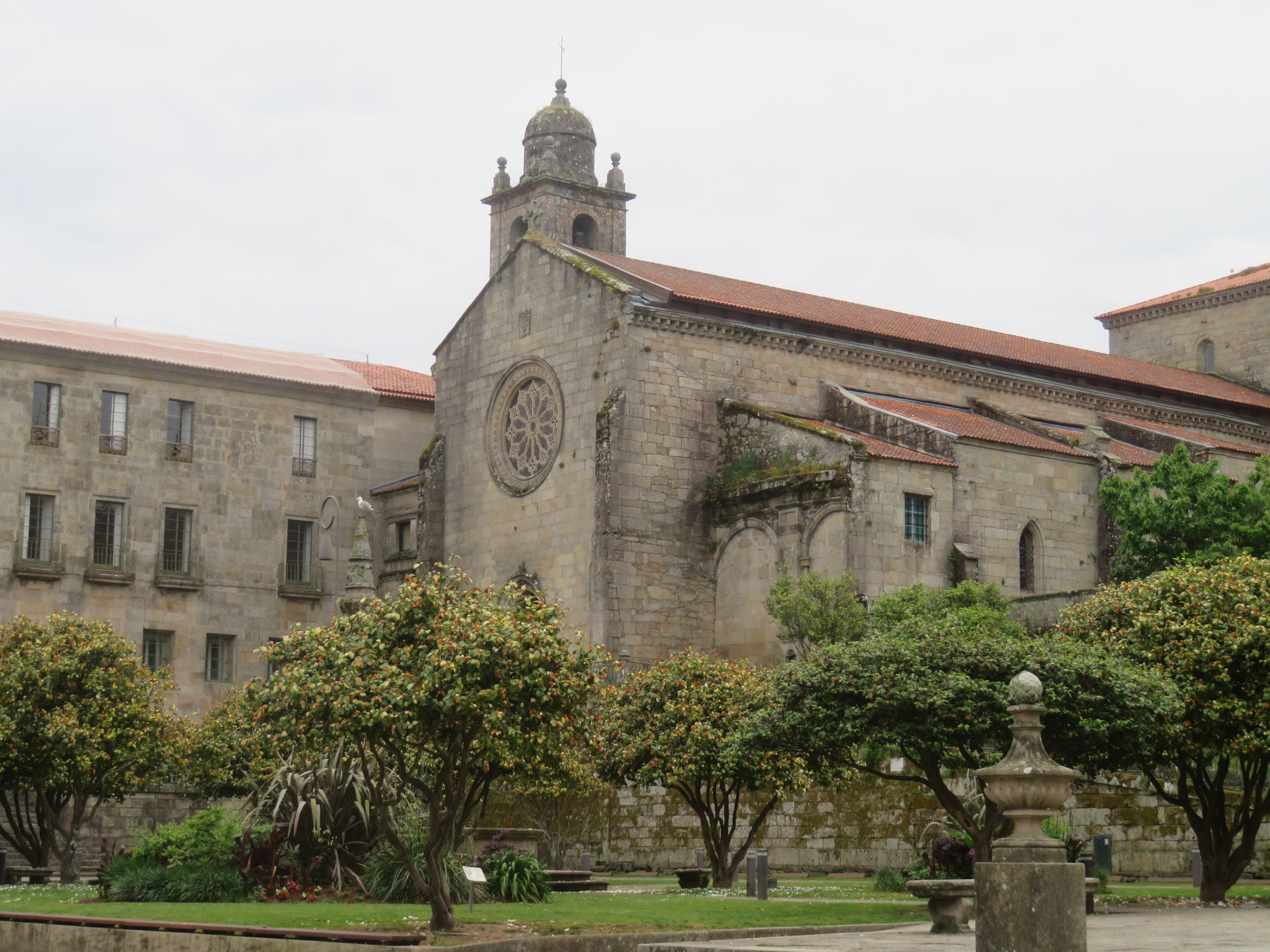
We passed by the 14th century Convento e Iglesia de San Francisco. According to local tradition, the Convent was founded by Francis of Assisi as he passed through Pontevedra on the Camino en route to Santiago de Compostela.
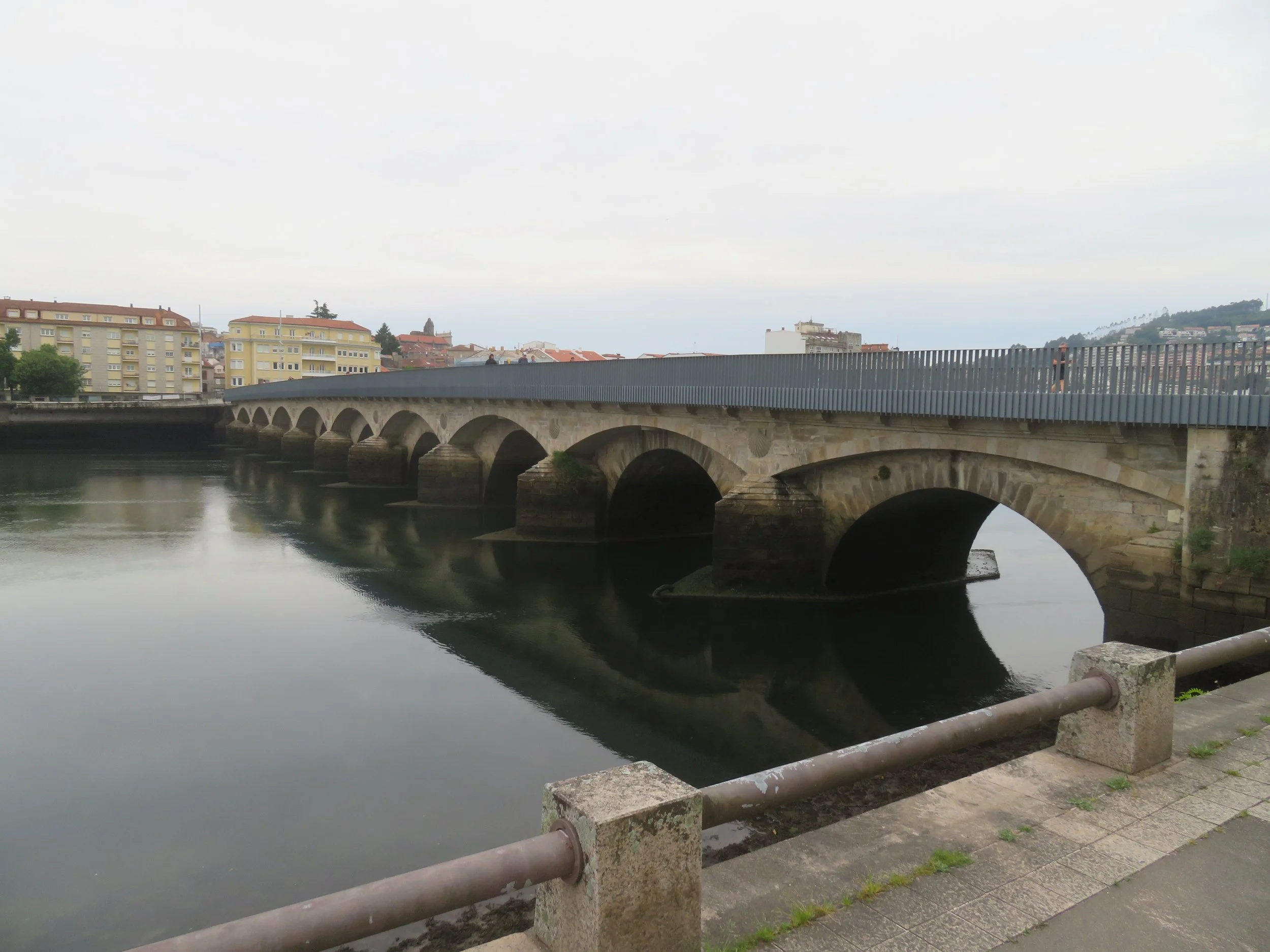
We crossed the Roman/Medieval Ponte do Burgo pedestrian bridge over the Lérez River right as we left Pontevedra.
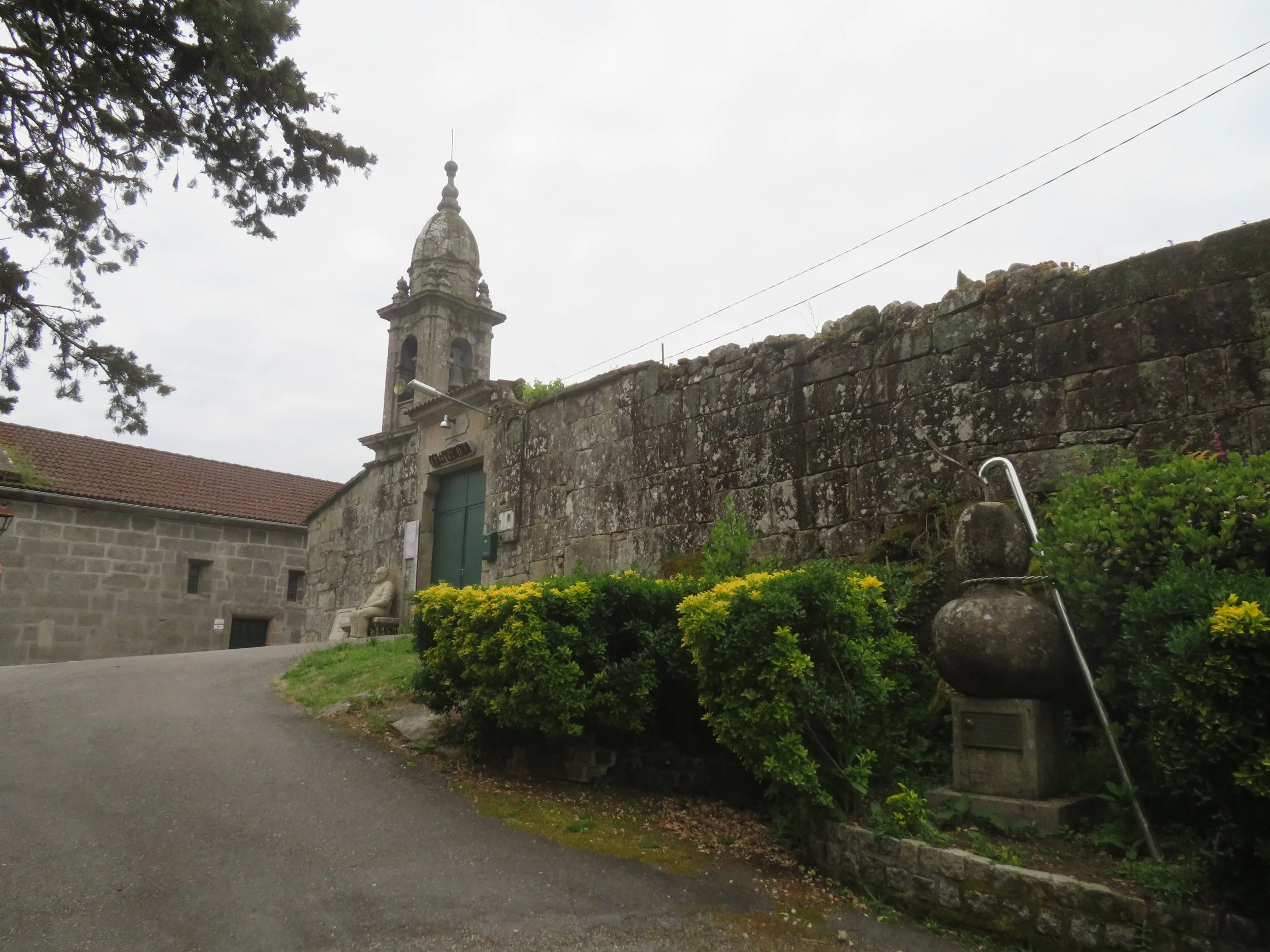
We came across the Igrexa de Santa Maria de Alba and immediately noticed its pilgrim symbols of staff and gourd out front. The current church dates from the late 16th, but was built on the foundation of an early 12th century temple. We would have liked to have peeked inside, but it was locked up tight.
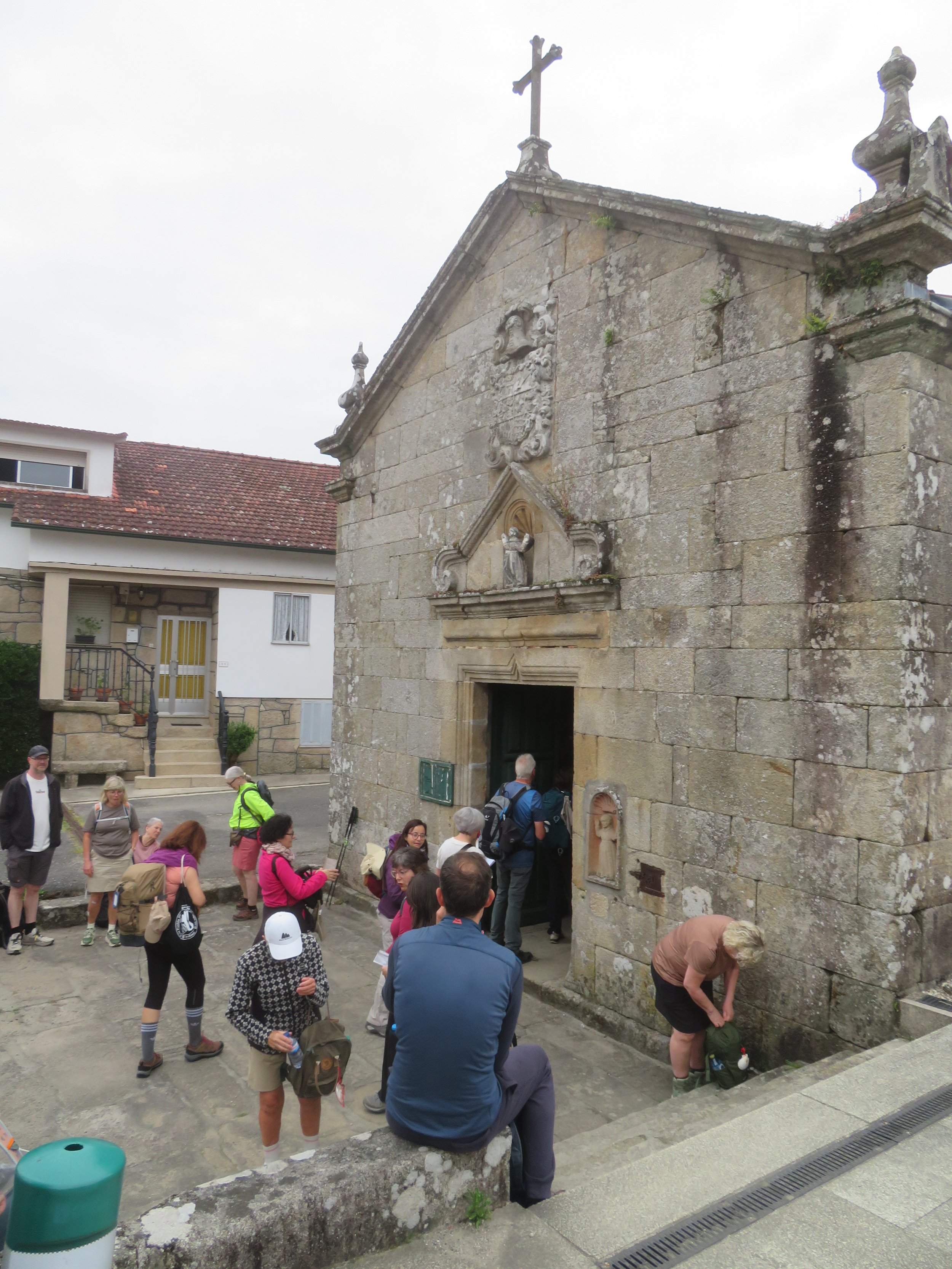
On the other hand, when we reached the Capilla de Santa Mariña, there were crowds of pilgrims. The chapel was open and it’s a popular place to obtain a pilgrim stamp. An observation: As the Camino becomeis more crowded, the pilgrims seem more determined (aggressive??) to get their stamps first, get to a site first, take their photos first, get to the front of the coffee line first and often push past others walking on the Camino. Luckily, we’re committed slow travelers and have been for years. We’re in no hurry.
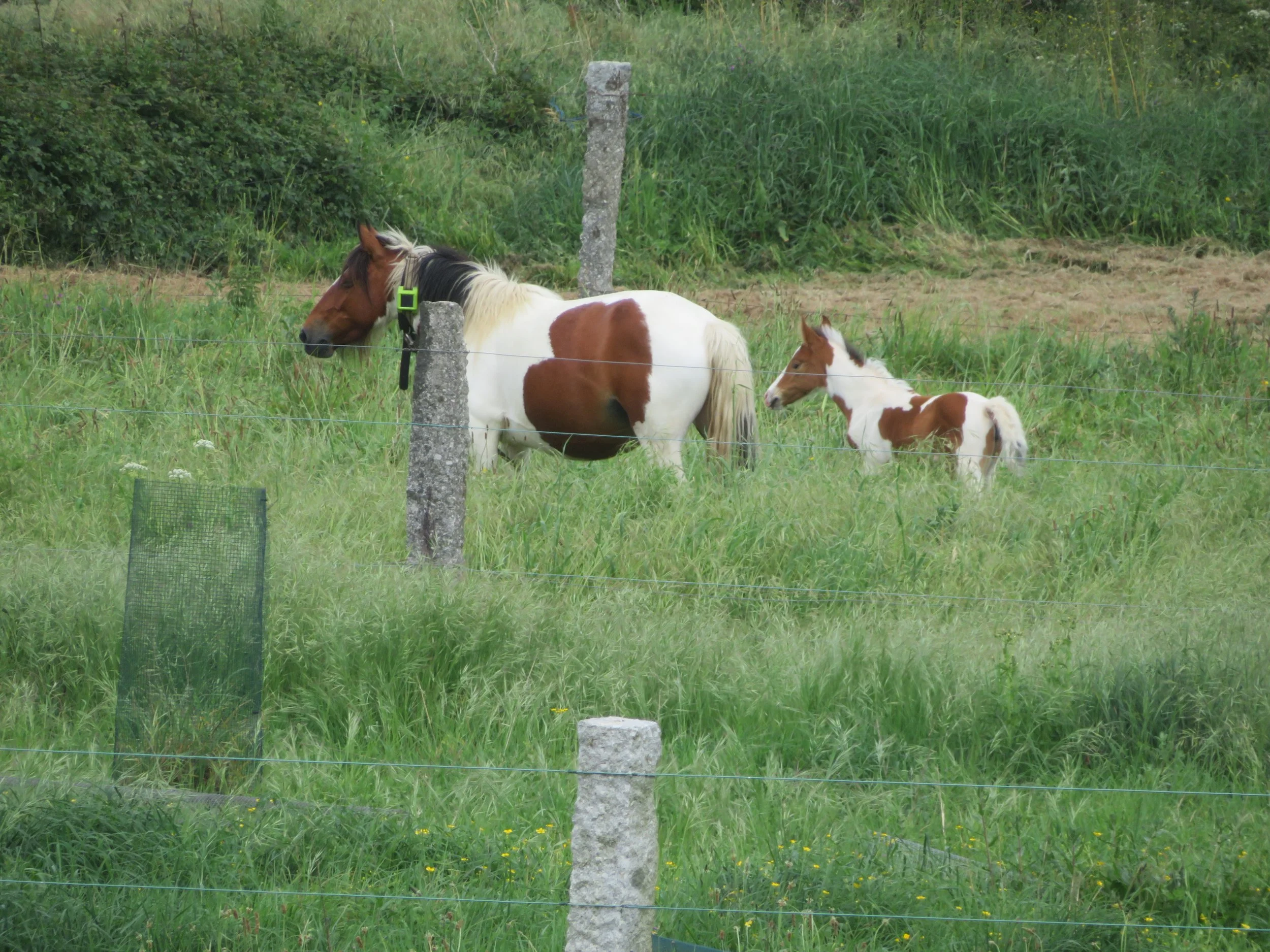
As others walked past, some without noticing, we took a minute to appreciate this pinto mare with her young foal grazing in a nearby field.
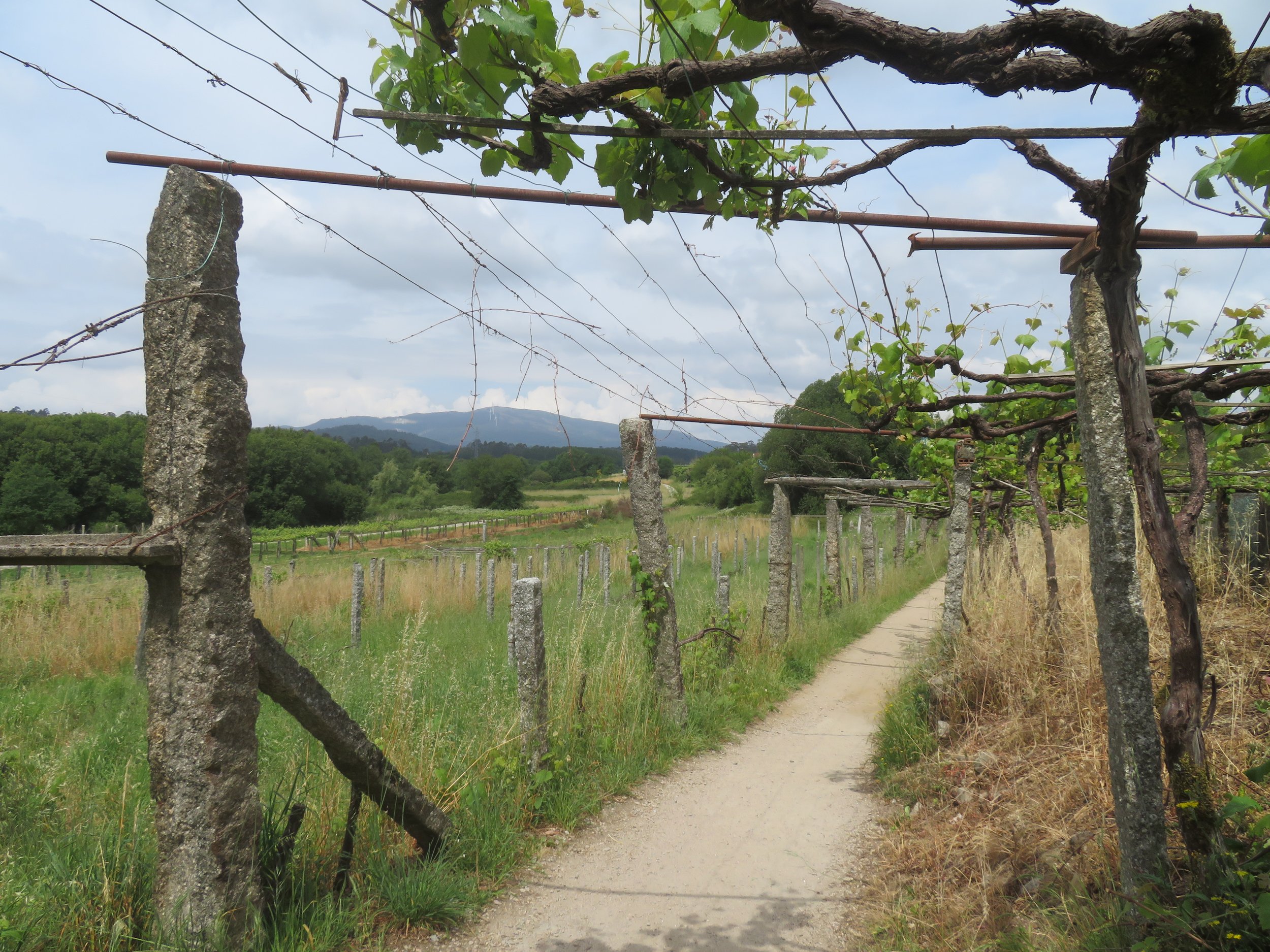
Being slow has its advantages. We walked along this idyllic section of the Camino through a vineyard, unimpeded and all alone.
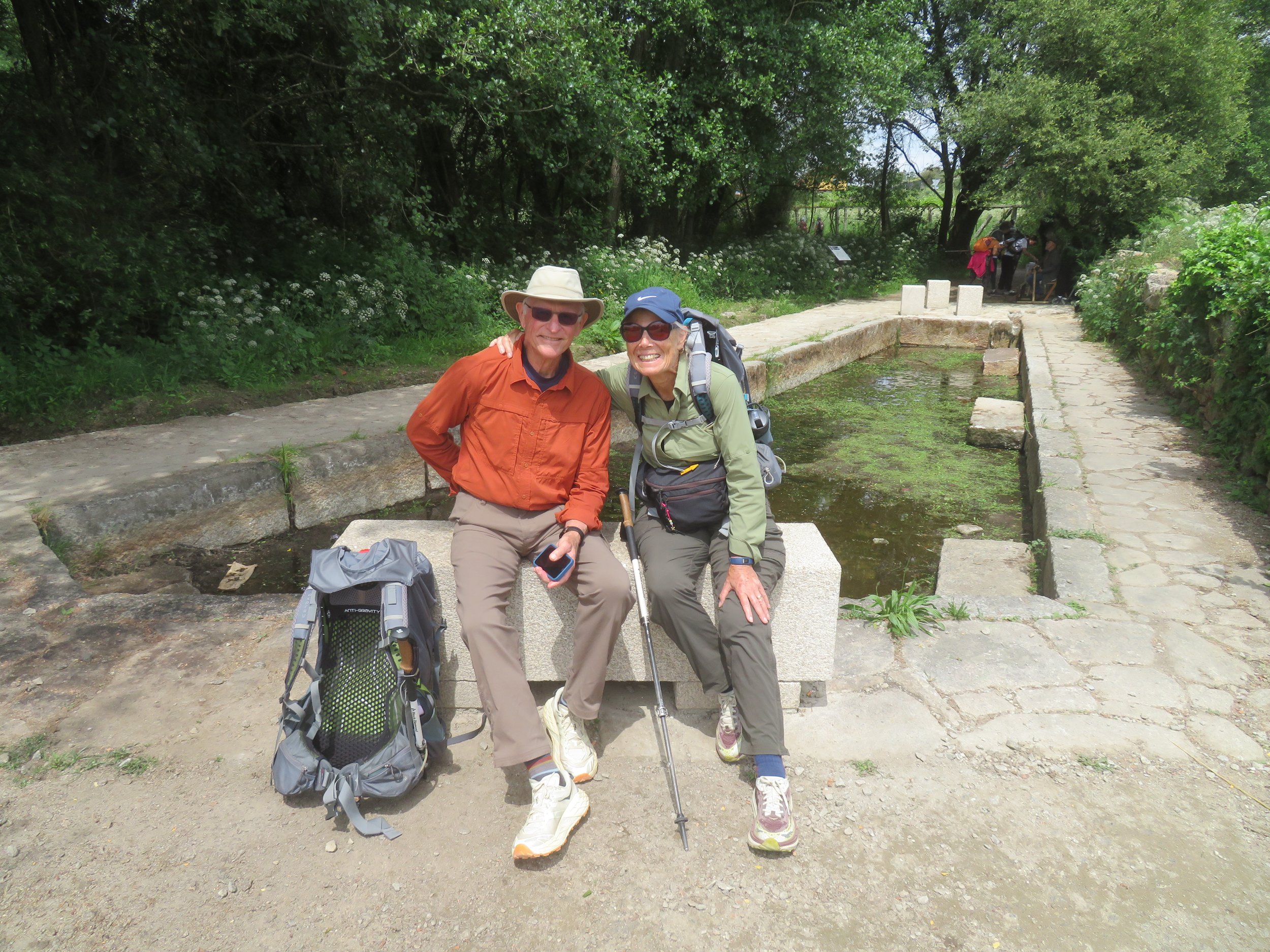
We weren’t alone for long. We stopped to take a break and another pilgrim took our picture.
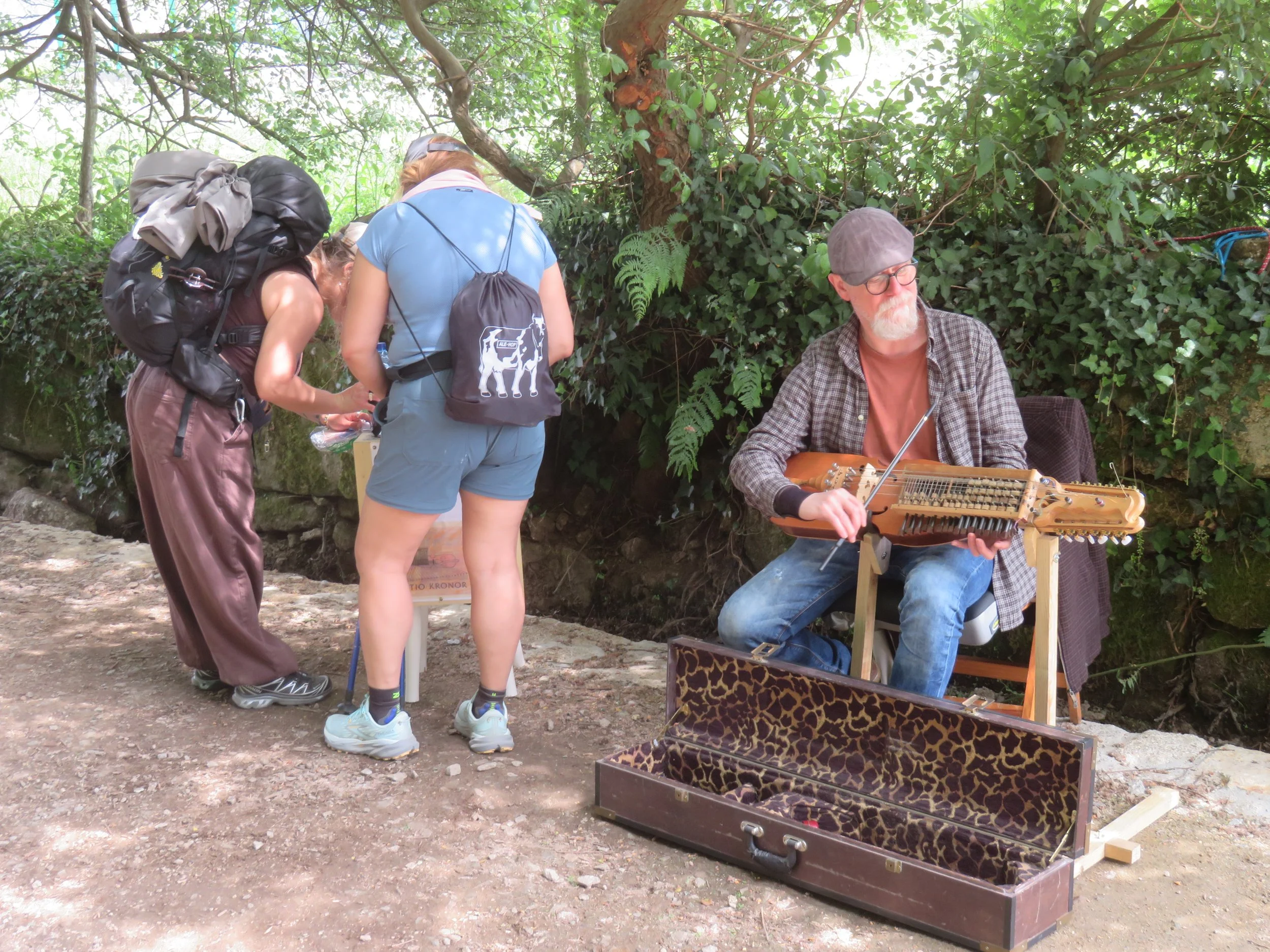
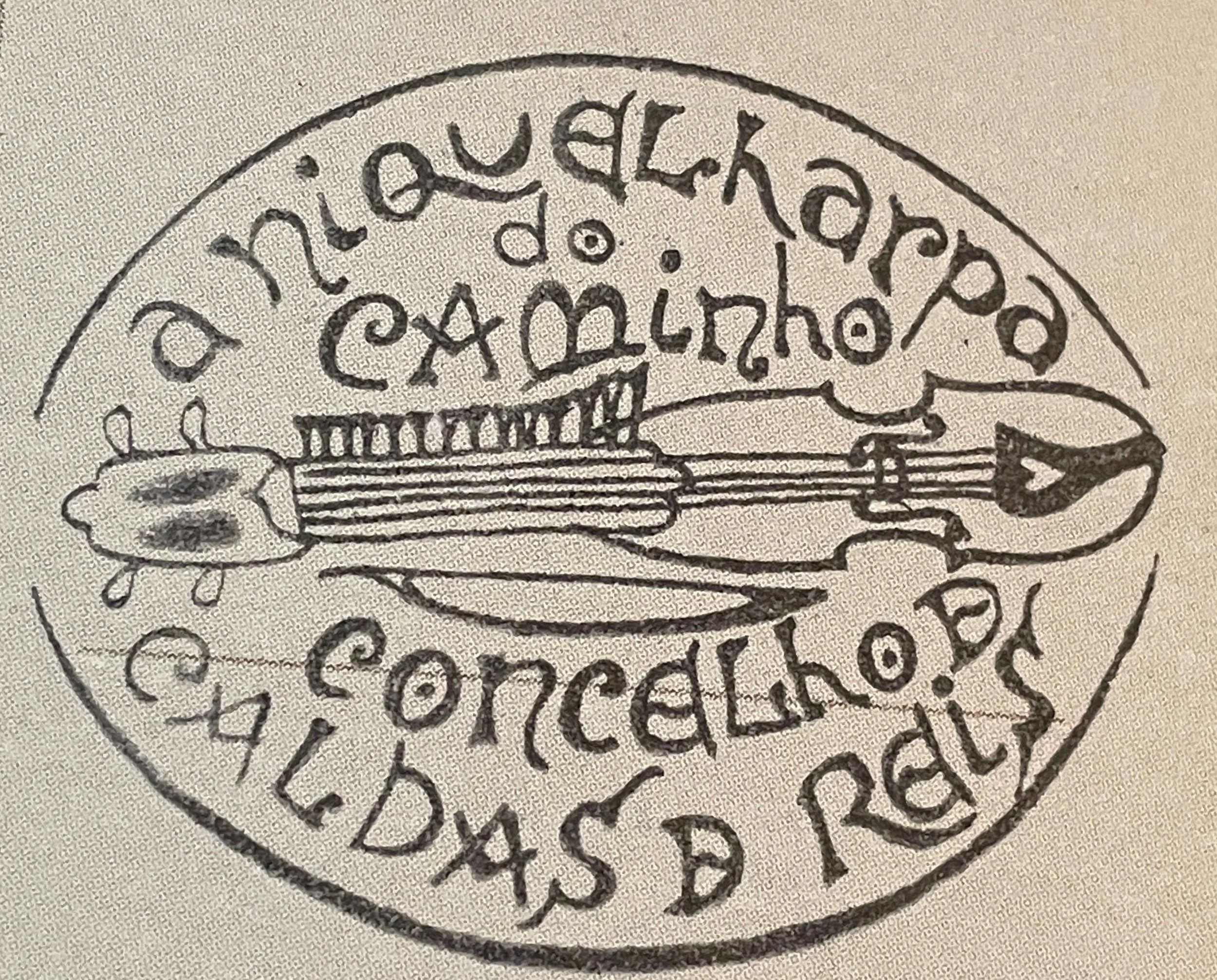
We’ve seen several musicians in our Camino travels, but this musician was a bit different. He was playing a nyckelharpa, Sweden’s most famous ancient stringed instrument. Tracing its roots back to the 14th century, it sound fiddle-like and very pleasant to the ear. Plus, we added a ‘niquelharpa’ stamp to our pilgrim passports.
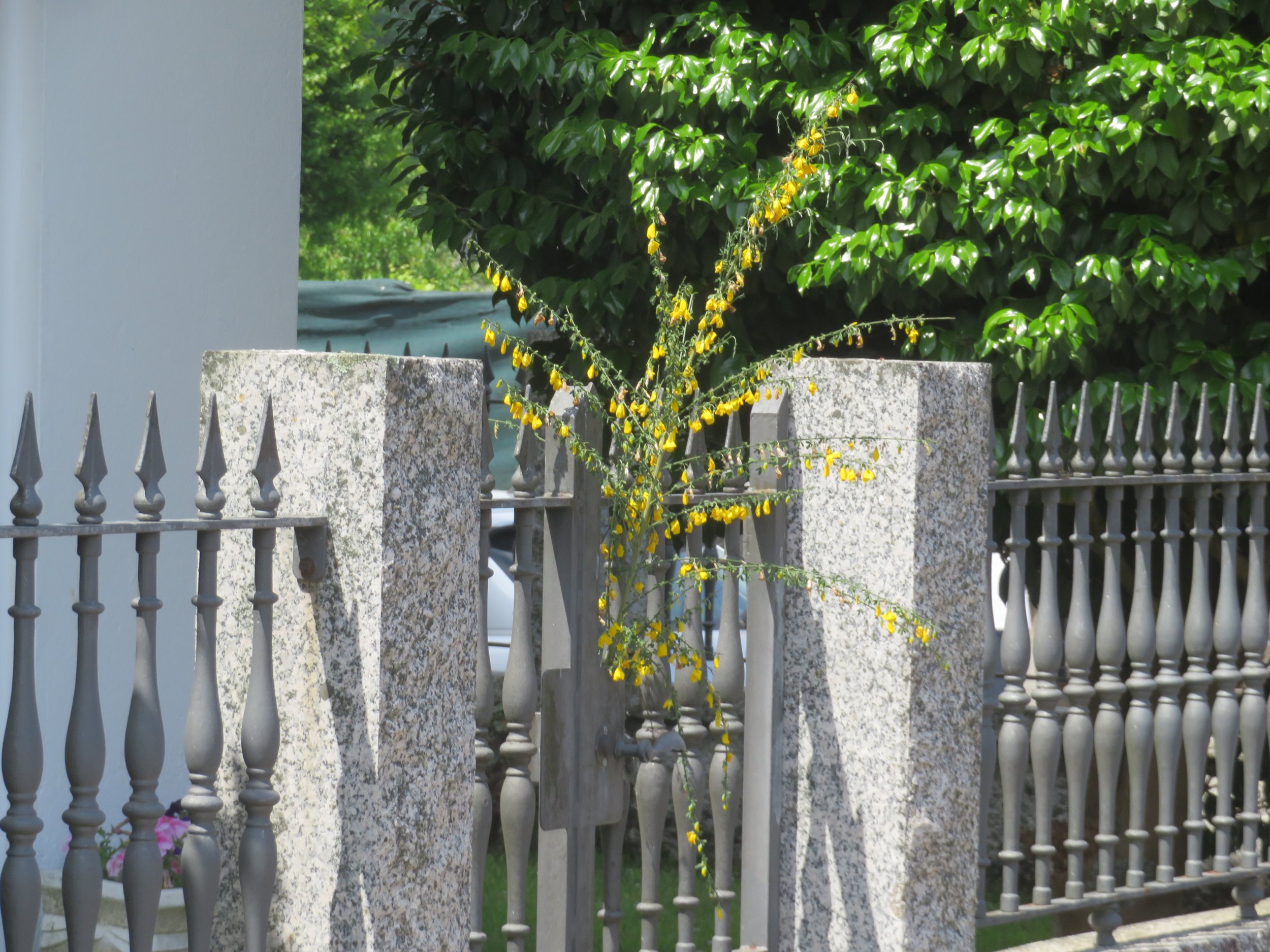
It was a Labour Day (May Day… yup, we’re behind again) in Spain. Part of the traditional celebration is to drape branches of yellow Portugeuese broom on gates and door fronts.
We finished our day in Caldas de Reis at a pleasant guest house in town. Caldas de Reis literally translates to ‘Hot Springs of the King’. The hot springs or ‘termas’ were well known to the Romans, but the town’s name derives from Queen Urraca and her son, King Alfonso VII who resided here in the 10th century. Queen Urraca (1081–1126), by the way, was the first reigning Queen in European history, ruling the Kingdom of León, Castile, and Galicia beginning in 1109 till her death.
We’re not ‘hot springs’ folks, but we watched lots of pilgrims crowd around the hot baths in town soaking their tired pilgrim feet.
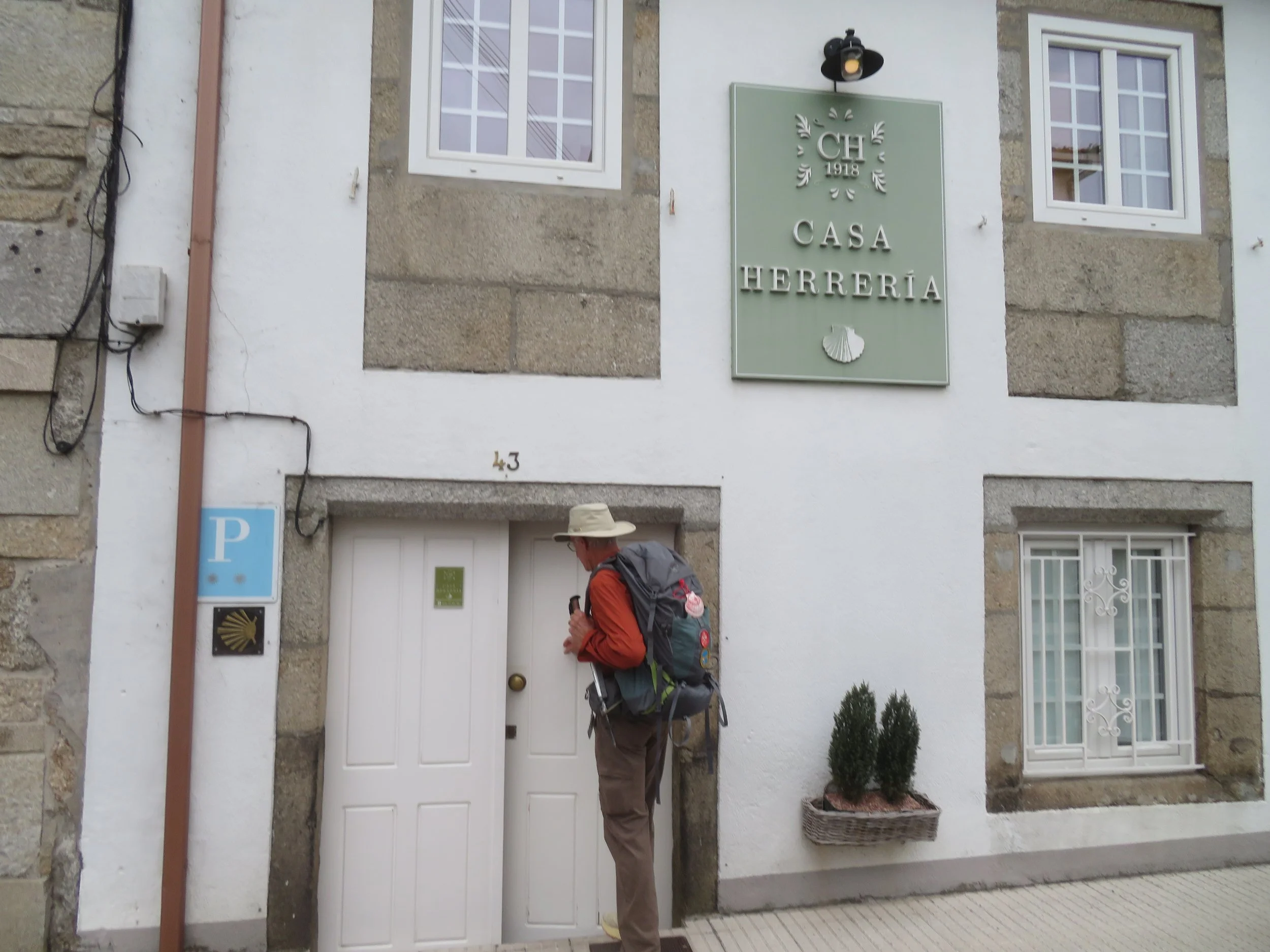
Bars and restaurants were crowded with pilgrims. Many places reserve tables expressly for locals since otherwise they’d never be able to get in. We were fortunate. Being just two of us, and apparently looking old, we were welcomed in to the ‘reserved’ section of one restaurant and had a quiet dinner before heading back to Casa Herrería for some reading, writing, and a good night’s sleep.
It’s important to sleep well while walking. There are a myriad of choices for sleeping accommodations… all different price ranges and all different levels of comfort. Take a look at David’s blog on The Art of Sleeping Well on the Camino.
A word of caution… we’re both coming down with colds, so don’t get too close. Tomorrow, we’re moving on to Padron and Raices. We’re too close now. Colds won’t keep us down.