
Exploring Ponte de Lima
/Technically, this is our 8th day on the Camino, but we’re not walking towards Santiago today. Nope… we’re taking a day off to explore Portugal’s oldest chartered town (vilar), Ponte de Lima.
First things first… we slept in. No alarm at 0630. No rushing to pack the duffel that needs to be lugged downstairs and ready for porter service pick-up by 0800. No ace-bandaging my knee, or wearing two pairs of socks, or donning our hiking shoes and backpacks. Nope, we lounged till nearly 0830, read the Times, then headed out to enjoy yet another warm, sunny Portugal day.
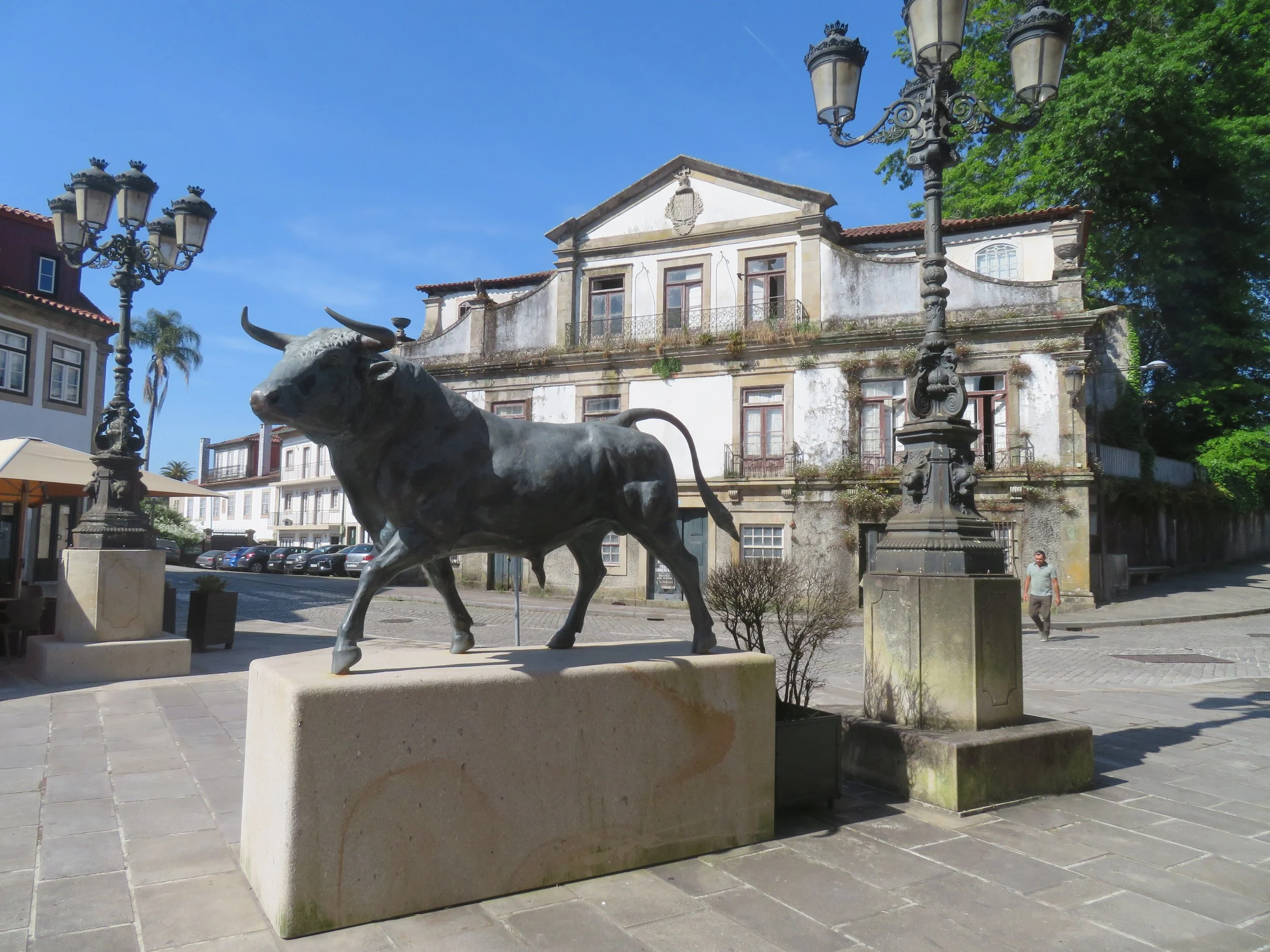
In search of a late breakfast/early lunch, we retraced our steps back into the old city, there’s a life-size bronze statue of a bull that’s pretty impressive in a square just before crossing the bridge. It commemorates the traditional annual bull running event (Vaca das Cordas) which takes place during the Corpus Christi festival each year in June.
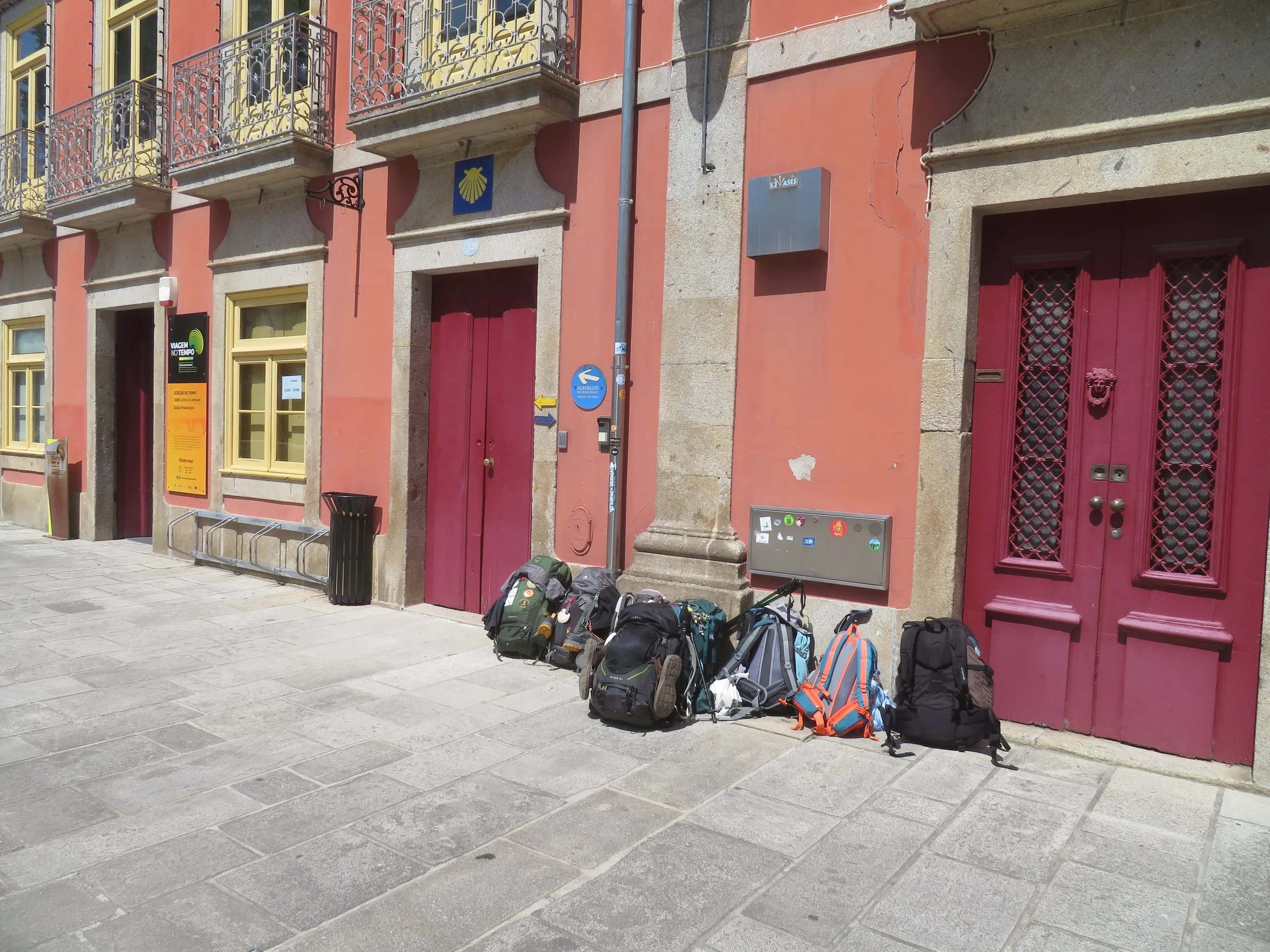
Some newly-arrived pilgrim arrivals had already lined up their backpacks at the nearby public albergue, marking their places for rooms when it opened at 2 PM.
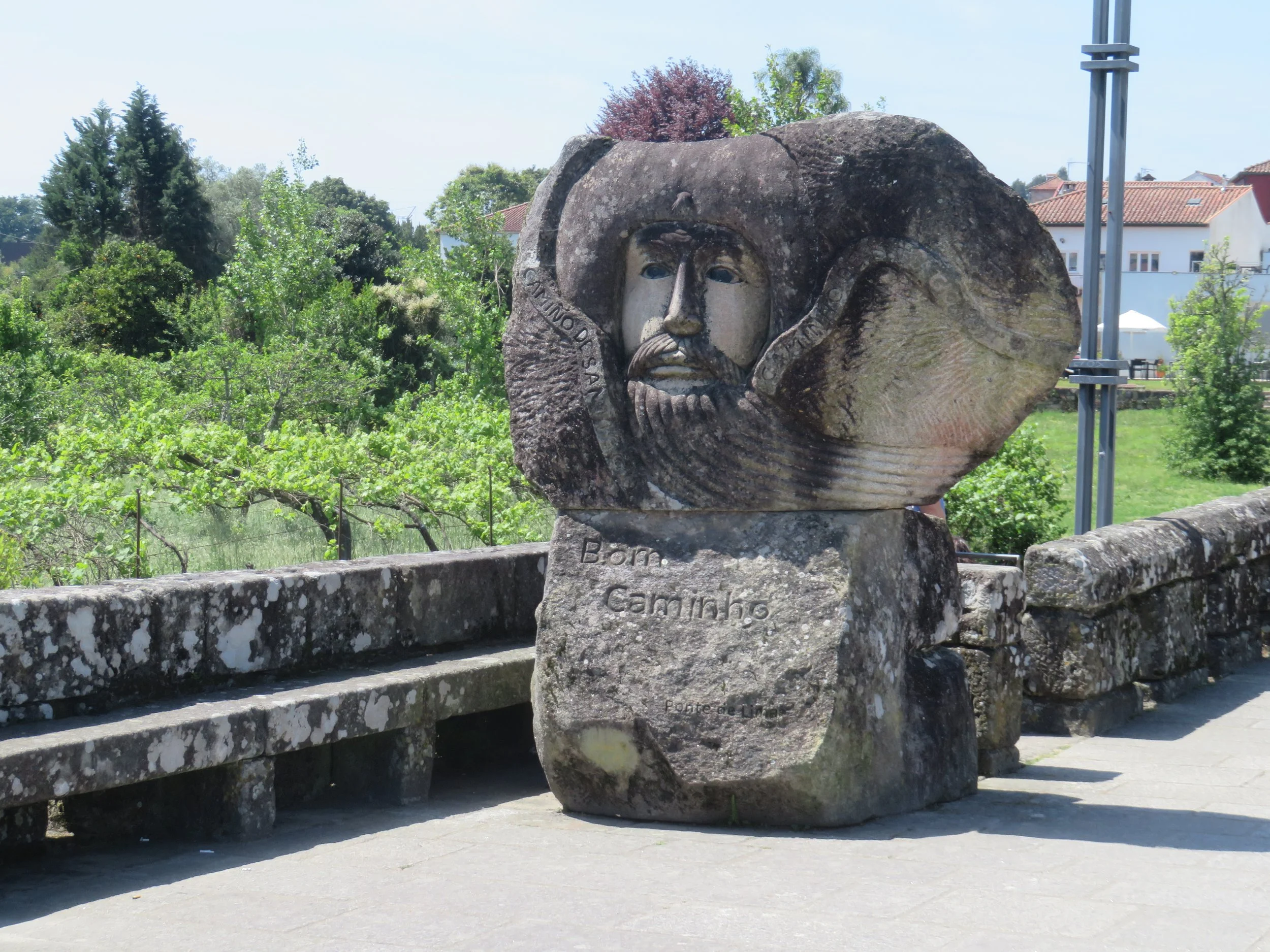
A huge head of a pilgrim statue is located at the western end of the bridge wishing pilgrims who pass by a Bom Caminho!
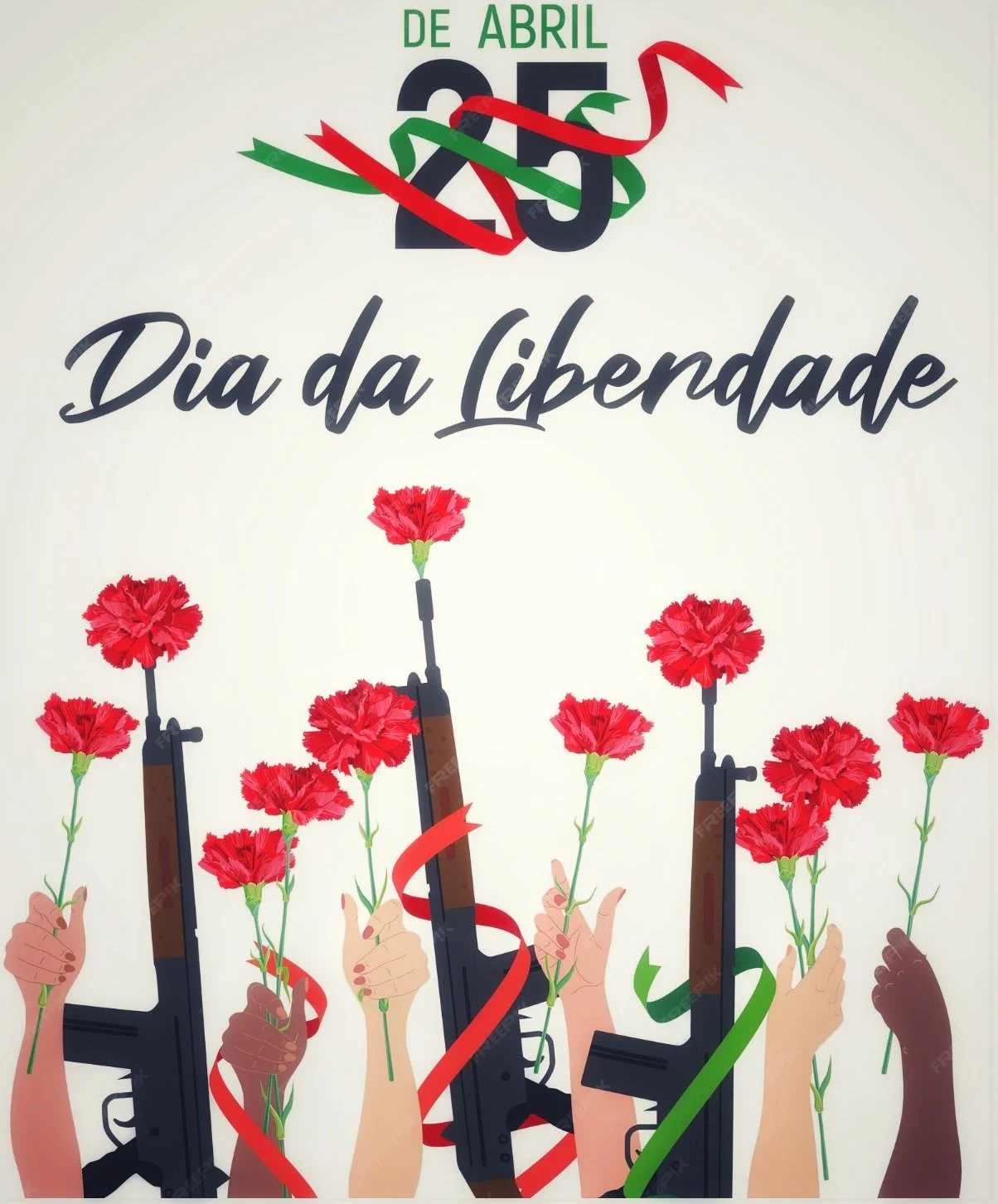
We learned quite by accident that it was a major national holiday in Portugal. April 25th (yes, the blogs are behind) is known as Freedom Day (Dia da Liberdade). The town was in a joyful mood. People handed out red carnations, symbolic of what they call the Carnation Revolution, a primarily peaceful military coup that removed Portugal’s authoritarian regime on April 25th, 1974, ending Europe’s longest lasting dictatorship (40 years). Citizens, in support of the military, wore red carnations and placed red carnations on soldiers uniforms and in the muzzles of their guns. The tradition continues today. We were given several.
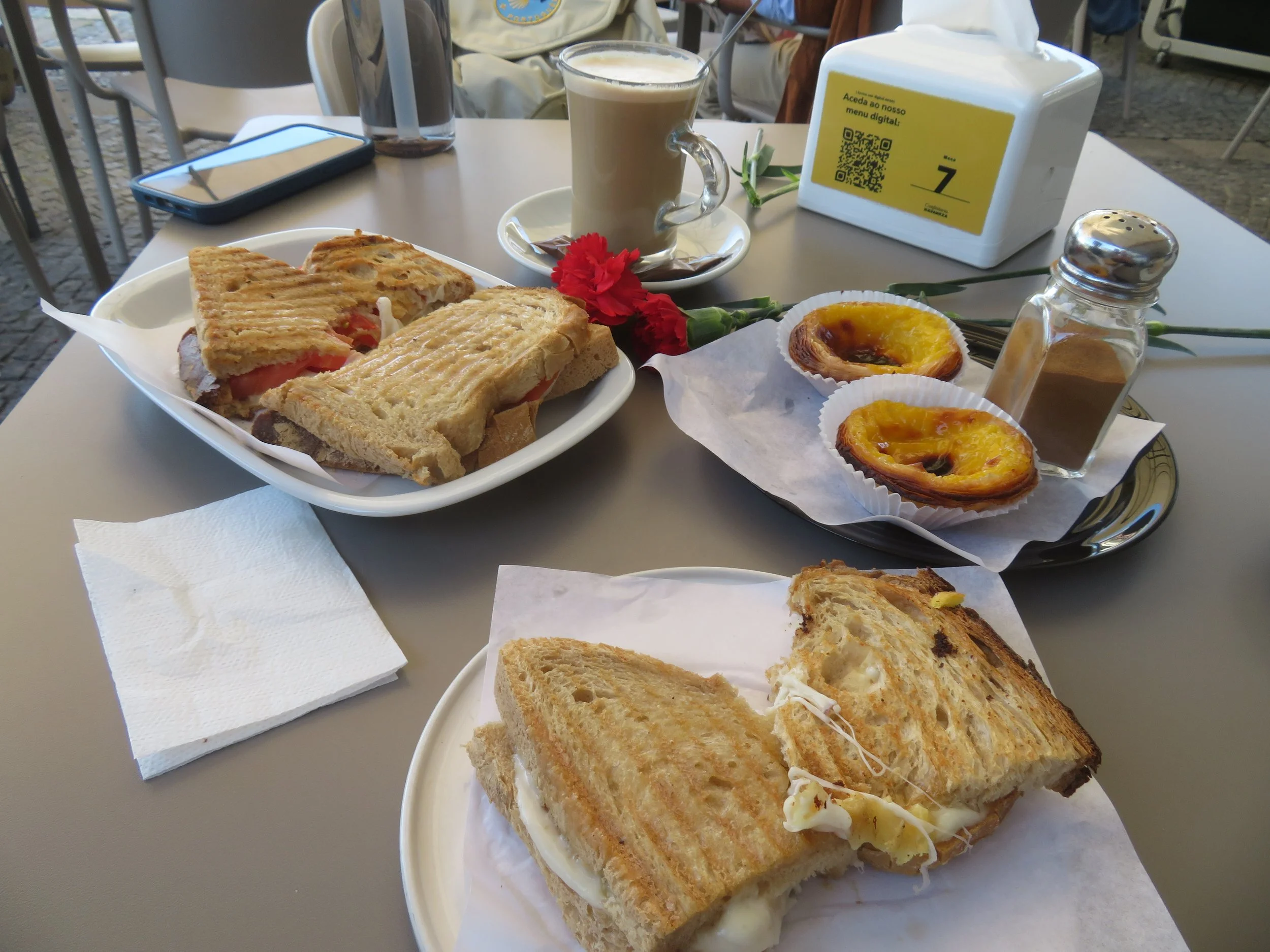
We found an old cafe with outside seating and ordered breakfast. Breakfast in Portugal is not like breakfast in the USA. Bread, cheese and sliced meats are usually on offer here along with great coffee. We ordered toasted cheese sandwiches and coffee and, of course, a pastel de nata.
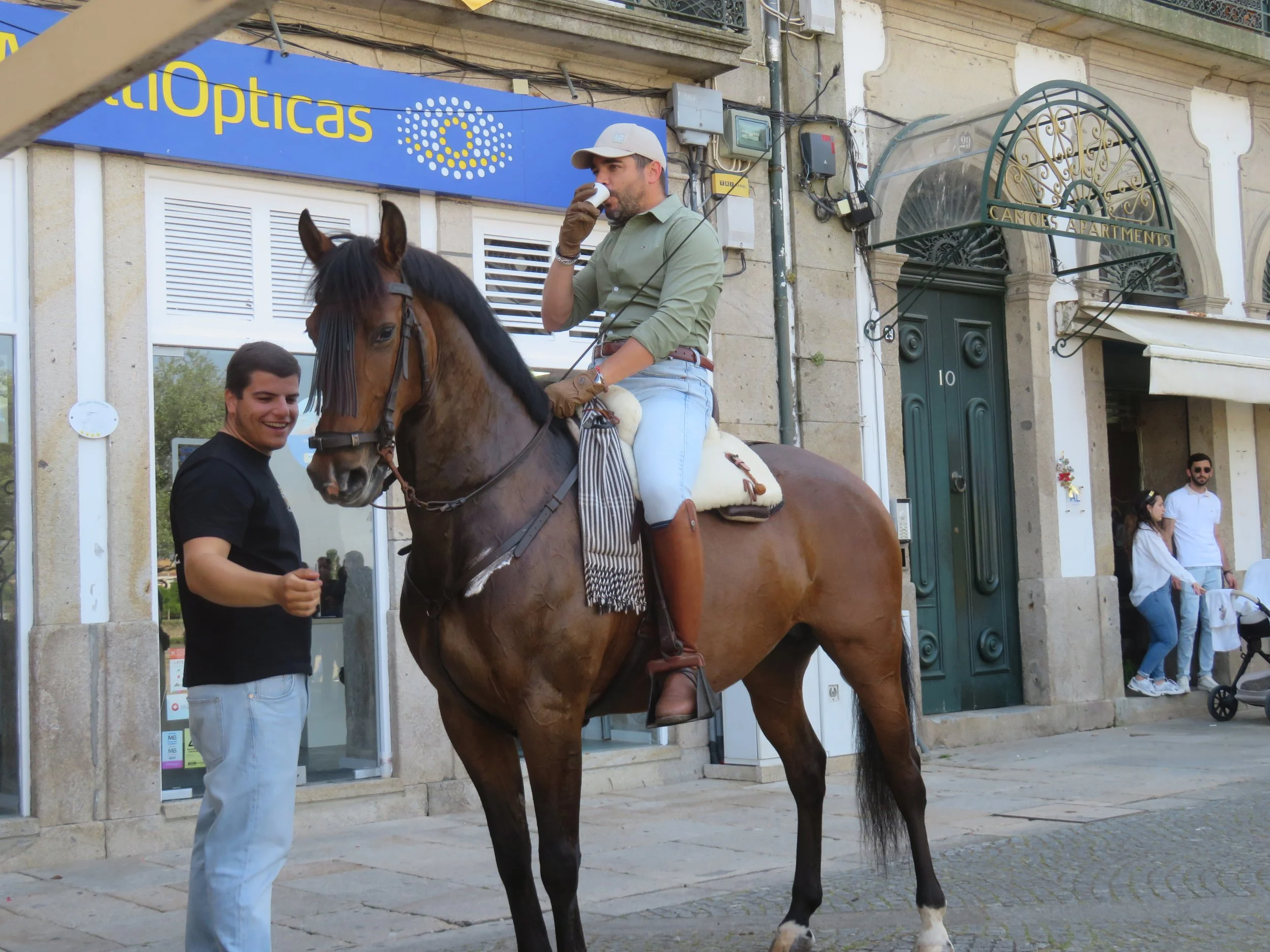
Nearby, a man arrived astride his horse and drank his coffee in the saddle.
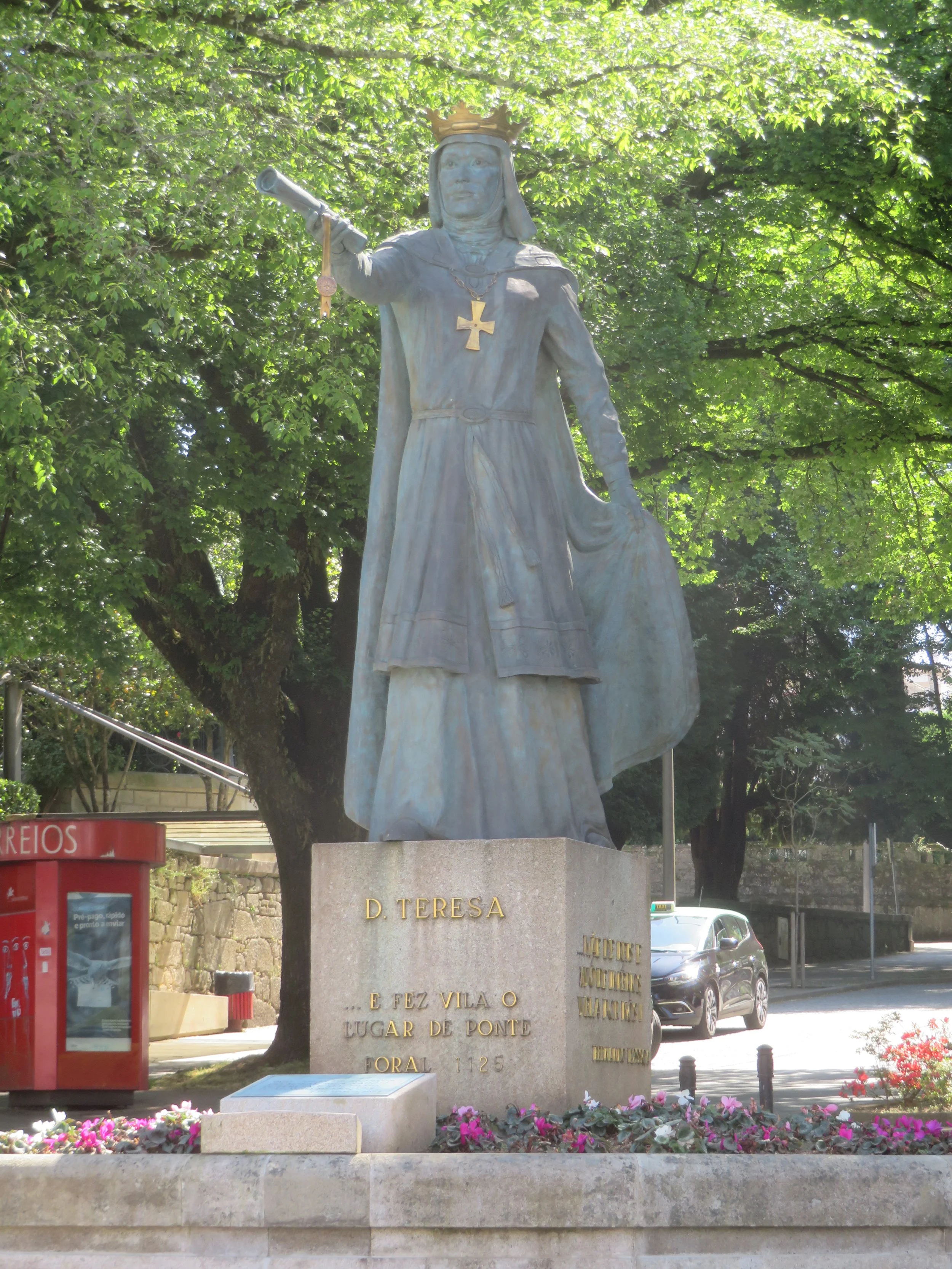
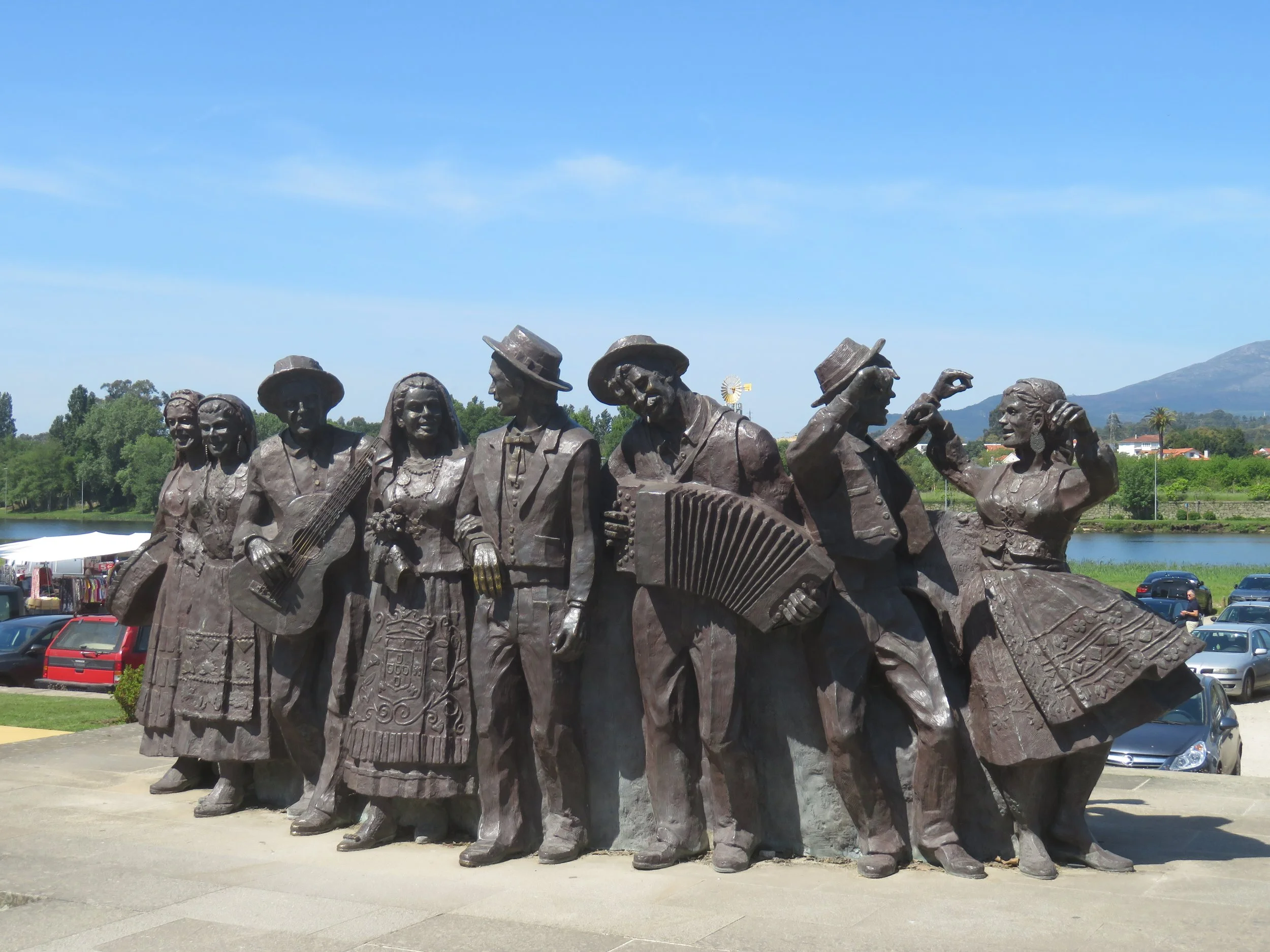
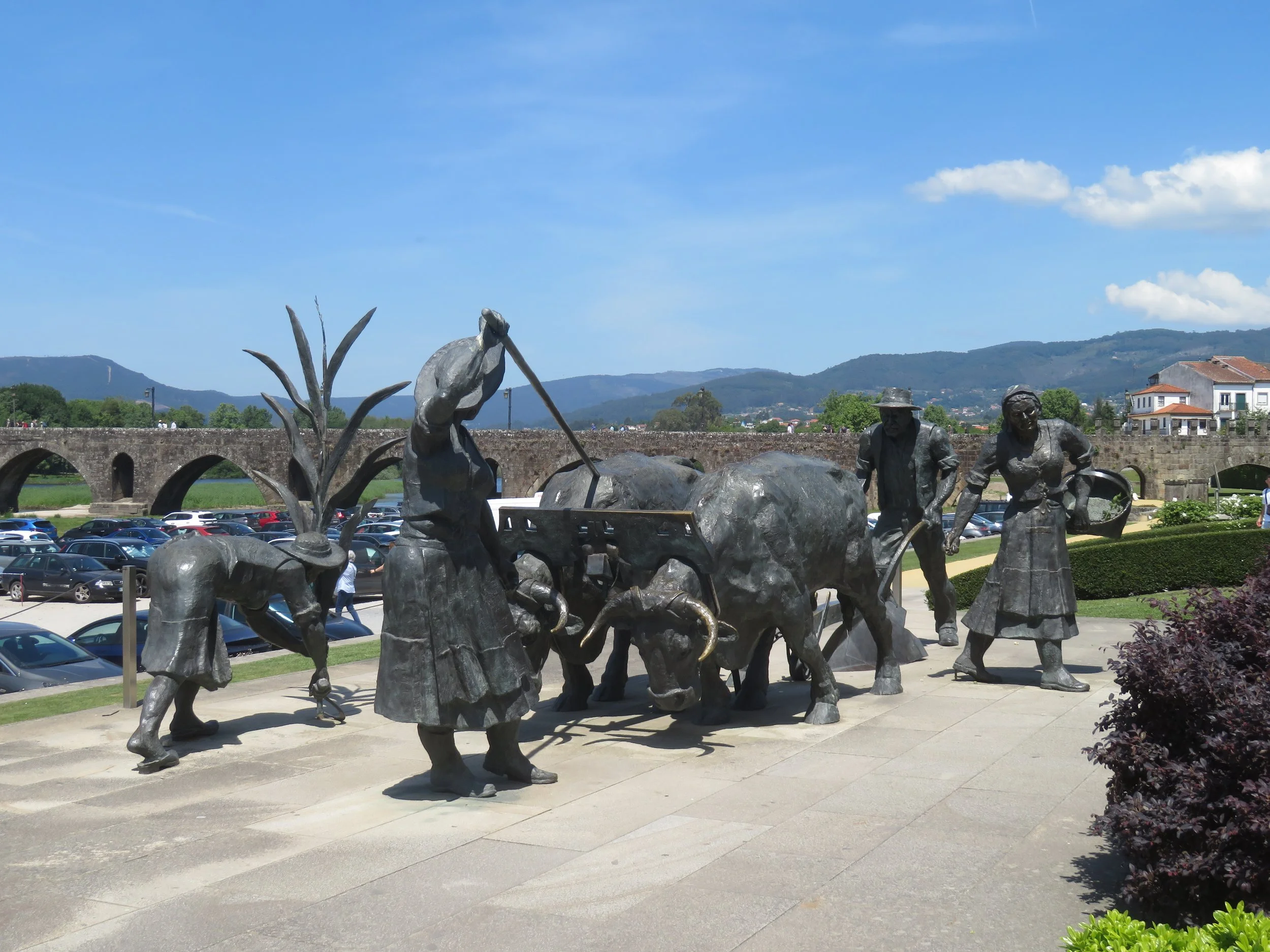
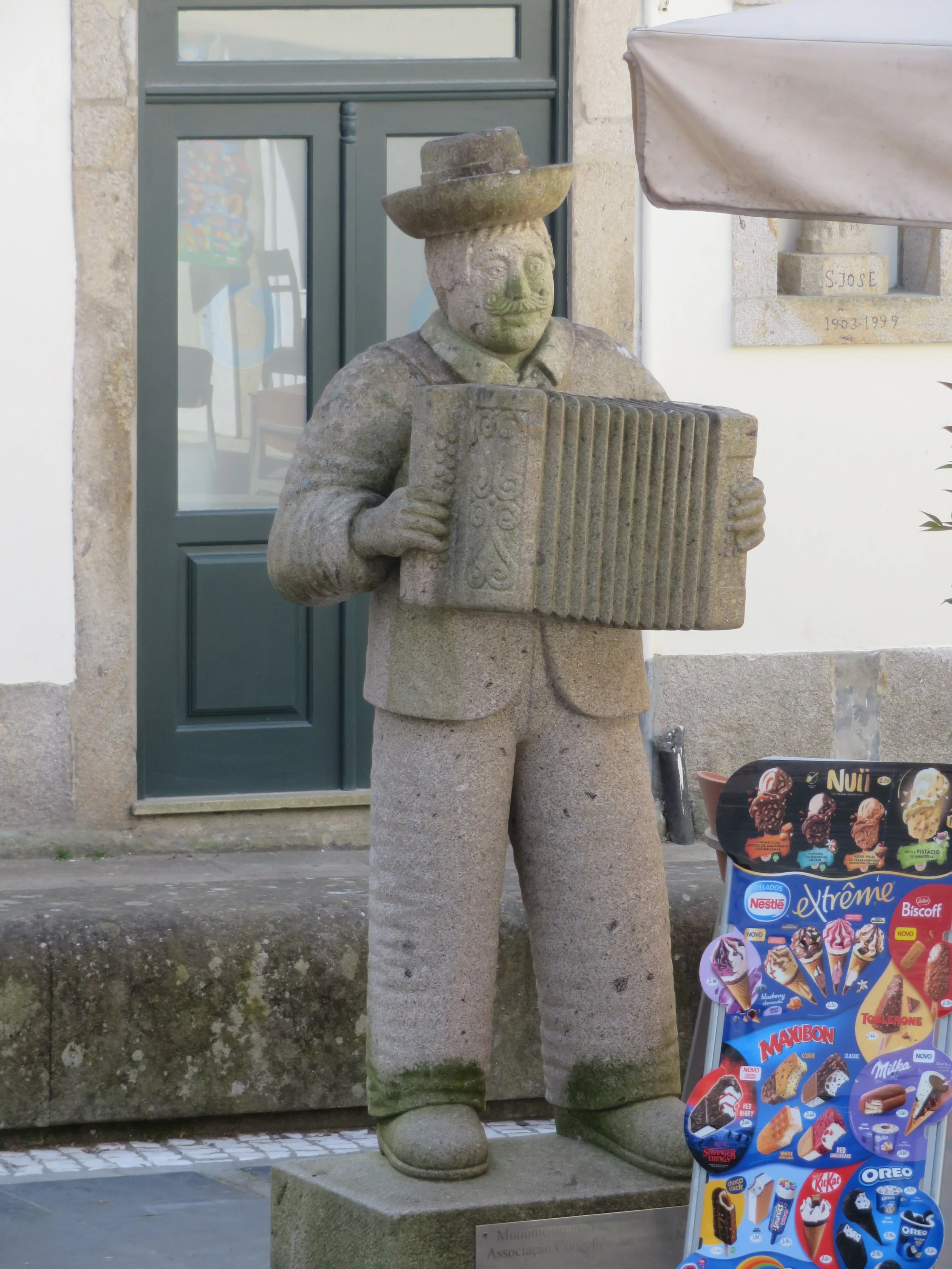
We wandered the town’s centuries old cobblestone streets, appreciating the public art, murals and old architecture. It was eye candy everywhere we looked.
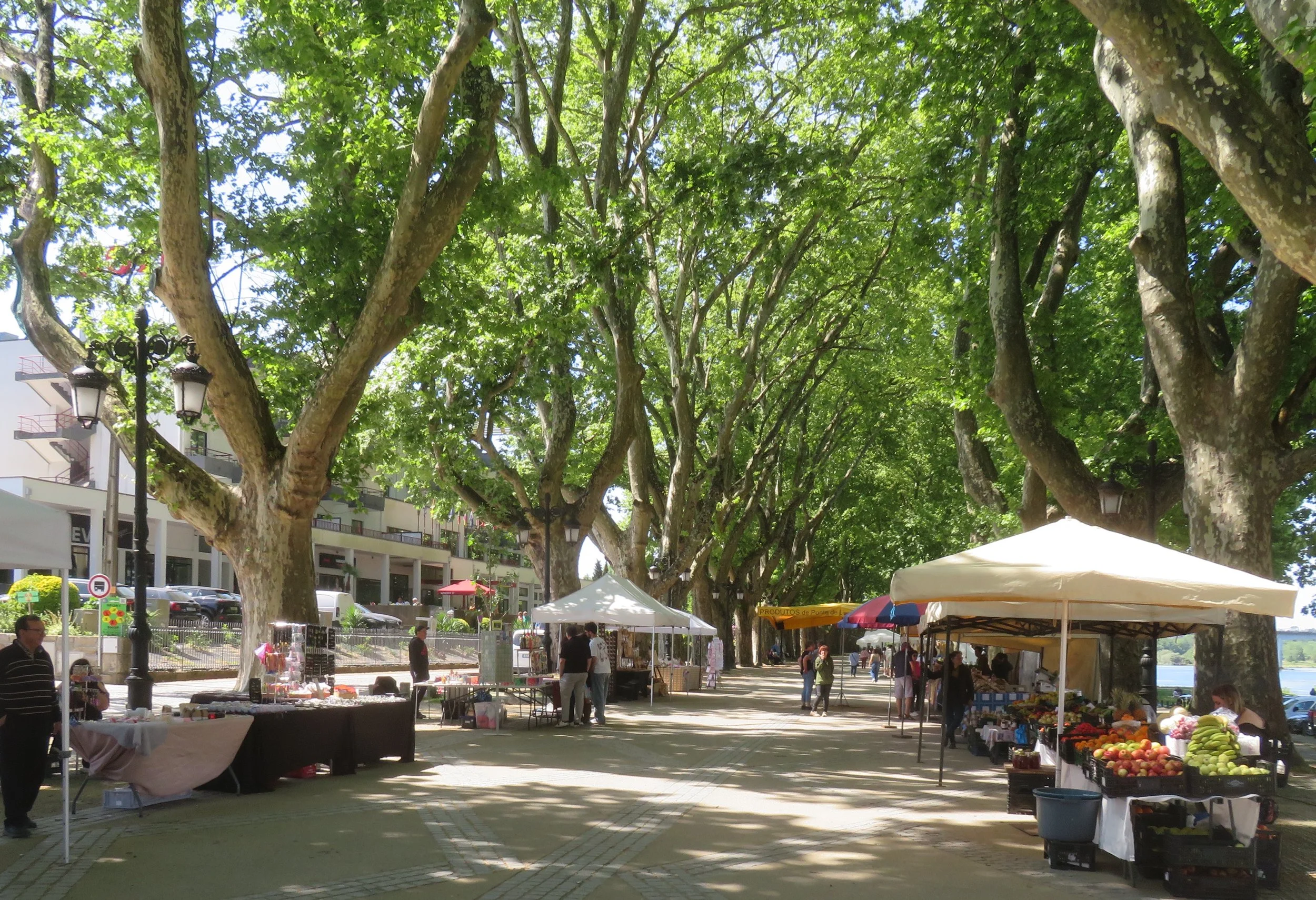
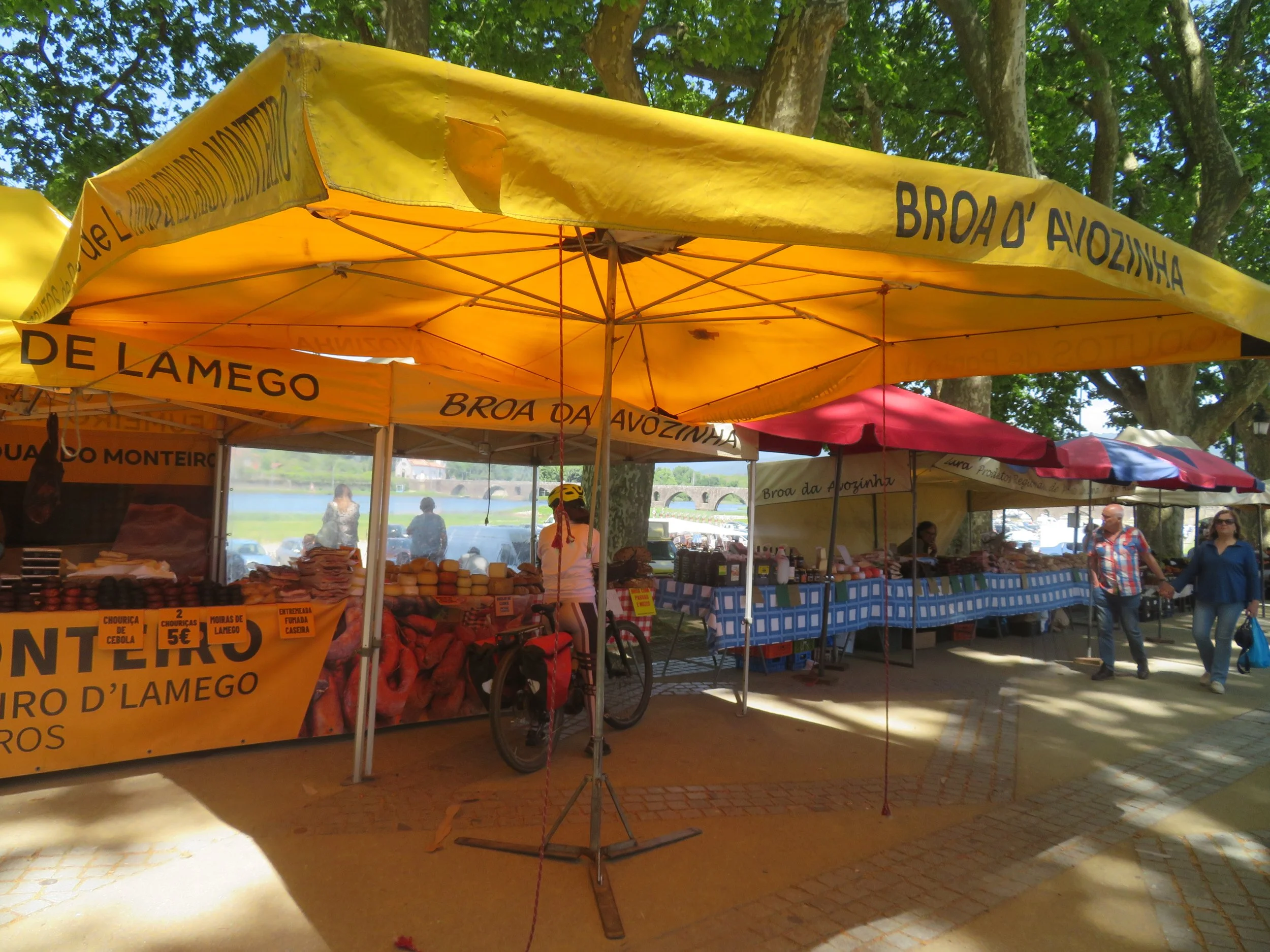
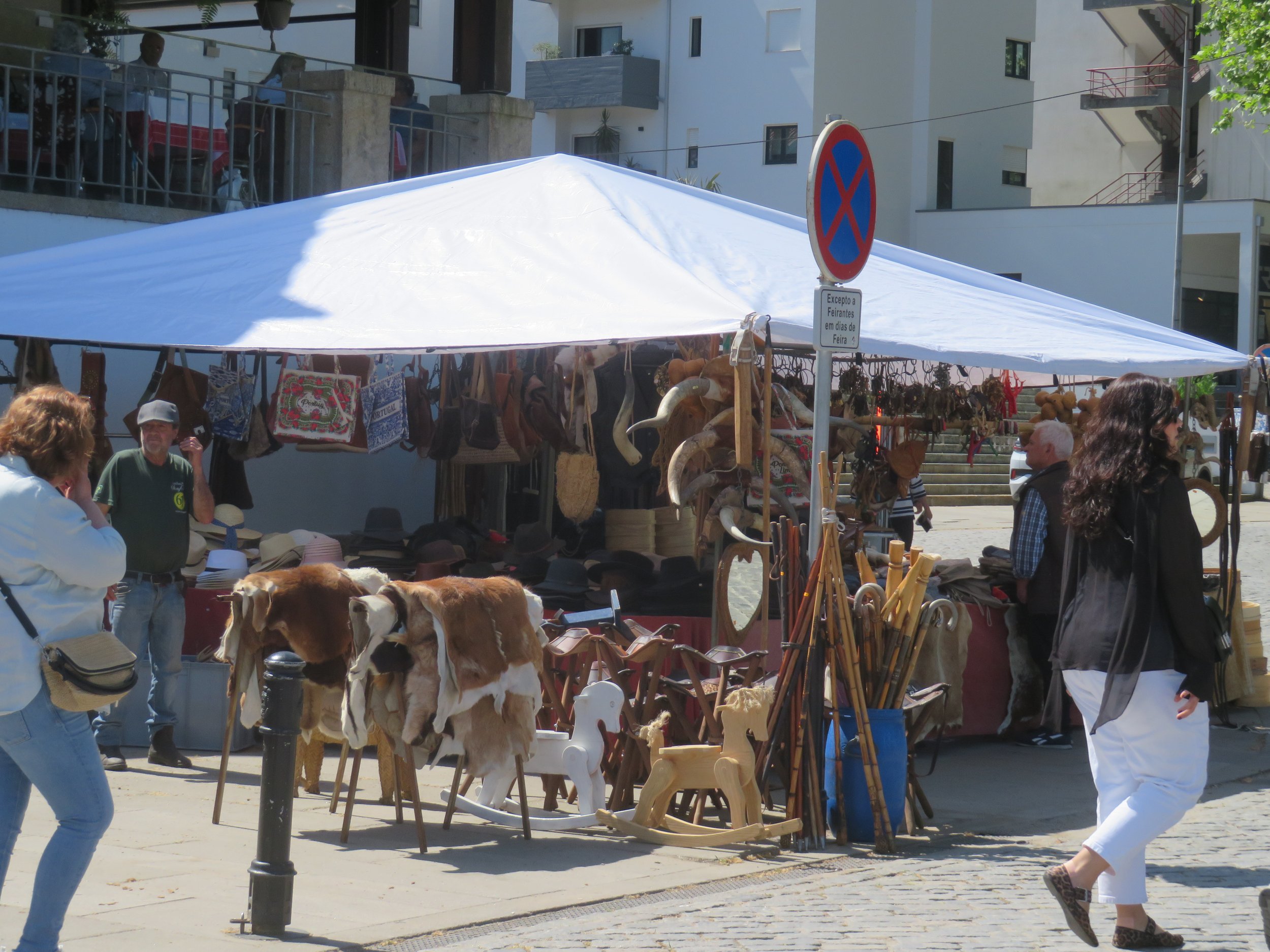
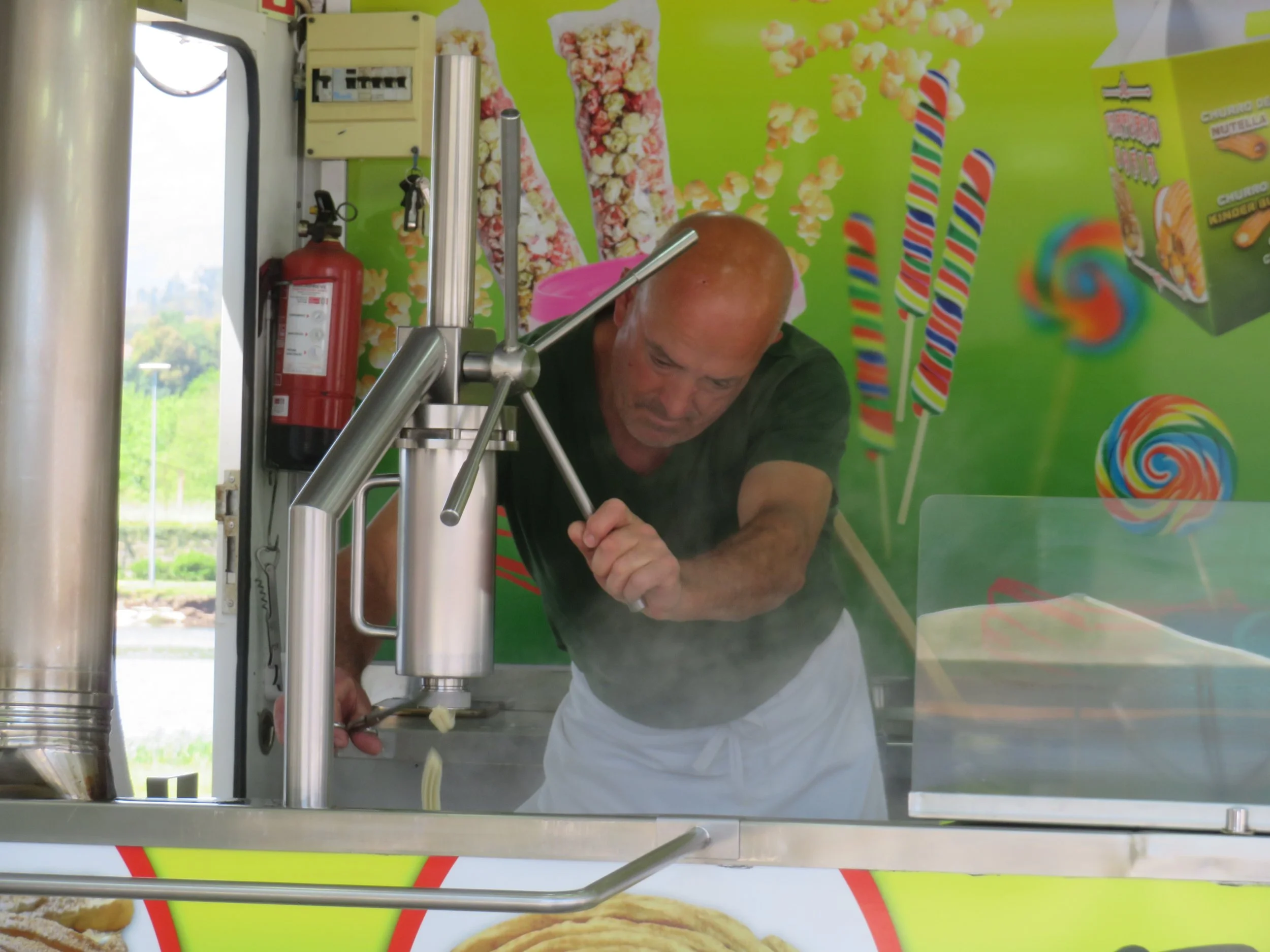
Avenida dos Plátanos was transformed into a lively marketplace offering everything from wine, cured meats and fresh veggies to leather goods and churros.
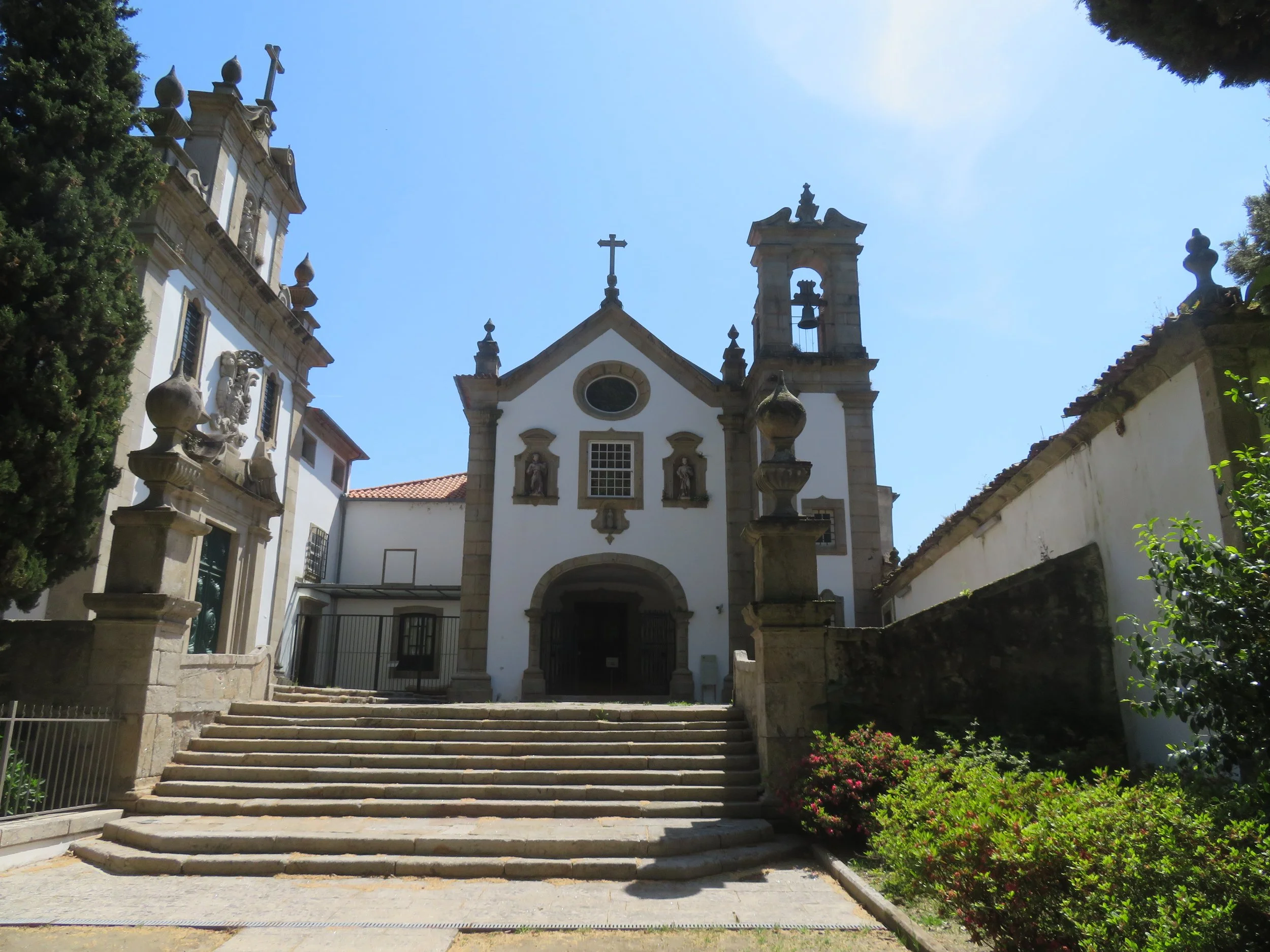
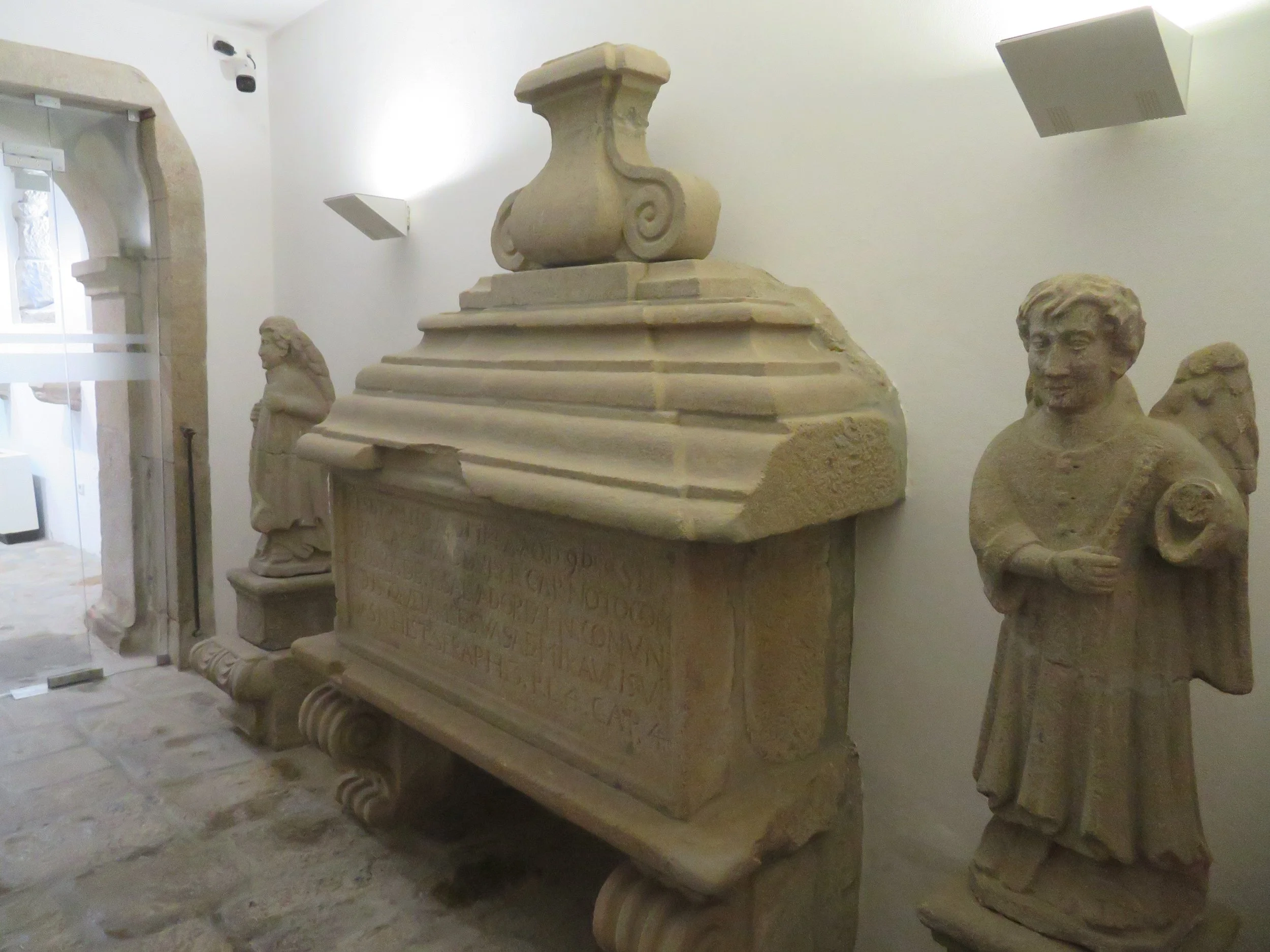
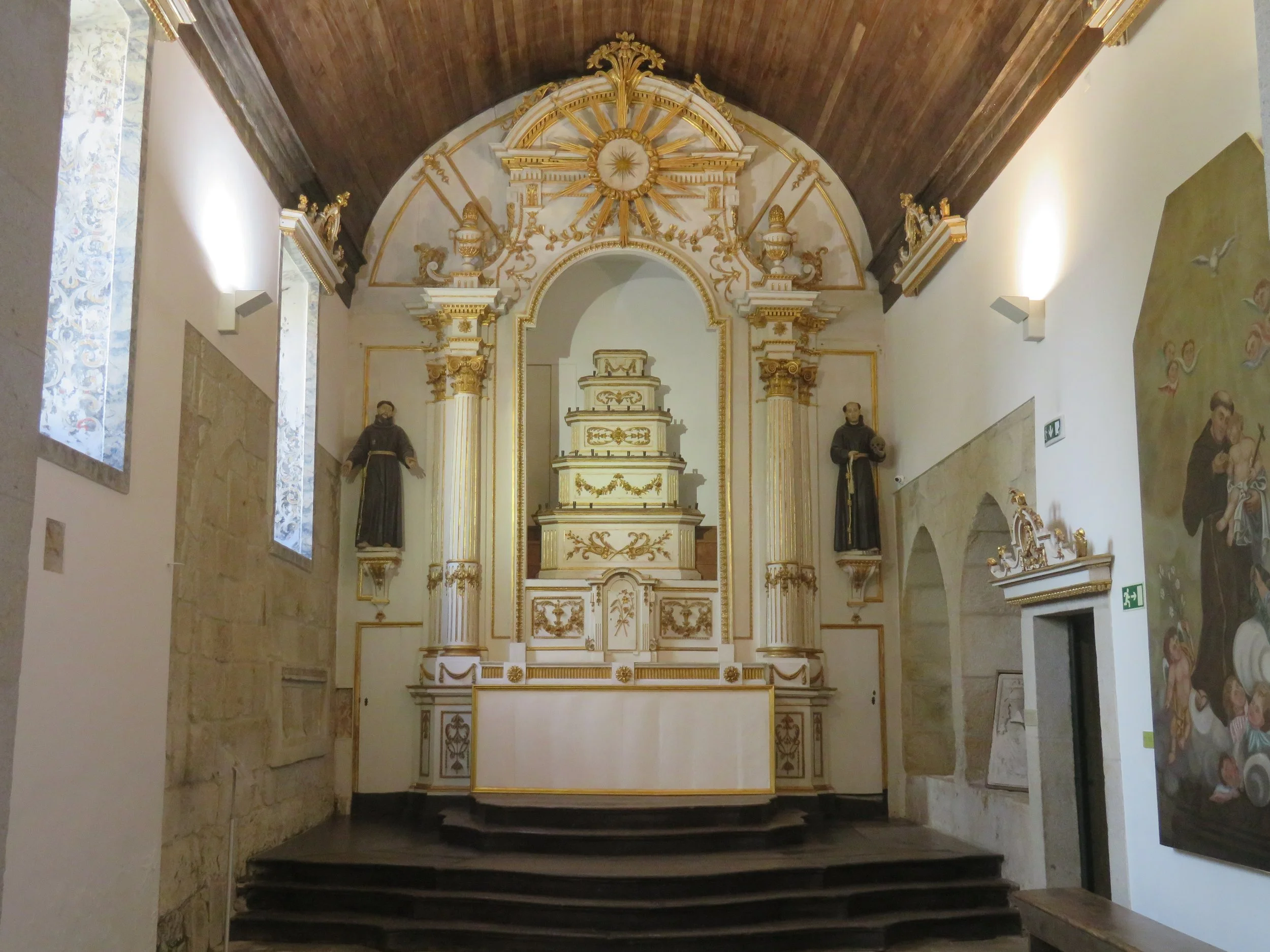
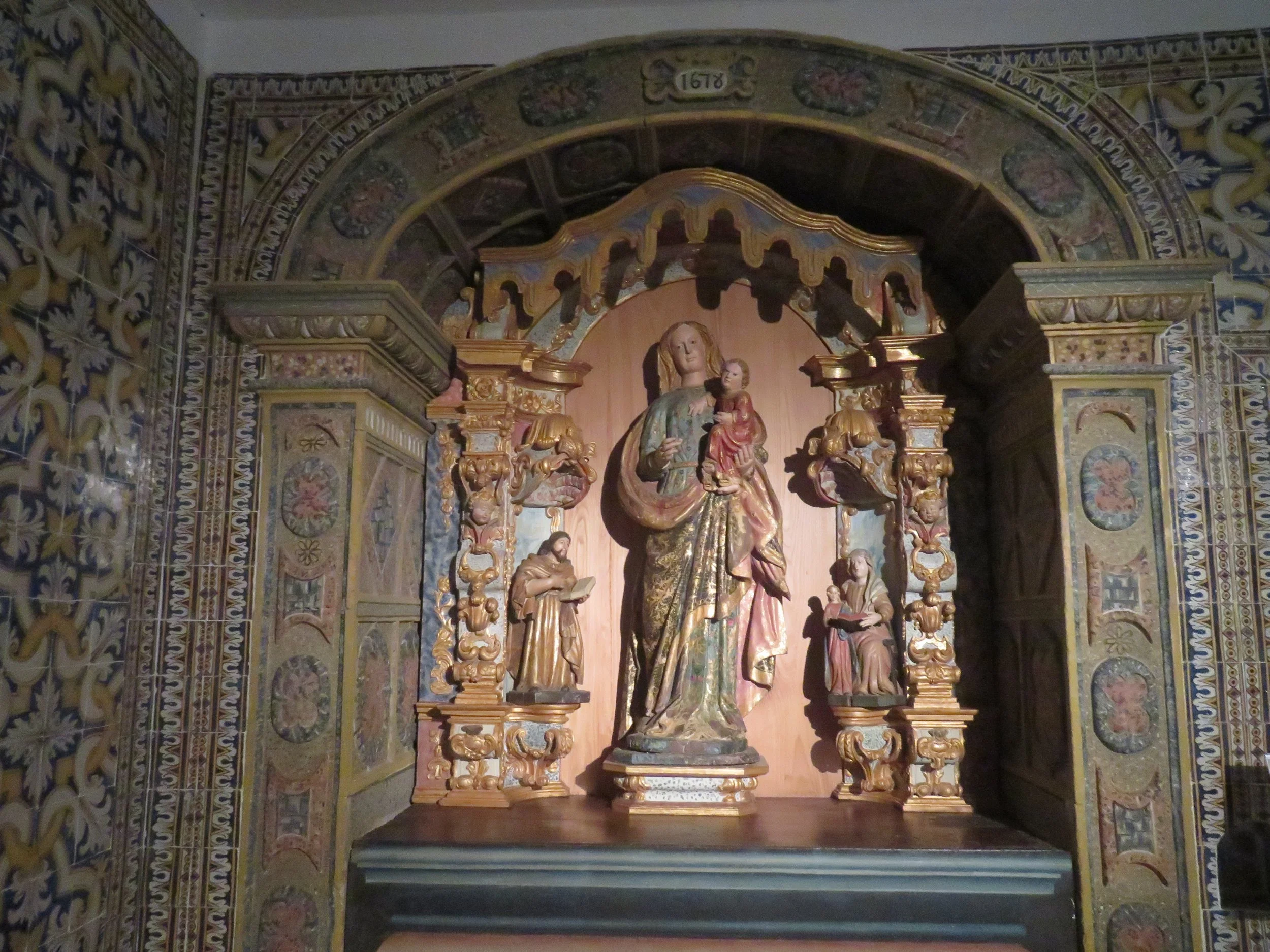
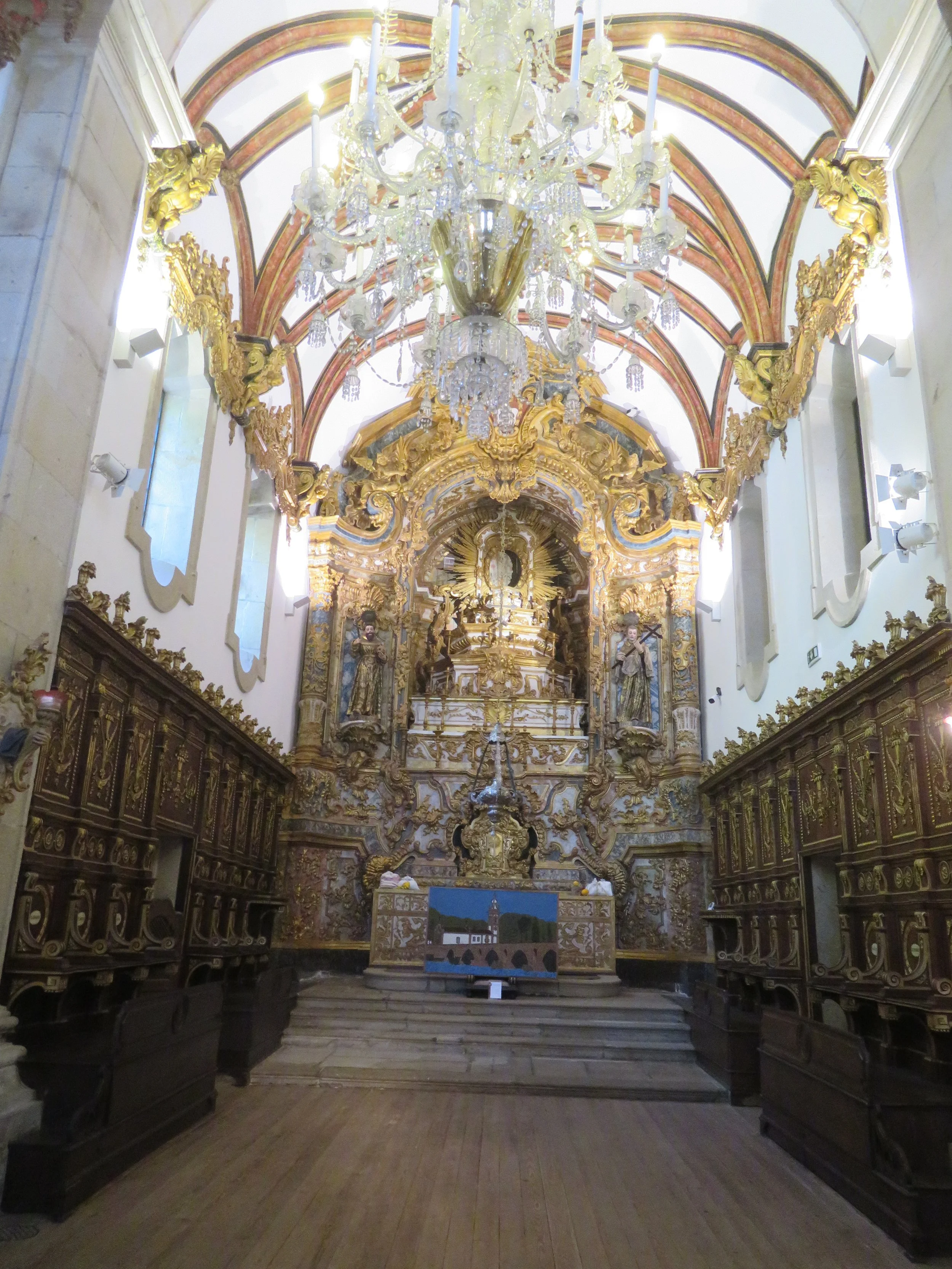
We happened upon Museu dos Terceiros by accident. The entrance off Avenida dos Plátanos was beautiful and when we approached, the doors were open and inviting. Stepping in, we found it was a museum of sacred/liturgical art housed within a former 15th-century Franciscan convent. We were allowed to wander and found it absolutely beautiful.
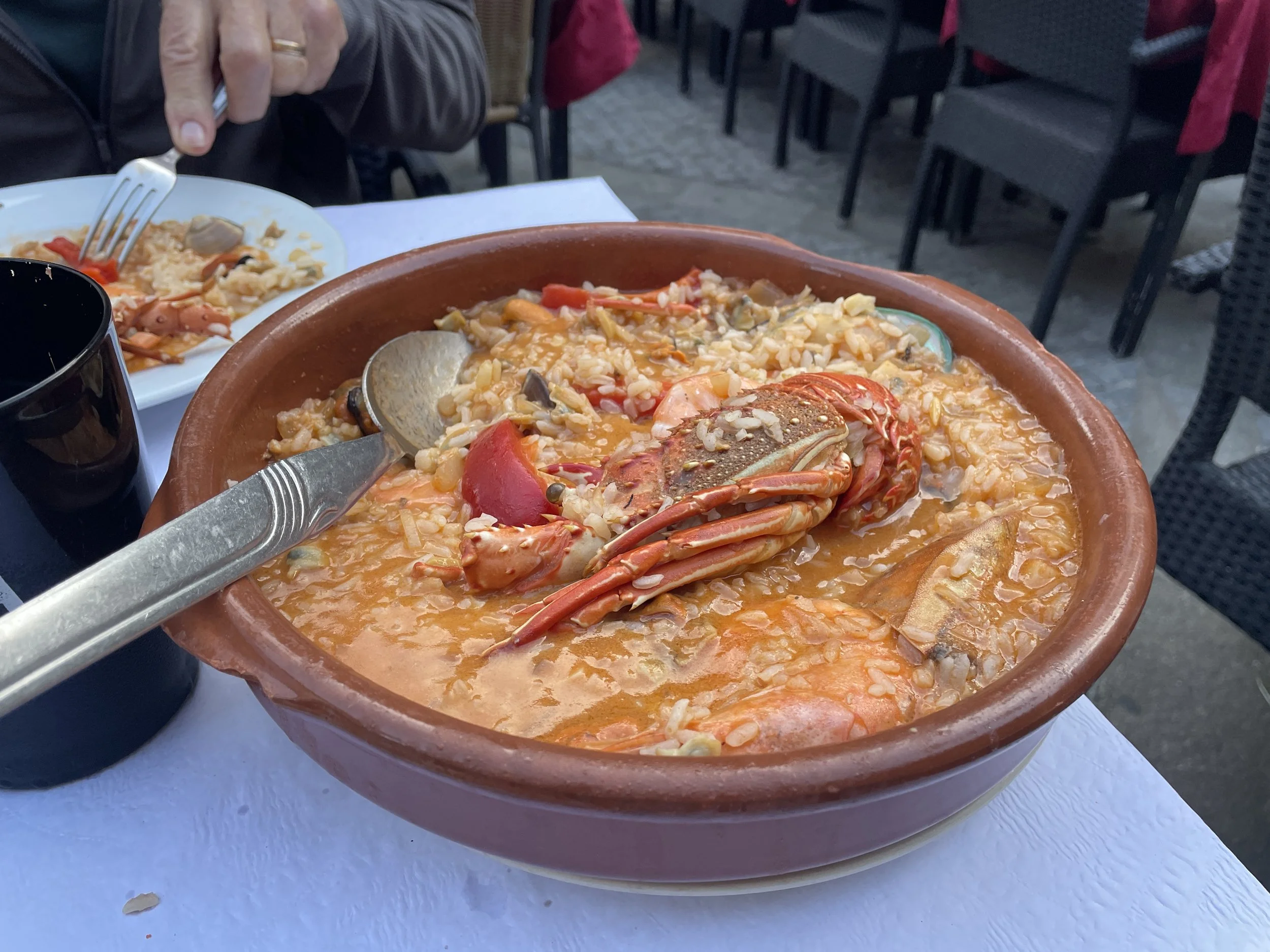
We ended our day of wandering at the small Restaurante Muralha, located in a small alley behind the Torre da Cadeia Velha, an old prison tower and now home to a tourist office and art exhibitions. We shared a paella which was good, but not as good as the one Michael and David made a few weeks ago!
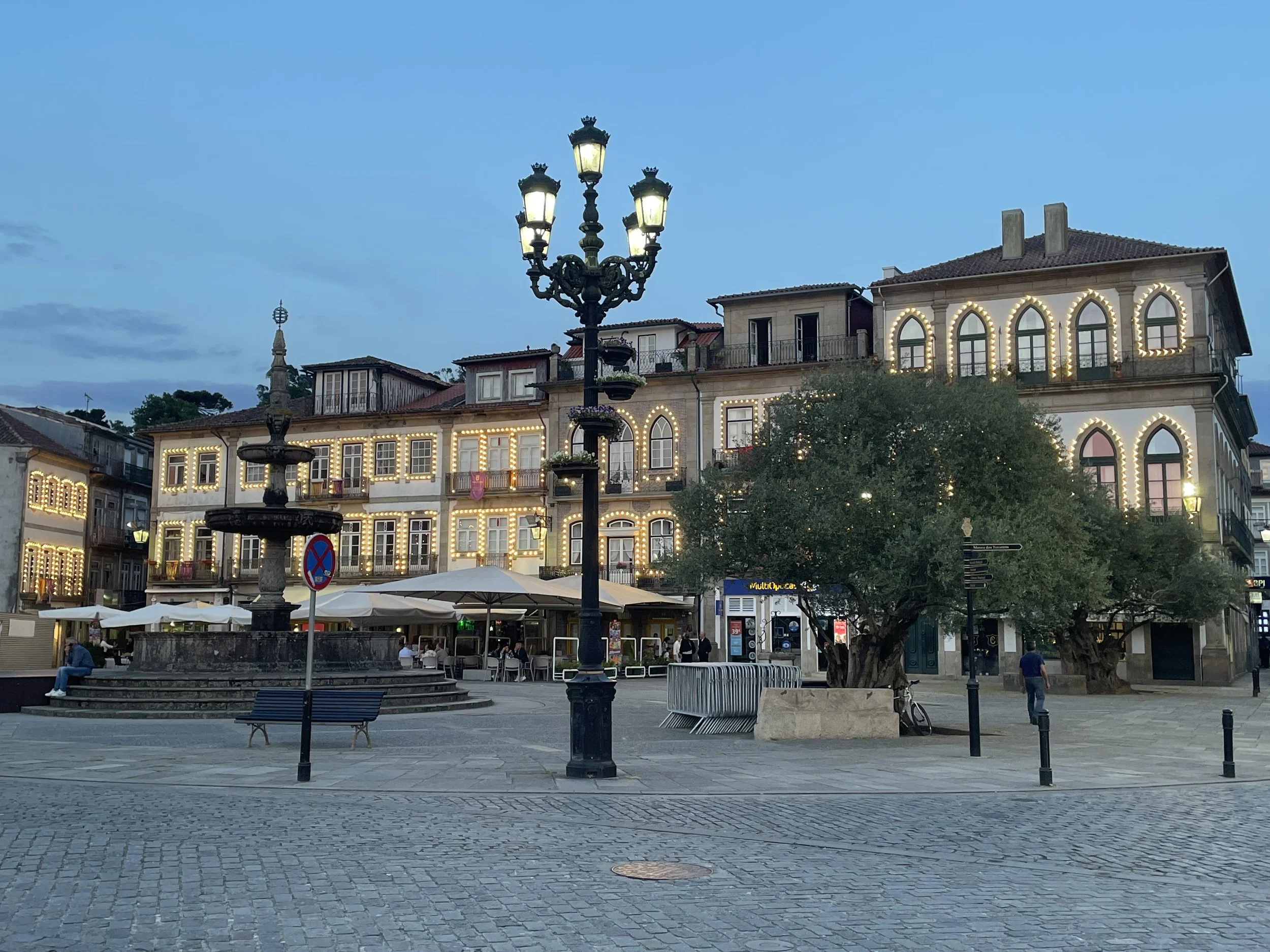
We walked back to our apartment in the early evening. White lights outlined windows of the old buildings along the Passeio illuminating the town with a warm, charming glow.
The bridge was stunning, its arches, too, accentuated in lights.
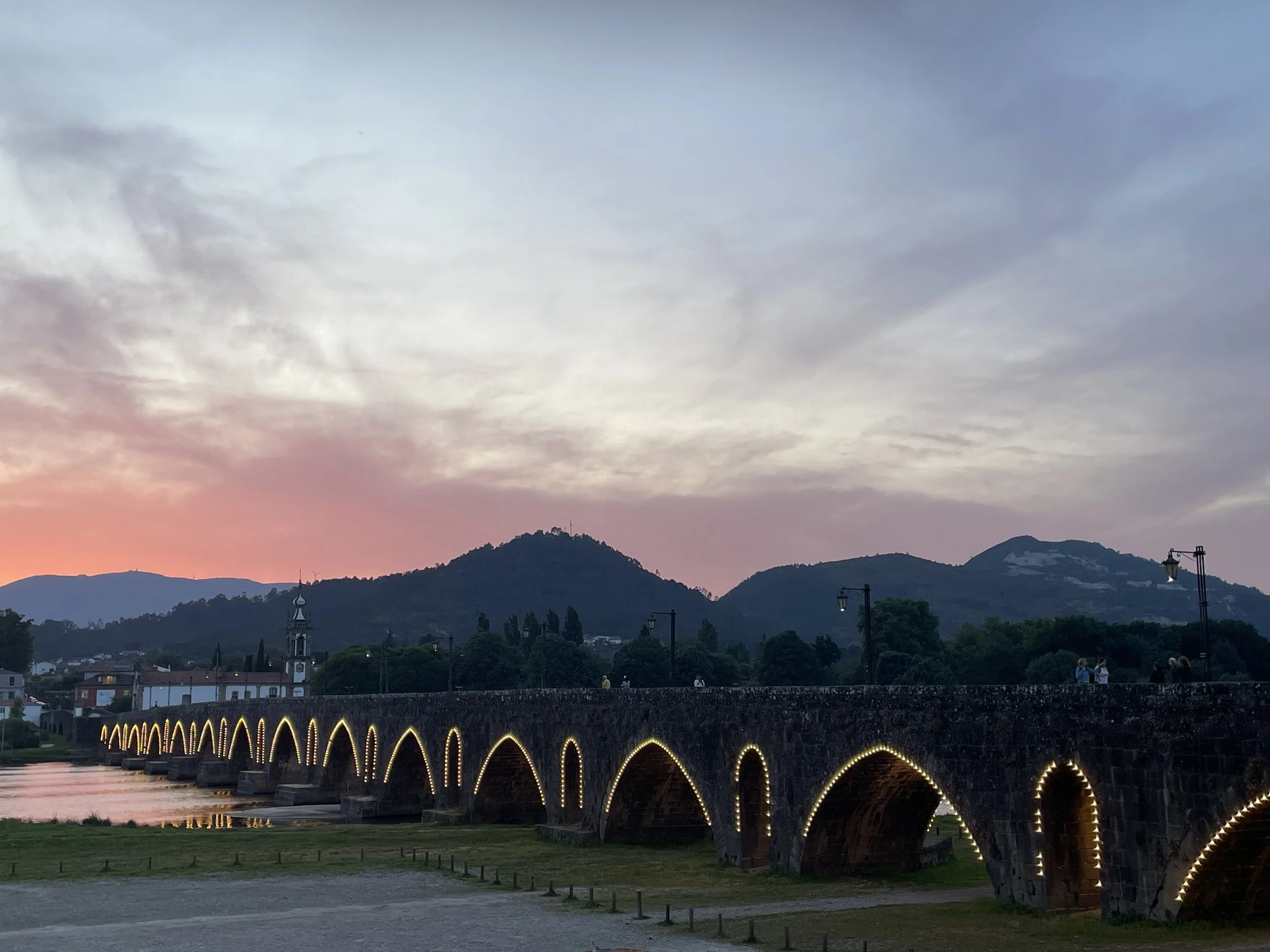
Oops! How could we forget the River of Forgetfulness? David didn’t. Take a look at his blog here.
We could have spent much more time in Ponte de Lima. It’s that kind of place. But the Camino beckoned. The hardest section of the Camino awaits us, the arduous route to Rubiães. It’s a tough one, but you can do it.