
What Do You Call This Pilgrimage, Anyway?
/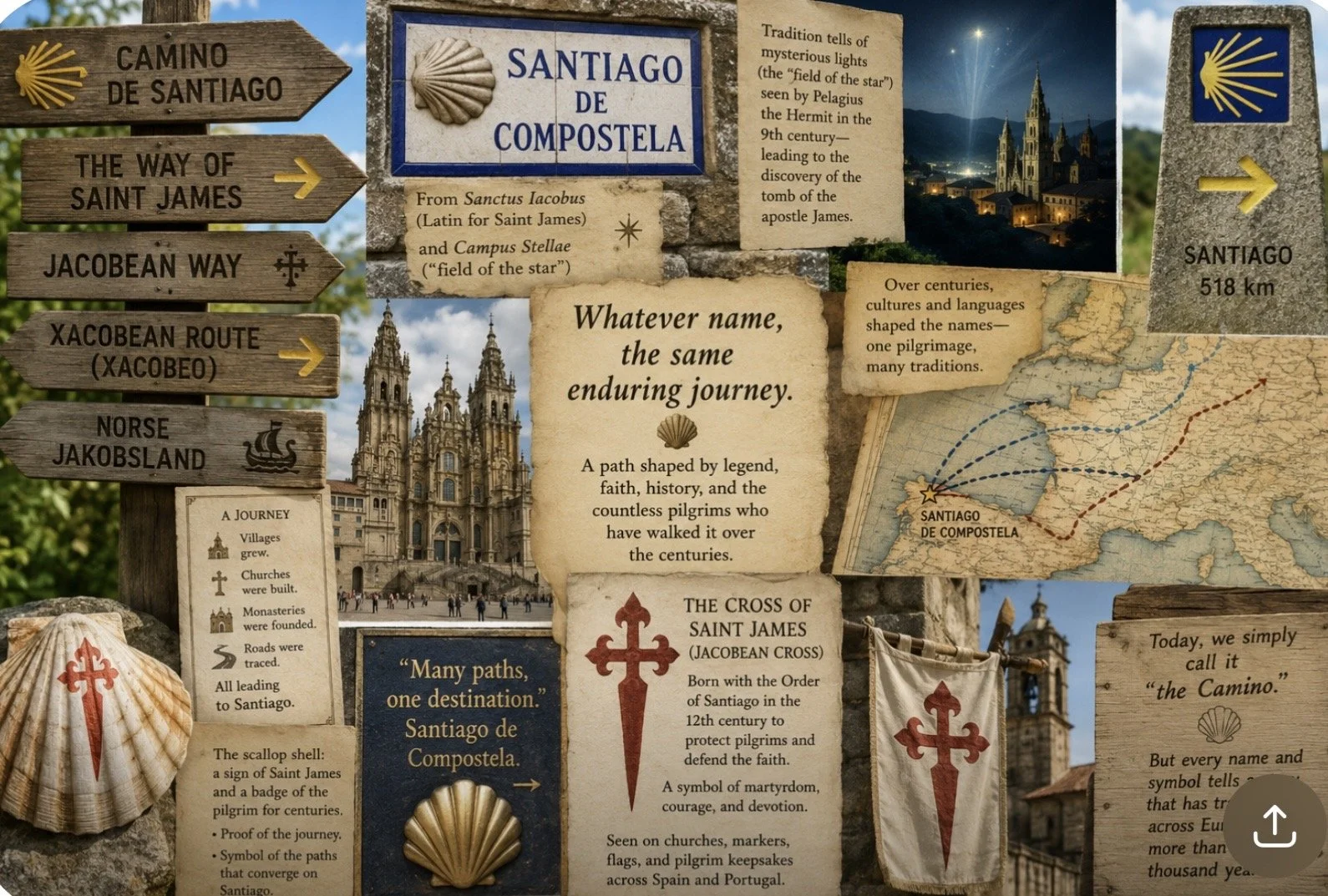
One of the interesting things about walking the Camino de Santiago is discovering how many different names exist for the same pilgrimage route. Depending on who you speak with, it may be called the Camino de Santiago, the Way of Saint James, the Jacobean Way, the Xacobean Route, or even the Norse Jakobsland. Each name reflects a different layer of the history and traditions surrounding the pilgrimage and understanding why requires a little background.
According to tradition, the apostle James traveled to Hispania to spread the gospel before returning to Judea, where he was martyred under the orders of Herod Agrippa. His disciples are said to have carried his body by sea back to Hispania, landing on the coast of Galicia. From there, they transported his remains inland to an oak forest where he was buried. Tradition also holds that some of his disciples remained to guard the tomb and were later buried nearby.
Over time, the location of the burial site was forgotten until the beginning of the ninth century, when a shepherd known as Pelagius the Hermit reportedly saw mysterious lights shining over a tomb in the forest. He informed the local bishop, who investigated the site and declared the remains to be those of the apostle James. King Alfonso II was notified, and news of the discovery spread throughout the Christian world.
Pilgrims soon began traveling to the site. Villages, churches, monasteries, and roads developed along the growing pilgrimage routes, and eventually the cathedral and city of Santiago de Compostela were established.
The city’s name itself reflects this layered history. “Santiago” is believed to have evolved from the Latin Sanctus Iacobus, meaning Saint James. “Compostela” may derive from the Latin Campus Stellae, or “field of the star,” referring to the mysterious lights said to have revealed the tomb.
Over the centuries, different cultures adapted the pilgrimage and its terminology in their own ways. Because Saint James is also associated with the name Jacob, the pilgrimage is often referred to as “Jacobean.” In Galicia, this evolved into the spelling “Xacobean” or “Xacobeo.” Northern European traditions added their own variations, including the Norse reference to Jakobsland.
The Camino is also rich with symbols that have become instantly recognizable to pilgrims. The most familiar is the scallop shell, which appears on trail markers, guidebooks, backpacks, and monuments along the route. The shell has long been associated with Saint James and medieval pilgrimage. One explanation is practical: pilgrims arriving in Galicia once carried a scallop shell home as proof they had reached the coast near Santiago. Another interpretation is symbolic, with the many grooves of the shell representing the different pilgrimage routes across Europe all converging at a single point: Santiago de Compostela.
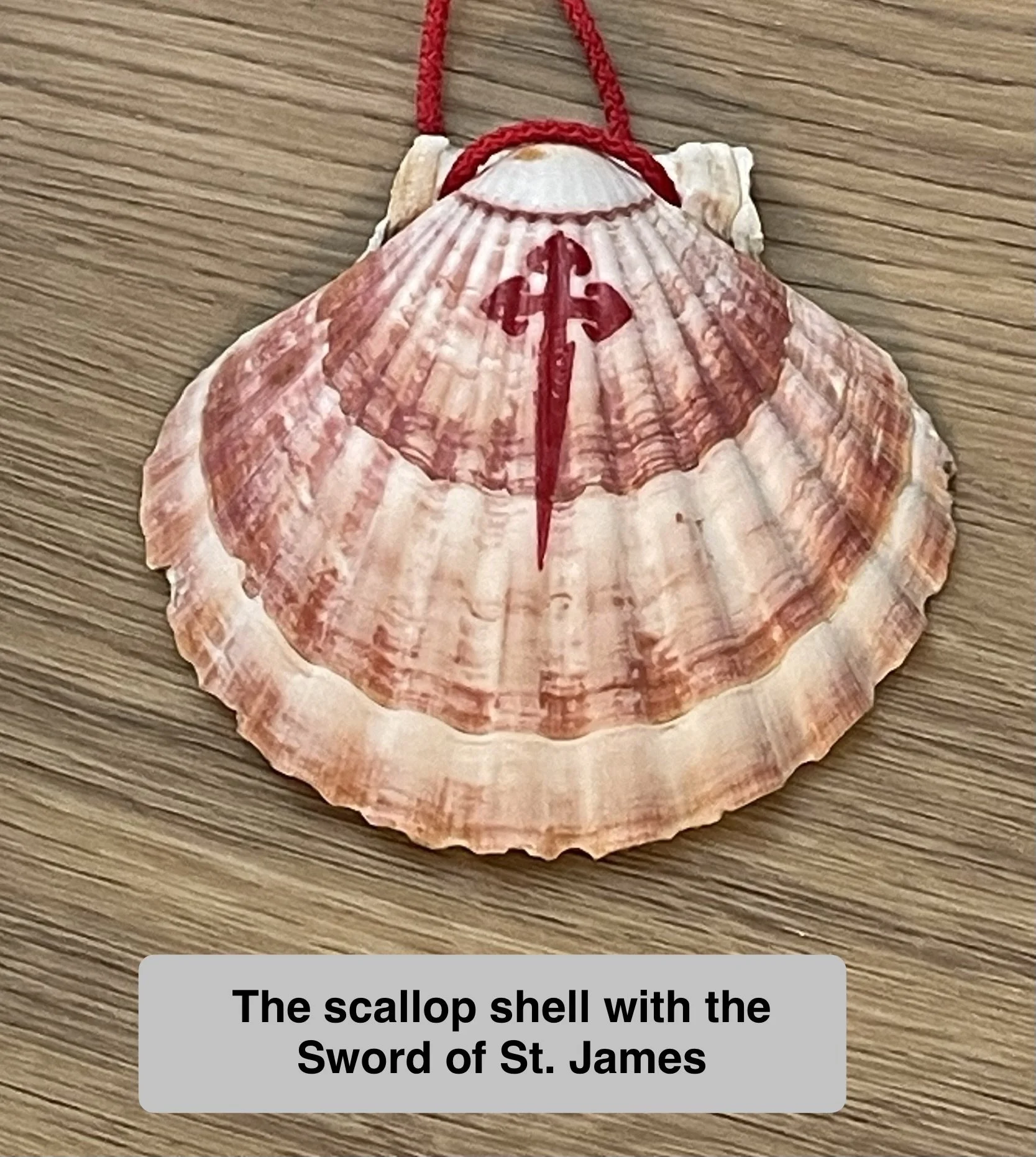
Another important symbol is the Cross of Saint James, often called the Jacobean Cross. This distinctive red cross, shaped like a sword, originated with the medieval Order of Santiago, a religious and military order founded in twelfth-century Spain to protect pilgrims and defend Christian territories during the Reconquista, the wars with the Moors. The sword shape reflected both the apostle James’s martyrdom and his later depiction as a warrior saint in Spanish tradition. Over time, the Jacobean Cross became closely associated with the pilgrimage itself and today appears on churches, markers, flags, and pilgrim souvenirs throughout Spain and Portugal.
Today, most modern pilgrims simply refer to the route as “the Camino,” but the many names and symbols attached to it reveal the remarkable cultural and historical influence the pilgrimage has carried across Europe for more than a thousand years.
Whatever name is used, it ultimately refers to the same enduring journey: a path shaped by legend, faith, history, and the countless pilgrims who have walked it over the centuries.