

Walking the Cobblestones of the Camino
/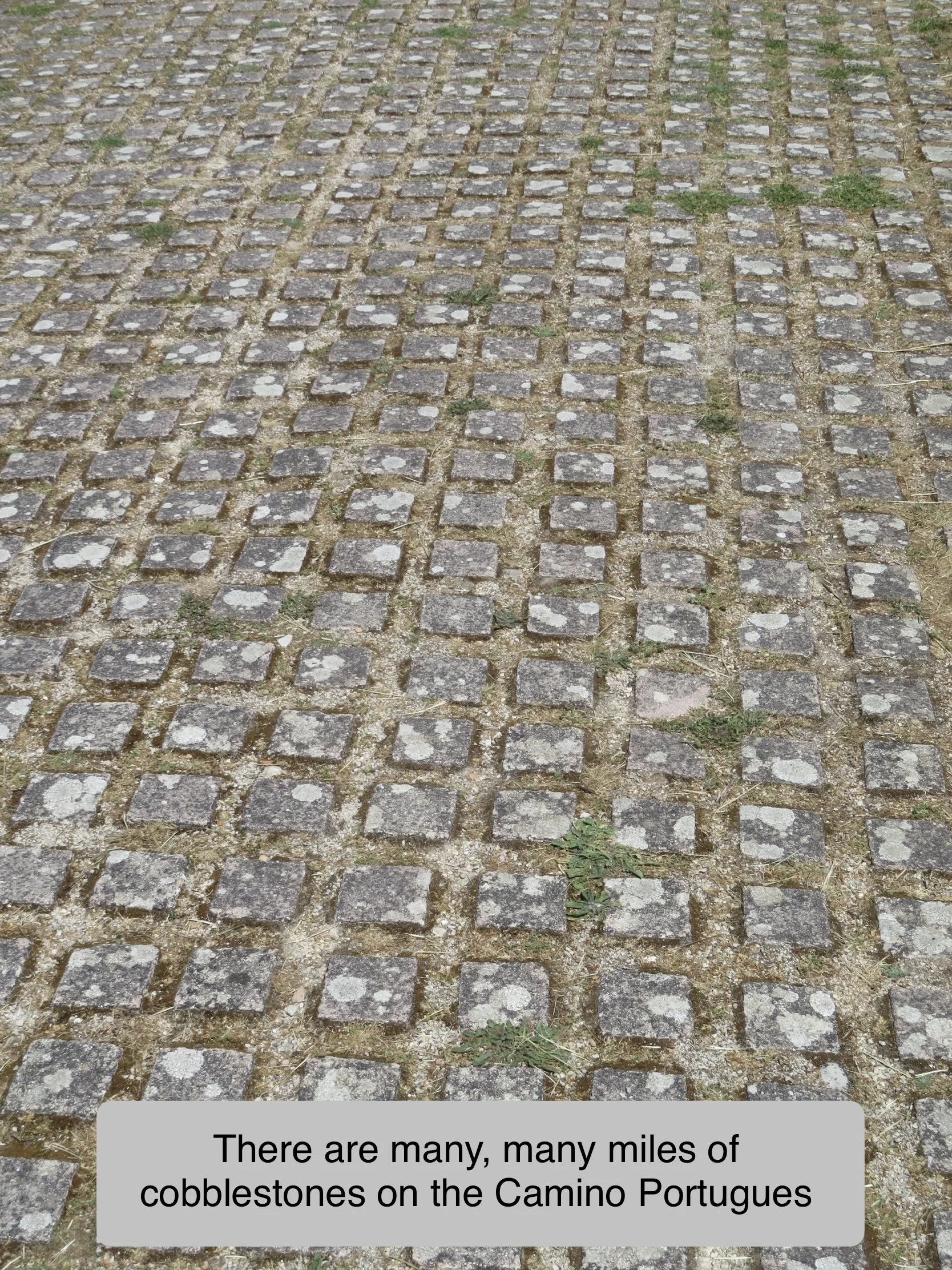
One of the first things we noticed while walking the Camino Portugues was the ground beneath our feet. Mile after mile, the path rolls across Portugal’s famous cobblestones — the iconic calçada portuguesa. They are beautiful, historic, and unmistakably Portuguese. They are also exhausting to walk on.
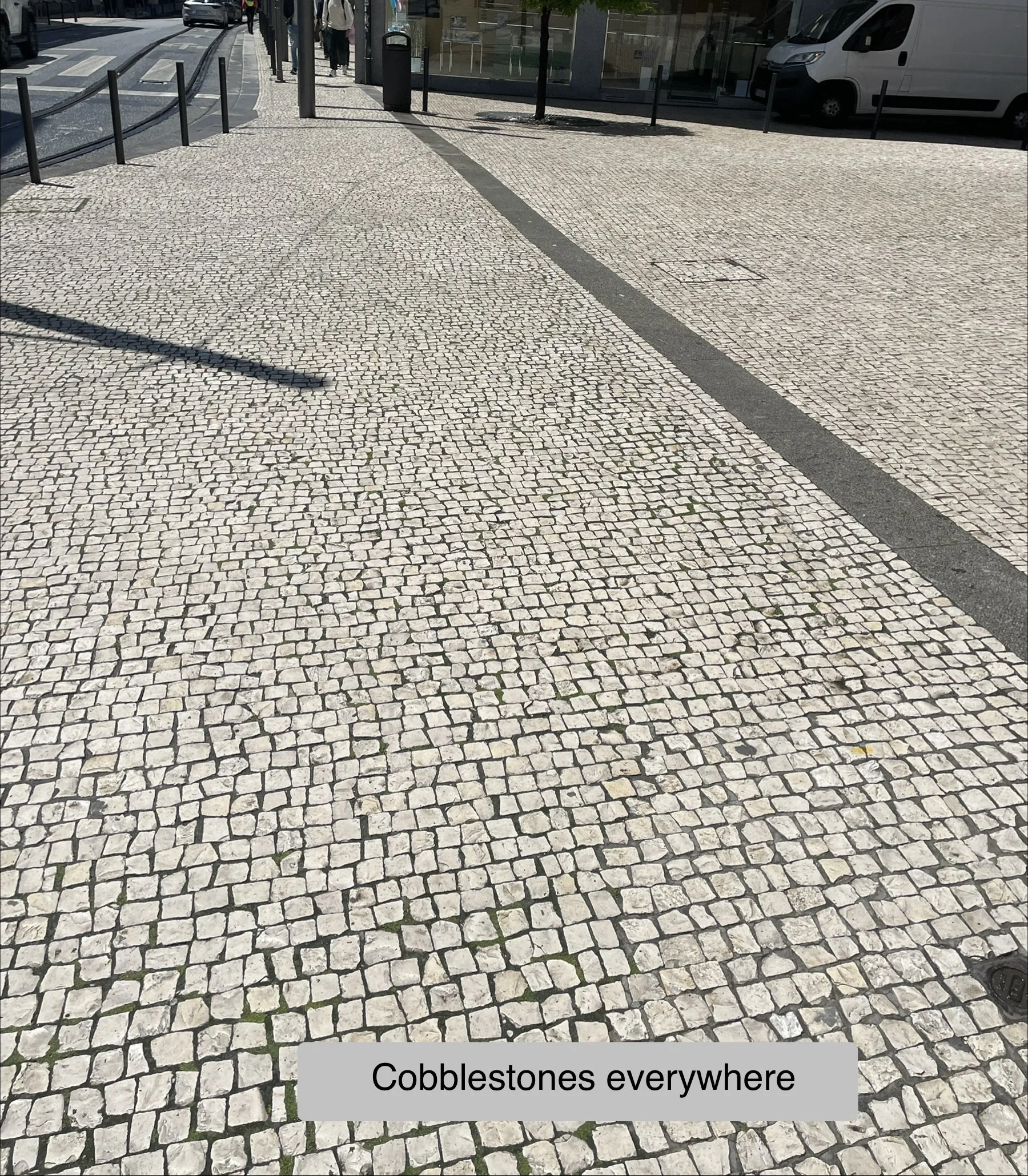
The stones appear everywhere along the route. They line village streets, city sidewalks, church plazas, and rural lanes between vineyards and forests. It sometimes feels as though the entire country is paved in polished stone.
Beautiful to Look At, Difficult to Walk
The charm of Portuguese cobblestones is undeniable. In the morning light, the stones shimmer after a rainfall. In old town centers, black and white limestone pieces form waves, shells, crosses, and geometric patterns beneath your feet. Some plazas feel less like streets and more like outdoor art galleries.
But beauty does not always equal comfort.
Walking long distances on uneven cobblestones can be surprisingly punishing. The rounded surfaces force your feet and ankles to constantly adjust. After hours of walking, calves tighten, knees ache, and feet burn. Towards the end of the day, as our feet begin to drag, even a single, slightly uneven cobblestone becomes a trip hazard.
Rain changes everything again.
When wet, the smooth limestone becomes slippery, especially on downhill sections. We learned quickly to shorten our stride and walk carefully. Trekking poles are less of an option and more of a necessity. We heard one traveler lament that surviving the cobblestones deserves its own Compostela certificate.
Still, despite the discomfort, the stones become part of the rhythm of the pilgrimage. Their unevenness slows you down. They demand attention. You cannot rush across them mindlessly. They encourage a reflective pace - which is, after all, the point of the Camino.
The Art Beneath Your Feet
One of the most interesting things about calçada portuguesa is that it is not simply paving — it is craftsmanship.
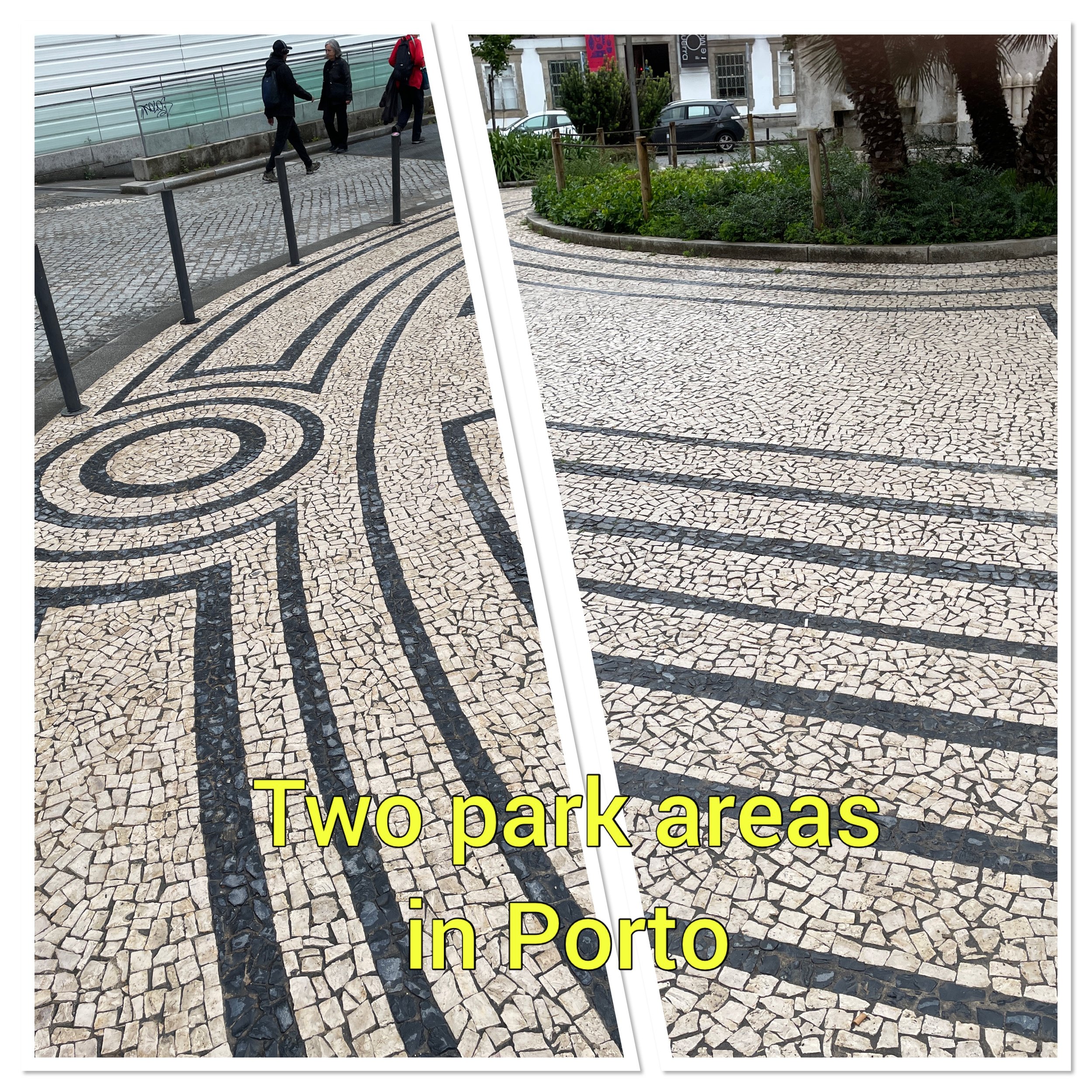
Throughout Portugal, public squares and promenades are decorated with elaborate stone mosaics created entirely by hand. Shell motifs reference Portugal’s maritime history. Swirling waves evoke the sea. Religious symbols, ships, flowers, and abstract patterns stretch across plazas in astonishing detail.
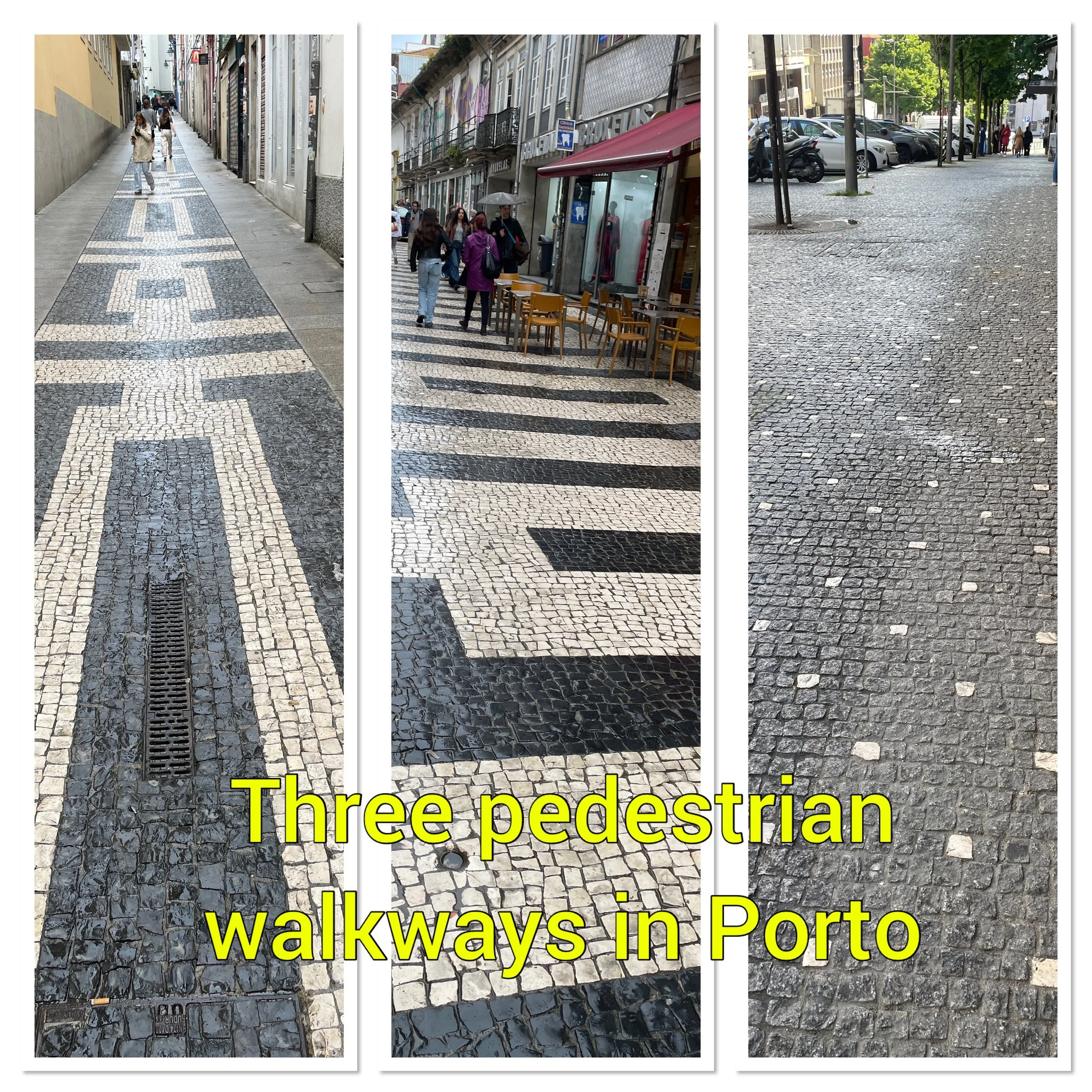
This artistry is everywhere in the larger towns along the Camino. We arrive tired from the day’s walk, glance down, and suddenly realize the street itself is a work of art.
The designs are created using contrasting stones, usually white limestone and black basalt. From a distance, they look painted. Up close, they reveal thousands upon thousands of individually placed stones.
It is difficult not to stop and admire the patience required to create something so intricate beneath the feet of everyday life.
A Short History of Portuguese Cobblestones
As its name suggests, calçada portuguesa originated in Portugal, though its earliest form looked quite different from the intricate stonework we recognize today. The first known records date to 1498, when several streets in Lisbon were paved with granite brought from the Porto region in northern Portugal. The project was commissioned for the annual birthday procession of the King of Portugal — a parade said to have included a huge white rhinoceros, whose royal owner reportedly wished to spare the animal from getting its dainty feet muddy.
After the devastating earthquake of 1755, which destroyed much of Lisbon, the city was rebuilt under severe economic constraints. Because stone paving was costly, calçada portuguesa largely disappeared during the reconstruction period. It was not until the 19th century that the style experienced a revival, as decorative stone pavements began appearing in prominent public squares and boulevards.
One of the earliest and most celebrated examples emerged in Lisbon’s Rossio Square in the 1840s. Its sweeping black-and-white wave patterns became an enduring symbol of Portuguese urban design and later spread throughout Portugal and across former Portuguese territories around the world.
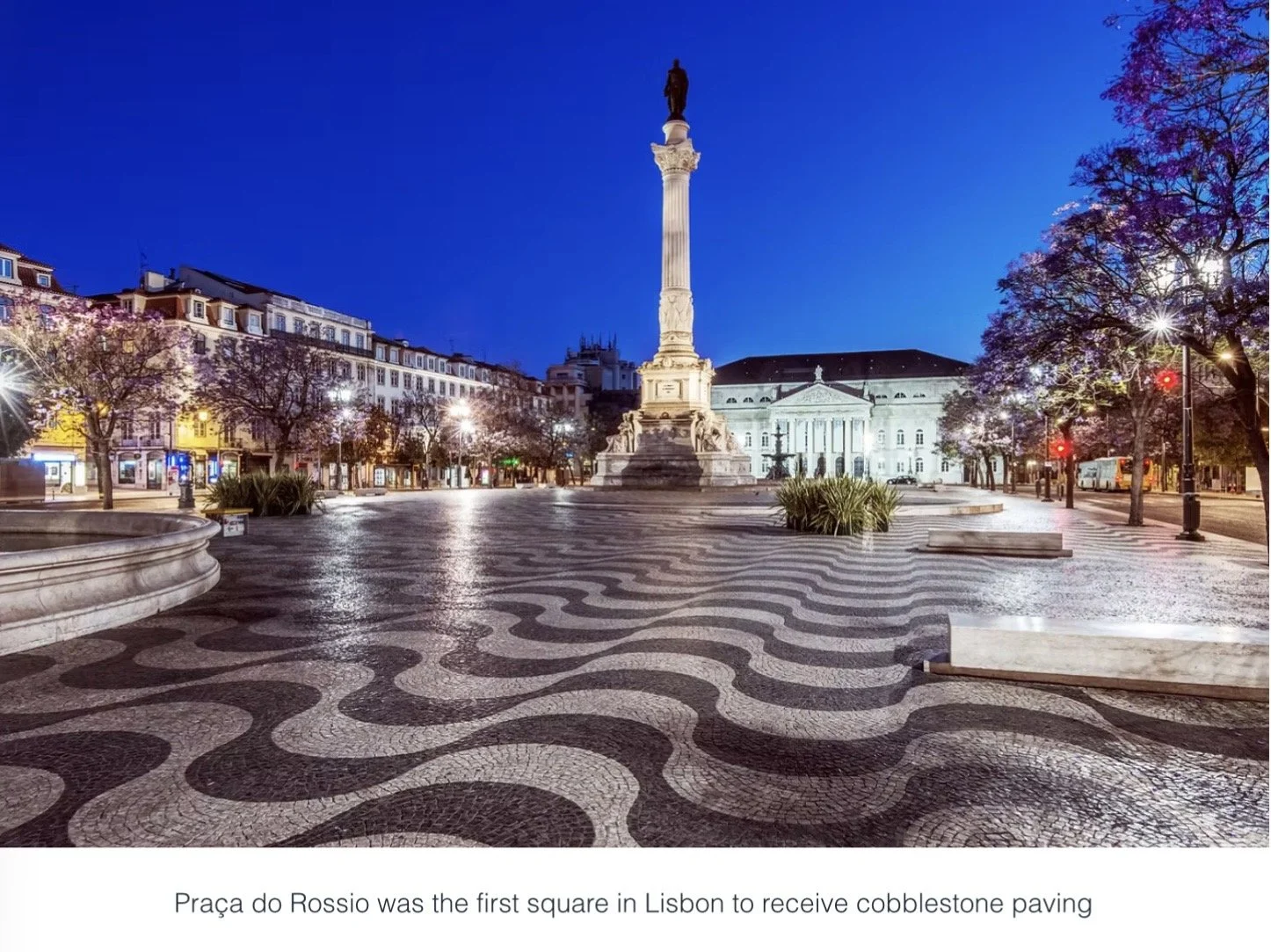
In its early years, much of the paving work was carried out by prisoners and manual laborers. Over time, however, the practice evolved into a highly specialized craft demanding remarkable precision, artistry, and technical skill.
Watching the Mestres Calceteiros at Work
During our walk, we were lucky enough to stop and watch a section of cobblestone being repaired. What looked at first like simple roadwork quickly revealed itself to be an art form.
The craftsman, or Mestres Calceteiros, kneeled on the ground, and with small hammers, carefully placed each stone by hand. He used a trowel-like tool to get the sand base just right, then tapped each stone until it was level with the others. There was no wasted motion, and there was no doubt that he knew his trade.
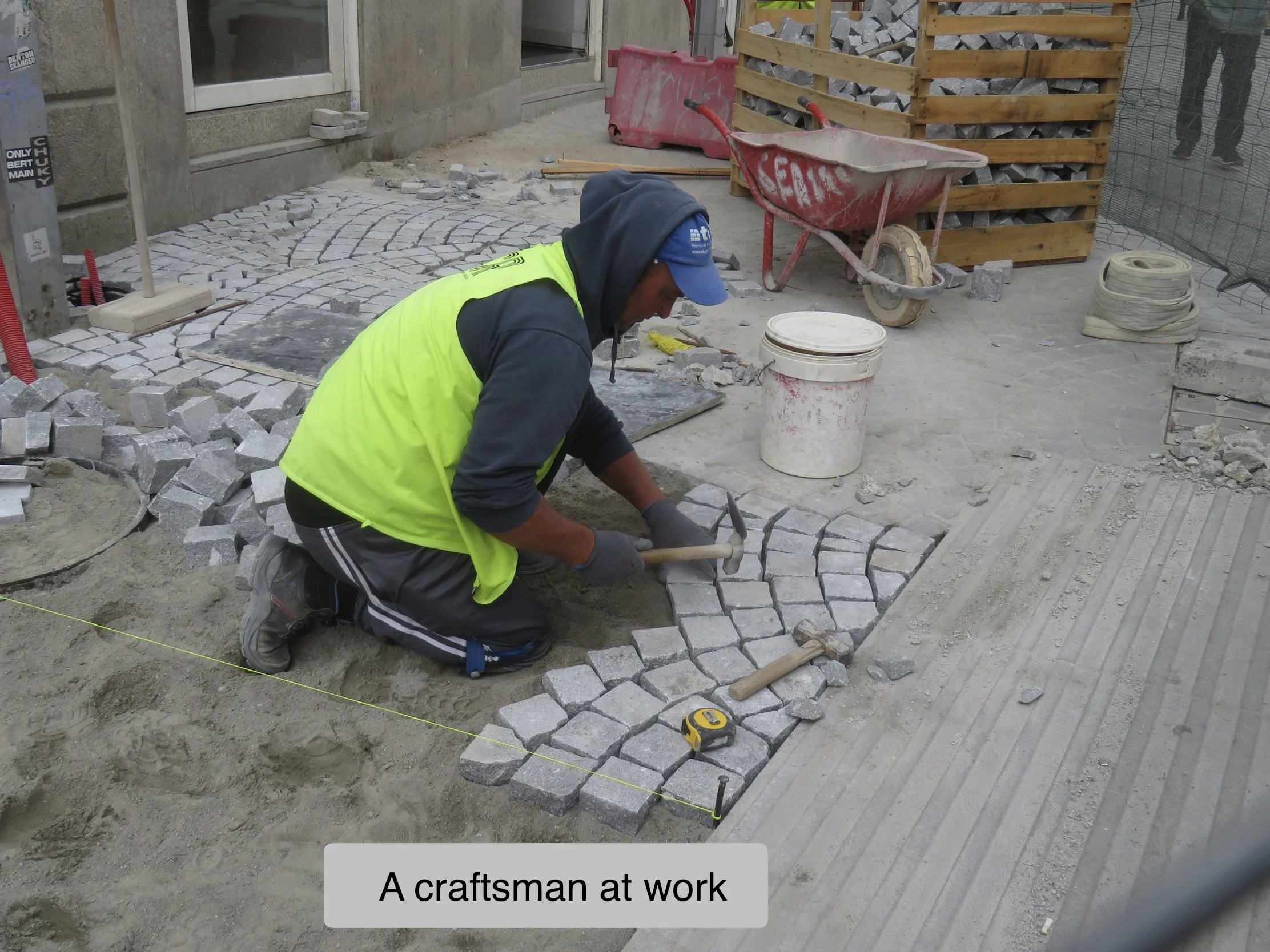
The mestres calceteiros spend years learning the trade. Their work combines engineering, artistry, and endurance. Imagine kneeling on the ground for hours every day, building surfaces strong enough to survive decades of weather and foot traffic while still creating beauty.
After seeing the process up close, it became impossible to walk the Camino without a greater appreciation for what lay beneath our boots.
The Process of Laying Portuguese Cobblestones
Traditional Portuguese cobblestone paving follows a careful, highly detailed process:
Preparing the Ground
The area is excavated and leveled to create a stable foundation. Layers of compacted sand and gravel help with drainage and stability.Designing the Pattern
For decorative plazas and sidewalks, patterns are mapped out in advance. Some are geometric, while others are elaborate artistic mosaics.Cutting the Stones
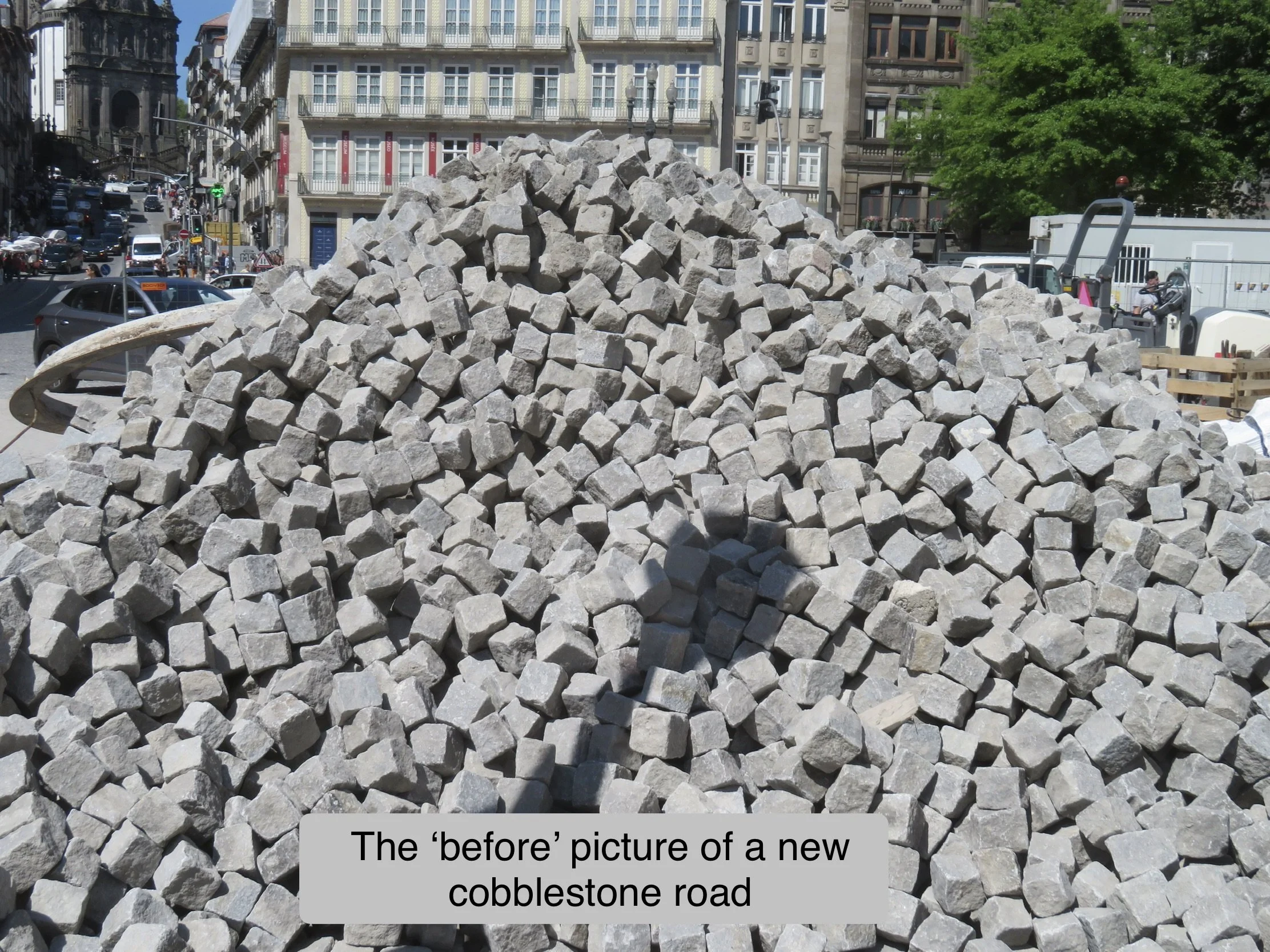
Limestone and basalt stones are cut by hand into small irregular cubes. Each piece varies slightly in size and shape.Placing Each Stone by Hand
The calceteiros place each stone individually into the sand base using small hammers to tap them securely into position.Fitting the Puzzle Together
This is where the artistry appears. The stones must fit tightly together while maintaining the intended design and ensuring a smooth walking surface.Finishing and Compacting
Once the stones are set, the gaps are filled with sand, everything is wet down, and the surface is compacted to lock everything into place.
The result is durable, flexible, and visually stunning — though perhaps not always ideal for tired pilgrim feet.
The Stones Become Part of the Journey
For pilgrims, the cobblestones are among the most lasting memories of the Camino. Some recall slippery descents in the rain, others the glow of sunlit plazas at dusk, and everyone remembers sore, tired feet. On narrow winding village streets, the cobblestones even provide an early warning system: as cars approach from around the next bend, their tires clattering on the cobblestones sound like oncoming trains, giving us plenty of time to step to the side.
For me, what will linger longest I think, though, is the rhythmic click of trekking poles against the ancient stones marking each step as we make our way towards Santiago de Compostela.