

Day 10 - Rubiães to Tui Spain
/With a good Portuguese-style breakfast under our belts, we set out on yet another sunny morning. Note that other than a few showers at night, we have not had a rainy day since arriving in Portugal. Very fortuitous! Fingers crossed that our sunny day luck holds.
Though our route today was not as difficult as the climb to Rubiães from Ponte de Lima, it still presented its challenges. There were significant hills, steep ups and downs… not quite as a steep, but tiring just the same. David had downloaded the altitude profile once again and we were prepared for more hills and we found them.
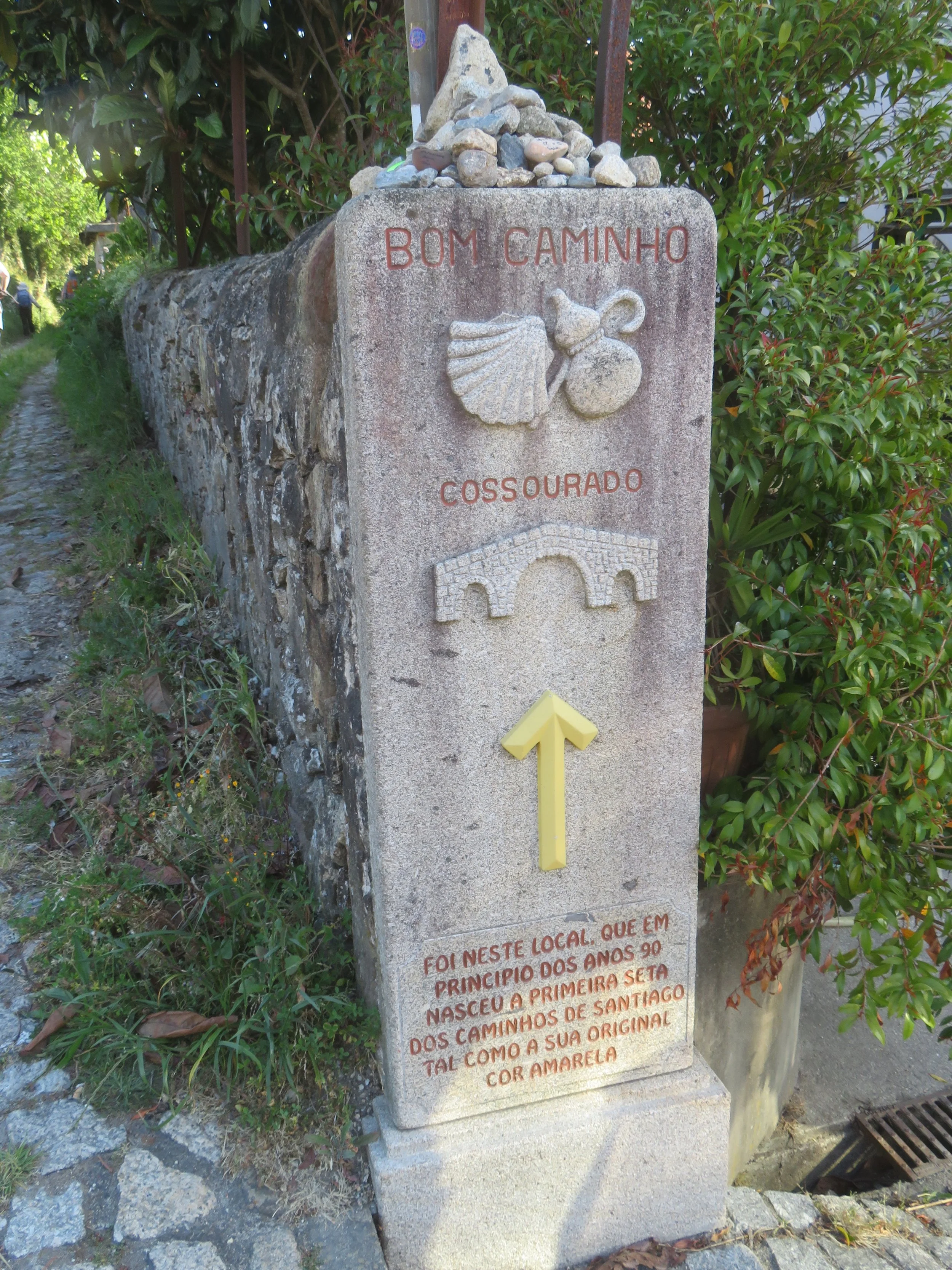
Early in the day, we came across the very first yellow marker ever placed on the Camino Portugues in the early 1990s. Father Elías Valiña, known as "the priest of the pilgrims," first started placing yellow arrow markers along the Camino Francés in the mid-1980s.
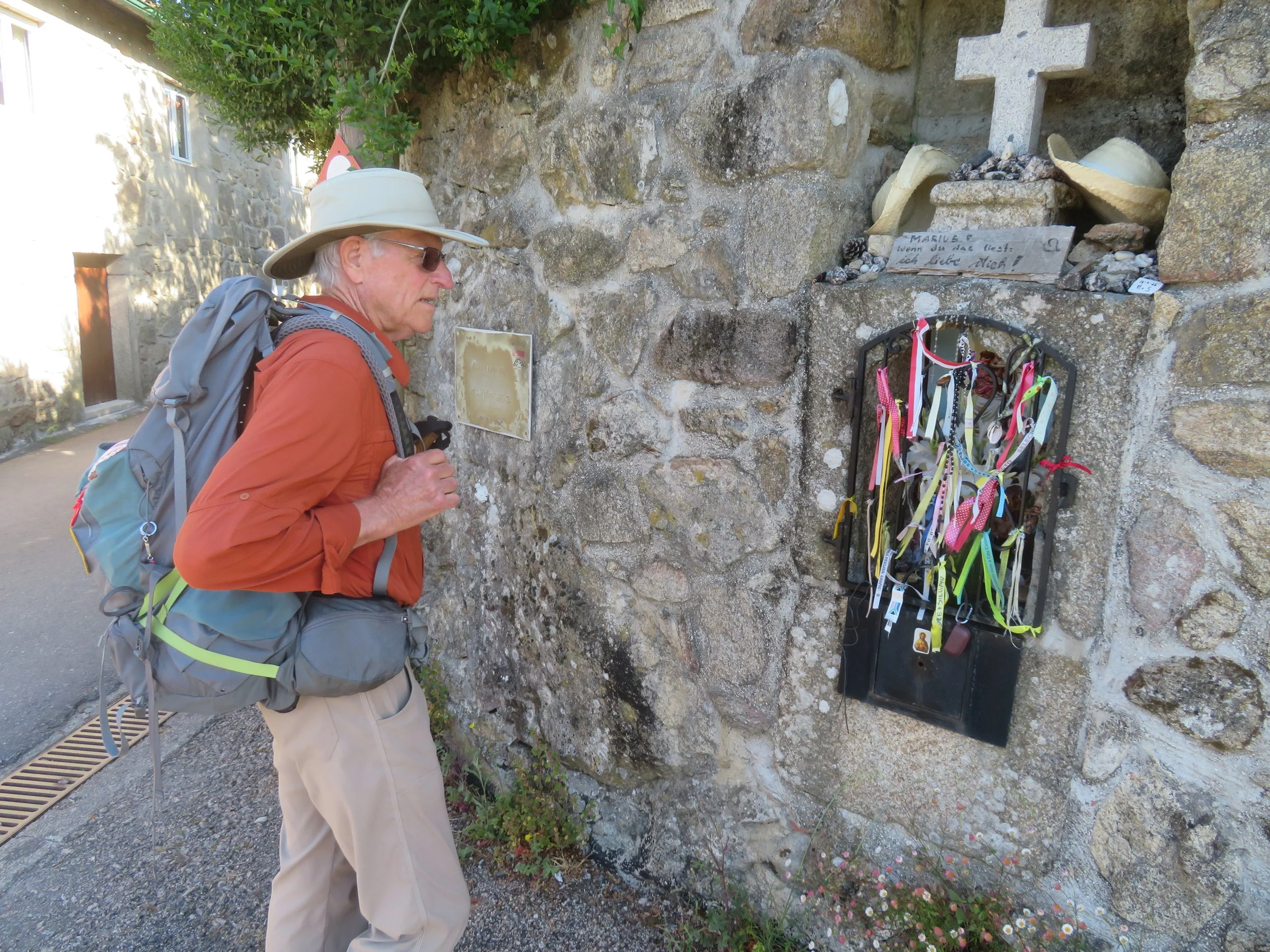
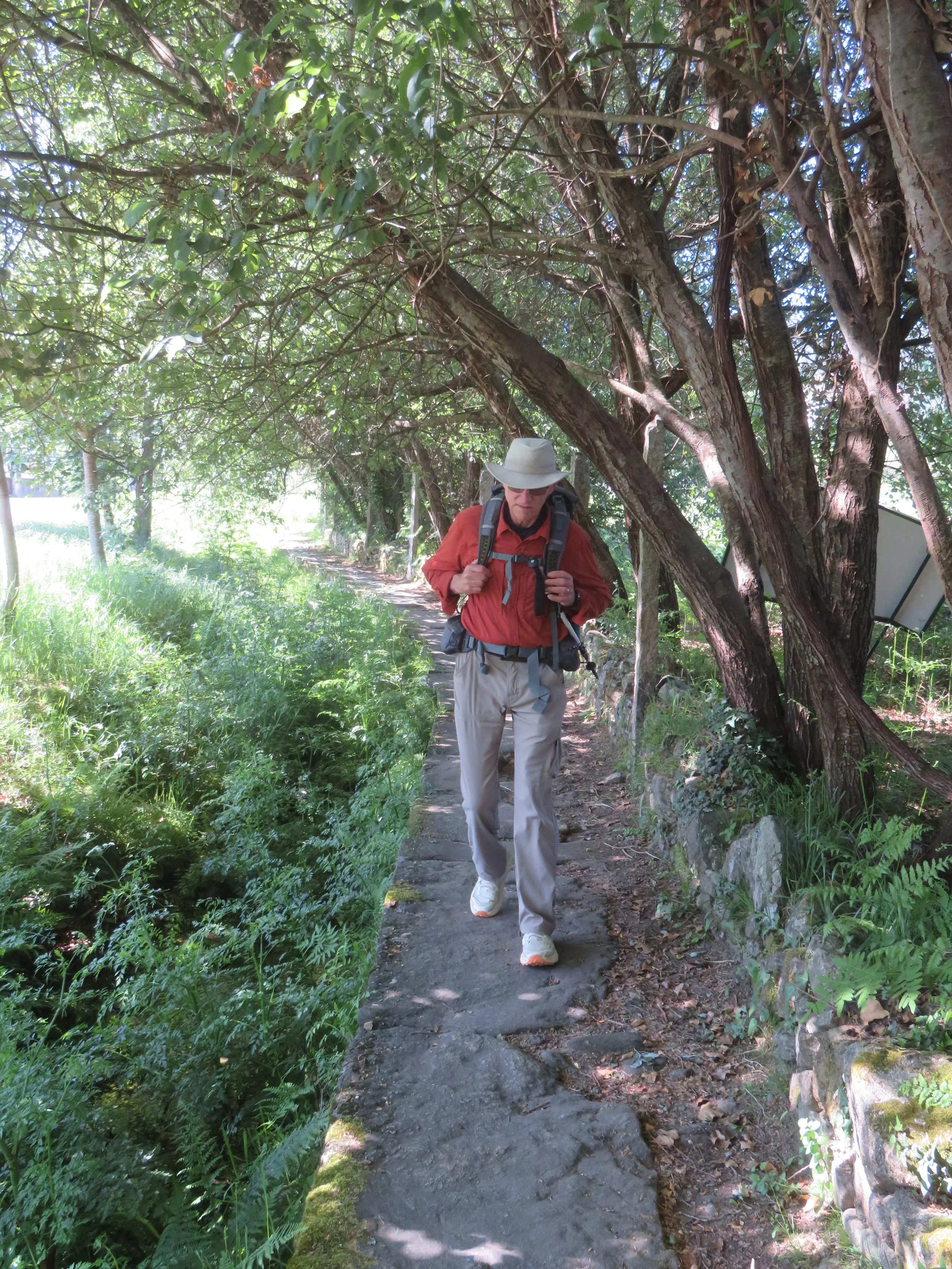
As usual, the terrain on the path varied. We walked on cobblestone roads and ancient Roman roads, through towns where pilgrims left their offerings at small shrines and chapels, and sometimes we walked on narrow dirt trails and along canals lined with ferns.
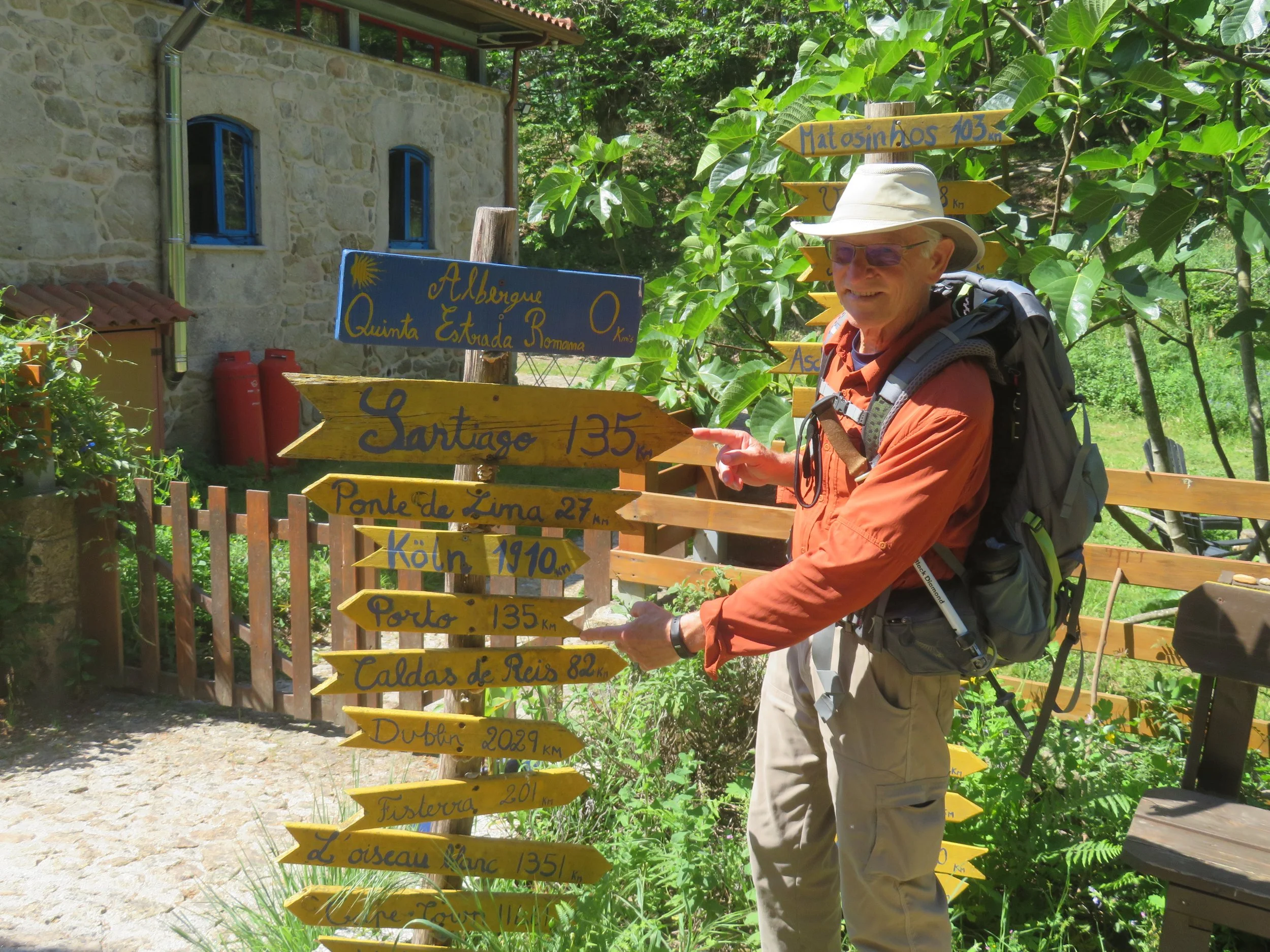
Today marked the halfway point on the Camino Portugues to Santiago de Compostela.
We came across a beautiful mural with a tribute to pilgrims and stopped for a rest.
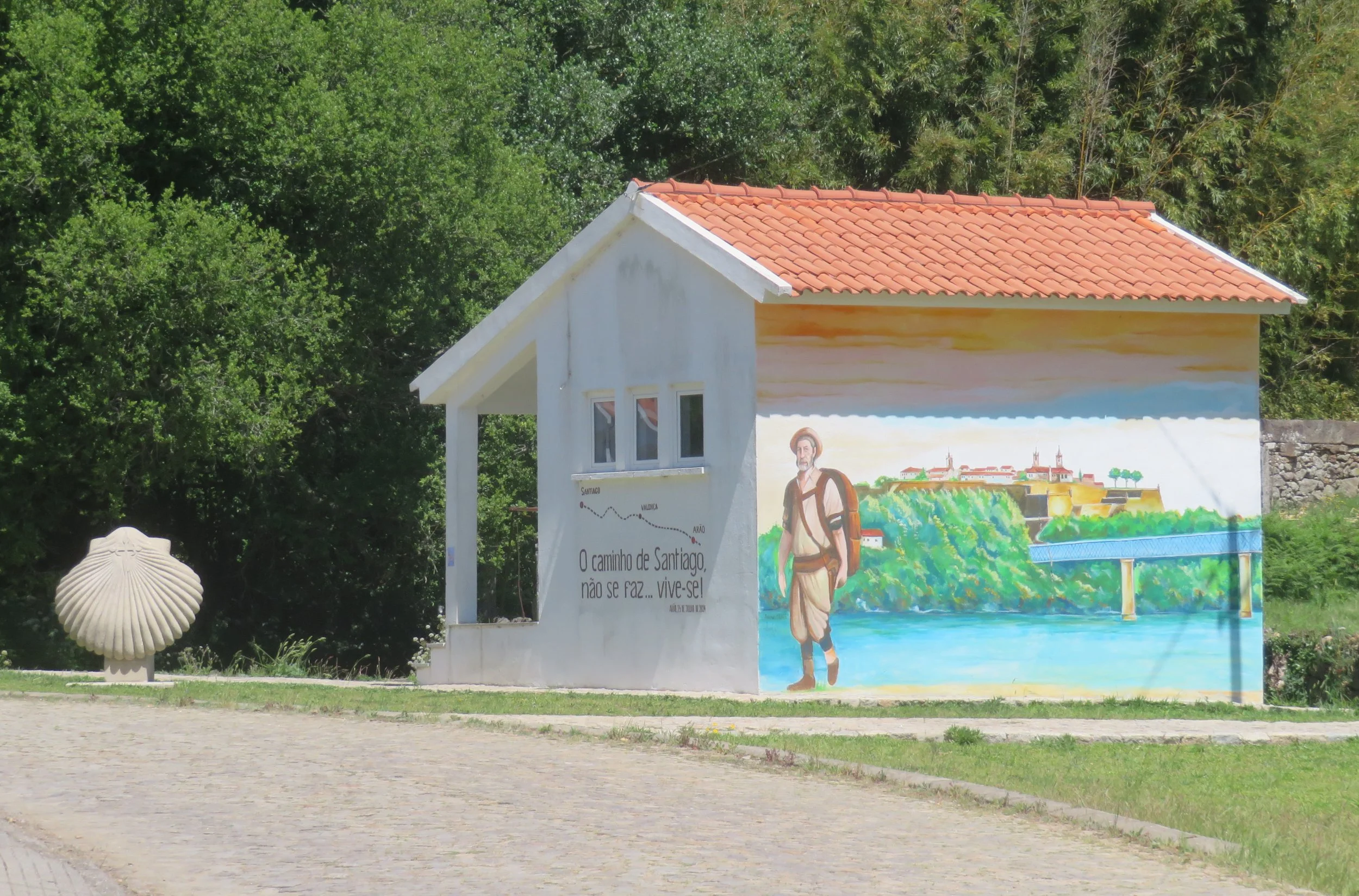
We finally emerged from the forest and the city of Valença lay before us.
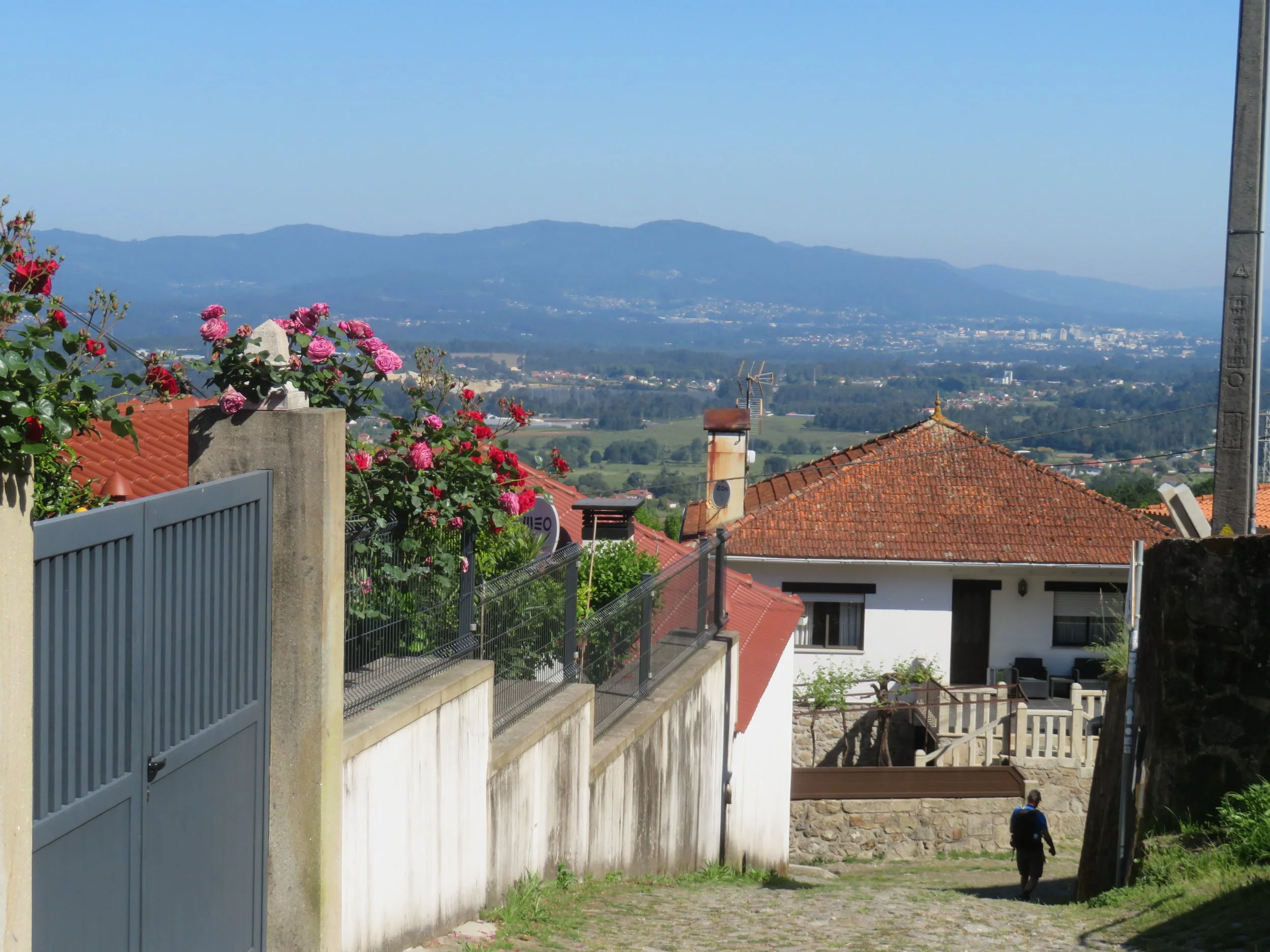
We followed the Camino markers right to the fort, but then they seemed to disappear outside the fort walls. Now what?
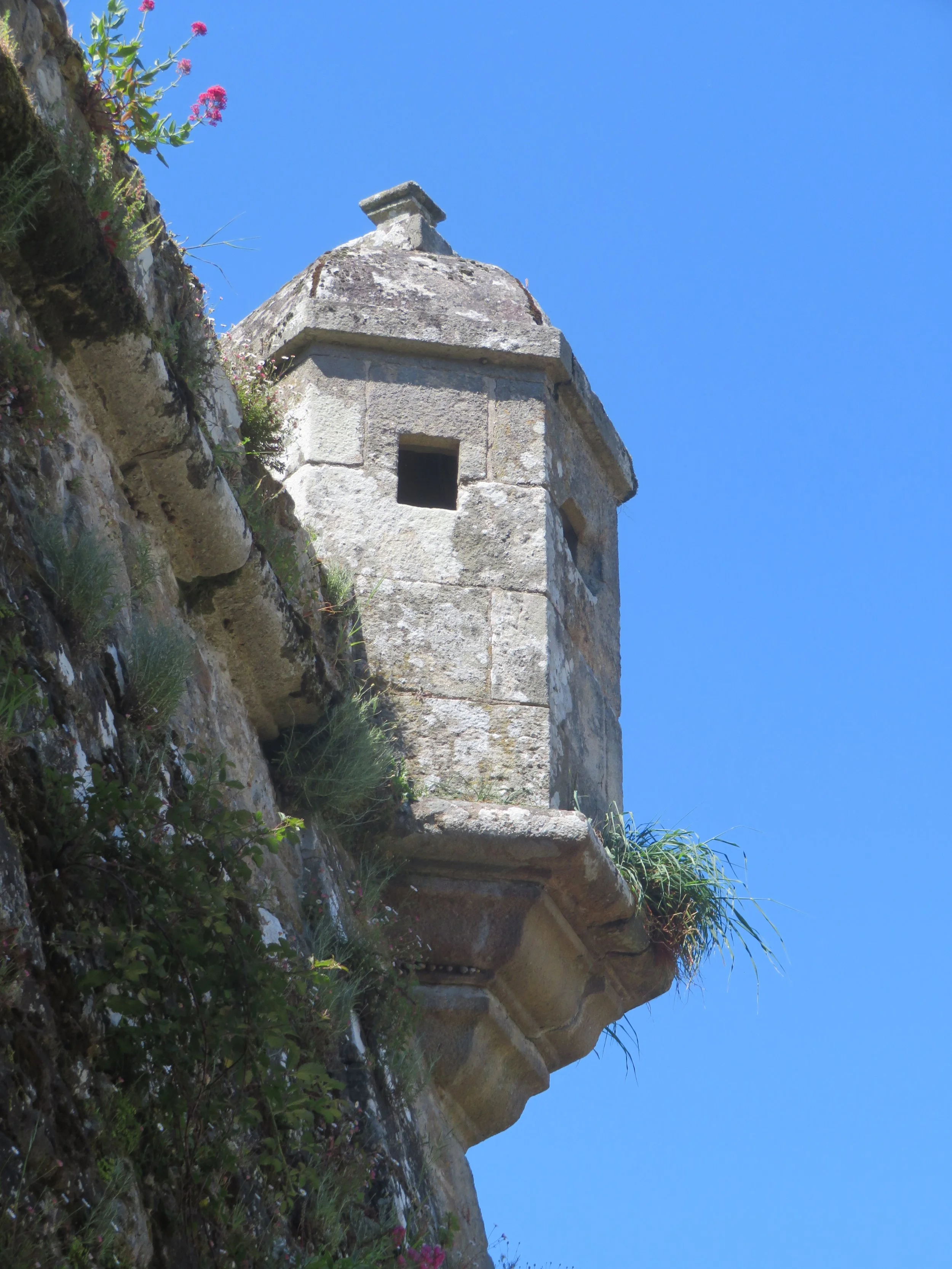
Our usual app, Wise Pilgrim, told us we were lost. Shoot! When David consulted our other app, Buen Camino, it marked the way through the fort. A man outside the fort noting our confusion, confirmed we should enter the fort and we did.
An ancient fortified city, Valença is primarily known for its massive Fortaleza de Valença which overlooks the Minho River. Originally constructed c.1262 to protect against invasions from the north, major upgrades were made in the 16th and 17th century to discourage Spanish incursions. The fortress’s military Gothic-Baroque style is a prime example of a 17th-century star-fort design which, unfortunately, we couldn’t appreciate from our vantage point.
What a surprise as we made our way up a steep stone ramp into the fort. It was like entering the Emerald City of Oz. Before us was an entire bustling mini-city with people enjoying the sunny day, sipping wine, eating at one of the many restaurants and browsing in the various shops. There were hotels and residences. We were amazed.
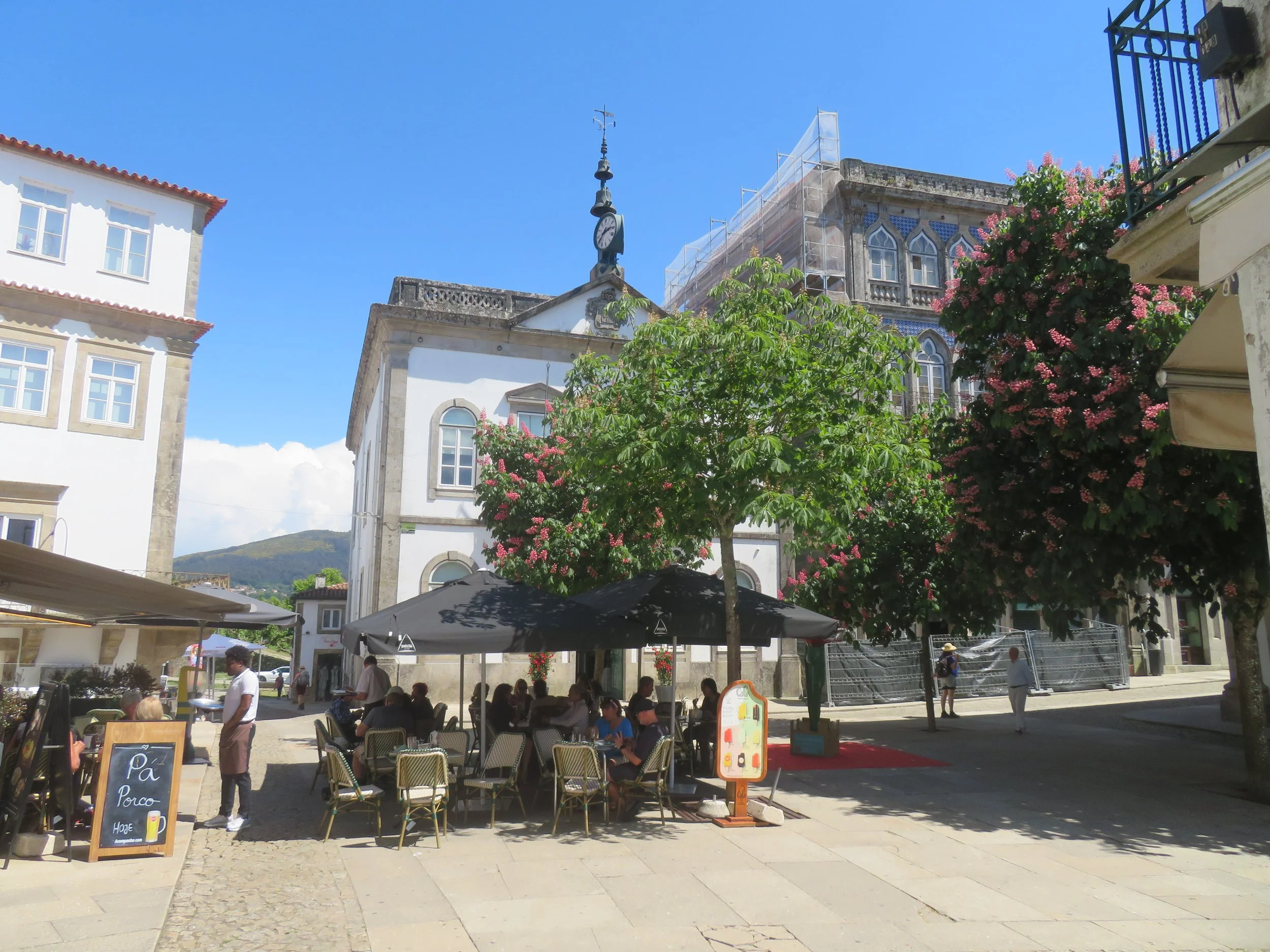
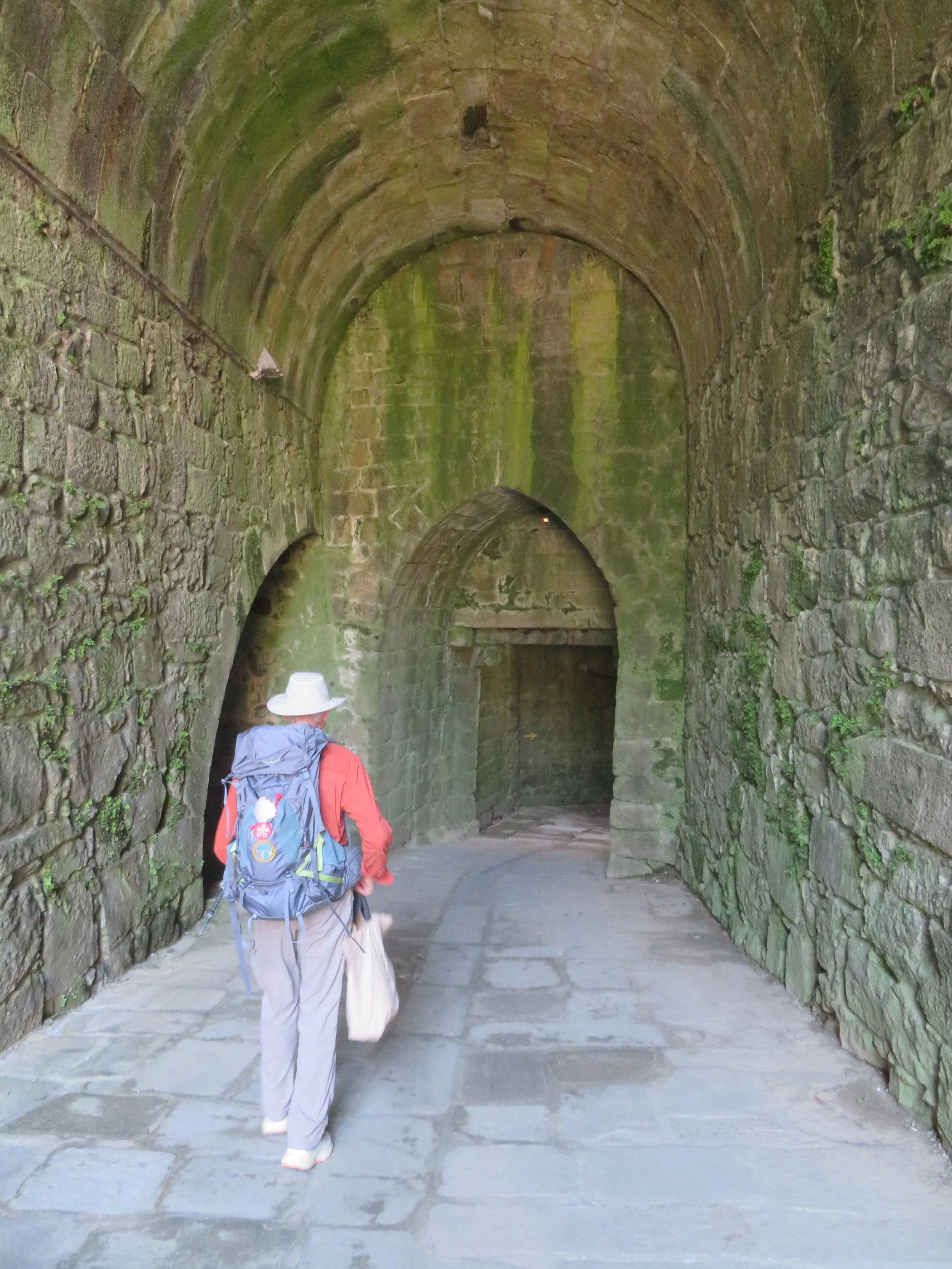
We finally spotted the yellow Camino markers again and wended our way through narrow streets and alleys and finally out through the fortress tunnels.
In a matter of minutes, we approached the 19th century Ponte Internacional Tui-Valença Bridge which spans the Minho River. This Eiffel-designed wrought-iron bridge was built in 1886 and is still in use today by pedestrians, vehicles, trains and, of course, pilgrims.
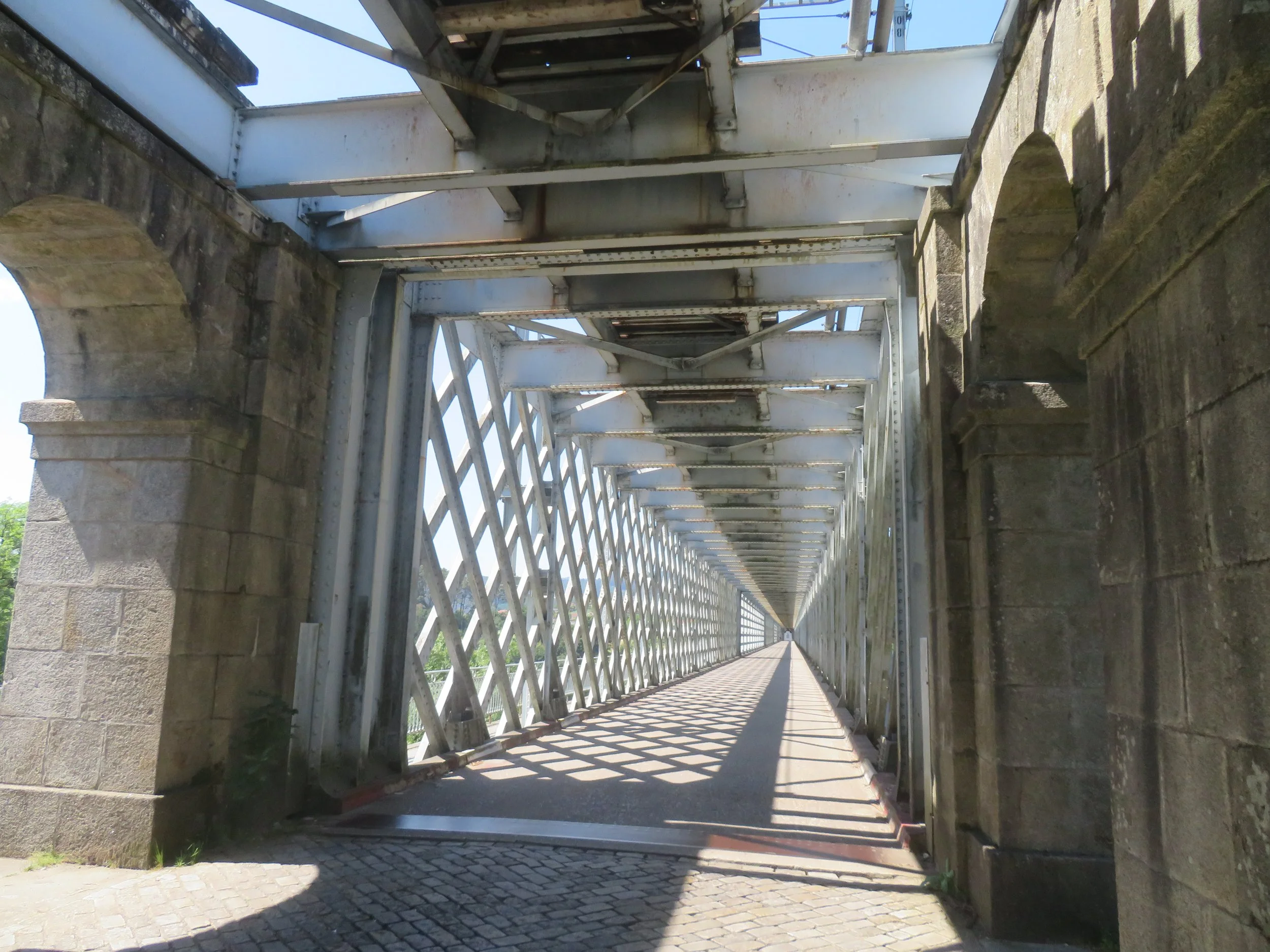
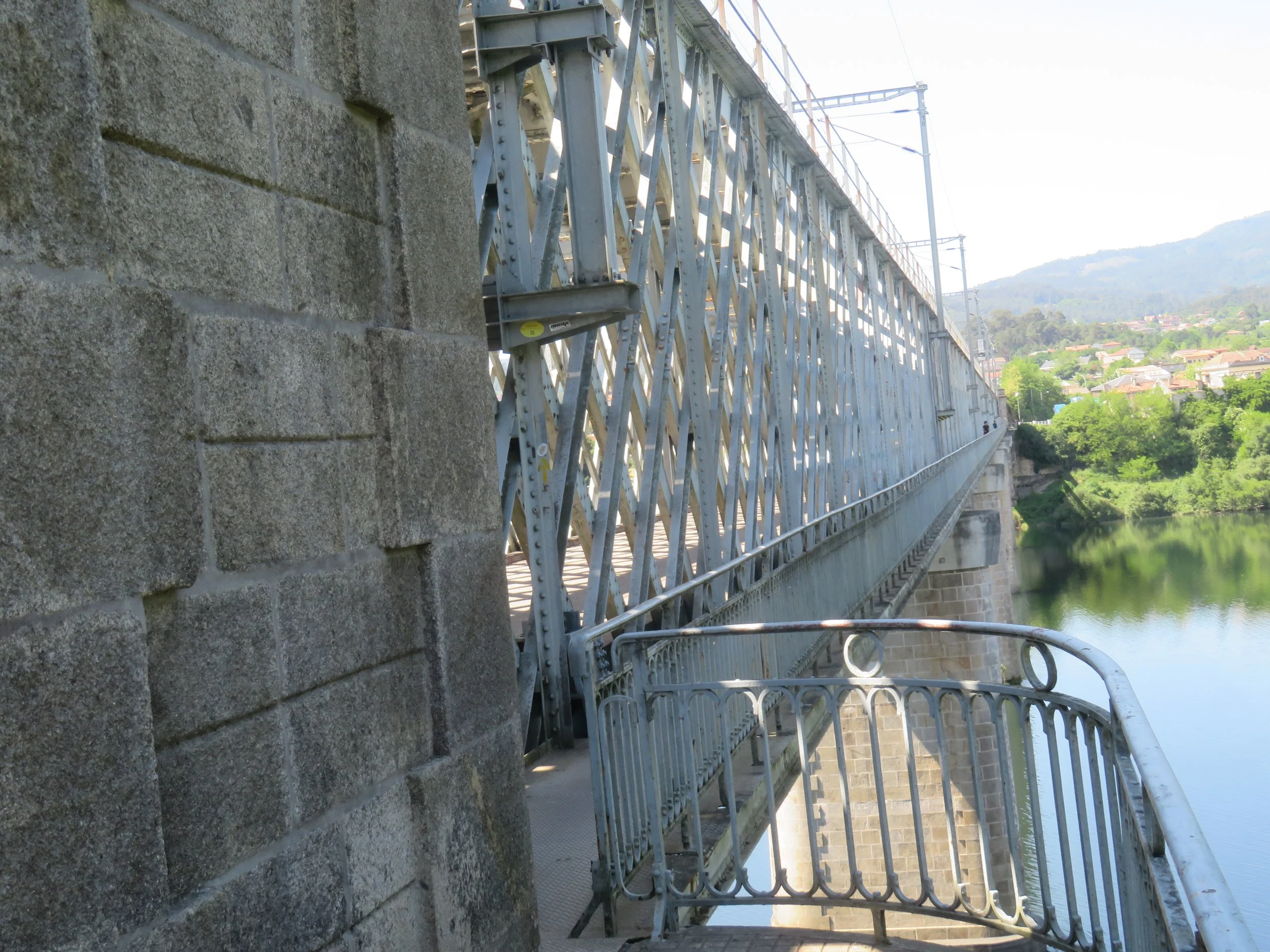
We stopped in the middle to acknowledge that we were leaving Portugal and entering Tui, Spain. And in that one step, we lost an hour as left Portugal’s Western European time zone and entered Spain’s Central European time zone.
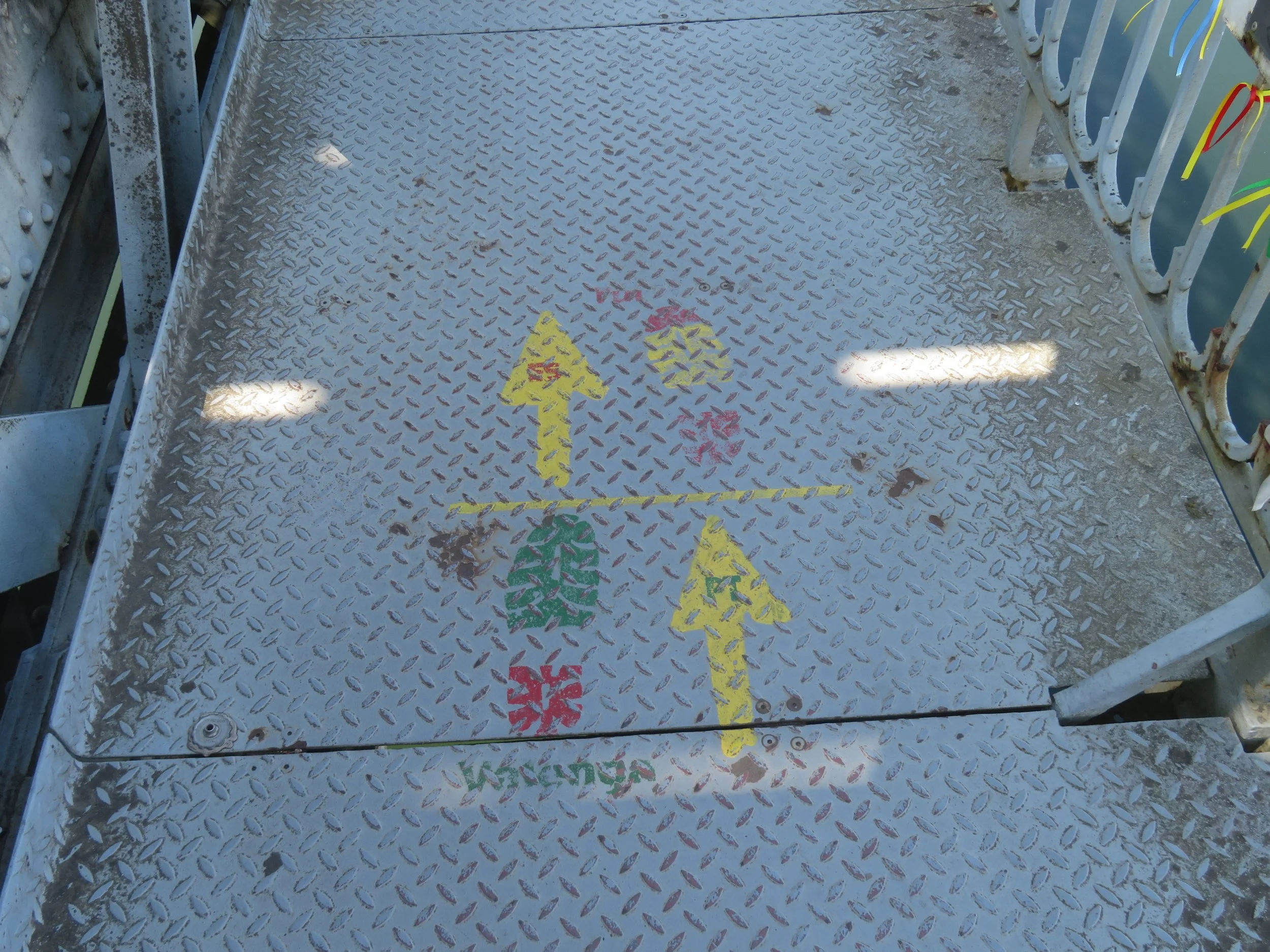
We could see the Tui Cathedral high on the hill before us as we paused above the Minho River.
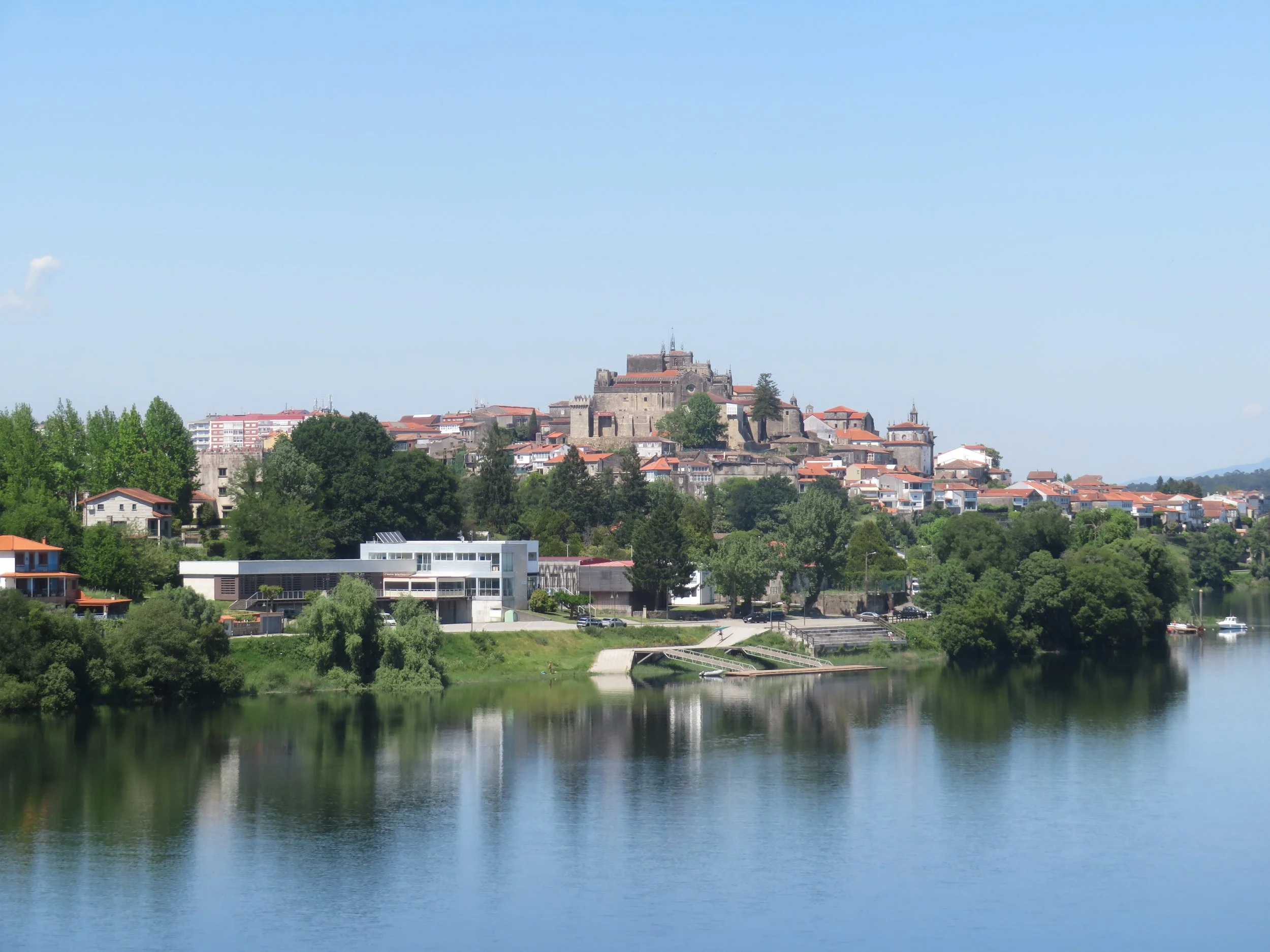
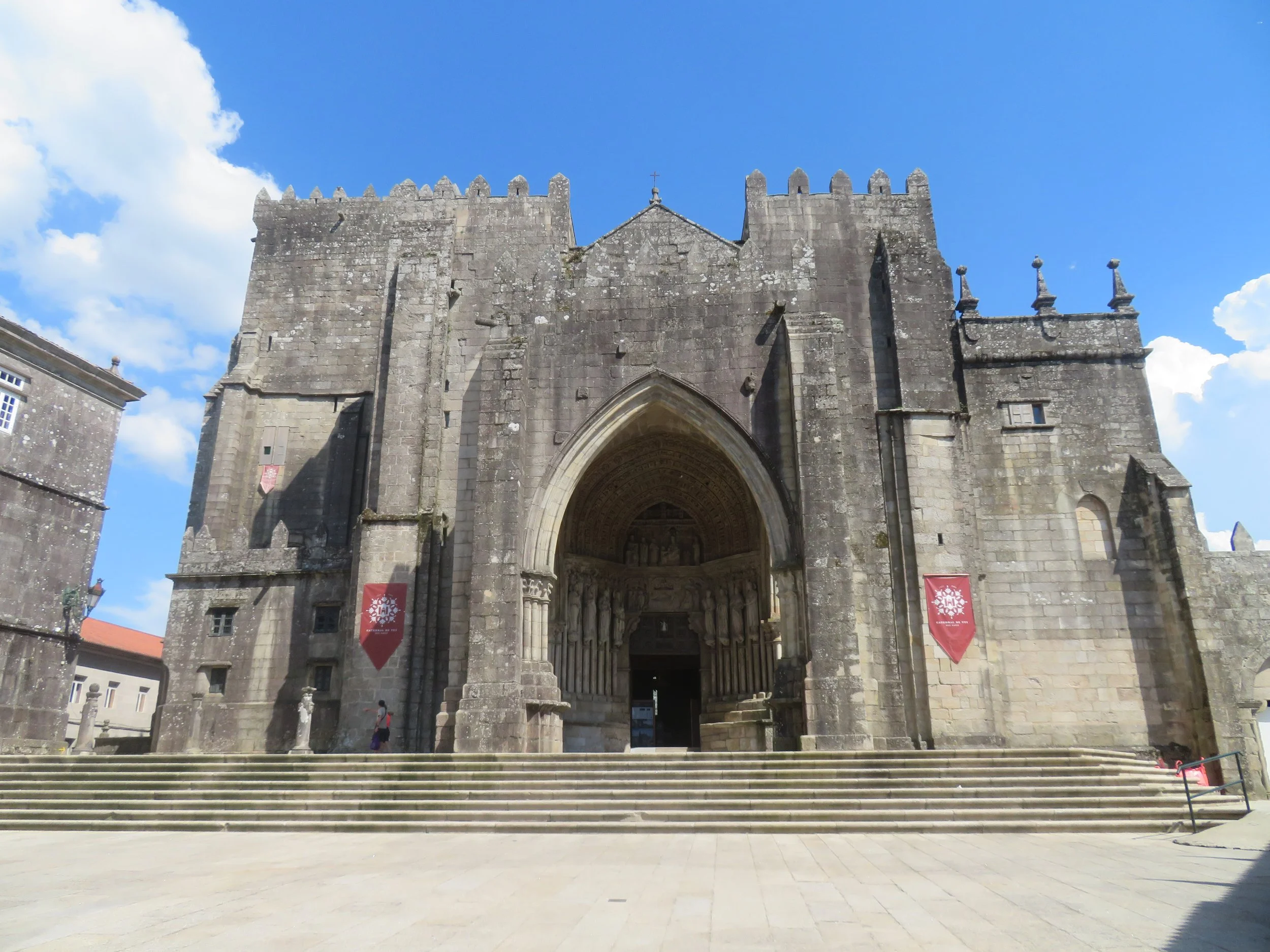
We were quite tired by the time the Camino led us up, up, up through a maze of cobblestone streets to the Tui Cathedral. We were able to obtain our credencial stamp (called a ‘sello’ in Spain). I said a quick Hail Mary and we trudged back onto the path.
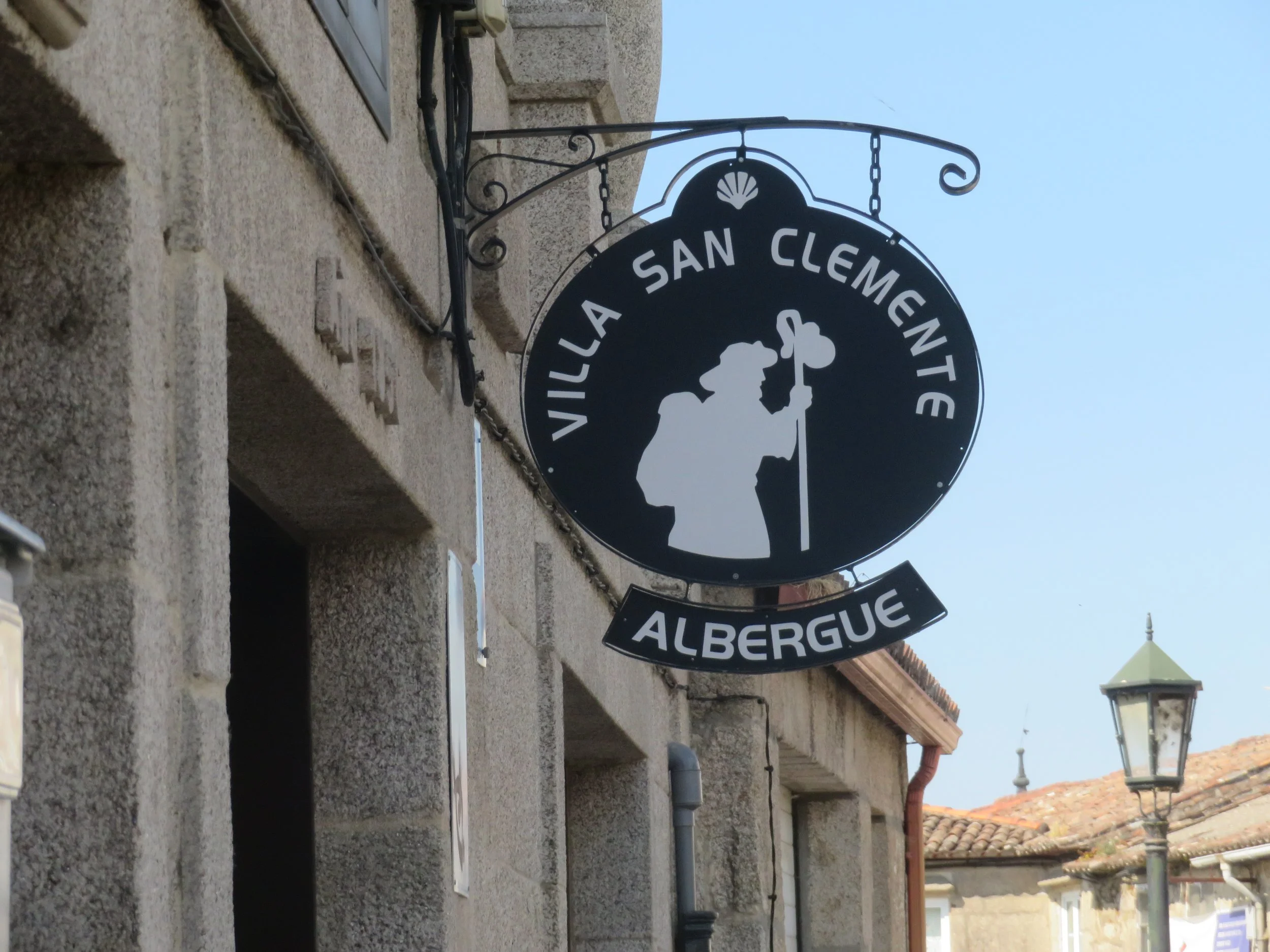
We were happy to finally find our lodging in Tui for the night, Villa San Clemente Albergue.
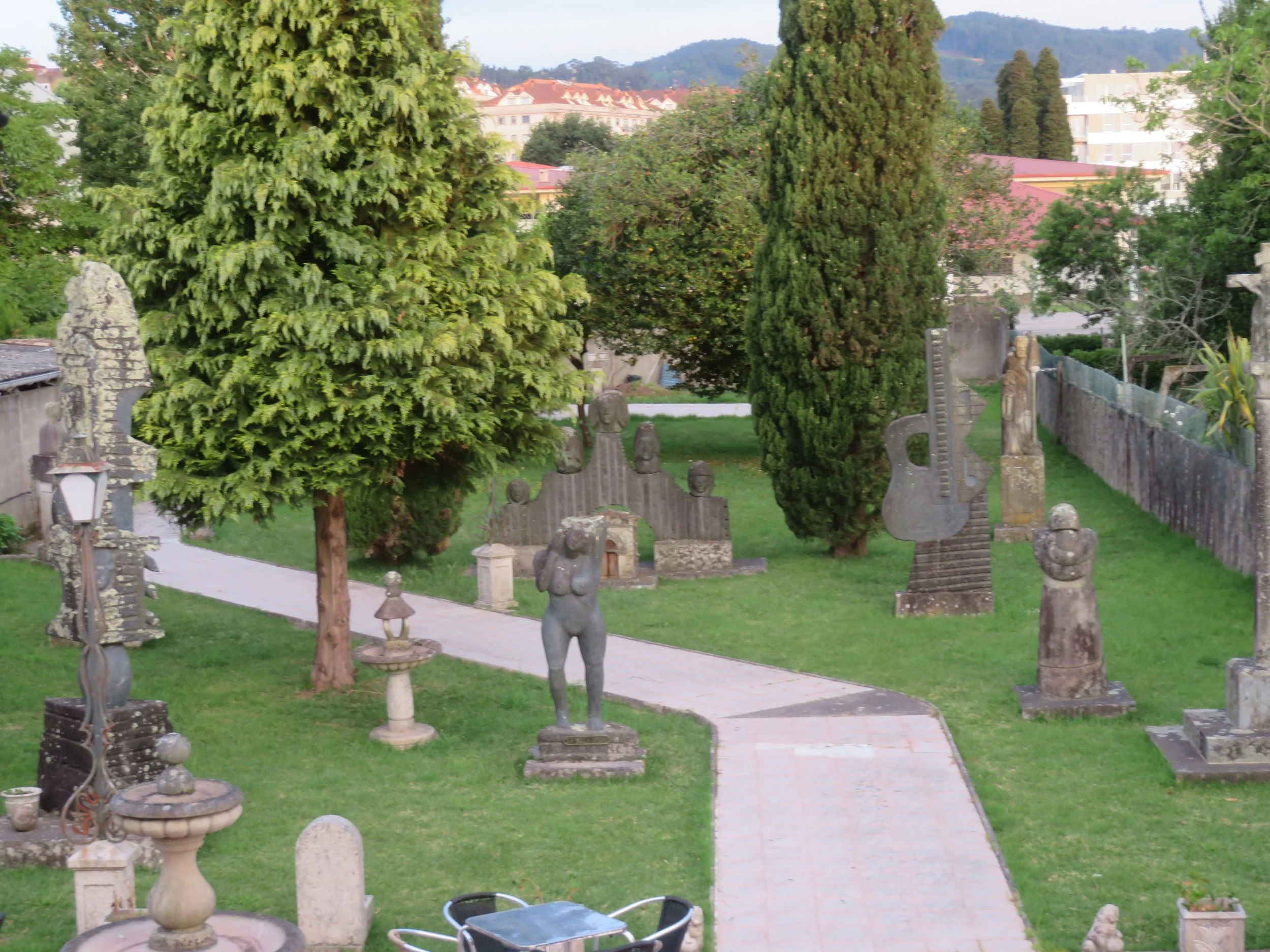
Though we’d booked a private room, this was a typical albergue and most of the young guests shared bunk accommodations. It was a busy, noisy place. Beer was dispensed from the vending machine. Folks were washing their clothes in large sinks. There were shared kitchen, shower and bathroom facilities. Internet access was pretty much impossible. Interestingly, in keeping with its name, this facility was indeed a villa at one time judging from the statuary on the back terrace.
The day ended up being one of our longest… 16+ miles. BUT… we crossed into Spain and we’re more than half way to Santiago.
One thing that’s tough on the feet is walking on cobblestone. Read David’s thoughts on them.
Next time, we continue on to Porriño over Roman bridges, through beautiful forests… and did we really hear a bagpiper???