
Tomar - Castles, Conventos and Knights Templar - Part 2
/The morning dawned dark and gray with intermittent showers and drizzle as we set out to visit the Templar Castle. During the 13th century, Tomar was one of the most powerful and influential towns in Portugal. Gualdim Pais, a nobleman, knight, and Crusader, founded Tomar and, as Grand Master of the Knights Templar, built the castle and convent between 1118-1160. His statue stands proudly in the Praça da República (Plaza of the Republic), Tomar’s large central plaza, which we passed frequently in our wanderings.
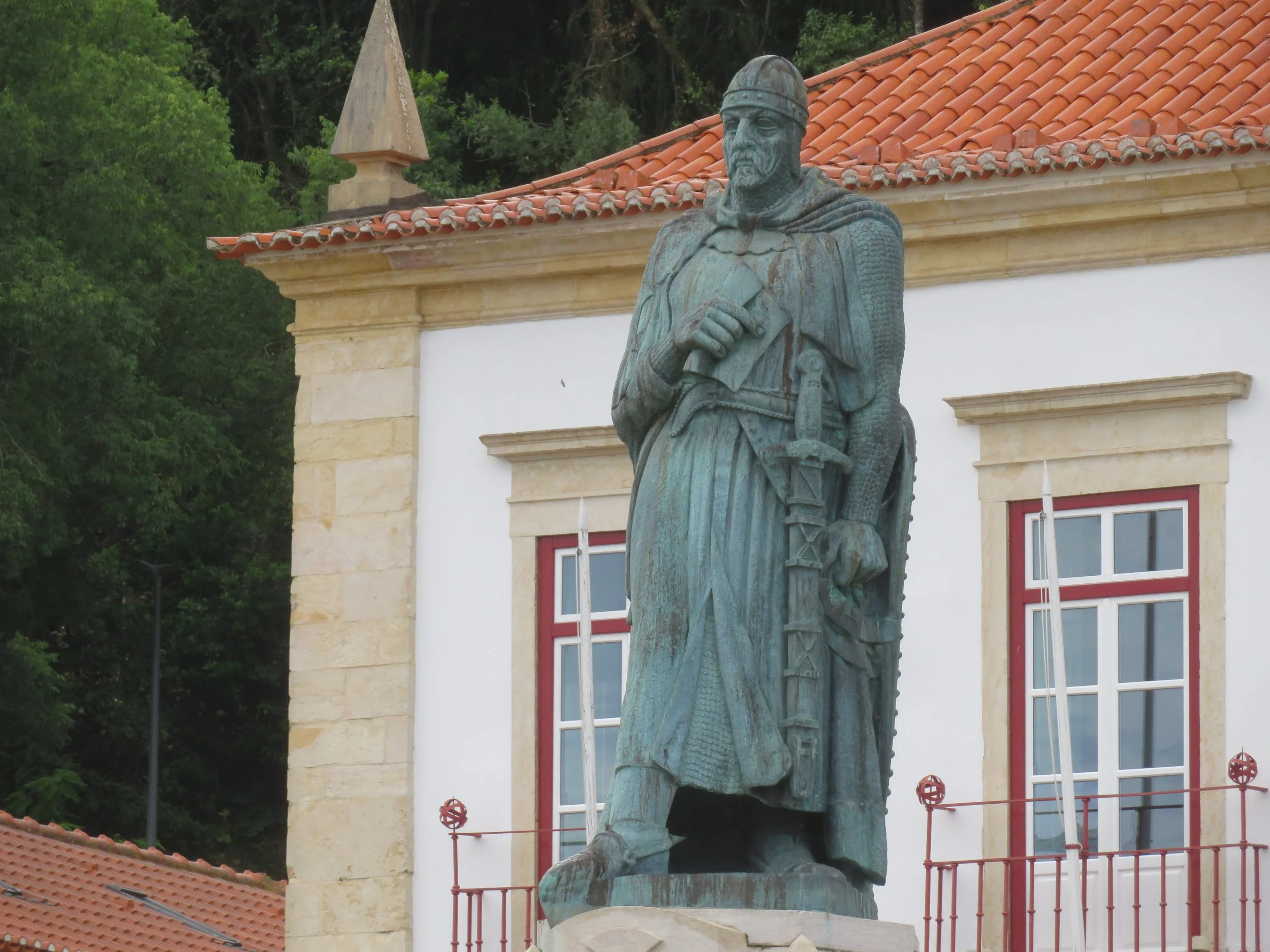
Gualdim Pais, founder of Tomar and first Grand Master of the Knights Templar
We climbed the steep hill to the castle once again and waited patiently for the doors to open, so we could buy our tickets before the onslaught of tourist buses arrived. We were pleasantly surprised when the admission fee for Seniors was only €7.50/pp, and only one busload of tourists had been offloaded.
Widely considered the historical seat of the Knights Templar, the castle and its Convento de Cristo (Convent of Christ) are probably the Templars’ most significant surviving achievement and an impressive manifestation of their influence and legacy.
A UNESCO World Heritage Site, the castle itself is undergoing a massive renovation, so some parts were inaccessible. The Charola, however, the round church inside the castle walls was open. Influenced by the design of the Church of the Holy Sepulchre in Jerusalem, this church is as unusual as it is magnificent.
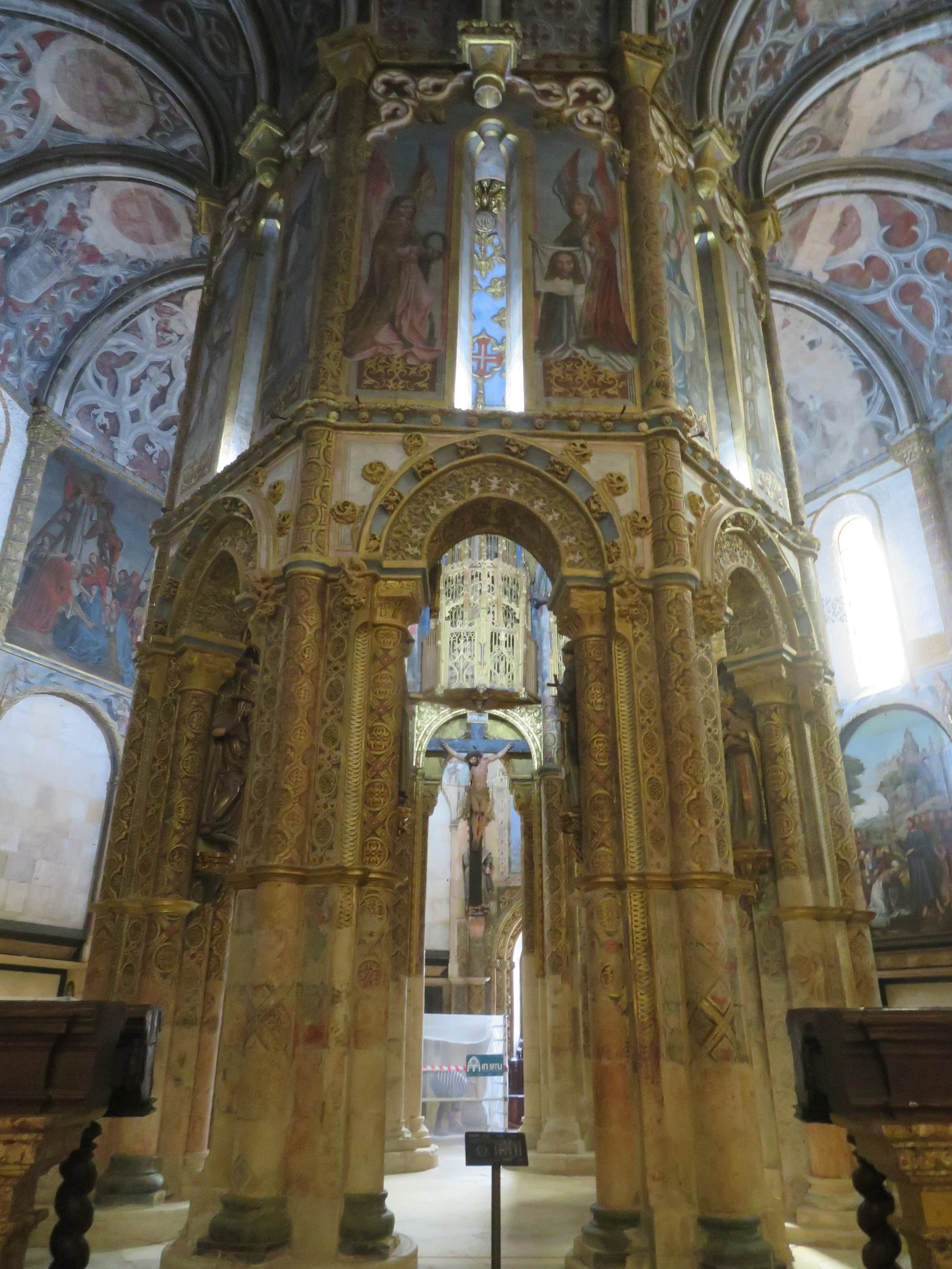
On the exterior, the church is a 16-sided polygon and an impenetrable fortress. On the inside, however, the round chapel is an octagonal shape with elaborately decorated columns and connecting arches, open to a central area. I read that the reason for the octagonal shape was so that knights on horseback in full armor could attend Mass before heading off to battle.
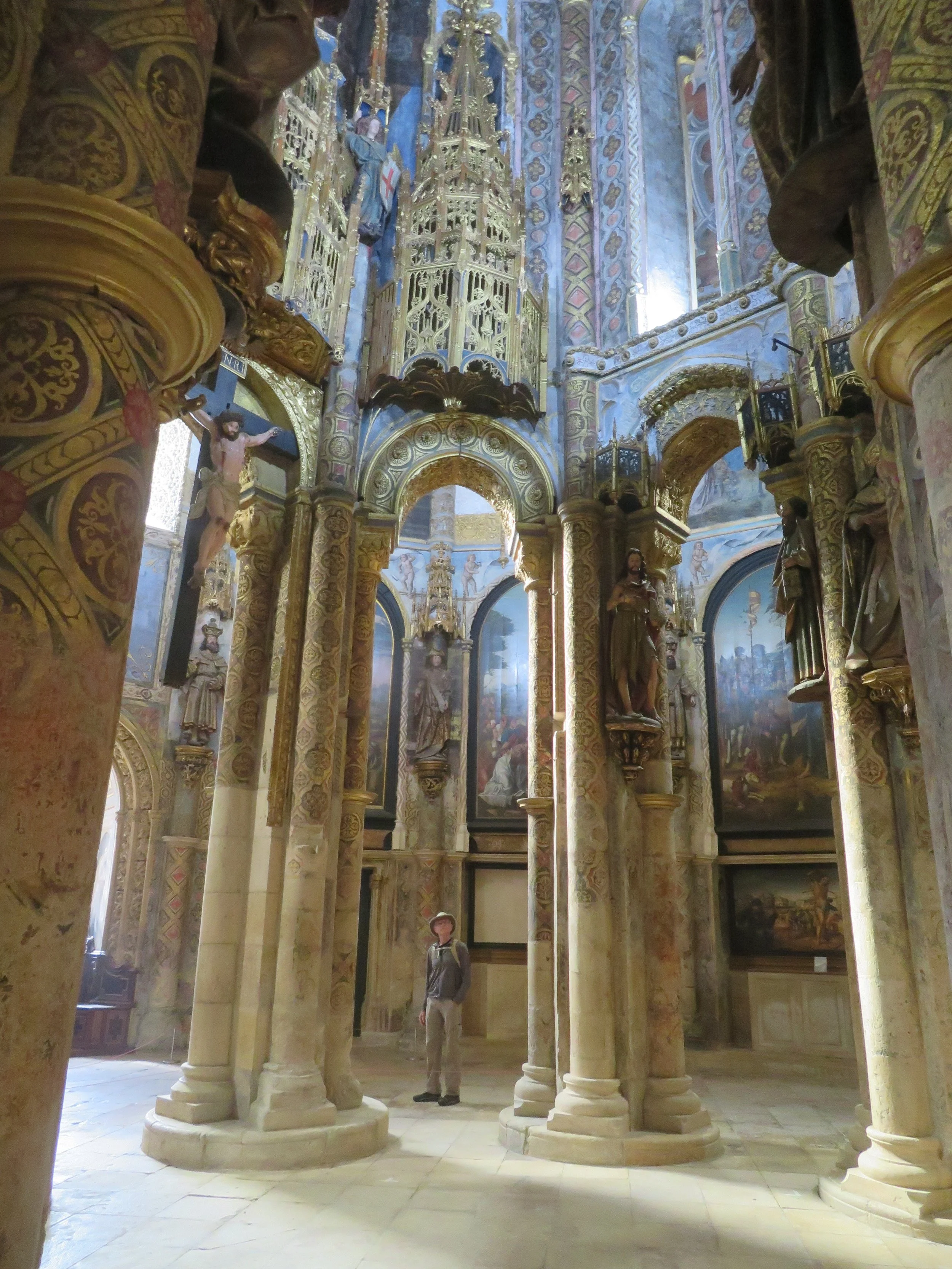
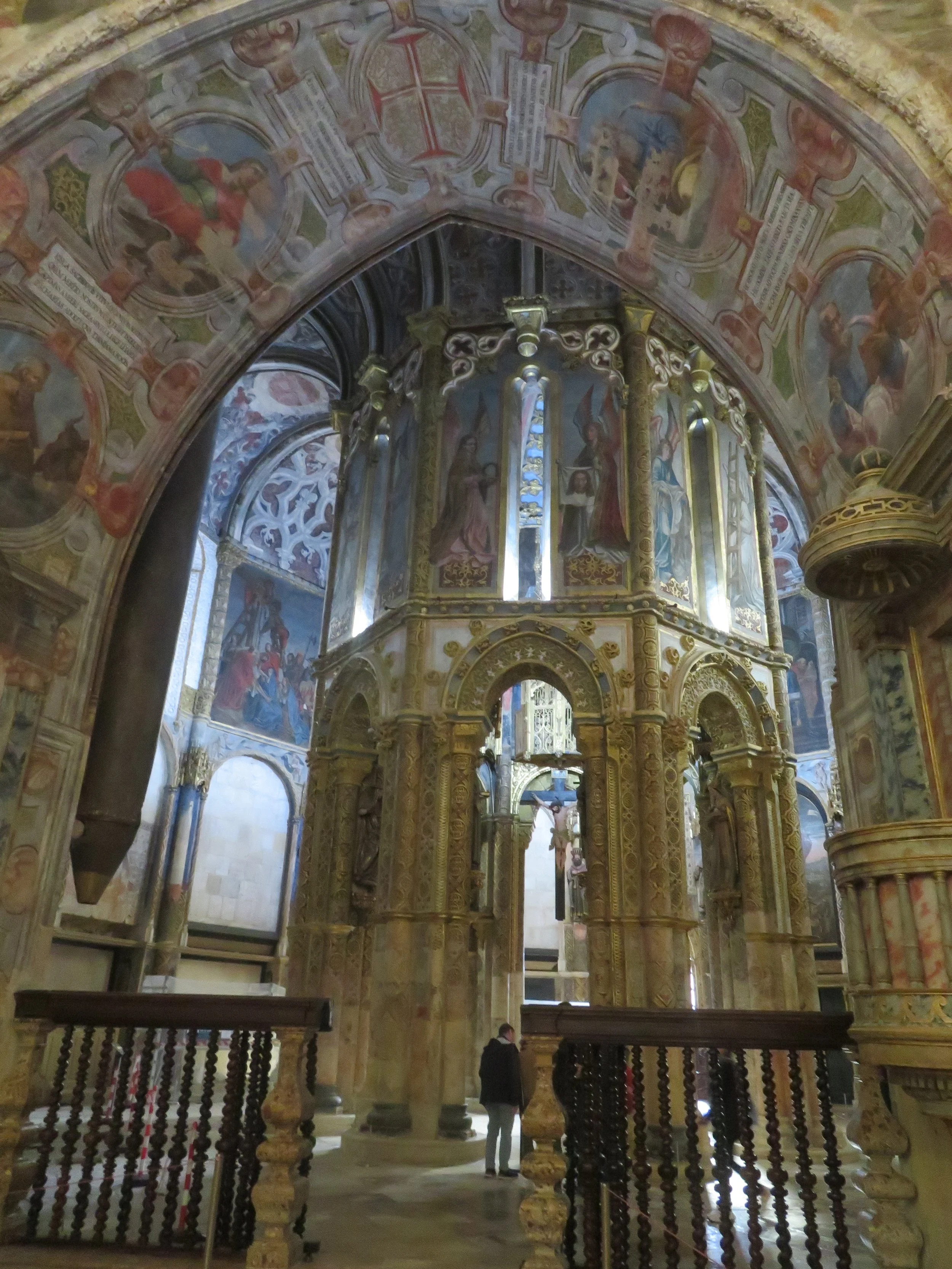
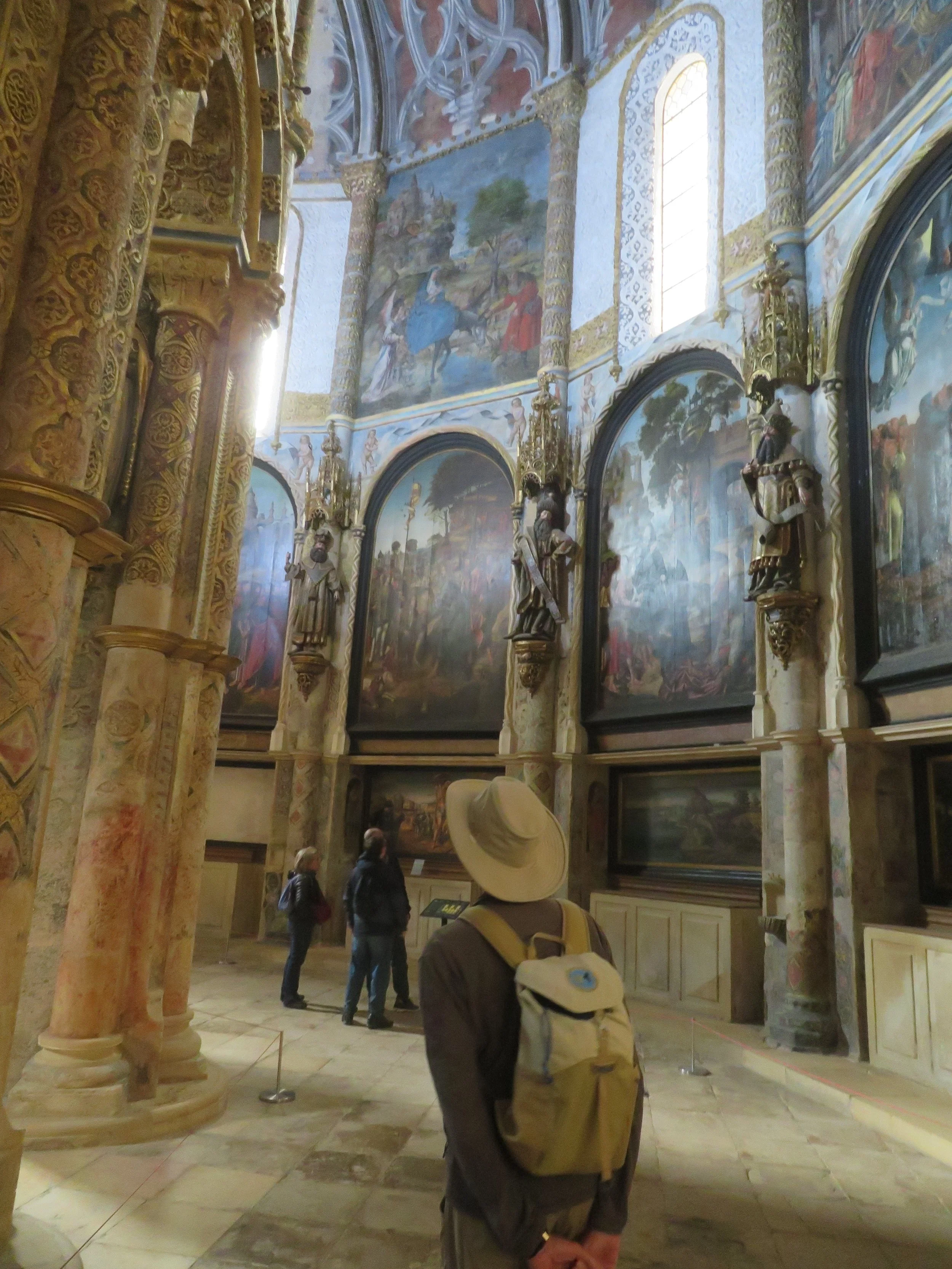
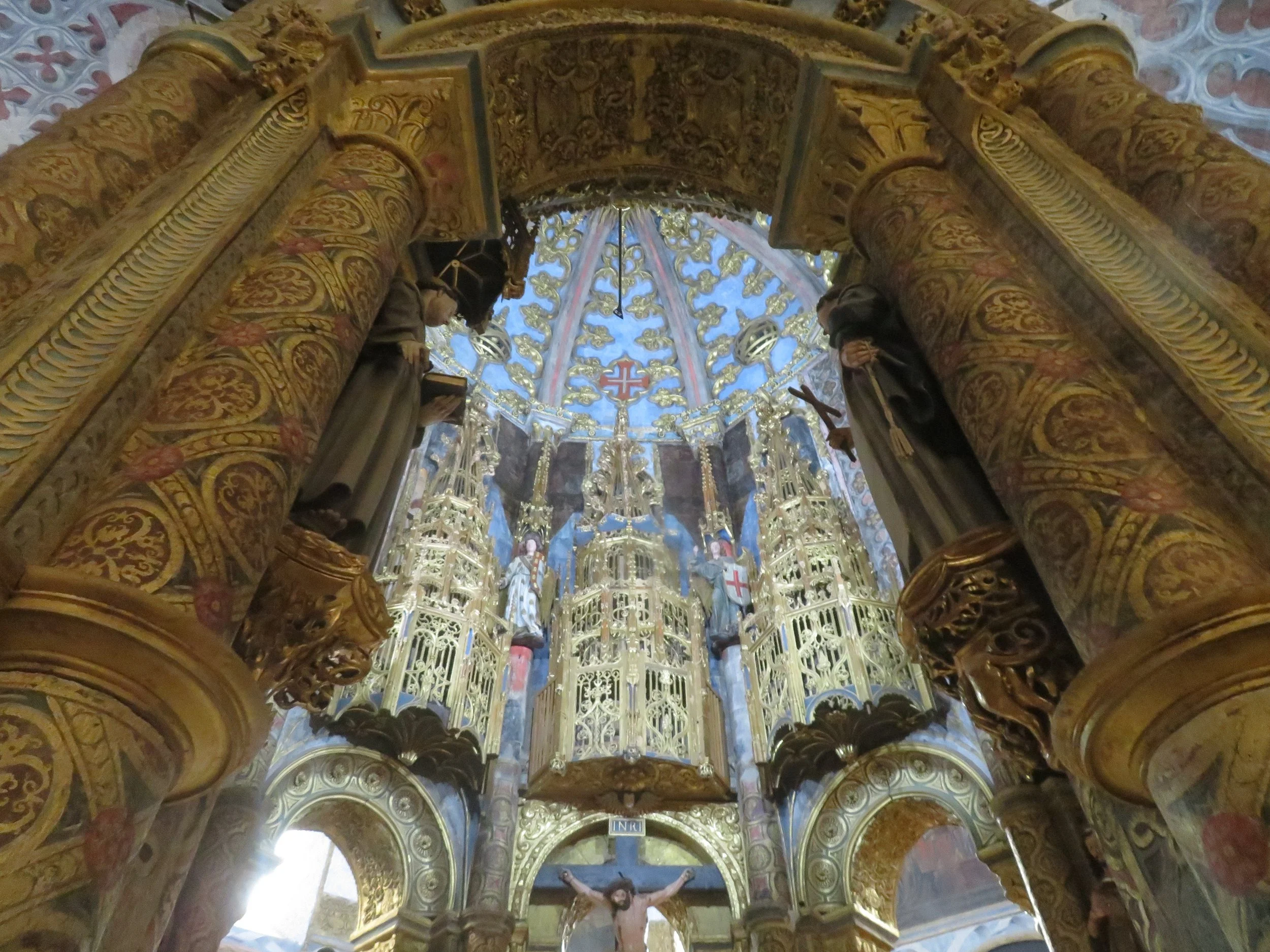
The Templar Order was outlawed by the Pope in 1319, and it morphed into the Order of Christ. Under the leadership of Prince Henry the Navigator, Grand Master of the Order in 1420, significant influence and wealth were used to support Portugal’s Age of Discoveries. Maritime symbolism is prevalent in much of the later additions to the Castle, especially in the Janelo do Capitulo (Chapter House Window).
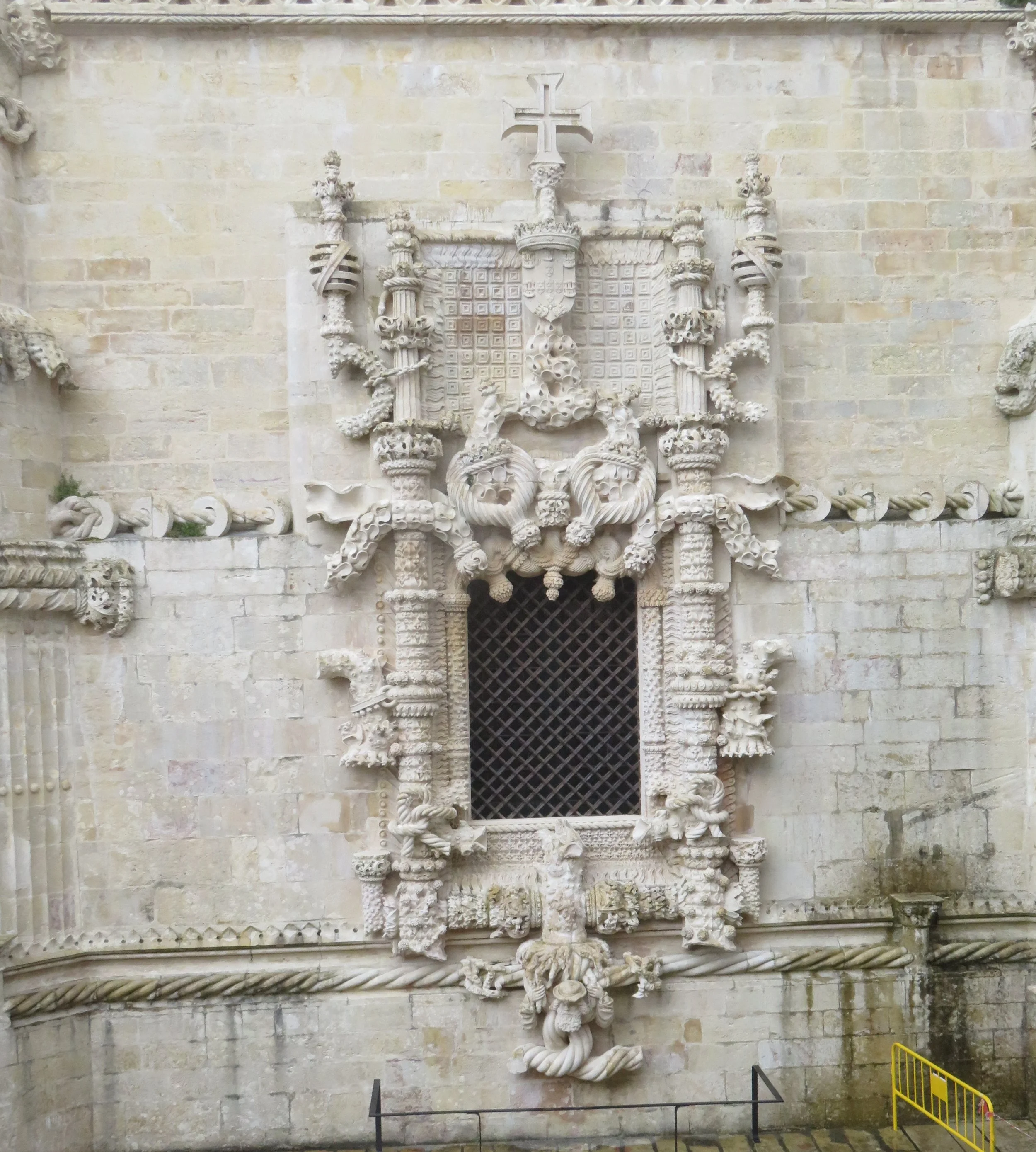
Ordered by King Manuel I and designed by Diogo de Arruda, the huge window is a masterpiece carved between 1510-1515. According to Lisbon-trip.com, “It rises about 12 metres high and is richly decorated with maritime and Templar symbols — including rope, coral, anchors, armillary spheres, a knight’s helmet, roots, and branches — all intricately woven.” It is considered one of the most elaborate pieces of the period. Take a look at some of the intricate details.
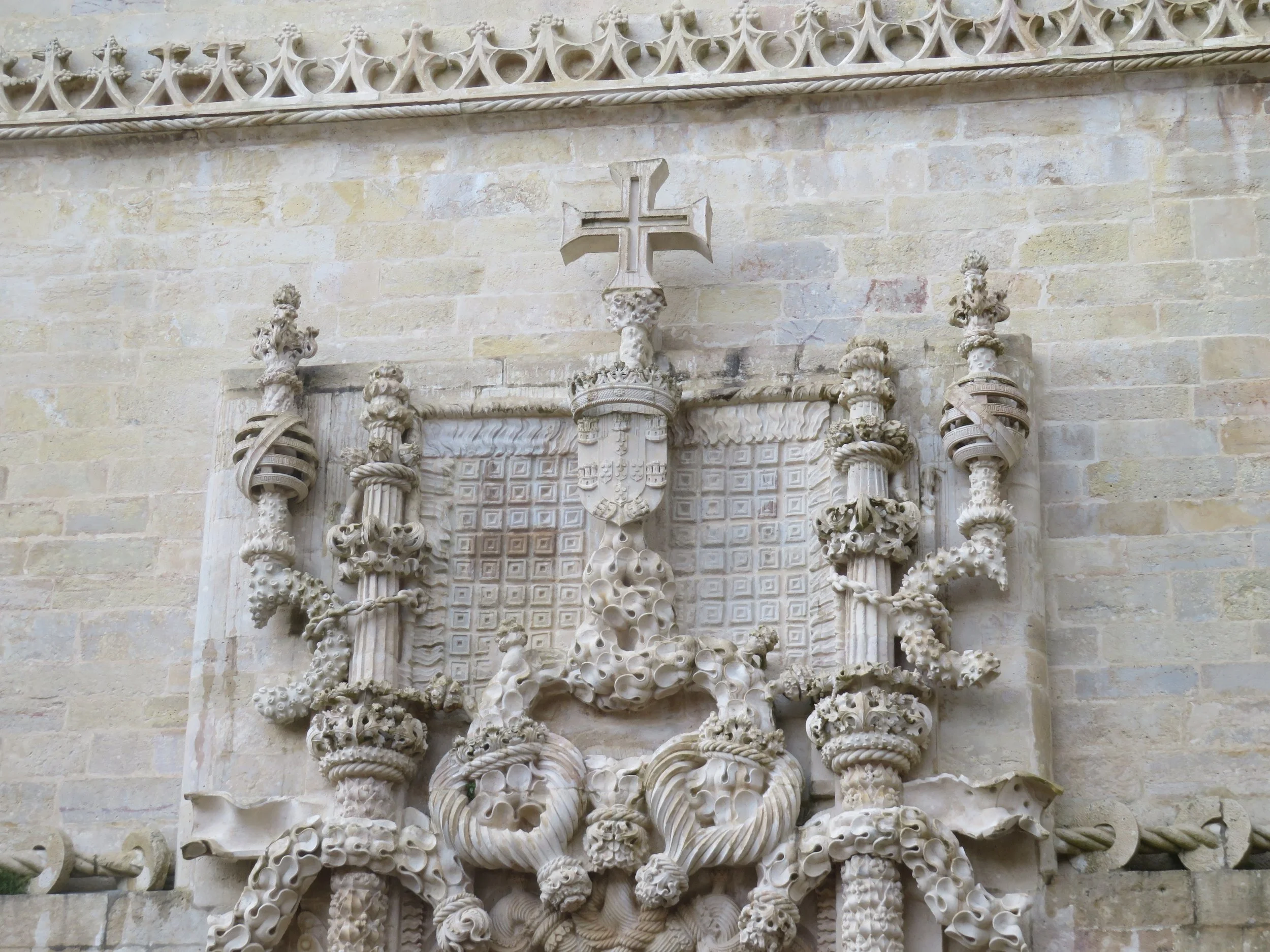
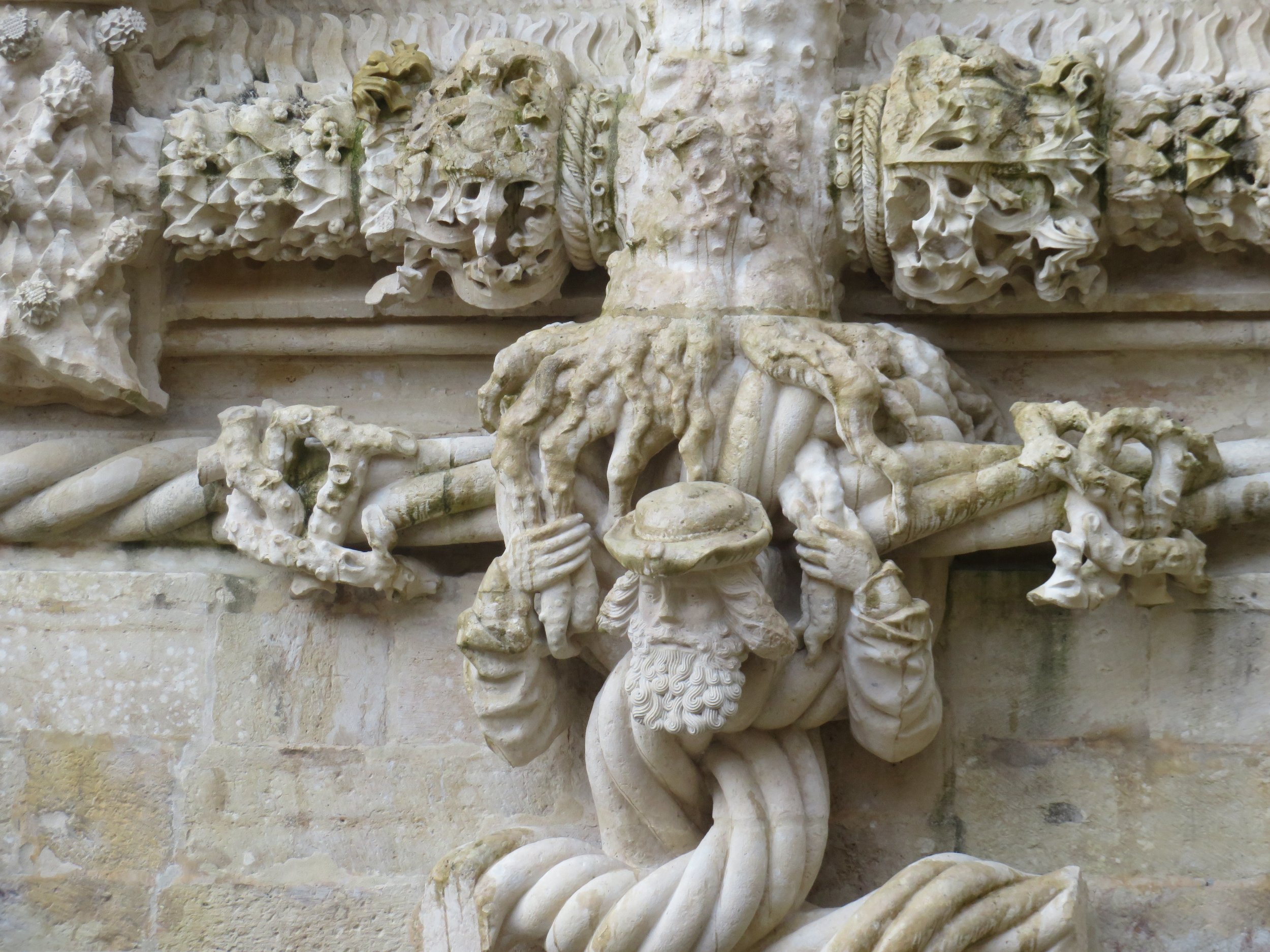
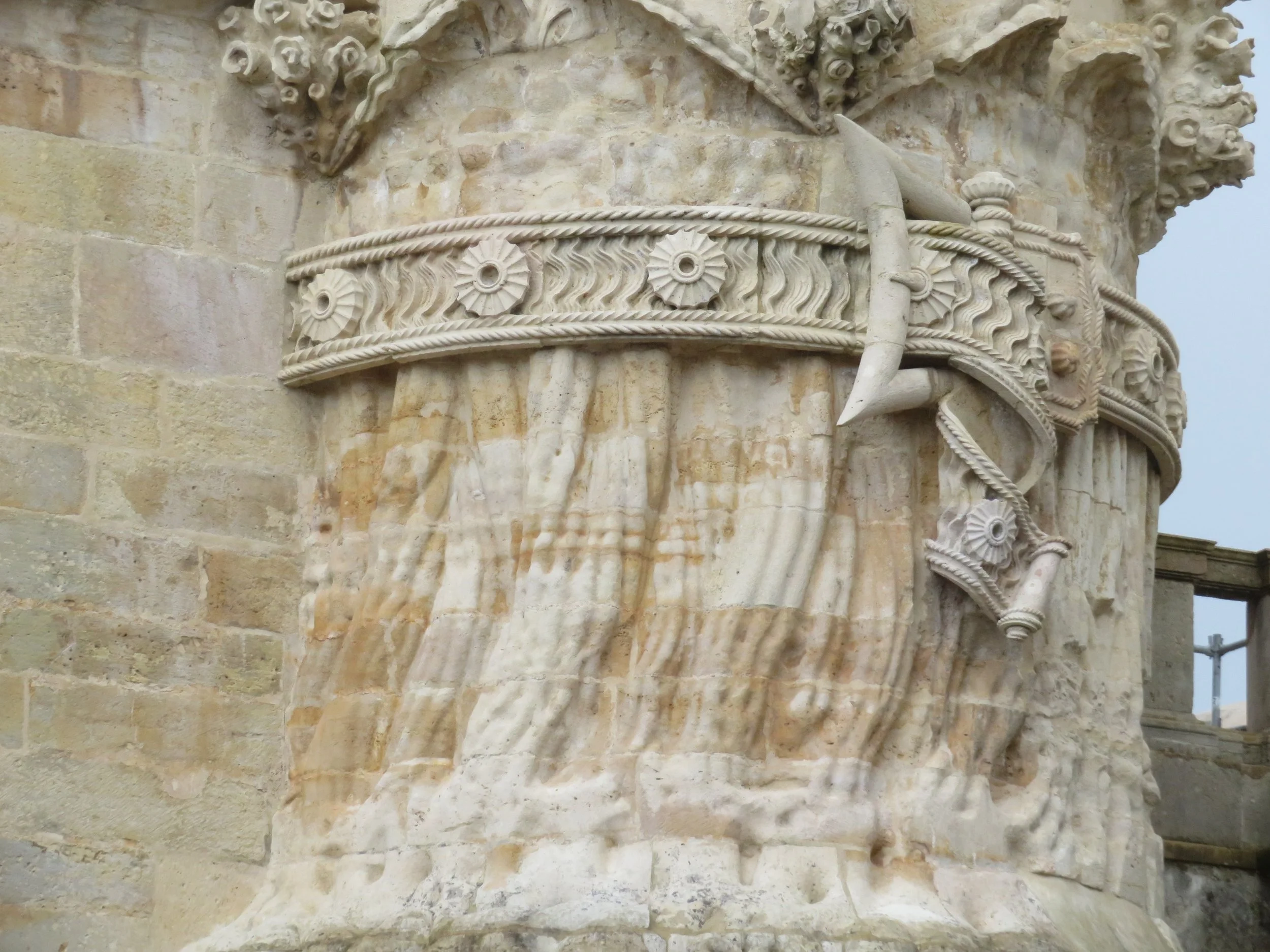
We wandered from room to room and cloister to cloister. There are eight cloisters, i.e. covered walkways that enclose a courtyard offering places for contemplation and solitude.
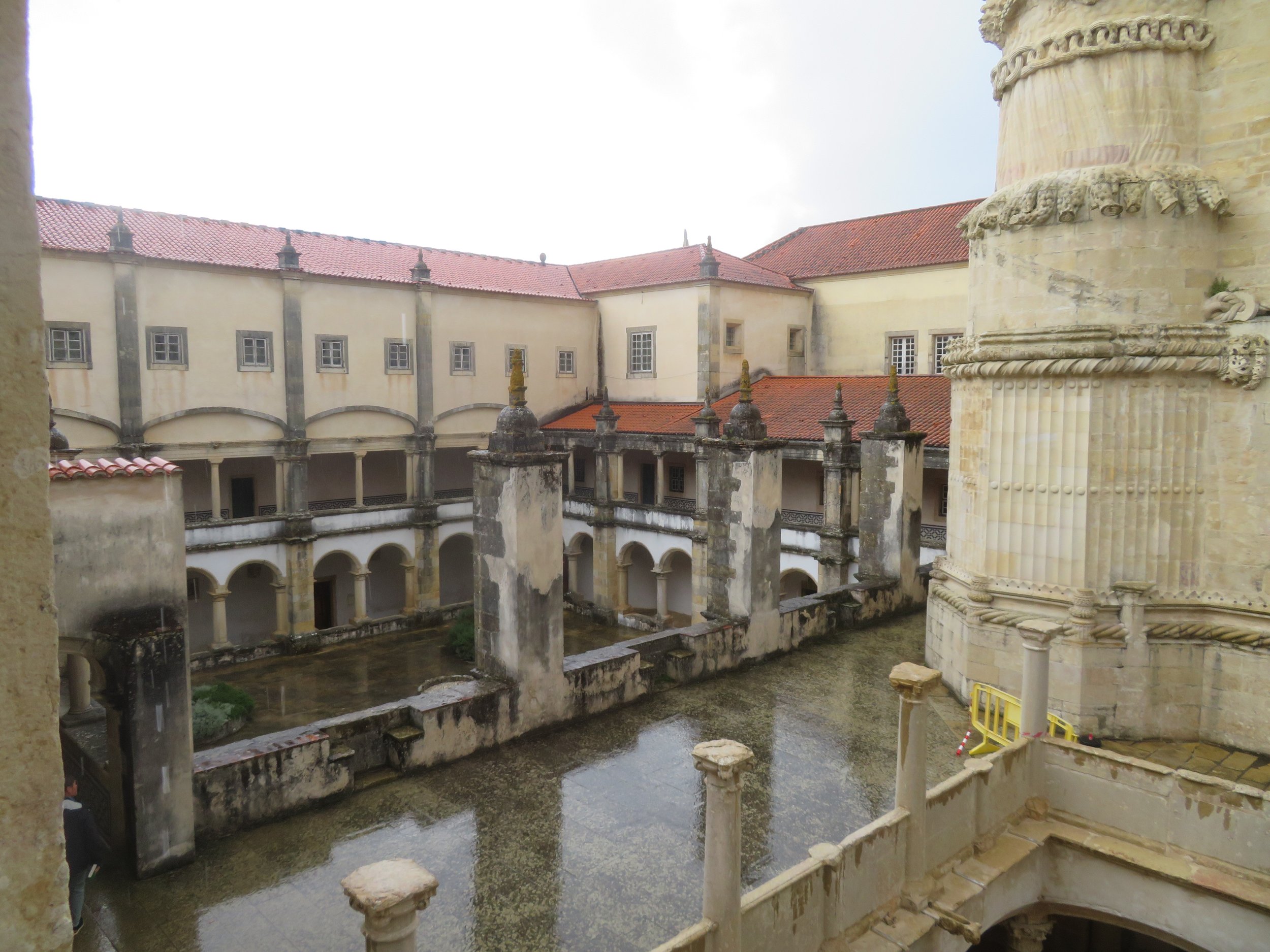
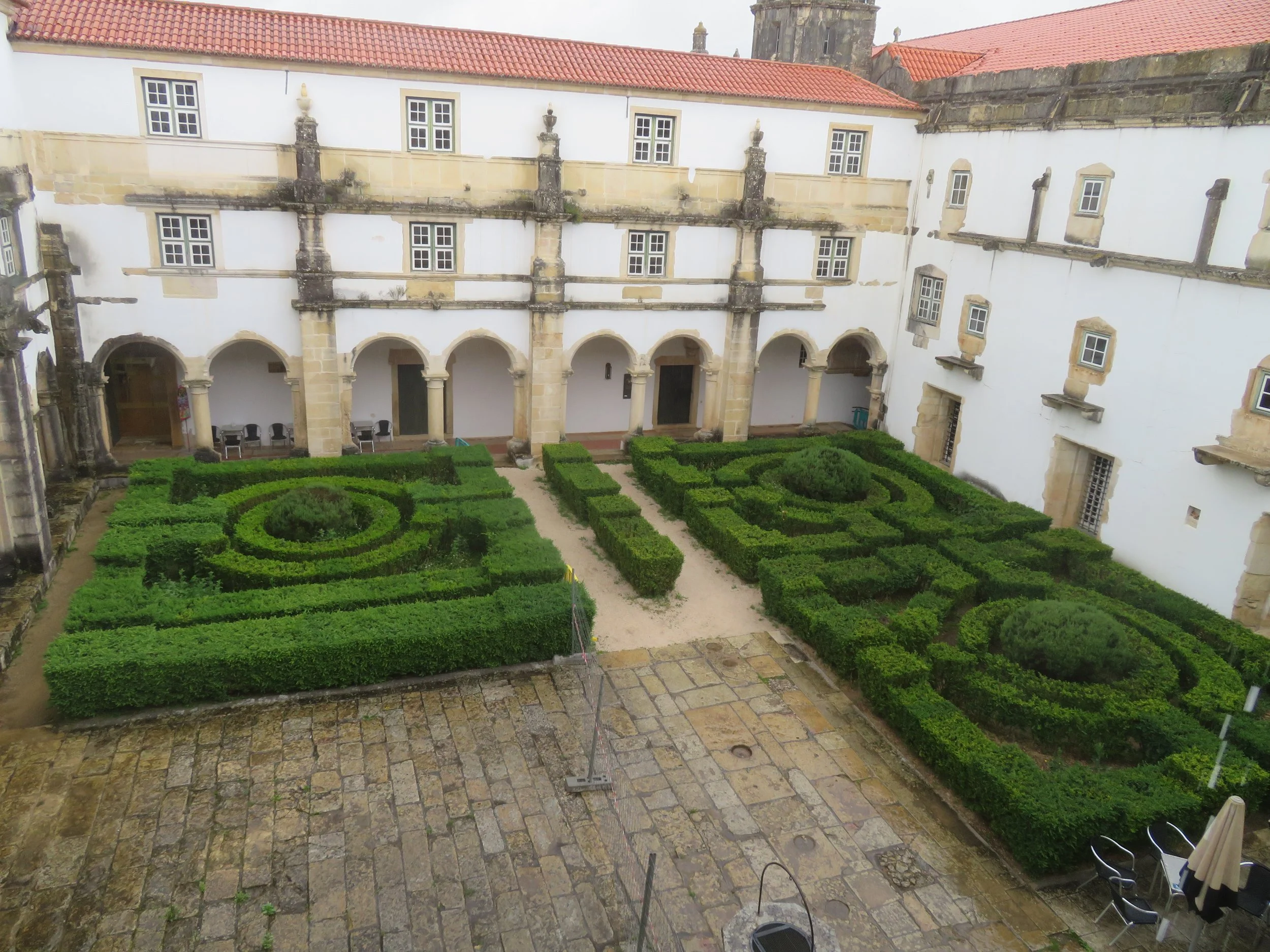
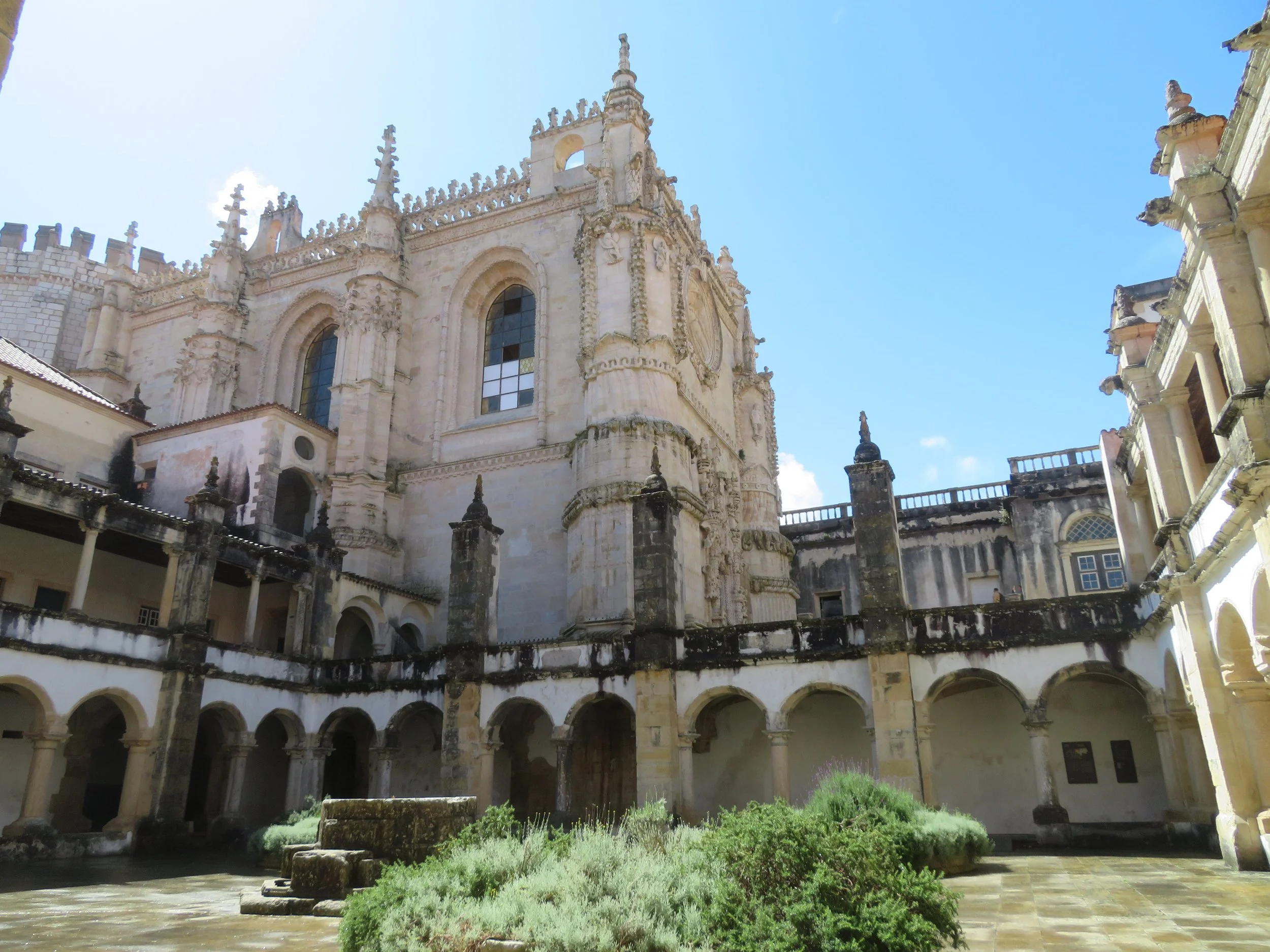
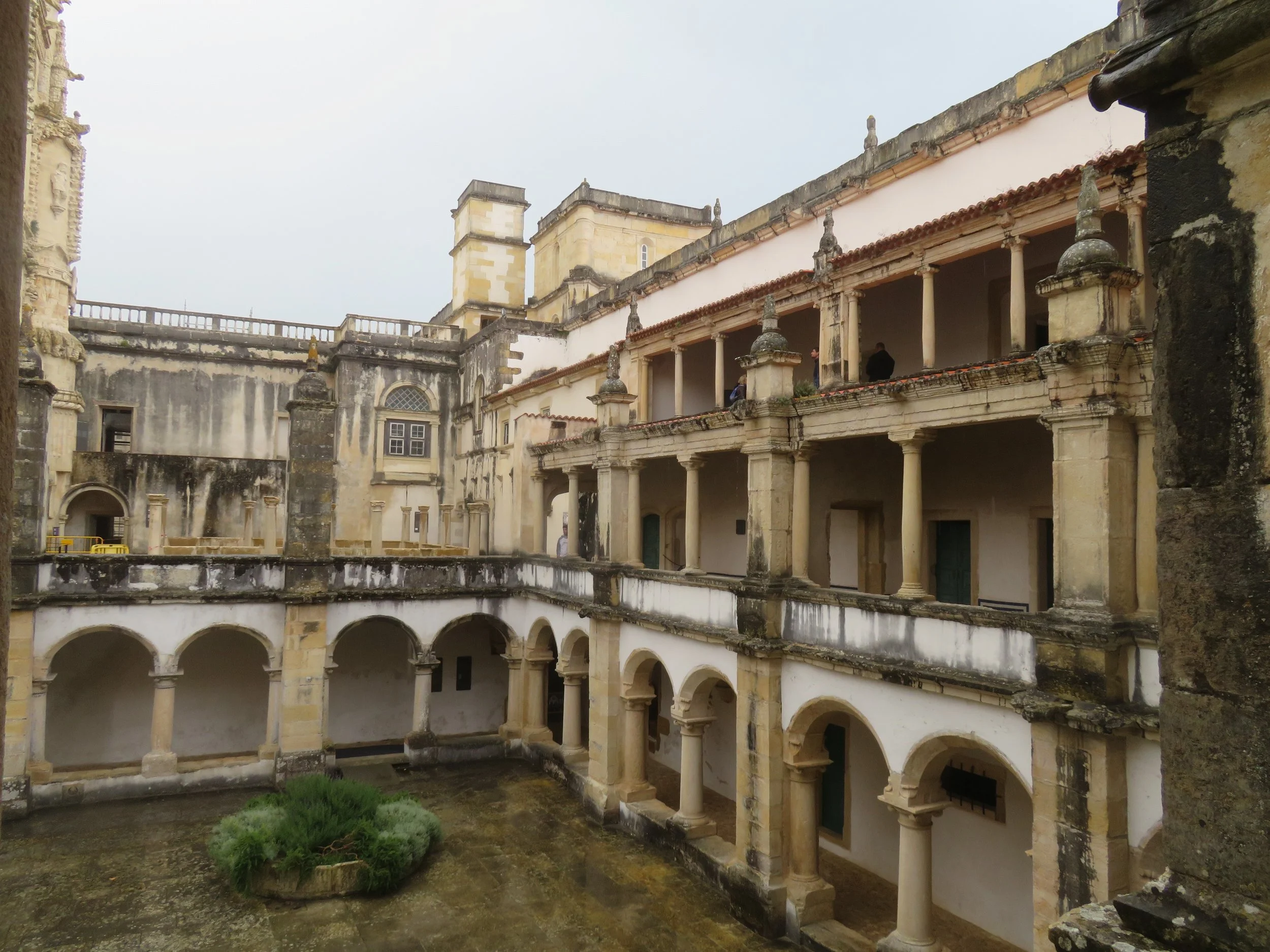
We poked our heads out of windows for the best views and photo opps, peered into the courtyards, and tried to absorb and appreciate the details and majesty of the place and the complexity of the work performed nine centuries ago.
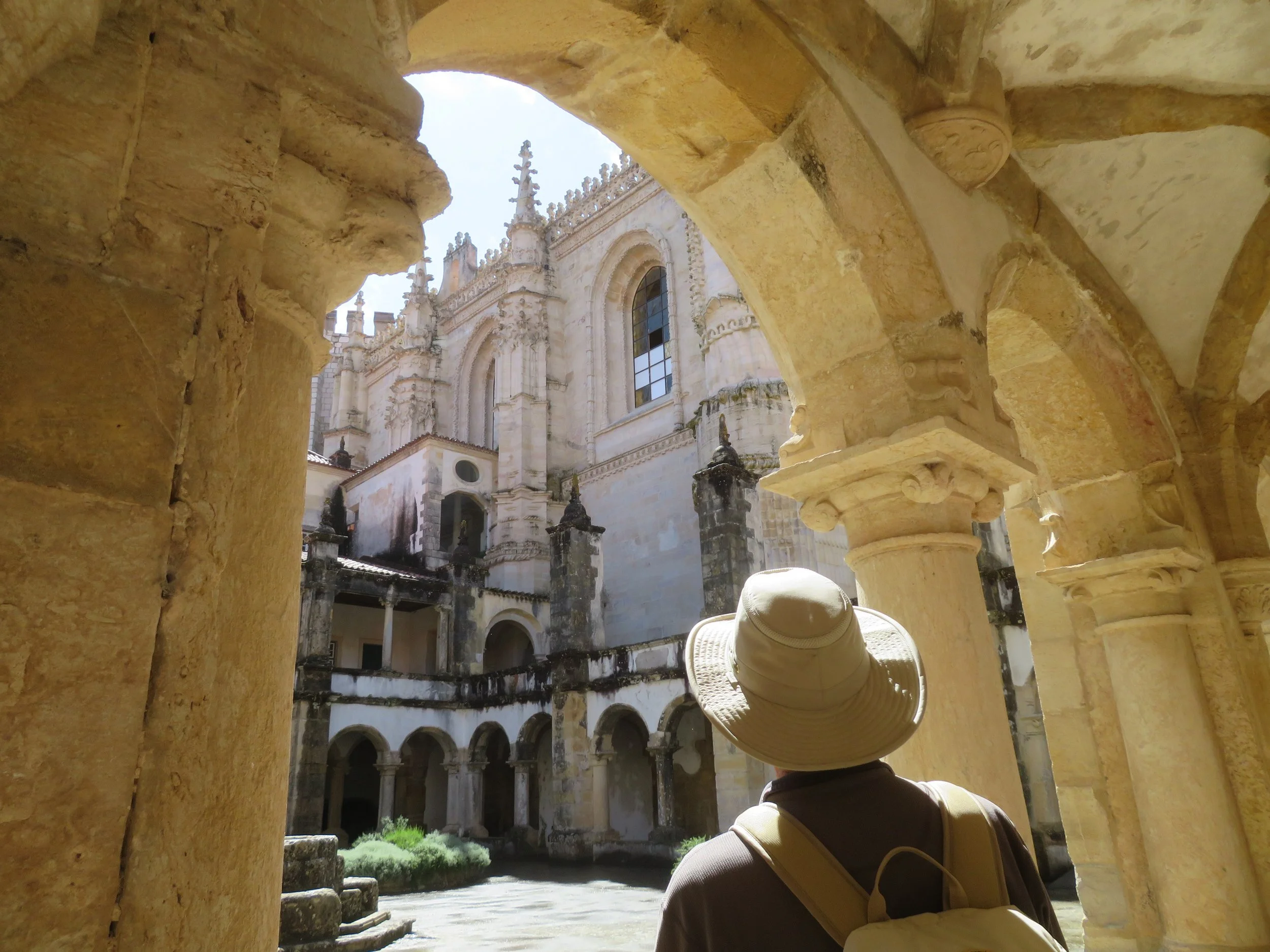
Intermittent showers alternated with bright sunshine. The showers allowed us to observe the gargoyles on the roof eaves, doing their jobs as downspouts. We’ve seen lots of gargoyles on cathedrals and churches. Ever wonder why? According to newspire.net, they were “designed to ward off evil spirits and remind the faithful of the perils of sin. Their grotesque and fearsome appearances served to illustrate the battle between good and evil, making them a visual representation of moral lessons for the largely illiterate population of the time.”
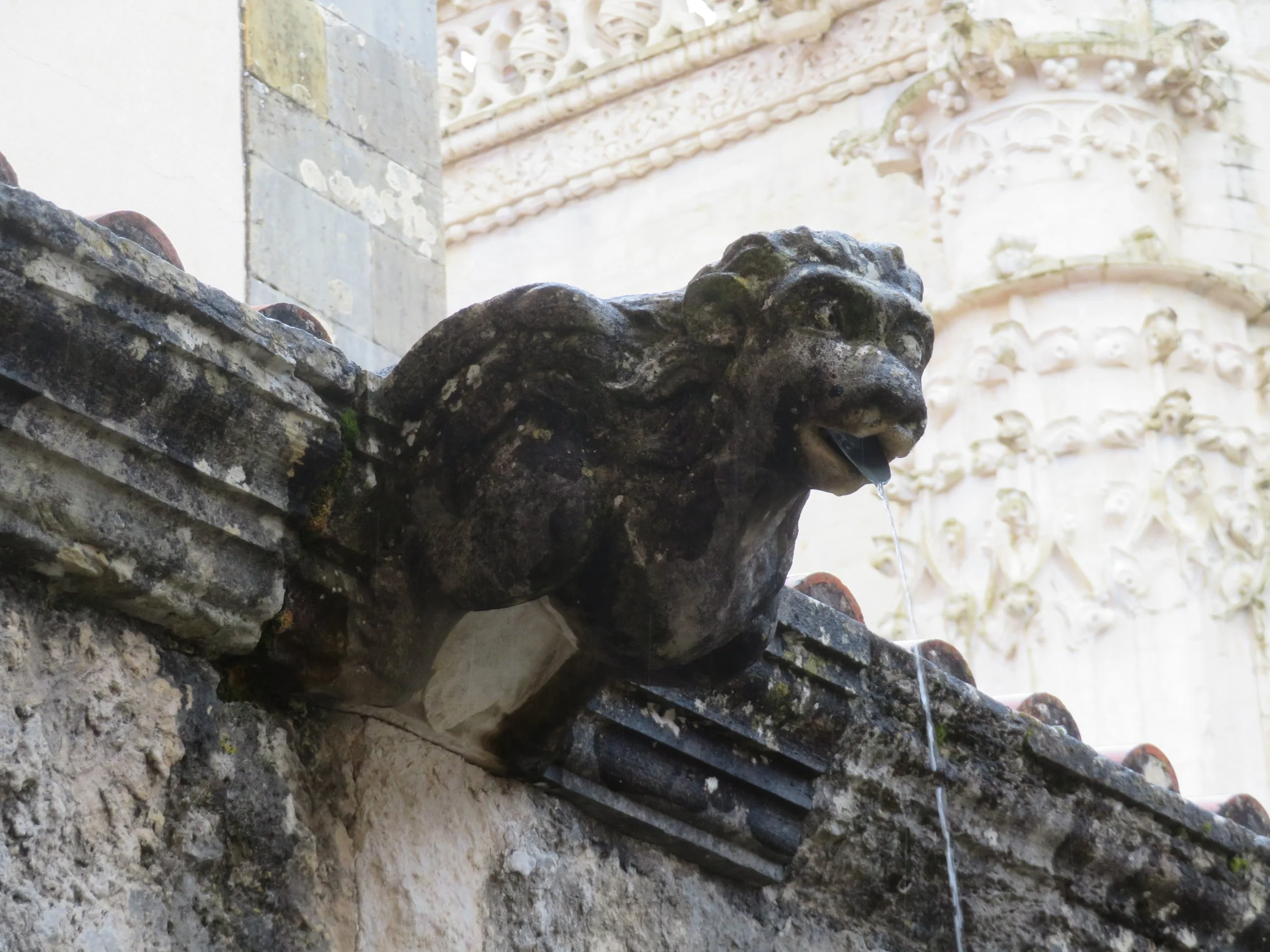
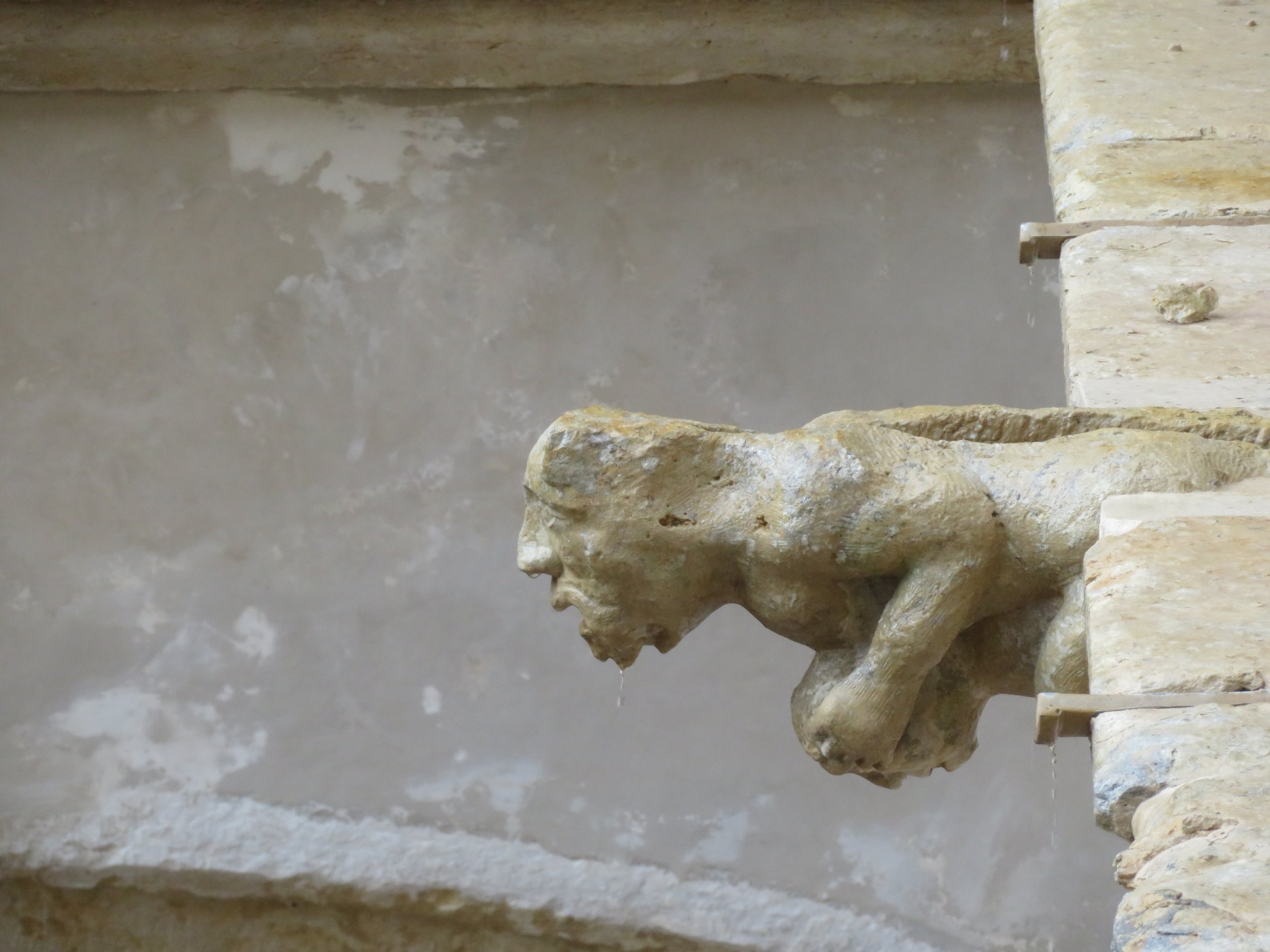
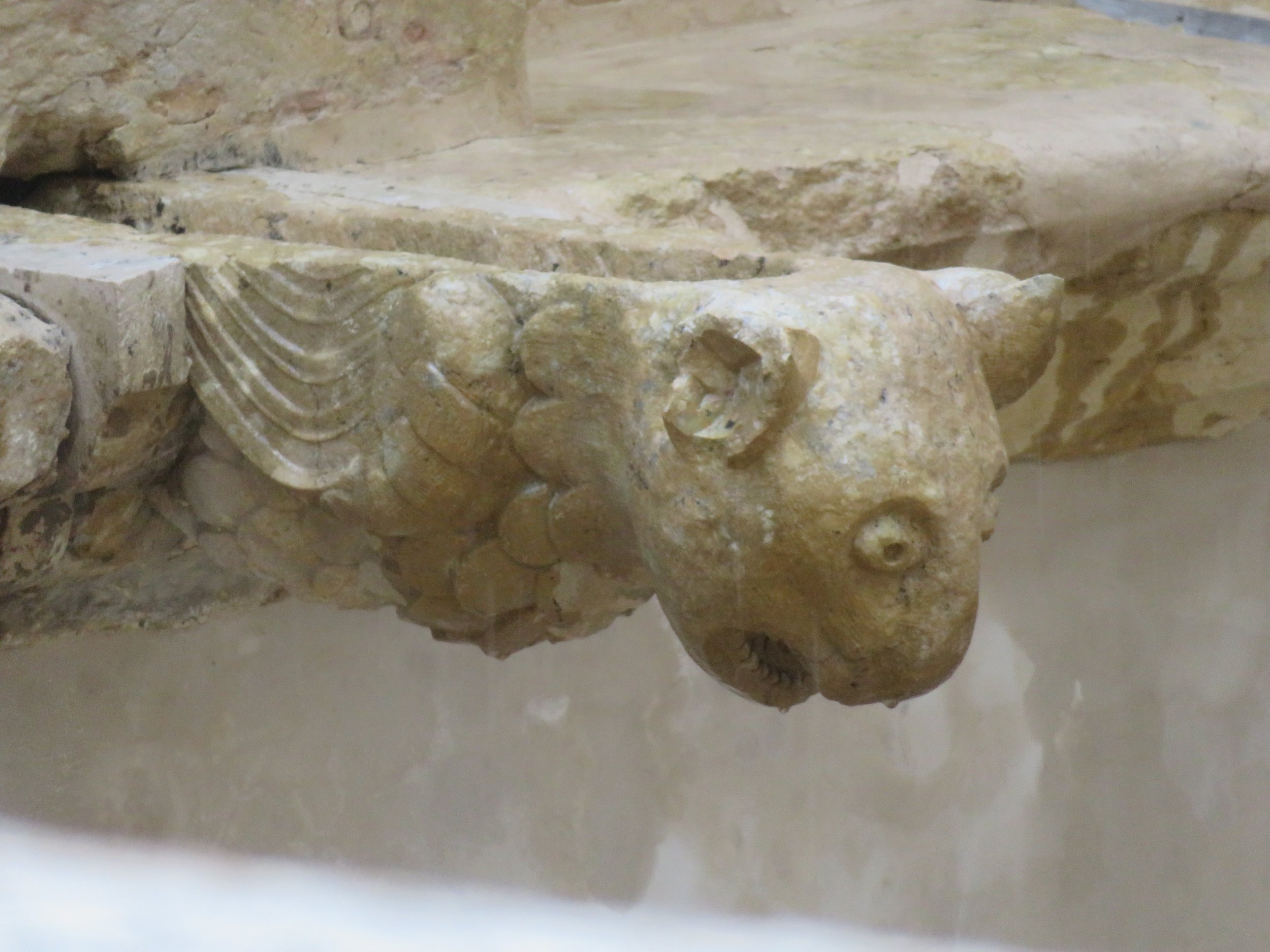
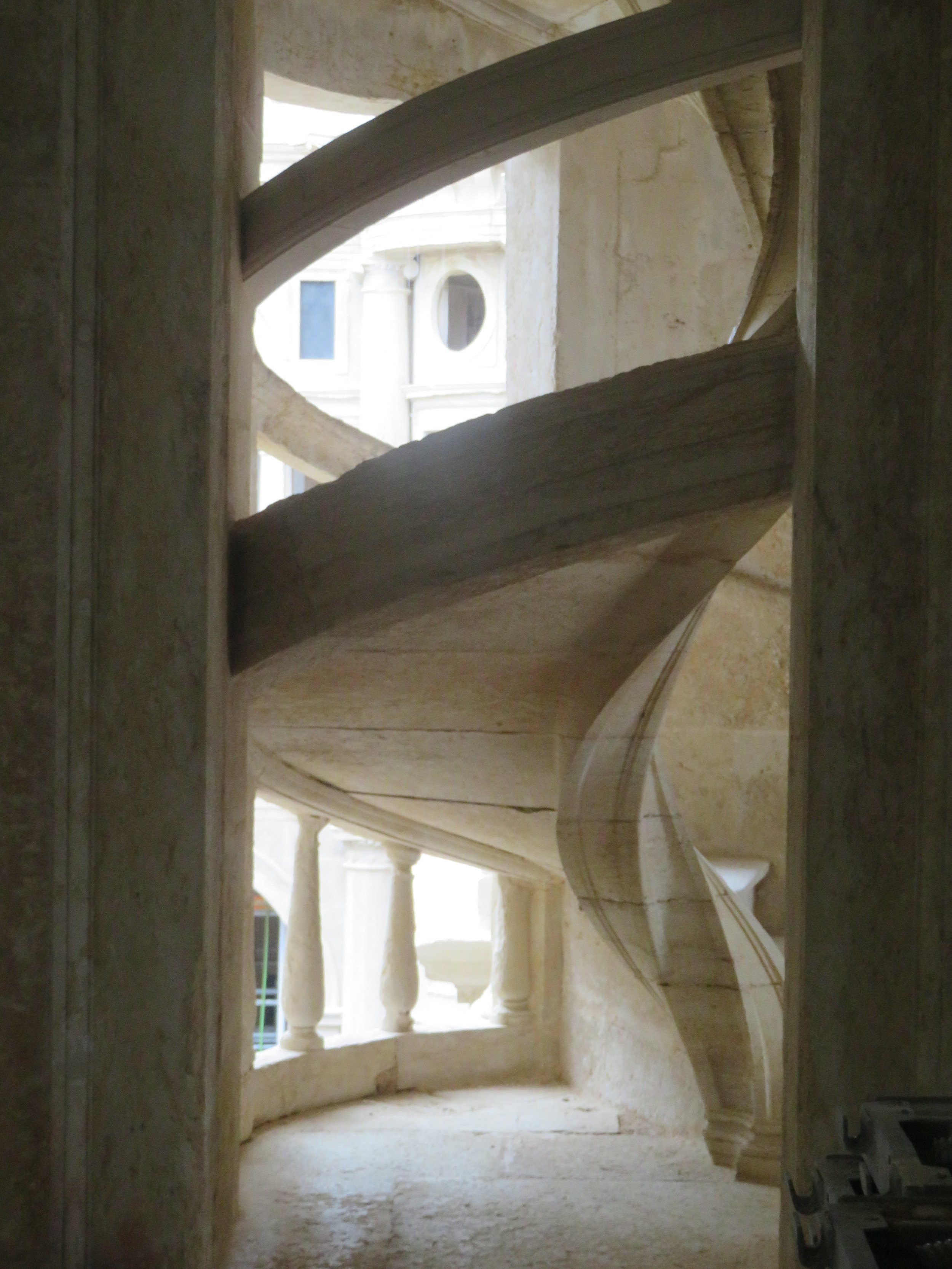
We climbed centuries-old, narrow, footstep-worn spiral staircases to discover something new at each turn. The experience was amazing, and certainly this blog does not do justice to what we saw. We spent three hours. We could have easily spent days.
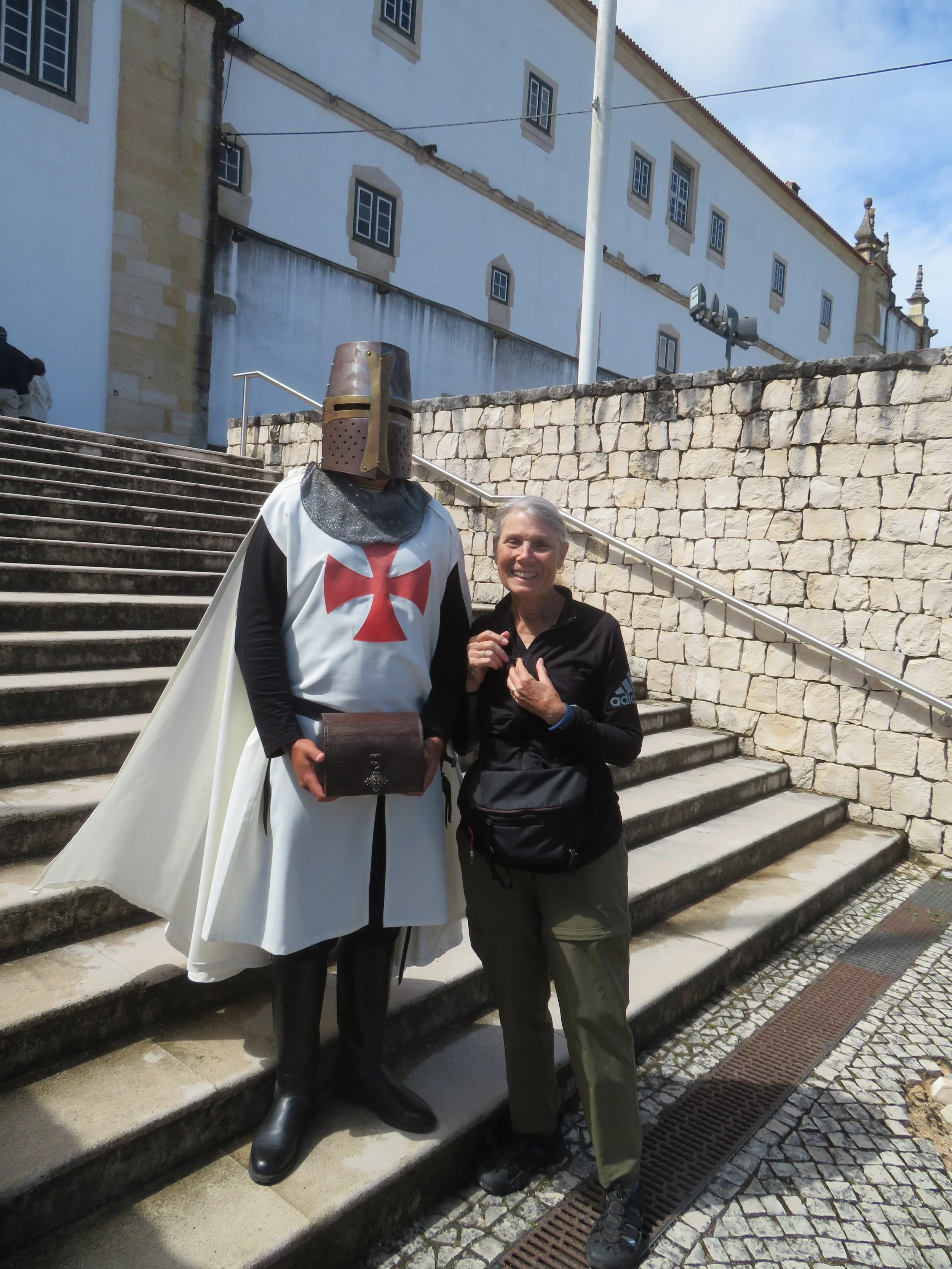
More buses arrived, disgorging more and more tour groups. It was time to leave. But we did have the opportunity to meet a Knight Templar before we departed. I’m pretty sure he was smiling.
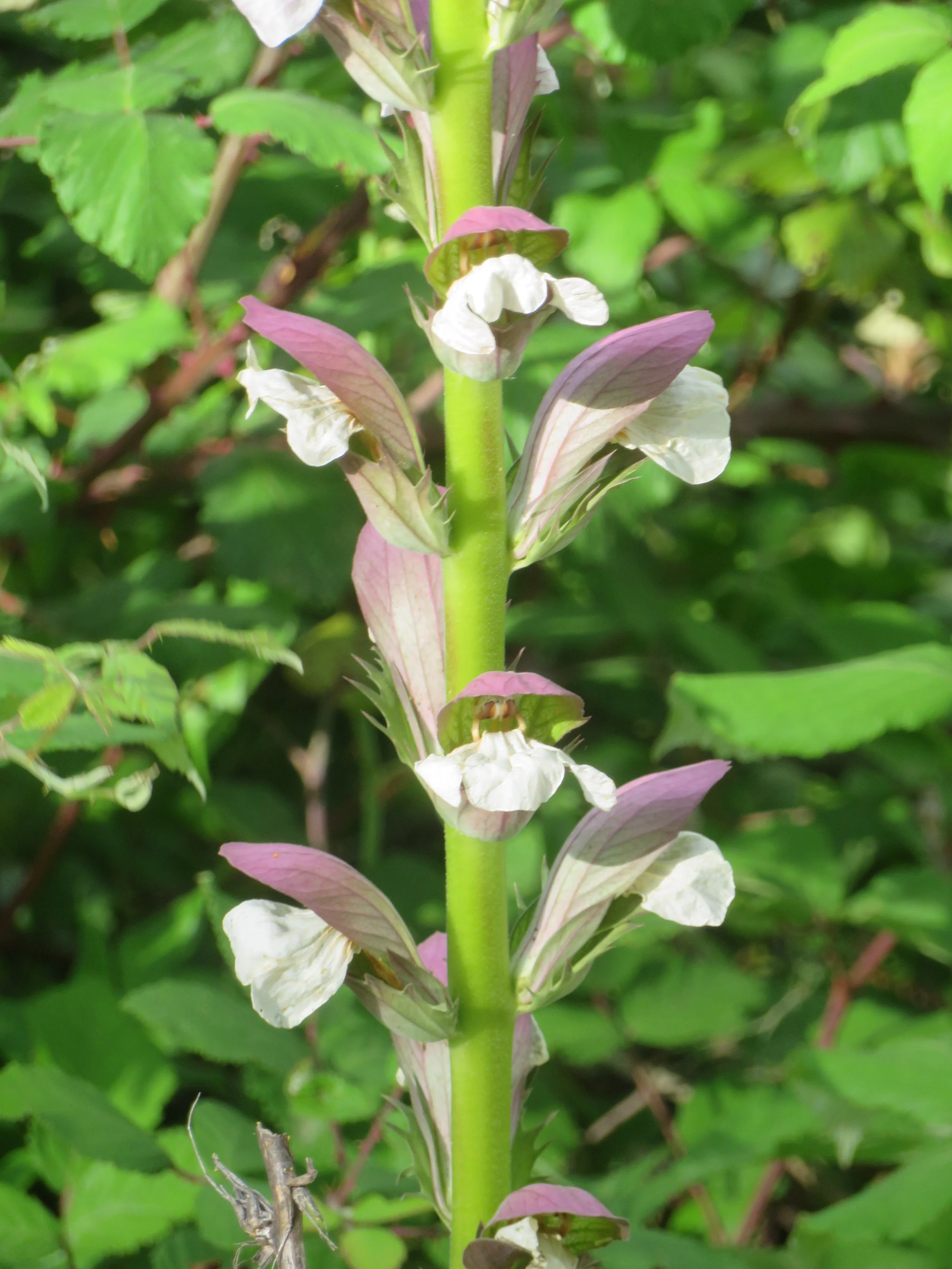
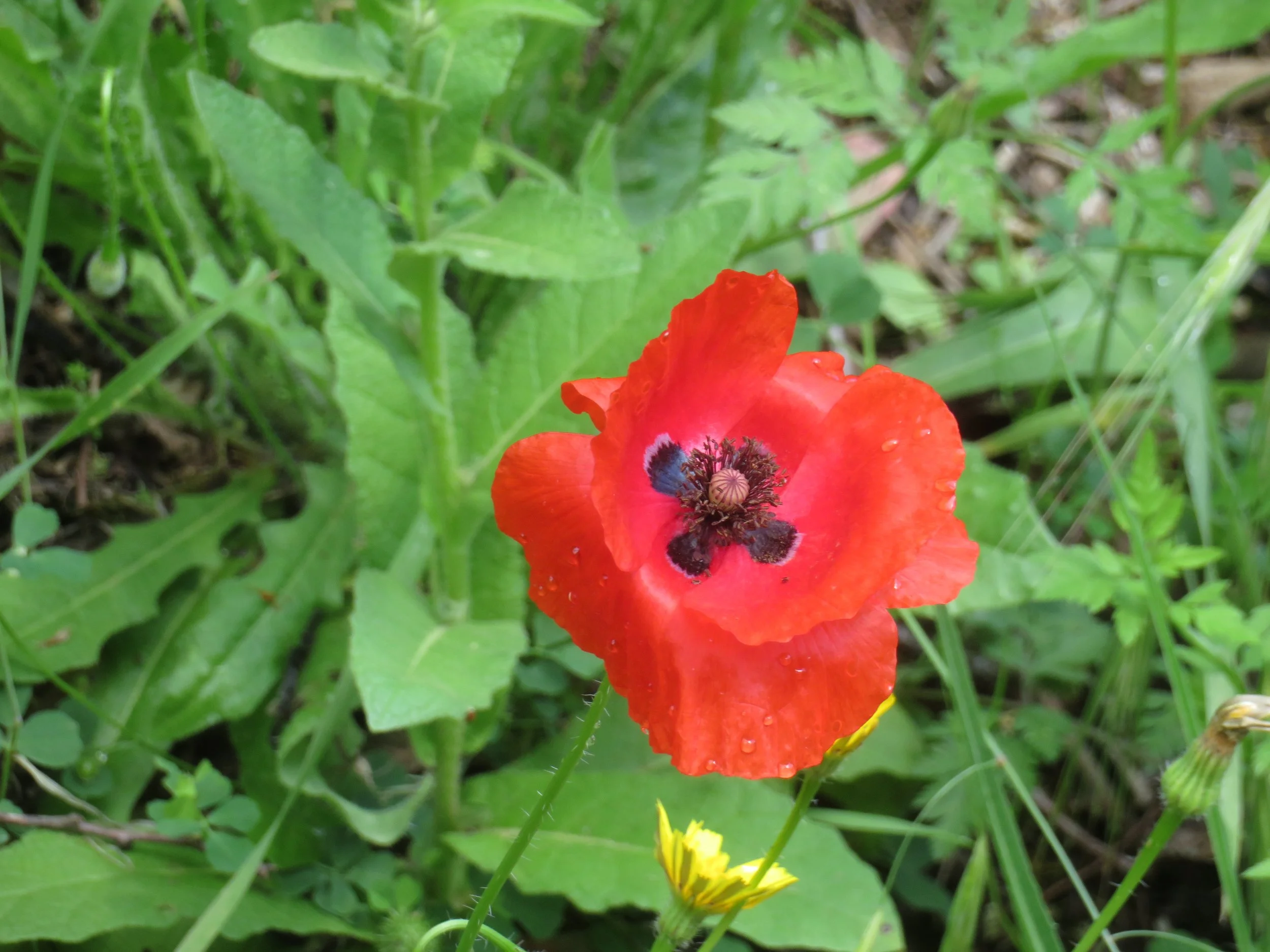
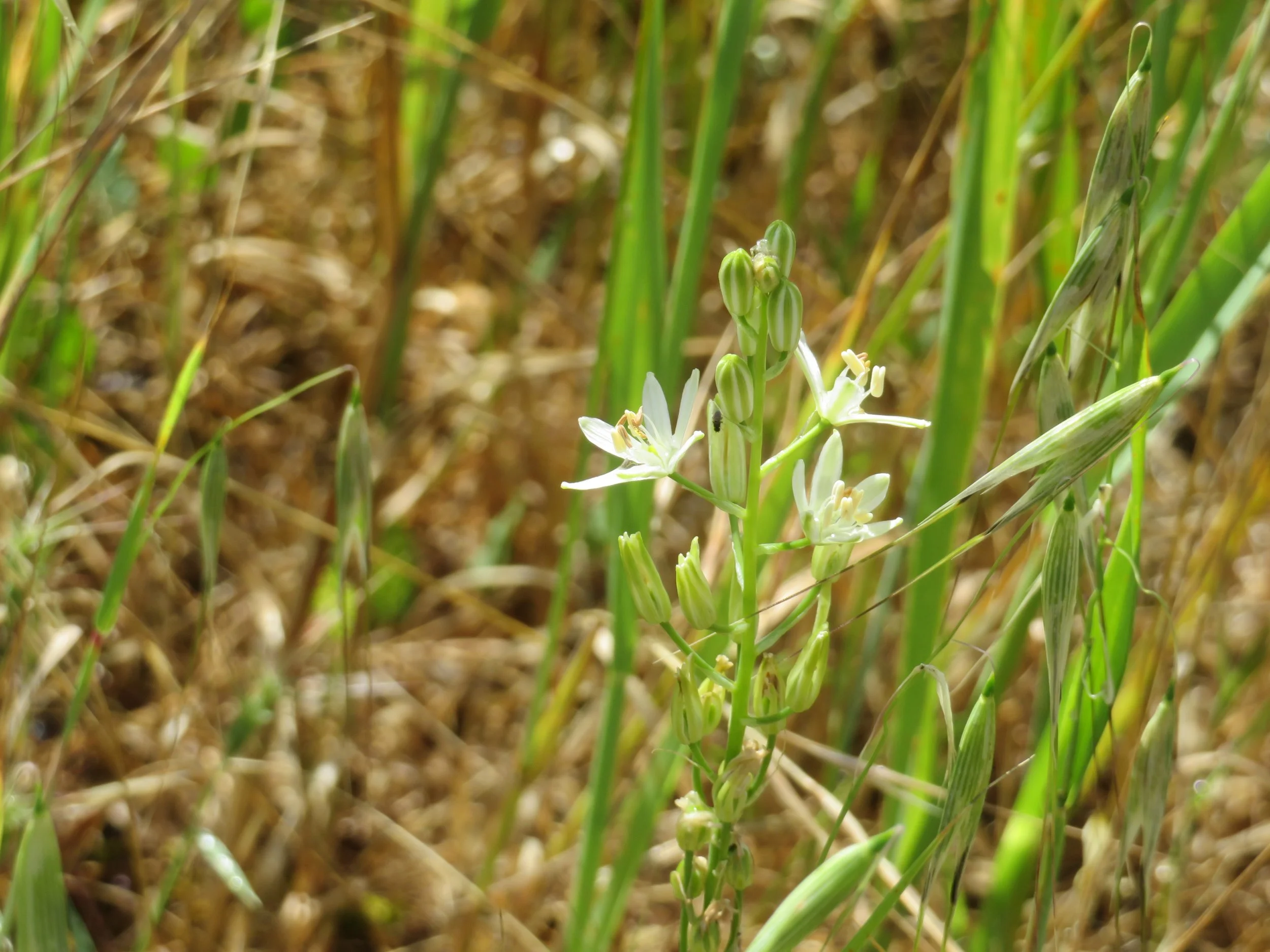
On our downhill return trip to Tomar, we enjoyed a wide array of wildflowers in bloom along the roadside and encountered one very strange insect. And, yes, iNaturalist’s Seek free app to identify plants, animals, insects, etc., works in Europe!
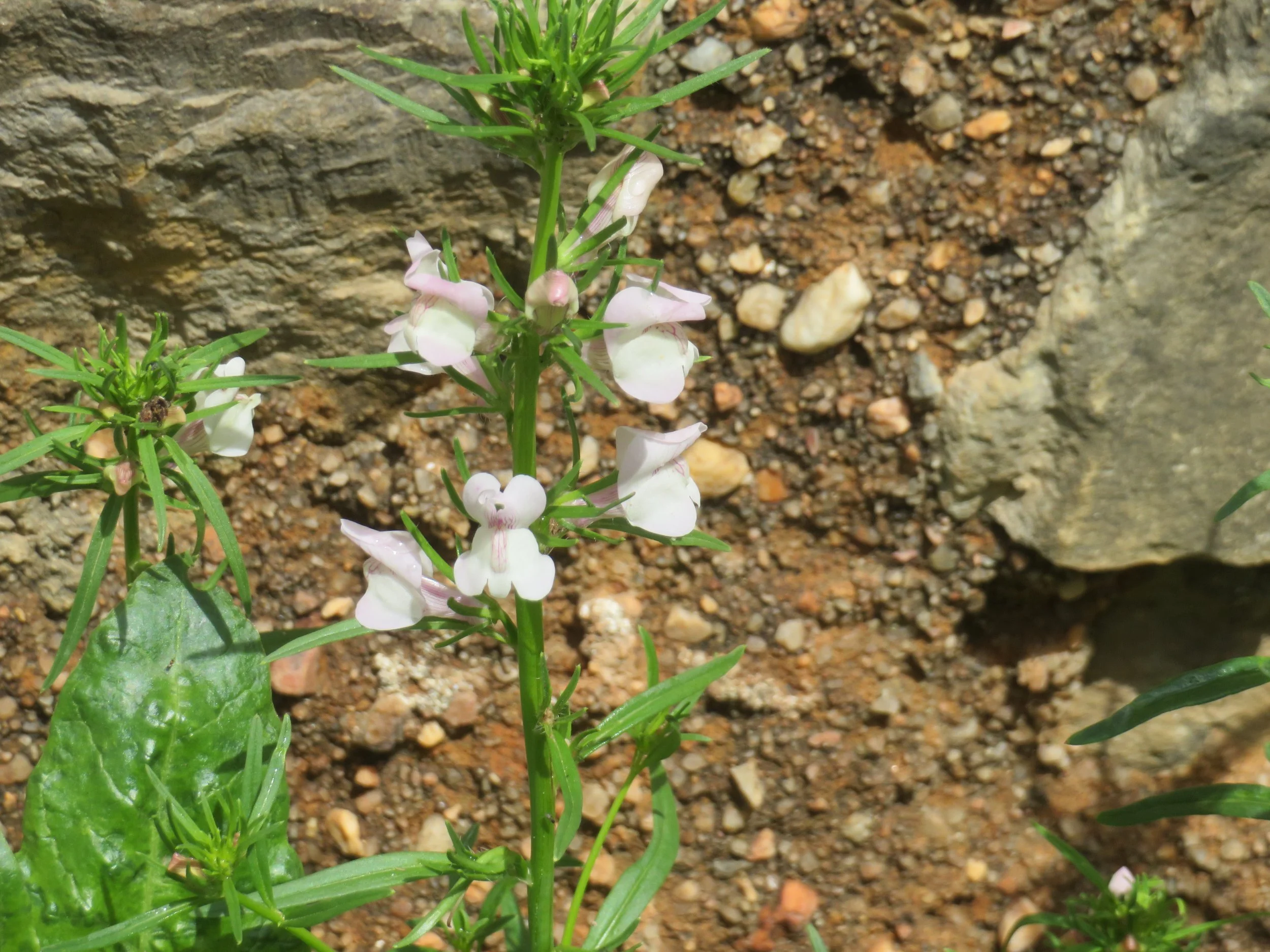
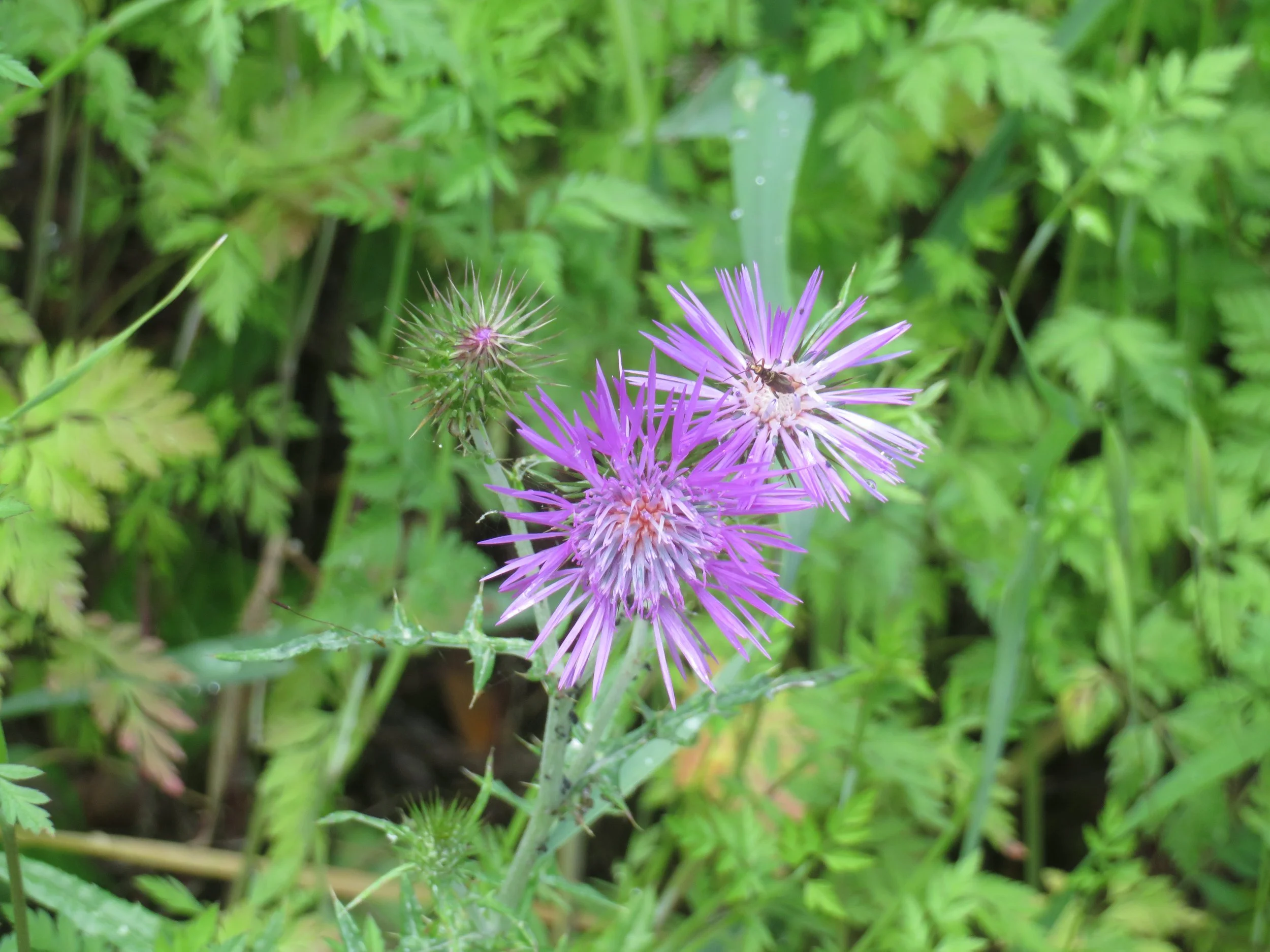
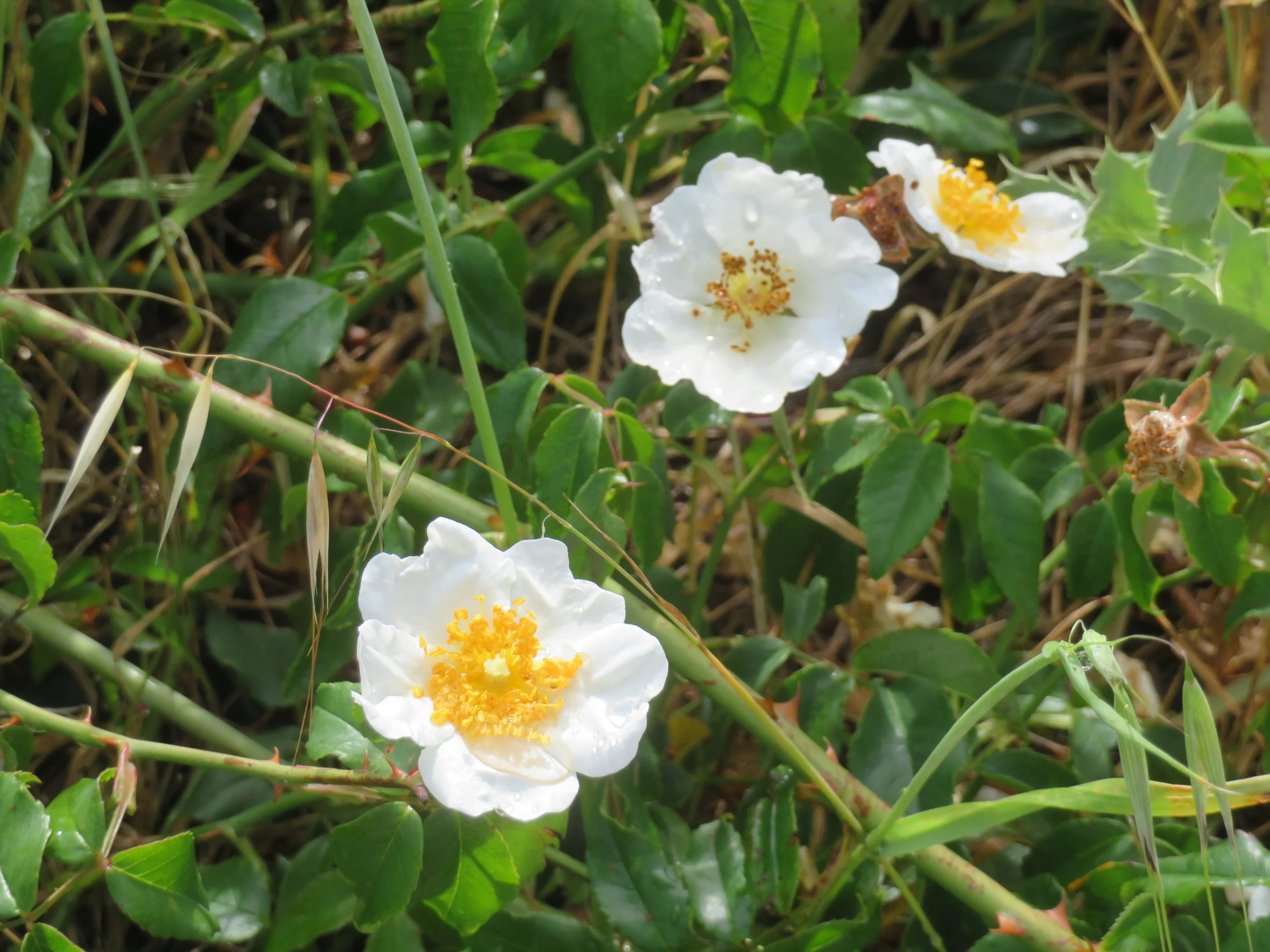
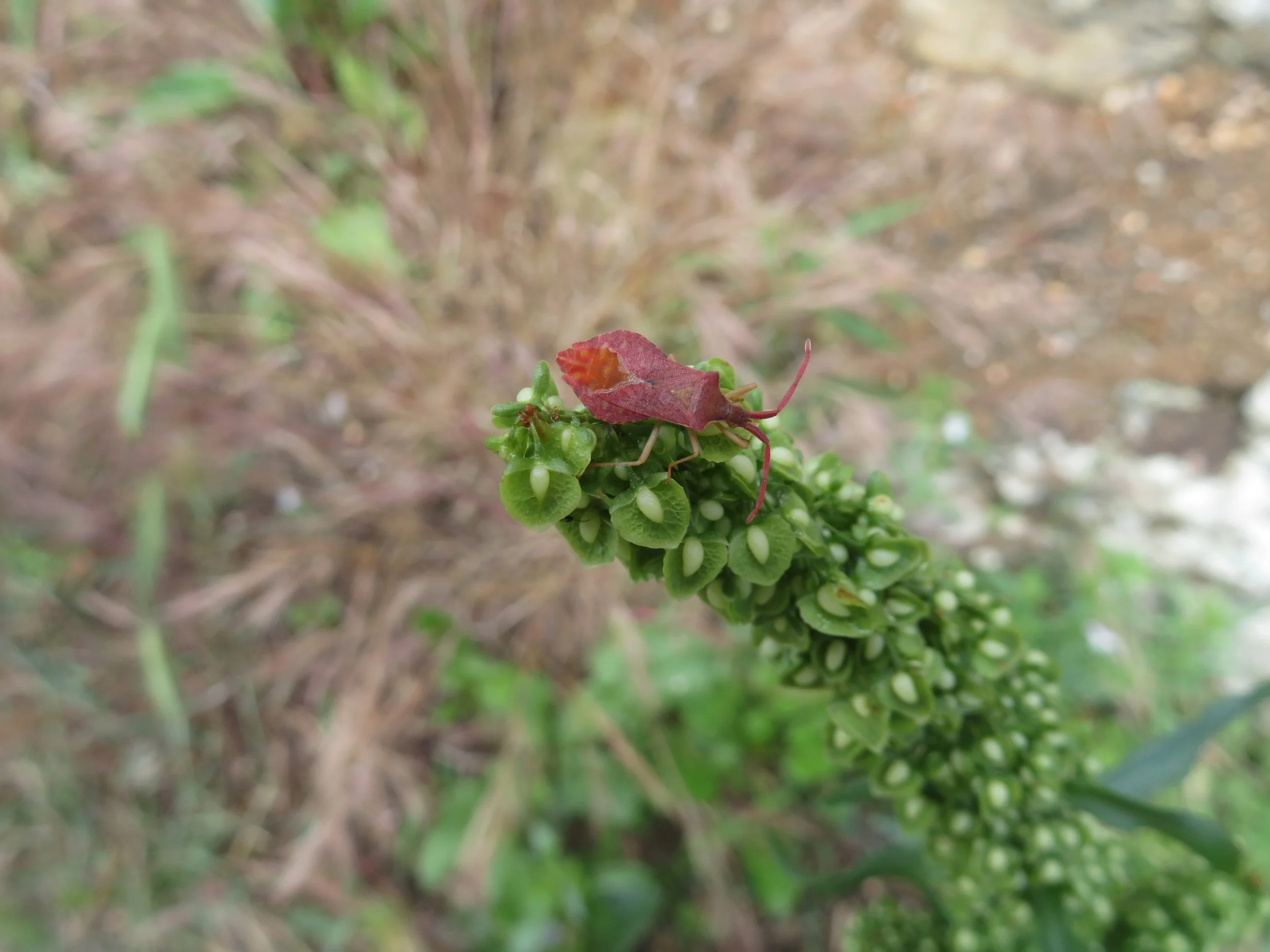
Leather bug on curled dock
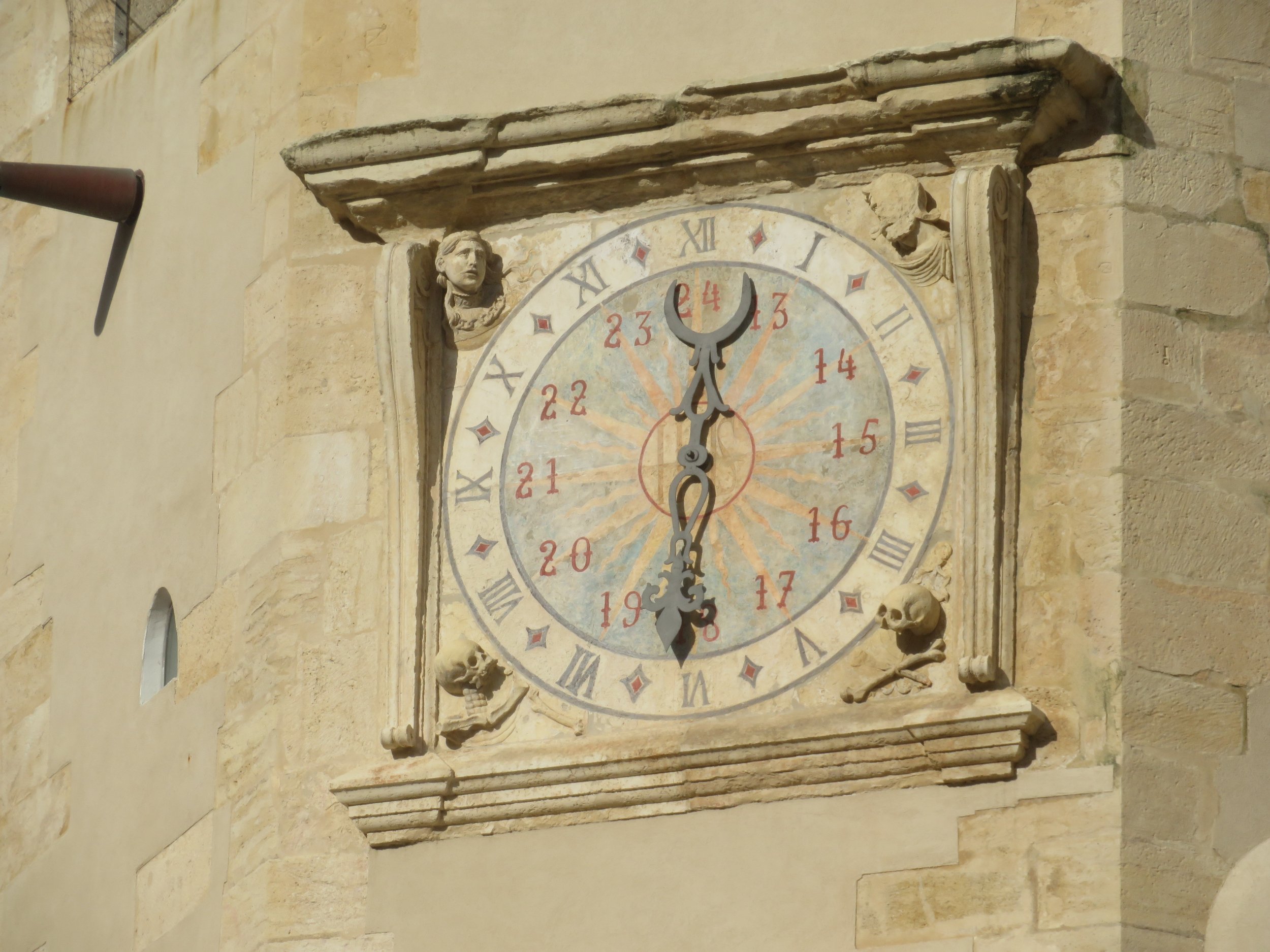
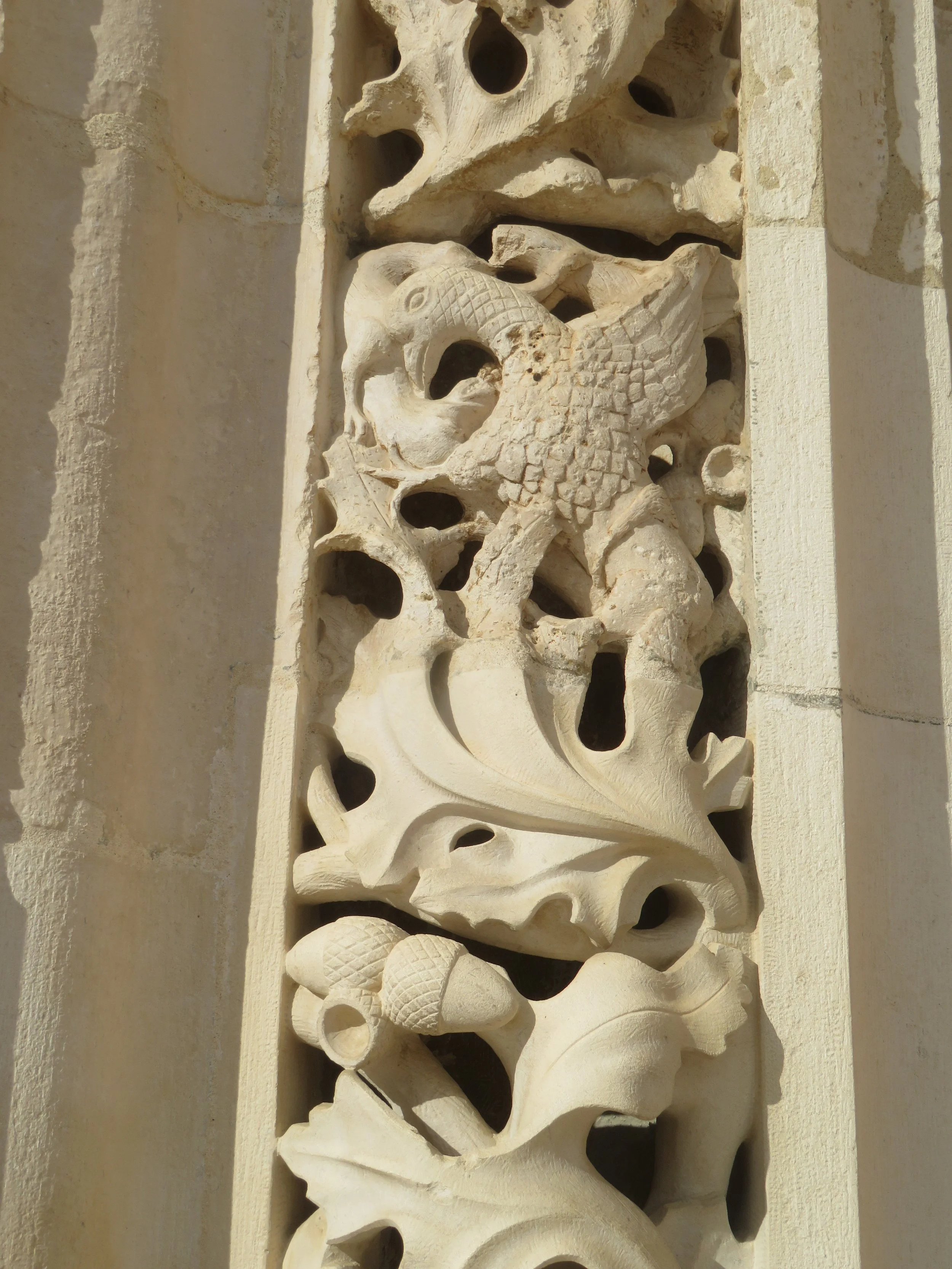
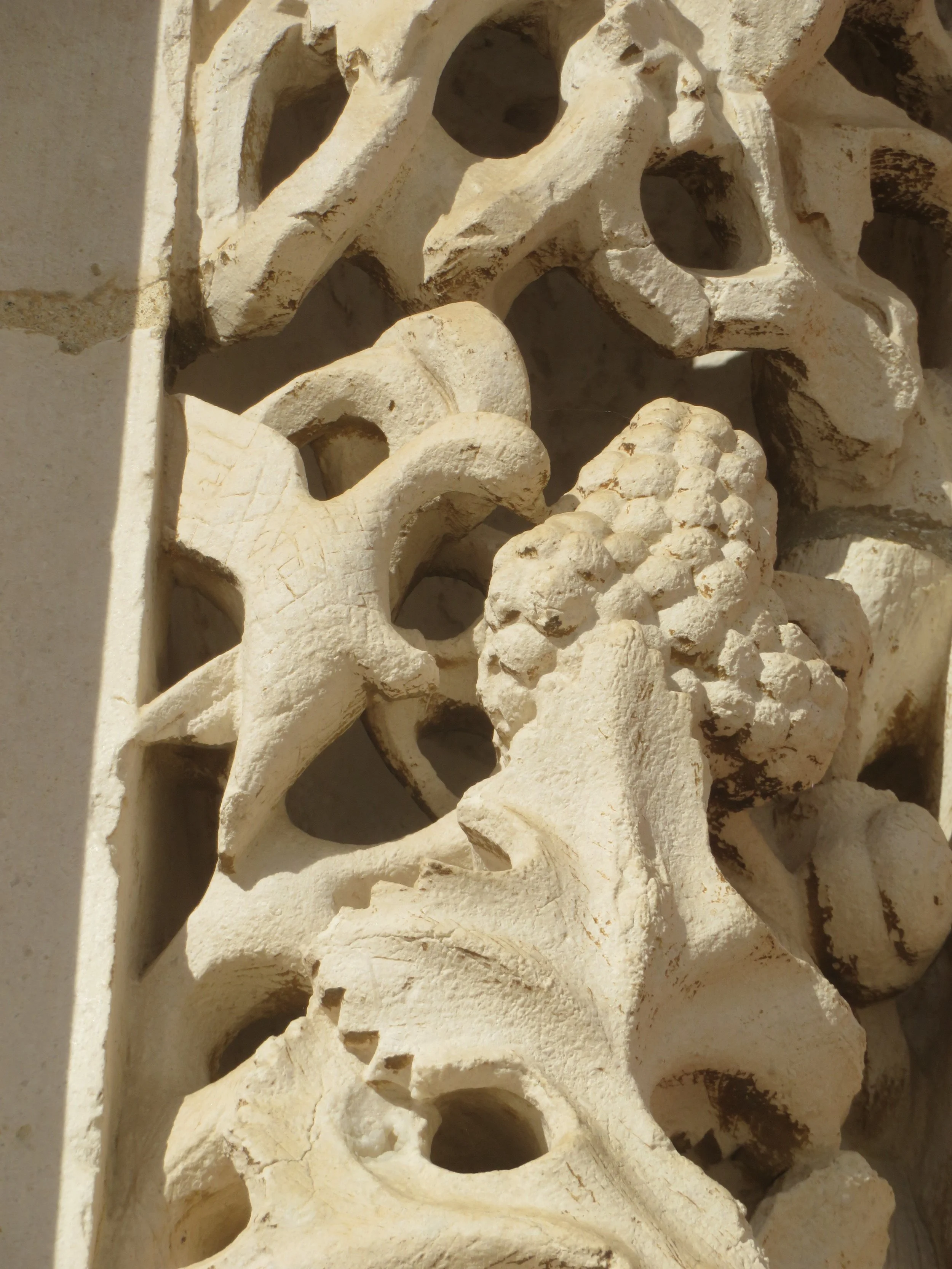
Once back in town, we visited the Praça da República once again, this time concentrating on the 15th-century Igreja de São João Baptista (St. John the Baptist Church) and its elaborate exterior decoration. Mass was in session when we arrived, precluding us from going inside for photos.
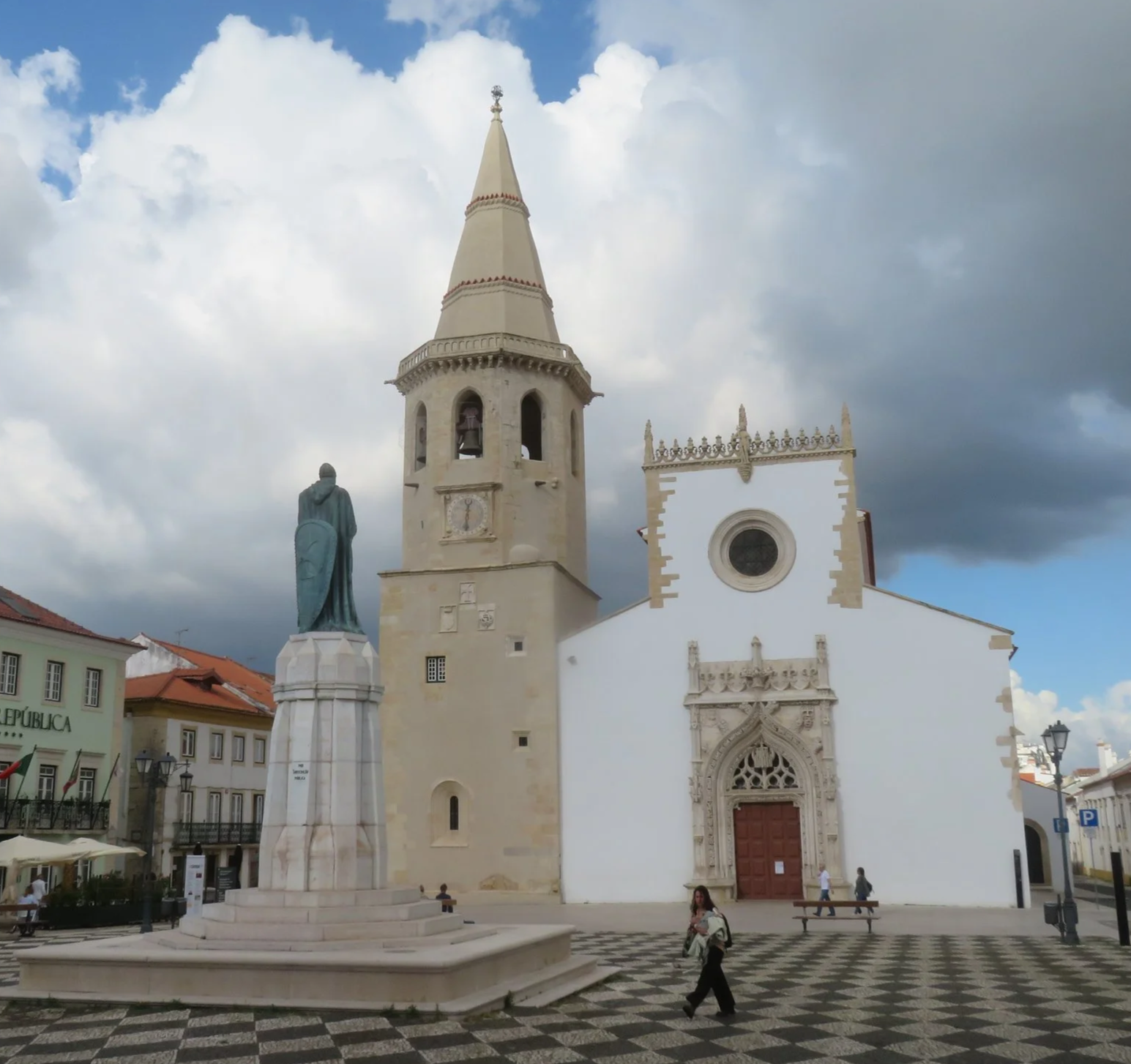
Igreja de São João Baptista at Praça da República (St. John the Baptist Church in Republic Square)
Once again, we were fascinated by the complexity of the details.
The Church of Santa Maria do Olival (St. Mary of the Olive Grove) with its beautiful rose window, was originally constructed c.1160 by Gualdim Pais. We walked there and found the church was open to visitors.
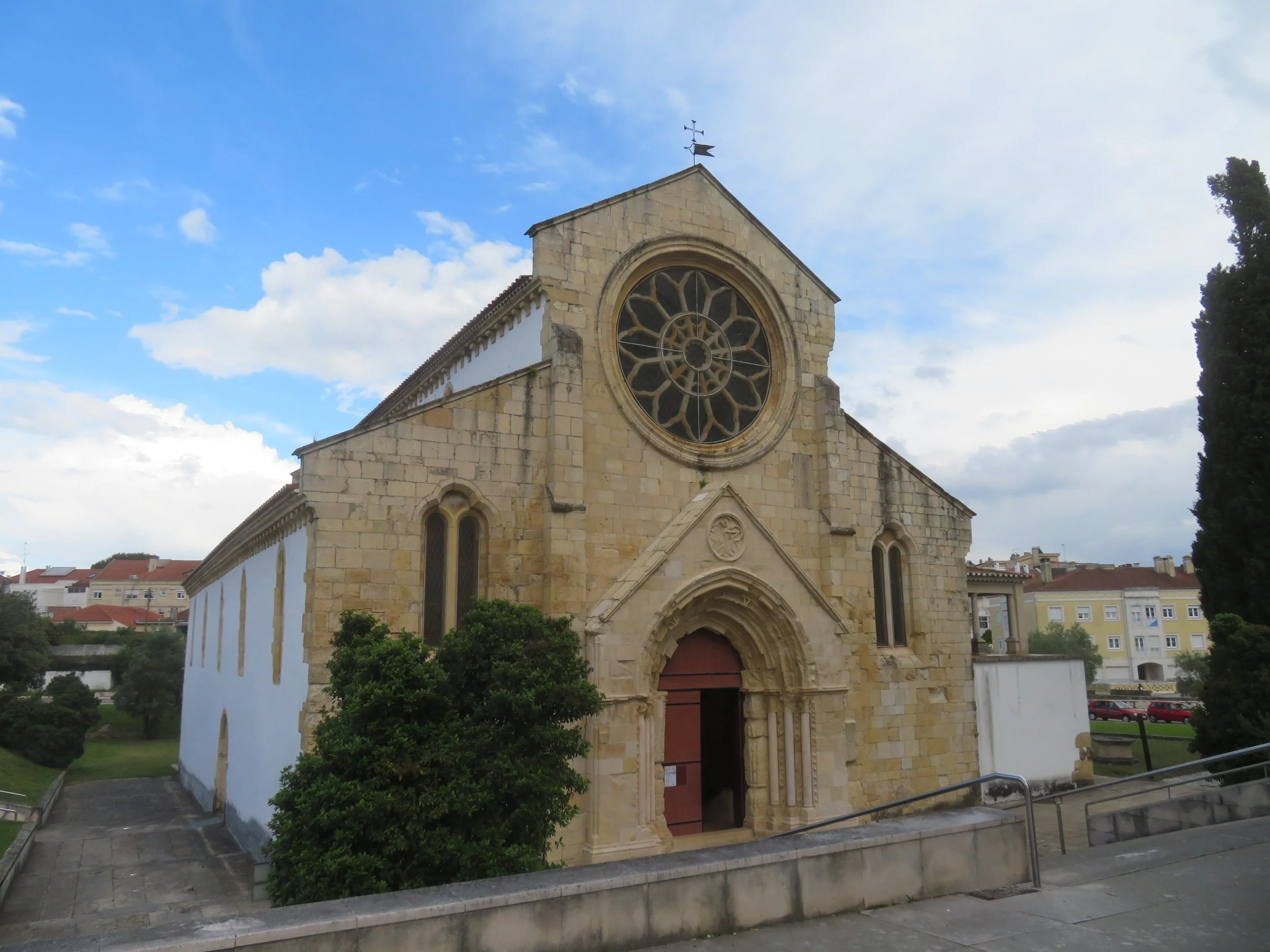
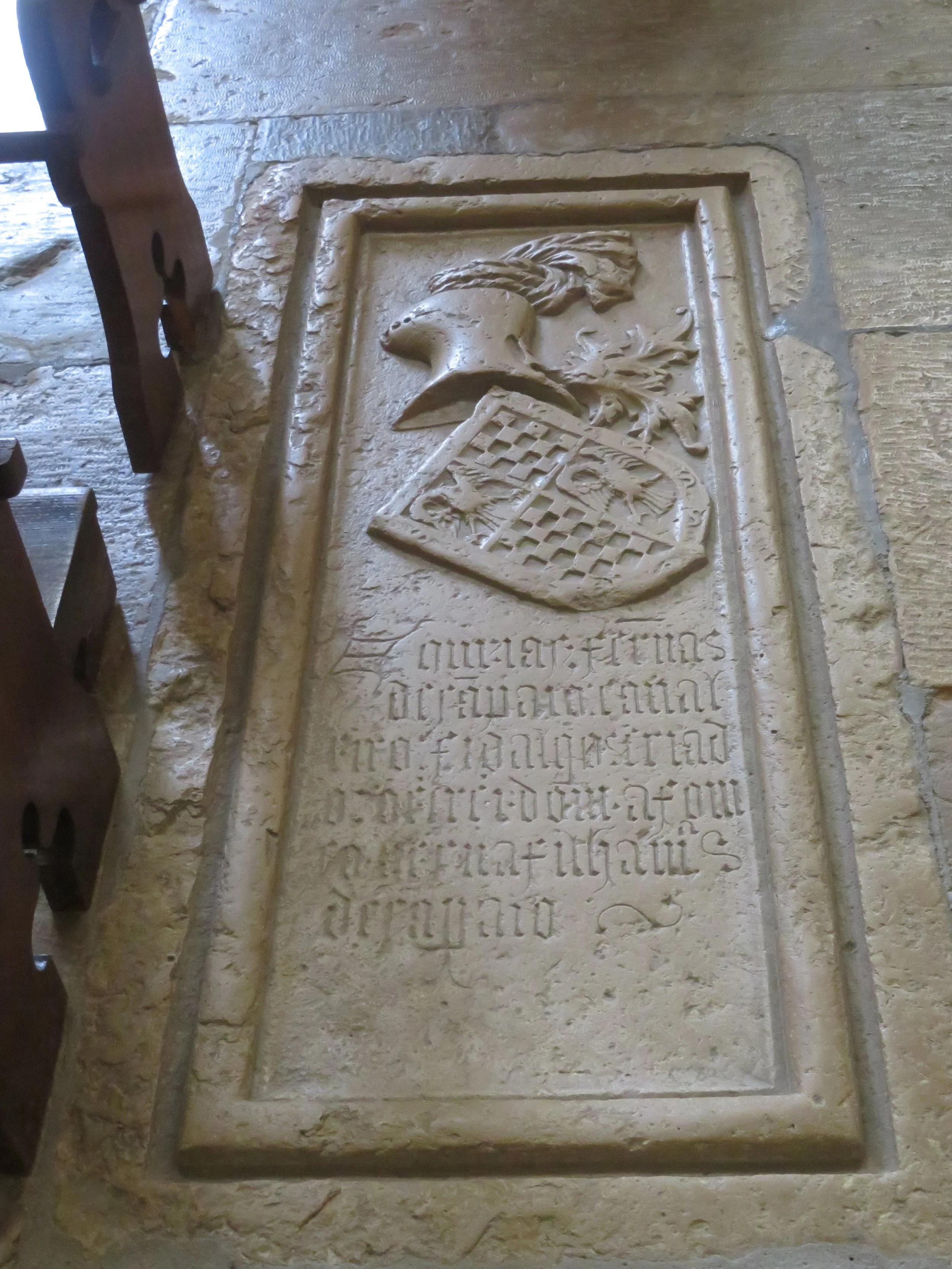
Along with several other knights, Gualdim Pais, Tomar’s founder and first Grand Master of the Knights Templar, is buried here.
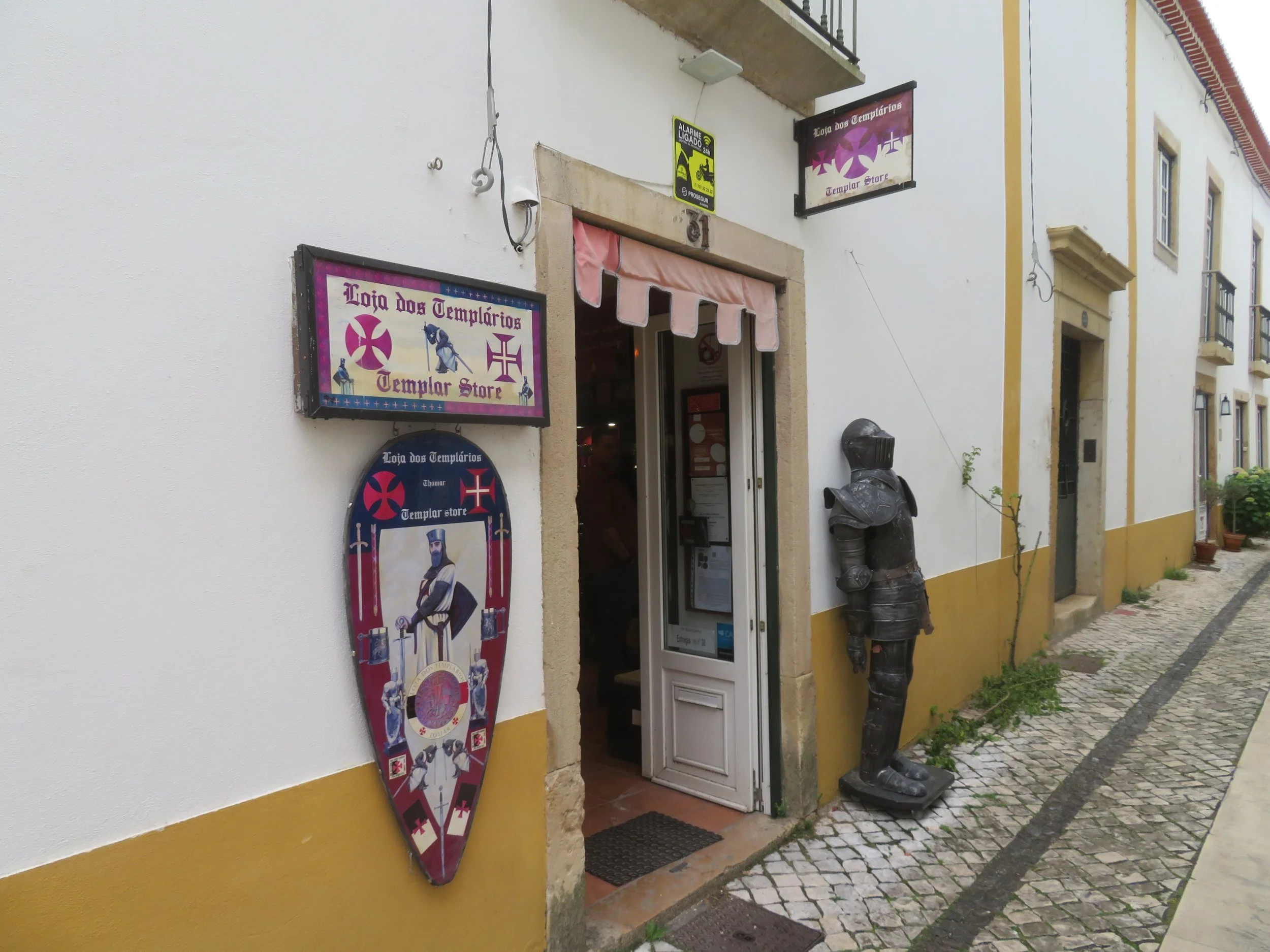
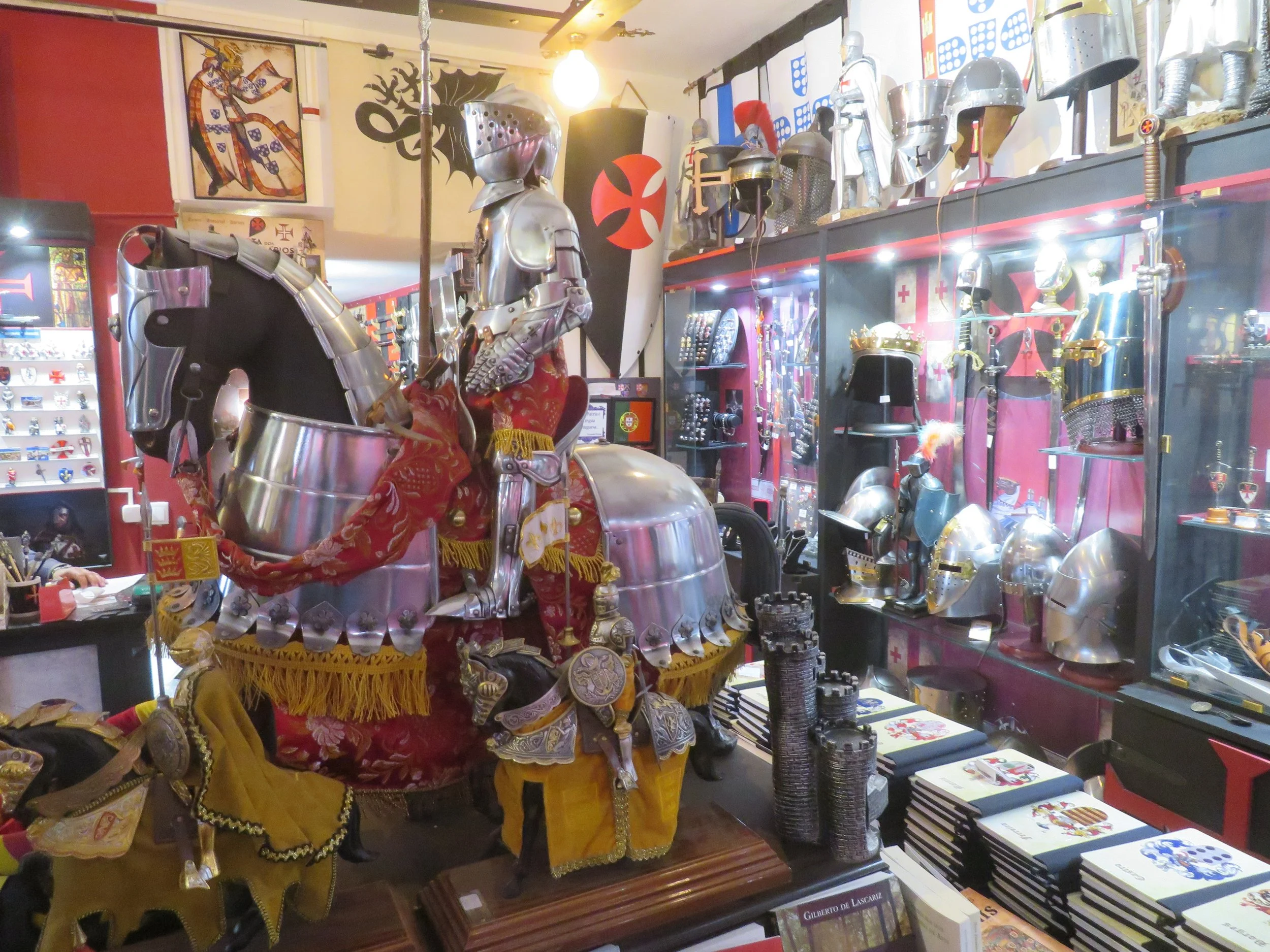
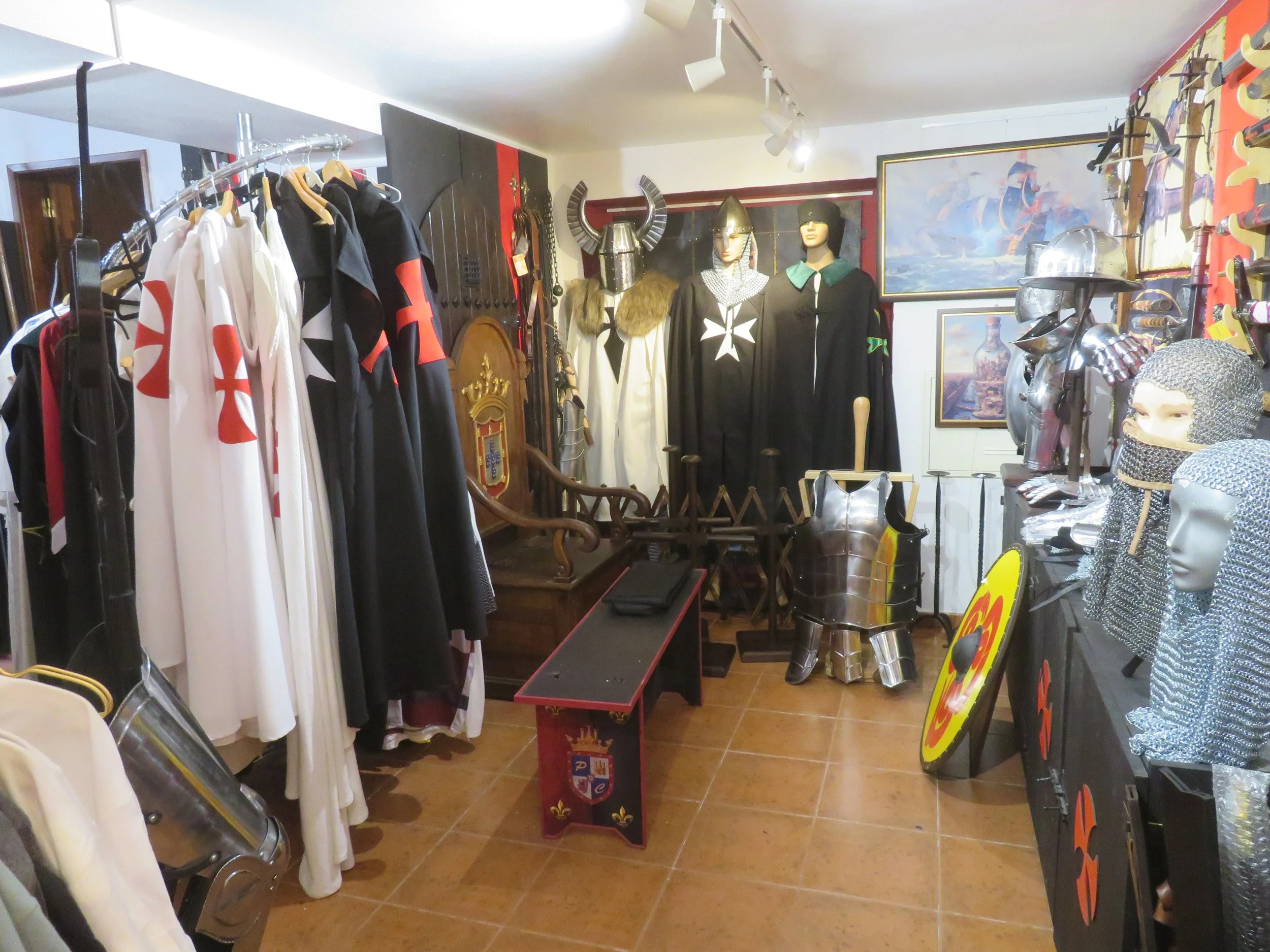
On the way back to our apartment, we stepped into one of the several Knights Templar stores for a look at what it had to offer. Fortunately, I was able to convince David that perhaps he should not purchase a set of armor because we couldn’t carry it in our backpacks.
Once again, we regretted the fact that we could only spend a couple of days in Tomar, but it was time to move on. The departure clock was ticking, and we still had places to go and people to see. Next time, we return to Lisbon to explore Portugal’s capital city.