
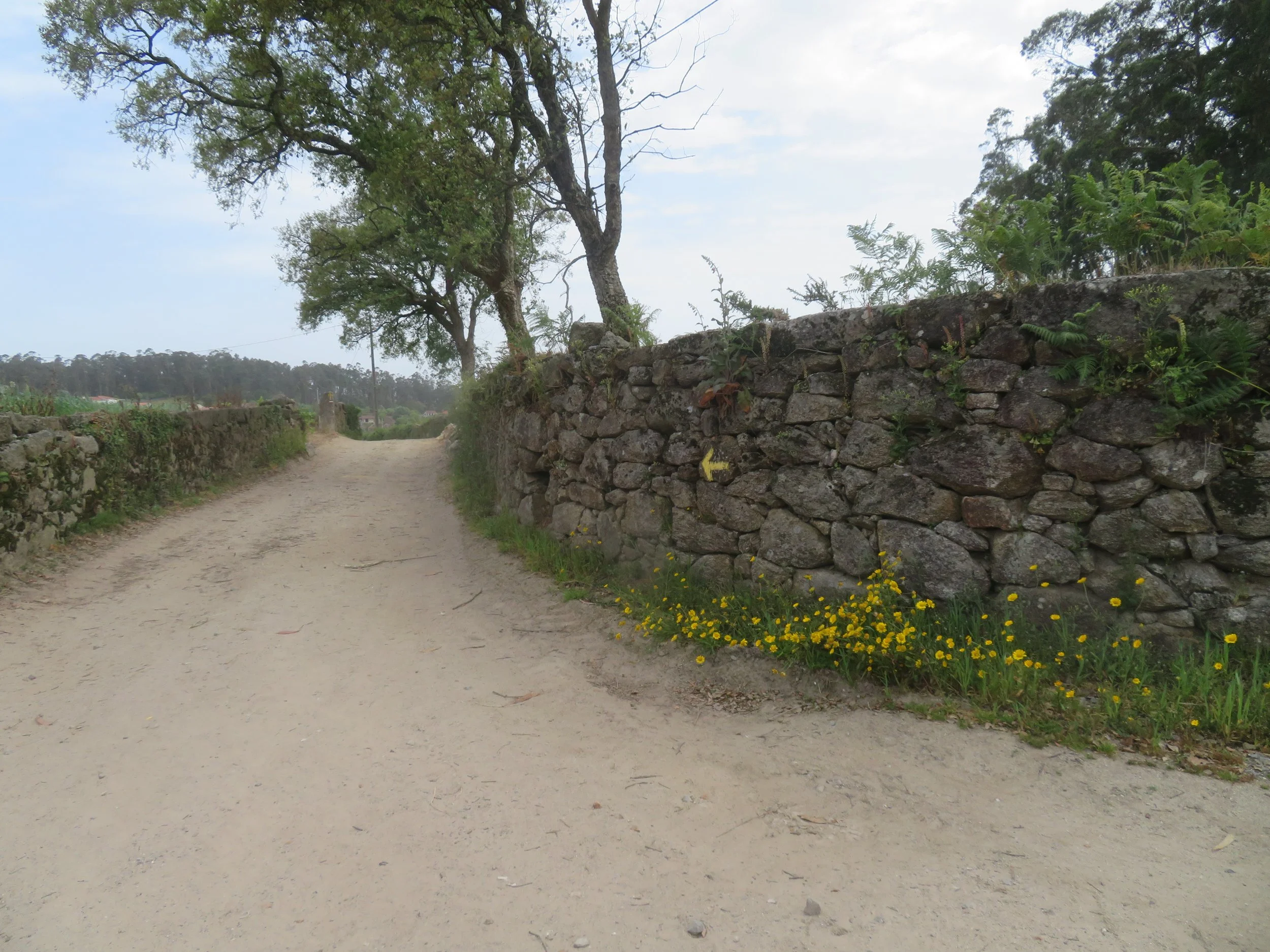
Day 4 - Arcos to Barcelos
/The path to Barcelos was 13.3 miles and we never strayed off the Camino. It seemed like a long day and we were hurting a bit, but pushed through with nary a complaint. Sometimes we chat while we walk. Other times, we get into our own heads and day dream. Either way, it’s one foot after another and before you know it, you’ve walked another mile.
Sometimes we were on highways, sometimes on dirt roads or along forest paths, but mostly on cobblestone roads through small neighborhoods and villages. The cobblestone walks are tough on your feet after awhile. But we just kept following the signs.
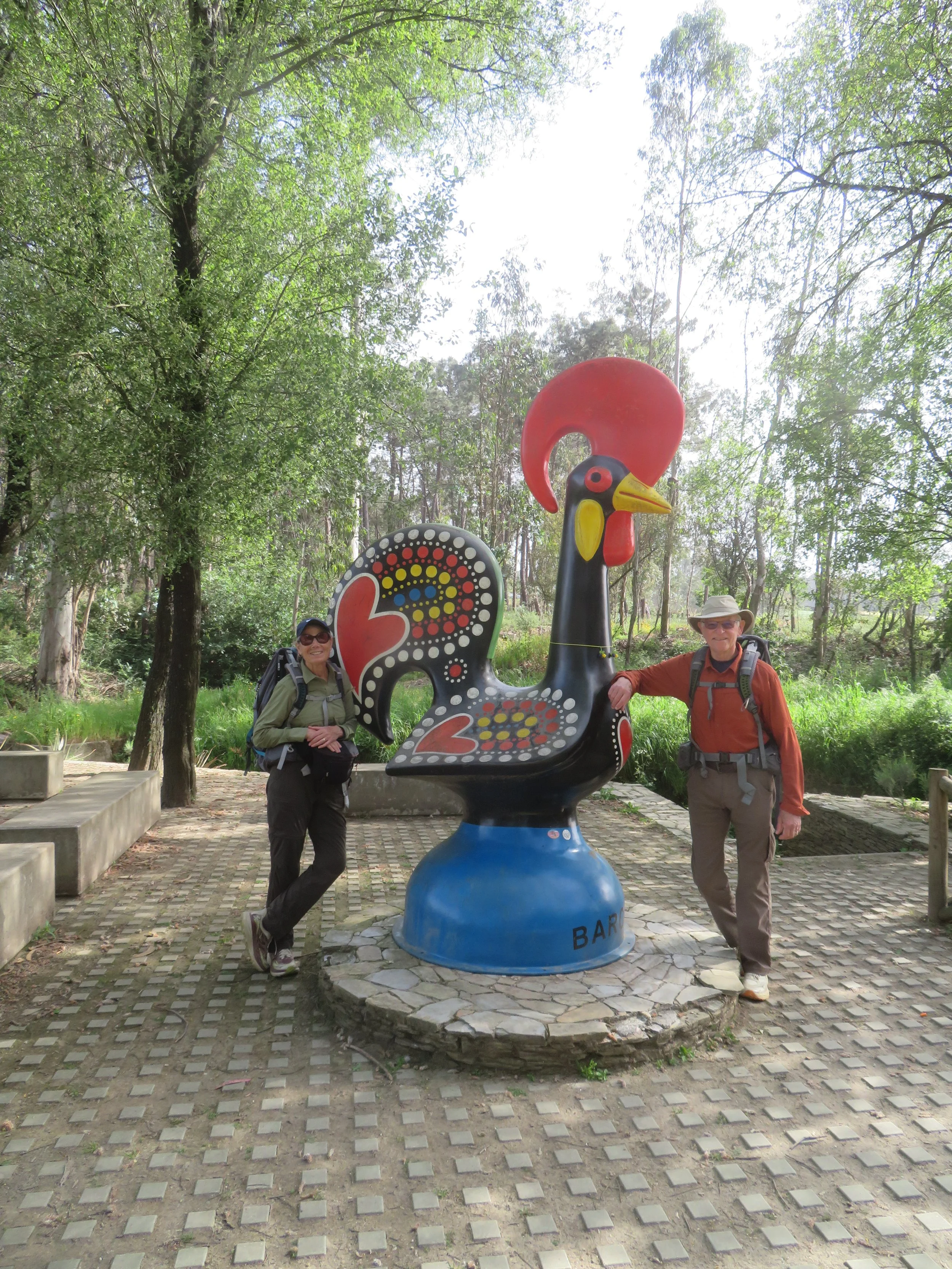
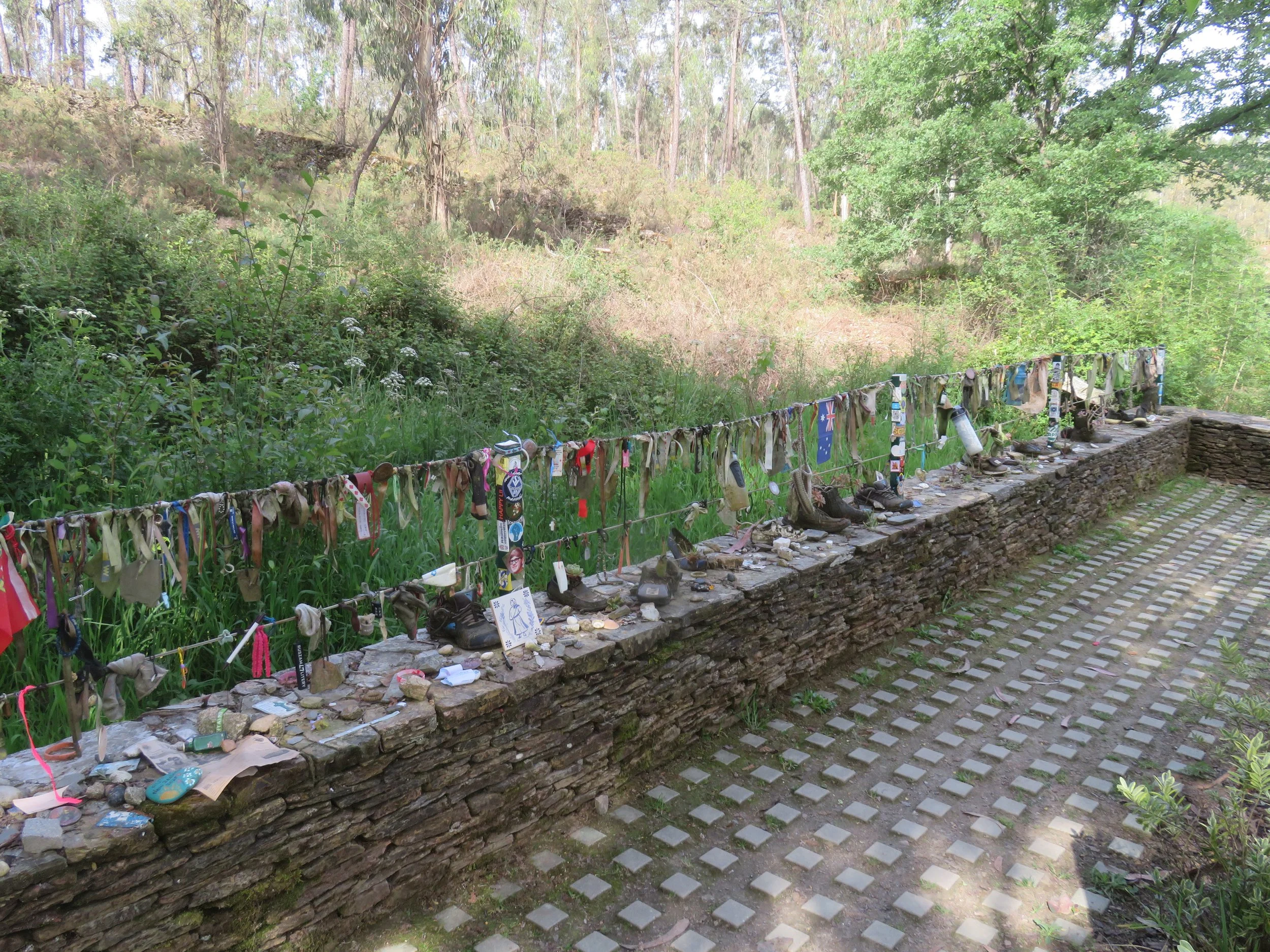
Barcelos is particularly good to pilgrims. David will tell our the story of the Rooster of Barcelos (Galo de Barcelos) in his next blog, but the rooster is an iconic symbol not only Barcelos, but of Portugal as well. We came across our first rooster in a small forest park for pilgrims.
Many pilgrims build small cairns on walls and leave small stones and tokens all along the route, especially at small shrines and statues. Originally, the stones were placed by pilgrims to guide the way for others when signage was uncommon. Not so different than cairns we’ve found al along hiking trails which mark the way.
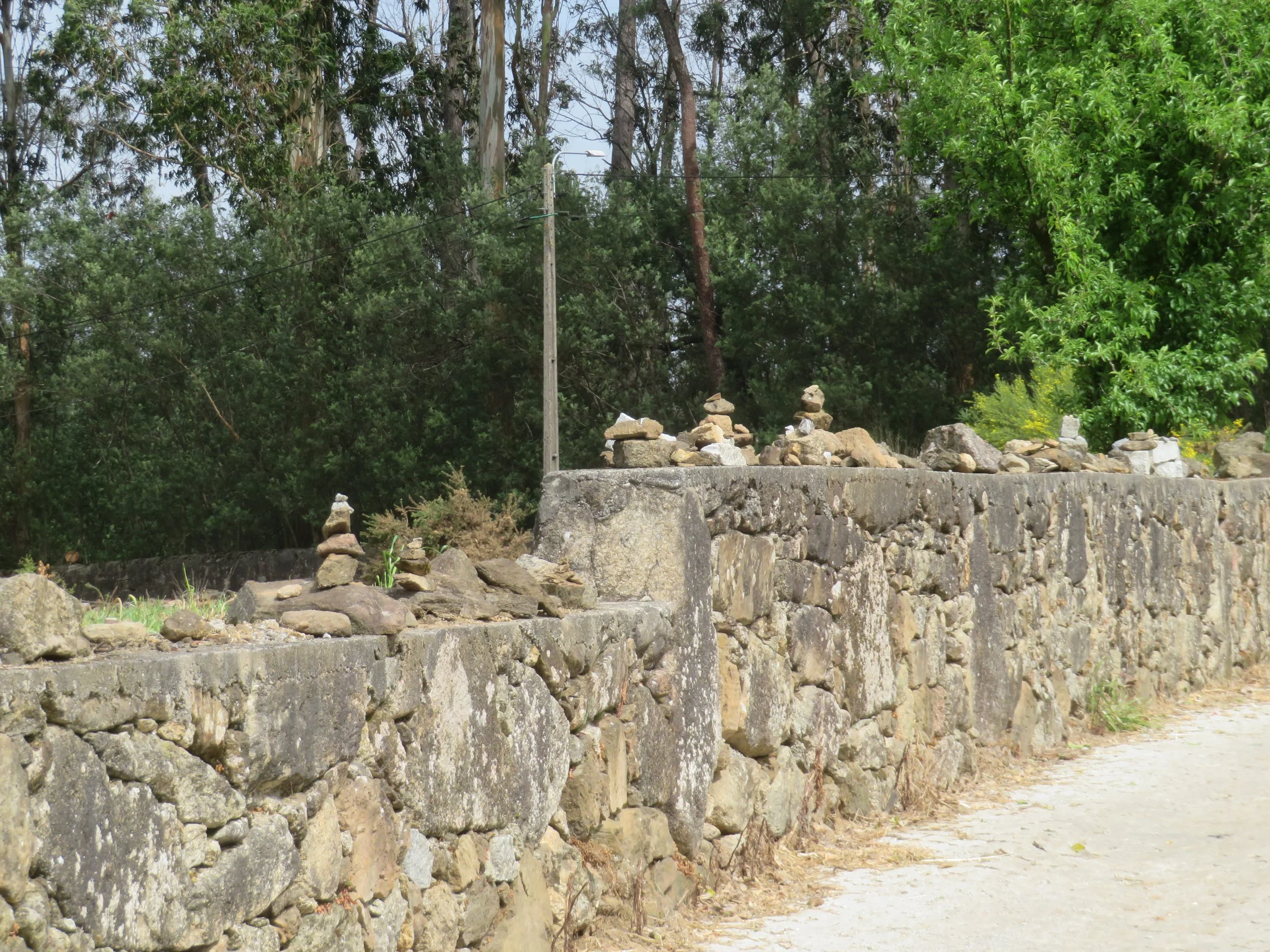
The stones also have a more spiritual meaning. It symbolizes the shedding of fears and mistakes, the release from a burden that’s been carried along the path; a way to cast off regret and remorse. It can also be in remembrance of a loved one or friend. Some pilgrims carry it a bit too far leaving empty shampoo bottles, old shoes and clothes. We figure they’re just looking for a way to lighten their packs, not their souls, hearts, or consciences.
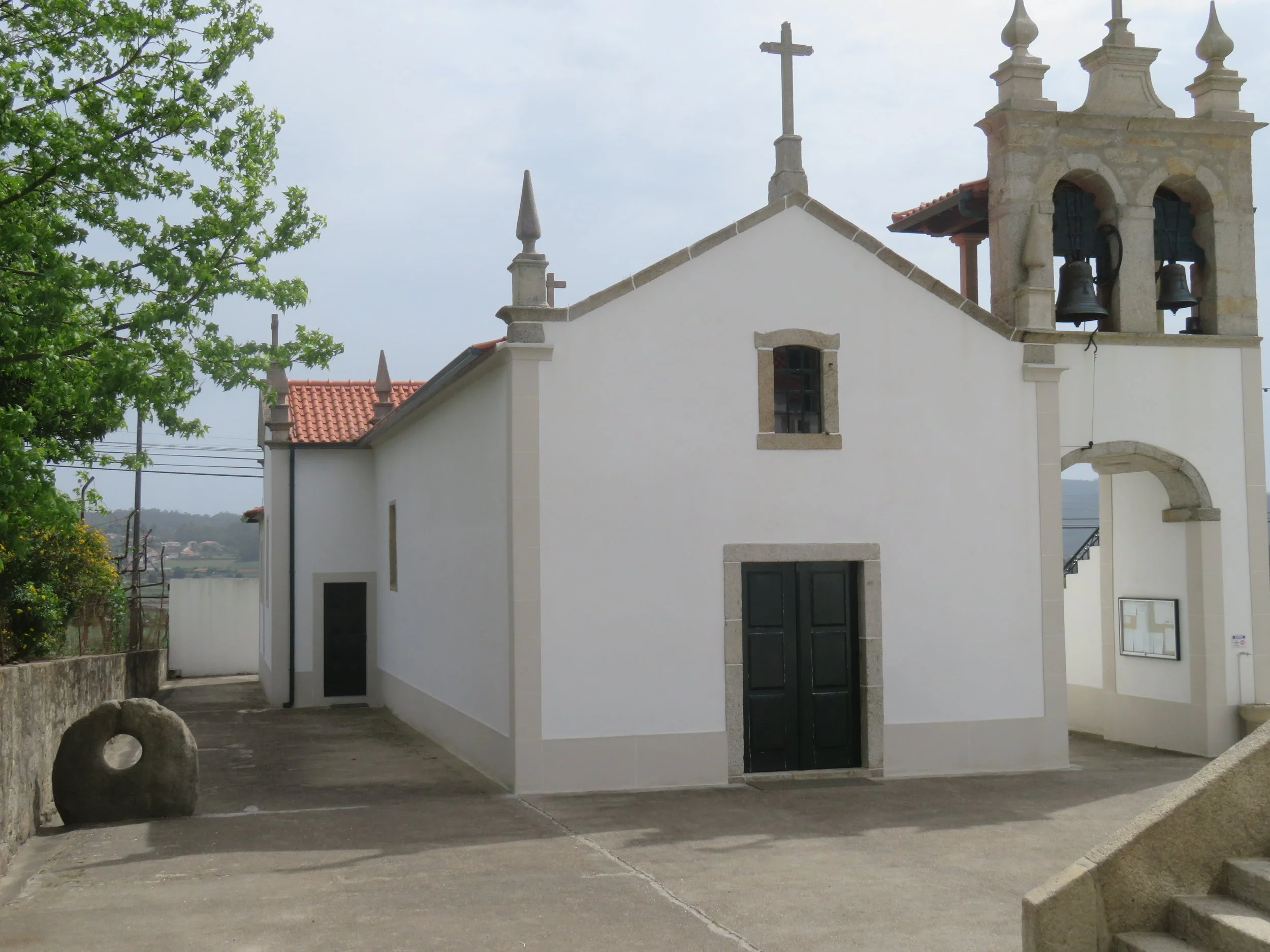
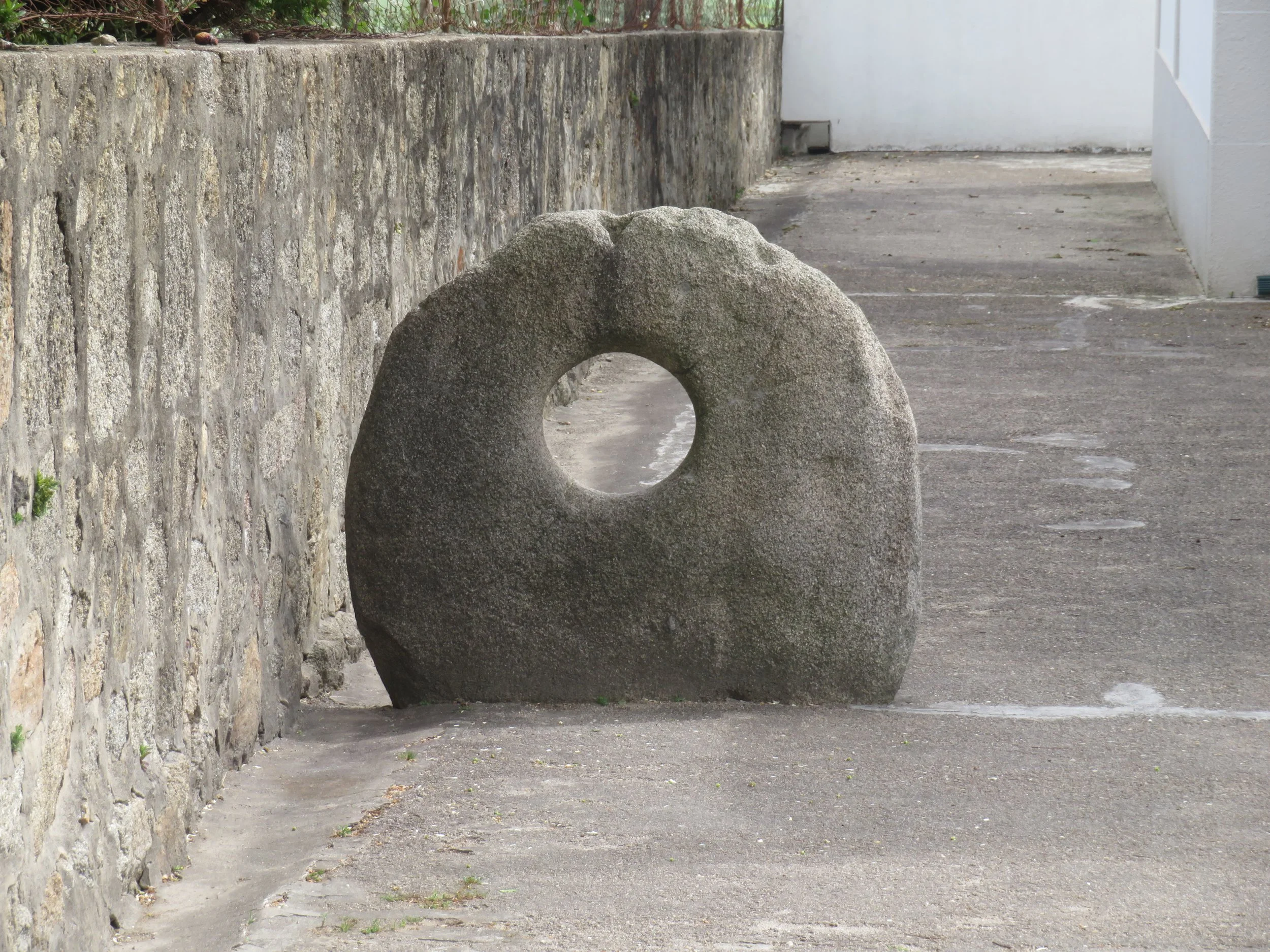
We passed by the Igreja Paroquial de Santa Leocádia de Pedro Furada (whew… long name) and had to stop to check out the round stone with the hole in the middle which sits prominently in the churchyard.
The 1000-year-old legend recounts the story of the church’s patron saint, Santa Leocádia who was martyred by the Romans and entombed beneath this huge stone. She was miraculously resurrected through a hole that opened in the stone, allowing her to climb through and escape. According to the plaque at the church, even today young girls pass through the stone as an atonement ritual. I reckoned I could not fit.
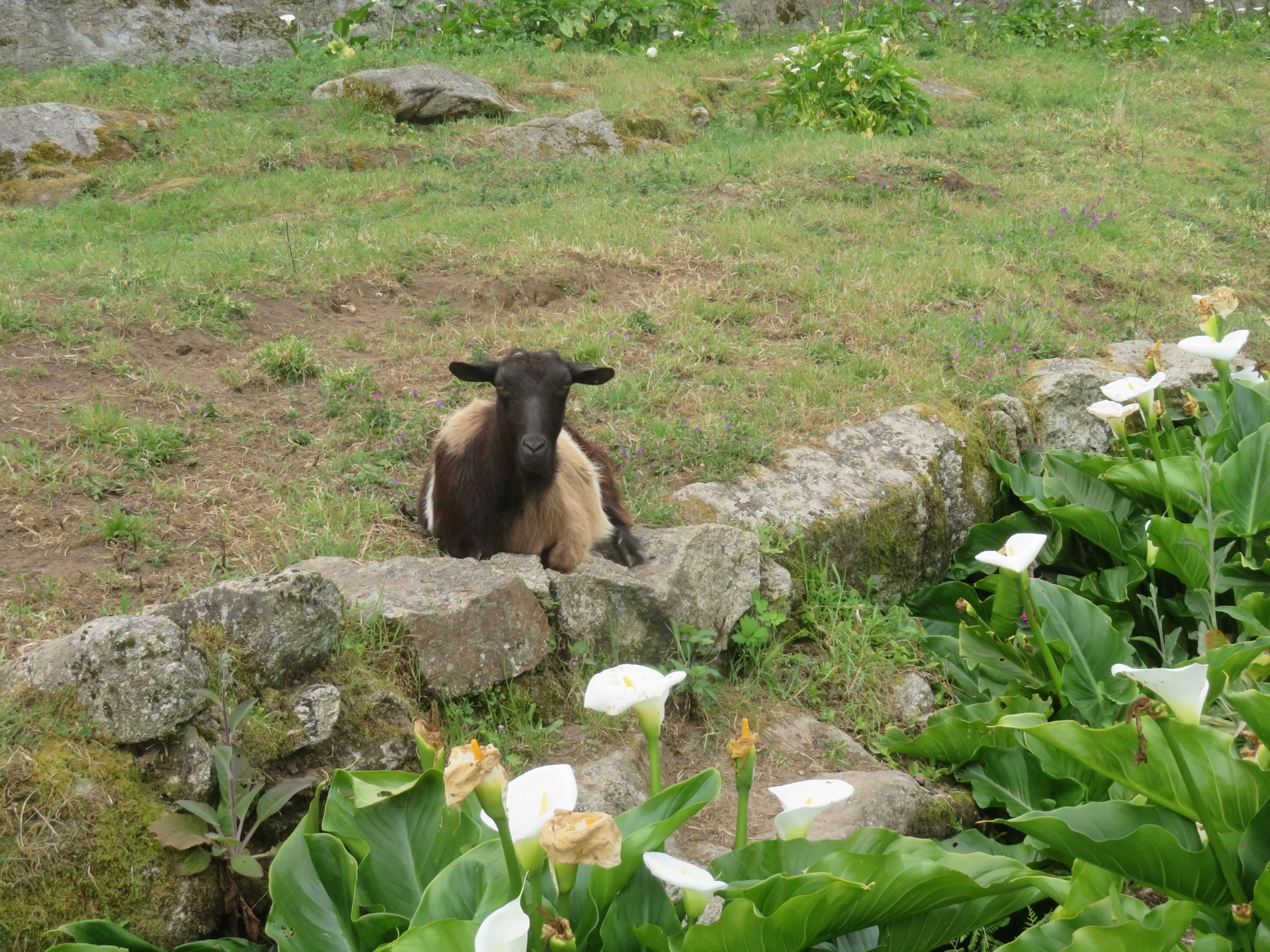
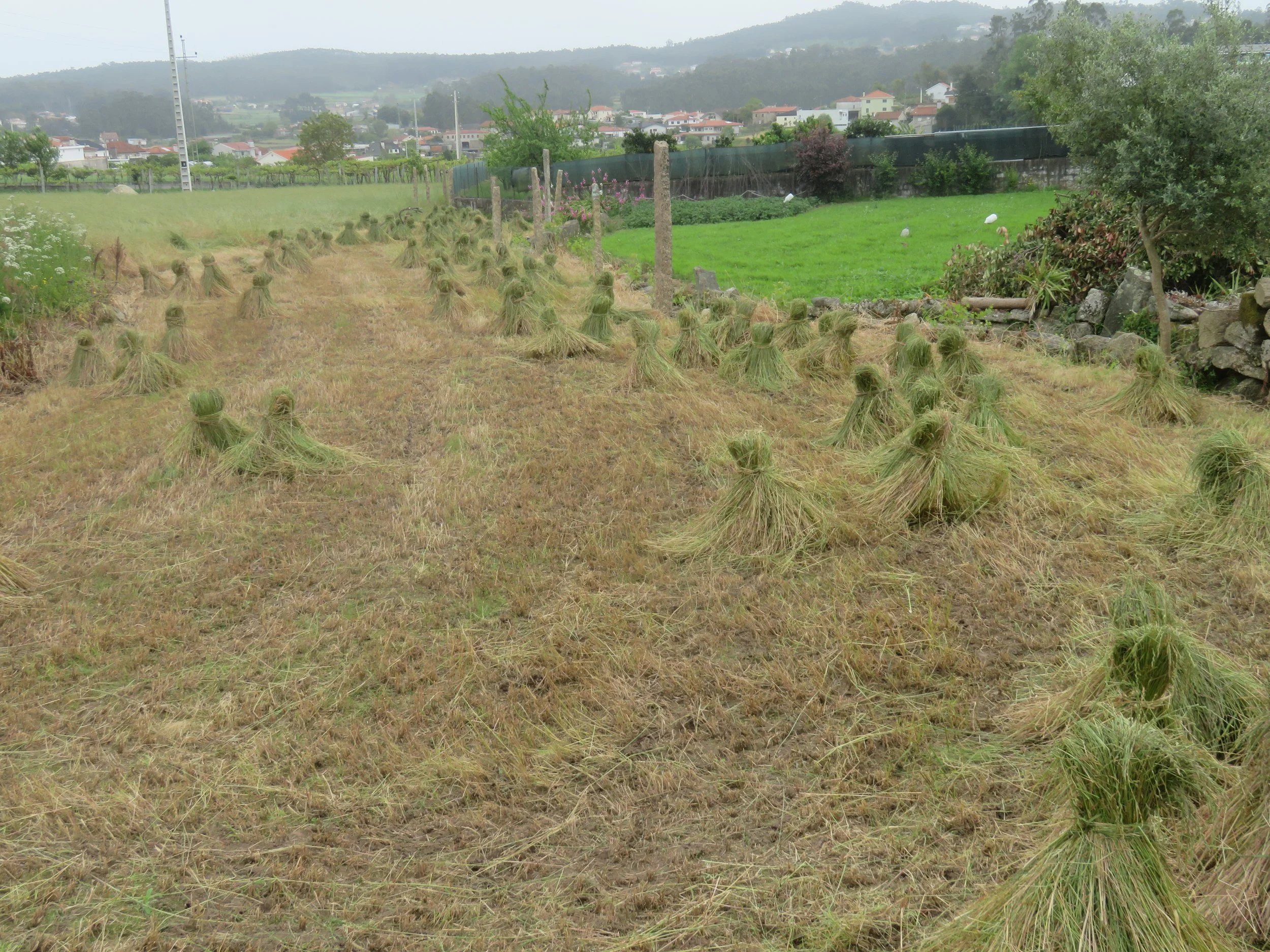
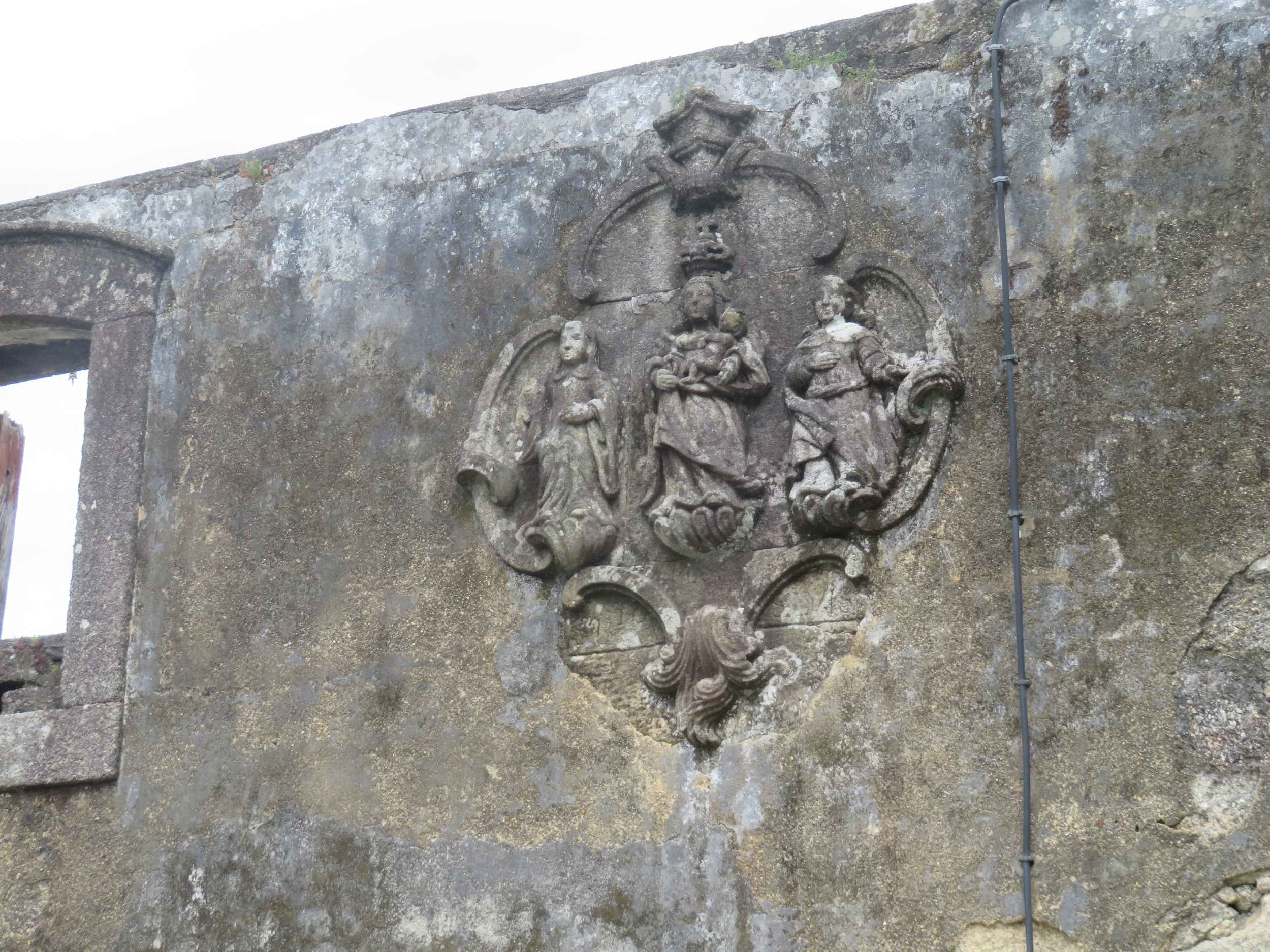
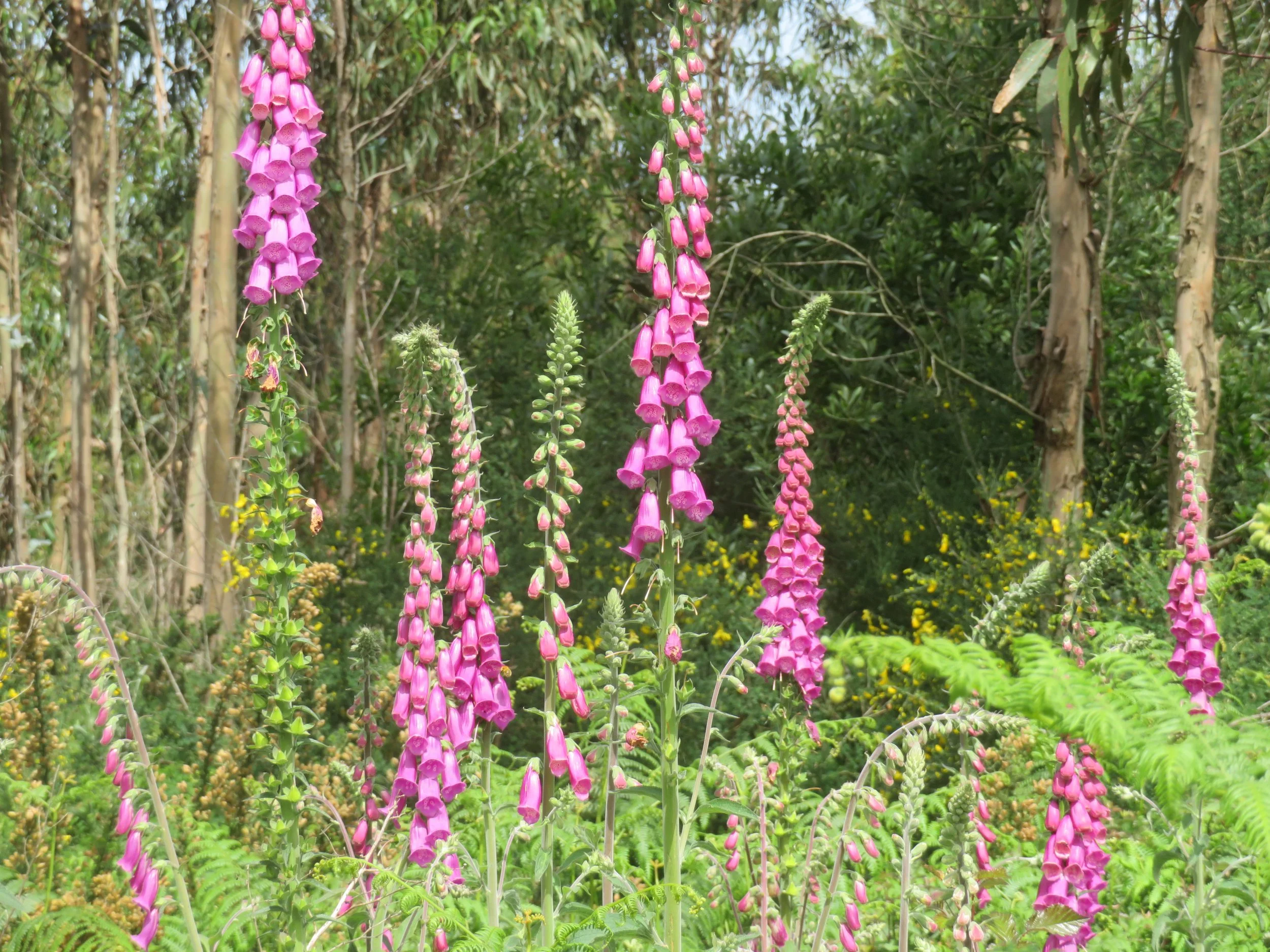
There are so many little things to notice along the way that just capture our attention. Goats, wildflowers, the way that hay in a field has been hand-scythed and bundled, a frieze in the side of a dilapidated old building… so much to see when you walk with your eyes open.
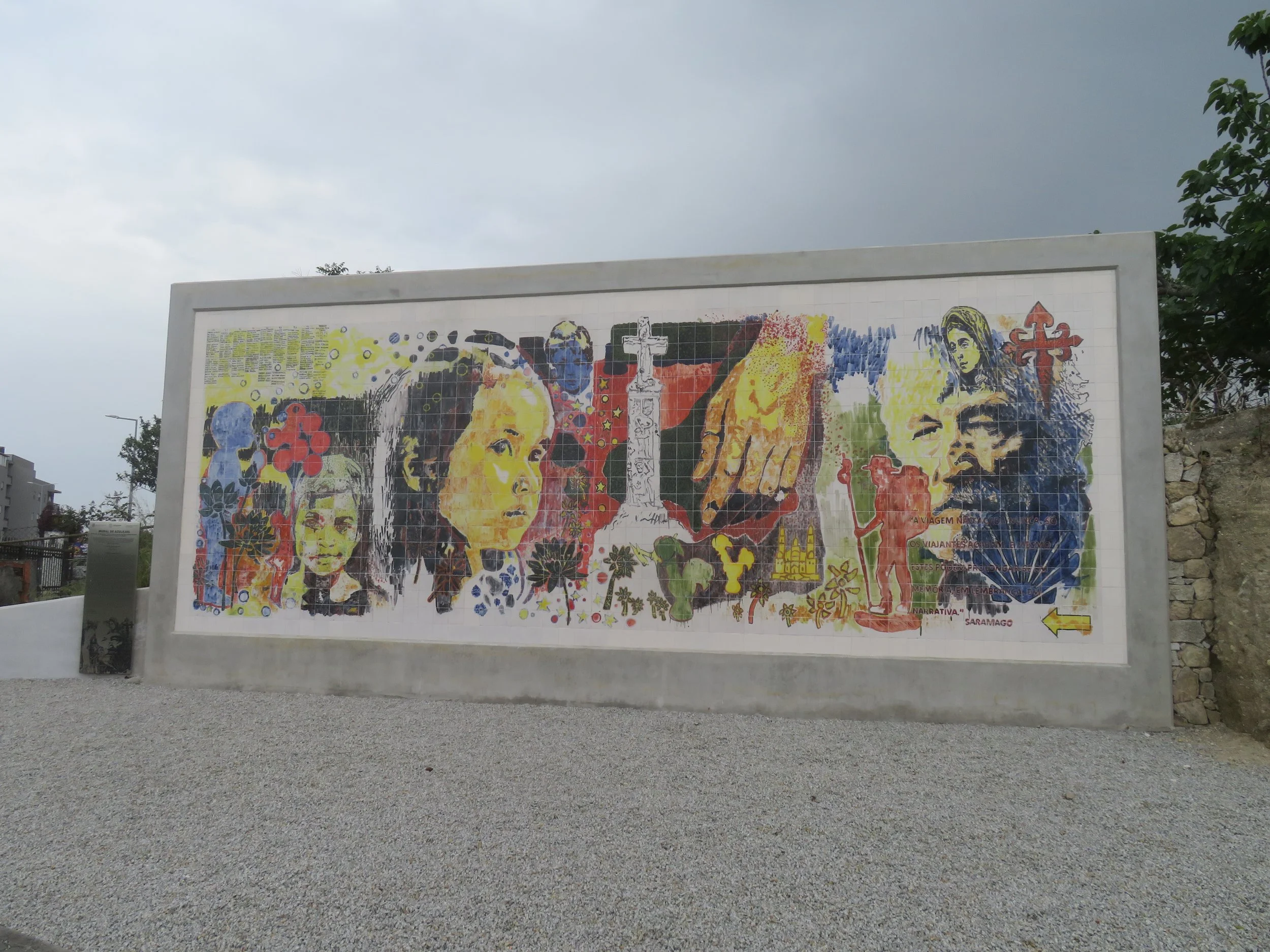
As we entered Barcelos and saw this great mural, along with a multitude of rooster icons, en route to our hotel.
The Top ‘Otel was our lodging for the night. It was reminiscent of an ‘Elvis slept here’ motel in Vegas, but it was quite comfy. It was a second floor turret room with one wall of stone, a round bed with a velour headboard and a small balcony overlooking the Camino down below.
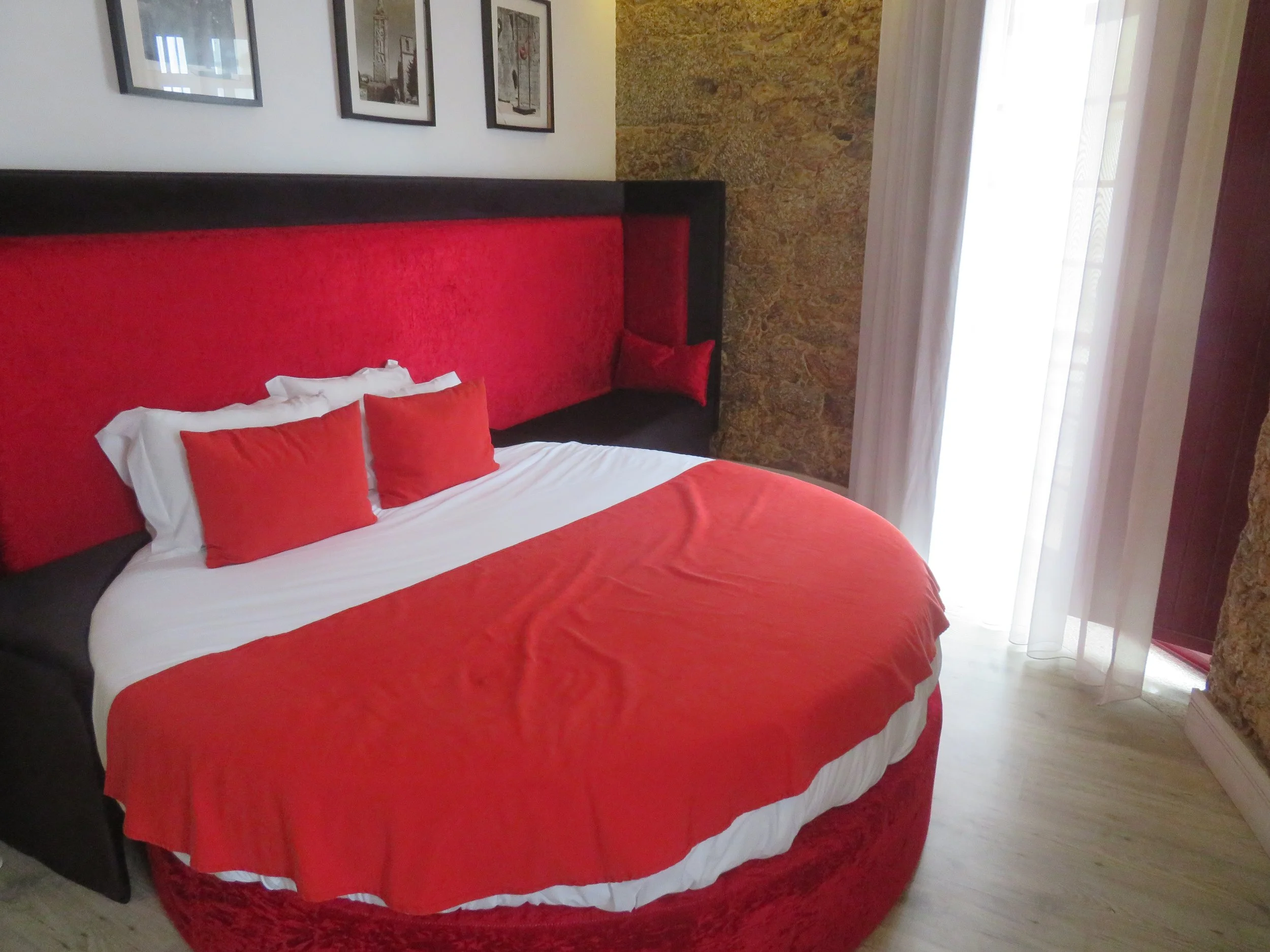
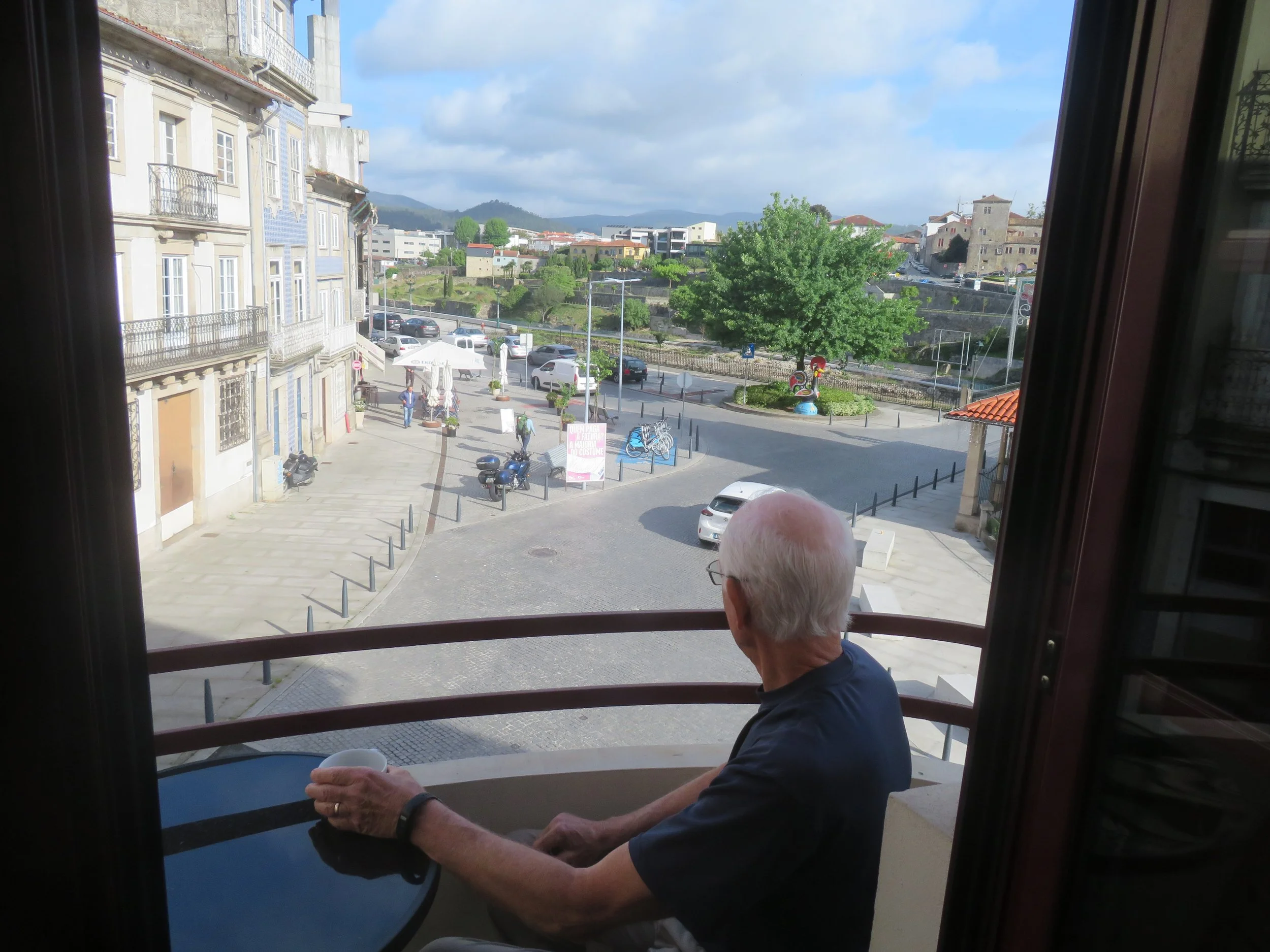
It was perfectly comfortable, pleasant, and offered the best breakfast we’d thus far seen on the Camino. In addition to fruit, sliced meat, bread and cheese, they had scrambled eggs! What a treat!
We were too tired to walk into the city this night, but we’ll walk through next time on our way to our next stop in Tamel. In the meantime, don’t forget to check out David’s next post on the legend of the Rooster of Barcelos. I was going to say something lame like ‘it’s something to crow about’, but I won’t.
After reading about the Barcelos Rooster, get on your comfy shoes and let’s walk to Tamel. It’ll be worth the walk, there was quite a treat waiting for us in Tamel.