
Days 15 & 16- Caldas de Reis to Padrón to Raices
/Rather than rushing the last couple of days on the Camino, we opted to split the usual two stages into three. We wanted to savor the last couple of days of walking and enjoy the anticipation of arriving in Santiago de Compostela.
Our plan worked out well because our colds were blossoming. Our pockets were full of soggy and soon-to-be-blown-upon tissues (read that toilet paper because we haven’t seen a tissue in weeks), our noses were red and chafed, and we alternated taking turns coughing and sneezing.
Day 15 - Caldas de Reis to Padrón
It rained during the night and was still damp when we set out in the morning. We stepped out of the guest house directly onto the Camino and almost immediately crossed the ancient Puente de Bermaña (Bermaña Bridge).
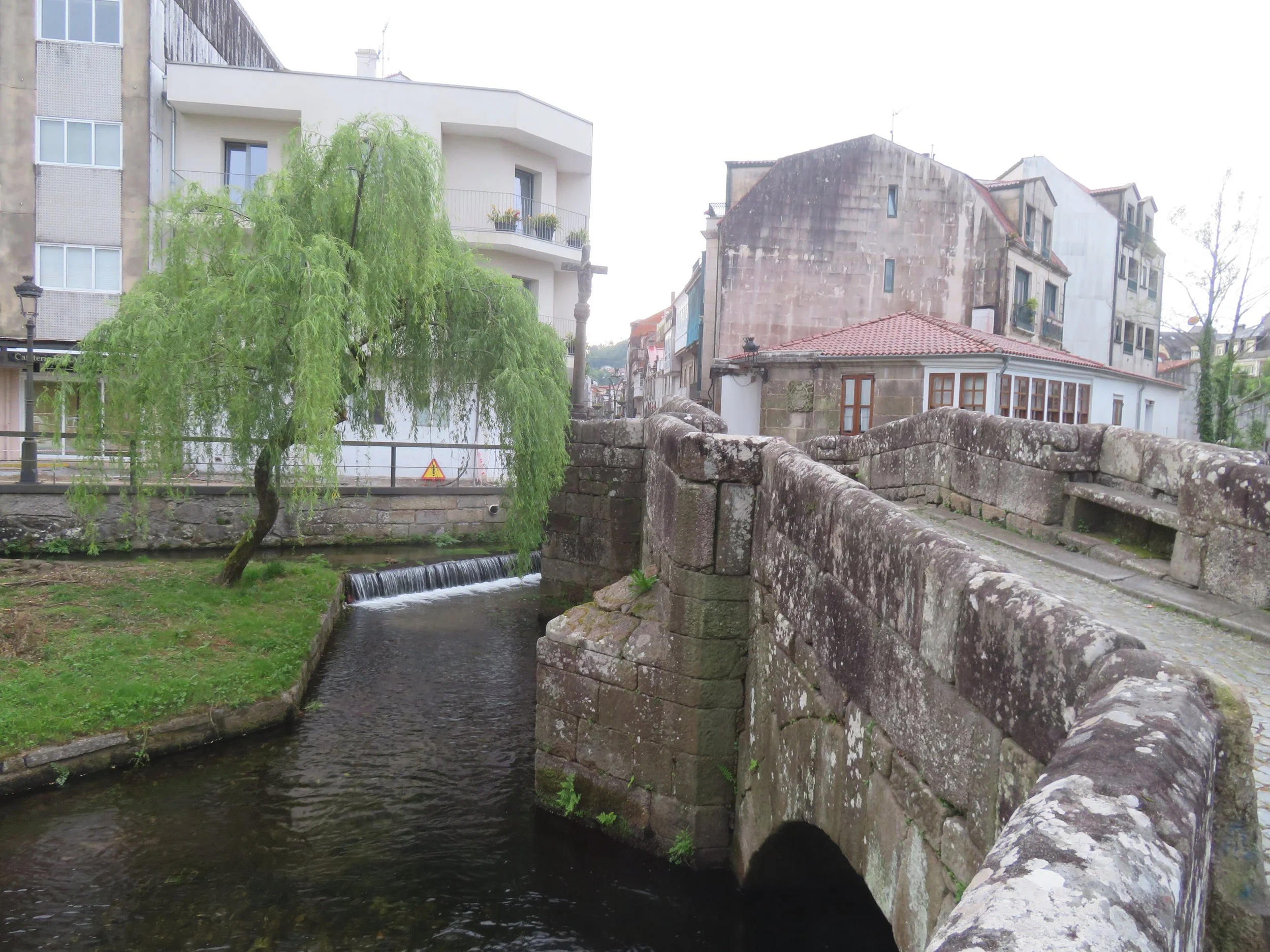
This well-preserved 1st century Roman bridge spans the Bermaña river.
Before leaving Caldas de Reis, we passed by Igreja de Santo Tomás Becket located in a beautiful palm-lined square. Built in the late 19th century, the church is dedicated to the English Archbishop Thomas Becket, who walked the Camino and passed through the town in 1167 on his way to Santiago de Compostela. Becket was in conflict with King Henry II and was assassinated by Henry’s knights in 1170 and later canonized by Pope Alexander III.
There is history and tradition wherever you walk on the Camino. So much to absorb; so much to learn; so much to appreciate.
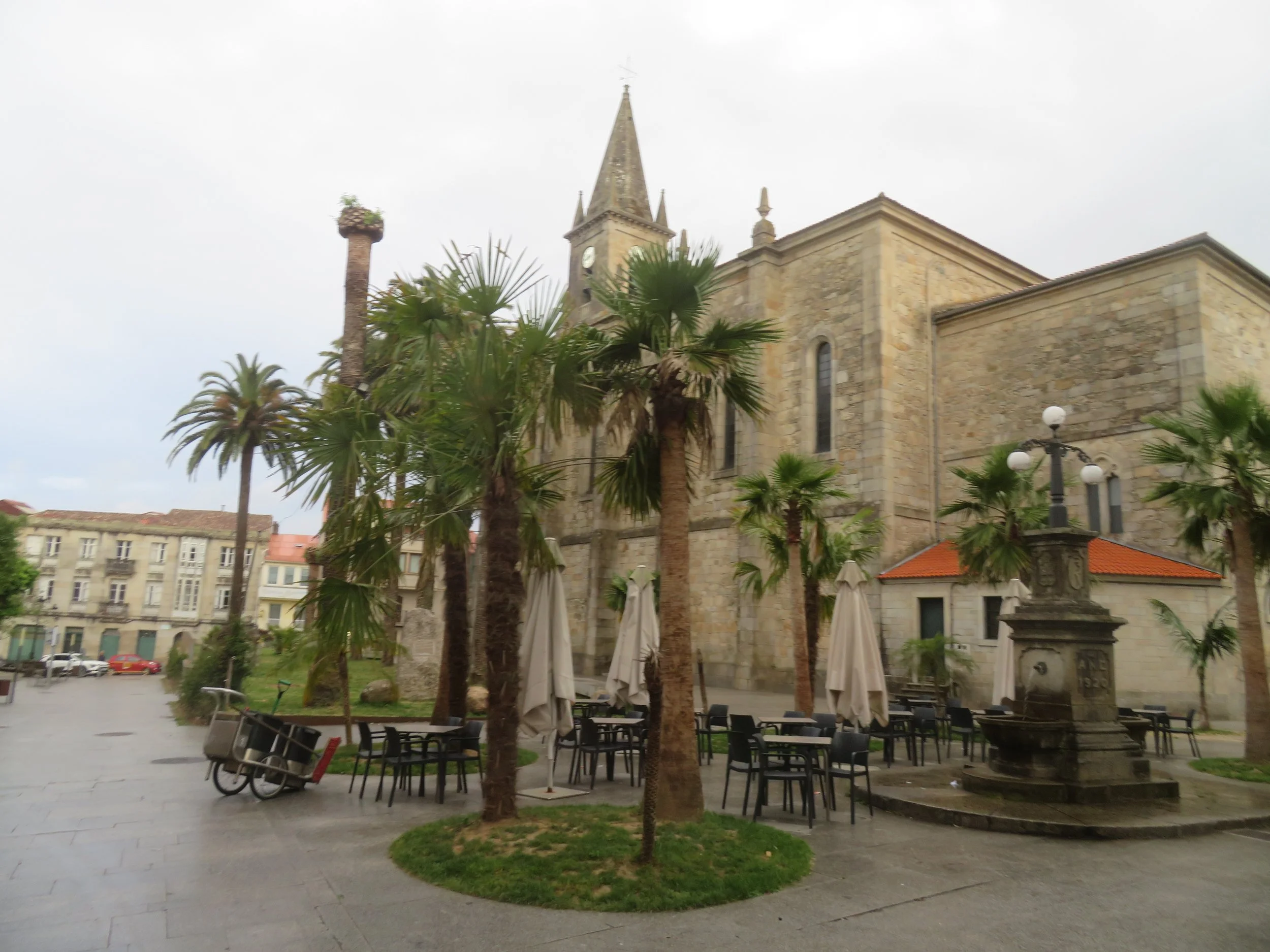
Igreja de Santo Tomás Becket
This lovely old church, Iglesia de Santa Mariña de Carracedo, is a gem. A wooden pilgrim’s boot sits on a pedestal in front and speeds us on our way as the walk continues.
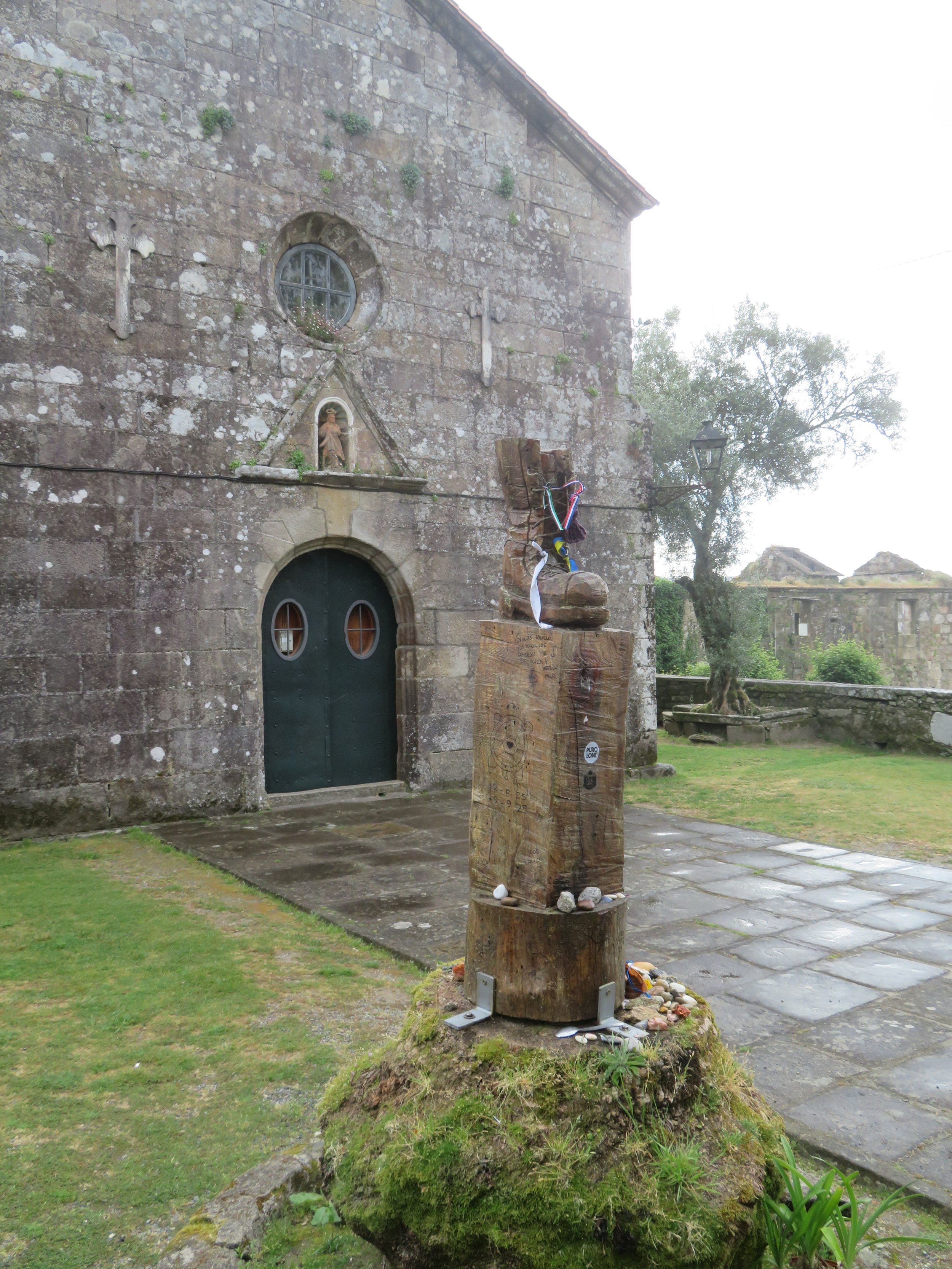
Iglesia de Santa Mariña de Carracedo
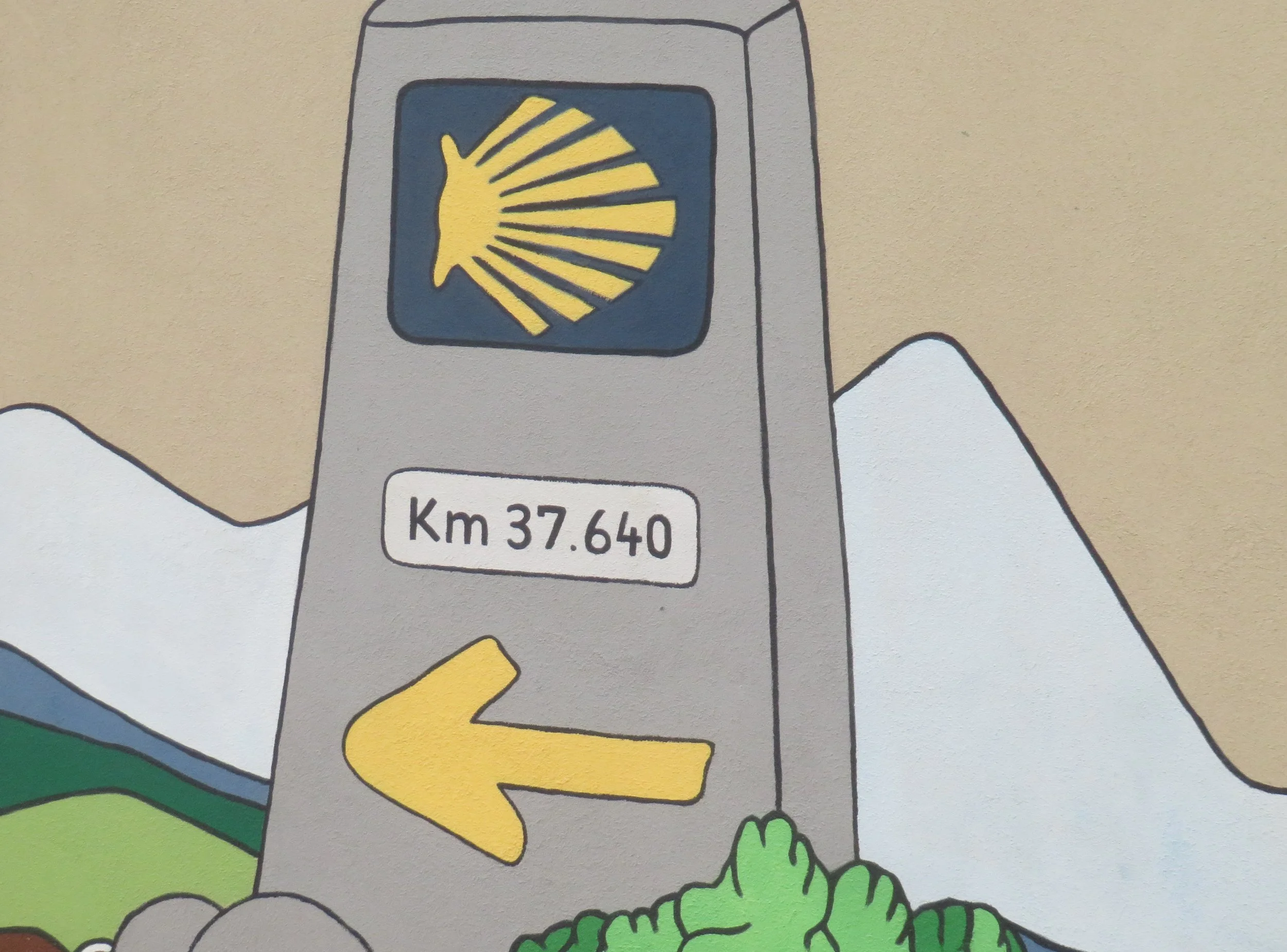
Just beyond, a large graphic informed us we were getting closer to Santiago… only 37 km (22 miles) to go.
Like most days, churches were frequent sights. San Miguel de Valga, an 18th-century neoclassical church, has a huge cemetery. We’ve observed that most cemeteries here are above ground with tier upon tier of burial vaults. Spatial constraints, health issues, and generations of families account for the vertical burial plots.
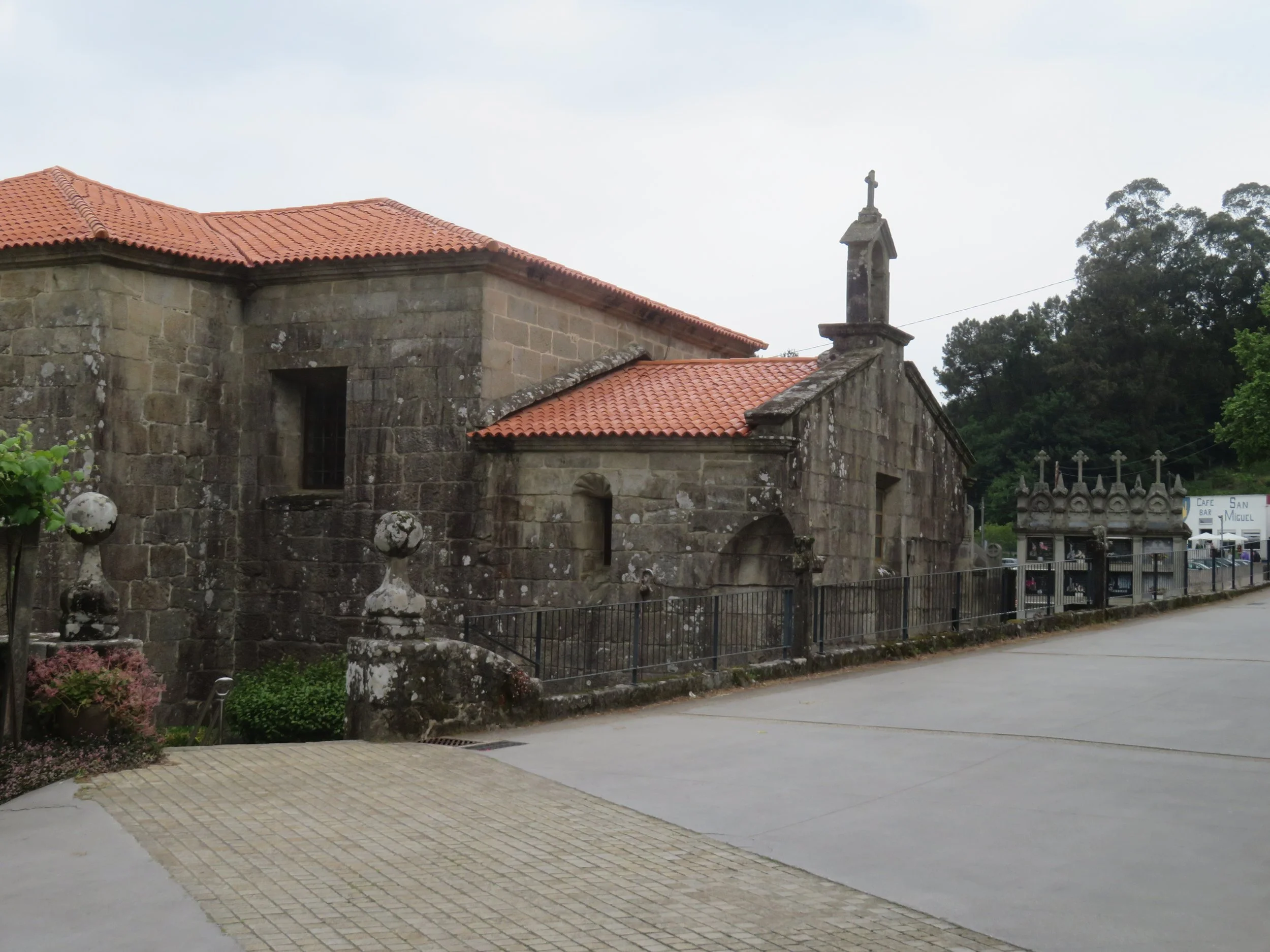
San Miguel de Valga
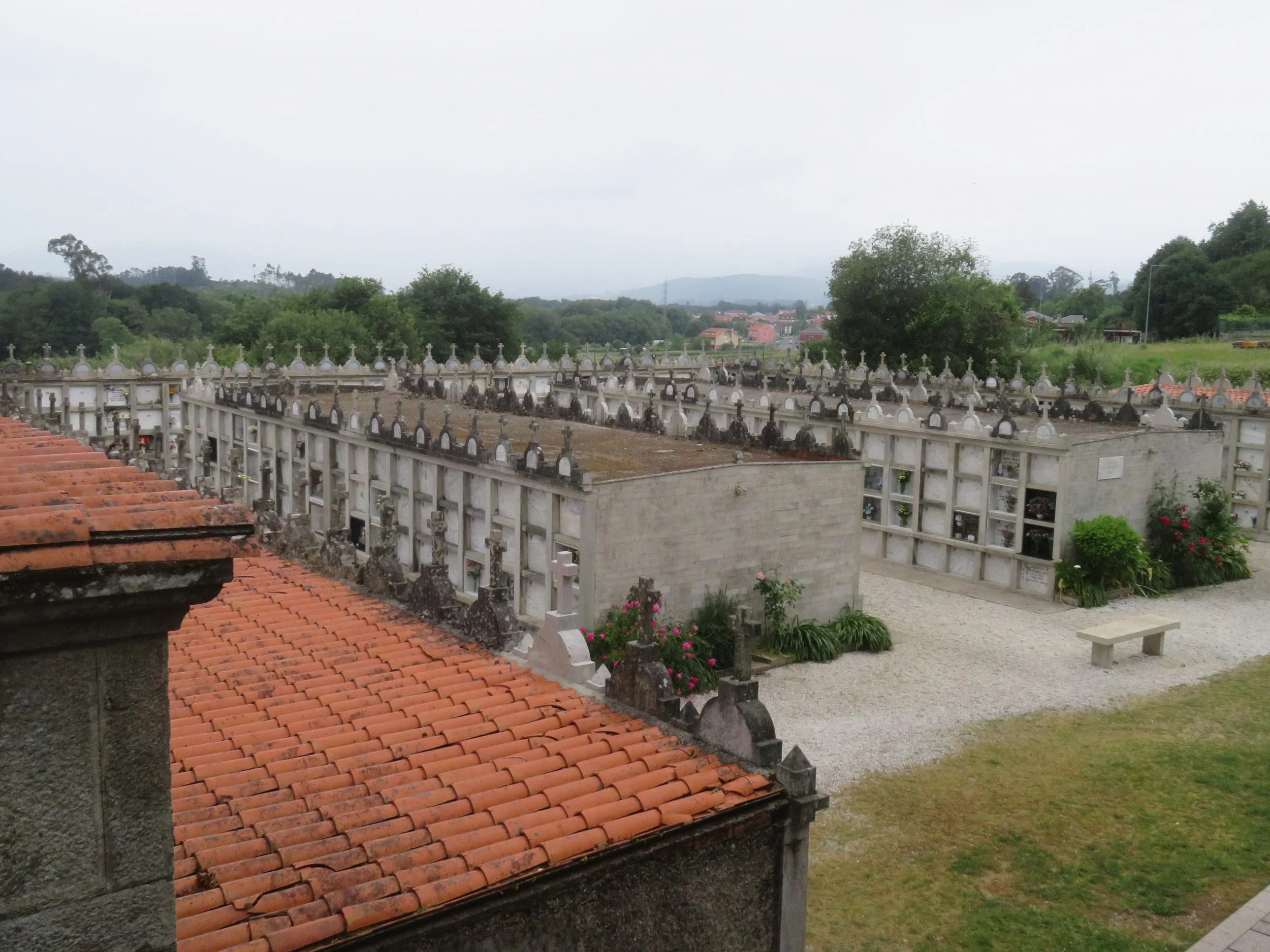
San Miguel de Valga’s cemetery
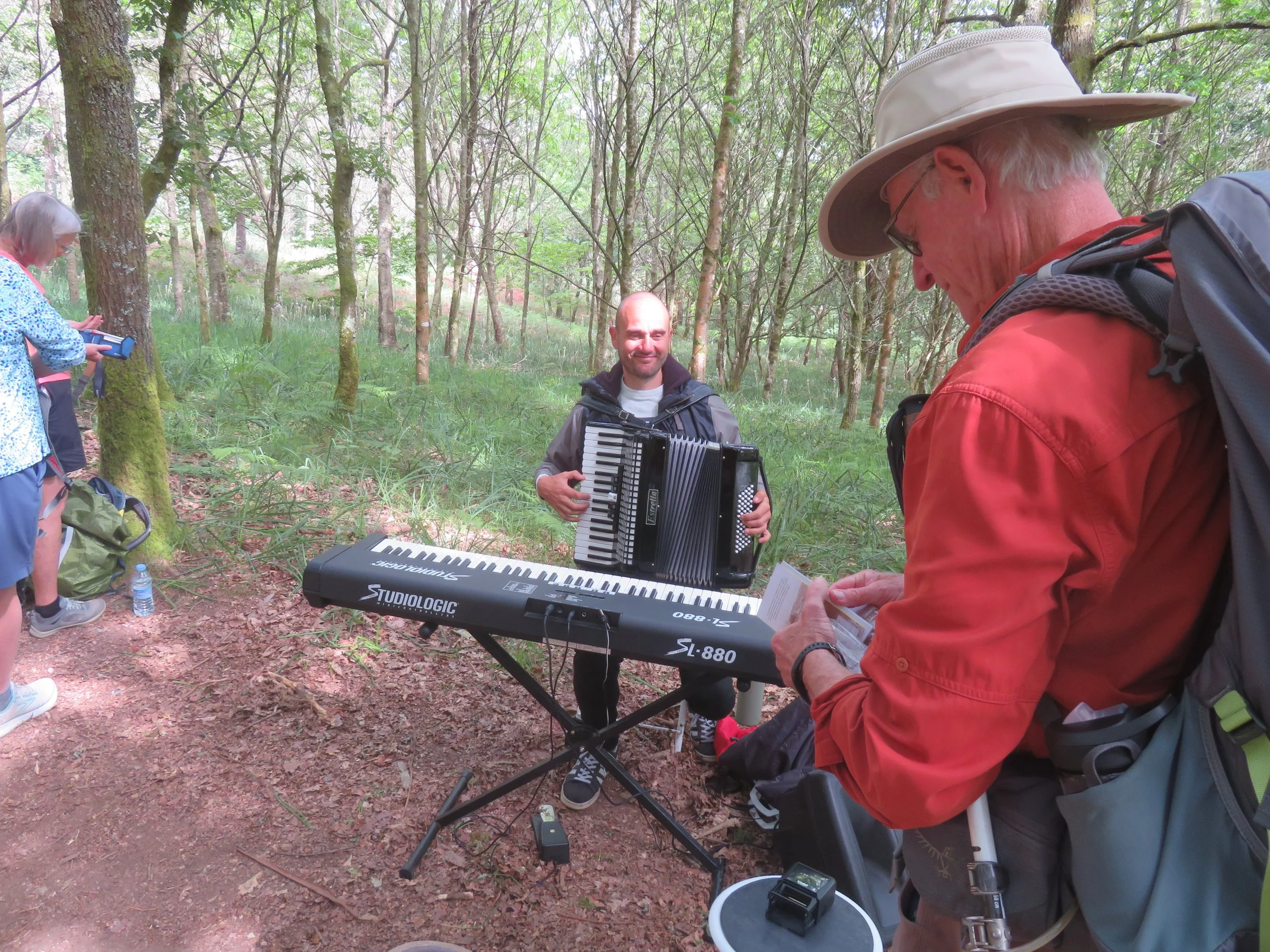
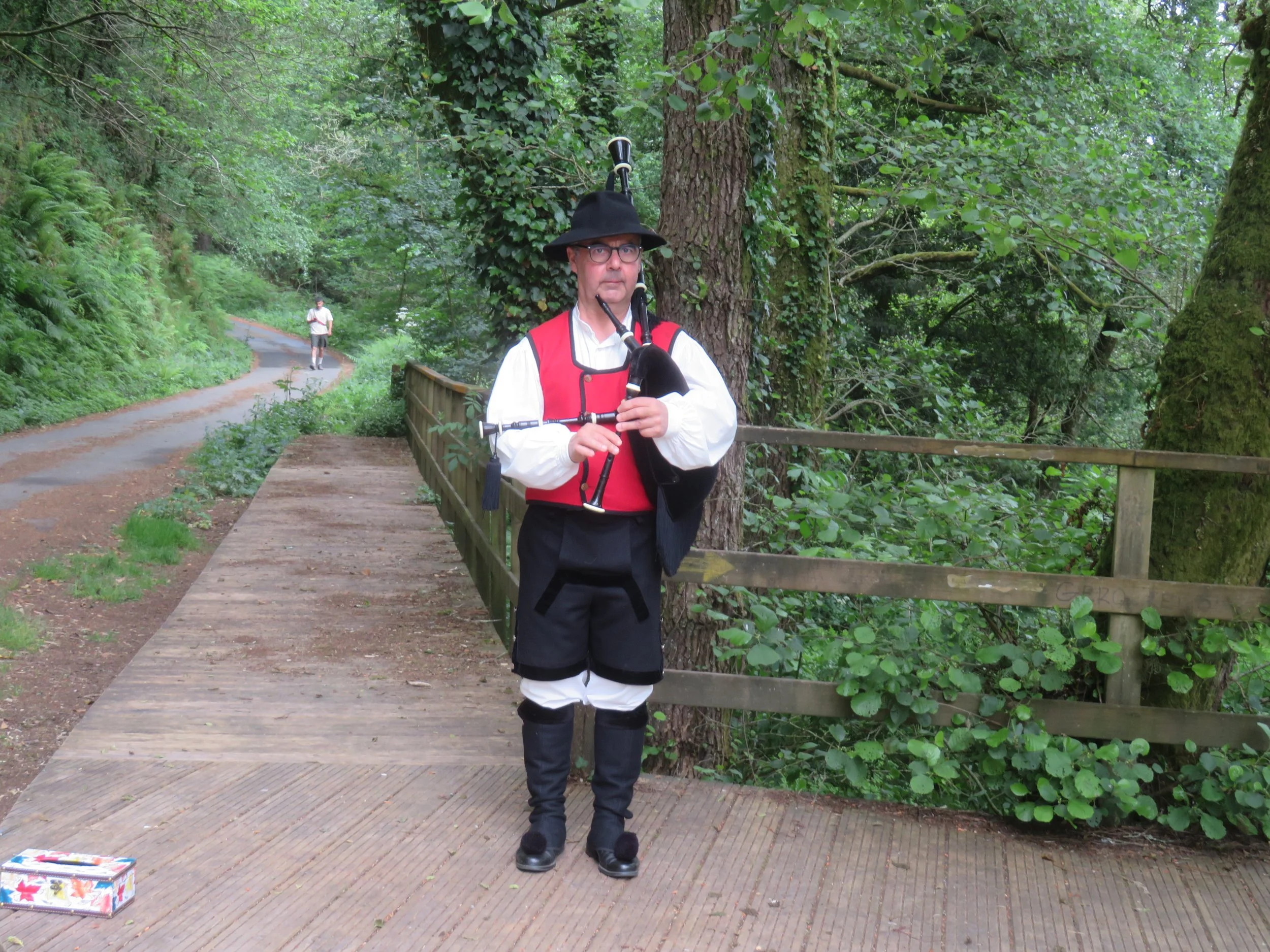
We encountered several musicians along the route today. An accordionist and another Galician gaita provided some melodies for our walking pleasure.
Despite the intermittent drizzle and hills, it was an easier walking day than most and we were thankful because our colds were getting the better of us. We had stopped in a local pharmacy and picked up some cold meds along our route, but we hadn’t had any lunch.
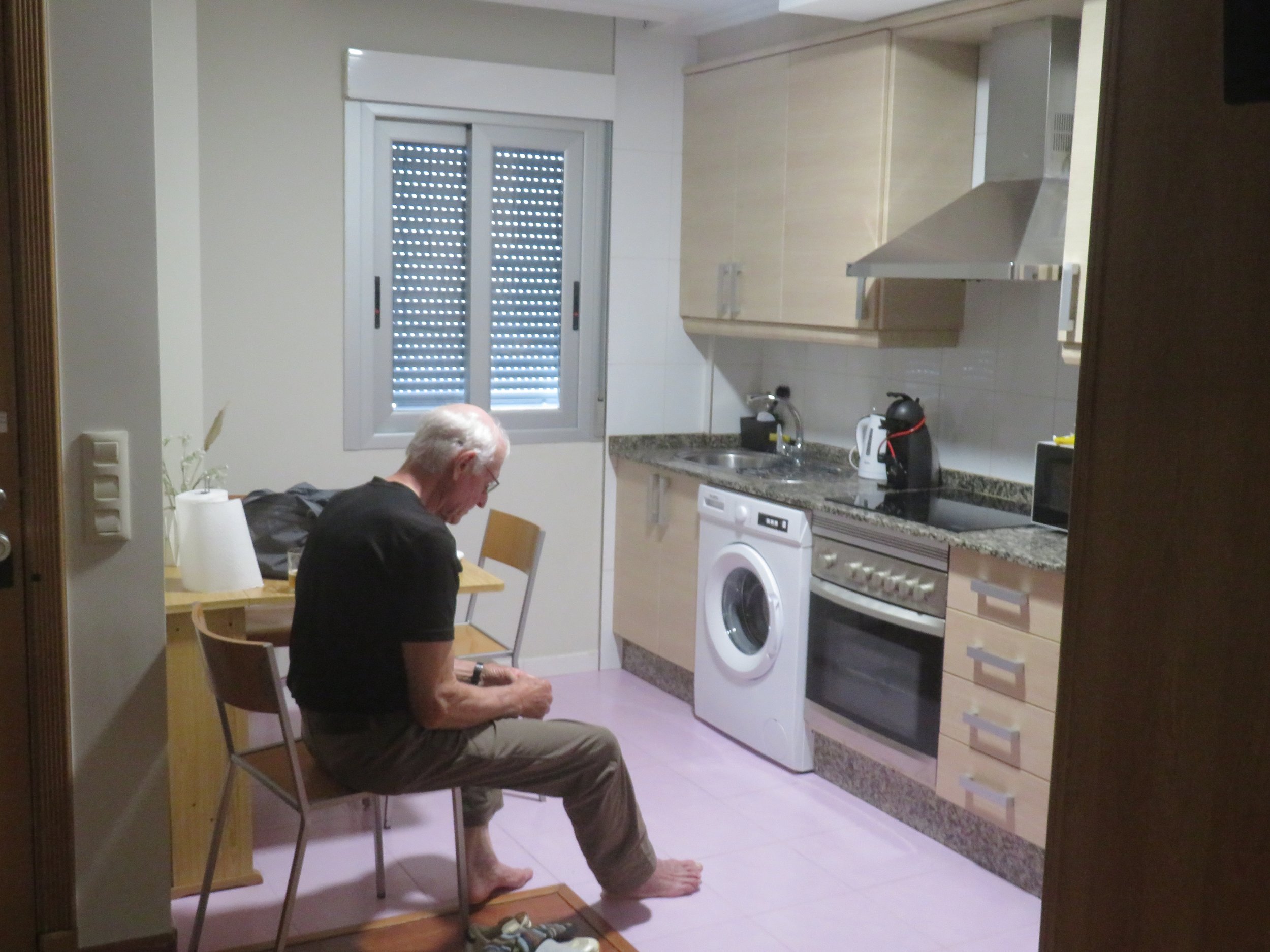
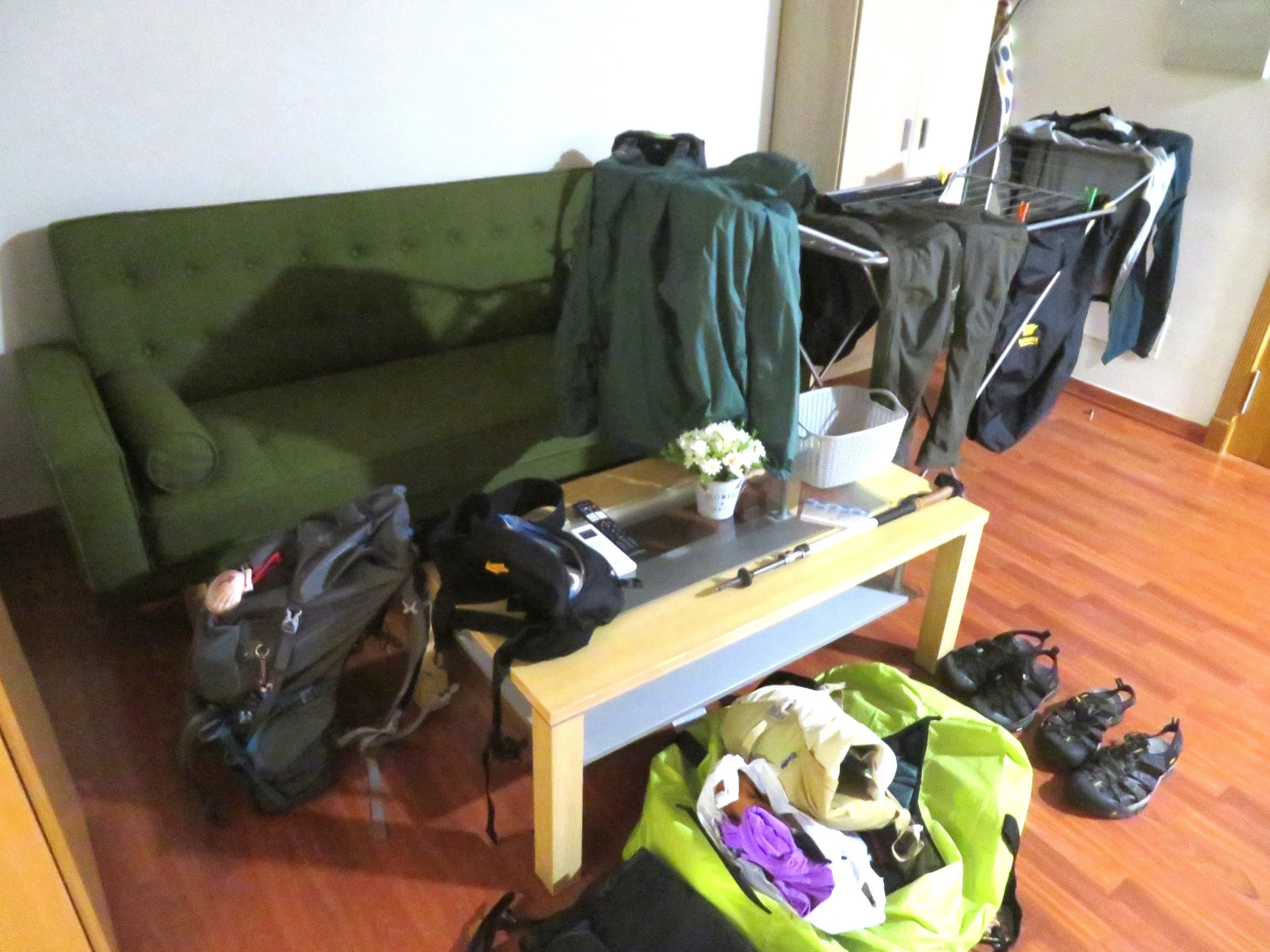
First things first, we checked into our apartment, which had a washing machine (hallelujah!). We did a quick wash, hung wet clothes on the drying rack, and then went in search of food.
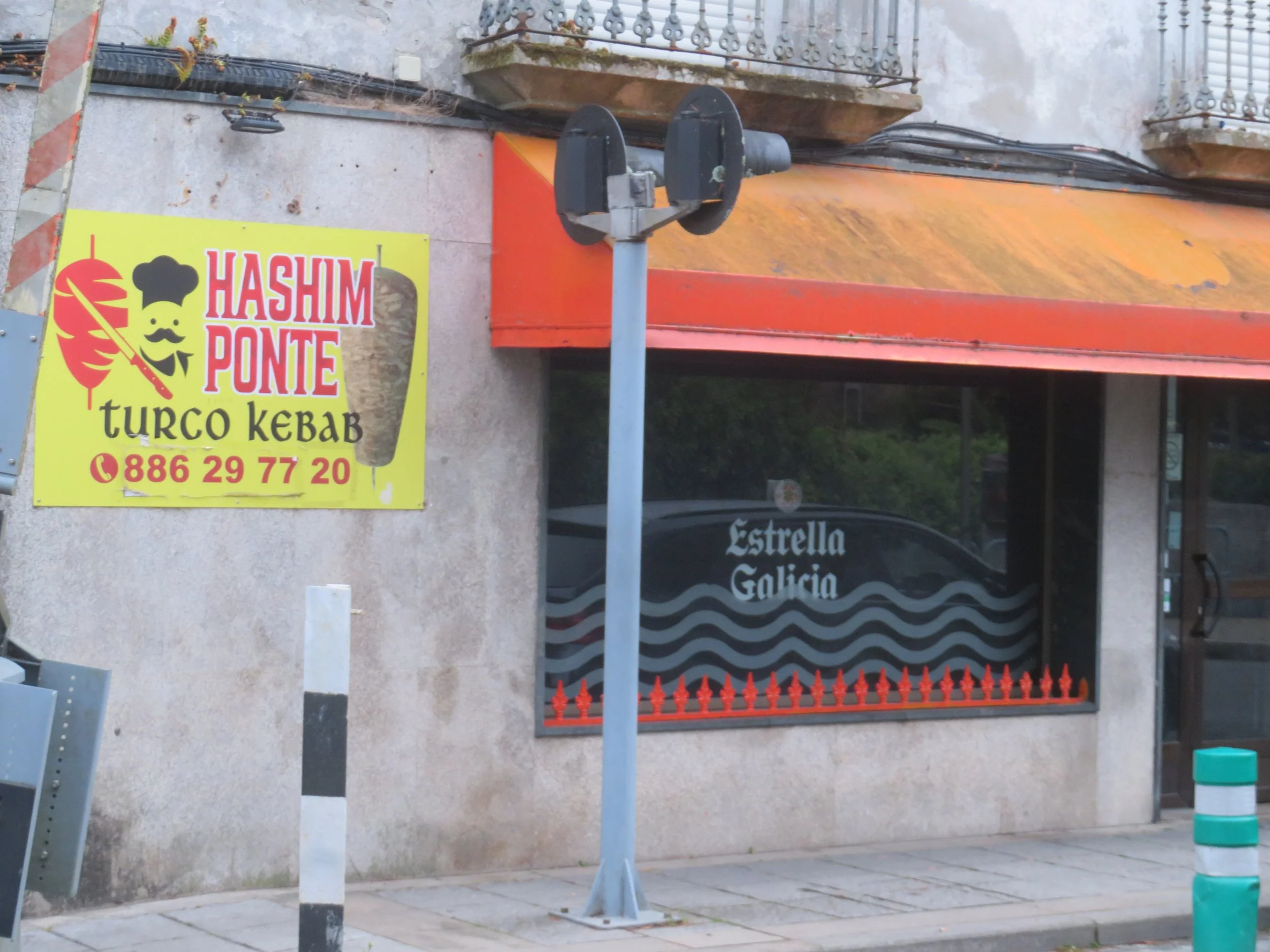
We were hungry. (Feed a cold, starve a fever.) Cafes and restaurants are usually closed between 2pm and 7 pm, and it was only 4 pm. Maps.me noted a pizzeria 1/2 mile away, but just around the corner, we stumbled upon a kebab place. It wasn’t fancy, but it was open. Search ended. Kebabs for dinner!
Day 16 - Padrón to Raices
With clean clothes and runny noses, we greeted the cool, damp morning, donned in rain gear once again.
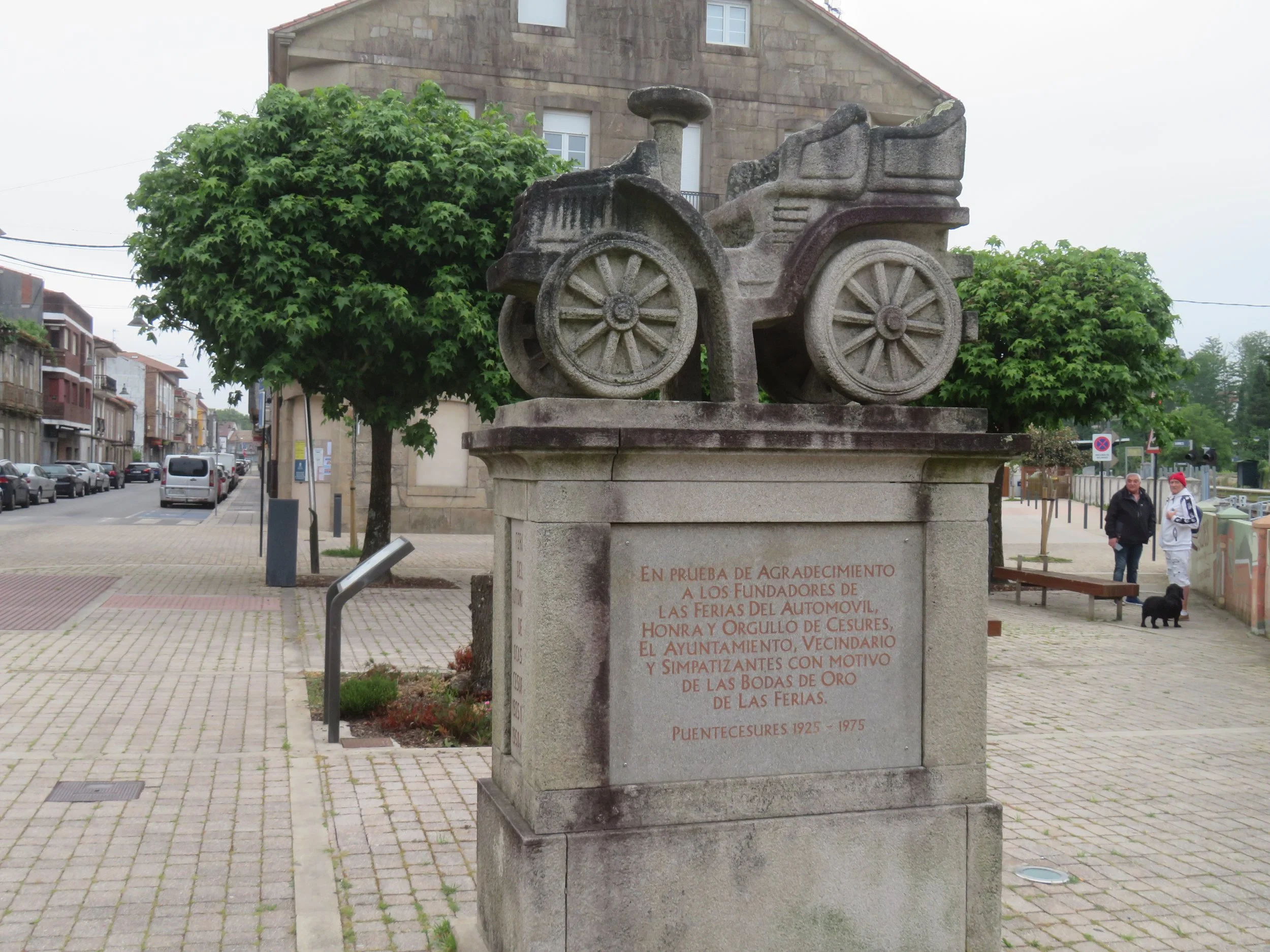
We were surprised to find a monument to used cars, but evidently, the creation of the auto fair in 1925 was considered a major feather in Padrón’s cap. This granite replica of a Renault Freder with registration number PO-02 commemorated the first ‘petrol’ vehicle in Galicia
We crossed the Pontecesures Bridge, once more in awe of the fact that it was the Romans who constructed this bridge over the Ulla River back in 1 AD.
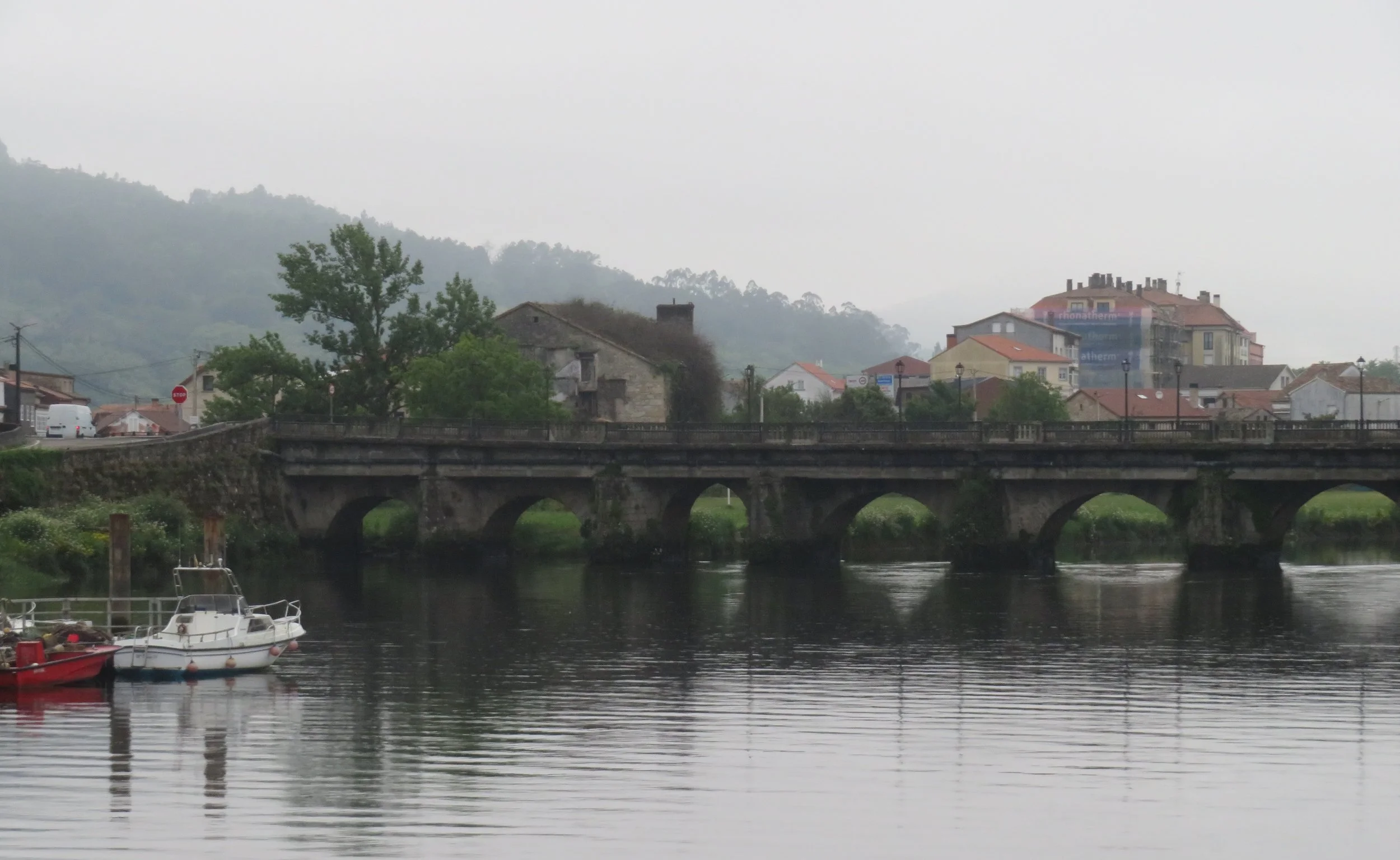
As you can see by the boats in the river above, Pontecesures, an estuary with access to the sea, is a river town, once an important commercial and economic hub for the area. It was along this river that the stone boat that transported St. James’ remains tied up and began the final walk to Santiago.
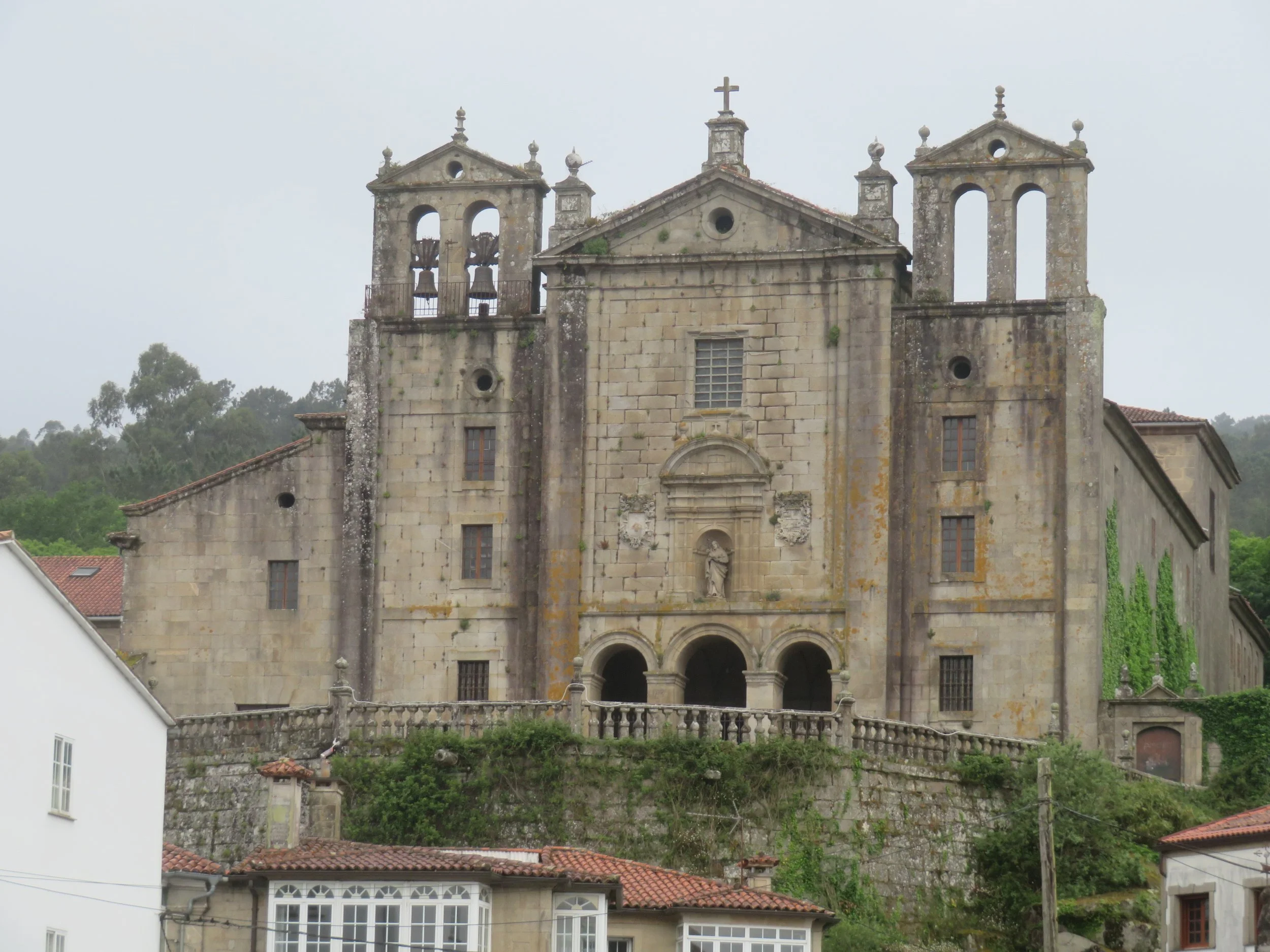
Iglesia de Santiago sits high on a hill
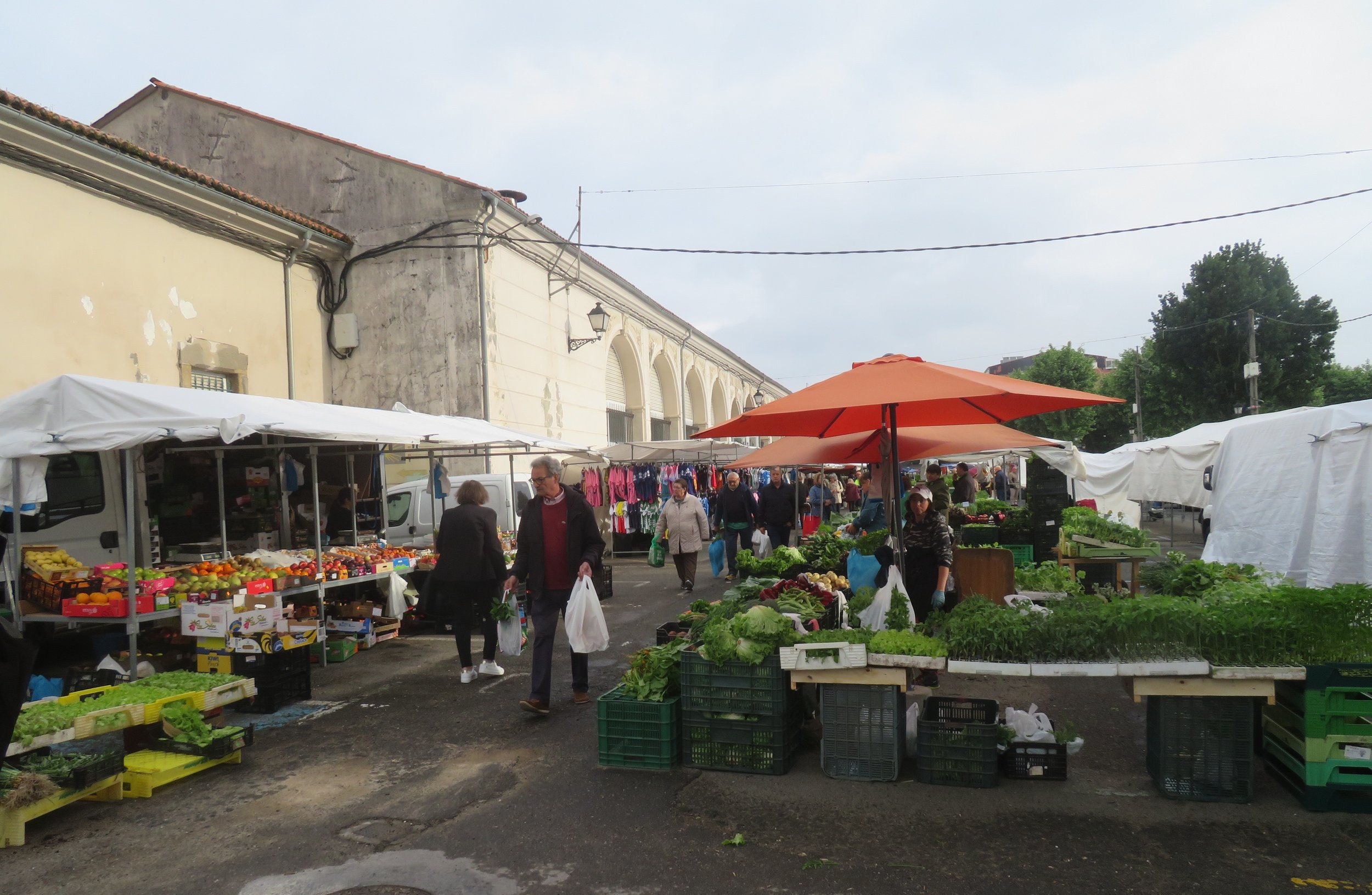
We were pleasantly surprised when we came upon the Plaza de Abastos and its lively market. We were aware that the town is noted for the lampreys that inhabit the river and that we’d just missed the annual Lamprey Festival. We probably would have passed on lampreys, but we did manage to snag a baguette for munching on the road.
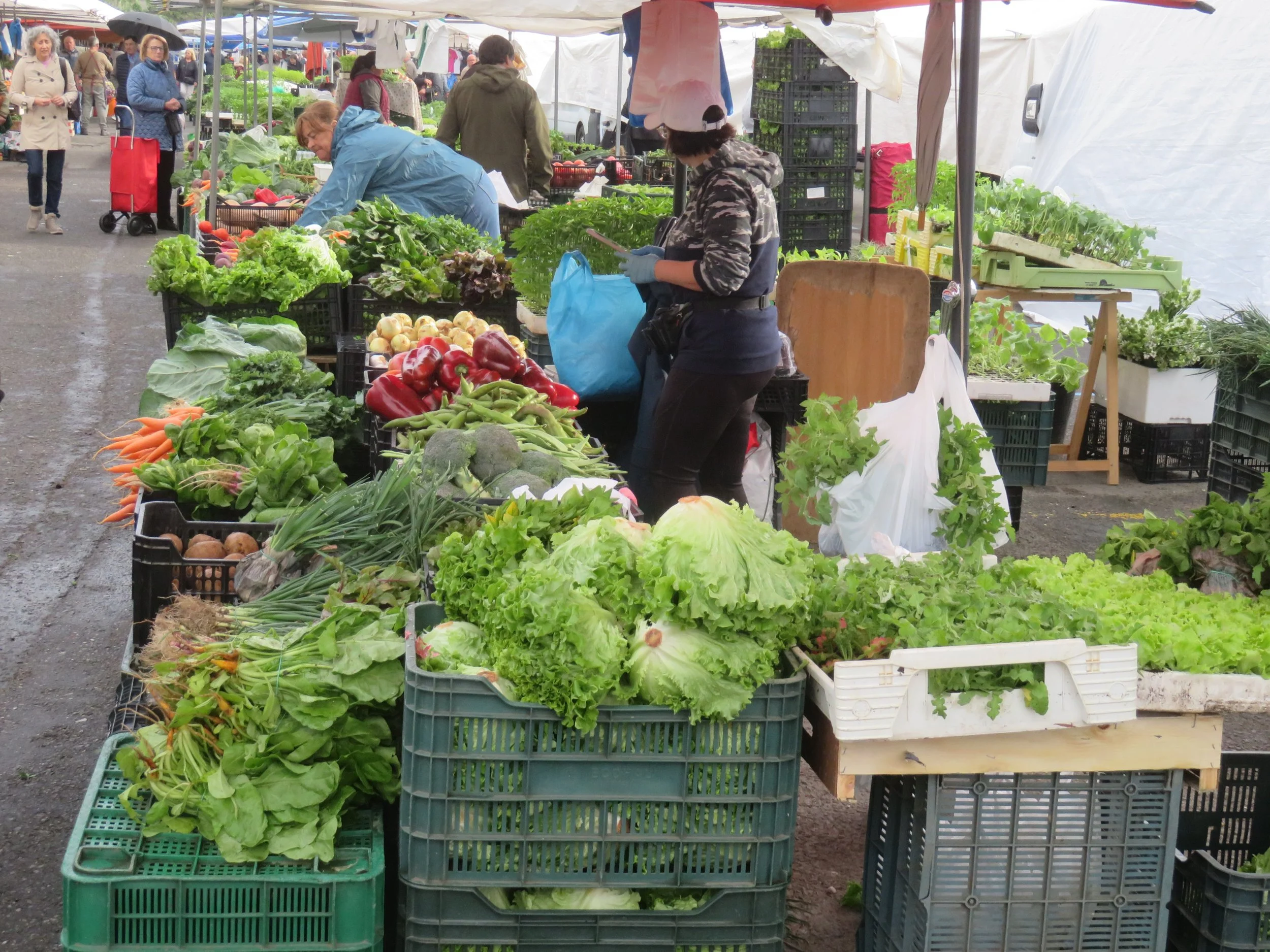
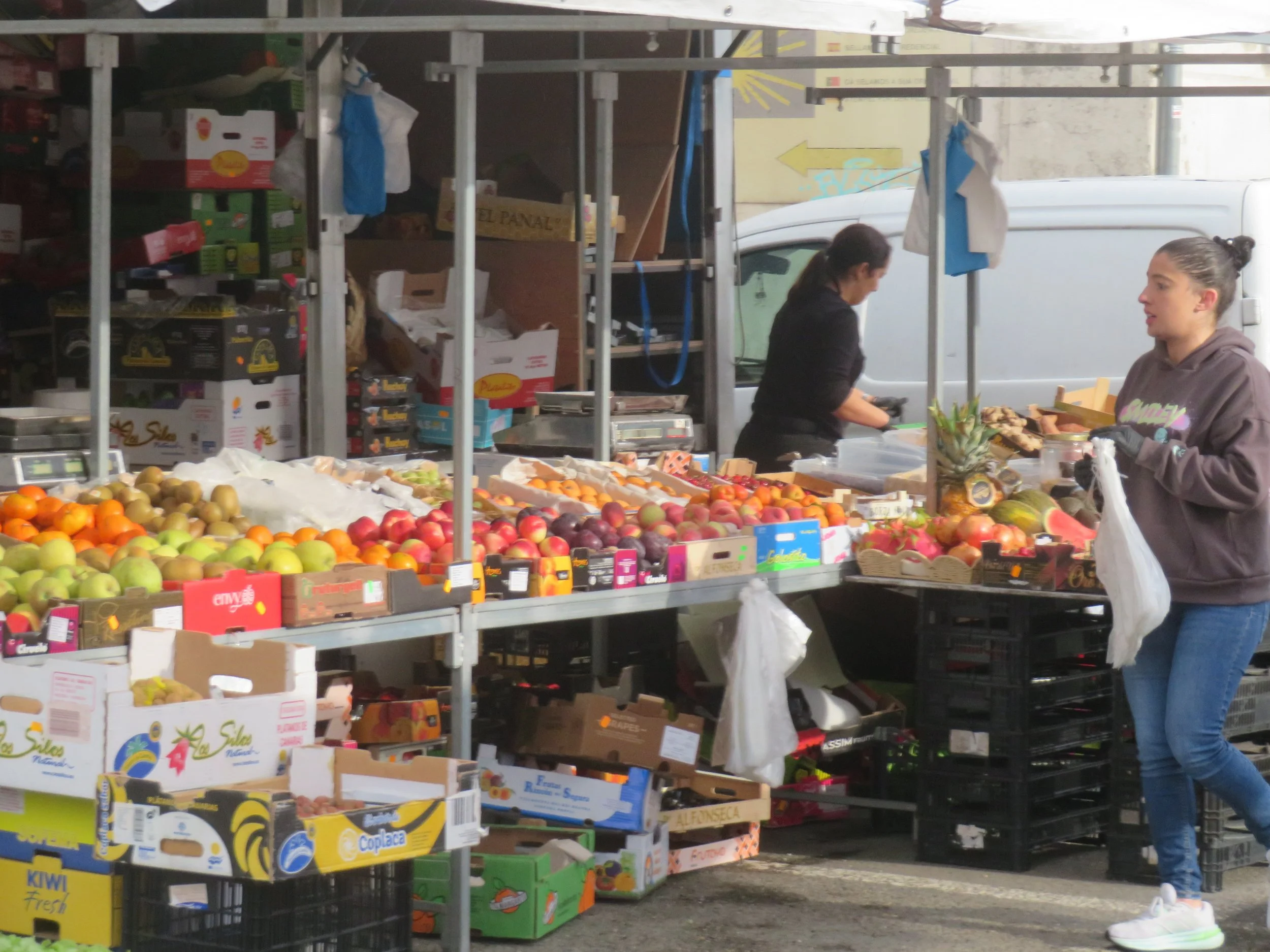
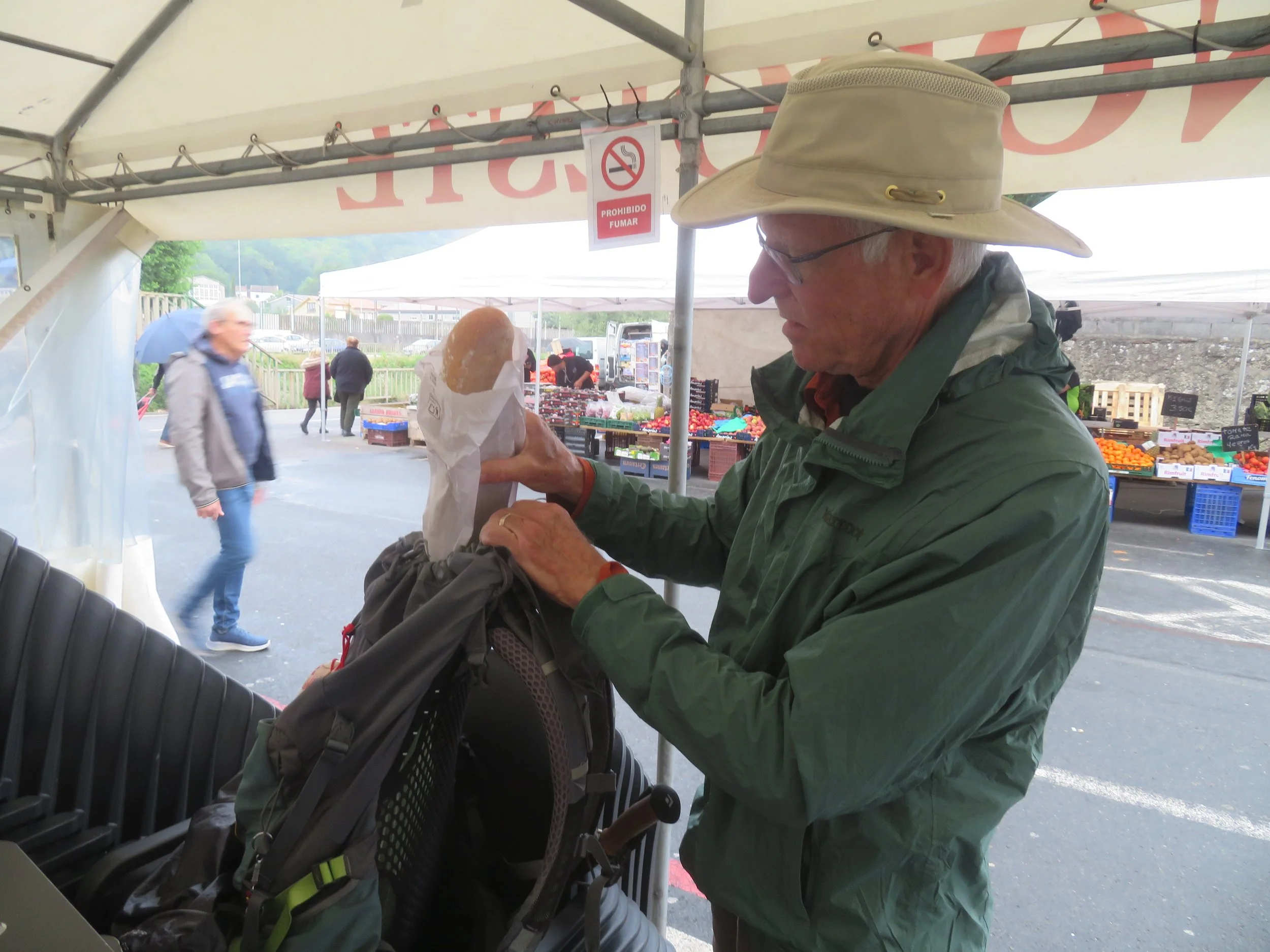
We continued under a dense gray sky. It rained, then sprinkled, then misted and spit for the rest of the day. We skirted around puddles and sometimes tromped through them. It was wet and slippery walking. When we came across the Santuario de Nuestra Señora de la Esclavitud, I had a bit of a problem with the translation. Our Lady of Slavery? A Marian church (honoring Mary) recorded two miracles which occurred here in 1582 and 1732 where people were cured and ‘freed from the slavery of their maladies’. Hence, the church’s name.
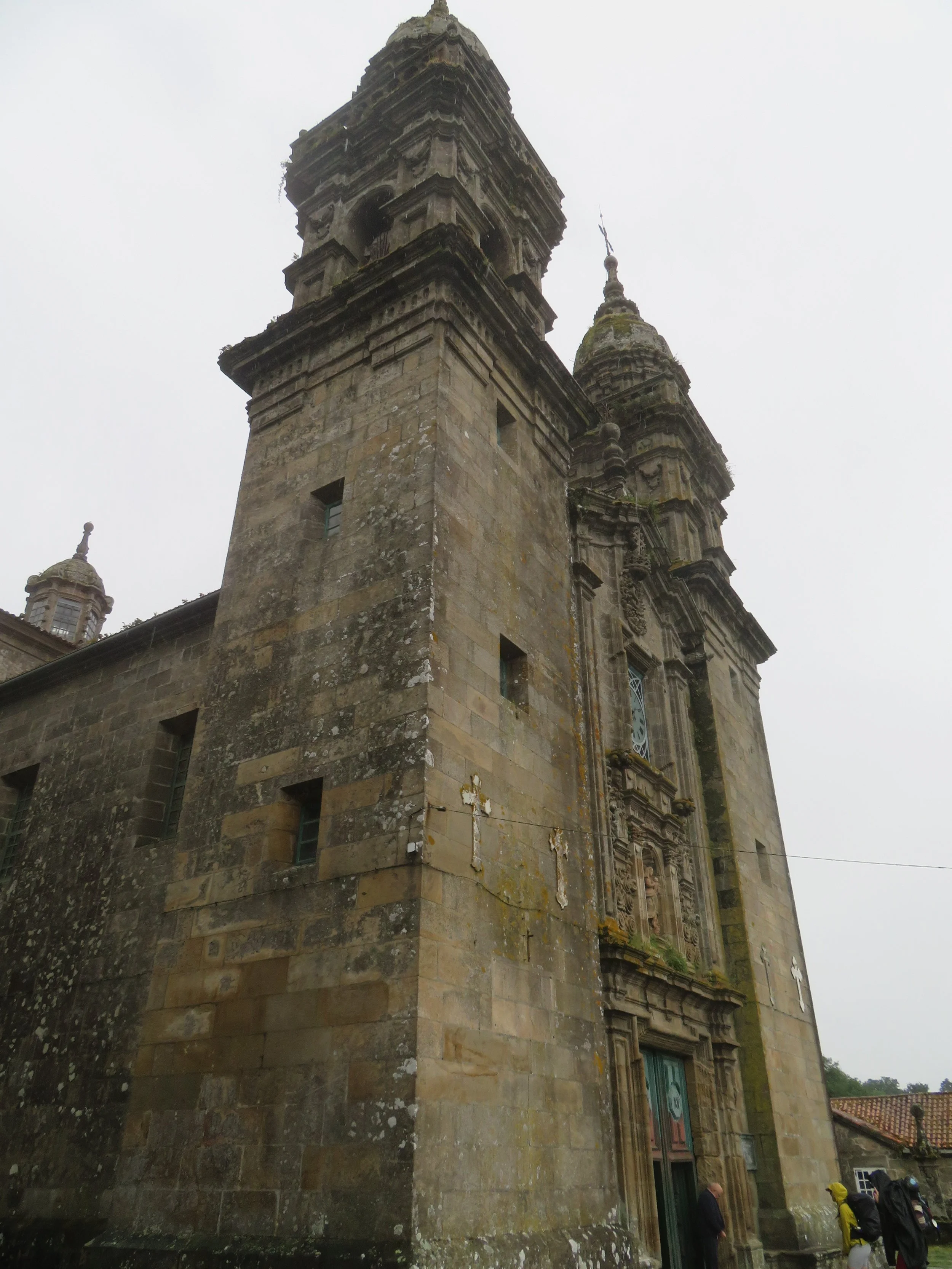
Santuario de Nuestra Señora de la Esclavitud
It was pouring and we stopped in as Mass was letting out. We waited till the church cleared, then made our way forward to admire the altar and side chapels.
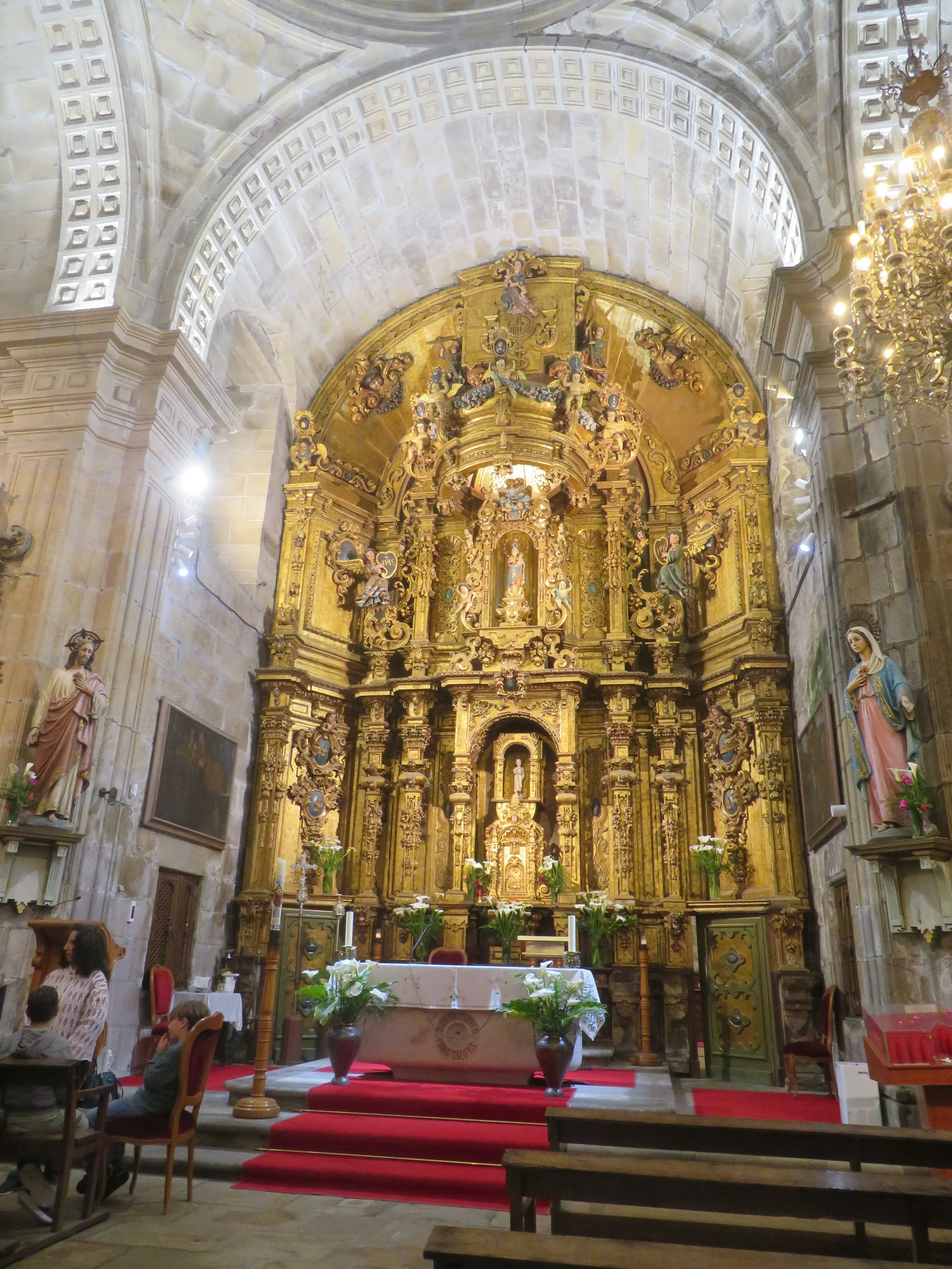
I inadvertently left my glasses on the pew seat and didn’t notice until we’d already gotten back onto the Camino. We turned around with a sigh, retraced our steps and entered the church once again. An older lady signalled that she’d found the glasses and they were at the back of the church, where, by coincidence, the deacon had just begun stamping pilgrim passports. I retrieved my glasses, received a stamp and headed back onto the Camino, feeling fortunate that we’d gone back.
Once again, we trudged up the hill and the lovely Romanesque Santa Maria de Cruces came into view.
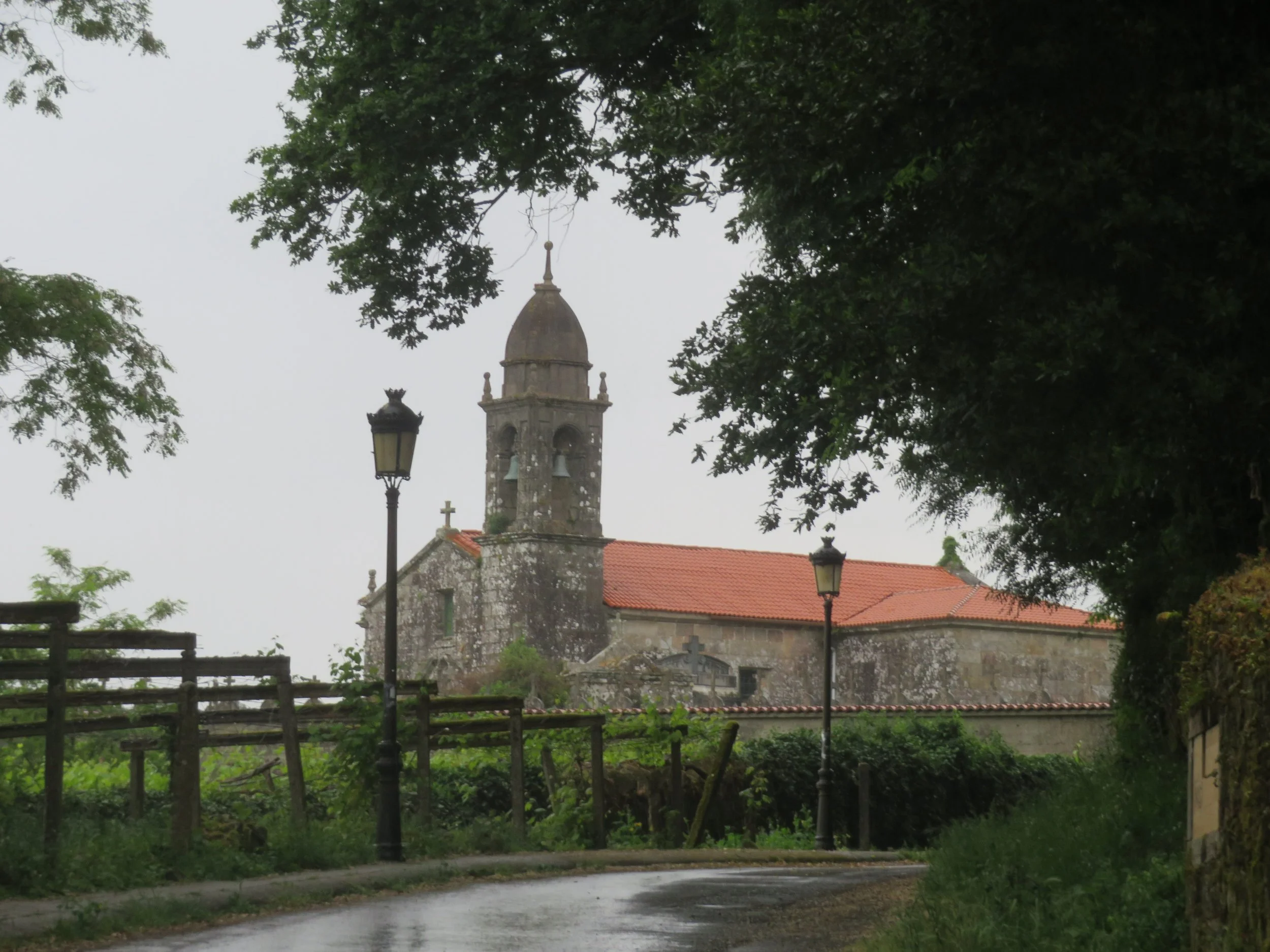
Santa Maria de Cruces
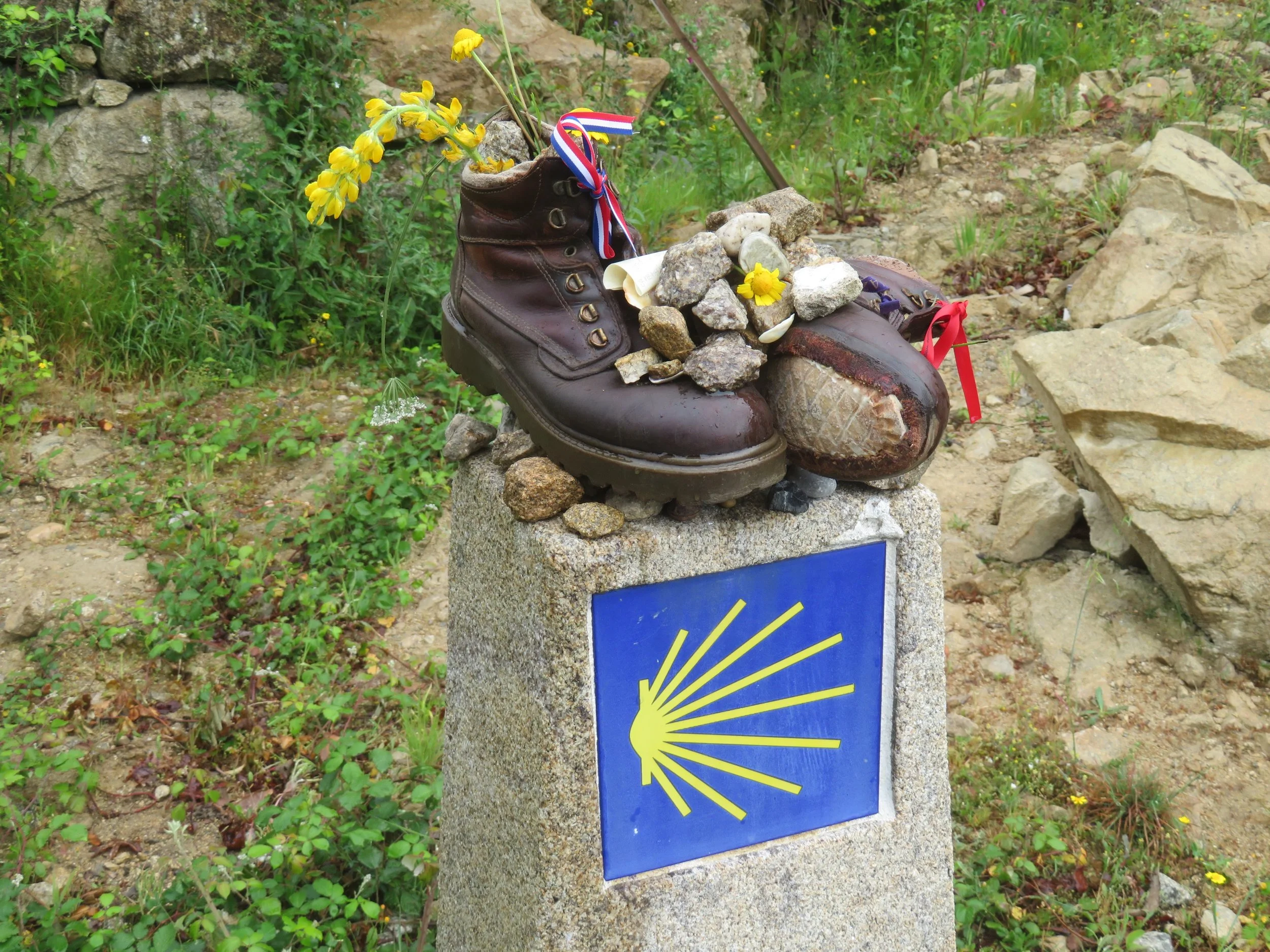
We could tell we were getting close to Santiago. With 18km left to walk, one pilgrim had left his worn, soleless boots on the Camino marker. We hoped he still had some shoes to manage the remaining 11 miles to Santiago.
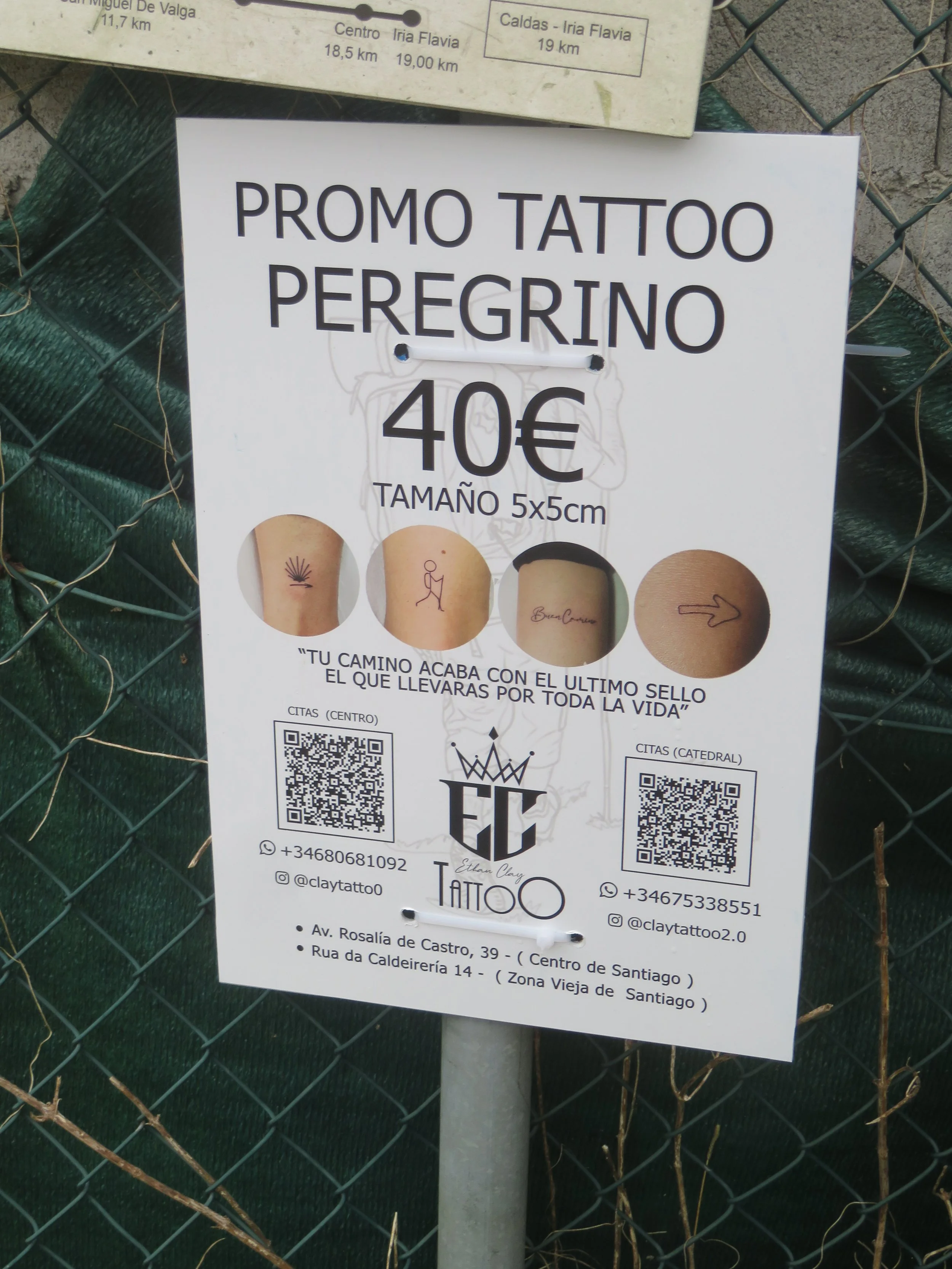
Ads for Camino/pilgrim tattoos started appearing along the path. Nah!
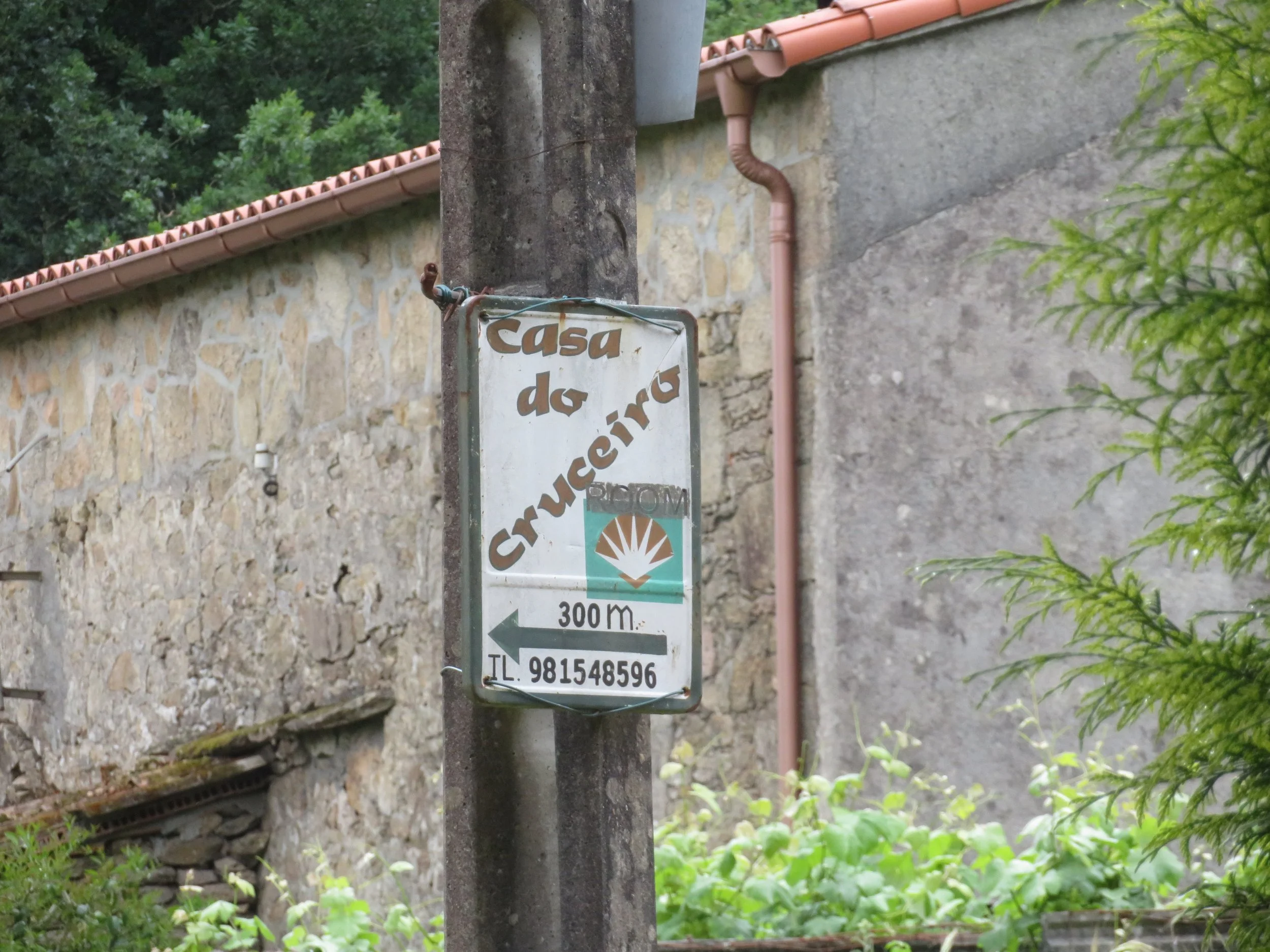
We had planned for this to be a shorter day and, as the crow flies, it was. The Camino, however, preferred a meandering route down alleys and through neighborhood streets and we were at 12.5 miles by the time we reached a small crossroads and a sign pointing to our evening’s lodging… only 300m (~1000 feet) away. We walked and we walked and saw more signs, but no Casa de Cruceiro. We met two other pilgrims as perplexed as we were. We walked a bit further, down a hill, around a corner, and finally, closer to 1/2 mile later, we found our destination.
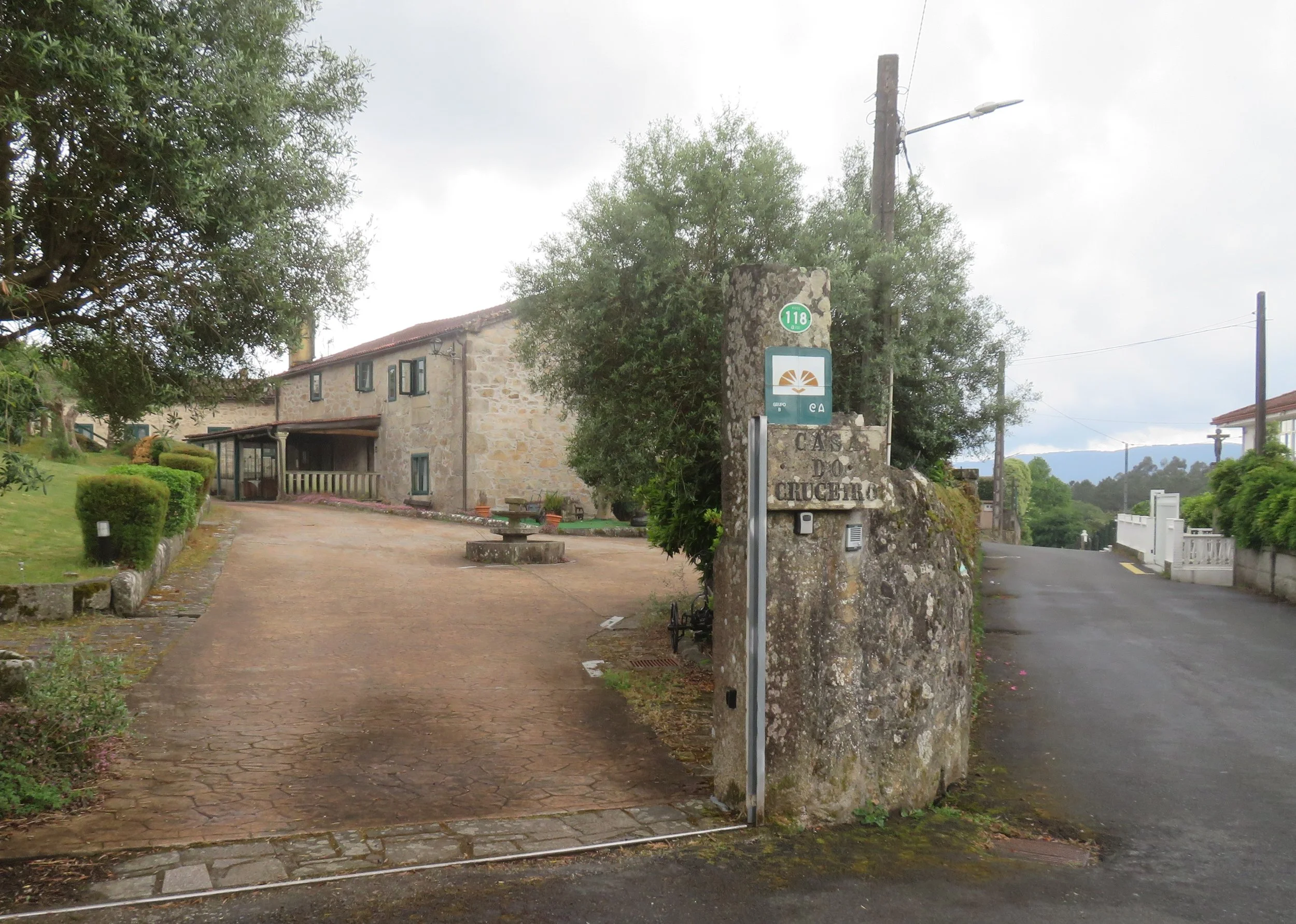
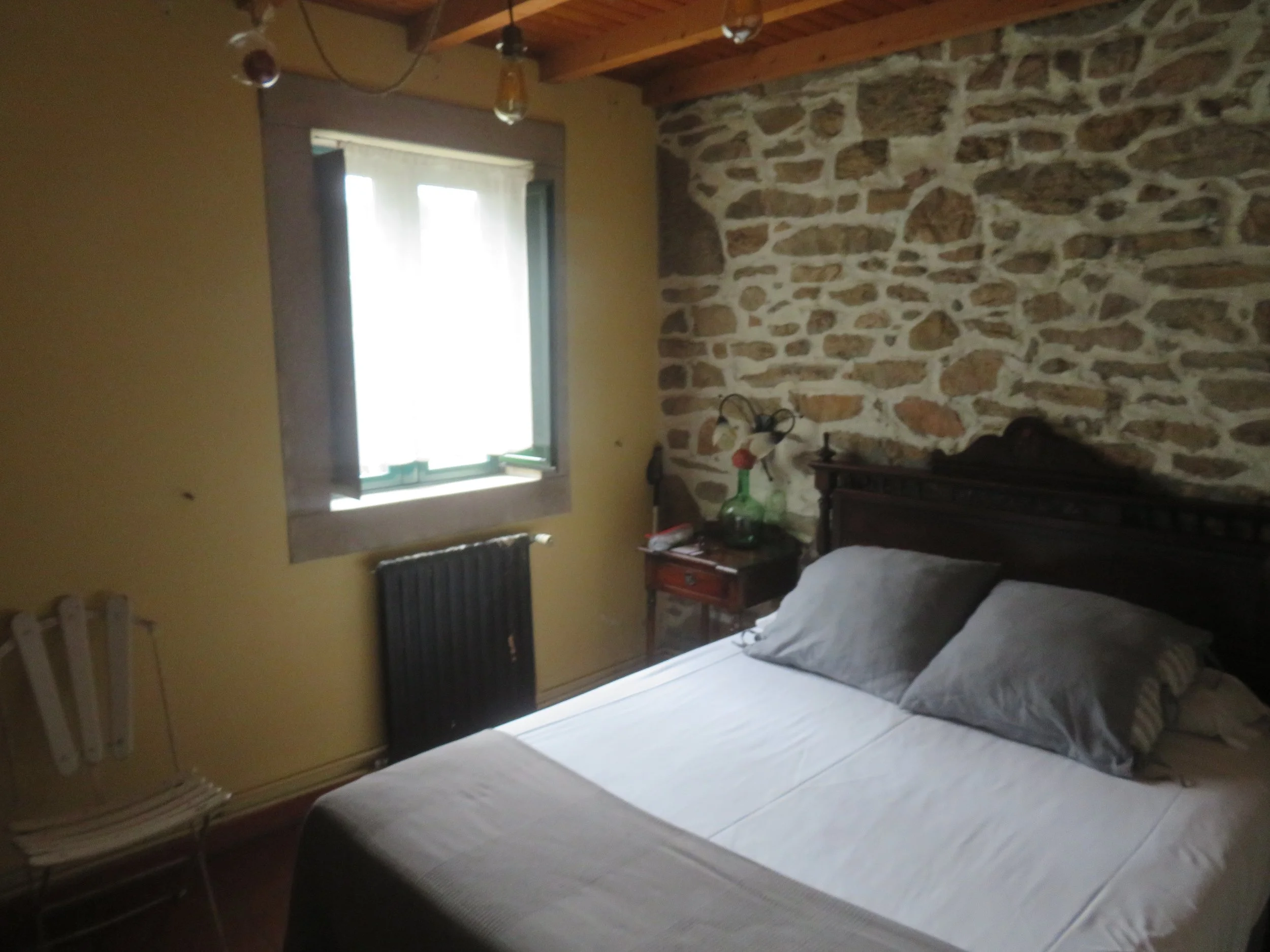
The room was cold and damp and though we were hungry, we passed on the expensive steak dinner on offer and opted for the rest of the bread and cheese we’d been carrying around since morning.
It was a long, cold night with lots of nose-blowing and hacking, but we survived. Because, you know what? Tomorrow, we’ll be in Santiago de Compostela!