
South to the Algarve
/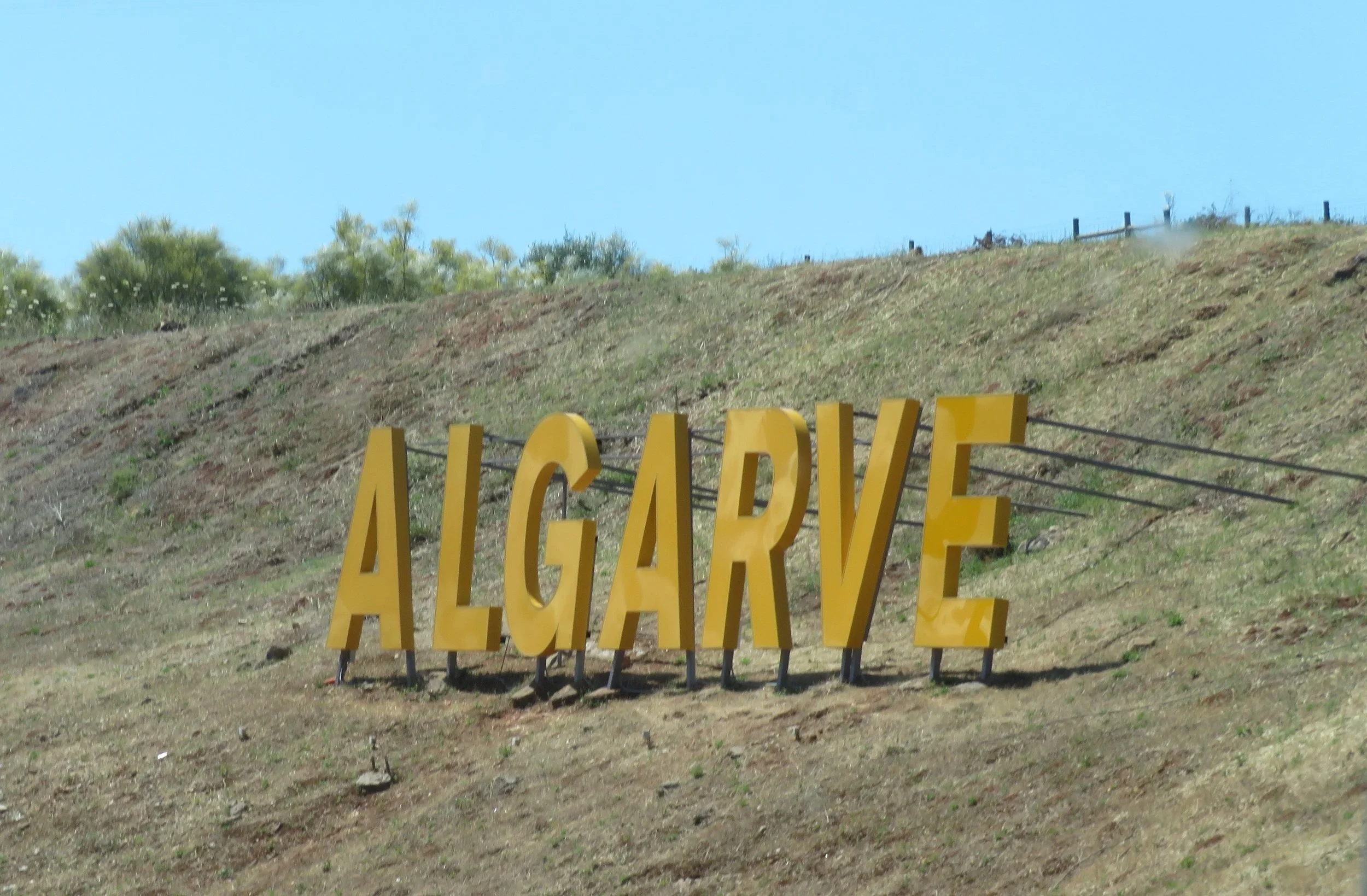
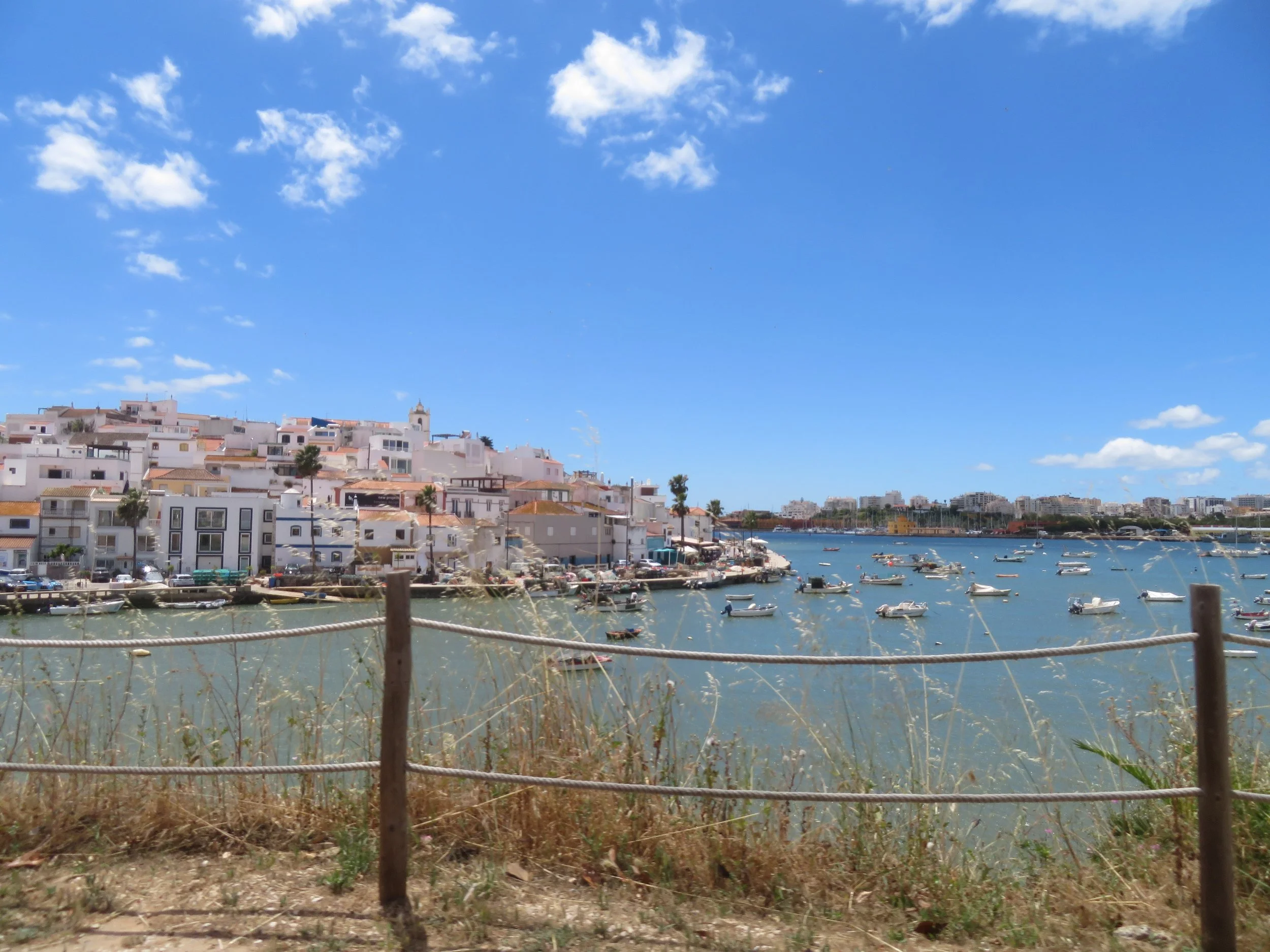
On the move again, we boarded an early morning Flix bus in Lisbon headed south for a 3-1/2 hour ride to Lagos in the Algarve, the southernmost region of Portugal. Influenced over the centuries by the Phoenicians, Romans, Visigoths, and Muslims, ‘Algarve’ derives from the Arabic ‘Al-Gharb’ meaning ‘the west’. The western Algarve extends from the city of Portimão to the western Atlantic coast. Dotted with small fishing villages and towns and one large city, Portimão, the coastline here is notably rugged and windswept.
Our long-time cruising friends, Brit and Axel, whom we hadn’t seen for 17 years, were waiting for us at the bus station in Lagos. We’d first met them in Panama after transiting the Canal. We sailed with them up Panamanian rivers and then on to Ecuador. We parted ways on different routes across the Pacific, but met up again in French Polynesia, Tonga, and later in New Zealand. We made lots of good memories together during our travels.
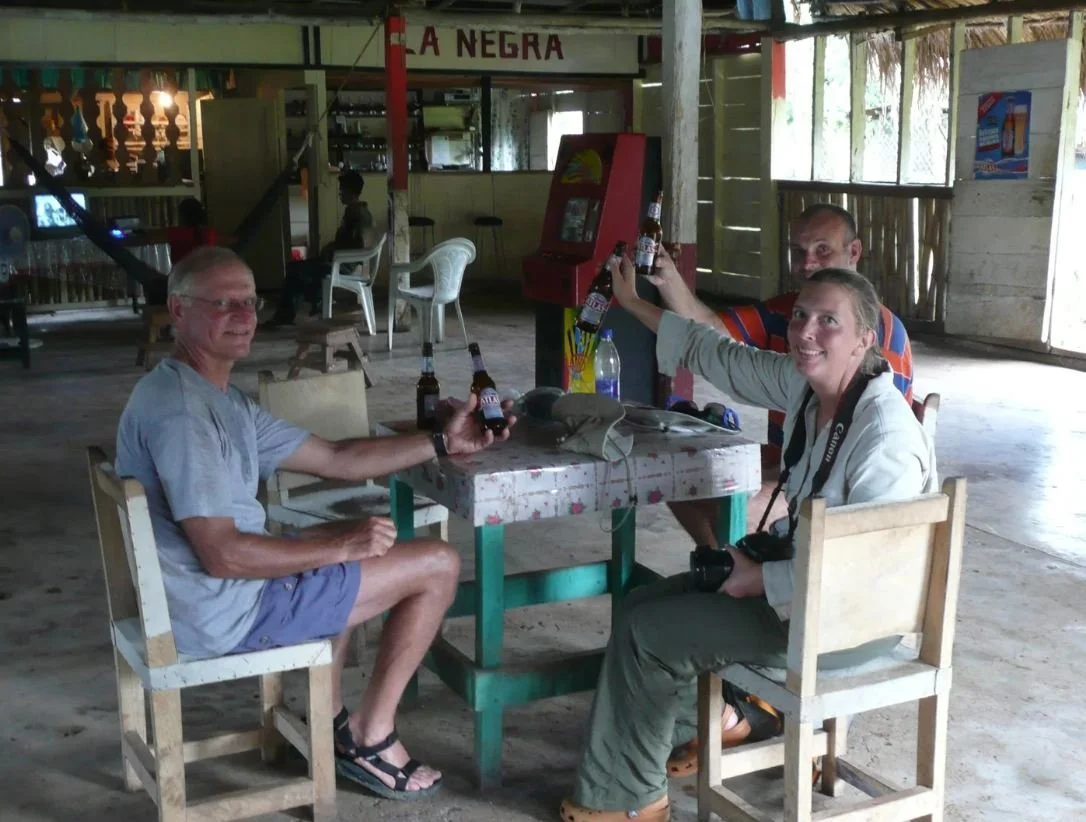
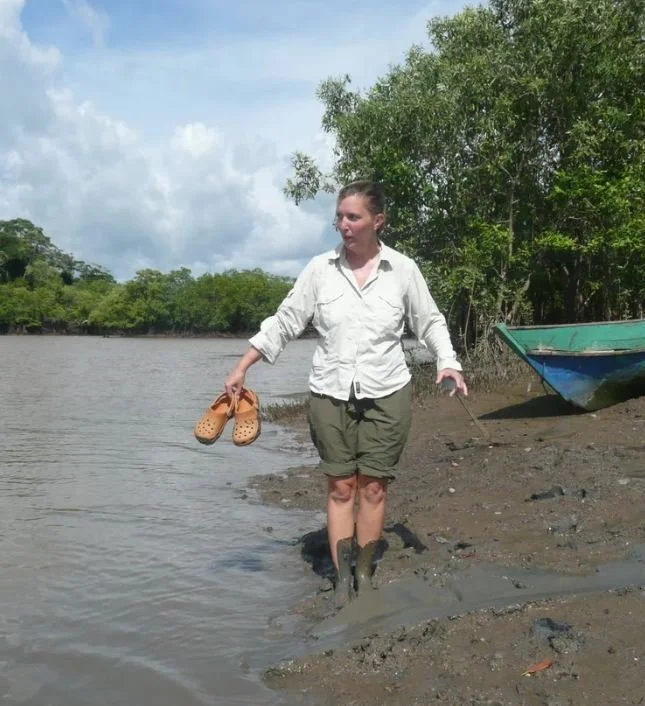
We were within walking distance of our apartment, so they accompanied us there as we checked in, dropped off our backpacks, and then we set out for lunch and lots of conversation on the Lagos waterfront. Good friends are like that. After years and years of being apart, getting together seemed so natural, as if 17 years of not seeing them had disappeared, and we picked up right where we left off, filling in the gaps of lost years as we went along.
The original plan was to spend several days with them aboard their catamaran, La Ola (The Wave), but as luck (and boats) would have it, they were ‘on the hard’ waiting for a delayed part which precluded our stay aboard.
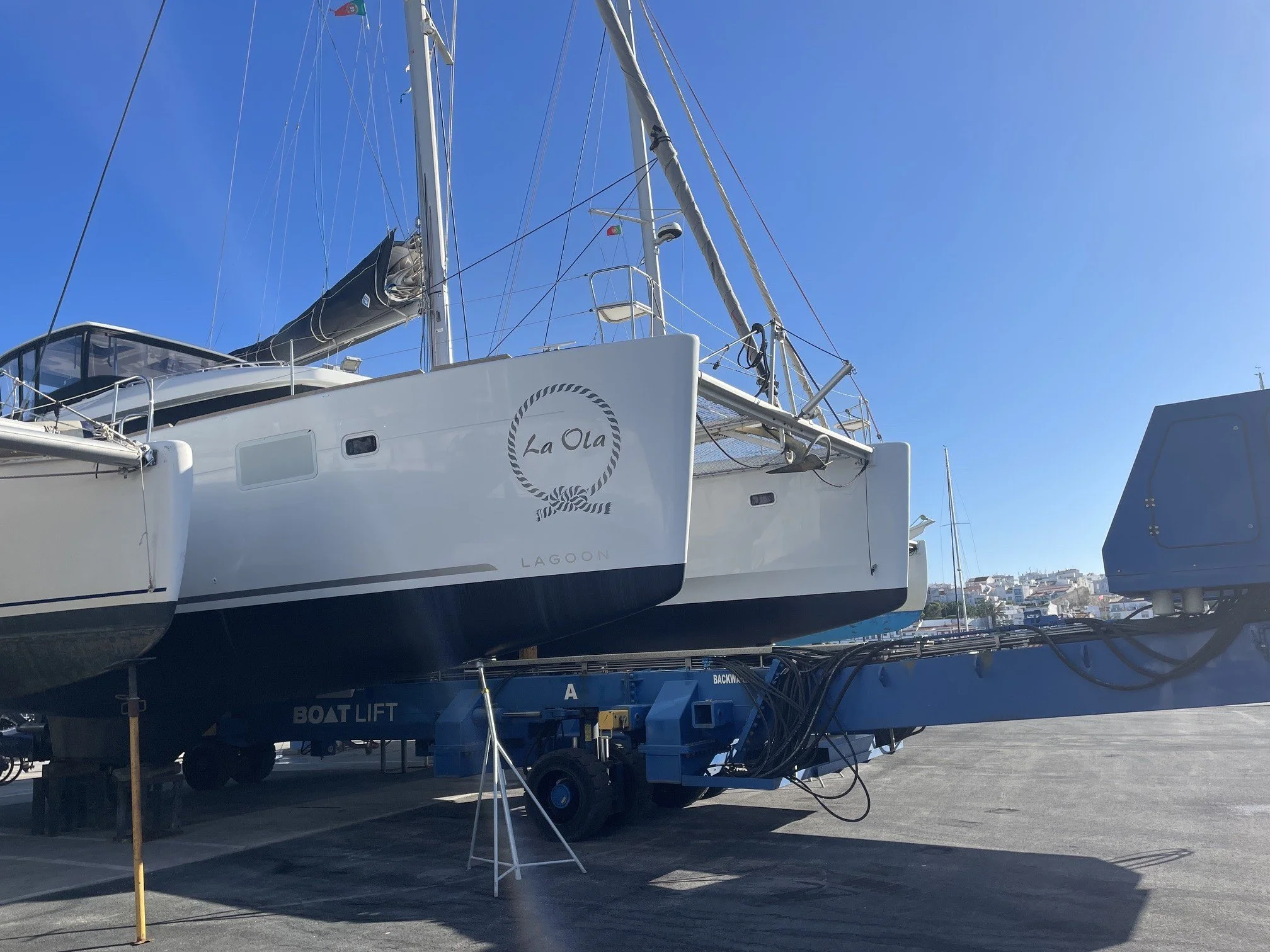
Beautiful ‘La Ola’, on the hard
It mattered little; we still got a tour of La Ola and shared several meals and cocktails with them aboard anyway. We also got to renew our acquaintance with Käpt'n Blaubär. This huge blue bear has traveled on land and sea with Brit and Axel for over 25 years. He hasn’t aged much, but we have definitely shown some wear.
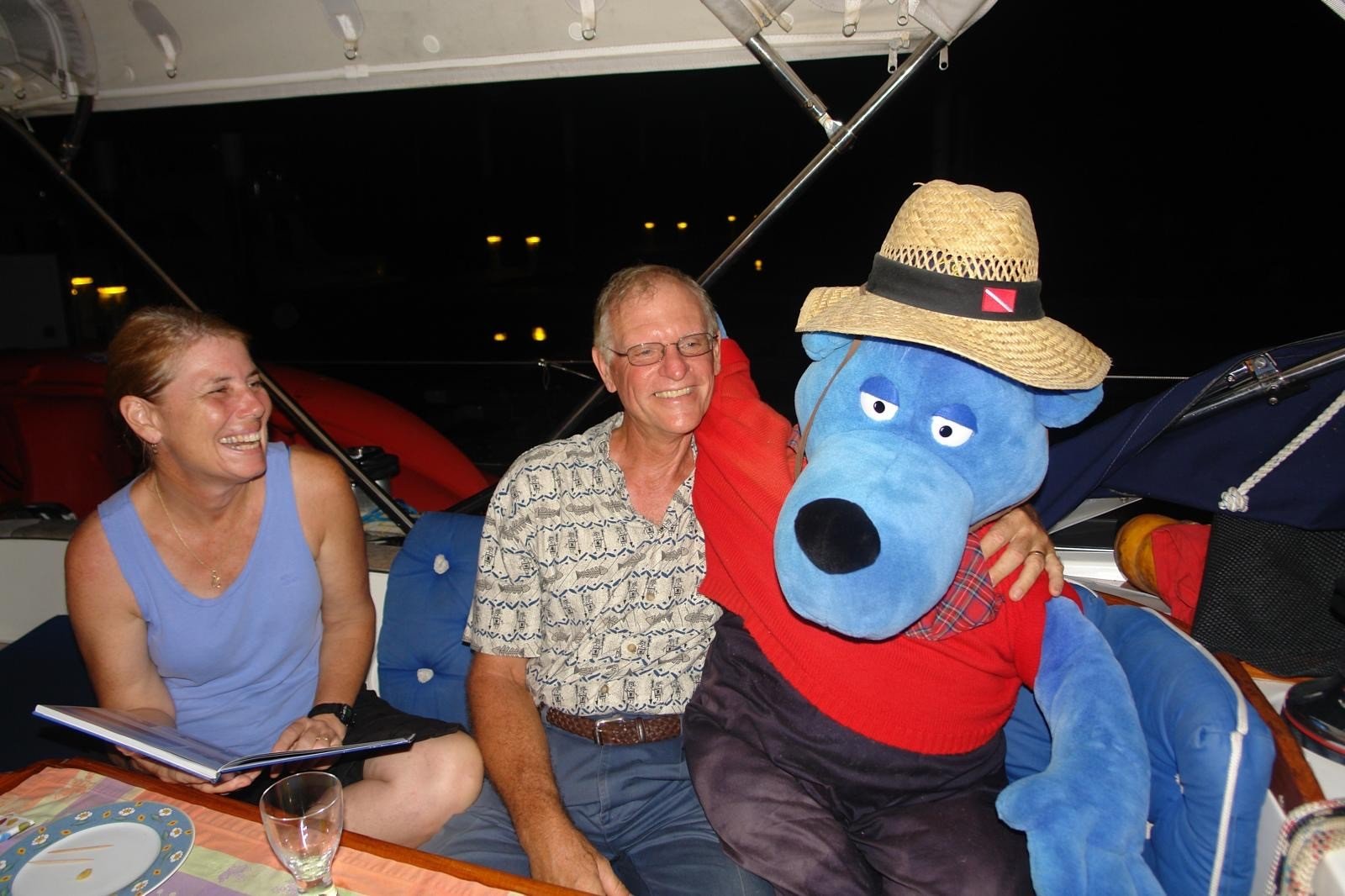
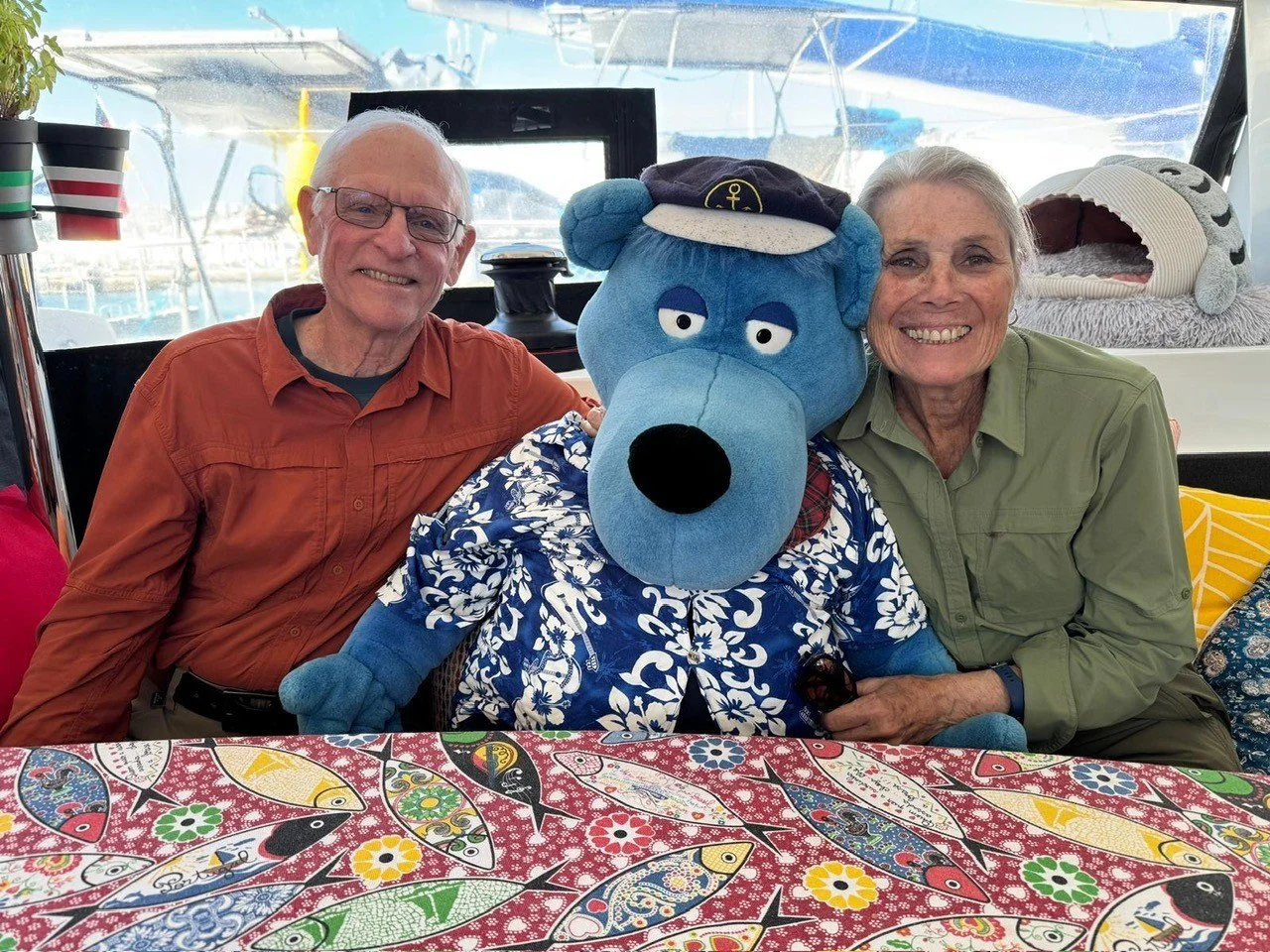
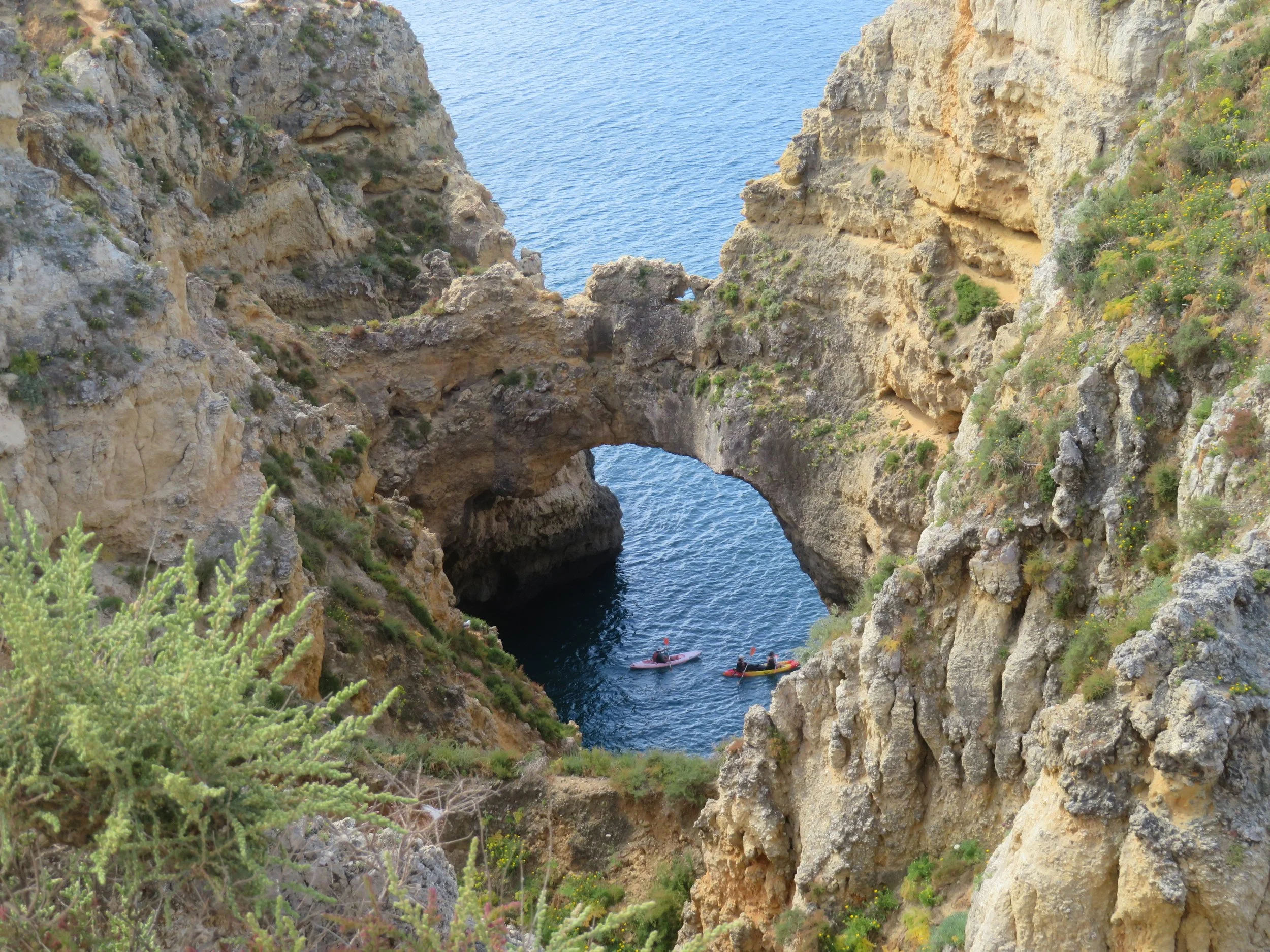
Our time with our friends was short. We only had two days to spend before heading back to Lisbon to catch our plane home. Axel rented a car, and Brit put on her ‘tour guide’ hat, and the next morning we headed to beautiful Ponta da Piedade, a rocky cape that sits about 10 minutes south of Lagos.
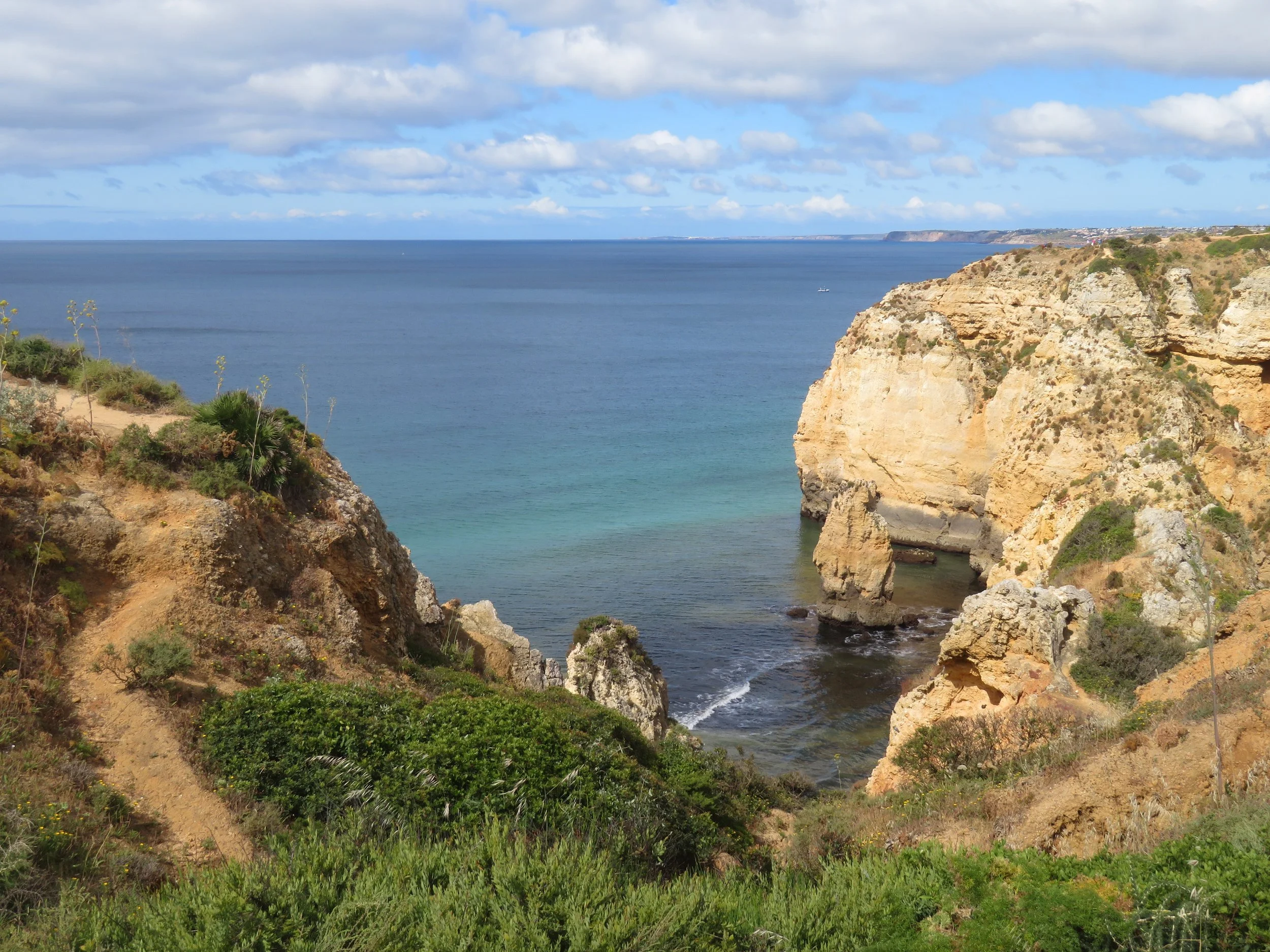
Ponta da Piedade’s stunning golden limestone cliffs
Walking on a network of boardwalk trails, we viewed dramatic limestone cliffs, grottos, sea caves, sea pillars, arches and beyond, a sparkling Atlantic Ocean. The caves were used as shelter for fishermen and smugglers throughout the centuries. Nowadays, there is a robust tourist industry which offers guided boat and kayak tours through the caves and grottos.
Ponta da Piedade Lighthouse is a stone masonry tower sitting 170’ above sea level (51m) with an attached lightkeeper's house. It was constructed 1912–13, on the site of the ruins of the "Nossa Senhora da Piedade" (Our Lady of Mercy) hermitage. It’s still operational and automated now and provides a photogenic landmark for visitors.
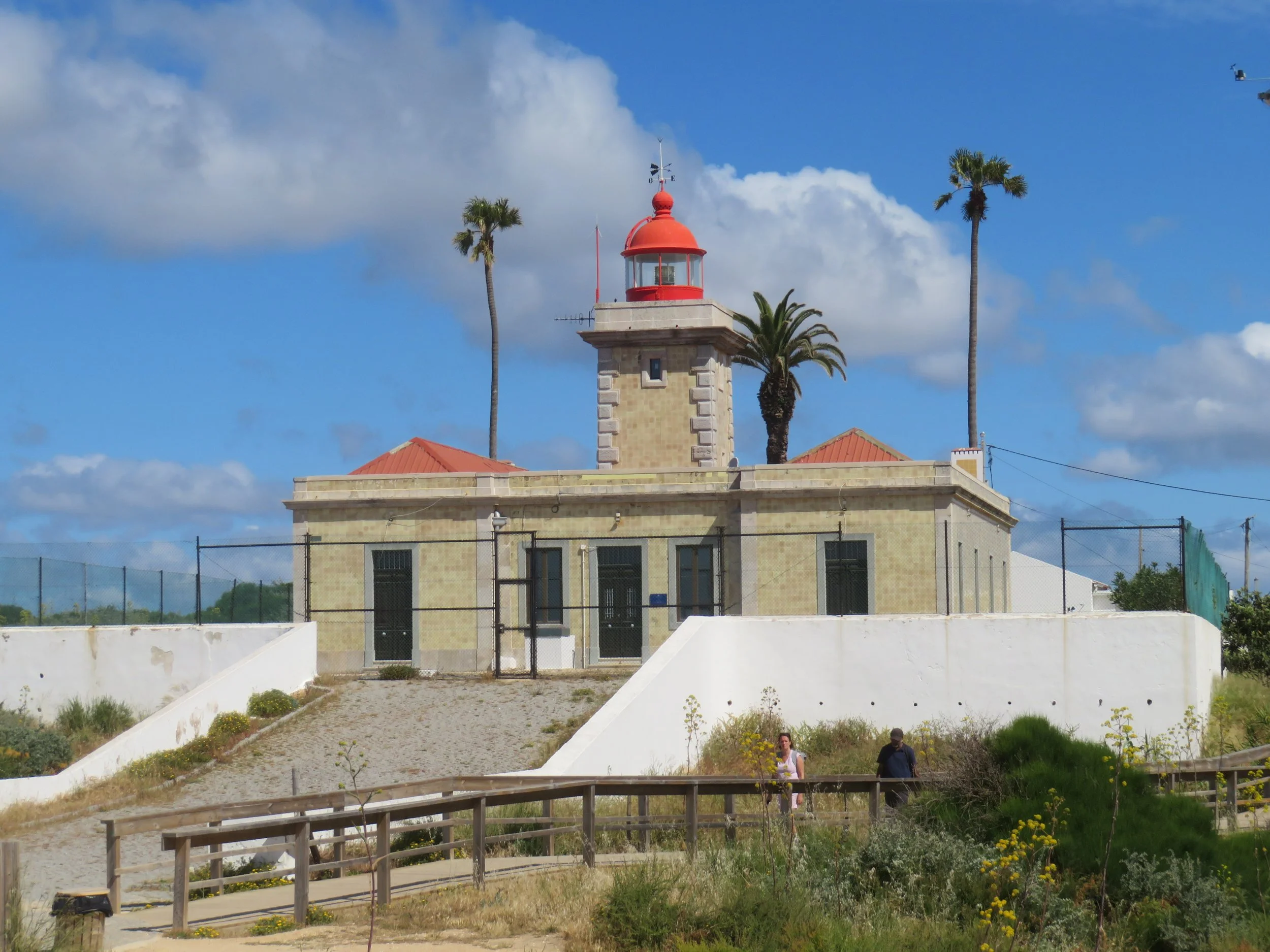
Ponta da Piedade Lighthouse
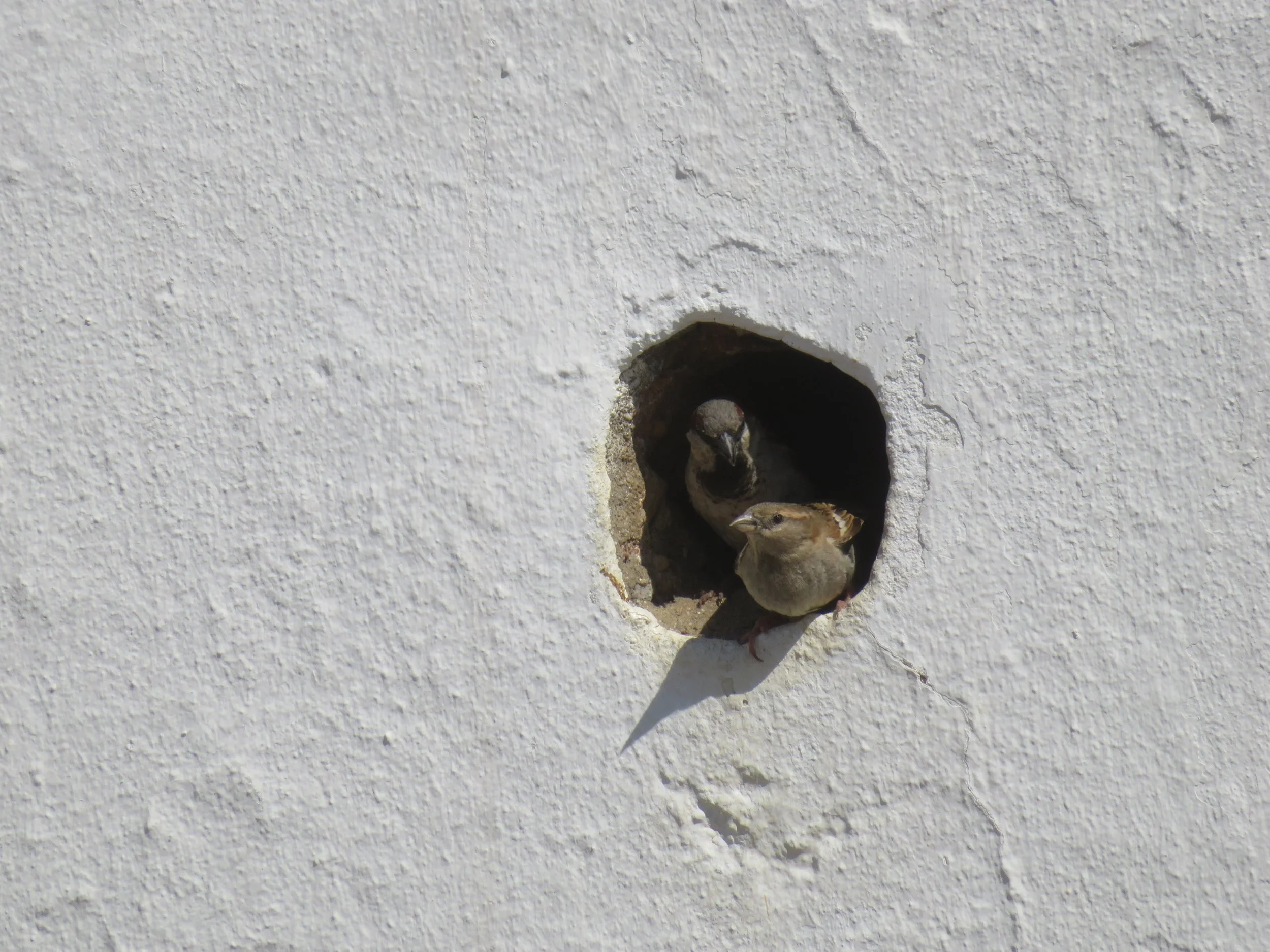
Dozens of sparrows had made their hole-in-the-wall homes just below the lighthouse
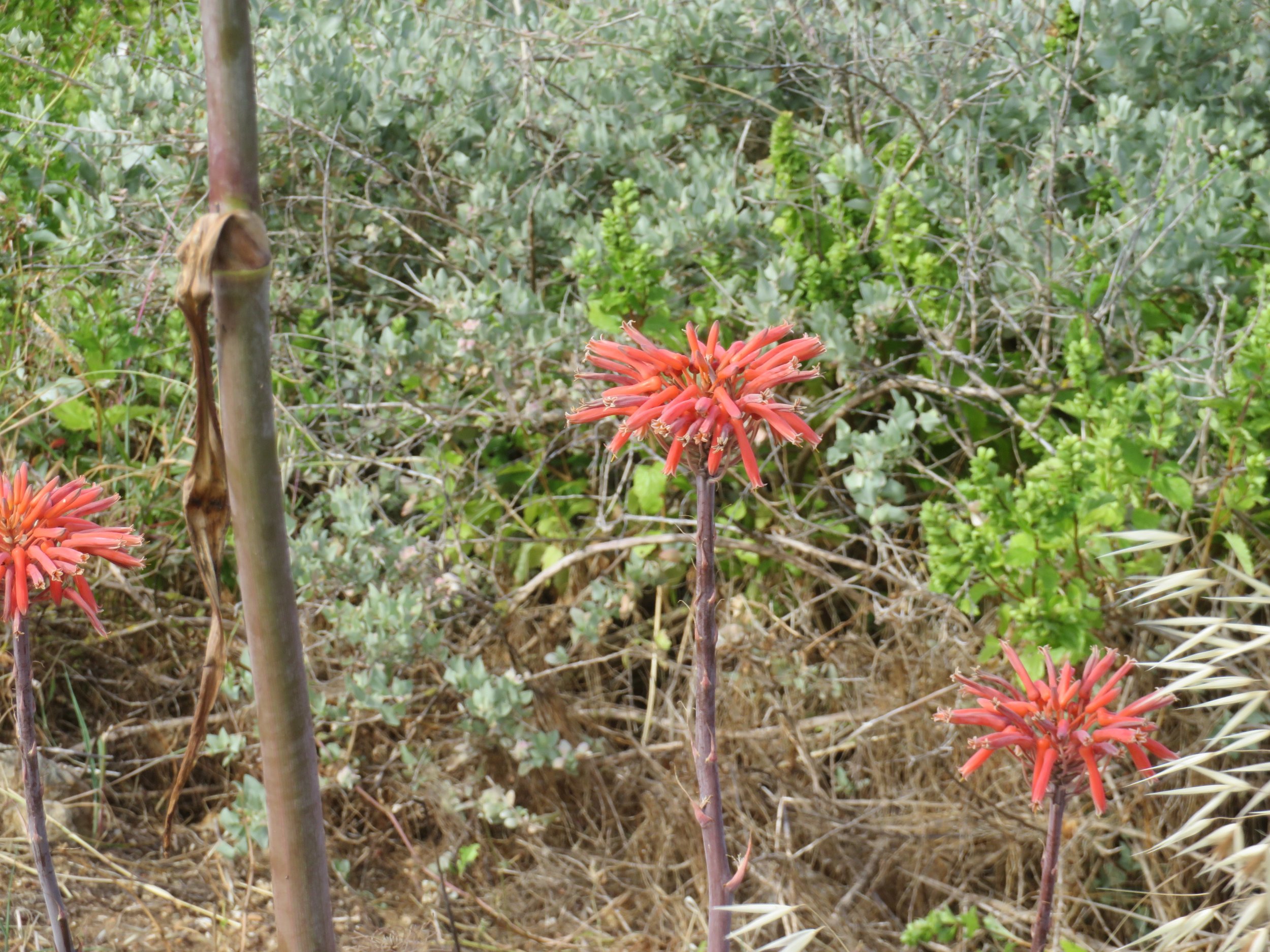
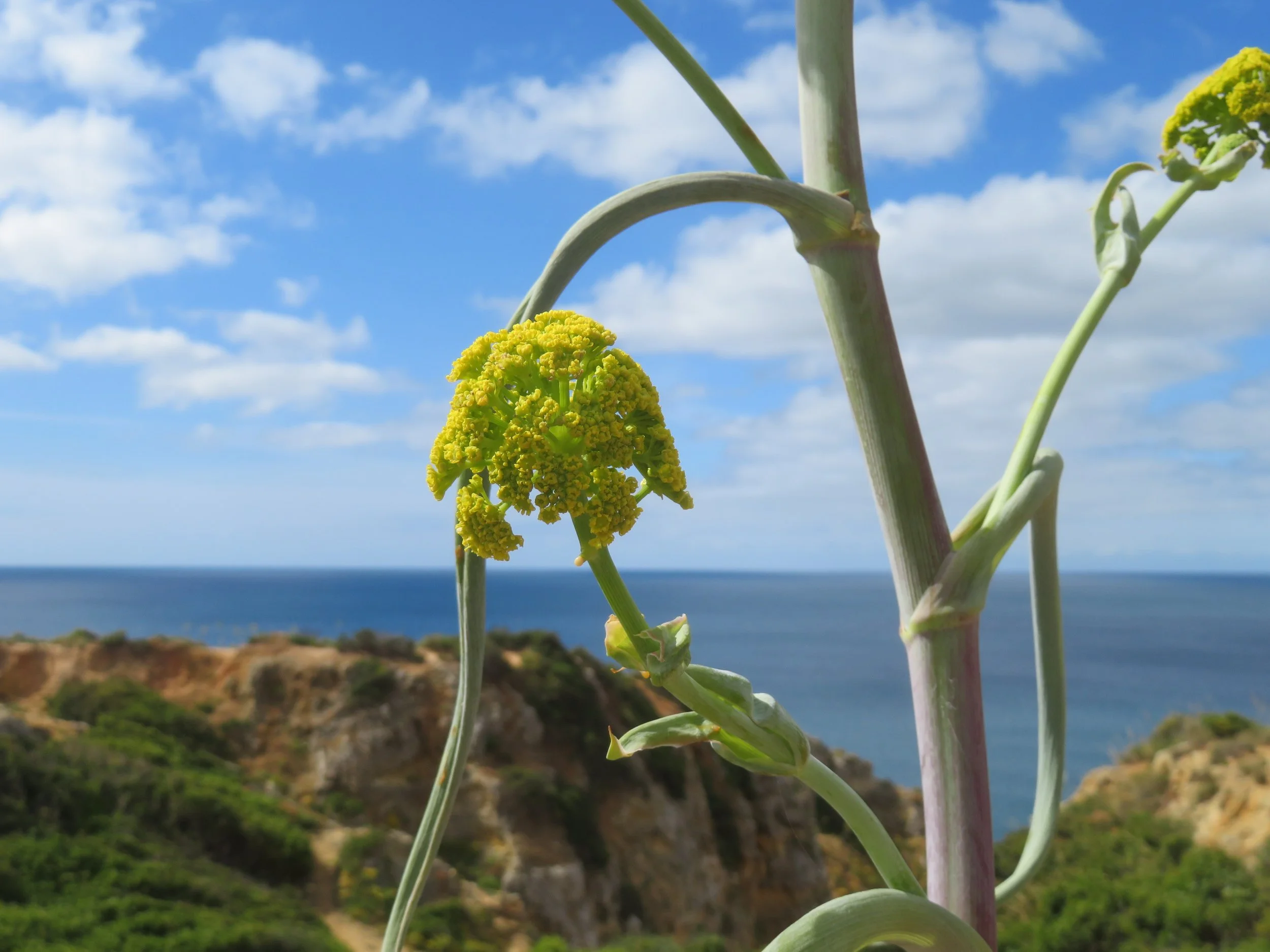
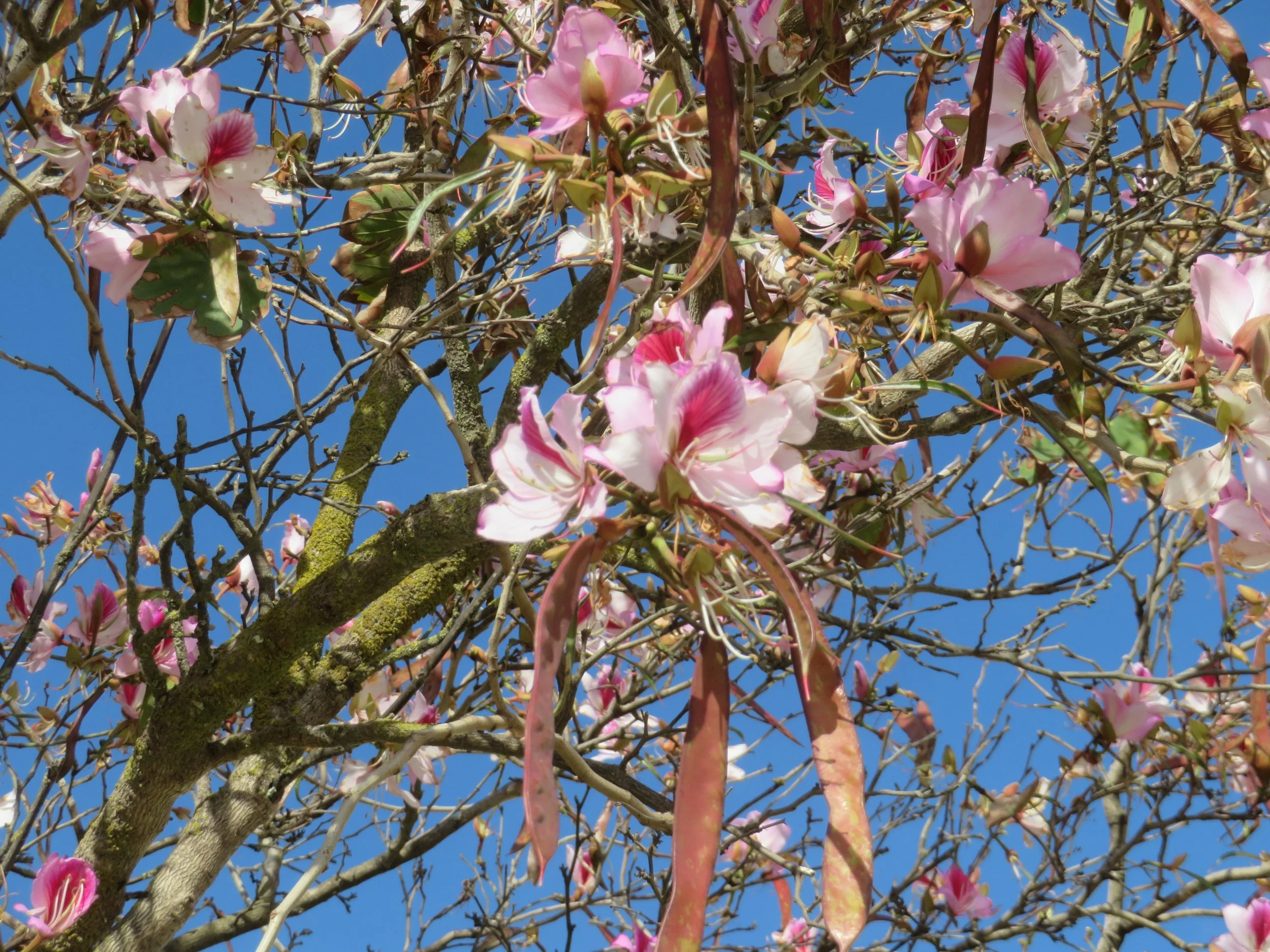
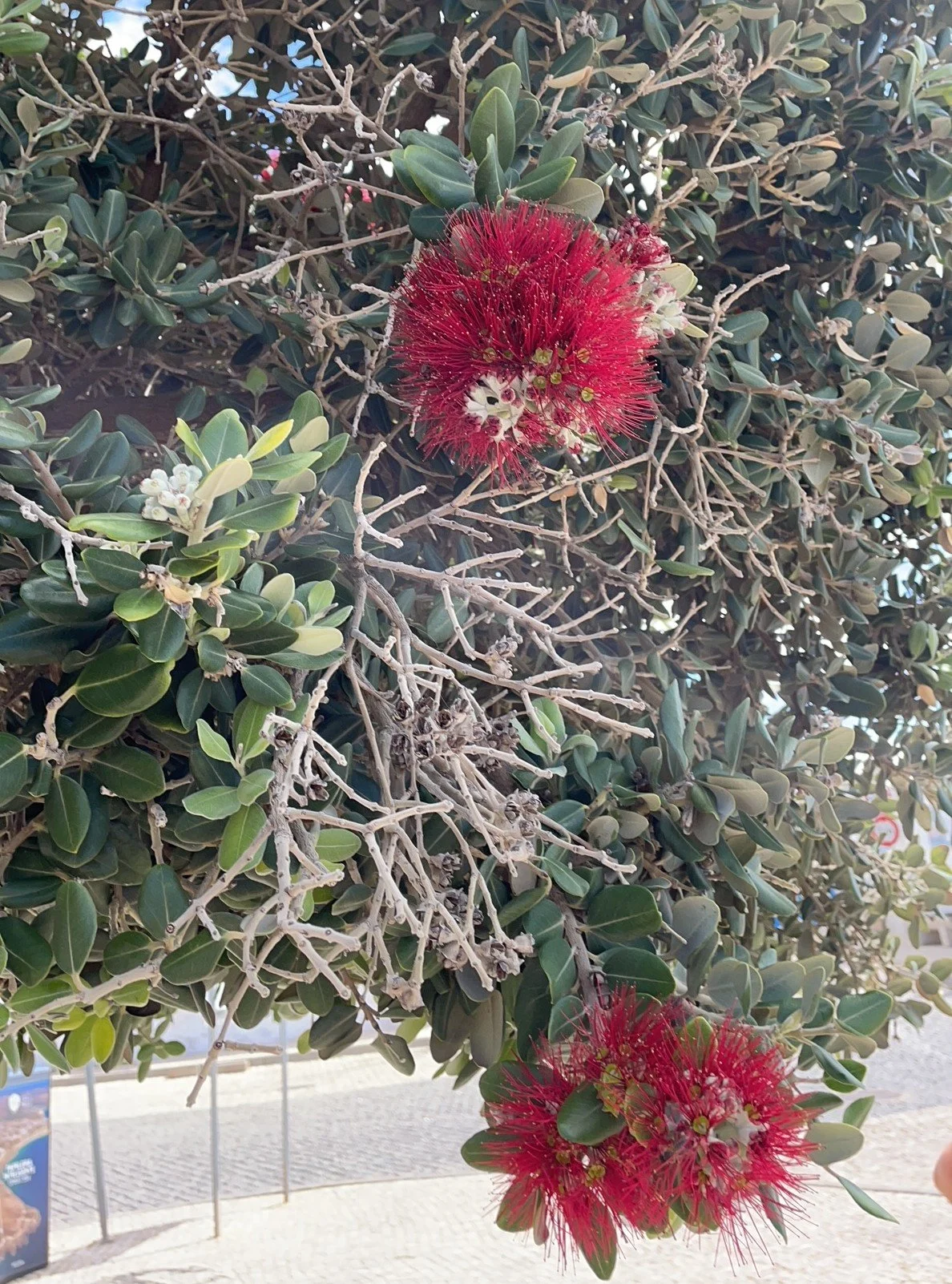
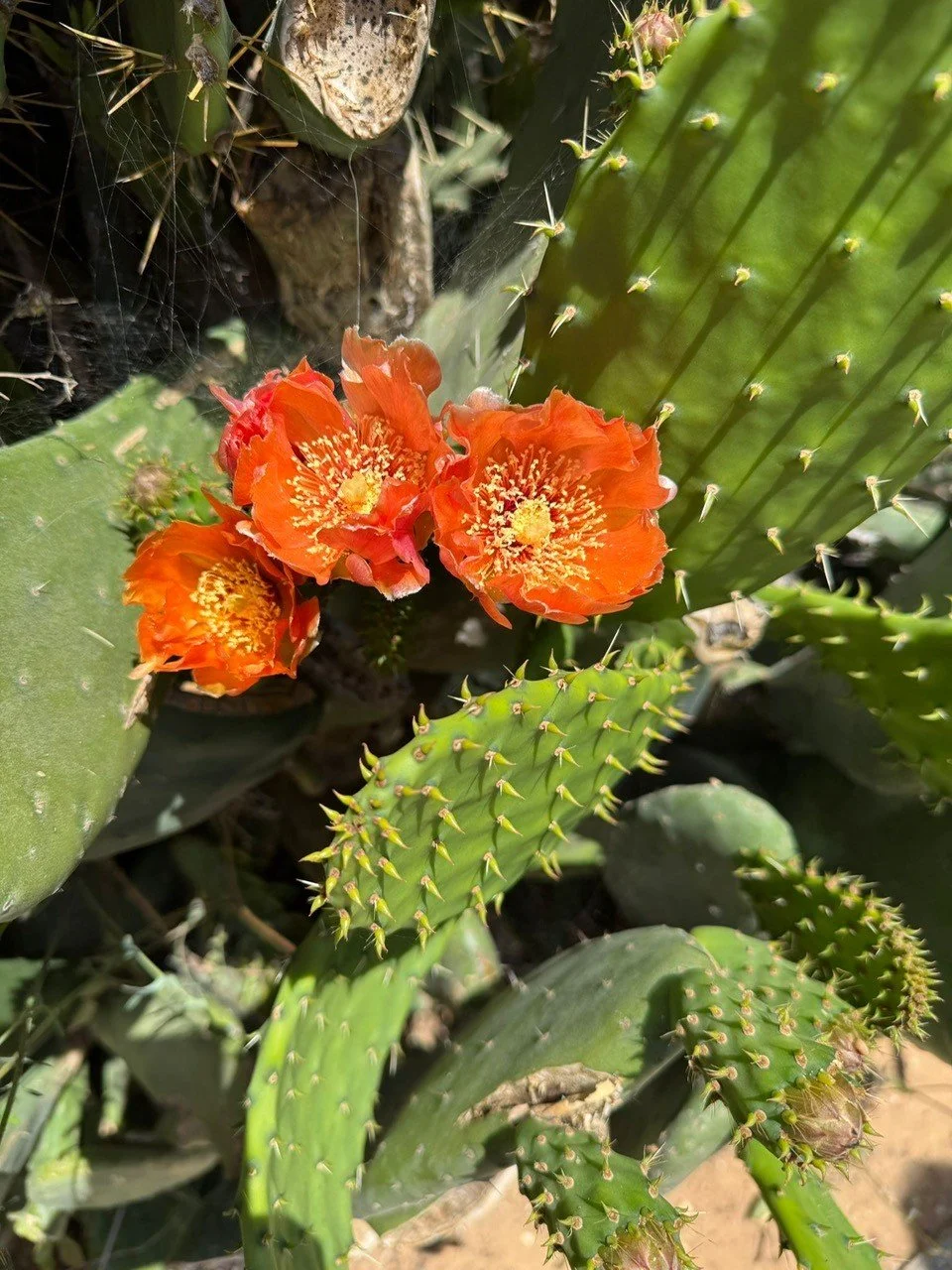
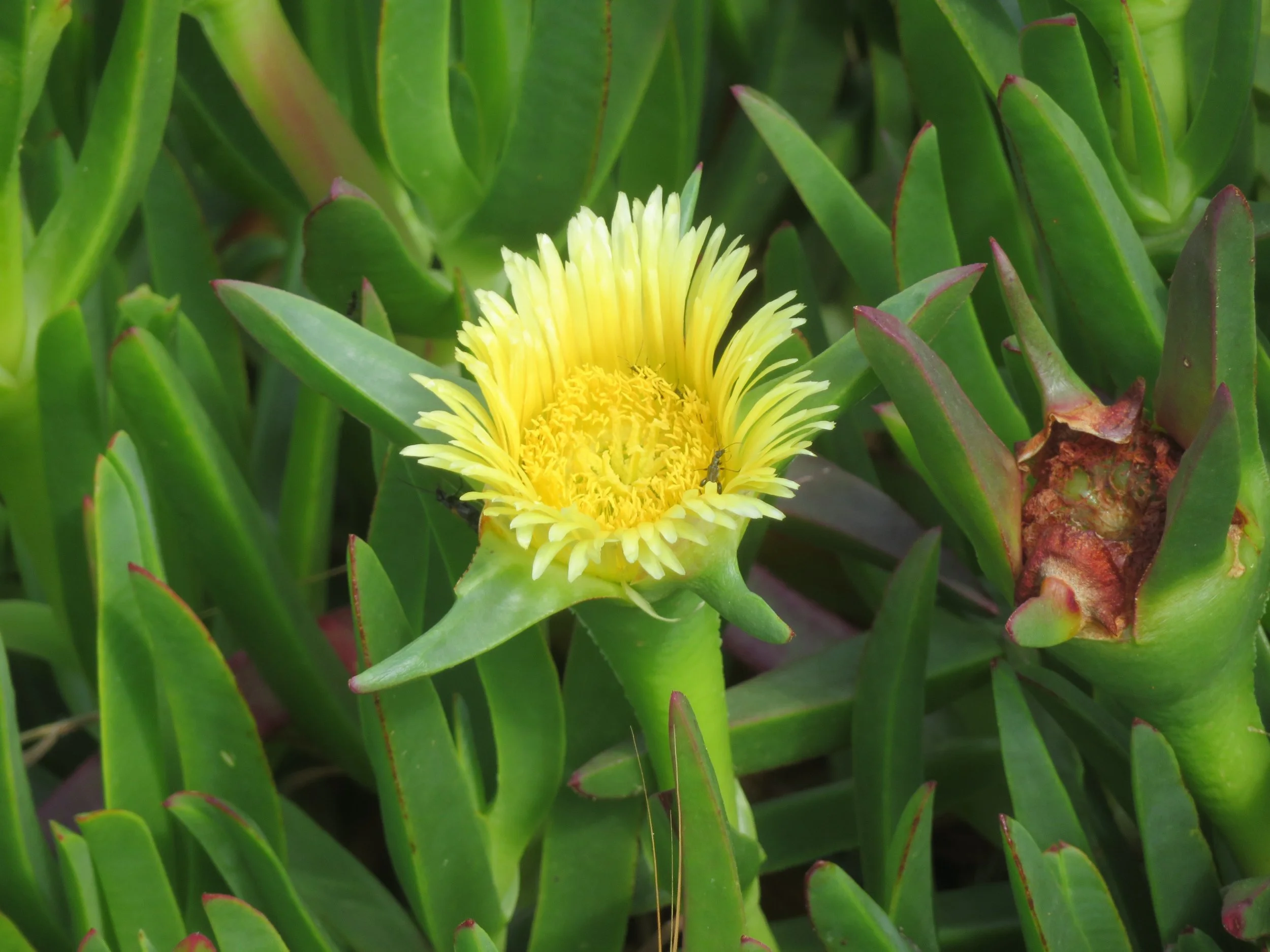
Wildflowers were in bloom along our path. Some were familiar to us and others we used Seek to identify. Brit mentioned that different wildflowers were in bloom every time they visited.
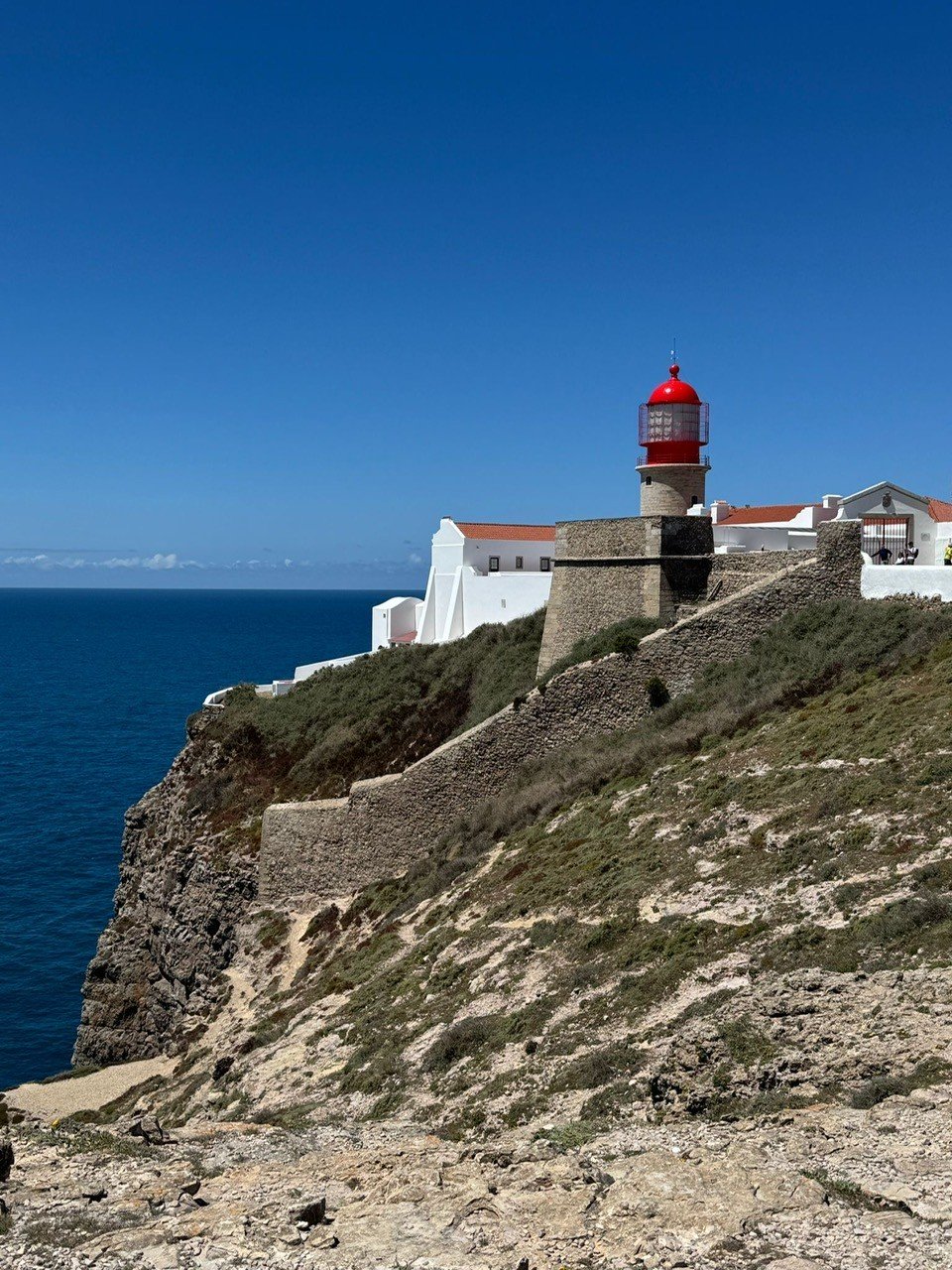
From Ponta da Pedade, we headed to Cabo de São Vicente, the most southwesterly point of Portugal and mainland Europe. Although it is not the westernmost point of Continental Europe, it was considered ‘land’s end’ since it was the last view of land seen by sailors from the South of Portugal before going into the Atlantic, and an essential landfall for sailors returning from Africa and the Americas.
The Cape is named after St. Vicente, a Spanish priest whose bones were found in the cliffs. Today, a lighthouse erected in 1846 sits on the tip of the Cape. Originally illuminated by an olive oil lamp, it, too, is automated now. It was closed for renovation, so we didn’t have a chance to get a closer look.
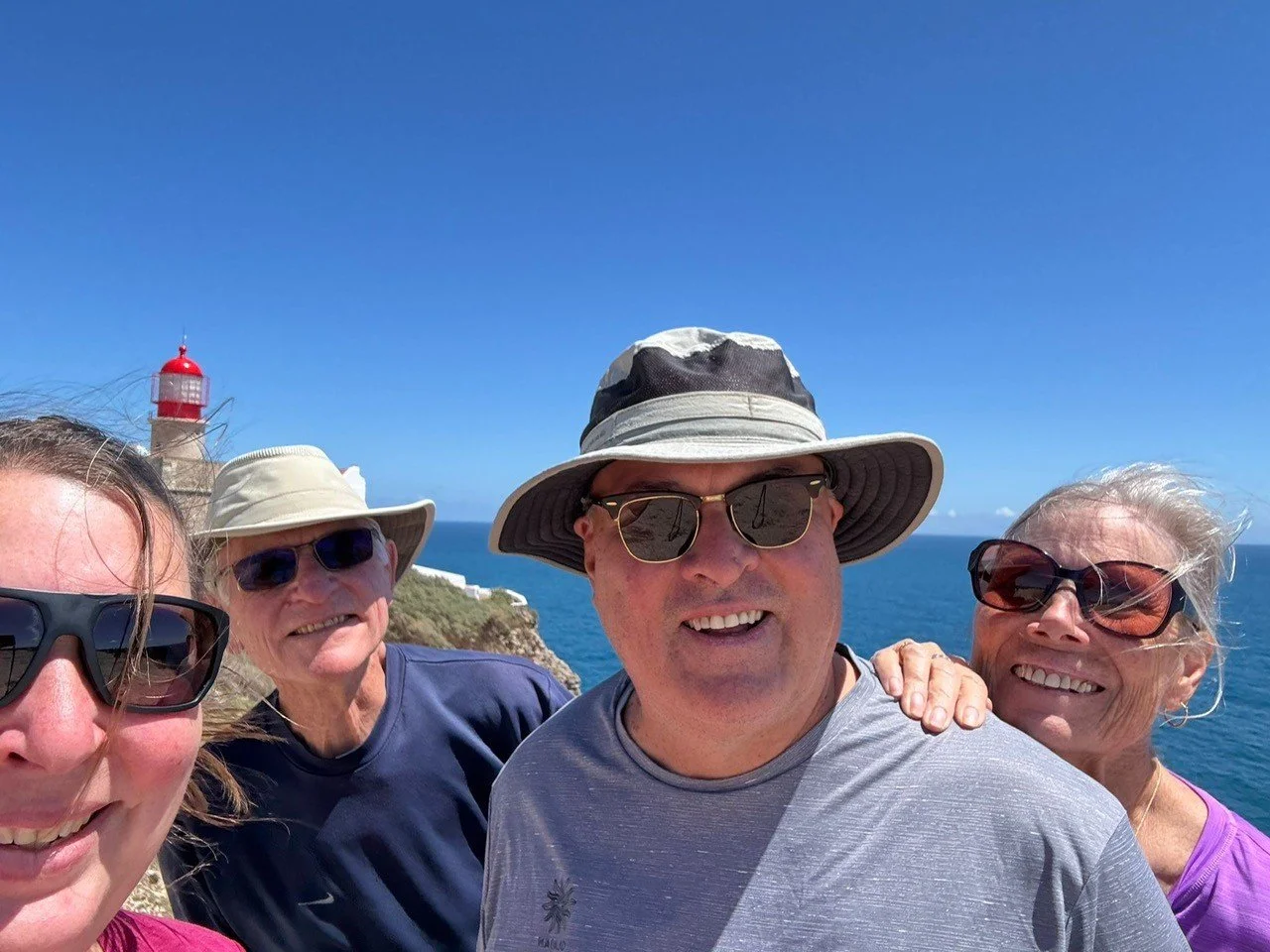
Group selfie at Sao Vicente
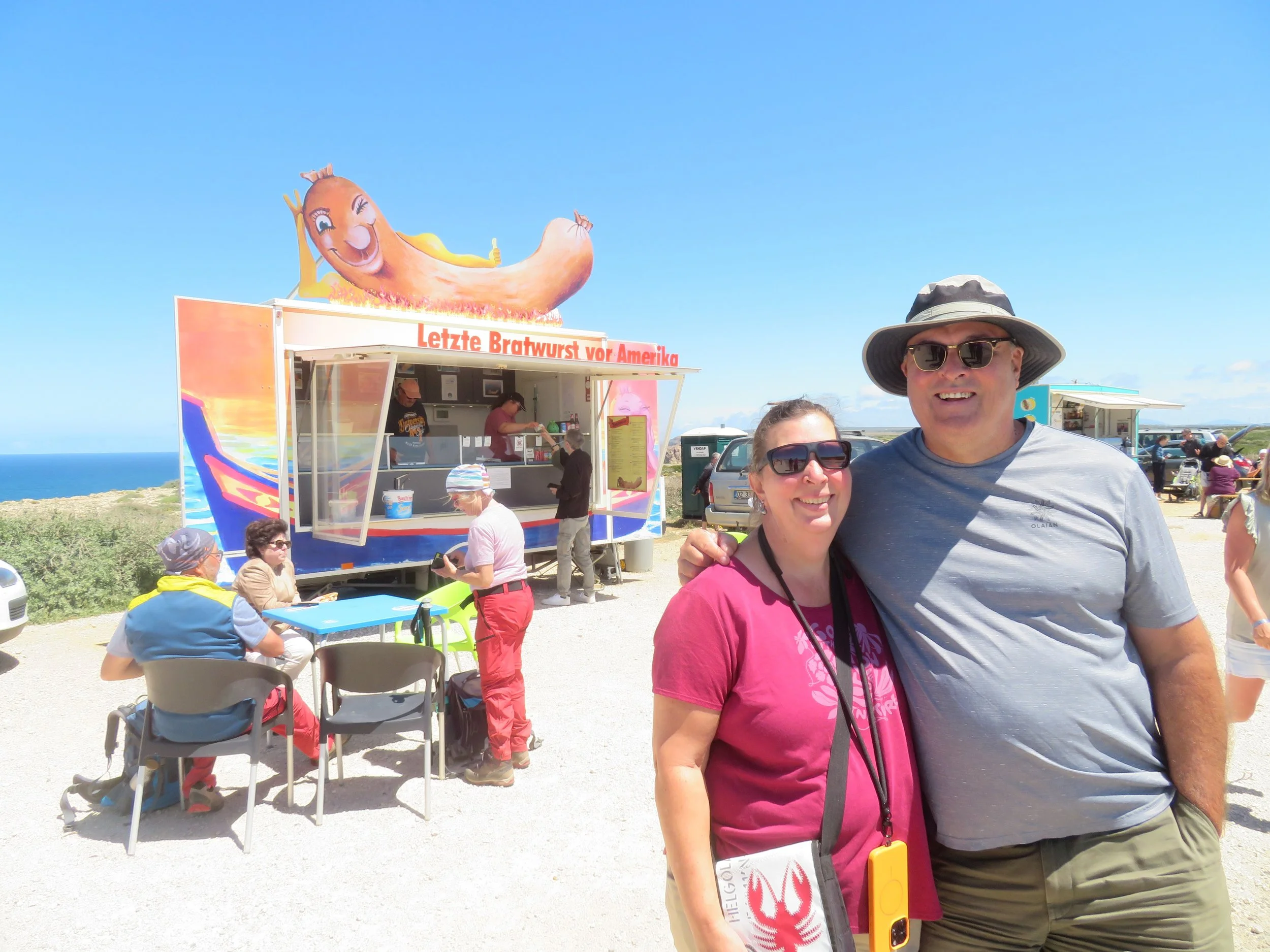
A bratwurst vendor makes the most of the location by offering the last bratwurst before America.
The whole coastline here is eye candy. Alga Seco is yet another photographic landmark of the Algarve. It’s a dazzling stretch of limestone cliffs, caves, grottos, and natural pools carved out over 24 million years by erosion, weathering, sea-level changes, and wave action. We walked the length of the Carvoeiro Boardwalk, a ~1/3-mile (~600m) path along the cliff edge for great views.
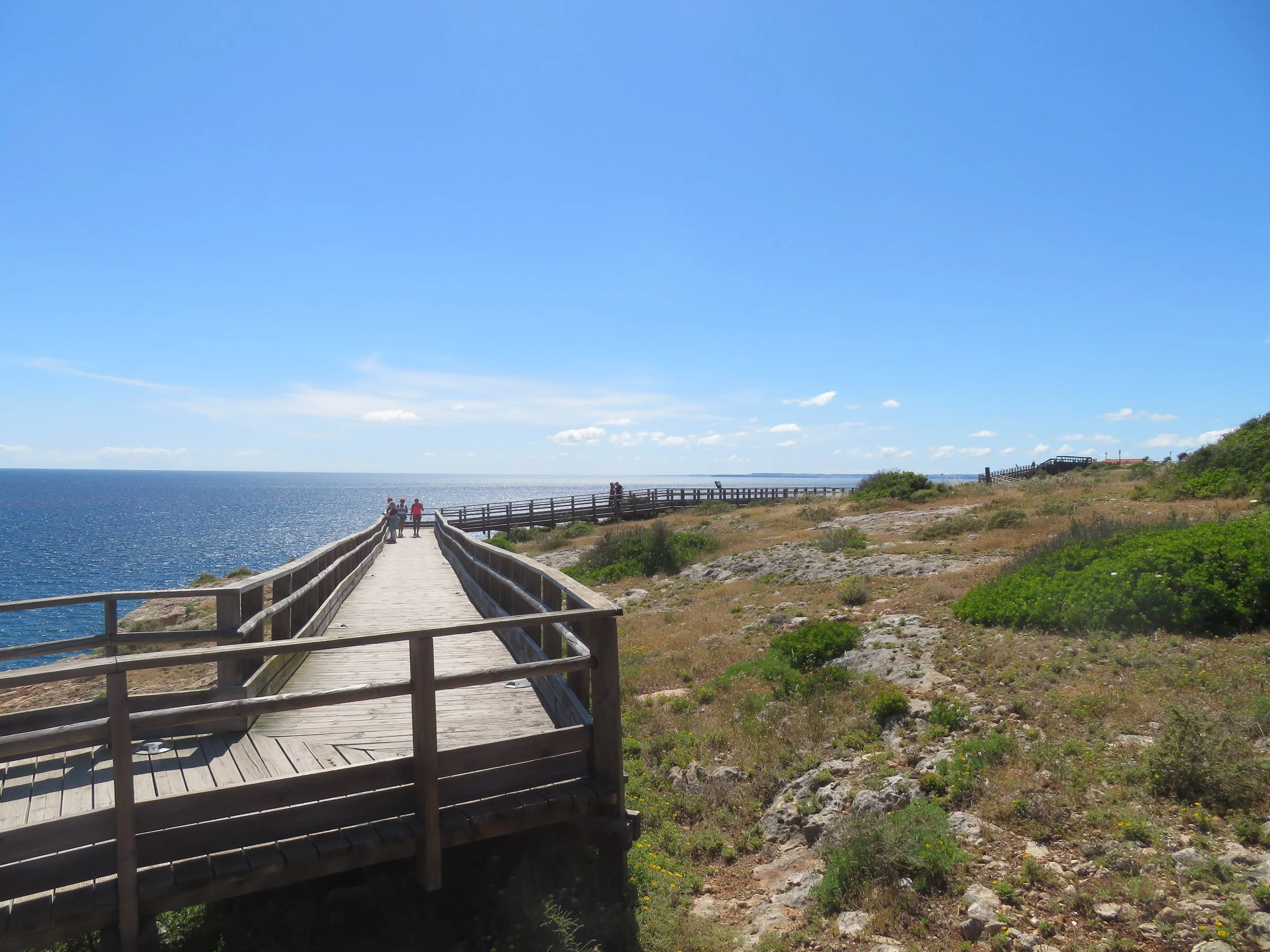
Carvoeiro Boardwalk
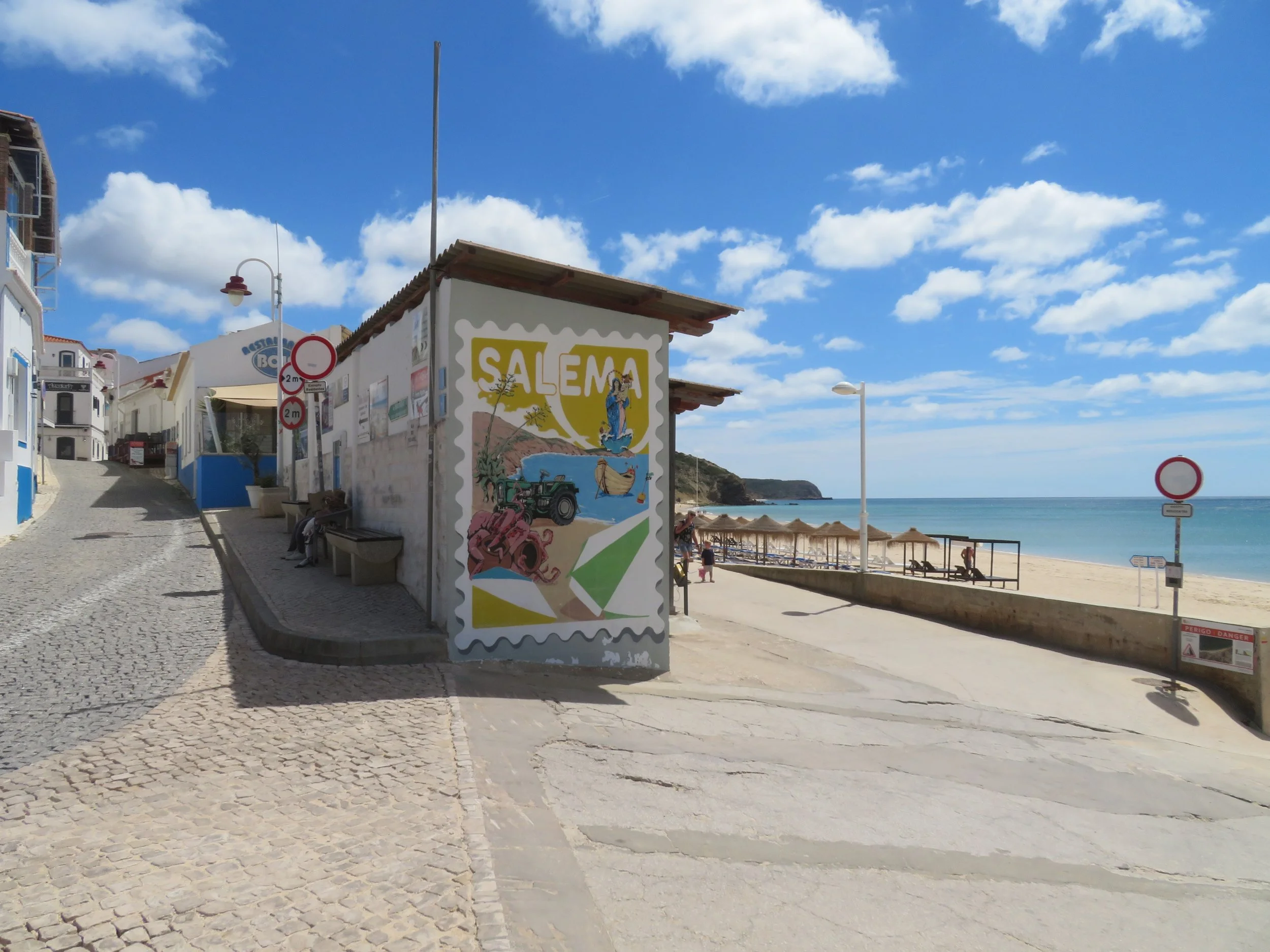
We stopped briefly at the tiny fishing village of Salema. Most guidebooks call it ‘one of the Algarve’s best-kept secrets,’ which makes us think it’s no longer a secret. The town has, however, managed to maintain its Portuguese character and a charming authenticity. During tourist season, it’s considered a much more serene option for visiting coastal beaches than other tourist-heavy locations. It was empty when we were there, but it was still early in the season.
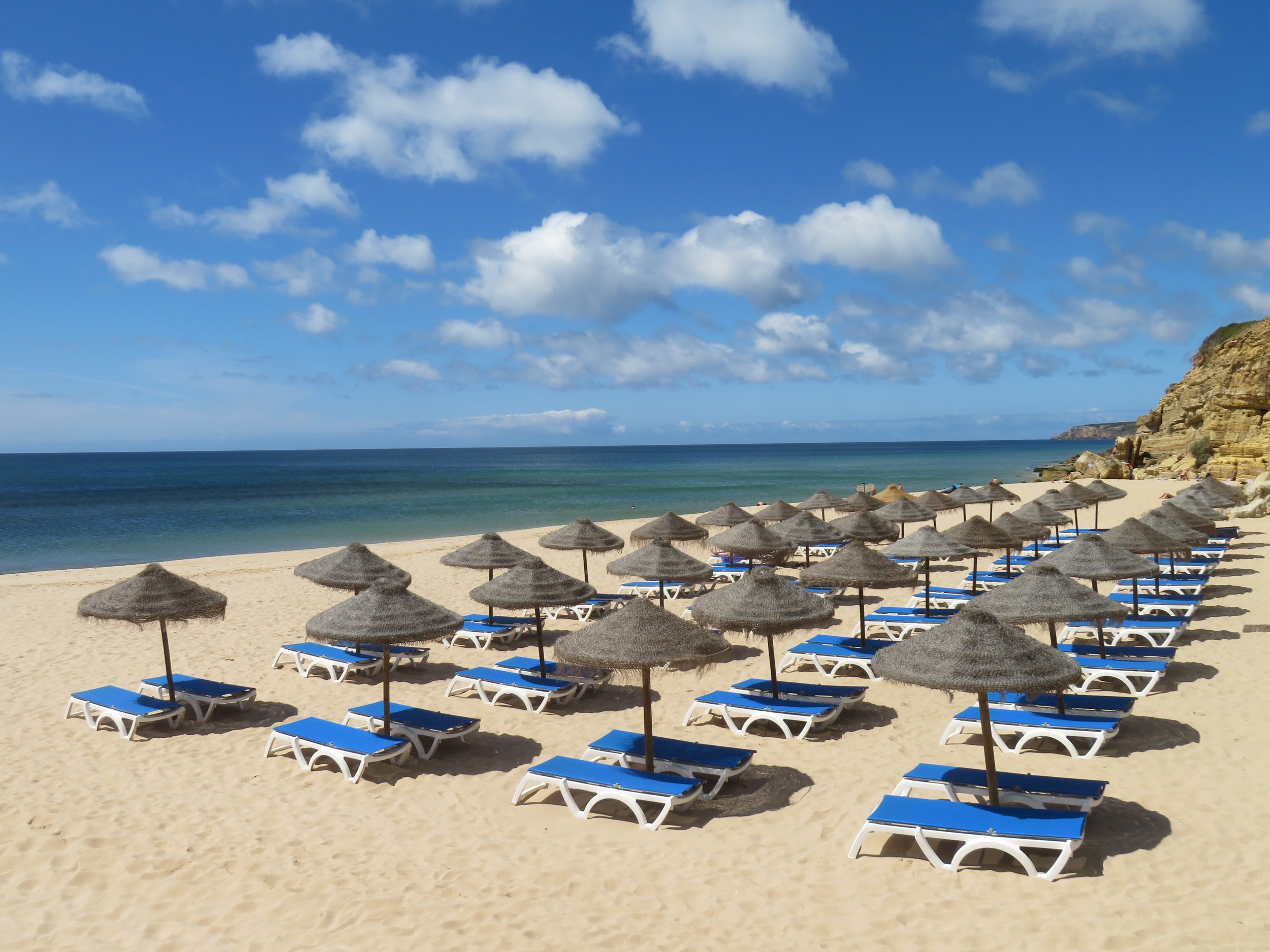
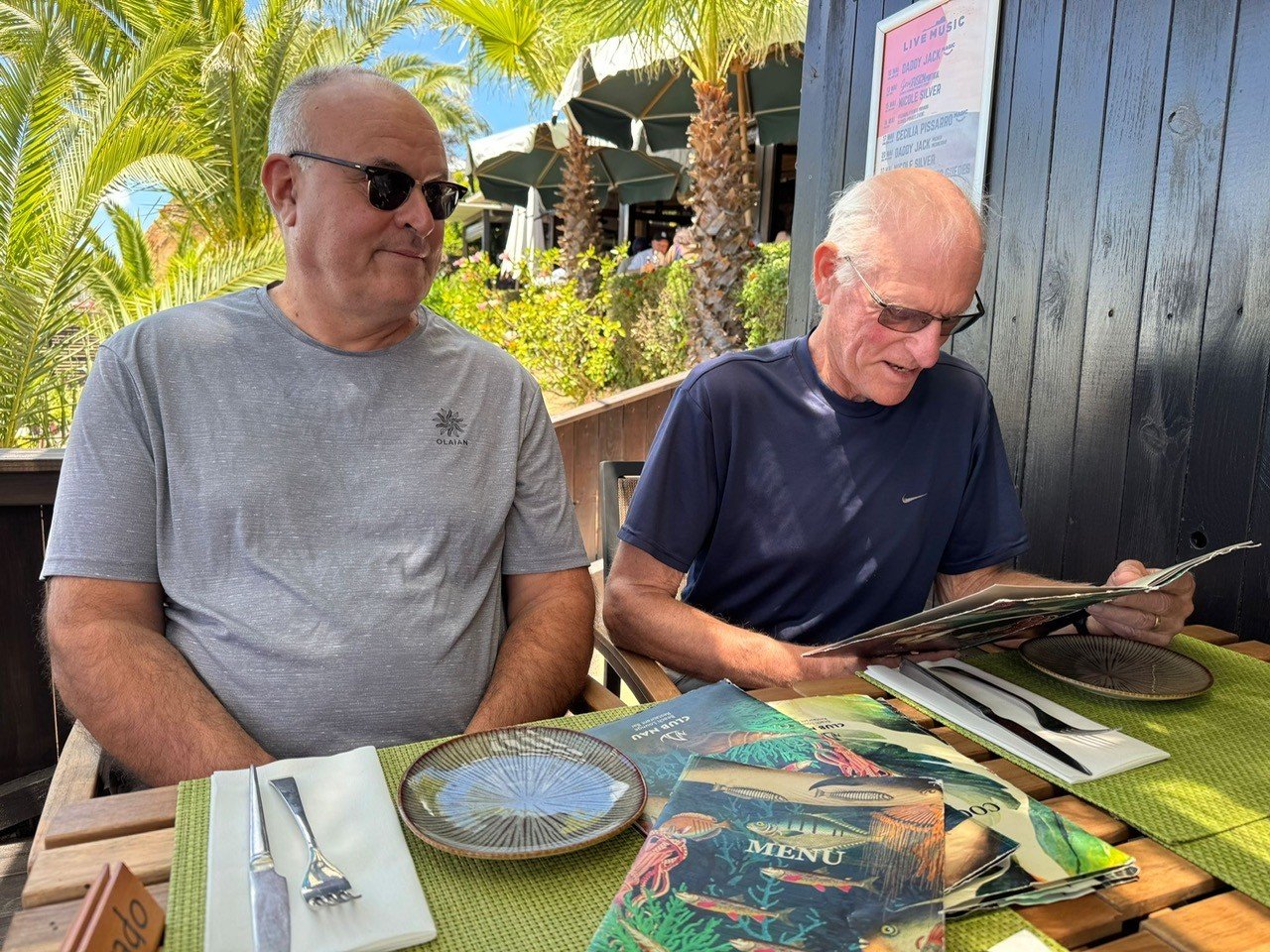
A late lunch at Club Nau in Praia Grande was an absolute delight. A light breeze, cold beer, fresh seafood, and great company at a fun beachside restaurant.
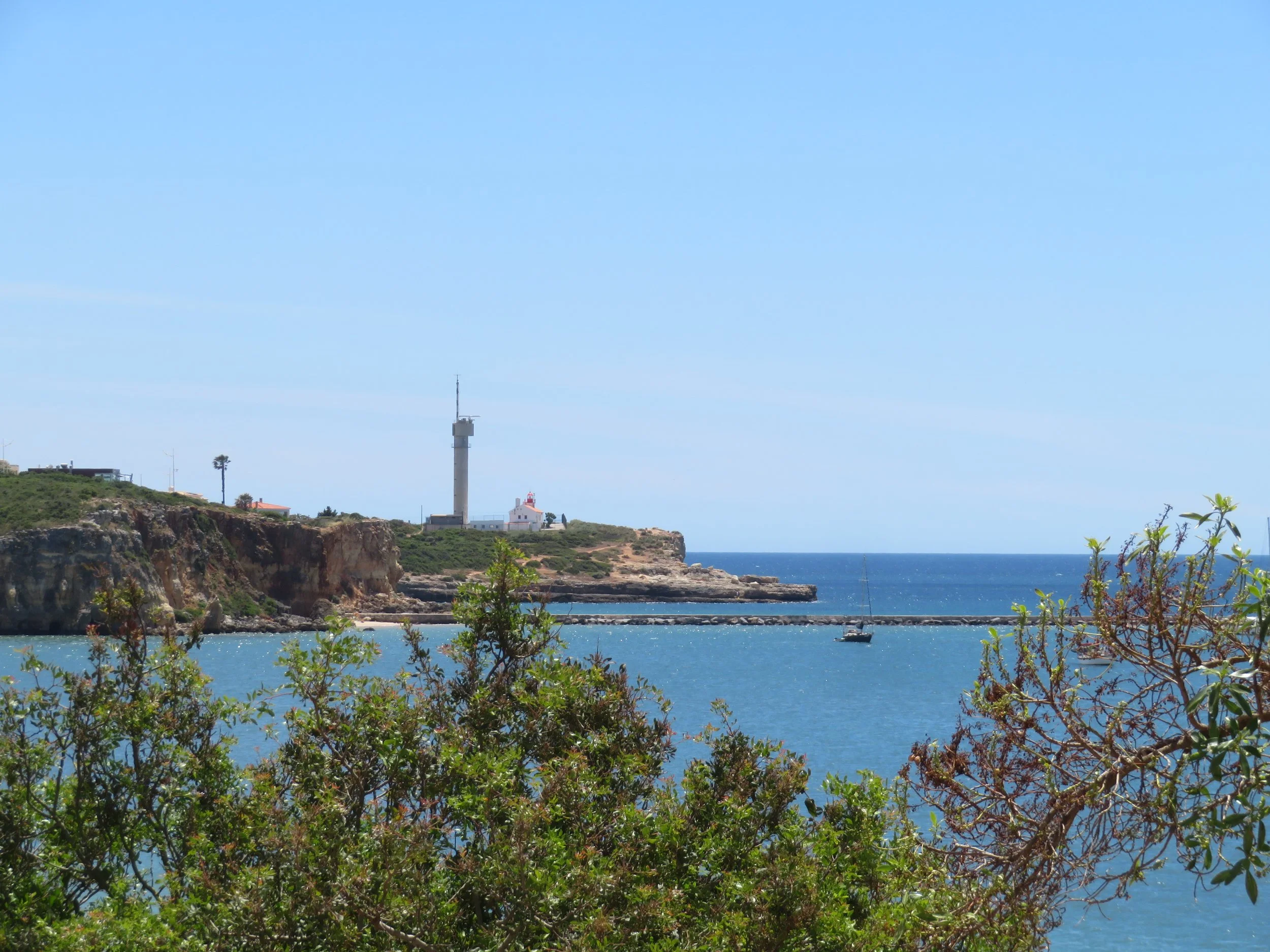
We drove by the harbor in Portimão, where Brit and Axel would be anchoring. The safe, comfortable anchorage behind the breakwater looked idyllic.
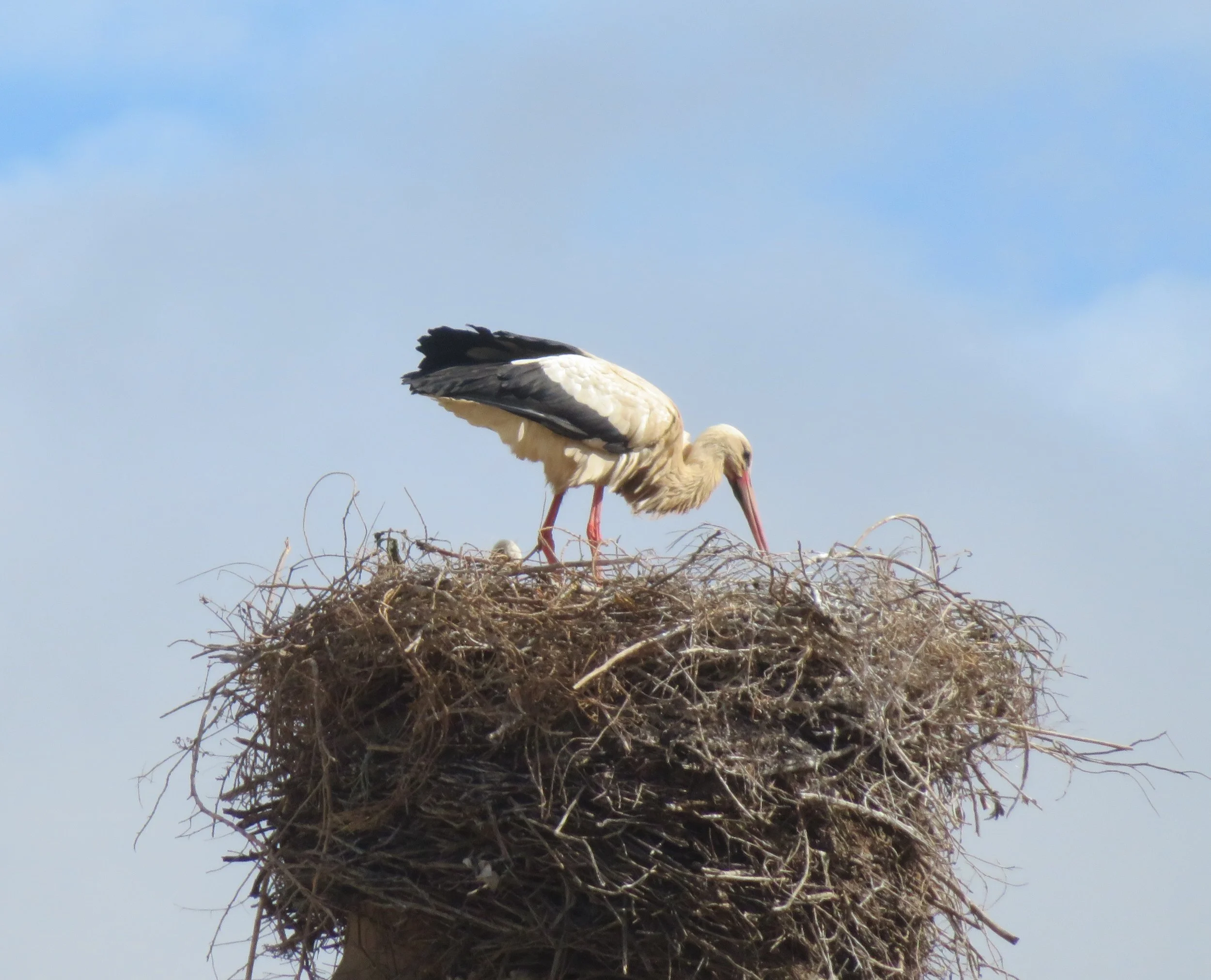
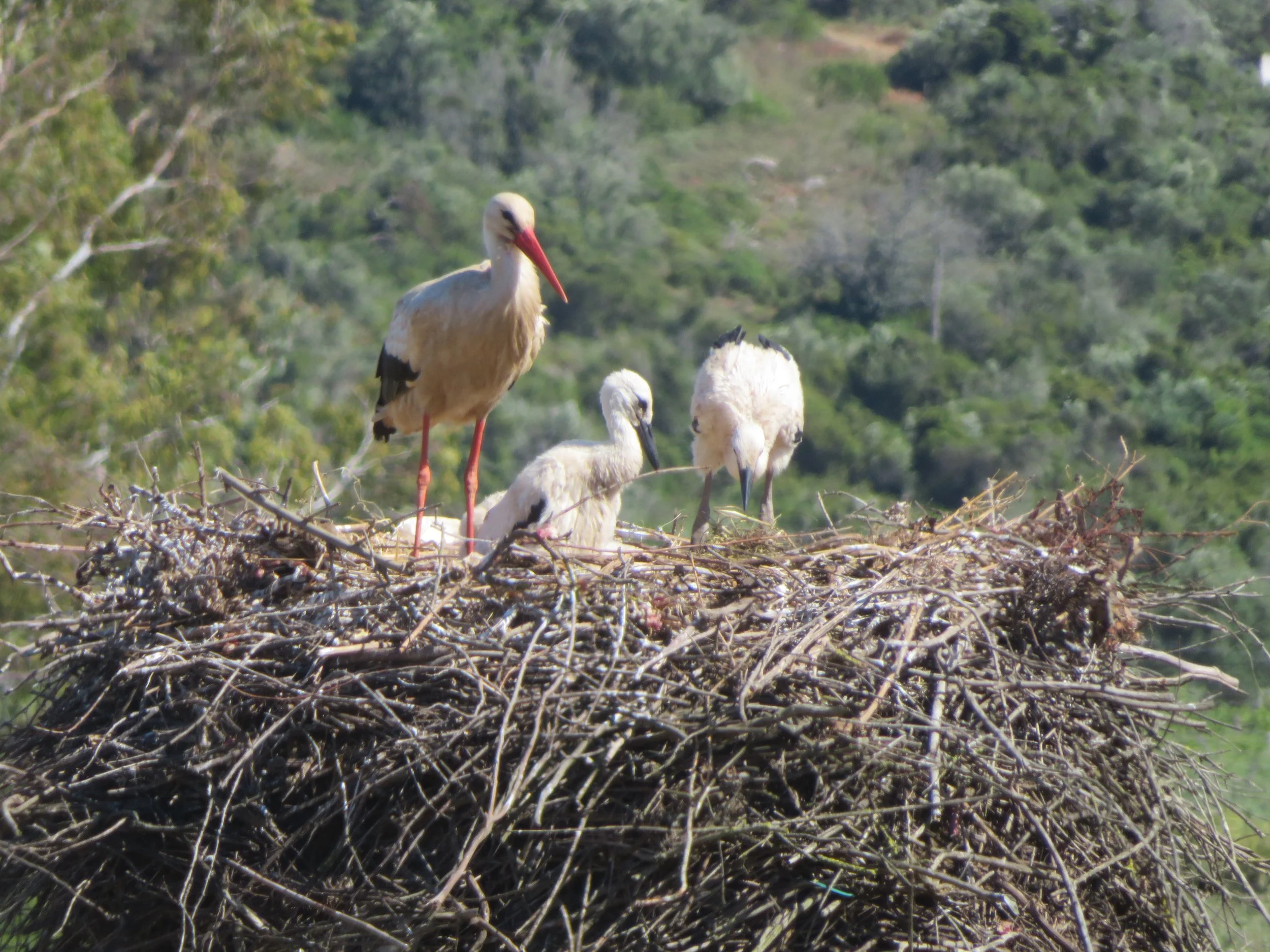
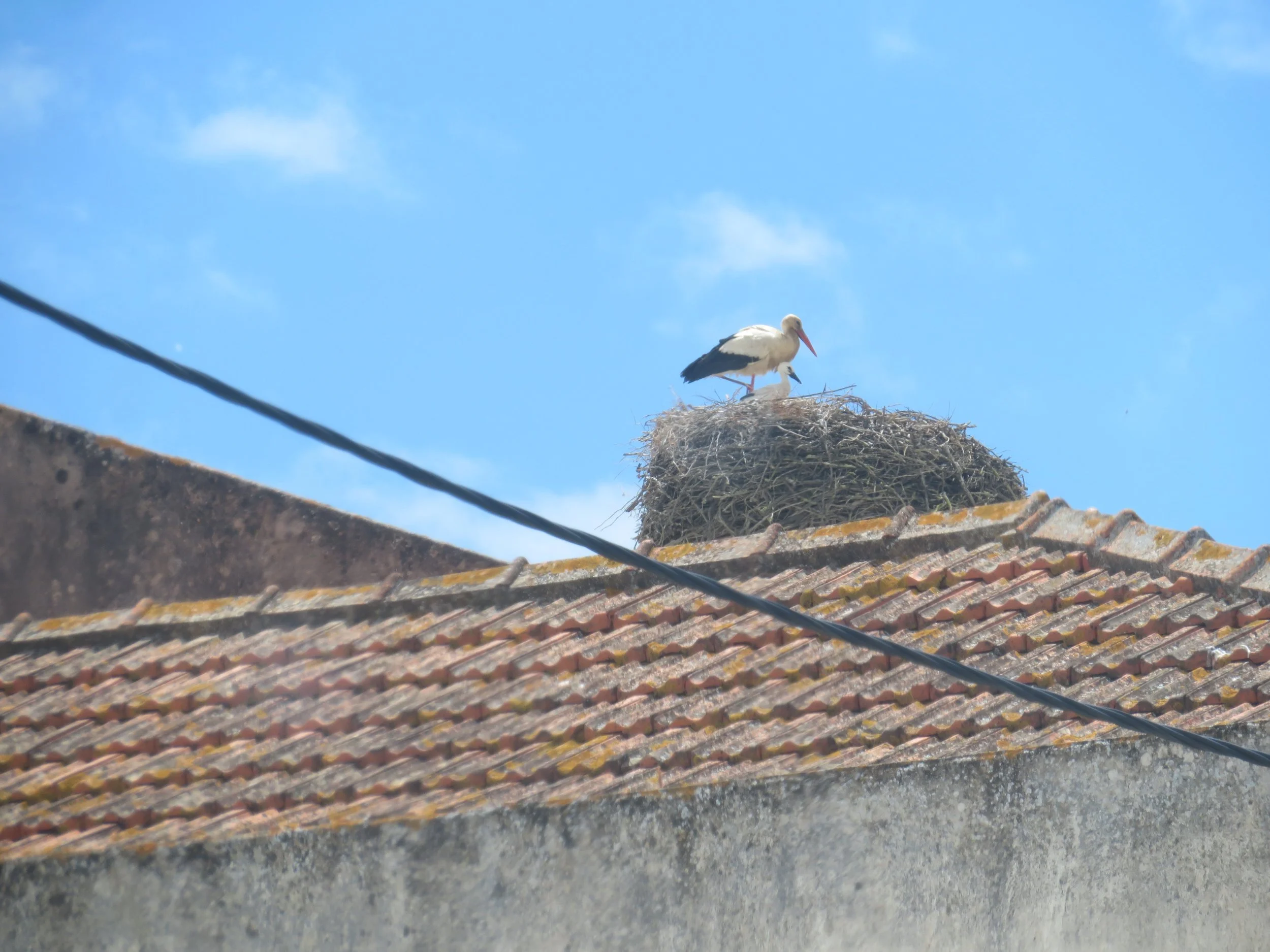
On the way back to Lagos, Brit had a special treat for us. White storks, Cegonha-branca in Portuguese, are large, distinctive birds that seem to nest everywhere in Portugal… on lamp posts, chimneys, cell and power line towers, just about anywhere their huge, messy nests will fit… even on a Staples sign!
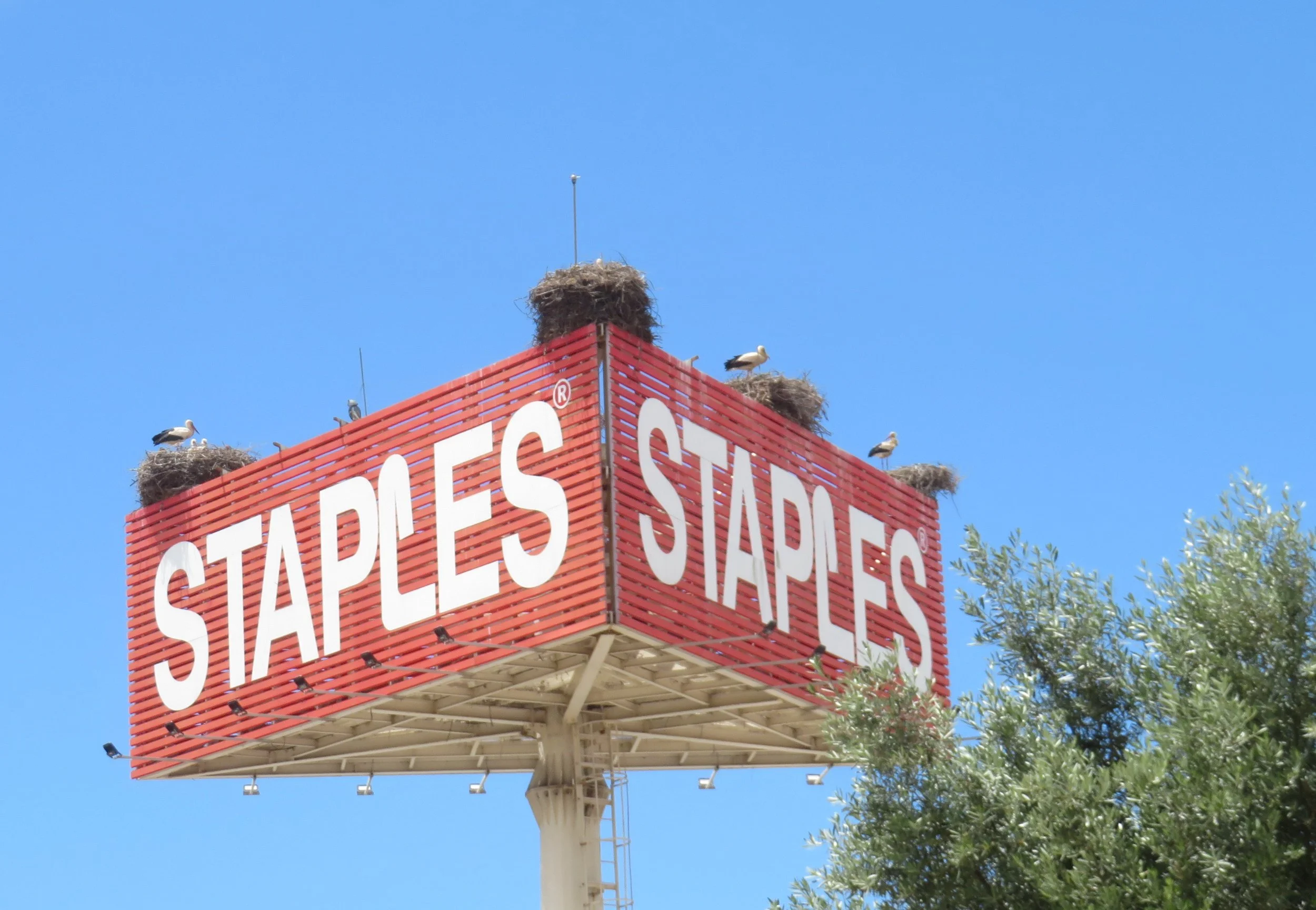
In ancient Roman and Greek times, a stork’s nest perched on a house was considered a blessing. With no voice box, they’re pretty quiet neighbors… no croaking, no singing, no noise. Today, they’re considered a symbol of good luck. Axel asked if storks bring babies in America like they do in Europe and the answer is yes, they do, but there aren’t many storks in the USA, which probably accounts for our decreasing birth rates.
The day was done, and after our late lunch, there was only room for sundowner cocktails and snacks aboard La Ola before we headed back to our apartment for the night. Axel and Brit were readying the boat for a ‘splash’ the next afternoon. We met them the next morning briefly for a light breakfast and then headed to the bus station. Tomorrow we would board a plane bound for Las Vegas. Camino done, Portugal exploration great, but unfinished, tired and a bit travel-weary, but satisfied with a wonderful adventure.
What’s next? Join us when we return to the States, get back into the swing of things, and take a little trip North for some camping.